Best Temples in Kamakura for Hydrangea (Ajisai) Viewing 2026 — Meigetsu-in, Hase-dera and the Kita-Kamakura Walk
Kamakura Hydrangeas 2026: Best Temples & Photo Spots

- +0 0
-

-


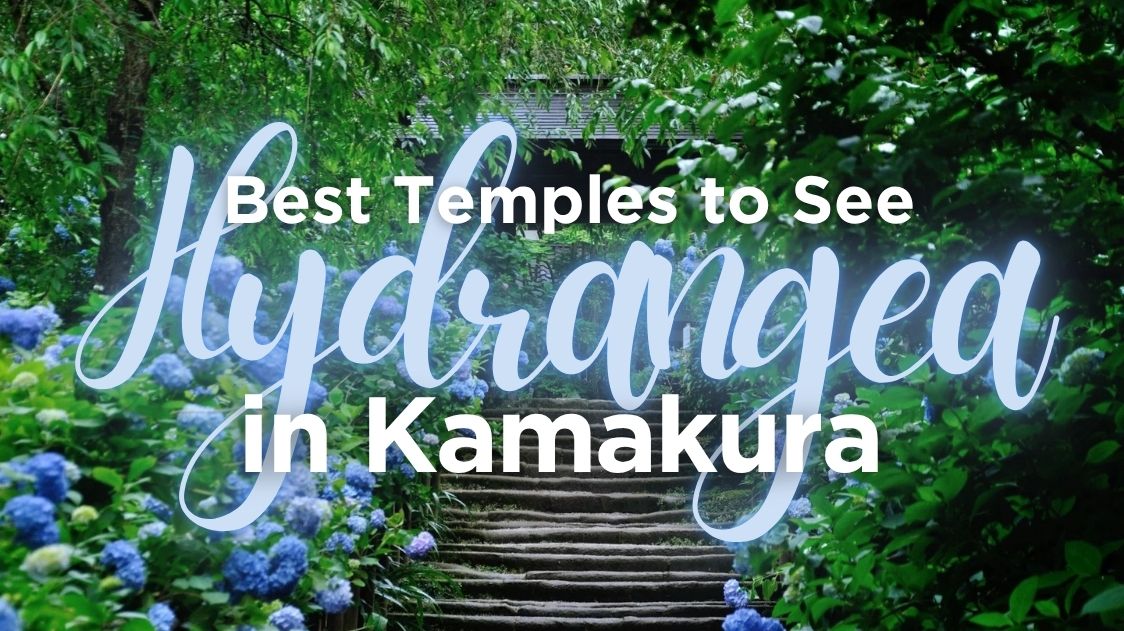
In Japan, the arrival of the rainy season (tsuyu) is often synonymous with gray skies and humidity, but in the coastal city of Kamakura, it signals the “Blue Season.” As one of the country’s most significant cultural hubs, Kamakura becomes the undisputed capital of hydrangea (ajisai) viewing throughout June.
While most seasonal flora in Japan require clear sunlight for the best photography, hydrangeas are the exception. The soft, diffused light of overcast days and the direct moisture from the rain actually saturate the pigments in the petals, making the blues deeper and the purples more vibrant. If you are planning a visit, timing is the difference between seeing a few scattered bushes and standing in a sea of monochrome blue.
See also: Best Places to See Hydrangeas in Tokyo
2026 Kamakura Hydrangea Forecast
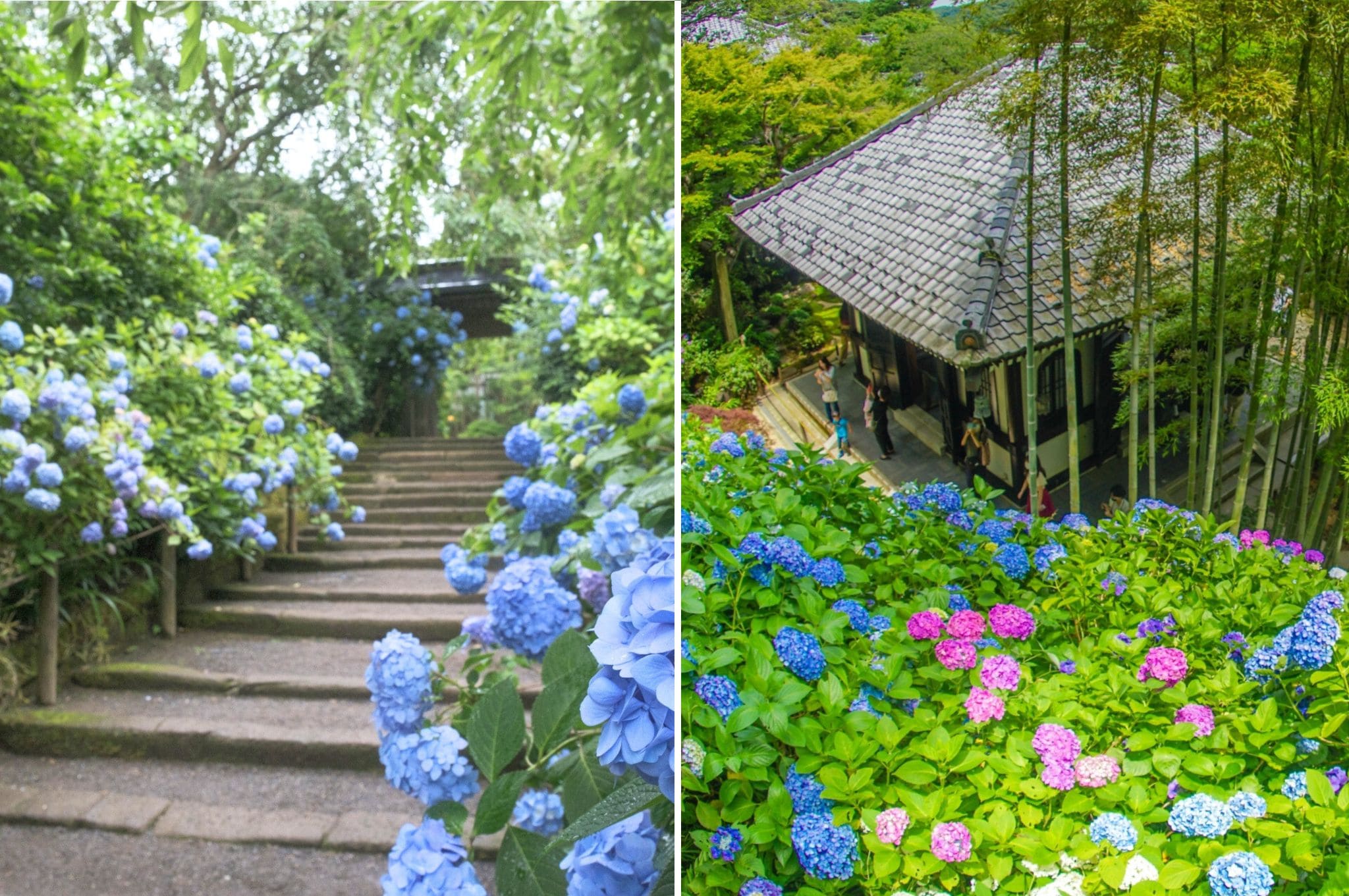
Based on current 2026 budding patterns, the bloom is following a standard timeline.
| Period | Status | What to Expect |
| Late May – June 5 | Early Bloom | Pale greens and light tints; minimal crowds. |
| June 6 – June 18 | Peak Bloom | Full color saturation across all temple grounds. |
| June 10 – June 14 | Absolute Prime | The peak window for photography and maximum density. |
| June 19 – Late June | Late Season | Colors begin to “rust” or brown; crowds begin to thin. |
How to Travel to Kamakura from Tokyo for Hydrangea Season
Kamakura is a popular destination, but your arrival station determines the day’s efficiency. During hydrangea season, you want to avoid Kamakura Station’s main terminal until later in the afternoon.
- From Tokyo Station: Take the JR Yokosuka Line directly to Kita-Kamakura Station (about 55 mins, ¥950).
- From Shinjuku/Shibuya: Take the JR Shonan-Shinjuku Line (bound for Zushi) to Kita-Kamakura Station (50 mins, ¥950).
Main Hydrangea Clusters: North vs. Coastal
Kamakura’s hydrangeas are divided into two distinct geographic clusters. It’s generally advisable to start north and move south, preferably by 8:30 AM to beat the tour buses. Work through the northern temples, take the train south to Kamakura Station for lunch, and finish your afternoon in the Hase area.
- The Northern (Kita-Kamakura) Cluster: Home to Meigetsu-in, Engaku-ji, and Jochi-ji. These temples offer a traditional Zen atmosphere and are all reachable on foot from Kita-Kamakura Station.
- The Coastal (Hase) Cluster: Home to Hase-dera and Joju-in. This area features multi-colored varieties and ocean views. Reach it via the Enoden train from Kamakura Station.
Money Saver Tip: The Enoden Pass
If you follow the recommended route from the northern temples down to the coast, buy the Enoden 1-Day Pass (Noriorikun) for ¥800. It allows unlimited rides between Kamakura and Fujisawa, which is essential for hopping between Hase-dera and the various trackside photography spots.
The Best Hydrangea Temples in Kamakura
While hydrangeas grow wildly along Kamakura’s hillsides and rail lines, the city’s ancient temples offer the most and spectacular viewing grounds. Each location treats the season differently: some opt for structured, monochrome single-species planting, while others cultivate rare multi-colored varieties against coastal lookouts. Visiting the top sites requires navigating specific peak-season rules, separate ticketing tiers, and early entry windows.
Meigetsuin (The Iconic “Hydrangea Temple”)
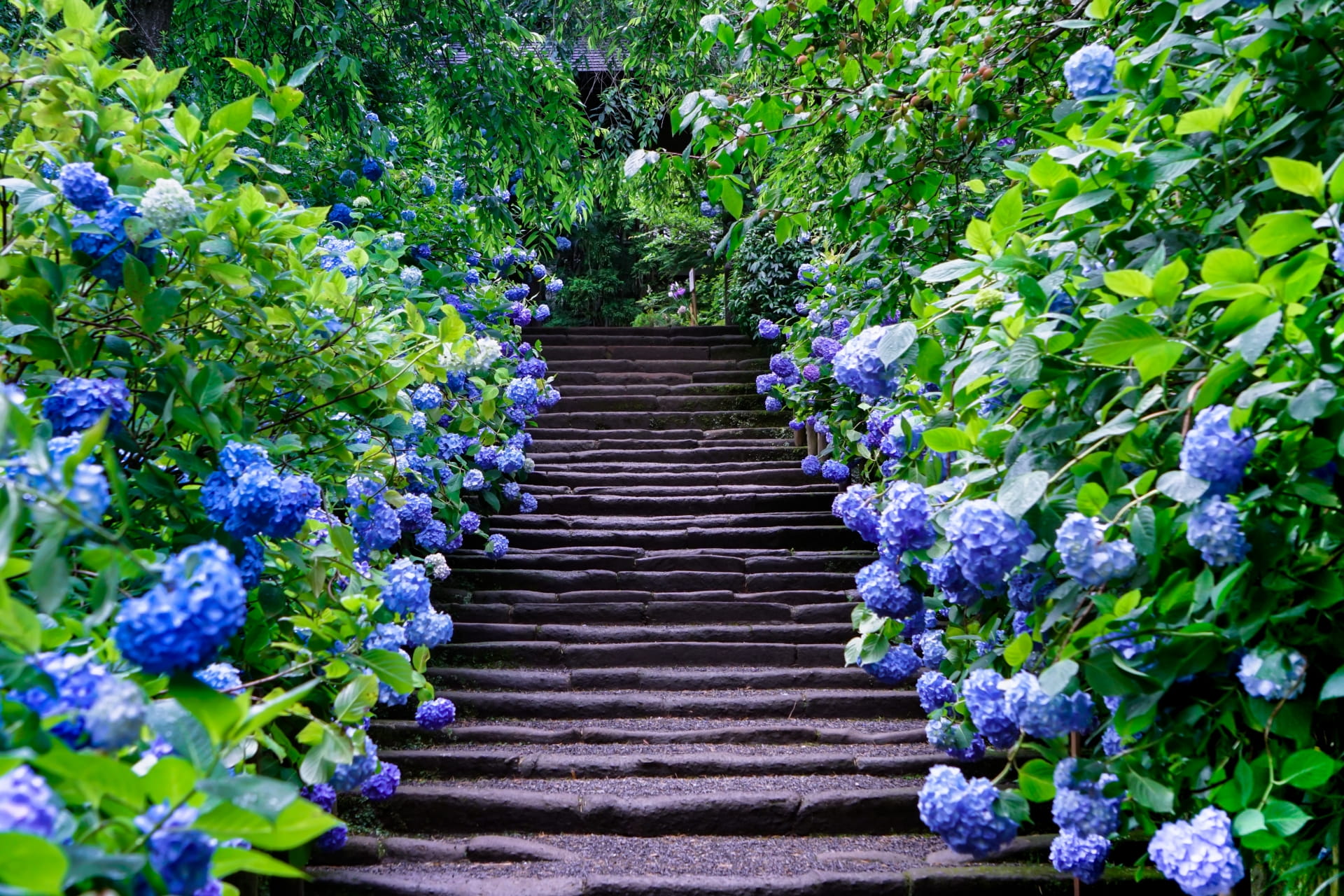
Meigetsuin (明月院) is the definitive epicenter of Kamakura’s early summer tourism. Over 2,500 hydrangea bushes flank the temple’s historic stone paths, creating a dense canopy of blossoms that completely consumes the approach to the main hall.
- The Look: Unlike other locations that feature a mix of colors, Meigetsu-in relies on a strict monochrome palette. Over 95% of the flowers here are the Hime Ajisai (Princess Hydrangea), an ancient native variety that transitions from a pale, watery green into a deep, clear sky blue. This specific shade is globally recognized by travel photographers as “Meigetsu-in Blue.”
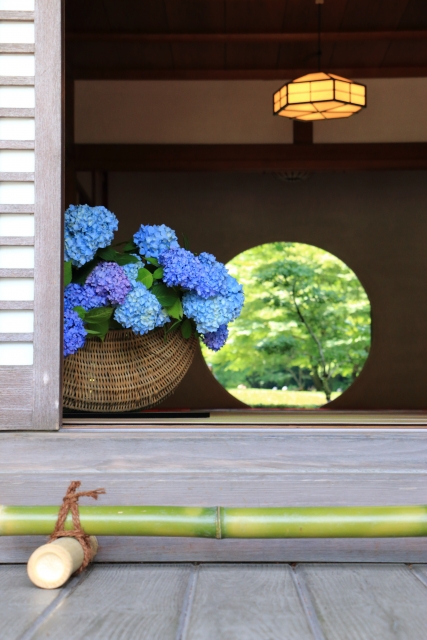
- The Hidden Iris Garden: The main hall houses the iconic Circular Window of Enlightenment (Satori no Mado), which perfectly frames the landscape behind it. While the window is visible year-round, the inner garden directly behind it is strictly off-limits to the public for most of the year. During June, it opens exclusively to showcase thousands of blooming Japanese Irises (Hanashobu). Accessing this inner sanctuary requires an additional ¥500 fee, but it provides a rare double opportunity of simultaneous seasonal blooms away from the primary bottleneck.
- Crowd Strategy & Logistics: In June, Meigetsu-in extends its standard operating hours to 8:30 AM – 5:00 PM (with last entry at 4:30 PM). Admission during the bloom is ¥500 for adults. The queue to enter routine spills down the rural approach road before the gates open. To secure a clean photograph of the main hydrangea steps without a sea of umbrellas and tourists, you must be in line by 8:15 AM at the latest.
 Access Access |
10-min walk from Kita-Kamakura Station |
|---|---|
 Business Hours Business Hours |
8:30 AM–4:30 PM |
 Price Price |
¥500 (Additional ¥500 ticket required for the inner garden) |
 Official Website Official Website |
https://trip-kamakura.com/place/230.html |
Hasedera (Ocean Views & 40+ Flower Varieties)
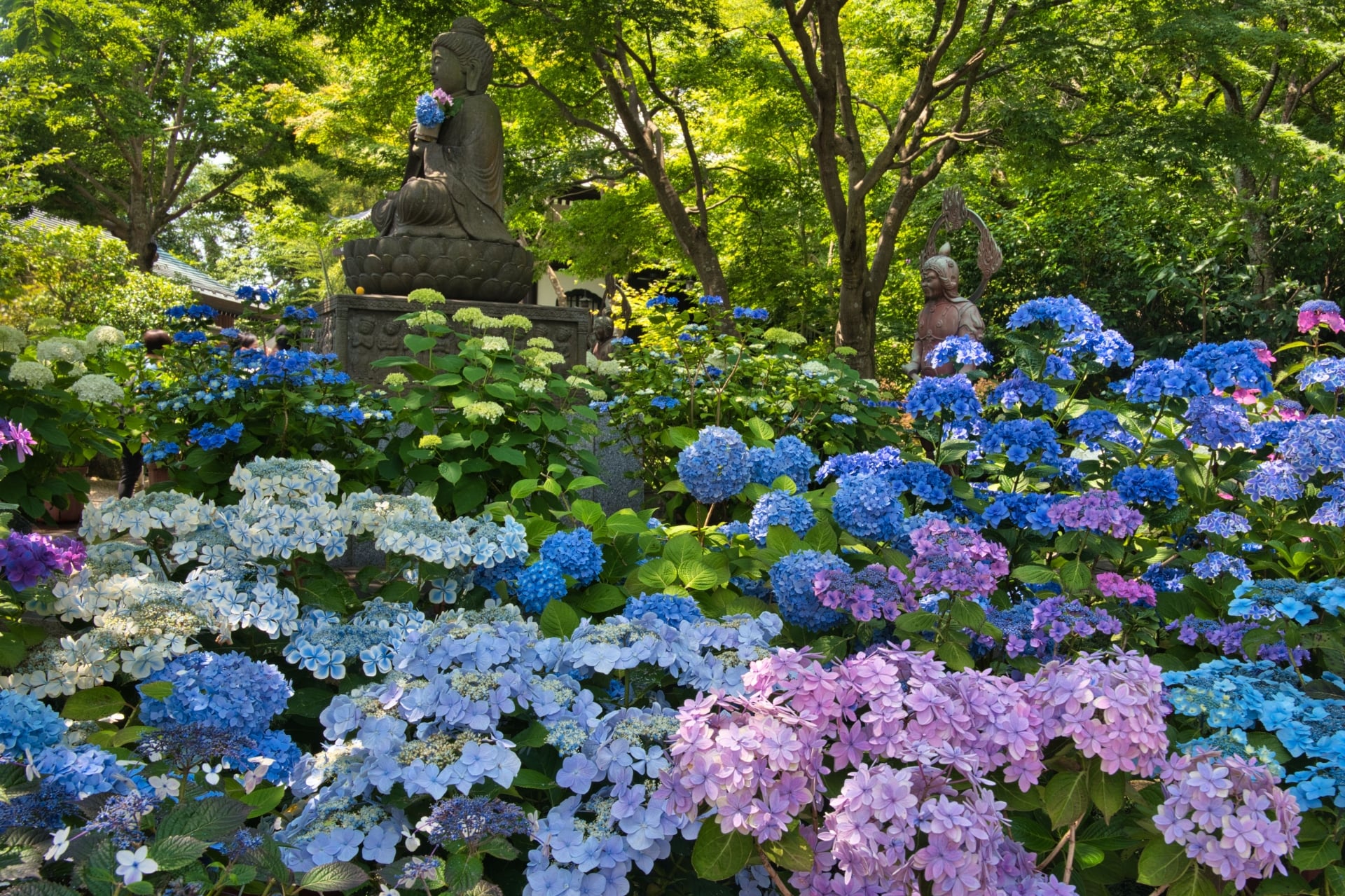

Perched on a steep hill overlooking the Shonan coastline, Hasedera (長谷寺) offers a completely different aesthetic and structural experience than its northern counterpart. The temple is home to more than 2,500 hydrangea plants climbing a heavily terraced mountainside.
- The Look: Where Meigetsu-in relies on uniform blue, Hase-dera emphasizes intense biodiversity. The temple features over 40 distinct varieties of hydrangeas — including rare cultivars like Amacha and Benigaku — blooming simultaneously in shades of deep purple, vibrant magenta, white, and indigo. As you climb the terraced walkways, the flower clusters frame wide, panoramic views of Yuigahama Beach and Sagami Bay.
- The Hydrangea Path Ticketing System: As explained in Hasedera’s official website, because the Hydrangea Path (Ajisai-no-Komichi) is narrow and a high-risk bottleneck, Hase-dera has implemented a strict dual-ticket system during peak season. General temple admission is ¥400, but access to the upper Hydrangea Path costs an additional ¥500. Numbered return-time tickets are distributed at the gate on a first-come, first-served basis, and peak-season wait times can easily reach 60 to 90 minutes on weekdays. We strongly advise you to purchase the ticket in advance online if you plan to visit.
- Physical Demands and Mobility: The Hydrangea Path is physically demanding and built directly into a cliffside. Visitors must tackle approximately 80 steep stone steps just to reach the path’s entry platform, followed by another 130 winding steps along a narrow, one-way mountain loop. Sections of the upper trail lack handrails, and the ancient stone can become highly slippery during June downpours. Strollers and wheelchairs are strictly prohibited on this portion of the grounds.
| Access |
5-min walk from Hase Station |
|---|---|
| Business Hours |
8:30 AM–5 PM |
| Price |
¥400 (Additional ¥500 required for Ajisai-no-Komichi) |
| Official Website |
http://www.hasedera.or.jp/ |
Engakuji (The Sprawling Zen Sanctuary)
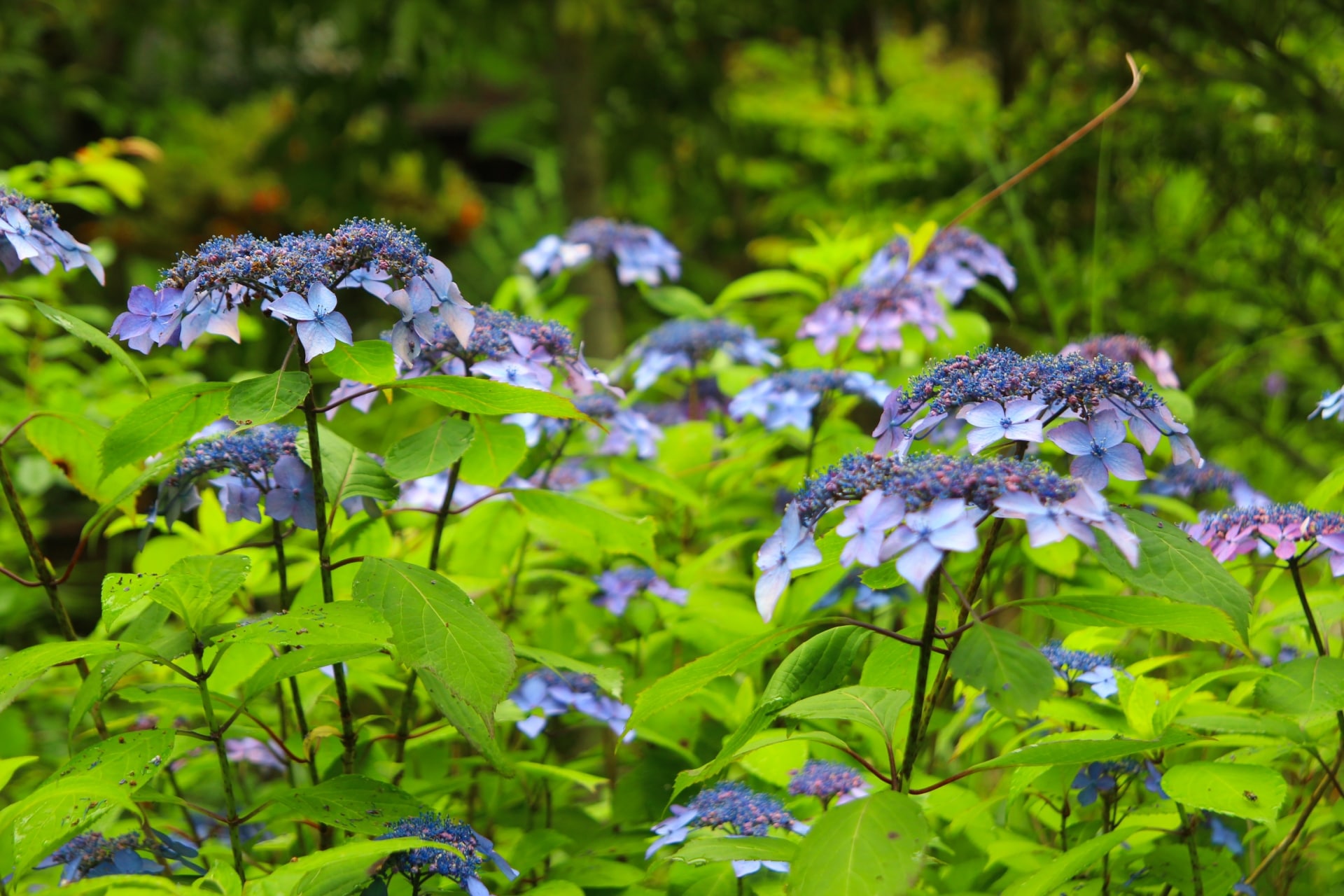
Unlike the high-density garden layouts of Meigetsu-in, Engakuji (円覚寺) integrates hydrangeas naturally across its massive, forested mountain campus.
- The Look: The flowers grow in organic patches alongside towering cedar trees, centuries-old thatched-roof sub-temples, and the grand Sanmon main gate. The primary aesthetic here is an expansive, uncurated blend of wild blues and whites softening the heavy, dark timber of Kamakura’s second-highest-ranked Zen temple.
- The Crowd Countermeasure: Because Engakuji is vast and lacks a single bottlenecked pathway, it acts as the perfect pressure valve for June tourism. Even during peak weekends, the grounds rarely feel suffocating. It offers a meditative, slow-paced viewing experience right next to the station, making it the ideal spot to reset after navigating the intense congestion of Meigetsu-in.
| Access |
1-min walk from Kita-Kamakura Station |
|---|---|
| Business Hours |
8:30 AM–4 PM |
| Price |
¥500 |
| Official Website |
http://www.engakuji.or.jp/ |
Jochiji (The Atmospheric Moss-and-Stone Path)


Tucked into a narrow valley, Jochiji (浄智寺) is an unpretentious, rustic Zen temple defined by its “decaying” natural beauty and old-world architecture.
- The Look: The hydrangeas here are primarily wild lacecaps (Gaku Ajisai) rather than the heavily manicured mophead varieties found elsewhere. They bloom directly against ancient, moss-covered stone lanterns, a distinctive Chinese-style belfry gate, and uneven stone stairways.
- The Hidden Gem Factor: Cultivating only about 150 plants, Jochiji trades volume for pure atmosphere. It is vastly overlooked by general tour groups, ensuring you can photograph the misty, damp rainy-season environment in near-total silence. The damp earth and dripping bamboo groves enhance the mood and spiritual ambiance that defines old Kamakura.
| Access |
7-min walk from Kita-Kamakura Station |
|---|---|
| Business Hours |
9 AM–4:30 PM |
| Price |
¥300 |
| Official Website |
https://jochiji.com/ |
Jojuin (The Coastal Stairway View)
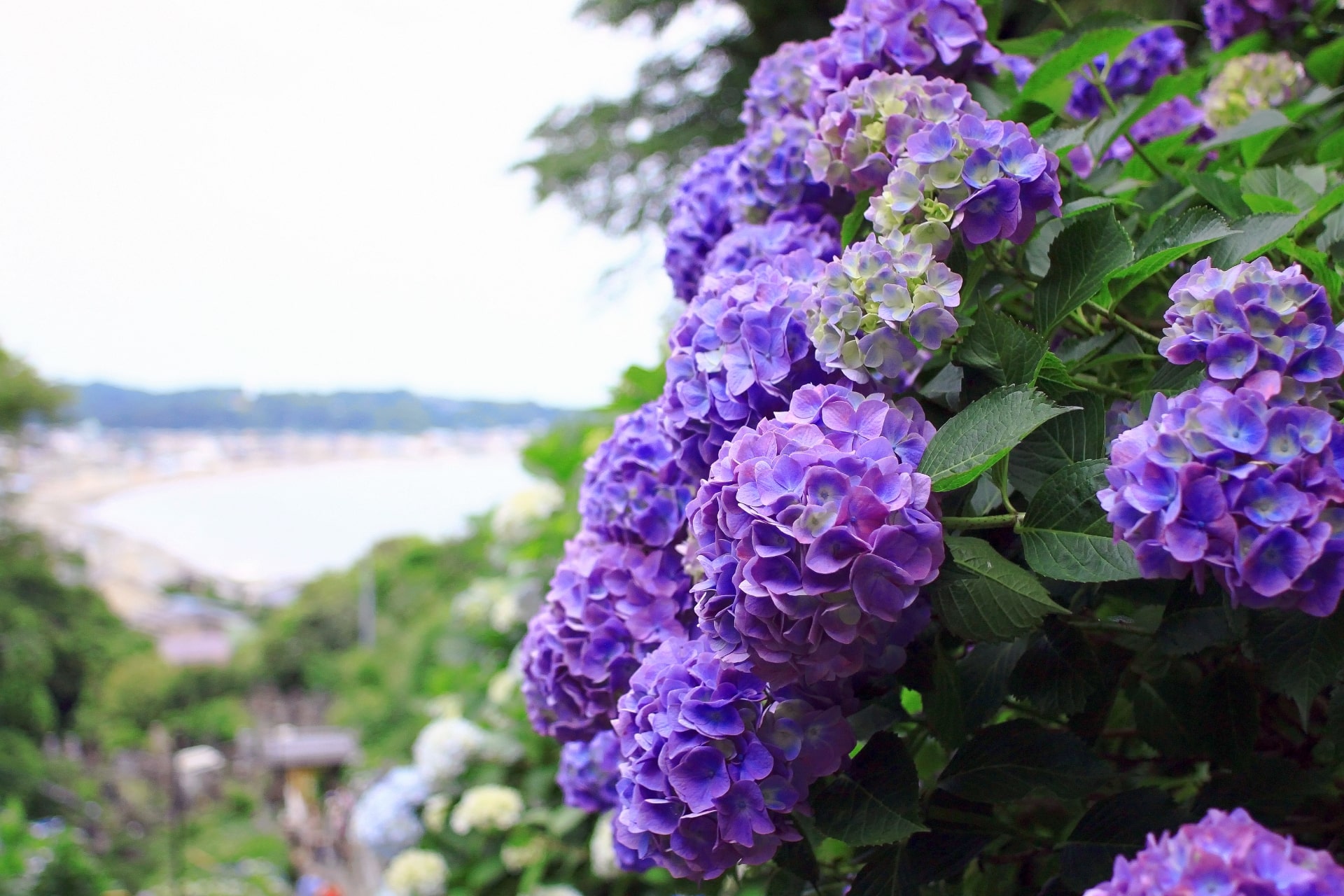
Jojuin (成就院) provides the ultimate panoramic composition: the temple’s steep staircase framed by bright hydrangea bushes that opens directly onto a sweeping view of the Shonan coastline.
- The Look: Standing at the top of the approach, your camera frames vibrant purple and blue flowers flanking the descent, with the crescent-shaped curve of Yuigahama Beach and Sagami Bay filling the background.
- Crucial Advisory: The temple underwent extensive stairway renovations that required cutting back a significant portion of its historic hydrangea rows. While the density has not fully returned to its legendary pre-2015 levels, the remaining clusters near the temple entrance and along the upper landing are mature enough to cleanly deliver the classic “flowers-plus-ocean” shot.
- Unlike the other major stops, there is no admission fee to walk the public stairway approach.
| Access |
3-min walk from Gokurakuji Station |
|---|---|
| Business Hours |
8 AM–5 PM |
| Price |
Free |
| Official Website |
http://www.jojuin.com/ |
Photographing the Enoden Train with Hydrangeas & Local Insights
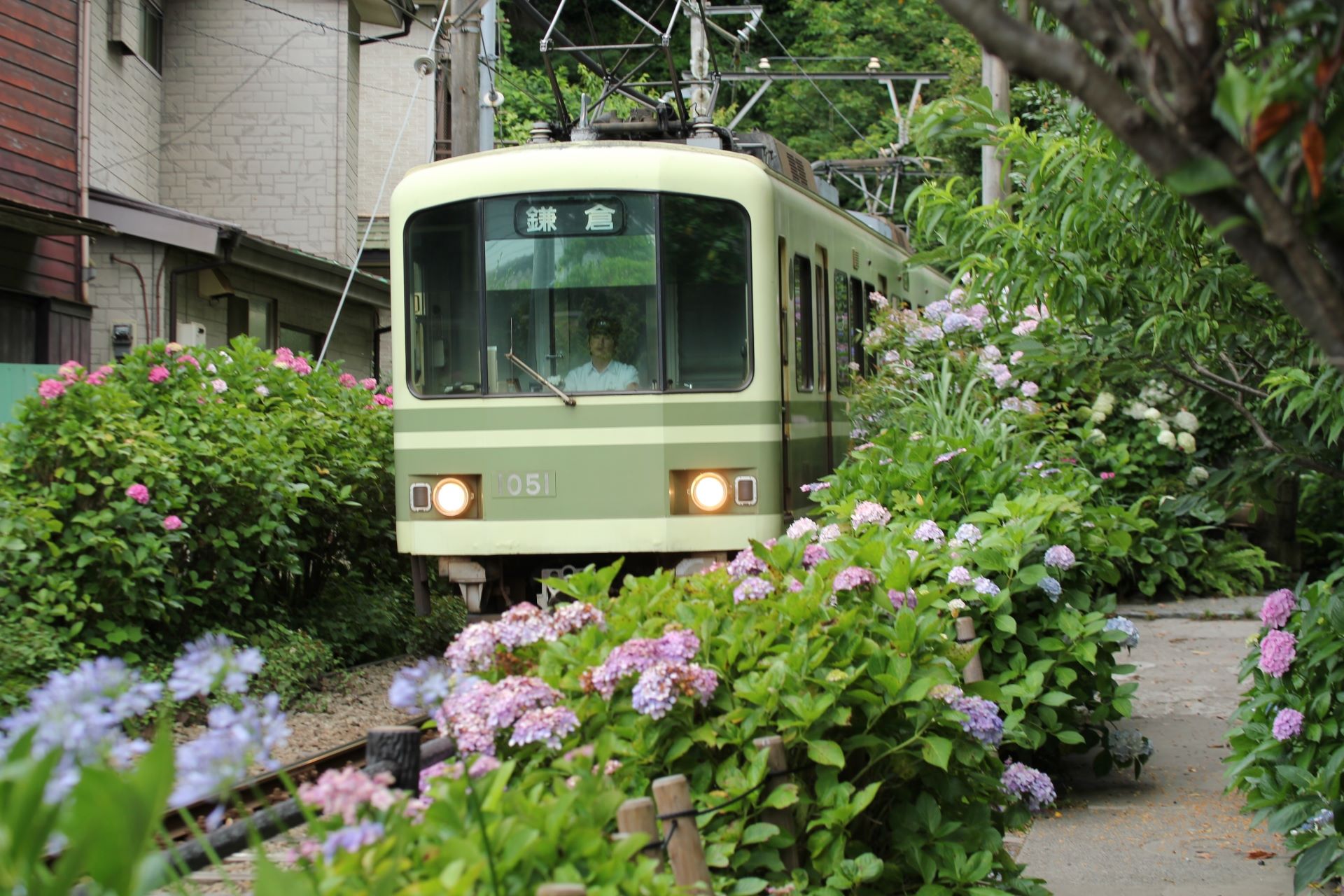
Beyond the temple walls, capturing the early summer atmosphere in Kamakura requires knowing the hyper-specific operational changes that happen only during June. From altered religious practices to trackside pruning, here is the ground reality for photographers and collectors.
About Goryo Shrine: The Pruning Shift
Historically, the narrow level crossing directly in front of Goryo Shrine (御霊神社) was considered among the ultimate “Train + Ajisai” photography hotspots. However, severe overcrowding and reckless tourist behavior have forced a major change.
Do not rely on old travel blogs recommending Goryo Shrine for trackside hydrangea shots. Local authorities and shrine staff have aggressively pruned the historic hydrangea bushes directly adjacent to the tracks to deter crowds from blocking the line. Many hydrangeas were moved inside the shrine grounds in 2022, and then photography was prohibited inside the shrine.
While a few scattered flowers remain near the shrine’s entrance torii gate, the dense “wall of flowers” framing the train no longer exists at this specific crossing. Skip the Goryo crossing entirely and focus your street photography around the quieter stretches near Hase and Gokurakuji stations.
The Gokurakuji Station Backdrop (The Safe Alternative)
Gokurakuji Station offers the most reliable and photogenic trackside hydrangea composition left in Kamakura. Just outside the rustic wooden station building, the tracks emerge from a historic brick tunnel flanked by steep hillsides covered in deep purple and blue mophead hydrangeas.
- The Angle: Position yourself on the pedestrian bridge overlooking the tunnel exit. This allows you to safely use a telephoto lens to compress the incoming train against the dense floral background without encroaching on the railway property line or violating local safety guidelines.
Peak-Season Goshuin (Temple Stamp) Restrictions


If you collect Goshuin (sacred calligraphy stamps), you need to adjust your expectations for June. Because the daily volume of tourists paralyzes temple operations, Meigetsu-in and Hase-dera will not accept physical Goshuincho books during the peak hydrangea bloom.
- The System: Instead of hand-stamping your book on-site, monk staff will exclusively hand out pre-written paper sheets ( kakiole ).
- The Strategy: You will need to purchase these loose sheets (usually ¥300–¥500) and glue them into your book later. If you want a traditional, live-ink stamp in your actual book, you will have to target smaller, less congested temples along the route, such as Jochiji.
Trackside Safety and Etiquette Rules
The Enoden is a functioning commuter line running through tight residential neighborhoods. Kamakura City strictly reinforces safety protocols during the peak June season:
- Yellow Line Boundaries: Standing inside the yellow safety lines or stepping onto the gravel ballast to frame a shot is strictly illegal and will cause the train to emergency-brake.
Property Respect: Many of the best trackside bushes grow in the private front yards of local residents. Keep your tripod and camera gear clear of residential entryways and do not block the narrow walking paths.
The Ultimate Kamakura Hydrangea Route (Step-by-Step Itinerary)
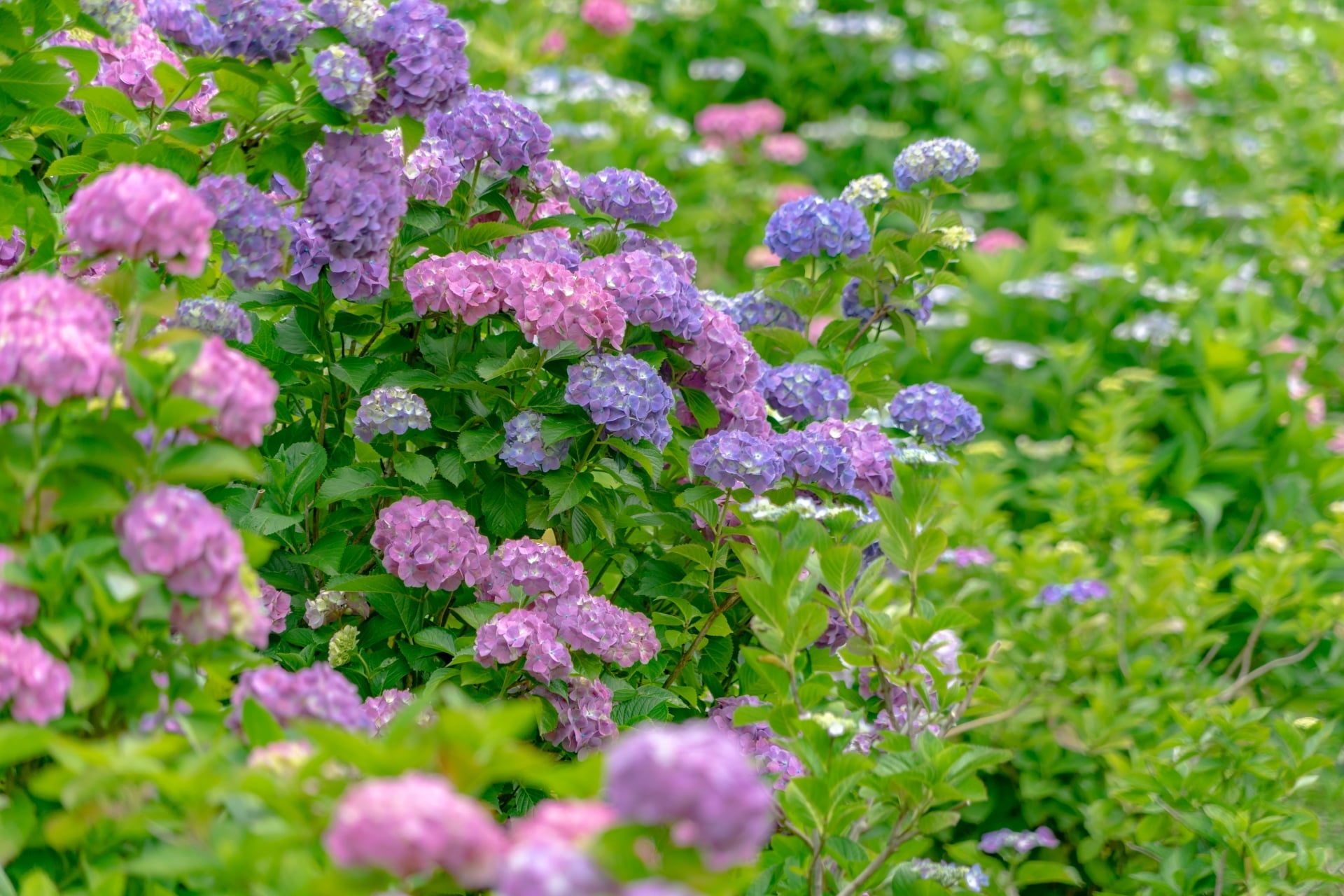
Following the timing of this route will help you maximize your daylight hours, balancing the high-crowd peaks with quieter, open-space transitions.
- 08:15 AM – Arrival at Kita-Kamakura Station. Arrive via the JR Yokosuka or Shonan-Shinjuku line. Do not stop for coffee or linger; head immediately toward the gates of Meigetsu-in to secure a spot near the front of the morning queue.
- 08:30 AM – 10:30 AM – Meigetsu-in (The Peak Crowd Strategy). The temple gates open exactly at 08:30 AM. Go straight to the main hydrangea paths and the circular Satori Window before the mid-day tour groups bottleneck the narrow wooden walkways. Allocate a full two hours to cover the main grounds and the restricted iris garden behind the main hall.
- 10:45 AM – 11:30 AM – Jochi-ji & Engaku-ji Quiet Walk. Exit Meigetsu-in and walk back toward the station. Stop at Jochi-ji first for its moss-covered stone paths, then cross the tracks to Engaku-ji. These sprawling Zen complexes absorb crowds easily, making them a low-stress buffer after the tight packing at Meigetsu-in.
- 12:00 PM – Transit & Local Lunch at Kamakura Station. Take the JR train one stop south to Kamakura Station. Head toward Komachi-dori or the surrounding side streets for a local specialty lunch: shirasu-don (boiled or raw whitebait over rice) or Kamakura vegetable curry.
- 01:30 PM – Enoden Coastal Transit. Board the Enoden Line at Kamakura Station and ride it down to Hase Station. Keep your Enoden 1-Day Pass ready at the wicket.
- 02:00 PM – 04:00 PM – Hase-dera & Joju-in Coastal Views. Enter Hase-dera and immediately pick up your numbered ticket for the Hydrangea Path ( Ajisai-no-Komichi ). While waiting for your entry window, explore the lower ponds and the Kannon-do hall. After finishing the hillside path, take the 10-minute walk over to Joju-in to catch the classic view of the 108 stone steps framed by flowers and Sagami Bay.
- 04:30 PM – Trackside Photography near Gokurakuji. Walk down from Joju-in to Gokurakuji Station. Spend the final hour of light photographing the green retro Enoden trains as they cut through the narrow residential passes lined with blooming hydrangea bushes. Avoid standing directly on the tracks; use the designated safe-viewing areas near the level crossings.
Kamakura Hydrangea Temples at a Glance
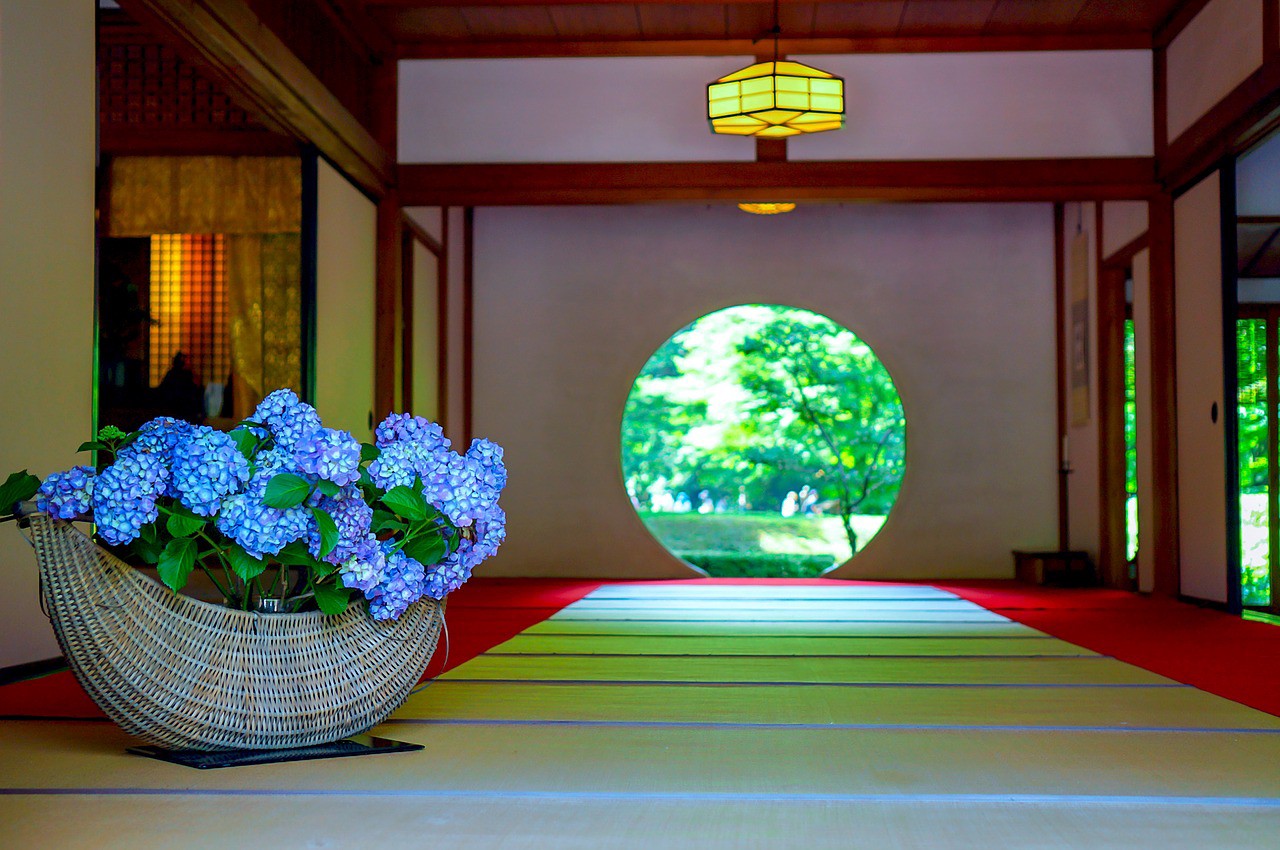
To help you prioritize your stops based on your budget, schedule, and tolerance for crowds, here is a comparative breakdown of Kamakura’s primary hydrangea locations.
| Temple Name | Entry Fee (June Specific) | Crowd Level | Best Feature |
| Meigetsu-in | ¥500 + ¥500 (Inner Garden) | High | Monochrome “Meigetsu-in Blue” & Hidden Iris Garden |
| Hase-dera | ¥400 (General) + ¥500 (Hydrangea Path) | High | Hillside ocean views & 40+ color varieties |
| Engaku-ji | ¥500 | Moderate | Sprawling Zen architecture & large, uncrowded paths |
| Jochiji | ¥300 | Low | Mossy stone steps & rustic, wild mountain atmosphere |
| Joju-in | Free | Moderate | Coastal staircase view framing Sagami Bay |
Frequently Asked Questions
Q: How does rain affect the hydrangea viewing experience?
A: Rain is an asset. Unlike fragile cherry blossoms, hydrangeas thrive on moisture.The water saturates the floral pigments, making the blues, purples, and magentas look significantly deeper and more vibrant on camera than they do in harsh, washed-out sunlight. Light rain also keeps casual weekend crowds away, offering cleaner backgrounds for photography.
Q: Are coin lockers available at the stations for large luggage?
A: Kita-Kamakura Station has a highly limited number of small coin lockers that routinely fill up before 8:30 AM. Kamakura Station has a larger inventory, but these are completely claimed by 9:00 AM during the June peak. It is recommended to leave heavy suitcases or large backpacks at your hotel or inside a major Tokyo transit hub (like Shinjuku or Tokyo Station) before heading to Kamakura.
Q: What is the best day of the week to visit to minimize wait times?
A: Schedule your trip between Monday and Thursday. Fridays see an influx of early weekend travelers, and Saturdays and Sundays bring extreme domestic day-trippers. A weekend visit to Hase-dera can result in a 90-to-120-minute wait just to step onto the Hydrangea Path.
Q: Is drone photography allowed at the temples or near the train tracks?
A: No.Drone photography is strictly banned across all temple grounds, public shrines, and directly along the Enoden railway corridor. Local security marshals and police actively patrol these high-density areas during June, and violating these boundaries carries severe legal fines under Japanese aviation and transit safety laws.
For more information about things to do in the area and seasonal guides, check these articles too!

Written by
Photographer, journalist, and avid urban cyclist, making sense of Japan since 2017. I was born in Caracas and lived for 14 years in Barcelona before moving to Tokyo. Currently working towards my goal of visiting every prefecture in Japan, I hope to share with readers the everlasting joy of discovery and the neverending urge to keep exploring.
- +0 0
-
-