Best Things to Do in Kamakura: Complete Day Trip Guide from Tokyo (2026)
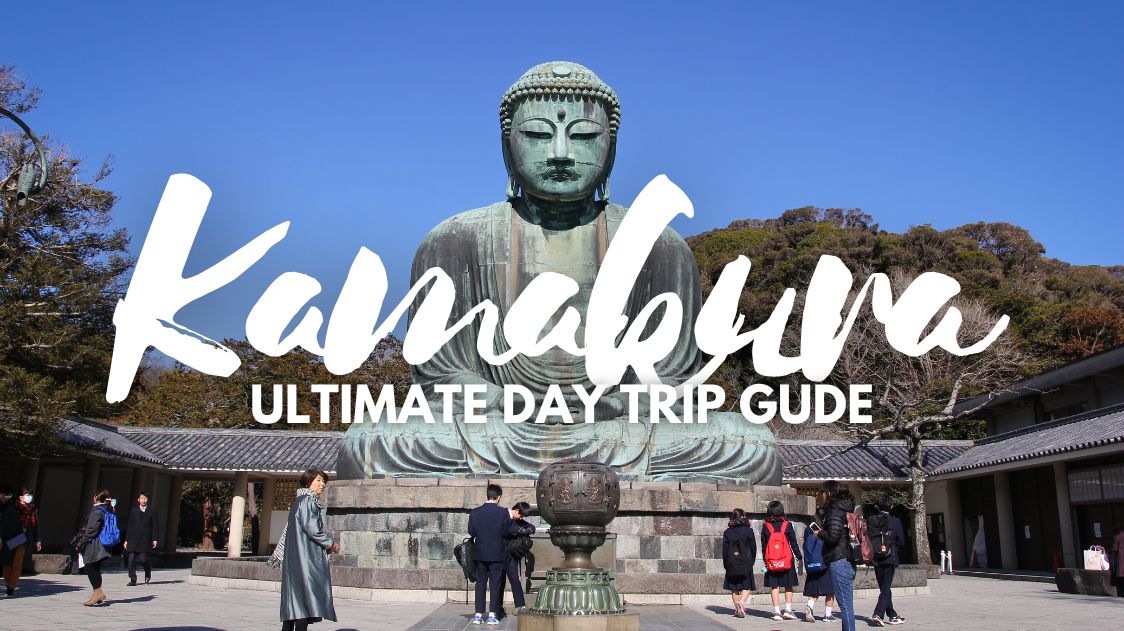
Best Things to Do in Kamakura: Ultimate Day Trip Guide

- +0 0
-

-


Kamakura makes a surprisingly easy escape from Tokyo. In a single day, you can walk from centuries-old Zen temples to surfing beaches, ride a rattling local train along the coast, eat fresh shirasu by the sea, and still be back in the city before dinner. That range is a big part of why Kamakura remains one of the most popular day trips in Japan, both for international visitors and Tokyo residents looking for a slower pace on the weekend.
Unlike destinations that revolve around one major landmark, Kamakura is a suitable city to wander through. Some areas are packed with famous sights like the Great Buddha and Tsurugaoka Hachimangu, while others feel unexpectedly quiet, with narrow residential streets, hidden cafés, bamboo groves, and small temples tucked into the hillsides. The atmosphere also changes noticeably depending on where you go. Around Kamakura Station, things can feel crowded and energetic. A few stops away on the Enoden line, the pace becomes much calmer.
The city is also much more diverse than many first-time visitors expect. Beyond the historic temples and shrines, Kamakura has hiking trails, ocean views, seasonal flower spots, local craft shops, and one of the most scenic train lines near Tokyo. In early summer, hydrangea season completely transforms places like Hasedera and Meigetsuin. During summer, Yuigahama Beach fills with surfers and beach houses. Autumn brings foliage to the temple gardens, while winter tends to be the quietest and clearest time to explore.
This guide covers the best things to do in Kamakura, including the city’s most important temples and shrines, coastal areas, local food spots, seasonal highlights, and practical tips for planning a smooth day trip from Tokyo.
See also: Best Things to Do in Kanagawa: Yokohama, Kamakura, Hakone & Hidden Gems
How to Get to Kamakura
Kamakura is one of the easiest day trips from Tokyo thanks to its direct train connections and compact layout. Most visitors arrive by JR train, but there are also more affordable pass options if you plan to combine Kamakura with nearby Enoshima.
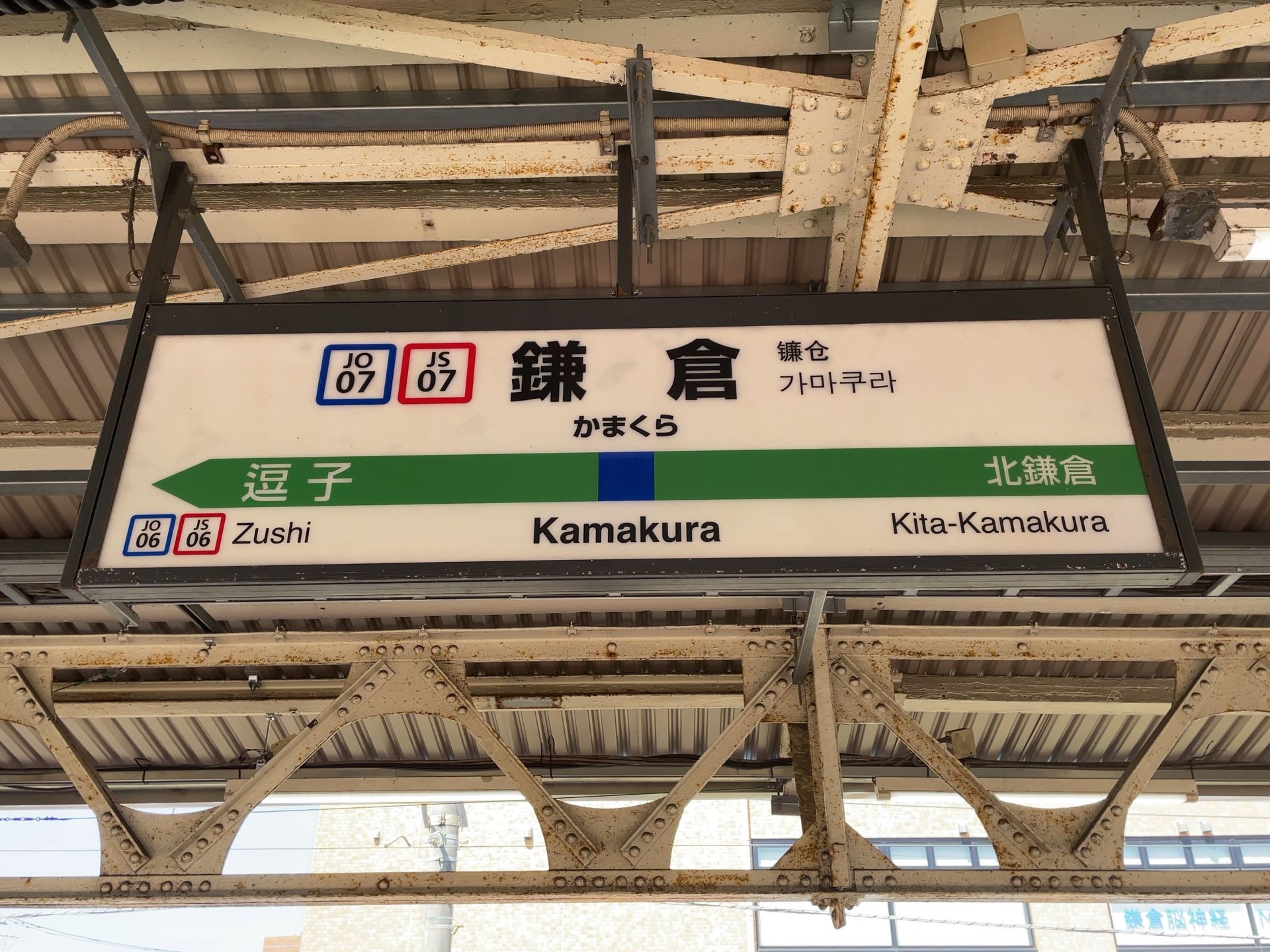
JR Yokosuka Line from Tokyo
The JR Yokosuka Line is the simplest and fastest way to reach Kamakura from central Tokyo. Direct trains run from Tokyo Station to Kamakura Station without transfers, making this the most convenient option for first-time visitors.
- Travel time: approximately 55–60 minutes
- Fare: around ¥950 one way
- Best for: visitors staying around Tokyo Station, Shinagawa, or Ueno
If possible, try to arrive before 9:00 AM. Popular areas around Kamakura Station and the Great Buddha become noticeably busier later in the morning.
Shonan-Shinjuku Line
If you are staying around Shinjuku, Shibuya, Ikebukuro, or Ebisu, the JR Shonan-Shinjuku Line is often the most convenient route. Some trains continue directly to Kamakura without requiring a transfer.
- Travel time: around 60–70 minutes from Shinjuku
- Fare: around ¥950 one way
- Best for: west-side Tokyo neighborhoods
Not every train goes directly to Kamakura, so check the destination before boarding. Some services terminate at Ofuna, where you may need to transfer to the Yokosuka Line for the final stretch.
Odakyu + Enoshima-Kamakura Free Pass
For travelers planning to visit both Kamakura and Enoshima in the same day, the Enoshima-Kamakura Free Pass can be a good value. The pass is sold by Odakyu Railway and for ¥1,640 it includes:
- Round-trip transport from Shinjuku
- Unlimited rides on the Enoden line between Kamakura and Fujisawa
This option is a bit slower than JR, but more cost-effective, and suitable for relaxed coastal itineraries. Riding the Enoden through small residential neighborhoods and along the shoreline is one of the highlights of visiting the Shonan area.
Typical route:
- Take the Odakyu Line from Shinjuku to Fujisawa
- Transfer to the Enoden
- Explore Enoshima and Kamakura along the coast
Travel time from Shinjuku is usually around 90 minutes or slightly longer depending on connections.
Getting Around Kamakura
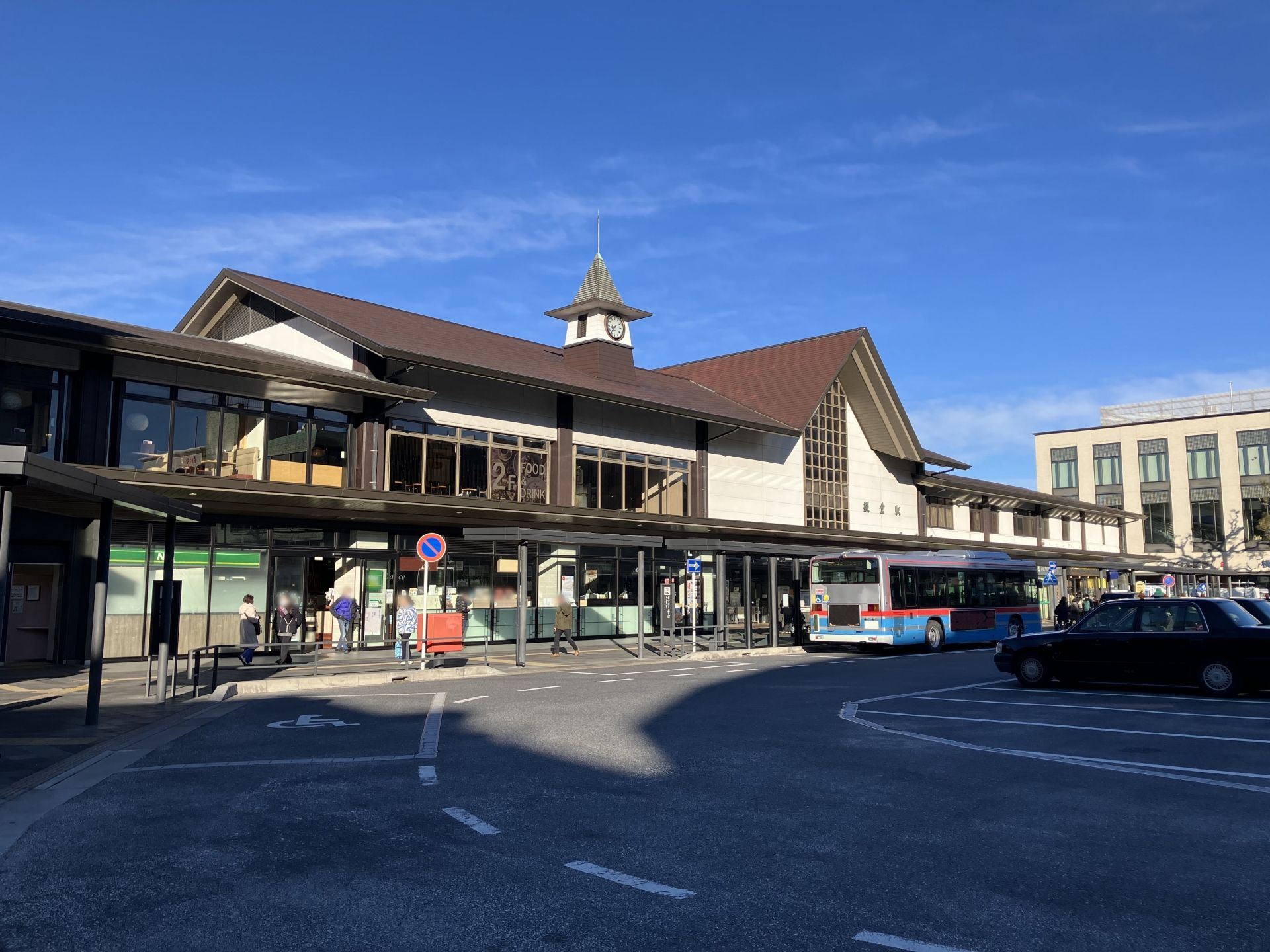
Kamakura is relatively compact, but transportation strategy makes a big difference once crowds start building up.
Kamakura Station: East Exit vs West Exit
Kamakura Station is divided into two main sides:
- East Exit: Komachi Street, Tsurugaoka Hachimangu, shopping areas
- West Exit: access toward Hase, the Great Buddha, and local residential neighborhoods
Most first-time visitors naturally exit through the east side because of the busy shopping street directly outside the station. The west side is noticeably quieter and often feels more local.
Enoden
The Enoden is Kamakura’s famous old-fashioned local train connecting Kamakura Station with Enoshima and Fujisawa. The line passes through narrow residential streets, beachside areas, and several major sightseeing spots, making it both practical transportation and a sightseeing experience on its own.
Popular stops include:
- Hase Station for the Great Buddha and Hasedera Temple
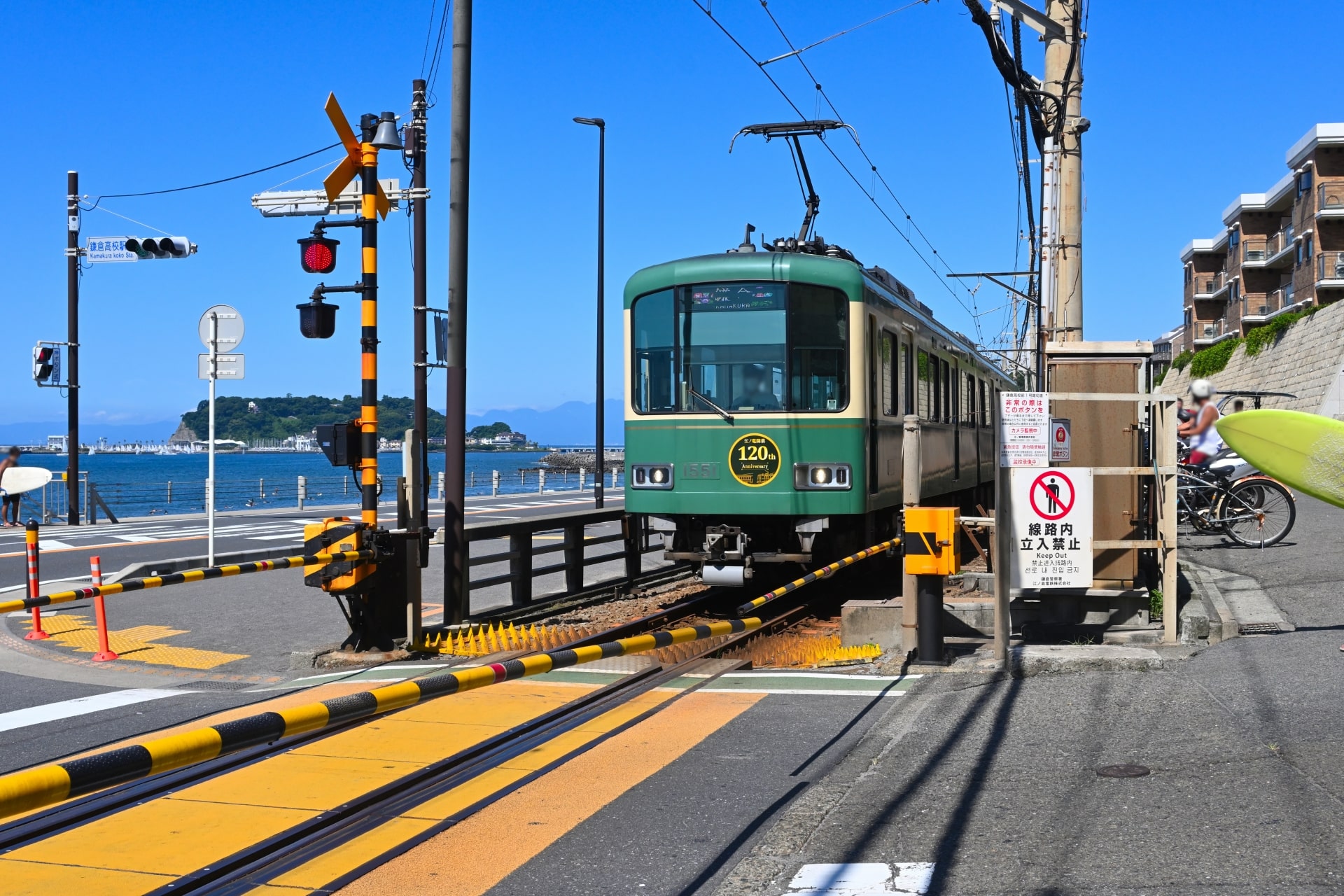
- Kamakurakoko-mae Station for the famous Slam Dunk crossing
- Enoshima Station for Enoshima Island
On weekends and during peak tourist seasons, trains can become extremely crowded in the middle of the day. Early morning rides are much more enjoyable.
Enoden Day Pass
The Enoden 1-day pass offers unlimited rides along the line and is useful if you plan to hop between multiple stations.
- Price: around ¥800
- Best for: Kamakura + Enoshima itineraries
If you are mainly staying around Kamakura Station and visiting only one or two areas, paying individually is usually cheaper.
Walking Around Kamakura
Many of Kamakura’s main attractions are walkable, especially around:
- Kamakura Station
- Komachi Street
- Tsurugaoka Hachimangu
- Hase area
However, distances can become deceptively tiring over a full day. Walking between temple areas often involves hills, staircases, and uneven roads. Comfortable shoes are strongly recommended.
A common mistake is underestimating travel times between eastern Kamakura and the coastal side near Hase and Yuigahama.
Rental Bicycles
Rental bicycles are available near Kamakura Station and can be useful on quieter weekdays. They are particularly convenient for reaching places like Houkokuji Temple or moving between less connected areas.
That said, cycling in central Kamakura can become frustrating on crowded weekends due to narrow roads, pedestrian traffic, and limited parking around major attractions.
Best Temples and Shrines in Kamakura
Kamakura has dozens of temples and shrines scattered across the city, but a few stand out as essential stops for first-time visitors. Some are historically important, others are famous for seasonal scenery, and a handful have become symbols of Kamakura itself.
See also: Kita-Kamakura Temple Guide
The Great Buddha (Kotoku-in Temple)
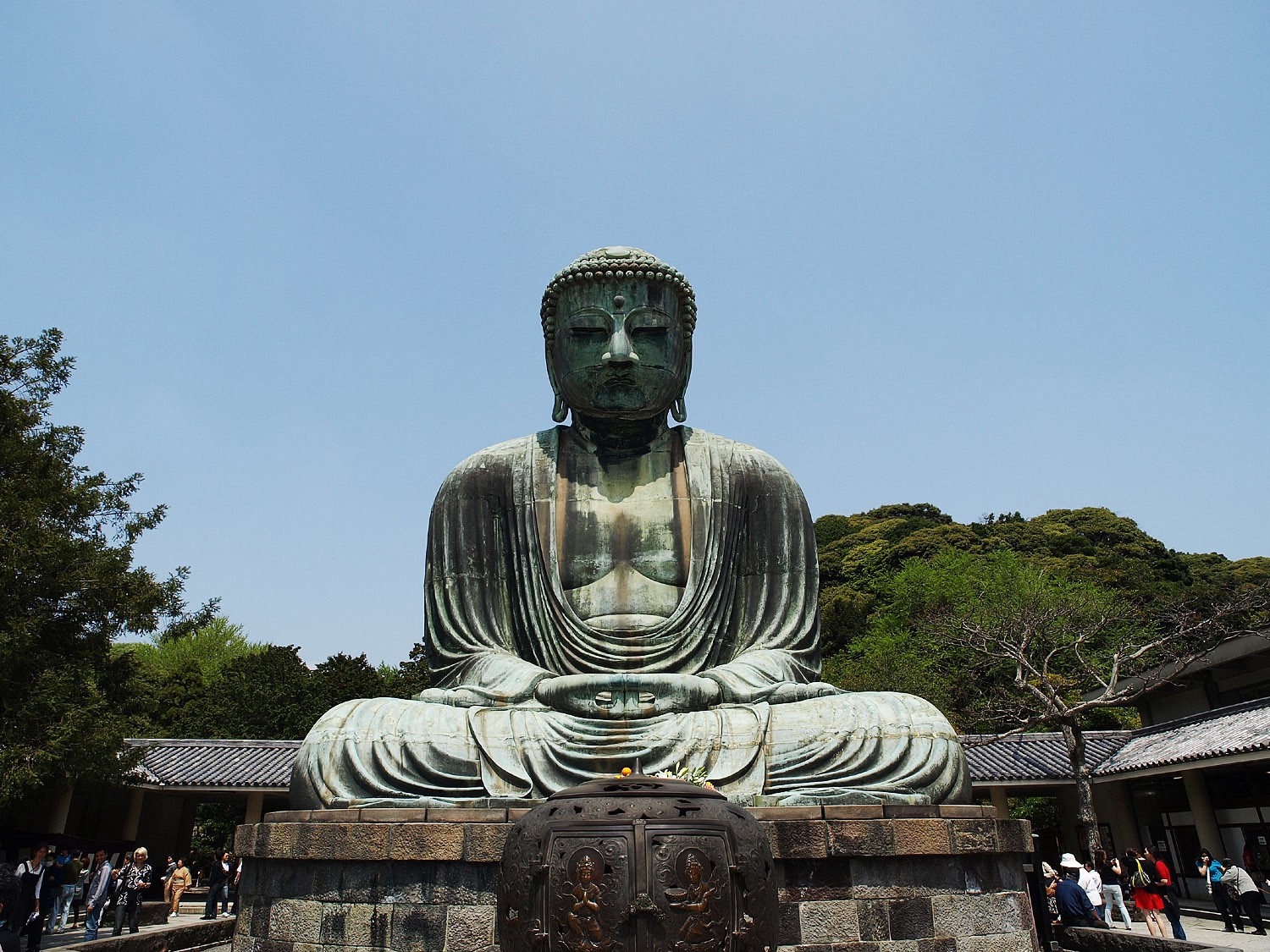
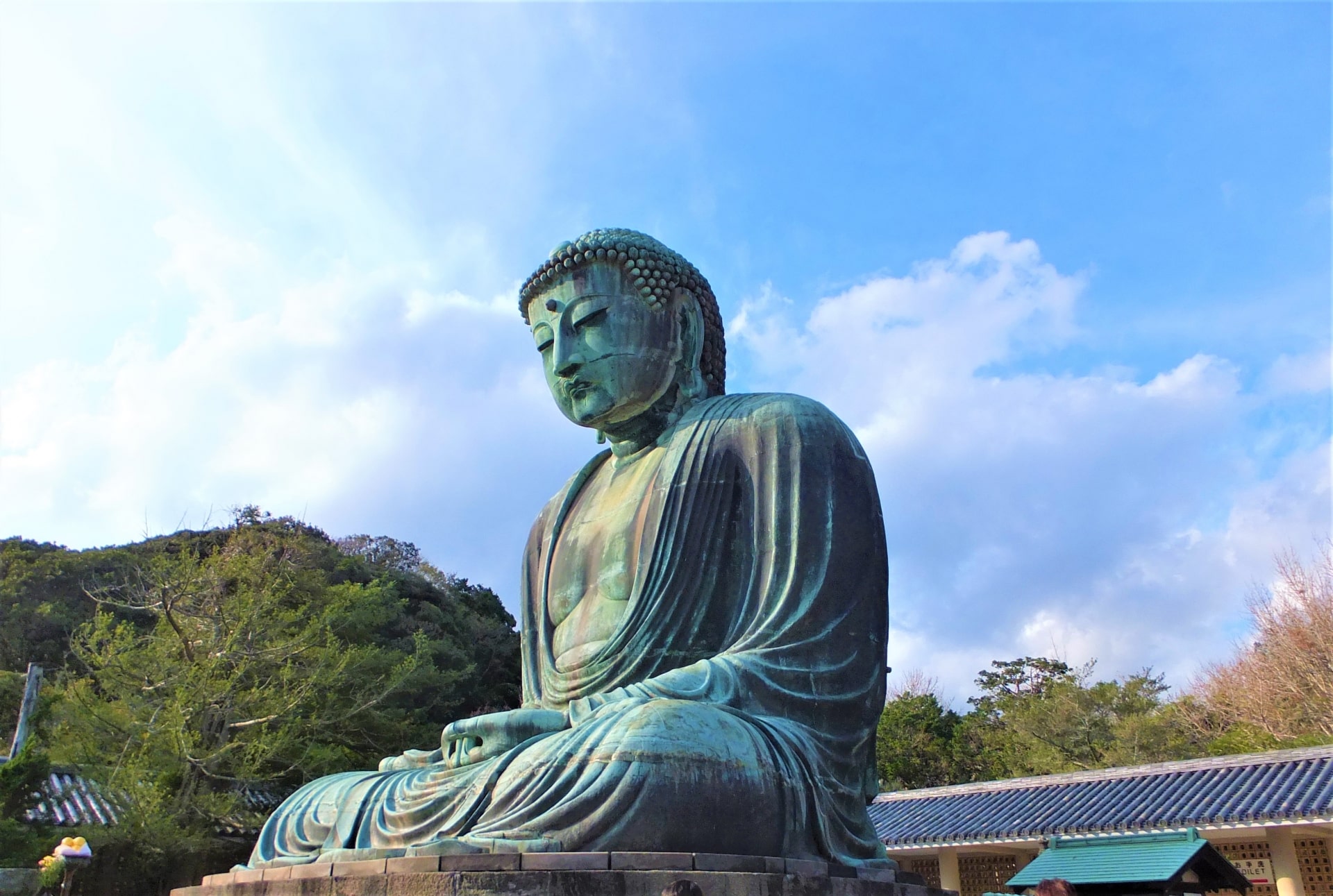
The Great Buddha of Kamakura (鎌倉大仏) is the city’s most recognizable landmark and one of the most famous Buddhist statues in Japan, standing over 11 meters tall and dating back to the 13th century. Unlike many other large Buddha statues in Japan, it sits outdoors in the open air after the original Kotokuin temple (高徳院) buildings were destroyed centuries ago by storms and tsunamis.
Even people with limited interest in temples usually end up enjoying this stop. The scale of the statue is impressive in person, but the atmosphere feels surprisingly relaxed. Visitors can actually enter inside the statue for a small additional fee. The interior is small and only takes a minute or two to see, but it gives a closer look at the statue’s construction and bronze structure, as well as the repair works carried out over time. It is not a must-do experience, though many first-time visitors are curious enough to try it once.
The area around Kotokuin becomes heavily crowded from late morning onward, especially on weekends and during the hydrangea season in June. Arriving early makes a noticeable difference if you want cleaner photos or a quieter atmosphere. The temple is also only a short walk from Hasedera, so the two are usually combined into the same part of the itinerary.
 Access Access |
7-min walk from Hase Station |
|---|---|
 Business Hours Business Hours |
8AM–5:30PM (Apr-Sept); 8AM–5PM (Oct-Mar). Last entry 15-min before closing. * Viewing inside the Great Buddha 8AM–4:30PM (last entry 10-min before closing) |
 Price Price |
¥300; additional ¥50 fee to see inside the Great Buddha |
 Official Website Official Website |
https://www.kotoku-in.jp/ |
Hasedera Temple
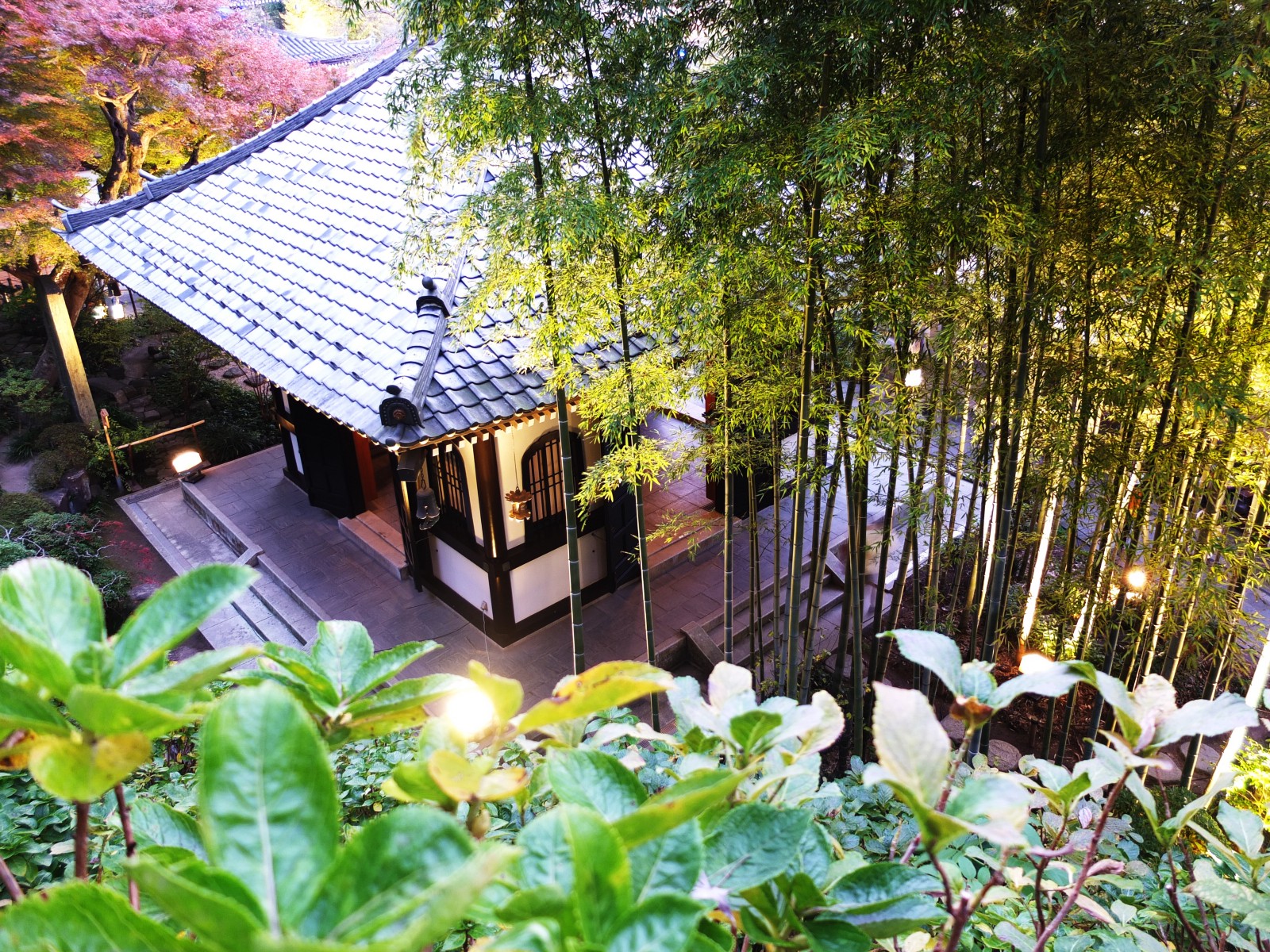
Hasedera (長谷寺) is often considered Kamakura’s most visually varied temple. While many visitors initially come for the famous hydrangeas, the grounds also include coastal viewpoints, hillside walking paths, small gardens, ponds, caves, and one of the largest wooden Buddhist statues in Japan.
The temple’s eleven-headed Kannon statue is over 9 meters tall and dominates the main hall interior. According to tradition, the statue is connected to the same sacred tree used to carve the Kannon at Hase Temple in Nara. One of Hasedera’s biggest strengths is how layered the grounds feel, as paths gradually climb the hillside, opening up views over the city and Sagami Bay. On clear days, the upper observation areas become one of the better panoramic viewpoints in Kamakura.
Hydrangea season is the temple’s busiest period by far. Thousands of flowers bloom along the hillside paths during June, attracting huge crowds from Tokyo and beyond. During peak bloom weekends, the hydrangea walking route may require timed-entry tickets or long waiting times. If visiting in June, arriving immediately after opening is strongly recommended.
Outside hydrangea season, Hasedera tends to feel calmer and arguably more enjoyable. Autumn foliage is particularly beautiful around the ponds and hillside paths, while winter mornings can be surprisingly quiet.
| Access |
5-min walk from Hase Station |
|---|---|
| Business Hours |
8 AM–5 PM |
| Price |
¥400 |
| Official Website |
https://www.hasedera.jp/ |
Tsurugaoka Hachimangu Shrine
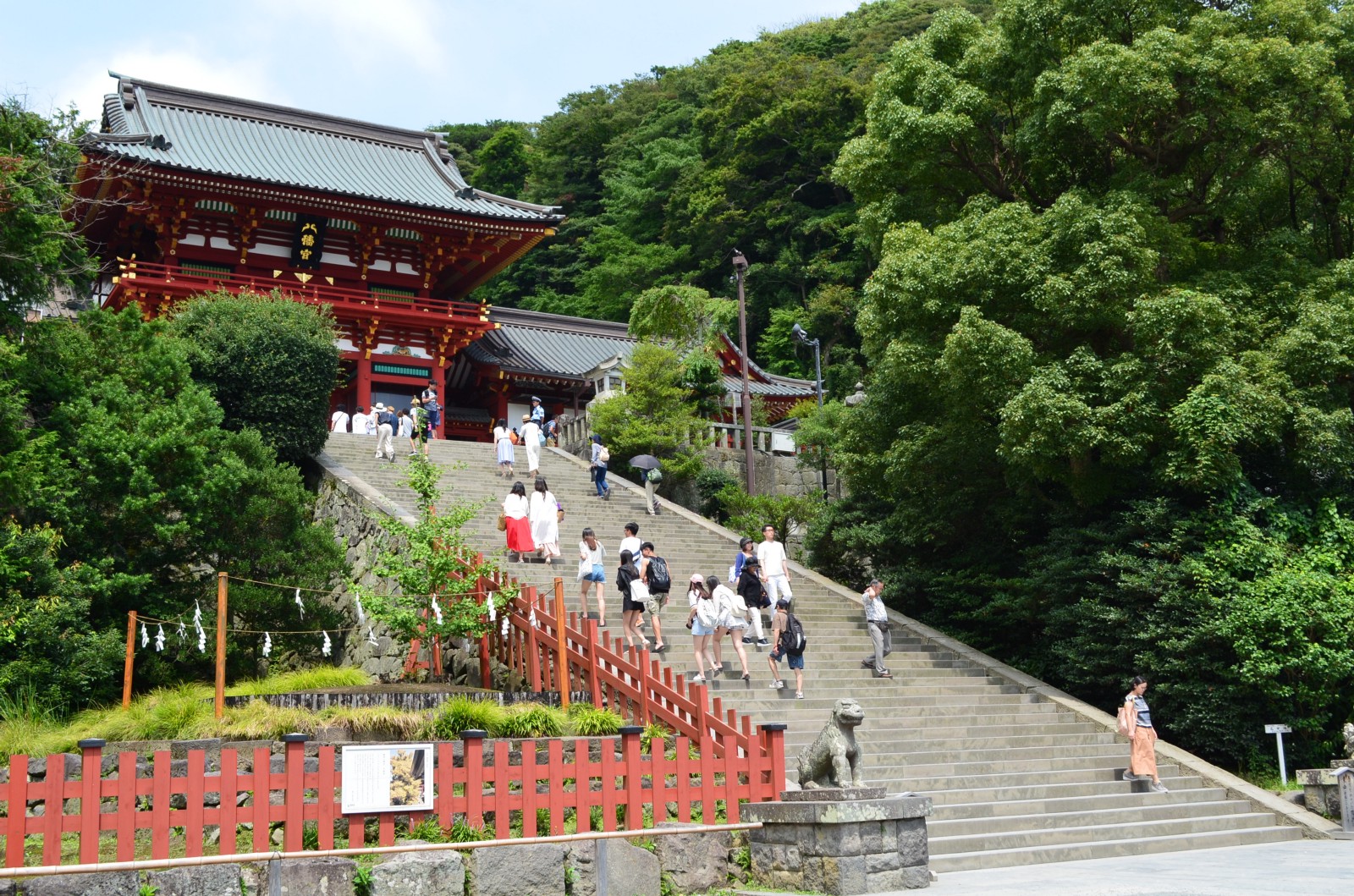
Tsurugaoka Hachimangu (鶴岡八幡宮) is Kamakura’s most important Shinto shrine and historically the spiritual center of the old Kamakura shogunate. Founded by Minamoto no Yoritomo, the first shogun of the Kamakura period, the shrine played a central political and religious role during the rise of samurai rule in Japan.
Today, the shrine functions as both a major sightseeing spot and the symbolic heart of Kamakura. The wide approach road leading toward the shrine cuts through the center of the city, connecting directly with Komachi Street and Kamakura Station. Because of its central location, many itineraries naturally begin or end here. For the same reason, the atmosphere around Tsurugaoka Hachimangu feels more energetic; street food stalls, shopping streets, festivals, and seasonal events all contribute to a livelier environment.
The shrine is especially popular during cherry blossom season, when the approach paths and surrounding areas fill with sakura. New Year’s season is another major event, drawing enormous crowds for hatsumode, the first shrine visit of the year. Throughout the year, the shrine also hosts traditional ceremonies, archery events, and festivals connected to Kamakura’s samurai heritage.
| Access |
10-min walk from Kamakura Station |
|---|---|
| Business Hours |
6 AM–8 PM |
| Price |
Free |
| Official Website |
https://www.hachimangu.or.jp/ |
Houkokuji Temple (Bamboo Grove)
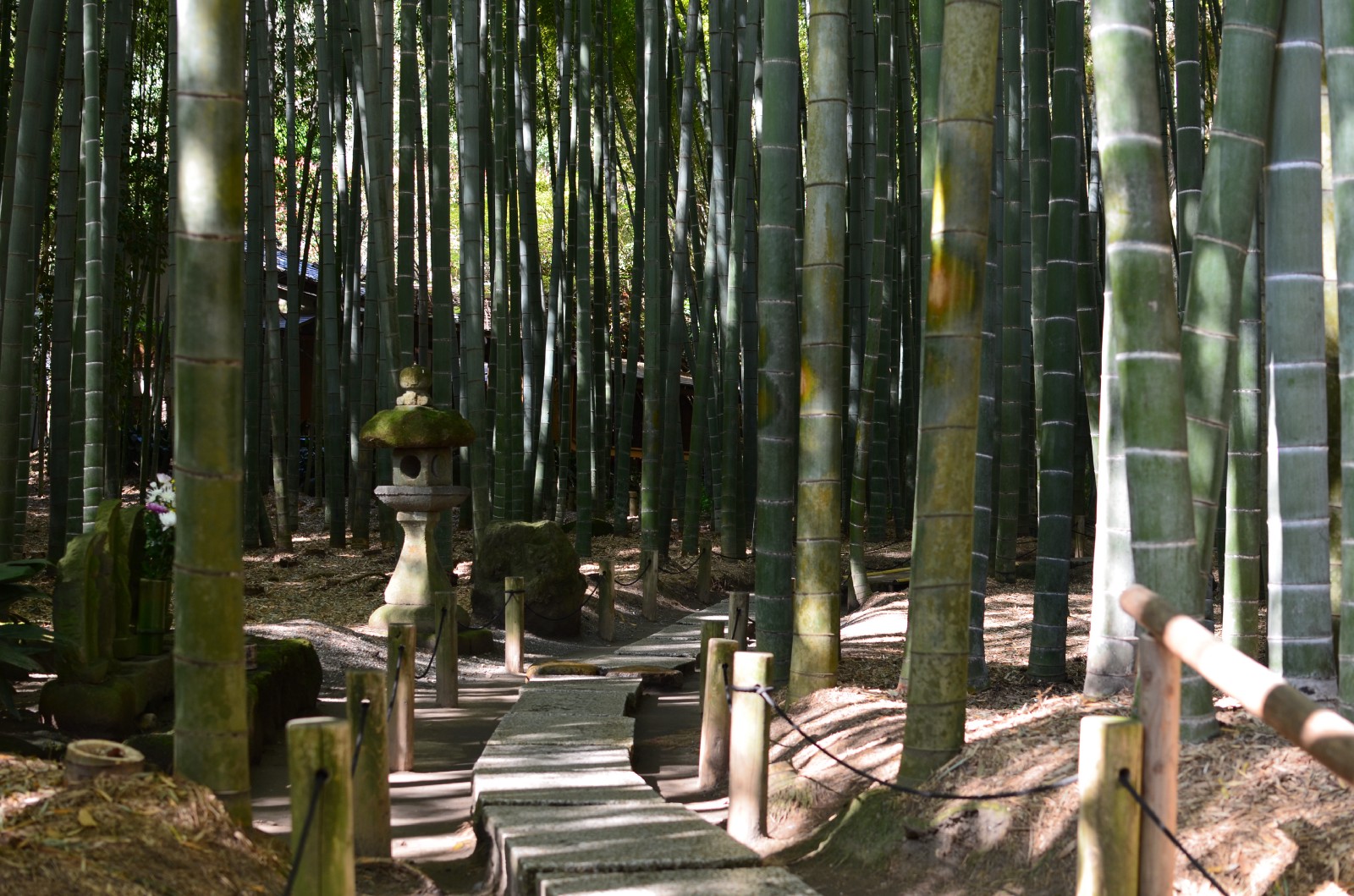
Houkokuji Temple (報国寺) is best known for its small but highly photogenic bamboo grove, which has become one of Kamakura’s most popular spots in recent years. Compared to larger temple complexes elsewhere in the city, Houkokuji feels quieter and more compact, with a stronger focus on atmosphere rather than major historical structures.
The bamboo grove itself is relatively small, especially compared to famous bamboo forests in Kyoto like Arashiyama. However, many visitors actually prefer Houkokuji because the paths feel more intimate and less commercialized. The dense bamboo, filtered sunlight, and quieter surroundings create a calmer experience when crowds are manageable.
At the back of the grove, there is a traditional tea house where visitors can enjoy matcha and Japanese sweets while facing the bamboo forest, one of the more relaxing breaks you can take during a busy day in Kamakura. The temple grounds also include small gardens, stone paths, and old yagura cave tombs carved into the hillsides, remnants of Kamakura’s medieval past that many visitors overlook.
Houkokuji is slightly less convenient to access than major spots around Kamakura Station or Hase, which helps keep the area somewhat quieter early in the day. Still, social media popularity has increased visitor numbers considerably over the last decade. If possible, try visiting shortly after opening. The bamboo grove becomes much less peaceful once tour groups start arriving late in the morning.
| Access |
10-min bus from Kamakura Station |
|---|---|
| Business Hours |
9 AM–4 PM |
| Price |
¥400 |
| Official Website |
http://www.houkokuji.or.jp/ |
Engakuji Temple
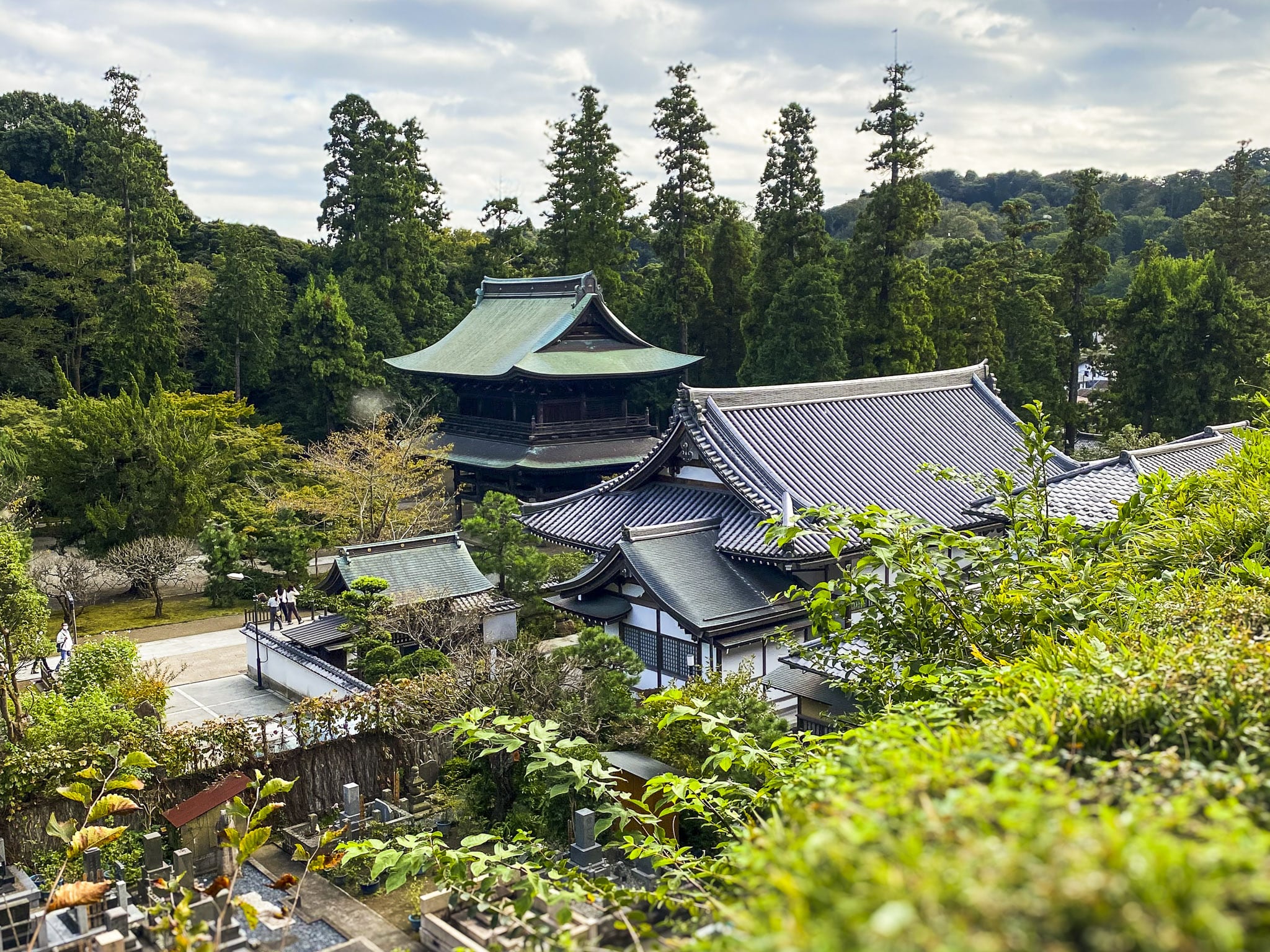
Located just outside Kita-Kamakura Station, Engakuji (円覚寺) is one of Kamakura’s most important Zen temples and one of the best places in the city to experience a quieter, more traditional atmosphere away from the busiest tourist streets.
Founded in the 13th century after the Mongol invasions, the temple became one of the leading centers of Zen Buddhism in Japan. Today, the grounds stretch across a wooded hillside filled with temple buildings, gates, staircases, gardens, and meditation spaces.
Engakuji is less about iconic photo spots and more about atmosphere. The temple feels spacious, restrained, and deeply connected to Zen aesthetics. Even on busy weekends, parts of the grounds often remain surprisingly peaceful.
Autumn is one of the best times to visit. The maple trees around the staircases and temple paths turn vibrant shades of red and orange, making Engakuji one of Kamakura’s strongest foliage destinations. Early mornings during autumn are especially beautiful before larger crowds arrive.
One major advantage is accessibility. Engakuji sits directly next to Kita-Kamakura Station, making it one of the easiest temple visits in Kamakura without requiring buses or long walks. Many visitors pair it with nearby Kenchoji and hiking trails connecting the northern hillsides.
The temple also hosts occasional zazen meditation experiences, though schedules vary and may require advance confirmation.
| Access |
1-min walk from Kita-Kamakura Station |
|---|---|
| Business Hours |
8:30 AM–4 PM |
| Price |
¥500 |
| Official Website |
http://www.engakuji.or.jp/ |
Kenchoji Temple
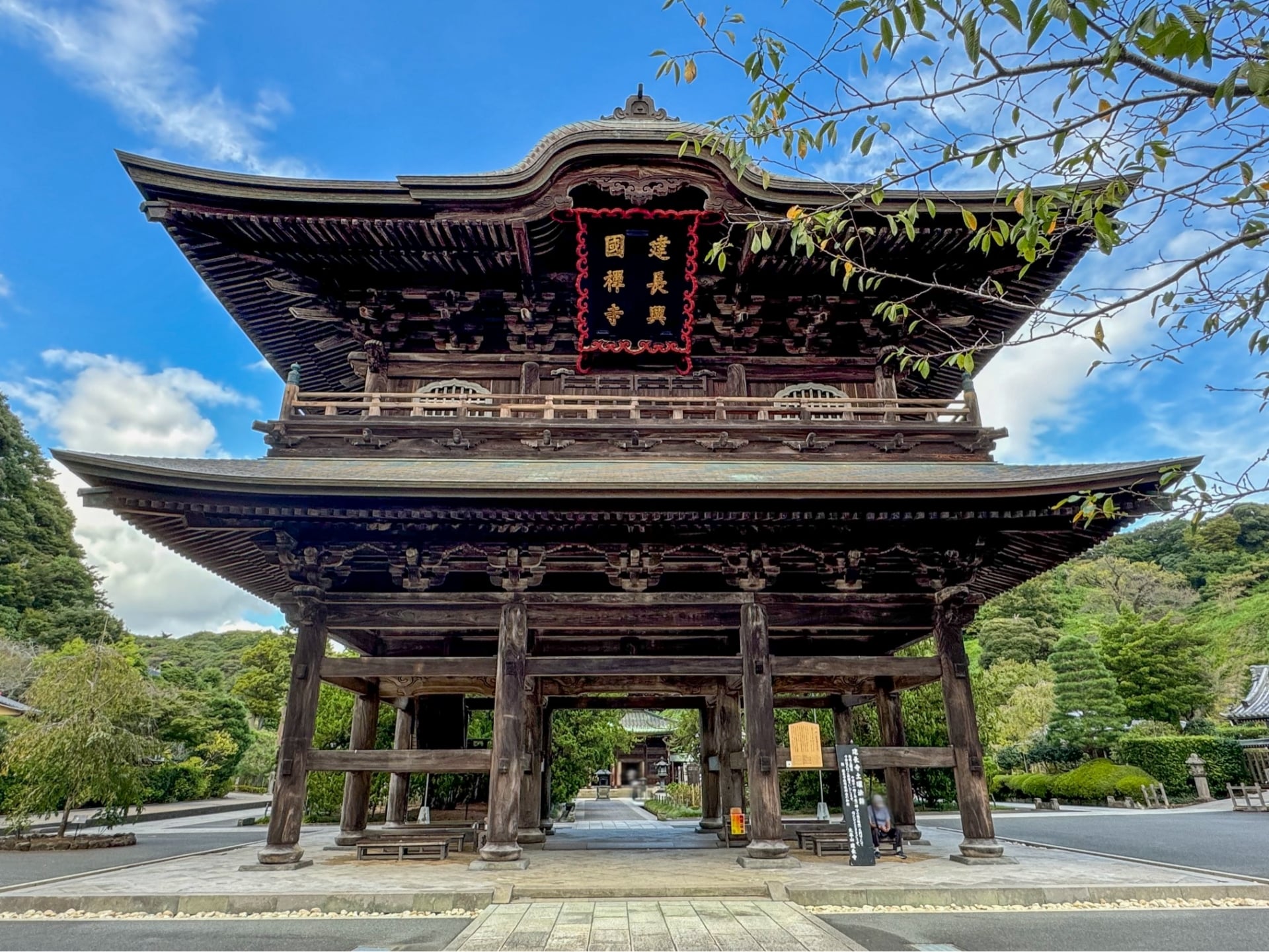
Kenchoji (建長寺) is considered the oldest Zen training temple in Kamakura and historically ranks among the city’s most important religious sites. Founded in 1253, it became the head temple of the Kenchoji school of Rinzai Zen Buddhism and played a major role in shaping Zen culture during the Kamakura shogunate.
The temple grounds are much larger than many first-time visitors expect. Wide temple courtyards, massive wooden gates, meditation halls, gardens, and long stone pathways give the area a more monumental feel than some of Kamakura’s smaller temples. One of the highlights is the elevated viewpoint behind the main temple complex. Visitors willing to climb the staircases through the forested hillside are rewarded with views stretching over Kamakura and, on clear days, toward Mount Fuji in the distance.
Kenchoji is also directly connected to several hiking routes, including trails leading toward Zuisenji and other northern temple areas. Because of this, the temple works particularly well for travelers wanting to combine sightseeing with a more active day outdoors.
| Access |
18-min walk from Kita-Kamakura Station |
|---|---|
| Business Hours |
8:30 AM–4:30 PM |
| Price |
¥500 |
| Official Website |
http://kenchoji.com/ |
Zeniarai Benten Shrine
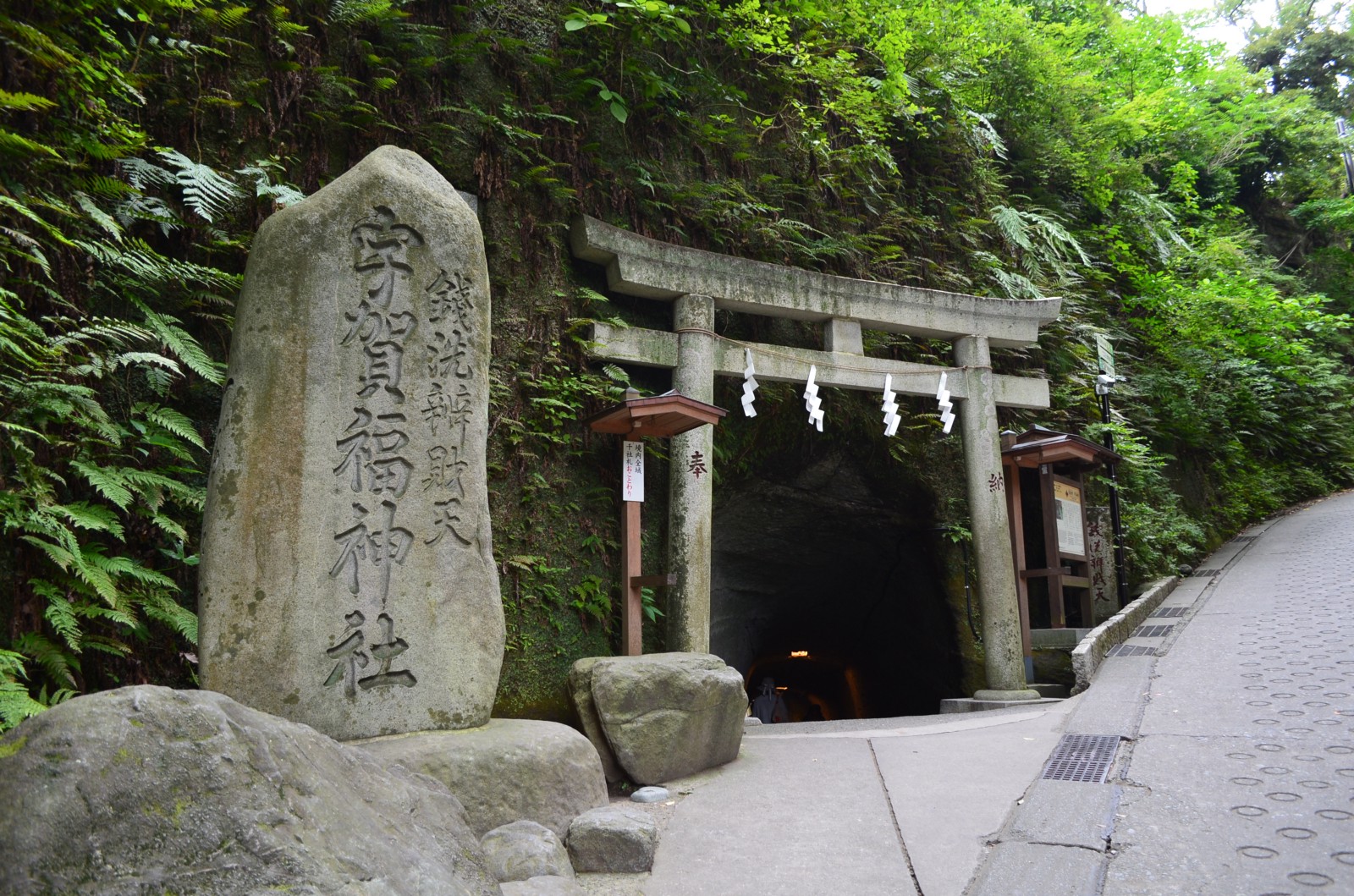
Zeniarai Benten Shrine (銭洗弁財天 宇賀福神社) is one of Kamakura’s most unusual religious sites and remains closely tied to local superstition and good fortune traditions. The shrine is famous for its money-washing ritual, where visitors rinse coins or banknotes in spring water with the belief that the money will multiply in the future.
The shrine is hidden inside a small valley and accessed through a tunnel-like entrance carved into the rock, giving the approach a noticeably different atmosphere from Kamakura’s larger open temple complexes. The grounds feel less formal and more rustic than major tourist landmarks: small shrines, stone lanterns, caves, and flowing water create a somewhat mysterious atmosphere, especially on quieter weekdays.
The biggest downside is accessibility. Reaching the shrine involves uphill walking along relatively steep residential roads from Kamakura Station. The route is not extremely difficult, but it can feel tiring during summer or after a long day of sightseeing. Because buses do not stop directly nearby, many visitors combine the shrine with nearby hiking routes or other western Kamakura attractions.
Despite the extra effort, Zeniarai Benten tends to leave a strong impression because it feels distinctly different from Kamakura’s more polished temple sites.
| Access |
About 20-min walk from Kita-Kamakura Station |
|---|---|
| Business Hours |
8 AM–4:30 PM |
| Price |
Free |
| Official Website |
https://www.kanagawa-jinja.or.jp/shrine/1205037-000/ |
Hiking and Nature
Although Kamakura is best known for temples and shrines, the city is also surrounded by wooded hills and short hiking trails that give the area a very different atmosphere from the busy shopping streets near the station. Adding even a small nature-focused stop can make the day feel far less repetitive than simply moving from one temple to another.
Daibutsu Hiking Trail
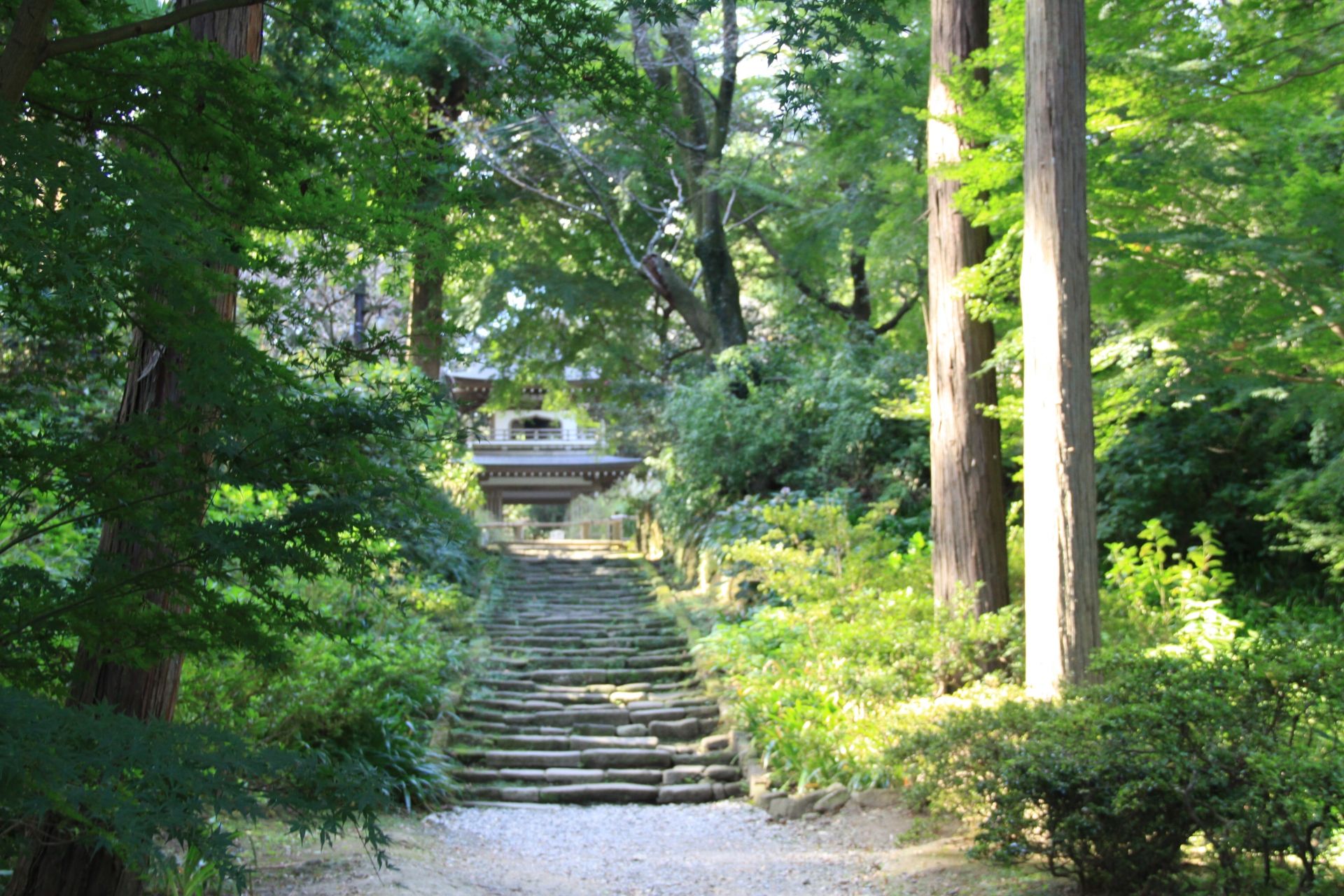
The Daibutsu Hiking Trail is Kamakura’s most popular walking trail and one of the best ways to experience the city beyond the main tourist areas. The route cuts through forested hills between Kita-Kamakura and the Great Buddha area, connecting several temples and viewpoints along the way.
Despite the name, this is not a formal mountain hike. Most reasonably active visitors can complete the trail without major difficulty, though there are some uneven sections, exposed tree roots, muddy areas after rain, and moderate elevation changes. Proper walking shoes are strongly recommended, especially during humid summer months.
Depending on pace and detours, the full course usually takes around 60–90 minutes. Many visitors start near Kenchoji Temple or Jochiji Temple in Kita-Kamakura and finish near Kotoku-in and Hasedera in Hase.
For some, the route helps break up what can otherwise become “temple fatigue.” Kamakura has many excellent temples, but after several in a row, they can start blending together for some visitors. The hiking course changes the rhythm of the day and adds a more active, outdoors-focused side to the trip.
Summer afternoons can become hot and humid, while some trail sections get slippery after rainfall. Morning hikes are usually the most comfortable option.
Genjiyama Park
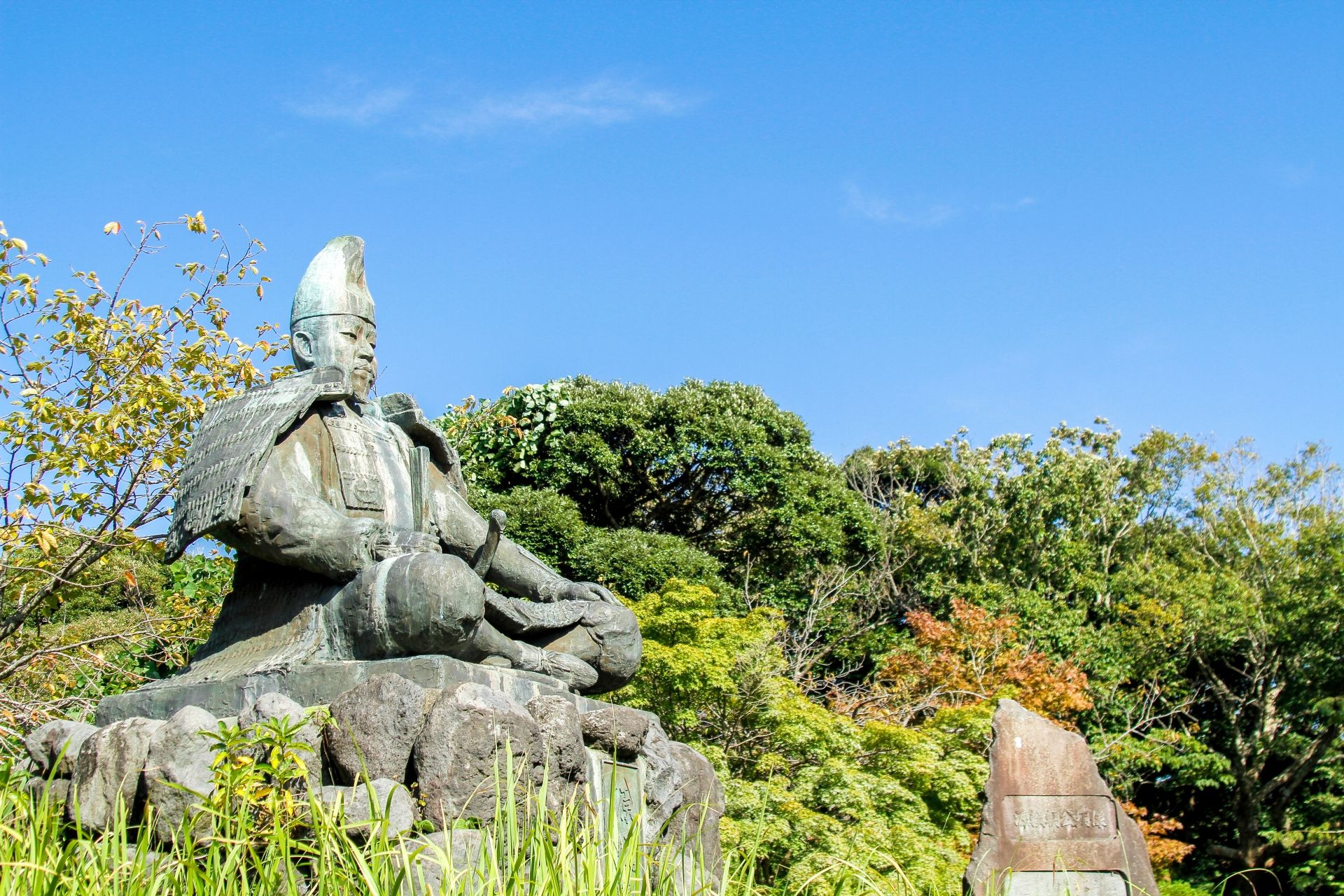
Genjiyama Park is a quiet hillside park best known for cherry blossoms and its large statue of Minamoto no Yoritomo, the founder of the Kamakura shogunate. Compared to Kamakura’s more famous temple areas, the park feels much more local and relaxed.
During sakura season, the park becomes one of Kamakura’s better hanami spots, attracting groups of locals enjoying picnics under the cherry trees. Outside spring, however, the atmosphere is usually calm, with wooded walking paths and small open spaces scattered across the hillside.
The bronze statue of Yoritomo is the park’s main landmark and reflects the area’s historical connection to the samurai government established in Kamakura during the late 12th century. While the statue itself is not necessarily a major sightseeing highlight, it gives the park a stronger historical identity than a standard urban green space.
Genjiyama is often visited together with nearby Zeniarai Benten Shrine or incorporated into walking routes connecting different hiking trails around western Kamakura. The terrain is hilly in places, but the overall atmosphere feels slower and less structured than the city’s major sightseeing circuits.
This is not an essential stop for every first-time visitor, especially on short itineraries. However, travelers looking for quieter areas away from the busiest temple crowds may find it a refreshing change of pace.
| Access |
25-min walk from Kamakura Station |
|---|---|
| Business Hours |
24h |
| Price |
Free |
| Official Website |
https://www.city.kamakura.kanagawa.jp/koen/p_genjiyama.html |
Beaches and Coastal Kamakura
Kamakura’s coastline is one of the main reasons the city feels different from other historic destinations near Tokyo. Beaches, ocean views, and the Enoden railway add a more relaxed atmosphere to the area, especially around Hase, Yuigahama, and Enoshima.
Yuigahama Beach
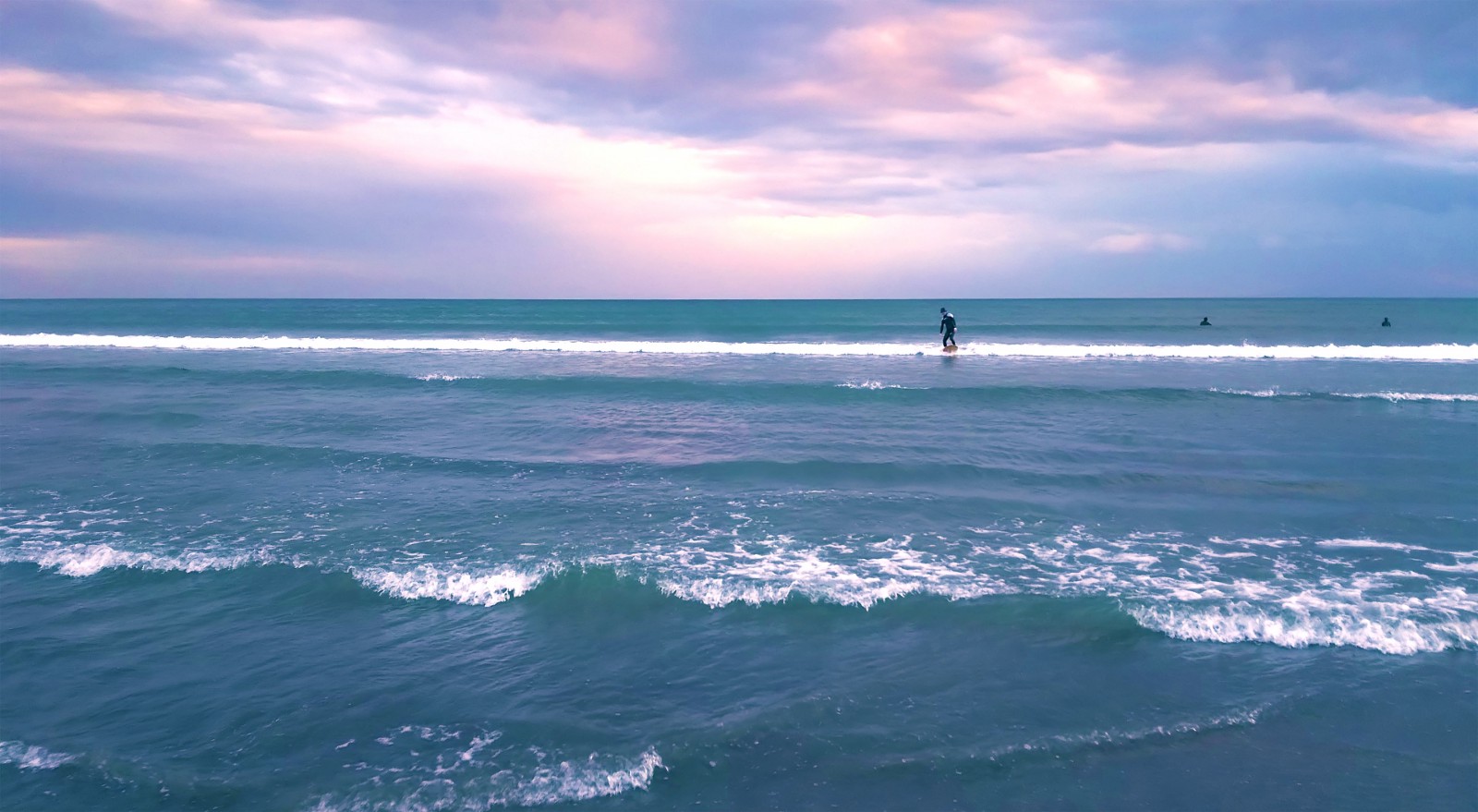
Yuigahama (由比ヶ浜) is Kamakura’s main beach and the busiest coastal area during summer. The beach officially opens for swimming from July through August, when temporary beach houses, restaurants, showers, and rental facilities operate along the shore. However, the beach is popular year-round with swimmers, surfers, and Tokyo residents looking for an easy seaside day trip, thanks to its easy access from central Tokyo, despite being smaller and more urban than other popular beaches on Izu or Chiba.
When paired with a Kamakura itinerary, sunset is one of the most recommended times to visit. On clear evenings, the coastline around Yuigahama and nearby Inamuragasaki becomes one of the best sunset spots in the area. Also, several cafés and casual restaurants are located along the coastal roads near Yuigahama and Hase, making them suitable locations for a relaxed afternoon stop or a casual dinner afterwards.
| Access |
5-min walk from Yuigahama Station or Hase Station |
|---|---|
| Official Website |
https://www.city.kamakura.kanagawa.jp/kamakura-kankou/0602beach.html |
Riding the Enoden
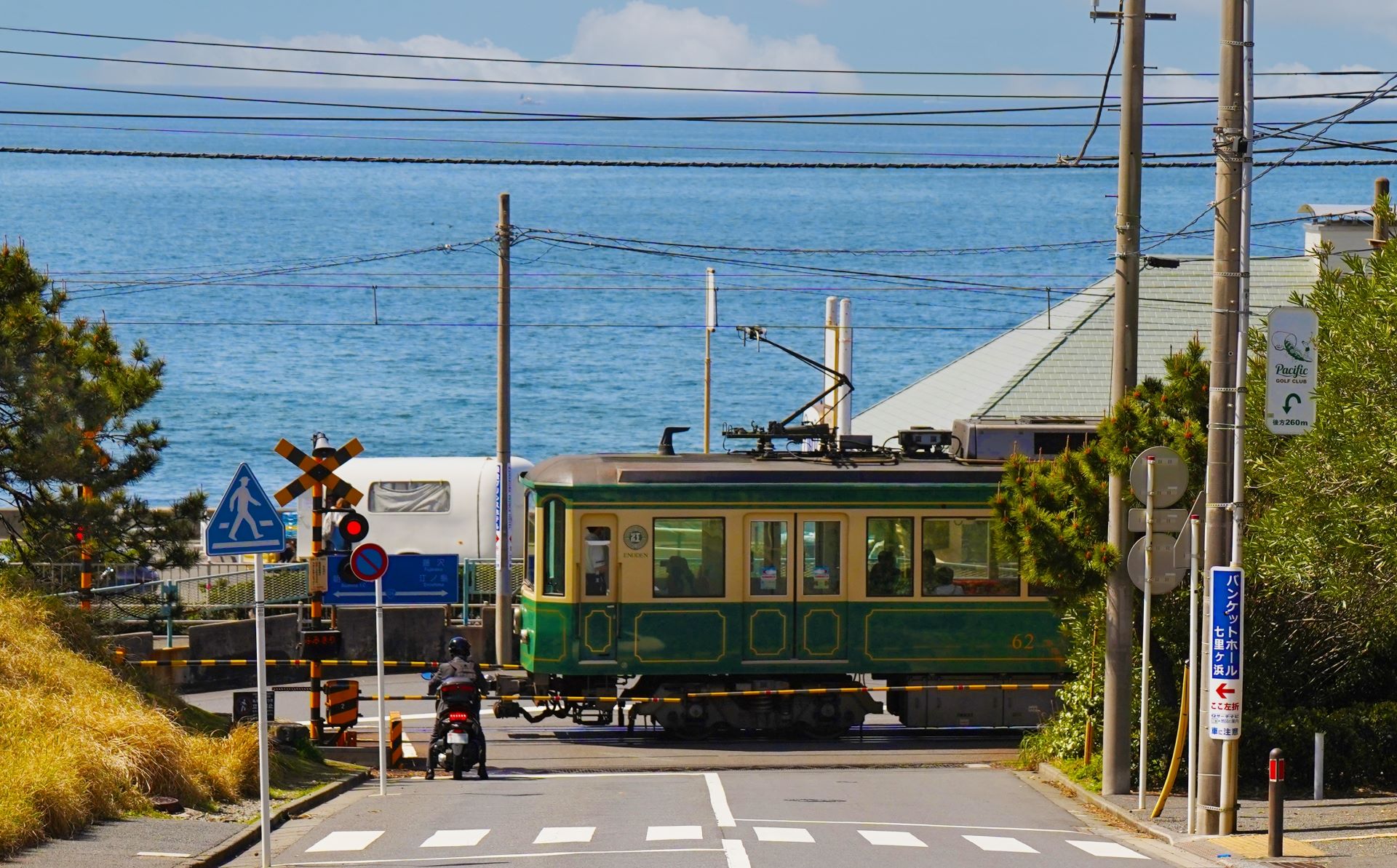
The Enoden (江ノ電) railway is one of Kamakura’s main attractions and the easiest way to move between Kamakura, Hase, Enoshima, and Fujisawa. The line is famous for its narrow residential sections and coastal scenery, especially between Kamakurakoko-mae and Shichirigahama.
The most photographed spot on the line is the railway crossing near Kamakurakoko-mae Station, which became internationally famous through the opening scene of the anime Slam Dunk, attracting a large number of visitors. But due to overtourism and unsafe behavior near the tracks, the area can become heavily congested during midday. Early morning is the best time for photos and lighter crowds.
The coastal section between Kamakurakoko-mae and Enoshima is generally considered the most scenic part of the route. Sitting on the ocean-facing side of the train gives the best views during this stretch. Hydrangea season is also one of the highlights, as there are many hydrangeas along the tracks, creating a beautiful scenery contrasting the nostalgic Enoden design.
| Access |
Enoden stations between Fujisawa Station and Kamakura Station |
|---|---|
| Price |
Single trip fare 200-310 yen (distance-based), 1-day pass 800 yen |
| Official Website |
https://www.enoden.co.jp/en/ |
Shopping and Food in Kamakura
Kamakura’s food scene is centered around local seafood, traditional sweets, small cafés, and the shopping streets near Kamakura Station. Most first-time visitors spend at least some time eating and browsing between temple visits, especially around Komachi Street and the Hase area.
Komachi Street
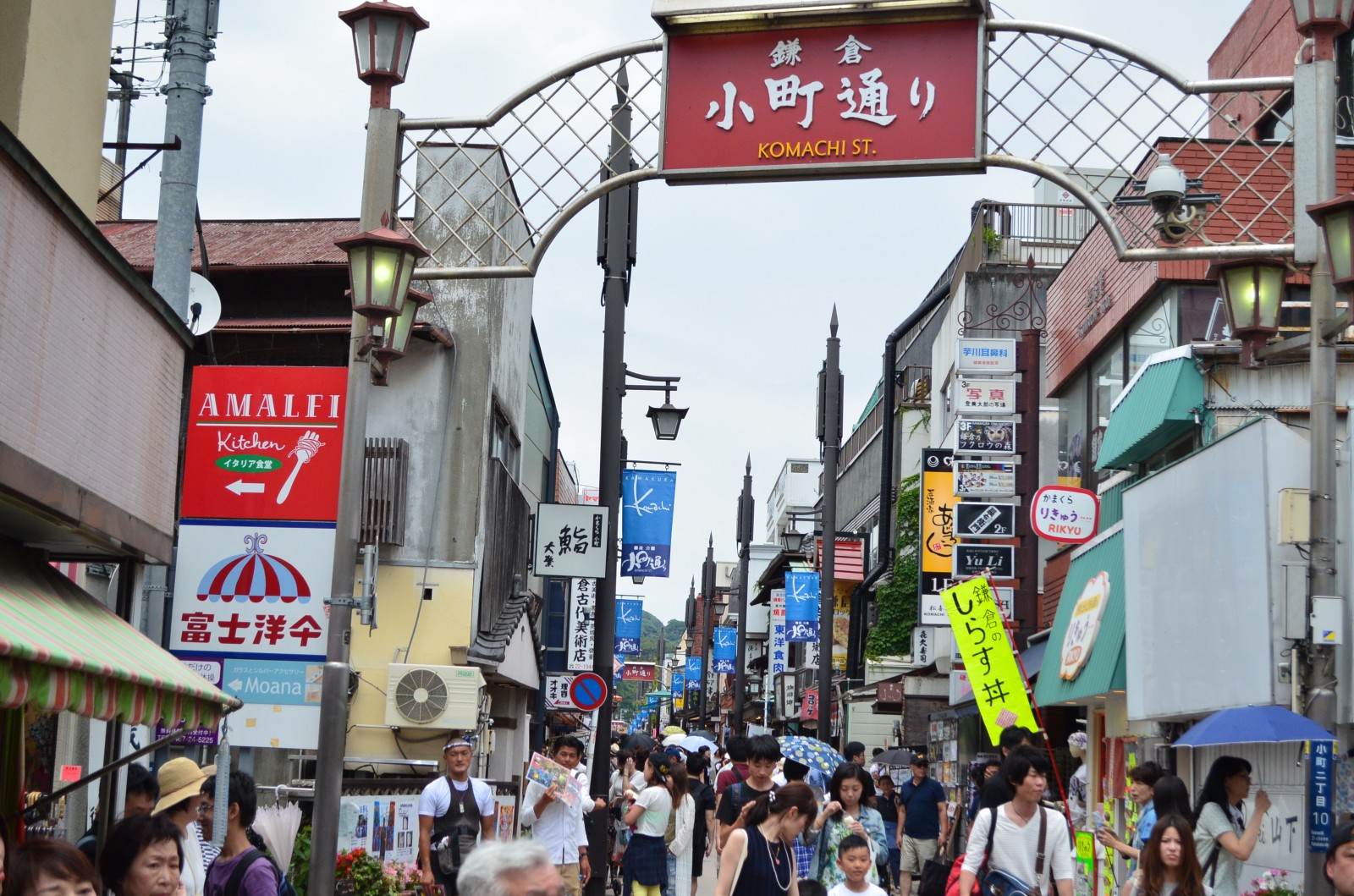
Komachi Dori (小町通り) is the main shopping street in Kamakura and the busiest food area near the station. The pedestrian-friendly road connects Kamakura Station with Tsurugaoka Hachimangu Shrine and is lined with souvenir shops, snack stands, cafés, and casual restaurants.
The street is especially popular for quick snacks and takeaway food. Common options include:
- Shirasu croquettes
- Matcha sweets
- Rice crackers
- Dango
- Sweet potato desserts
- Japanese pudding and custard sweets
Souvenir shops sell local snacks, ceramics, chopsticks, Kamakura-themed goods, and traditional crafts. Compared to larger shopping districts in Kyoto or Tokyo, Komachi Street is relatively compact and easy to explore on foot.
Crowds are the biggest downside. The street becomes extremely congested from late morning through mid-afternoon, especially on weekends and during hydrangea season in June. Visiting before 10:00 AM or later in the afternoon is noticeably more comfortable.
Some stores also prohibit eating while walking, so visitors are expected to finish food near the shop before continuing.
Related: 7 Best Souvenirs from Kamakura & What to Buy in Kamakura
| Access |
Directly outside Kamakura Station East Exit |
|---|---|
| Official Website |
https://kamakura-komachi.com/ |
Kamakura Cafes and Local Specialties
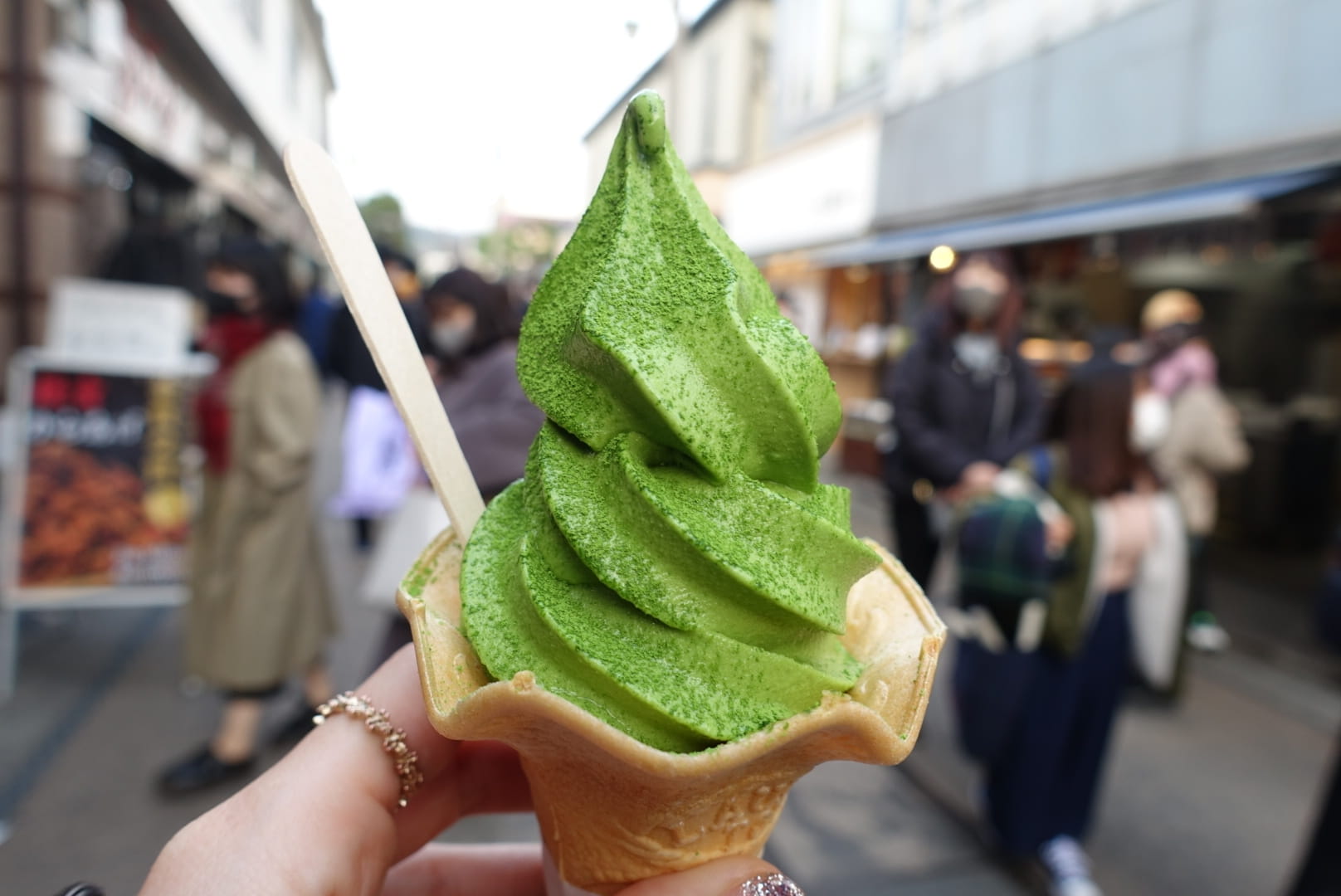
Kamakura has a well-developed café and sweets scene, particularly near Komachi Street, Hase, and the quieter streets west of Kamakura Station. Many cafés occupy renovated traditional houses or older buildings, giving the area a more local feel than Tokyo café districts.
Kamakura Chacha is a local staple of matcha soft cream, offering a good selection with varying degrees of flavor intensity, as well as matcha latte options, ideal for matcha lovers. As for coffee, one of the city’s best-known spots is Café Vivement Dimanche, a long-running café near Kamakura Station known for house-roasted coffee, waffles, and pudding parfaits. The café has been part of Kamakura’s coffee scene since the 1990s and regularly develops long queues on weekends.
For a traditional kissaten atmosphere, Iwata Coffee is known for its thick hotcakes and retro interior dating back to 1948.
Around the coast, Pacific DRIVE-IN in Shichirigahama is one of the area’s most popular ocean-view cafés, especially for breakfast and sunset visits.
Coffee-focused visitors often stop at THE GOOD GOODIES, a small specialty coffee stand near Kamakura Station, with locations both near the East and West exit.
Local specialties in Kamakura mainly revolve around:
- Shirasu (whitebait fish)
- Matcha sweets
- Wagashi
- Seasonal desserts
- Craft beer from the Shonan area
Shirasu bowls are widely available throughout Kamakura and nearby Enoshima, especially around the coast. Fresh nama-shirasu (raw whitebait) is seasonal and depends on daily fishing conditions.
For local beer, Kamakura Beer is commonly served at restaurants and gastropubs around the city.
| Access |
Pacific Drive-in: 10-min walk from Shichirigahama or Inamuragasaki Stations. The other locations are all a few minutes walk from Kamakura Station. |
|---|
Best Time to Visit Kamakura
Kamakura can be visited year-round, but the atmosphere changes significantly depending on the season. Hydrangeas and cherry blossoms bring the largest crowds, while winter is generally the quietest and clearest period for sightseeing.
Spring (Cherry Blossoms)
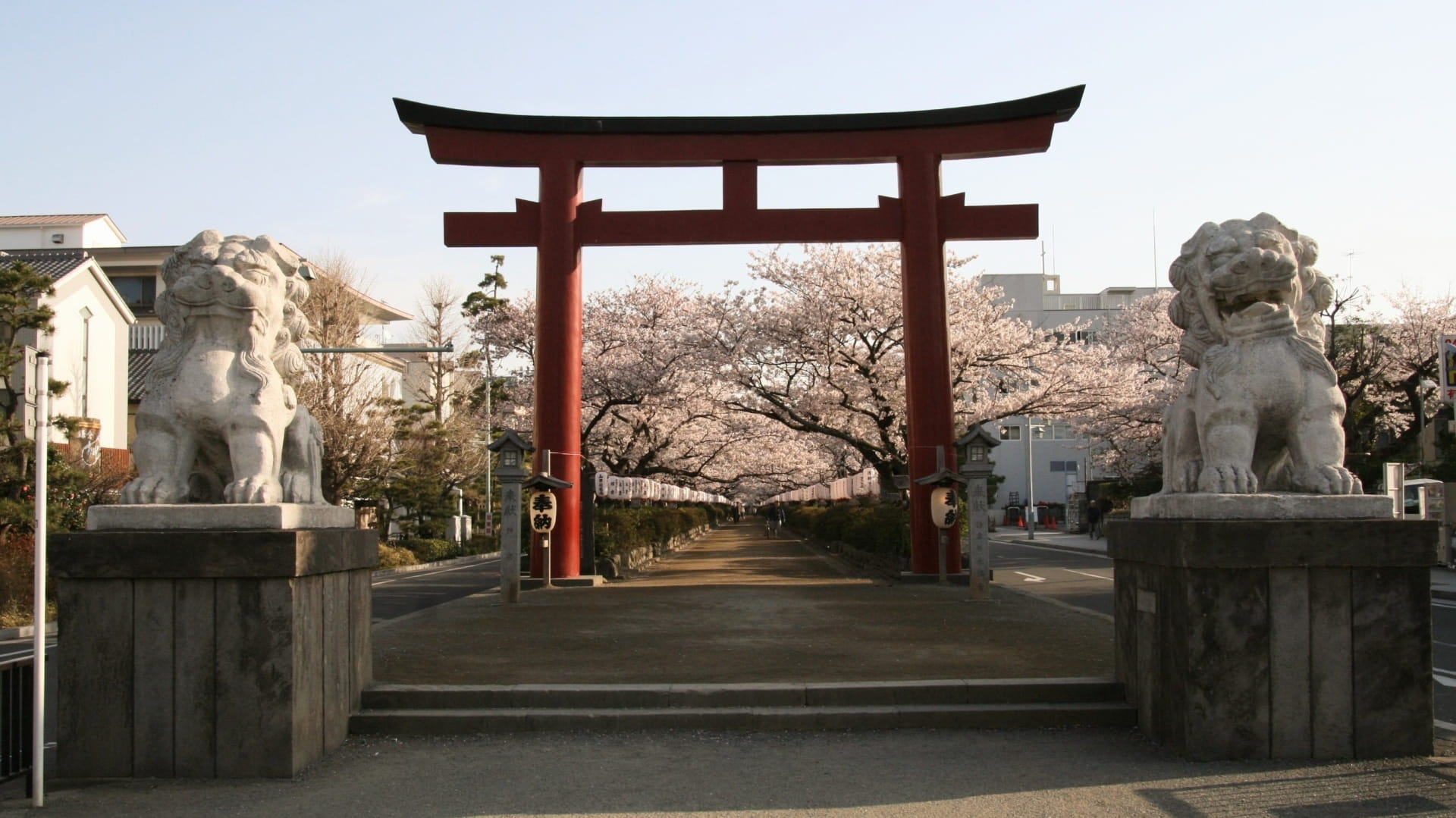
Cherry blossom season in Kamakura usually peaks from late March to early April, depending on yearly weather conditions. Popular sakura spots include Tsurugaoka Hachimangu Shrine, Dankazura Avenue, and Genjiyama Park.
Dankazura, the raised pathway leading toward Tsurugaoka Hachimangu, is lined with cherry trees and becomes one of the city’s busiest spring viewing areas. Genjiyama Park is another popular hanami location, particularly for local picnics and quieter hillside scenery compared to central Kamakura.
Spring weekends can become extremely crowded, especially around Kamakura Station and Komachi Street. Early weekday visits are significantly more manageable.
Early Summer (Hydrangea Season)
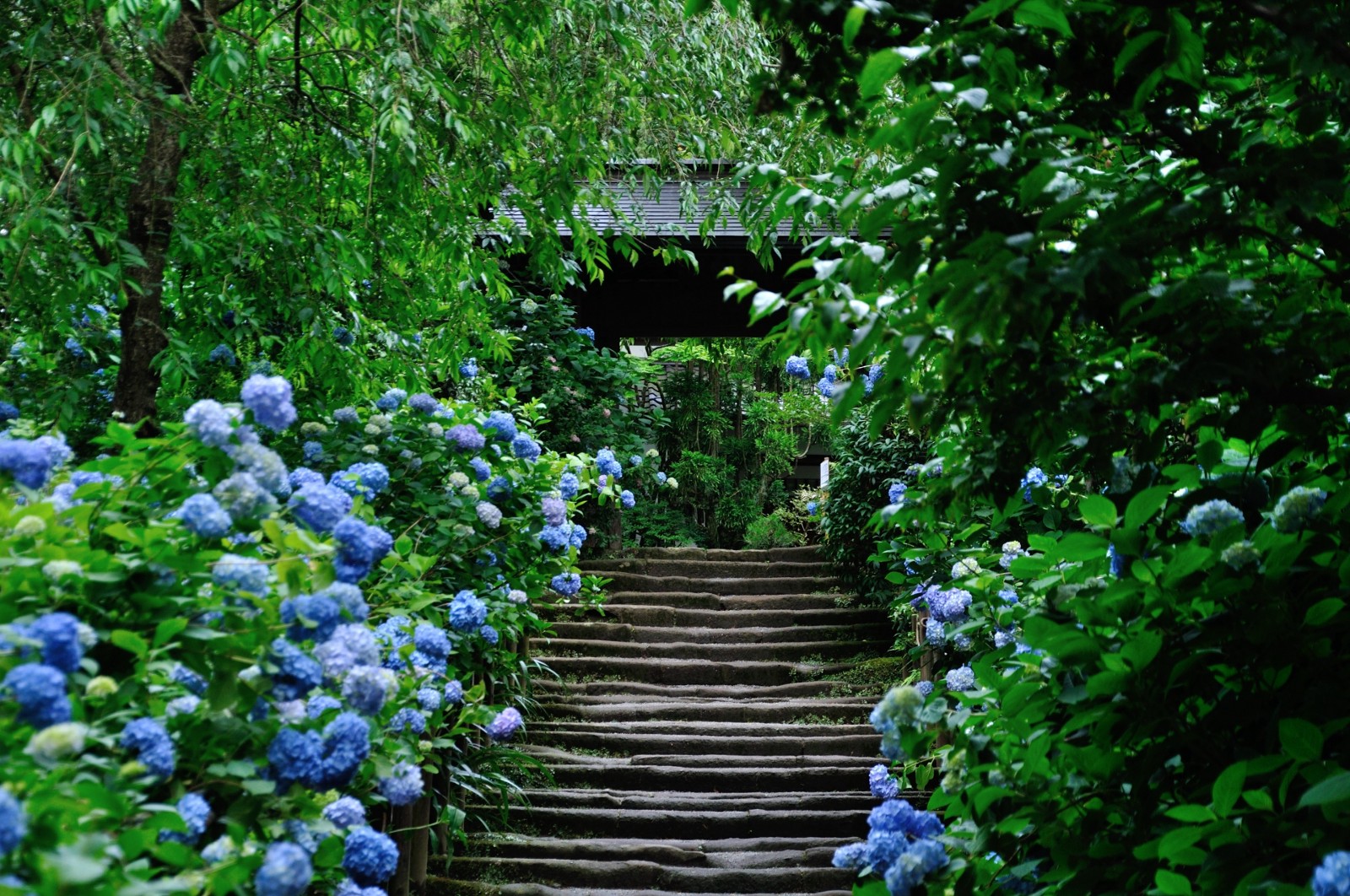
Hydrangea season is one of Kamakura’s busiest tourism periods. Blooming typically peaks during June, when temples such as Hasedera and Meigetsuin become major seasonal attractions.
Hasedera is famous for hillside hydrangea paths overlooking the city and coast, while Meigetsuin is widely known as the “Hydrangea Temple” because of the large number of blue hydrangeas covering the grounds.
Crowds during peak bloom are severe, particularly on weekends. Waiting times at Hasedera’s hydrangea route can exceed an hour during busy periods. Arriving before opening is strongly recommended.
Rainy weather is common during June because of Japan’s tsuyu rainy season, but many visitors consider the hydrangeas at their best under overcast conditions.
Autumn Leaves
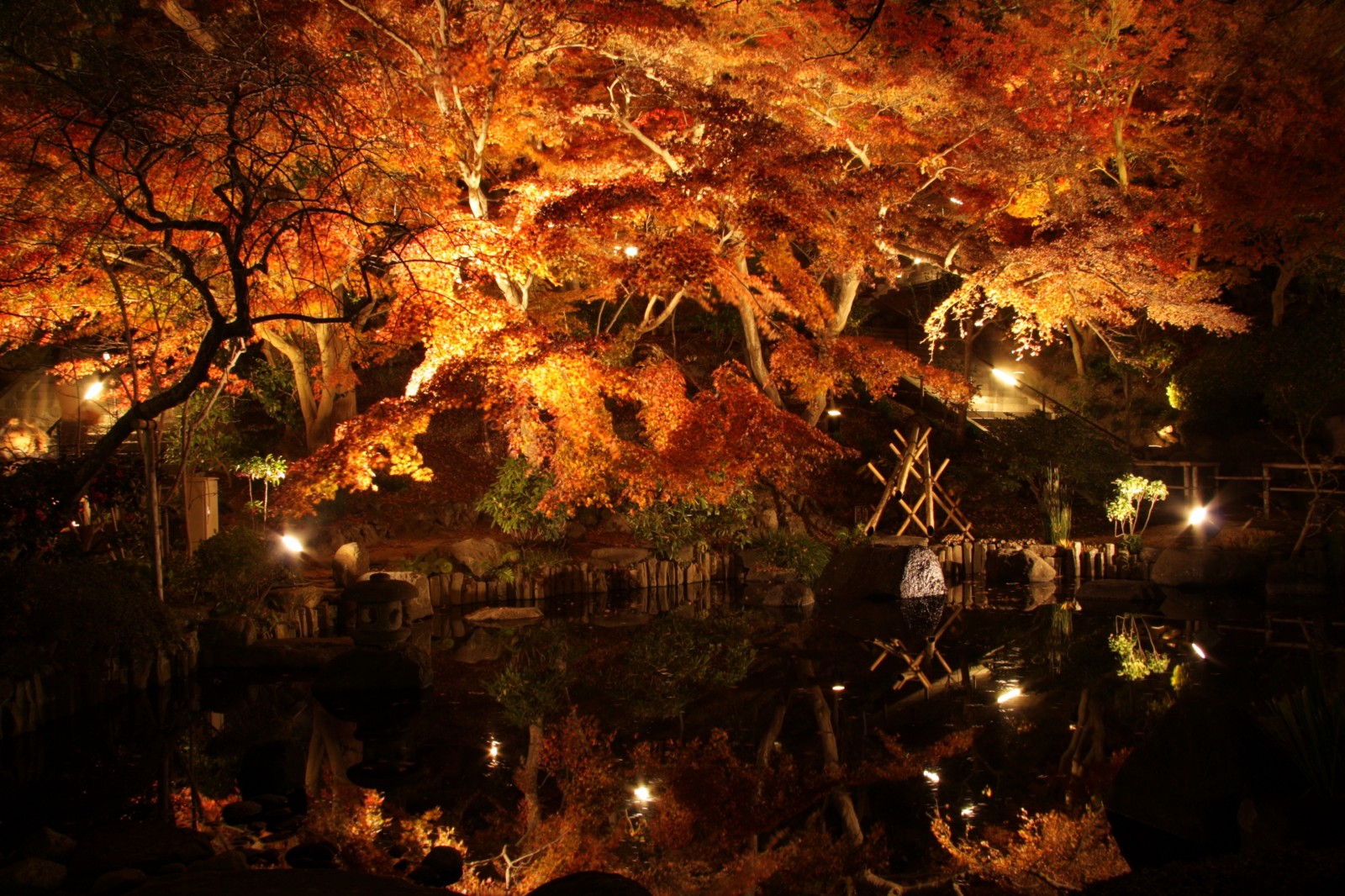
Autumn foliage usually peaks from late November to early December. Temple gardens and wooded hillsides around northern Kamakura become particularly attractive during this period.
Engakuji and Kenchoji are among the city’s best-known autumn foliage spots thanks to their large temple grounds and surrounding maple trees. Smaller temple gardens throughout Kita-Kamakura also become noticeably quieter and more atmospheric during autumn mornings.
Compared to Kyoto, Kamakura’s autumn crowds are generally more manageable, though weekends still become busy around major temples.
Winter
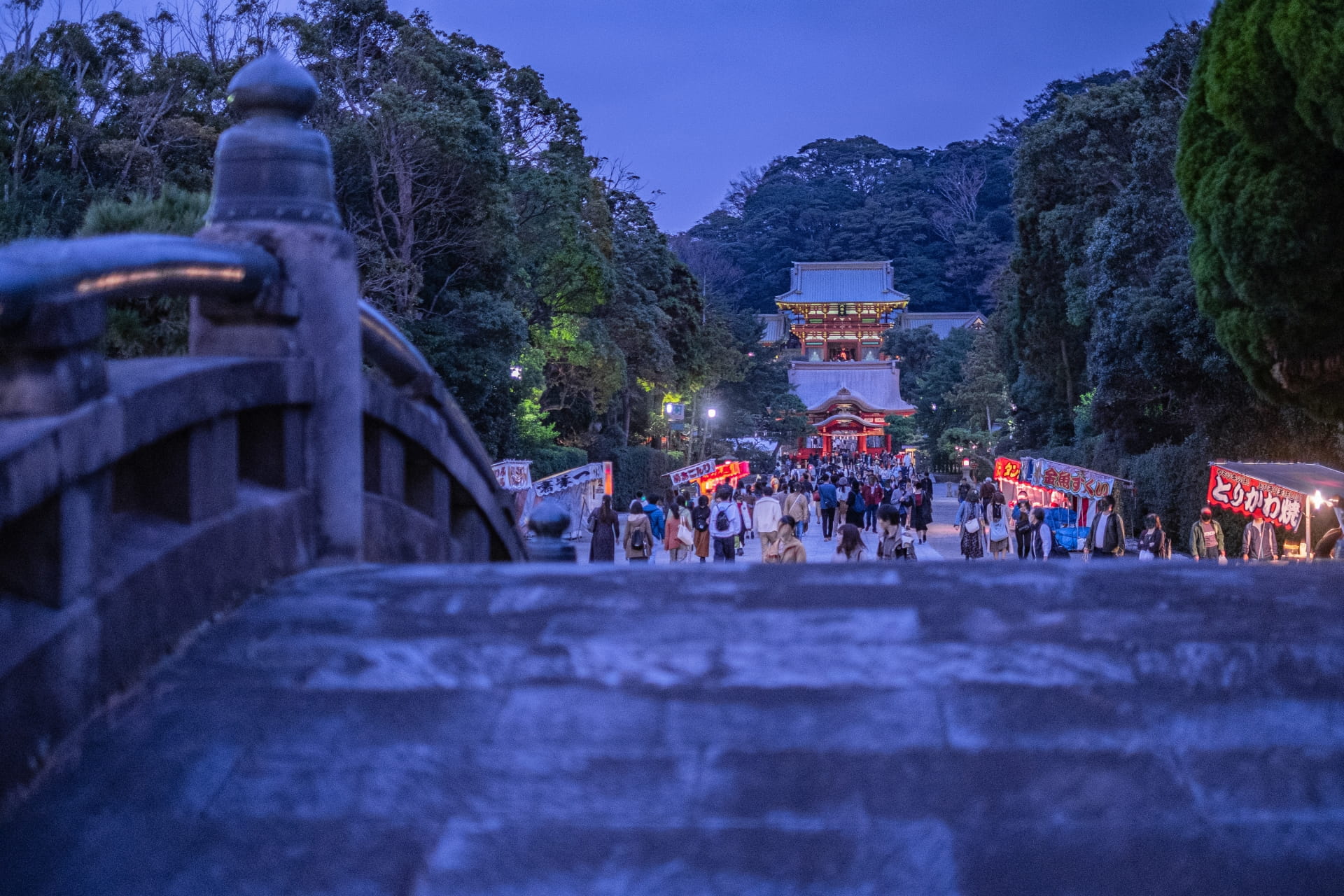
Winter is one of the most underrated times to visit Kamakura. Tourist crowds decrease significantly after the autumn foliage season, making temples and walking areas noticeably calmer outside the New Year holidays. On the other hand, Tsurugaoka Hachimangu is open 24h from New Year’s Eve until January 3rd at 8 PM, offering an extraordinary chance to visit the shrine at night.
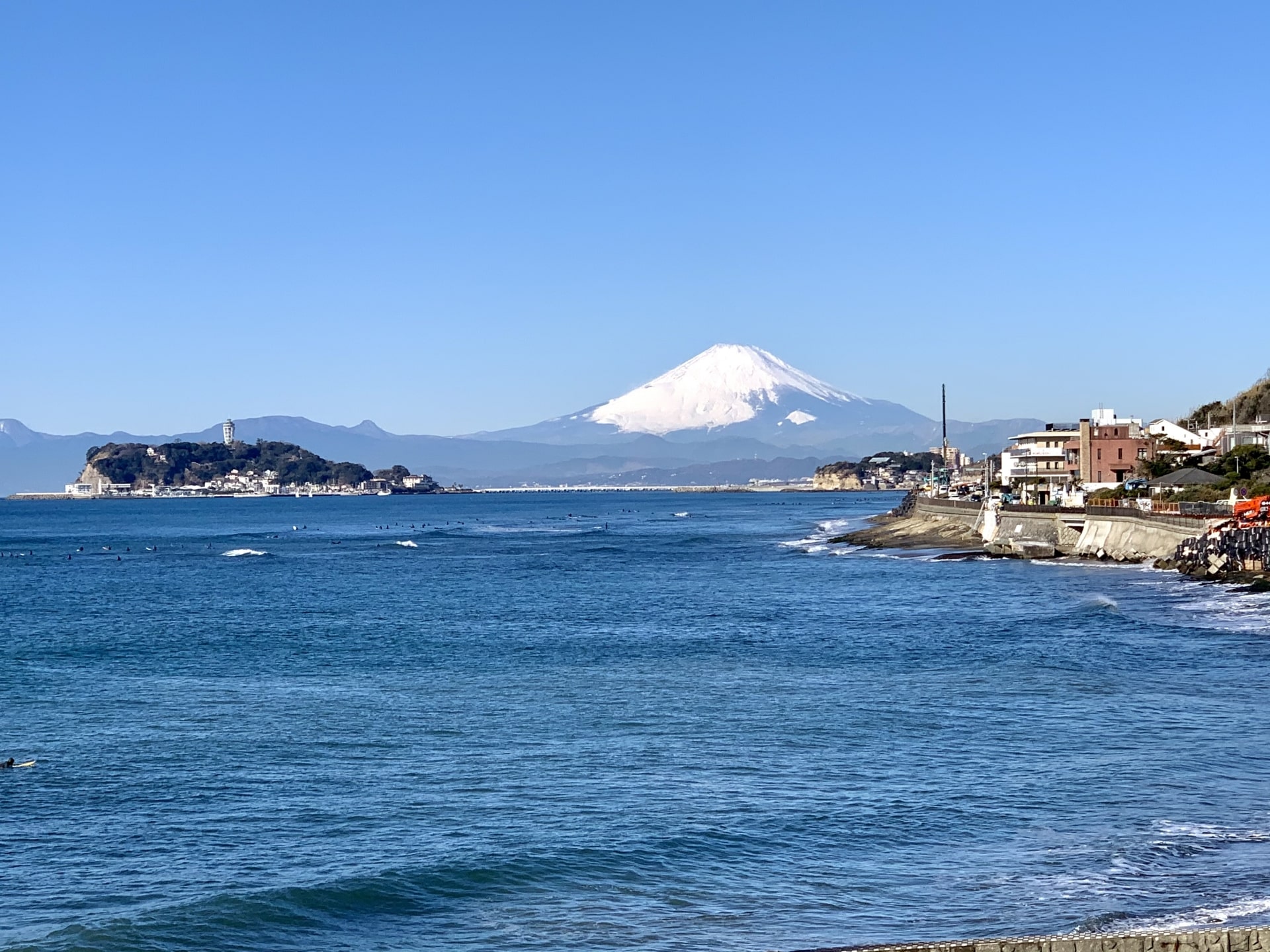
Winter also tends to bring clearer skies and better long-distance visibility. On especially clear days, Mount Fuji can sometimes be seen from coastal viewpoints and elevated temple areas around Kamakura and Shonan.
Temperatures are generally mild compared to inland Japan, though coastal winds can feel cold near the beach.
Suggested Kamakura Itineraries
Kamakura can work as anything from a short half-day trip to a full coastal day combining temples, hiking, beaches, and Enoshima. The best itinerary depends mainly on how early you arrive and how much walking you are comfortable with.
Half-Day Kamakura Itinerary
This route focuses on Kamakura’s most famous sights and works well for travelers with limited time.
Recommended route:
- Hase Station
- Great Buddha (Kotoku-in)
- Hasedera Temple
- Kamakura Station
- Komachi Street
- Tsurugaoka Hachimangu (optional if time allows)
Starting in Hase helps avoid some of the late-morning crowds around the Great Buddha and Hasedera. Both sites are within walking distance of each other and can comfortably be visited in 2–3 hours total.
Afterward, take the Enoden or walk back toward Kamakura Station for lunch and shopping around Komachi Street.
Recommended timing:
- Ideal arrival: before 9:00 AM
- Total time needed: around 4–5 hours
Best for:
- First-time visitors
- Short Tokyo day trips
- Travelers not interested in hiking
Full-Day Kamakura Itinerary
A full day allows time to explore northern Kamakura, quieter temple areas, and hiking trails beyond the standard tourist route.
Recommended route:
- Kita-Kamakura Station
- Engakuji Temple
- Kenchoji Temple
- Daibutsu Hiking Course
- Great Buddha
- Hasedera Temple
- Houkokuji Temple
- Komachi Street depending on energy/time
Starting from Kita-Kamakura works best because the route gradually moves south toward the coast. This also avoids backtracking.
The Daibutsu Hiking Course helps break up the day between temple visits and provides a quieter, more nature-focused section of the itinerary.
Houkokuji is somewhat detached from the main sightseeing corridor, so adding it comfortably usually requires a full-day schedule and efficient pacing.
Recommended timing:
- Ideal arrival: before 8:30 AM
- Total time needed: 8–10 hours
Best for:
- Repeat visitors
- Travelers interested in Zen temples
- Visitors wanting hiking and nature
Kamakura + Enoshima Day Trip
Combining Kamakura and Enoshima is one of the most popular day trips from Tokyo. The Enoden line makes it easy to move between both areas without complicated transfers.
Recommended route:
- Kamakura Station
- Great Buddha
- Hasedera Temple
- Enoden ride along the coast from Hase Station
- Enoshima Station
- Enoshima Shrine
- Enoshima Sea Candle or coastal sunset
This itinerary works best when focused on Kamakura’s western side rather than trying to cover the entire city. Attempting to add Kita-Kamakura and eastern temples usually makes the day too rushed.
The Enoden coastal section between Hase and Enoshima is one of the highlights of the trip and worth experiencing during daylight hours.
Recommended time allocation:
- Kamakura: around 4–5 hours
- Enoshima: around 3–4 hours
Best for:
- First-time visitors
- Coastal scenery
- Photography-focused trips
If possible, avoid starting this itinerary late in the morning. Both the Enoden and Enoshima become heavily crowded on weekends and holidays, especially during the summer.
Check all the info related to Enoshima in our dedicated guide!
Tips for Visiting Kamakura
Kamakura is easy to visit independently, but crowds, transportation bottlenecks, and walking distances can affect the experience more than many first-time visitors expect.
Visit on Weekdays if Possible
Weekends in Kamakura can become extremely crowded, especially:
- Around Kamakura Station
- Komachi Street
- The Enoden line
- Hasedera during hydrangea season
Crowding is particularly severe during:
- June hydrangea season
- Cherry blossom season
- Autumn foliage weekends
- National holidays
Weekday visits are significantly more comfortable.
Arrive Early
Arriving before 9:00 AM makes a major difference. Popular sites like the Great Buddha, Hasedera, and Komachi Street become much busier from late morning onward.
Early morning is also:
- cooler during summer,
- better for photography,
- and easier for riding the Enoden before congestion builds.
Expect Enoden Congestion
The Enoden is scenic but not designed for large tourist volumes. Midday trains between Kamakura, Hase, and Enoshima often become packed, particularly on weekends.
If possible:
- avoid midday travel,
- ride early,
- and avoid repeatedly hopping on and off trains during peak hours.
Walking between nearby stations is sometimes faster.
Prepare for More Walking Than Expected
Kamakura looks compact on maps, but sightseeing days often involve:
- hills,
- staircases,
- uneven paths,
- and long walks between temples.
Comfortable shoes are essential, especially if you plan to visit Kita-Kamakura or hiking trails.
Temple and Shrine Etiquette
Most temples and shrines in Kamakura are active religious sites, not only tourist attractions.
Basic etiquette includes:
- speaking quietly,
- not blocking pathways for photos,
- removing hats in prayer areas,
- and avoiding restricted sections.
Photography may also be prohibited inside certain halls.
Carry Some Cash
Although cashless payment has become more common, some smaller temples, snack shops, and local cafés still accept cash only.
Temple admission fees are usually inexpensive, but carrying several thousand yen in cash is recommended for convenience.
Rainy Days Are Still Viable
Rain can disrupt hiking trails and coastal plans, but Kamakura still works well during light rain. Temple gardens, hydrangeas, bamboo groves, and quieter streets often photograph well in overcast weather.
June is both hydrangea season and part of Japan’s rainy season, so umbrellas and waterproof shoes are useful during this period.
FAQs About Kamakura
Is Kamakura worth a day trip from Tokyo?
Yes. Kamakura is one of the best day trips from Tokyo because it combines historic temples, coastal scenery, local food, and easy train access in a relatively compact area.
How many days do you need in Kamakura?
One full day is enough for most first-time visits. Travelers wanting to explore hiking trails, quieter temples, beaches, and Enoshima at a slower pace may prefer staying overnight.
What is Kamakura famous for?
Kamakura is most famous for:
- the Great Buddha,
- Zen temples,
- Tsurugaoka Hachimangu Shrine,
- the Enoden railway,
- and its coastal atmosphere.
The city was also the political center of Japan during the Kamakura shogunate.
Can you do Kamakura and Enoshima in one day?
Yes. Kamakura and Enoshima are commonly combined into a single day trip using the Enoden line. Most visitors spend around 4–5 hours in Kamakura and 3–4 hours in Enoshima.
What is the best month to visit Kamakura?
June is the most famous season because of hydrangeas, but also the most crowded. For balanced weather and lighter tourism, late autumn and winter are often more comfortable.
Is Kamakura crowded?
Yes, especially on weekends and during seasonal peaks like cherry blossoms and hydrangea season. Popular areas around Kamakura Station and the Enoden can become heavily congested.
Is the Great Buddha worth visiting?
Yes. The Great Buddha is Kamakura’s most iconic landmark and one of Japan’s most famous Buddhist statues. It is also easy to combine with nearby Hasedera Temple.
How much does a Kamakura day trip cost?
Most travelers can comfortably visit Kamakura on a moderate day-trip budget. A typical independent day trip from Tokyo usually costs around:
- ¥2,000–¥3,000 for transportation
- ¥1,000–¥2,000 for temple admissions
- additional food and café expenses depending on itinerary
For more information about attractions near Kamakura, read these articles too:


Written by
Photographer, journalist, and avid urban cyclist, making sense of Japan since 2017. I was born in Caracas and lived for 14 years in Barcelona before moving to Tokyo. Currently working towards my goal of visiting every prefecture in Japan, I hope to share with readers the everlasting joy of discovery and the neverending urge to keep exploring.
- +0 0
-
-