Yokohama Chinatown: The Complete Visitor’s Guide
Yokohama Chinatown: What to Eat, See and Know Before You Go

- +5 5
-

-


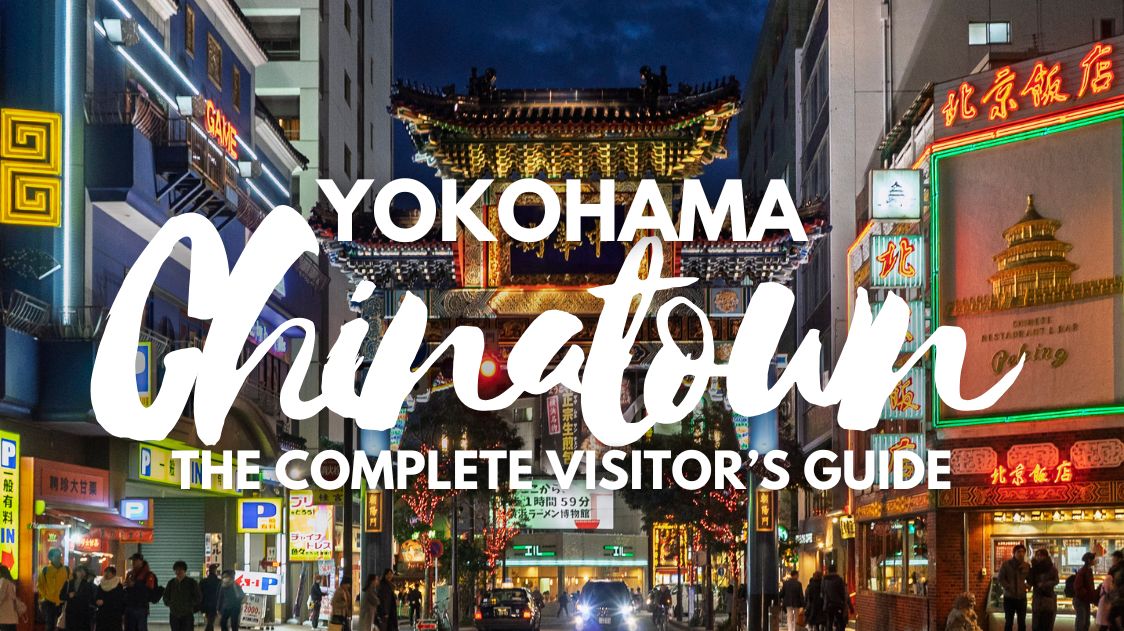
When I first arrived at Yokohama Chinatown through Choyomon Gate, I thought I already knew what to expect.
It was an autumn evening in 2017. I had spent the afternoon in Yokohama and had just finished strolling through Yamashita Park, and made my way toward Chinatown as the sky turned dark. By then, I had already explored London’s Chinatown, wandered through New York’s Chinatown, and even visited Kobe’s Chinatown a few years earlier. I thought I had a fairly clear picture of what a Chinatown looked and felt like.
I was completely wrong.
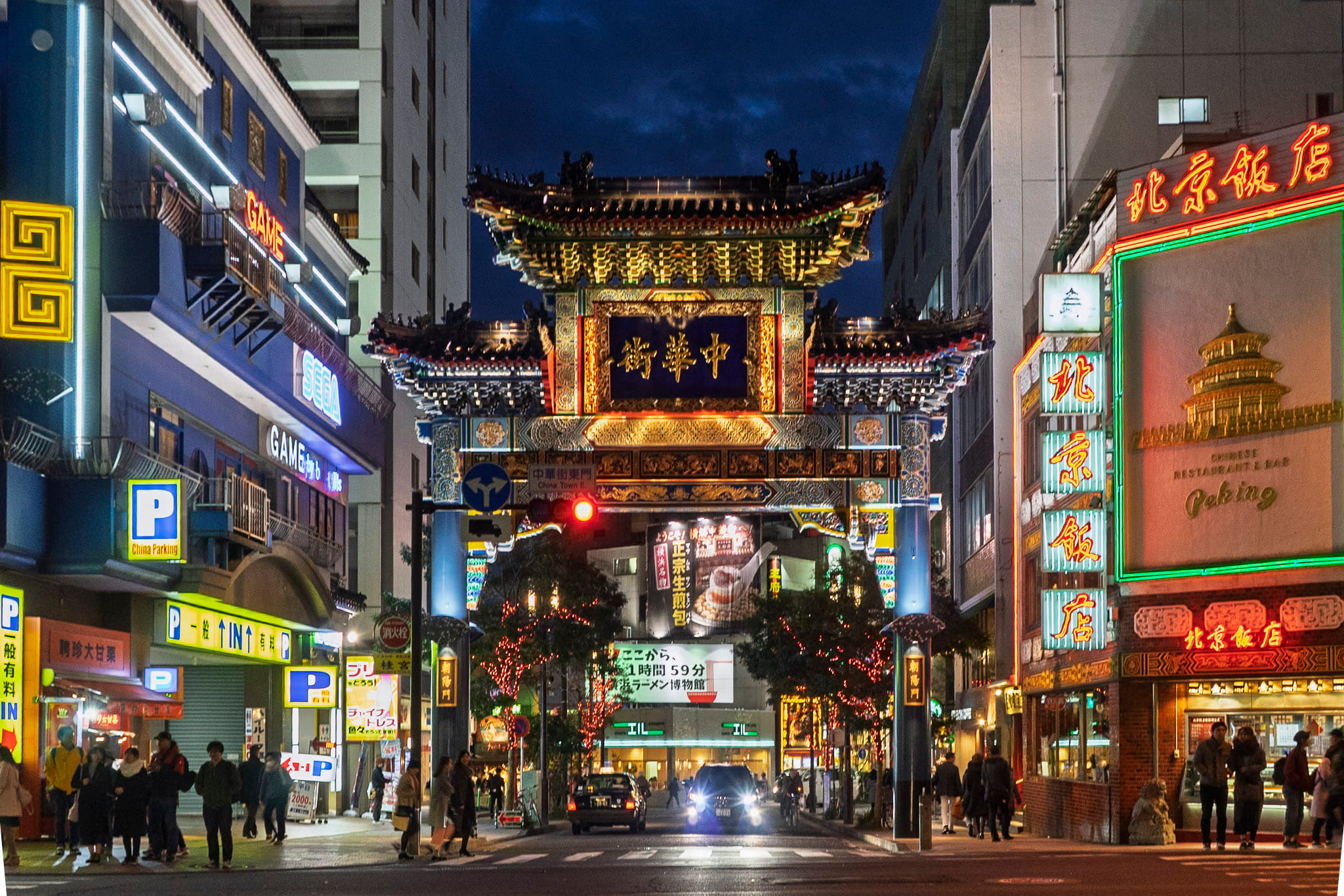
Passing beneath the blue-tiled Choyomon Gate, I was immediately struck by the sheer energy of the place. Red lanterns illuminated the streets, the scent of steamed buns and roasted chestnuts drifted through the air, and crowds flowed between brightly decorated storefronts in every direction. It felt far more vibrant than the Western Chinatowns I had visited, and I was surprised to see how much bigger it was than Kobe’s Chinatown. Rather than a street or two of Chinese restaurants, Yokohama Chinatown was truly an entire district with its own rhythm and character.
Since that first visit, I’ve returned many times, drawn back not only by the food but also by the atmosphere: beyond the famous steamed buns and soup dumplings, there are ornate temples, hidden side streets, seasonal traditions, and small details that many visitors overlook in their rush from one snack stall to the next.
In this guide, I’ll cover everything you need to know before visiting Yokohama Chinatown: what to eat, what to see, how to avoid the biggest crowds, and which experiences are genuinely worth your time.
Why Yokohama Chinatown Exists
Yokohama Chinatown (横浜中華街) owes its existence to a turning point in Japanese history. When the Port of Yokohama opened to foreign trade in 1859, Chinese merchants, interpreters, and craftsmen began arriving alongside Western trading companies. Restricted to the designated foreign settlement area, they gradually built their own community, complete with schools, temples, assembly halls, and businesses that catered to both residents and newcomers.
The district endured repeated setbacks. The Great Kanto Earthquake of 1923 devastated Chinatown and claimed the lives of many members of the local Chinese community. Just as it recovered, World War II brought further destruction to Yokohama. Yet each time, residents rebuilt.
A major milestone came in 1955 with the construction of Zenrinmon, the “Goodwill Gate.” The area, previously known by various names including Nankin-machi, came to be widely recognized as Yokohama Chukagai, or Yokohama Chinatown.
Another transformation followed in 1972, when Japan normalized diplomatic relations with the People’s Republic of China. Interest in Chinese culture surged among Japanese visitors, helping Chinatown evolve from a community-centered neighborhood into one of Yokohama’s most popular attractions.
This history is part of what makes Yokohama Chinatown so compelling today. Behind the colorful gates and bustling food stalls lies a district shaped by generations of Chinese residents, helping explain why its culinary traditions extend far beyond the familiar image of Japanese-style Chinese food.
Getting to Yokohama Chinatown
Yokohama Chinatown is located in Yamashita-cho, in Yokohama’s Naka Ward, and is easily accessible from both central Tokyo and other parts of Yokohama. The most convenient option is usually the Minato Mirai Line, but several routes work well depending on where you’re coming from.
Access Options
- Motomachi-Chukagai Station (Minato Mirai Line): Approximately a 4-minute walk to the eastern side of Chinatown. This is the closest and most convenient station for most visitors.
- Nihon-Odori Station (Minato Mirai Line): Around a 7-minute walk from the northern edge of the district.
- Ishikawacho Station (JR Keihin-Tohoku/Negishi Line): Approximately a 7-minute walk from the southern entrance.
- From Minato Mirai on foot: Around 20 minutes. The route passes through the waterfront area and Yamashita Park, making it a pleasant walk rather than a detour.
 Access Access |
4-min walk from Motomachi-Chukagai Station or 7-min walk from Ishikawacho Station |
|---|---|
 Business Hours Business Hours |
Most shops and restaurants operate roughly between 11:00 and 21:00 |
 Price Price |
Free |
 Official Website Official Website |
https://www.chinatown.or.jp/ |
Keep in mind that some dim sum restaurants begin serving from around 10:00, making them a good option for an early lunch. At the other end of the day, certain larger restaurants and izakaya-style establishments remain open later into the evening, particularly on weekends. Since individual opening hours vary, it’s always worth checking ahead if you have a specific restaurant in mind.
Finding Your Way Around Yokohama Chinatown
Yokohama Chinatown covers only about 500 metres by 500 metres, but it can feel surprisingly disorienting on a first visit. The streets are busy, many storefronts look similar, and it’s easy to lose track of which direction you’re heading. Even after countless visits, I confess I still need to rely on a map to try to find my way around. However, the district’s ten ornate gates provide a useful way to orient yourself, beyond their decorative purposes.
The Four Main Gates


The four principal gates stand at the cardinal directions and follow the principles of feng shui. Each is associated with one of the Four Symbols of Chinese mythology, represented through distinct colours and meanings.
Choyomon, East Gate (朝陽門)
If you’re arriving from Motomachi-Chukagai Station or Yamashita Park, this will likely be your first impression of Chinatown.
Known as the “Sunrise Gate,” Choyomon is dedicated to the Azure Dragon of the East. Its striking blue colour symbolizes spring, prosperity, and new beginnings. It was through this gate that I first entered Yokohama Chinatown back in 2017, and I still think it’s one of the most dramatic introductions to the district, especially after sunset when the lanterns are illuminated beyond the archway.
Enpeimon, West Gate (延平門)
Often mistaken for the district’s main gate, Enpeimon is associated with Byakko, the White Tiger of the West.
Its name translates roughly to “Long Peace Gate,” and it represents peace, tranquility, and safe passage. Visitors arriving from JR Ishikawacho Station will typically enter Chinatown through this gate.
Genbumon, North Gate (玄武門)
Facing Yokohama Stadium and Yokohama Park, Genbumon honours Genbu, the Black Tortoise of the North.
The black gate symbolizes winter and is traditionally associated with longevity and the prosperity of future generations.
Suzakumon, South Gate (朱雀門)
Located near the Motomachi shopping district, Suzakumon is dedicated to Suzaku, the Vermilion Bird of the South.
Its vibrant red colour represents summer, protection from misfortune, and the welcoming of good fortune.
The Remaining Six Gates


Spotting all ten gates can become a surprisingly fun challenge while exploring Chinatown. Beyond the four cardinal gates, you’ll encounter six additional paifang scattered throughout the district:
- Zenrinmon (善隣門): The iconic “Goodwill Gate” and symbolic face of Yokohama Chinatown. Built in 1955, it became a symbol of postwar recovery and gave rise to the widespread use of the name Yokohama Chukagai.
- Ichibadorimon, North & South (市場通門): Marks the entrance to the northern and southern sides of Ichiba-dori (Market Street), one of Chinatown’s oldest and most atmospheric streets.
- Chikyumon (地久門): Marks the western side of Kanteibyo Street, where Kanteibyo Temple is located. Meaning “Eternal Earth Gate,” its name expresses wishes for stability and lasting prosperity. On the opposite side, the gate reads as Kanteibyo Street (関帝廟通).
- Tenchomon (天長門): On the eastern side of Kanteibyo Street, the “Eternal Heaven Gate,” symbolizing enduring happiness and good fortune.
- Seiyomon (西陽門): A smaller western gate whose name evokes the setting sun and auspicious blessings. It’s located right at the exit of Ishikawacho Station.
You don’t need to seek them all out to enjoy Chinatown, but noticing them adds another layer of appreciation to a place many visitors experience only through its food.
Understanding the Layout
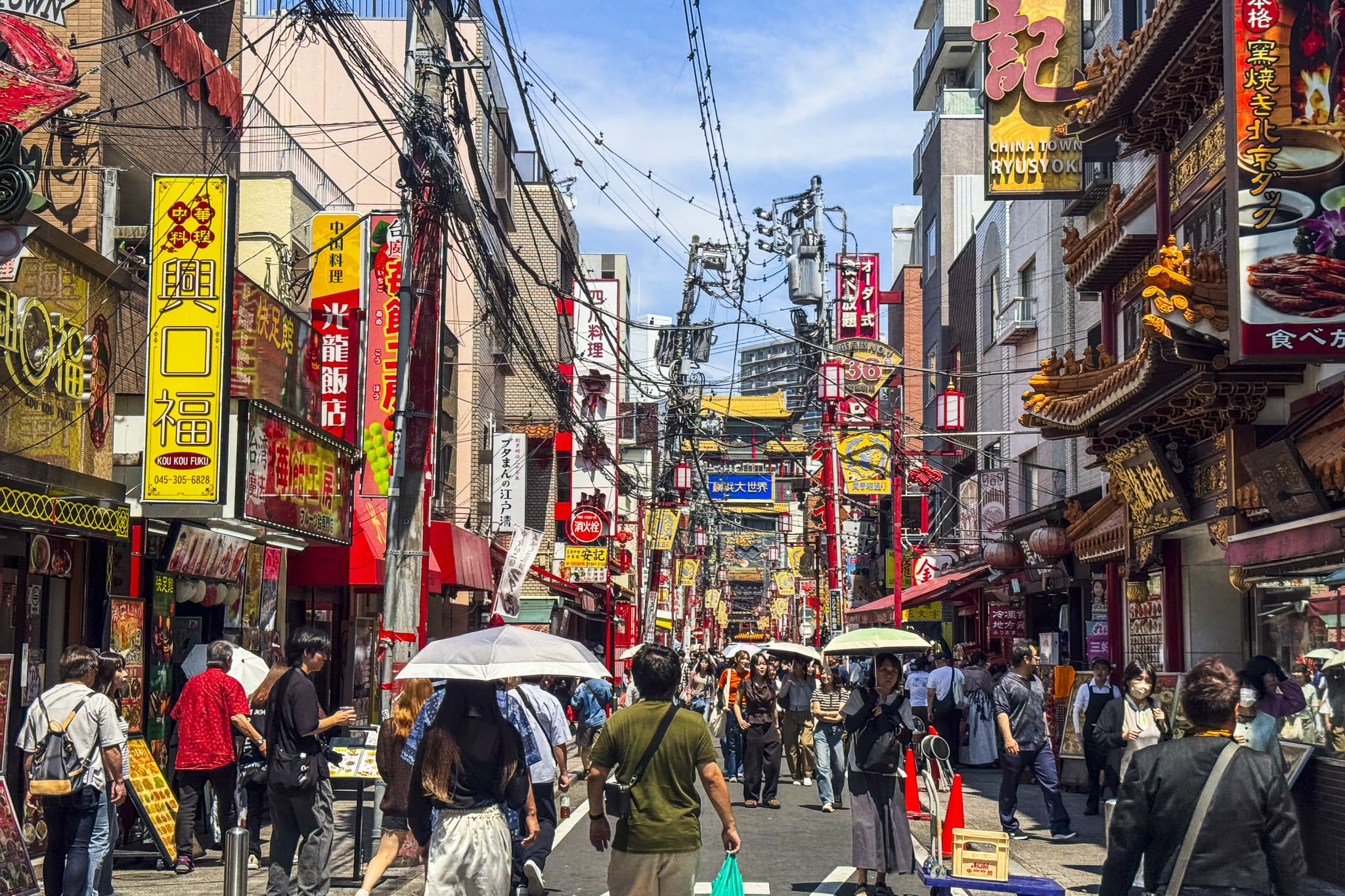
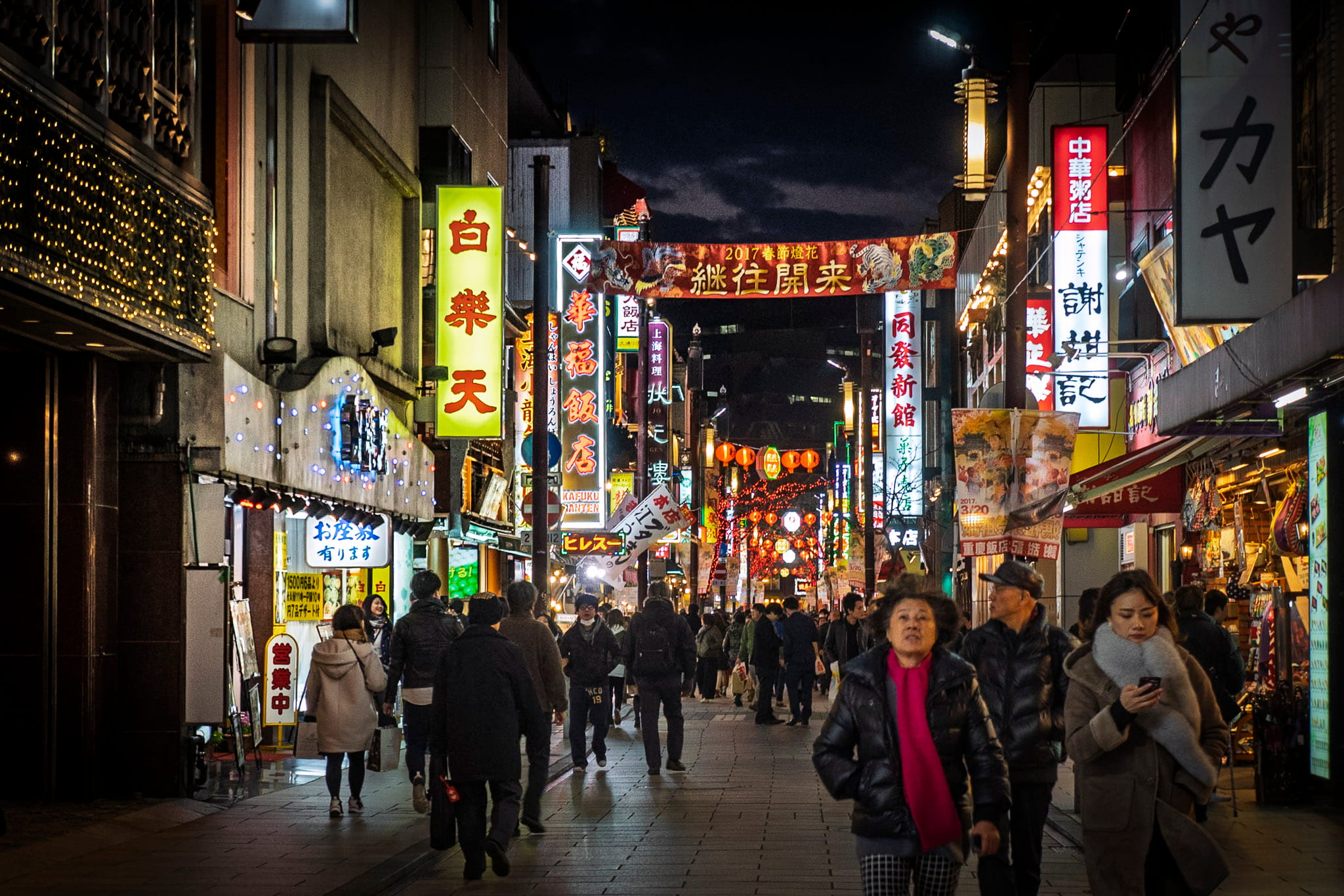
Two streets form the backbone of Yokohama Chinatown: Chukagai Odori runs through the heart of the district and is usually the busiest thoroughfare. This is where you’ll find some of the best-known restaurants, food stalls, souvenir shops, and the famous Zenrinmon Gate. Ichibadori (Market Street) is usually quite packed as well, with lots of shops, restaurants, and divination stalls in a narrow street. Kanteibyo-dori is also an important street given the location of the area’s most prominent temple. Which is not to say that the surrounding streets are not worth wandering into. These narrower streets often feel more atmospheric, particularly in the evening when rows of Chinese lanterns cast a warm glow overhead. Some of my favourite moments in Chinatown have come not from the main avenue but from these quieter stretches between the crowds.
If you’re visiting for the first time, a simple strategy works well: enter through Choyomon, explore Chukagai Odori to get your bearings, detour through the side streets toward Kanteibyo Temple, and then allow yourself to wander. Chinatown is compact enough that getting a little lost is part of the experience.
The Temples of Yokohama Chinatown
For many visitors, Yokohama Chinatown is all about food. While the steamed buns, soup dumplings, and roasted chestnuts deserve the attention they receive, focusing only on the food means missing some of the district’s most interesting landmarks.
At the heart of Chinatown are two ornate Chinese temples that reflect the history and traditions of the community that built this neighborhood. Both are free to visit, both are visually stunning, and each offers a very different atmosphere from the busy streets outside.
Kanteibyo (Yokohama Kuan Ti Miao) Temple
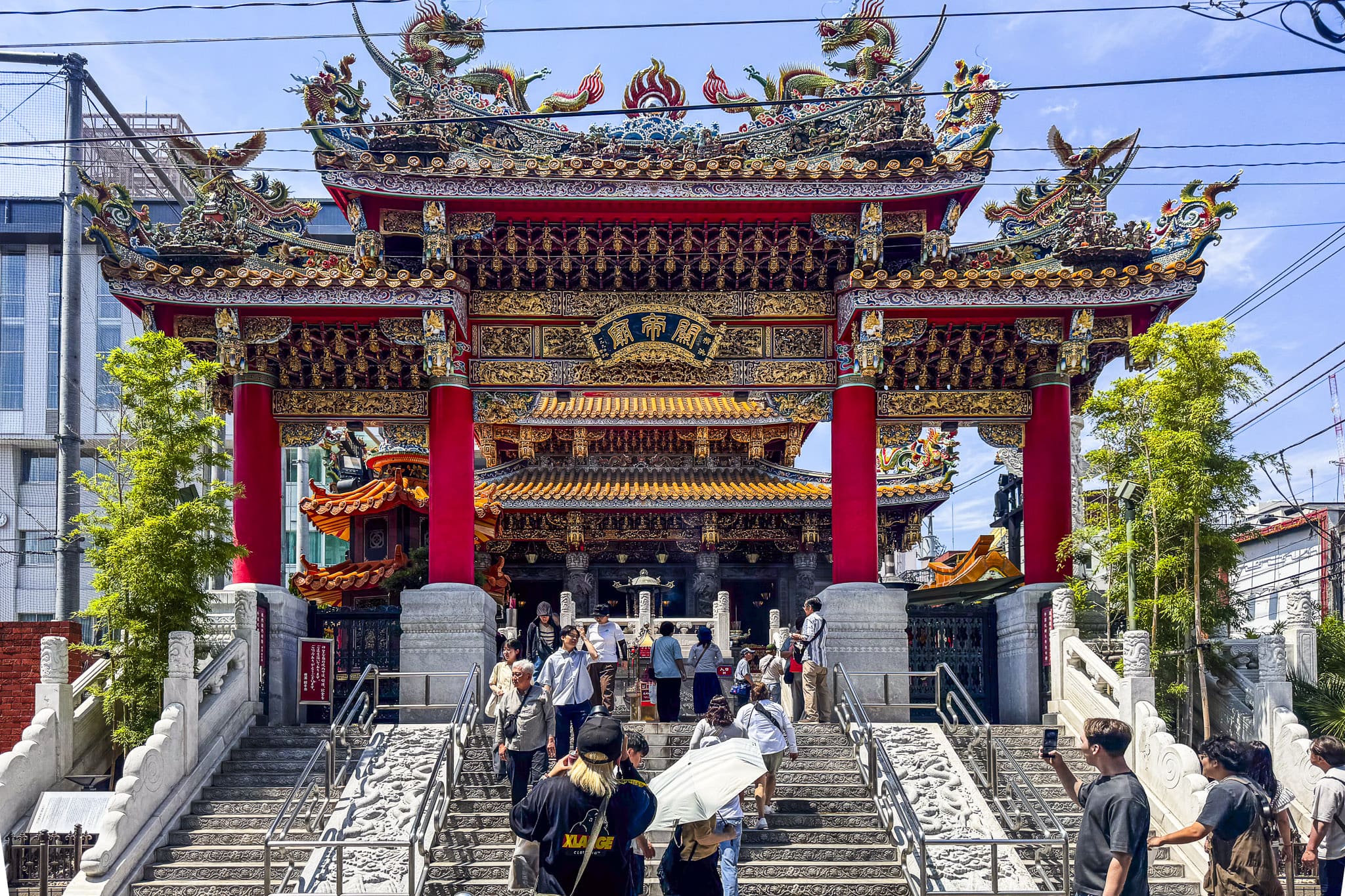
Kanteibyo (横浜関帝廟) could be well considered as the spiritual heart of Yokohama Chinatown. The origins of this Taoist temple date back to 1862, when a Chinese resident enshrined Guan Yu, the celebrated general of China’s Three Kingdoms period, in a small roadside shrine. As the Chinese community grew, the shrine was expanded into a proper temple in 1871 through donations from local residents and merchants.
Nowadays, Kanteibyo remains dedicated to Guan Yu, known in Japanese as Kan’u. Although he began as a historical military figure, he later became revered throughout East Asia as a deity associated with business success, prosperity, integrity, learning, and academic achievement. It is common to see business owners, students, and worshippers offering prayers here throughout the year.
The temple itself is impossible to miss. Bright red pillars, intricate carvings, gilded decorations, and colourful roof ornaments cover nearly every surface. Inside the courtyard, visitors can light incense and make offerings according to traditional Chinese customs.
I find Kanteibyo most enjoyable either shortly after opening or later in the evening. During busy weekends, the courtyard can become crowded with tour groups and visitors taking photos. In quieter moments, the atmosphere changes completely. The scent of incense lingers in the air, lanterns glow softly overhead, and the temple feels surprisingly removed from the noise of the surrounding streets.
After sunset, Kanteibyo becomes particularly photogenic. The warm lighting highlights the intricate carvings and decorations, creating a very different mood from the daytime experience.
| Access |
6-min walk from Motomachi-Chukagai Station |
|---|---|
| Business Hours |
9 AM–7 PM |
| Price |
Free |
| Official Website |
http://www.yokohama-kanteibyo.com/ |
Masobyo (Yokohama Mazu Miao) Temple
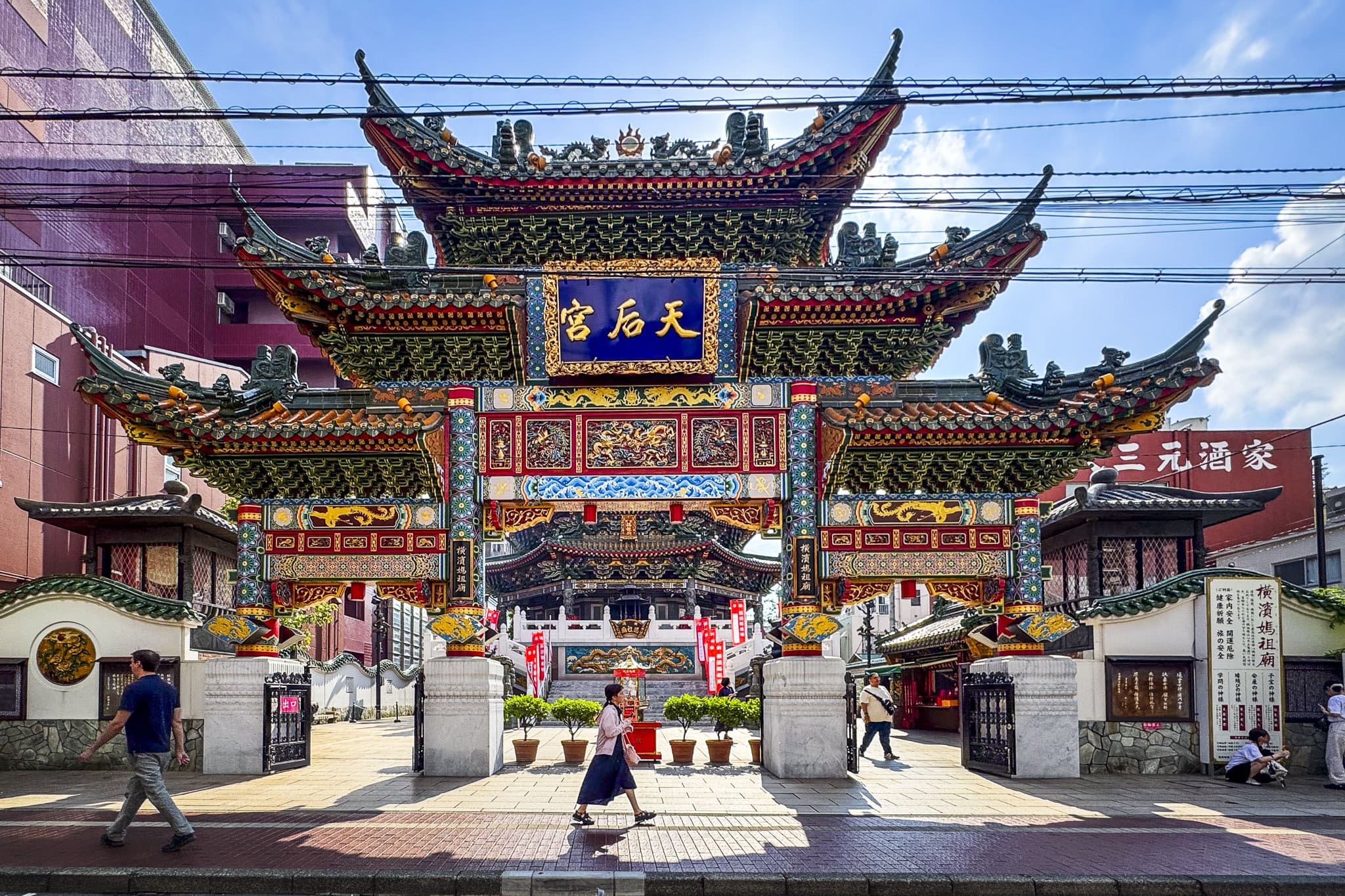
While Kanteibyo carries the weight of history, Masobyo (橫濱媽祖廟) impresses through architectural scale. Opened in 2006, Masobyo is a Taoist Temple dedicated to Mazu, the Chinese Goddess of the Sea. For centuries, Mazu has been worshipped by sailors, fishermen, merchants, and coastal communities throughout China and across the Chinese diaspora. Given Yokohama’s long history as an international port city, her presence here feels especially appropriate.
Masobyo was the first temple in Japan dedicated to Mazu, and as such, it’s one of the most elaborate buildings in Yokohama Chinatown. The structure was constructed using traditional Chinese techniques, and many of its decorative elements were crafted by artisans brought from China specifically for the project, resulting in a tremendously elaborate ornamentation: Dragons, phoenixes, carved pillars, and richly painted ceilings compete for your attention in every direction. Photographers will find no shortage of details to capture.
Despite its impressive appearance, Masobyo often receives fewer visitors than Kanteibyo. As a result, it usually feels calmer and less congested, particularly during the busiest hours of the day.
| Access |
3-min walk from Motomachi-Chukagai Station |
|---|---|
| Business Hours |
9 AM–7 PM |
| Price |
Free |
| Official Website |
http://www.yokohama-masobyo.jp/ |
Eating in Yokohama Chinatown
With more than 600 shops and restaurants packed into a relatively small area, Yokohama Chinatown can feel overwhelming for first-time visitors. While full restaurant meals are part of the experience, one of the most enjoyable ways to explore the district is by sampling different foods as you go.
Foods Worth Trying in Yokohama Chinatown
Some are local classics, others are Chinese staples adapted for street eating, and a few have become attractions in their own right.
Nikuman (Steamed Pork Buns)
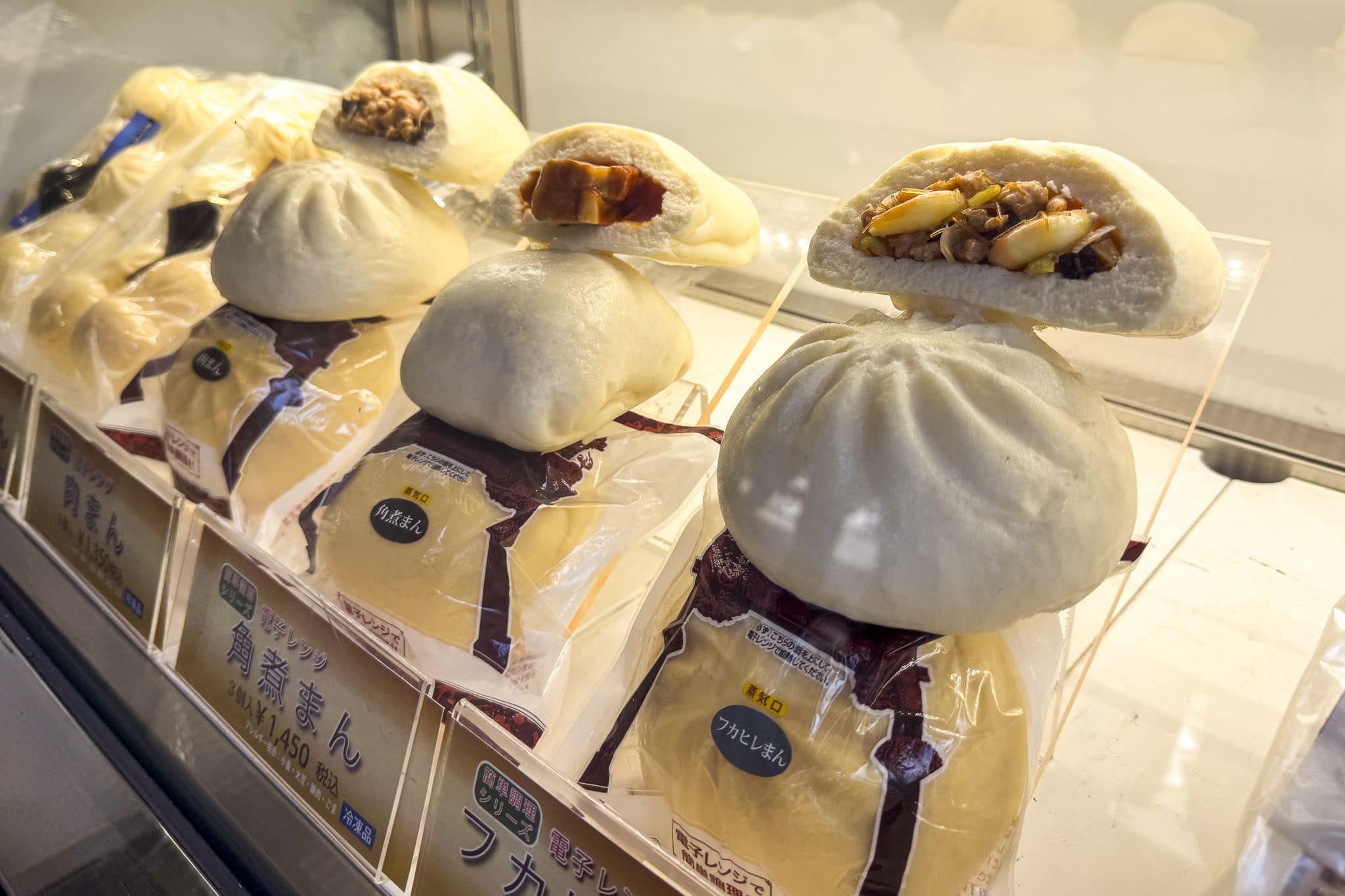
If there is one food most closely associated with Yokohama Chinatown, it’s the nikuman.
These large steamed buns are typically filled with seasoned pork and vegetables, though you’ll also find variations containing seafood, beef, curry, and other fillings. Nearly every street seems to have multiple vendors selling them, but quality varies significantly.
The best nikuman have a fluffy, slightly sweet dough and a juicy filling that remains moist without becoming greasy. If you’re only trying one, look for shops with a steady turnover rather than the biggest bun on display. Size alone is rarely a reliable indicator of quality.
Yaki Shoronpo (Fried Soup Dumplings)
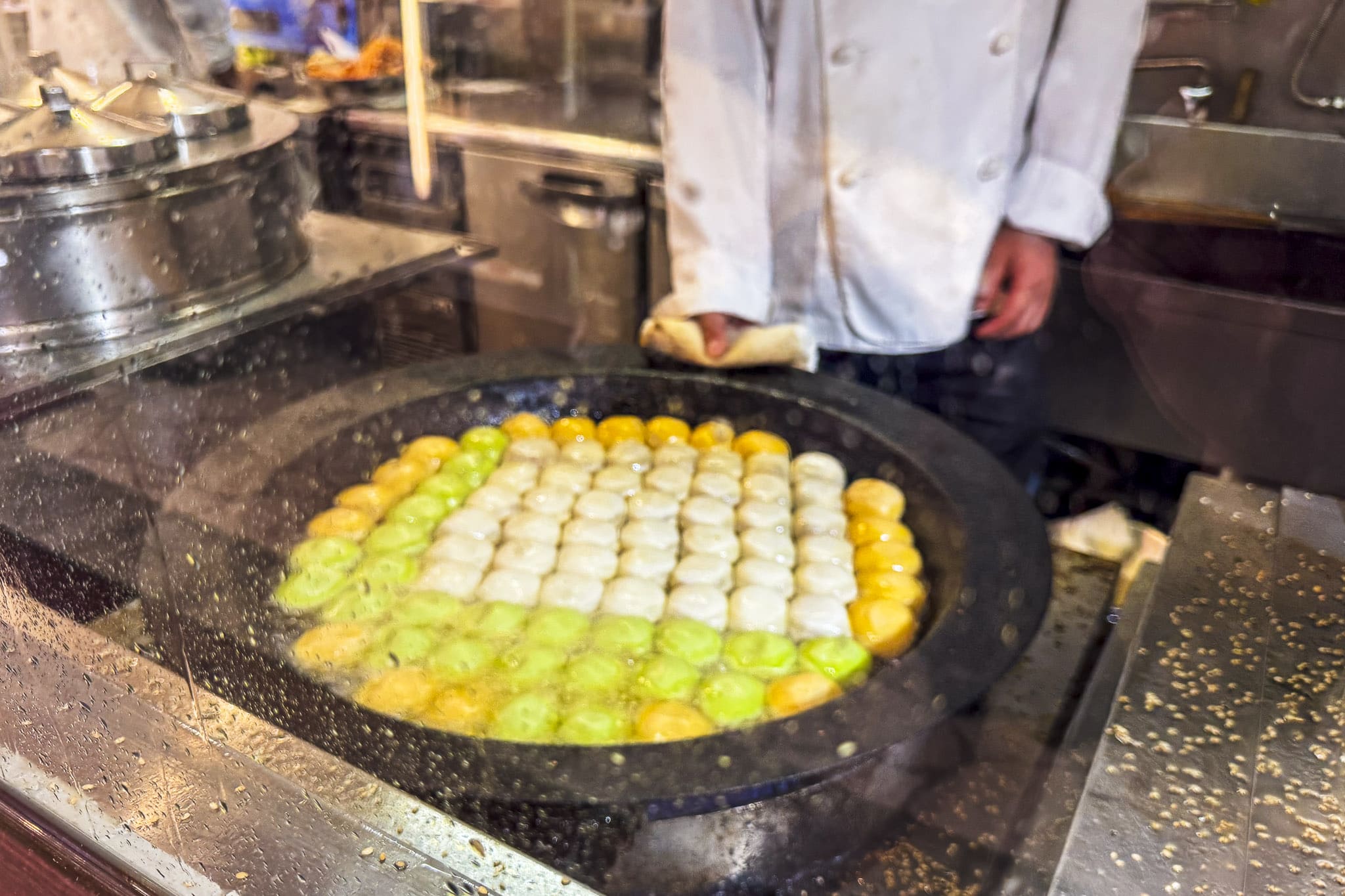
Unlike traditional steamed xiaolongbao, yaki shoronpo are pan-fried soup dumplings with a crisp bottom and a piping-hot broth inside.
They’ve become one of Chinatown’s most popular street foods over the past decade, and for good reason. The contrast between the crispy exterior and the rich soup filling makes them particularly satisfying to eat fresh off the griddle.
Just be careful with your first bite. The soup inside can be surprisingly hot.
Koshou Mochi (Black Pepper Buns)
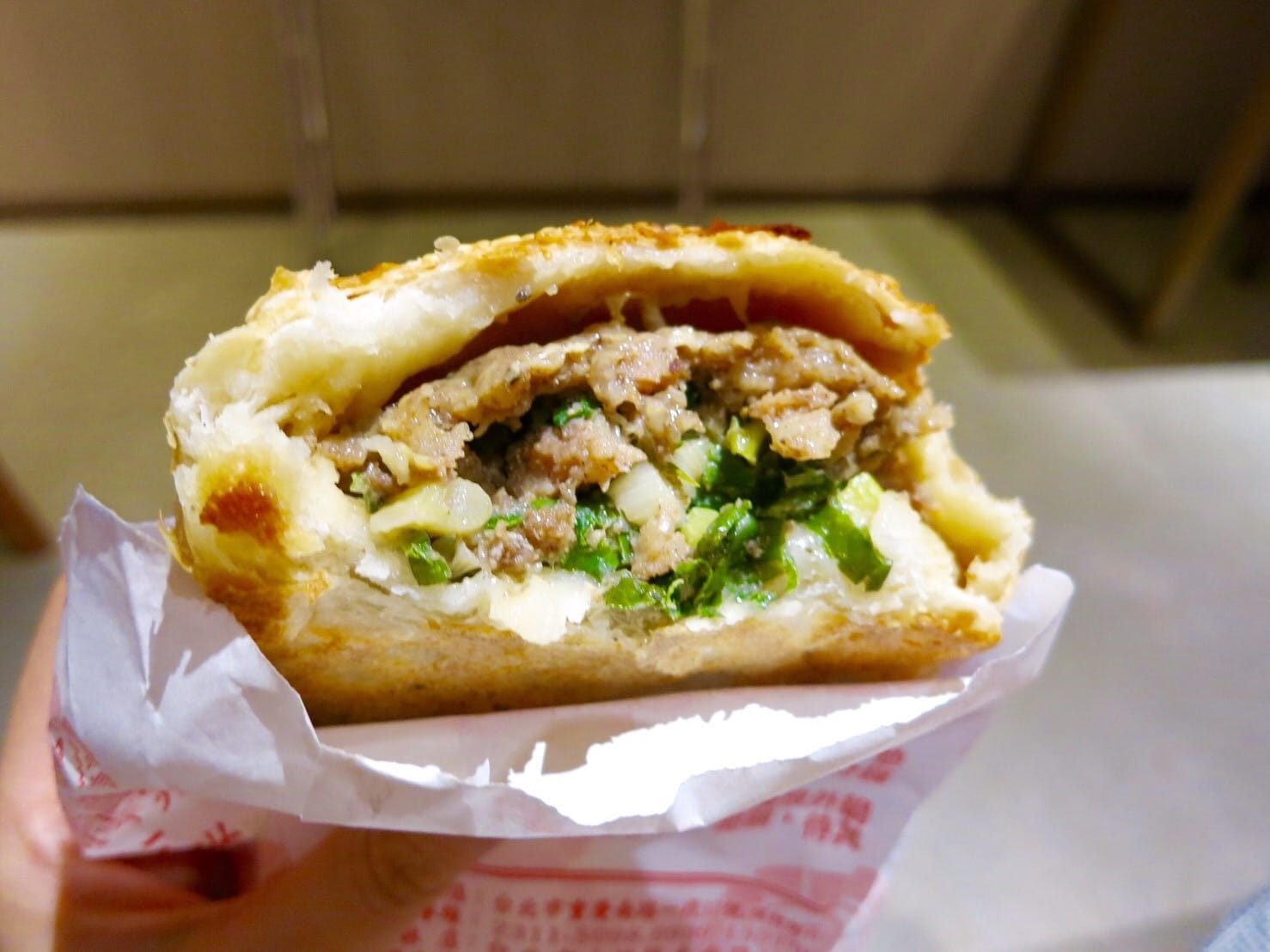
One of Chinatown’s most distinctive snacks, koshou mochi originates from Taiwanese night market culture. These black pepper buns are filled with seasoned pork, scallions, and plenty of cracked pepper before being baked against the walls of a clay oven. The result is a crisp exterior and a fragrant, peppery filling that feels quite different from the softer flavours found in many other street foods.
They don’t receive the same attention as nikuman or soup dumplings, but they’re one of my favourite things to eat in Chinatown.
Peking Duck
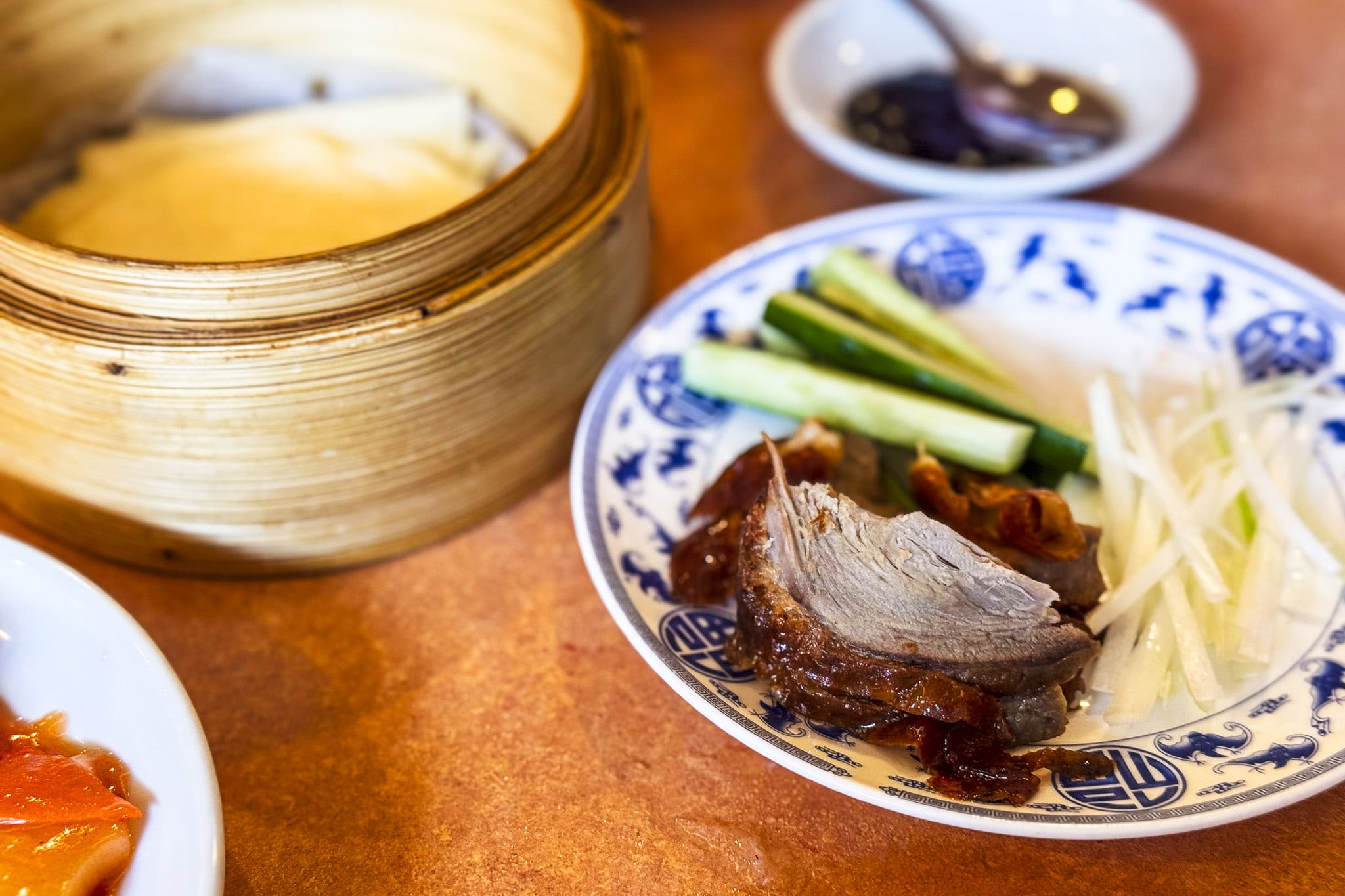
For visitors curious about Peking duck but unwilling to commit to an expensive restaurant meal, there are plenty of affordable options as part of a tabehoudai menu, offering a good introduction.
Slices of roasted duck are wrapped in a thin pancake with sweet sauce and vegetables, creating a snack that’s rich without being overly heavy. And for those who don’t feel like committing to a full all-you-can-eat meal, there are also ready-made wrap options widely available throughout Chinatown, making an easy addition to a food-hopping itinerary.
Egg Tarts
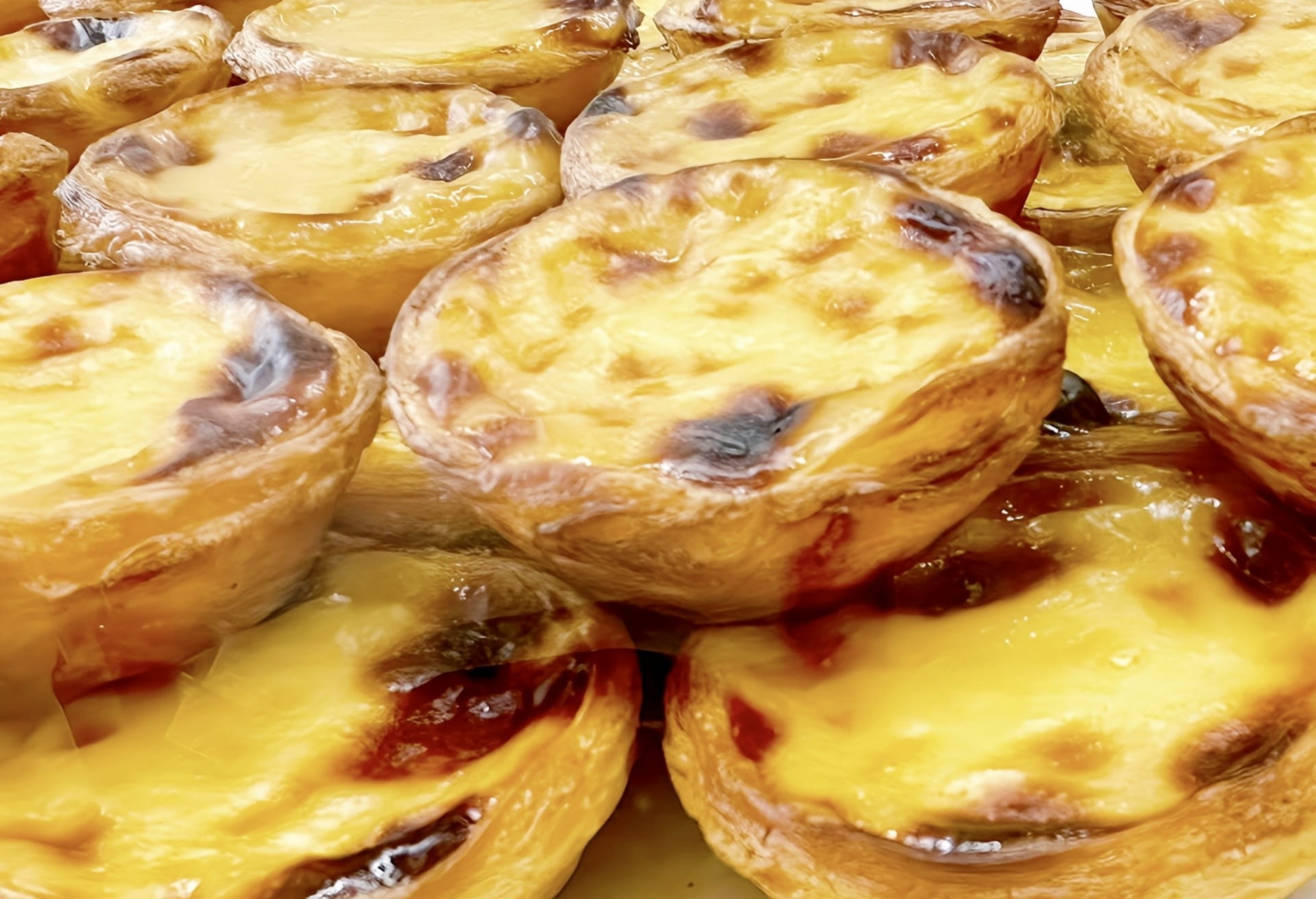
Originally popularized in Hong Kong and Macau, egg tarts have become a staple Chinatown dessert.
The contrast between the flaky pastry shell and silky custard filling makes them an ideal palate cleanser after several savoury snacks. They’re especially popular during weekends, and some bakeries sell out of fresh batches surprisingly early in the day.
Goma Dango (Sesame Dumplings)
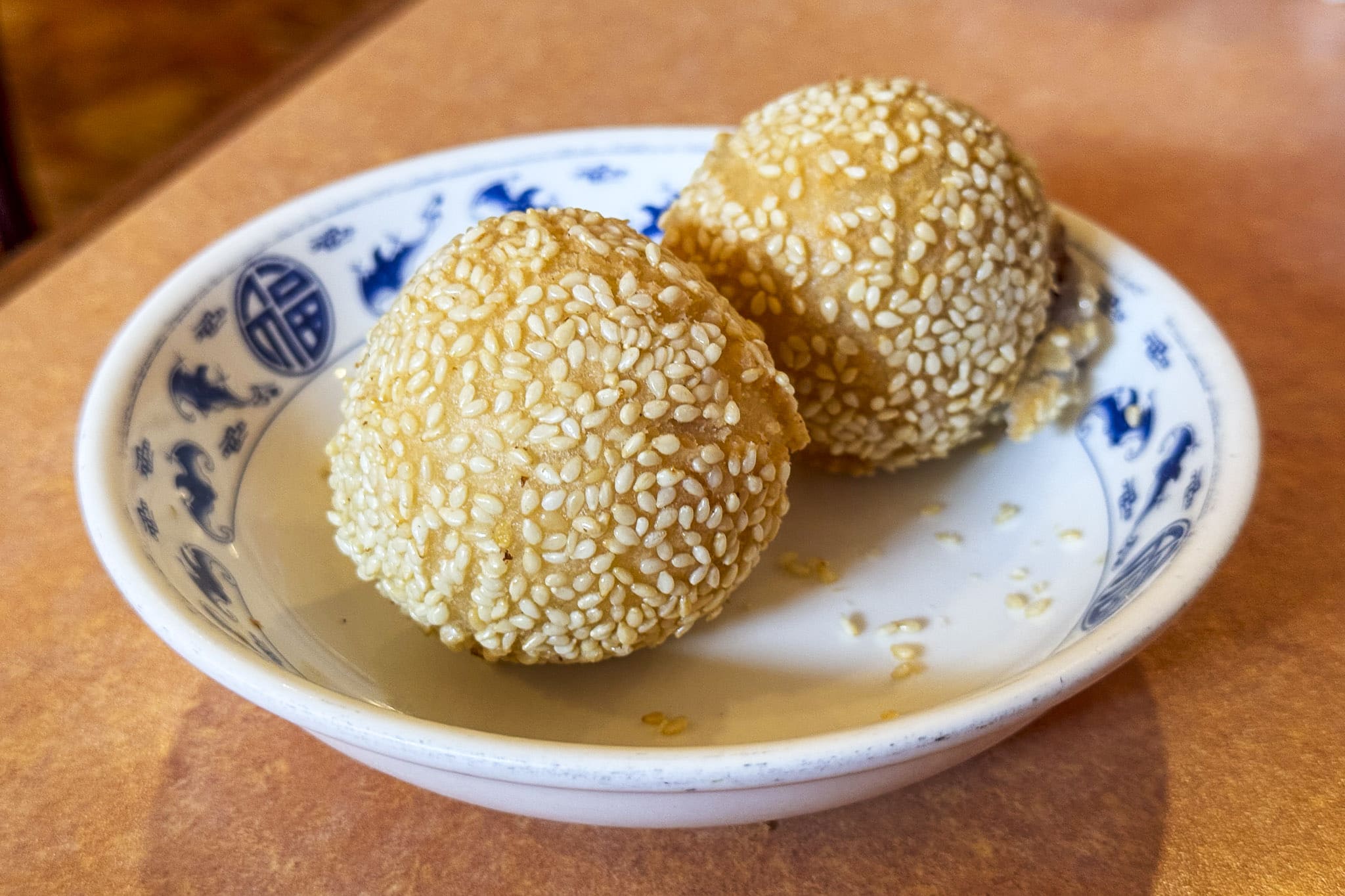
One of my personal favourites in Yokohama Chinatown is goma dango, deep-fried glutinous rice dumplings coated in sesame seeds. Regardless of what I eat there for lunch or dinner, I need to have my goma dango for dessert.
The crisp, nutty exterior gives way to a chewy mochi-like centre, usually filled with sweet red bean paste. As well as being typically available in the sweets section of the area restaurants, they’re widely available from street-food vendors throughout Chinatown and make an excellent snack while exploring the district. Simple as they are, I find them surprisingly addictive and almost impossible to walk past without buying one.
Panda Nikuman
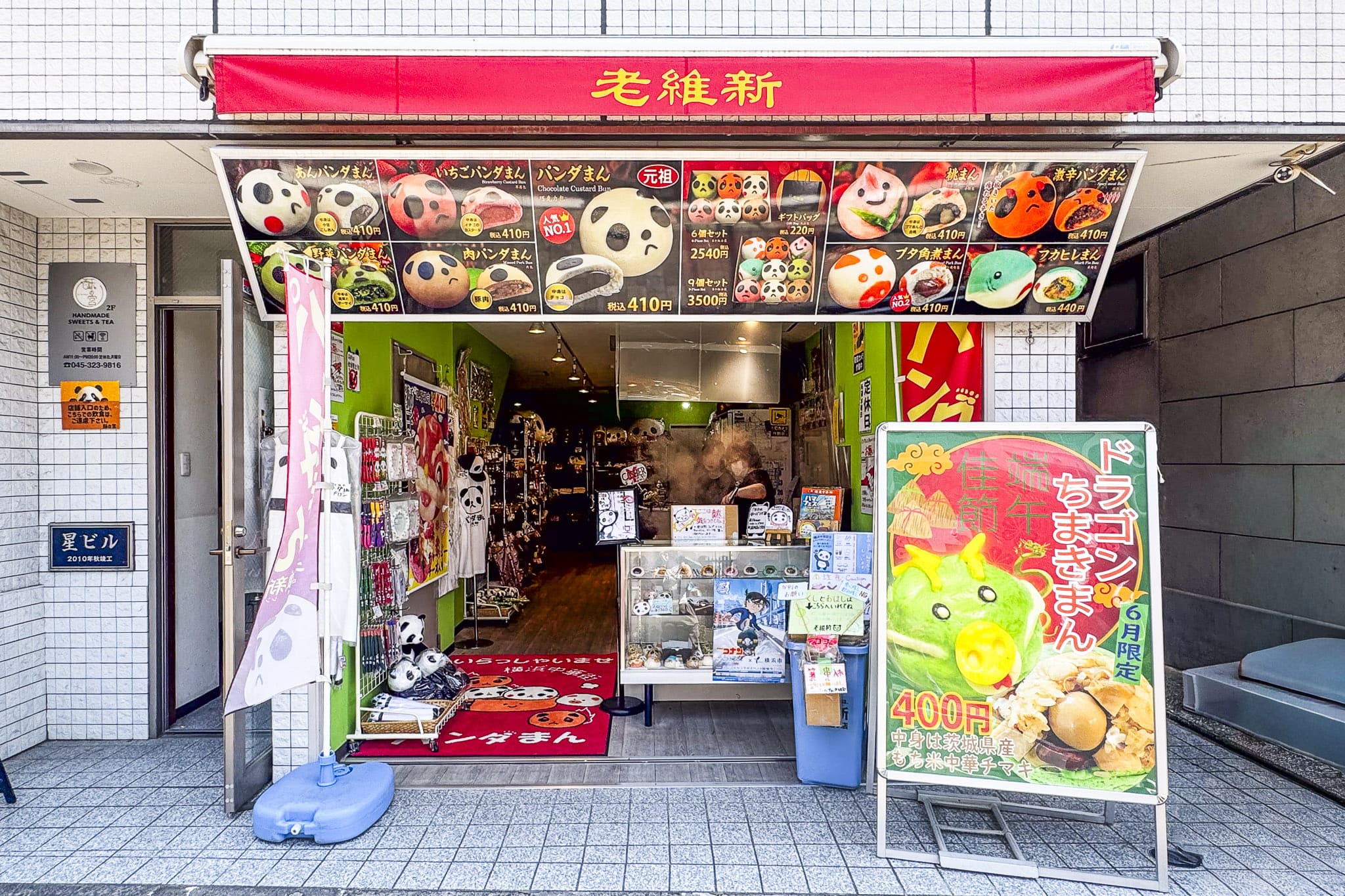
No discussion of Yokohama Chinatown would be complete without mentioning the panda-shaped steamed buns that appear in countless social media posts.
They’re undeniably cute and make for excellent photographs. As food, however, they’re generally less memorable than many of the other options on this list. If you’re choosing between a panda bun and a freshly made nikuman from a busy vendor, I’d pick the latter every time.
That said, if you’re travelling with children, or simply enjoy whimsical food, they’re hard to resist.
Roasted Chestnuts
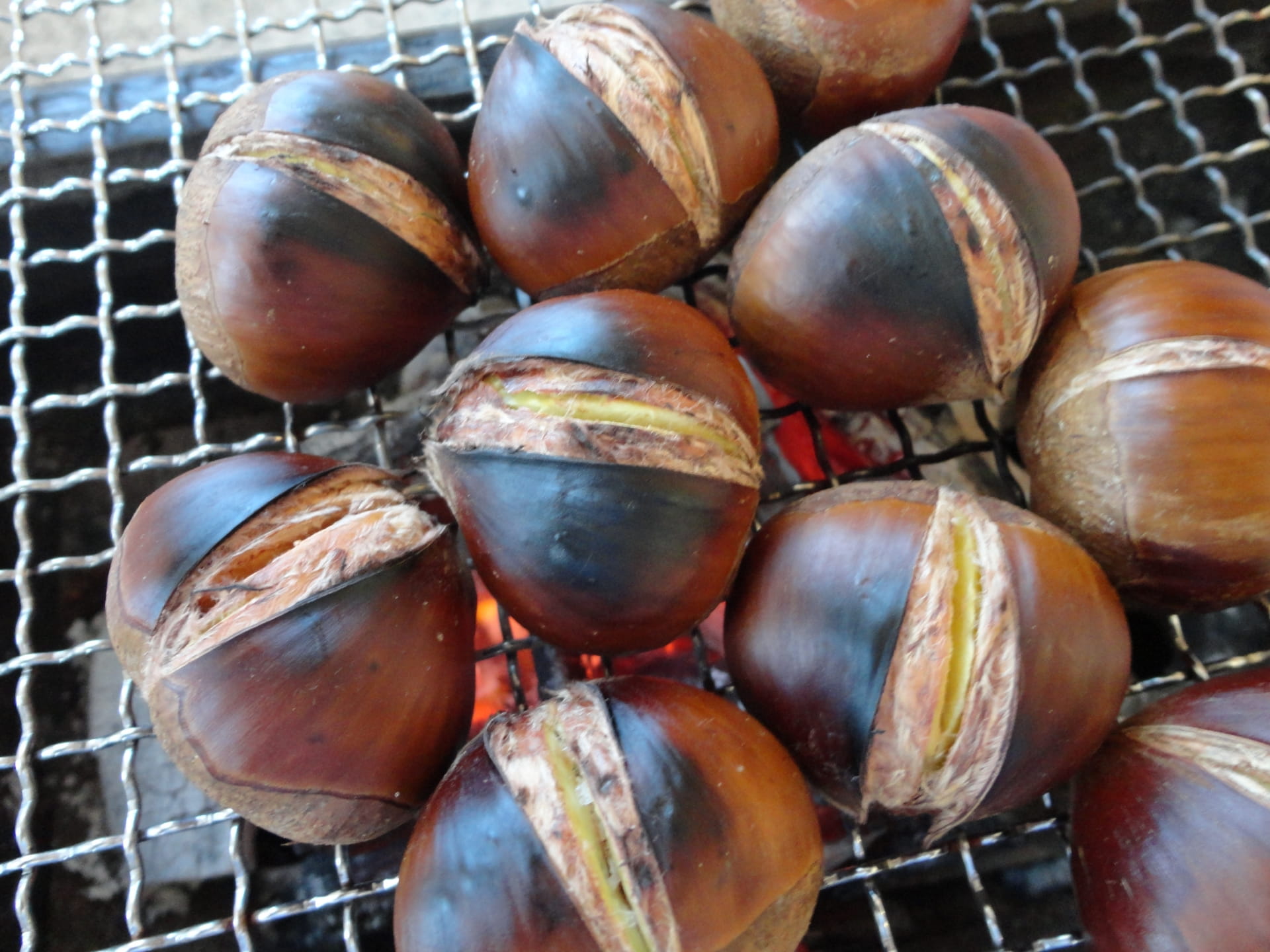
The aroma of roasted chestnuts drifting through Chinatown’s streets is one of the details I associate most strongly with autumn visits.
Vendors often display large rotating roasting machines near their storefronts, and some still offer samples to passersby. The chestnuts themselves are naturally sweet and make an excellent snack during the cooler months.
While available throughout much of the year, they’re at their best during autumn and winter.
Street Food Etiquette
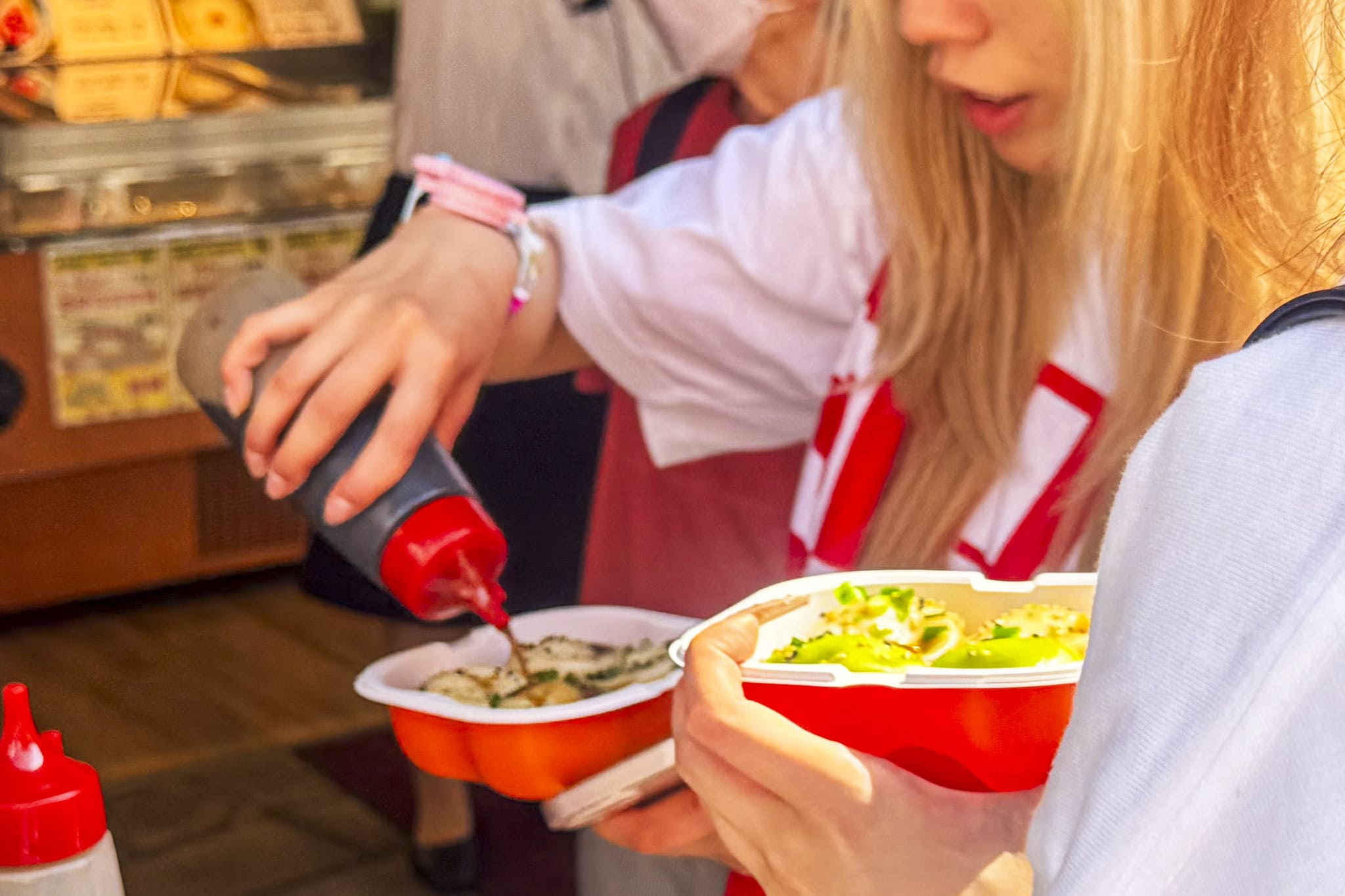
One thing worth knowing before you start eating your way through Chinatown: walking while eating is generally discouraged in Japan.
Although the district is more relaxed about this than many other parts of the country, the expectation is still that you finish your food near the shop where you bought it. Most vendors provide standing counters, designated eating spaces, or nearby benches for customers. This is also convenient when it comes to disposing of the leftover trash (wrappings, plastic containers, etc) since there are no trash bins on the street, so it makes sense to just eat in the vendor area and then use the vendor’s own trash bins. And just in case, this should go without saying, but do not expect vendors to take care of the trash from other businesses.
It’s a small courtesy that helps keep the busy streets cleaner and more comfortable for everyone.
Sit-Down Dining Styles Explained


Street food alone can easily fill a few hours, but many visitors prefer to sit down for a proper meal. With hundreds of restaurants to choose from, it helps to understand the main dining styles you’ll encounter.
Tabehoudai Restaurants
One of Chinatown’s defining experiences is tabehoudai, or all-you-can-eat dining. Unlike a buffet, dishes are usually prepared to order and brought directly to your table. Menus often include dozens of items ranging from dim sum and stir-fries to seafood and desserts. Prices usually range around 2,000-3,000 yen, depending on the menu selection. There is no time limit, and there are tons of places where you can make your pick. Tabehoudai is particularly good value for families and groups who want to sample a wide variety of dishes. Solo travellers may find it harder to get their money’s worth.
A personal favorite of mine is Kafuku Hanten (華福飯店); I wouldn’t call myself a specialist, but across all the different tabehoudai establishments I’ve tried over the years, that’s the one I keep liking the best. However, I want to encourage you to explore on your own and find what suits your tastes.
Dumpling Specialists
For many visitors, dumplings (soup, fried or steamed) are the main event. Several restaurants specialize in xiaolongbao soup dumplings or yaki shorompo and related dumpling dishes, often preparing them in open kitchens where diners can watch the process. The most famous establishments frequently attract long queues, especially between noon and 2:00 p.m.
If soup dumplings are high on your priority list, visiting before lunch or later in the afternoon can save a considerable amount of waiting time. Honestly, from all the places I’ve tried, the quality has been consistently good so far, so you’re probably safe with any shop that catches your eye.
Special Occasion Dining
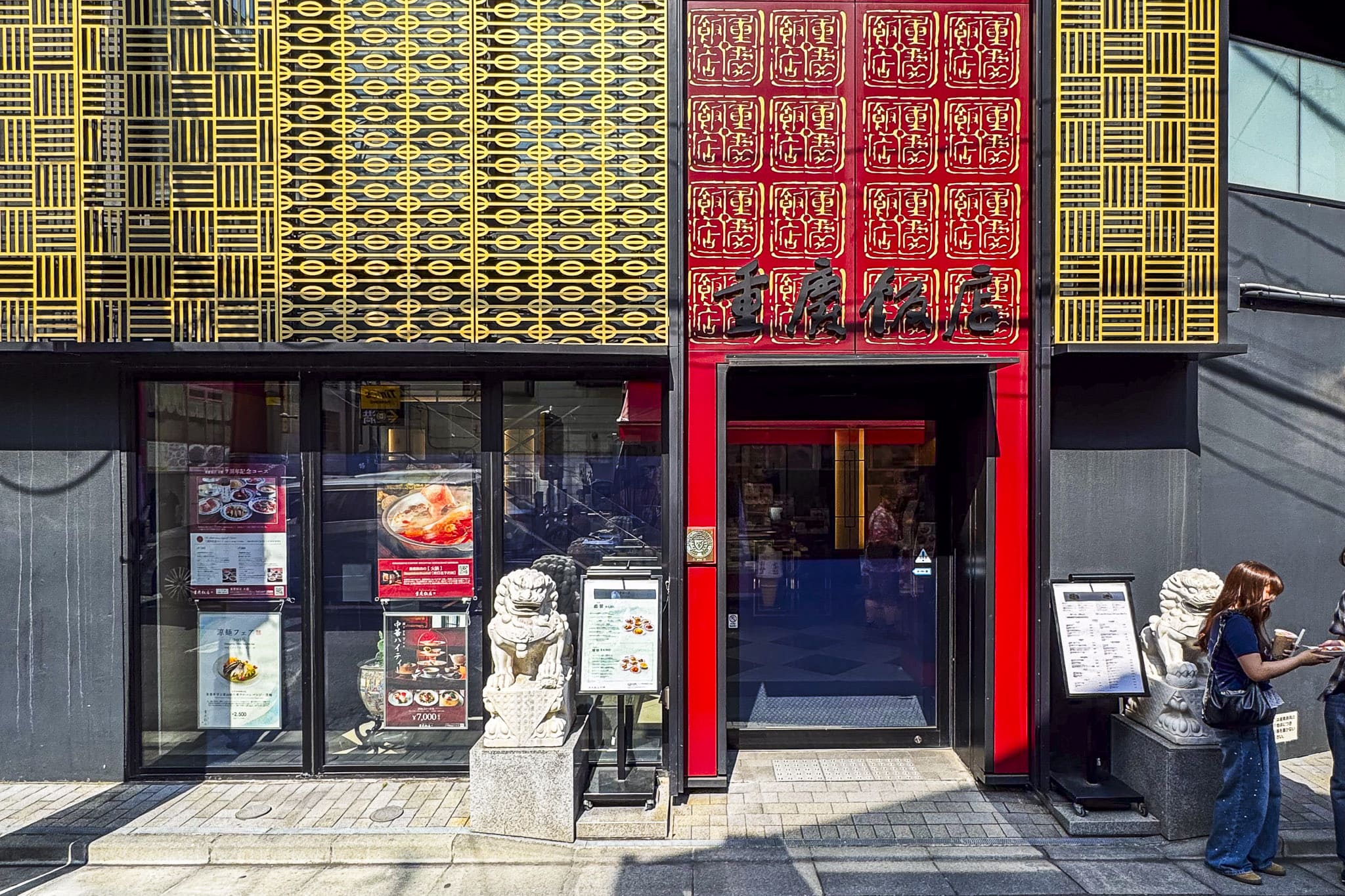
At the opposite end of the spectrum are Chinatown’s higher-end restaurants. These establishments focus on banquet-style meals, or premium seafood, elaborate multi-course menus, and specialties such as Sichuan cuisine or whole Peking duck. The atmosphere tends to be quieter and more formal than the street-food scene outside.
I’m afraid I cannot provide first-hand recommendations here, but researching high-end spots in the area, Jukei Hanten (重慶飯店) is one of the most consistently celebrated Sichuan establishments. If you’re celebrating a birthday, anniversary, or simply want to experience a more refined side of Chinese cuisine in Japan, maybe going a little extra can be worthwhile.
Casual Chinese Restaurants
Not every meal in Yokohama Chinatown needs to be an all-you-can-eat feast or a special-occasion dinner. The district is also home to many casual or family-run restaurants serving classic regional Chinese dishes at reasonable prices.
These eateries are often a great choice if you’re looking for a more authentic dining experience, with menus focused on specialties such as dumplings, noodles, congee, or regional home-style cooking. For instance, Torin (東林) is right outside of the high-traffic touristy areas and is an excellent place for homemade noodles and classic Chinese dishes. Shatenki Nigouten (謝甜記 貮号店) is a restaurant specializing in Chinese congee and another great option for authentic Cantonese food. Don’t be fooled by the quirky Santa image!
Is Yokohama Chinatown Worth Visiting?


Absolutely! But with a small caveat. If you’re visiting Japan for the first time and only have a few days to work with, Yokohama Chinatown probably shouldn’t sit at the very top of your itinerary. Most visitors understandably want to prioritize places that feel uniquely Japanese, such as Kyoto’s temples, Tokyo’s historic neighborhoods, or traditional onsen towns.
However, if you have extra time in the Tokyo area, Yokohama Chinatown is absolutely worth considering. What makes it special isn’t simply the food but the overall atmosphere. As noted at the beginning of the article, I had already spent time in a couple of famous Chinatown districts in the West, but Yokohama’s Chinatown was something on an entirely different scale. And whenever I bring a visiting friend here, they’re just equally blown away as I was the first time. Not so many places in Japan manage quite the same combination of food, architecture, history, and energy.
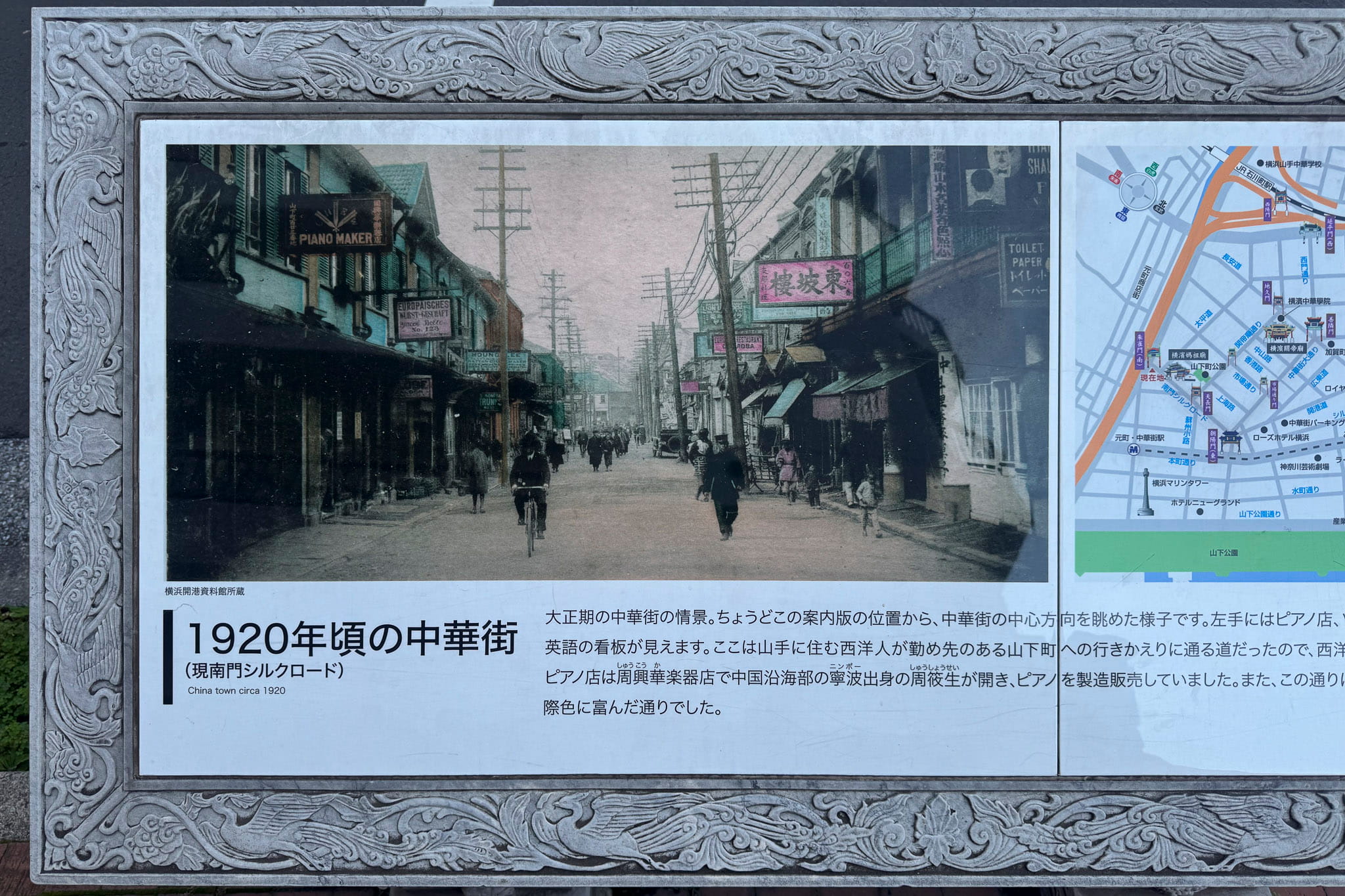
Yes, Yokohama Chinatown is touristy. On weekends and public holidays, the main streets can become extremely crowded. Some food stalls clearly cater to visitors looking for quick snacks and social media photos, and not every shop offers the same level of quality. If you’re expecting an untouched local neighborhood, you’ll likely be disappointed. At the same time, reducing Chinatown to a tourist attraction misses what makes it interesting. This is not a themed entertainment district built for visitors, but the product of a Chinese community that has been part of Yokohama for more than 160 years. The temples, gates, festivals, and culinary traditions all reflect that history. This place is commercial and culturally significant at the same time.
As for the food, prices are generally reasonable by Japanese tourist-destination standards. Street snacks are affordable, many restaurants offer good lunch deals, and it’s possible to sample several different dishes without spending a fortune. You may pay a slight premium in some of the busiest locations, but I never felt that Chinatown as a whole was overpriced.
Ultimately, I think Yokohama Chinatown works best as part of a broader Yokohama day trip. Combined with Yamashita Park, the waterfront, Minato Mirai, and Motomachi, it helps create one of the most enjoyable day itineraries near Tokyo.
Would I fly to Japan just to visit Yokohama Chinatown? No.
Would I recommend it to anyone with an extra day in the Tokyo area?
Without hesitation.
Seasonal Events
Yokohama Chinatown hosts events throughout the year, such as smaller celebrations, religious observances, and cultural events, but these two festivals have the greatest impact on the overall visitor experience:
Chinese New Year (Spring Festival)
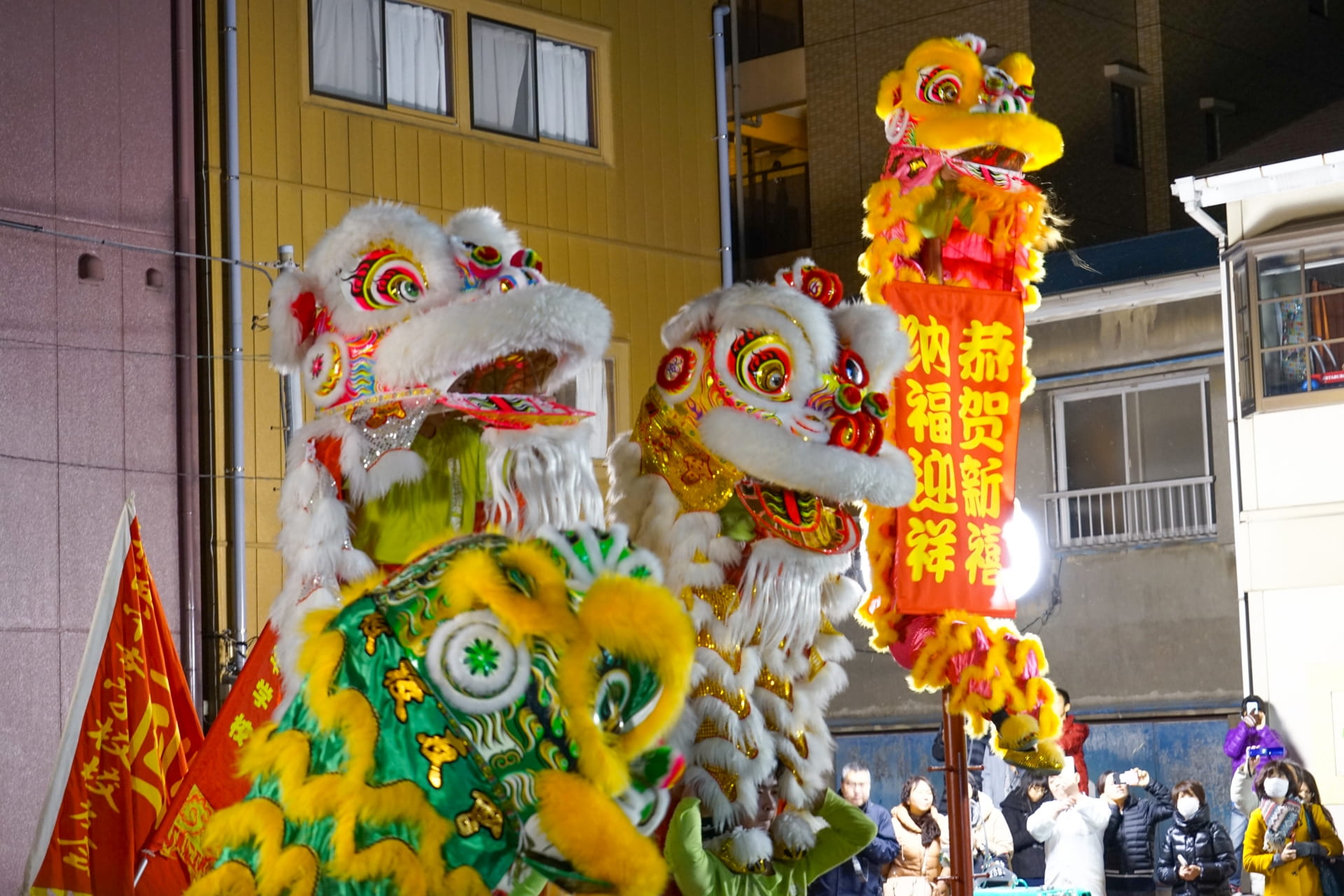
Chinese New Year is by far the biggest event on Chinatown’s calendar. Celebrations typically include lion dances, cultural performances, festive decorations, and special events spread across several weeks. The most noticeable change for visitors is the lantern display, which fills the streets with hundreds of red lanterns and illuminated decorations, including enormous dragon-themed installations suspended above the main thoroughfares.
The atmosphere is spectacular, but so are the crowds. If you’re hoping to experience Chinatown at its liveliest, this is the best time to visit. If you prefer a more relaxed experience, you may want to avoid weekends during the festival period.
Mid-Autumn Festival


Held around September or October according to the lunar calendar, the Mid-Autumn Festival brings a quieter and more traditional atmosphere. Chinatown shops sell mooncakes, decorative lanterns appear throughout the district, and special cultural events, such as festival parades. While it is much smaller than Chinese New Year, it’s a good opportunity to enjoy a local festival if the Spring Festival crowds are too much for you.
Practical Tips for Visiting
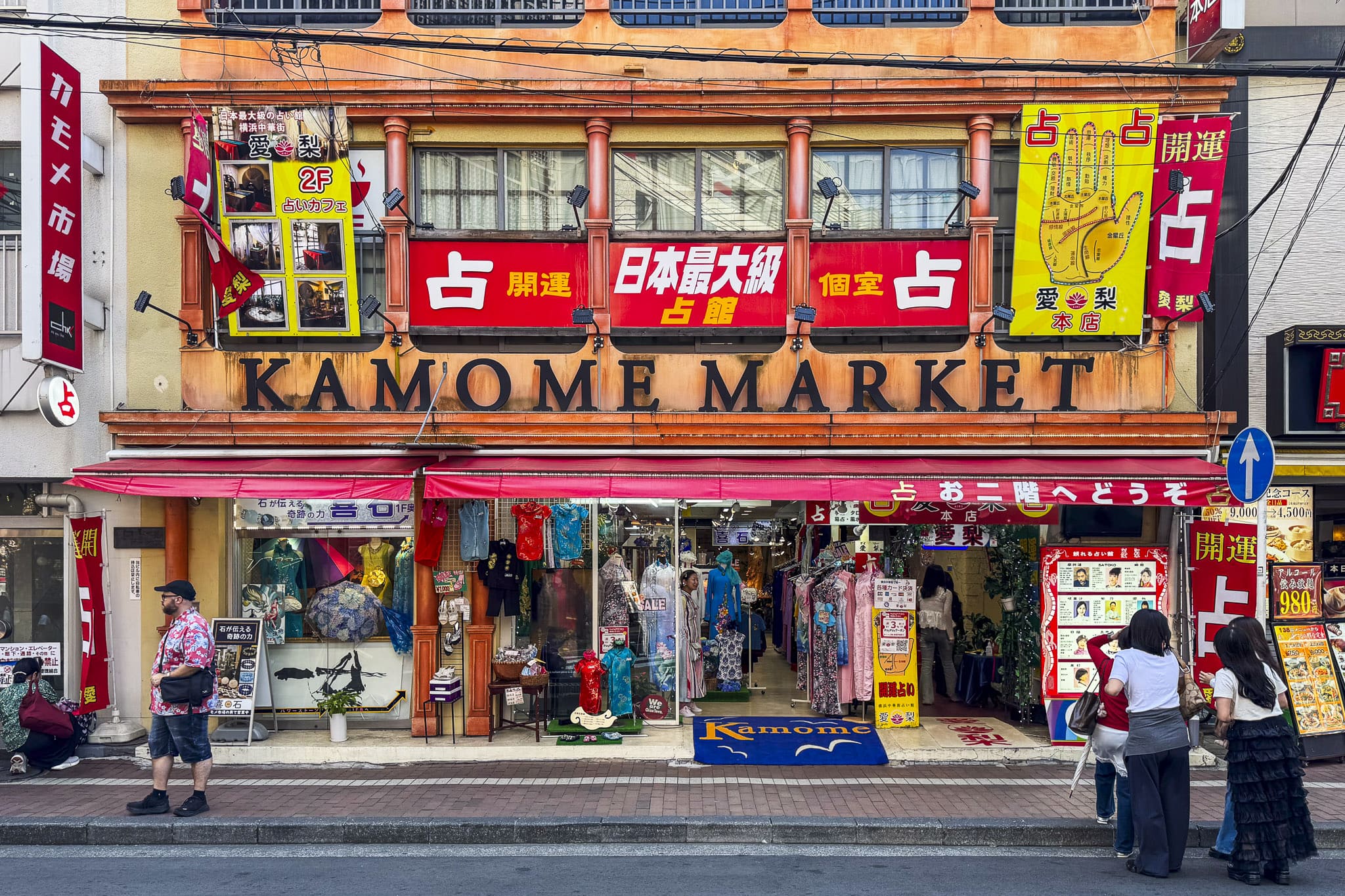
A little planning can make a big difference in Yokohama Chinatown. While the district is enjoyable year-round, choosing the right season and time of day can help you avoid long queues and make the most of your visit.
Best Time to Visit
Spring
Spring is one of the most pleasant times to visit. Temperatures are comfortable, and the nearby waterfront areas around Yamashita Park and Minato Mirai are particularly enjoyable for walking. If your trip coincides with Chinese New Year celebrations, you’ll also experience Chinatown at its most festive, though also at its most crowded.
Autumn
Autumn is my favourite season for visiting Chinatown. The cooler temperatures make it easier to spend several hours exploring, and seasonal snacks such as roasted chestnuts feel especially fitting. The comfortable weather also makes it easy to combine Chinatown with a longer day exploring Yokohama.
Summer
Summer brings high humidity and temperatures that can make sightseeing tiring, particularly during the middle of the day. Fortunately, many restaurants, cafés, and shops provide opportunities to cool down. If visiting in summer, consider arriving in the morning or staying until evening when conditions are more comfortable.
Winter
Winter is generally mild compared to many other parts of Japan. The cooler air makes food-focused visits particularly enjoyable, and the lanterns and illuminated streets can feel especially atmospheric after dark. Chinese New Year celebrations typically take place during winter, bringing the district to life with decorations and special events.
Time of Day
For the calmest experience, arrive on a weekday morning before 11:00. Streets are quieter, popular food stalls have little or no wait, and the temples are often at their most peaceful.
Between noon and 2:00 p.m., restaurants and food stalls experience their busiest period. Weekends amplify the crowds considerably, especially around the main gates and popular street-food vendors.
That said, weekend evenings have their own appeal. The lanterns are illuminated, the streets are full of energy, and the district feels at its most vibrant. You’ll share the experience with plenty of other visitors, but the atmosphere can be worth the trade-off.
How to Avoid the Biggest Crowds
If you’d like to experience Chinatown without spending half your visit standing in line, a few simple strategies can help.
- Arrive before 11:00 a.m., before the lunch rush begins.
- Plan your main meal before noon or after 2:00 p.m.
- Visit Kanteibyo and Masobyo first, then return to the food stalls later.
- Choose a weekday if your schedule allows.
- Consider approaching from JR Ishikawacho Station rather than Motomachi-Chukagai Station. The southern side of Chinatown often feels slightly less congested than the main eastern entrance.
Even during busy periods, stepping away from Chukagai Odori and exploring the smaller side streets can make the district feel noticeably calmer.
How Long Should You Spend Here?


2–3 Hours
This is enough time for most visitors.
You’ll have time to sample several street foods, visit both temples, browse the main streets, and enjoy the overall atmosphere without feeling rushed.
3–4 Hours
If you plan to sit down for a full meal, photograph the temples, explore the quieter side streets, and take your time browsing shops, allow at least three to four hours.
Food lovers could easily spend even longer.
Extend It Into a Half-Day Trip
Yokohama Chinatown pairs exceptionally well with several nearby attractions.
A popular route is to combine Chinatown with:
- Motomachi Shopping Street
- Yamashita Park
- Yokohama Marine Tower
Since all three are within walking distance, they create an easy half-day itinerary and showcase very different sides of Yokohama.
Budget Guide
One of the pleasant surprises about Yokohama Chinatown is that it can accommodate a wide range of budgets, and compared to major tourist areas in Tokyo, it’s a surprisingly affordable place to spend an afternoon.
| Expense | Typical Cost |
|---|---|
| Street Food | ¥200–¥600 per item |
| Casual Lunch | ¥1,000–¥2,500 per person |
| Tabehoudai (All-You-Can-Eat) | ¥3,000–¥5,000 per person |
| Temples & Gates | Free |
Budget Visitor
A few street-food snacks, a drink, and time spent exploring the district can easily be enjoyed for around ¥1,000–¥2,000.
Food-Focused Visitor
Sampling multiple street foods and sitting down for lunch will typically cost between ¥2,500–¥5,000.
Group Dining Experience
Visitors opting for a tabehoudai meal or a more elaborate restaurant experience should budget roughly ¥4,000–¥8,000 per person depending on the restaurant and menu.
FAQs About Yokohama Chinatown
Is Yokohama Chinatown free to visit?
Yes. You can enter Yokohama Chinatown, walk through the streets, and see the gates for free. Kanteibyo Temple and Masobyo Temple are also free to visit, although donations are welcome.
How do I get to Yokohama Chinatown from Tokyo?
The easiest route is usually the Minato Mirai Line. From Tokyo, take a train to Motomachi-Chukagai Station, then walk about 4 minutes to Chinatown. You can also use Ishikawacho Station on the JR Keihin-Tohoku/Negishi Line.
What is Yokohama Chinatown most famous for?
Yokohama Chinatown is most famous for its street food, especially steamed pork buns (nikuman), soup dumplings, Peking duck, and other Chinese specialties. It is also known for its colorful gates, temples, and lively atmosphere.
Is Yokohama Chinatown worth visiting?
For most travelers, yes. It’s one of the most vibrant neighborhoods in the Tokyo-Yokohama area and offers a mix of food, history, and culture that feels quite different from other destinations in Japan. I wouldn’t make it the top priority of a very short first trip to Japan, but it’s an excellent addition if you have an extra day in the region.
When is the best time to visit Yokohama Chinatown?
Spring and autumn are generally the most comfortable seasons. For fewer crowds, visit on a weekday morning before 11:00 a.m. For the most festive atmosphere, visit during Chinese New Year, though expect very large crowds.
How many restaurants are there in Yokohama Chinatown?
Yokohama Chinatown has more than 600 shops and restaurants, making it the largest Chinatown in Japan and one of the largest in the world.
Is Yokohama Chinatown authentic?
It depends on what you mean by authentic. The area is definitely tourist-friendly, but it also grew from a Chinese community that has existed in Yokohama for more than 160 years. Alongside tourist-oriented food stalls, you’ll find temples, festivals, and culinary traditions rooted in Chinese culture.
Can you visit Yokohama Chinatown in the evening?
Absolutely. In fact, evening is one of the best times to visit. The lanterns are illuminated, the temples look especially beautiful after dark, and the district feels more atmospheric than it does during the day. Most restaurants stay open into the evening, although individual closing times vary.
More ideas around Kanagawa and the surrounding areas? We got you covered!


Written by
Photographer, journalist, and avid urban cyclist, making sense of Japan since 2017. I was born in Caracas and lived for 14 years in Barcelona before moving to Tokyo. Currently working towards my goal of visiting every prefecture in Japan, I hope to share with readers the everlasting joy of discovery and the neverending urge to keep exploring.
- +5 5
-
-