Tokyo’s Best Underrated Autumn Leaves Spots
Where to See Autumn Leaves in Tokyo Away from the Crowds


- +0 0
-

-


Tokyo’s autumn foliage is beautiful, but the best-known viewing spots can get crowded once the leaves begin to turn. Places such as Rikugien, Shinjuku Gyoen, and Meiji Jingu Gaien draw plenty of visitors, and for good reason. But if you’re looking for a quieter side of the season, there are plenty of lesser-known places where you can enjoy the colors at a more relaxed pace.
Tokyo has plenty of autumn scenery beyond its famous foliage destinations. You can find striking views of the city’s landmarks, peaceful paths lined with ginkgo trees, and leafy parks that feel a world away from the busiest sightseeing areas. These locations are also rewarding for photography, with opportunities to capture vibrant leaves against the skyline, reflections on a pond, and autumn colors framed by historic architecture.
In this guide, I’ll introduce several underrated autumn foliage spots in Tokyo, drawing on some of my favorite local places I’ve visited and photographed. I’ll also share practical tips to help you plan your visit, and show you how to combine three nearby spots in Itabashi into an easy half-day excursion!
Quick Comparison Guide: Crowd Levels & Highlights
Timing is an approximate seasonal guide, not a guaranteed peak forecast. Tokyo’s foliage season generally runs from mid- or late-November into early December, and the timing can shift by a week or two depending on the weather. Check recent foliage reports before visiting.
Bear in mind that crowd scores are my personal and subjective estimates for relative crowd levels based on my past experience at each of these spots, not official visitor statistics. They may also vary by day, weather, and seasonal events, so take them as a rough reference only.
See also: Japan Autumn Leaves Forecast 2026
| Location | Peak Period | Crowd Score (1–10) | Primary Highlight |
| Maple Valley (Shiba Park) | Late November–early December | 4/10 | Tokyo Tower foliage framing |
| Hikarigaoka Park | Late November–early December | 3/10 | 200-meter golden ginkgo avenue |
| Edo-Tokyo Open Air Architectural Museum | Mid-to-late November | 3/10 | Autumn colors with historic architecture |
| Toyama Park (Hakoneyama) | Late November–early December | 2/10 | Elevated foliage view and daimyo history |
| Itabashi Trio (Akatsuka / Botanical Garden / Mitsugi) | Late November | 1/10 | Forest trails and water reflections |
Maple Valley (Momijidani in Shiba Park), The Iconic Cityscape Frame


Maple Valley, or Momijidani, is one of Tokyo’s most photogenic autumn corners. Tucked into Shiba Park near Tokyo Tower, this small valley brings together vivid red maple leaves, a stream, and the tower’s unmistakable orange lattice. It’s a particularly appealing stop for photographers who want to capture Tokyo’s urban scenery with a seasonal touch. I used to work around the area for over a year, and this little space was just perfect to relax for a few minutes.
Maple Valley is easy to fit into a Tokyo sightseeing day, especially if you’re already visiting Tokyo Tower or the surrounding Shiba area. It’s a compact spot, so you don’t need to set aside a long visit, but the combination of autumn leaves and city scenery makes it worth stopping. The deep-red maple canopy contrasts beautifully with Tokyo Tower’s orange lattice, creating a memorable view that feels distinctly Tokyo. The artificial waterfall and stream add to the atmosphere, making this a lovely place to take a leisurely stroll and appreciate the changing leaves.
Rather than being a destination that requires a carefully planned photo stop, Maple Valley is a pleasant little detour from the surrounding sights. Its compact size and distinctive scenery make it an appealing choice for anyone hoping to enjoy autumn foliage away from Tokyo’s better-known viewing spots.
Recommended Time for Visit
For the effect of sunlight filtering through the leaves, aim for late afternoon, around 3:30 PM to 4:30 PM. The lower sun can illuminate the maple leaves from behind, bringing out their color and texture. This window also offers a chance to photograph the foliage before Tokyo Tower’s evening illumination becomes the main visual feature.
 Access |
8-min walk from Akabanebashi Station or 9-min walk from Onarimon Station |
|---|---|
 Business Hours |
24 hours |
 Price |
Free |
 Official Website |
https://www.kissport.or.jp/spot/tanbou/2111/ |
Hikarigaoka Park, the Crowd-Free Golden Ginkgo Tunnel
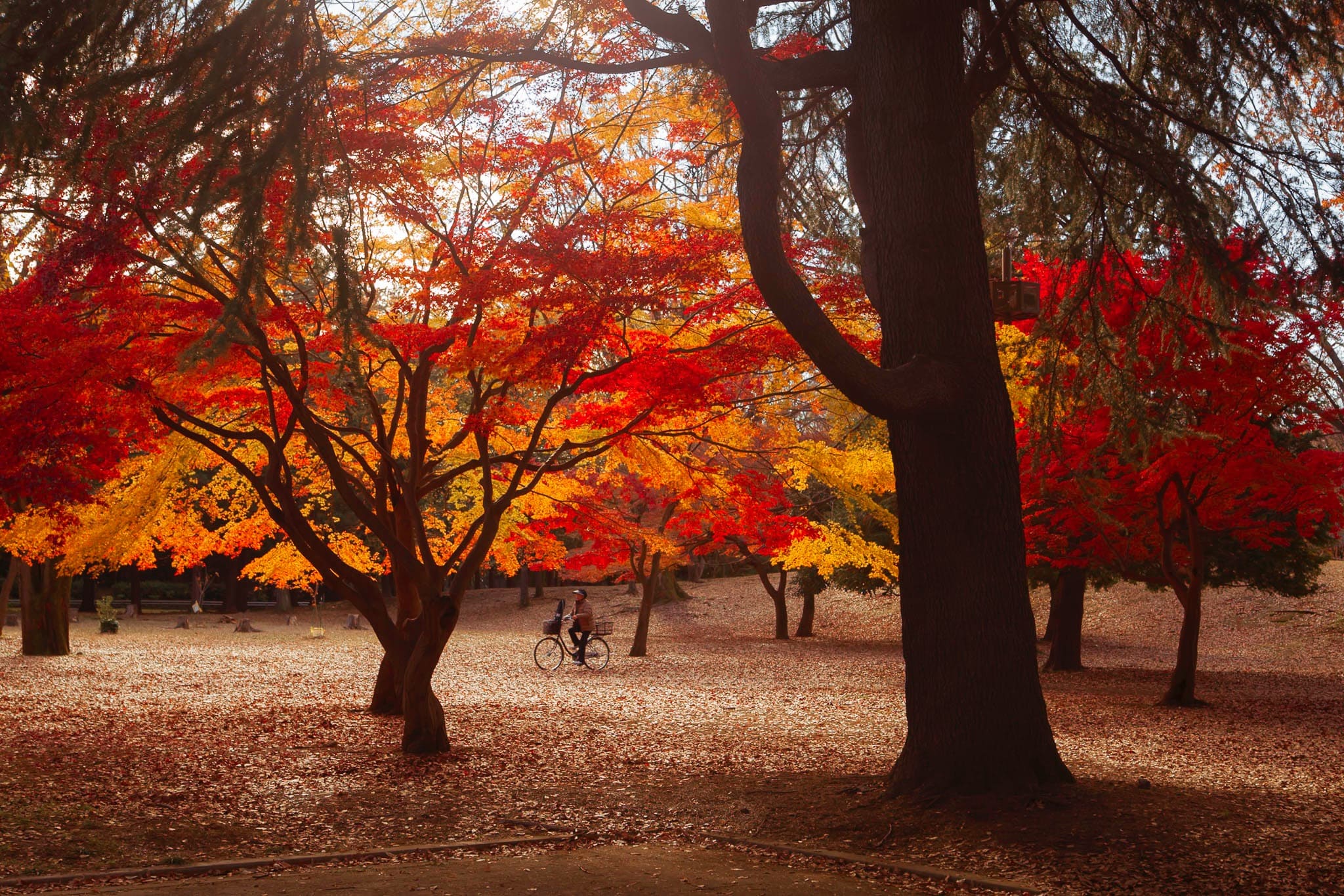
If you love the golden ginkgo avenue at Meiji Jingu Gaien but would rather enjoy the foliage without the busiest crowds, Hikarigaoka Park is a good alternative to consider. Located in Nerima, this spacious park has beautiful ginkgo-lined paths, along with quieter wooded areas that are easy to overlook. This was one of my favorite parks back when I used to live in Itabashi; it’s a great year-round leisure spot and absolutely worth it during autumn.
The Golden Ginkgo Avenues


Right after leaving Hikarigaoka Station on the north side, you’ll find the Fureai-no-Michi Boulevard, a roughly 200-meter avenue connecting the station with the park, lined with ginkgo trees that turn a brilliant golden yellow in autumn, creating a wonderful tunnel of warm colors. These ginkgo trees are over a century old, originally transplanted from the grounds in front of the former Tokyo Metropolitan Government building in Yurakucho. This boulevard usually features autumn illuminations as well, so it’s also worth checking it out in the evening.
Then, once you’ve made your way inside Hikarigaoka Park, if you keep walking straight for a few minutes, another ginkgo path of about 200 meters long will greet you with an even more immersive feeling.
Explore Beyond the Ginkgo Attractions
Do not hesitate to continue into the park’s inner forest, where the atmosphere becomes quieter and more natural. The bird-sanctuary area and surrounding woodland offer a different kind of autumn scenery, including deep-red maples and open lawns, perfect for picnics, a leisurely walk, or just to sit down and take in the scenery with all the changing colors. The park’s spacious setting also makes it especially suitable for families.
| Access |
8-min walk from Hikarigaoka Station |
|---|---|
| Business Hours |
24 hours |
| Price |
Free |
| Official Website |
https://www.tokyo-park.or.jp/park/format/index023.html |
Edo-Tokyo Open Air Architectural Museum, Autumn Colors Among Historic Buildings
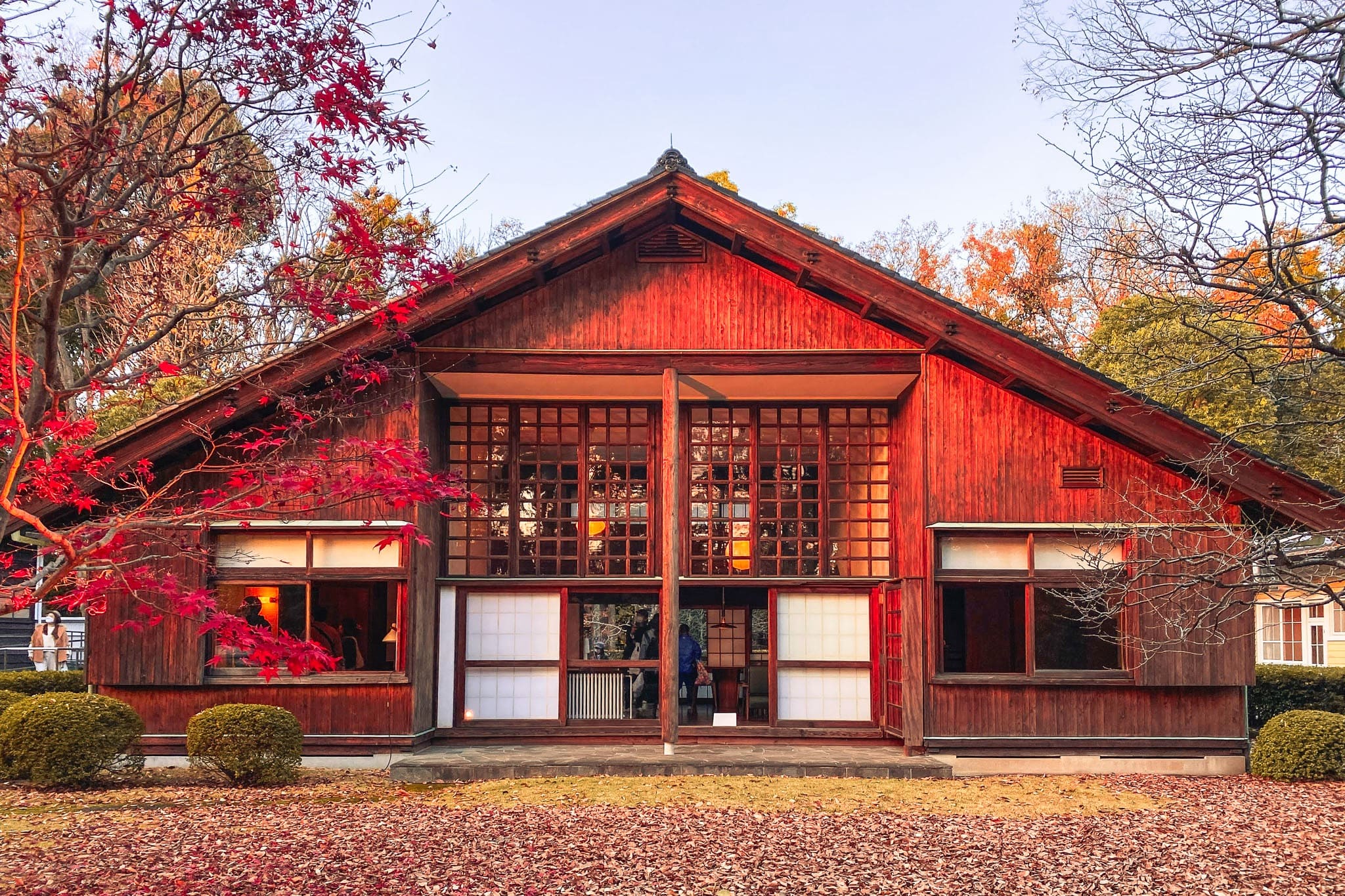


As an architecture enthusiast, I will never run out of excuses to squeeze in a good architectural spot. But let me tell you, autumn brings a genuinely special atmosphere to the Edo-Tokyo Open Air Architectural Museum and if you haven’t visited yet, the season is just perfect to make the most of this location. The museum features historic buildings from different periods of Tokyo’s past, and I think the warm hues of changing leaves add a different character to the streets and courtyards. Suffice to say, the museum’s preserved Meiji-, Taisho-, and Showa-era buildings are impressive regardless of the season, but I am especially fond of the way red and gold leaves complement old storefronts, while the thatched roofs of traditional farmhouses lend the landscape a more rural feel.
Look Out for Seasonal Evening Events
This is another potential perk of visiting during autumn leaves season. Make sure to check the museum’s event calendar for possible weekend evening light-ups, because seasonal events like this give the historic buildings and autumn foliage a different atmosphere after dark. These events are not necessarily held every year, so it’s worth checking the schedule before planning your visit around one.
| Access |
11-min bus from Musashi-Koganei Station |
|---|---|
| Business Hours |
9:30 AM–4:30 PM |
 Closed |
Monday |
| Price |
400 yen |
| Official Website |
https://www.tatemonoen.jp/ |
Toyama Park (Takadanobaba / Okubo), The Highest Peak on the Yamanote Line


Toyama Park is a modest green space in the heart of Shinjuku, but it has an unusual claim to fame: Hakoneyama, a 44.6-meter hill described as the highest point inside the Yamanote Line. It may not have the dramatic autumn scenery of Tokyo’s larger foliage destinations, but it offers a pleasant green detour and an interesting bit of local history.
A Little Hill with a Historical Story
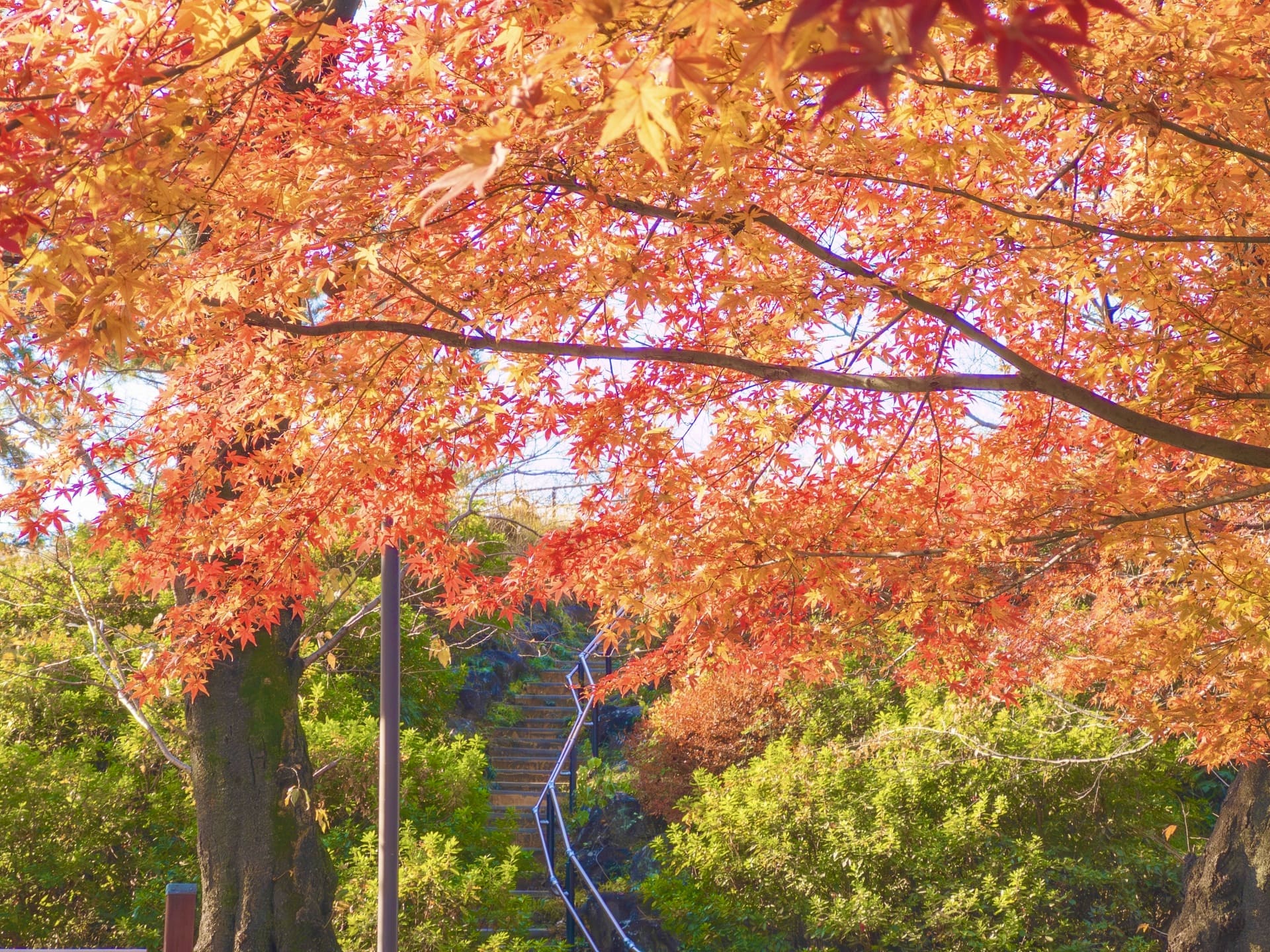
Hakoneyama is an artificial hill associated with the garden of a former Owari Tokugawa daimyo estate. Today, visitors can climb to its summit and enjoy an elevated view over the surrounding park. In autumn, the trees add seasonal color to the landscape, making the short climb a nice way to take in the park’s greenery. Apparently, the hill is also known for its “Summit Certificate,” which is said to be available from the park office, but honestly, I always forget to stop by and get mine every time I pass around the area. But anyway, just letting you know, as it seems like it could be a quirky little souvenir for anyone interested in collecting unusual Tokyo experiences.
A Local Green Space Between Student Neighborhoods
Toyama Park sits between the lively areas around Takadanobaba and Shin-Okubo, with their student crowds, restaurants, and everyday city bustle. Since I live in the relatively close vicinity, I just love how this park feels way more relaxed compared to Yoyogi or Shinjuku Gyoen despite being reasonably close to busy districts. It’s the perfect spot to check out if you need a break from perusing K-beauty goods, or if you’re simply exploring Shin-Okubo,
I’d consider Toyama Park a bonus discovery rather than a major autumn foliage destination. Its appeal lies in the combination of a small seasonal escape and an unusual historical curiosity—especially if you’re already exploring this part of Tokyo.
| Access |
Nishi-Waseda Station is the easiest point of access for the Okubo side and the Hakoneyama side of Toyama Park |
|---|---|
| Business Hours |
24 hours |
| Price |
Free |
| Official Website |
https://www.tokyo-park.or.jp/park/toyama/index.html |
The Itabashi Micro-Itinerary: Northern Tokyo’s Hidden Nature Loop
As a formerly proud Itabashi resident, believe me when I tell you these are some of the best underrated hidden gems in this city. For a quieter autumn outing, Itabashi in northern Tokyo boasts many parks that offer a different kind of foliage experience from the city’s famous gardens: woodland paths, a botanical collection, and a pond where the surrounding trees bring color to the water. And if you’re heeding my advice and coming all the way to the unexplored north, you may as well combine the three into one half-day excursion rather than treating each as a separate destination.
This route is especially appealing if you want to spend a few hours outdoors and discover a more residential side of Tokyo. Each stop has its own character, while the short distances between them make it easy to build a relaxed outing.
Akatsuka Park, Exploring the Cliffline Forest


Akatsuka Park used to be one of my preferred spots for a short and scenic bike ride, which is why I suggest it as a good place to begin, especially if you enjoy the feeling of walking through a natural forest. This park follows the Musashino plateau’s cliffline, where wooded trails and changes in the terrain give the landscape a more rugged character than you might expect in Tokyo.
The park’s thick and lush greenery gives way to absolutely stunning colors in autumn, totally deserving of being appreciated at a slower pace while taking your time around the walking paths. One of the things I appreciate the most about this park is the feeling of being surrounded by trees, instead of carefully landscaped scenery. Nothing wrong with the latter, but it’s a small joy to be able to find places like this where it’s easy to feel for a moment that you’re away from the city, without actually having to step out of Tokyo’s 23 Wards.
| Access |
7-min walk from Takashimadaira Station |
|---|---|
| Business Hours |
24 hours |
| Price |
Free |
| Official Website |
https://www.tokyo-park.or.jp/park/format/index005.html |
Akatsuka Botanical Garden, a Haven of Quiet Biodiversity and Hidden Treasures


A relatively short distance from the forest, Akatsuka Botanical Garden is a good opportunity for a more intimate way to enjoy the season. This free garden is home to more than 600 plant species, with quiet paths that invite you to take your time and notice the details. Autumn is a lovely time to explore the collection if you’re in the area and feel like exploring a small hidden spot that feels even more local than Akatsuka Park. There’s a cultural bonus nearby, too: the Tokyo Daibutsu, or Tokyo Great Buddha. Most Tokyoites don’t even know this city has a large Buddha statue! It adds another point of interest to the outing with the added perk of gaining true Tokyo insider credentials. You can thank me later.
| Access |
9-min bus or 20-min walk from Narimasu Station. Alternatively, 18-min walk from the central area of Akatsuka Park. |
|---|---|
| Business Hours |
9 AM–4:30 PM (until 4:00 PM in December) |
| Price |
Free |
| Official Website |
https://www.city.itabashi.tokyo.jp/bousai/kouen/kouen/akatsuka/index.html |
Mitsugi Park, the Water-Mirror Reflection


Mitsugi Park is small, but it’s one of the loveliest places you can visit during the season, thanks to its central pond, which gives the park a peaceful focal point. This is particularly nice when autumn colors appear along the water’s edge, making the pond a natural place to enjoy the foliage reflected on the water. Walk around the shoreline and look for stretches where the trees and their reflections appear together; when the water is calm, the mirror-like reflection is one of the things I like best. Just sit there for a while with a book and enjoy your time while the reflections change with the light and conditions. If you have visited the previous two places, Mitsugi Park is a good and relaxing final stop.
Also, there’s another reason why I’m advising you to finish here. You see, one of the reasons I visited this park often was that it was in the close vicinity of one of the absolute best onsen in Tokyo, Maenohara Onsen Sayano. After exploring these Itabashi spots, finishing the day here is going to be the cherry on top.
| Access |
4-min walk from Shimura-Sakaue Station |
|---|---|
| Business Hours |
24 hours |
| Price |
Free |
| Official Website |
https://www.city.itabashi.tokyo.jp/1014983/1015442/1014984/1015640.html |
Proposed Itinerary: A Half-Day in Itabashi
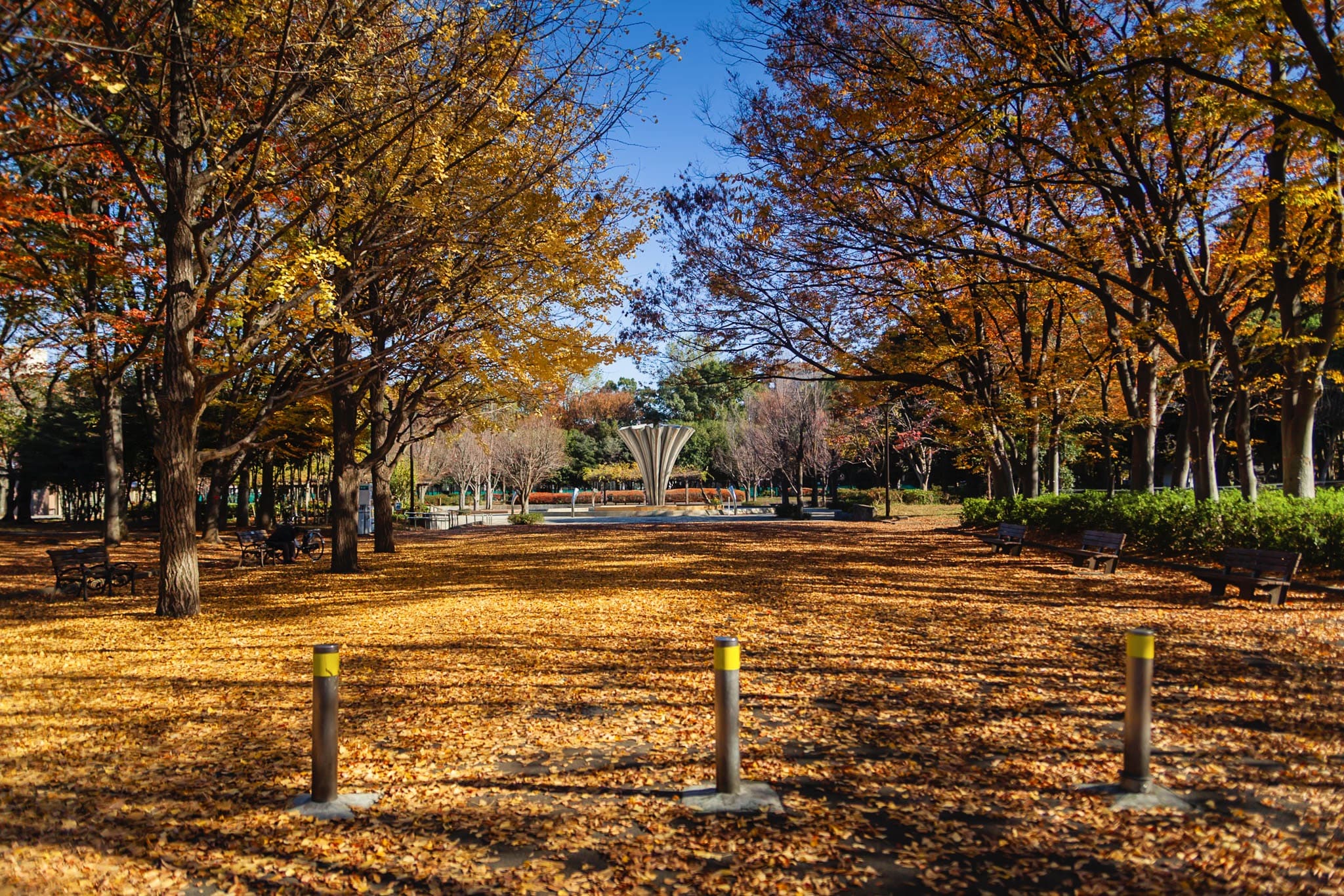
The three parks work well as one outing, with roughly 3–4 hours set aside for exploring at a relaxed pace. You can walk between the stops or cycle if you prefer to cover the area more quickly. If you don’t have a bike, don’t worry and check out my share bike guide!
A simple way to approach the excursion is to start with Akatsuka Park, where I’d advise you to spend at least 1 hour, then continue southwest to Akatsuka Botanical Garden, just a short 11-min walk from Akatsuka Park’s westernmost end. From there, if you would rather take public transportation, a few local buses (Check Google Maps) will take you to Mitsugi Park in about 35 minutes.
As for train or subway options, the Toei Mita Line serves the area, with Takashimadaira and Nishi-Takashimadaira among the nearby stations to consider when planning your route. Check the map for the best station and walking or cycling connections for your chosen starting point.
Enjoying Tokyo’s autumn scenery doesn’t have to come with a famous name or a long queue. Some of the season’s most enjoyable moments can happen in a residential neighborhood outside of a typical visitor’s itinerary. These places are part of the city’s everyday landscape, and that’s what makes discovering them feel special.
The timing of the colors changes each year, so check recent autumn foliage reports before you go. And if you do visit one of these spots, take your time. The best part may not be a particular view, but the chance to experience a quieter side of Tokyo while the city turns red and gold.
Feeling like venturing a bit farther from Tokyo for Autumn? Don’t miss these guides!


Written by
Photographer, journalist, and avid urban cyclist, making sense of Japan since 2017. I was born in Caracas and lived for 14 years in Barcelona before moving to Tokyo. Currently working towards my goal of visiting every prefecture in Japan, I hope to share with readers the everlasting joy of discovery and the neverending urge to keep exploring.
- +0 0
-
-