Bike Share in Tokyo: The Complete Guide
Bike Share in Tokyo: Apps, Prices & the New Cycling Rules


- +8 8
-

-


Tokyo’s streets have slowly filled up with color over the past few years. Yellow-and-white bicycles parked outside convenience stores, bright red ones lined up near station exits, teal scooters clustered at street corners, and more recently, a scattering of green Lime bikes appearing around Shibuya and Shinjuku. If you’ve spent any real time in the city, you’ve seen all of them. What’s less obvious is which one to actually use, what it costs, and how the rules around riding them actually work, so that’s exactly what I set out to cover in this guide, comprehensively.
I rely on bike share constantly. HELLO CYCLING and LUUP are part of my regular routine, for short trips across town, for the days I’d rather skip a packed train, and more than once, for getting home safely and cheaply after missing the last one. DOCOMO BIKE SHARE comes out when I’m in a part of the city where their network is better. And after watching Lime’s bikes multiply around town for months, I finally tried them too.
This article brings all of it together: every bike-sharing service currently operating in Tokyo, what each one really costs once you look past the headline rate, and the cycling rules that are now actually being enforced, not just on paper, but with real on-the-spot fines. A lot of what circulates online about biking in Tokyo predates that change entirely.
So if you’re weighing it against a late-night taxi, looking for a faster way to cover ground than the train allows, or just want to explore the city at a slower pace, here’s what actually works right now.
Note: I centered this guide around Tokyo since that’s the scope of my experience. However, some of these services have nationwide coverage in Japan’s main cities, so this information applies beyond Tokyo as well.
Why Bike Around Tokyo? (Beyond Just Sightseeing)
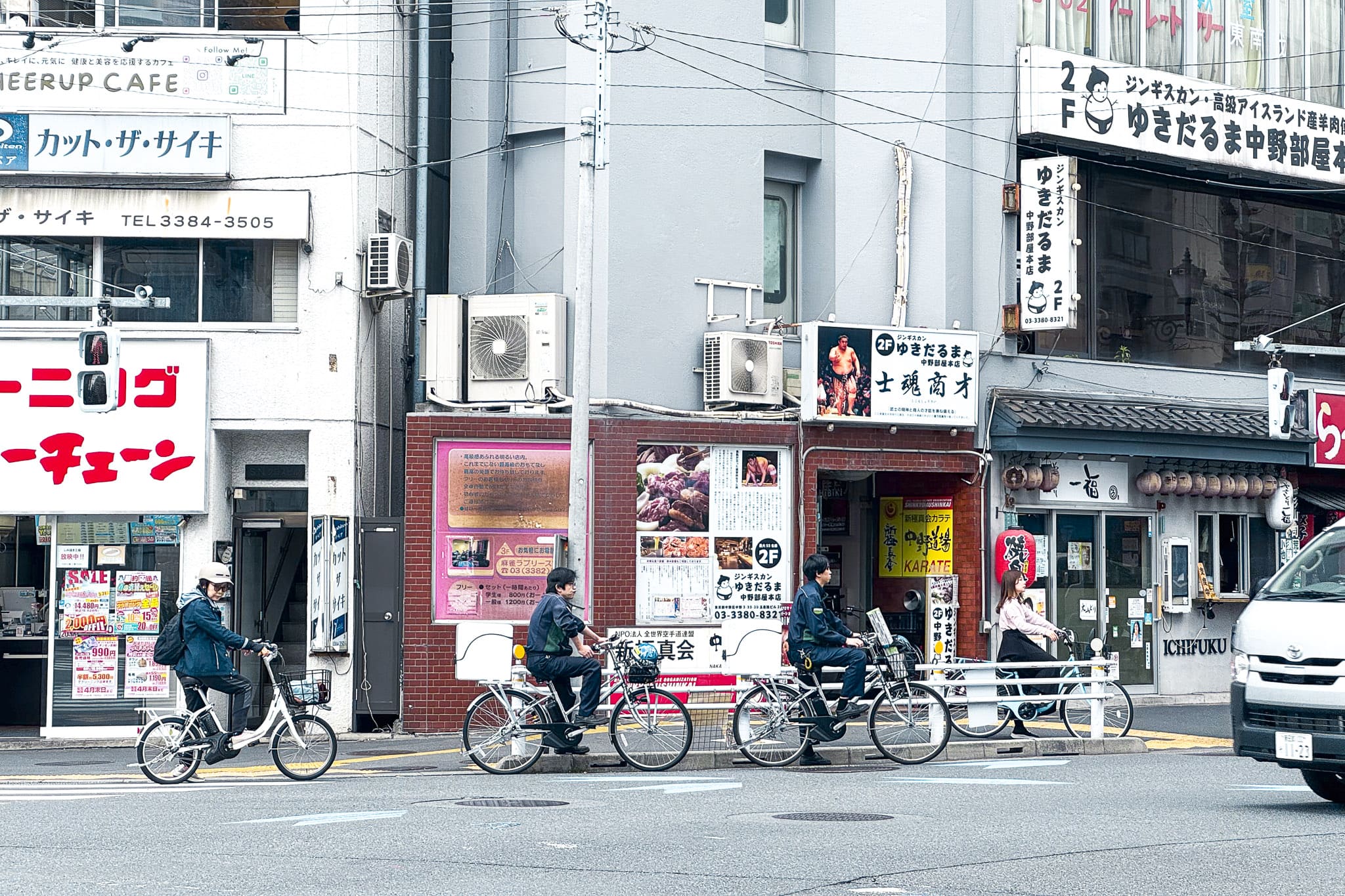
To most visitors, Tokyo’s rail system looks flawless on paper. And for linear trips along major lines, it is. But anyone who lives here or moves off the standard tourist tracks quickly discovers that the city’s transit network is highly radial: everything is designed to pull you into massive hubs like Shinjuku, Shibuya, or Tokyo Station, and then push you back out.
If your journey doesn’t perfectly align with those spokes, the trains stop being efficient. Bus lines may help, but only to some extent. That’s where share bikes bridge the gap. Beyond novelties for a casual afternoon roll, they are highly practical utility tools for saving time, skipping frustrating transfers, and navigating the gaps that the tracks leave behind.
Routes where biking beats the train (point-to-point gaps, transfer-heavy areas)
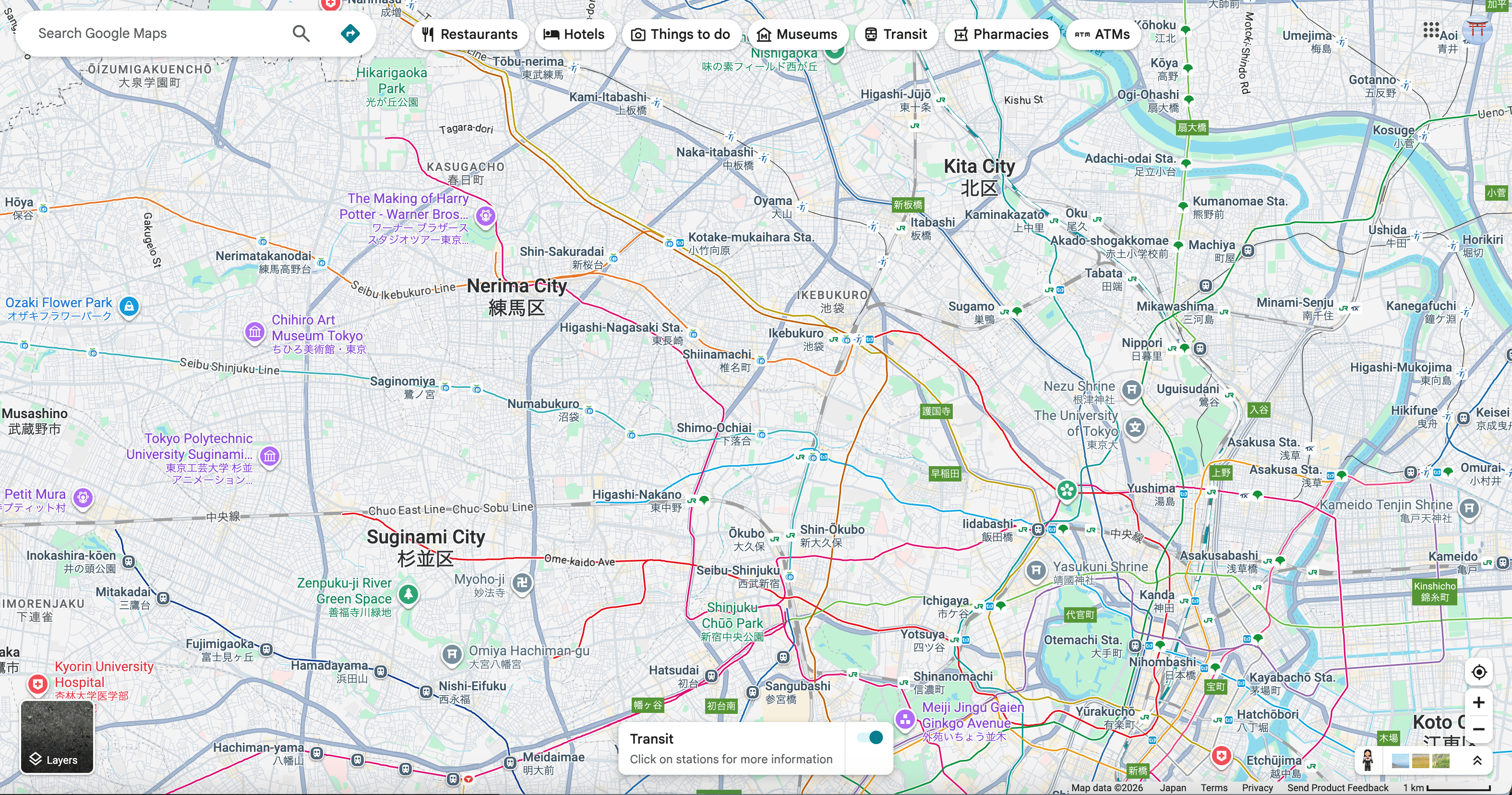
The moment you step just west of the Yamanote Line loop, you realize how stubborn Tokyo’s east-west transit grid can be. If you are traveling directly toward Shinjuku Station from the western suburbs, you have plenty of rapid options. But try to move diagonally or between adjacent neighborhoods just outside that central circle, and your travel time doubles due to mandatory, circuitous train transfers or slow-moving local buses.
I used to face this situation constantly back when I lived in the northern area of Tokyo. Not so much nowadays since I’m now in a much more central area around Shin Okubo, near Shinjuku Station, but still, there are some instances where I still run into the same scenario. For instance, I have a close friend living near Nogata Station. On paper, they aren’t far apart. In reality, connecting them by transit requires either a train transfer or a combination of train+bus that takes me about 25-30mins at the very least. When I grab a shared e-bike instead, I bypass the hubs entirely and cut straight through the side streets. The ride takes me about 20 minutes, a clean 5-10 minutes saved by simply cutting out the middleman.
Another example takes place when going to our friend group’s usual hanami spot on the Zenpukuji River area in Suginami Ward. Attempting to get there via public transit from my area forces a clunky mix of metro lines and buses that stretches into a 40-to-45-minute trip. On a share bike, it is a direct, uncomplicated 30-minute cruise.
The missed last train money saver
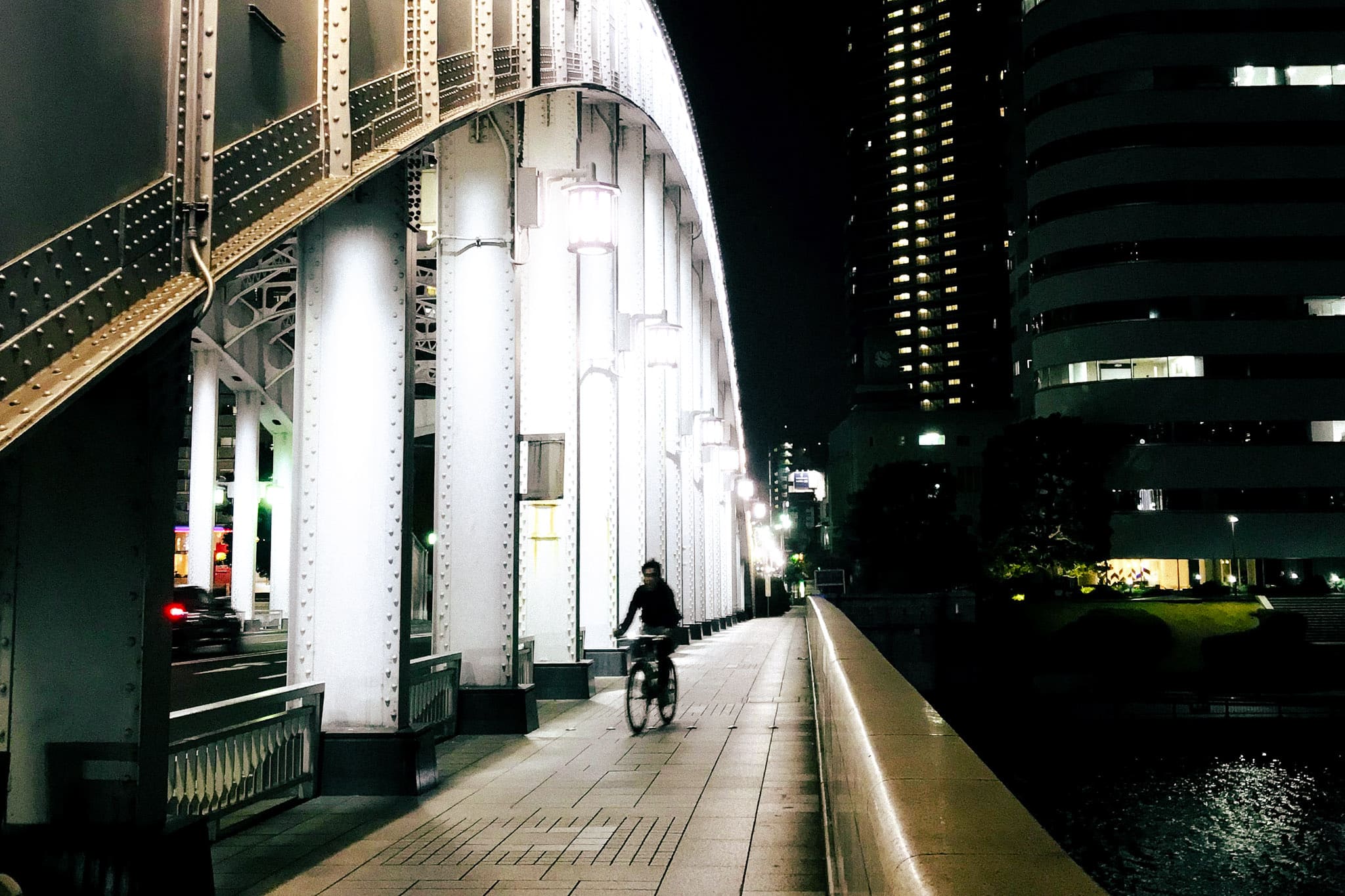
We have all been there: you lose track of time at a late-night dinner or karaoke, and suddenly it’s 1:00 AM. The shutters are down on the subway stations, the last train is gone, and your only obvious choice is to get a taxi.
At night, Tokyo roads are blissfully empty, meaning a taxi will cruise to your destination without hitting bumper-to-bumper traffic. However, your wallet takes a serious hit. Under Tokyo’s strict taxi fare structure (which saw a distance-bracket compression on April 20, 2026, to account for rising operational costs), a midnight ride adds up fast (note that taxi fares will vary depending on location, distance, and time. Type of service, such as an app-based service like Uber, will affect the price as well):
- Base Fare: 500 yen for just the first 1 km.
- Distance Increments: 100 yen for every subsequent 232 meters (down from the old 255-meter bracket).
- Late-Night Surcharge: An automatic 20% premium applied between 10:00 PM and 5:00 AM.
I am fortunate enough to live in a quite central area already, which I factor into my options. In my case, for a standard 3 to 4 km journey home on wide-open roads past 1:00 AM, a taxi will take a rapid 5 to 7 minutes, but the meter will land squarely between 1,680 and 2,160 yen.
Compare that to unlocking a LUUP e-bike or e-scooter for the exact same 3–4 km trip. Even taking into account LUUP’s 50% late-night ride surcharge (which helps fund their 24/7 support operations), a typical midnight ride costs me around 500 yen. If you are a monthly LUUP subscriber (980 yen/month), that late-night surcharge is completely waived, dropping your cost even lower.
There’s another reason I like it. If I’m not too tired, a late-night ride is refreshing and quite relaxing as I don’t need to worry too much about traffic. It’s a quiet moment to see another side of the city.
⚠️ A Crucial Legal Warning: It should go without saying, but while saving money after a night out is incredibly practical, cycling under the influence of alcohol is strictly illegal in Japan. The police actively enforce this, and the criminal penalties are severe, including heavy fines and potential prison time. If you’ve been drinking, risking it is not worth it at all. Swallow the cost and take the taxi. Save the share bike for the nights you stay completely sober.
Leisure and exploration
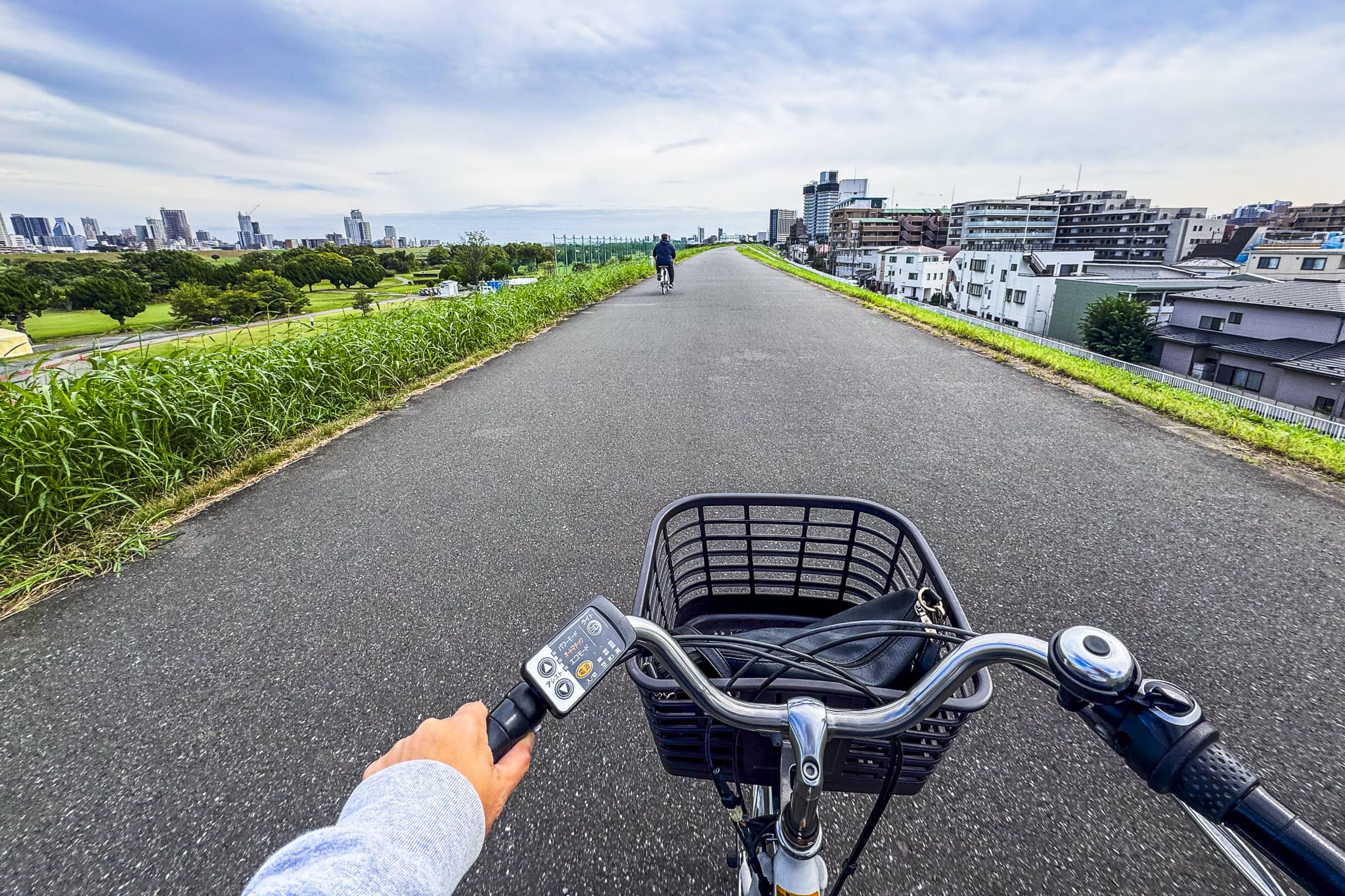
While efficiency is the main reason to download these apps, they occasionally serve a completely different purpose: the simple joy of unstructured wandering.
Tokyo is filled with pockets of green and expansive river paths that are entirely hidden from the underground subway tunnels. When you aren’t rushing to beat a clock, hopping on an e-assist bicycle allows you to explore the city’s periphery at a completely relaxed, observational pace. It rewards the kind of slow travel where you can pause the moment you smell a local bakery or spot an interesting temple down a residential alleyway.
If you want to experience the absolute best of what Tokyo’s dedicated cycling infrastructure has to offer, you don’t have to navigate busy urban intersections. You can take a look at my riverside cycling guide from Ukima Park to Kasai Rinkai Park, which maps out a wonderful, continuous path right along the water—proving that Tokyo can be just as rewarding at a slow, pedaling pace as it is as a high-speed commuter hub.
Comparison Table: Tokyo’s Bike Share Apps at a Glance
While my personal experience with these platforms is centered entirely on navigating Tokyo, all of these services operate on a nationwide scale. However, their coverage changes drastically depending on the prefecture. An app that is completely indispensable for short sprints through central Tokyo might be entirely non-existent once you step into another city, while regional giants frequently have a surprisingly small presence in the capital.
The table below integrates their regional availability alongside pricing models, fees*, and registration hurdles so you can map out your strategy before downloading:
| Service | Vehicle Type | Standard Tokyo Pricing | Coverage (Tokyo vs. Nationwide) | Tourist Friction / Sign-up |
|---|---|---|---|---|
| HELLO CYCLING | E-assist bicycle | 160 yen for the first 30 min
• 160 yen per additional 15 min • 12-hour cap: 2,500 yen |
Massive nationwide coverage. Stronger in suburban Tokyo wards (like Setagaya and Suginami). Excellent coverage across greater Japan with over 10,000 ports. | Moderate: Accepts international country codes, but international SMS verification can be hit-or-miss depending on your home carrier. |
| LUUP | E-bike & E-scooter | 50 yen unlock fee + 20 yen/min
• 3h pass: 980 yen • 12h pass: 2,480 yen |
Dominant urban density. Exceptionally dense across central Tokyo wards. Expanding aggressively with over 17,500 locations nationwide (Osaka, Kyoto, Yokohama, Nagoya, Kobe, Hiroshima). | Low: Good English app. Passport accepted for ID verification. E-scooters require no driver’s license, just a quick, mandatory traffic rules quiz built into the app. |
| Charichari | Regular & E-assist bicycle | Regular: 6.5 yen/min
• E-assist: 20.5 yen/min • No unlock fee |
Niche in Tokyo, King in Kyushu. Has a small, limited coverage in Tokyo (mostly centered around Taito and Sumida wards). It dominates Fukuoka and Kumamoto. | Low: Highly transparent and easy to set up. Pure per-minute billing structure makes it very user-friendly. |
| Lime | E-scooter & E-bike | 100 yen unlock fee + tiered rates:
• ≤5 min: 70 yen • ≤15 min: 90 yen • After 15 min: 20 yen/min |
Central Tokyo focus. Operates primarily in core hubs like Shibuya, Shinjuku, and Meguro, but its network utility expanded via its partnership with Hello Cycling. Global app works natively. | Moderate: Smooth English interface, but you must upload a physical ID (Passport, Resident Card, or My Number Card) to clear the age verification check before riding. |
| DOCOMO Bike Share | E-assist bicycle | 165 yen for the first 30 min
• 110 yen per additional 30 min • Day Pass: 1,650 yen |
Highly centralized. Covers 10 contiguous central Tokyo wards seamlessly. Operates nationwide under interconnected regional networks (like Hubchari in Osaka). | High: The standard smartphone app strictly requires a domestic Japanese mobile number for registration. Tourists without one must buy a physical day pass at designated locations. |
* Prices as of July 2026. The chart is for reference purposes; check official websites for the most up-to-date information.
The Bike Share Services, One by One
HELLO CYCLING: The Affordable Favorite


Operated by OpenStreet, a SoftBank Group company, HELLO CYCLING is Japan’s largest bike-sharing network by reach. It launched in Tokyo’s Nakano ward back in 2016 and has since grown to more than 13,000 stations across 29 prefectures, with the assistance of collaborating companies, mostly using electrically-assisted city bicycles, with a smaller e-Bike lineup, as well as regular bikes, in select areas.
HELLO CYCLING was the first one I tried, back in 2020, purely out of convenience, after a station opened right in front of where I was living at the time. It’s stayed my preferred option ever since, mostly because it’s the most affordable of the bunch: 160 yen for the first 30 minutes, then 160 yen per additional 15 minutes, capped at 2,500 yen for a full 12 hours. That pricing structure makes it the obvious choice for leisure rides where I might be out for a few hours rather than making a quick point-to-point trip.
It also has the widest reach of any service on this list. Beyond Tokyo, I’ve used the same app and the same account in Kamakura and Enoshima, and even as far away as Takamatsu in Kagawa Prefecture, genuinely nationwide coverage, which none of the other services here can claim at the same scale.
One registration note for visitors: HELLO CYCLING does technically accept foreign mobile numbers at sign-up, but since verification depends on receiving an SMS code, there’s no guarantee it’ll arrive reliably on a non-Japanese number. Worth knowing before you count on it as your only option.
Official website: https://www.hellocycling.jp/
LUUP: Everywhere You Need It, Mostly


Run by Luup, Inc., LUUP operates both e-assist bicycles and e-scooters, the latter falling under Japan’s “specified small motorized bicycle” category. Since launching, it’s become the most visible micromobility brand in central Tokyo, built around a dense, closely-spaced network of parking ports.
LUUP is my usual backup whenever a HELLO CYCLING isn’t around. And thanks to its sheer port density, that backup is rarely far away. The catch is that LUUP’s network leans heavily toward e-scooters; e-assist bicycles are available, but in noticeably smaller numbers.
I avoid the e-scooters unless I have no other option, as I just don’t enjoy riding them. The e-bikes are a different story, though with a caveat of their own: I felt that their electric assist is considerably stronger than HELLO CYCLING’s, which is genuinely useful when it comes to steep slopes, but it also makes the ride feel less like cycling and more like piloting a light scooter, which isn’t really what I’m after. The legal picture matters here too: Japanese law still allows bicycles some flexibility to use sidewalks under specific exceptional circumstances, while e-scooters have no such allowance at all: ride one on a sidewalk even for a few seconds, and it’s a straightforward fine.
What I do genuinely like about LUUP is the hardware: every bike comes with a built-in smartphone holder, and the app itself has in-app navigation as the platform requires you to choose your destination right when you unlock the vehicle, so route-finding while riding is far more convenient than on any other service here.
Official website: https://luup.sc/en/
Charichari: Small Frame, Simple Pricing


Run by Charichari, Inc., this red-bicycle sharing service started out in Fukuoka and has gradually expanded to a handful of other Japanese cities, with Tokyo still one of its smaller, more limited markets.
Charichari’s Tokyo footprint is small enough, limited to Taito, Sumida, Bunkyo, and Chiyoda wards, that I went out of my way to actually try it specifically for this guide, since I’d otherwise have little reason to.
I wasn’t a fan of the frame. It felt cramped and uncomfortable, even accounting for the fact that I’m not tall myself, at 160cm. The electric assist surprised me; it felt stronger than HELLO CYCLING’s, closer to the impression I got with LUUP, which I’d guess comes down to the frame design rather than a deliberate choice. One genuine safety note: the right handlebar brake is unusually strong, strong enough that the app itself warns riders to brake gently with the left handle first before easing into the right, to avoid an accident. For users who may miss the app’s warning, bright yellow stickers on the handle make sure we don’t overlook the brake instructions. Parking docks also tend to sit inside larger bike-parking premises rather than out on the street, which makes them a bit harder to spot at a glance.
On the plus side, the pricing is refreshingly simple: a flat per-minute rate with no unlock fee, unlike LUUP or Lime. There’s no real reason not to keep the app installed even if it’s not a first choice; having one more option on hand doesn’t hurt.
Official website: https://charichari.bike/
LIME: A Promising Newcomer


A global micromobility company operating across the Americas, Europe, and Asia-Pacific, Lime entered the Japanese market in 2024 with e-scooters before expanding into e-bikes, including a 2025 partnership with HELLO CYCLING that lets the two networks share infrastructure in some designated cases. While standing e-scooters were part of the original offer, these have been phased out in favor of seated e-scooters following the audience response.
As the latest contender in the share bike landscape, it turned out to be a pleasant surprise on a first test ride. Like LUUP, the bikes also come with a built-in smartphone holder, a small thing that makes a real difference once you’re actually navigating somewhere. The one feature I missed was in-app navigation itself, which LUUP offers and Lime doesn’t; it’s a perk I’d grown used to.
I didn’t try the e-scooters, so I can’t speak to them firsthand, but from what I could see, they look functionally similar to LUUP’s, albeit with the extra comfort factor of being able to sit instead of stand. I had the impression that the e-bikes have a similarly strong electric assist, though the frame itself feels noticeably less robust or cheaper, in a way that’s hard to put into words beyond “you can feel it.” Not complaining though.
Riding around north Shinjuku for this test, I passed several Lime stations, and, based on that one ride, not a rigorous count, the bike-to-scooter ratio didn’t look nearly as skewed toward scooters as LUUP’s does. There are also plenty of parking docks near where I live, which makes Lime a genuinely solid alternative to LUUP.
Registration was straightforward: enter your details, upload an ID (resident card, driver’s license, or My Number card) to verify your age, then add payment. Pricing is more layered than the others: 100 yen to unlock, then 70 yen for the first 5 minutes, 90 yen up to 15 minutes, and 20 yen/minute after that, or 999 yen/month for unlimited unlock-free rides up to 20 minutes at a flat 90 yen. One genuine knock against Lime: that unlock fee isn’t clearly stated anywhere in the app itself; I had to confirm it externally, which shouldn’t be necessary for something this basic.
Official website: https://www.li.me/ja-jp/
DOCOMO BIKE SHARE: The Occasional Backup


Operated by DOCOMO Bike Share, Inc., a company established in February 2015 building on an NTT Docomo bike-sharing trial that began in Yokohama back in 2011, this became one of the earliest large-scale networks to take hold in central Tokyo, expanding into the capital through waterfront-area trials in 2016. Its distinctive red-framed e-assist bicycles are concentrated mainly in the city’s core wards rather than spread citywide.
I use DOCOMO sparingly, mostly because its coverage is narrower than HELLO CYCLING’s or LUUP’s; it’s really only on hand in a handful of central wards. The bike frame also runs smaller, which means even with broader coverage, I probably wouldn’t reach for it as often. Still, it’s a reliable fallback for the rare occasions when neither of my usual two options is nearby.
One thing worth flagging for visitors without a Japanese phone number: DOCOMO’s app registration typically requires one. If you don’t have one, some staffed locations sell a 1-day pass as a workaround.
Official website: https://docomo-cycle.jp/
How to Choose (and Why You Might Want More Than One App)

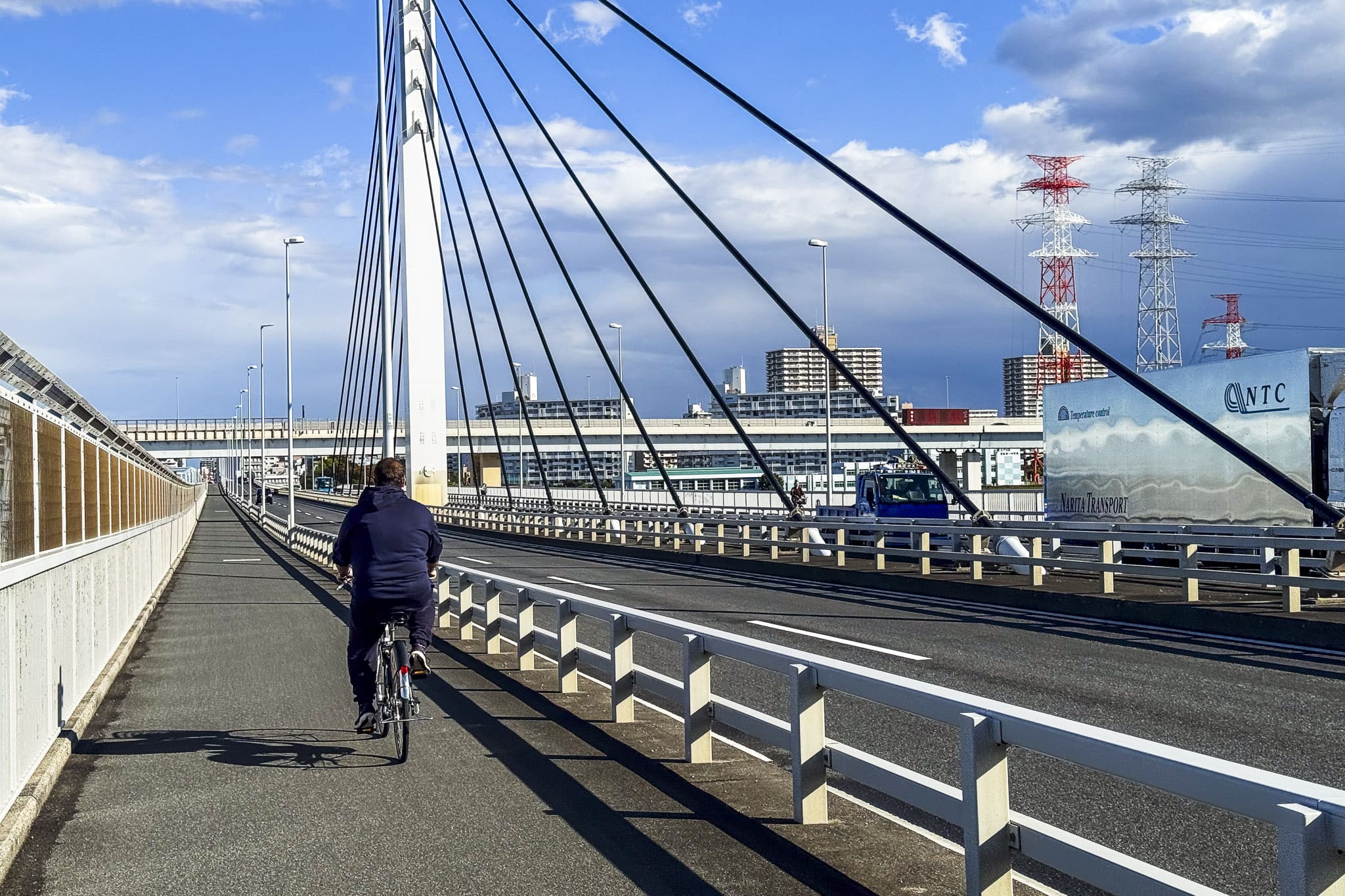
There isn’t really a single “best” bike-sharing app in Tokyo; there’s a best app for wherever you happen to be standing, and that changes block by block. None of these networks fully overlap, so the smartest approach isn’t picking a favorite and sticking with it; it’s knowing which one to reach for and keeping more than one ready to go.
As a rough guide:
- Heading out for a few hours of leisure riding? HELLO CYCLING’s pricing makes it the cheapest option by far once you’re past the first half hour.
- Need something right now, wherever you are? LUUP’s port density usually wins, though expect more e-scooters than e-bikes in the mix.
- LUUP’s nearest port is all e-scooters and you wanted a bike instead? Lime’s worth a look, as its bike-to-scooter ratio tends to skew less heavily toward scooters, and it has the same handy phone holder, though without in-app navigation.
- Want something closer to a scooter, or need in-app navigation? Lime actually offers seated scooters! Otherwise you can opt for LUUP’s e-bikes, when available, plus the built-in phone holder.
- Riding somewhere DOCOMO or Charichari happens to cover and the others don’t? Either one works fine as a backup, just don’t expect their coverage to extend far beyond their core wards, which you need to consider depending on where you need to return your bike.
The real reason to keep more than one app installed, though, isn’t convenience; it’s that registration friction is the worst possible thing to discover in the moment you actually need a ride. A couple of these apps lean on SMS verification that doesn’t always cooperate with foreign numbers, and DOCOMO in particular usually wants a Japanese number at all. Uploading your ID/passport on the street can be a hassle as well. None of that is a problem if you’ve already got an account set up. It becomes a real problem at 1am when the last train’s gone, you’re standing at an app screen, and the one network with a bike nearby is the one you never bothered registering for.
There’s no cost to having all of them on your phone and an account ready on each, so before you actually need any of this, it’s worth setting all of it up in advance.
Registering and Riding: What Tourists Need to Know
Every one of these apps wants a phone number and a credit card before you can ride, and two of them want a photo ID as well. This is where most visitors actually run into trouble — often well before pricing or coverage become relevant at all.
The phone number reality check
- HELLO CYCLING lists a range of countries as supported on paper, but in practice, this doesn’t hold up well. Online comments and app store reviews from some international users have all reported the same outcome: no SMS code ever arrives. Unless you’ve specifically confirmed your carrier works, treat this as requiring a Japanese number.
- LUUP seems to be the most tourist-friendly on this front; the app is in English, and international numbers apparently register without issue.
- DOCOMO BIKE SHARE generally wants a Japanese number for app registration. Without one, a cash day pass purchased in person at a staffed location is the workaround.
- Charichari explicitly supports SMS verification from over 200 countries, somewhat surprisingly, given its limited Tokyo footprint, making it a reliably tourist-friendly registration.
- Lime doesn’t require a phone number, an email address will suffice as long as you can provide a legal ID.
ID verification
LUUP’s e-bikes need nothing beyond a credit card, but its e-scooters require a photo ID for age verification, and foreign passports are explicitly accepted for that. Lime asks for ID across the board. HELLO CYCLING, DOCOMO, and Charichari don’t require an ID upload at all.
IC card shortcuts
Once you’re past initial sign-up, both HELLO CYCLING and DOCOMO BIKE SHARE let you register a Suica or Pasmo IC card and use it to unlock a bike with a tap, skipping the app entirely for that step. Handy if you’re already carrying one for the trains, though the first registration still has to happen through the app.
Payment
All five want a credit card on file before your first ride; there’s no cash-only option on any of them, with DOCOMO’s staffed-location day pass being the one partial exception.
Cycling Rules and Regulations in Japan (Updated for 2026*)
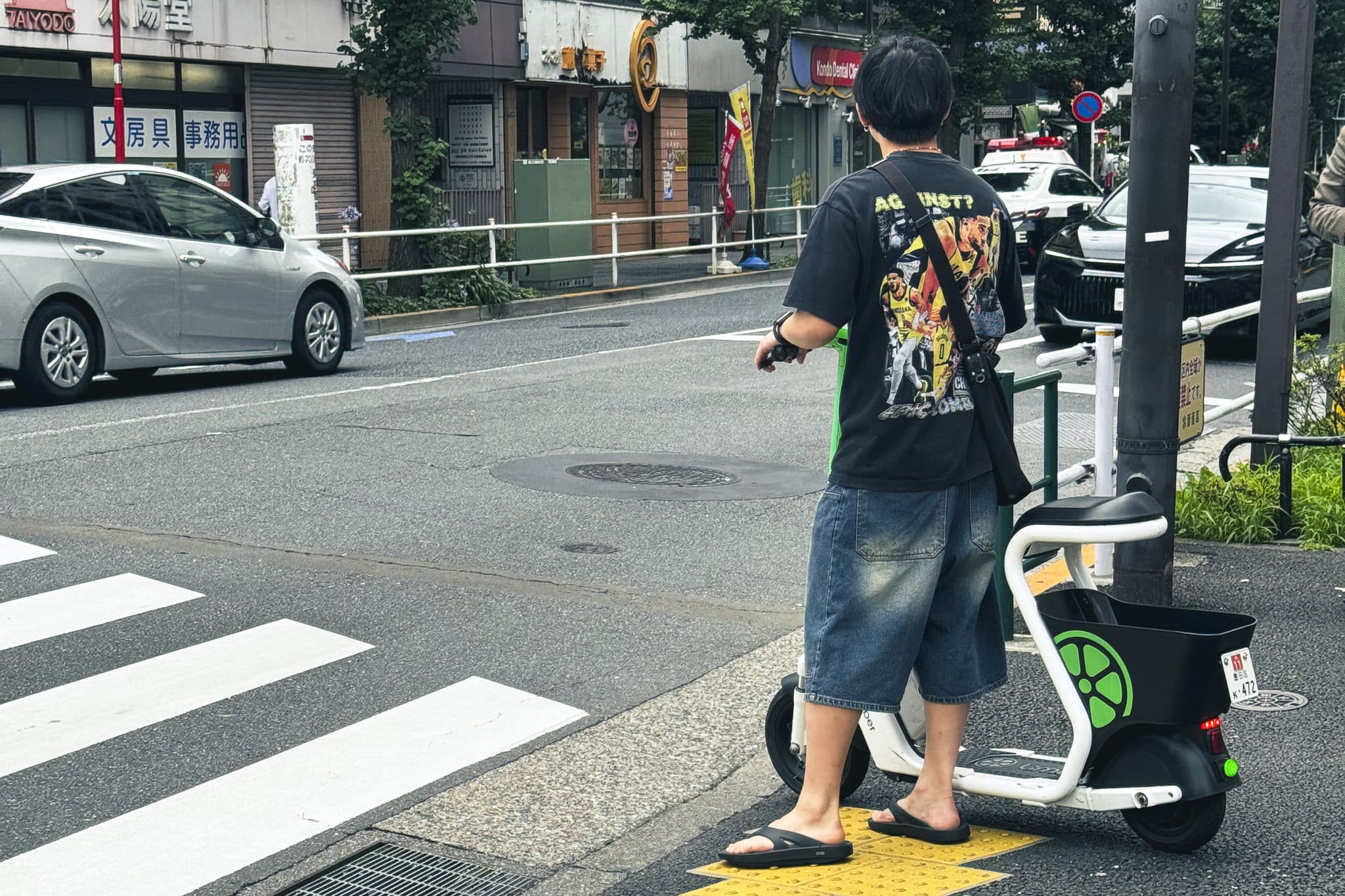
Where you can and can’t ride
Bicycles are legally classified as light vehicles in Japan, which means the default rule is simple: ride on the road, keep to the left, and follow the same signals as cars. Sidewalks are for pedestrians.
There are exceptions, and they cover more situations than people often assume:
- A sign explicitly permits it (a blue circular sign showing a bicycle and a pedestrian together)
- The rider is under 13, over 70, or has a physical disability
- Road conditions are genuinely dangerous: heavy traffic, no shoulder, construction, or parked cars blocking the lane
Even when one of these applies, pedestrians still have priority. Ride at a pace you could stop at instantly, stay toward the road-side of the sidewalk rather than the building-side, and don’t expect to weave through foot traffic at speed. Riding two abreast is generally not allowed either, unless a sign says otherwise.
Helmets: recommended, not mandatory
Since April 2023, wearing a helmet has been a “best-effort obligation” for every rider, on every type of bicycle, including e-assist models. It is not legally required, and there’s no fine for skipping one. The reasoning behind the recommendation is blunt: roughly 70% of bicycle fatalities in Japan involve a head injury. LUUP states its own position on this directly in the app: wearing a helmet is “a required effort” to protect yourself in the event of an accident.
E-scooter-specific rules (LUUP and Lime)
E-scooters sit in a different legal category from bicycles entirely. Since July 2023, they’ve been classified as “specified small motorized bicycles,” with their own rulebook:
- Riders must be 16 or older; no driver’s license required
- A 100%-correct traffic quiz inside the app is mandatory before your first ride, available in English on both LUUP and Lime
- Top speed is 20 km/h on roads and in bicycle lanes; sidewalks are only allowed where specifically marked for e-scooters, and capped at 6 km/h with a flashing indicator light active
- No passengers, no phone or earphone use while riding, no riding after drinking
The sidewalk rule is the one that trips people up most: unlike bicycles, e-scooters have no “road’s too dangerous” exception. If there’s no sign permitting it, the sidewalk is off-limits, full stop. Riders must get off and walk if they need to get on the sidewalk.
The new blue ticket fine system: what’s actually changed
The headline isn’t really new rules; almost all of this was already illegal. What changed is enforcement.
Until recently, nearly every bicycle traffic violation was technically a criminal matter requiring referral to prosecutors, which in practice meant police rarely acted on anything short of a blown red light or someone visibly texting while riding. As of April 1, 2026, a lighter administrative ticket system called the “blue ticket” now covers over 100 separate violation types, letting an officer issue an on-the-spot fine instead of escalating to court. The fine schedule tops out at 12,000 yen for using a smartphone while riding — by far the highest individual fine on the list, whether it’s a handheld call or just staring at the screen. Running a red light, riding against the flow of traffic, or riding on a sidewalk without one of the above-stated exceptions is 6,000 yen; failing to stop at a stop sign or railway crossing is 5,000 yen, as is riding while holding an umbrella or wearing earphones loud enough to block out ambient sound. Riding double, riding side-by-side where it isn’t permitted, or riding at night without lights are 3,000 yen each. Pay within seven days and the matter ends there; miss that window and it escalates into the criminal process after all.
It sits alongside a separate, harsher “red ticket” track that’s covered around two dozen of the most serious offenses since November 2024. Full intoxication while cycling carries up to five years in prison or a 1,000,000 yen fine; phone use that actually causes danger or an accident — rather than just being held or glanced at — carries up to one year in prison or a 300,000 yen fine.
The reason for the crackdown is in the numbers: over 67,000 bicycle-related accidents in 2024 alone, more than 80% of fatal cases involving a cyclist breaking a rule, and smartphone-linked accidents up over 50% in recent years. Drivers picked up new obligations in the same reform: failing to leave cyclists a safe passing distance now carries its own 5,000–9,000 yen fine.
* Current traffic rules as of publication date. Make sure to always check the most up-to-date official regulations.
Practical Tips for Riding in Tokyo with Bike Share Services


A handful of things that don’t fit neatly under registration or regulations, but make a real difference once you’re actually out riding:
Insurance is already handled. Tokyo’s metropolitan ordinance requires every cyclist riding within the city (both residents and visitors) to carry liability insurance covering damage to others in an accident. The reassuring part: bicycle sharing operators are themselves legally required to carry this coverage on behalf of their riders. Tokyo’s own Bureau of Environment confirms the requirement applies to any operator running a bike-share network in the city. In practice, this means the insurance is already folded into what you’re paying per ride.
Check the bike before you commit. Battery level, tire pressure, and brake feel are all worth a glance before you unlock, as once a ride starts, the meter runs whether the bike turns out to be in good shape or not. A dead battery or flat tire mid-route is a real, recurring complaint among riders online; a ten-second check at the port avoids it.
You’ll need data, not just a charged phone. Every one of these apps needs an active connection to unlock a vehicle and to end a ride, wifi alone won’t help you mid-route. If you’re on a tourist SIM or eSIM, confirm it’s actually working before you set off, not after you’ve already unlocked something.
Returning properly matters more than it seems. Most of these services won’t let you end a ride outside a valid port, and if your destination’s nearest one is full, you’ll need to continue on to the next. LUUP handles this by asking you to choose your destination port right before unlocking, and HELLO CYCLING allows for parking spot reservation once you’ve started your ride, so make sure to check in the app before you arrive, not after. LUUP and LIME specifically ask for a photo of the parked vehicle to confirm correct placement before it lets you close out the ride.
Weather can shut things down without much warning. Rainbow Bridge’s walkway closes in strong wind, and a typhoon or a heavy rain day tends to mean reduced availability across every network as operators pull bikes in for safety. Worth building a little slack into any plan that depends on a specific route or service being available.
A helmet, if you want one, isn’t hard to find. None of these services hand one out, but riders who’d rather wear one than not have options — LUUP sells its own foldable, travel-friendly branded helmet, widely available through Amazon Japan.
FAQs About Bike Share Services
What’s the best bike share app in Tokyo?
All of them. There isn’t a single best one; it’s whichever has a vehicle near you and an account you’ve already set up. HELLO CYCLING has the widest coverage and is the cheapest option for longer leisure rides, LUUP has the densest network for quick point-to-point trips, and Lime is quickly on the rise in dense urban areas. All the active apps in your city are worth keeping as a backup just in case. Most regular riders end up with more than one app installed rather than picking a single favorite.
Can I use bike share in Tokyo without a Japanese phone number?
It depends on the service. LUUP and Charichari both genuinely accept international phone numbers at registration. HELLO CYCLING lists foreign numbers as supported, but SMS verification reliably fails in practice for non-Japanese numbers. DOCOMO BIKE SHARE generally requires a Japanese number for app sign-up, though a cash day pass is available at staffed locations as a workaround. Lime requires photo ID for verification, and only Japan-issued ID options were offered at sign-up.
Do I need a helmet to use a Tokyo bike share?
No. Wearing a helmet has been a “best-effort obligation” in Japan since April 2023; strongly recommended but not legally required for adults, and there’s no fine for riding without one.
Do I need a license for LUUP or Lime?
No license is required for either the e-bikes or e-scooters on these platforms. E-scooters are classified as “specified small motorized bicycles” and riders must be 16 or older, and a 100%-correct in-app traffic quiz is mandatory before the first ride.
What’s the new cycling fine system in Japan?
As of April 1, 2026, Japan introduced a “blue ticket” system covering 113 bicycle violation types, letting police issue an on-the-spot fine instead of referring every case to criminal court. Fines range from about 3,000 yen to 12,000 yen depending on the violation — phone use while riding carries the highest fine, at 12,000 yen.
Can I ride a shared bike on the sidewalk in Tokyo?
Only in specific situations: where a sign explicitly permits it, if you’re under 13, over 70, or have a physical disability, or when road conditions are genuinely dangerous. Riding on a sidewalk outside those exceptions now carries a 6,000 yen fine under the blue ticket system.
Need some ideas to explore Tokyo on a bike? We got you covered!



Written by
Photographer, journalist, and avid urban cyclist, making sense of Japan since 2017. I was born in Caracas and lived for 14 years in Barcelona before moving to Tokyo. Currently working towards my goal of visiting every prefecture in Japan, I hope to share with readers the everlasting joy of discovery and the neverending urge to keep exploring.
- +8 8
-
-