Autumn Guide to Mt. Takao 2026: Route Strategy, Tengu Lore, and Trail Highlights
Mt. Takao Autumn Foliage: Best Time to Visit


- +0 0
-

-


The first time I visited Mt. Takao was during peak autumn foliage, and it was a hard to forget experience: warm and golden hues spreading across the slopes, and a somewhat festive atmosphere with crowds of friends and families enjoying the beauty of the landscape and stopping often for photos or simply to gaze at the sights around them. We were no different. It’s an experience that has always stayed with me.
Ever since then, I’ve visited Mt. Takao a few more times over the years, both in summer and autumn, and although each season clearly has its own appeal, with the undeniable beauty of summer’s lush greenery, Autumn still feels special when it comes to Mt. Takao. Or maybe it’s just my nostalgia speaking. The first time you visit somewhere, it’s always special after all. You’re wide-eyed, taking in all the new experiences, and not even the crowds bother you that much.
I’d go on a limb and bet many Tokyoites will agree. Takaosan is one of the most appealing hiking destinations because of its ease to reach from central Tokyo, so any weekend when the weather is right, it’s simply a given that many will flock to this destination. This certainty becomes absolute during peak autumn: crowds build quickly, particularly around the cable car and chair lift, so timing matters almost as much as the route you choose.
Planning a Peak-Autumn Day Trip to Mt. Takao
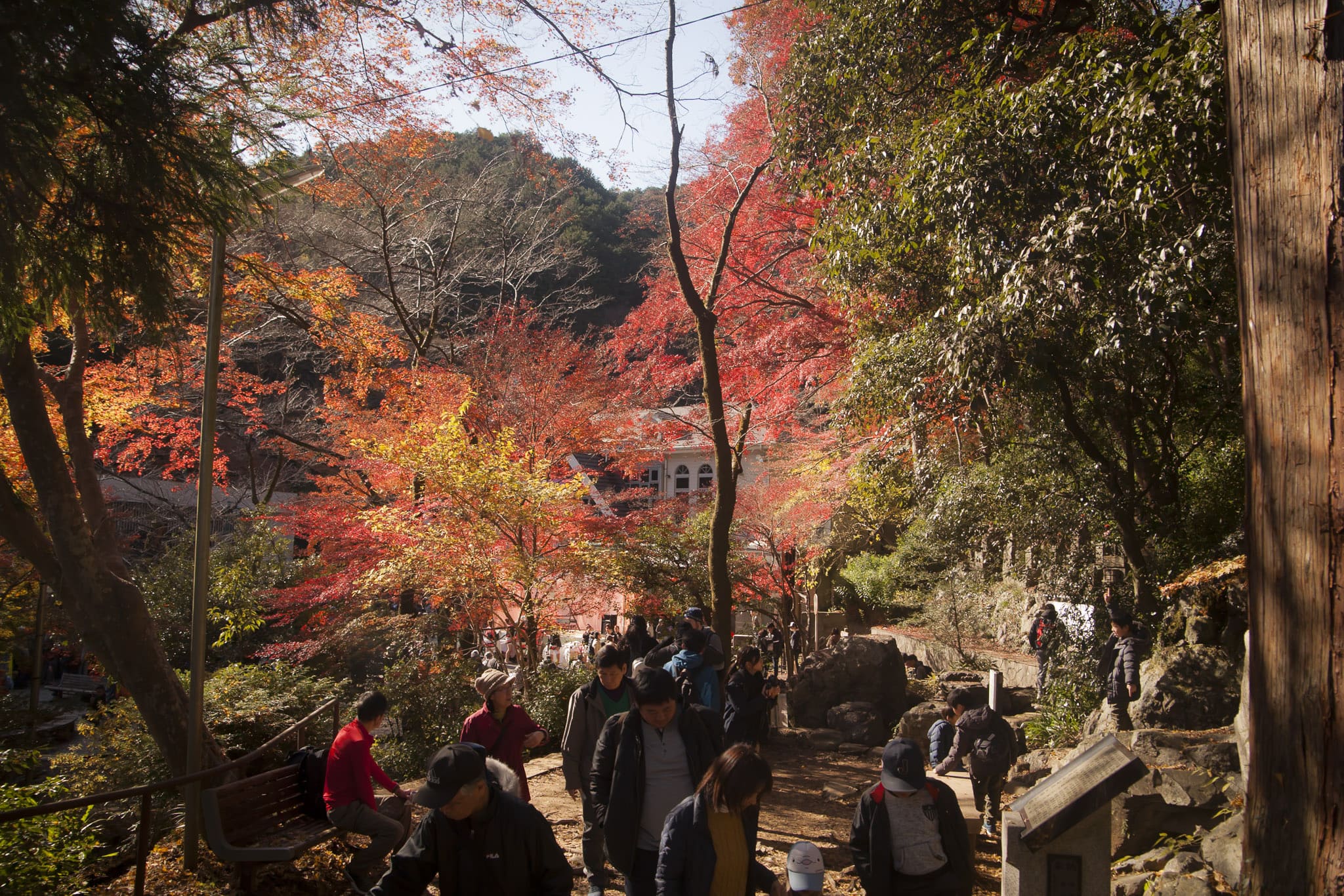
Mt. Takao (高尾山) is one of those hiking destinations where you can leave the city in the morning and be standing among cedar forests less than an hour later. The easiest route is from Shinjuku to Takaosanguchi Station on the Keio Line, with direct trains taking roughly 50 minutes. I’ve covered the different ways of reaching the mountain, including options from Tokyo Station and JR Pass considerations, in my dedicated guide to how to get to Mt. Takao from Tokyo.
For an autumn day, however, getting there is only part of the planning because it brings a very different level of traffic to the mountain, and the timing of your visit can have a noticeable effect on how much time you spend hiking versus waiting in line.
When to See the Autumn Leaves in 2026
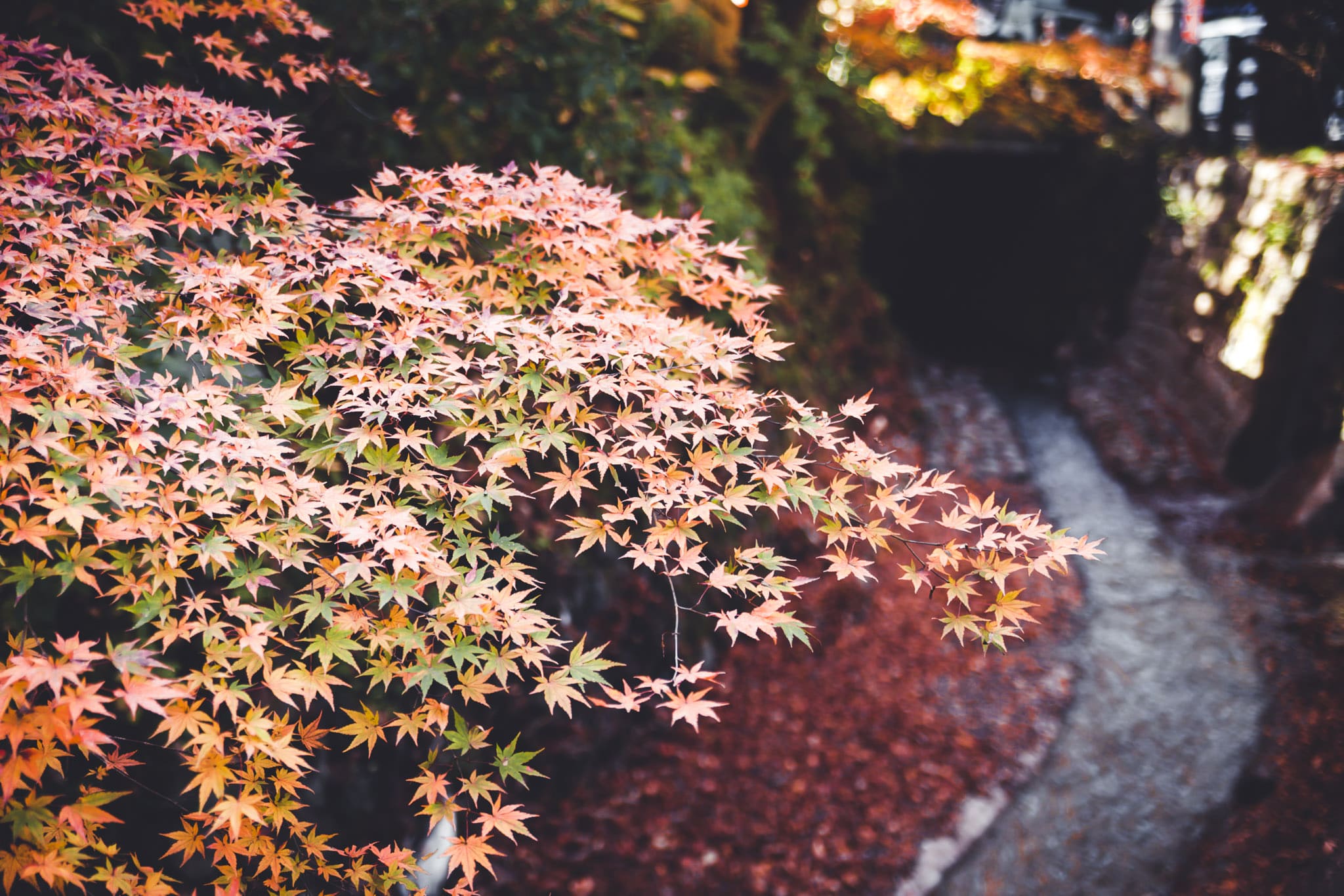
The foliage doesn’t peak across the entire mountain at the same time. The higher areas around the summit and Momijidai generally change color first, with the lower slopes and the area around the cable car station following later.
For 2026, an approximate guide based on previous years would be:
- Summit and Momijidai: mid-to-late November
- Lower mountain and cable car station: late November to early December
- Takaosan Autumn Leaves Festival: October 24 to December 13, 2026
The exact timing still depends on temperatures and weather, so there isn’t a single date when the whole mountain suddenly turns red and gold. If your priority is the broadest spread of autumn color, late November is usually the safest period to target.
For general information about the autumn leaves forecast in 2026, check our dedicated guide.
Go Early on Peak Autumn Weekends
The mountain is extremely accessible from Tokyo, which is one of its biggest advantages, but it also means that plenty of other people in one of the largest metropolitan areas in the world have the same idea. On a clear Saturday or Sunday during peak foliage, the crowds start building around the cable car and chair lift in the morning, so by late morning you may spend considerably longer waiting to get uphill than you expected. The return journey can be busy too, particularly from mid-afternoon onward when day-trippers begin heading back toward Takaosanguchi.
For that reason, I prefer to treat the mountain as an early-start day trip during peak autumn. Getting to Takaosanguchi while the morning is still relatively young gives you more freedom to choose between the cable car and chair lift, spend time around the summit, and walk down Trail 1 without constantly watching the clock.
Pro Tip: Don’t plan your autumn Takaosan visit around a precise “perfect” foliage date. Weather can shift the colors by several days, while weekend crowds are predictable. If you have flexibility, prioritize a clear weekday in the second half of November over a Saturday or Sunday at the absolute peak.
Arriving at Takaosanguchi: The Autumn Crowds Start Here
You can tell how busy Takaosan is before you even leave Takaosanguchi Station, or better yet, way before arriving. Most likely from the moment you get on the train platform in Shinjuku, you’ll see it’s filled with families, hikers, older couples and photographers, all heading in the same direction. Worry not, despite what I said earlier, you’re not supposed to be in that much of a hurry after all. And even if the surroundings are a little crowded, the scenery is well worth it. Remember not to lose sight of the most important thing, which is enjoying the experience.
After leaving Takaosanguchi, make sure to get a trail map in front of the station as it will come in handy to locate the must see spots, as well as the different mountain trails. After a short walk, you’ll be faced with the first decision of the day here: cable car or chair lift?
Getting Up Mt. Takao: Cable Car vs. Chair Lift


Both take you up the lower section of the mountain and save your legs for the trails and sights above, but they provide quite different experiences: the cable car is enclosed and follows a remarkably steep track, while the chair lift puts you out in the open with the forest directly around you.
Taking the Takaosan Cable Car
The cable car is the easier choice if you want to sit back and enjoy the scenery without being exposed to the elements. It runs at fixed intervals, and its maximum gradient is famously steep. On a busy autumn weekend, though, the convenience comes with a price: the queue can become much longer than the actual ride. I would choose the cable car if I’m traveling with someone who isn’t comfortable on an open chair lift, or simply if the line happens to be reasonable when I arrive.
Riding the Echo Lift
The Echo Lift is a completely different experience, where you sit on an open two-person chair with the forest passing directly beneath and around you, and there is no fixed departure schedule because chairs are continuously loaded. There is no conventional seatbelt or lap bar, so it’s not the option I’d recommend to anyone who is uncomfortable with heights or who may find the open ride unsettling. It also stops operating earlier than the cable car, so keep the closing time in mind if you’re considering this for the return trip.
If you ask me, the lift is the more enjoyable ride when the conditions are right. The views feel more immediate, and I have a lot of childish fun just imagining for a moment that I’m flying because why not.
My Strategy: Ride Up, Walk Down
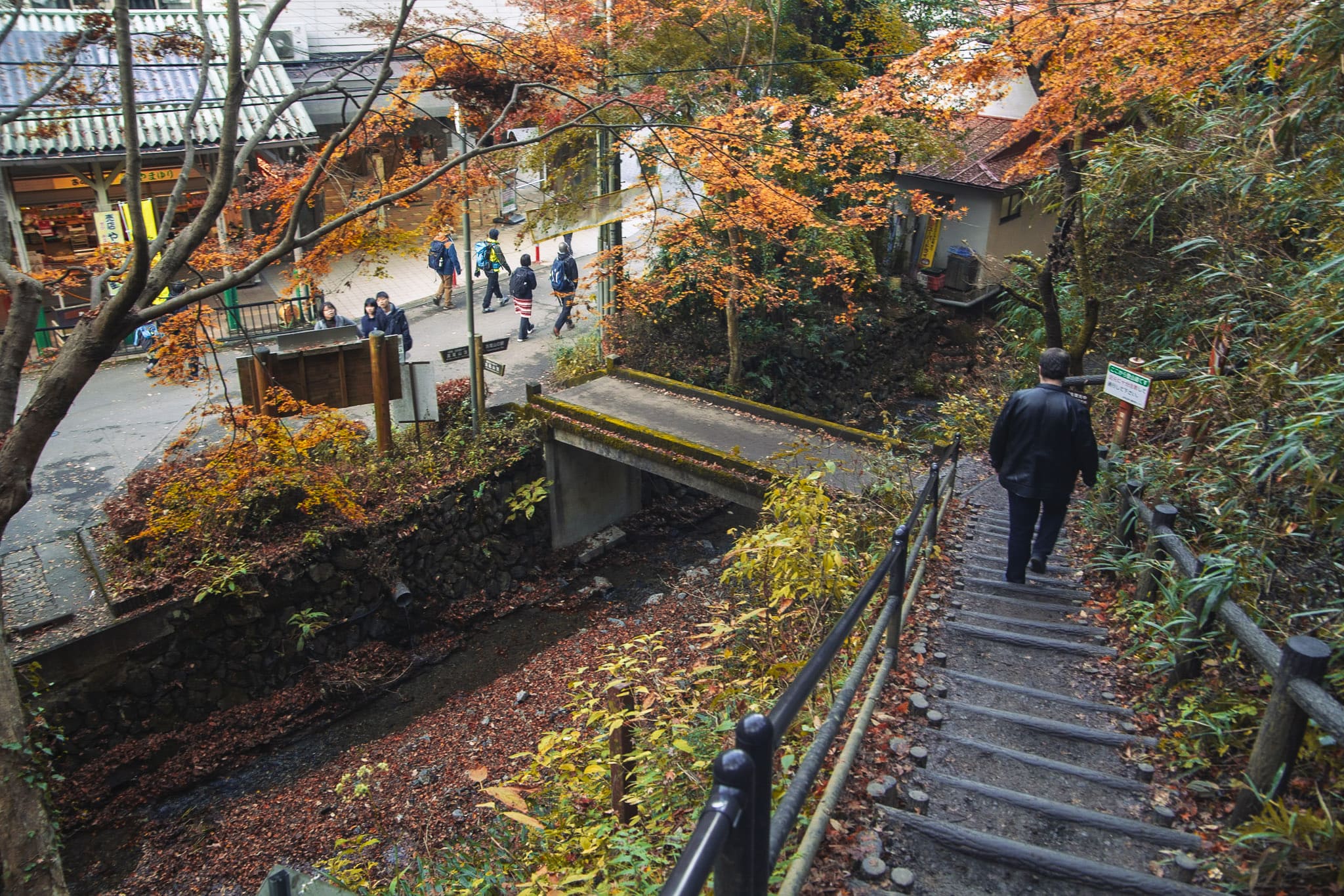
Save for the times when actually hiking was the entire point of the visit, for more casual occasions I prefer to take one of the two rides up and walk back down Trail 1.
The main reason is that I’d rather save my legs for the upper part of the mountain, where you have Yakuoin, the summit and the best views to explore. Walking down also means I don’t have to join the afternoon rush for the cable car, when many visitors are ready to leave at roughly the same time. More importantly, Trail 1 is worth experiencing at walking pace.
Trail 1: Walking Through Takaosan’s Omotesando
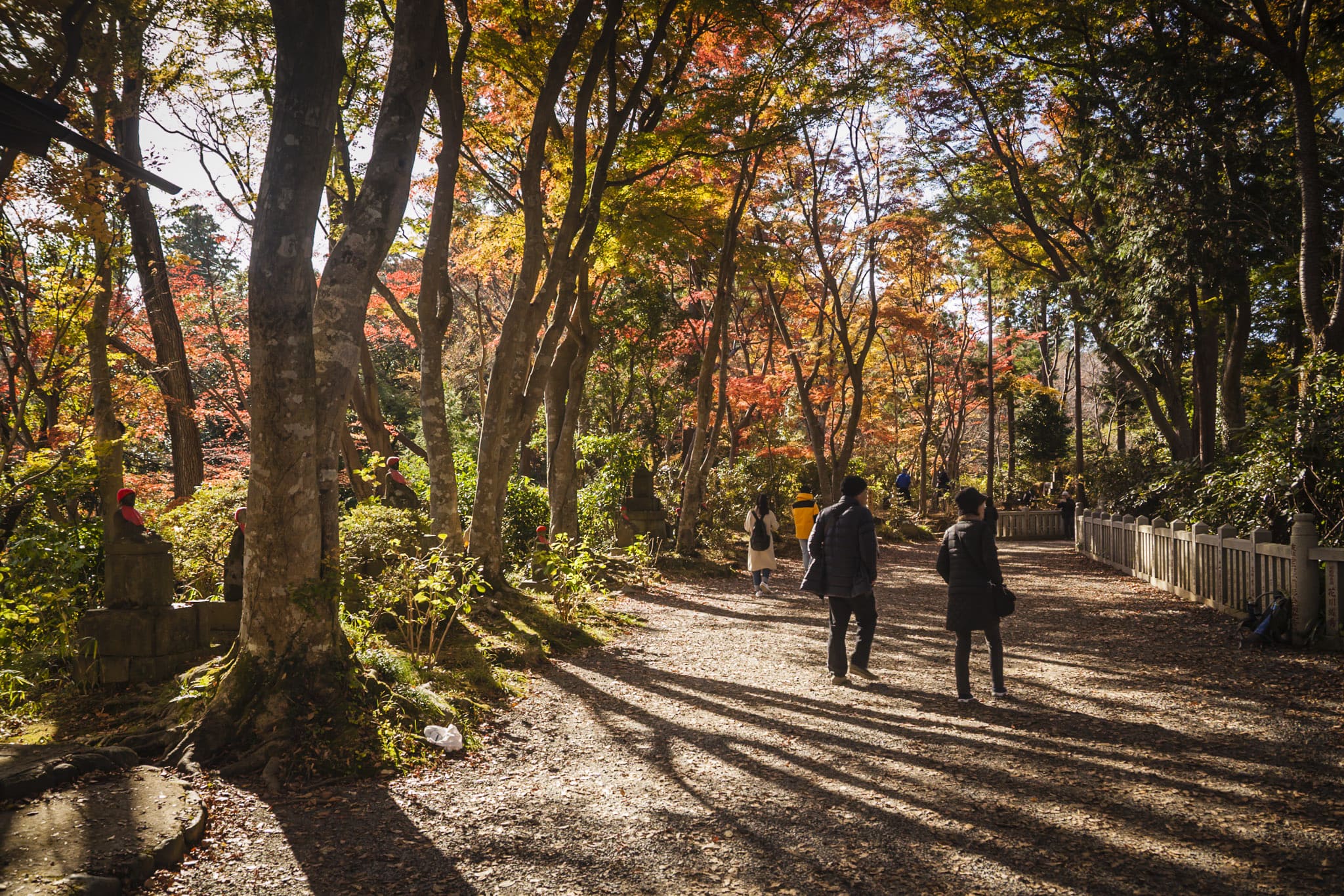
Trail 1, also known as the Omotesando course, is the most popular because it’s the easiest one. It isn’t a wilderness trail in the traditional sense, as the route is paved and well established so you don’t even need to think of this as a hike at all, but it passes through the cedar forest and directly alongside some of the mountain’s most recognizable natural and religious landmarks, so it’s advisable to go at a relaxed pace to enjoy the small details along the way.
Takosugi, the Octopus Cedar


One of the first landmarks you’ll encounter is Takosugi (たこ杉), or the Octopus Cedar. The tree is estimated to be around 450 years old, and it’s particularly memorable for the shape of its exposed roots, which spread out from the trunk like the tentacles of an octopus, hence the name.
Its unusual shape is tied to a local legend: when tengu preparing the approach to Yakuoin planned to cut down the tree because its roots obstructed the path, the cedar supposedly rearranged its roots overnight to make way. The story made Takosugi a symbol of good luck and opening new paths. The tree is now protected by a fence, so visitors should avoid touching its roots; but a stone octopus next to it, Kaiun Hippari Dako, provides an alternative spot to touch for good fortune.
 Access Access |
About 5-min walk from upper cable car or chair lift stations, or about 1-hour walk from Takaosanguchi Station |
|---|---|
 Business Hours Business Hours |
24h |
 Official Website Official Website |
https://takaozanyuho.com/spot/236.html |
Mt. Takao Monkey Park and Wildflower Garden

A little farther along Trail 1 is the Mt. Takao Monkey Park and Wildflower Garden (高尾山さる園・野草園), a compact attraction that is easy to spot from the trail. The park keeps Japanese macaques and also has a garden featuring native wild plants.
Admission is paid separately, so if you’re interested in the monkeys or have some extra time, it’s an easy addition to the walk; otherwise, you can continue along Trail 1 without interrupting the main route.
| Access |
About 5-min walk from upper cable car or chair lift stations, or about 1-hour walk from Takaosanguchi Station |
|---|---|
| Business Hours |
9:30 AM–4:30 PM |
 Price Price |
600 yen (700 yen during peak season mid to late September) |
| Official Website |
https://takao-monkey-park.jp/ |
Yakuoin Temple and Takaosan’s Tengu


I came to Takaosan for the autumn leaves. I didn’t expect to leave thinking about its tengu.
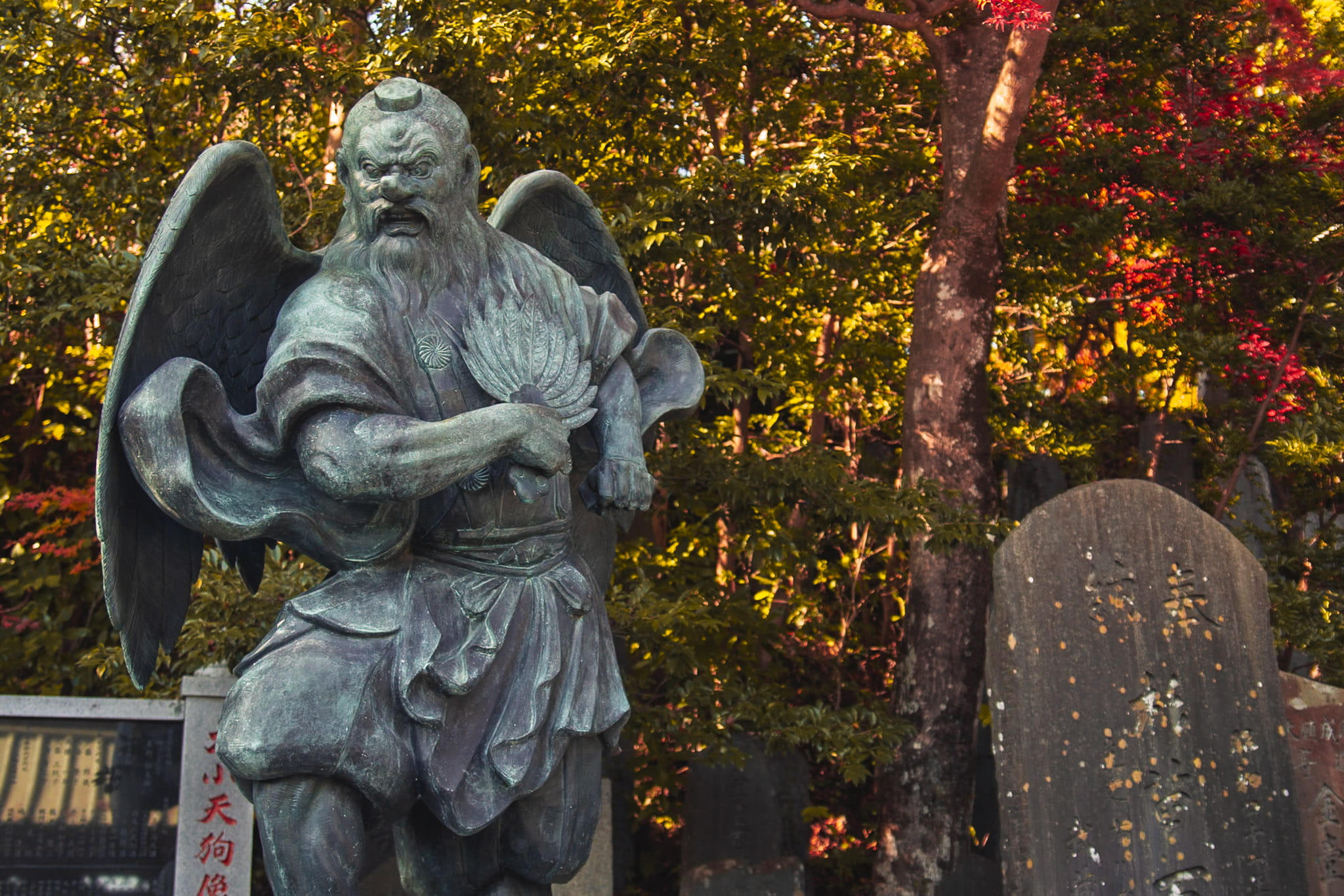
The first time I encountered these figures at Yakuoin, their appearance left an impression on me, with their crow-like beaks, long noses, fierce expressions, swords and fans. They stand in bold, dynamic poses looking almost heroic, as if they’re ready to spring into action. I found them genuinely intriguing, and wanted to understand what they were doing at a Buddhist temple on a mountain outside Tokyo. The answer goes to the heart of Takaosan’s religious history.
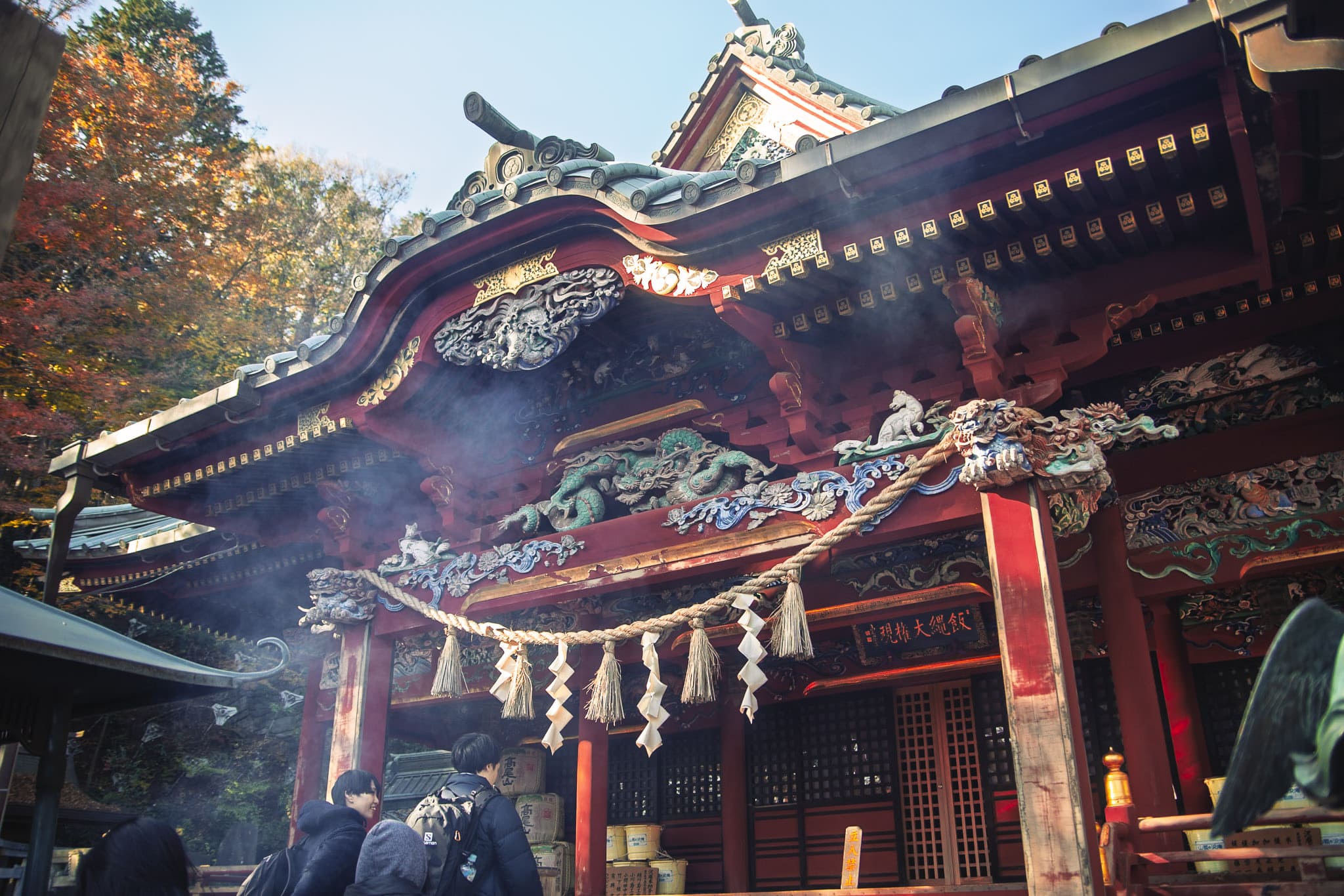
Founded in 744, Takaosan Yakuoin Yukiji (高尾山 薬王院 有喜寺) is a major center of Shugendo, the tradition of mountain asceticism that developed through a syncretic combination of Esoteric Buddhist practices, Shinto, Taoism and reverence for mountains. One of its main deities is Izuna Daigongen, enshrined here in the late 14th century by the priest Shungen Daitoku. According to legend, Shungen received a vision of the deity after performing an intensive goma fire ritual. Izuna Daigongen is a composite figure associated with five deities, including Fudo Myoo and Karuraten, the divine bird Garuda, which is a particularly interesting connection when you look at the tengu.
At Yakuoin, tengu are regarded as attendants and guardians of Izuna Daigongen. In Japanese religious tradition, they inhabit sacred mountains and act as messengers of deities and Buddhas, protecting the good and chastising evildoers. Their presence here is closely linked to the mountain ascetics, or yamabushi, who trained in Takaosan’s forests. The image of the powerful, supernatural tengu and the figure of the experienced mountain practitioner became intertwined.


Look closely at the two tengu near Yakuoin Sanmon Gate. They represent two distinct types: the smaller Karasu Tengu, or crow tengu, has a beak in place of a human nose. The larger Daitengu has the long nose familiar from Japanese folklore. Yakuoin’s own explanation associates the Karasu Tengu with someone still undergoing religious training, while the Daitengu represents the seasoned yamabushi who has acquired spiritual power through years of practice.
Once you know this, their poses seem particularly fitting. The swords, fans and commanding expressions embody strength, spiritual discipline and protection, reflecting the traditions that shaped the mountain. I find this one of the most interesting things about visiting Yakuoin. Tengu appear throughout Japanese popular culture, but seeing them here, in the setting that gives them their religious significance, adds a different dimension to these striking figures.
If you’re interested in other important locations linked to Shugendo, make sure to check also my Mitakesan day trip guide!
| Access |
About 20-min walk from upper cable car or chair lift stations, or about 1h30min walk from Takaosanguchi Station |
|---|---|
| Business Hours |
8:30 AM–4 PM |
| Price |
Free |
| Official Website |
https://www.takaosan.or.jp/english/ |
The 36 Doji: Fudo Myoo’s Child Attendants


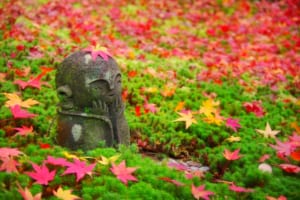
As you walk Trail 1, look out for the 36 Doji (童子), a series of statues representing the youthful attendants of Fudo Myoo, a fierce Buddhist deity associated with wisdom and the destruction of evil. Their presence reflects the esoteric Buddhist traditions practiced at Yakuoin, adding another layer to the religious imagery you’ll encounter along the approach to the temple.
The figures are depicted in different poses and with distinct objects, and their names are carved into the stone pillars beneath them. Rather than treating them as simple trail decorations, consider them part of the mountain’s religious landscape: each represents an attendant within Fudo Myoo’s retinue, whose role is to serve and carry out the deity’s will.
Reaching the Summit: Omiharashidai and the Mt. Fuji View
After the forest trails and the temple grounds, reaching the summit is a welcome chance to stop for a while. At 599 meters, Mt. Takao isn’t especially high, but the views can stretch a long way beyond the surrounding mountains.
The View from 599 Meters


The summit’s observation area, Omiharashidai (大見晴台), is the place to look for Mt. Fuji. On a clear autumn day, the mountain rises above the surrounding ridgelines, with forests turning shades of red, orange and yellow across the landscape. It’s a lovely view, particularly when the foliage is at its peak.
The catch is the weather. Fuji can disappear behind clouds or haze, even when conditions seem pleasant at Takaosan, so don’t treat the view as guaranteed. If seeing Fuji is a priority, arriving earlier in the day gives you a better chance of clear air.
Photographs give you an idea of the scenery, but they can’t quite convey the feeling of arriving at the summit after walking through the autumn forest. You also have to share the experience: during peak foliage, the observation area and summit square can get crowded, with visitors gathering for photos and looking for somewhere to rest. Take your time, find a spot to pause, and enjoy the view when it opens up.
Tororo Soba at the Summit
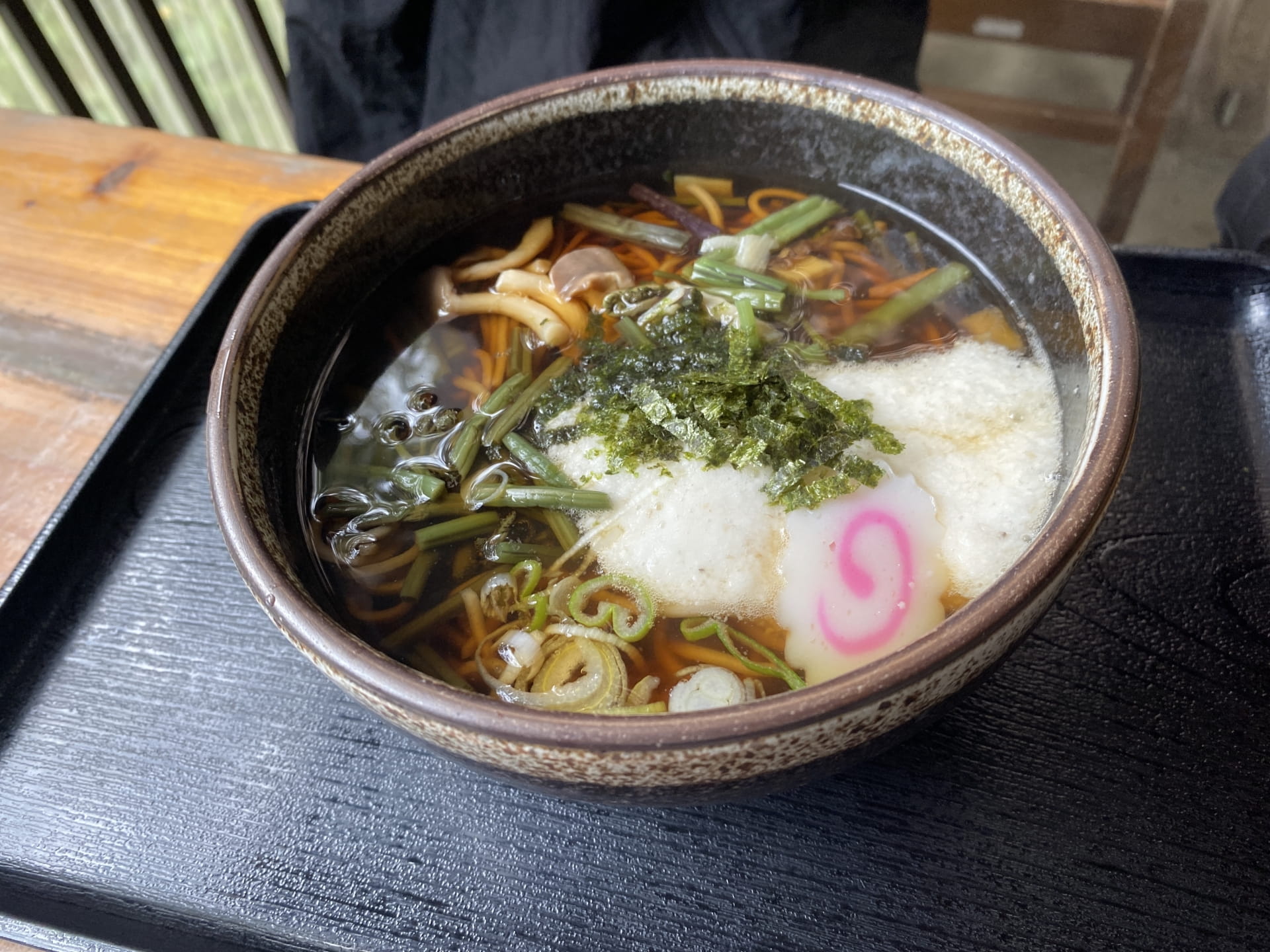
By lunchtime, you’ll probably be ready to sit down. The summit has a few soba shops, including Yamabiko Chaya, Akebono-tei, and Omiharashi-tei, all serving simple Japanese mountain food that fits the setting.
The classic order is tororo soba: buckwheat noodles topped with grated Japanese mountain yam, which has a sticky, almost creamy texture. It’s one of Mt. Takao’s signature dishes, and you’ll find versions of it at eateries around the mountain.
I’ll be honest: the summit soba is more about the experience than the food itself. Expect a straightforward, satisfying bowl rather than a meal worth making a special trip for, and prices can be a little higher than at restaurants down in town.
Still, hot soba after a morning on the trails is hard to argue with. Add a seat overlooking the mountains, and the simple lunch makes perfect sense. During peak autumn, the summit restaurants can also get busy around noon, so be prepared to wait or eat a little earlier if you’d rather spend your time outside enjoying the view. Yamabiko Chaya also allows for takeout, so you can just sit anywhere around the area and simply return the bowl at the shop once you’re done.
Walking Back Down Trail 1
For most visitors, I recommend taking the cable car or chair lift up and walking back down Trail 1. It gives you the best of both experiences: the ride through the lower forest, followed by a leisurely walk along the Omotesando, with time to explore Yakuoin, stop at Takosugi and appreciate the autumn scenery at your own pace.
Walking down also means you can avoid the queues that build at the cable car and chair lift in the afternoon, when many visitors are ready to head back to Takaosanguchi Station. Instead of joining the rush, you can make your way down through the forest, stopping wherever something catches your attention.
That said, this isn’t the only sensible way to tackle the mountain. If you have knee problems, find downhill walking uncomfortable, or simply prefer to save your joints from a long descent, walking up and taking the cable car or chair lift back down may suit you better. You can still experience Trail 1 on foot and enjoy its landmarks; just check the return operating hours in advance, particularly if you plan to spend time at the summit or Yakuoin.
Why I Recommend Walking Down
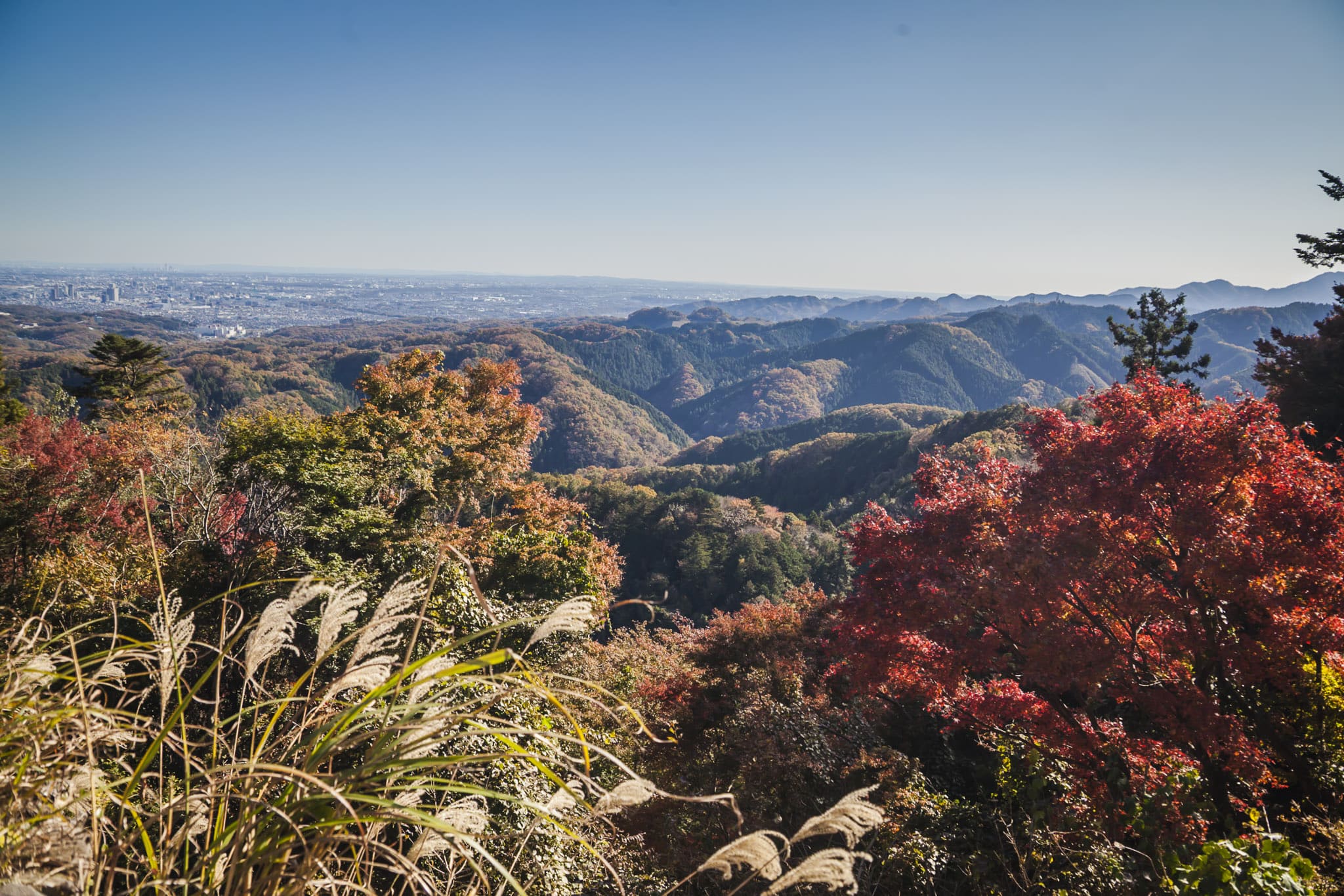
Trail 1 is paved and comparatively straightforward, making it a manageable option for many visitors who don’t want to tackle a rugged hiking path. Walking at your own pace also lets you appreciate details and spots that are easy to overlook when you’re focused on getting uphill.
The temple grounds are worth taking your time over, and Takosugi is an easy place to pause and look more closely at its distinctive roots. In autumn, the forest provides another reason not to hurry. The colors and the view between the trees change as you descend, giving you a different perspective from the one you had on the way up.
There is also a practical advantage: you aren’t relying on a ride down during the busiest part of the day. You can stop for a relaxed lunch, spend longer at the summit, or explore Yakuoin in depth without worrying quite so much about getting into the afternoon queue.
What the Descent Is Actually Like


Although Trail 1 is paved, it isn’t a flat stroll. Some sections are steep, and the long downhill walk can put more strain on your knees and toes than you might expect, especially if you’re not used to walking downhill for an extended period. The asphalt makes the route easier to follow than a rough mountain trail, but it doesn’t remove the physical effort.
Autumn brings another consideration: fallen leaves can cover parts of the path and become slippery when damp. Take your time on steeper stretches, particularly after rain, and wear shoes with good grip and enough support for a sustained walk. Worn-out sneakers or smooth-soled fashion shoes can become uncomfortable surprisingly quickly.
If downhill walking tends to bother your knees, don’t feel that you have to follow my preferred route. Walking up and riding down is a perfectly reasonable alternative, provided you plan around the cable car or chair lift’s operating hours. The aim is to enjoy the mountain, not to turn the descent into an endurance test.
Pro Tip: Don’t treat Trail 1 like an urban sidewalk. It’s paved, but some sections are steep enough that worn-out sneakers become uncomfortable surprisingly quickly. Wear shoes with good grip, and take extra care on damp leaves.
A Realistic Peak-Autumn Mt. Takao Day Trip Itinerary


Use this as a guide to the day’s rhythm rather than a strict schedule. During peak autumn, queues for the cable car and chair lift can easily shift your timings, so leave room to adjust.
- 08:00–09:00 — Leave Shinjuku and travel to Takaosanguchi.
- 09:00–09:45 — Head up the mountain by cable car or chair lift. Allow extra time if there is a queue.
- 09:45–11:00 — Explore the upper mountain, stopping at Takosugi and other Trail 1 landmarks along the way.
- 11:00–12:00 — Reach the summit and enjoy the views from Omiharashidai. If Fuji is visible, take time to appreciate it.
- 12:00–13:00 — Have tororo soba for lunch, ideally before the busiest lunchtime period.
- 13:00–15:00 — Visit Yakuoin, then walk down Trail 1 at a relaxed pace.
- 15:00 onward — Return to Takaosanguchi Station and head back to Tokyo.
If you’re visiting on a busy weekend, starting earlier gives you the most flexibility. You can also reverse the route by walking up and taking the cable car or chair lift down, but check the operating hours beforehand so you don’t miss your ride. Most importantly, don’t rush through the temple or the summit just to stay on schedule; those stops are part of what makes an autumn visit worthwhile.
Practical Tips for Visiting Mt. Takao in Peak Autumn
A few small decisions can make a noticeable difference to your day, especially when the mountain is at its busiest.
Start Early
If you can, aim to reach Takaosanguchi in the morning rather than arriving around lunchtime. You’ll have more time to enjoy the mountain before the busiest period, and a better chance of avoiding the longest queues for the cable car and chair lift. An early start also leaves room for an unhurried lunch or an unexpected stop along Trail 1.
Wear Proper Shoes
Trail 1 is paved, but the slopes can be steep, and fallen leaves become slippery when wet. Wear comfortable walking shoes with good grip rather than treating this as a city sightseeing trip. Even if you take the cable car or chair lift uphill, you’ll still do a fair amount of walking around the temple, summit and trail.
Bring Cash and a Charged Phone
Carry some cash for food, drinks and small purchases, and start the day with your phone fully charged. You’ll likely use it for train navigation, checking weather updates and taking photos, while a portable battery is useful if you’re out for most of the day. Downloading or saving your route information beforehand is sensible, too.
Expect Crowds at the Cable Car
During peak autumn weekends, the queue can take longer than the ride itself. Don’t assume you’ll be able to board as soon as you arrive. If the line is already long, consider the chair lift if you’re comfortable with an open-air ride, or adjust your plans rather than letting the queue dictate the rest of your day.
Check the Weather Before Chasing Mt. Fuji
A clear forecast for Tokyo doesn’t guarantee a clear view of Mt. Fuji from the summit. Check conditions for the mountain itself, but keep your expectations flexible: clouds and haze can obscure Fuji even when the weather seems pleasant. Enjoy the autumn forest and temple grounds as the main attractions, with the Fuji view as a bonus.
Give Yourself More Time Than Google Maps Suggests
Travel apps are useful for getting to Takaosanguchi, but they can’t reliably account for every queue, photo stop or break along the trail. During peak foliage, allow extra time for the cable car or chair lift, lunch and the walk through Yakuoin. A little flexibility makes it easier to enjoy the day instead of constantly checking the clock.
Is Mt. Takao Worth Visiting During Peak Autumn?
For me, autumn is when Mt. Takao makes the strongest impression. The foliage transforms the forest, and the combination of hiking, Yakuoin’s religious history and a bowl of tororo soba makes for a day trip with more variety than you might expect so close to Tokyo.
The trade-off is the crowds. You’ll notice them at the station, around the mountain transport and at popular viewpoints, especially on weekends. But arriving early, riding up, taking your time around the summit and Yakuoin, and walking down Trail 1 gives you a practical way to enjoy the mountain without spending the whole day in queues.
If you can choose your date, go on a clear weekday during the autumn season. And if a weekend is your only option, don’t let the crowds put you off—just plan around them. Mt. Takao is popular for good reason, and with a little preparation, its autumn scenery is well worth the trip.
FAQs About Mt. Takao in Autumn


How do I get to Mt. Takao from Shinjuku?
Take the Keio Line from Shinjuku to Takaosanguchi Station. Direct trains take around 50 minutes, though the exact journey time depends on the service. The station is the main starting point for the mountain’s hiking trails, cable car and chair lift.
What is the best route for autumn leaves on Mt. Takao?
For a first visit, I recommend taking the cable car or chair lift uphill and walking back down Trail 1, also known as the Omotesando course. This combines the ride with a walk past Takosugi, Yakuoin and the forest scenery. If downhill walking is uncomfortable for you, reverse the plan and check the return transport timetable.
Is the cable car or chair lift better?
The cable car is enclosed and may feel more comfortable if you dislike heights or want shelter from the weather. The open-air chair lift gives you a closer view of the forest, but isn’t ideal for everyone. Both can get busy during peak autumn, so your choice may depend on the queue when you arrive.
How long does it take to hike Trail 1?
Allow roughly 1.5–2 hours to walk the main Trail 1 route between the upper mountain area and Takaosanguchi, depending on your pace and stops. Visiting Yakuoin, taking photos and exploring the summit will add time. During peak autumn, it’s better to leave a generous margin than plan around the walking time alone.
Is Mt. Takao difficult for beginners?
Mt. Takao is a popular choice for beginners, and Trail 1 is paved and well established. However, it includes steep sections, and the descent can be tiring on the knees and toes. Wear suitable shoes, take breaks as needed and consider using the cable car or chair lift for one leg of the journey.
Can you see Mt. Fuji from Mt. Takao?
Yes, Mt. Fuji can be seen from the summit observation area on clear days. Visibility depends on weather and atmospheric conditions, so a view is never guaranteed. If Fuji is a priority, check the forecast and aim to reach the summit earlier in the day.
When is peak autumn foliage at Mt. Takao?
Autumn colors generally reach the higher parts of the mountain first, followed by the lower slopes. Mid-to-late November is a useful period to target for the summit and upper trails, while lower areas may peak later, sometimes into early December. The timing varies from year to year with weather conditions.
Is Mt. Takao crowded during autumn?
Yes, particularly on clear weekends in November, when the foliage attracts large numbers of day-trippers from Tokyo. Expect queues around the cable car and chair lift, and busy areas near the summit and temple. Visiting on a weekday and arriving early are the best ways to make the day more manageable.
For more Autumn-related guides, check these links below!


Written by
Photographer, journalist, and avid urban cyclist, making sense of Japan since 2017. I was born in Caracas and lived for 14 years in Barcelona before moving to Tokyo. Currently working towards my goal of visiting every prefecture in Japan, I hope to share with readers the everlasting joy of discovery and the neverending urge to keep exploring.
- +0 0
-
-