Autumn Onsen in Tohoku: 5 Overnight Trips from Tokyo by Shinkansen
Soak among Tohoku’s autumn colors with five easy one-night hot spring escapes from Tokyo by Shinkansen.


- +0 0
-

-


The steam rises slowly from the outdoor bath, curling into air cold enough to sting your cheeks. Above you, maple and beech leaves glow in shades of gold and crimson. A single leaf drifts down and settles on the water. Instead of rushing back to the station after sunset, you have dinner, another bath, and an autumn evening in the mountains ahead of you.
Many of Japan’s best-known autumn destinations are experienced as day trips. In Tohoku, the mountainous northeast of Japan’s main island, there is another option: check into a hot spring inn surrounded by changing leaves and stay overnight.
And you don’t need a week to do it. Each of the five trips below can work as a one-night escape from Tokyo: take the Shinkansen in the morning, reach a mountain hot spring by the afternoon, and return to the city the following day. Pick the one that fits your dates and travel style, or save the rest for another autumn.
Why Visit Tohoku for an Autumn Onsen Trip from Tokyo?
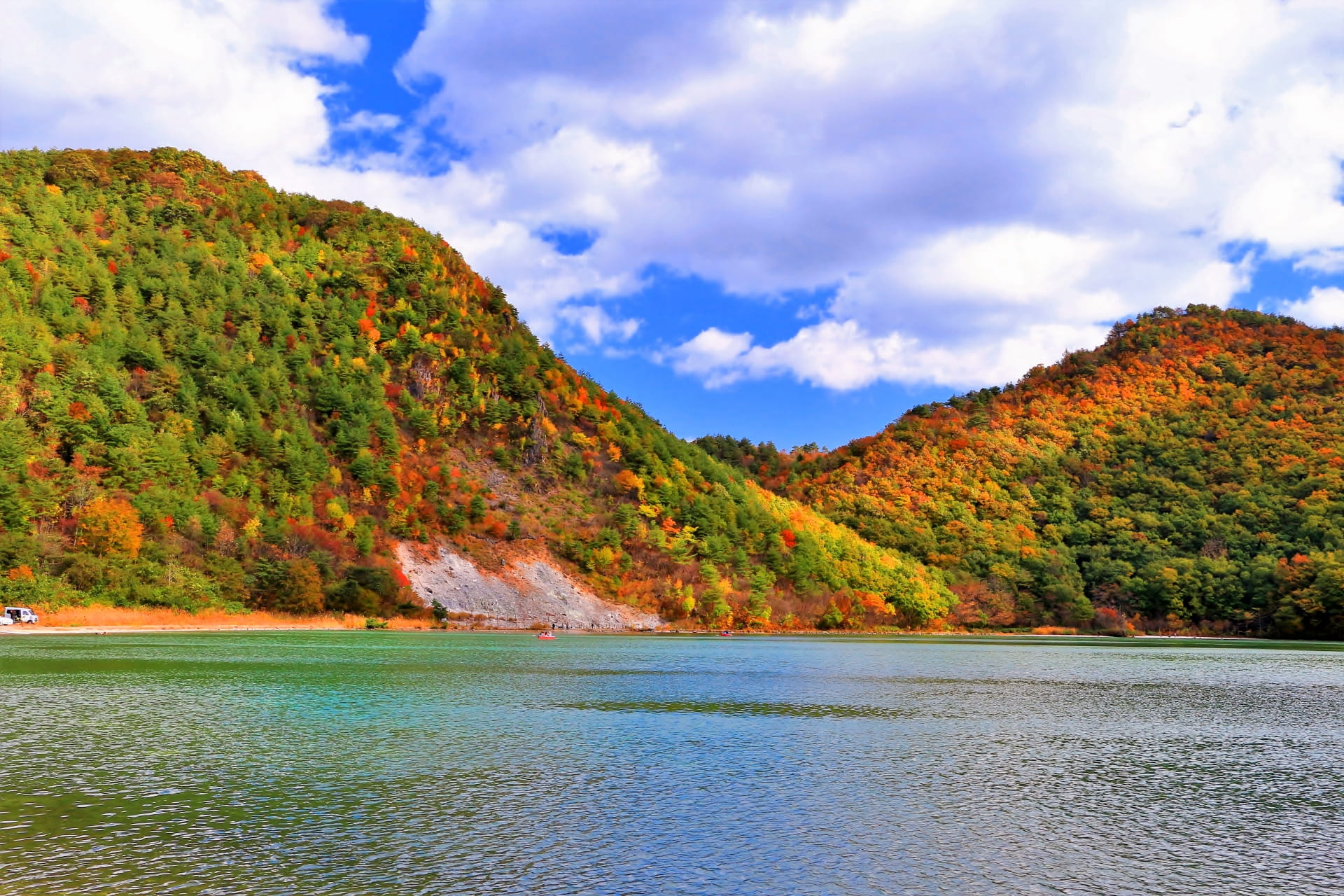 Tohoku is particularly rewarding in autumn, when its mountains, forests, and hot spring valleys turn shades of red, orange, and gold.
Because the region stretches across northern Honshu and includes destinations at very different elevations, the autumn color season can extend from around October into early November, depending on the location and weather that year.
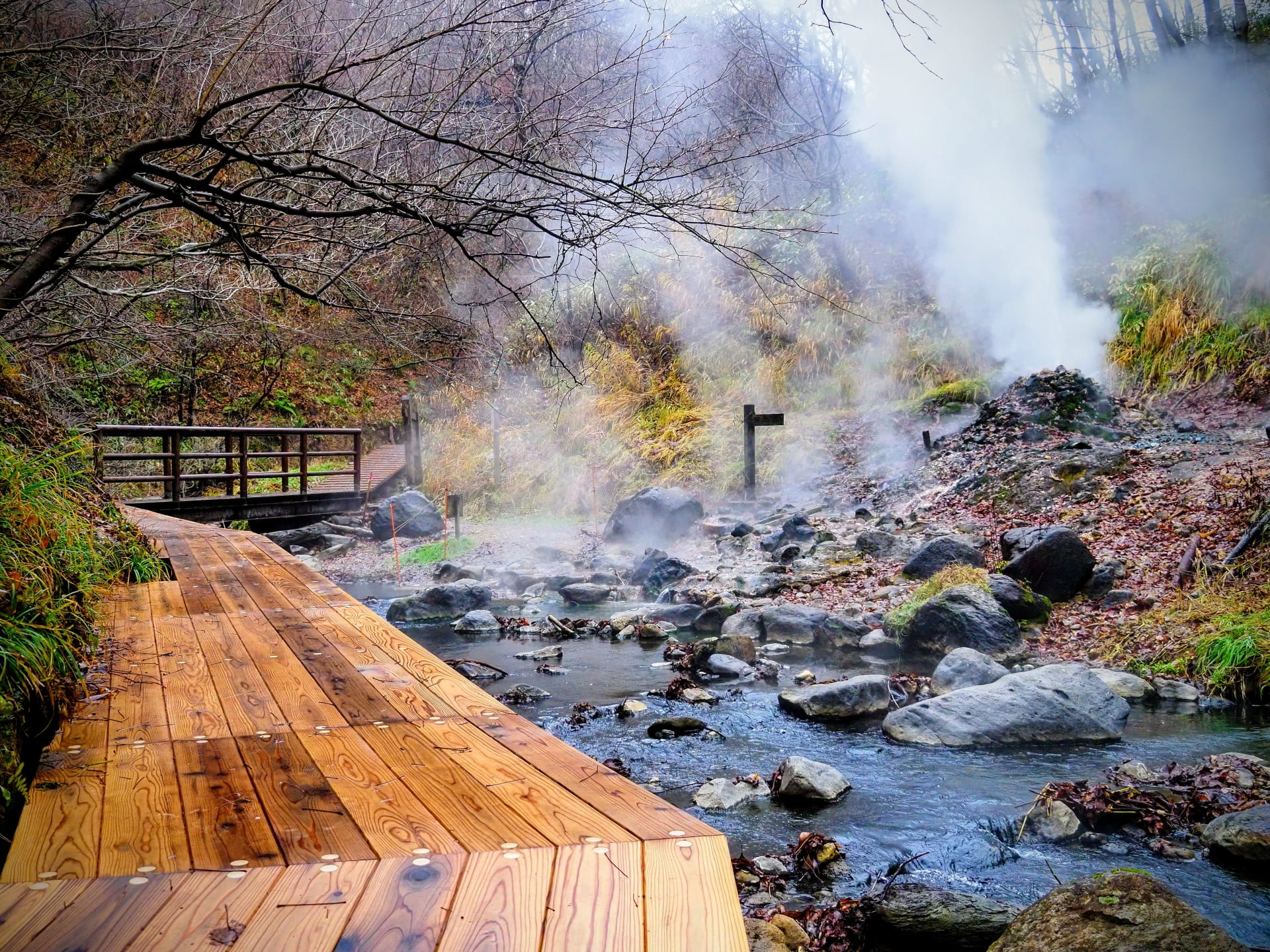
For an overnight trip, the appeal goes beyond the foliage. Many of Tohoku’s hot spring areas are surrounded by forests and mountains, making an outdoor bath part of the autumn experience itself.
Seasonal ryokan dinners add another layer, with regional specialties such as mushrooms, new-season rice, apples, kiritanpo, and imoni appearing across the destinations in this guide.
Despite their mountain settings, several of these onsen areas are reachable from Tokyo by combining the Shinkansen with a local train, bus, or accommodation shuttle.
That makes it possible to leave Tokyo in the morning, spend the afternoon among the autumn colors, stay overnight at an onsen, and return the following day.
| Trip | Best for | Time from Tokyo | Round-trip transport (approx.) | Typical peak foliage |
|---|---|---|---|---|
| Nyuto Onsen Village (Akita) | Forest baths, bath hopping | About 3 hr 40 min | About ¥35,500 | Mid to late October |
| Tsuta Onsen & Oirase Stream (Aomori) | Autumn walks, waterfalls, forest scenery | About 5 hr | About ¥40,000 | Mid to late October |
| Geto Onsen (Iwate) | Rustic riverside baths, secluded setting | About 3 hr 30 min | About ¥28,000 + shuttle | Mid to late October |
| Naruko Onsen (Miyagi) | Easy access, classic onsen town | About 3 hr | About ¥25,500 | Late October to early November |
| Ginzan Onsen (Yamagata) | Historic streets and evening scenery | About 4 hr | About ¥28,000 | Late October to early November |
Which trip should you choose? For secluded forest baths, consider Nyuto or Geto. For a trip combining autumn walks with an onsen stay, Tsuta and Oirase offer the strongest hiking element. Naruko is one of the easiest options to reach primarily by rail, while Ginzan combines autumn scenery with one of Tohoku’s most recognizable historic onsen townscapes.
Timing tip: Autumn colors generally progress from higher elevations and northern areas toward lower and more southerly locations. Mid-October travelers may have better luck in parts of Aomori and Akita, while late October and early November often bring color to valleys in Miyagi and Yamagata. Peak timing varies from year to year, so check local foliage reports shortly before your trip.
Plan 1: Nyuto Onsen Village, Akita — Milky Baths in a Golden Beech Forest
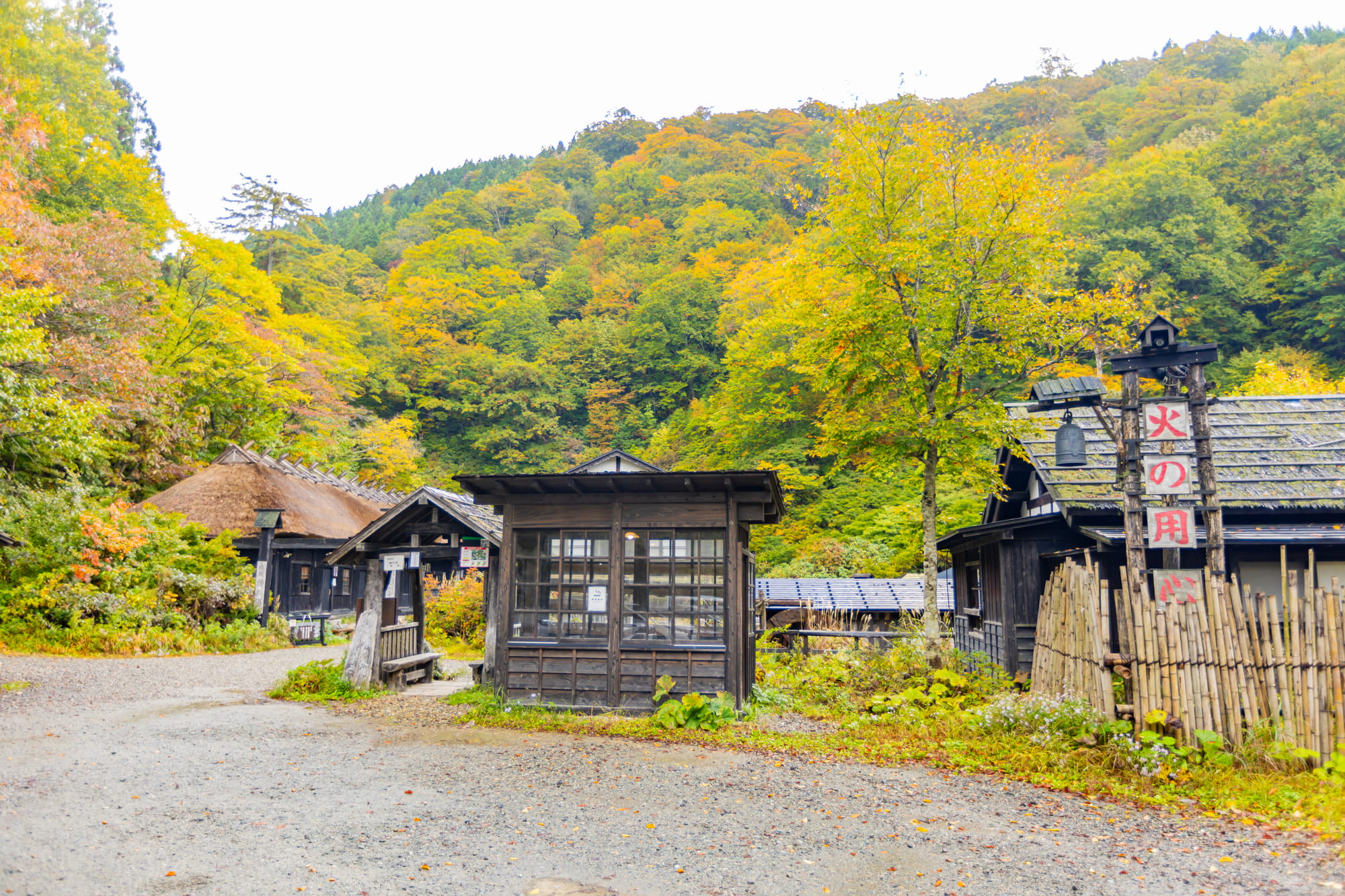
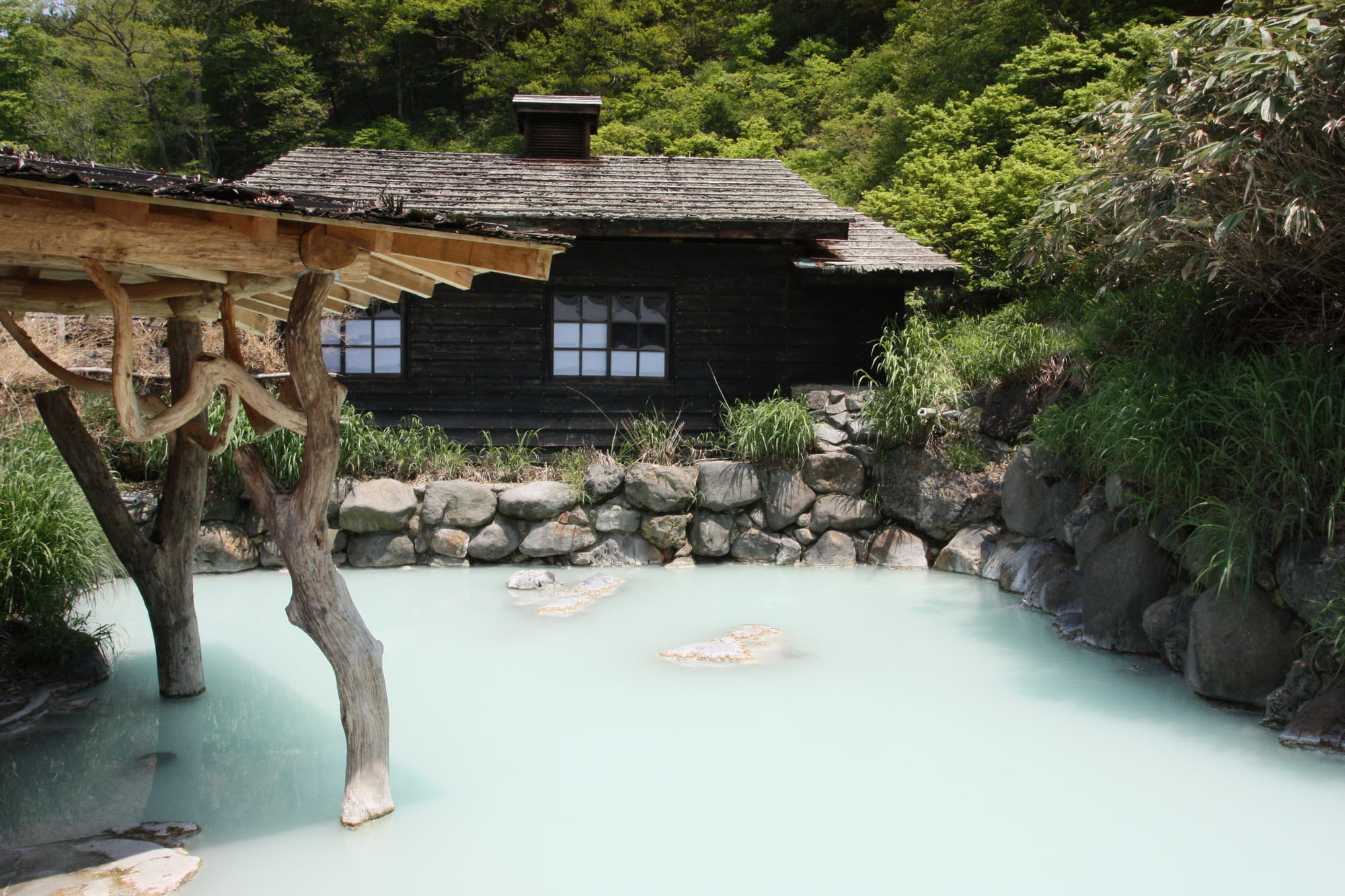 Nyuto Onsen Village (Nyuto Onsenkyo) is a collection of seven independent hot spring inns scattered through a beech forest at the foot of Mount Nyuto. The springs differ from inn to inn, and several properties feature atmospheric outdoor baths surrounded by forest.
The best-known is Tsurunoyu, with traditional thatched-roof buildings and a history stretching back centuries. In autumn, the surrounding beech forest tends to glow gold and yellow, usually around mid to late October.
Taste of the season: Autumn in Akita means kiritanpo nabe, a hot pot featuring toasted rice sticks made from pounded rice, often simmered with chicken, burdock root, mushrooms, and other local ingredients. At Tsurunoyu, the inn’s mountain yam hot pot is another specialty.
1-Night, 2-Day Itinerary at Nyuto Onsen Village
Day 1
- Morning: Take the Akita Shinkansen Komachi direct from Tokyo to Tazawako Station (about 2 hours 50 minutes).
- Midday: Ride the Ugo Kotsu bus from the station toward Nyuto Onsen Village (about 50 minutes, depending on your stop). Check in or leave your bags at your accommodation.
- Afternoon: Overnight guests can purchase the yumeguri-cho bath-hopping passbook, which provides access to participating inns and the village’s bath-hopping shuttle. Visit two or three baths if your schedule allows.
- Evening: Enjoy a seasonal dinner, then take another soak surrounded by the quiet forest.
Day 2
- Early morning: Start the day with an outdoor bath before breakfast.
- Late morning: Return toward Tazawako Station. Depending on your schedule, consider a side trip to Lake Tazawa or continue by Shinkansen to Kakunodate, known for its preserved samurai district.
- Afternoon: Take the Komachi back to Tokyo. Pick up iburigakko, Akita’s smoked pickled daikon, as a regional souvenir.
Getting to Nyuto Onsen Village from Tokyo
Tokyo to Tazawako takes about 2 hours 50 minutes by direct Akita Shinkansen Komachi. From Tazawako Station, local buses continue into the Nyuto Onsen area.
Shinkansen fares are about ¥16,760 one way, plus local bus fares depending on your stop. Allow roughly ¥35,000–¥36,000 for round-trip transportation.
Some accommodations provide transfers from designated nearby bus stops rather than directly from Tazawako Station, so check your inn’s access instructions when booking.
Book Your Shinkansen Tickets Online
Travel from Tokyo to Nyuto Onsen Village by Shinkansen and local bus, and spend a night among the milky forest baths of one of Akita’s most beloved hot spring hideaways.
You can reserve the Tokyo → Tazawako Komachi Shinkansen leg online in English in advance with Japan Bullet Train. Reserve your seats online before your trip and collect your tickets at the station using the QR code sent by email.
Plan 2: Tsuta Onsen and the Oirase Stream, Aomori — Forest Walks and Waterfalls
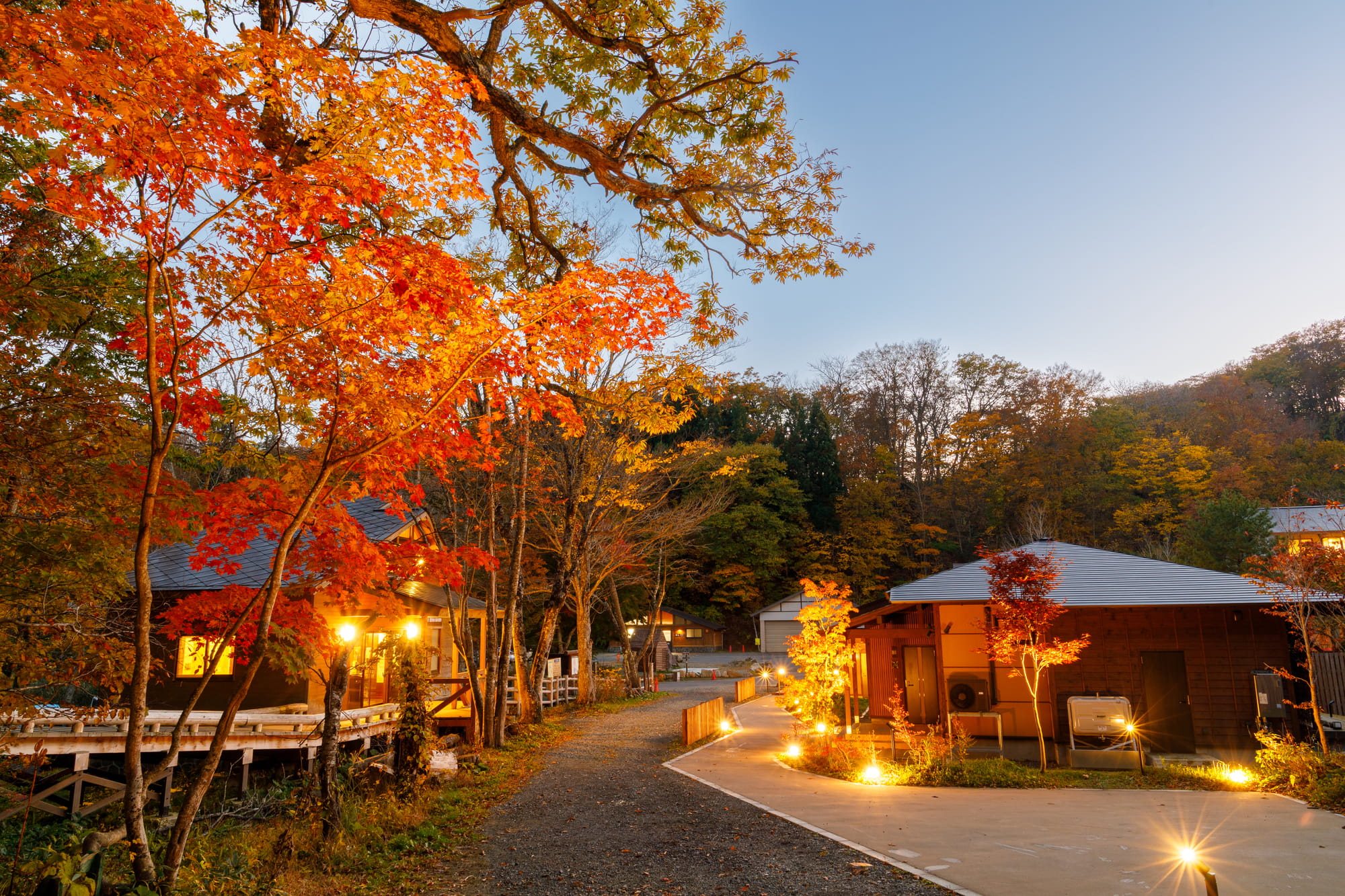
The Oirase Stream flows from Lake Towada through roughly 14 kilometers of forest, passing moss-covered rocks, rapids, and numerous waterfalls. A walking trail follows much of the stream, making this one of Tohoku’s signature autumn walking destinations.
Nearby, Tsuta Onsen is a historic hot spring inn surrounded by beech forest. Its wooden baths are unusual because the hot spring water rises naturally from beneath the bathtubs.
Autumn colors usually arrive from mid to late October along the Oirase Stream, with higher areas around Tsuta and the Hakkoda mountains often changing somewhat earlier.
Taste of the season: Aomori is Japan’s leading apple-producing prefecture, and autumn coincides with harvest season for many varieties. Around Lake Towada, look for himemasu (kokanee salmon), while Hachinohe is known for senbei-jiru, a warming soup made with special wheat crackers.
1-Night, 2-Day Itinerary at Tsuta Onsen and Oirase
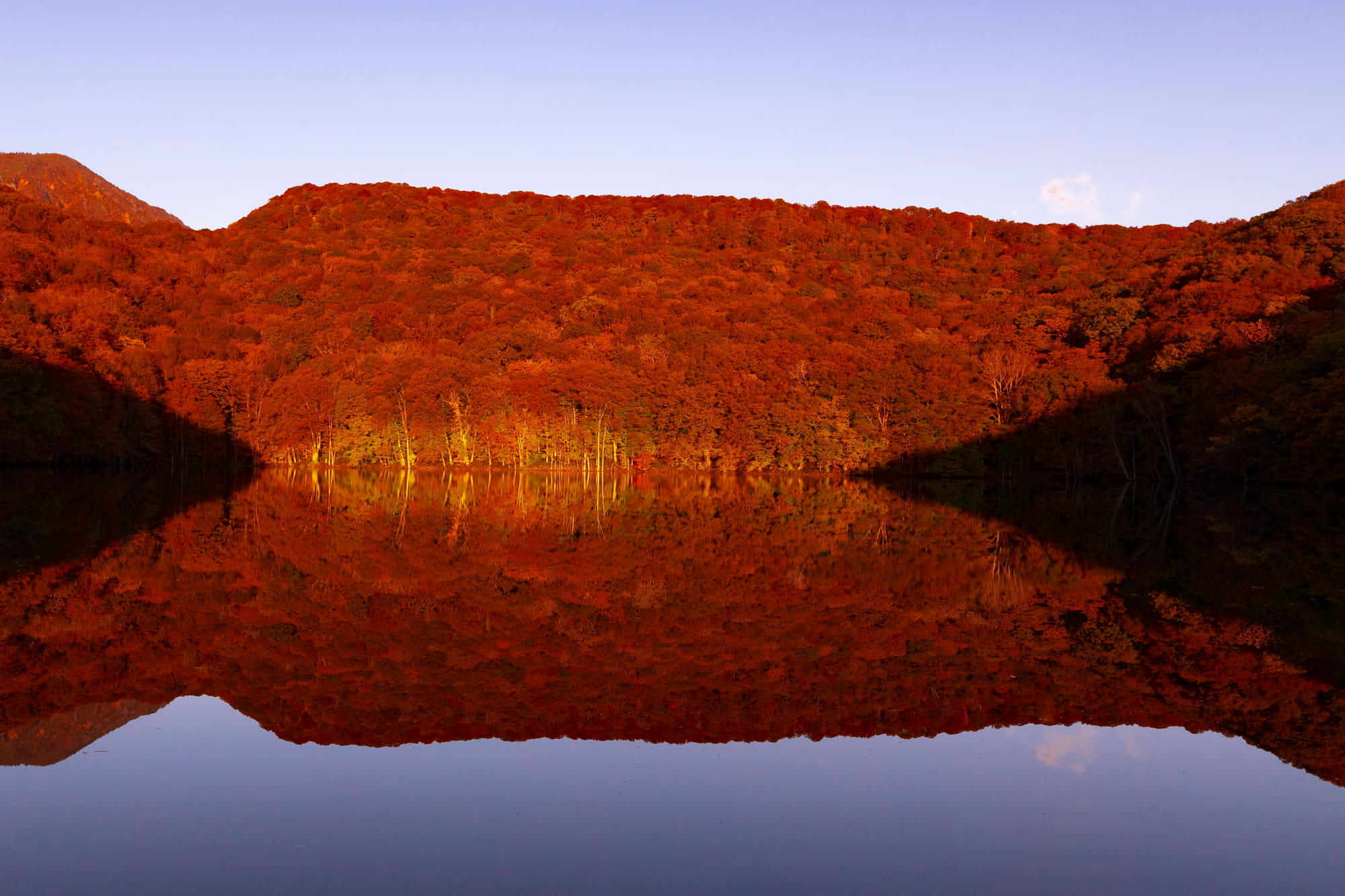
This itinerary enters through Shin-Aomori and returns via Hachinohe, avoiding unnecessary backtracking.
Day 1
- Morning: Take the Tohoku Shinkansen Hayabusa from Tokyo to Shin-Aomori (about 3 hours 15 minutes).
- Midday: Take the seasonal JR bus toward the Hakkoda and Lake Towada area, getting off at Tsuta Onsen.
- Afternoon: Explore the walking trails around the Tsuta area before soaking in the inn’s wooden baths.
- Evening: Enjoy a seasonal dinner and a quiet night surrounded by beech forest.
Day 2
- Early morning: Walk toward Tsuta Pond (Tsutanuma) if conditions and access rules allow. During the busiest autumn foliage period, early-morning access may require advance registration and a conservation fee, so check the latest official information before visiting.
- Morning: Continue toward the Oirase Stream and walk a highlight section, such as Ishigedo to Choshi Otaki. Allow roughly two to three hours, depending on your pace and bus connections.
- Afternoon: Continue by bus toward Hachinohe and take the Hayabusa back to Tokyo.
Getting to Tsuta Onsen and Oirase from Tokyo
Tokyo to Shin-Aomori takes about 3 hours 15 minutes by Hayabusa. The route then continues by seasonal bus through the Hakkoda area toward Tsuta Onsen and Lake Towada.
For the return journey, buses connect the Oirase/Lake Towada area with Hachinohe, where you can board the Tohoku Shinkansen back to Tokyo.
Tokyo–Shin-Aomori is around ¥18,000 one way, while Hachinohe–Tokyo is around ¥17,000. Including the relevant bus journeys, allow approximately ¥40,000 for round-trip transportation.
Seasonal bus schedules and reservation requirements can change, so check the latest timetable before finalizing your itinerary.
Book Your Shinkansen Tickets Online
Travel from Tokyo to Tsuta Onsen and the Oirase Stream by Shinkansen and JR bus, and wake up to autumn colors in one of Aomori’s most spectacular forests.
You can reserve both Shinkansen legs, Tokyo → Shin-Aomori and Hachinohe → Tokyo, online in English in advance with Japan Bullet Train. Reserve your seats online before your trip and collect your tickets at the station using the QR code sent by email.
Plan 3: Geto Onsen, Iwate — Riverside Baths in a Hidden Valley
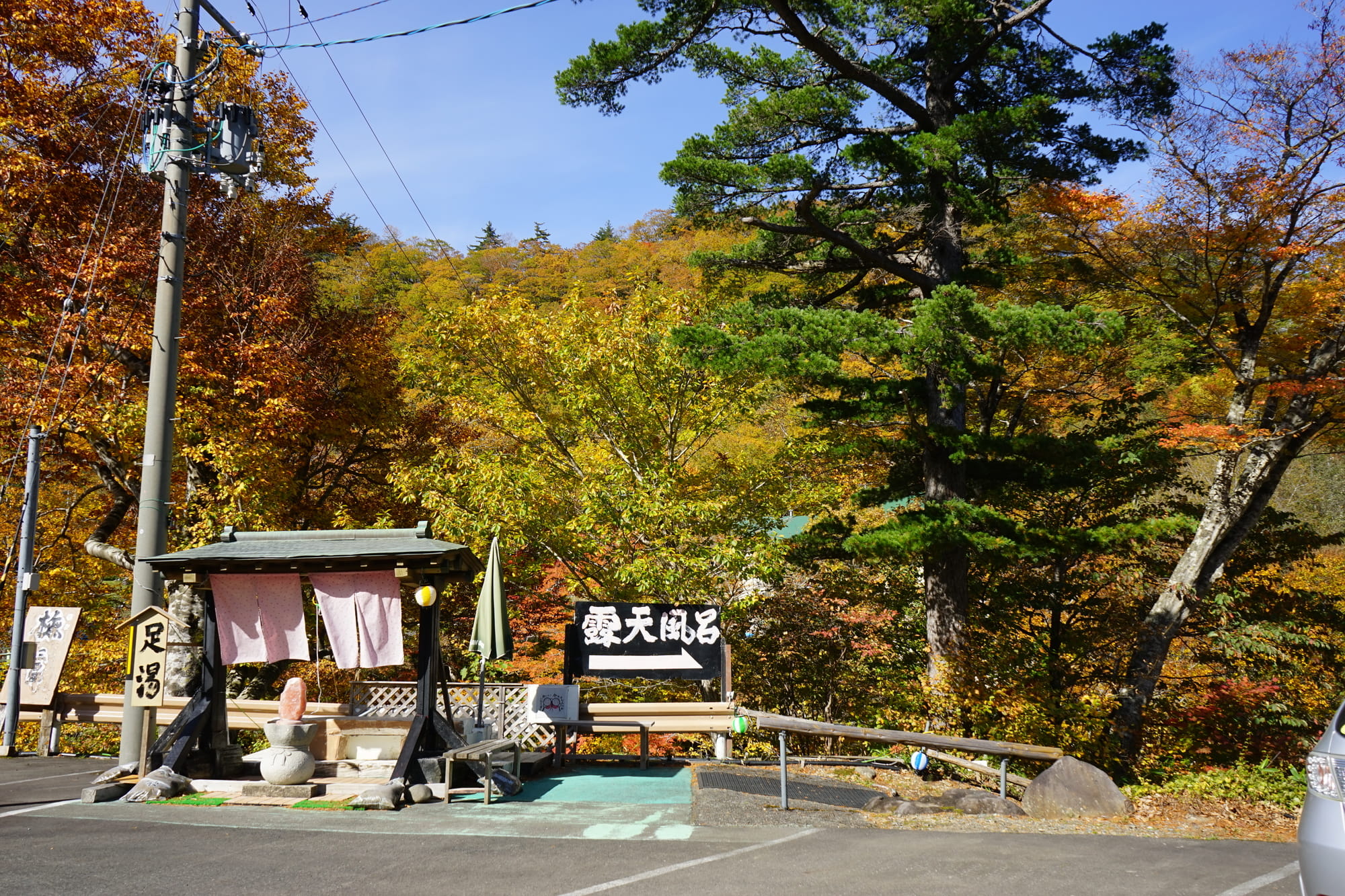
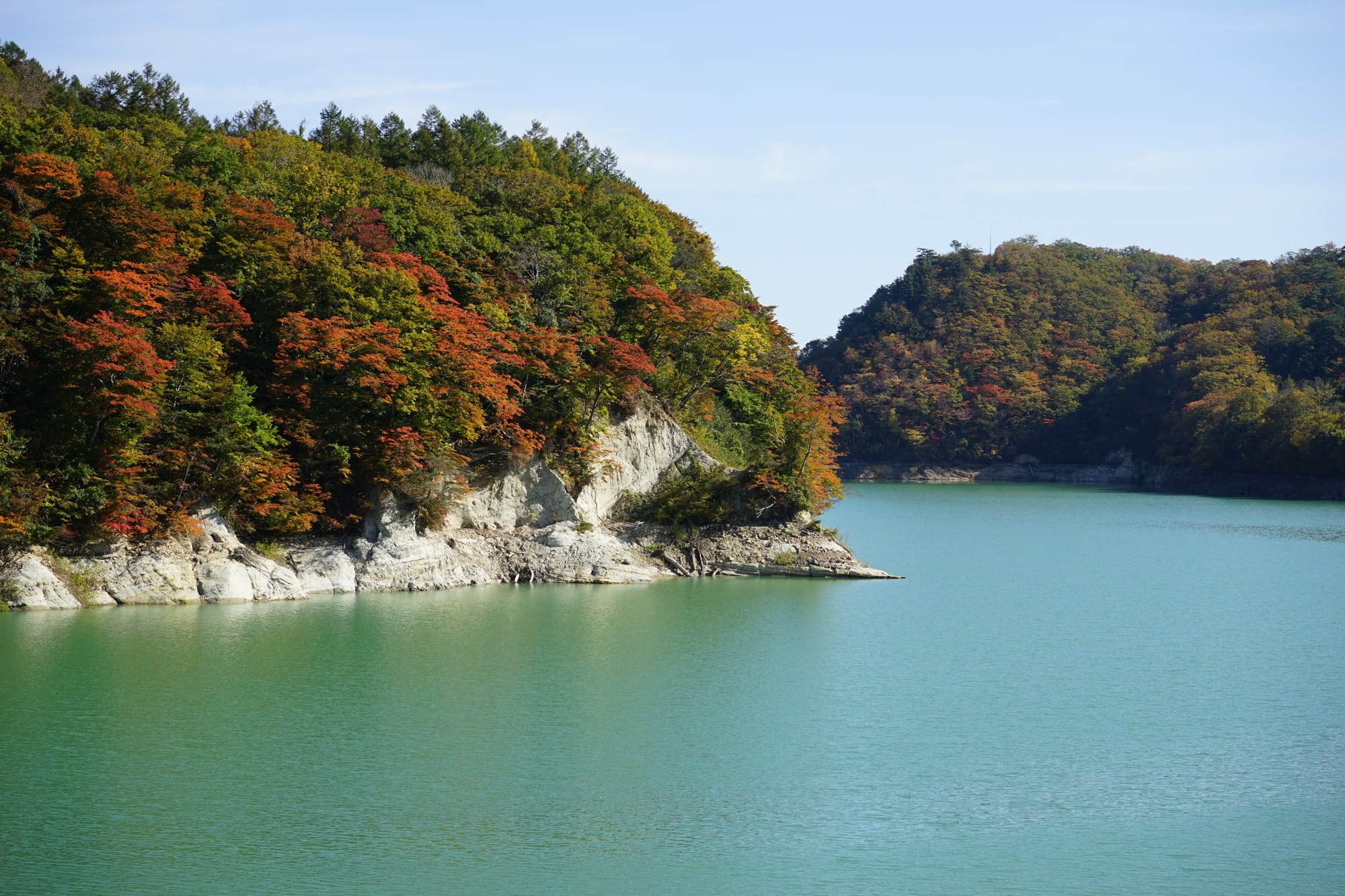
Geto Onsen is a secluded hot spring area at the end of a mountain road in Iwate. At Motoyu Geto, open-air baths sit beside the river, surrounded by steep forested slopes that turn gold and orange in autumn.
The setting retains the atmosphere of a traditional toji-ba, where visitors historically stayed for extended periods to bathe in the mineral-rich waters.
Several outdoor baths are mixed-gender, although women-only bathing periods and a women-only outdoor bath are available. Separate indoor baths are also provided. Accommodation can be relatively simple, and Geto Onsen operates seasonally, generally from spring until around early November.
Taste of the season: Iwate is known for matsutake and other mushrooms, which appear in autumn dishes such as seasoned rice, soups, and hot pots. Apples are another seasonal specialty.
1-Night, 2-Day Itinerary at Geto Onsen
Day 1
- Morning: Take the Tohoku Shinkansen from Tokyo to Kitakami. Journey times start from around 2 hours 30 minutes, depending on the service.
- Midday: Continue to your accommodation using its reserved guest shuttle. Motoyu Geto, for example, provides a shuttle from Kitakami Station for staying guests; advance reservation is required.
- Afternoon: Explore the riverside baths, checking the bathing schedule first if you prefer women-only or gender-separated bathing.
- Evening: Enjoy dinner at the inn followed by another soak beside the river.
Day 2
- Early morning: Take one final bath before breakfast.
- Late morning: Return to Kitakami. If your train schedule allows, continue to Shin-Hanamaki and explore the Hanamaki area, which is known for wanko soba.
- Afternoon: Take the Tohoku Shinkansen back to Tokyo from Shin-Hanamaki.
Getting to Geto Onsen from Tokyo
The Tohoku Shinkansen connects Tokyo with Kitakami, with the fastest services taking from around 2 hours 30 minutes.
From Kitakami Station, Motoyu Geto provides a reserved shuttle for staying guests. Shuttle arrangements, departure times, and reservation deadlines can change, so confirm them directly when booking your accommodation.
Shinkansen fares are around ¥14,000 one way. Allow approximately ¥28,000 for the round-trip Shinkansen journey, plus any applicable shuttle charge.
Because transport into the valley is limited, coordinate your train and shuttle times before leaving Tokyo.
Book Your Shinkansen Tickets Online
Travel from Tokyo to Geto Onsen by Shinkansen and local bus, and soak in riverside baths deep in one of Iwate’s most secluded hot spring valleys.
You can reserve the Tokyo → Kitakami and Shin-Hanamaki → Tokyo Shinkansen legs online in English in advance with Japan Bullet Train. Reserve your seats online before your trip and collect your tickets at the station using the QR code sent by email.
Plan 4: Naruko Onsen, Miyagi — Autumn Colors and a Classic Onsen Town
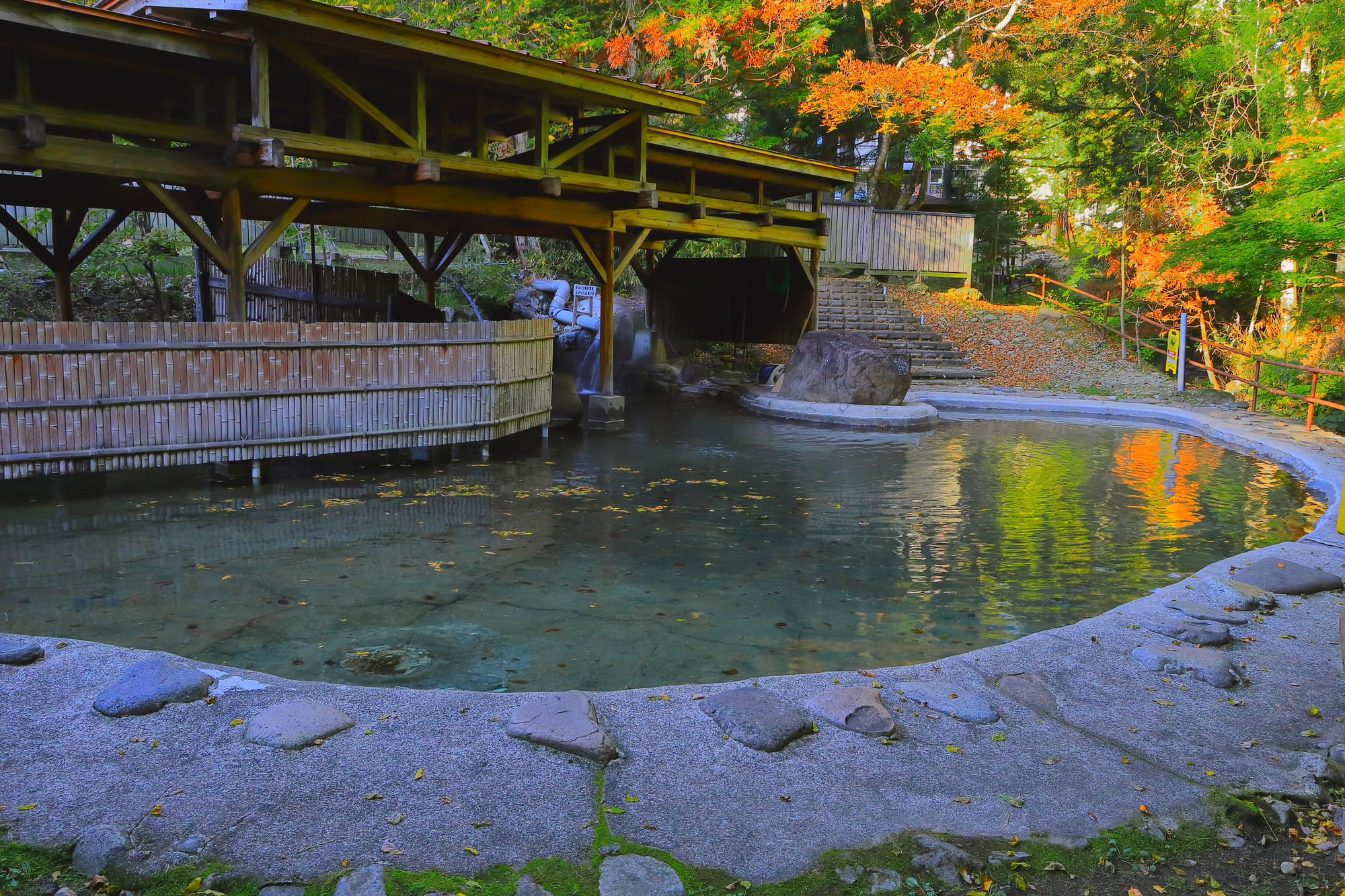
Of the five trips in this guide, Naruko Onsen is one of the simplest to reach by public transport. The hot spring area is known for the variety of its spring waters, giving visitors the chance to experience baths with different colors, scents, and characteristics.
Naruko is also closely associated with kokeshi, traditional wooden dolls produced by craftspeople in the region.
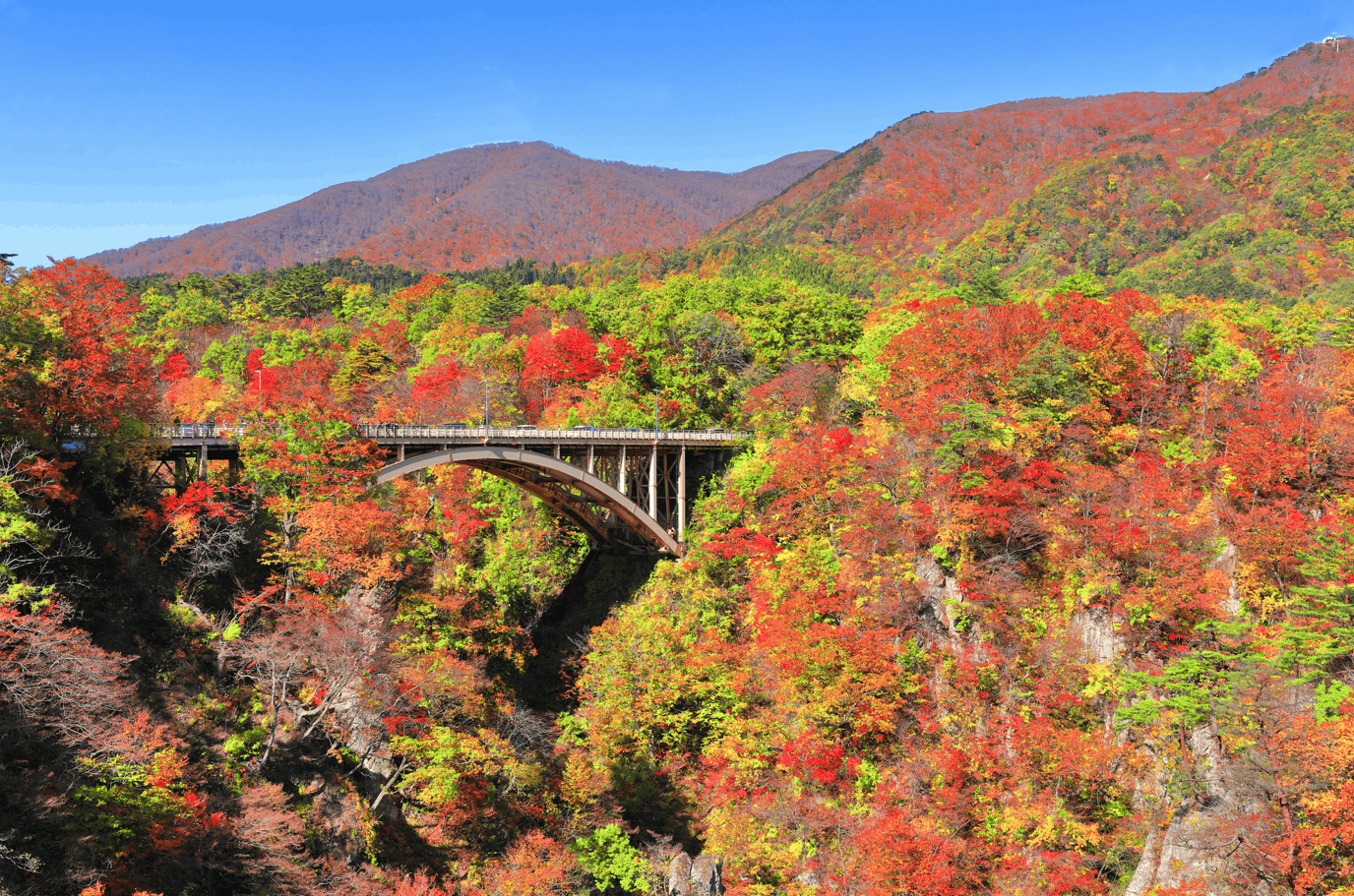
Just outside the town lies Naruko Gorge, a steep ravine covered in autumn foliage. From the main viewpoint, visitors can look across the gorge toward the distinctive railway bridge, surrounded by red, orange, and yellow leaves during peak season.
Autumn colors usually peak from late October to early November.
Taste of the season: Miyagi is one of Japan’s major rice-producing areas, and autumn brings the new harvest. Seasonal meals may also feature local mushrooms and river fish. In Naruko, look for kuri dango, soft dumplings served with a sweet-savory sauce and chestnuts.
1-Night, 2-Day Itinerary at Naruko Onsen
Day 1
- Morning: Take the Tohoku Shinkansen from Tokyo to Furukawa (about 2 hours 10 minutes), then transfer to the JR Rikuu East Line for Naruko-Onsen Station (about 45 minutes).
- Afternoon: Visit Naruko Gorge and its main viewpoints while there is still plenty of daylight.
- Evening: Return to the hot spring town for dinner. If you would like to try another bath, check which public bathing facilities are currently open and their admission hours before heading out.
Day 2
- Morning: Enjoy one more bath before exploring the town’s kokeshi shops and workshops. Some facilities offer short painting experiences where visitors can decorate their own doll.
- Late morning: Try kuri dango or another local snack, then take the Rikuu East Line back to Furukawa.
- Afternoon: Return to Tokyo by Shinkansen.
Getting to Naruko Onsen from Tokyo
Take the Tohoku Shinkansen from Tokyo to Furukawa, then transfer to the JR Rikuu East Line for Naruko-Onsen Station.
Tokyo–Furukawa costs around ¥12,000 one way, while the local train adds less than ¥1,000 each way. Allow approximately ¥25,500 for round-trip transportation.
Naruko requires fewer road transfers than the more remote hot spring areas in this guide, making it particularly convenient for travelers who prefer to rely on trains.
Book Your Shinkansen Tickets Online
Travel from Tokyo to Naruko Onsen by Shinkansen and local train, and enjoy a relaxing getaway in one of Miyagi’s famous hot spring towns.
You can reserve the Tokyo → Furukawa Shinkansen leg online in English in advance with Japan Bullet Train. Reserve your seats online before your trip and collect your tickets at the station using the QR code sent by email.
Plan 5: Ginzan Onsen, Yamagata — A Lantern-Lit Village from Another Era
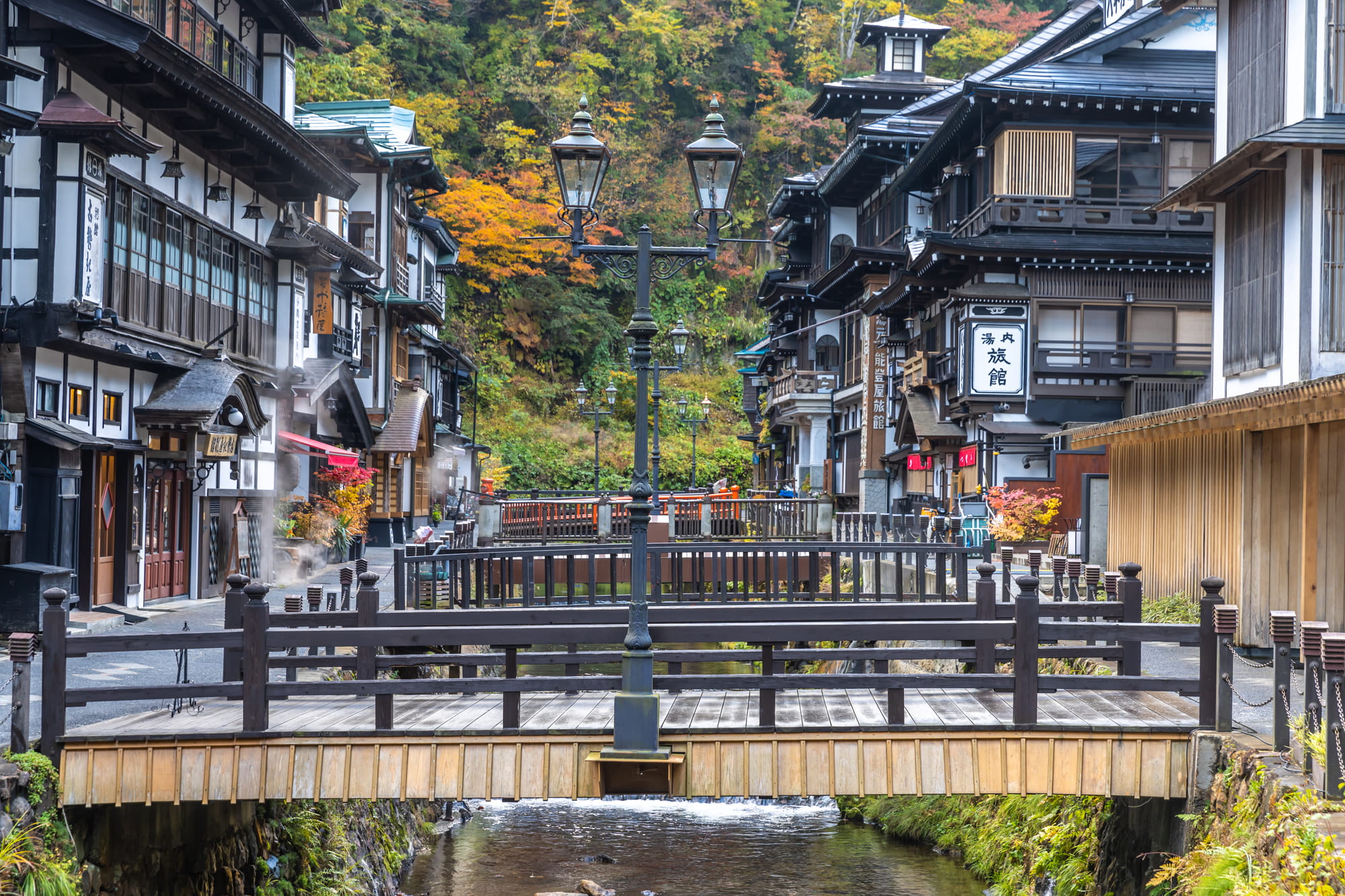
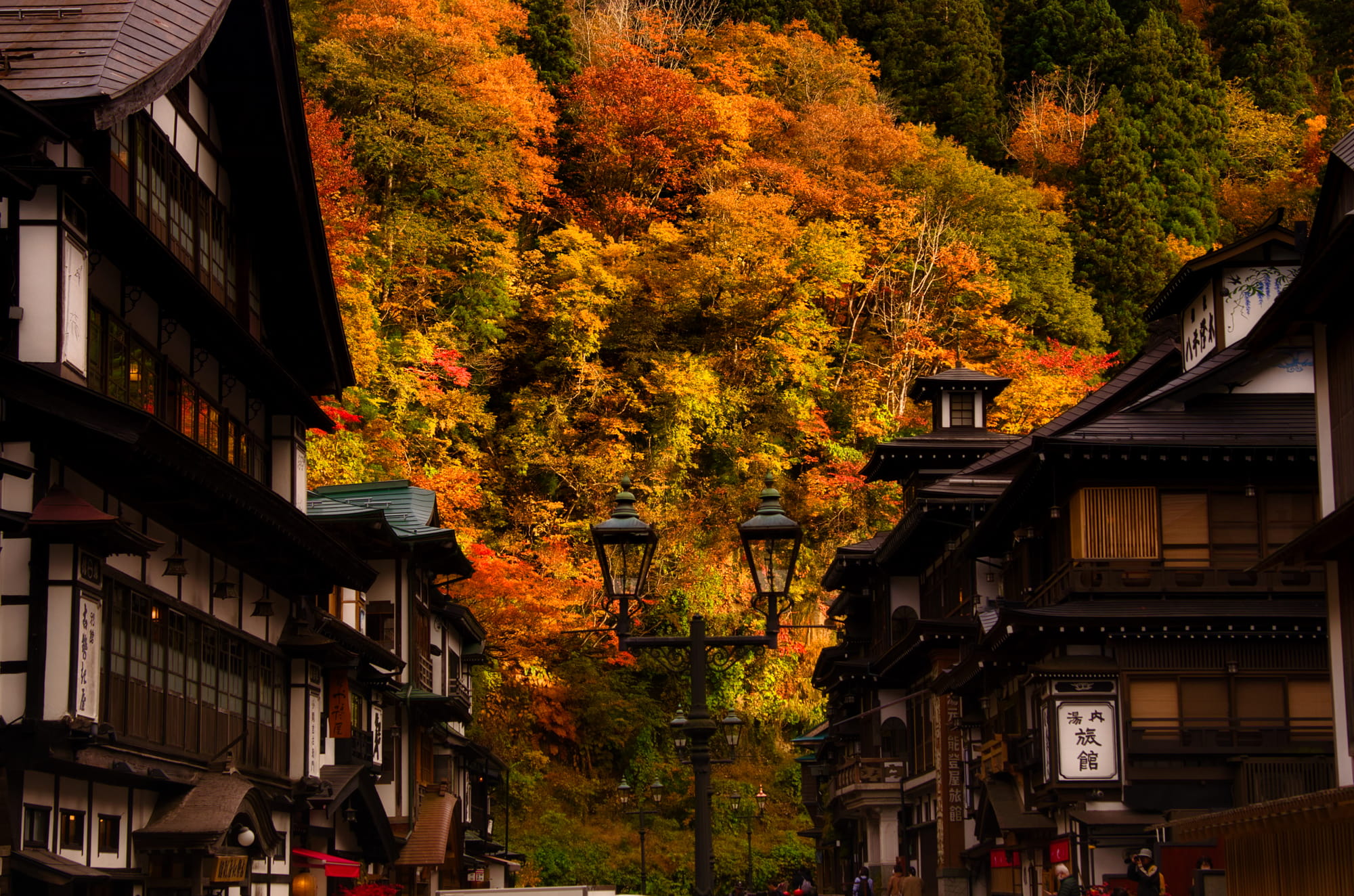
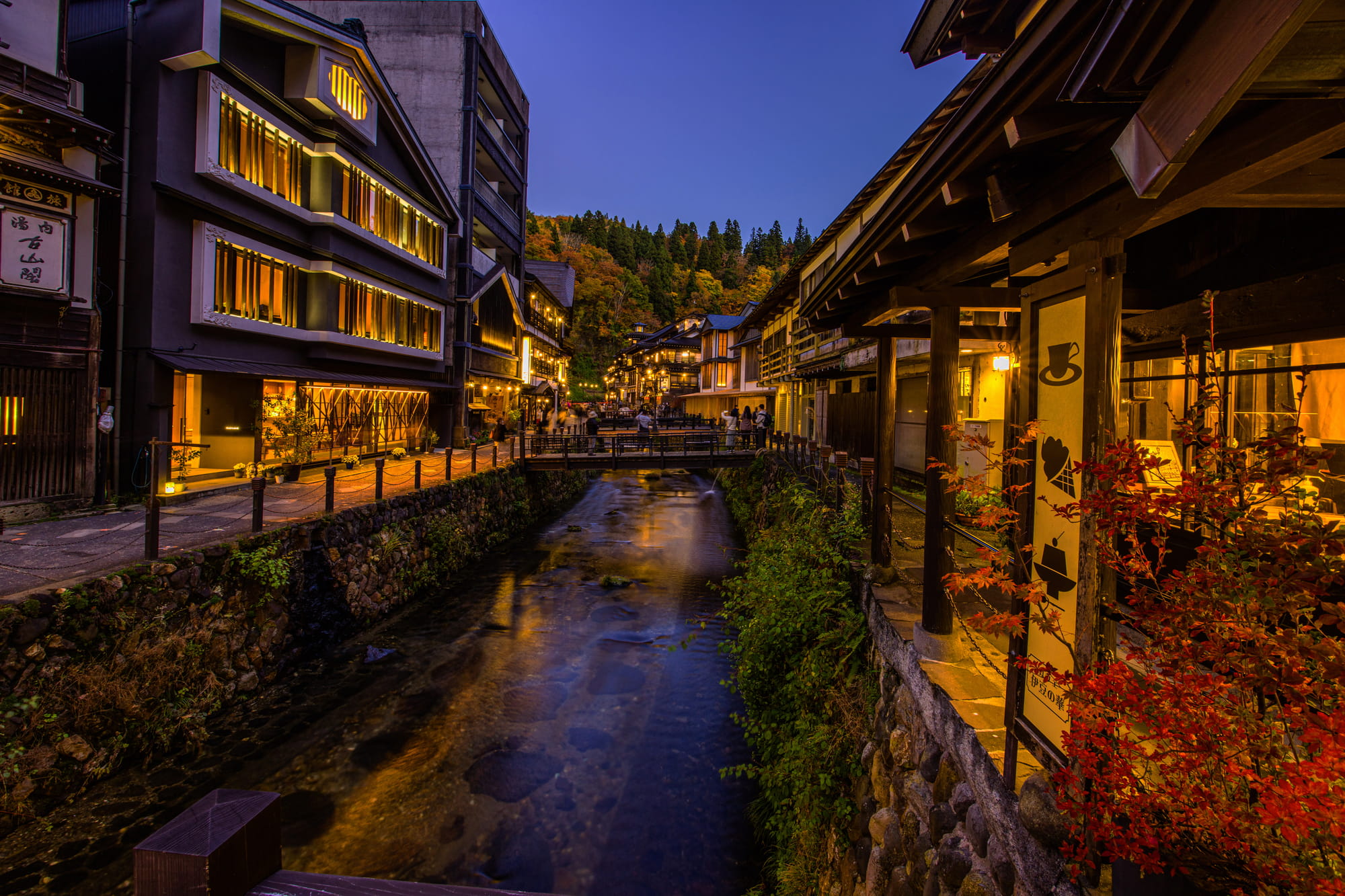
Ginzan Onsen is one of Japan’s most recognizable hot spring towns, known for the historic multi-story wooden inns lining both sides of the Ginzan River.
As evening approaches, gas lamps illuminate the narrow streets and wooden facades. In autumn, the surrounding hills add shades of red, orange, and gold to the scene.
Ginzan is compact and extremely popular, particularly during peak travel periods. As day visitors begin to leave, the atmosphere becomes noticeably quieter, giving overnight guests a different view of the village. Accommodation is limited, so book well in advance.
Autumn colors usually arrive around late October to early November.
Taste of the season: Autumn in Yamagata is imoni season, when taro, beef, and other ingredients are cooked together in large pots. The prefecture is also known for soba and La France pears, which come into season in autumn.
1-Night, 2-Day Itinerary at Ginzan Onsen
Day 1
- Morning: Take the Yamagata Shinkansen Tsubasa directly from Tokyo to Oishida Station (about 3 hours 15 minutes).
- Midday: Continue by local bus toward Ginzan Onsen. Services can be busy during peak foliage periods, so allow extra time for the connection.
- Afternoon: Walk through the village and continue toward Shirogane Falls and the historic silver-mine area if conditions and daylight allow.
- Evening: Explore the riverside streets after the gas lamps come on, then return to your inn for dinner and a bath.
Day 2
- Early morning: Take a quiet walk through the village before breakfast.
- Late morning: Return to Oishida. If your schedule allows, stop for a soba lunch before boarding your train.
- Afternoon: Take the Tsubasa back to Tokyo.
Getting to Ginzan Onsen from Tokyo
The Yamagata Shinkansen Tsubasa runs directly from Tokyo to Oishida Station and takes about 3 hours 15 minutes. Local buses connect Oishida with Ginzan Onsen in roughly 40 minutes.
Tokyo–Oishida costs about ¥13,000 one way, and the local bus adds around ¥1,000 each way. Allow approximately ¥28,000 for round-trip transportation.
Vehicle access and parking are limited around the hot spring district, making public transportation or an accommodation shuttle a practical option. Check current access information and your inn’s transfer arrangements before traveling.
Book Your Shinkansen Tickets Online
Travel from Tokyo to Ginzan Onsen by Shinkansen and local bus, and spend an evening in Yamagata’s lantern-lit hot spring village after the day-trippers have gone.
You can reserve the Tokyo → Oishida Tsubasa Shinkansen leg online in English in advance with Japan Bullet Train. Reserve your seats online before your trip and collect your tickets at the station using the QR code sent by email.
Booking Your Shinkansen Tickets
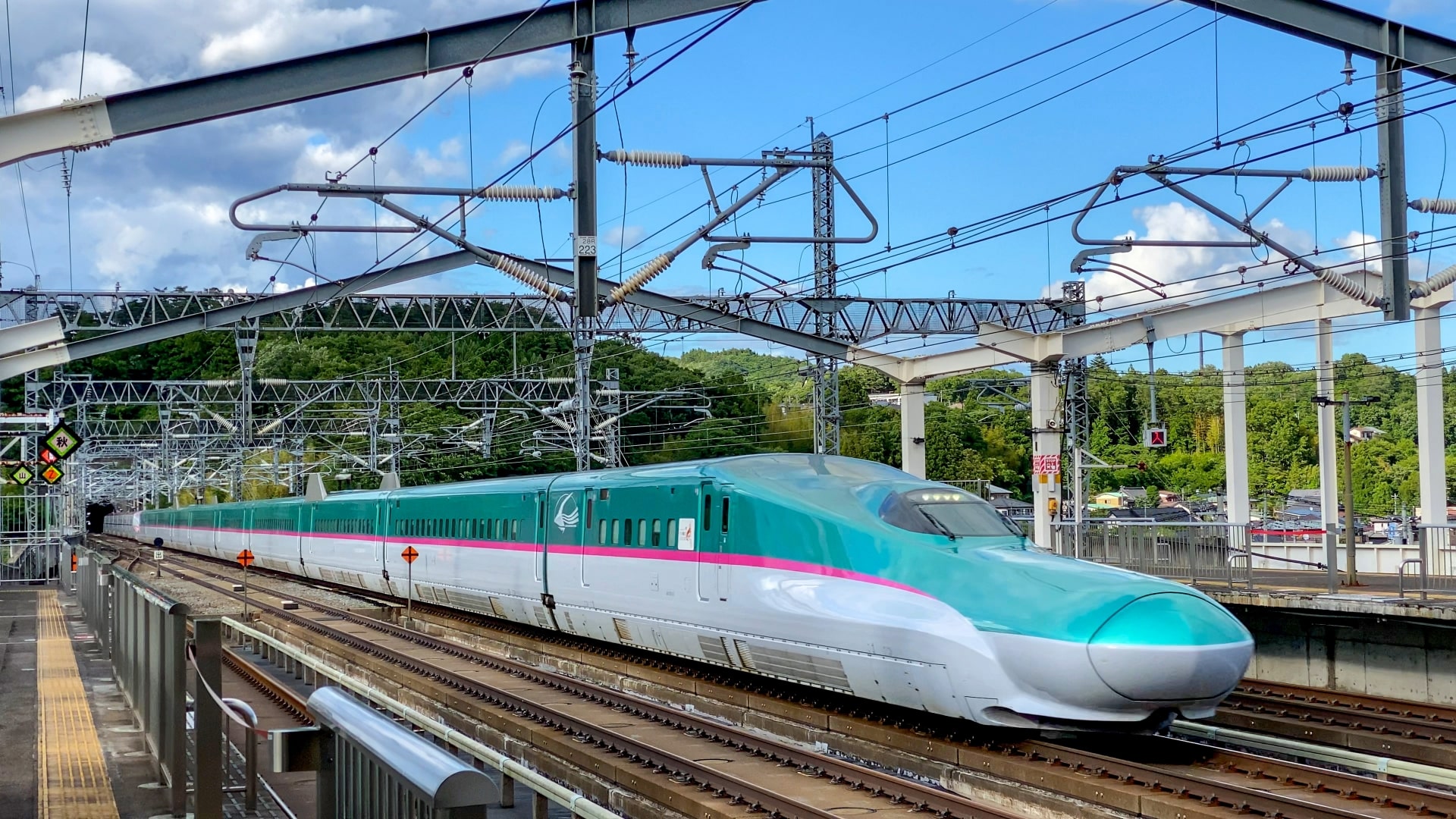
- Reserve early: October weekends can be particularly busy on Tohoku routes, especially during peak foliage periods. Book reserved seats once your dates are set, particularly on the all-reserved Komachi, Tsubasa, and Hayabusa trains.
- Check seasonal pricing: Reserved-seat prices can vary slightly by season. Peak travel periods may cost more than regular-season fares.
- Allow time for connections: Several of these trips depend on infrequent local buses or accommodation shuttles. When reserving your Shinkansen, work backward from your rural transport connection rather than choosing your train first.
- Make the journey part of the trip: On routes such as the Akita and Yamagata Shinkansen, the later sections of the journey pass through increasingly mountainous landscapes, with autumn scenery visible from the train.
First Time at a Ryokan?
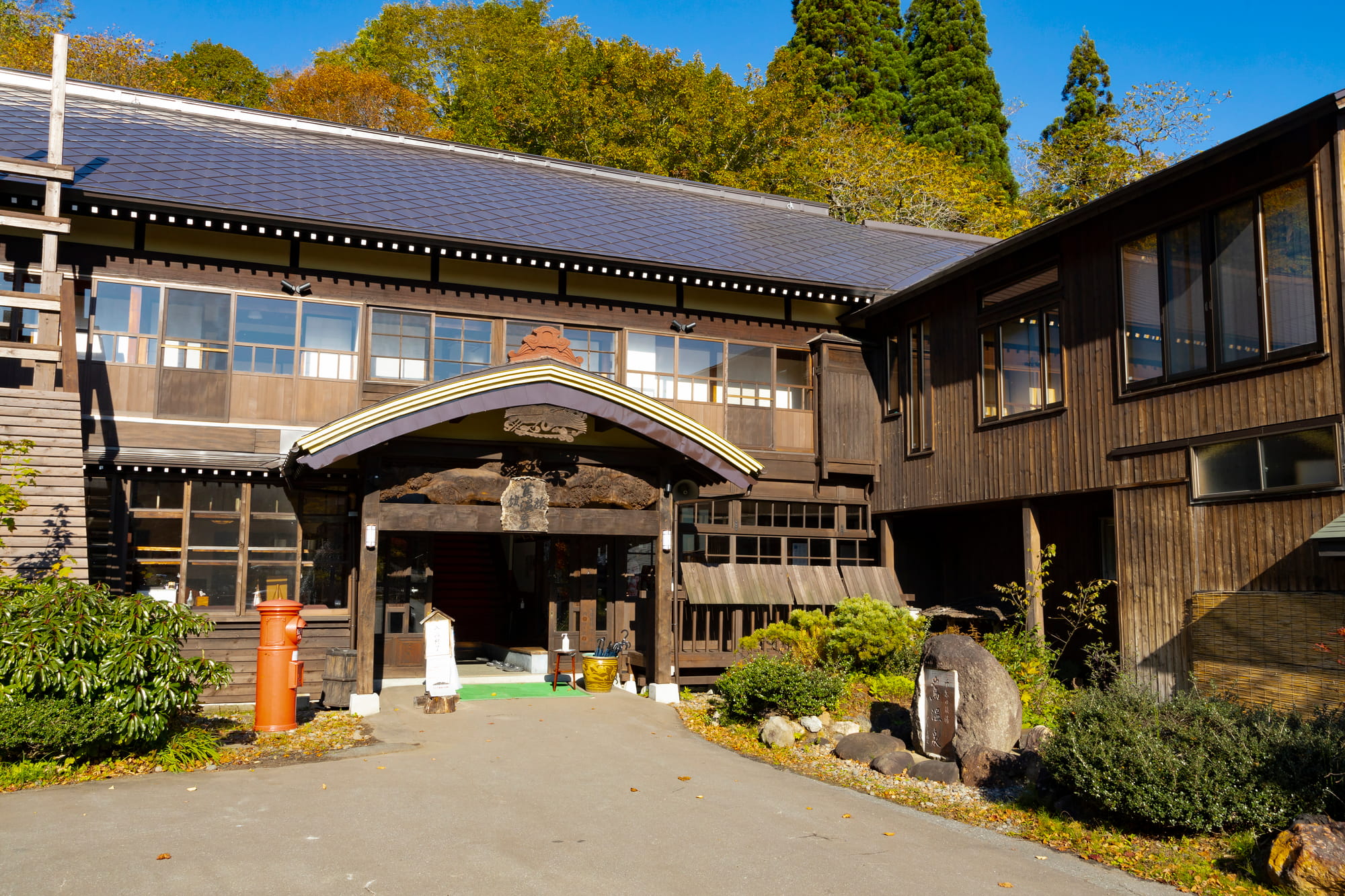
- Yukata: Your room will usually include a light robe called a yukata. At many hot spring inns, you can wear it to the baths, dinner, and around the property. Wrap the left side over the right.
- Bathing etiquette: Wash thoroughly at the shower stations before entering the bath. Swimsuits are generally not worn, and you should keep your small towel out of the bathwater.
- Mixed-gender baths: Some traditional hot springs, including Geto, have mixed-gender outdoor baths. Check bathing schedules and women-only periods in advance if this affects your accommodation choice.
- Tattoos: Policies vary by inn and bathing facility. If you have tattoos, confirm the property’s policy before booking rather than assuming shared baths will be available.
- Private baths: Some inns offer reservable private baths (kashikiri-buro), which can also suit couples, families, or travelers who prefer more privacy.
- Dinner and check-in: Ryokan dinners are normally served at set times, and arriving late may mean missing the meal. Check your inn’s latest check-in time, especially if you’re relying on rural buses or shuttles.
- Dietary requirements: Traditional multi-course meals can contain fish, shellfish, meat, soy, and other ingredients throughout several dishes. Contact the inn in advance about allergies or dietary restrictions, as not every property can accommodate every request.
Practical Tips for Autumn in Tohoku
- Book early: Popular inns at Nyuto, Ginzan, and Tsuta can fill months ahead for October weekends. Weekday stays may offer more options.
- Bring some cash: Rural buses, small businesses, and some hot spring facilities may not accept cards or IC transportation cards.
- Pack light: Several itineraries involve rural buses or accommodation shuttles, where large luggage can be inconvenient. For a one-night trip, consider traveling with a small bag and leaving larger luggage in Tokyo.
- Pack layers: Mountain temperatures can change quickly, and mornings in late October may be much colder than daytime temperatures.
- Wear suitable shoes: Autumn leaves can make forest paths and stone steps slippery, particularly after rain. Comfortable walking shoes are better than fashion footwear for sightseeing.
- Check connections first: Rural buses and local trains may operate only every hour or two, while accommodation shuttles often require advance reservations. Confirm your return connection before setting out.
- Check the foliage forecast: Peak dates shift every year depending on temperature and elevation. Check local tourism information shortly before traveling rather than planning around an exact historical peak date.
- Confirm seasonal access: Weather or seasonal operating periods can affect mountain roads, walking trails, buses, and outdoor baths. Check the latest local information before departure.
Stay a Little Longer
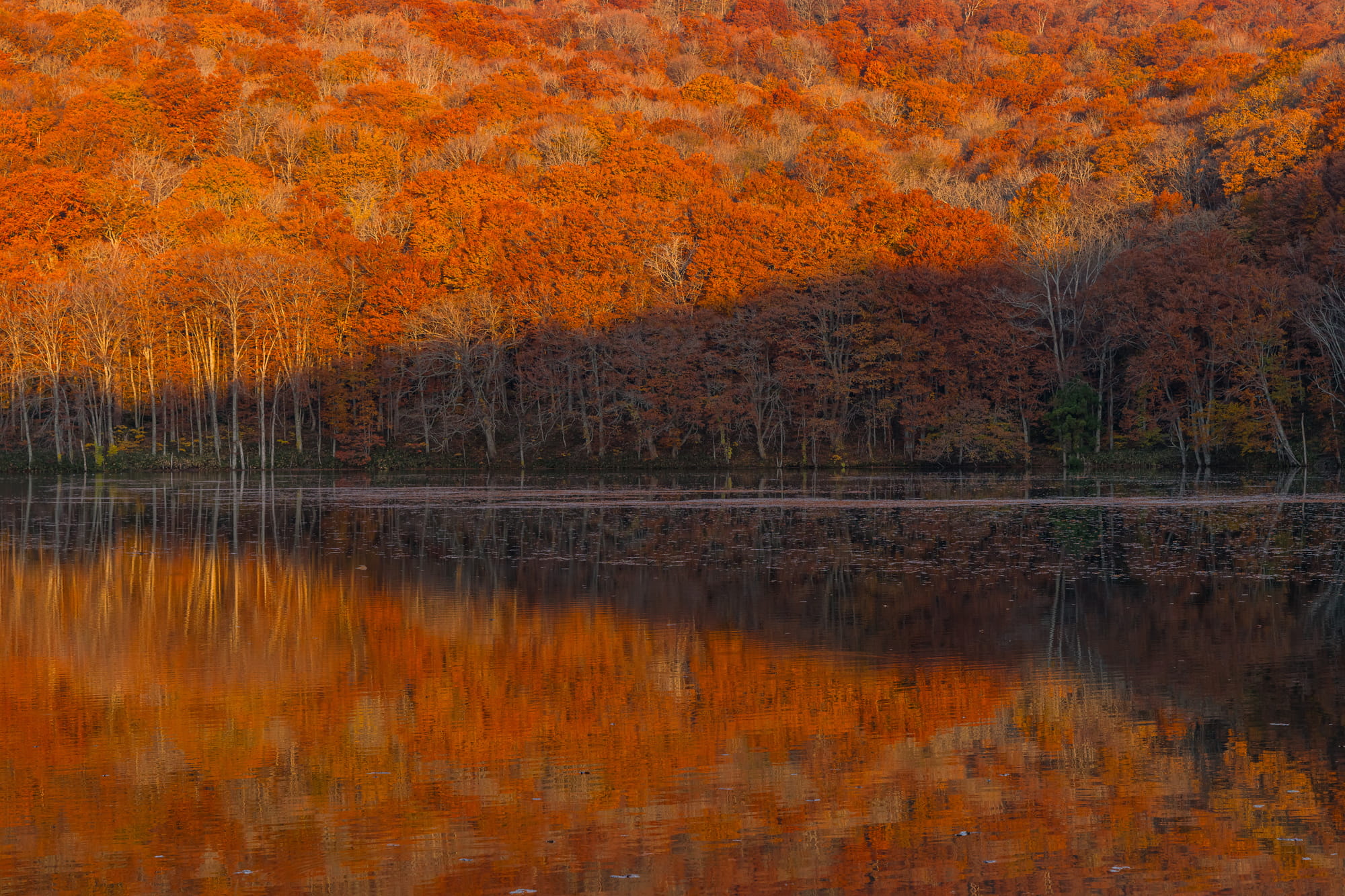
Back in the outdoor bath, the last light fades from the ridge and the red leaves darken against the evening sky. Somewhere below, a river continues through the valley. Tomorrow morning brings another chance to step outside, watch the mist lift, and see the forest in a different light.
In Tohoku, an autumn trip does not have to end when the day’s sightseeing is over. With the Shinkansen connecting Tokyo to gateways across the region, even a single overnight stay can leave time for mountain scenery, seasonal food, and a long soak surrounded by autumn colors.
Pick the route that suits your schedule, book the inn early, and let the journey become part of the season.
*NOTE: Fares and times are approximate and were checked in September 2026. Shinkansen fares are one-way, adult, reserved-seat, regular-season estimates; round-trip totals include local transportation where indicated. Foliage timing varies by year, and seasonal buses, shuttles, facilities, and access arrangements may change. Always confirm current fares, timetables, operating information, and reservation requirements with JR East, your accommodation, and relevant local operators before traveling.
▽Related Articles▽


Written by
Established in 2016, Japan Web Magazine is a long-running online media platform dedicated to sharing the beauty and uniqueness of Japan with a global audience. Our team is made up of passionate Japan lovers—both Japanese and international writers—who bring a diverse and authentic perspective to every article. We cover everything from must-visit travel destinations across Japan, to local food recommendations, shopping guides, and practical travel tips. In addition to tourism content, we also delve into Japan’s rich cultural tapestry, introducing readers to traditional customs, festivals, and the latest trends in modern Japanese pop culture, including anime and entertainment. Driven by a genuine love for Japan, our mission is to connect readers around the world with the wonders of this incredible country.
- +0 0
-
-