Autumn in Naruko: A 1-Night Trip from Tokyo to Naruko Gorge and Naruko Onsen
Autumn leaves, hot springs and kokeshi dolls in a quiet Tohoku onsen town, just 2.5–3 hours from Tokyo by train


- +0 0
-

-


If you are looking for an autumn getaway from Tokyo that combines colorful mountains, hot springs, and a quieter side of Japan, Naruko in Miyagi Prefecture is worth considering.
Located in the mountains of northern Miyagi, Naruko is best known for Naruko Gorge, one of the region’s most beautiful autumn foliage spots, and Naruko Onsen, a historic hot spring town.
The best time to see the autumn colors around Naruko Gorge is usually from late October to early November. Staying one night gives you enough time to enjoy the gorge, relax in a hot spring, explore the town, and experience Naruko at a slower pace.
Here is a simple 1-night, 2-day itinerary from Tokyo.
Why Visit Naruko in Autumn?
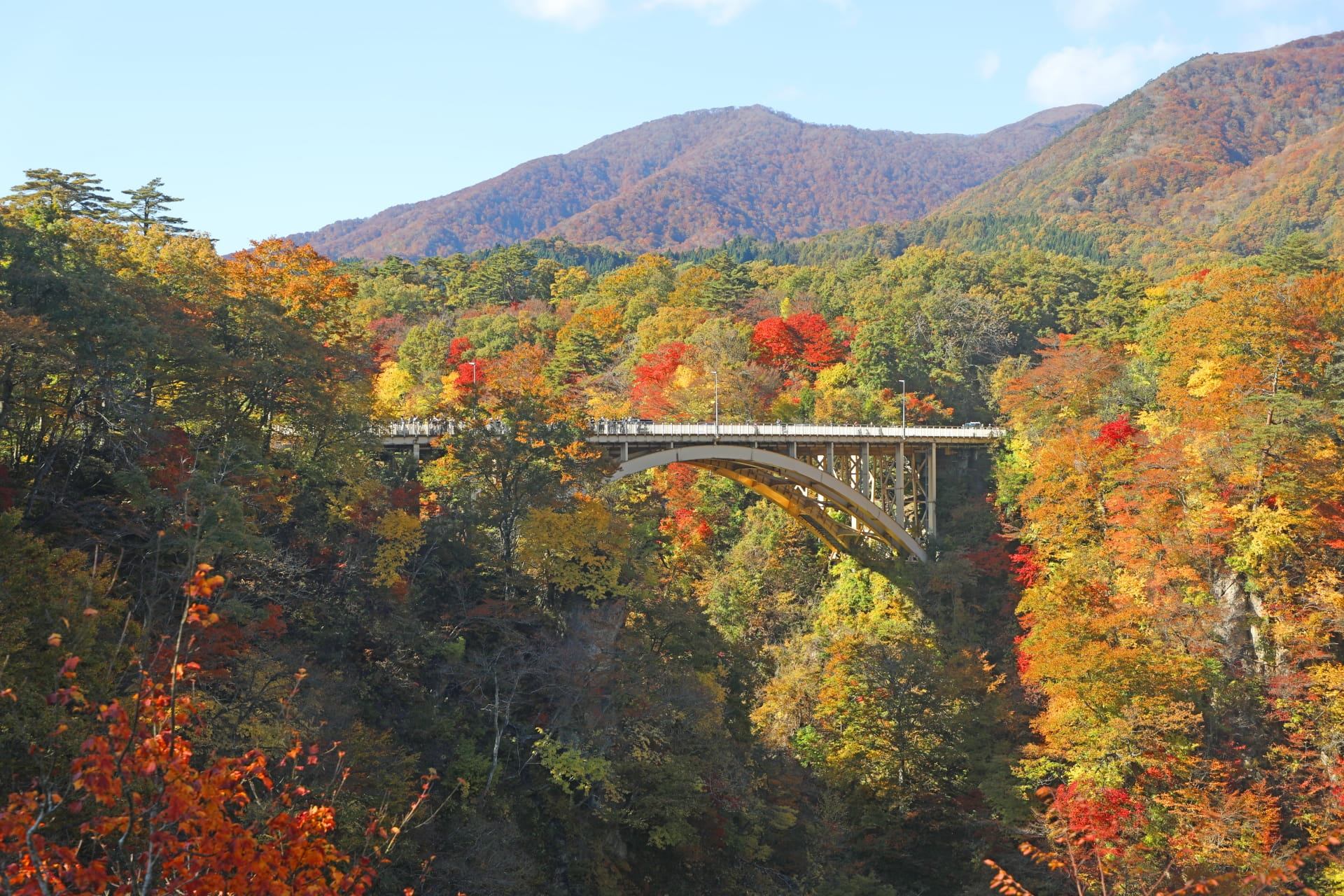
Naruko is surrounded by mountains and forests, making autumn one of the most beautiful times of year to visit.
The highlight is Naruko Gorge, a dramatic valley carved by the Otani River. The steep cliffs are covered with red, orange, and yellow foliage in autumn, creating one of the most iconic landscapes in Miyagi.
The best time for autumn colors is generally late October to early November. The exact timing changes from year to year, but this is usually the period when the gorge is at its most colorful.
Naruko is also one of the most varied hot spring areas in Japan. Naruko Onsen-kyo (鳴子温泉郷), as the wider area is called, is made up of five hot spring villages along the upper Eai River: Naruko, Higashi-Naruko, Kawatabi, Nakayamadaira and Onikobe.
What sets it apart is the range of water. Naruko Onsen-kyo is known for having most of the main hot spring types found in Japan, all within a small area. That means you can soak in milky, sulfur-scented water in one bath and clear, silky alkaline water in the next.
Naruko Onsen: the largest and liveliest of the five, and long counted among the three great hot springs of the old Oshu region of northern Japan. The station, most of the ryokan and the public baths Takinoyu and Waseda Sajikiyu are here.
Higashi-Naruko Onsen: a small, old-fashioned toji (therapeutic bathing) village. In the Edo period, the Date lords of Sendai had their own private bathhouse here.
Kawatabi Onsen: at the entrance to the area, along the river, with wooden inns lining the street. Its healing waters were once famous as far away as Kyoto.
Nakayamadaira Onsen: the closest village to Naruko Gorge, known for its slippery alkaline “unagi-yu” (eel water), a popular skin-softening bath.
Onikobe Onsen: the farthest out, set within a quasi-national park above Naruko Dam, with traditional inns and resort hotels at the foot of the mountains.
This itinerary is based in Naruko Onsen itself, which has the most accommodation and is within walking distance of the station. If you would like to explore further, Higashi-Naruko and Kawatabi have their own stations on the same JR line from Furukawa (Narukogotenyu and Kawatabi-Onsen), Nakayamadaira is currently reached by JR replacement bus, and Onikobe is easiest by car.
This combination makes Naruko particularly appealing in autumn: spend the day surrounded by colorful mountains, then warm up in a hot spring at your ryokan.
Tokyo to Naruko: How to Get There
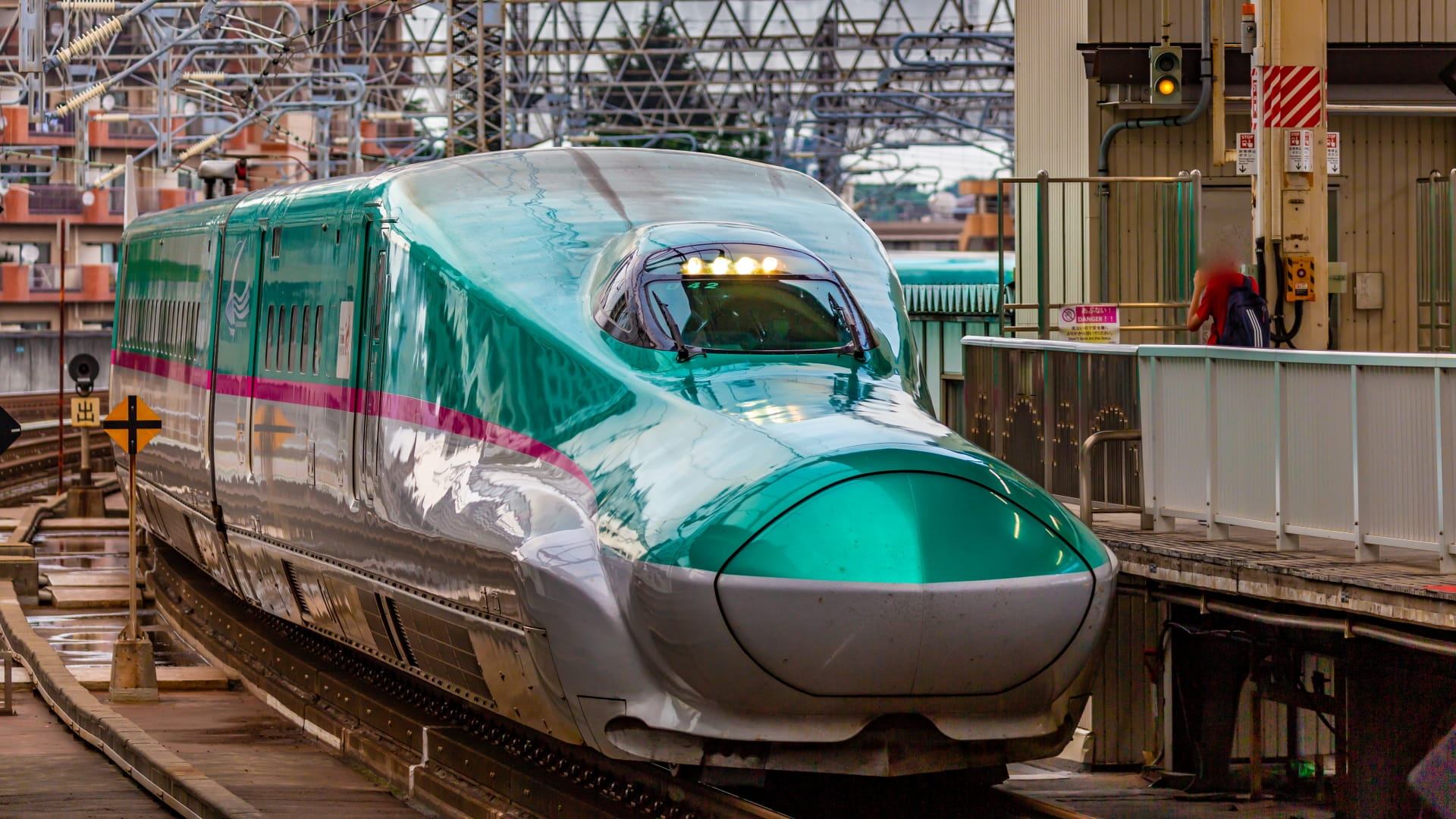
Naruko is surprisingly accessible from Tokyo by train. The simplest route is to take the Tohoku Shinkansen to Furukawa, then transfer to the JR Riku-East Line for Naruko-Onsen.
Tokyo → Furukawa → Naruko-Onsen
| Route | Transportation | Approx. time | Approx. fare |
|---|---|---|---|
| Tokyo → Furukawa | Tohoku Shinkansen (Hayabusa / Yamabiko) | 1 hr 47 min (Hayabusa) / 2 hr 15 min (Yamabiko) | ¥15,520 (Hayabusa) / ¥15,200 (Yamabiko) |
| Furukawa → Naruko-Onsen | JR Riku-East Line | About 45 min | ¥720 |
| Total, one way | About 2.5–3 hr | About ¥15,920–¥16,240 | |
| Round trip | About ¥31,840–¥32,480 |
From Tokyo, take the Tohoku Shinkansen to Furukawa Station. At Furukawa, transfer to the JR Riku-East Line and continue to Naruko-Onsen Station.
The Hayabusa is the fastest option, reaching Furukawa in about 1 hour 47 minutes, but only a limited number of Hayabusa trains stop there. The Yamabiko takes a little longer (about 2 hours 15 minutes) and costs slightly less, and it runs to Furukawa more often, so it is usually the easier service to fit into your schedule. Check the timetable when booking. The Shinkansen fares shown are reserved-seat prices on the Japan Bullet Train booking service as of September 2026 and may change.
The local train between Furukawa and Naruko-Onsen is less frequent than the Shinkansen, so check the return timetable before planning your sightseeing.
How to Get to Naruko Gorge
Naruko Gorge is about 4 km from Naruko-Onsen Station.
During the autumn foliage season, the seasonal Koyo-go bus runs from Naruko-Onsen Station to the gorge (daily from October 26 to November 8 in 2026). The ride takes about 15 minutes without traffic, and fares range from ¥250 to ¥550 depending on how far you go, paid in cash. For the Rest House, the viewpoints and the Ofukazawa Promenade, get off at Naruko-kyo Nakayamadaira-guchi (鳴子峡中山平口), not the earlier Naruko-kyo Naruko-guchi stop. The same bus also stops at the Japan Kokeshi Museum, which makes it easy to combine the two (see Day 1 below). There are only a handful of buses a day, so check the timetable at the station before you set off.
Outside the bus period, or if the timing doesn’t work, a taxi takes about 13 minutes and costs around ¥1,950 each way. It is also a good option if you are traveling with luggage or as a small group.
Because the gorge is especially popular during peak foliage season, allow extra time for transportation.
Note: the JR Riku-East Line beyond Naruko-Onsen toward Shinjo has been replaced by buses since 2024 flood damage, which doesn’t affect the route described here — though it’s worth knowing if you’d also like to detour to Nakayamadaira Onsen, part of the wider Naruko Onsen-kyo area, since that stretch is currently bus-only.
Day 1: Tokyo → Naruko Gorge → Naruko Onsen
Morning: Travel from Tokyo to Naruko
Leave Tokyo in the morning and take the Tohoku Shinkansen to Furukawa.
After changing trains at Furukawa, continue to Naruko-Onsen. Depending on your connection, you can arrive around late morning or lunchtime.
If your accommodation allows it, leave your luggage there before heading to the gorge.
Have lunch in town before heading out, or grab a light meal at the Naruko Gorge Rest House. Aim to reach the gorge by around 1:00 PM so that you have time for the Kokeshi Museum afterwards.
Afternoon: Explore Naruko Gorge
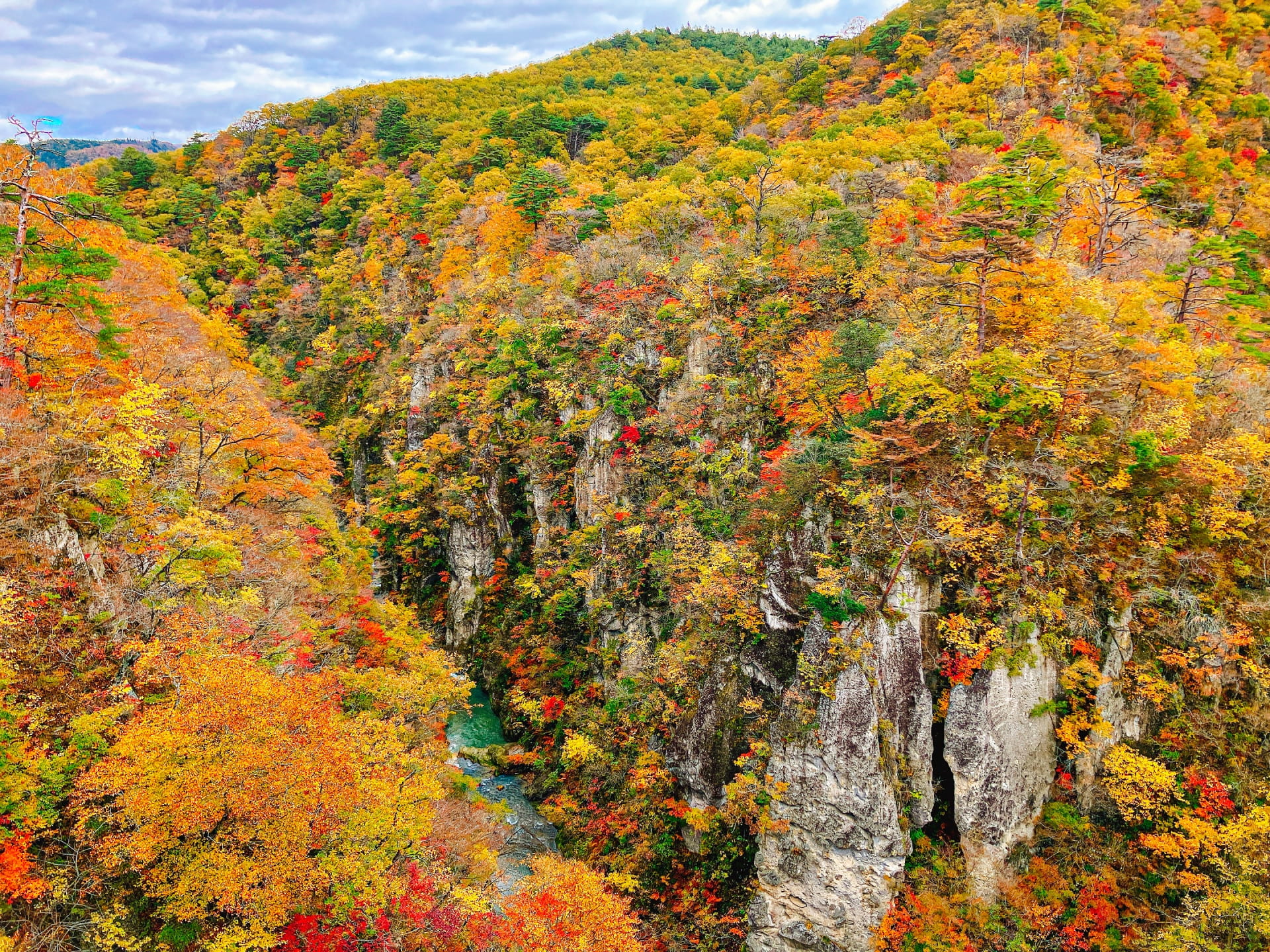
Naruko Gorge is the main highlight of an autumn trip to Naruko.
The gorge is around 100 meters deep, with steep rock walls and dense forest covering the surrounding mountains. The classic view is from the observation deck at the Naruko Gorge Rest House, looking across to Ofukazawa Bridge as it spans the gorge. You can also walk out onto Ofukazawa Bridge itself for views down into the gorge.
The main through-route along the bottom of the gorge has been closed for many years, so Naruko Gorge should be thought of primarily as a viewpoint and short walking destination, rather than a long hike through the entire gorge. There are two easy ways to fit it into an afternoon, depending on how much time you want to spend:
Quick visit (about 30 minutes): the Rest House viewpoint and a short walk onto the bridge — enough for the classic photo of the bridge and gorge, with very little walking involved.
Loop walk (about 1–1.5 hours): the Ofukazawa Promenade (大深沢遊歩道), a roughly 2.2 km loop trail that starts and ends at the Rest House and follows a forest stream. It’s an easy loop rather than a serious hike, though the trail is closed in winter.
Either way, plan to leave the gorge by around 2:45 PM if you want to stop at the Kokeshi Museum on the way back.
Early afternoon is also the best time to see the gorge itself. In early November the sun sets at around 4:30 PM, and because the gorge is so deep, its walls fall into shadow well before that. Arriving around 1:00 PM gives you the foliage in good light, with time to spare before the museum closes.
If you’d like to see more of the gorge, a steep zigzag path leads down from the Rest House toward Kaiko Bridge (回顧橋). It is an out-and-back walk of about 350 m each way, open from 9:00 AM to 4:00 PM until late November. The rest of the gorge floor remains closed, and trails can close without notice in bad weather, so check conditions locally before you set off.
Late Afternoon: Japan Kokeshi Museum on the Way Back
On the way back to town, stop at the Japan Kokeshi Museum (日本こけし館) in Naruko Park, near the Naruko side of the gorge. It displays around 5,000 traditional kokeshi from across Tohoku, and during the autumn season local craftsmen take turns demonstrating how the dolls are turned on a lathe.
The Koyo-go bus heading back from the gorge stops at the museum (Kokeshi-kan-mae stop). The museum is open from 9:00 AM to 4:00 PM (last entry 3:30 PM), and admission is ¥500. Allow 30–45 minutes.
Afterwards, you can take the next bus back to Naruko-Onsen Station or simply walk, as the town is about 25 minutes away on foot. If you are traveling by taxi, ask the driver to drop you at the museum on the way back, or call one from the Rest House.
Evening: Stay at a Naruko Onsen Ryokan
After the museum, return to Naruko-Onsen and check in to your accommodation.
This is where staying overnight makes a big difference.
Naruko is a traditional hot spring town rather than a large resort destination. Once the day-trippers leave, the town becomes particularly quiet.
Stay at a ryokan with an onsen and spend the evening enjoying a Japanese dinner and hot spring bath.
For many visitors, the combination of autumn scenery during the day and a traditional hot spring stay at night is the best part of the trip.
Where to Stay: 3 Ryokan to Consider
There isn’t a single “best” ryokan in Naruko — it depends on whether you want history, value, or a quieter, old-style hot spring stay. Here are three independent, locally run inns worth considering.
Naruko Hotel (鳴子ホテル): One of the town’s most established ryokan, founded in 1873 and made up of two wings, a short walk from the station. Some rooms in the Koyo-kan wing have their own open-air footbath on the balcony. The free-flowing hot spring water changes color with the weather and humidity, from clear to pale green, milky white or olive green. The hotel draws on three of its own sources, and the water in its main bath is a weakly alkaline sulfur spring (pH 8.7) that also contains sodium, sulfate, chloride and bicarbonate. Good for: travelers who want a classic, historic ryokan experience.
Ryokan Sugawara (旅館すがわら): A retro, homely ryokan with three of its own hot spring sources, a sodium bicarbonate spring and two springs rich in sodium sulfate and chloride, feeding nine different baths, including a bath whose water can turn a striking blue. Four private baths are free to use without a reservation, and the baths are open around the clock except during cleaning. Stays are room-only, so plan to eat dinner in town. It’s one of the more affordable options in town. Good for: travelers who want to try several different bathing styles without a big budget.
Ryokan Ohnuma (旅館大沼): A family-run toji (therapeutic bathing) inn in neighboring Higashi-Naruko Onsen with more than 100 years of history. Of its eight baths, five can be used privately: four are free, and the fifth, Mori-no-yu (母里の湯), is a garden open-air bath on the wooded hillside behind the inn, available for an extra fee. The water comes from two sodium bicarbonate springs: the inn’s own rare “pure” bicarbonate spring (pH 7.0) with a distinctive woody scent, and a shared Higashi-Naruko source (pH 7.4) that also contains salt. The inn is about 5 minutes on foot from Narukogotenyu Station, one stop before Naruko-Onsen, or about 5 minutes by taxi from Naruko-Onsen. Local trains are infrequent, so plan these short hops in advance. Good for: travelers who want a quieter, old-style hot spring stay.
Day 2: Hot Springs, Kokeshi and Naruko Town
Morning: Enjoy Another Hot Spring
Start your second day slowly with another bath at your ryokan or one of the local public bathhouses.
One of Naruko’s best-known public baths is Takinoyu, located close to Naruko-Onsen Station. It is a simple local bathhouse and offers a more traditional experience than a large modern spa.
Naruko has a long history as a hot spring destination, and trying more than one bathhouse is a good way to experience the town.
Discover Naruko’s Kokeshi Culture
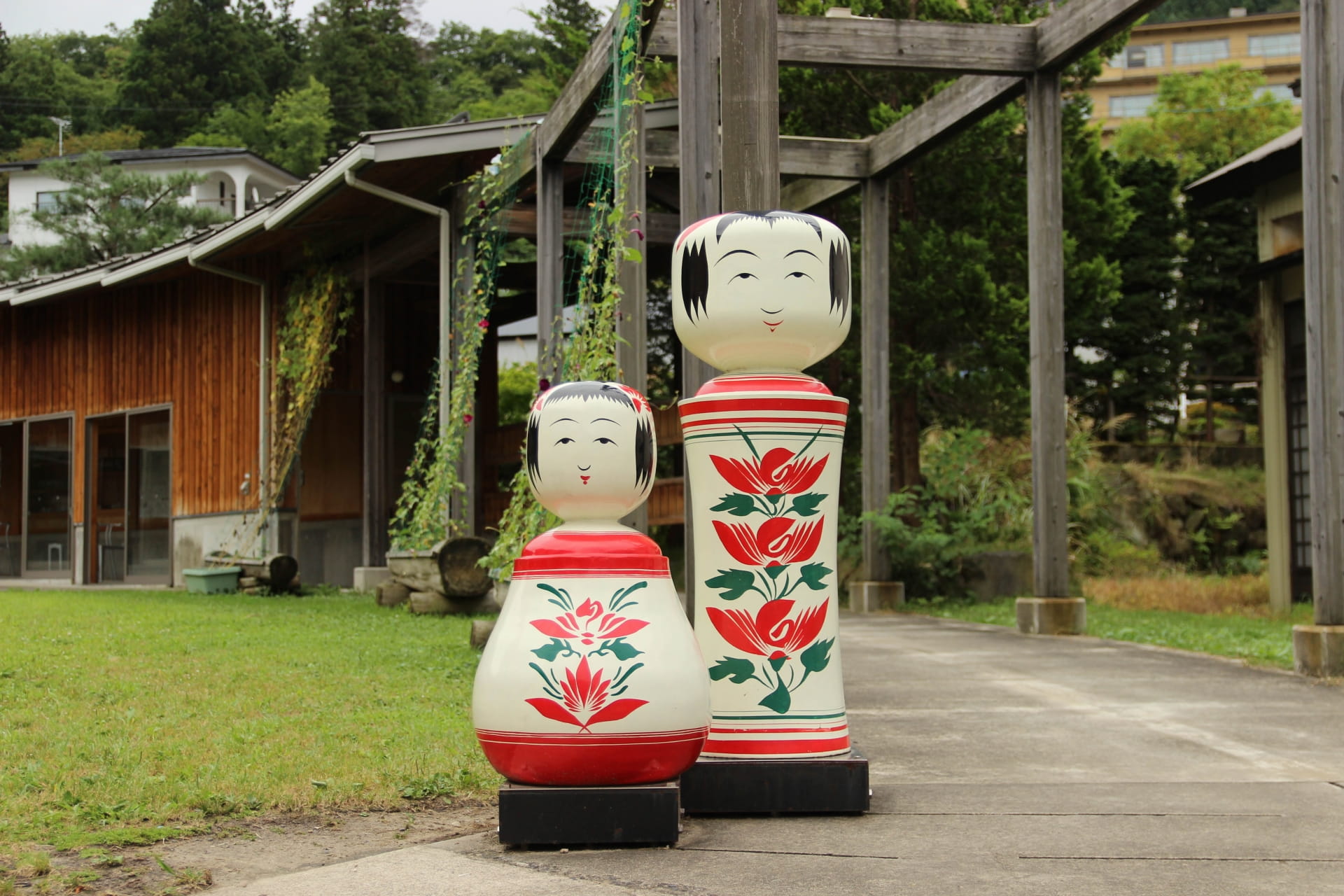
Naruko is one of Japan’s traditional centers of kokeshi, wooden dolls associated with the Tohoku region.
The Naruko style is recognizable for its round head and simple wooden body. Traditionally, the head also makes a distinctive squeaking sound when it is turned.
If you visited the Japan Kokeshi Museum on Day 1, you will already have seen the dolls up close. This morning is your chance to paint one yourself at one of the workshops in town.
The easiest option is a shop within walking distance of the station, such as Sakurai Kokeshi Naruko Honten (about 3 minutes on foot from Naruko-Onsen Station), a family workshop that has been making kokeshi since the late Edo period. Its painting experience costs ¥3,500 and takes about 50–75 minutes, with sessions starting at 10:00 AM, 1:30 PM and 3:30 PM. Reservations are made through the shop’s online booking page. For now, the shop is open only on Fridays, weekends and public holidays, so if your second day falls on a weekday, try the town walk below instead.
This is a good way to experience a side of Naruko beyond its hot springs and autumn scenery.
Alternative Morning: A Walk Around the Hot Spring Town
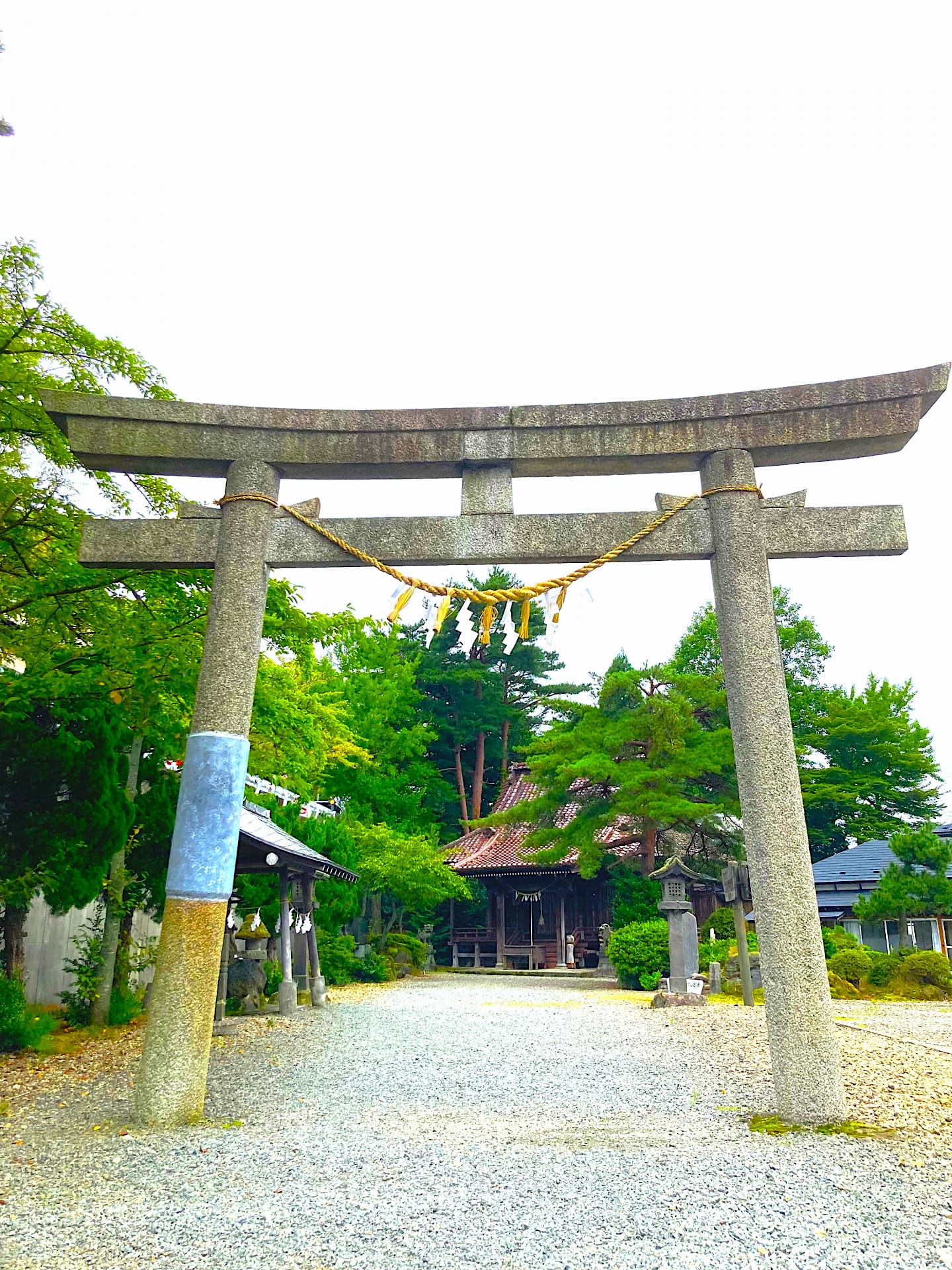
If the Kokeshi Museum on Day 1 was enough kokeshi for one trip, or if the weather turns, spend the morning on a short walk around the town instead. Everything below is within about 10 minutes on foot of the station, and everything except the shrine is indoors, so this plan works in any weather. Ask your ryokan to keep your luggage after check-out, and set off at around 10:00 AM.
Start at Onsen Shrine (温泉神社), reached by a flight of steps beside Takinoyu, about 8 minutes uphill from the station. According to local tradition, it was founded to calm the hot water that burst out of the ground in a great eruption in 837, and it is listed in a 10th-century register of Japan’s official shrines. Takinoyu below is considered the shrine’s sacred bath, and a volcanic rock said to have been thrown out by the eruption sits in the grounds. Allow about 15 minutes, and take care on the steps if they are wet.
From the shrine, walk back down to Waseda Sajikiyu (早稲田桟敷湯) for a second bath. Its spring was struck in 1948 by Waseda University students on a drilling practicum, and the distinctive yellow building was designed by a Waseda architecture professor 50 years later. Its gentle, near-neutral water makes a good contrast to the strongly acidic water at Takinoyu. Admission is ¥660, the bath opens at 9:00 AM, and soap is provided, while towels and shampoo are sold on site. Allow about 40 minutes.
On the way back toward the station, stop at Sawaguchi Shikki Honpo (澤口漆器本舗), a shop selling Naruko lacquerware (鳴子漆器). This local craft has a history of more than 300 years and is known for sturdy, practical pieces made for everyday use. Bowls, chopsticks and small trays make light, lasting souvenirs.
Allow about an hour and a half in total, then continue with lunch as planned.
Lunch and a Walk Around Town
Spend your final few hours walking around the hot spring town, visiting local shops, and having lunch before returning to Tokyo.
Naruko’s central area is compact enough to explore on foot.
Toraya (生蕎麦・旅館 登良家), a soba restaurant that has been serving noodles on the ground floor of a ryokan building since the Taisho era, is a good, unhurried lunch option. For something sweet to take on the train, Mochidokoro Fukase (餅処 深瀬), near the station, sells kuri dango — a local specialty of sweet rice dumplings with chestnut, coated in a soy-based sauce — until they sell out for the day. They are meant to be eaten the same day, so enjoy them on the journey rather than saving them as a souvenir.
Afternoon: Naruko → Tokyo
Return to Naruko-Onsen Station and take the JR Riku-East Line back to Furukawa.
At Furukawa, transfer to the Tohoku Shinkansen for Tokyo.
The return journey takes roughly the same amount of time as the journey there, so leaving Naruko in the early or mid-afternoon should allow you to return to Tokyo in the evening.
Suggested 1-Night, 2-Day Itinerary
| Time | Plan |
|---|---|
| Day 1 | |
| Morning | Tokyo → Furukawa by Tohoku Shinkansen |
| Late morning / noon | Furukawa → Naruko-Onsen, lunch in town |
| ~1:00–2:45 PM | Naruko Gorge: Rest House viewpoint, plus the Ofukazawa Promenade loop if time allows |
| ~3:00–3:45 PM | Japan Kokeshi Museum (last entry 3:30 PM), then back to town by bus or on foot |
| Evening | Check in to ryokan, dinner and onsen |
| Day 2 | |
| Morning | Hot spring and breakfast |
| ~10:00–11:15 AM | Kokeshi painting at Sakurai Kokeshi Naruko Honten (Fri–Sun and holidays only), then a stroll through town |
| Or ~10:00–11:30 AM | Alternative: Onsen Shrine, a bath at Waseda Sajikiyu and Naruko lacquerware shopping |
| ~11:30 AM–12:30 PM | Soba lunch at Toraya, with kuri dango from Mochidokoro Fukase for the road |
| Afternoon | Naruko-Onsen → Furukawa → Tokyo |
| Evening | Arrive in Tokyo |
How Much Does a Naruko Trip Cost?
The main transportation cost is the train journey from Tokyo.
A round trip between Tokyo and Naruko-Onsen costs approximately ¥31,800–¥32,500 per person, with reserved seats, depending on whether you take the Hayabusa or the Yamabiko.
You will also need to budget for accommodation, meals, and local transportation.
| Expense | Approx. cost per person |
|---|---|
| Tokyo ↔ Naruko-Onsen trains (reserved seats) | ¥31,800–¥32,500 |
| Seasonal “Koyo-go” bus to the gorge | ¥250–¥550 per ride, depending on distance (cash only) |
| Taxi to the gorge (alternative) | About ¥1,950 each way per car (about 13 min) |
| Ryokan, room only | From about ¥5,000–¥10,000 |
| Ryokan with dinner and breakfast | About ¥15,000–¥30,000 (two sharing a room) |
| Accommodation tax (Miyagi) | About ¥300 per night |
| Public bath such as Takinoyu | ¥300 (larger bathhouses up to about ¥700) |
| Kokeshi painting | About ¥3,500 |
| Lunch, snacks and souvenirs | About ¥2,000–¥5,000 |
| Estimated total (ryokan with dinner and breakfast) | About ¥50,000–¥75,000 |
With a dinner-and-breakfast ryokan stay, a 1-night trip typically comes to around ¥50,000–¥75,000 per person. A room-only stay can bring this closer to ¥45,000, but few restaurants in Naruko stay open late, so check your dinner options in advance. Ryokan rates rise on autumn weekends, and solo travelers usually pay more per person than two people sharing a room.
The seasonal Koyo-go bus runs daily from October 26 to November 8 in 2026. Fares are cash only and no change is given (only ¥1,000 notes can be exchanged on board), so carry small change. Local prices above are based on 2025–2026 information and may change.
For the autumn foliage season, especially weekends around late October and early November, booking your accommodation and Shinkansen seats in advance is recommended.
When Should You Go?
For the best chance of seeing the famous autumn colors at Naruko Gorge, late October to early November is the period to target.
The exact timing varies each year, so check the latest autumn foliage reports before your trip.
If you visit later in November, the gorge may already be past its peak, but the surrounding mountains and town can still offer an enjoyable autumn atmosphere.
The advantage of November is that Naruko tends to be quieter, making it easier to enjoy the hot spring town at a relaxed pace.
- Late October to early November: Best for autumn foliage
- November: Quieter atmosphere and hot spring experience
What to Wear and Pack
Naruko sits in the mountains of northern Miyagi, so it is noticeably cooler than Tokyo. Autumn afternoons can be pleasantly mild, but mornings and evenings are much colder than in Tokyo, and the chill becomes stronger as November goes on.
- Warm layers: a jacket or coat plus a sweater — mountain mornings and evenings are much colder than central Tokyo
- A thermal base layer: worth packing if you’re visiting in November or plan to be at the gorge early in the day
- A scarf and gloves: handy for November visits, when evenings turn cold
- Comfortable, grippy shoes: paths around the gorge and rest house can be uneven, and wet fallen leaves get slippery
- A light rain jacket: Tohoku’s autumn weather can change quickly
- Loungewear for the ryokan: most ryokan provide a yukata robe, so you don’t need to pack anything special for evenings at the inn
- A small towel: larger ryokan usually supply one, but smaller public bathhouses such as Takinoyu may not
Is Naruko Worth an Overnight Stay?
A day trip from Tokyo is possible, but staying one night makes the journey much more worthwhile.
The long train journey means that a day trip leaves relatively little time to enjoy the town. With one night, you can experience three different sides of Naruko:
Autumn scenery at Naruko Gorge → a traditional hot spring stay → Naruko’s local culture and kokeshi
You also get to experience Naruko after the day-trippers have gone home. The town becomes quiet in the evening, with the sound of hot spring water and steam adding to the atmosphere.
Naruko is particularly suitable for travelers who have already visited Tokyo’s more famous nearby destinations and want to experience a quieter mountain town without spending an entire day traveling to a remote part of Japan.
Naruko Autumn Trip at a Glance
- Recommended length: 1 night, 2 days
- Best season: Late October to early November
- From Tokyo: About 2.5–3 hours each way
- Train fare: About ¥15,900–¥16,200 one way
- Round-trip train fare: About ¥31,800–¥32,500
- Main route: Tokyo → Furukawa → Naruko-Onsen
- Main attraction: Naruko Gorge
- Best experience: Autumn leaves + hot spring ryokan stay
- Also worth seeing: Kokeshi culture and Naruko’s traditional hot spring town
Book Your Shinkansen Tickets Online
Travel from Tokyo to Naruko Onsen by Shinkansen and local train, and enjoy a relaxing getaway in one of Miyagi’s famous hot spring towns.
You can reserve the Tokyo → Furukawa Shinkansen leg online in English in advance with Japan Bullet Train. Reserve your seats online before your trip and collect your tickets at the station using the QR code sent by email.
▽Related Articles▽


Written by
Established in 2016, Japan Web Magazine is a long-running online media platform dedicated to sharing the beauty and uniqueness of Japan with a global audience. Our team is made up of passionate Japan lovers—both Japanese and international writers—who bring a diverse and authentic perspective to every article. We cover everything from must-visit travel destinations across Japan, to local food recommendations, shopping guides, and practical travel tips. In addition to tourism content, we also delve into Japan’s rich cultural tapestry, introducing readers to traditional customs, festivals, and the latest trends in modern Japanese pop culture, including anime and entertainment. Driven by a genuine love for Japan, our mission is to connect readers around the world with the wonders of this incredible country.
- +0 0
-
-