Best Things to Do in Yokohama 2026
Yokohama Travel Guide: Best Attractions, Food & Hidden Gems


- +0 0
-

-


Yokohama is sometimes treated as a quick stop on the way to somewhere else, but Japan’s second-largest city deserves far more attention than it usually gets. Located just south of Tokyo, in Kanagawa Prefecture, Yokohama combines modern waterfront scenery, historic neighborhoods, excellent food, and a more relaxed atmosphere than the capital, making it one of the easiest and fun day trips in Japan.
The city was one of the first places in Japan to open to international trade after centuries of isolation, a history that’s still visible today. You can spend the morning exploring historic streets and one of the largest Chinatowns in the world, enjoy lunch at a ramen museum, stroll along a waterfront lined with striking architecture, and finish the day with panoramic night views over Tokyo Bay. Few cities in Japan offer such a varied mix of attractions within a compact and easy-to-navigate area.
I’ve visited Yokohama many times over the years, and one of the things I enjoy most is how different it feels from Tokyo despite being less than 30 minutes away by train. The pace is slower, the streets are less crowded, and many of the city’s best attractions are concentrated around the scenic bayfront, making it easy to explore on foot and one of the reasons why I like walking around it so much.
In this guide, I’ve selected the very best things to do in Yokohama, from famous landmarks such as Minato Mirai, Yokohama Chinatown, and Landmark Tower to local favorites including Noge’s drinking alleys and the historic gardens of Sankeien. You’ll also find practical information, insider tips, and suggested itineraries to help you make the most of your visit, whether you’re planning a half-day excursion, a full day of sightseeing, or a longer stay.
Quick Guide: Best Things to Do in Yokohama by Interest
Not sure where to start? Here are some of the best Yokohama attractions based on different travel styles and interests.
| Best for | Attractions |
| First-Time Visitors | Focus on the city’s most iconic sights around the waterfront. Start with Minato Mirai, visit Landmark Tower for panoramic views, explore the historic Red Brick Warehouse, and finish the day with street food and sightseeing in Yokohama Chinatown. |
| Families | Yokohama has plenty to keep children entertained. Hakkeijima Sea Paradise combines one of Japan’s largest aquariums with amusement rides, while Cosmo World offers family-friendly attractions in the heart of the city. The Cup Noodles Museum is another popular choice thanks to its hands-on workshops. |
| Food Lovers | Food is one of Yokohama’s biggest attractions. Sample Chinese dishes and street snacks in Chinatown, compare regional ramen styles at the Shin-Yokohama Ramen Museum, and spend the evening exploring the bars and eateries of Noge. |
| Photography | From futuristic skylines to waterfront sunsets, Yokohama is one of Japan’s most photogenic cities. Osanbashi Pier is particularly popular at sunset, while the Minato Mirai skyline and Marine Tower provide some of the city’s best night views. |
| Nature and Relaxation | If you prefer a slower pace, spend time in Sankeien Garden, one of the finest traditional gardens in the Tokyo area, or enjoy a walk along the waterfront paths of Yamashita Park. Manyo Club is also a great option for relaxing in a hot spring bath after a day of sightseeing. |
Best Waterfront Attractions in Yokohama
Many of Yokohama’s most famous attractions are concentrated around the city’s waterfront, making it easy to explore several highlights in a single day. The Minato Mirai district was developed on reclaimed land along Yokohama Port and has become the city’s modern face, combining shopping complexes, observation points, historic warehouses, amusement rides, waterfront parks, and some of Japan’s most impressive urban views. The area is particularly beautiful after sunset, when the skyline lights up around Tokyo Bay.
Minato Mirai Waterfront
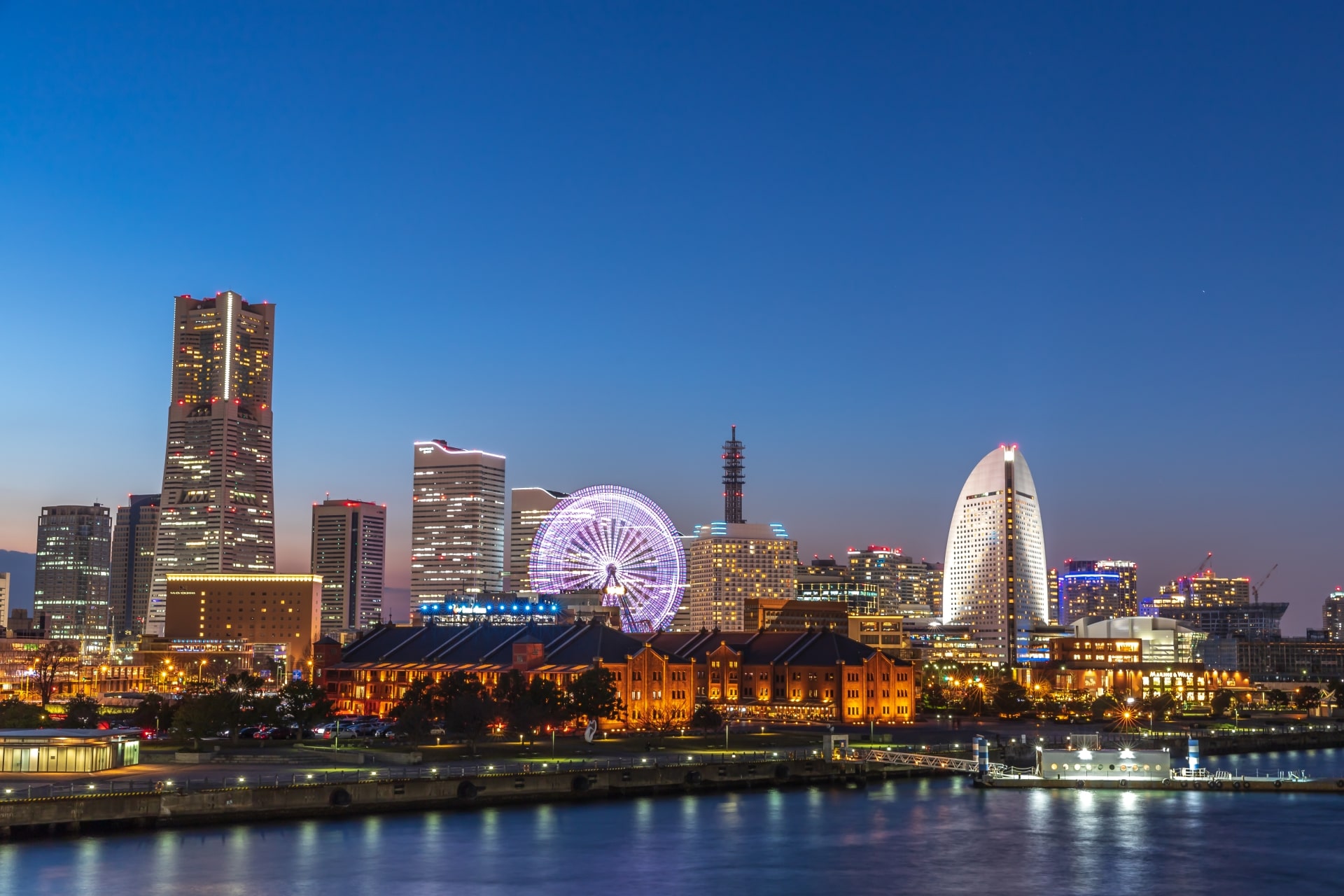
If there’s one place that defines modern Yokohama, it’s Minato Mirai (みなとみらい). This waterfront district combines futuristic skyscrapers, shopping malls, museums, parks, and entertainment facilities within a highly walkable area. While Tokyo is known for its dense urban energy, Minato Mirai feels more open, with wide promenades and uninterrupted views of the bay.
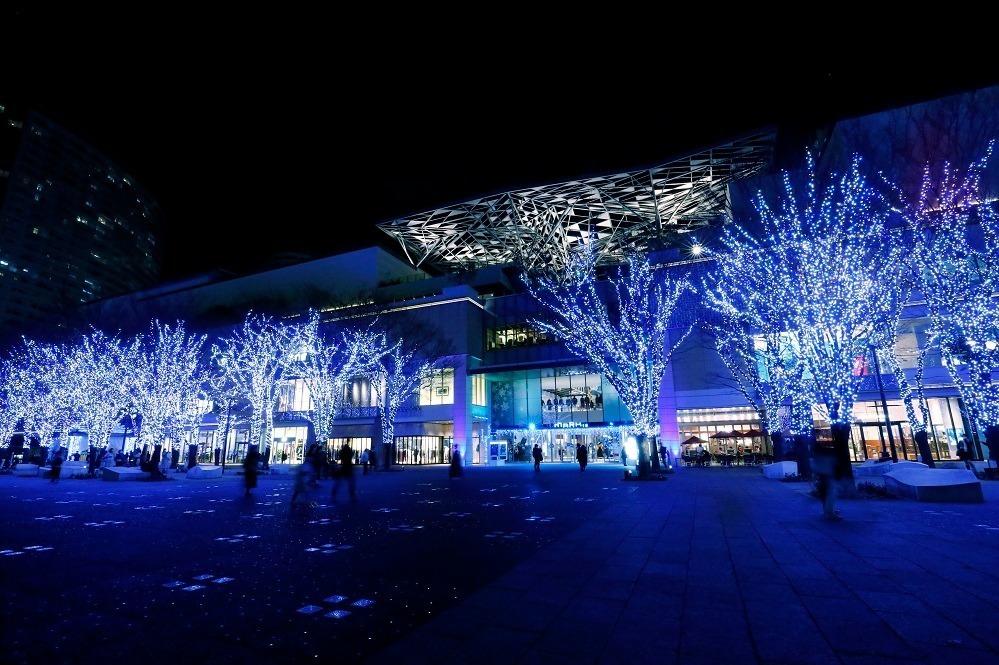
One of the biggest draws is the skyline itself. Landmark Tower, Cosmo Clock 21, the sail-shaped InterContinental Yokohama Grand, and the surrounding high-rises create one of Japan’s most recognizable cityscapes. During the day, the waterfront offers pleasant walking routes and harbor views, but many visitors consider the evening the best time to explore, when the buildings, ferris wheel, and waterfront are illuminated.
Some of the best viewpoints include Rinko Park, which offers broad views across Yokohama Port, and the waterfront promenades around the Red Brick Warehouse and Osanbashi Pier. For photographers, sunset is particularly rewarding as the city lights gradually appear against the bay.
Insider tip: Many visitors head straight for Landmark Tower, but one of the most enjoyable ways to experience the area is simply walking the waterfront route from Sakuragicho Station through Minato Mirai, the Red Brick Warehouse, and Yamashita Park. The entire route can be completed at a relaxed pace while taking in many of Yokohama’s signature views.
 Access Access |
Minato Mirai Station and Bashamichi Station on the Minato Mirai Line provide the most convenient access, while Sakuragicho Station is also within walking distance of most major attractions. |
|---|
Yokohama Air Cabin
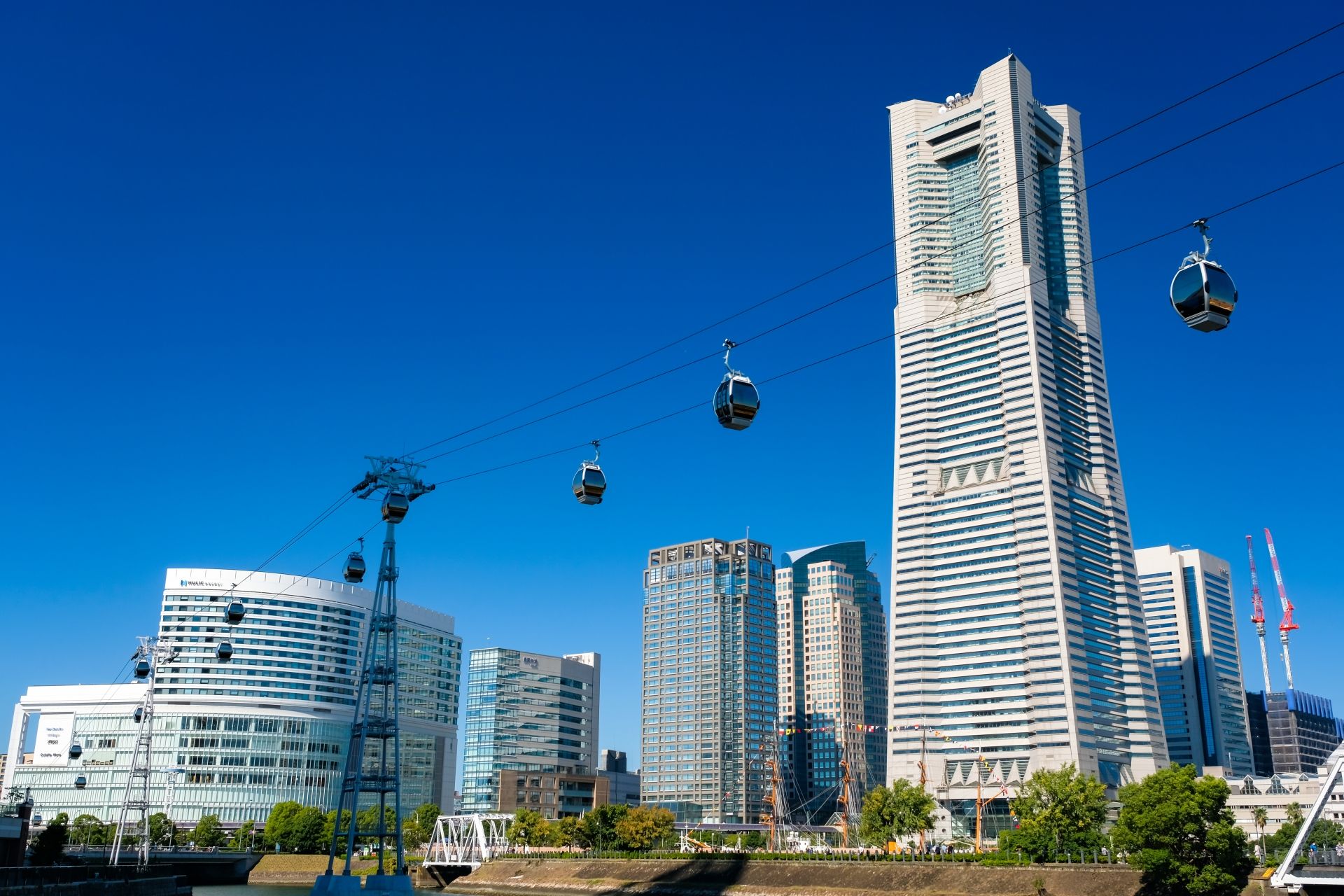
Inaugurated as Japan’s first urban circular ropeway, the YOKOHAMA AIR CABIN has quickly become one of the most recognizable and modern ways to experience the city’s bay area. This state-of-the-art cable car system stretches 630 meters across the waterfront, connecting JR Sakuragicho Station directly to Unga Park Station on Shinko Pier.
The five-minute aerial journey glides up to 40 meters above the historic Kishamichi Promenade and the Ooka River. Each spacious, fully enclosed gondola is equipped with advanced climate control, comfortable seating for up to eight passengers, and floor-to-ceiling glass windows that provide uninterrupted 360-degree views of the Minato Mirai skyline, the giant Cosmo Clock 21 Ferris wheel, and the surrounding harbor.
While it serves as a highly functional, barrier-free transit link that saves you a 15-minute walk on a hot or rainy day, the ride is an attraction in its own right. Riding after dark is highly recommended to enjoy the spectacular evening illumination across the bay, which features custom exterior lighting on both the stations and cabins designed by world-renowned lighting designer Motoko Ishii.
Insider tip: If you plan to ride both the ropeway and the Ferris wheel, do not buy individual tickets. You can purchase a discounted Combination Ticket Set at the Sakuragicho station ticketing counter that bundles a one-way trip on the Yokohama Air Cabin with a ride on Cosmo Clock 21, saving you money on two of Minato Mirai’s top experiences.
| Access |
Next to Sakuragicho Station |
|---|---|
 Business Hours Business Hours |
10 AM–9 PM |
 Official Website Official Website |
https://yokohama-air-cabin.jp/ |
Yokohama Red Brick Warehouse
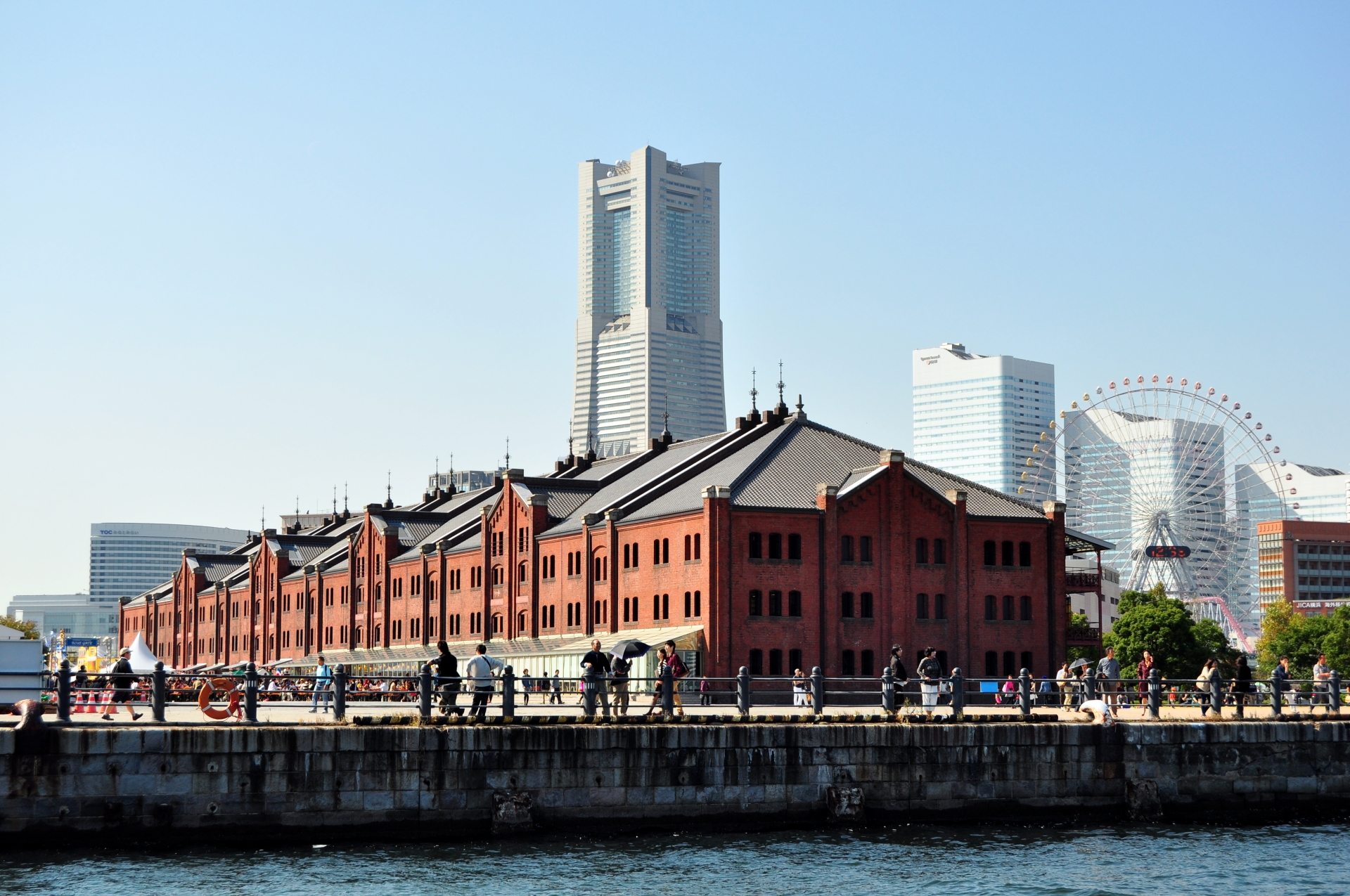
Originally built in the early 20th century as customs warehouses, the Yokohama Red Brick Warehouse (横浜赤レンガ倉庫) has been transformed into one of the city’s most popular shopping and event complexes. The historic brick buildings preserve part of Yokohama’s international trading heritage while housing dozens of shops, cafes, restaurants, and event spaces.
Inside, you’ll find a mix of souvenir stores, fashion boutiques, lifestyle brands, and specialty food shops. The atmosphere feels noticeably different from a typical Japanese shopping mall thanks to the preserved architecture and waterfront setting. Even if you don’t plan to shop, the buildings themselves are worth visiting for their historical significance and photogenic appearance.
The warehouse is also one of Yokohama’s major dining destinations. Visitors can choose from casual cafes, dessert shops, and restaurants serving both Japanese and international cuisine. Many people combine a visit here with a stroll along the nearby waterfront or an evening visit to Minato Mirai.
Seasonal events are another major attraction. During winter, the Red Brick Warehouse hosts one of the largest Christmas markets in the Tokyo metropolitan area, inspired by traditional German Christmas markets. The event features festive decorations, illuminated trees, seasonal food, holiday goods, and a lively atmosphere that attracts visitors from across the region.
The venue is also famous for its annual Strawberry Festival, typically held from February to March. The event showcases strawberry-themed sweets, desserts, drinks, and limited-edition products from vendors across Japan, making it particularly popular among families and dessert lovers.
| Access |
7-min walk from Nihon-Odori Station |
|---|---|
| Business Hours |
11 AM–8 PM |
| Official Website |
https://www.yokohama-akarenga.jp/ |
Yokohama Landmark Tower & Sky Garden
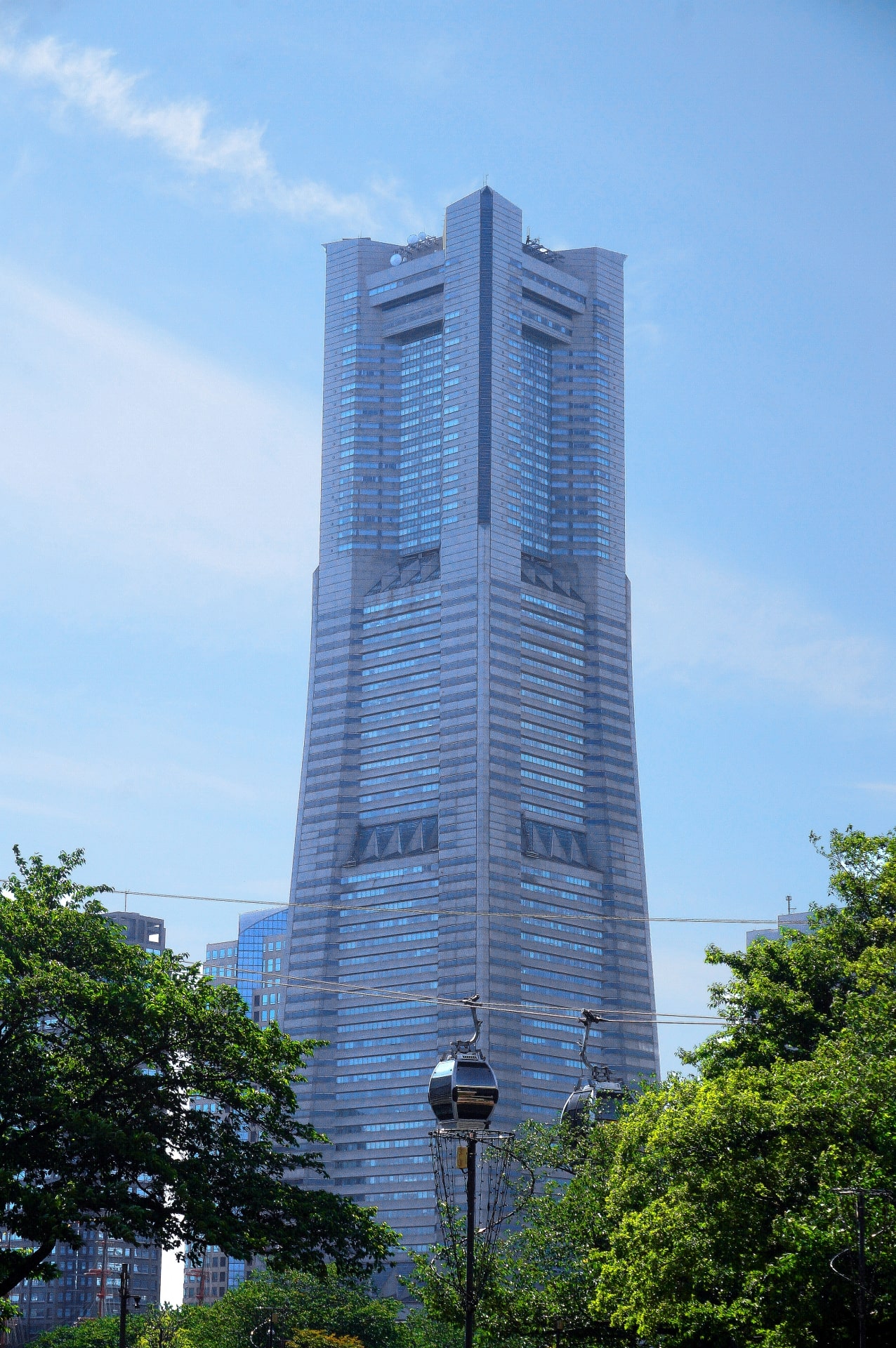
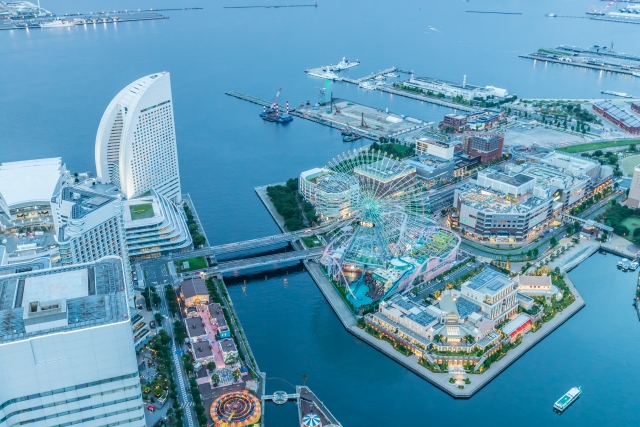
Standing 296 meters tall, Yokohama Landmark Tower (横浜ランドマークタワー) remains one of the most recognizable buildings on the city’s skyline. The tower is the centerpiece of the Minato Mirai district and houses offices, shops, restaurants, and entertainment facilities.
For many years, the building’s main attraction was the Sky Garden (スカイガーデン) observation deck on the 69th floor, which offered panoramic views across Yokohama, Tokyo Bay, and even Mount Fuji on clear days. However, visitors should note that Sky Garden is currently closed due to large-scale renovation work and is not expected to reopen until 2028 or later.
Despite the temporary closure of the observation deck, Landmark Tower is still worth visiting thanks to its shopping areas, restaurants, and its role as the symbolic centerpiece of Minato Mirai. The surrounding plaza is also one of the best places to appreciate the scale of Yokohama’s skyline.
Tip: Best times to visit are late afternoon or early evening, allowing you to explore the surrounding waterfront as the skyline transitions from daylight to nighttime illumination.
| Access |
5-min walk from Minatomirai Station or 7-min walk from Sakuragicho Station |
|---|---|
| Business Hours |
11 AM–8 PM |
 Price Price |
Free |
| Official Website |
https://www.yokohama-landmark.jp/ |
Queen’s Square Yokohama
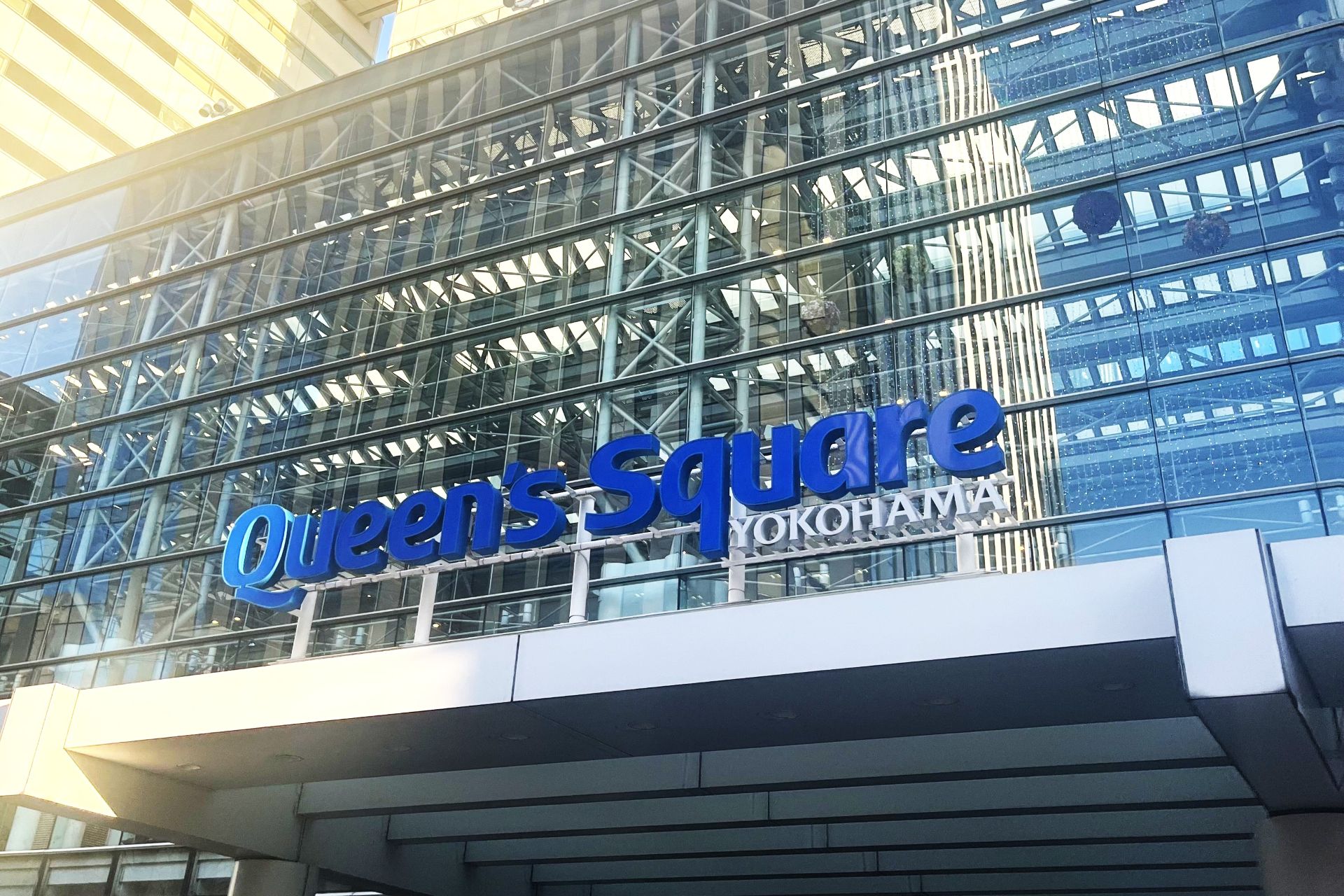
Located directly beside Landmark Tower, Queen’s Square Yokohama (クイーンズスクエア横浜) is one of the largest shopping and entertainment complexes in the city. The multi-building complex contains hundreds of shops, restaurants, cafes, and services, making it a convenient stop during a day of sightseeing in Minato Mirai.
The shopping selection ranges from fashion and cosmetics to lifestyle goods and souvenirs, while the dining options include everything from quick cafes to full-service restaurants. Its central location makes it a practical place to take a break, enjoy a meal, or escape the heat during summer and rainy days.
Families will appreciate the variety of dining choices and the easy access to nearby attractions such as Cosmo World, the Cup Noodles Museum, and the waterfront promenade. The complex is also connected to Minato Mirai Station, making it one of the most convenient places to begin exploring the area: its integration into the wider Minato Mirai district allows for easy walking between the surrounding attractions without needing additional transportation.
| Access |
1-min walk from Minatomirai Station |
|---|---|
| Business Hours |
11 AM–8 PM |
| Price |
Free |
| Official Website |
https://qsy-tqc.jp/ |
Yokohama Marine Tower


Located beside Yamashita Park, Yokohama Marine Tower (横浜マリンタワー) is one of the city’s most recognizable landmarks. Originally opened in 1961, the tower underwent a major renovation and reopened in 2022 with upgraded observation facilities, restaurants, and exhibition spaces. Today, it offers one of the best viewpoints in Yokohama and has become an increasingly attractive alternative while Landmark Tower’s Sky Garden remains closed for renovation.
The main attraction is the two-level observation deck, which sits approximately 100 meters above ground and provides unobstructed 360-degree views across Yokohama Port, Minato Mirai, Chinatown, and Yokohama Bay Bridge. On clear days, visibility extends far beyond the city, while the evening panorama is particularly impressive as the waterfront lights begin to illuminate the bay.
Although Landmark Tower is significantly taller, Marine Tower has a few advantages. Its location closer to the harbor provides a more intimate perspective of the waterfront, and the observation deck itself is less crowded than Yokohama’s larger attractions. Since the tower stands directly beside Yamashita Park and Chinatown, it’s also easier to combine with other sightseeing spots in a single afternoon.
Best time to visit: Arrive before sunset to enjoy both daytime harbor views and the illuminated skyline after dark.
| Access |
5-min walk from Motomachi-Chukagai Station |
|---|---|
| Business Hours |
10 AM–10 PM |
| Price |
¥900 |
| Official Website |
https://marinetower.yokohama/ |
Yokohama Cosmo World
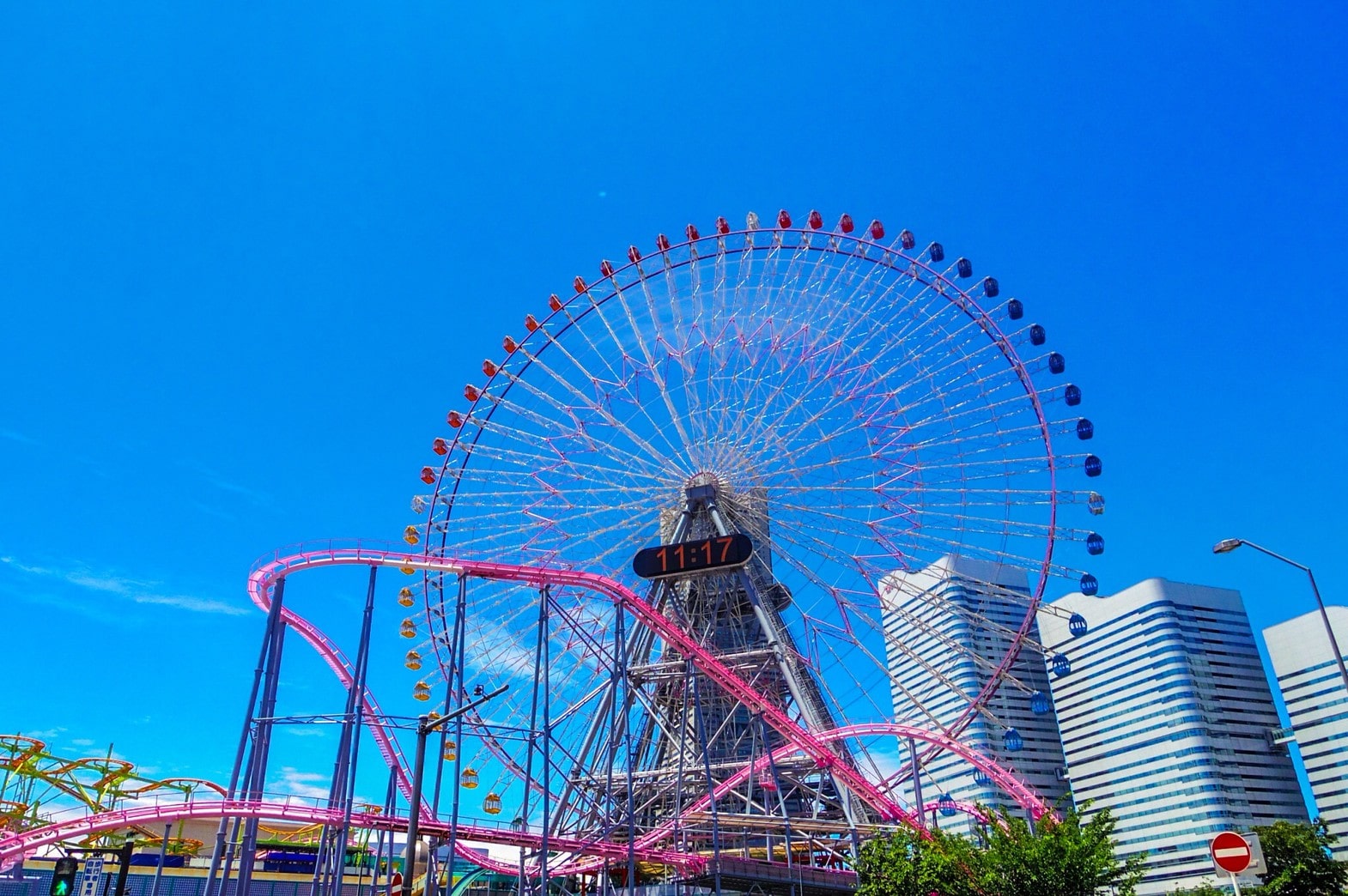
Few attractions are as closely associated with Yokohama’s skyline as Cosmo Clock 21, the giant ferris wheel that dominates the Minato Mirai waterfront. Standing 112.5 meters tall, it’s currently one of the world’s largest ferris wheels with a clock function and serves as one of the city’s most recognizable landmarks. A complete rotation takes approximately 15 minutes and offers sweeping views across Yokohama Bay and the surrounding skyline.
Cosmo Clock 21 is part of Yokohama Cosmo World (よこはまコスモワールド), a waterfront amusement park that combines family attractions with larger thrill rides. Popular rides include the Diving Coaster Vanish, which plunges into an underwater tunnel, as well as family-friendly attractions located throughout the park.
One of Cosmo World’s biggest advantages is its pricing system. Unlike most theme parks in Japan, admission is free and visitors only pay for the rides they choose. This makes it easy to stop by for a short visit, ride the ferris wheel, and continue exploring Minato Mirai without committing to a full day at an amusement park.
Families will find plenty of attractions suitable for younger children, while older visitors often come specifically for the ferris wheel and the nighttime scenery. After sunset, Cosmo Clock 21 becomes part of the illuminated skyline and is one of the most photographed features in Yokohama.
| Access |
10-min walk from Minatomirai Station |
|---|---|
| Price |
Free (pay separately at each attraction) |
| Official Website |
http://cosmoworld.jp/ |
Osanbashi Pier
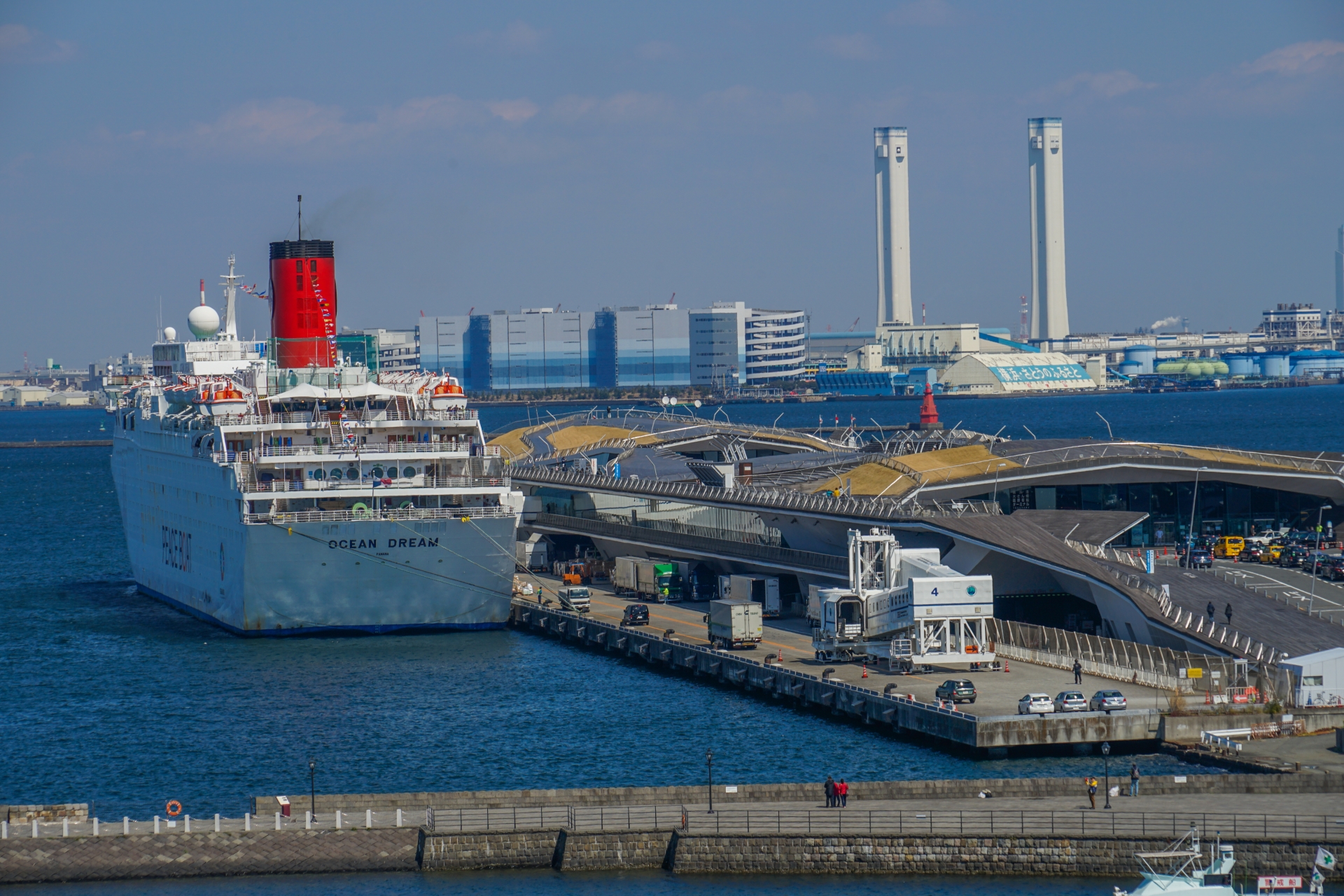
Officially known as the Yokohama International Passenger Terminal (横浜港大さん橋国際客船ターミナル), Osanbashi Pier (横浜港大さん橋) is both an active cruise terminal and one of the city’s most distinctive architectural landmarks. Rather than resembling a traditional terminal building, the structure features flowing curves, wooden decks, and grassy rooftop spaces that blend into the surrounding waterfront.
The highlight is the rooftop observation area known as “Whale’s Back” (Kujira no Senaka). Its gently curved wooden surface was designed to resemble the back of a whale emerging from the sea. The rooftop is open to the public free of charge and offers panoramic views of Minato Mirai, Yokohama Bay Bridge, and the harbor.
Osanbashi is widely considered one of the best sunset spots in Yokohama. As daylight fades, the skyline gradually lights up across the bay, creating excellent conditions for photography. The rooftop’s open design provides unobstructed sightlines that are difficult to find elsewhere in the city, which is why the location is frequently used for professional photography and filming.
Even if no cruise ships are in port, the rooftop alone is worth visiting. It’s an excellent place to pause between the Red Brick Warehouse, Yamashita Park, and Chinatown while enjoying some of Yokohama’s finest waterfront views.
| Access |
8-min walk from Nihon-Odori Station |
|---|---|
| Price |
Free |
| Official Website |
https://osanbashi.jp/ |
Yamashita Park
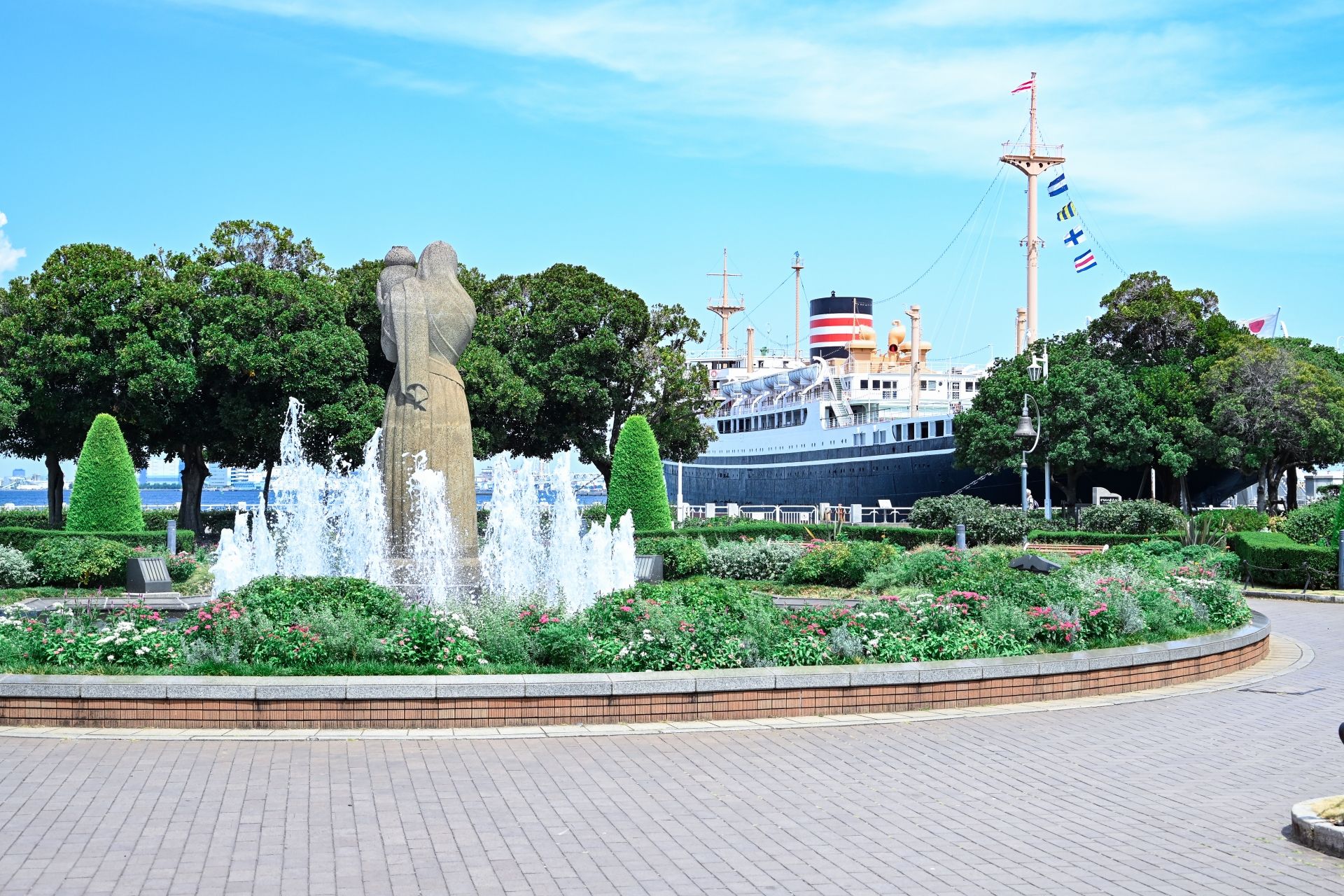
Stretching along Yokohama’s waterfront, Yamashita Park (山下公園) has been a favorite gathering place for locals and visitors since its opening in 1930. The park offers wide walking paths, open lawns, harbor views, and a relaxing atmosphere that contrasts nicely with the modern skyline of nearby Minato Mirai.
One of the park’s greatest strengths is its scenery throughout the year. Spring brings cherry blossoms and colorful flower displays, while the famous rose gardens attract large numbers of visitors in both spring and autumn. The waterfront setting makes it an enjoyable place for a leisurely walk regardless of the season.
Moored permanently beside the park is the historic NYK Hikawa Maru, a former ocean liner that operated trans-Pacific routes before becoming a museum ship. Visitors can explore preserved passenger areas, engine rooms, and exhibits that offer a fascinating glimpse into Japan’s maritime history.
For many travelers, Yamashita Park serves as a welcome break between Yokohama’s major attractions. It’s conveniently located within walking distance of Chinatown, Marine Tower, and Osanbashi Pier, making it an ideal place to slow down, enjoy the harbor breeze, and take in a different side of the city.
| Access |
3-min walk from Motomachi-Chukagai Station |
|---|---|
| Business Hours |
24h |
| Price |
Free |
| Official Website |
https://www.city.yokohama.lg.jp/kurashi/machizukuri-kankyo/midori-koen/koen/koen/daihyoteki/kouen008.html |
Best Cultural Districts and Local Neighborhoods
Long before Yokohama became known for its modern skyline, it played a pivotal role in Japan’s opening to the world. After the Port of Yokohama opened to foreign trade in 1859, the city rapidly developed into one of the country’s most international destinations, attracting merchants, diplomats, and businesses from around the globe. Many of the neighborhoods that emerged during this period still form the cultural heart of the city today: From the vibrant streets of Chinatown to the historic shopping avenues of Motomachi and the lantern-lit alleys of Noge, these districts reveal a side of Yokohama that feels very different from the futuristic waterfront.
Yokohama Chinatown (Chukagai)
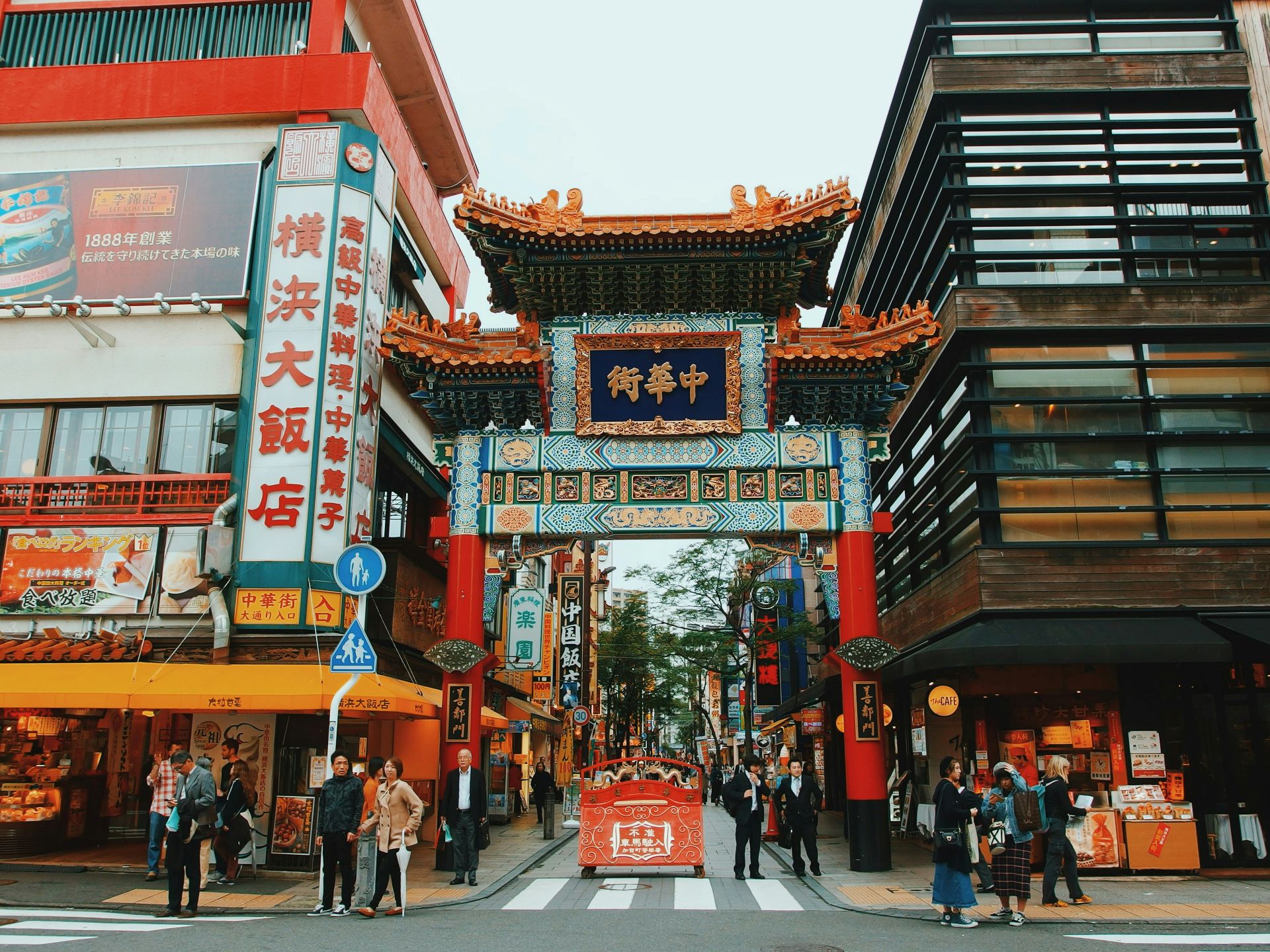
As the largest Chinatown in Japan and one of the largest in the world, Yokohama Chinatown (横浜中華街) is one of the city’s most famous attractions. The district traces its origins to the late 19th century, when Chinese merchants and traders settled in Yokohama following the opening of the port. Today, the neighborhood is home to hundreds of restaurants, food stalls, shops, temples, and cultural landmarks spread across a compact grid of colorful streets.
Food is the main reason most visitors come here, and for good reason. Popular street snacks include steamed pork buns (nikuman), soup dumplings (xiaolongbao), sesame balls, roasted chestnuts, and Taiwanese-style fried chicken. For a more substantial meal, many restaurants specialize in Cantonese, Sichuan, Shanghai, and Beijing cuisine, offering everything from casual dim sum lunches to elaborate banquet-style dinners.
The busiest areas are concentrated around Chinatown’s main commercial streets, particularly Chukagai Odori and Hong Kong Road, where visitors will find the highest concentration of food vendors and restaurants. Wandering through the side streets often leads to quieter temples, specialty food shops, and lesser-known eateries.
The district is also known for its elaborate entrance gates. The most famous is Zenrinmon, the large eastern gate that serves as Chinatown’s symbolic entrance. Other notable gates include Kanteibyo-dori Gate near the historic Kanteibyo Taoist Temple, also known as Kuan Ti Miao, and the colorful gates marking the various entrances around the neighborhood.
While Chinatown is lively throughout the day, visiting on weekday mornings or early afternoons generally offers the most comfortable experience. Weekends, public holidays, and major festival periods can become extremely crowded, particularly around lunch and dinner hours. Arriving before noon makes it easier to explore the streets, photograph the gates, and avoid long restaurant queues.
| Access |
4-min walk from Motomachi-Chukagai Station or 7-min walk from Ishikawacho |
|---|---|
| Official Website |
http://www.chinatown.or.jp/ |
Motomachi Shopping Street
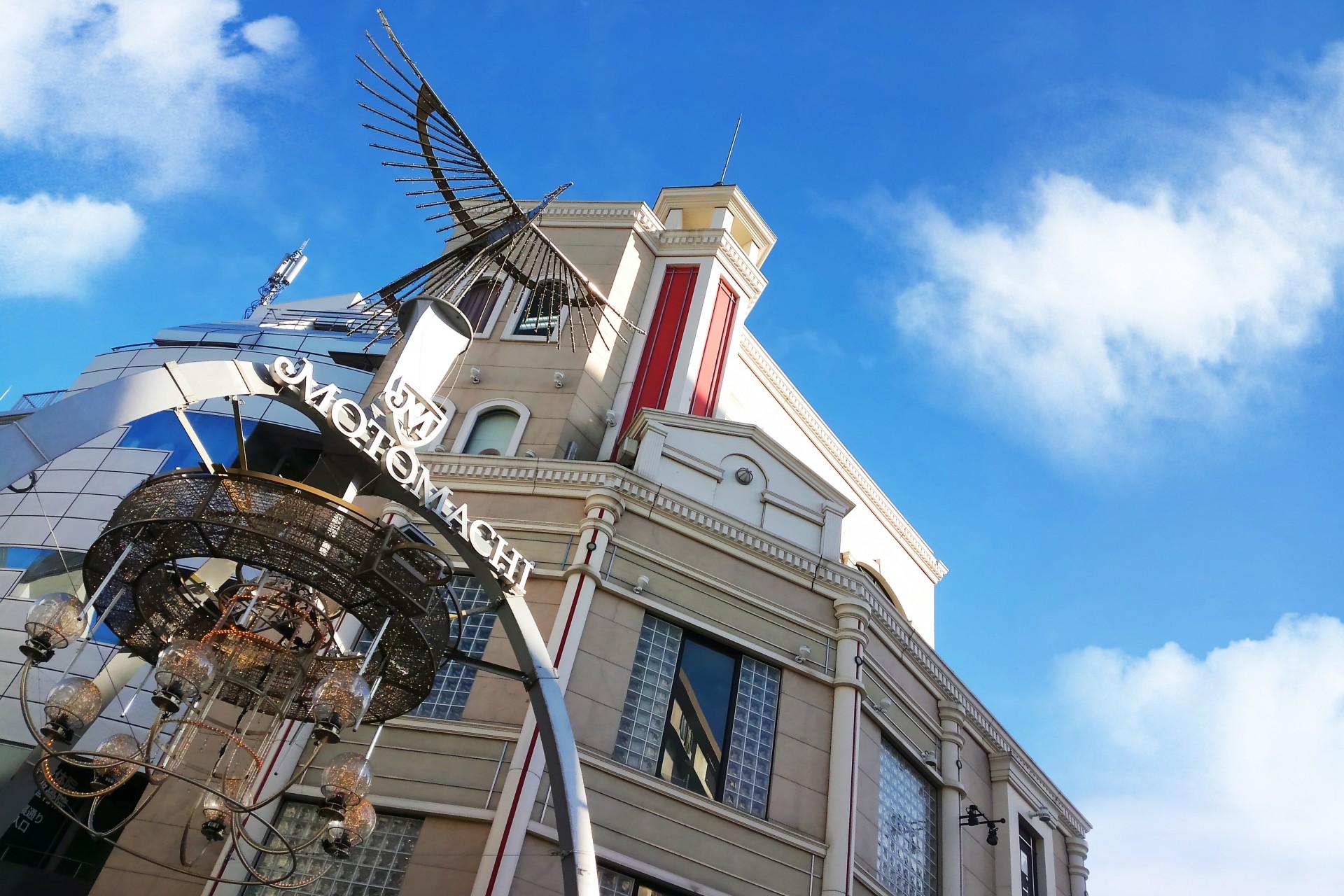
Just a short walk from Chinatown lies Motomachi Shopping Street (横浜元町ショッピングストリート), a district that developed alongside Yokohama’s foreign settlement during the late 19th century. Historically, the area catered to foreign residents living in Yokohama, and that international influence can still be felt today in its architecture, atmosphere, and long-established businesses. (motomachi.or.jp)
Unlike the busy energy of Chinatown, Motomachi feels refined and relaxed. The main shopping street stretches for nearly a kilometer and is lined with fashion boutiques, lifestyle stores, bakeries, specialty retailers, and long-running local brands. Many businesses here have decades of history and helped shape the district’s reputation as one of Yokohama’s premier shopping destinations.
The area is also an excellent place to stop for a coffee or light meal. Stylish cafes, dessert shops, and restaurants line the street, making it easy to take a break between sightseeing stops. Compared with the larger commercial centers around Minato Mirai, Motomachi offers a more local and neighborhood-oriented shopping experience.
One of the best things about Motomachi is its location. Visitors can easily combine Chinatown, Motomachi, Yamate Bluff, and Yamashita Park into a single walking route. After exploring the busy streets and food stalls of Chinatown, Motomachi provides a welcome change of pace and a glimpse into another chapter of Yokohama’s international history.
| Access |
5-min walk from Motomachi-Chukagai Station |
|---|---|
| Official Website |
https://www.motomachi.or.jp/ |
Yamate Western Houses
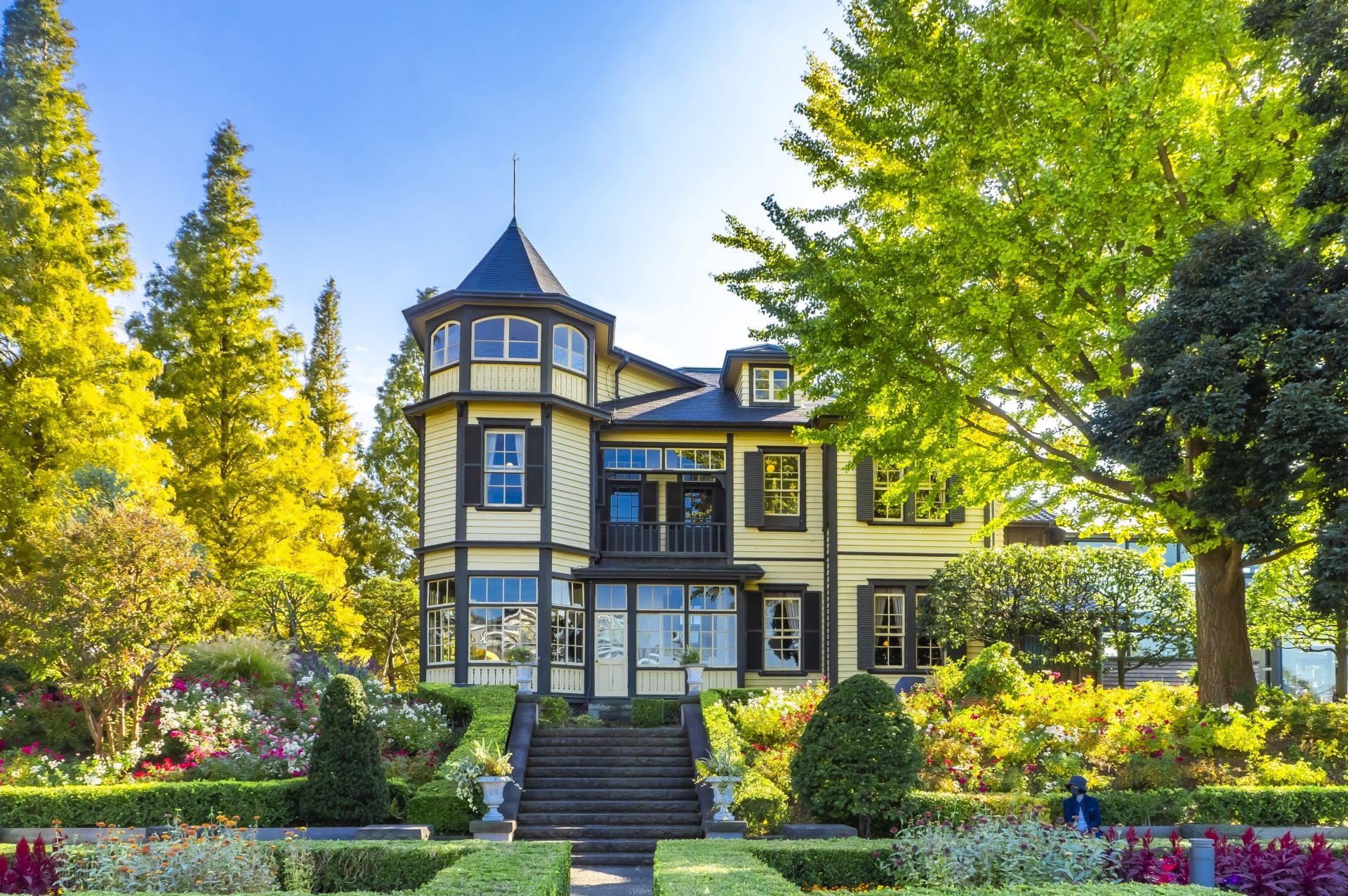
Just uphill from Motomachi lies one of Yokohama’s most overlooked attractions. The Yamate district, often referred to as “The Bluff,” served as a residential area for foreign residents after the Port of Yokohama opened to international trade in the 19th century. Today, several beautifully preserved Western-style homes remain scattered throughout the neighborhood, offering a fascinating glimpse into Yokohama’s early international history.
Unlike many historic buildings in Japan that are viewed only from the outside, most of the Yamate Western Houses (横浜山手西洋館) are open to the public free of charge. Visitors can step inside former residences, explore period interiors, and learn how foreign merchants, diplomats, and business leaders lived during Yokohama’s formative years as an international port city. Several houses have been carefully restored and furnished to reflect their original appearance.
Some of the most notable buildings include Berrick Hall, the largest surviving Western residence in Yokohama, Ehrismann Residence, designed by architect Antonin Raymond; Bluff No. 234, a former apartment building for foreign residents, and the former Home of a Diplomat. Many of these properties are located around Harbor View Park and Motomachi Park, making them easy to explore on foot.
The atmosphere of the neighborhood itself is quite alluring. Tree-lined streets, historic churches, foreign cemeteries, and panoramic viewpoints create an environment that feels very different from the waterfront districts below. Harbor View Park is particularly worth visiting for its views across Yokohama Bay and the Bay Bridge.
The Yamate area is especially beautiful in spring, when roses bloom throughout the district, and during the Christmas season, when the historic houses are decorated according to traditions from different countries. Despite being located only minutes from Chinatown, the area remains surprisingly quiet and is one of the best places in Yokohama to escape the crowds while discovering an important chapter of the city’s history.
| Access |
Motomachi-Chukagai and Ishikawacho are the closest stations to the Yamate district. |
|---|---|
| Business Hours |
Schedules may vary but most of the houses are typically open 9:30 AM–5 PM |
| Price |
Free |
| Official Website |
http://www.hama-midorinokyokai.or.jp/yamate-seiyoukan/ |
Nogecho
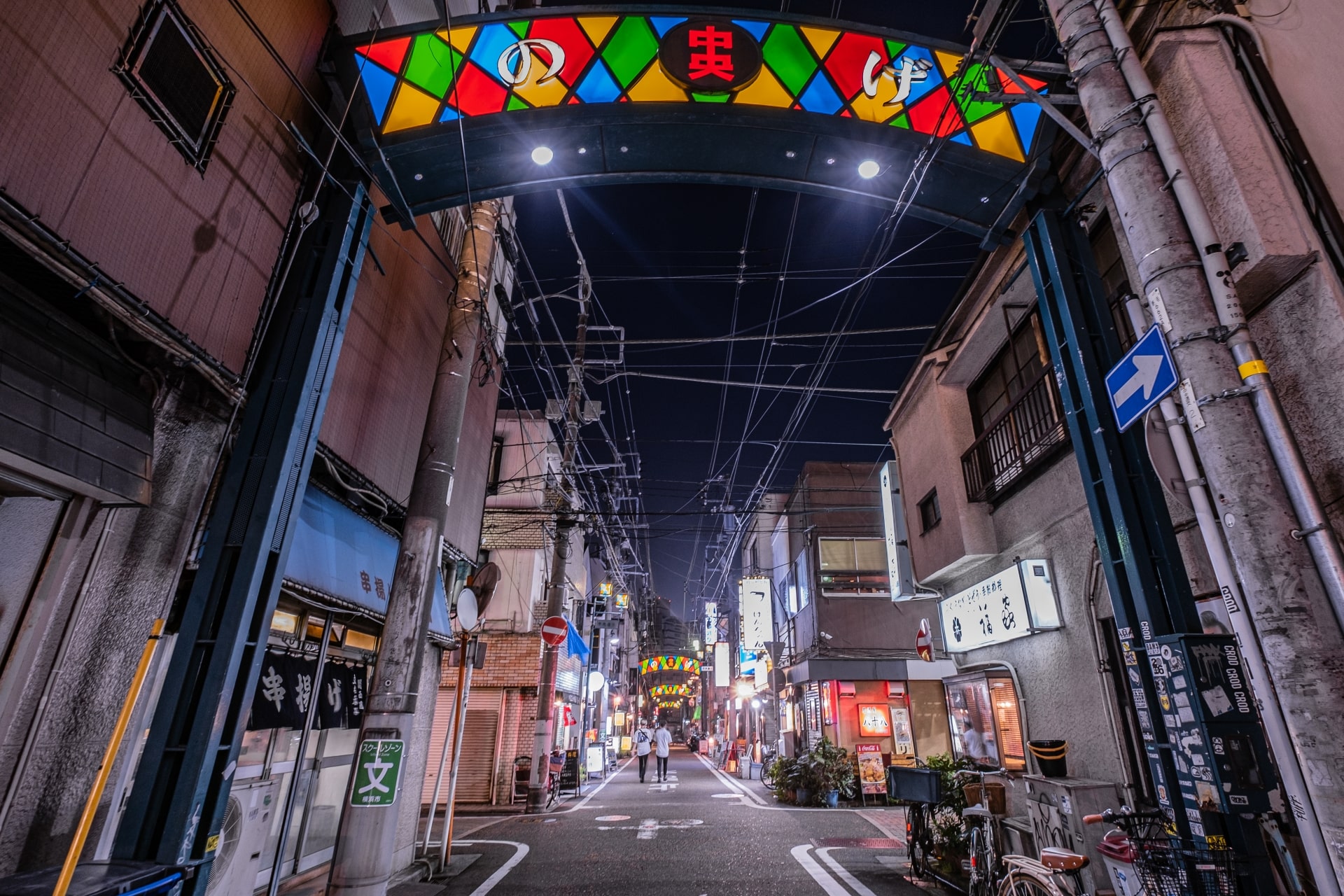
If Minato Mirai showcases Yokohama’s modern side, Nogecho (野毛町) represents its local character. Located just a few minutes from Sakuragicho Station, this compact entertainment district is famous for its dense collection of izakaya, bars, standing pubs, and small restaurants packed into narrow alleyways.
The neighborhood developed after World War II and gradually became one of Yokohama’s most popular drinking districts. Today, more than 500 bars and eateries are concentrated within a relatively small area, creating an atmosphere that feels very different from the polished waterfront developments nearby.
Traditional izakaya sit beside tiny yakitori counters, craft beer bars, jazz venues, wine bars, and standing-only drinking establishments, allowing for a quite appealing variety: here visitors can easily hop between several venues in a single evening, sampling different foods and drinks along the way.
Despite its popularity, Nogecho remains largely focused on local customers rather than tourists. Menus are increasingly visitor-friendly, but the district still feels authentic and unpolished in the best possible way. Prices are generally reasonable, making it an excellent area for experiencing Japanese nightlife without the higher costs often associated with central Tokyo.
The best time to visit is after sunset, when the lanterns illuminate the streets and the neighborhood comes alive. Many establishments begin filling up shortly after 6:00 p.m., while the atmosphere becomes particularly lively on Friday and Saturday evenings. Arriving early is often the best strategy if you’re hoping to secure seats at some of the smaller and more popular venues.
| Access |
5-min walk from Sakuragicho, or Hinodecho Stations |
|---|---|
| Official Website |
https://www.welcome.city.yokohama.jp/spot/area/area04.php# |
Best Food Experiences in Yokohama
Yokohama has one of Japan’s most distinctive food cultures thanks to its long history as an international port city. Chinese immigrants introduced culinary traditions that helped shape the city’s dining scene, while local specialties emerged through the blending of Japanese and foreign influences. Today, visitors can sample everything from regional ramen and Chinese street food to locally developed noodle dishes, craft beer, and iconic sweets that have become synonymous with Yokohama. Whether you’re looking for interactive food attractions or simply hoping to eat your way through the city, Yokohama is one of the best culinary destinations in the Greater Tokyo area.
Shin-Yokohama Ramen Museum
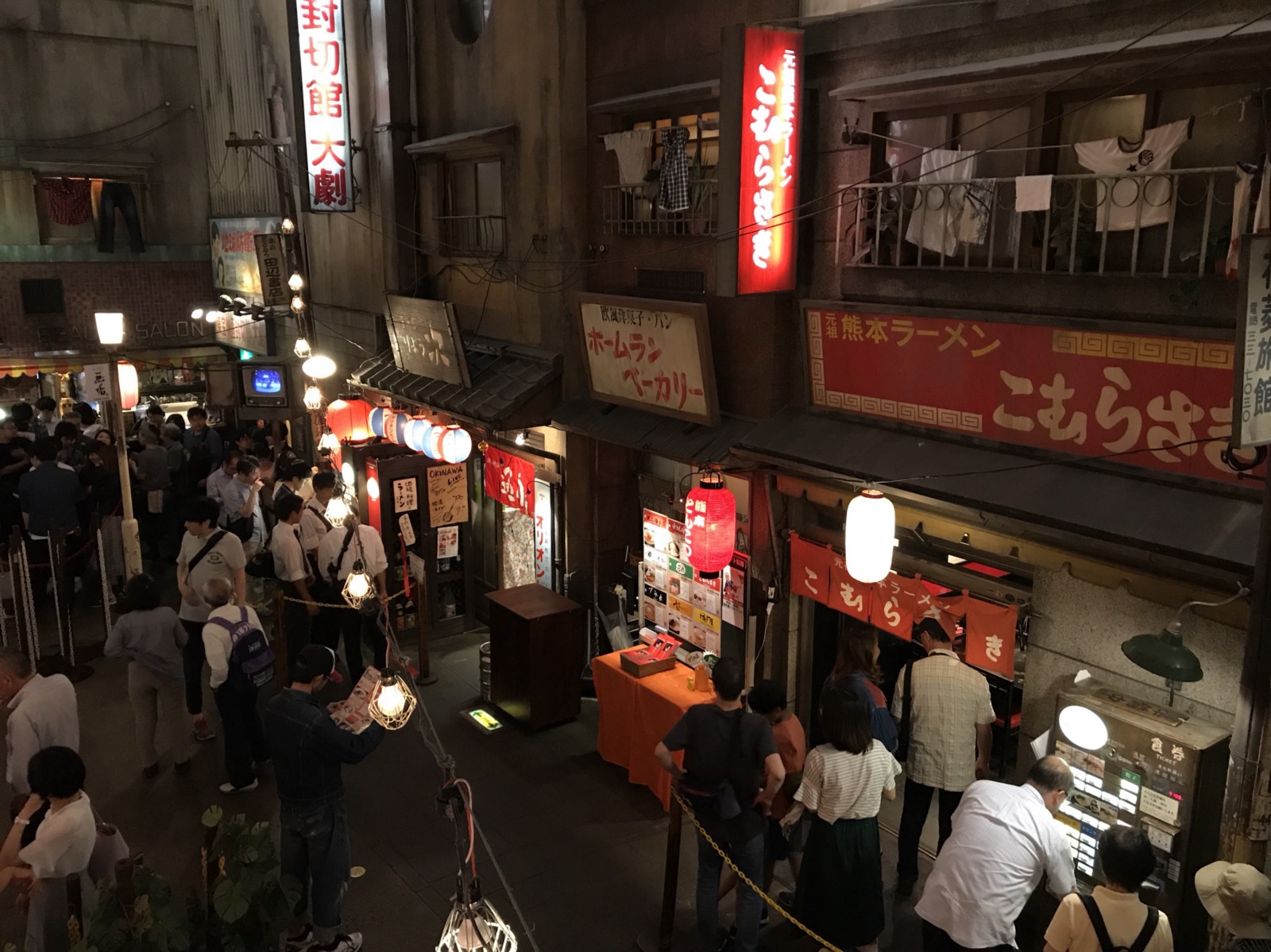
Part museum and part food hall, the Shin-Yokohama Ramen Museum (新横浜ラーメン博物館) is one of Yokohama’s most unique attractions. Opened in 1994 as the world’s first food-themed amusement park, the museum explores the history and culture of ramen while giving visitors the chance to sample regional styles from across Japan in a single location.
The highlight is the recreated retro streetscape inspired by Japan in 1958, the year instant ramen was invented. Within this nostalgic setting, visitors can choose from several ramen shops representing different regional traditions and cooking styles. While participating restaurants change periodically, the museum typically features varieties from regions such as Hokkaido, Tokyo, Hakata, Kumamoto, and other parts of Japan, allowing visitors to compare different broths, noodles, and toppings during a single visit.
One of the biggest advantages of the museum is the availability of mini-sized bowls. Rather than committing to a full serving, visitors can sample multiple ramen styles and compare their flavors. This approach is especially popular among first-time visitors who want to experience a wider range of regional specialties.
Recommended strategy: Visit outside peak lunch hours and start with mini bowls instead of full portions. Most visitors find that sampling two or three different styles provides a much better experience than ordering a single large bowl.
| Access |
3-min walk from Shin-Yokohama |
|---|---|
| Price |
¥450 |
| Official Website |
http://www.raumen.co.jp/ |
Cup Noodles Museum Yokohama
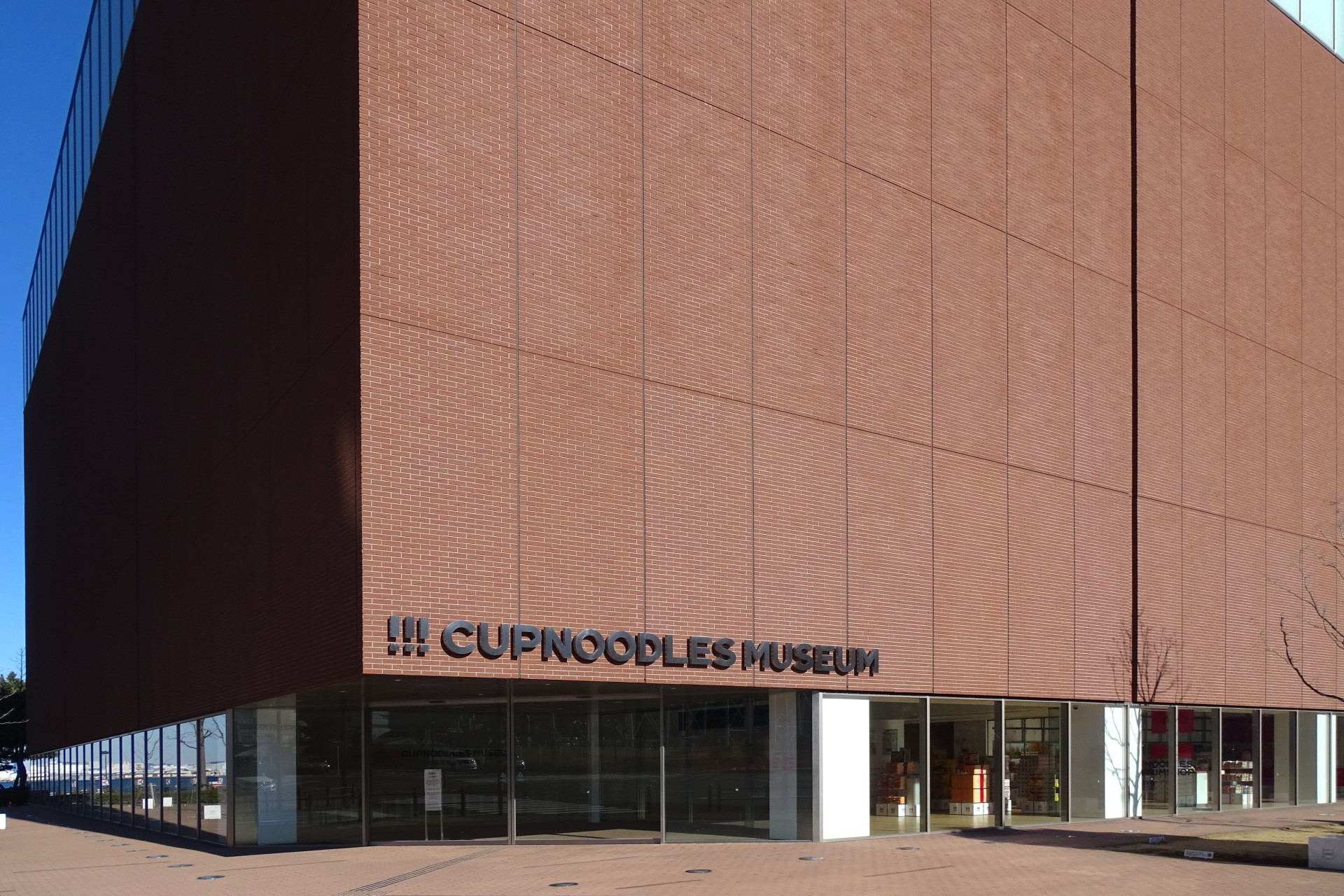
The Cup Noodles Museum (カップヌードルミュージアム 横浜) celebrates one of Japan’s most influential food inventions: instant noodles. Developed by Nissin founder Momofuku Ando, instant ramen transformed eating habits around the world, and this interactive museum explores both the history of the product and the creativity behind its development.
The most popular activity is the My Cup Noodles Factory, where visitors design their own cup, select soup flavors and toppings, and create a personalized version of the famous product. The experience is suitable for all ages and has become one of Yokohama’s most sought-after family activities.
Another highlight is the Chicken Ramen Factory, where participants can make noodles by hand. Because spaces are limited, advance reservations are strongly recommended for this activity. The museum’s interactive exhibits, creative workshops, and family-friendly atmosphere make it appealing even for visitors who are not particularly interested in instant noodles themselves.
For families, the museum strikes an excellent balance between education and entertainment. Children enjoy the hands-on experiences, while adults often appreciate learning how a simple invention became a global food phenomenon.
| Access |
9-min walk from Minatomirai Station |
|---|---|
| Price |
¥500 |
| Official Website |
https://www.cupnoodles-museum.jp/ja/yokohama/ |
Try Yokohama’s Local Specialties
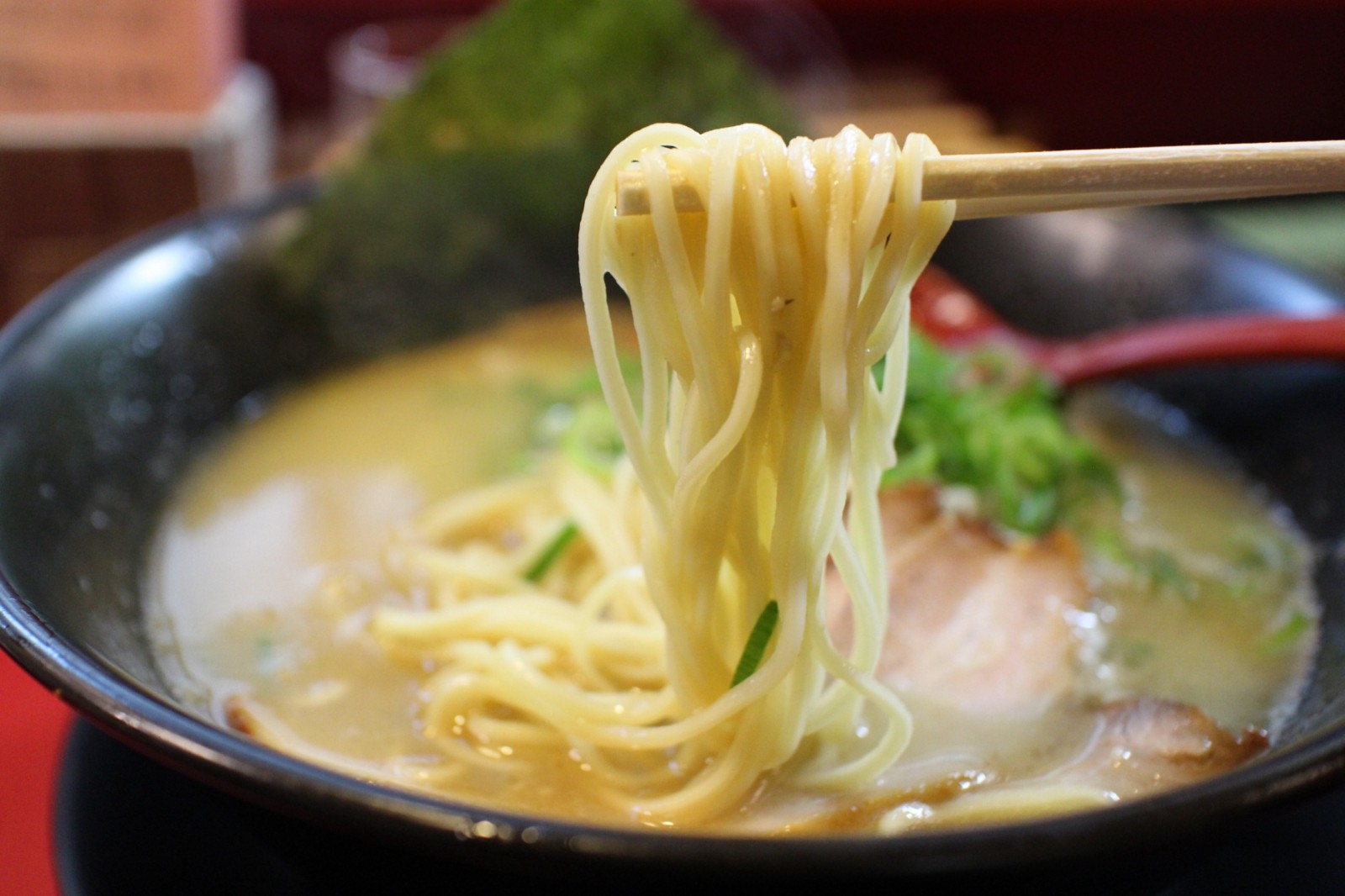
While Yokohama is famous for attractions such as Chinatown and the Ramen Museum, some of the city’s most interesting food experiences come from local specialties that reflect its unique history and identity.
See also: What to Buy in Yokohama
Shumai
Perhaps Yokohama’s most famous local food is shumai, a steamed dumpling introduced through the city’s Chinese community. The dish became especially popular through Kiyoken, a Yokohama company that has been producing its signature shumai since 1928. Today, shumai remains one of the city’s best-known culinary souvenirs and is widely available throughout Yokohama.
Sanma-men
Sanma-men is a noodle dish that originated in Yokohama and is rarely found elsewhere in Japan. It consists of ramen topped with a stir-fried mixture of vegetables, pork, and thickened sauce that helps keep the noodles hot. Developed in local Chinese restaurants during the early 20th century, sanma-men remains one of Yokohama’s most distinctive regional dishes.
Ie-kei Ramen
Many ramen fans are surprised to learn that the hugely popular Ie-kei style originated in Yokohama. Developed at Yoshimuraya in 1974, the style combines a rich pork-and-soy-sauce broth with thick noodles and is typically served with spinach, seaweed, and slices of pork. Today, Ie-kei ramen can be found throughout Japan, but Yokohama remains its birthplace. Yoshimuraya is still one of the most popular ramen joints in the city, so be prepared to wait in a long line if you want to try this particular spot. However, there are also plenty of good Iekei
Craft Beer
Yokohama has become one of Japan’s leading craft beer destinations. The city’s international heritage and waterfront atmosphere helped foster a thriving craft beer culture, with local breweries producing a wide range of styles. Beer enthusiasts will find numerous taprooms and brewpubs throughout the city, particularly near Kannai and Bashamichi. Baird’s Bashamichi Taproom or Craft Beer Dining & 9 are some standout options around the area.
Harbor Sweets
No visit to Yokohama is complete without trying Harbor, one of the city’s most famous sweets. Produced by Ariake since the 1950s, the cake features a soft pastry shell filled with chestnut-flavored bean paste and has become one of Yokohama’s signature souvenirs. Alongside Harbor, visitors will find numerous Western-style confectioneries that reflect the city’s long history of international influence.
Gardens, Parks, and Relaxing Spots
Although Yokohama is often associated with its modern skyline and busy waterfront, the city also offers plenty of opportunities to slow down and enjoy a quieter side of urban Japan. Historic gardens, waterfront parks, and hot spring facilities provide a welcome contrast to the city’s commercial districts and tourist attractions. These spots are particularly rewarding for visitors looking to escape the crowds, experience seasonal scenery, or simply take a break during a day of sightseeing.
Sankeien Garden
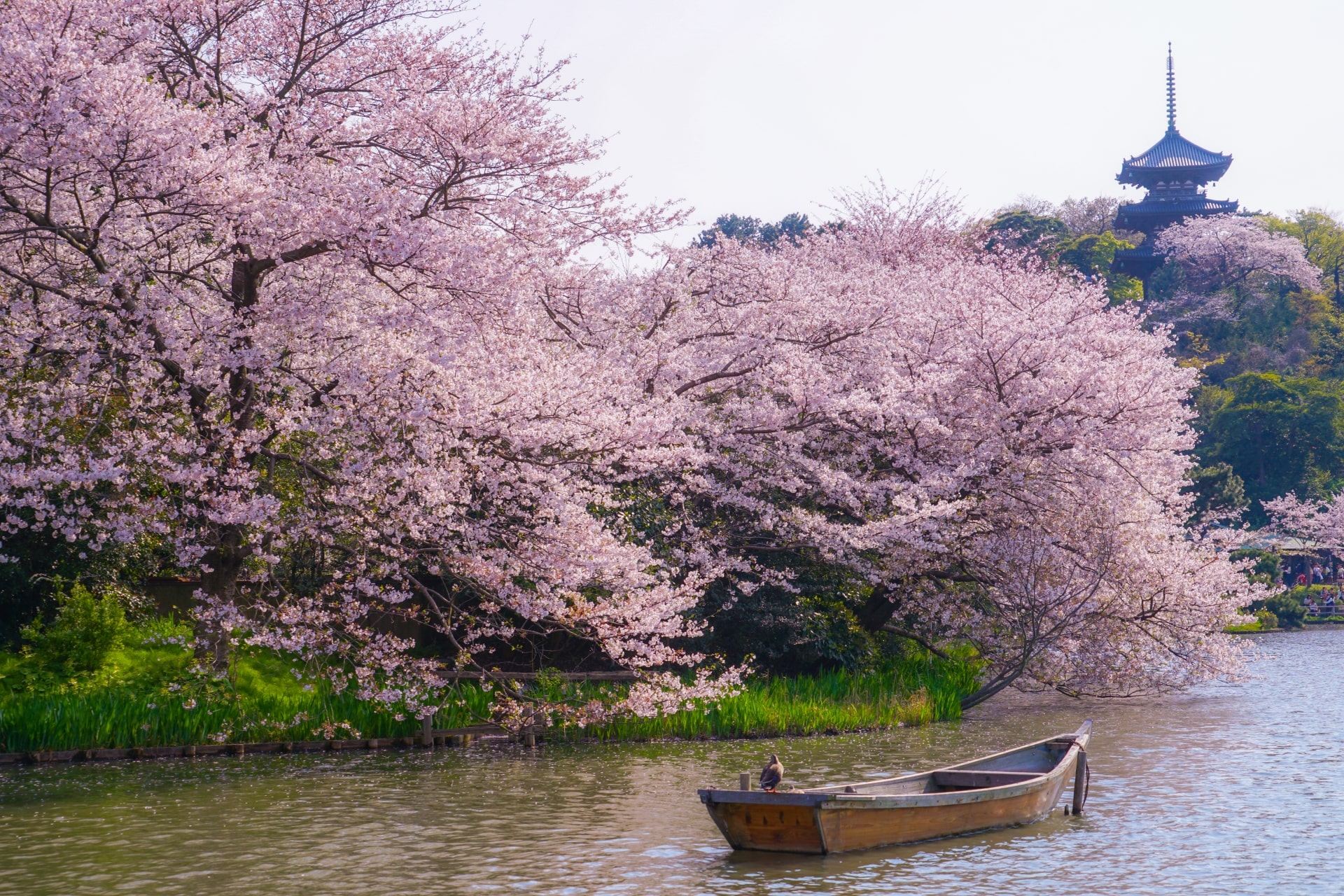
One of Yokohama’s most beautiful and culturally significant attractions, Sankeien Garden (三溪園) is a spacious traditional Japanese garden that opened in 1906. It was created by silk merchant and art collector Sankei Hara, who designed the grounds around a collection of historic buildings relocated from across Japan. Today, the garden covers approximately 175,000 square meters and is widely considered one of the finest traditional gardens in the Greater Tokyo area.
What sets Sankeien apart from many Japanese gardens is its remarkable collection of historic architecture. Seventeen structures within the garden have been designated Important Cultural Properties or Tangible Cultural Properties by the Japanese government. Highlights include a three-story pagoda originally built in Kyoto during the 15th century, traditional tea houses, historic residences, and temple buildings that were carefully relocated and preserved within the grounds.
The garden is worth visiting throughout the year, but it is particularly famous for its seasonal scenery. Spring brings hundreds of cherry blossom trees, creating one of Yokohama’s most popular hanami destinations. The combination of blooming sakura, ponds, and historic buildings makes this one of the most photogenic locations in the city. Autumn is equally impressive, with vibrant maple leaves transforming the garden into one of Kanagawa’s best spots for fall foliage viewing. Reflections of the colorful trees in the garden’s ponds create particularly striking scenery during late November and early December.
Beyond the famous seasonal displays, Sankeien offers a peaceful atmosphere that feels far removed from central Yokohama. Walking paths wind through ponds, streams, forests, and open lawns, making it easy to spend several hours exploring the grounds at a leisurely pace.
Visitor tip: Allow at least two hours for your visit and wear comfortable shoes. The garden is considerably larger than many first-time visitors expect, and some of its most attractive viewpoints are found away from the main entrance. Early mornings are generally the quietest time to visit and provide excellent photography conditions.
| Access |
7-min bus from Negishi Station |
|---|---|
| Business Hours |
9 AM–5 PM |
| Price |
¥900 |
| Official Website |
http://www.sankeien.or.jp/ |
Waterfront Parks and Scenic Viewpoints
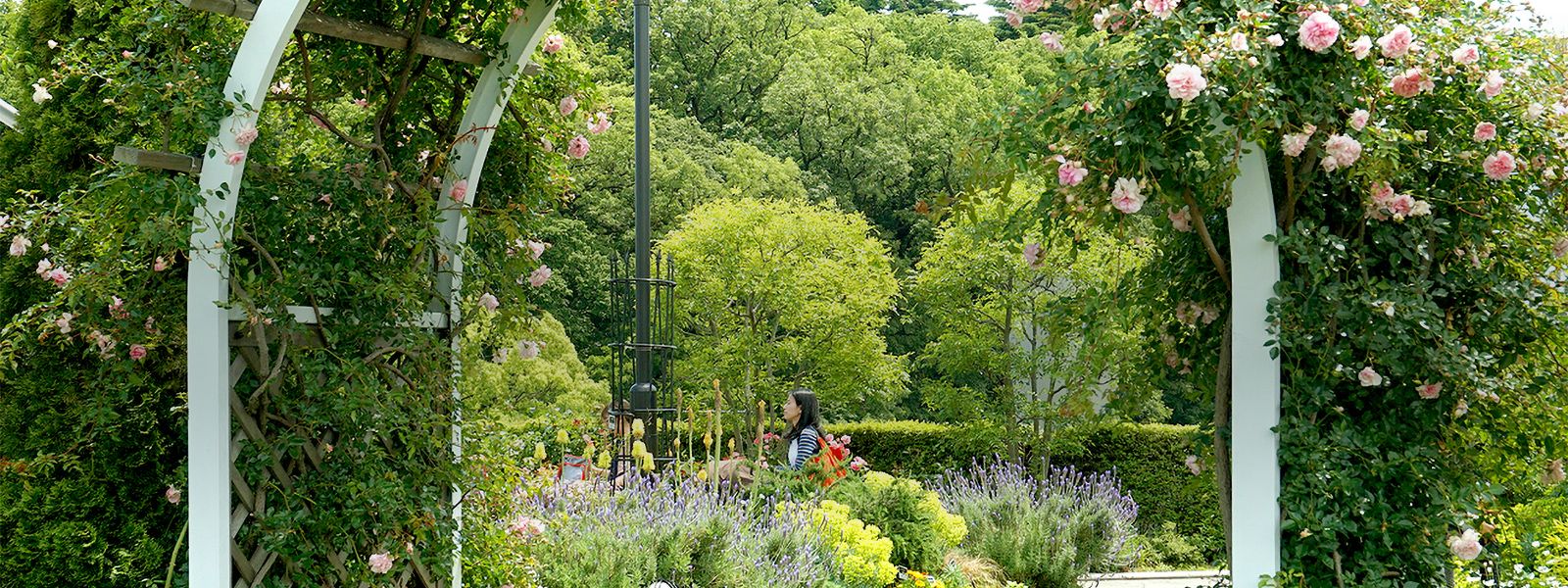
While Sankeien Garden is Yokohama’s most famous green space, some of the city’s most enjoyable outdoor spots are found around the harbor. In addition to the aforementioned Yamashita Park, America Yama Park, and Harbor View Park can easily be combined into a leisurely walking route and offer some of the best scenery in Yokohama.
A short walk inland leads to America Yama Park, one of Yokohama’s lesser-known hidden gems. Built above Motomachi-Chukagai Station, it was Japan’s first multi-level urban park and serves as a green link between Motomachi and the historic Yamate district. The sloping lawns, seasonal flower beds, and elevated viewpoints provide pleasant views toward Marine Tower and Yokohama Bay. Because many visitors pass through without realizing a park exists above the station, it often feels surprisingly quiet compared to nearby Chinatown.
| Access |
2-min walk from Motomachi-Chukagai Station |
|---|---|
| Business Hours |
6 AM–11 PM |
| Price |
Free |
| Official Website |
http://www.seibu-la.co.jp/mt_america |
Continuing uphill, you’ll reach Harbor View Park (Minato no Mieru Oka Koen), one of the most scenic locations in Yokohama. As its name suggests, the park overlooks the harbor and Yokohama Bay Bridge from a hillside position above the port. The area is particularly famous for its rose gardens, which bloom spectacularly in spring and autumn, as well as its connection to the historic Yamate foreign settlement. Many visitors come for the flowers, but the panoramic views are equally rewarding. Sunset is an especially beautiful time to visit, when the skyline, Marine Tower, and Bay Bridge gradually light up against the evening sky.
| Access |
6-min walk from Motomachi-Chukagai Station |
|---|---|
| Business Hours |
24h |
| Official Website |
https://www.city.yokohama.lg.jp/kurashi/machizukuri-kankyo/midori-koen/koen/koen/daihyoteki/kouen007.html |
If you enjoy walking, consider linking all three parks together. Starting at Yamashita Park, continuing through Motomachi and America Yama Park, and finishing at Harbor View Park creates one of the most pleasant urban walks in Yokohama, combining waterfront scenery, historic neighborhoods, gardens, and some of the city’s best viewpoints.
Manyo Club Onsen
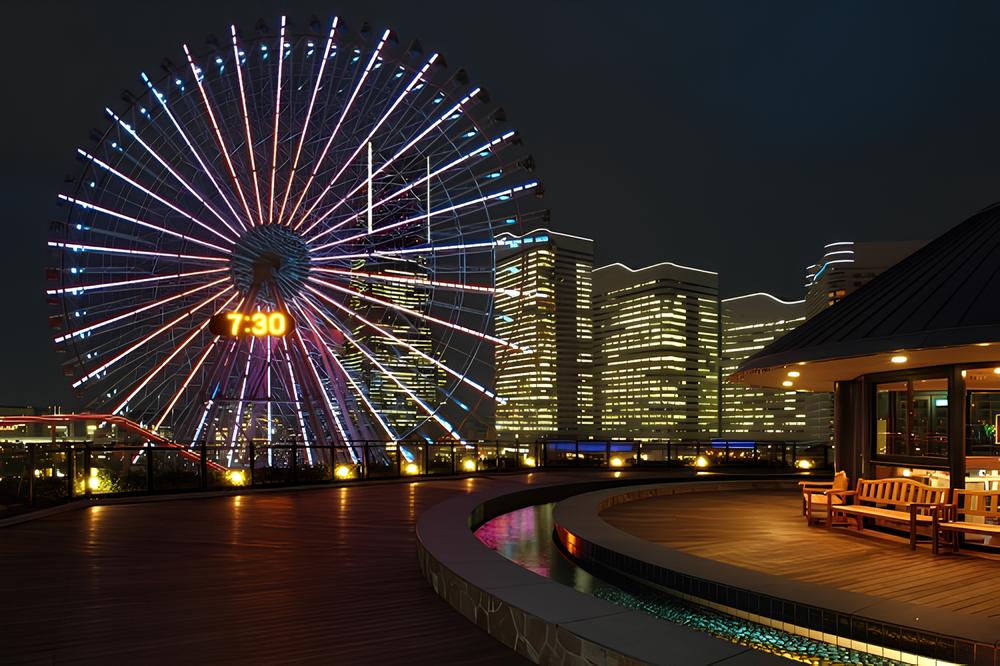
If you’re looking to unwind after a day of sightseeing, Yokohama Minatomirai Manyo Club (横浜みなとみらい万葉倶楽部 お食事処 万葉庵) offers one of the city’s most convenient hot spring experiences. Located in the Minato Mirai area, this large onsen complex brings natural hot spring water from the famous resort areas of Atami and Yugawara to central Yokohama, allowing visitors to enjoy a traditional bathing experience without leaving the city.
The facility features multiple indoor and outdoor baths, relaxation areas, saunas, dining facilities, and wellness services. Because it’s situated within the heart of the waterfront district, it serves as a convenient stop for visitors who want to combine sightseeing with a traditional Japanese hot spring experience.
One of the most popular features is the rooftop observation foot bath. Located on the upper level of the complex, this open-air area allows guests to soak their feet while enjoying panoramic views of Minato Mirai, Yokohama Bay, and the surrounding skyline. The experience is especially enjoyable in the evening when the waterfront lights begin to illuminate the city.
Day-use admission allows visitors to enjoy the baths and facilities for several hours without staying overnight, making it a popular option for day-trippers and travelers based in Tokyo, while for those seeking a more relaxed experience, the complex also offers overnight accommodation options, including guest rooms and reclining chair lounges. This makes it possible to spend the night in the facility and continue exploring Yokohama the following day.
| Access |
10-min walk from Minatomirai Station |
|---|---|
| Business Hours |
24h |
| Price |
Day use ¥3,500 , additional fees apply for late night and extended stay |
| Official Website |
https://www.manyo.co.jp/mm21/ |
Entertainment and Family Attractions
Yokohama offers far more than waterfront scenery and historic neighborhoods. Families, couples, and leisure travelers will find a wide variety of attractions ranging from aquariums and amusement rides to harbor cruises and world-class museums. Many of these attractions are concentrated around the bay area, making them easy to combine into a single itinerary, while others provide excellent options for visitors looking to venture beyond the city center.
Yokohama Hakkeijima Sea Paradise
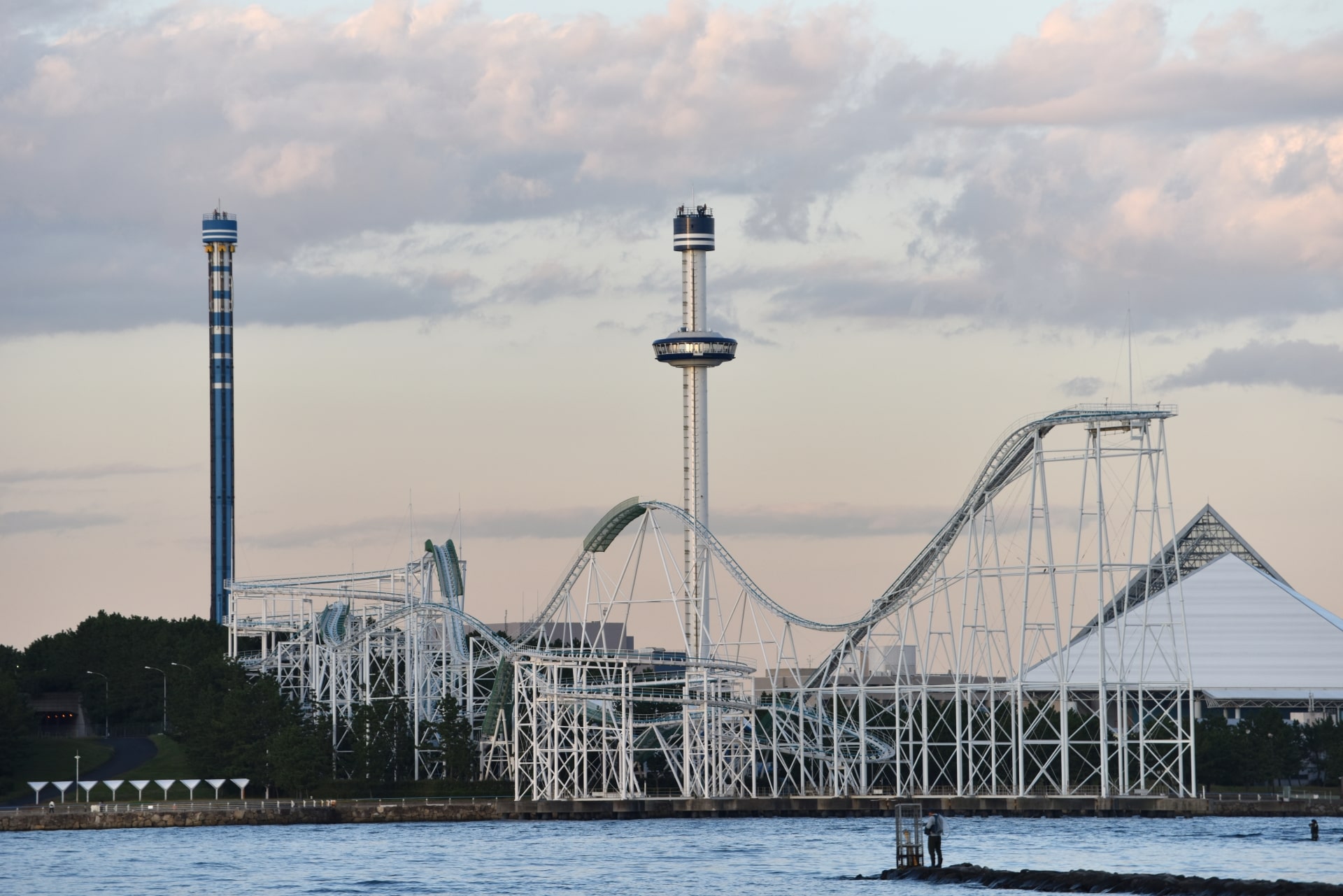
Located on a small island in Yokohama Bay, Hakkeijima Sea Paradise (横浜八景島シーパラダイス) is one of Japan’s largest marine-themed leisure complexes. The facility combines several aquariums, amusement rides, restaurants, shopping areas, and waterfront attractions, making it a popular destination for families and marine life enthusiasts. Unlike many aquariums, Sea Paradise functions as an integrated resort-style attraction where visitors can easily spend an entire day.
The centerpiece is Aqua Museum, the largest aquarium within the complex. It houses tens of thousands of marine creatures, including sharks, rays, dolphins, sea lions, and schools of fish displayed in massive tanks. The aquarium is particularly known for its live performances and educational presentations featuring dolphins, beluga whales, and other marine animals.
One of the most memorable experiences is Dolphin Fantasy, a separate facility featuring a large arch-shaped tunnel that allows visitors to observe dolphins swimming overhead. The design creates the impression of walking beneath the ocean and has become one of the park’s most photographed attractions.
Beyond the aquariums, the island features a collection of amusement rides ranging from family-friendly attractions to larger thrill rides. Highlights include the Surf Coaster Leviathan, which runs along the waterfront, and several attractions designed specifically for younger children.
Families will find Sea Paradise particularly rewarding because of the variety on offer. Younger children can enjoy the interactive exhibits and marine life encounters, while older visitors have access to roller coasters, observation areas, and waterfront activities. If you’re traveling with children, this is arguably Yokohama’s best full-day attraction.
<<Get your Hakkeijima Sea Paradise E-Ticket here!>>
| Access |
10-min walk from Hakkejima Station |
|---|---|
| Business Hours |
Weekdays 10 AM–6 PM Weekends 10 AM–7 PM |
| Price |
¥5,700 |
| Official Website |
https://www.seaparadise.co.jp/ |
Yokohama Bay Cruising
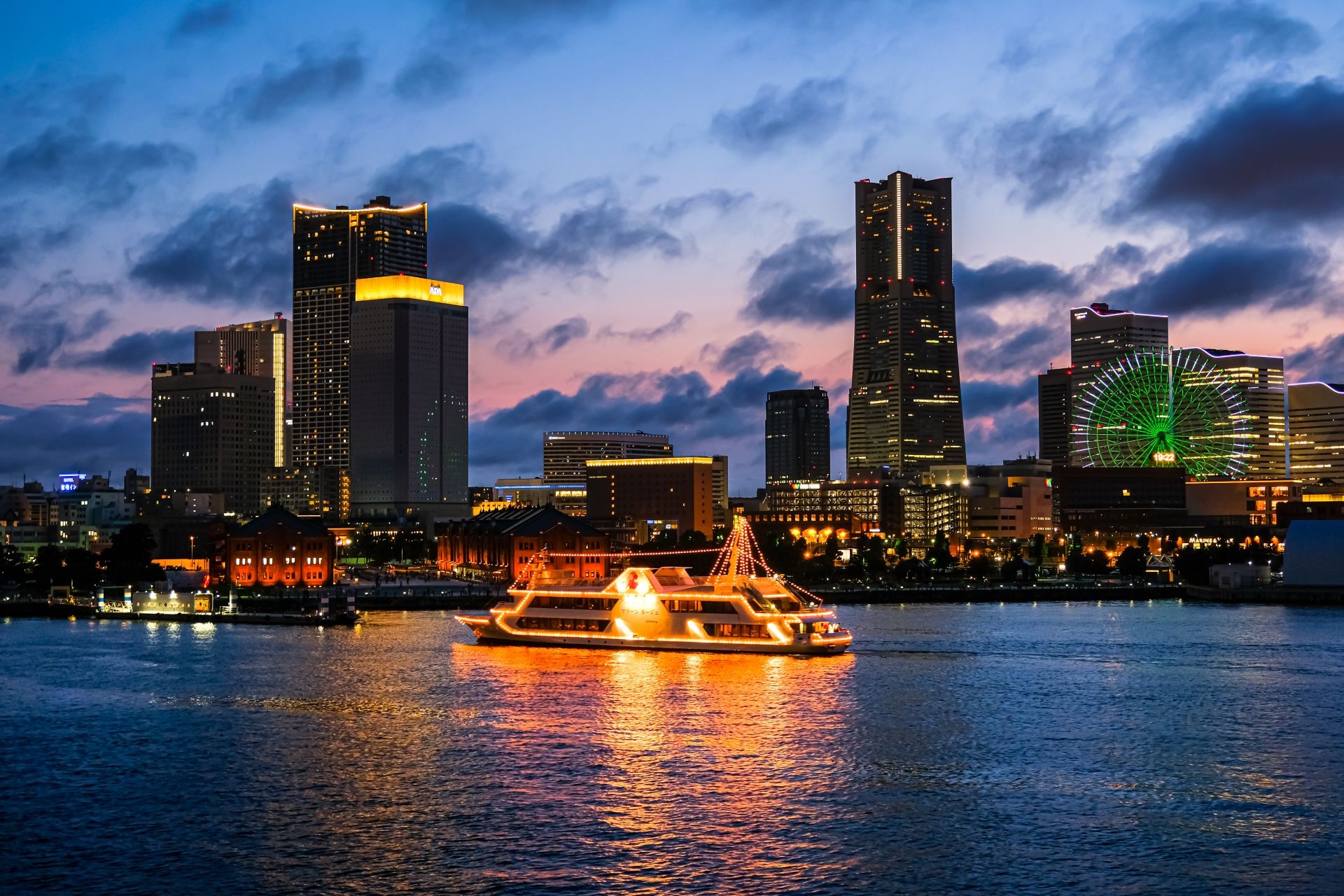
Yokohama is one of Japan’s great port cities, and some of its best views are found from the water. Harbor cruises offer a different perspective of landmarks such as Minato Mirai, Yokohama Bay Bridge, the Red Brick Warehouse, Osanbashi Pier, and the city’s distinctive skyline. For visitors who have already explored the waterfront on foot, a cruise is one of the most enjoyable ways to experience the harbor.
Several cruise options are available. The most famous is Marine Rouge, a restaurant cruise ship offering lunch, twilight, and dinner cruises around Yokohama Bay. Dining cruises are particularly popular for special occasions thanks to their panoramic views of the waterfront and illuminated skyline.
For a shorter and more affordable experience, the Sea Bass water bus functions as both transportation and sightseeing. The service connects Yokohama Station, Minato Mirai, the Red Brick Warehouse area, and Yamashita Park while providing excellent views of the harbor along the way. Many visitors use it as a scenic alternative to trains and walking between attractions.
Most cruises depart from locations around Yamashita Park, Pier Akarenga (Red Brick Warehouse), Pukari Pier in Minato Mirai, or Yokohama Station’s waterfront terminal, depending on the operator and route. This makes it easy to incorporate a cruise into a day of sightseeing without making a special trip across the city.
While cruises operate throughout the day, sunset and evening departures are generally the most rewarding. Watching the lights of Minato Mirai gradually appear across the bay is one of Yokohama’s signature experiences and offers excellent photography opportunities.
Price range: Sightseeing-oriented options such as the Sea Bass typically cost around ¥1,000–¥1,500 depending on the route, while restaurant cruises on Marine Rouge are significantly more expensive because meals are included. Current schedules and fares vary by operator and should be checked before visiting.
Yokohama Museum of Art
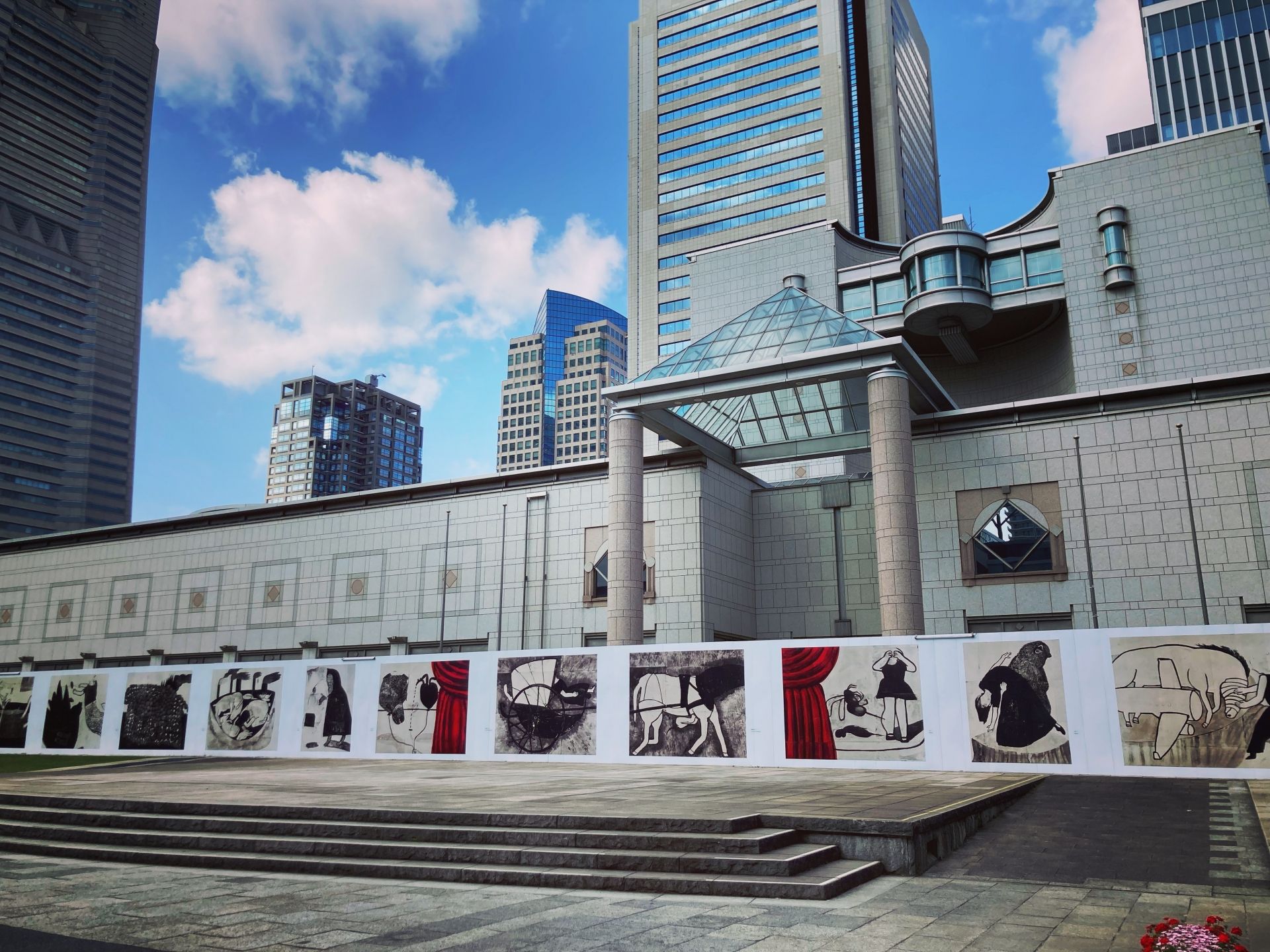
After an extensive renovation and renewal project, the Yokohama Museum of Art (横浜美術館) fully reopened in 2025, restoring one of the city’s most important cultural institutions. Designed by renowned architect Kenzo Tange, the museum occupies a prominent position in the heart of Minato Mirai and is easily recognizable thanks to its striking granite façade and spacious public plaza.
The museum’s permanent collection includes more than 14,000 works spanning modern and contemporary art, with particular strengths in photography, Japanese modern art, and works connected to Yokohama’s international history. Artists represented in the collection include both Japanese and international figures, providing visitors with a broad overview of artistic developments from the 19th century onward.
In addition to its permanent holdings, the museum regularly hosts temporary exhibitions that range from major international retrospectives to contemporary Japanese art showcases. These rotating exhibitions mean that repeat visits often provide a completely different experience. Visitors interested in current programming should consult the museum’s official website before visiting.
While dedicated art enthusiasts will naturally appreciate the museum’s collections, the venue is also accessible to casual visitors. The spacious architecture, central location, and frequently changing exhibitions make it an appealing stop even for travelers who do not typically prioritize museums.
| Access |
5-min walk from Minatomirai Station |
|---|---|
| Business Hours |
10 AM–6 PM |
 Closed Closed |
Thursday |
| Price |
Free area available. Paid collection: ¥500; Special exhibitions will vary, prices around ¥2,200. |
| Official Website |
https://yokohama.art.museum/ |
Sports and Live Events in Yokohama
Yokohama is one of Japan’s major sports cities, hosting professional baseball, top-flight football, international tournaments, and large-scale concerts throughout the year. Even visitors who aren’t dedicated sports fans may find that attending a match is one of the most memorable ways to experience local culture. The atmosphere, food, and passionate supporters offer a side of Japan that many tourists rarely encounter during a typical sightseeing itinerary.
Nissan Stadium
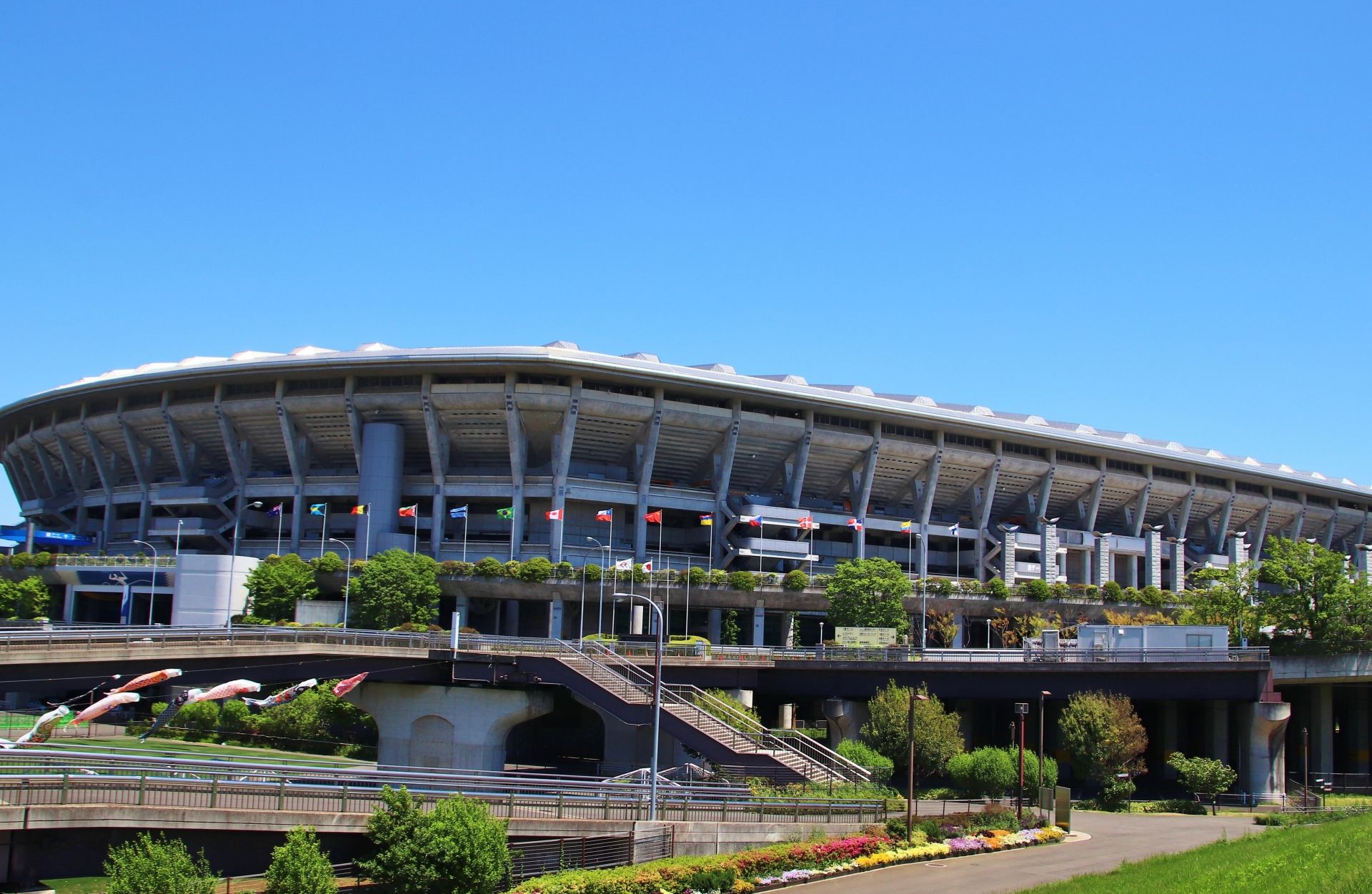
With a capacity of approximately 72,000 spectators, Nissan Stadium (日産スタジアム) is the largest stadium in Japan and one of the country’s most important sports venues. Opened in 1998, it gained international recognition as the venue for the 2002 FIFA World Cup Final and continues to host some of Japan’s biggest sporting and entertainment events.
The stadium serves as the home ground of the Yokohama F. Marinos, one of Japan’s most successful clubs and a regular competitor in the J1 League, Japan’s top professional football division. Attending a Marinos match is an excellent opportunity to experience Japanese football culture, complete with organized supporter sections, choreographed chants, and a lively matchday atmosphere. Since 2022 it’s also the home of the rugby team Yokohama Canon Eagles.
Beyond domestic sports, Nissan Stadium regularly hosts international matches, major athletics competitions, and large-scale concerts by Japanese and international artists. Its size and facilities make it one of the premier event venues in the country.
Even if you’re not specifically planning to watch a match, checking the event calendar before your visit can be worthwhile, as major sporting events and concerts frequently coincide with busy tourism periods.
| Access |
10 to 15 min walk from Shin-Yokohama Station |
|---|---|
| Official Website |
https://www.nissan-stadium.jp/ |
Watch a Yokohama DeNA BayStars Game
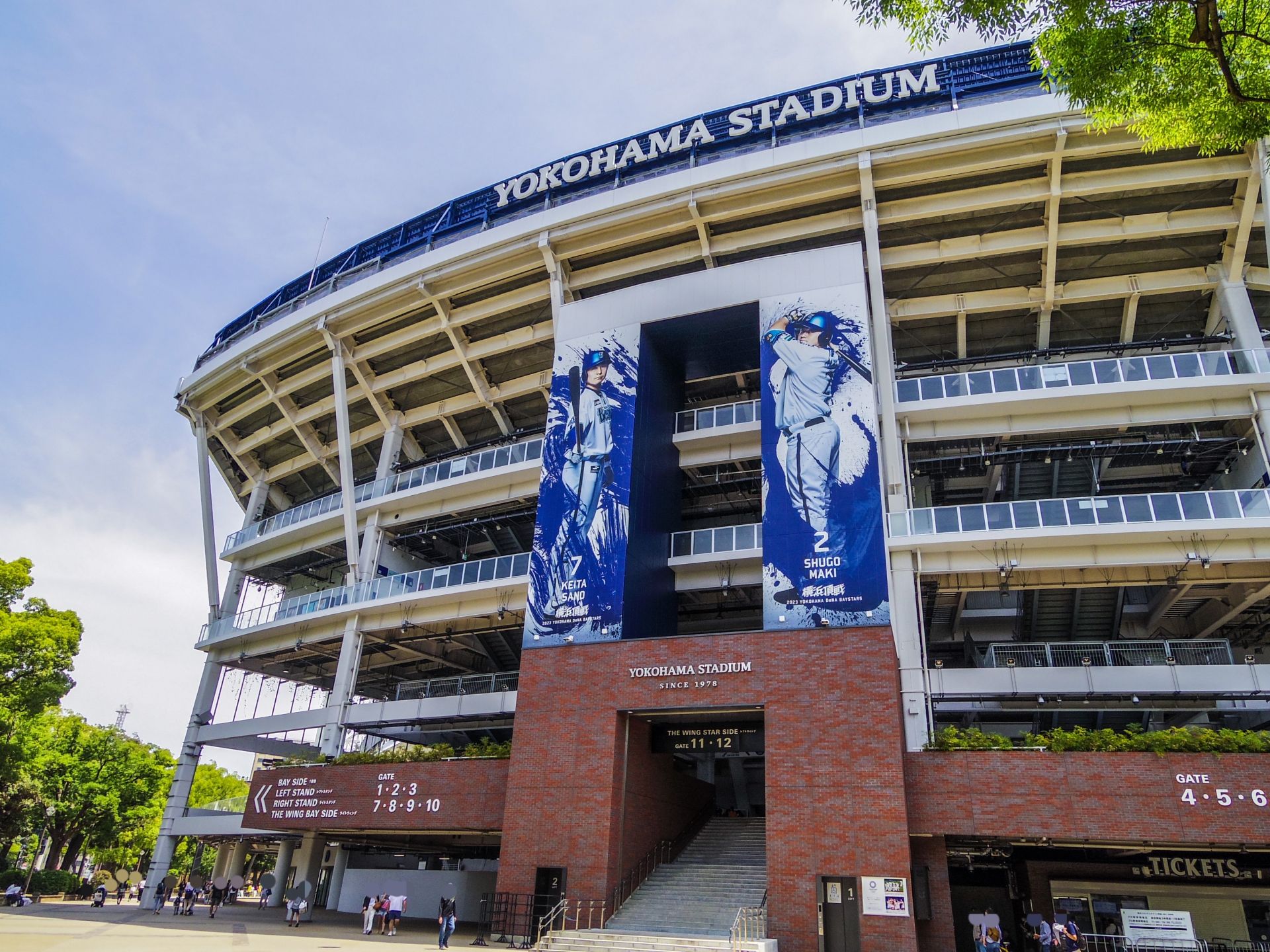
Baseball remains Japan’s most popular spectator sport, and few experiences provide a better introduction to the country’s sporting culture than attending a Yokohama DeNA BayStars game. The BayStars compete in Nippon Professional Baseball (NPB), Japan’s highest professional baseball league, and play their home games at Yokohama Stadium (横浜スタジアム), located near Chinatown and Yamashita Park.
Japanese baseball games differ noticeably from their North American counterparts. Organized cheering sections lead coordinated chants, songs, and rhythmic support throughout the game, creating an energetic atmosphere from first pitch to final out. The enthusiasm of BayStars supporters is one of the team’s defining characteristics and adds significantly to the overall experience.
Tickets can be purchased through the BayStars’ official website, ticketing platforms, or directly at the stadium when availability permits. Weekend games, rivalry matchups, and games during the summer holiday season often sell out, so advance booking is recommended.
For first-time visitors, seats along the first- or third-base lines generally provide the best balance between visibility and atmosphere. Those looking to immerse themselves in the crowd experience may prefer seats closer to the outfield cheering sections, where supporters sing and chant throughout the game.
Food is an important part of the experience. Yokohama Stadium offers a wide variety of options ranging from classic ballpark favorites to local specialties, while beer vendors circulate through the stands during games. Even visitors with limited knowledge of baseball often find themselves enjoying the festive atmosphere, making a BayStars game one of Yokohama’s most accessible and entertaining cultural experiences.
| Access |
1-min walk from the East Exit Sakuragicho Station |
|---|---|
| Business Hours |
10 AM–9 PM (Hours may vary by season or stay extended during peak holiday periods) |
| Price |
One-way: ¥1,000 Round-trip: ¥1,800 |
| Official Website |
https://yokohama-air-cabin.jp/ |
Sample Yokohama Itineraries
One of Yokohama’s biggest advantages is how compact many of its major attractions are. Visitors can comfortably see several highlights in a single day, while those with more time can explore the city’s gardens, museums, waterfront districts, and family attractions at a more relaxed pace. The following itineraries provide a starting point that can easily be adjusted based on your interests and travel style.
Half-Day Yokohama Itinerary
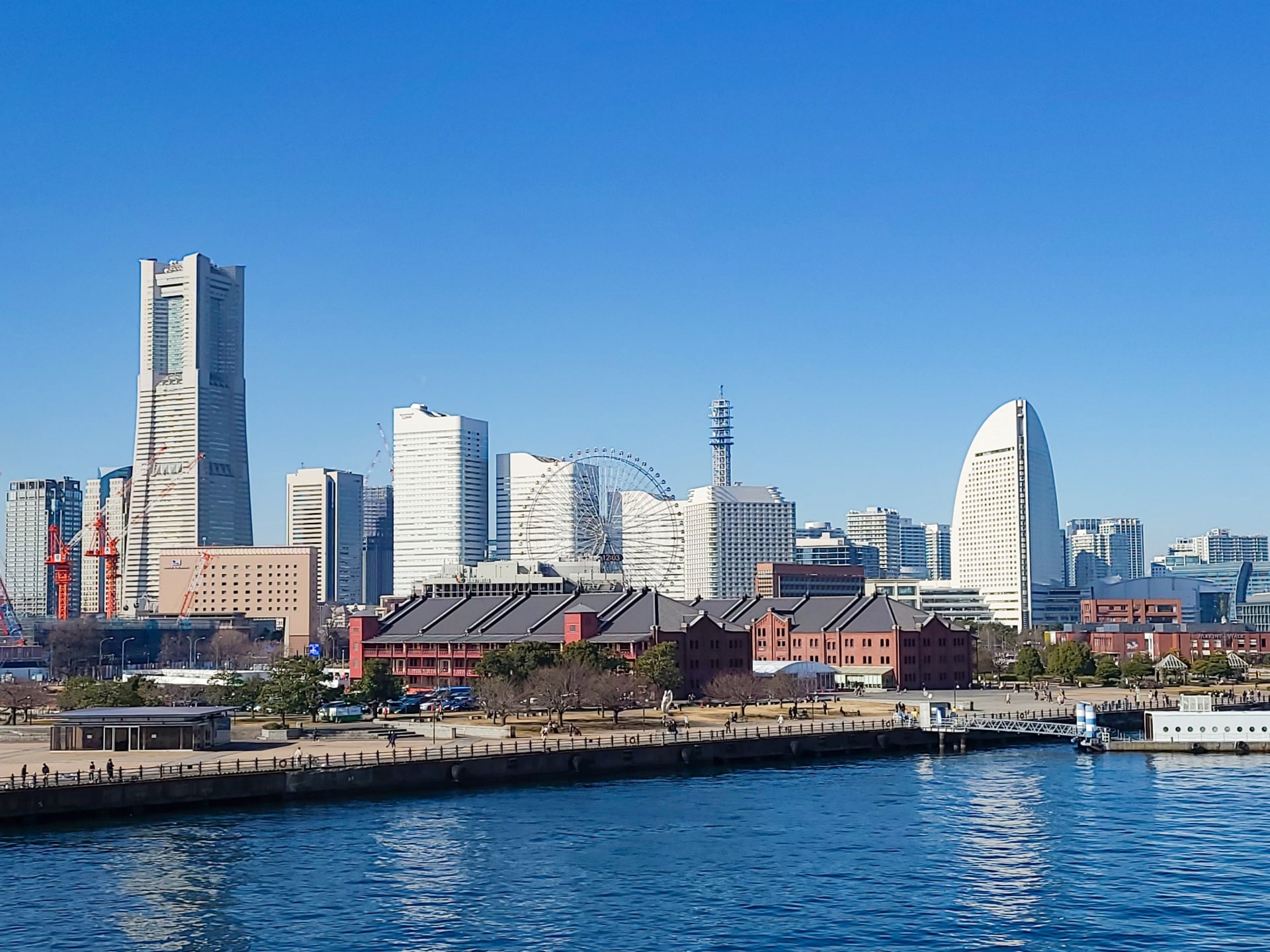
If you’re visiting Yokohama as a short day trip from Tokyo or combining it with another destination, focus on the city’s most iconic waterfront attractions.
Suggested route: Sakuragicho Station → Minato Mirai → Red Brick Warehouse → Osanbashi Pier → Chinatown
Start at Minato Mirai, where you can stroll along the waterfront and enjoy views of Landmark Tower, Cosmo Clock 21, and Yokohama Bay. From there, continue on foot to the Yokohama Red Brick Warehouse, stopping to browse the shops or enjoy a quick meal or coffee along the waterfront.
Next, walk through Osanbashi Pier or along the harbor promenade toward Yokohama Chinatown. Spend the remainder of your visit exploring the colorful streets, sampling local specialties such as steamed buns and shumai, and visiting some of the district’s historic gates and temples.
This route can comfortably be completed in four to six hours and covers many of Yokohama’s most recognizable sights.
One-Day Yokohama Itinerary
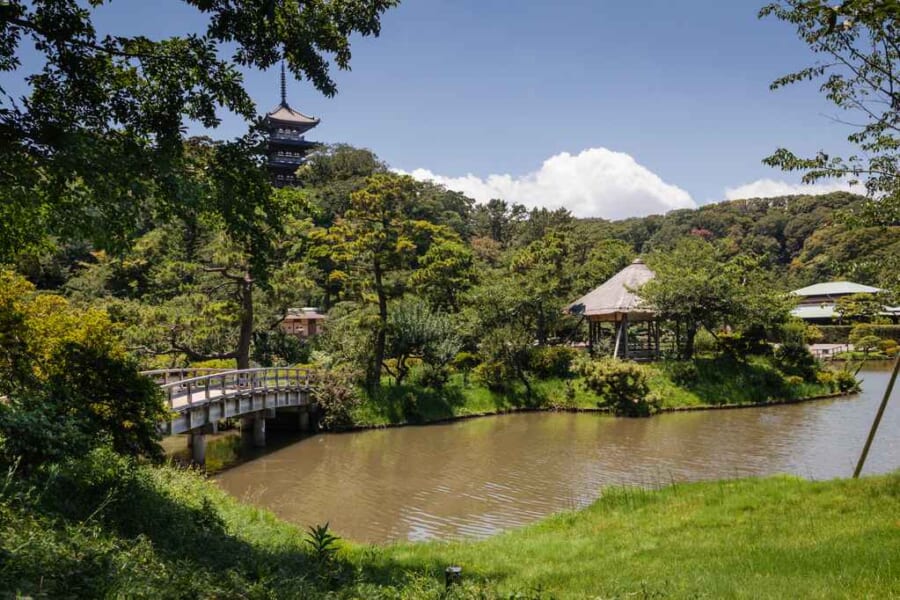
A full day allows you to experience both Yokohama’s modern waterfront and its historic districts without feeling rushed.
Suggested route: Sankeien Garden → Chinatown → Motomachi → Yamate Western Houses → Yamashita Park → Marine Tower → Osanbashi Pier → Red Brick Warehouse → Minato Mirai
Begin your morning at Sankeien Garden, when the grounds are generally at their quietest. The peaceful atmosphere and traditional architecture provide a striking contrast to the modern city center and offer an excellent introduction to Yokohama’s cultural heritage.
From Sankeien, head to Yokohama Chinatown for lunch. After exploring the neighborhood, walk through Motomachi Shopping Street and continue uphill into the Yamate Western Houses district for a glimpse into Yokohama’s international history.
In the afternoon, make your way to Marine Tower, Yamashita Park, and Osanbashi Pier before continuing toward the Minato Mirai waterfront. Explore the Red Brick Warehouse, ride Cosmo Clock 21 if time permits, and enjoy dinner around Minato Mirai or Chinatown.
Finish the day with Yokohama’s famous nighttime scenery. The illuminated skyline around Minato Mirai is widely considered one of the best urban night views in Japan.
Two-Day Yokohama Itinerary
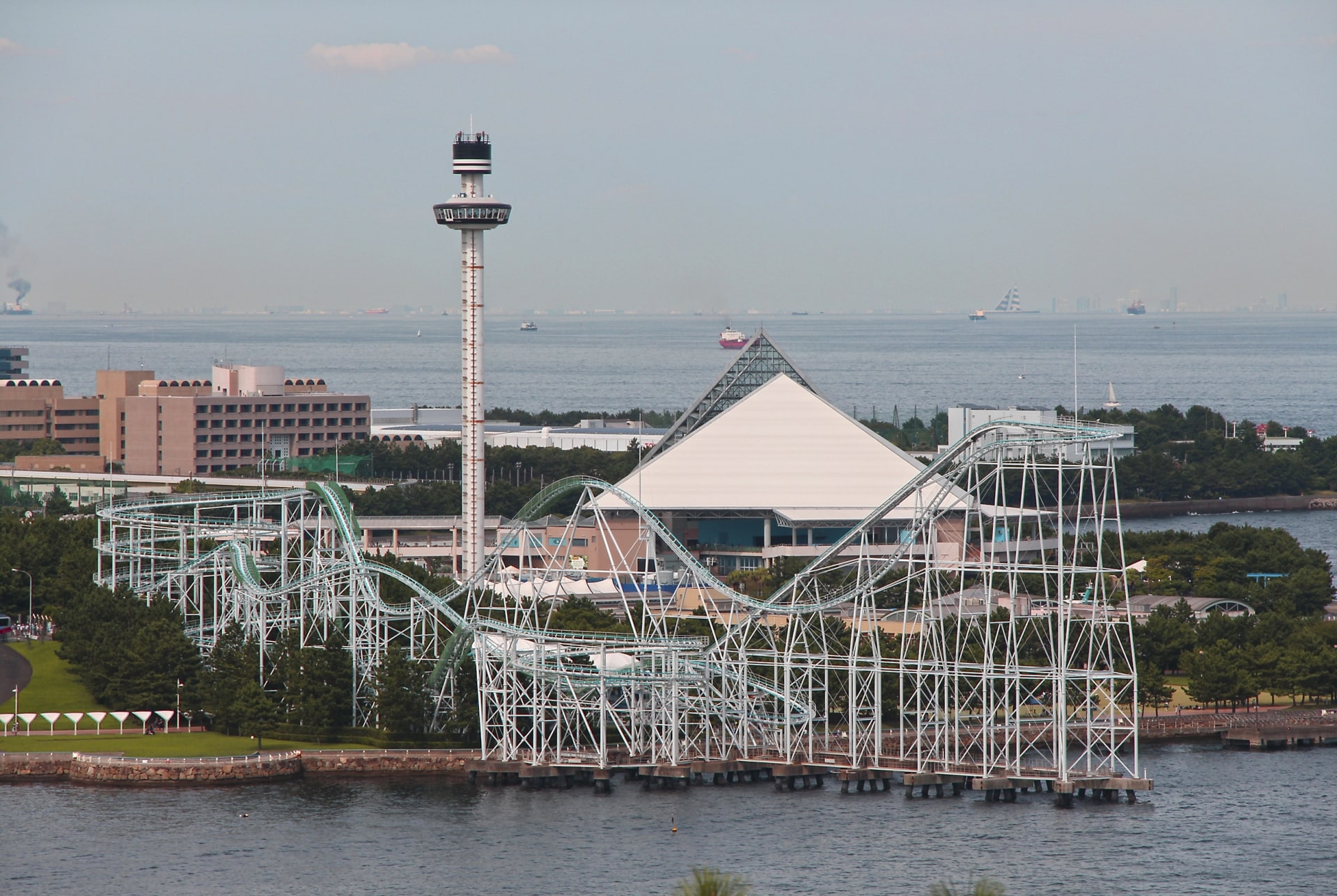
With two days, you can explore the city’s major attractions at a comfortable pace while adding experiences that are often skipped by day-trippers.
Day 1: Historic Yokohama and the Waterfront
Spend your first day following the one-day itinerary above, focusing on Chinatown, Motomachi, Yamate, Sankeien Garden, and the Minato Mirai waterfront. In the evening, head to Noge, where you can experience Yokohama’s local nightlife scene through its maze of izakaya, bars, and small restaurants.
Day 2: Family Attractions and Entertainment
Dedicate your second day to attractions beyond the city center. Families should consider spending most of the day at Yokohama Hakkeijima Sea Paradise, where aquariums, marine life exhibits, and amusement rides can easily fill an entire day.
Alternatively, visitors interested in food and culture could combine the Cup Noodles Museum, Shin-Yokohama Ramen Museum, and Yokohama Museum of Art into a more relaxed sightseeing schedule.
End your visit with an evening harbor cruise or a final stroll through Minato Mirai to enjoy Yokohama’s waterfront atmosphere after dark.
Suggested Day 2 options:
- Families: Hakkeijima Sea Paradise → Evening Cruise
- Food Lovers: Cup Noodles Museum → Ramen Museum → Noge
- Culture Lovers: Museum of Art → Sankeien Garden → Harbor Cruise
Two days is enough time to experience most of Yokohama’s major attractions without rushing, making it a great option for travelers looking for a slower alternative to Tokyo.
Tips for Visiting Yokohama
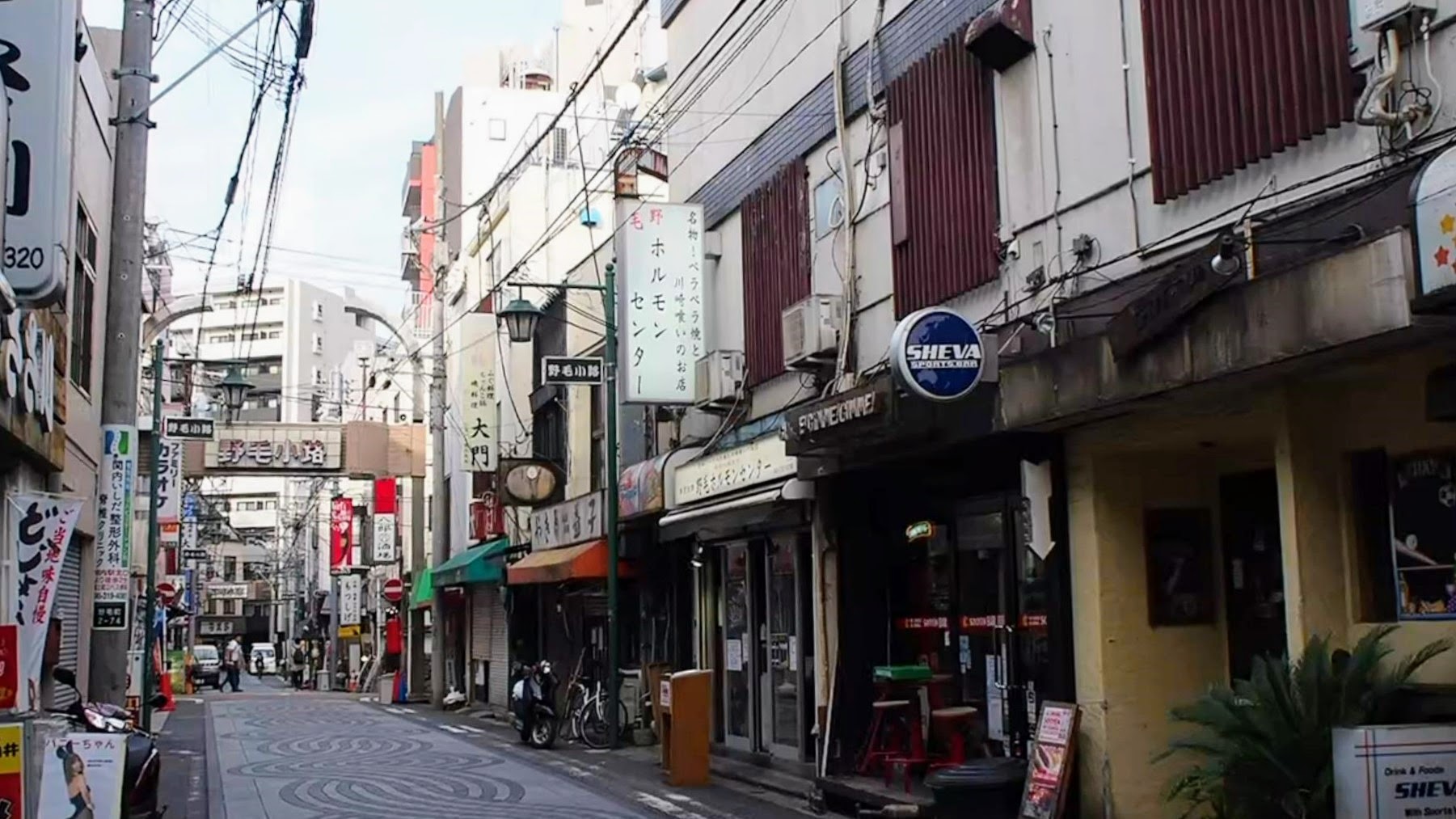
Yokohama is one of the easiest cities to explore in Japan, but a little planning can help you make the most of your visit.
Best Time to Visit Yokohama
Yokohama can be visited year-round, but spring and autumn are generally considered the most comfortable seasons for sightseeing.
Spring (March to May) is one of the city’s most popular periods thanks to mild temperatures and cherry blossom season. Sankeien Garden, Yamashita Park, and many of the city’s waterfront areas become particularly attractive during this time. Cherry blossoms typically reach their peak between late March and early April, although exact timing varies from year to year.
Autumn (October to November) offers pleasant weather, lower humidity, and colorful autumn foliage. Sankeien Garden is especially beautiful during the fall leaf season, while comfortable temperatures make it ideal for exploring the waterfront and historic districts on foot.
Winter (December to February) tends to be quieter and often features clear skies with excellent visibility. The season’s biggest attraction is the extensive illumination displays around Minato Mirai, including seasonal light-up events, Christmas markets, and waterfront decorations that transform the city after dark.
How to Get Around Yokohama
Yokohama’s public transportation network makes it easy to reach most attractions without a car.
The Minato Mirai Line is particularly useful for sightseeing. It connects Yokohama Station with major attractions including Minato Mirai, the Red Brick Warehouse area, Chinatown, Motomachi, and Yamashita Park. For many visitors, this single line covers most of the city’s key destinations. (Source: Minato Mirai Line official website, https://www.mm21railway.co.jp/)
The city’s extensive JR network complements the Minato Mirai Line. Major stations such as Yokohama, Sakuragicho, Kannai, Shin-Yokohama, and Ishikawacho provide convenient access to different parts of the city and direct connections to Tokyo and other destinations throughout the region.
One thing many first-time visitors underestimate is how walkable central Yokohama can be. Attractions such as Minato Mirai, the Red Brick Warehouse, Osanbashi Pier, Yamashita Park, Chinatown, Motomachi, and Marine Tower can often be explored on foot as part of a continuous sightseeing route. Comfortable walking shoes are highly recommended, as you may end up covering several kilometers without realizing it.
Is Yokohama Worth a Day Trip from Tokyo?
Absolutely. Yokohama is one of the best day trips from Tokyo thanks to its proximity and variety of attractions.
Travel times from central Tokyo are typically between 25 and 40 minutes depending on your departure point and train service. This makes it possible to leave Tokyo in the morning, enjoy a full day of sightseeing, and return in the evening without feeling rushed.
Yokohama is particularly well suited to travelers who enjoy food, architecture, waterfront scenery, shopping, photography, and cultural history. The city offers a noticeably different atmosphere from Tokyo while remaining extremely accessible.
If your Japan itinerary is limited, a day trip is usually sufficient to see the major highlights. Visitors interested in museums, nightlife, family attractions, or a slower pace may find that an overnight stay offers a more rewarding experience.
How Many Days Should You Spend in Yokohama?
The ideal length of stay depends on your interests and overall travel plans.
A day trip is enough to experience the city’s major highlights, including Minato Mirai, Chinatown, Yamashita Park, the Red Brick Warehouse, and the historic Motomachi area. This is the most common option for visitors staying in Tokyo.
An overnight stay allows you to enjoy Yokohama’s famous night views, spend more time exploring neighborhoods such as Noge and Yamate, and visit attractions like Sankeien Garden without rushing between locations.
A weekend trip is ideal for travelers who want a deeper experience. Two days provides enough time to visit while maintaining a relaxed pace.
For most visitors, one full day is sufficient, while two days offers the best balance between sightseeing and comfort.
Money-Saving Tips
Yokohama can be surprisingly budget-friendly if you plan strategically.
Use transportation passes wisely. Visitors arriving from Tokyo may benefit from regional rail passes depending on their itinerary, while rechargeable IC cards such as Suica and PASMO make it easy to use trains, buses, and convenience stores throughout the city.
Take advantage of free attractions. Many of Yokohama’s best experiences cost nothing. Walking through Chinatown, exploring Yamashita Park, visiting Osanbashi Pier’s rooftop, browsing the Red Brick Warehouse, strolling around Minato Mirai, and exploring several of the Yamate Western Houses can all be enjoyed with little or no admission cost.
Choose observation decks strategically. With Landmark Tower’s Sky Garden currently closed for renovation, visitors looking for elevated views may find Yokohama Marine Tower a worthwhile option. However, some of the city’s best skyline views can be enjoyed for free from locations such as Osanbashi Pier and parts of the Minato Mirai waterfront.
FAQs about Yokohama
What Is Yokohama Most Famous For?
Yokohama is best known for its waterfront district of Minato Mirai, Japan’s largest Chinatown, and its history as one of the first Japanese ports to open to international trade in the 19th century. The city is also famous for attractions such as the Red Brick Warehouse, Sankeien Garden, and its impressive nighttime skyline. (Sources: JNTO, Yokohama Official Visitors Guide)
What Food Is Yokohama Known For?
Yokohama is famous for several local specialties, including shumai dumplings, sanma-men noodles, and Ie-kei ramen, which originated in the city. Visitors should also try Harbor sweets and explore the hundreds of restaurants and street food stalls in Yokohama Chinatown.
Is Yokohama Good for Families?
Yes. Yokohama is one of Japan’s most family-friendly cities thanks to attractions such as Hakkeijima Sea Paradise, the Cup Noodles Museum, Cosmo World, and numerous waterfront parks. Many attractions are concentrated around Minato Mirai, making it easy to travel between them with children.
Where Should First-Time Visitors Stay in Yokohama?
For most visitors, Minato Mirai is the most convenient area thanks to its waterfront scenery, hotels, restaurants, and proximity to major attractions. Visitors interested in nightlife may prefer Kannai or Sakuragicho, while those planning frequent day trips to Tokyo may choose accommodation near Yokohama Station for easy transportation connections.
Is Yokohama Chinatown Worth Visiting?
Absolutely. Yokohama Chinatown is the largest Chinatown in Japan and one of the city’s most popular attractions. With more than 600 shops and restaurants, it offers a unique combination of food, culture, architecture, and history that is difficult to find elsewhere in Japan.
Can You Walk Between Yokohama’s Main Attractions?
Yes. Many of Yokohama’s most popular attractions are connected by pleasant waterfront walking routes. It is possible to walk between Minato Mirai, the Red Brick Warehouse, Osanbashi Pier, Yamashita Park, Chinatown, Motomachi, and Marine Tower without needing additional transportation. Visitors should simply be prepared for more walking than they might initially expect.
What Should You Not Miss in Yokohama?
If you only have one day in Yokohama, prioritize Minato Mirai, the Red Brick Warehouse, Chinatown, Yamashita Park, and either Marine Tower or Osanbashi Pier for views of the waterfront. These attractions provide an excellent introduction to the city’s history, food culture, and modern skyline.
Is It Better to Stay in Tokyo or Yokohama?
For most travelers, Tokyo remains the more practical base because of its larger selection of attractions and transportation connections. However, Yokohama is an excellent choice for visitors seeking a quieter atmosphere, waterfront hotels, and easy access to destinations such as Kamakura, Enoshima, and the southern part of Kanagawa Prefecture.
There’s no shortage of attractions near Yokohama as well! Check out these other guides for more ideas nearby:


Written by
Photographer, journalist, and avid urban cyclist, making sense of Japan since 2017. I was born in Caracas and lived for 14 years in Barcelona before moving to Tokyo. Currently working towards my goal of visiting every prefecture in Japan, I hope to share with readers the everlasting joy of discovery and the neverending urge to keep exploring.
- +0 0
-
-