What to Eat in Fukuoka: The Ultimate Food Lover’s Guide to Japan’s Street Food Capital
Enjoy Hakata Ramen, Yatai Street Food, and Fukuoka’s Must-Eat Dishes like a Local


- +0 0
-

-


Fukuoka is often called Japan’s street food capital, and one bite is enough to understand why. From rich, creamy Hakata ramen to sizzling gyoza and atmospheric open-air food stalls, this Kyushu city offers bold flavours, welcoming food culture, and unbeatable value.
In this guide, you’ll learn what to eat in Fukuoka, from essential dishes like Hakata Ramen and Motsunabe to the city’s famous yatai street food, along with insider tips on how to eat like a local, hand-picked recommendations for every kind of traveller, and practical advice on travelling to Fukuoka from other major Japanese cities and getting around once you arrive.
Why is Fukuoka a Food Lover’s Paradise?
Fukuoka’s unique history as a port city and its rich local ingredients make it one of Japan’s top food destinations.
The city’s passion for food is not just about eating; it’s a way of life. For centuries, Fukuoka thrived as a gateway between Japan and mainland Asia. That openness brought new ideas, techniques, and ingredients, all while the region developed its own agricultural and seafood traditions. The result is a cuisine that’s bold, unpretentious, and deeply satisfying — often at surprisingly affordable prices.
Here is a table summarizing local’s most favourite Fukuoka dishes:
| Dish Name | Flavor Profile | Best Season | Avg. Price (JPY) |
| Hakata Ramen | Rich, creamy, pork-based broth | Year-round | ¥700 – ¥1,100 |
| Motsunabe | Savory offal hot pot (soy/miso) | Winter / Autumn | ¥2,000 – ¥4,000 |
| Yatai Dishes | Variety (Skewers, Oden, Ramen) | Year-round | ¥1,500 – ¥3,000 |
| Mentaiko | Salty, spicy, umami-rich roe | Year-round | ¥500 – ¥1,500 |
| Goma Saba | Fresh, nutty, marinated mackerel | Year-round | ¥800 – ¥1,500 |
| Hitokuchi Gyoza | Crispy, bite-sized, juicy | Year-round | ¥500 – ¥800 |
| Mizutaki | Refined, delicate chicken broth | Winter | ¥3,000 – ¥5,000 |
Hakata Ramen: Fukuoka’s Most Famous Dish
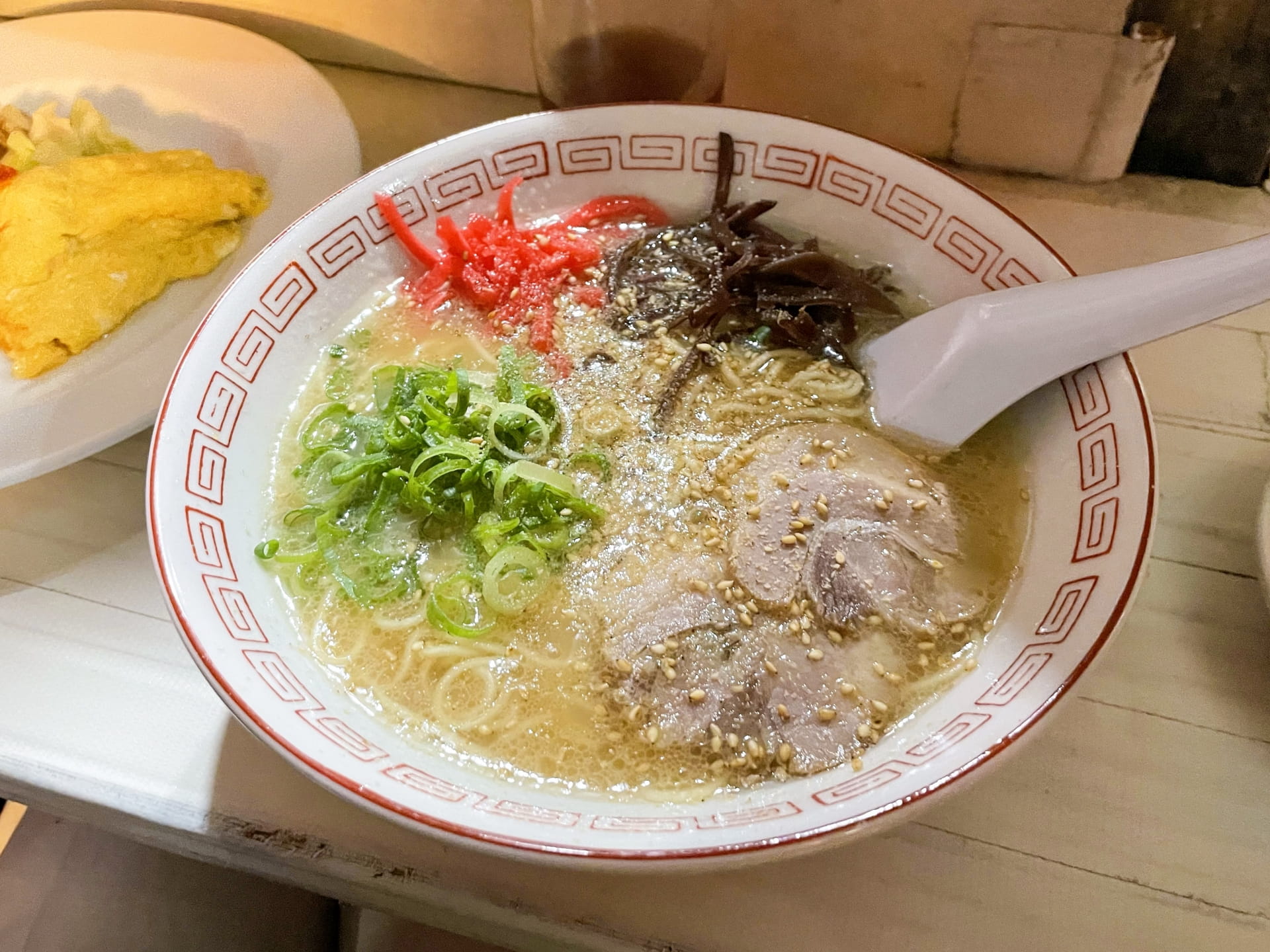
Hakata ramen is defined by its creamy tonkotsu broth and thin noodles — and ordering a kaedama refill is essential.
What Makes Hakata Ramen Special?
When people ask what food Fukuoka is famous for, the answer is almost always Hakata ramen. Its defining feature is tonkotsu broth, made by boiling pork bones for hours until the soup turns rich, milky, and deeply savory.
This broth is paired with thin, straight noodles designed for quick cooking and easy slurping. The balance of richness and simplicity makes Hakata ramen one of Japan’s most addictive comfort foods.
How to Order Hakata Ramen Like a Local
Ordering at a ramen shop can seem intimidating, but it’s simple once you know the steps. Many ramen shops use vending machines. You buy a ticket, hand it to the staff, and then choose your noodle firmness:
- Futsuu — normal
- Kata — firm
- Barikata — extra firm (a local favourite)
Pro Tip: Always save about half of your soup if you plan on getting a kaedama ( a refill of noodles) added to your remaining broth. It’s the best way to make sure not a single drop of that delicious broth goes to waste.
Where to Eat Hakata Ramen: Recommended Establishments
You can’t walk a block in Tenjin or near Hakata Station without smelling the tempting aroma of tonkotsu. For a classic, no-frills experience, try Hakata Issou. If you’re a first-timer or dining solo, the famous chain Ichiran offers private booths and a customizable ramen experience that’s perfect for beginners.
Hakata Issou (Main Shop)
- Address: 3–1–6 Hakataekihigashi, Hakata Ward, Fukuoka
- Price Range: $ (Affordable)
- Known For: “Pork Bone Cappuccino” (Frothy, intense Tonkotsu)
Ichiran (Tenjin Store)
- Address: 1–10–15 Tenjin, Chuo Ward, Fukuoka
- Price Range: $ (Affordable)
- Known For: Individual flavour booths and total customization.
Motsunabe: The Heartwarming Hot Pot
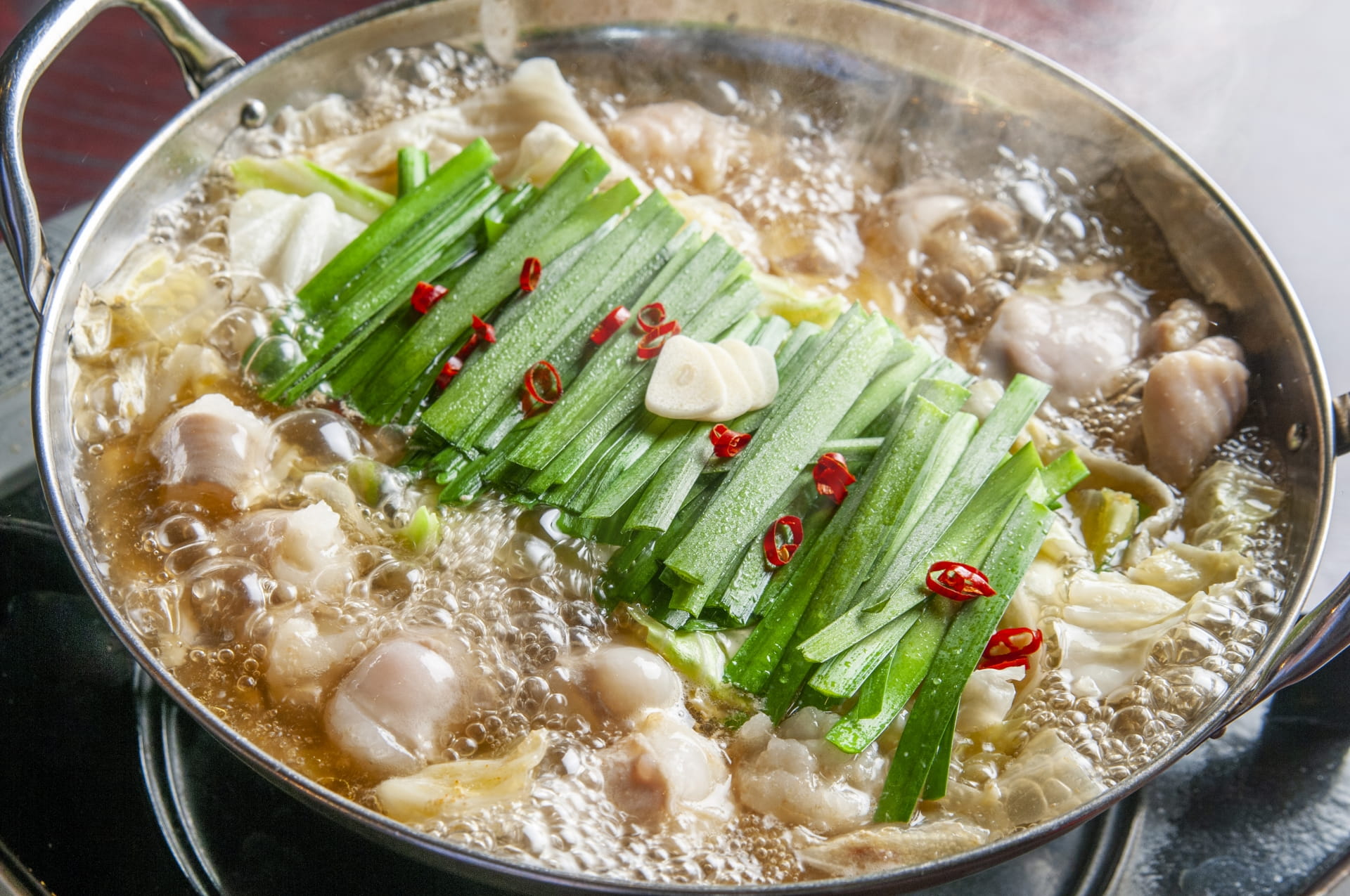
Motsunabe is a rich, savory hot pot perfect for sharing. We explain what it is and how to enjoy the final “shime” course.
What Exactly is Motsunabe?
If ramen is Fukuoka’s soul food, Motsunabe is its heart. This is a cozy, bubbling hot pot designed for sharing with friends on a cool evening. The star ingredient is motsu (beef or pork offal), which becomes incredibly tender and flavourful as it simmers. Before you hesitate, trust me on this: it’s absolutely delicious. The motsu is cooked in a savory soy or miso-based broth along with heaps of garlic chives and cabbage. The result is a deeply satisfying and nutrient-rich meal.
How to Enjoy Motsunabe
A Motsunabe experience isn’t over when the main ingredients are gone. The best part is the “shime”, or finishing course. After you’ve enjoyed the motsu and vegetables, you’ll be left with a broth that’s packed with flavour. The staff will add either steamed rice (to make a porridge called zosui) or chewy champon noodles to the pot, creating a perfect final course that soaks up every last drop of goodness. Don’t skip it!
Our Top Picks for an Authentic Motsunabe Night
For a fantastic experience, I recommend Yamanaka Akasaka. It has a modern, stylish interior and is consistently ranked as one of the best in the city. It’s the perfect place to fall in love with this local hot pot.
Yamanaka Akasaka
- Address: 1–9–1 Akasaka, Chuo Ward, Fukuoka
- Price Range: $$ (Mid-range)
- Known For: Elegant atmosphere and premium miso-based broth.
Yatai Dishes: The Soul of the City
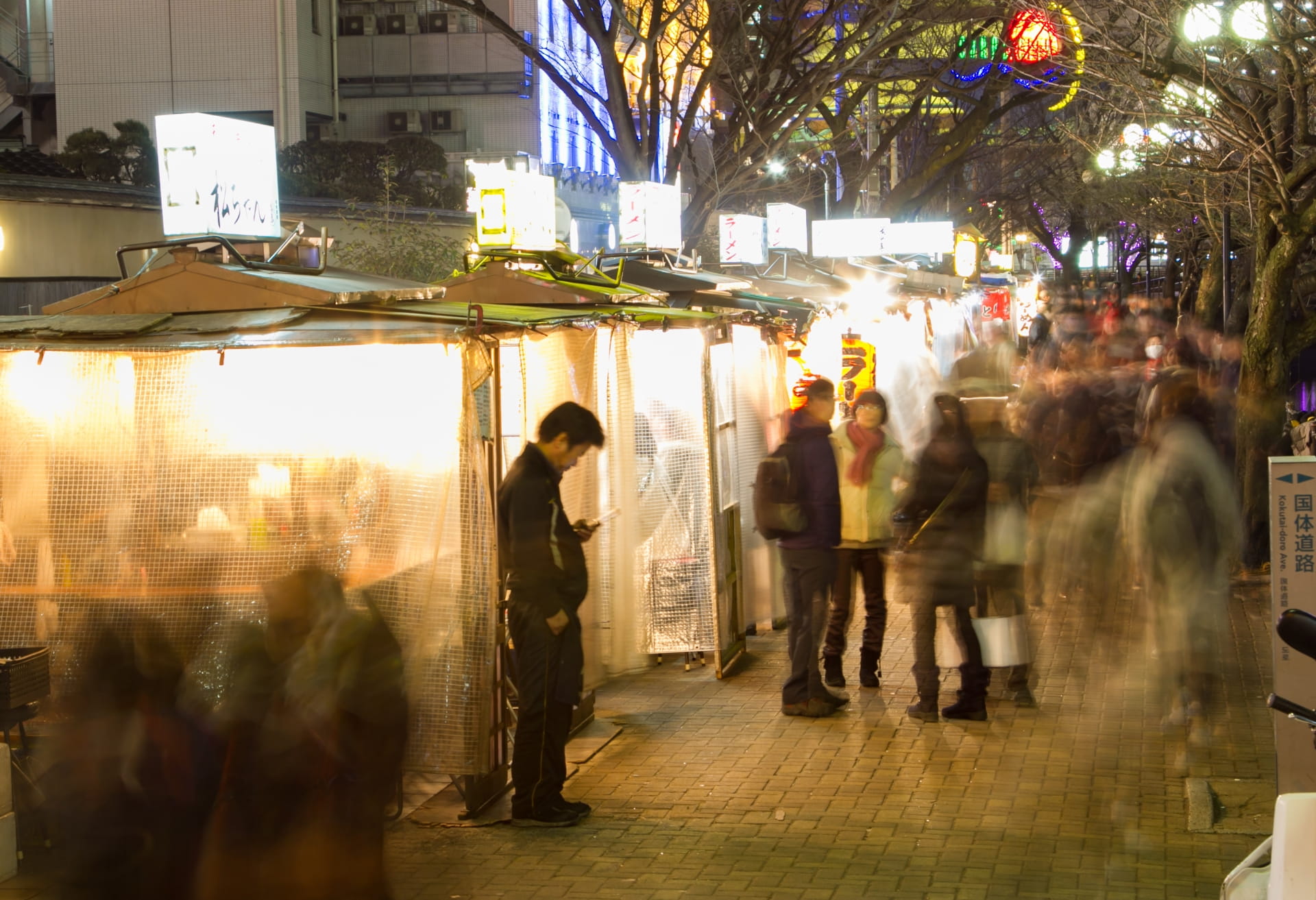
Fukuoka’s yatai (open-aired food stalls) are iconic food stalls offering a unique dining experience. Follow basic etiquette to ensure a great night.
What to Expect: The Vibe, the Food, and the People
The Yatai are perhaps the most iconic part of Fukuoka’s food scene. These open-air food stalls pop up every evening, seating just 8–10 people at a time. The vibe is lively, intimate, and incredibly friendly. You’ll find a surprising variety of food, from classic Yakitori (grilled skewers) and oden to ramen and even French-inspired dishes. It’s not just a meal; it’s a chance to chat with the owner and sit shoulder-to-shoulder with locals.
Yatai Etiquette: Do’s and Don’ts
The intimate setting has its own set of unwritten rules. Following them will ensure you have a great time.
- DO order at least one drink and one food item per person.
- DON’T linger for too long if people are waiting for a spot. Yatai are for a quick bite and drink.
- DO be prepared to pay with cash.
- DON’T bring in outside food or drinks.
- DO try to chat with your neighbours! It’s the best part of the experience.
Pro Tip: Space is extremely limited in a Yatai. Advise travellers to avoid bringing large backpacks or shopping bags; if they have them, they should keep them on their laps or under the tiny stool.
Where to Find Yatai: A Guide to the Nakasu and Tenjin Areas
The most famous and picturesque cluster of yatai is located along the river on Nakasu Island. You’ll also find another great group of stalls in the southern part of the Tenjin area. I recommend taking a stroll through both to see which vibe and menu appeals to you most.
More Fukuoka Essentials You Can’t Miss
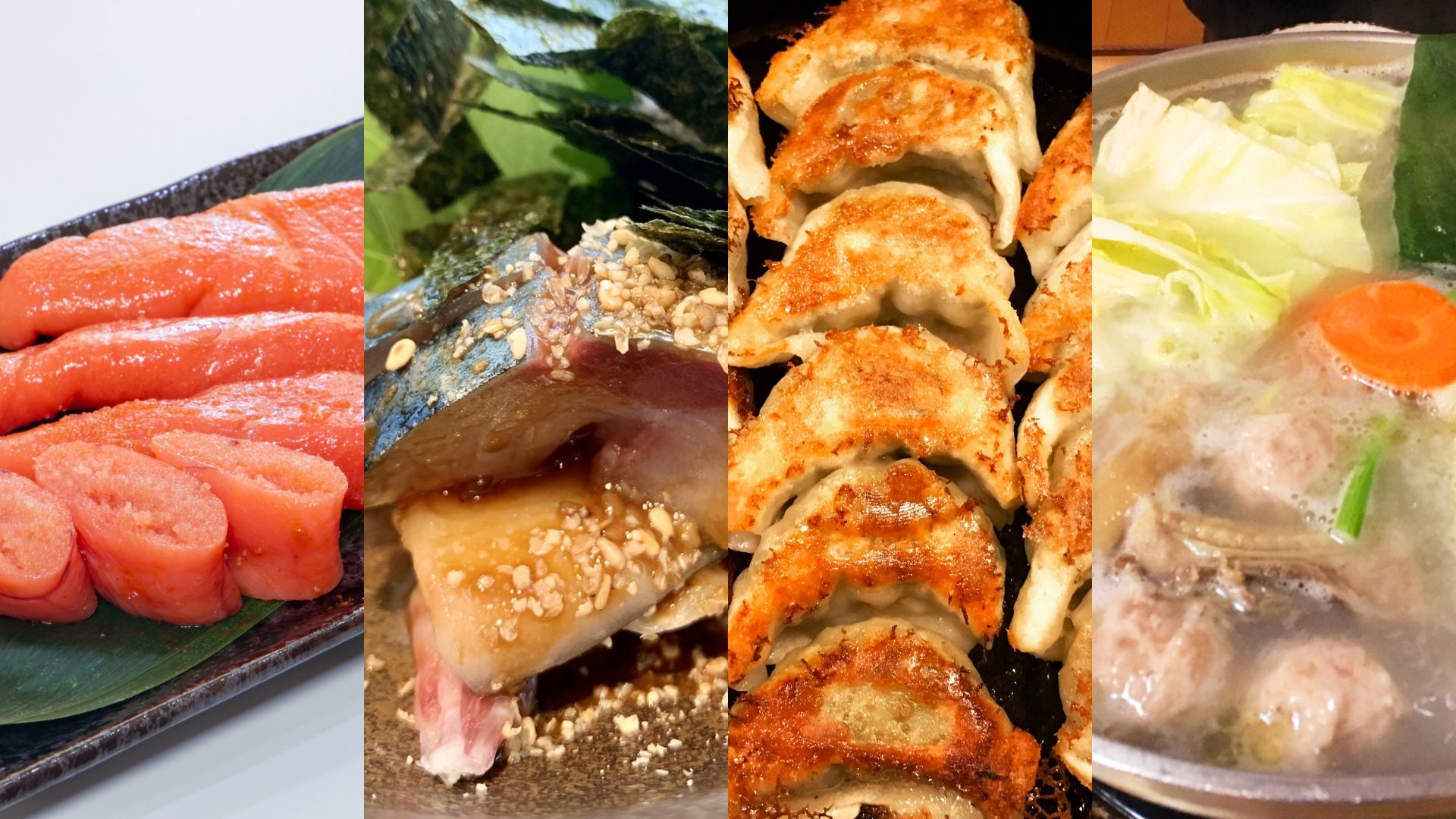
Complete your food journey with Fukuoka’s other must-try dishes, including savory Mentaiko, fresh Goma Saba, crispy Gyoza, and delicate Mizutaki.
Mentaiko : The Savory Souvenir
You’ll see mentaiko everywhere in Fukuoka. This local specialty is cod roe cured in salt and chili peppers, prized for its salty, savory flavor and addictive spicy kick. It’s commonly served with a bowl of white rice for breakfast, used as a ramen topping, or mixed into pasta. Mentaiko also makes an excellent food souvenir. It’s sold in a range of spice levels, from mild to very hot — if you enjoy heat, look for karashi mentaiko, the spicier version.
Goma Saba: A Fresh Local Delicacy
Because of its proximity to the sea, Fukuoka boasts incredibly fresh seafood. One must-try local secret is Goma Saba. This dish consists of fresh, raw mackerel marinated in a rich sauce of soy sauce and sesame seeds. It’s a true taste of Hakata’s local fishery and something you’re unlikely to find outside of Kyushu.
Hitokuchi Gyoza: Crispy, Bite-Sized Perfection
While gyoza are popular all over Japan, Hakata’s style is unique. They are called Hitokuchi Gyoza, meaning “one-bite” dumplings. These small, crispy parcels are packed with juicy pork and vegetables. They are often served in a cast-iron skillet (tetsunabe) which keeps them sizzling hot at your table. They’re the perfect companion to a cold beer and a non-negotiable side order for many locals.
Mizutaki: The Elegant Chicken Hot Pot
If Motsunabe is the hearty, robust hot pot, Mizutaki is its elegant and refined cousin. This is a chicken-based hot pot that starts with a pure, beautiful chicken broth. You first sip the broth on its own, then enjoy the tender chicken pieces and vegetables by dipping them in a citrusy ponzu sauce. It’s a clean, delicate, and deeply comforting meal.
Fukuoka Itinerary for Foodies: The First-Timer’s Must-Do Route
This high-energy itinerary covers Fukuoka’s most iconic foods and sights, built around the city’s classic “Big Three”: Hakata Ramen, Motsunabe, and the yatai experience. It’s ideal for first-time visitors who want to eat boldly and see the highlights in one delicious day.
-
09:00 AM – The Mentaiko Breakfast: Start at Ganso Hakata Mentaiju (near Tenjin). It’s the first restaurant in Japan dedicated to Mentaiko. Order the Mentaiju—a piece of premium spicy cod roe wrapped in kelp, served over rice with a special sauce.
-
12:30 PM – The Ramen Pilgrimage: Head to Hakata Issou (near Hakata Station). Locals call their broth “tonkotsu cappuccino” because it’s so frothy and rich. Order your noodles barikata (extra firm) and don’t forget the kaedama (refill)!
-
03:00 PM – Sweet Treat in Dazaifu: Take a short train ride to Dazaifu Tenmangu, one of Kyushu’s most important shrines. As you walk along the lively approach, grab a freshly grilled Umegae Mochi, a chewy rice cake stamped with a plum blossom and filled with sweet red bean paste.
-
07:00 PM – The Motsunabe Feast: Return to the city for dinner at Yamanaka Akasaka. It’s elegant and serves the gold standard of Motsunabe.
-
10:00 PM – Yatai Nightcap: End the night at the iconic Nakasu riverside yatai. Grab a seat, order a highball and some yakitori, and soak up the neon-lit atmosphere. It’s casual, social, and quintessentially Fukuoka—the perfect finale to a food-filled day.
How to Get to Fukuoka in Comfort
If you’re travelling to Fukuoka from major Japanese cities like Tokyo (Haneda) or Nagoya, how you arrive can set the tone for your entire food journey. As someone who flies this route regularly, STARFLYER is the airline I recommend most.
STARFLYER is known for its sleek black aircraft, comfortable leather seats with extra legroom, and consistently excellent service — often at prices comparable to standard domestic carriers. It’s a calm, refined experience that feels a step above the usual short-haul flight, making it an ideal way to start (or end) a food-focused trip to Fukuoka.
Book your flight tickets in advance
For domestic flights from major Japanese cities, STARFLYER is worth checking for its comfortable seating, smooth service, and stress-free start to your journey.
Getting around the City
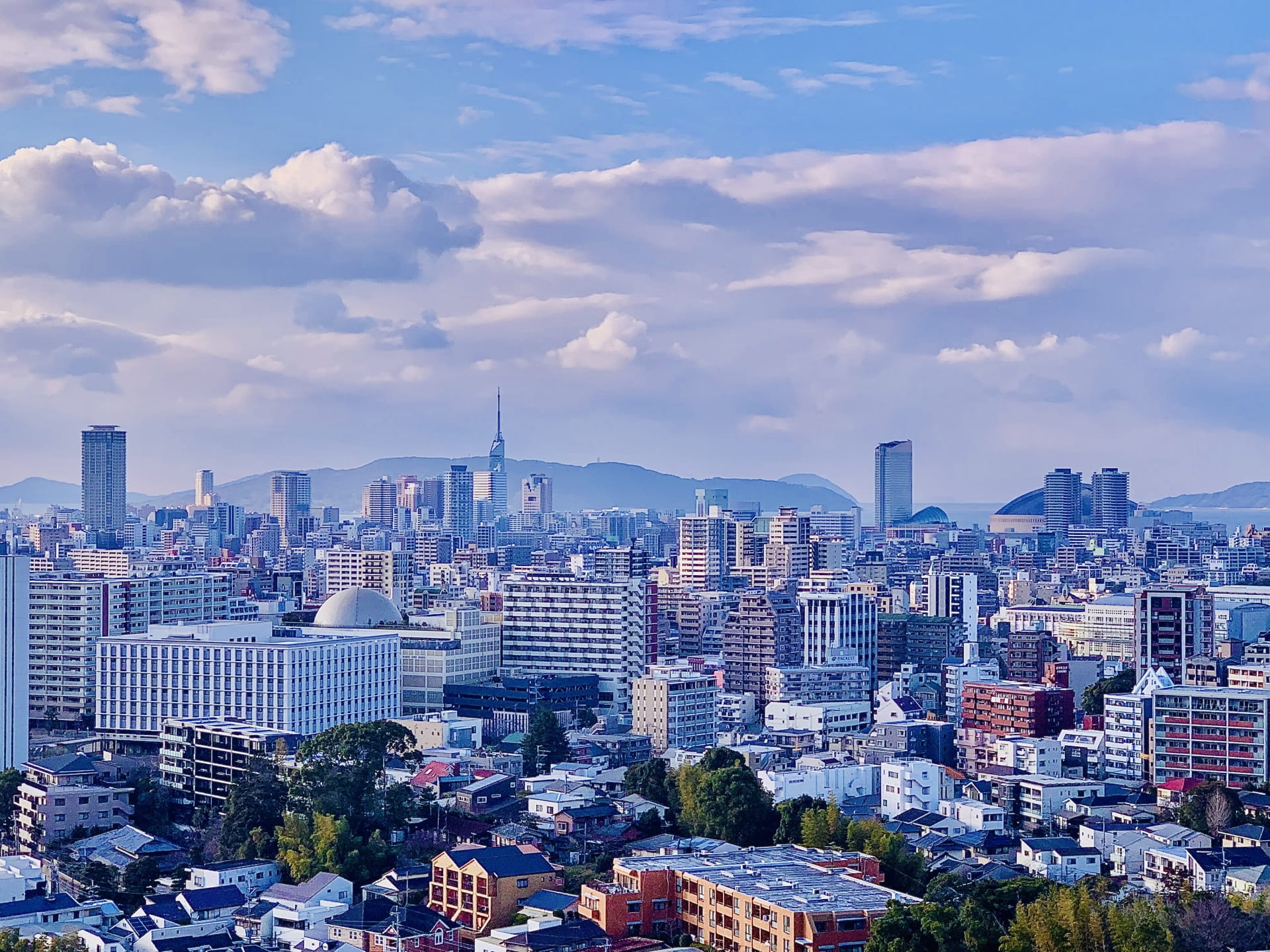
From the Airport to the City
Fukuoka Airport is incredibly close to the city center. The Kuko (Airport) Line subway will get you to Hakata Station in 5 minutes and Tenjin in 11 minutes. If you arrive at the International Terminal, take the free green shuttle bus (about 10–15 mins) to the Domestic Terminal to catch the subway.
Fukuoka Transportation Comparison
Fukuoka’s transport system is remarkably efficient, especially with the recent upgrades to contactless payments. Below is a comparison table to help you choose the best way to get around based on your itinerary.
| Method | Best For | Approx. Cost (JPY) | Payment Options | Key Advantage |
| Subway | Fast travel between Airport, Hakata, & Tenjin | ¥210 – ¥360 per ride (Capped at ¥640/day) | Credit Card (Touch), IC Card, Cash | Fast, reliable, and features an automatic daily price cap. |
| Buses | Accessing Nakasu, Canal City, or Seaside Momochi | ¥150 – ¥210 for central loop routes | IC Card (Suica/nimoca), Cash | Extensive network that drops you closer to specific landmarks. |
| Charichari | Backstreet exploring & “Ramen hopping” | ¥6.5/min (Basic) / ¥20.5/min (Electric) | Charichari App (Credit Card) | Flexibility to park at hundreds of “ports” across the city. |
| Walking | Exploring Hakata, Nakasu, & Tenjin core | Free | N/A | Best way to see the city’s vibe and work up an appetite. |
Fukuoka Food FAQ
Q. What food is Fukuoka most famous for?
A. Without a doubt, Hakata Ramen is Fukuoka’s most famous culinary export. Its rich tonkotsu (pork bone) broth is beloved across Japan and the world. The city is also famous for Motsunabe (hot pot) and its lively Yatai (outdoor food stalls).
Q. How much should I budget for meals in Fukuoka?
A. Fukuoka is very affordable. You can get a fantastic bowl of ramen for 700–1,000 JPY. A filling meal at a yatai or a Motsunabe dinner might cost between 2,000–4,000 JPY per person with drinks. Overall, you can eat incredibly well on a reasonable budget.
Q. Is Fukuoka good for solo diners?
A. Absolutely! Fukuoka is one of the best cities in Japan for solo diners. Ramen shops, with their counter seating and quick service, are perfect for eating alone. Many yatai are also very welcoming to single customers, making it a great way to meet people.
Q. Are there specific foods to try in the winter?
A. Yes! While delicious year-round, the hot pot dishes — Motsunabe and Mizutaki — are especially comforting and popular during the colder winter months. There’s nothing better than gathering around a bubbling pot on a chilly evening.
Start Your Fukuoka Food Adventure
You’re now ready to explore Fukuoka’s incredible food scene! I hope this guide has shown you that the city’s cuisine is about both what you eat and how you enjoy it. The most memorable meals come from understanding the culture behind the dish and embracing the local way of eating. The delicious bowls of ramen and bubbling hot pots are waiting for you.
Search flights to Fukuoka
Ready to taste it all for yourself? Your culinary journey is just a flight away. Booking your ticket is the last step between you and an unforgettable bowl of Hakata ramen. You can plan your foodie trip and book your flight with STARFLYER directly on this link. Your adventure awaits.
For more information about travelling Fukuoka and other part of Kyushu region, please check out following articles, too!

Written by
"The world is my oyster." As a dedicated globetrotter and hammock enthusiast, I’ve spent years chasing new experiences, collecting stories, and discovering the world’s most incredible destinations. Born and raised in Japan, I’ve always had a deep connection to my roots, but my love for adventure has led me to spend over a decade exploring countries across the globe—from culture-rich cities to remote hideaways.
Travel isn't just a hobby for me; it's a lifestyle. I'm constantly searching for new ways to fuel my wanderlust. Over the years, I’ve developed a wealth of knowledge and a treasure trove of tips that make traveling more enjoyable, practical, and meaningful.
Through my experiences, I've come to appreciate not only the beauty of travel but also the importance of understanding diverse cultures, embracing the unfamiliar, and stepping out of my comfort zone. My travels have shaped who I am today, and I’m excited to share those lessons with others.
With Japan Web Magazine, I aim to offer practical advice, insider tips, and firsthand stories that help travelers navigate their journeys to Japan or setting off on a global adventure. From hidden gems in Japan to travel hacks that make any trip smoother, I hope my insights inspire you to embark on your own adventures and make the most of every moment. Let’s explore the world together!
You can also find my stories here ▶ https://medium.com/@nahobm
- +0 0
-
-