Showa Kinen Park Autumn Guide 2026: Foliage and Illuminations
Showa Kinen Park Autumn 2026: Dates & Visitor Tips


- +0 0
-

-


I’ve visited Showa Kinen Park, also known as Showa Memorial Park, in different seasons over the years, and autumn has a special place among them. The park’s vast grounds make it worth returning to throughout the year, but during the autumn foliage season, the experience takes on a whole different character: I’ve already visited twice during the autumn illumination event, and both visits left me with a particular appreciation for how the park transforms after sunset.
If you ask me what makes the Autumn Night Walk stand out is the sense of space. Rather than focusing on a single illuminated garden, you can explore an extensive area of the park after dark, walking beneath golden ginkgo trees and discovering different scenes along the way. The atmosphere feels open and unhurried, leaving room to wander and enjoy the evening at your own pace. Combined with the autumn colors, the lighting makes this one of my favorite seasonal experiences in Tokyo.
If you’re planning a visit in 2026, the key is to make an afternoon of it. Arrive early enough to see the autumn foliage in daylight, then stay as the illuminations come on. Here’s what to know about the expected peak foliage, the two famous ginkgo avenues, the Japanese Garden’s special night admission, and how to plan a smooth visit from afternoon into evening.
Planning Your Visit to Showa Memorial Park in Autumn 2026
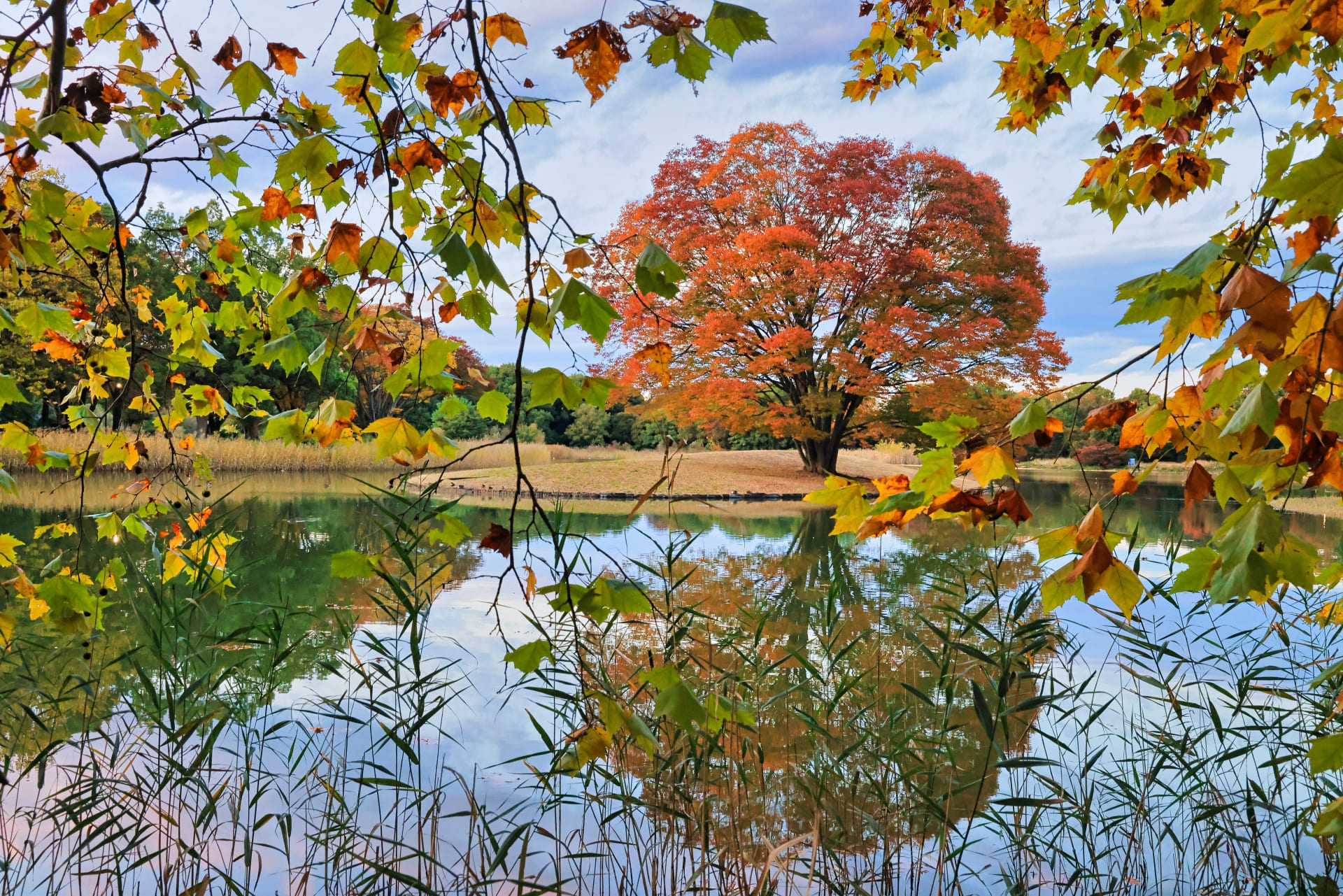
The Autumn Leaves Festival & Autumn Night Walk runs from October 29 to November 29, 2026, with evening illuminations from 16:30 to 20:30. Standard park admission covers the two ginkgo avenues, but visiting the Japanese Garden at night normally requires a separate ticket. Planning ahead is especially important if you want to see both.
Showa Kinen Park Autumn 2026: At a Glance
| Information | Details |
| Event dates | October 29–November 29, 2026 |
| Park opening hours | 9:30–21:00 |
| Illumination hours | 16:30–20:30 |
| Last ticket issuance | 20:15 |
| Last entry | 20:30 |
| Standard admission | Adults 450 yen; ages 65+ 210 yen; junior high school students and younger free |
| Official event website | https://www.showakinen-koen.jp/autumn-night-walk/ |
During the night event, entry and exit are restricted to Tachikawa Gate and Nishi-Tachikawa Gate. Other gates, including Sunagawa Gate, are closed. After 16:30, only designated areas remain accessible, so you’ll need to plan your afternoon around the transition to the evening event.
Do You Need a Separate Ticket for the Japanese Garden?
Standard admission includes the Katarai Ginkgo Avenue and the Canal, where the illuminated ginkgo trees are among the main attractions. The Japanese Garden has its own evening admission charge, in addition to the regular park ticket.
There are three exceptions: October 29, 30, and 31, when the Japanese Garden is included in standard park admission. If you visit on another date, the garden ticket costs 1,200 yen online or 1,300 yen at the same-day ticket window at Komorebi-no-ie. The window accepts cash only.
An online combination ticket covering park admission and the Japanese Garden costs 1,600 yen for adults, saving 50 yen compared with purchasing the two tickets separately. Booking online is the safer option if the garden is a priority: once online ticket slots sell out, no additional tickets are sold at the window.
For a first visit, the main decision is how much of the evening you want to spend in the Japanese Garden. The ginkgo avenues are included in standard admission, while the garden adds another setting to explore after dark, so if you want to experience both, check ticket availability before setting your date. Suffice to say, the evening access for the Japanese Garden is absolutely worth it in my humble opinion.
Getting to Showa Kinen Park and Choosing the Right Gate
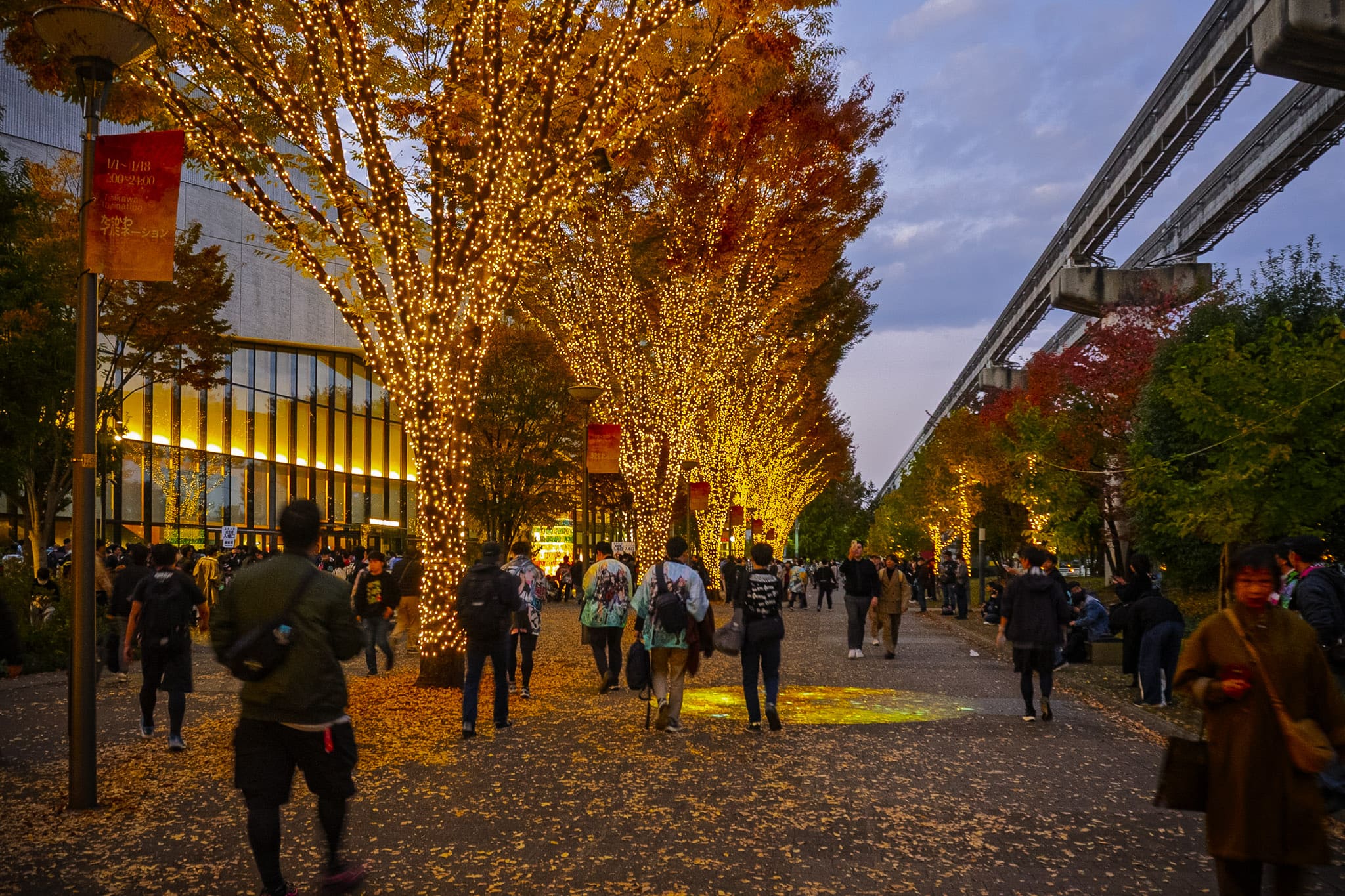
Showa Kinen Park is accessible from central Tokyo by train, with two convenient entrances for the Autumn Night Walk. From Shinjuku, take the JR Chuo Line to Tachikawa, or continue to Nishi-Tachikawa Station on the JR Ome Line if you want to reach the park entrance with a shorter walk.
From Shinjuku to Showa Kinen Park
The journey from Shinjuku to Tachikawa takes approximately 30 minutes on the JR Chuo Line. From there, you can choose between two routes:
- Nishi-Tachikawa Gate: Get off at Nishi-Tachikawa Station on the JR Ome Line. The gate is about a two-minute walk from the station, making this the most direct option.
- Tachikawa Gate: Get off at JR Tachikawa Station and walk for approximately 18 minutes to the entrance.
Which Gate Should You Use?


Your choice of entrance matters after the illuminations begin. During the Autumn Night Walk, only Tachikawa Gate and Nishi-Tachikawa Gate are open for entry and exit. Other entrances, including Sunagawa Gate, are closed during the evening event.
If you’re travelling specifically for the illuminations, plan your route around one of these two gates rather than assuming you can leave through whichever entrance is closest at the end of your visit. Also remember that only designated areas of the park remain accessible after 16:30, so check the event information before setting out.
Nishi-Tachikawa Gate is quite convenient because it’s right in front of Nishi-Tachikawa Station. However, if you can afford a few extra minutes, I’d like to make the case for Tachikawa Gate, as the walk from Tachikawa Station can be quite pleasant, with ginkgo trees lining San San Road and the cool views of the Tama Monorail, as well as the pretty gardens within the commercial area of Green Springs.
 Access |
Tachikawa Gate: 18-min walk from Tachikawa Station. Nishi-Tachikawa Gate: directly connected to station exit. |
|---|---|
 Business Hours |
9:30 AM–5 PM, weekends until 6 PM. Autumn Night Walk (Oct 29–Nov 29, 2026): 9:30 AM–9:00 PM; illuminations from 4:30 PM–8:30 PM. |
 Price |
450 yen |
 Official Website |
https://www.showakinen-koen.jp/ |
When to See the Autumn Leaves at Showa Memorial Park


For autumn colors at Showa Kinen Park, mid-to-late November is a useful starting point when planning a visit in 2026, although the best dates will depend on how the season develops. The initial estimate for the park’s combined ginkgo and maple display is around November 18–21, but the latest broader Tokyo forecast points slightly later: the Japan Meteorological Corporation expects yellow ginkgo foliage around November 26 and red maple foliage around November 28. These are regional estimates, not confirmed peak dates for the park itself.
The ginkgo avenues and the Japanese Garden are the main places to focus on. The two avenues are known for their rows of yellow-leaved trees, while the Japanese Garden is a highlight for autumn maple colors. The timing will not necessarily match across the park, so you may find some areas changing color while others are still predominantly green. Check the park’s latest foliage updates closer to your visit rather than relying on a forecast date alone.
However, for this year, I would advise not to rule out early November. The first time I visited the park in Autumn a few years ago was actually at the end of October, which meant I was able to enjoy the pretty kochia, while still being able to see plenty of red leaves in some trees. For 2026, the unusually long rains and moderate temperatures from Summer also increase the chances for cosmos flowers to last longer than usual. And there’s also the effect of the illuminations. At Katarai Ginkgo Avenue, warm yellow lighting can give the trees a golden appearance even when their leaves have only begun to change.
For general information about the autumn leaves forecast in 2026, check our dedicated guide.
Walking the Ginkgo Avenues Before Sunset
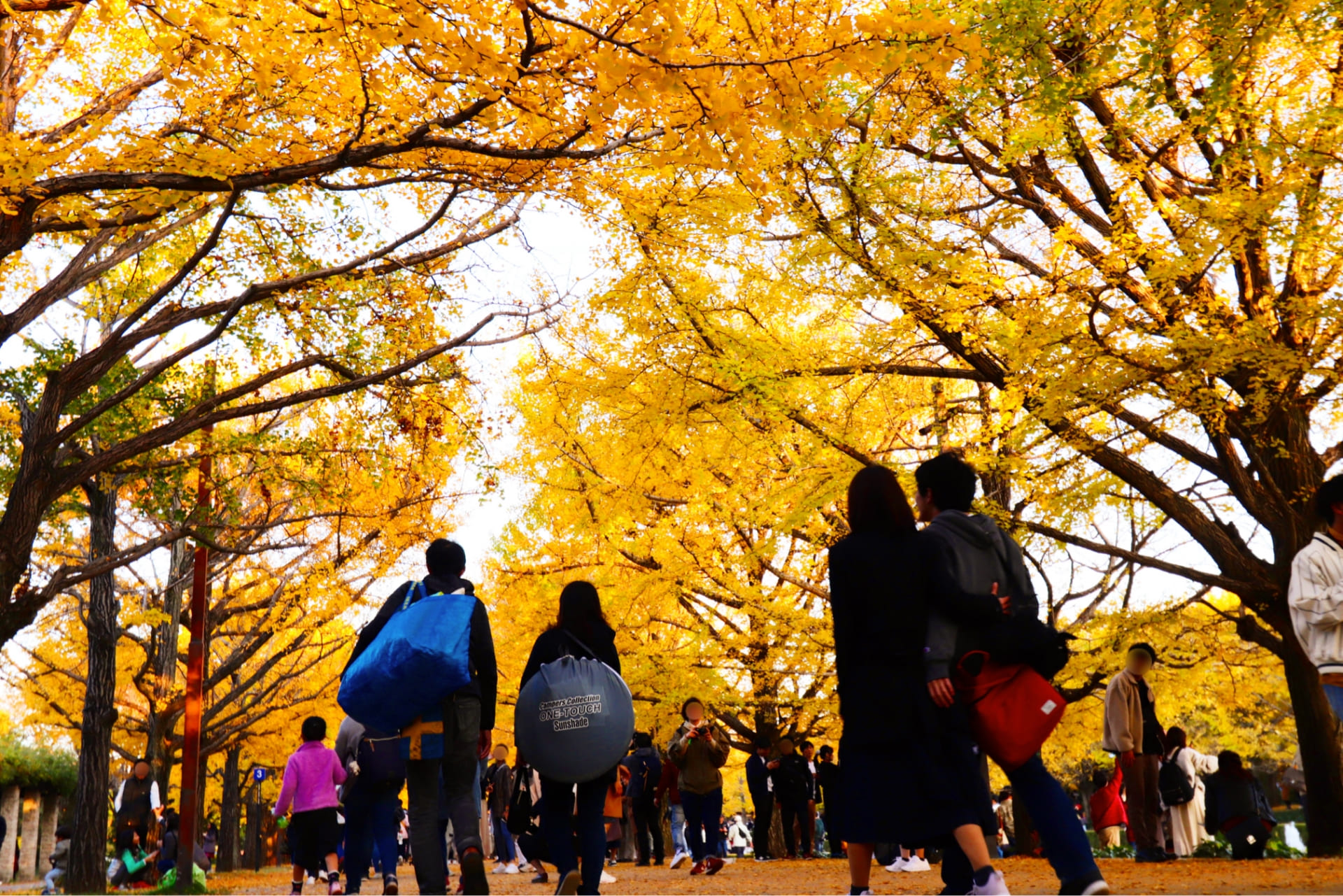

Showa Kinen Park has two signature ginkgo avenues, each with its own character. Katarai Ginkgo Avenue is known for its naturally shaped trees and arching branches, while the Canal has a more formal layout, with two rows of ginkgo trees framing a central waterway. Both are worth seeing in daylight before returning to enjoy their illuminated displays after dark.
Katarai Ginkgo Avenue
Located near the park’s sports facilities and Undo Hiroba, Katarai Ginkgo Avenue stretches for around 300 meters. Its ginkgo trees have been allowed to grow into natural shapes, with branches arching overhead to create a leafy corridor. In autumn, the yellow foliage draws the eye along the path, making it a natural place to slow down and take in the scenery.
After dark, the avenue takes on a different look. Warm yellow lighting emphasizes the ginkgo canopy, accompanied by a music-synchronized light show. If you’re planning to stay for the evening event, take time to see the trees in daylight first; the changing light gives you a different perspective on the same avenue.
The Canal Avenue
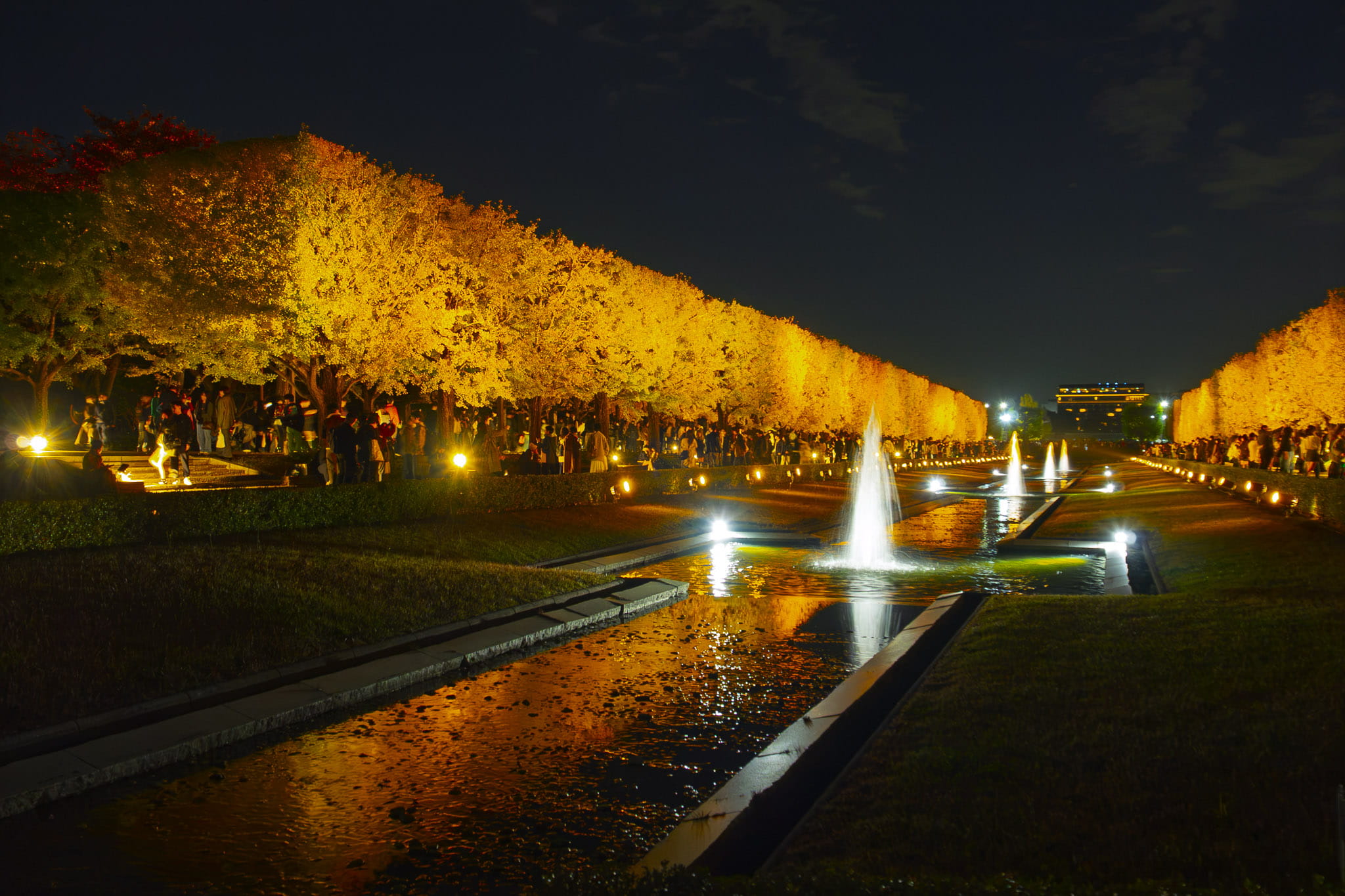
Near Tachikawa Gate, the Canal features two rows of ginkgo trees lining a central water channel, with fountains adding another element to the scene. The orderly arrangement creates a strong sense of perspective, with the rows of trees drawing the eye along the water. In autumn, the yellow leaves bring color to this more geometric landscape.
The evening illumination uses vivid yellow and white lighting to highlight the trees and waterway. If you’re photographing the park, the avenue’s symmetrical layout gives you a different composition from Katarai’s arching canopy. It is also a convenient landmark to keep in mind when planning your evening, particularly if you enter through Tachikawa Gate.
Visiting the Japanese Garden by Day—and Returning After Dark


The Japanese Garden is worth including in an afternoon visit to Showa Kinen Park: Carefully manicured paths, a beautiful pond, and a stylish traditional gazebo beside the water; it has all the classic features you would expect from a Japanese garden. During the day, you can explore it with standard park admission before continuing through the park’s autumn scenery.
However, the daytime visit and the evening event are separate experiences. Visitors must leave the Japanese Garden by 16:00. If you want to return for the nighttime displays, you’ll need to re-enter when the evening event opens. On most event dates, this requires a separate Japanese Garden night ticket in addition to the standard park admission.
But, as previously mentioned, there are two exceptions in 2026: Thursday, October 29, and Friday, October 30, when the Japanese Garden is included in standard park admission during the evening event, which is precisely why my first autumn visit to Showa Kinen Park took place at the end of October. The Autumn leaves were not at their peak yet but watching the light change without having to leave was a nice trade-off. Suffice to say, visiting also during peak season was undoubtedly stunning. But more on that later.

Taking time to see the garden during the day, even if you plan to return in the evening, is highly recommended anyway, as its pond, gazebo, and carefully maintained landscape are worth appreciating in their own right. Just remember to plan around the 16:00 exit and the evening re-entry rules so you can make the most of both visits.
After dark, the garden features illuminated bonsai, displays of wagasa (traditional Japanese paper umbrellas) and wind chimes, and Yomigaeru Kigi no Inochi, an art installation made from fallen trees. From November 1 to 29, visitors with a Japanese Garden night ticket can also rent a wagasa free of charge which is a nice added touch to the overall experience.
Making the Most of the Showa Kinen Park Autumn Night Walk
The best way to experience the Autumn Night Walk is to give yourself time to explore rather than rushing between the three main illuminated areas. The Canal, Katarai Ginkgo Avenue, and the Japanese Garden each have a different atmosphere, and walking between them is part of the experience. With the park staying open until 21:00, you can spend the evening at a relaxed pace and still see plenty before closing.
What Changes After 16:30?
The illuminations begin at 16:30, when the designated night-opening areas become accessible. The park remains open until 21:00, but other areas are closed for the evening, so you cannot continue wandering through the entire daytime park. Entry and exit are also restricted to Tachikawa Gate and Nishi-Tachikawa Gate.
If you arrive during the day, check the park’s instructions for the transition to the evening event, especially if you have brought a bicycle or car. These need to be moved to the designated locations by the required time. It is worth checking the event map before setting off so you know which areas remain accessible and can plan a route that does not require backtracking.
Two Ginkgo Avenues, Two Different Atmospheres


Both ginkgo avenues are beautiful after dark, but I found them appealing for different reasons.
The Canal, close to Tachikawa Gate, makes an immediate visual impression. Two rows of ginkgo trees line the waterway, with fountains adding movement to the symmetrical scene. Yellow and white lighting emphasizes the trees and the geometric layout, and the reflections make this a particularly striking place to stop for photos. It is also one of the first illuminated areas many visitors encounter when entering from Tachikawa Gate, so people often spend some time here before moving farther into the park.
For me, Katarai Ginkgo Avenue felt more atmospheric. Reaching it involves walking farther into the park, through areas that feel increasingly like a forest after dark. Then the illuminated ginkgo tunnel appears ahead, with warm yellow lighting beneath the arching branches and a music-synchronized light show. By this point, visitors have spread out across the park, so the avenue can feel less crowded than the Canal. The experience is less about stopping at one photogenic landmark and more about arriving at a glowing tunnel after a walk through the darkness.
The two displays are worth seeing together: the Canal for its fountains, reflections, and orderly composition, and Katarai for the feeling of walking into an illuminated forest. Both are included in standard park admission, so you do not need a separate night ticket for either one.
Getting Around After Dark
A night bus operates between Nagame no Terrace and the Japanese Garden from 17:30 to 20:30. The fare is 400 yen for adults and 200 yen for children, with cashless payment only. It can be useful if you are tired or want to save your energy for the garden, particularly because the park is large and the evening route still involves a fair amount of walking.
Personally, I found the queues for the bus a hassle and would rather walk than spend time waiting. If you are comfortable covering the distance on foot, walking lets you enjoy the changing scenery along the way and stop whenever something catches your eye. If walking is difficult for you or you are short on energy, however, the bus is a useful option. Check the event map to understand the stops and distances before deciding.
Food and Drinks During the Event


You do not need to leave the park to find something to eat or drink during the evening. Several restaurants, takeaway counters, and temporary stalls operate until 20:30, with last orders 30 minutes before closing where applicable. Options listed for the 2026 event include:
- Tachikawa Gate shop: hot chocolate, white matcha latte, and motsuni (Japanese-style simmered offal stew).
- Ginnan Chaya: mushroom pizza, mushroom soup, and hot wine.
- Fureai Hiroba restaurant takeaway counter: seasonal maple-leaf soft serve and hot chocolate.
- Nishi-Tachikawa Gate shop: pumpkin latte and soup served with bread.
- Lakeside Rest House shop: chocolate Mont Blanc desserts, churros, and seasonal pork-and-vegetable soup.
- Keiryu Hiroba restaurant: sweet-potato soft serve and fried potatoes.
- Garden Night Cafe: frankfurters and marshmallows that can be roasted over a fire.
Temporary stalls at Fureai Hiroba, Nagame no Terrace, Keiryu Hiroba, and in front of the Japanese Garden offer additional snacks, including grilled dango, baked sweet potatoes, karaage, and other hot foods. Opening times and last orders vary by location, so do not leave dinner until the final minutes of the event.
During my visits, I mainly picked up snacks from a couple of stalls and food trucks rather than sitting down for a meal. I would treat the food options as a convenient way to warm up or take a break during the walk, rather than planning the entire evening around a restaurant.
Give Yourself Time to Explore


I stayed until the park closed, and I recommend doing the same if your schedule allows it. The park closes at 21:00 during the event, so there is no especially late night to contend with. Even with some areas off limits after dark, the distances between the illuminated spots and the time spent enjoying them add up quickly.
Allow at least one to two hours for the Japanese Garden if you want to explore it properly. There are illuminated traditional umbrellas around the garden, the pond and gazebo are particularly beautiful at night, and a memorable feature last year was a special projection mapping installation along a path south of the pond that created the impression of walking over a stream scattered with floating ginkgo leaves and swimming koi. Check this year’s official event information for the latest display details.
All in all, don’t think of it as a brief scenic stop and make sure to leave enough time to explore its paths and take in the details.


Build the rest of your evening around the places you most want to see, with time for snacks and unplanned stops along the way. You do not need to hurry from one attraction to the next: part of the pleasure is walking through the park and seeing familiar scenery take on a different character under the lights. My advice is to stay until closing and enjoy the evening at your own pace.
Practical Tips for an Autumn Afternoon and Evening Visit
A little preparation will make it easier to enjoy Showa Kinen Park without spending the evening checking your phone or rushing between attractions.
- Keep your dates flexible if foliage is your priority. The expected peak can shift with the weather, and the ginkgo avenues and Japanese Garden may change at different times. Check the park’s latest foliage reports before deciding when to visit.
- Bring an extra layer. An afternoon can feel comfortable in autumn, but temperatures may drop sharply after sunset. Take it from me, who more than once has neglected that extra layer when I left home during a sunny fall day, only to regret it later. Keep in mind you will spend the entire evening outdoors, often walking between illuminated areas.
- Sort out your Japanese Garden ticket in advance. If you plan to visit on a date when a separate night ticket is required, booking online is the safer option. Same-day tickets are sold at Komorebi-no-ie for cash only, and none are available at the window if online slots have sold out.
- Allow extra time on weekends. The Canal is a popular first stop for visitors entering through Tachikawa Gate, so expect to share the main photo spots with other people. Arriving with enough time to explore before the illuminations begin also gives you more flexibility later.
- Check the event information before leaving. The night event restricts access to designated areas, and individual facilities may have different operating hours or closures. Check the official Showa Kinen Park website for the latest event map, ticket availability, and operational updates.
Is the Showa Kinen Park Autumn Night Walk Worth Visiting?
Having visited Showa Kinen Park in different seasons and experienced the autumn illuminations on more than one occasion, I would recommend the Autumn Night Walk to anyone who enjoys autumn scenery and is happy to explore on foot.
The two ginkgo avenues offer different experiences. The Canal is visually impressive, with its fountains, waterway, and carefully aligned trees. Katarai Ginkgo Avenue was my personal favorite, though. Walking through the park after dark and eventually arriving at the illuminated tunnel gives it a more atmospheric quality, and I found it more enjoyable to explore once visitors had spread out across the grounds.
The Japanese Garden is another strong reason to stay. Its pond and gazebo, illuminated umbrellas, and smaller details deserve time rather than a quick stop on the way to the next attraction. I would set aside at least one to two hours for the garden if you want to explore it properly.
The main consideration is the amount of walking involved. Showa Kinen Park is enormous, and even the areas open at night cover enough ground to make the evening feel like a substantial outing. The night bus can help if you get tired, although I found the queues less appealing than simply walking. Food stalls provide convenient opportunities to pick up snacks, but you should plan ahead if you want a proper sit-down meal.
My recommendation is to arrive during the afternoon, enjoy the park in daylight, and stay until closing at 21:00. The illuminations are the main attraction, but the experience is better when you allow time to walk between them, notice the scenery along the way, and explore the Japanese Garden without rushing. If you are looking for a short stop to take a few photos, you may find the journey and walking time excessive. If you enjoy spending an evening outdoors and discovering a large park at a relaxed pace, the Autumn Night Walk is well worth putting on your Tokyo itinerary.
FAQs About Showa Kinen Park and Autumn Night Walk
When is the best time to see ginkgo at Showa Kinen Park in 2026?
The event runs from October 29 to November 29, 2026. Mid-to-late November is a useful starting point for planning, although peak color depends on the weather and may vary between areas. Check the park’s latest foliage updates before visiting.
How much does the Showa Kinen Park Autumn Night Walk cost?
Standard park admission is ¥450 for adults, ¥210 for visitors aged 65 and older, and free for junior high school students and younger children. The two illuminated ginkgo avenues are included. On most event dates, the Japanese Garden requires an additional night ticket costing ¥1,200 online or ¥1,300 at the same-day ticket window, subject to availability.
Is the Japanese Garden free at night?
The Japanese Garden is included in standard park admission on October 29, 30, and 31, 2026. On other event dates, you need a separate Japanese Garden night ticket in addition to park admission.
What time do the illuminations start?
The illuminations start at 16:30 and run until 20:30. The park remains open until 21:00, with last entry at 20:30 and ticket issuance ending at 20:15.
Which gates are open during the night event?
Only Tachikawa Gate and Nishi-Tachikawa Gate are open for entry and exit during the night event. Other gates, including Sunagawa Gate, are closed.
Can I buy Japanese Garden tickets on the day?
Yes, same-day tickets are available at Komorebi-no-ie for 1,300 yen, payable in cash. However, if online ticket slots have sold out, no additional tickets are sold at the window. Booking online in advance is the safer option.
What is the difference between Katarai Ginkgo Avenue and the Canal?
The Canal features two rows of ginkgo trees beside a central waterway, with fountains and yellow-and-white lighting creating a symmetrical scene. Katarai Ginkgo Avenue is a 300-meter path lined with naturally shaped trees whose branches arch overhead. Its warm yellow lighting and music-synchronized display create a more enclosed, tunnel-like atmosphere.
How do I get to Showa Kinen Park from Shinjuku?
Take the JR Chuo Line from Shinjuku to Tachikawa, a journey of around 30 minutes. From there, Tachikawa Gate is about an 18-minute walk. Alternatively, continue to Nishi-Tachikawa Station on the JR Ome Line; Nishi-Tachikawa Gate is about a two-minute walk from the station.
Can I visit Showa Kinen Park during the day and stay for the night walk?
Yes. You can explore the park during the day and stay for the evening event, but some areas close and only designated night-opening areas remain accessible after 16:30. The Japanese Garden must be exited by 16:00, and you need to re-enter for the night event. A separate garden night ticket is normally required, except on October 29, 30, and 31, 2026.
Need more ideas for Autumn in Tokyo? You’re at the right place!


Written by
Photographer, journalist, and avid urban cyclist, making sense of Japan since 2017. I was born in Caracas and lived for 14 years in Barcelona before moving to Tokyo. Currently working towards my goal of visiting every prefecture in Japan, I hope to share with readers the everlasting joy of discovery and the neverending urge to keep exploring.
- +0 0
-
-