Sensoji Temple in Asakusa Tokyo
Asakusa Sensoji Temple : Best things to do at Tokyo’s historic landmark

- +39 89
-

-


Sensoji Temple is an ancient Buddhist temple located in Asakusa and is one of the most popular tourist attractions in Tokyo. Asakusa still retains a bit of the traditional and historic aspects of Tokyo, in stark contrast to the city’s modern and high-tech environment. As the oldest temple in Tokyo, Sensoji serves as a symbol of Asakusa and draws millions of visitors throughout the year. This historic landmark is an absolute must-see on any Tokyo trip.
Planning a visit? We’ve got you covered! Read on for our complete guide to Sensoji Temple, packed with insider travel tips, rich history, must-see spots, and clear access information to help you get the most out of your Asakusa adventure!
*Please note that this article contains affiliate links.
To ensure an authentic and memorable experience in Asakusa, consider enlisting the help of a local guide! The “Asakusa Cultural Walk & Matcha Making Tour” is a highly recommended small group tour led by an English-speaking guide. During this 3-hour tour, you will learn about the rich history and culture of Sensoji Temple and the Asakusa area. The tour includes various cultural experiences, such as a visit to Sensoji Temple, a traditional tea ceremony, and tasting local cuisine. Check the link below for more details about the tour!
What is Sensoji Temple?
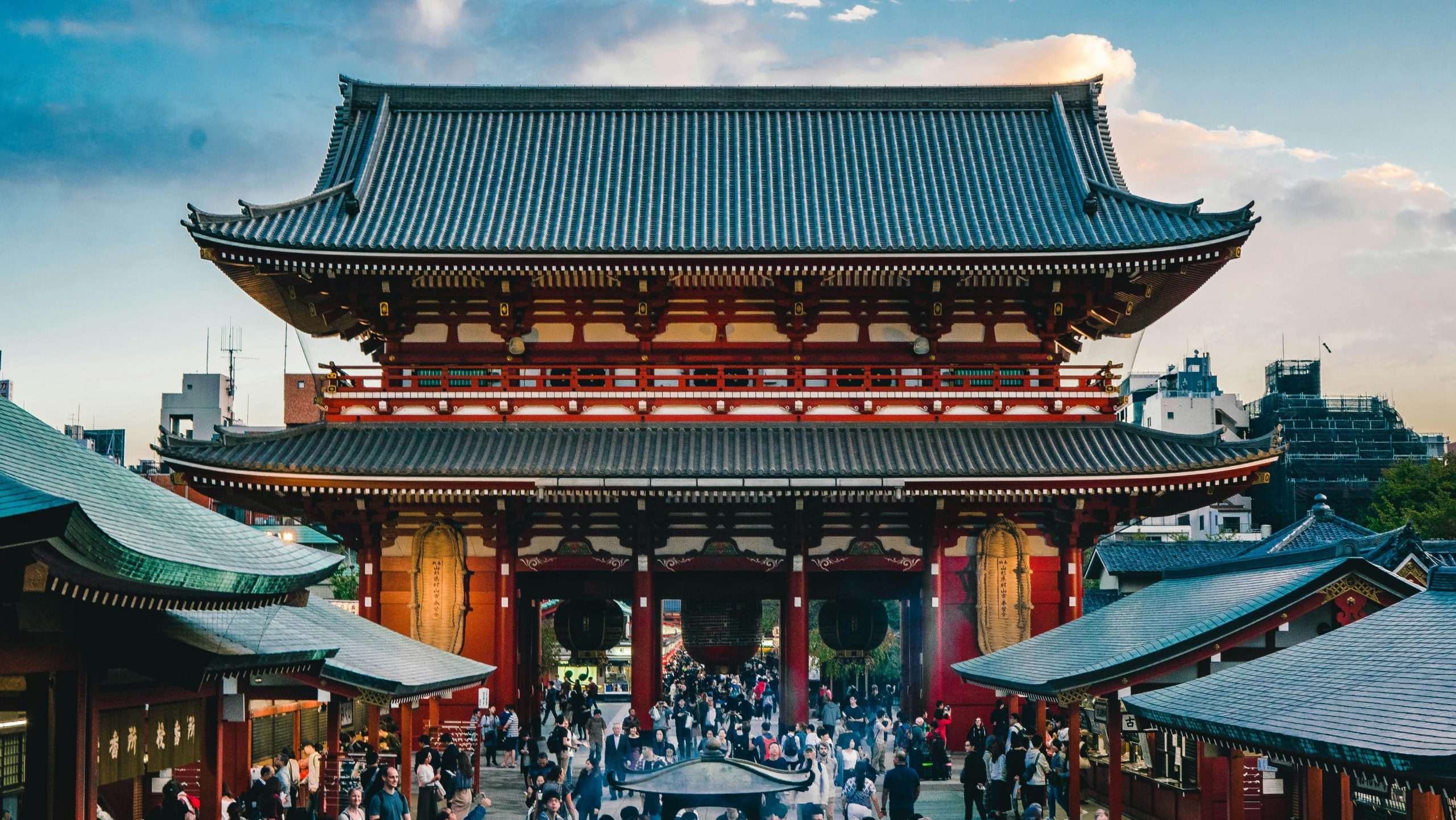
Sensoji Temple (浅草寺), also known as Asakusa Kannon, is Tokyo’s oldest and most sacred Buddhist temple. According to legend, the temple’s story began in 628 AD when two fishermen brothers, Hinokuma Hamanari and Takenari, pulled a small golden statue of Kannon — the Goddess of Mercy — from the Sumida River. Despite returning the statue to the water multiple times, it kept returning to their nets. Recognizing its divine nature, the local village chief converted his home into a shrine so the community could worship it.
By 645 AD, the first official temple hall was completed to honor the statue, when a renowned Buddhist priest visited Asakusa and built Kannon Hall. The temple complex features two main gates, a scenic approach, a five-story pagoda, and the main hall of the temple. That original golden Kannon remains buried beneath the main hall floor today as a hibutsu (hidden Buddha)—a sacred image never revealed to the public.
Asakusa began as a quiet fishing village, but it flourished rapidly as the number of worshippers grew. The temple received generous support from the Shogunate during the Kamakura period (1192–1333) and Tokugawa Ieyasu during the Edo period (1603–1867), cementing its role as the cultural heart of Edo.
Although the complex was rebuilt following its destruction in World War II, Sensoji retains its deep spiritual roots and historical grandeur. Admission to the temple grounds and Main Hall is completely free, welcoming millions of worshippers and travelers year-round. Located right next to the main hall is Asakusa Shrine, dedicated to the two brothers and the village chief who founded the temple, making the grounds a rich hub for both Buddhist and Shinto traditions.
Kaminarimon Gate
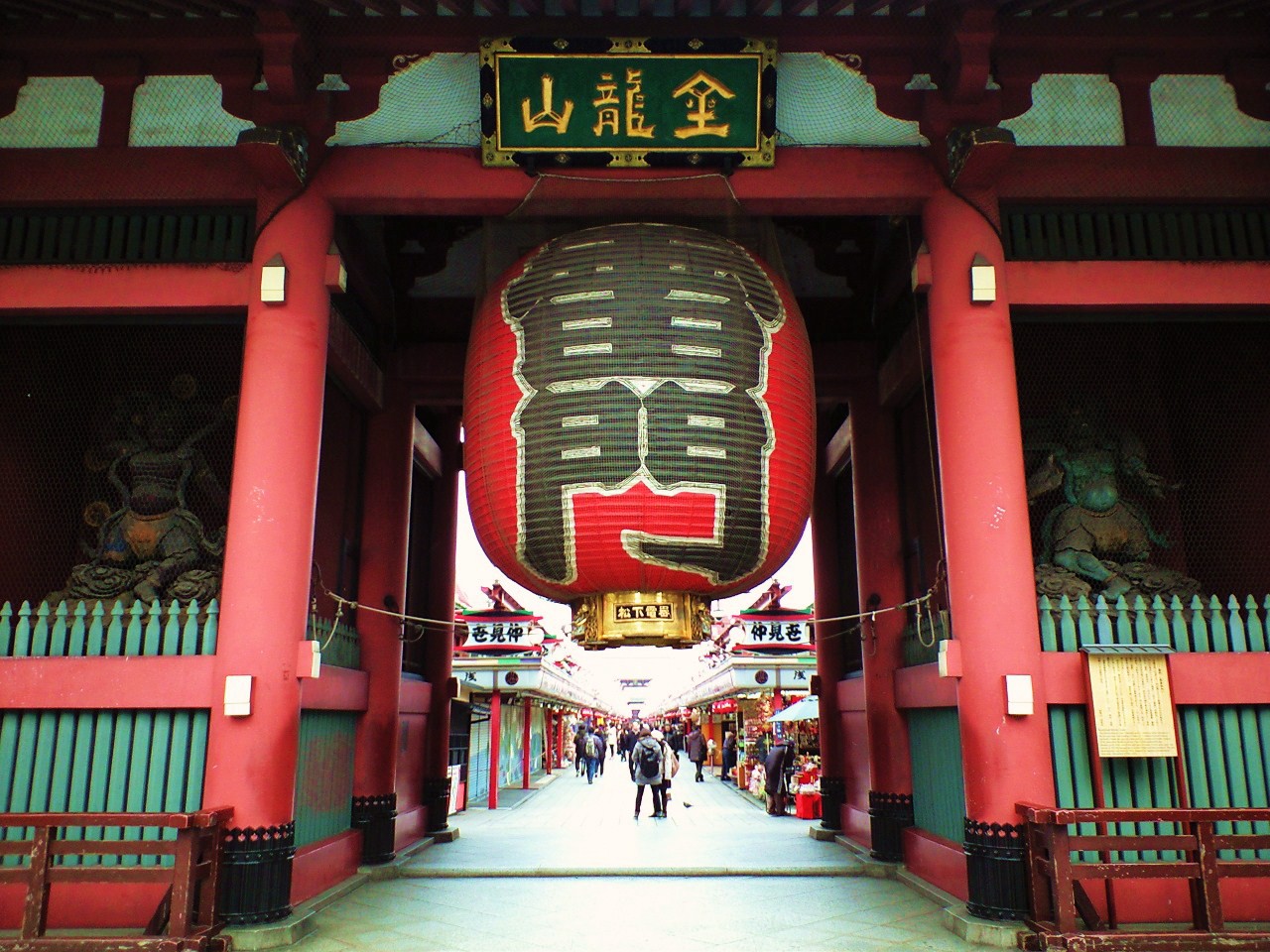
When you arrive at Sensoji Temple, the first sight is the Kaminarimon Gate (Thunder Gate, 雷門), which serves as the main entrance. It is one of the most popular photo spots in Tokyo!
This vibrant red gate is adorned with a large red lantern featuring the name of the gate in kanji characters in the center, flanked by four gods, two on either side. The front side displays the Shinto deities Fujin (Wind God) and Raijin (Thunder God), while the reverse side shows the Buddhist deities Tenryu and Kinryu, male and female water dragon spirits meant to protect the gate from fire.
Nakamise Shopping Street
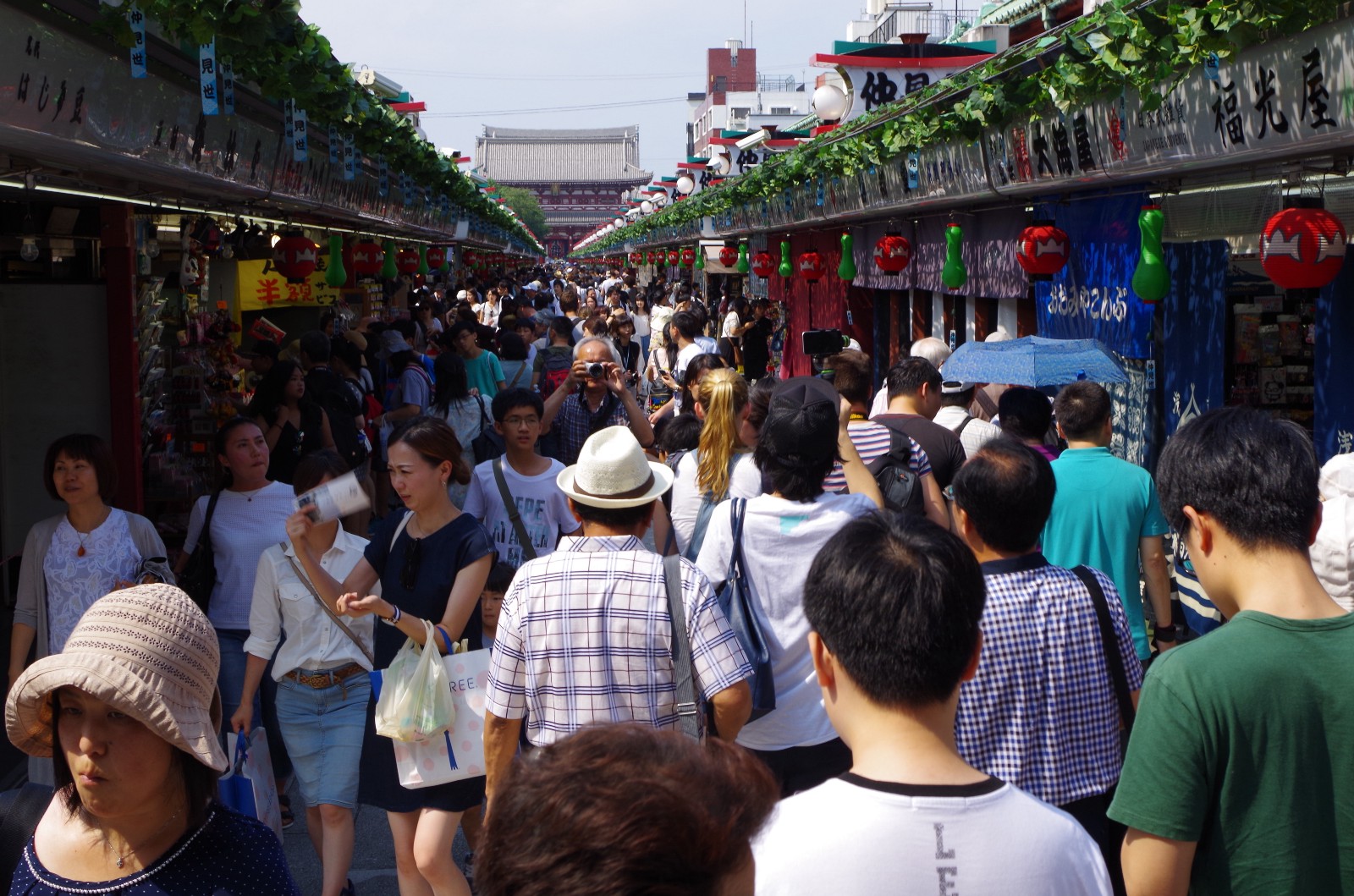
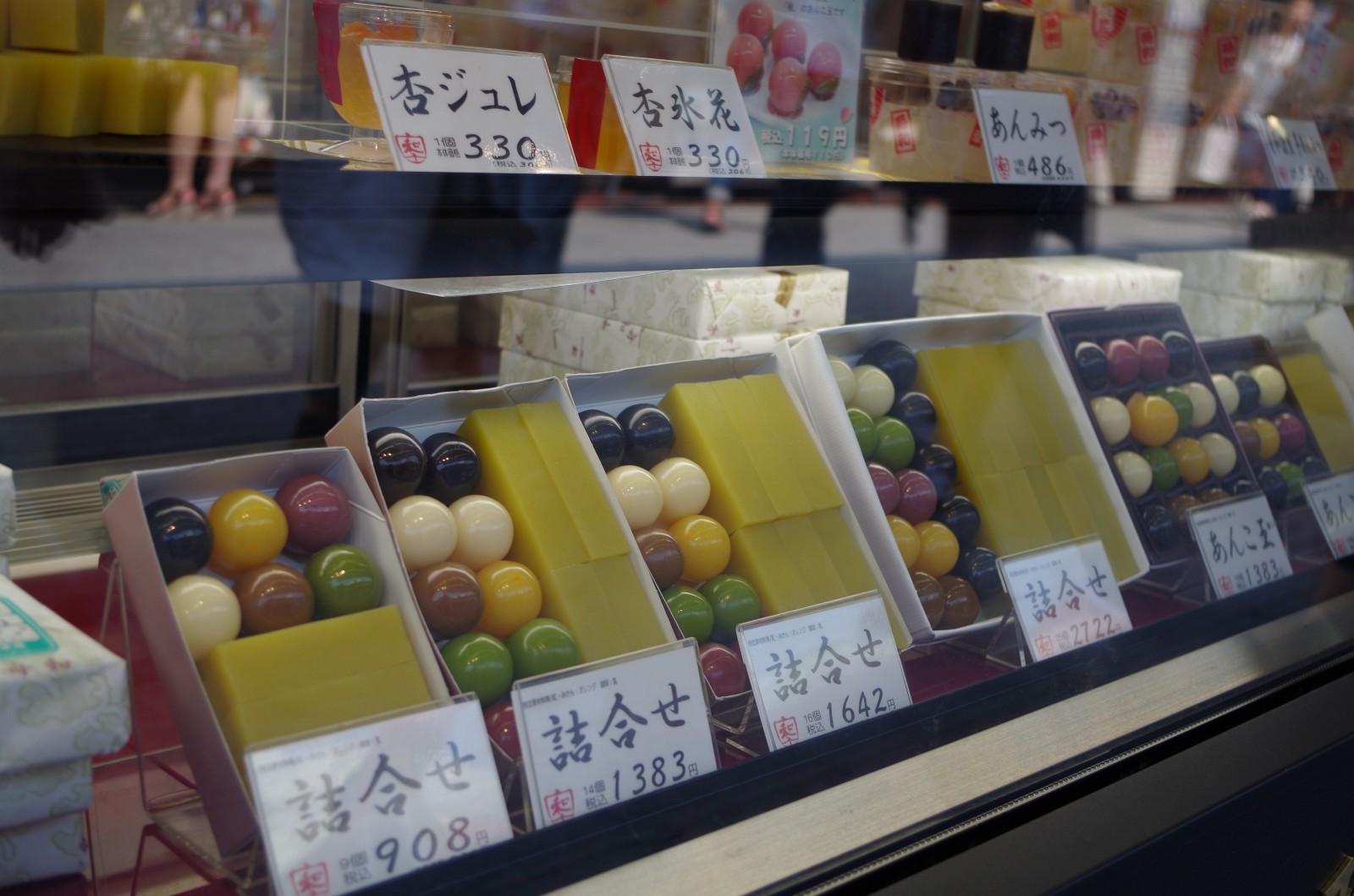
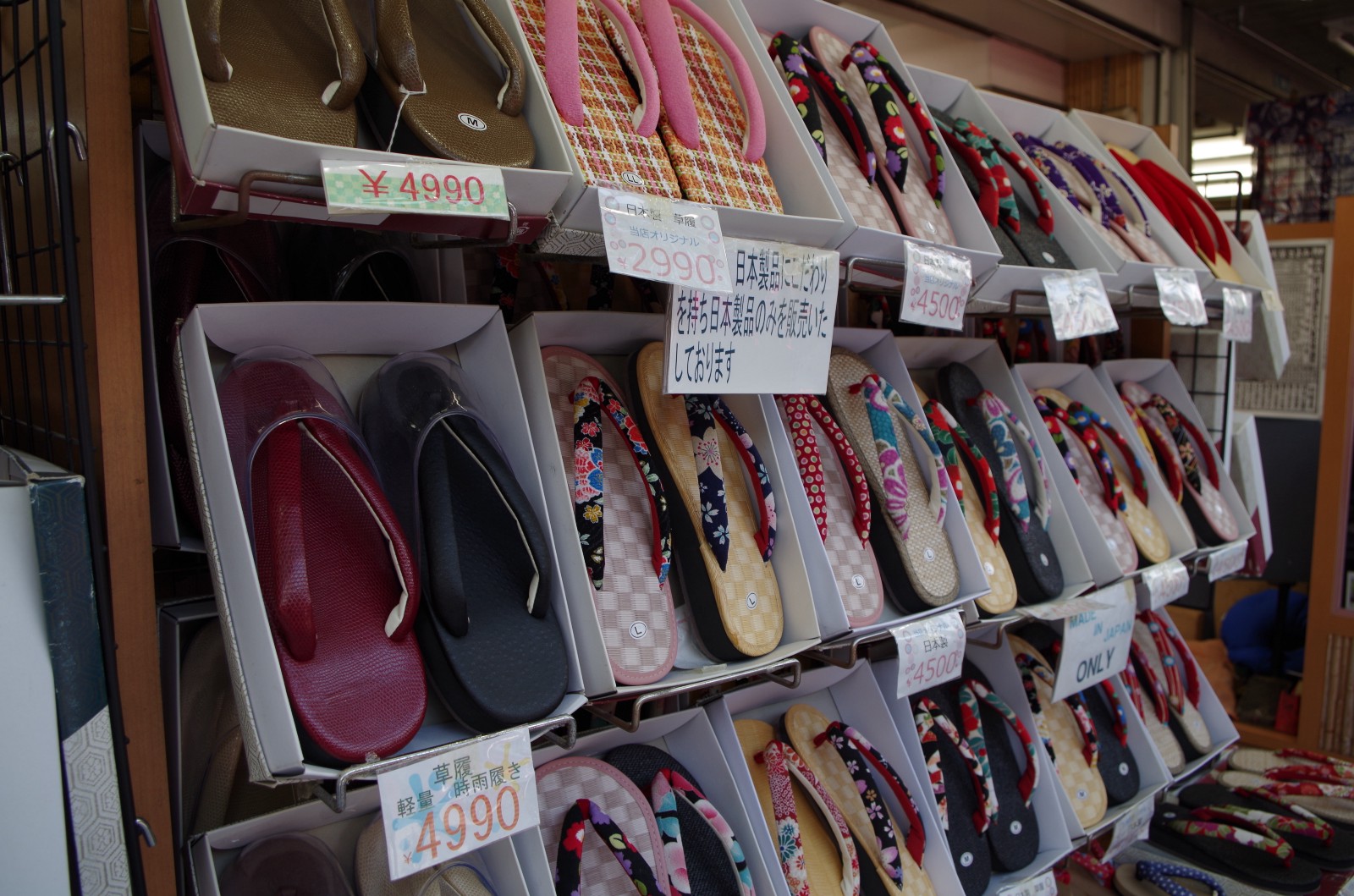
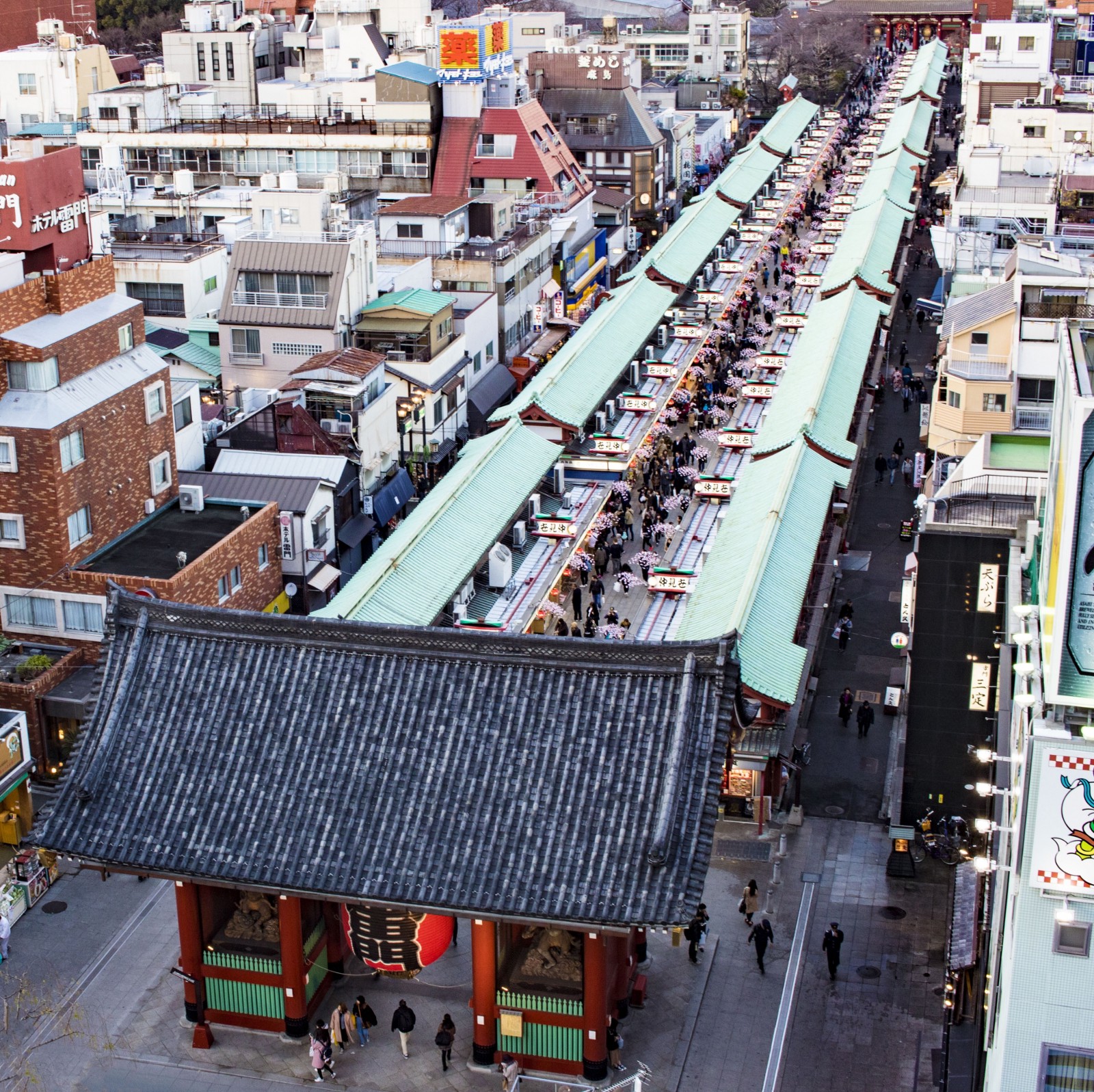
After passing through the first gate, you will arrive at the approach to the main hall of Sensoji Temple, known as Nakamise Shopping Street (仲見世商店街). This 250-meter-long passageway, with a history spanning several centuries, features a wide variety of souvenir shops and food stalls. Take some time to stroll down the street, enjoy trying local street snacks, and shop for souvenirs.
More info: Nakamise Shopping Street: Must-Try Asakusa Street Food
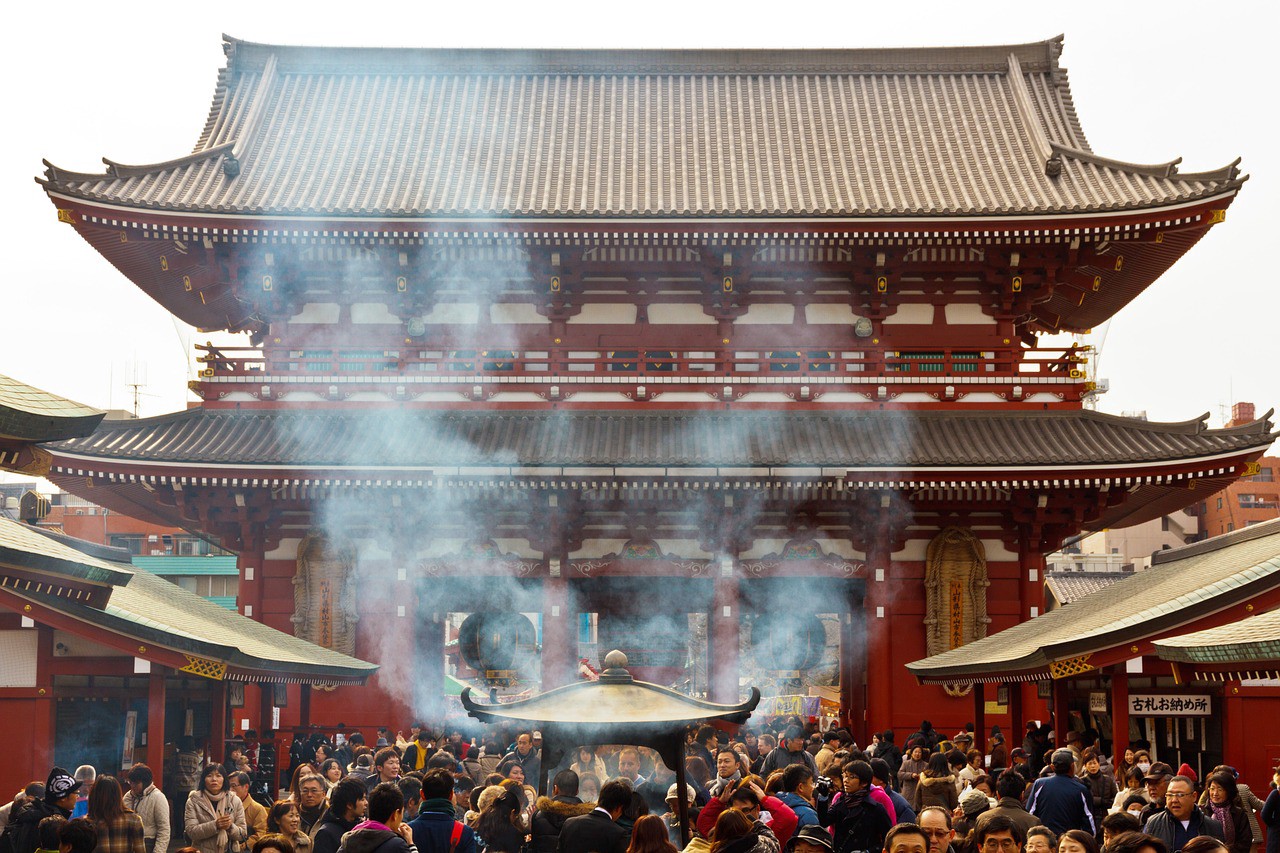
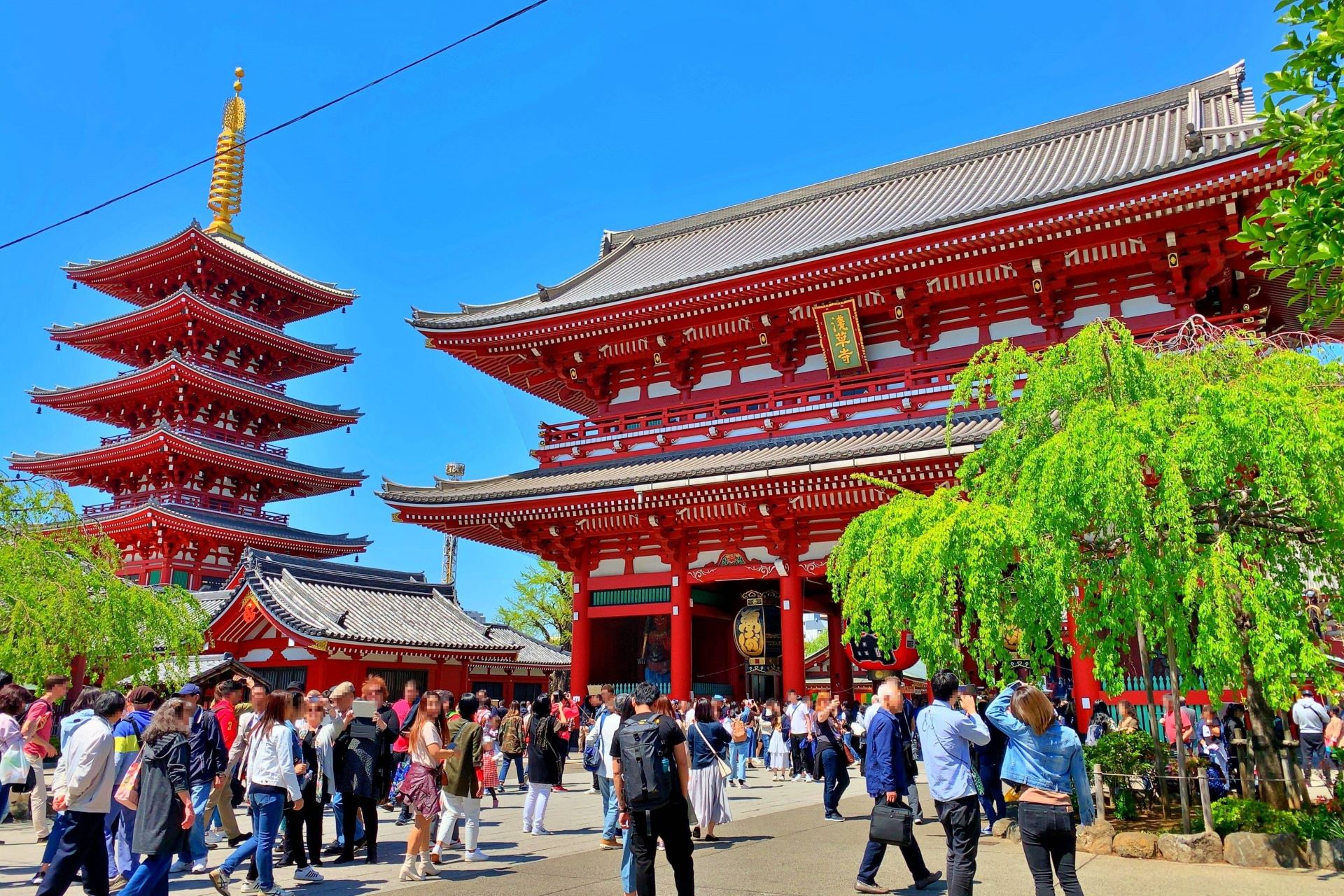
Before you reach the main hall of the temple, you’ll encounter a large gate known as the Hozomon Gate (Treasure Gate, 宝蔵門). This inner gate features a prominent lantern in the center and gigantic Waraji straw sandals on either side. It’s a great spot for taking memorable photos with the gate and the Tokyo Skytree in the background.
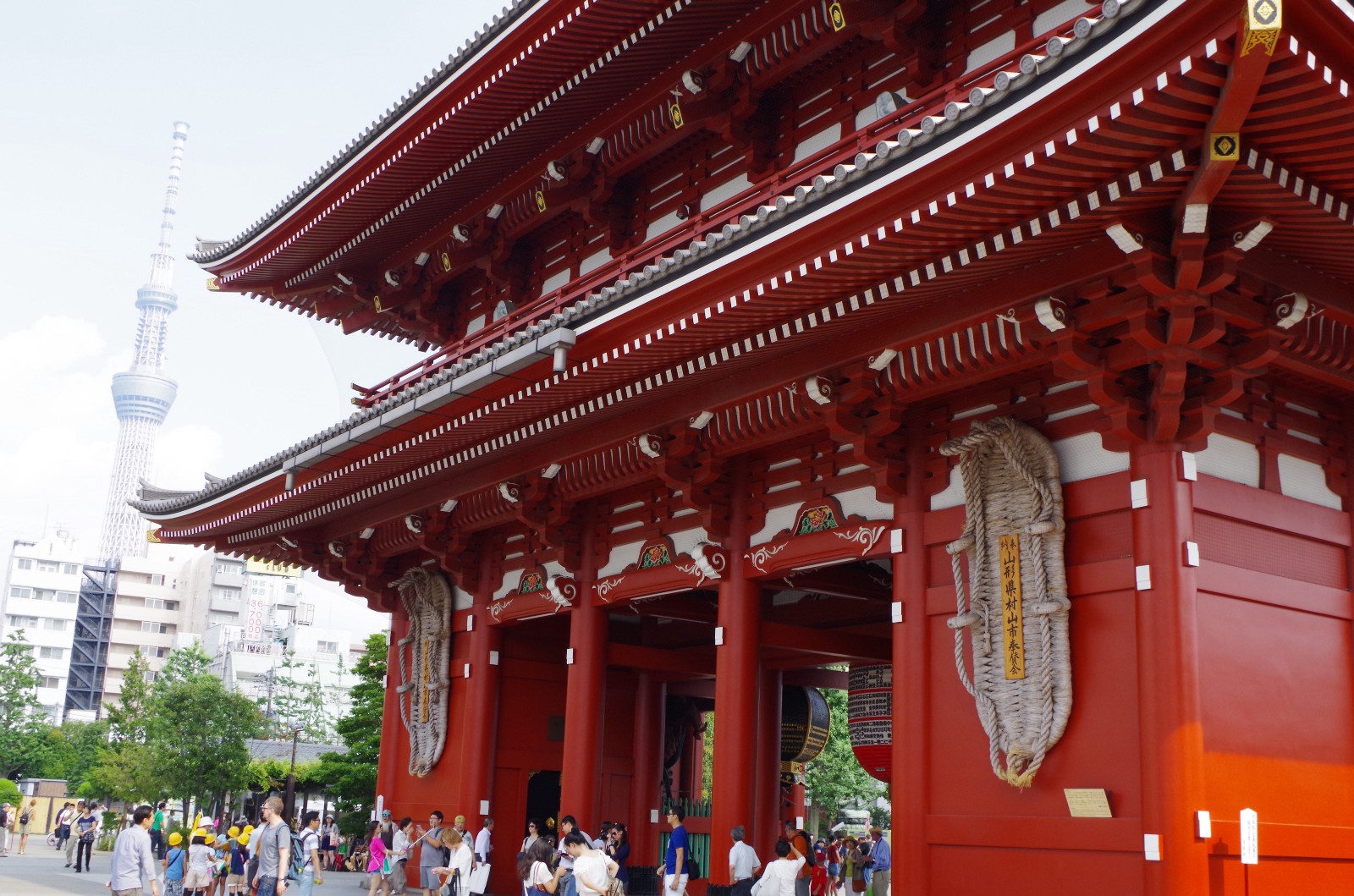
The Main Hall
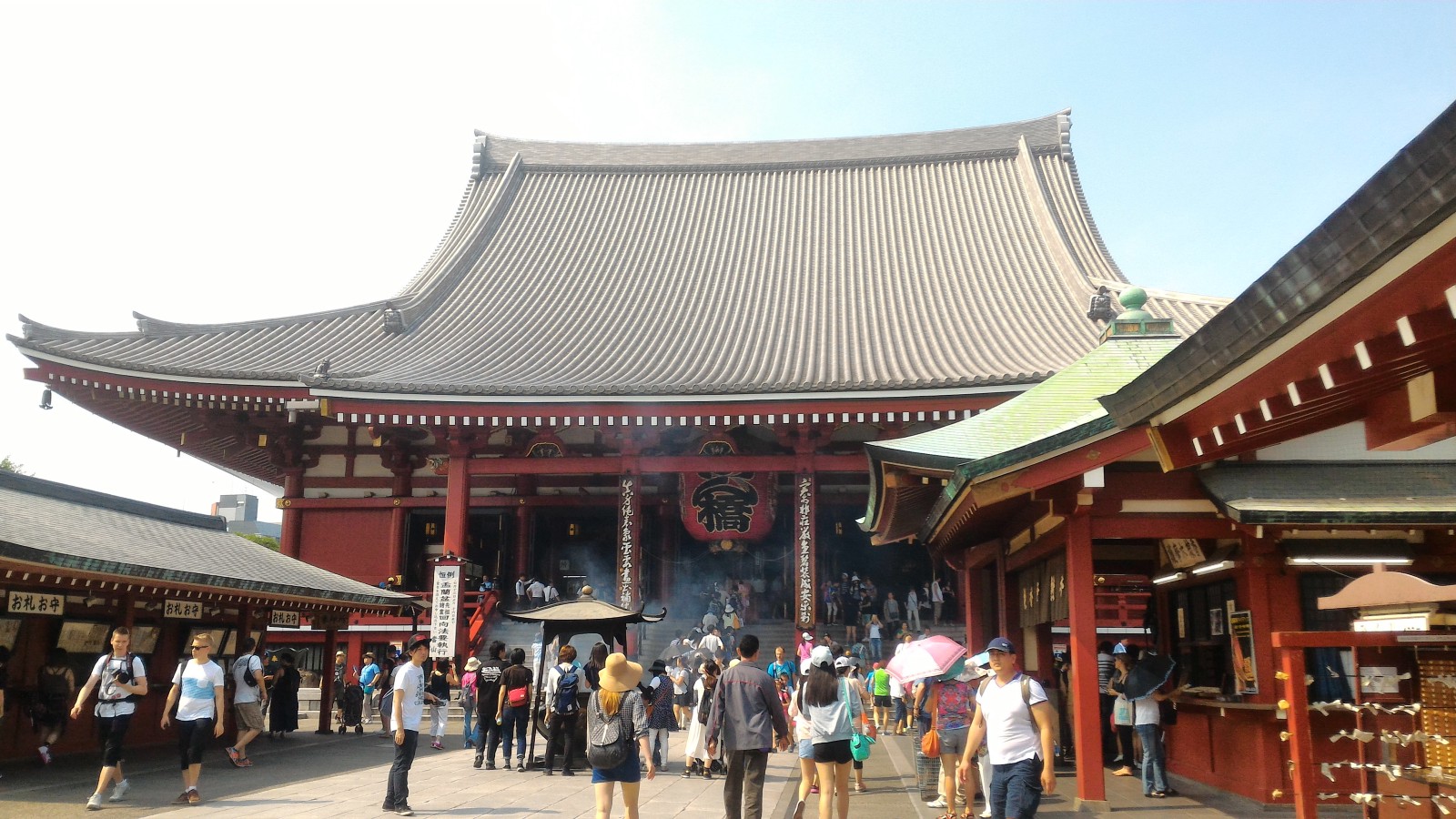
Beyond the gate is the main hall of the temple, accompanied by a striking five-story pagoda painted in vivid red. The area surrounding the main hall bustles with tourists and worshippers year-round.
What to Do in Sensoji
Feeling the majesty of the temple is not enough. Here is an introduction to how to worship like the local Japanese people.
1. Rinse Your Hands and Mouth
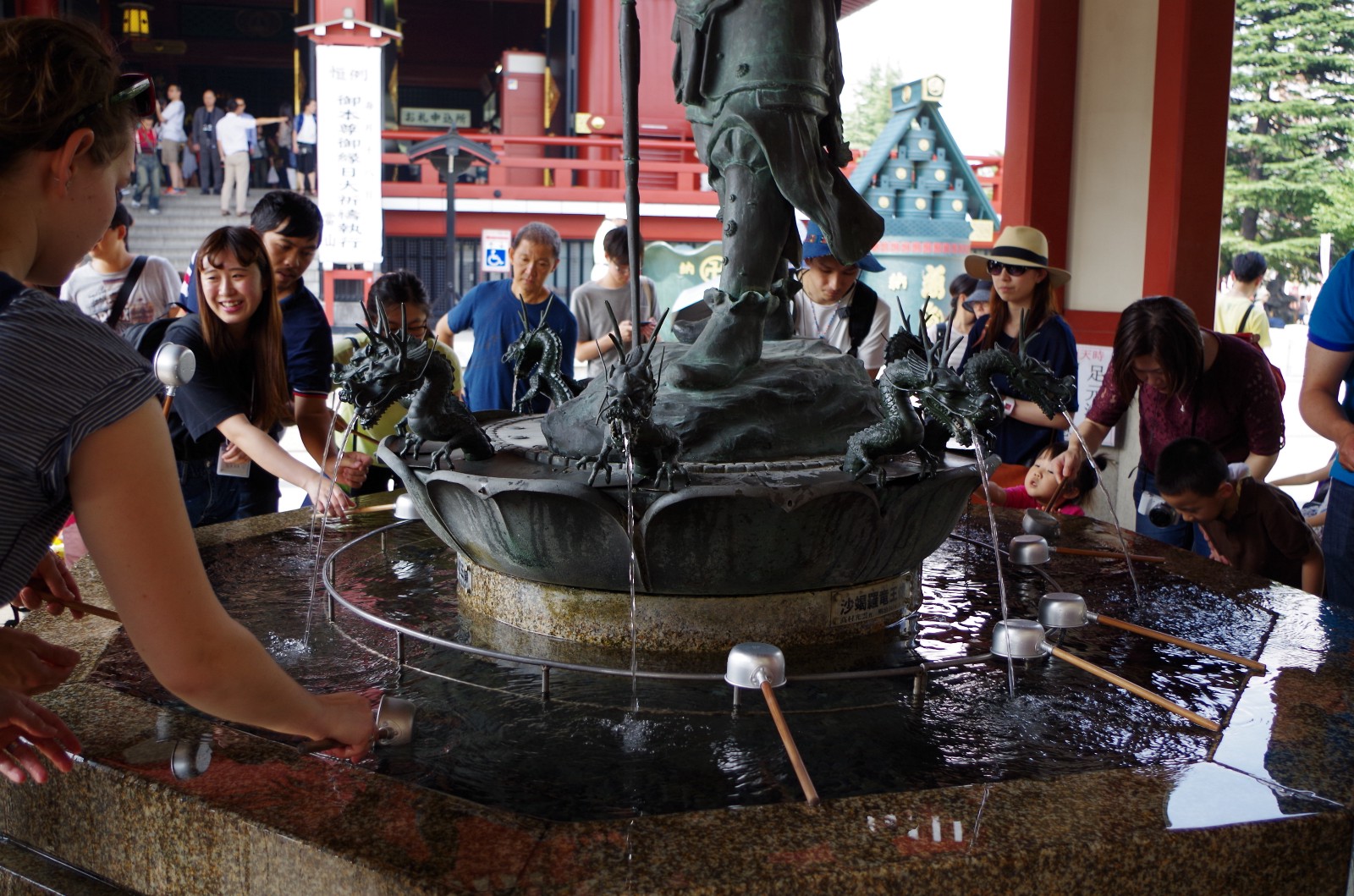
First, wash your left hand with the scoop and your right hand, and then rinse your mouth. Finish by washing the handle with the same water.
2. Touch the Incense Smoke
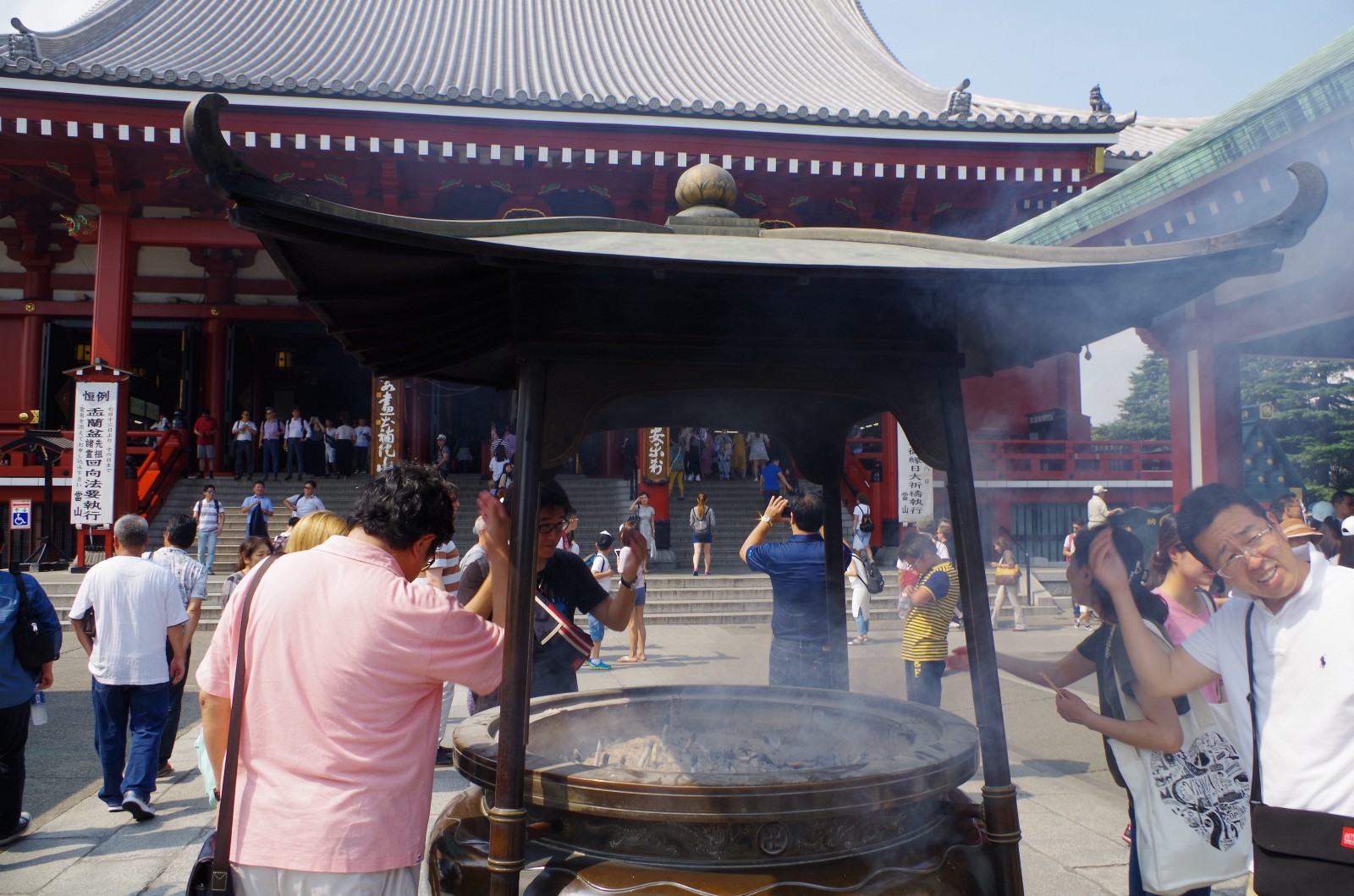
The smoke is said to help heal injured parts of the body; therefore, draw it toward the affected area by waving your hands.
3. Offer a Small Donation and Pray
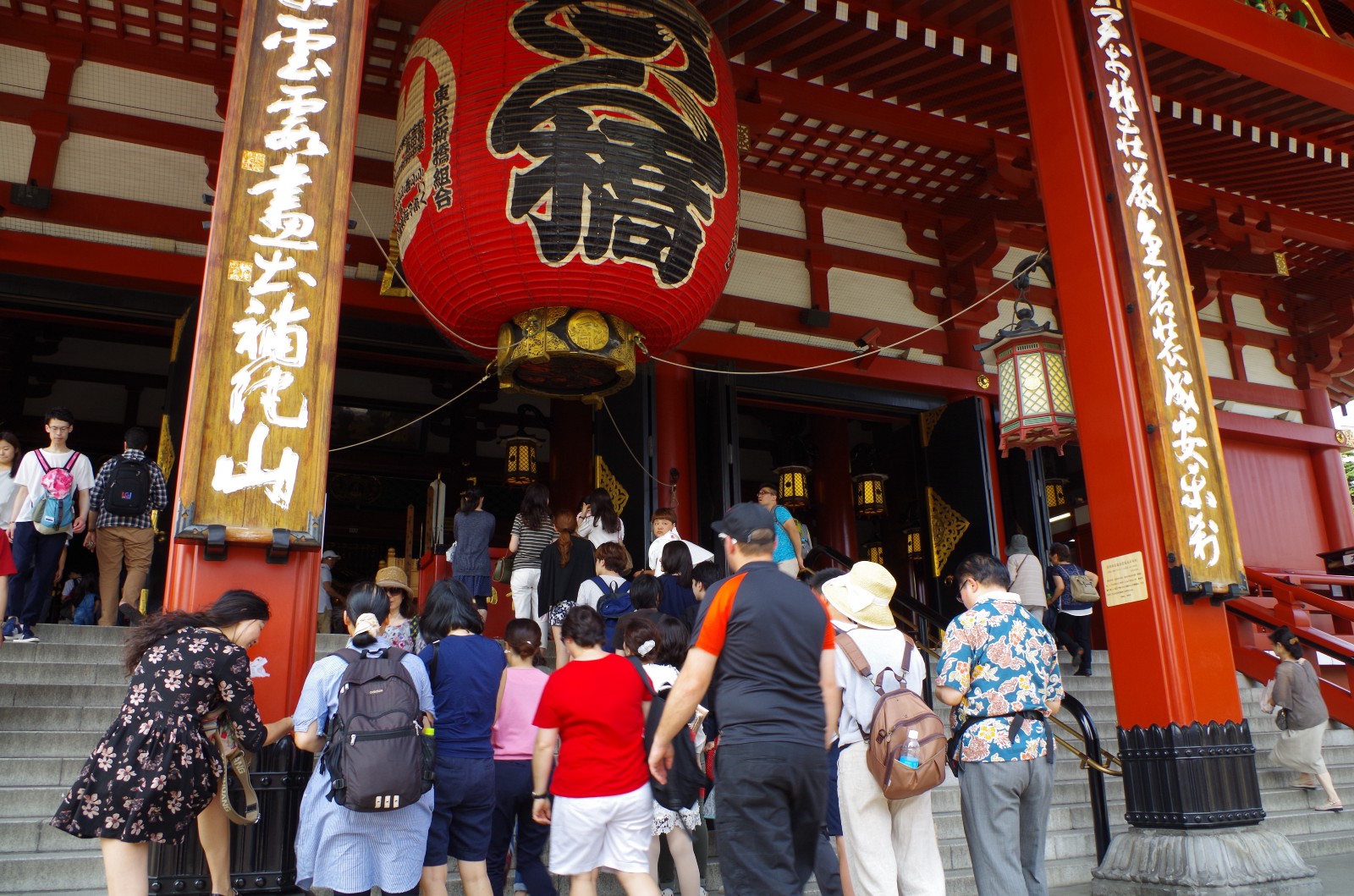
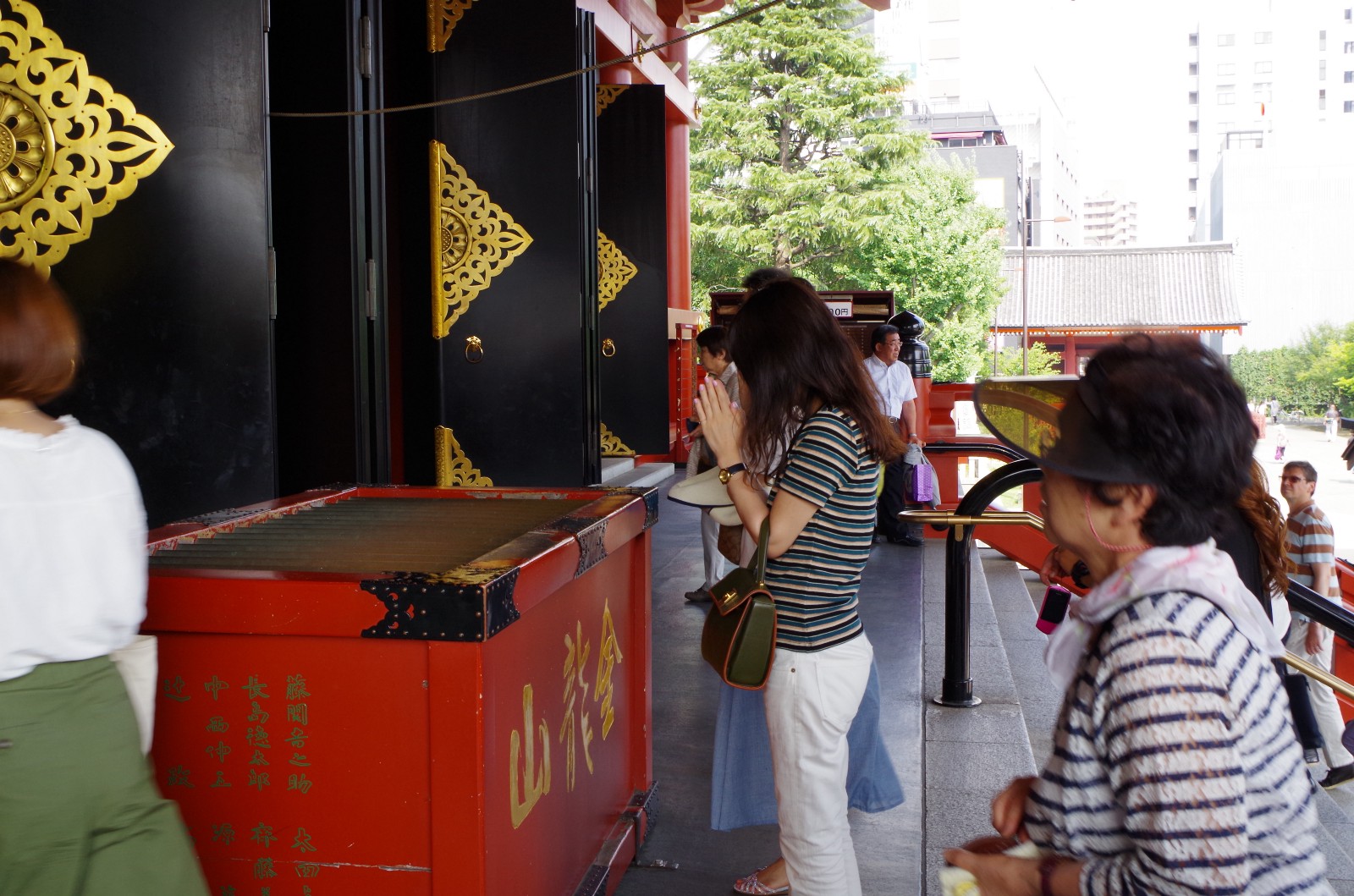
If there is a line, stand in it and wait your turn. When it’s your turn, place your money in the offertory box before praying with your hands clasped. As for the quantities you offer, that’s entirely up to you, and there is no set rule for how much each visitor should offer.
For more details about how to worship at temples or shrines, check out What’s the Difference Between Shrines and Temples in Japan?
4. Read Your Fortune With an Omikuji (Optional)
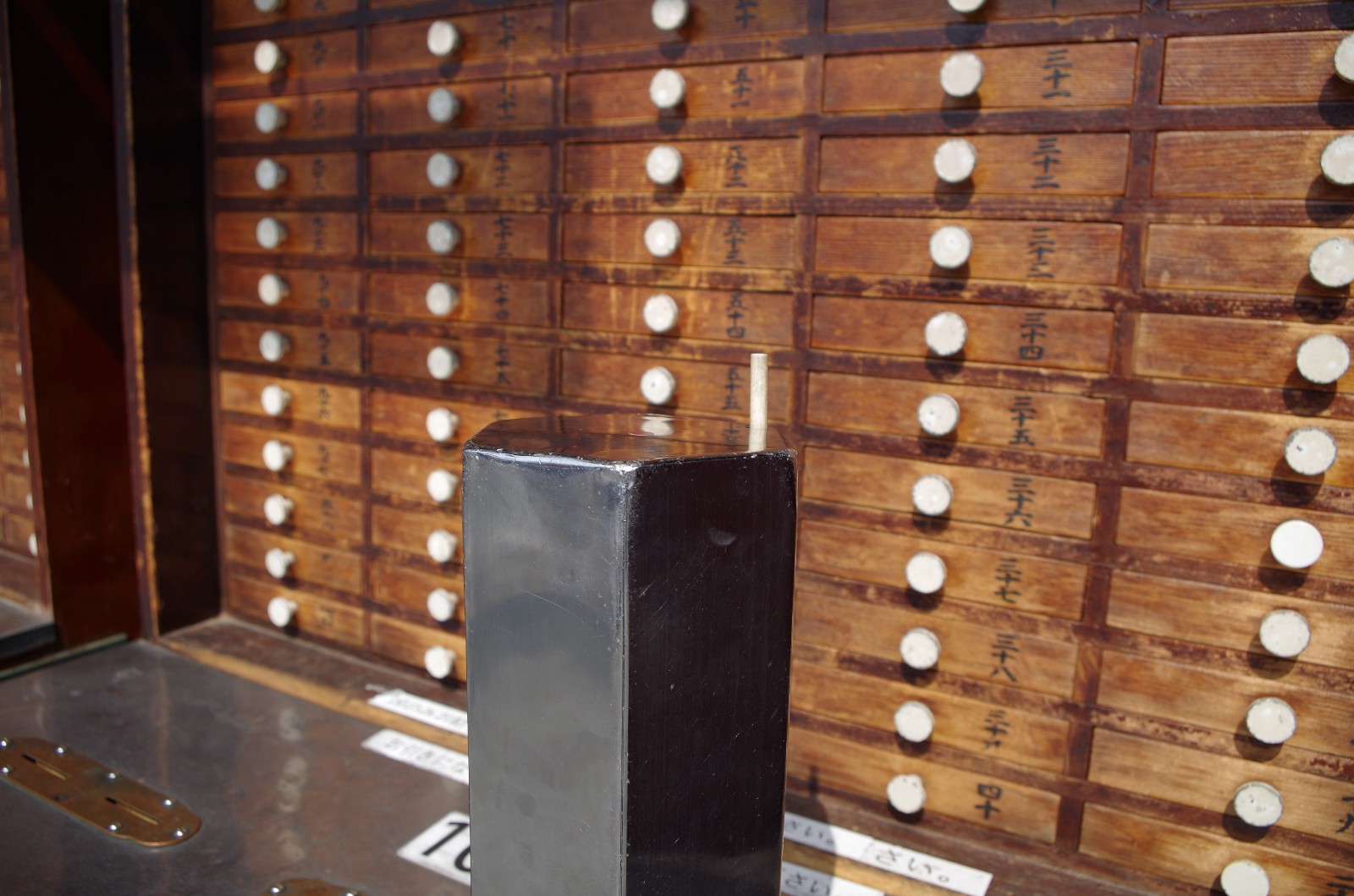
You may have noticed that temples or shrines often have a spot with drawers of lucky fortune slips, called omikuji (おみくじ). Sensoji is not an exception. Drawing these slips is a popular custom that can be done anytime, and Sensoji is actually a good place to try it out. Since it’s a very popular temple among international visitors, the Omikuji slips are written both in Japanese and English, which is not the case for most other places in Japan.
The process in Sensoji is quite simple (it may vary slightly in other places):
- Insert a 100 yen coin into the designated slot on the table.
- While making a wish, gently shake the box a few times. A stick marked with a fortune number will emerge.
- Confirm your number and then return the stick to the box.
- Take a sheet of omikuji from the drawer that matches your number and read the contents. If you draw good fortune, remember to stay humble and not to act carelessly or arrogantly. If you draw bad fortune, don’t be afraid. Instead, strive to remain modest and gentle. If the bad luck concerns you, the best way to neutralize it is by tying the folded omikuji to a designated spot that’s usually nearby, as you can see in the following image:
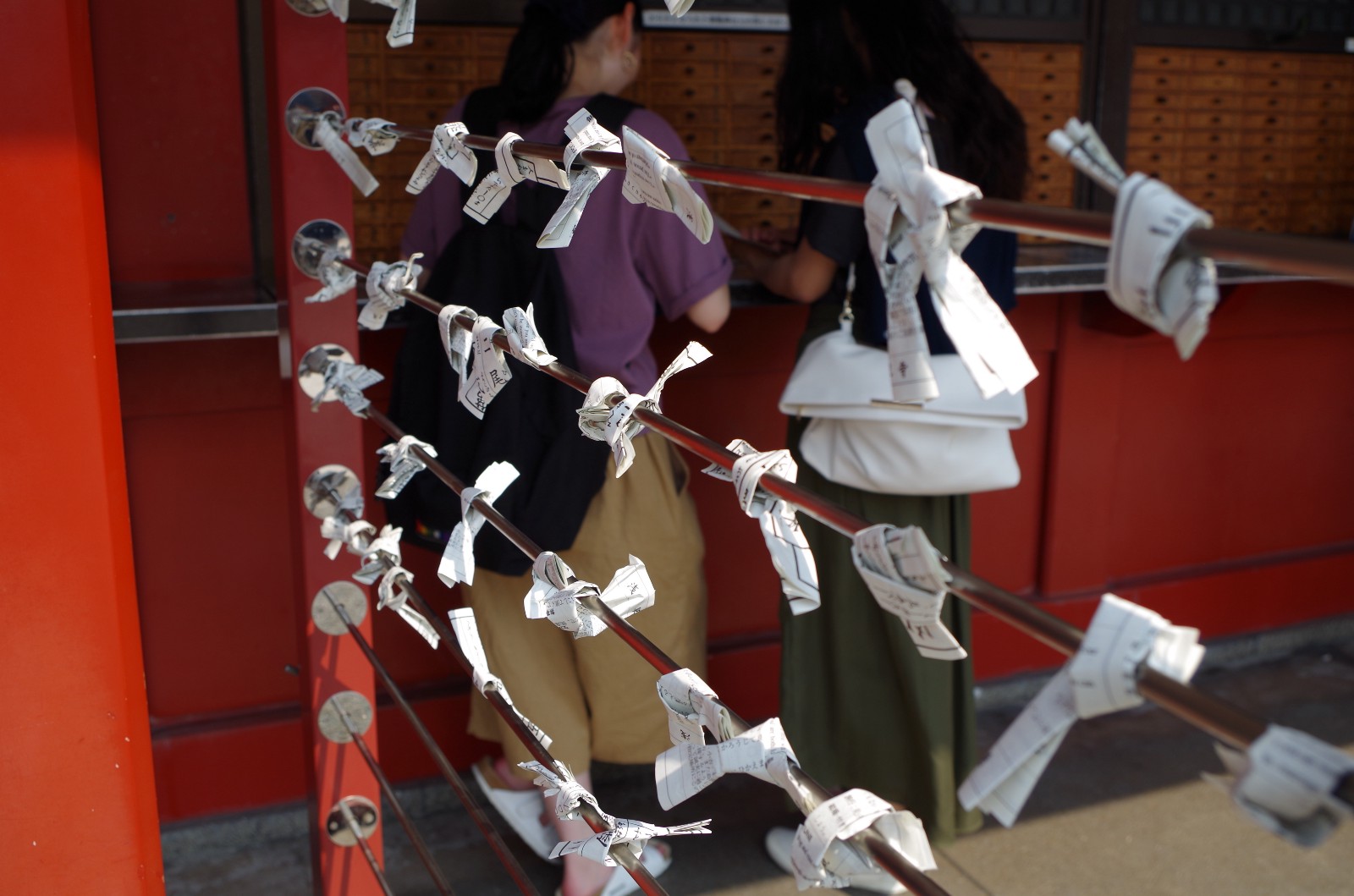
For more details about omikuji, check our dedicated article: Omikuji: Understanding Japanese fortune slips.
5. Get an Omamori Charm (Optional)
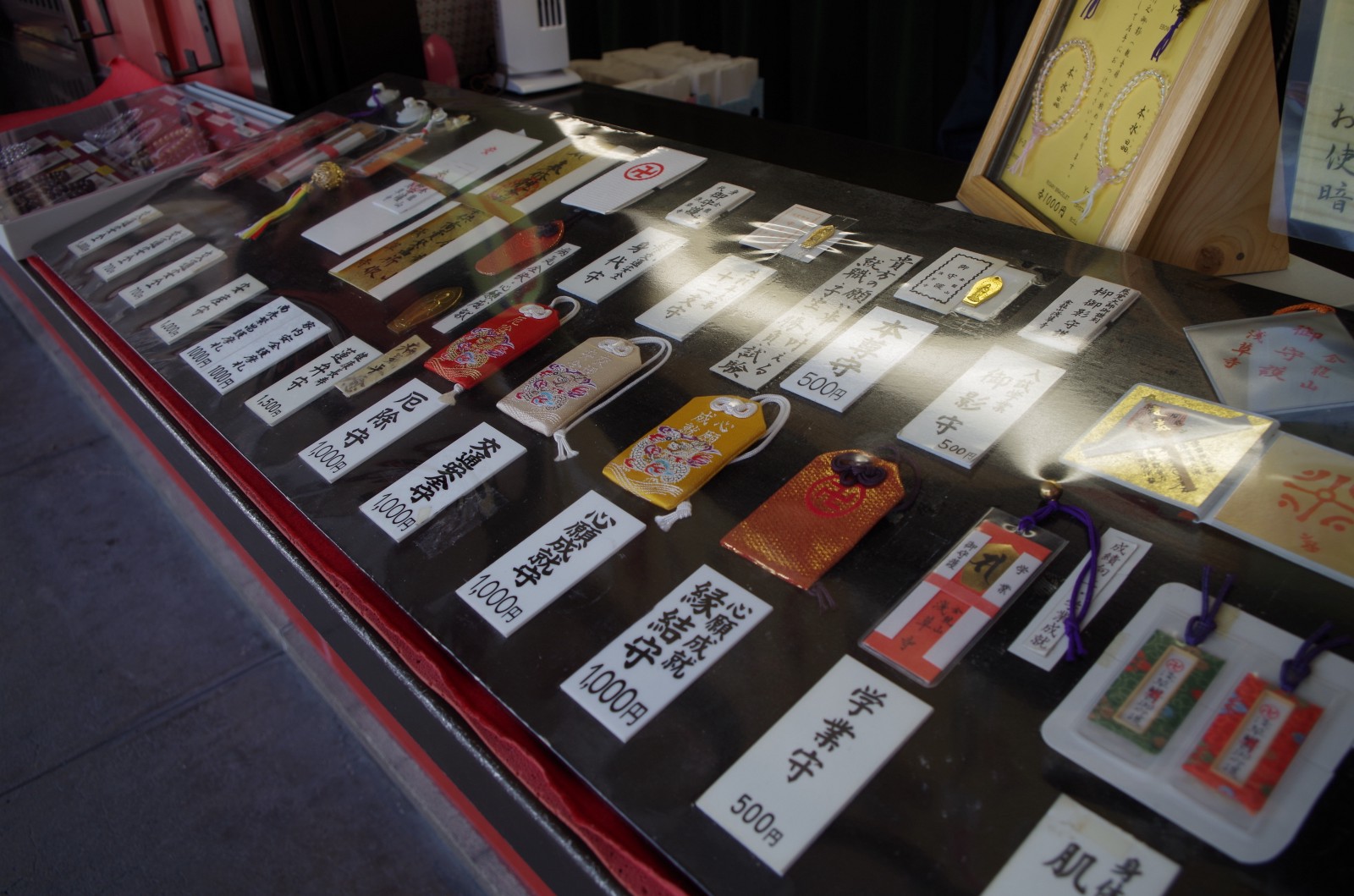
Omamori (おまもり) are traditional Japanese lucky charms believed to bring good fortune. They come in various types, each offering different forms of protection, such as safety while driving, good health, or success in studies and business. You can purchase an omamori starting at around 500 yen.
For more details about omamori, check our guide to Japanese Lucky Charms in Shrines and Temples.
6. Visit Asakusa Shrine (Optional)
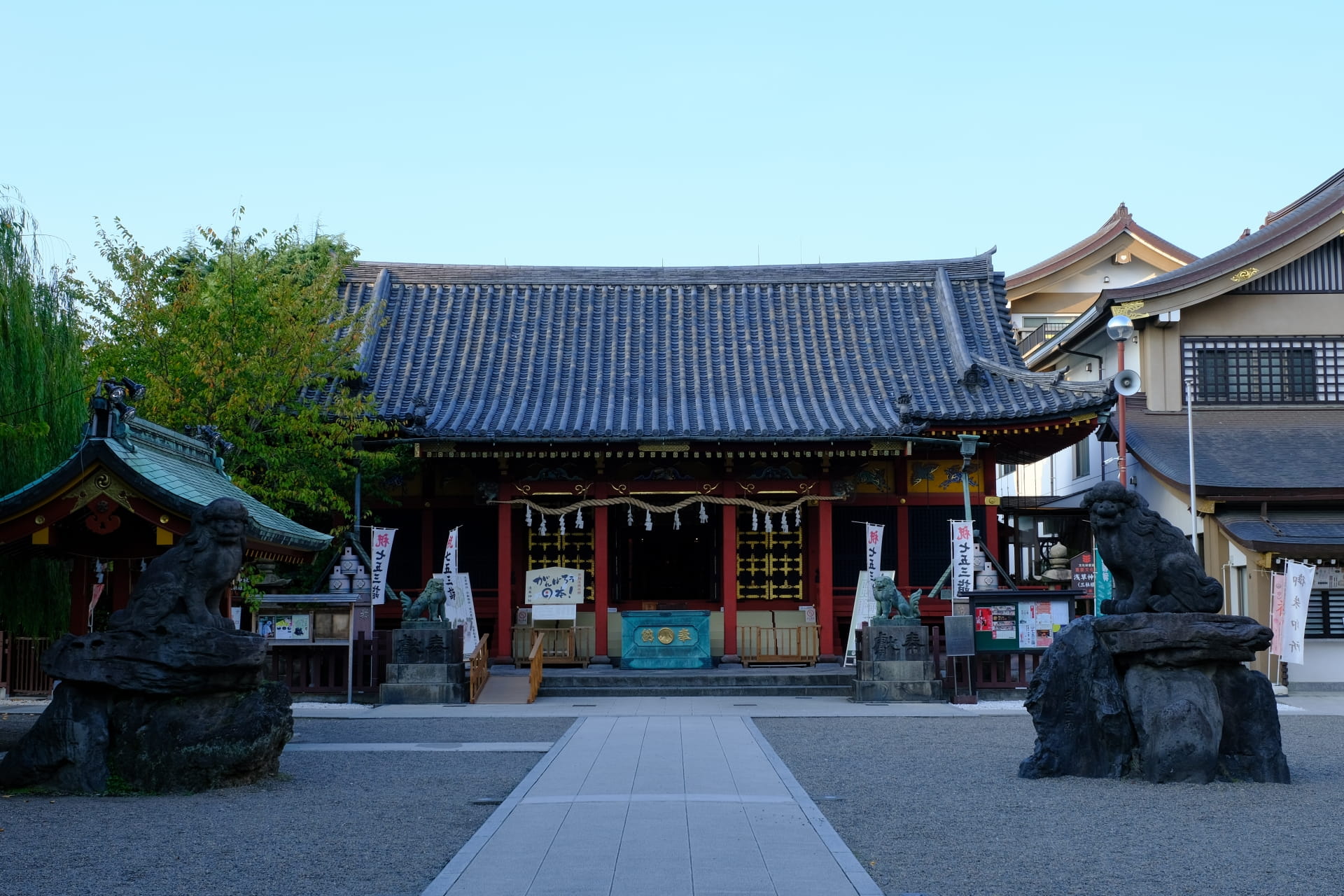
Located just a few steps to the east of Sensoji’s Main Hall, Asakusa Shrine (浅草神社) is a worthwhile visit if your schedule allows it. Built in 1649 by Shogun Tokugawa Iemitsu, this Shinto Shrine honors the three founding fathers of Sensoji, the two fishermen brothers who discovered the golden Kannon statue and the village chief who converted his home into the original temple. Because of these three deities (Sanja-sama), the shrine is also famous for hosting the wild and incredible Sanja Matsuri every May!
As a Shinto Shrine that’s still active within the grounds of a Buddhist Temple, this is one of Tokyo’s best surviving examplea of the way the two faiths remained intertwined during centuries. And unlike much of the surrounding complex, the main shrine building miraculously survived World War II air raids, so it’s also designated as an Important Cultural Property.
Major Annual Events at Sensoji Temple
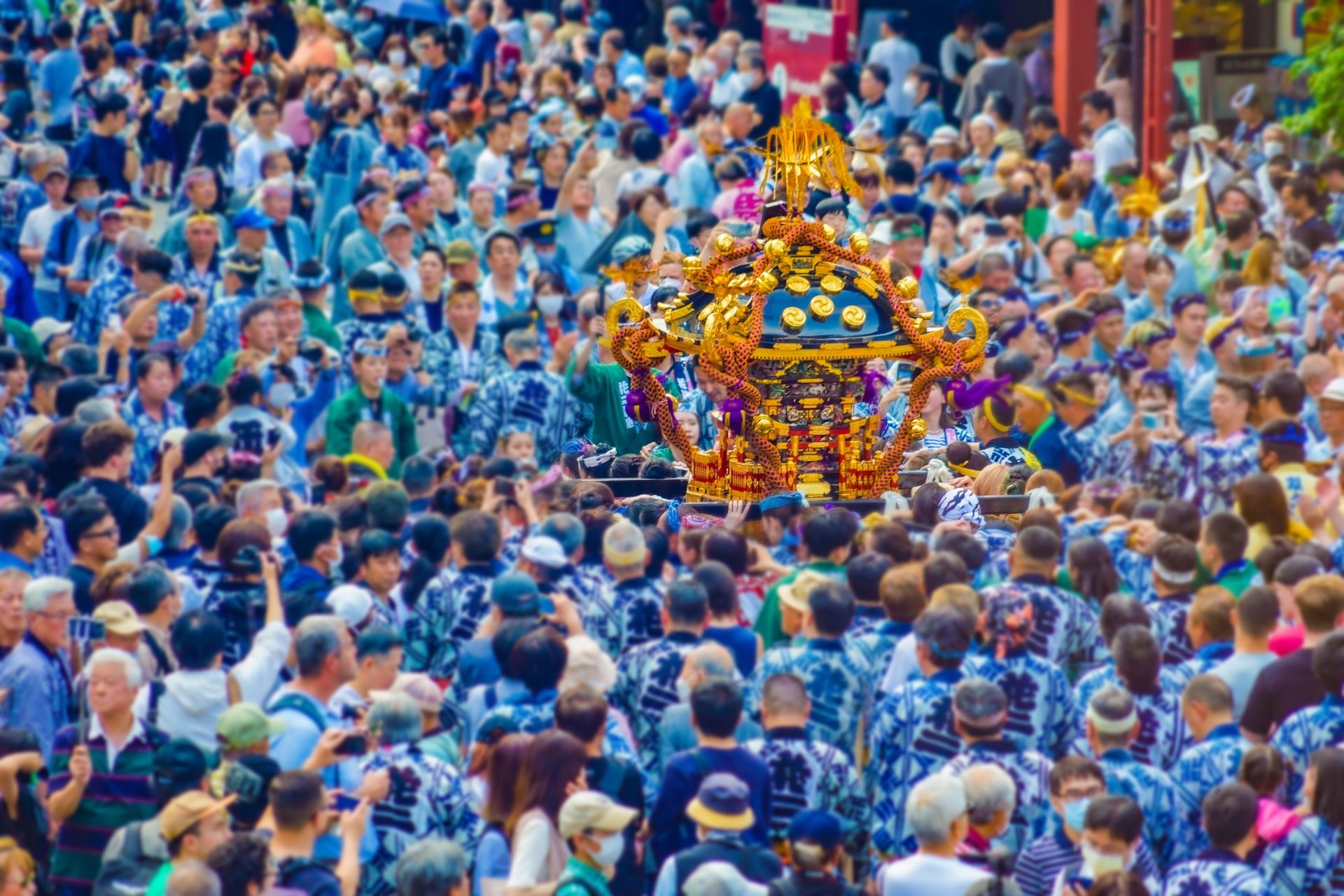
Throughout the year, Sensoji Temple hosts several of Tokyo’s most iconic traditional festivals and seasonal markets. Its greatest annual event is Sanja Matsuri (Sanja Festival), Tokyo’s largest traditional Shinto festival held at Asakusa Shrine. The festival features numerous Mikoshi (portable shrines) carried through the neighborhood, creating a lively and energetic atmosphere. The event lasts for three days in mid-May and attracts over 2 million visitors. If you find yourself in the area around mid-May, make sure not to miss it!
More info: Sanja Matsuri: Tokyo’s Biggest Festival
See below for an overview of Sensoji’s main annual events:
| Event Name | Date | Highlights |
| Setsubun Bean-Throwing | February 3 | The first large-scale Setsubun celebration in Tokyo. Celebrities and local dignitaries throw roasted soybeans from the Main Hall stage to ward off bad luck. Uniquely, the chant omits “Out with demons” (Oni wa soto), claiming no evil can exist before Kannon. |
| Sanja Matsuri | 3rd Weekend of May | One of Tokyo’s largest and wildest festivals, attracting nearly 2 million visitors. Jointly hosted with Asakusa Shrine, it features a procession of 100 neighborhood mikoshi (portable shrines) and lively traditional music. |
| Hozuki-Ichi (Lantern Plant Market) | July 9–10 | Over 100 stalls line the temple grounds selling bright orange hozuki (Japanese lantern plants). Visiting on these two days (Shimanroku-sennichi) is traditionally believed to grant the spiritual merit of 46,000 days of prayer. |
| Kinryu no Mai (Gold Dragon Dance) | March 18 and October 18 | A dramatic traditional performance featuring an 18-meter-long golden dragon danced through Nakamise Street and the temple grounds to honor Kannon. |
| Hagoita-Ichi (Battledore Market) | December 17–19 | A traditional year-end market featuring dozens of open-air stalls selling decorative hagoita (wooden paddles) designed to bring luck for the upcoming year. |
Getting to Sensoji and Access Information
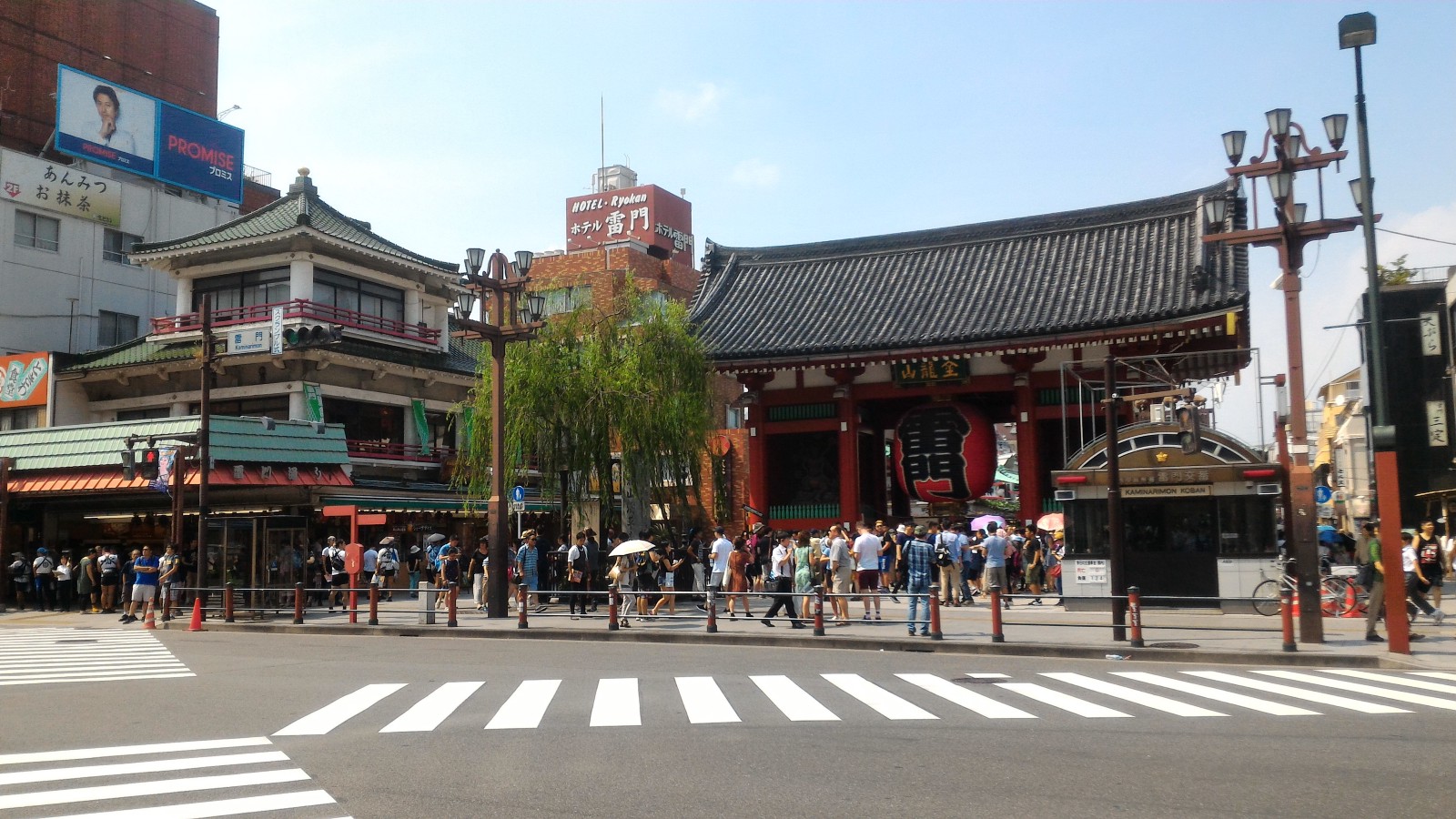
The premises of Sensoji Temple are open 24 hours a day and are completely free to access, allowing visitors to access the site freely both day and night. However, some facilities, including the main hall of the temple and the shops on Nakamise Street, are closed at night. The temple is illuminated every evening after sunset until 11:00 PM.
Sensoji Temple Main Hall Opening Hours:
- 6:00~17:00 (April to September)
- 6:30~17:00 (October to March)
Nakamise Street shops’ business hours vary with each shop, but most tend to close shortly after the Main Hall closes.
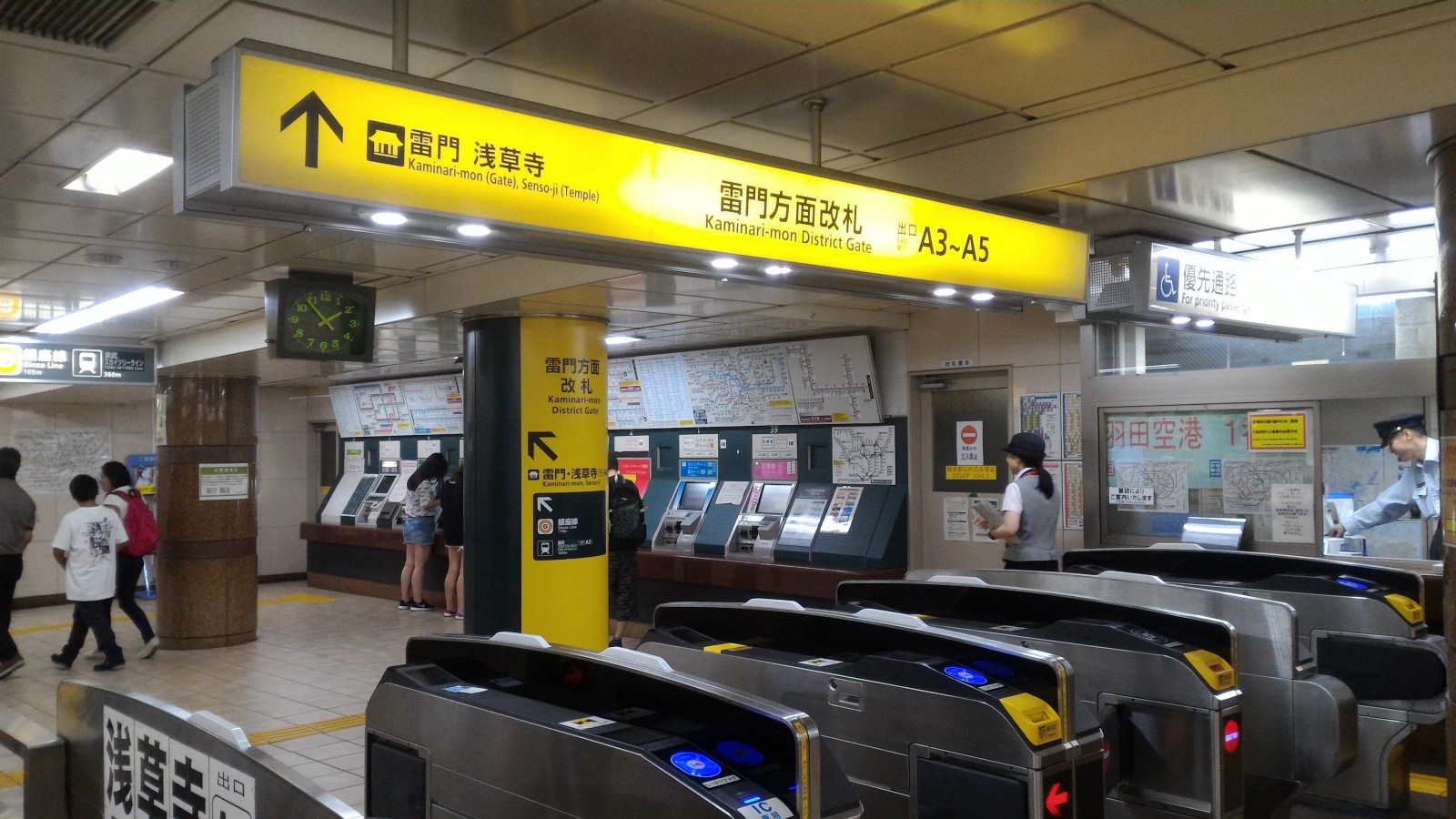
Sensoji Temple is just a 5-minute walk from Asakusa Station. There are three recommended ways to reach the Asakusa area: by train, bus, or water bus. Asakusa can be accessed directly from several major tourist areas in Tokyo, including Ueno, Shibuya, and Ginza, as well as from both Tokyo Narita Airport and Haneda Airport. It is also one of the areas most recommended for staying in Tokyo.
By Train
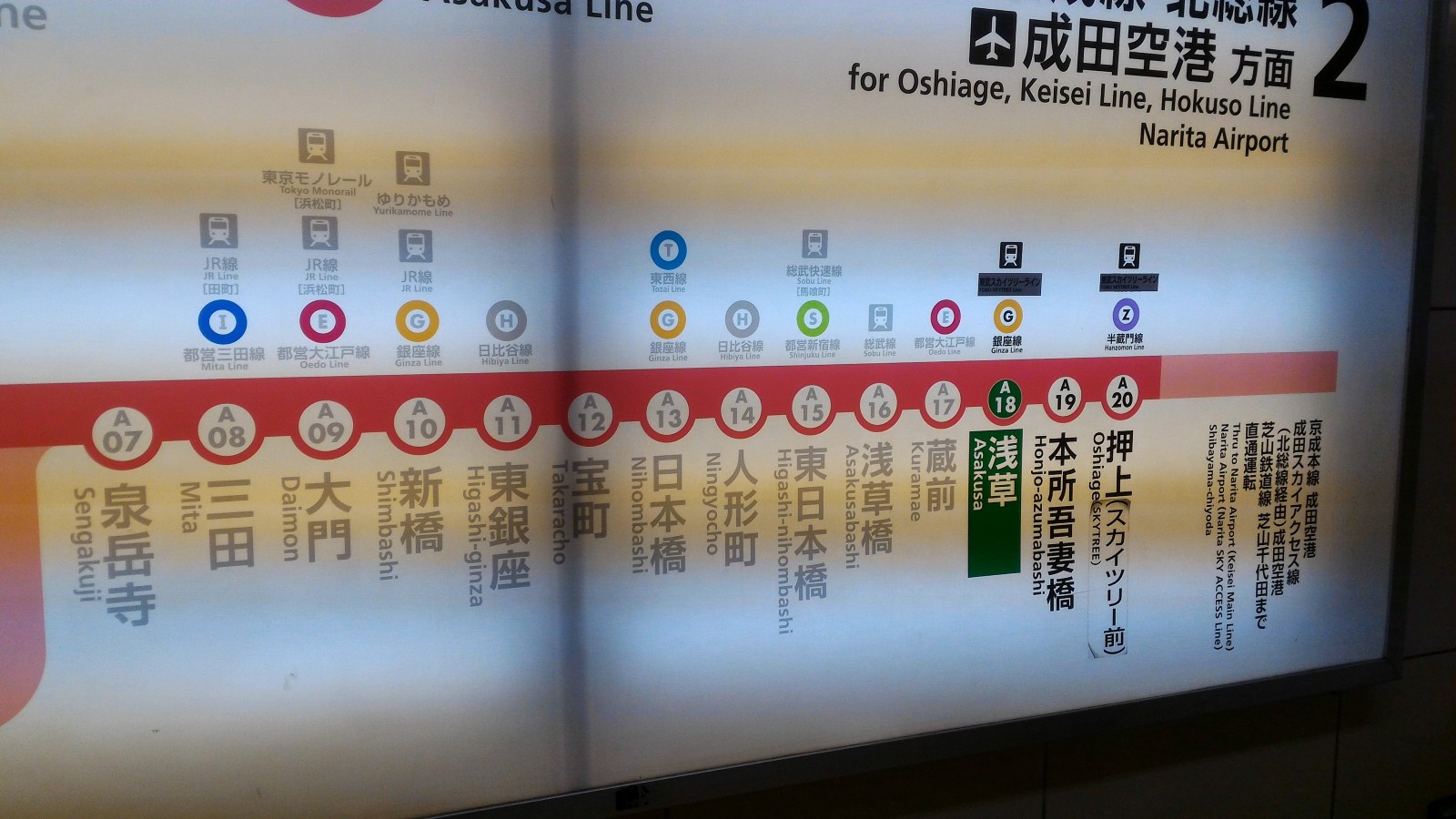
Asakusa Station is served by several railway lines, and it takes approximately a 5-minute walk to reach tourist attractions like Sensoji Temple.
- Tobu Skytree Line (TS-01)
- Toei Asakusa Line (A-18)
- Tokyo Metro Ginza Line (G-19)
- Tsukuba Express
By Bus
- Toei City Bus– 63&64 Ikebukuro Station/ East 42 Tokyo Station/46 Ueno Station
- Tobu Skytree Shuttle Bus — Connecting Tokyo Skytree and Ueno area via Asakusa
- Megurin — The Sightseeing loop bus in Taito ward
- SKY BUS– Open-top double-decker sightseeing bus you can hop in and off at several tourist sites in Tokyo
By Water bus
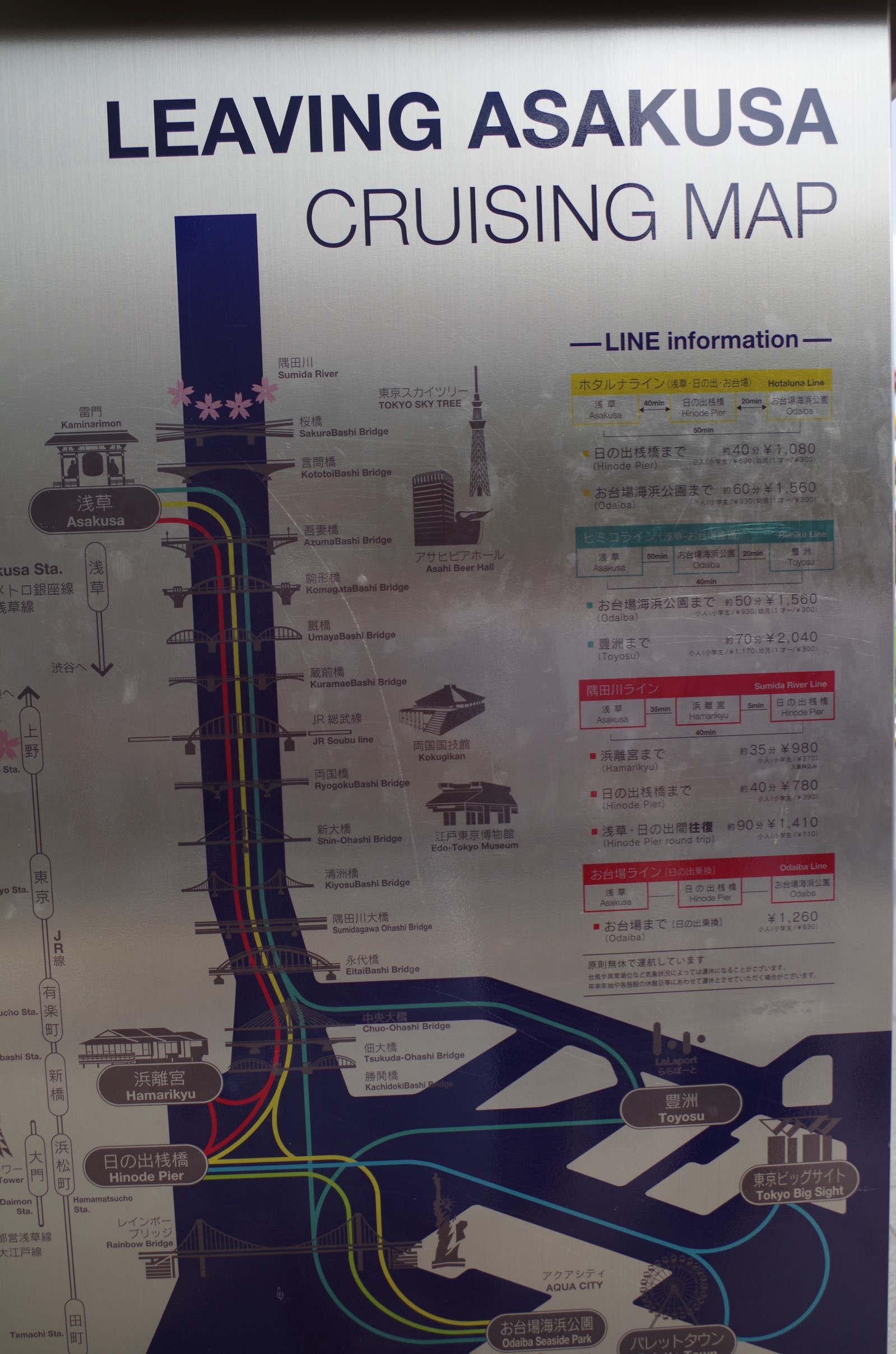
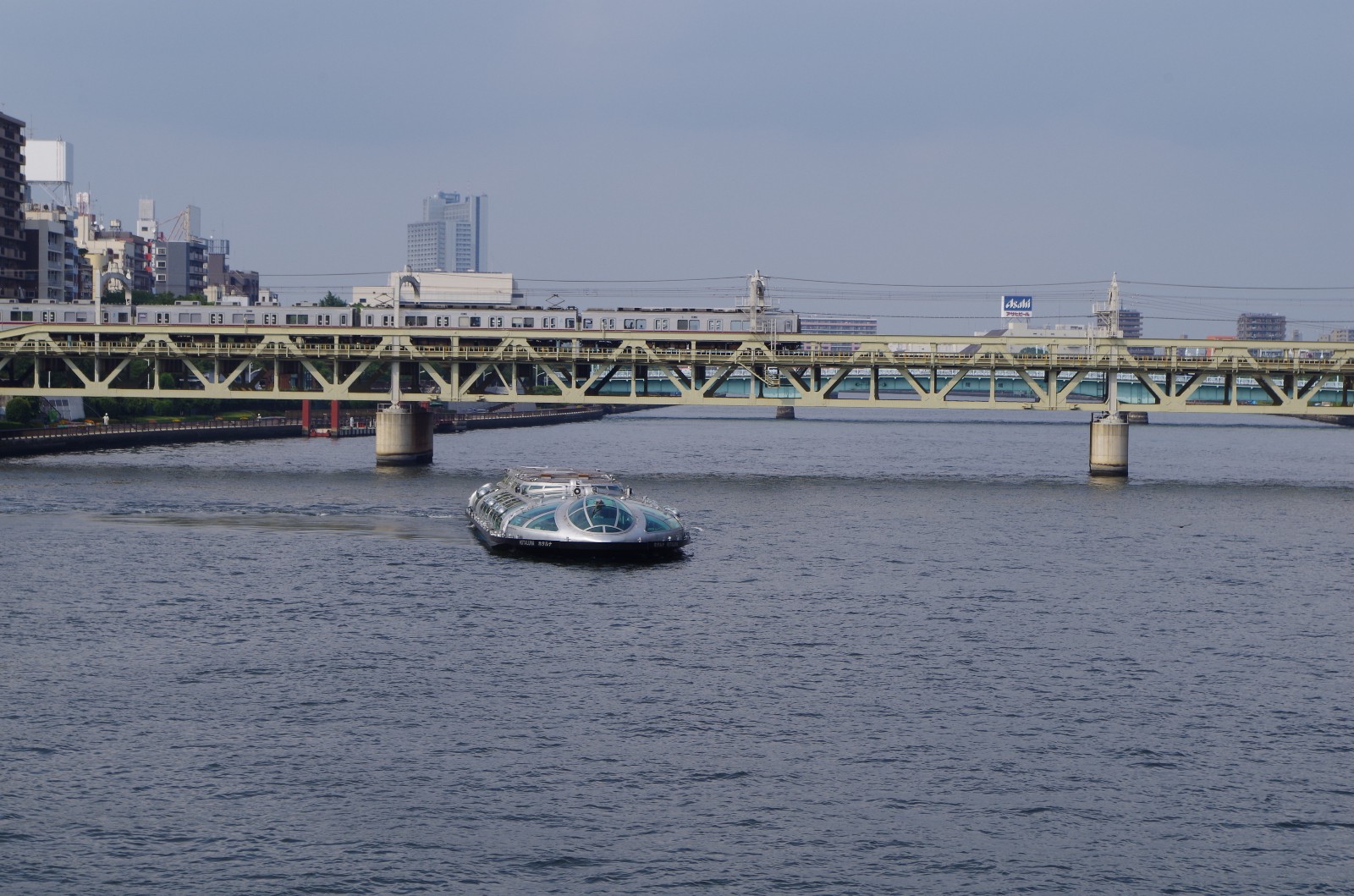
One of the most exciting ways to explore Tokyo is by taking the “Tokyo Cruise,” which travels along the Sumida River and Tokyo Bay, connecting Asakusa and Odaiba with several stops at various sightseeing spots. While the fare may be higher than other forms of public transportation, the stunning views of the city from the water are truly priceless.
Two water bus service companies operate in the Asakusa area:
▶ Book a Cruise between Asakusa and Odaiba by Tokyo Mizube Line in Tokyo!
By Private Transfer
Want to travel directly to Asakusa from the airport or your hotel? Airport Taxi is one of the best services for transfers to and from Narita and Haneda airports.
Now JWM readers have a 1,000JPY discount if they book with Airport Taxi!!
Coupon Code: JWM2023

 Access Access |
Approx. 5-min walk from Asakusa Station (Tobu Line, Tokyo Metro or Toei Subway) or Tsukuba Express Asakusa Station. |
|---|---|
 Business Hours Business Hours |
Temple grounds are accessible 24h. Main Hall Opening Hours: 6:00~17:00 (April to September) 6:30~17:00 (October to March) |
 Price Price |
Free |
 Official Website Official Website |
https://www.senso-ji.jp/ |
Things to Do around Sensoji Temple in Asakusa
When you visit Asakusa, exploring Sensoji is only the start. Here we suggest some fun things you can do before or after visiting the temple.
For the full rundown of activities available in the area, check our dedicated guide to the Best Things to Do in Asakusa.
1. Check Out the Tourist Information Center
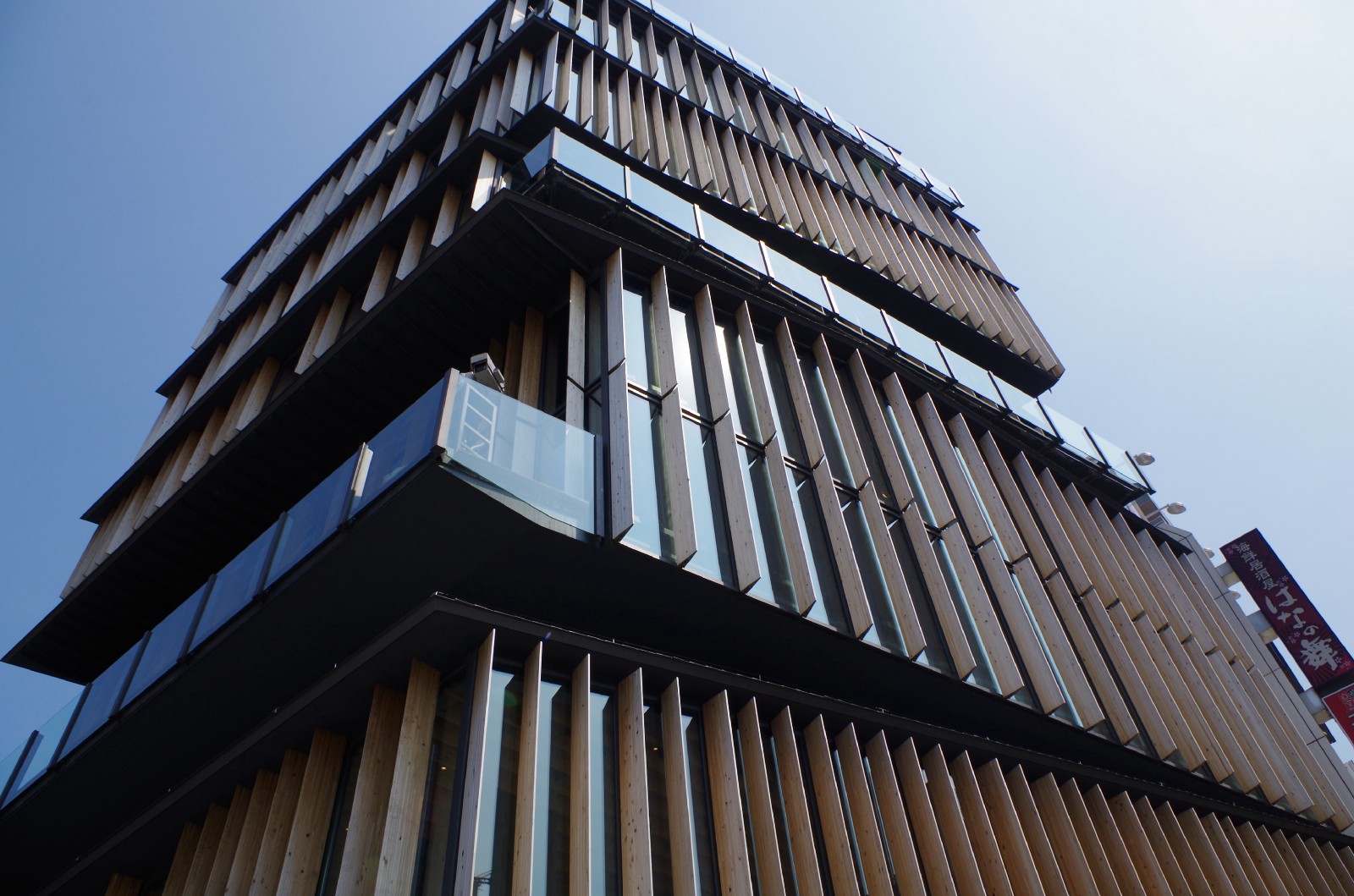
When you arrive in Asakusa, it’s a good idea to visit the Asakusa Culture Tourist Information Center for tourism information. It’s right across the street from Kaminarimon Gate. They provide guidance in Japanese, English, Chinese, and Korean, as well as free Wi-Fi and access to internet PCs. The building has eight stories and features a café, an exhibition hall, and an observation deck on the 8th floor, which offers a fantastic view of Nakamise Street and Sensoji Temple.
Hours: 9:00~20:00 (observation deck until 22:00)
2. Munch Street Food
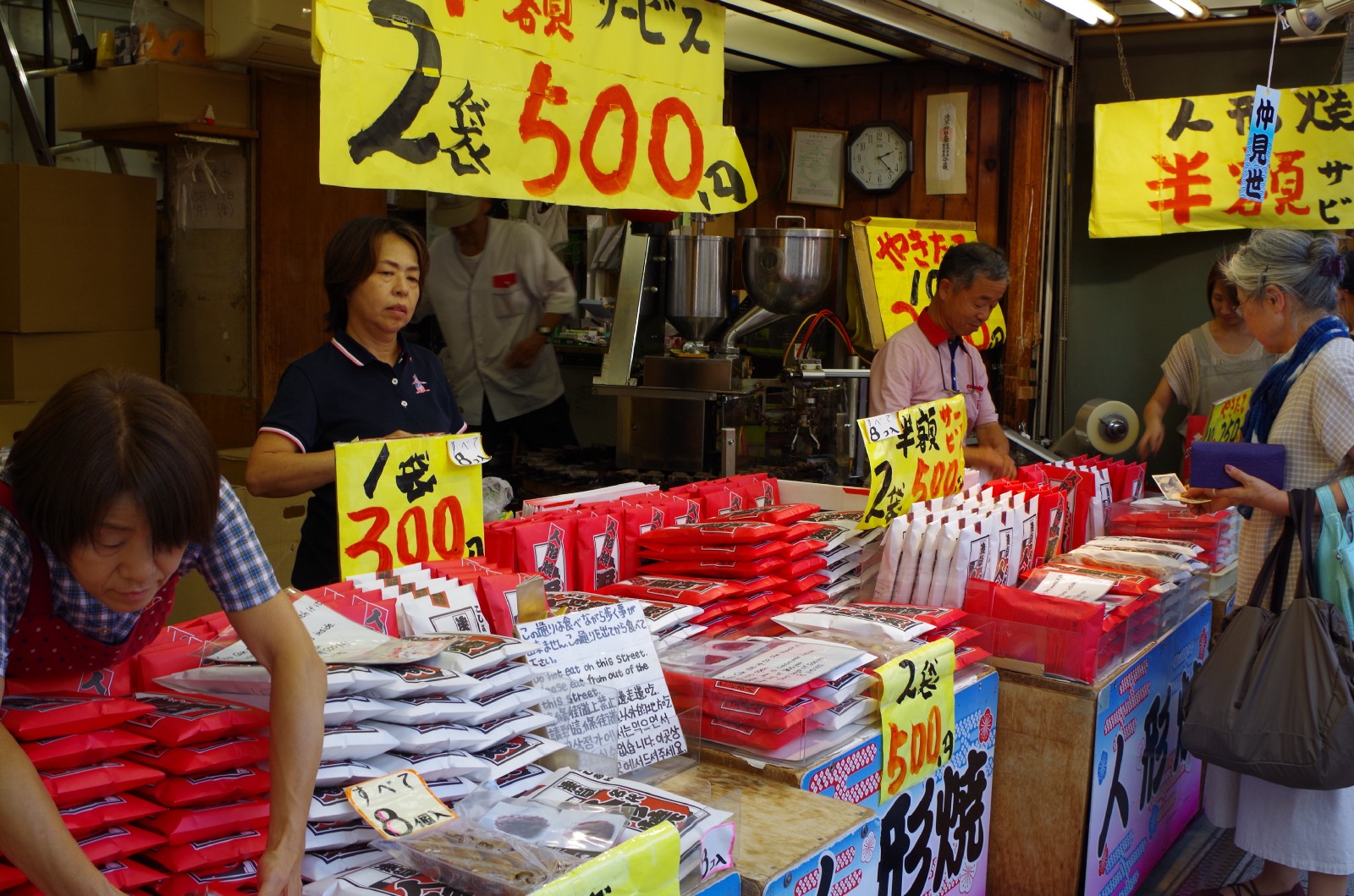
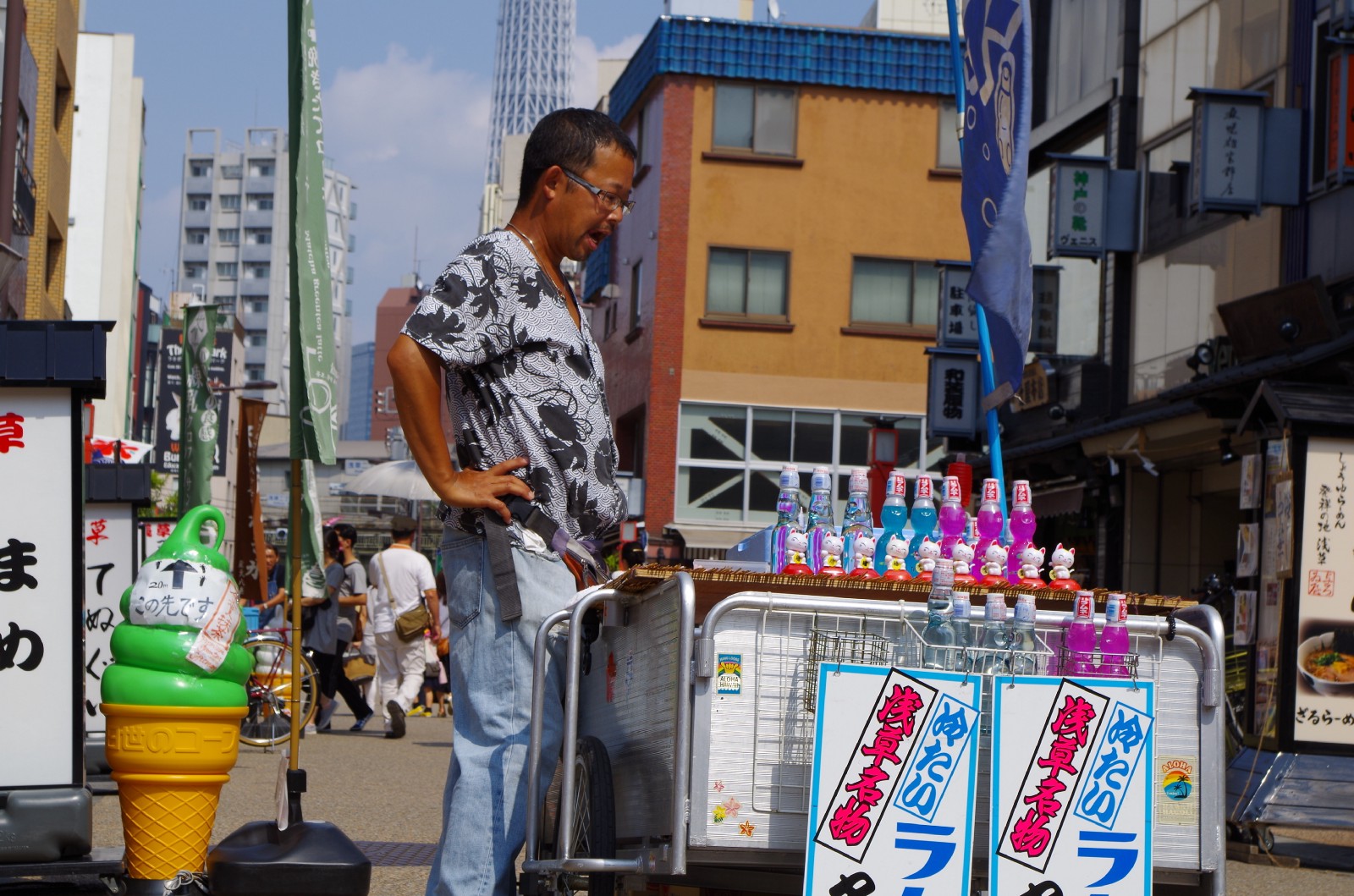
Nakamise Street and the surrounding area in Asakusa are a paradise for street food, featuring dozens of food stalls and shops. From authentic Japanese snacks to Instagram-worthy sweets, you’ll find a variety of delicious street food that you can enjoy while sightseeing in Asakusa. It’s the perfect place to experience “Tabearuki,” which means “eat and walk” in Japanese.
More info: Best 6 Street Food in Asakusa
3. Ride a Rickshaw
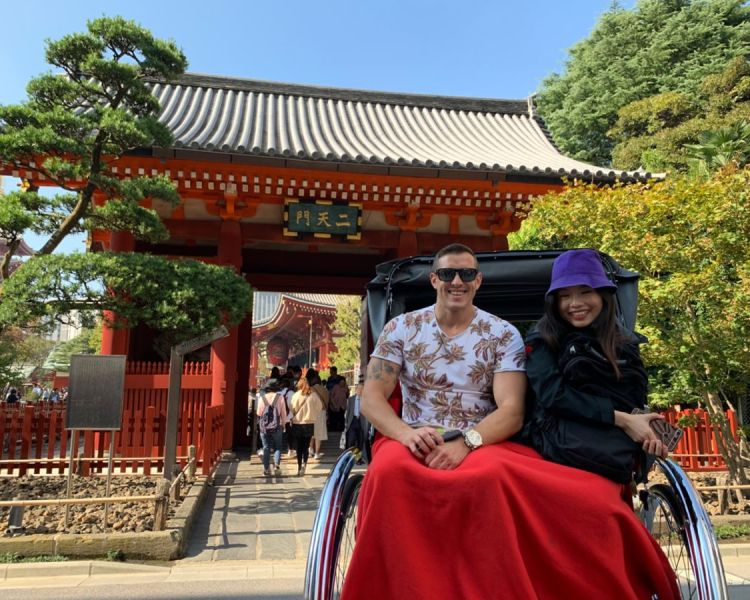
What better way to explore the old downtown of Tokyo than by taking a rickshaw ride? In front of Sensoji Temple, you’ll find numerous rickshaws and drivers available for hire. Some companies even organize short tours to showcase the best highlights of the Asakusa area.
More info: Tokyo Rickshaw Asakusa: Complete Guide, Prices & How to Book
4. Visit Sensoji Temple at Night
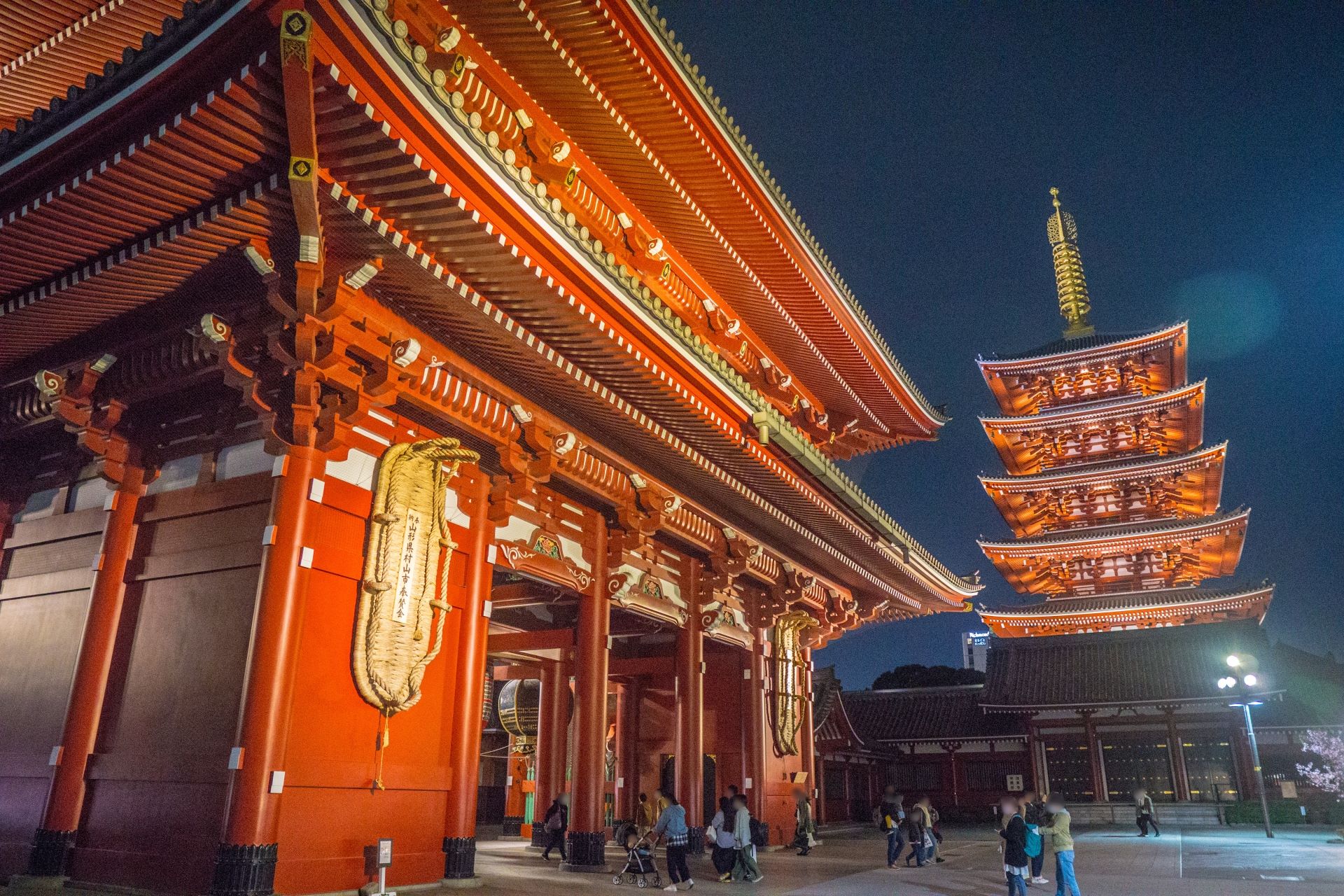
Asakusa is a wonderful place to explore at night. While the main hall of Sensoji Temple is open daily from 6:00 AM to 5:00 PM and many shops on Nakamise Street close in the evening, you can still visit Sensoji Temple after hours. This time of day offers a fantastic opportunity for photography, as there are far fewer crowds compared to the daytime. Additionally, the temple is beautifully illuminated every evening after sunset until 11:00 PM.
5. Bar Hopping
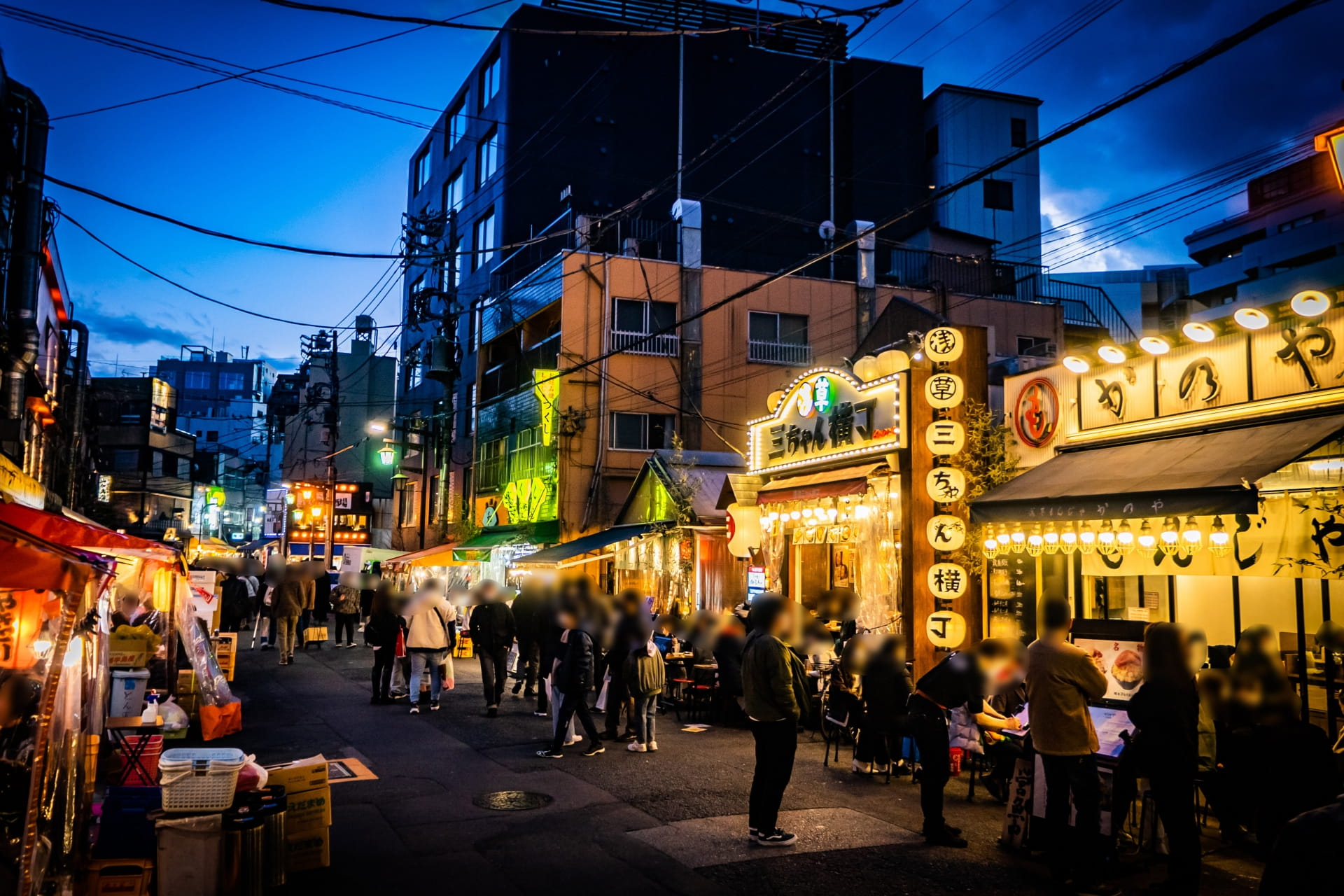
When the sun goes down, Asakusa transforms into one of Tokyo’s most inviting spots for casual nighttime drinks. Just a short walk from the temple grounds lies Hoppy Street (Hoppy Dori), a retro, lantern-lit alleyway packed with open-air izakayas (Japanese-style pubs). Named after Hoppy, a popular beer-flavored mixer paired with shochu, this street is famous for its nostalgic Showa-era charm, friendly local crowd, and steaming bowls of savory beef tendon stew (gyu-suji nikomi). In the surrounding vicinity, there are also numerous hidden izakayas, so it’s worth exploring around for a bit.
Navigating back-alley izakayas on your own can feel a bit intimidating if you don’t speak Japanese, but joining a guided bar-hopping experience makes it easy to taste local specialties and find the best hidden drinking spots with zero hassle.
▶️ Book the Asakusa Night Foodie Tour!
6. Extend your trip to Tokyo Skytree
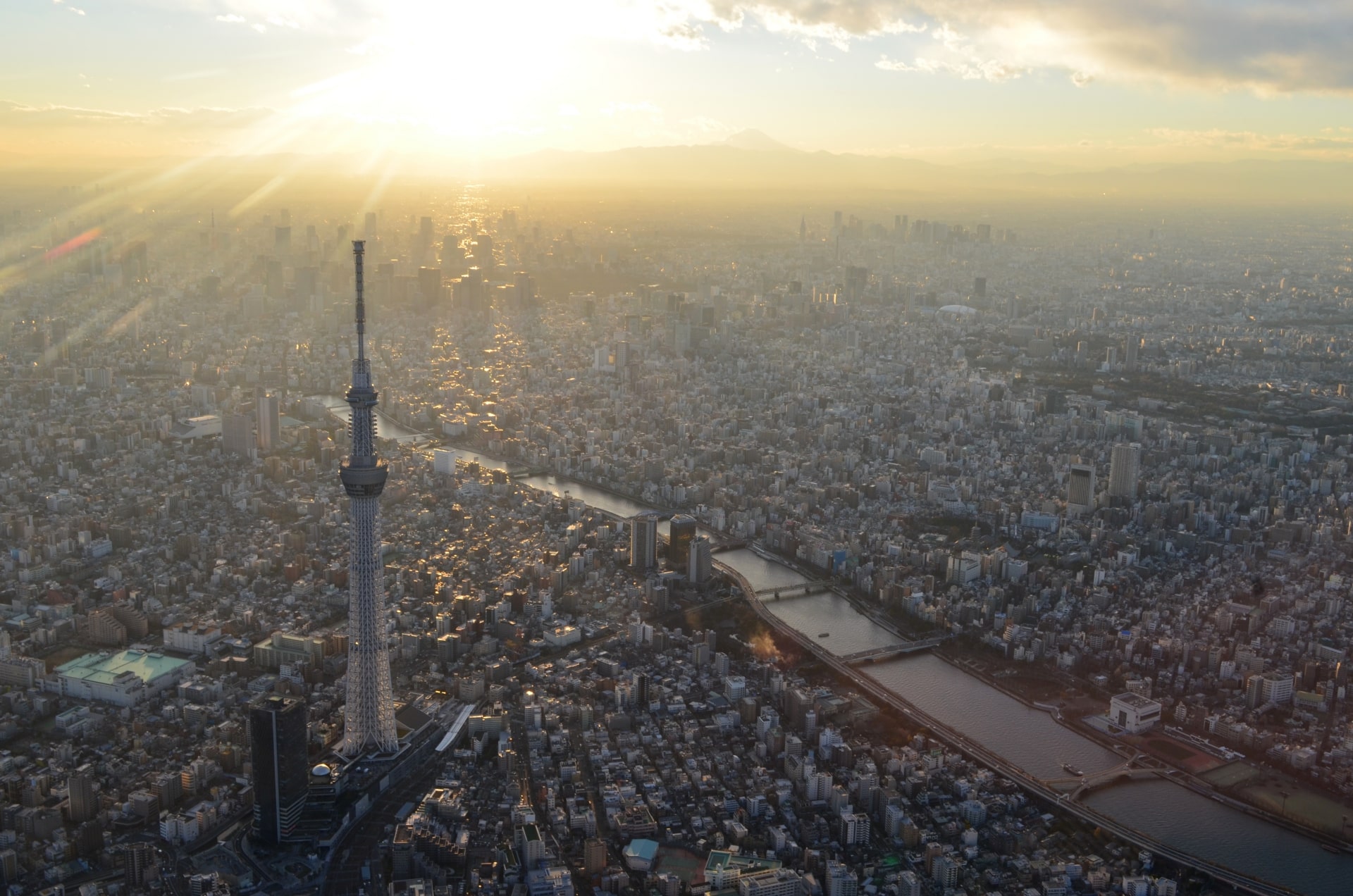
Tokyo Skytree is located less than 2 kilometers from Sensoji Temple, making it one of the best spots to visit in the area. You can reach it by train (using the Toei Asakusa Line or Tobu Skytree Line, which takes about 10 minutes), by bus (routes №8 or 26, approximately 15 minutes), or by walking, which takes about 20 to 30 minutes. Walking allows you to enjoy the beautiful scenery of the Asakusa area and the banks of the Sumida River.
▶ Book your Tokyo Skytree Observation Deck tickets here!
More info: Tokyo Skytree: The New Symbol of Modern Tokyo
7. Hunt Kitchen Tools in Kappabashi
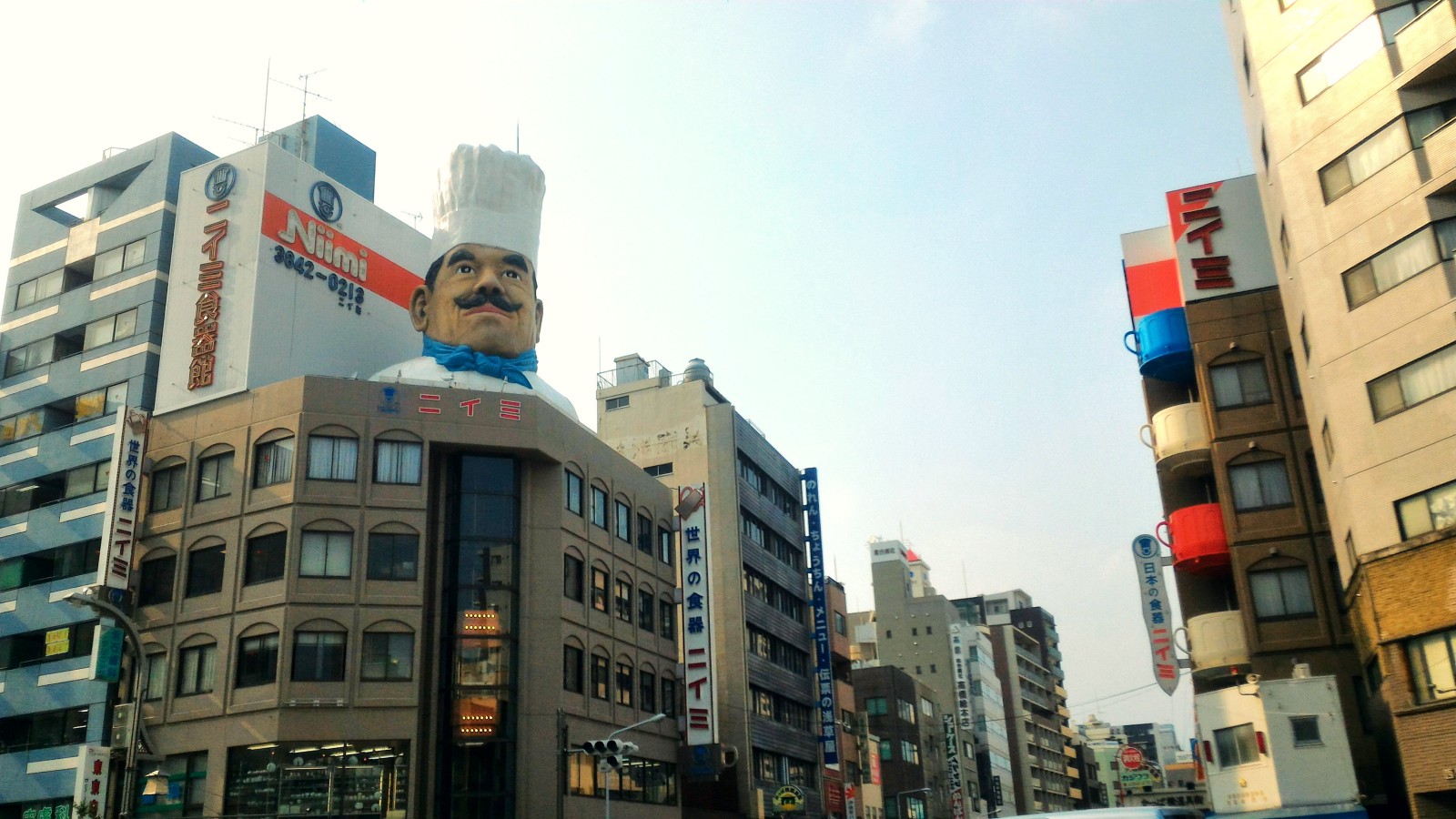
Kappabashi Street is located less than a 10-minute walk from Sensoji Temple. This 1-kilometer-long street is lined with over 170 shops that exclusively sell products related to the food industry, such as kitchenware and restaurant equipment. It is a highly popular shopping destination for professional chefs from around the world, particularly known for its impressive selection of Japanese knives. Visitors can also find unique souvenirs, including food samples and tableware, along Kappabashi Street.
Thank you very much for reading! If you are visiting Sensoji Temple in Asakusa, you may wanna check out these articles, too!
Written by
"The world is my oyster." As a dedicated globetrotter and hammock enthusiast, I’ve spent years chasing new experiences, collecting stories, and discovering the world’s most incredible destinations. Born and raised in Japan, I’ve always had a deep connection to my roots, but my love for adventure has led me to spend over a decade exploring countries across the globe—from culture-rich cities to remote hideaways.
Travel isn't just a hobby for me; it's a lifestyle. I'm constantly searching for new ways to fuel my wanderlust. Over the years, I’ve developed a wealth of knowledge and a treasure trove of tips that make traveling more enjoyable, practical, and meaningful.
Through my experiences, I've come to appreciate not only the beauty of travel but also the importance of understanding diverse cultures, embracing the unfamiliar, and stepping out of my comfort zone. My travels have shaped who I am today, and I’m excited to share those lessons with others.
With Japan Web Magazine, I aim to offer practical advice, insider tips, and firsthand stories that help travelers navigate their journeys to Japan or setting off on a global adventure. From hidden gems in Japan to travel hacks that make any trip smoother, I hope my insights inspire you to embark on your own adventures and make the most of every moment. Let’s explore the world together!
You can also find my stories here ▶ https://medium.com/@nahobm
- +39 89
-
-