Omoide Yokocho: Tokyo’s Most Iconic Izakaya Alley
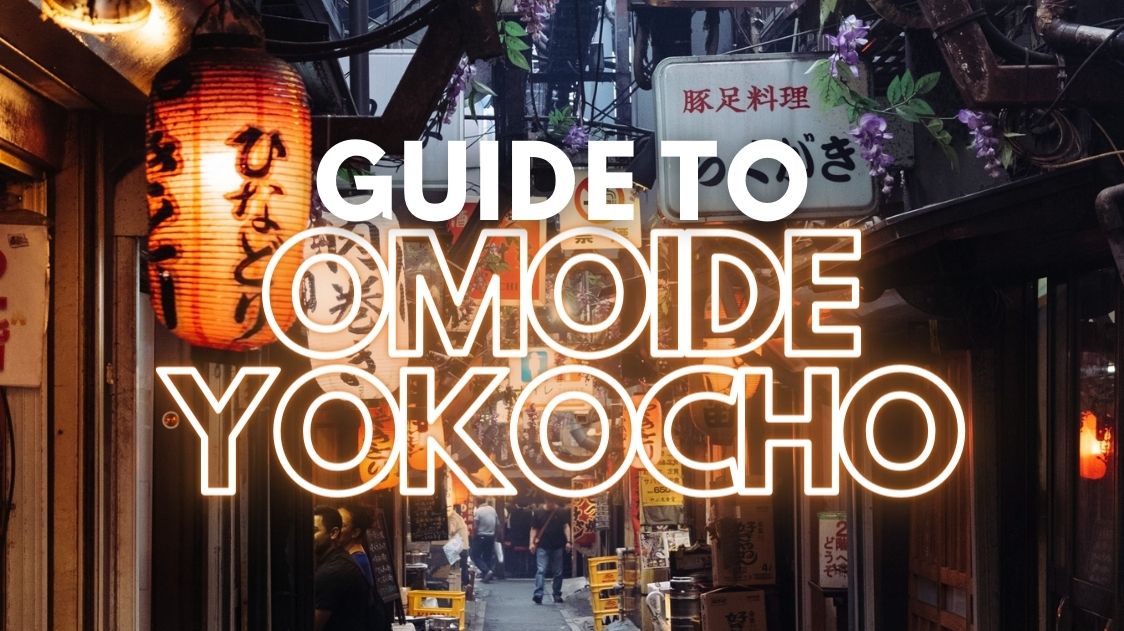
Guide to Shinjuku Omoide Yokocho in Tokyo

- +3 3
-

-


Despite its seemingly hidden location right next to the train tracks on Shinjuku Station’s northwestern side, our good ol’ Omoide Yokocho (思い出横丁) is a consistent staple of any top landmarks list in Tokyo and definitely one of the most featured places on social networks.
It has it all: a historical alley with a smoky and mysterious aura right in the middle of Tokyo’s busiest district; a charming ambiance with paper lanterns and decorations that change along the season; an unsophisticated offering that feels just right between casual eateries and local bars where one can mingle with locals. It’s the ideal place to stop for a fun and quick bite while exploring Shinjuku.
Check also: 1 Day Itinerary in Tokyo: SHINJUKU & 20 Best Things to Do in Shinjuku
*Please note that this article contains affiliate links.
What is Omoide Yokocho and Why is it Also Called ‘Piss Alley’?
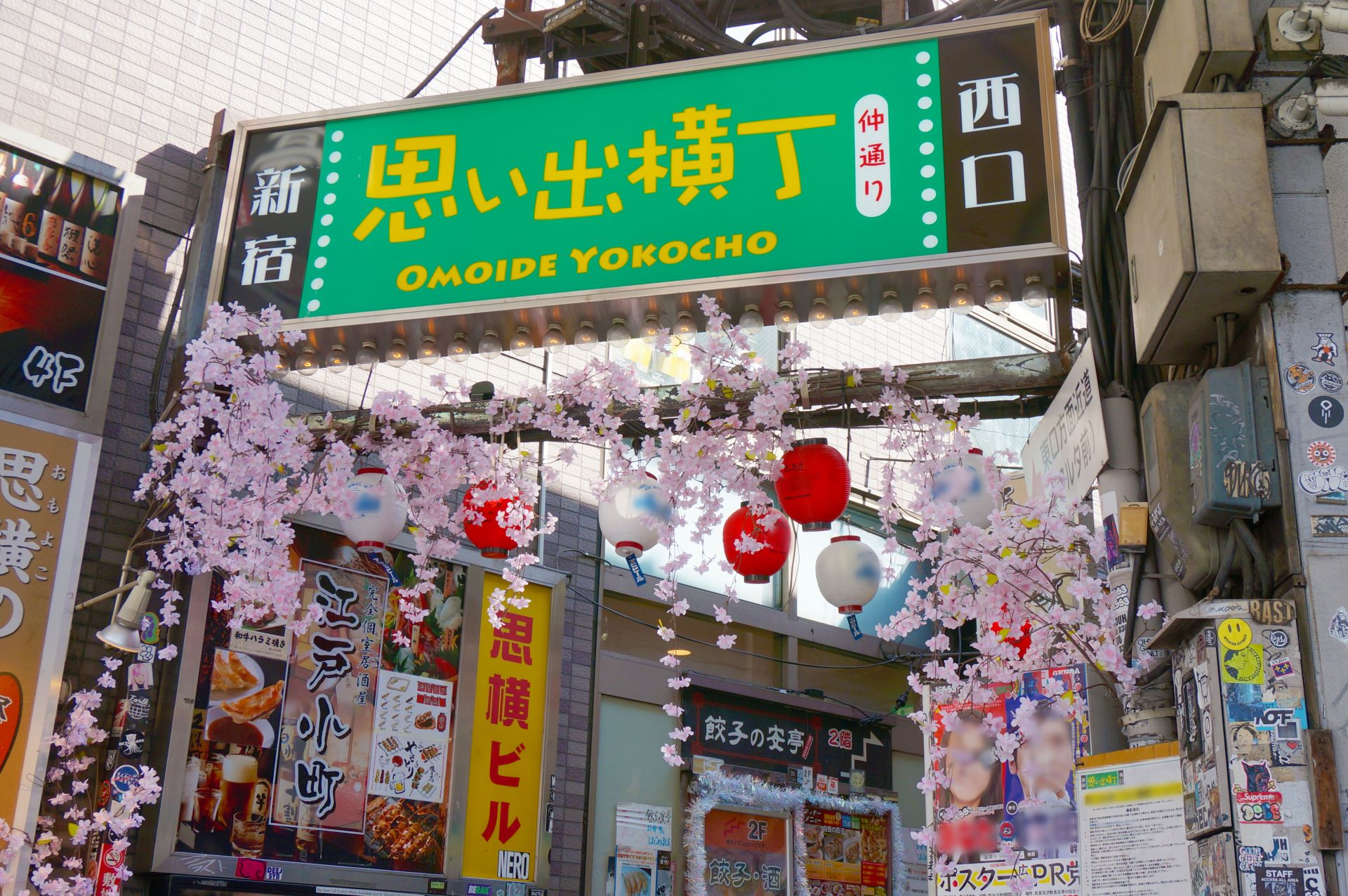

Omoide Yokocho (思い出横丁), literally meaning “memory alley”, is a tremendously popular cluster of around 60 minuscule izakaya bars and restaurants, as well as a few other shops. Here, the main offering is grilled yakitori skewers and broiled offal, but you can also find noodles or sushi.
The birth of Omoide Yokocho is directly linked with the war bombings that completely destroyed the market that used to be in this place before the war. From the rubble, a black market and underground drinking area emerged. As a nod to these times, where infrastructure was scarce and walls on the verge of collapse, the alley was also known as “piss alley”. As unflattering as it sounds, it’s still kind of an endearing callback to its origins.
Strict postwar controls over many products drastically affected the businesses at the time, so many of them resorted to dealing with beef and pork innards or chicken, as those items were not as strictly controlled. This is how these products became popular and continue to be a basic staple of the alley nowadays.
What to do at Omoide Yokocho
Eat, drink, and be merry
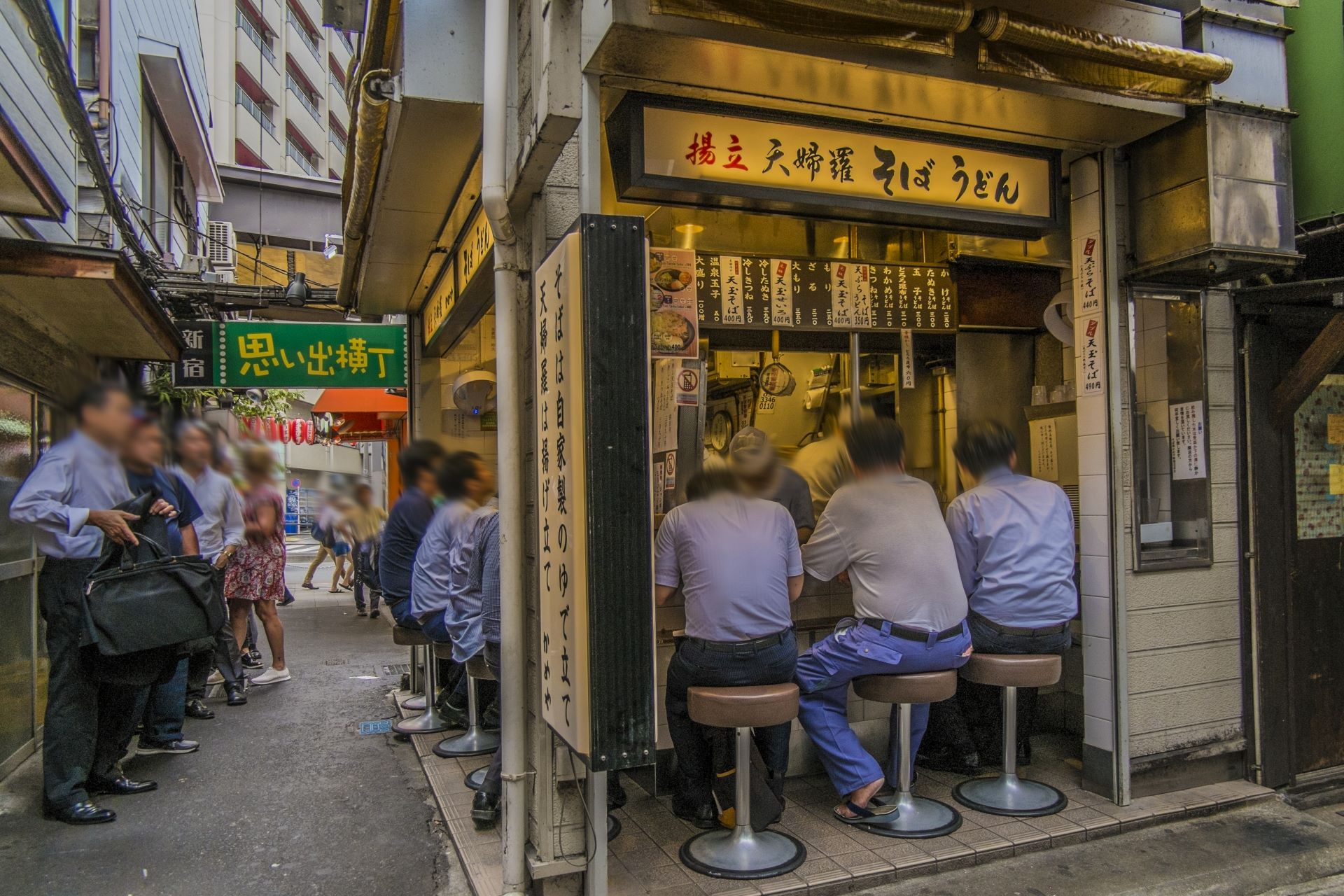
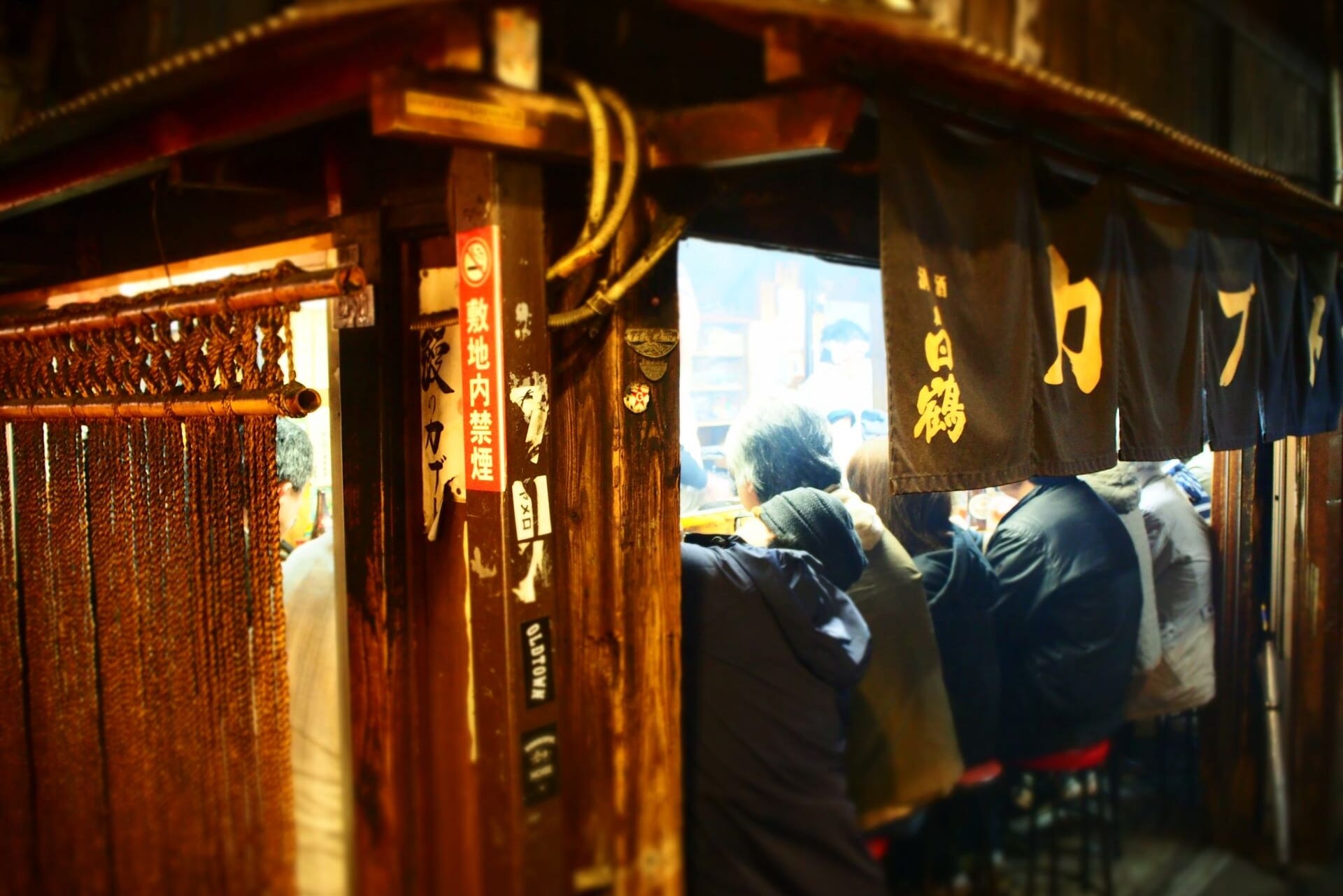
That’s the whole point of the place, really. Most stalls open around 5:00 PM for the nightlife crowd, but at lunchtime there are some places open as well. So save for the morning, any time is ok to grab a quick bite or maybe just wind down with some drinks and grilled skewers at the end of the day.
There are some ramen and soba/udon stalls, as well as a couple of sushi or curry restaurants. The grill and smoke odors coupled with the light of the red paper lanterns add to the unique atmosphere for an unforgettable meal.
Must-Try Dishes
- Yakitori & Yakiton: Charcoal-grilled chicken and pork skewers seasoned with either shio (salt) or tare (sweet soy sauce).
- Motsu Nikomi: A nostalgic post-war classic of rich, slow-simmered beef or pork offal stew, the ultimate pairing with a cold draft beer or highball.
- Ramen, Soba & Curry: Quick-turnaround noodle counters scattered along the lanes for a fast, budget-friendly meal.
Popular Stalls & Where to Eat
If you ask me, I’d rather encourage you to just walk around and pick whichever you find most appealing, because random exploration is part of the fun. But if the variety is too overwhelming, here are some suggestions to get started:
- Best for First-Timers: Yasubee (やすべえ) — Established in the 1950s, offering classic yakitori and a great sake menu.
- Best for Authentic Offal Skewers: Daini Horaiya (第二宝来家) — A 1947 postwar staple serving charcoal-grilled motsuyaki; another great option is Motsuyaki Ucchan (もつ焼き ウッチャン) — Renowned for its thick-cut motsuyaki charcoal pork skewers and negi-reba (seared liver with green onions).
- Best for Street Chinese & Day Drinking: Gifuya (岐阜屋) — A classic post-war street-side Chinese counter open from 9:00 AM to 1:00 AM. Local regulars flock here for cheap draft beer, wood-ear mushroom egg stir-fry (kikurage tamago), and moyashi soba.
- Best cheap 24/7 Noodle Counter: Kameya (かめや) — The alley’s iconic 24-hour standing noodle counter, legendary for its Ganso Tentama Soba (crispy vegetable tempura and poached egg soba).
Navigating Table Charges (Otoshi)
Many tiny counter bars require a small seating charge called otoshi (typically ¥300–¥500 per person). This acts as a cover charge and includes a small appetizer served with your first drink order.
▶ If navigating language barriers, table charges, and 6-seat counter bars feels intimidating, joining a guided Tokyo bar hopping nightlife tour is one of the easiest ways to explore Omoide Yokocho’s best stalls with a local!
Be mindful of patrons and other visitors when shooting
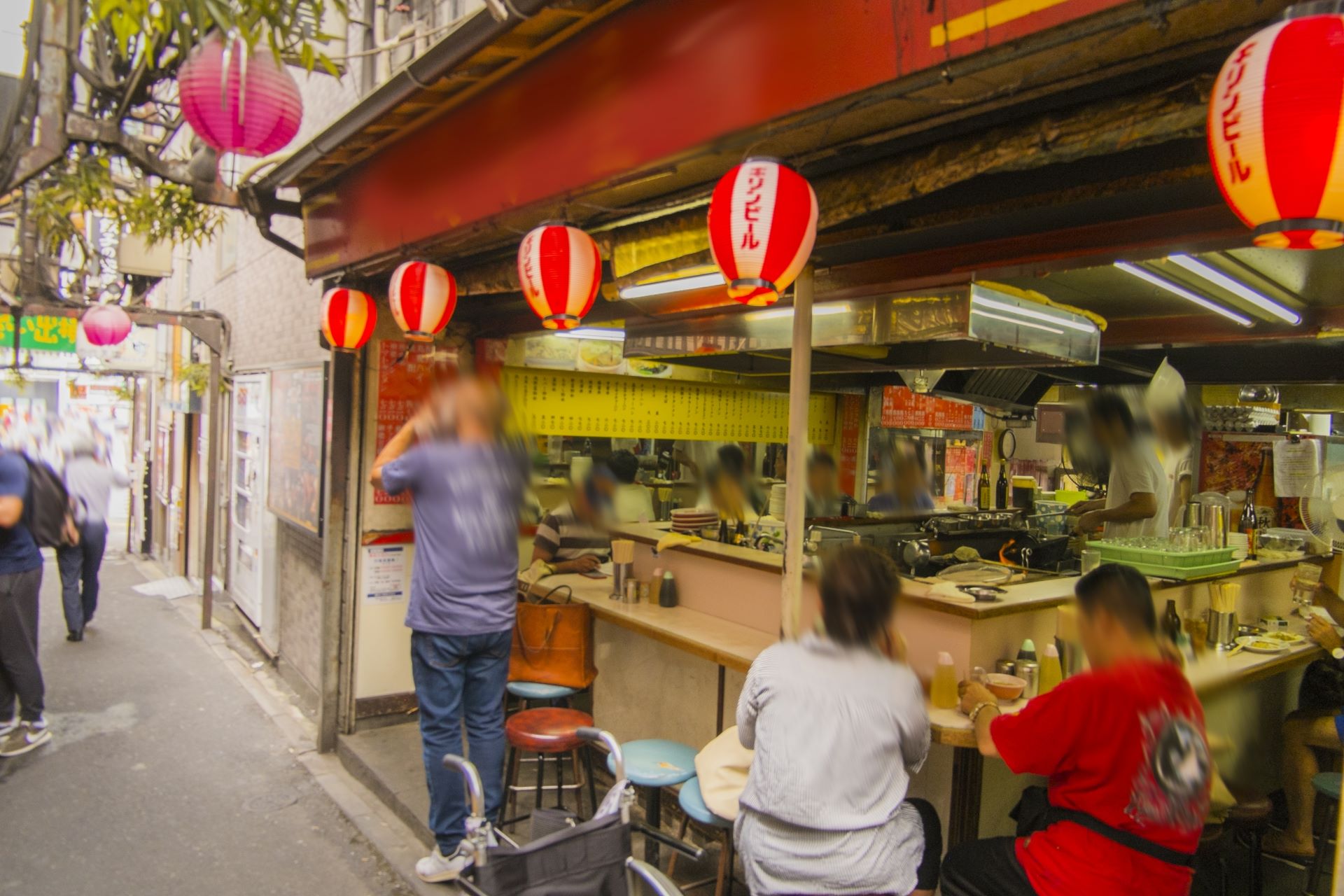
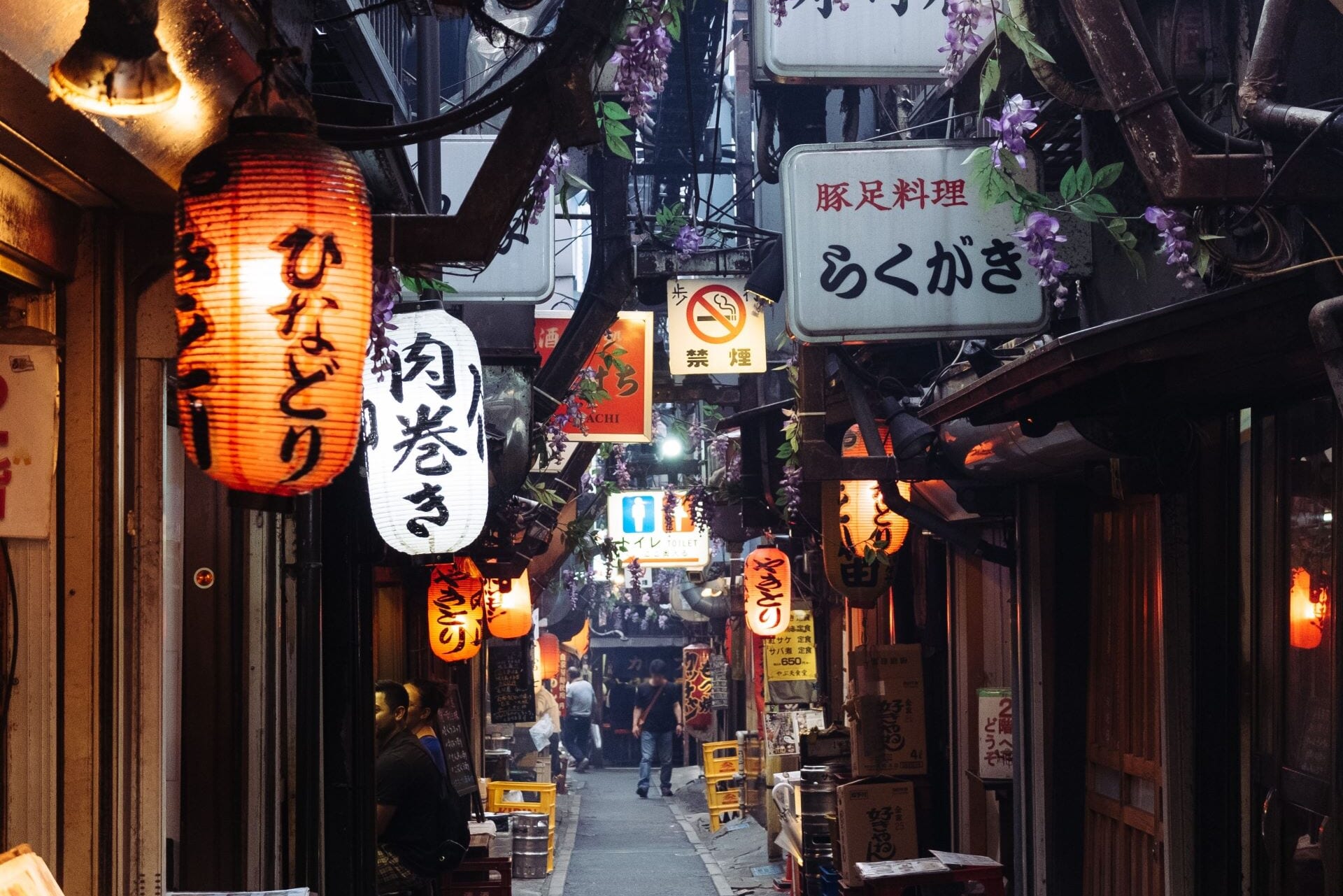
This is one of the most photogenic and charming places around Shinjuku, so it’s only natural for visitors to try to get the most of the charming setting. Just keep in mind that restaurant owners and some patrons will not appreciate being treated like zoo specimens. One of the wonderful things about this spot is the way it’s managed to keep its own character despite being one of the hottest tourist hotspots in the area. Do your part in keeping it that way.
If you need to exchange currency, this is your place
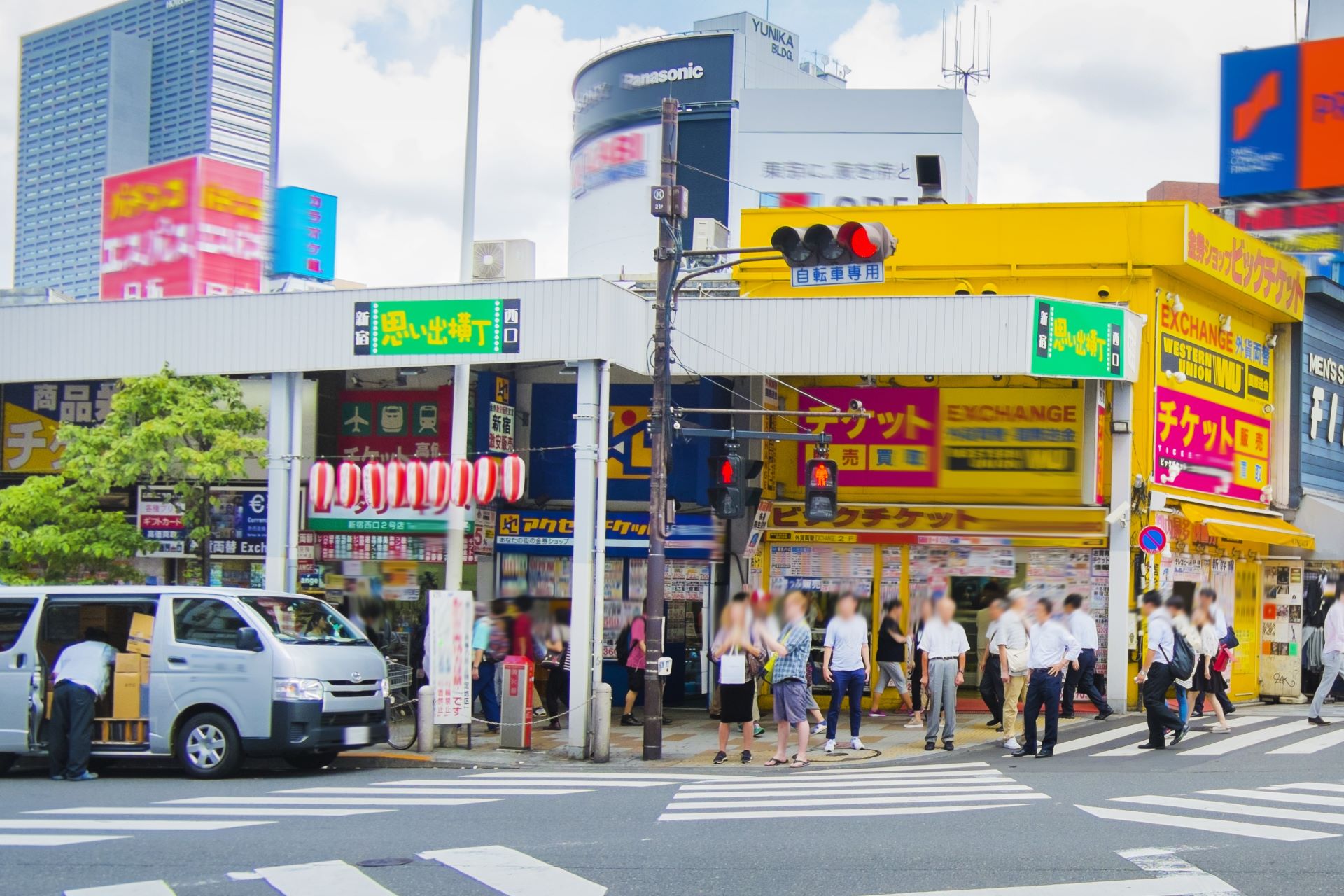
The north-western side of Omoide Yokocho, facing Otakibashi Avenue, has several currency exchange shops lined one next to each other, so this is a very convenient place in case of need. Since there are several places, their exchange rates are quite competitive! In my own experience, Ninja Money Exchange tends to have the best rates without charging fees, but you can just compare by yourself the rates offered at each place.
More info about Japanese currency: Japanese Currency: A Guide for Travelers
How to get to Omoide Yokocho
These are the closest train/subway stations:
- Toei Oedo Line Shinjuku-nishiguchi Station, Exit D5 is right next to Omoide Yokocho
- Seibu Line Seibu-Shinjuku Station is just a couple of minutes on foot to the north. Look for the Main Exit on the southern side of the station.
- From the Massive JR Shinjuku Station, look for signs to the West Exit.
 Access Access |
Shinjuku-nishiguchi, Seibu-Shinjuku and Shinjuku Stations |
|---|---|
 Business Hours Business Hours |
Most stalls open around 5:00 PM – 11:00 PM, some lunch stalls available afterf 11:00 AM |
 Payment method Payment method |
Cash strongly recommended |
 Official Website Official Website |
https://en.shinjuku-omoide.com/ |
Tourist attractions near Omoide Yokocho
We’re talking about Shinjuku, so the entire area can be considered one huge tourist attraction in itself. But here’s some of the main highlights you shouldn’t miss nearby:
Kabukicho
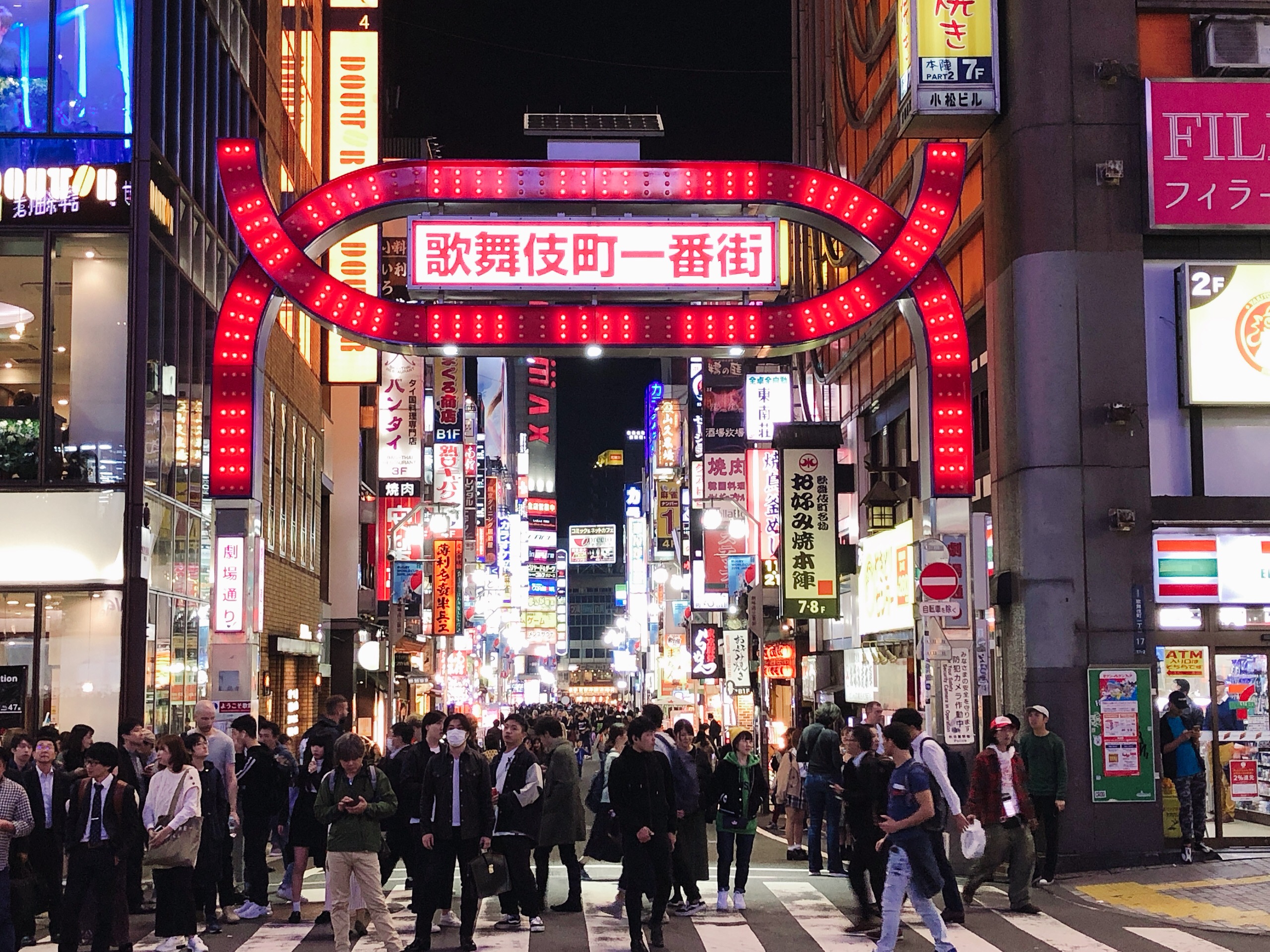
Kabukicho (歌舞伎町), sitting on the other side of the train tracks and just 5-min away on foot, we can find Tokyo’s notorious adult entertainment district. Filled with bars, karaoke parlors, 18+ establishments, extravagant places like Godzilla Road or one-of-a-kind attractions like Samurai Restaurant, it’s the kind of place that you just cannot miss for the most uniquely “only in Tokyo” experience.
More info: Kabukicho: Tokyo’s Red Light District, a Survival Guide
| Access |
Next to Seibu-Shinjuku Station on the Seibu Line. Other nearby stations are Shinjuku-nishiguchi, Shinjuku Station, Higashi-Shinjuku and Shinjuku-sanchome. |
|---|---|
| Official Website |
http://www.kabukicho.or.jp/history.php?lang=en |
Shinjuku Golden Gai
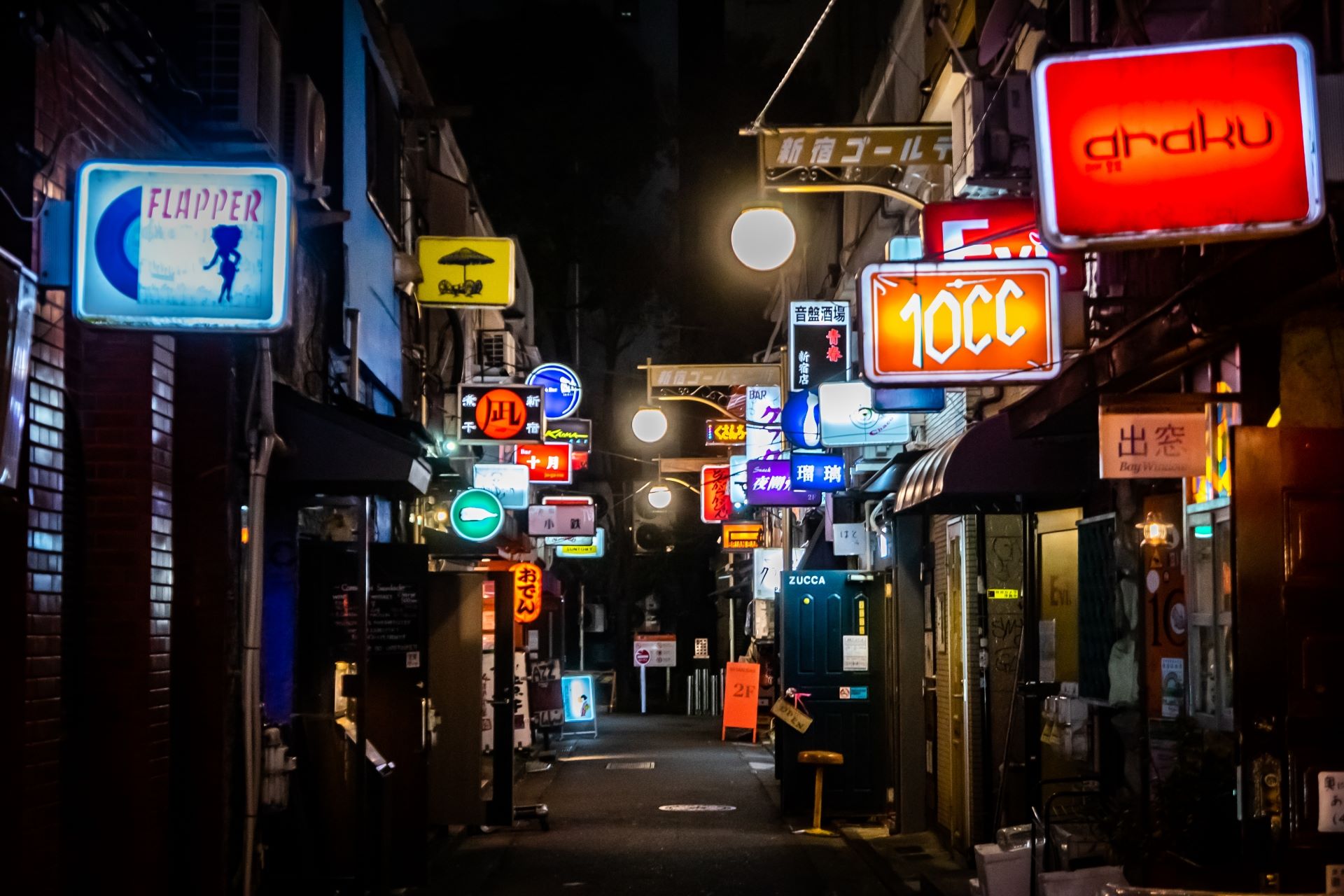
Shinjuku Golden Gai (新宿ゴールデン街) is a treasured enclave located 11-min walk from Omoide Yokocho, famed for its warren of bars, each with its own character. This historic district boasts well over 200 mini bars, where the small space creates an intimate atmosphere among its patrons and provides a valuable peek into Tokyo’s post-war culture. As such, it attracts a diverse crowd seeking the warmth of its narrow alleys and the charm of its wooden storied establishments.
More info: Shinjuku Golden Gai: A Bohemian Haven in Tokyo
| Access |
7-min walk from its surrounding stations: Shinjuku-sanchome, Seibu-Shinjuku or the East Exit of Shinjuku Station. Alternatively, Higashi-Shinjuku Station is also quite close at only 11-min on foot. |
|---|---|
| Business Hours |
Varies by establishment. Most of them are drinking bars so expect opening times to be after 17:00 or 18:00, although there are a few bars and restaurants that are also open during the day from lunchtime. |
| Official Website |
https://goldengai.jp/ |
Giant 3D Cat
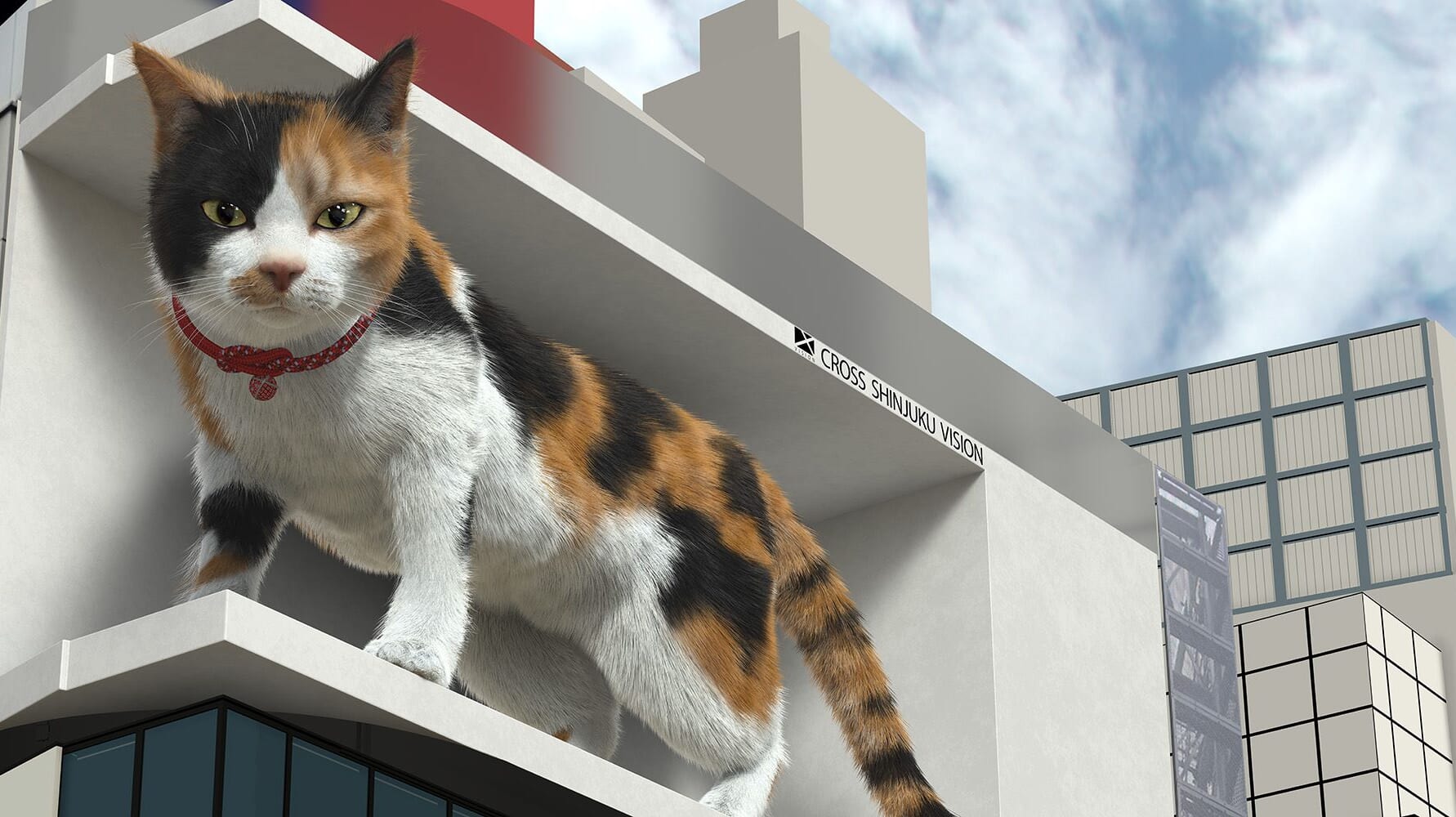
If you’re familiar with the viral images of a giant 3D cat in Tokyo that have been making the rounds all over the world, look no further! All you have to do is cross the tunnel under the tracks next to Omoide Yokocho and you’ll be greeted by Shinjuku’s beloved new mascot lounging around between advertisement sets.
Since its inception in July 2021, this cleverly designed digital billboard has become an instant magnet for visitors, a huge hit in social networks and has turned the Shinjuku East Exit Station Square into one of the most popular meeting spots around the area.
SOMPO Museum of Art
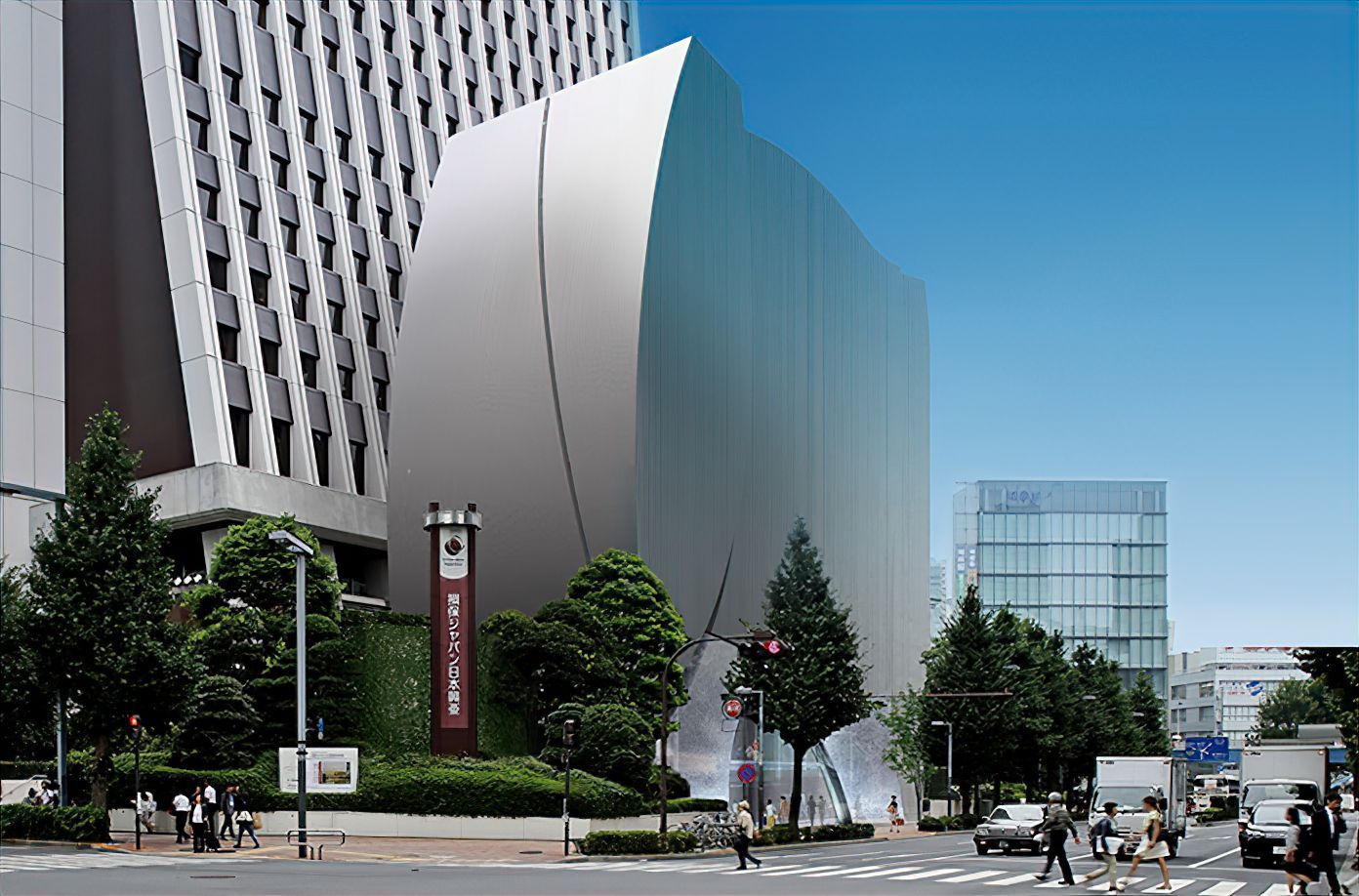
Part of a striking collection of buildings just a 5-minute walk west from Omoide Yokocho, SOMPO Museum of Art (SOMPO美術館) is located at the base of Sompo Japan Building, one of the most iconic skyscrapers in Shinjuku. The greatest highlight of this architectural gem is one of the originals of Van Gogh’s Sunflowers Series, in addition to being a memorial for the works of Seiji Togo, one of the most prominent Japanese artists of the 20th century.
| Access |
6-min walk from Shinjuku-nishiguchi Station or Shinjuku Station, or 7-min walk from Nishi-shinjuku Station |
|---|---|
| Business Hours |
10 AM–6 PM |
 Closed Closed |
Monday |
 Price Price |
1,600 yen |
| Official Website |
https://www.sompo-museum.org/ |
Tokyo Metropolitan Government Building Observatory
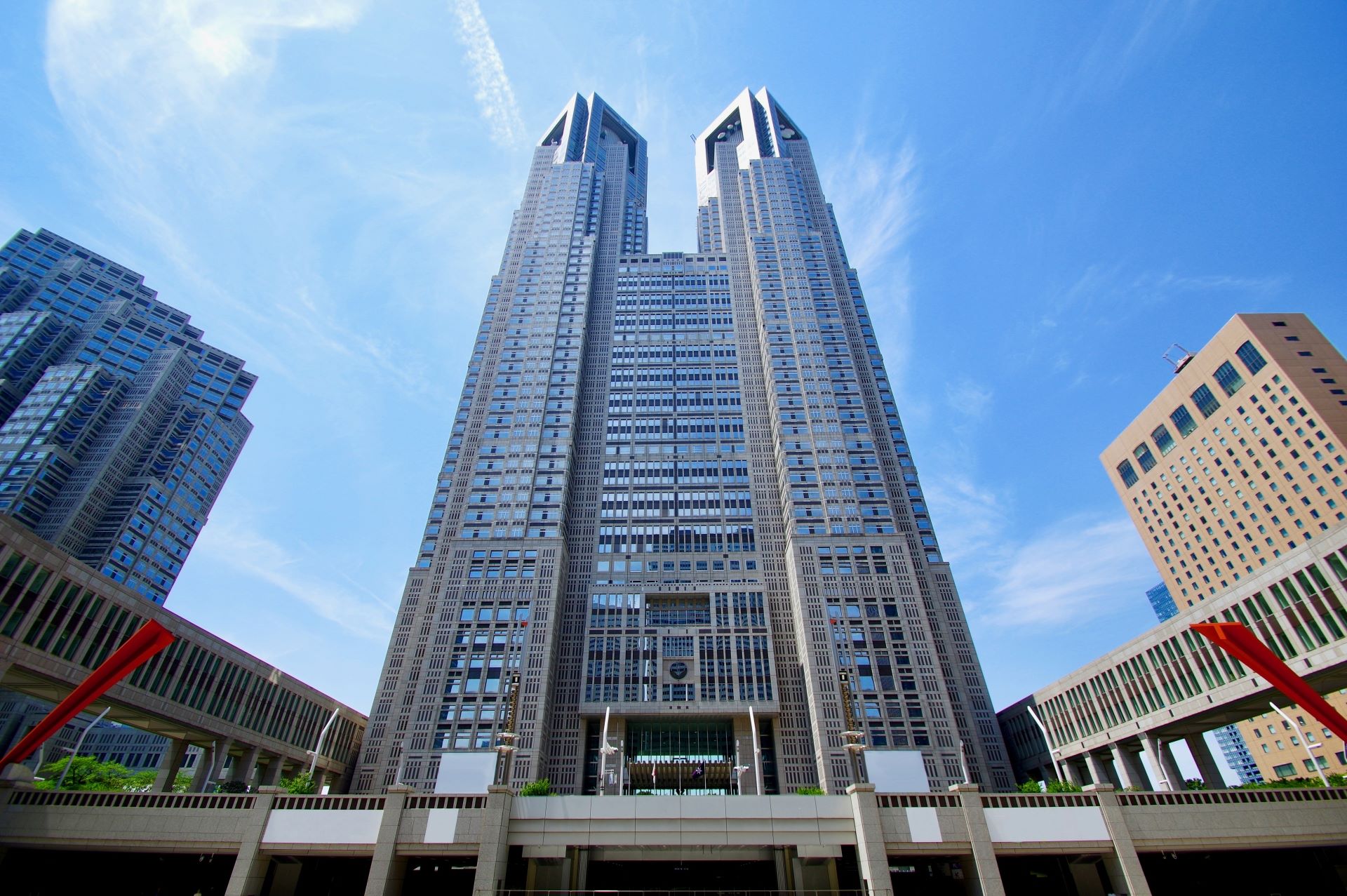
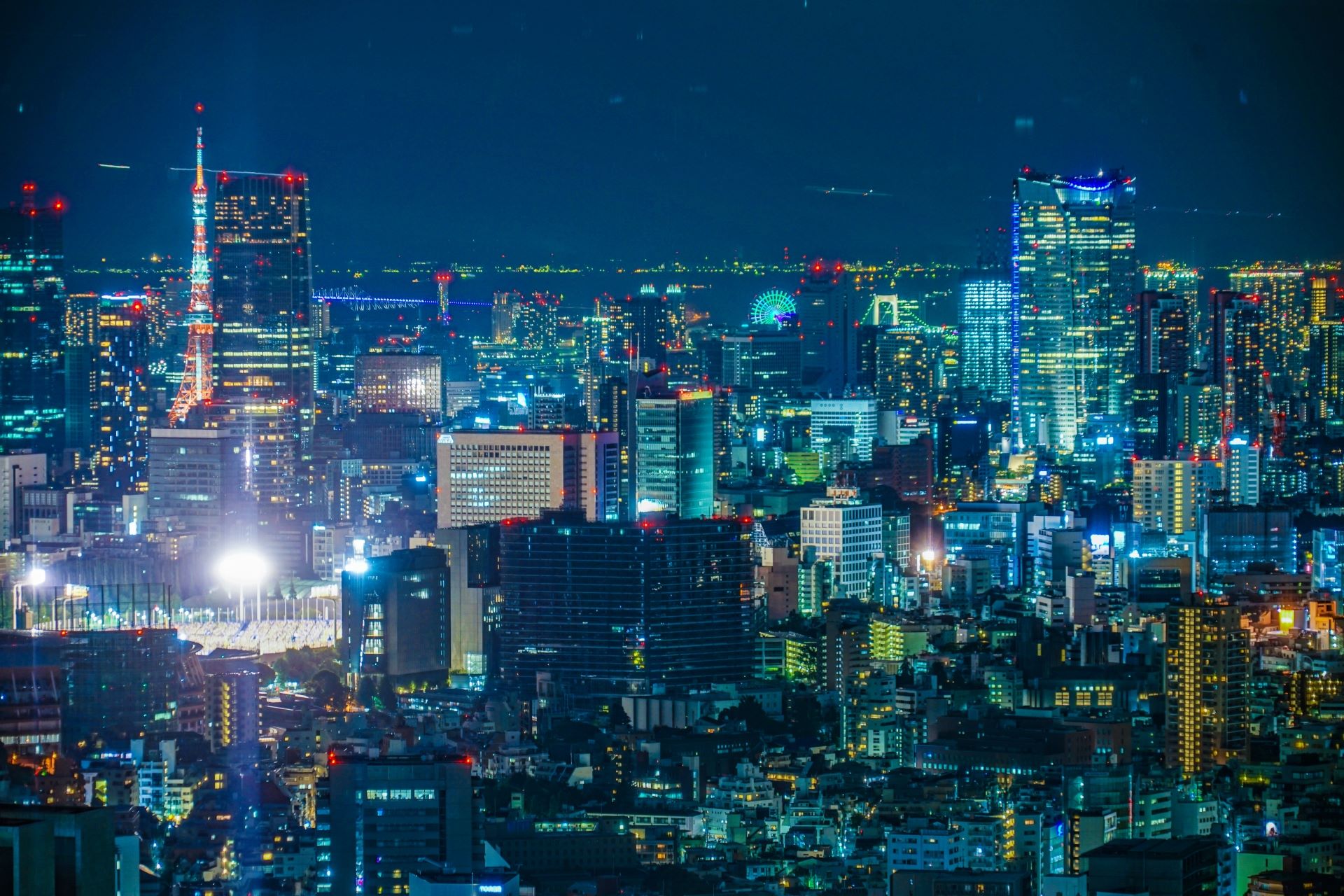
Located 15 minutes on foot from Omoide Yokocho, the Tokyo Metropolitan Government Building (東京都庁舎) is an impressive complex west of Shinjuku where the headquarters of the Metropolitan Government are located. Built in 1990, the striking design from architect Kenzo Tange was inspired by Paris’ Notre Dame and was meant to be a local cultural landmark.
But the main attraction both among tourists and locals is the free observation decks on the 45th floor of each tower, with panoramic views of the city (and even Mt. Fuji on clear days) and open every day from 9:00 to 22:00.
More info: Tokyo Metropolitan Government Building
 Address Address |
2-8–1 Nishishinjuku, Shinjuku-ward, Tokyo |
|---|---|
| Price |
Free |
| Official Website |
https://www.zaimu.metro.tokyo.lg.jp/tochousha/goannai/tenbou |
A small treasure born out of necessity and forged in the fire of tough times, Omoide Yokocho still retains the best of the Showa Era nostalgic feelings, amid the incessant development and rapid growth of everything around it. It’s a small miracle this beloved unglamorous corner still survives to this day, but hopefully it continues to do so for a long time.
For more information about area guides and traveling in Japan, check these articles below, too!
Written by
Photographer, journalist, and avid urban cyclist, making sense of Japan since 2017. I was born in Caracas and lived for 14 years in Barcelona before moving to Tokyo. Currently working towards my goal of visiting every prefecture in Japan, I hope to share with readers the everlasting joy of discovery and the neverending urge to keep exploring.
- +3 3
-
-