Beppu Travel Guide: Hot Springs, Hells and Sand Baths
What First-Time Visitors Should Know Before Exploring Japan’s Famous Hot-Spring City

- +0 0
-

-


You have probably seen the photos: a milky-blue geothermal pool steaming beneath the trees, streets wrapped in clouds of hot-spring vapor, or someone buried to the neck in naturally heated sand.
Then you start researching Beppu and encounter conflicting opinions. Some travelers describe it as one of Japan’s most fascinating hot-spring destinations. Others arrive expecting a traditional onsen village and leave wondering what all the fuss was about.
The difference often comes down to expectations.
Beppu is not a small, picture-perfect hot-spring village. It is a working city built around geothermal activity, with eight separate onsen districts, seven famous “Hells” that are primarily for viewing rather than bathing, and everything from traditional public baths to steam rooms, mud baths, and sand bathing.
Located in Oita Prefecture on Kyushu’s eastern side, Beppu is also more accessible from Tokyo than its location might suggest. Solaseed Air operates direct flights between Tokyo (Haneda) and Oita, where you can reach Beppu by airport bus.
So, is Beppu worth the trip? For travelers interested in Japan’s hot-spring culture, absolutely — but understanding what Beppu is, and what it is not, can make a big difference to the experience.
Is Beppu Worth Visiting? What First-Time Visitors Should Know
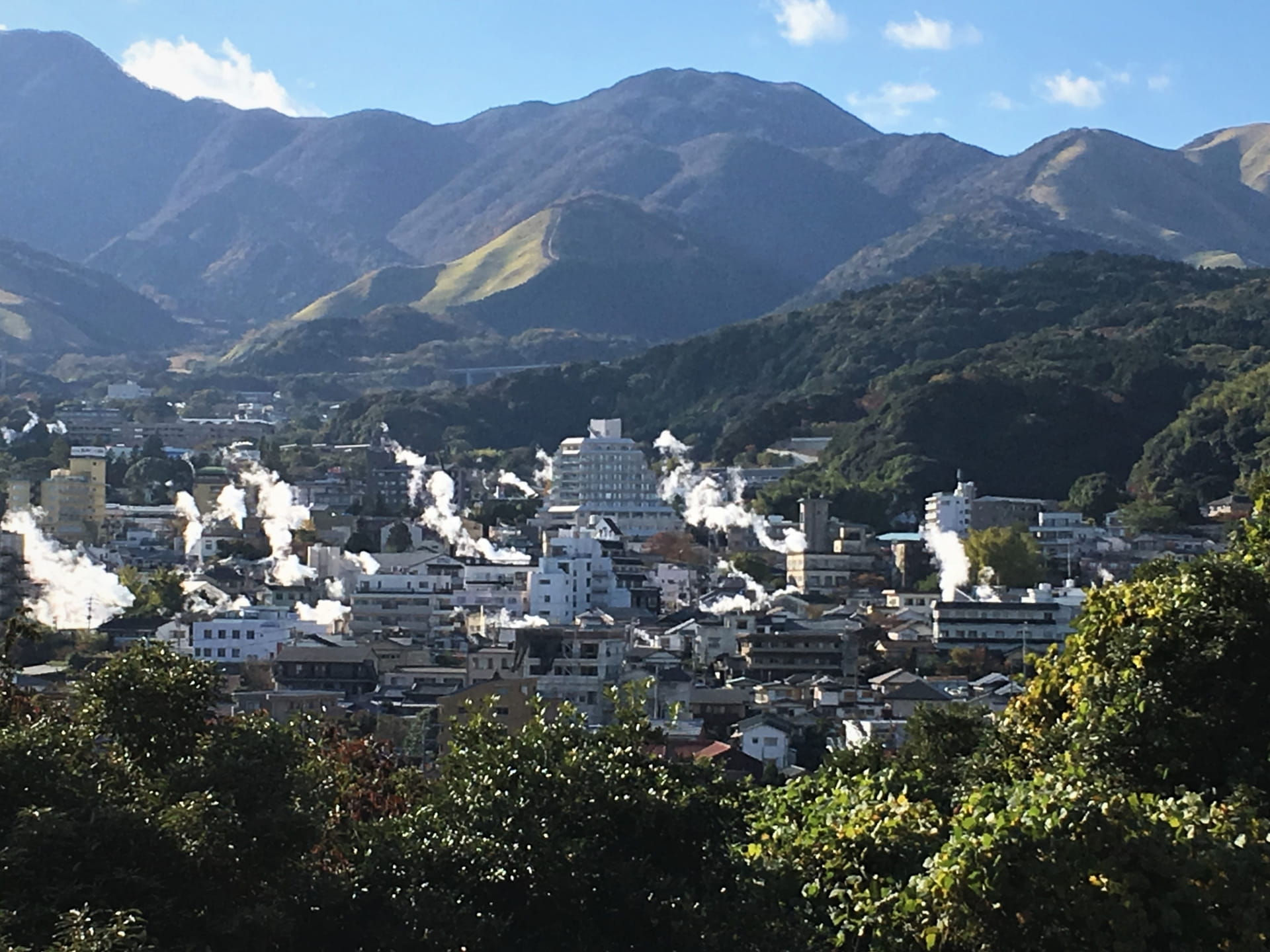
For most first-time visitors to Kyushu, Beppu is worth at least an overnight stay. Oita Prefecture leads Japan in both the number of hot-spring sources and the volume of hot-spring water discharged, and Beppu offers an unusually broad range of bathing experiences within a single city.
However, several common misconceptions can affect how international visitors experience the destination.
The Hells are not baths
This is probably the most important thing to understand before arriving.
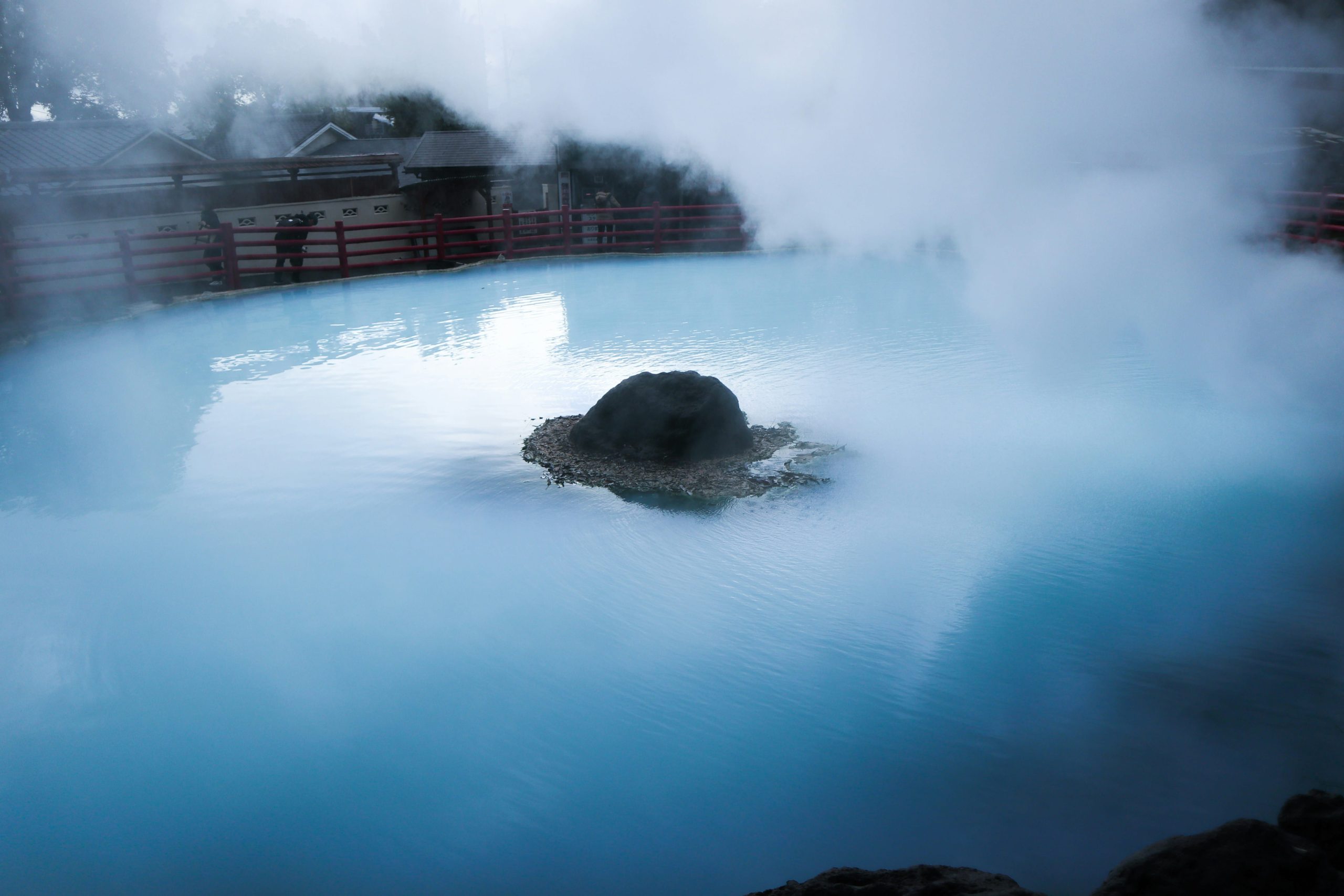
The seven famous Hells of Beppu (jigoku) are geothermal sightseeing attractions. Intense geothermal activity produces their dramatically colored pools and bubbling mud, and the main pools are far too hot to bathe in.
That can surprise visitors who see photographs of the Hells while researching “Beppu onsen” and assume they are spectacular outdoor baths.
Instead, think of the Hells as one part of the Beppu experience. See the geothermal landscape during the day, then experience the actual hot-spring water at one of the city’s many bathhouses afterward.
You do not necessarily need to visit all seven Hells
A combination ticket is available for the seven Hells, but travelers with limited time should not feel that completing the entire circuit is essential.
Five — Umi Jigoku, Oniishibozu Jigoku, Shiraike Jigoku, Kamado Jigoku and Oniyama Jigoku — are concentrated around Kannawa. Chinoike Jigoku and Tatsumaki Jigoku form a second cluster a few kilometers away.
If you have only a few hours, focusing on the Kannawa area leaves more time to bathe, eat, and explore the neighborhood. With a longer stay, visiting both clusters becomes easier.
Beppu is a city, not a compact onsen village
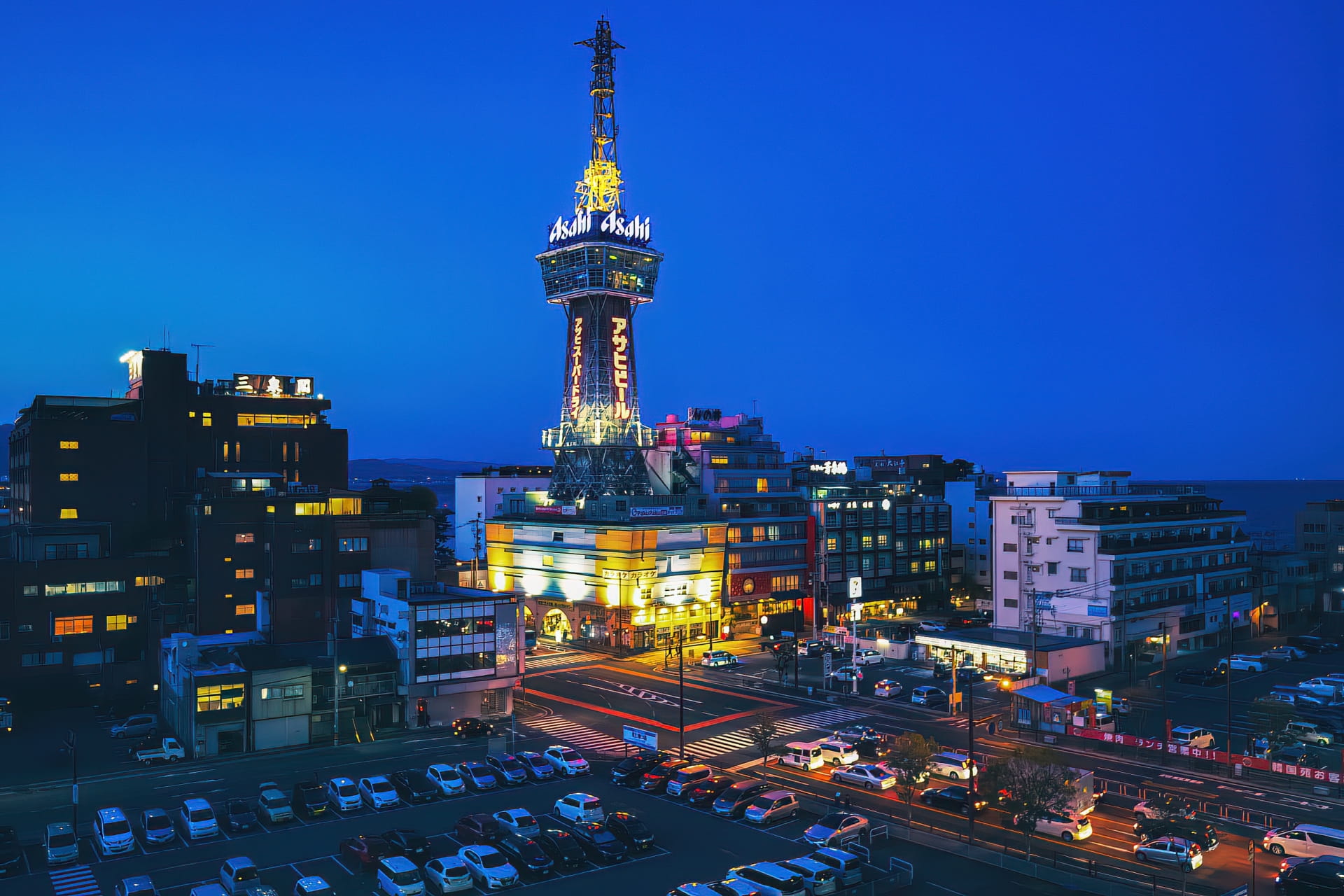
Another common expectation is that Beppu will resemble a small traditional resort, with ryokan, baths, and restaurants clustered around one picturesque street.
Beppu is different.
The city is made up of eight hot-spring districts collectively known as Beppu Hatto: Beppu, Hamawaki, Kankaiji, Horita, Kannawa, Myoban, Kamegawa and Shibaseki.
Each has a slightly different character. Kannawa is famous for streets filled with steam, while Myoban sits higher in the hills and is known for its sulfur-rich environment and traditional yunohana mineral production. Central Beppu feels much more like an everyday Japanese city.
That contrast is part of Beppu’s identity. Hot-spring culture here isn’t separate from daily life; it exists alongside homes, shops, restaurants, and ordinary neighborhoods.
Public baths may be simpler — and hotter — than expected
Visitors accustomed to resort spas may also be surprised by Beppu’s older neighborhood bathhouses.
Some are extremely simple: a changing area, a tub, and basic washing facilities. Soap, shampoo and towels may not always be provided. Bath temperatures can also feel quite hot to visitors unfamiliar with traditional Japanese public baths.
These are not necessarily shortcomings. Many of these baths developed as community facilities rather than luxury tourist attractions.
Before entering, wash outside the tub, keep your small towel out of the bathwater, and follow any instructions displayed at the facility. Tattoo policies also vary, so check with individual facilities beforehand if necessary.
How Long Should You Stay in Beppu?
A two-day, one-night stay is a good starting point for most visitors.
Beppu’s main attractions are spread between the coast and the hills, so trying to see everything on foot is impractical. For example, traveling from the area around Beppu Station to Kannawa generally requires a local bus, and Myoban lies farther uphill.
A well-paced visit might include the Hells and Kannawa during the first afternoon, followed by an evening bath. The next morning can then be used for another onsen experience, a sand bath, or an excursion before departure.
A day trip is possible if you are already traveling in Kyushu, but staying overnight lets you experience what a sightseeing-only visit can miss: Beppu as a true hot-spring town.
For travelers beginning in Tokyo, flying is the most practical option. Solaseed Air connects Tokyo (Haneda) directly with Oita, making it possible to build a short Beppu stay into a wider Kyushu itinerary without spending most of a day traveling overland. Check out our Southern Kyushu Travel Guide if you’re actually interested in exploring other nearby prefectures.
Things to Do in Beppu
Beppu’s appeal comes from variety. The Hells may be its most photographed attractions, but they are only an introduction to the geothermal culture that runs through the city.
Explore the Hells of Beppu
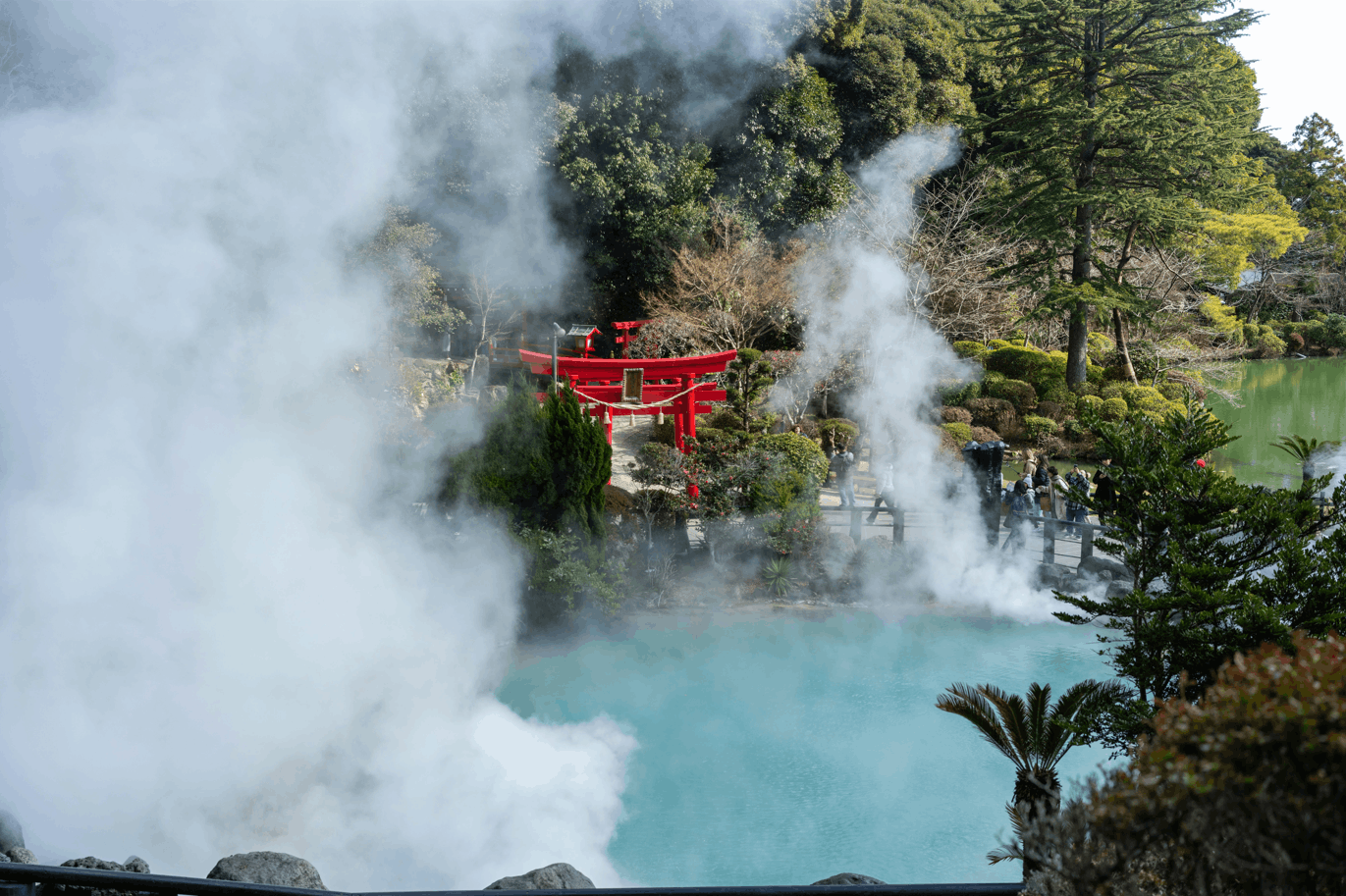
The Jigoku Meguri, or Hells circuit, consists of seven distinctive geothermal attractions.
| Hell | Area | Main feature | Bathing experience | Nationally designated |
|---|---|---|---|---|
| Umi Jigoku | Kannawa | Cobalt-blue geothermal pool | Viewing only | Yes |
| Oniishibozu Jigoku | Kannawa | Bubbling gray mud | Viewing only | No |
| Shiraike Jigoku | Kannawa | Bluish-white pond and garden | Viewing only | Yes |
| Kamado Jigoku | Kannawa | Several geothermal features | Separate foot bath available | No |
| Oniyama Jigoku | Kannawa | Geothermal site and crocodile facility | Viewing only | No |
| Chinoike Jigoku | Shibaseki | Red-colored hot mud | Viewing only | Yes |
| Tatsumaki Jigoku | Shibaseki | Geyser | Viewing only | Yes |
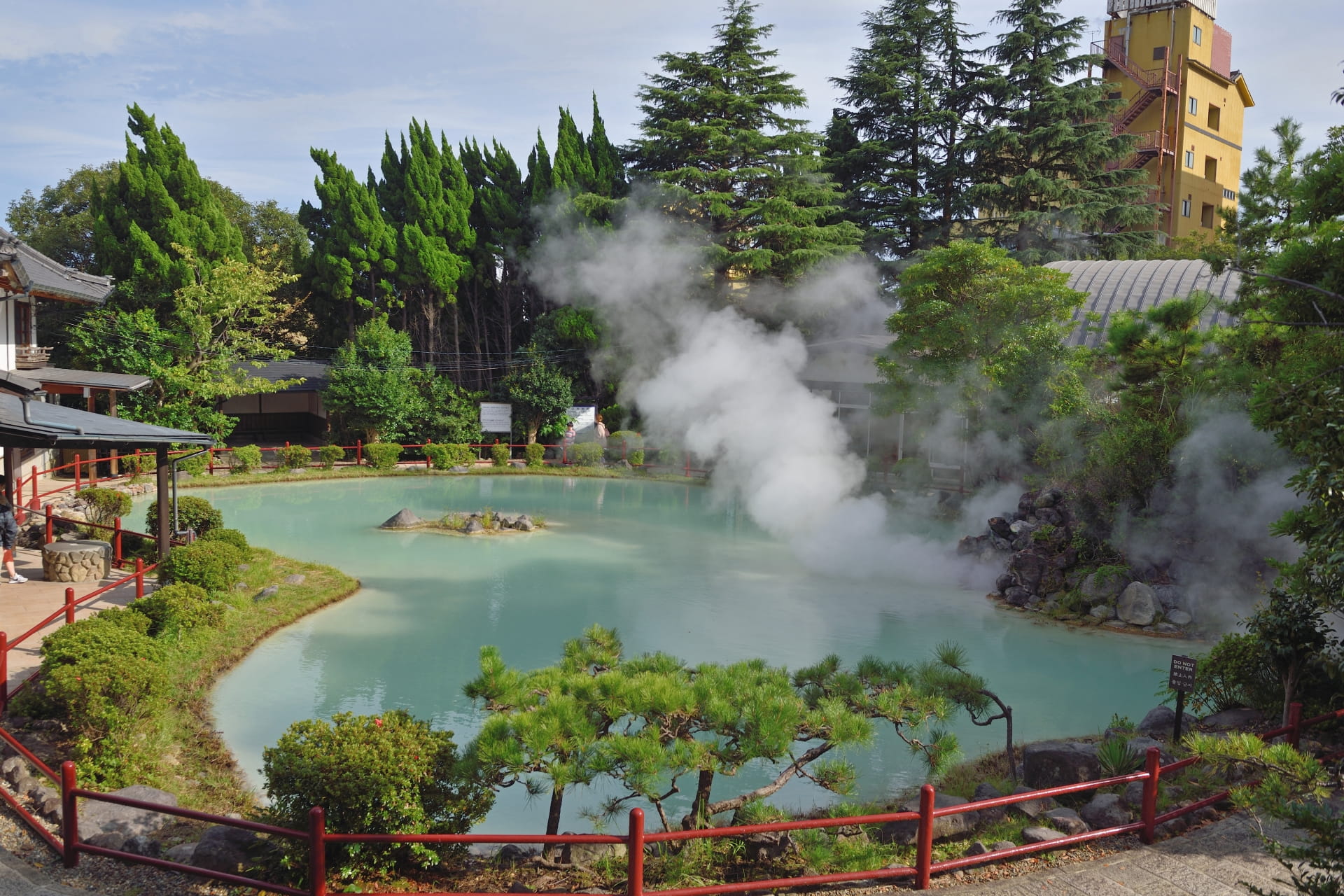
Kamado Jigoku brings together several different geothermal features and includes a foot bath, making it one of the more interactive stops. Shiraike Jigoku features a pale bluish-white pond in a garden setting, while Oniyama Jigoku is distinguished by its crocodile breeding facility.
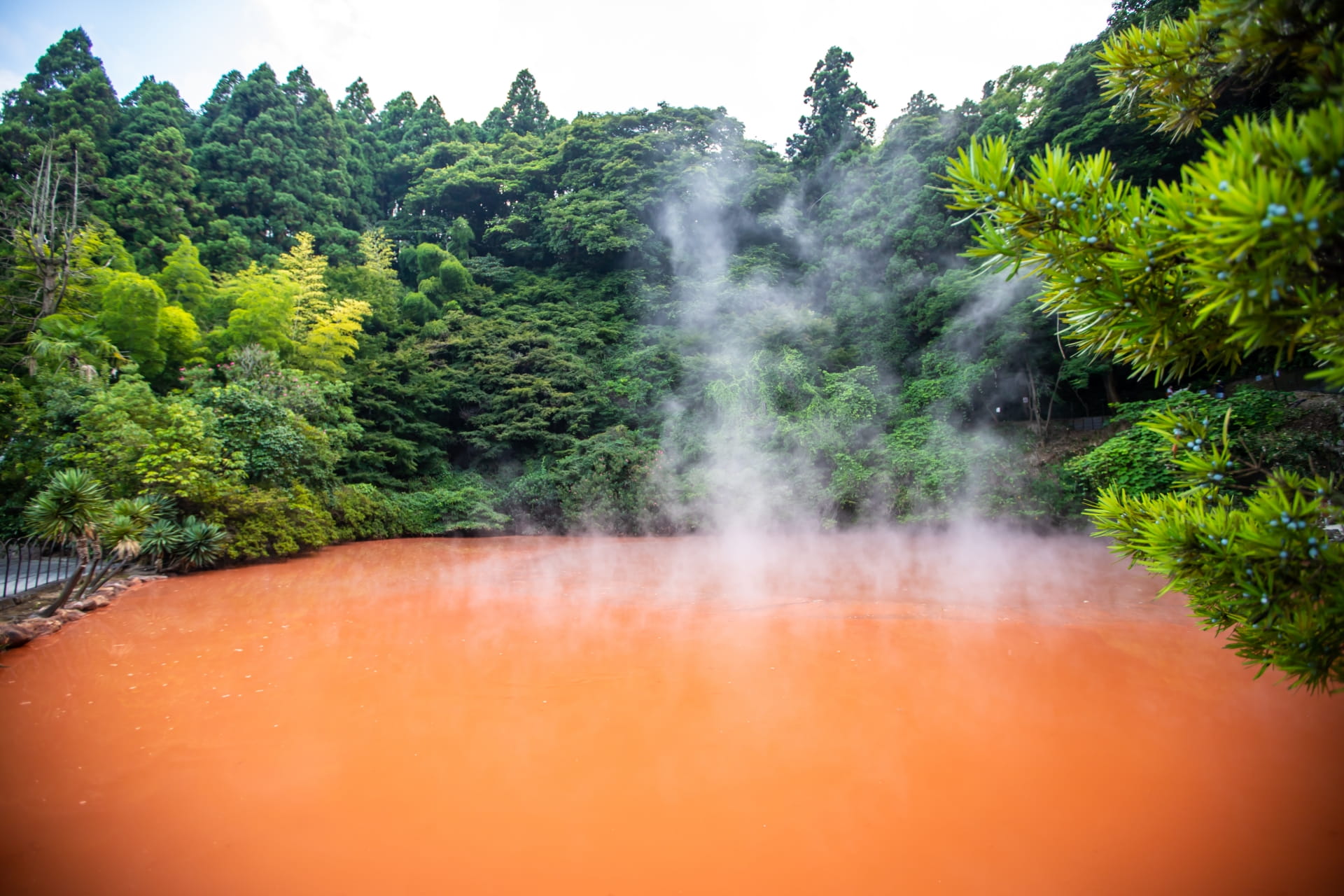
The remaining two are located in the Shibaseki area. Chinoike Jigoku, or Blood Pond Hell, is famous for its red-colored hot mud, while Tatsumaki Jigoku is a geyser that erupts at regular intervals.
Four of the seven — Umi, Shiraike, Chinoike and Tatsumaki — are nationally designated Places of Scenic Beauty.
The important thing is not to confuse the Hells with Beppu’s bathing culture. They show you the geothermal forces beneath the city. The bathhouses are where you actually experience them.
Experience Beppu’s Public Baths
After seeing the Hells, it is time to get into the water.
| Experience | Area | What makes it different |
|---|---|---|
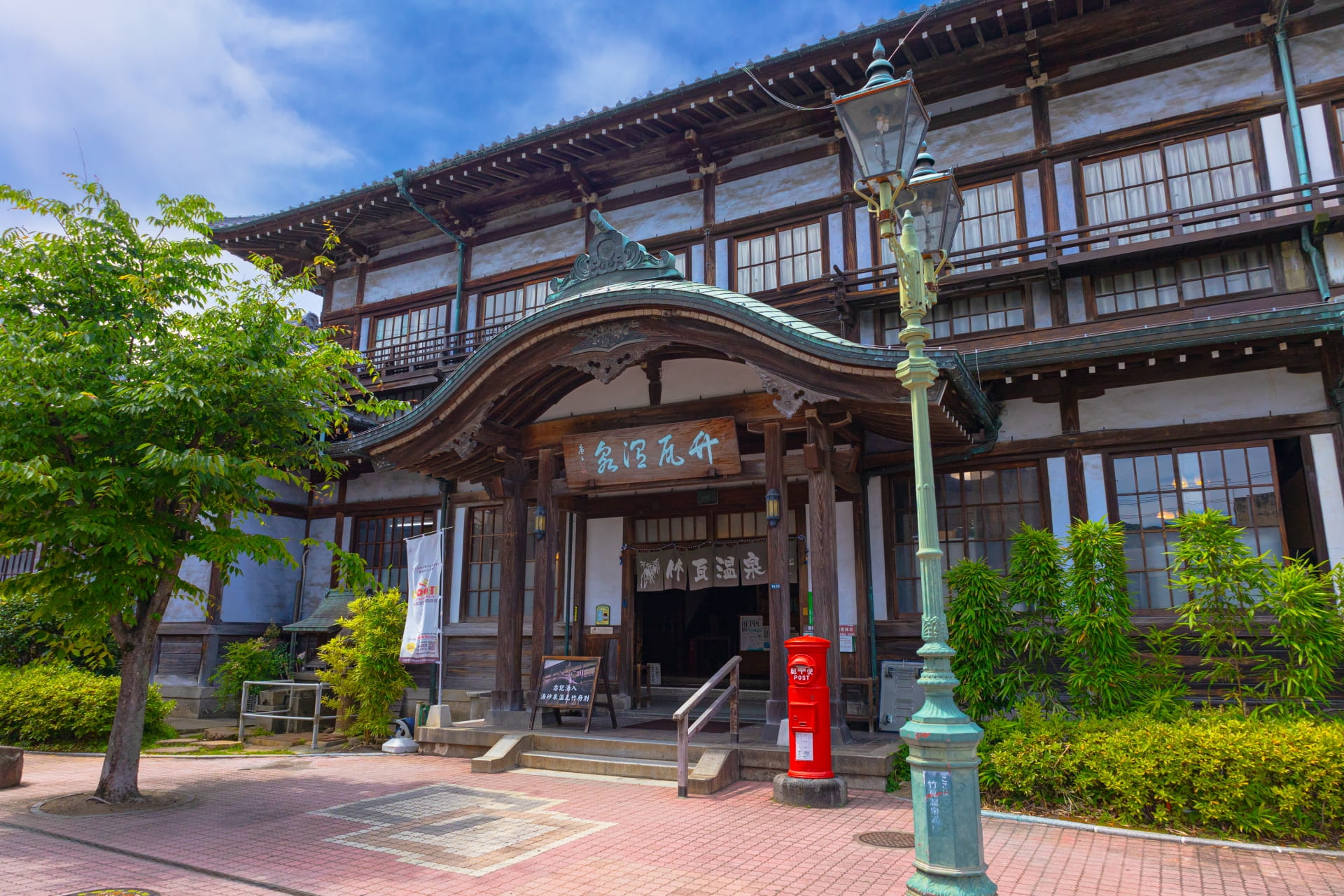
| Takegawara Onsen | Central Beppu | Historic public bathhouse with a simple, traditional bathing environment |
| Kannawa Mushi-yu | Kannawa | Steam-bath experience using sekisho plants |
| Hyotan Onsen | Kannawa | Larger facility with indoor, outdoor, and private bathing options |
| Sand SPA at SHONIN PARK | Shoningahama | Sand-bathing experience using naturally heated sand |
| Myoban Onsen area | Myoban | Sulfur-rich hot springs and traditional yunohana production |
One of Beppu’s best-known bathhouses is Takegawara Onsen, a historic wooden building in central Beppu. The current structure dates to 1938 and remains one of the city’s most recognizable hot-spring buildings.
The regular bath is notably simple compared with a modern spa or large hotel onsen, which is precisely what makes it interesting. It offers a glimpse of the everyday public-bathing culture that has long been part of life in Beppu.
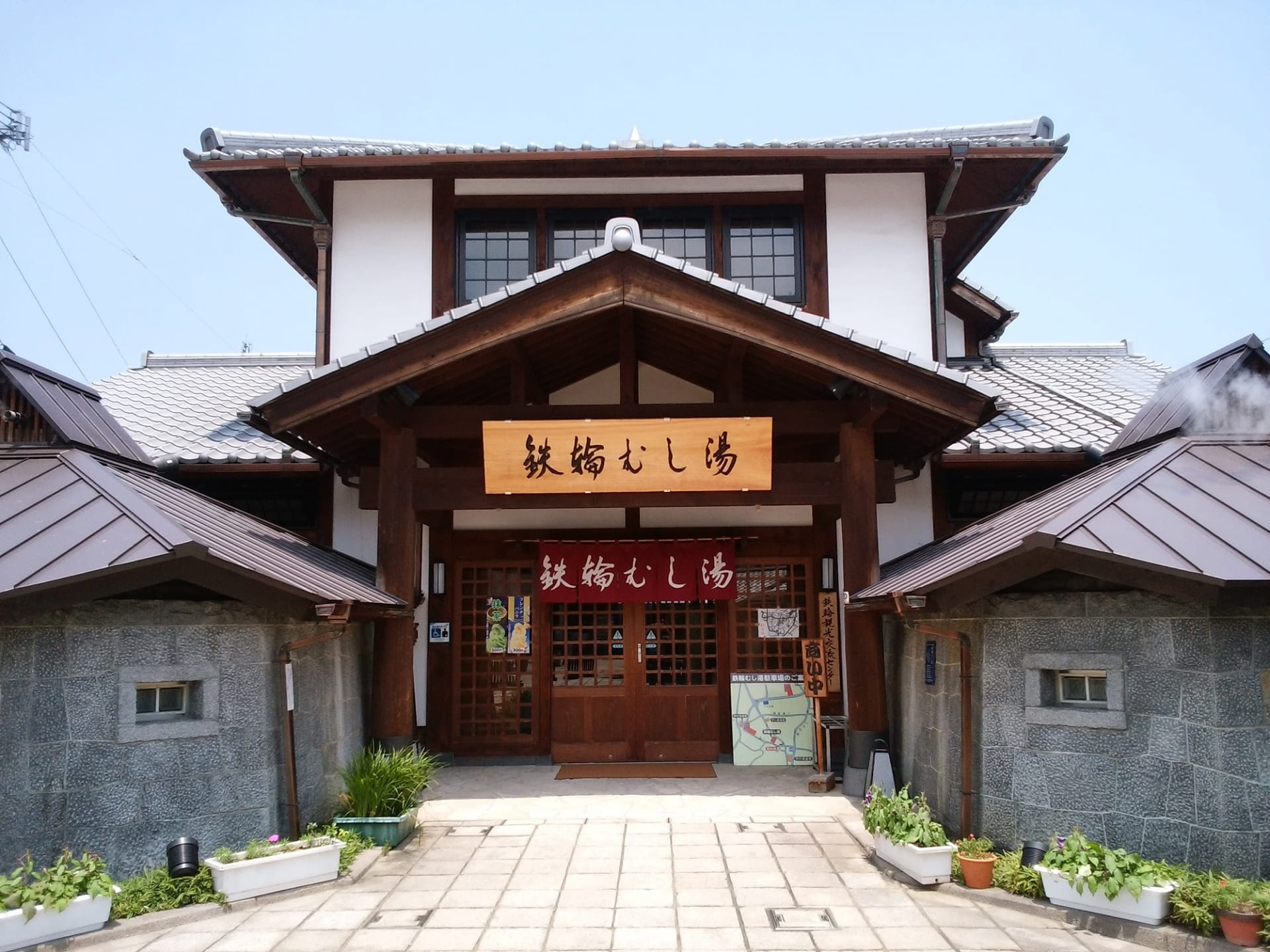
In Kannawa, Kannawa Mushi-yu offers something quite different. Rather than soaking in a conventional tub, visitors enter a hot steam room lined with sekisho, an aromatic plant traditionally used in the experience. The short but intense steam bath is one of Beppu’s most distinctive bathing traditions.
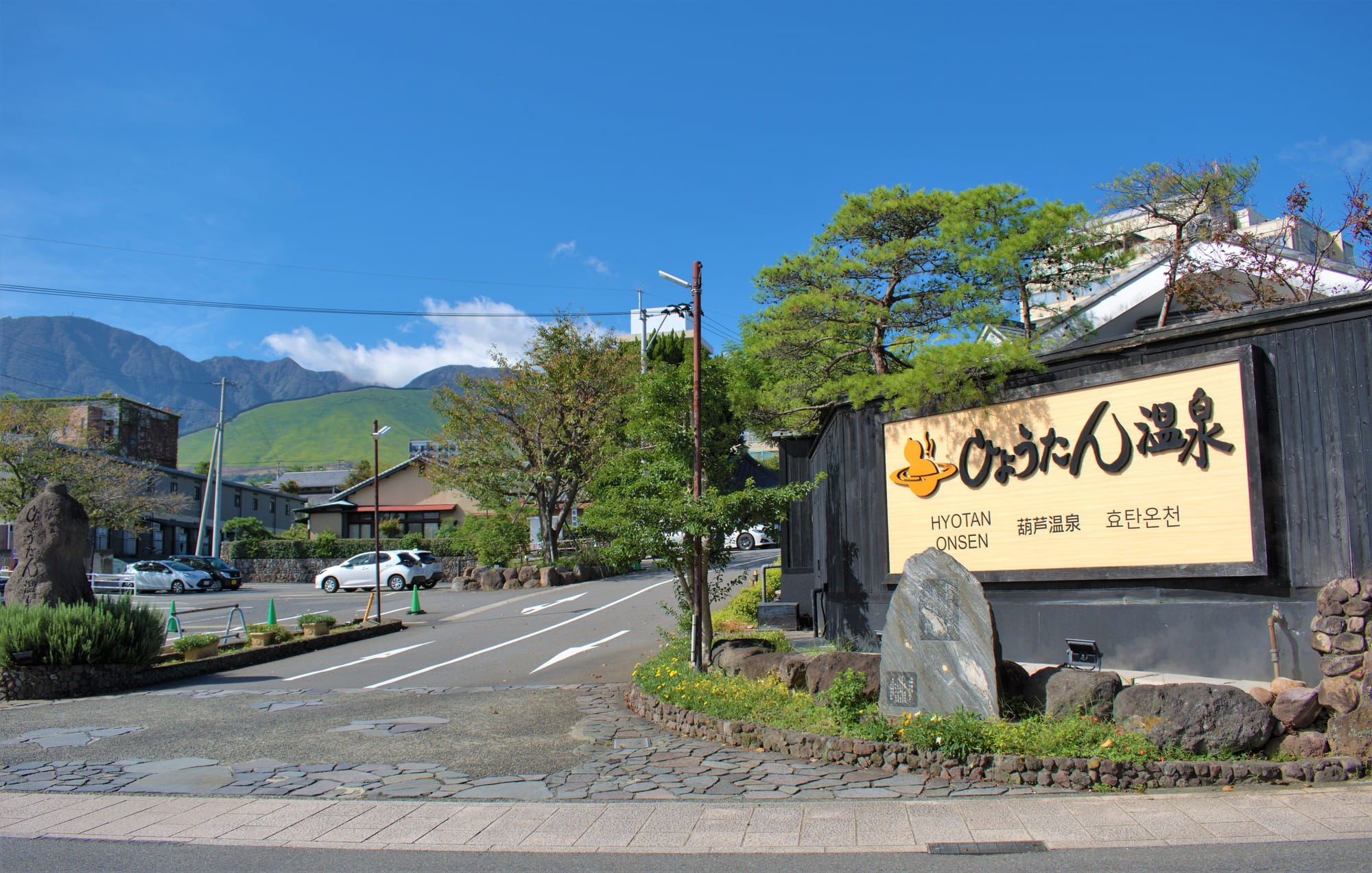
For visitors looking for a larger facility, Hyotan Onsen in Kannawa offers indoor and outdoor baths as well as private bathing options and other hot-spring experiences.
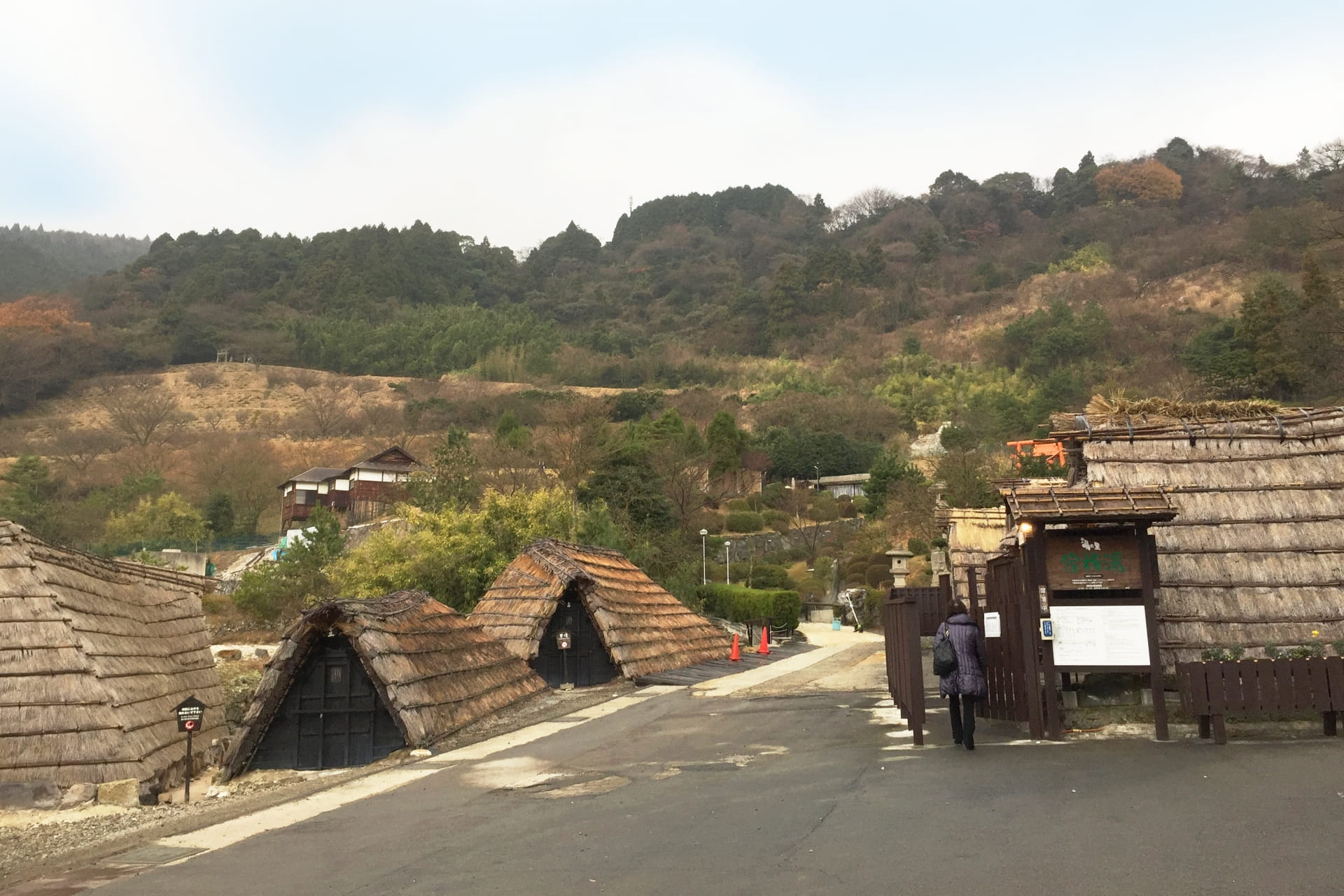
Higher in the hills, Myoban Onsen introduces another side of Beppu. The area is known for sulfur-rich hot springs and traditional thatched structures used to produce yunohana, mineral deposits collected using a technique designated as an Important Intangible Folk Cultural Property.
Together, these places make an important point: there is no single “Beppu onsen.” The city is interesting precisely because its bathing culture takes so many forms.
Try a Beppu Sand Bath
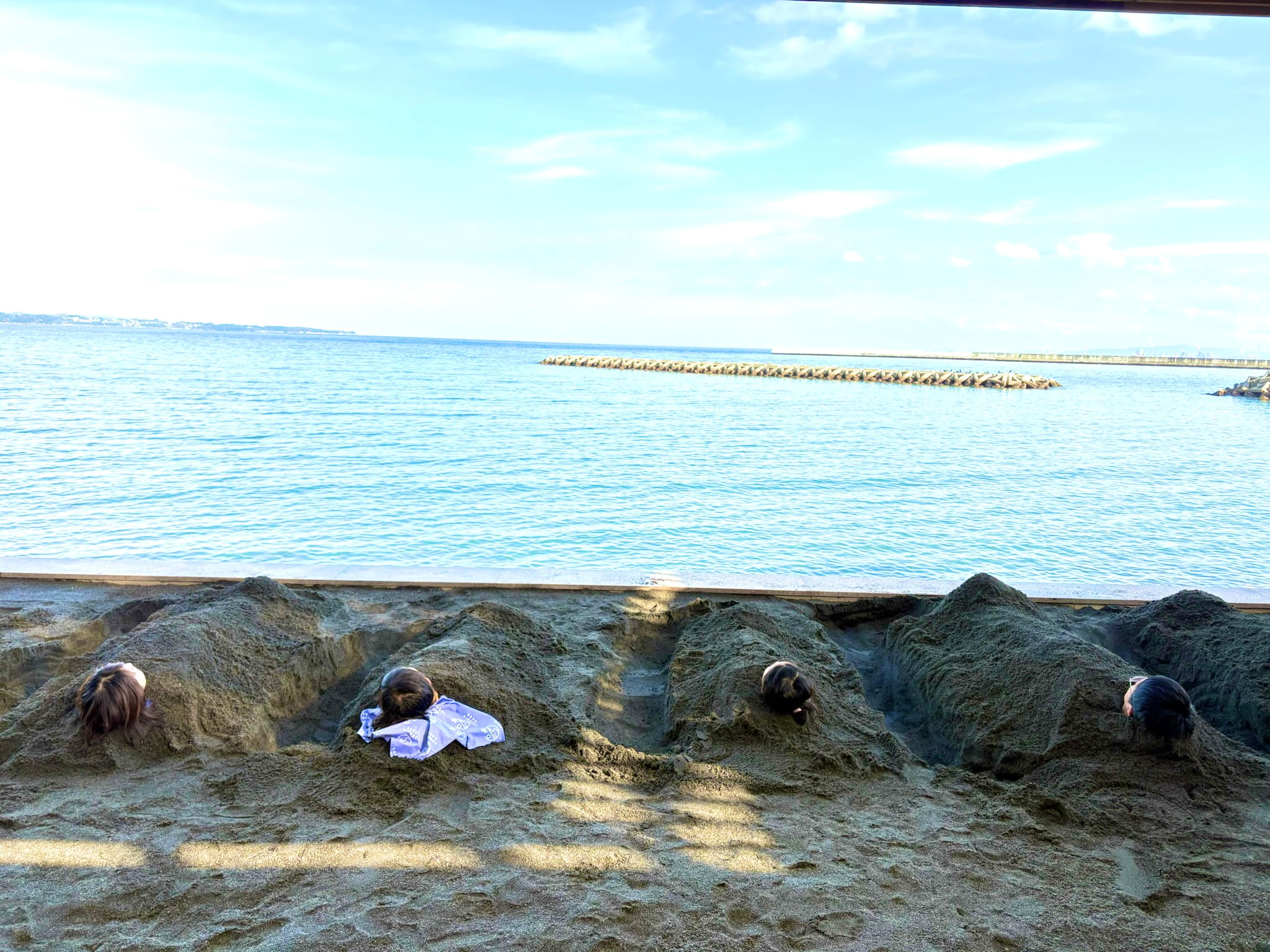
One of Beppu’s most unusual experiences does not involve sitting in water at all.
In a traditional sand bath, or sunamushi, visitors change into a cotton robe and lie down while attendants cover the body with naturally heated sand. The sand can feel surprisingly warm and heavy, and the actual time spent buried is relatively short.
Rather than expecting a long spa treatment, think of it as a distinctive geothermal experience.
Sand bathing has long been associated with Kyushu, and Beppu offers several ways to try it. Options include sand-bath experiences at facilities such as Sand SPA at SHONIN PARK and Hyotan Onsen.
Procedures, reservations, prices, and operating hours differ by facility and can change, so check the latest official information before visiting.
Most importantly, follow staff instructions and let them know immediately if the heat or weight of the sand becomes uncomfortable.
See the Steam-Filled Streets of Kannawa
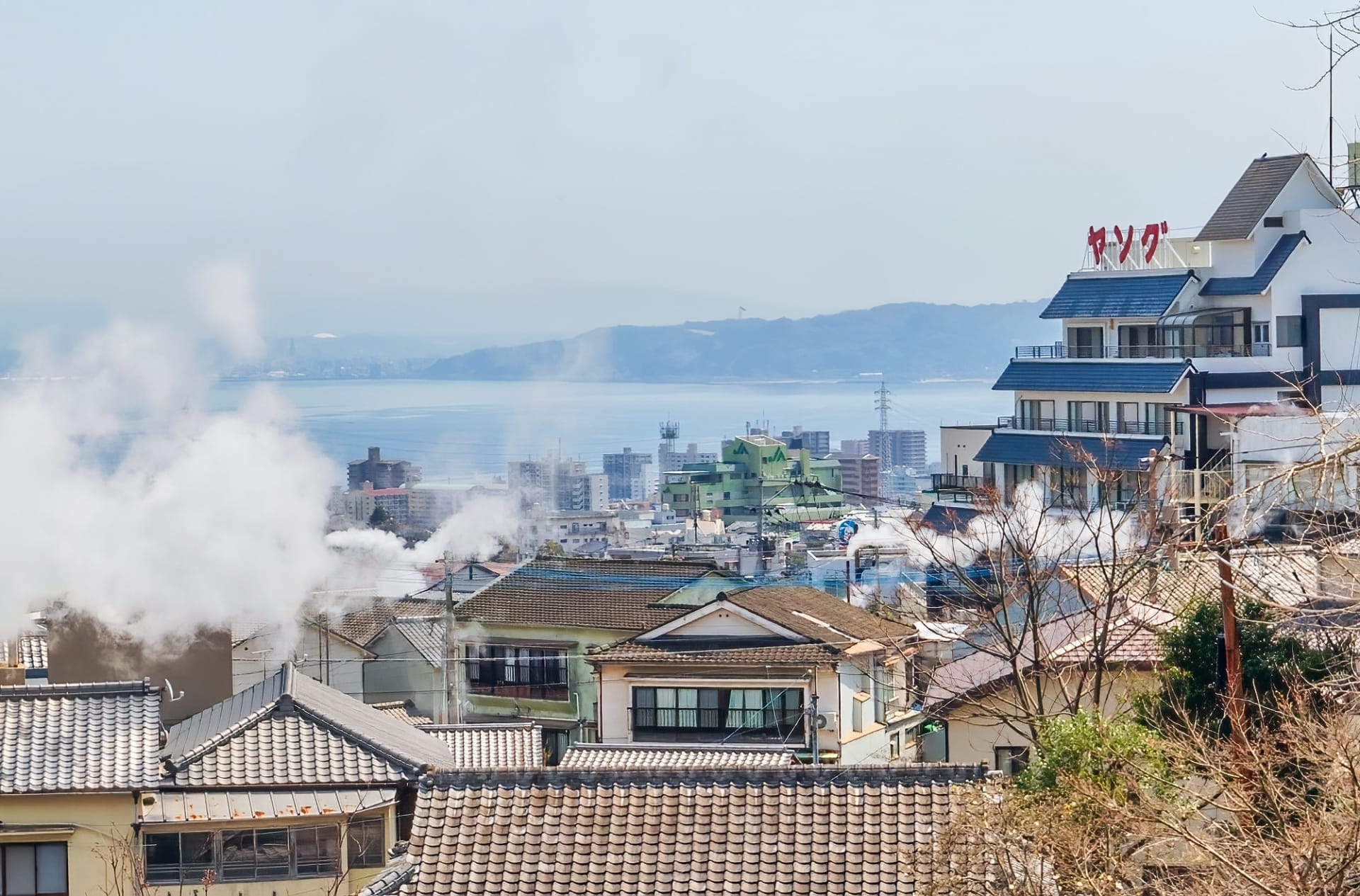
Kannawa deserves time beyond the Hells themselves.
Hot-spring steam rises from vents, rooftops, and roadside channels throughout the neighborhood, creating the landscape most people associate with Beppu. Wandering through the smaller streets reveals how closely geothermal activity and ordinary life coexist here.
Kannawa is also the center of jigoku-mushi, or “Hell steaming.”
At Jigoku Mushi Kobo Kannawa, staff cook ingredients using natural geothermal steam. Visitors can select ingredients and place them into special steamers powered by the hot-spring system below.
The method is simple, but that simplicity is part of the attraction. Vegetables, seafood, meat, and other ingredients are cooked without relying on heavy seasoning, allowing their natural flavors to remain prominent.
Because the facility can become busy around conventional meal times, allowing some flexibility in your schedule can make the experience easier.
Ride the Beppu Ropeway to Mount Tsurumi
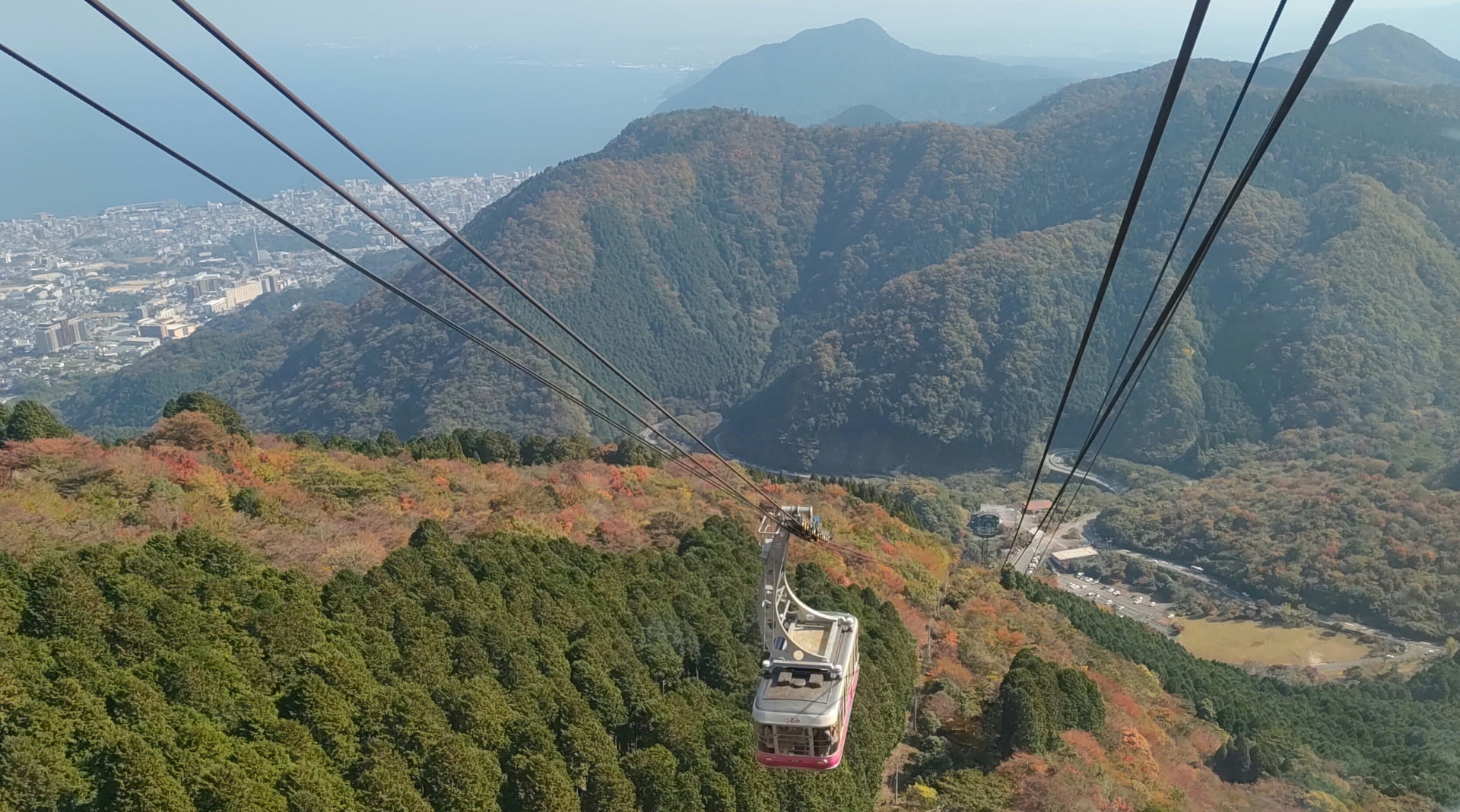
Hot springs are the main reason to visit Beppu, but not the only one.
Mount Tsurumi rises directly behind the city to an elevation of 1,375 meters. The Beppu Ropeway carries visitors from the lower station to around 1,300 meters, providing wide views over Beppu, Beppu Bay and the surrounding mountains when conditions are clear.
From the upper station, visitors can continue on foot toward the summit.
The scenery changes dramatically with the seasons, from spring flowers and cooler summer temperatures to autumn foliage and winter landscapes.
Weather conditions can affect ropeway operations, particularly during strong winds, so check the latest operating information before heading up.
What to Eat in Beppu
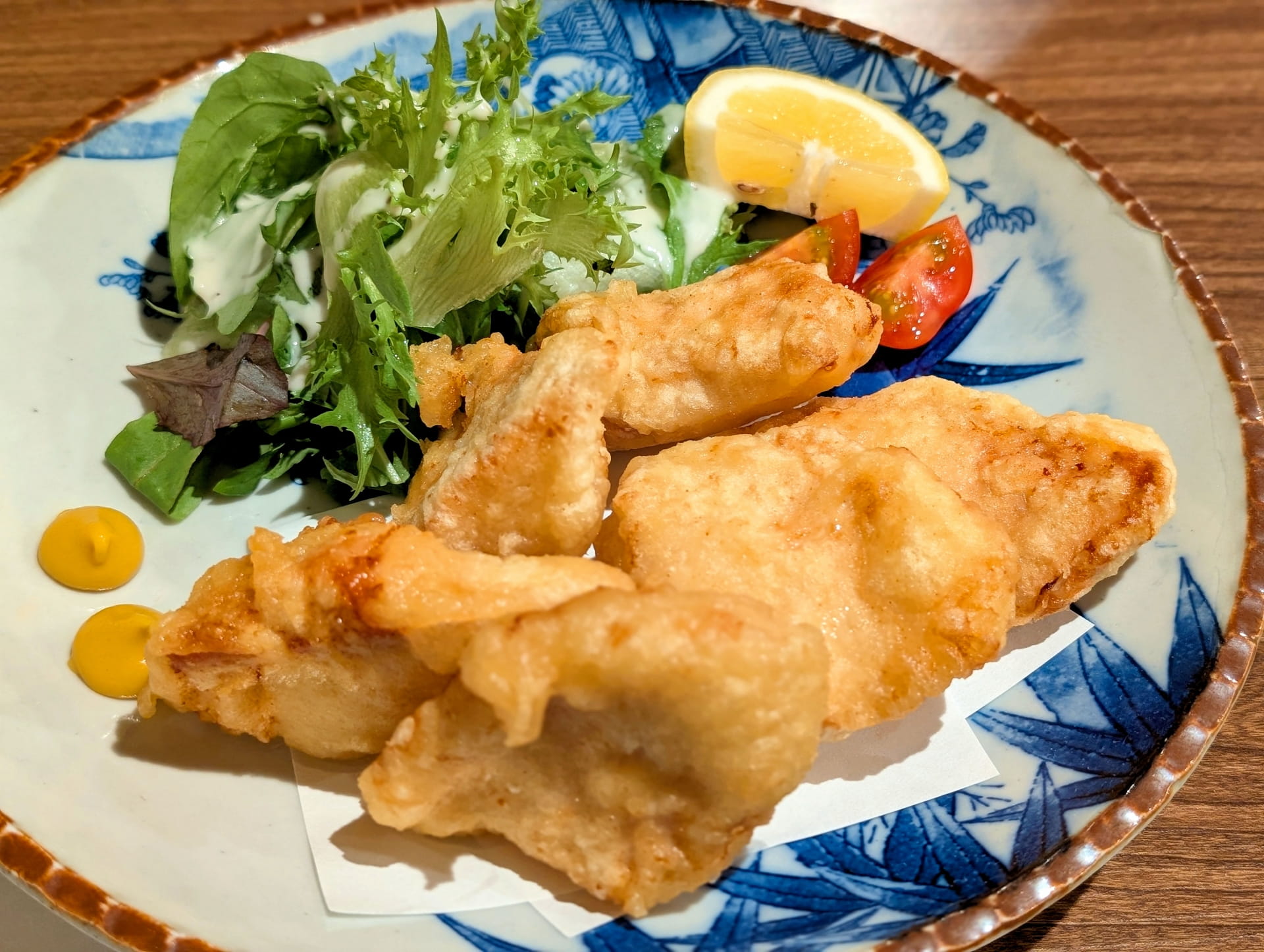
Beppu’s geothermal landscape even influences its food.
The most distinctive example is the jigoku-mushi steam cooking found in Kannawa, but several dishes associated with Oita Prefecture are also worth trying during a stay.
Tori-ten consists of chicken pieces coated in a light, tempura-style batter. It is one of Oita’s best-known local specialties and is available throughout Beppu.
Another local favorite is Beppu reimen, a cold noodle dish particularly welcome after a long soak or a warm day of sightseeing.
Seafood is also prominent in this coastal prefecture. Ryukyu, an Oita specialty of fresh fish marinated in a soy-based sauce with sesame and other seasonings, appears at many local restaurants and izakaya.
In Myoban, pudding cooked using hot-spring steam has also become a popular treat.
Taken together, these dishes provide another reason not to treat Beppu as a collection of sightseeing attractions to complete as quickly as possible. Leave room for lunch — and preferably dinner too.
Where to Stay in Beppu
Where you stay can significantly change your impression of Beppu.
For first-time visitors, three areas are particularly useful to understand.
Beppu Station and Kitahama make the most practical base. This area offers convenient transportation, plenty of restaurants, and easy access for travelers arriving or departing by bus or train.
Kannawa is the more atmospheric choice. Staying here puts you close to the Hells, jigoku-mushi restaurants, and the steam-filled streets that define Beppu’s most distinctive landscape.
Myoban offers a quieter experience higher in the hills, especially for travelers who want their accommodation and hot-spring experience to be the focus of the stay.
| Area | What to expect | Best for | Transportation |
|---|---|---|---|
| Beppu Station / Kitahama | Central, convenient, and close to restaurants | First-time visitors, short stays and early departures | Major bus connections and walkable central area |
| Kannawa | Steam-filled streets and easy access to the Hells | Travelers prioritizing onsen atmosphere and sightseeing | Local bus from central Beppu |
| Myoban | Quiet hillside setting and sulfur-rich hot springs | Travelers prioritizing a relaxing onsen stay | Local bus; farther uphill than Kannawa |
When choosing accommodation, look beyond star ratings. Consider whether the property has its own onsen, whether private baths are available, its tattoo policy if relevant, and how easily you can reach a bus stop.
Travelers who have time can also combine Beppu with Yufuin, another famous hot-spring destination in Oita Prefecture. The two offer quite different experiences: Beppu is larger, more varied, and deeply integrated with everyday city life, while Yufuin is smaller and better suited to exploring on foot.
Rather than seeing them as competitors, they can work well as complementary stops on a longer Oita itinerary. Check out our Ultimate Kyushu Onsen Guide: Kurokawa vs. Yufuin vs. Beppu article for more detailed information.
How to Get to Beppu from Tokyo

Beppu lies on Kyushu’s eastern coast, so it is not a realistic day trip from Tokyo. Flying is the most convenient way to cover the long distance between the two, with Oita Airport (OIT) serving as the recommended gateway for Beppu.
Solaseed Air operates direct flights between Tokyo (Haneda) and Oita Airport, with a flight time of around 1 hour and 45 minutes. Typical one-way fares start at around 10,000–20,000 yen, though prices vary by travel date, availability, and how early you book.
| Getting to Beppu | Details |
|---|---|
| Recommended airport | Oita Airport (OIT) |
| Flight from Tokyo | Haneda (HND) → Oita (OIT) |
| Flight time | Around 1 hr 45 min |
| Typical one-way fare | From around 10,000–20,000 yen |
From Oita Airport to Beppu
After you arrive at Oita Airport, take the Airport Limousine Bus to Beppu. The journey to Beppu Station takes approximately 50 minutes and costs about 1,500 yen, making the transfer relatively straightforward even for first-time visitors.
Once in central Beppu, you can take local buses to reach farther uphill areas, including Kannawa and Myoban.
Tips for Booking Your Flight
Book early: Airfares fluctuate depending on demand, so booking in advance generally gives you a better chance of finding lower fares.
Check Solaseed Air fares: Depending on the travel period and availability, Solaseed Air may offer special fares of around 6,000–9,000 yen one way between Tokyo and Oita. Check the latest fares and conditions when planning your trip.
With the flight from Haneda taking around 1 hour and 45 minutes and the airport bus to Beppu taking around 50 minutes, flying into Oita makes Beppu relatively easy to include in a short Kyushu trip from Tokyo. It also provides a convenient starting point for exploring other destinations in Oita Prefecture and the wider Kyushu region.
Find the best flights from Tokyo to Oita
Fly from Tokyo to Oita Airport with Solaseed Air and discover Beppu’s famous hot springs, geothermal hells, sand baths, and local cuisine—making it an ideal gateway to Oita’s onsen culture.
Frequently Asked Questions (FAQ)
Q. Is Beppu worth visiting?
A. Yes, particularly for travelers interested in Japanese hot-spring culture. Beppu offers eight onsen districts, plus public bathhouses, steam baths, sand bathing, and geothermal sightseeing attractions. Staying overnight allows you to experience more than just the famous Hells.
Q. Can you bathe in the Hells of Beppu?
A. The main geothermal pools at the seven Hells are sightseeing attractions, not for bathing. Some facilities have separate foot-bath experiences, but visitors wanting a full onsen experience should visit one of Beppu’s bathhouses.
Q. How many days do you need in Beppu?
A. Two days and one night works well for a first visit. This gives you time to see some of the Hells, explore Kannawa, enjoy local food, and experience at least one or two different types of bathing without rushing.
Q. Are there tattoo-friendly onsen in Beppu?
A. Yes, Beppu has facilities that welcome visitors with tattoos, but policies vary by bathhouse and accommodation. Check the latest policy directly with the facility before visiting. Booking a private or family bath can also be a useful option where available.
Q. Can you visit Beppu as a day trip?
A. A day trip is possible from other parts of Kyushu, but an overnight stay is recommended if your schedule allows. Beppu’s appeal extends beyond daytime sightseeing, and staying overnight gives you more time to experience its public baths and different onsen districts.
Discover the Beppu Behind the Photos
Beppu makes much more sense once you stop expecting it to behave like a conventional hot-spring resort.
The Hells are not baths. The eight onsen districts are not all within walking distance of each other. Some of the most memorable bathhouses are simple, not luxurious. And the city itself isn’t a preserved resort village — it is a place where geothermal activity has been part of everyday life for generations.
Knowing that before you arrive doesn’t make Beppu less appealing. It helps reveal what makes the city unusual.
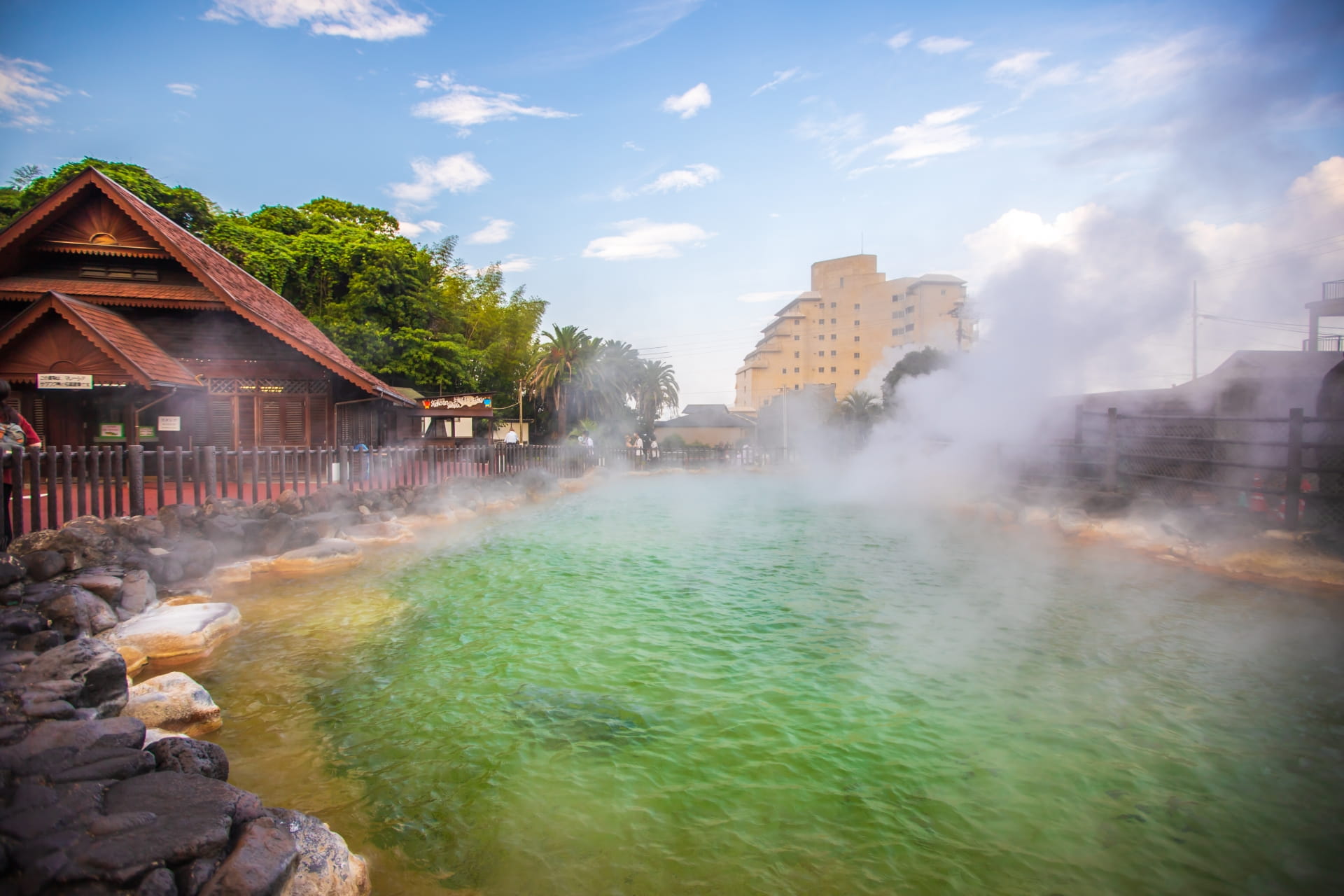
Within a single stay, you can watch cobalt-blue geothermal water steam beneath the trees, walk through a neighborhood where vapor rises from the streets, cook lunch with natural hot-spring steam, experience a traditional public bath, lie beneath heated sand and look down over Beppu Bay from Mount Tsurumi.
That combination is difficult to reproduce elsewhere.
And for travelers starting in Tokyo, getting there is relatively straightforward. Solaseed Air connects Tokyo (Haneda) with Oita Airport, putting Beppu and Oita’s wider hot-spring culture within easy reach by air.
Come knowing what Beppu actually is, leave enough time to experience the baths rather than simply seeing the sights, and this sometimes-misunderstood hot-spring city may become one of the most memorable stops on your Kyushu journey.
Find the best flights from Tokyo to Oita
Fly from Tokyo to Oita Airport with Solaseed Air and discover Beppu’s famous hot springs, geothermal hells, sand baths, and local cuisine—making it an ideal gateway to Oita’s onsen culture.
▽Related Articles▽


Written by
Born and raised in Costa Rica, I started living in Tokyo from college. I love traveling within Japan & around the world. Since I wasn’t born in Japan, I know the cultural impact that you can get when visiting Japan for the first time and what you might be worried about before your trip. And I’ve lived long enough to somewhat understand the nuances of the Japanese culture that make this country such an attractive place to visit. Hopefully I can provide to you both the information you’re looking for and the information you didn’t know you needed to know.
- +0 0
-
-