Zao Onsen Ski Resort: Japan’s Next Great Ski Destination
Powder Snow, Snow Monsters, and Onsen Culture—All Just a Shinkansen Ride from Tokyo


- +0 0
-

-


In National Geographic’s Best of the World 2026, Yamagata Prefecture was selected as one of the planet’s top travel destinations — praised for its unspoiled landscapes, heritage hot springs, and deep connection to seasonal culture. For winter travelers, the standout experience of the region is Zao Onsen Ski Resort, home to world-class powder snow and the extraordinary Snow Monsters (juhyo).
While the broader Tohoku region offers many winter attractions, few destinations combine consistent snowfall, dramatic alpine scenery, and a genuine onsen village atmosphere as seamlessly as Zao. Here, ski slopes connect directly with the lanes of a historic hot spring town, creating a rare blend of sport and tradition. As crowds grow in Niseko and Hakuba fills with weekend skiers, Zao remains refreshingly manageable — though international recognition is steadily building.
Recently chosen by Japan’s Tourism Agency under its Snow Resort International Competitiveness Program, Zao is stepping onto the global stage while still retaining the character of a true Japanese mountain town — welcoming, unpretentious, and focused on the pleasures of snow, food, and hot water.
What Sets Zao Apart
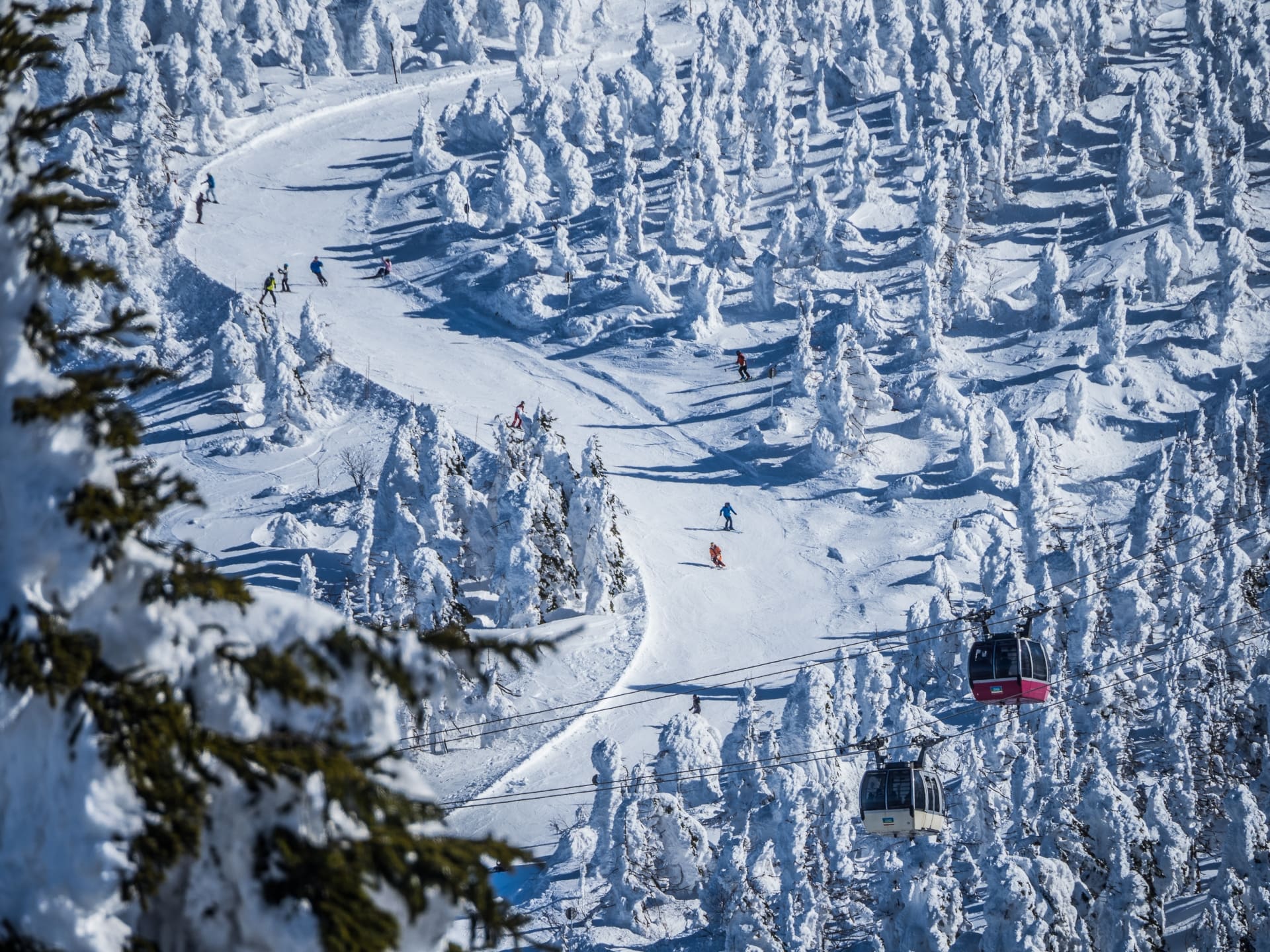
World-Class Powder Without the Crowds
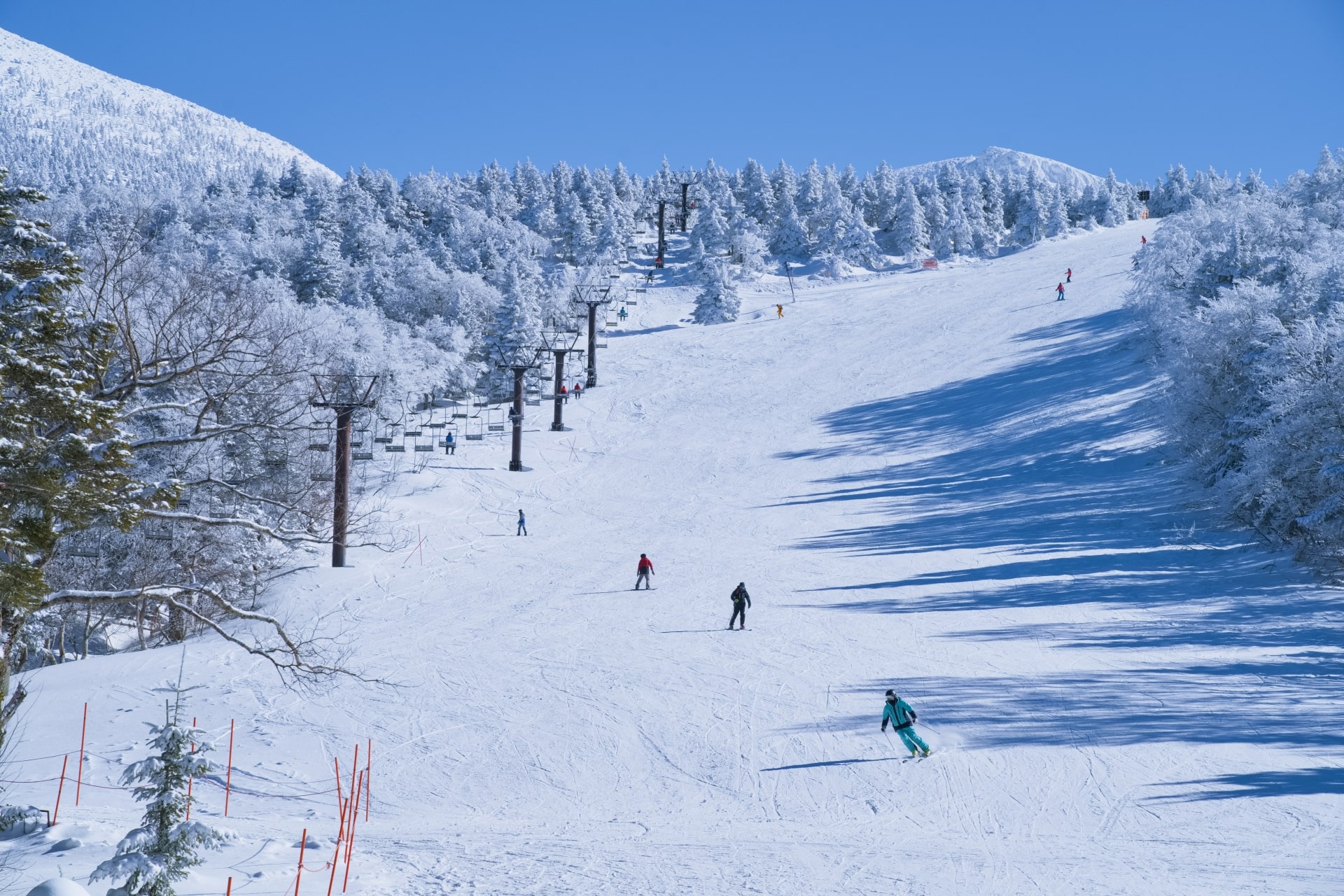
Zao Onsen Ski Resort spans 14 ski zones and 26 courses, offering terrain for all levels.
Detail | Specification |
Summit Elevation | 1,661 meters |
Vertical Drop | 881 meters |
Longest Run | Over 10 km |
Annual Snowfall | 8–12 meters |
Lift Ticket (Full Day) | ¥7,500 (adults) |
Season | Early December – Early May |
Thanks to its inland location and northern climate, Zao receives dry, light powder similar to Hokkaido — with far fewer skiers competing for fresh tracks.
- Niseko: Legendary snow but heavy congestion and premium pricing.
- Hakuba: Varied terrain yet busy weekends.
- Zao: Comparable powder with significantly lighter crowds — plus Snow Monsters and true onsen culture.
The Snow Monsters (Juhyo)
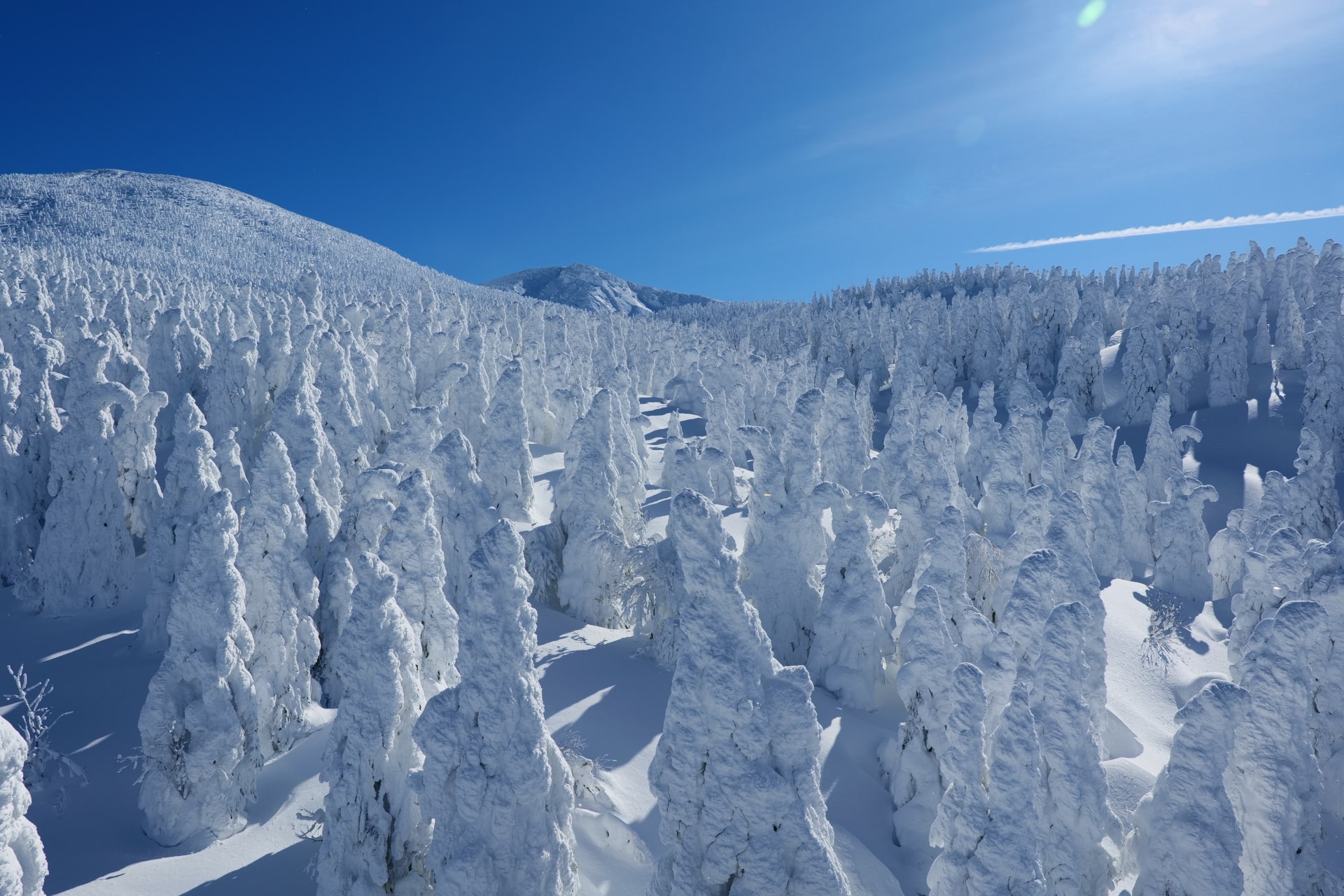
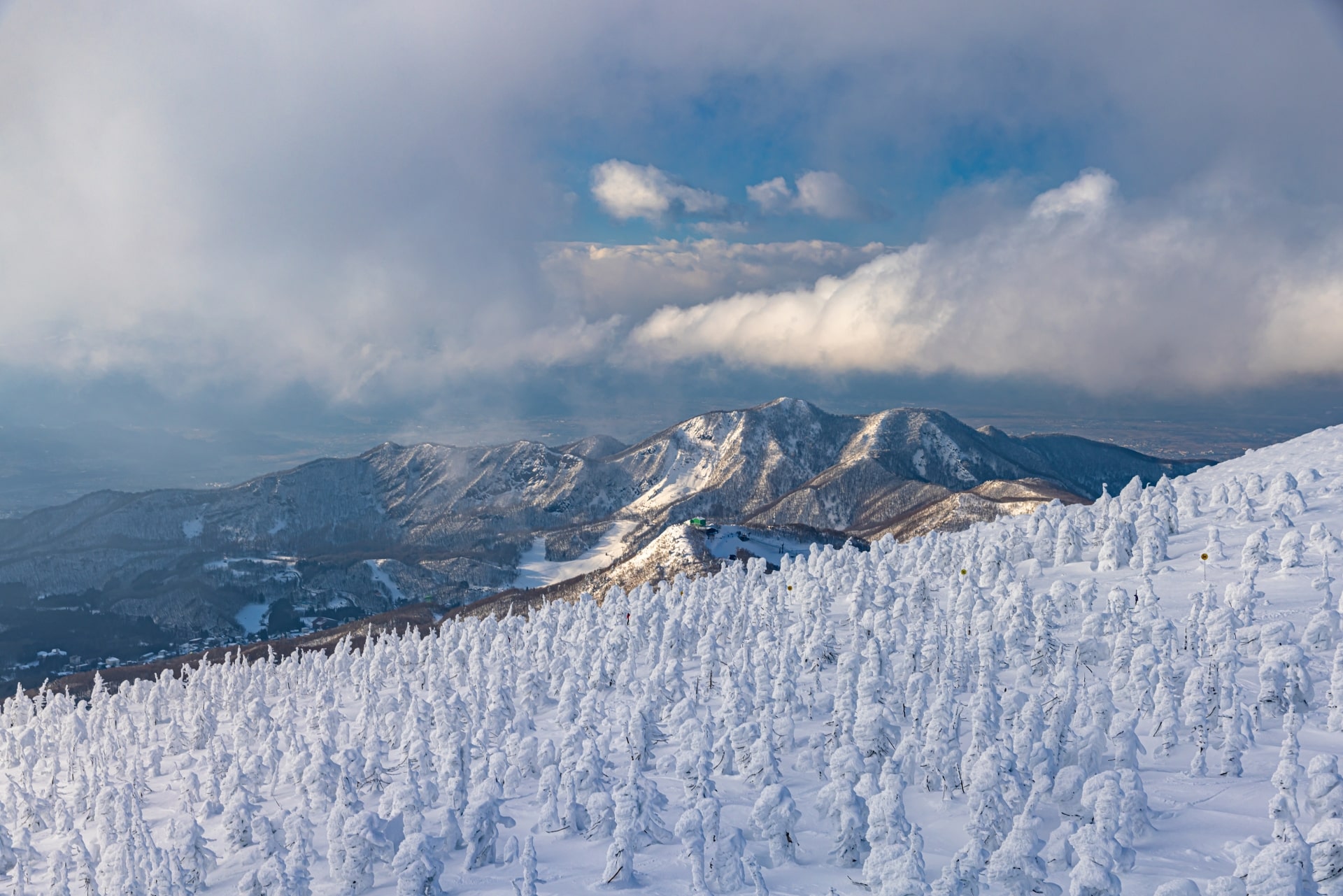
Zao’s defining spectacle is the juhyo, massive snow-coated fir trees sculpted by freezing Siberian winds. Moist air blows inland from the Sea of Japan, forming thick layers of rime ice that transform forests into towering white figures — an otherworldly sight unique to this region.
Peak season: Late January through February.
Ways to experience them:
- Ski among the formations on high-altitude courses
- Ride the Zao Ropeway to the summit (¥4,400 round trip)
- Join seasonal night illumination tours
For photographers and first-time visitors alike, the juhyo alone justify a winter trip to Zao.
Ski-In Onsen Culture
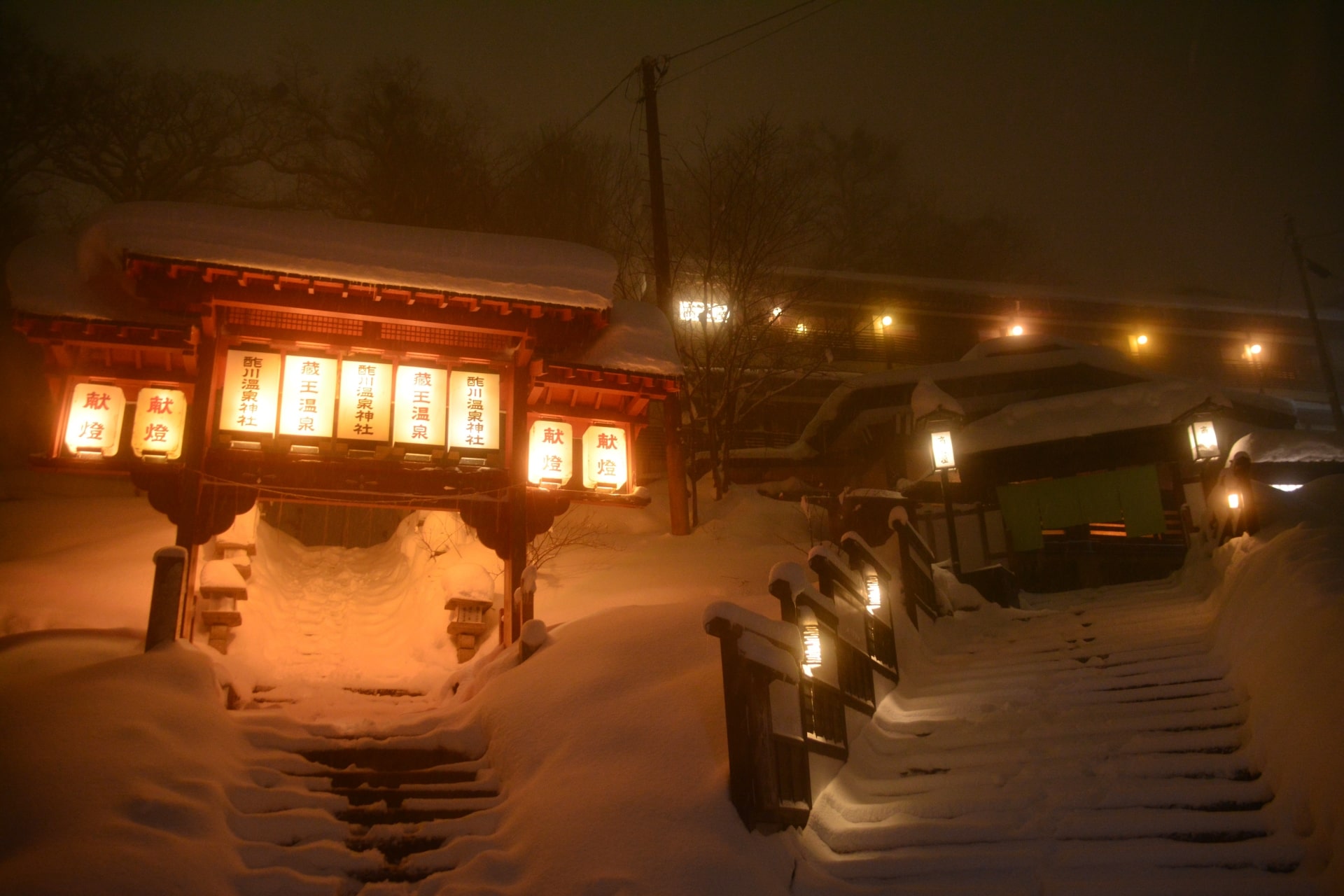
Zao differs from purpose-built ski resorts in one crucial way: it is a genuine hot spring town with over 1,900 years of bathing history. Its highly acidic sulfur waters are prized nationwide as “beauty baths” for their skin-softening qualities.
Here, skiing naturally blends into spa culture. You can step off the slopes and walk minutes to an outdoor bath, soaking beneath falling snow with the mountains rising around you — an experience increasingly rare in global ski travel.
Best Time to Visit Zao for Skiing
- Late January – February: Peak Snow Monster season and deepest snowfall
- Early March: Excellent powder with lighter crowds — the best overall balance
- Late March – April: Spring skiing with clearer skies
Outside of winter, Zao draws hikers and onsen guests, but its reputation is built almost entirely on the snow season.
Getting to Zao from Tokyo
Despite its alpine setting, Zao Onsen Ski Resort is easy to reach from Tokyo. Travelers generally choose from three main transportation options depending on budget, comfort, and travel style: flying, overnight highway buses, or the Shinkansen.
Flying
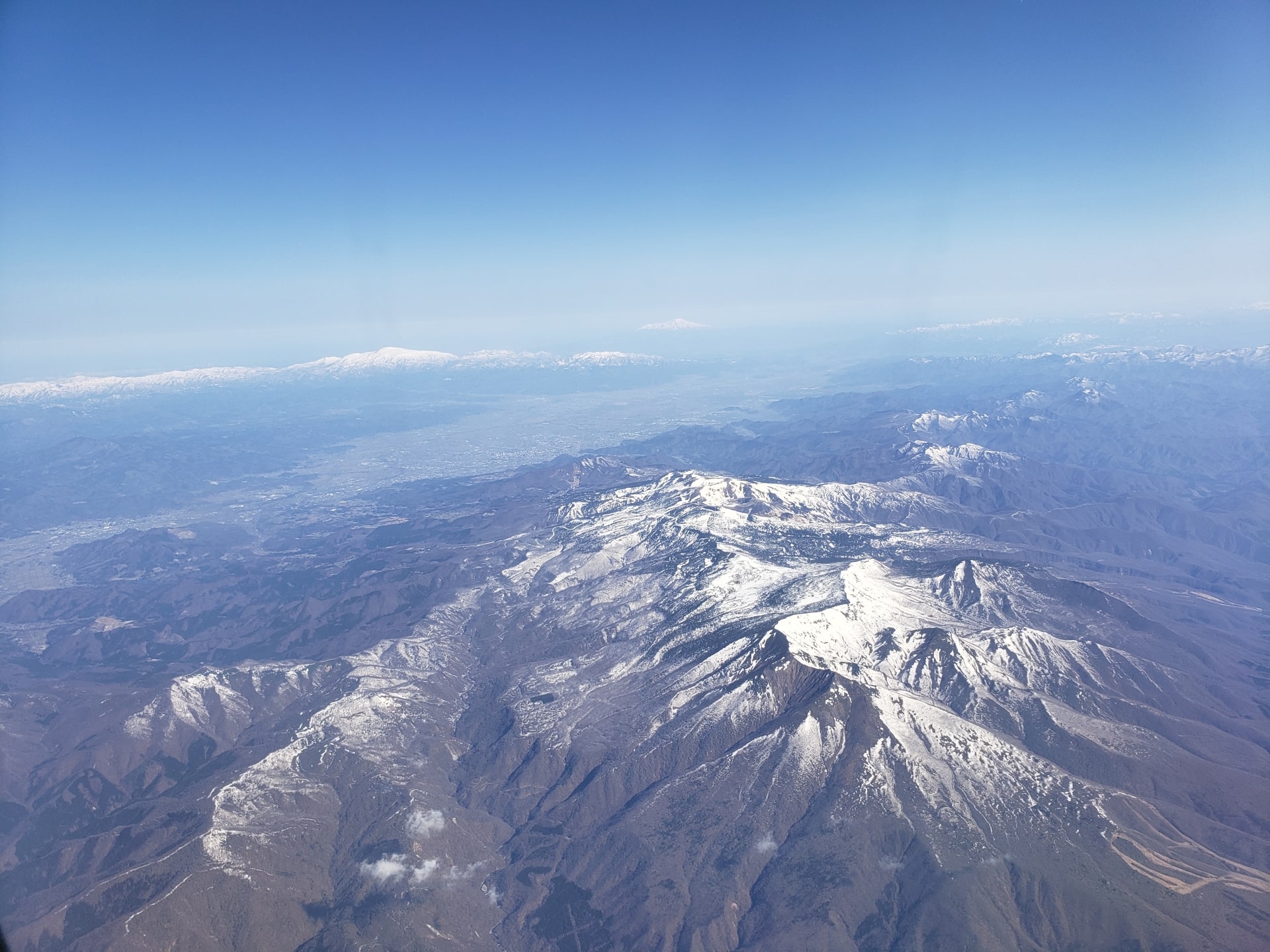
Flights operate between Haneda Airport and Yamagata Airport (approx. 1 hour).
- Airfare: from ¥11,230 one way
- Airport shuttle bus → Zao: about 1 hour 5 minutes
- Sightseeing liner taxi: direct airport-to-Zao transfer (¥4,500 one way, reservation required)
While the flight itself is short, total travel time increases with airport check-in, loading ski equipment, and weather-related delays — particularly during heavy snowfall, when flight disruptions become common.
Overnight Highway Bus
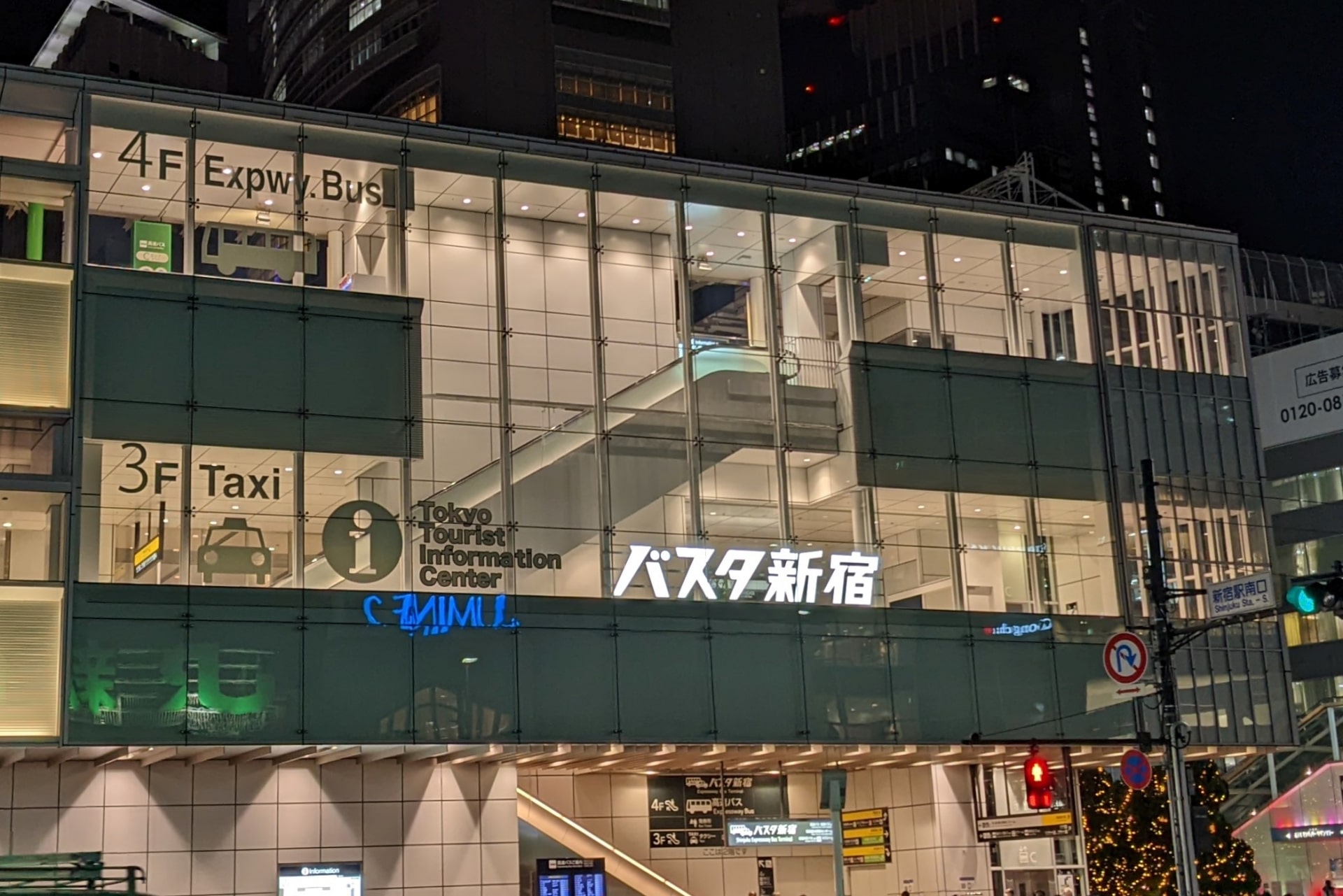
Direct buses from Shinjuku Express Bus Terminal (Shinjuku Busta) and Haneda Airport to Zao Onsen Bust Terminal
- Fare: approx. ¥4,300–11,000
- Travel time: about 7 hours
Some services reach Michi-no-Eki Yamagata-Zao, requiring an additional bus or taxi transfer — something to note when traveling with ski equipment.
While affordable, overnight buses offer limited comfort and space, and the long journey often leaves passengers fatigued upon arrival.
Shinkansen (Via the Yamagata Shinkansen)
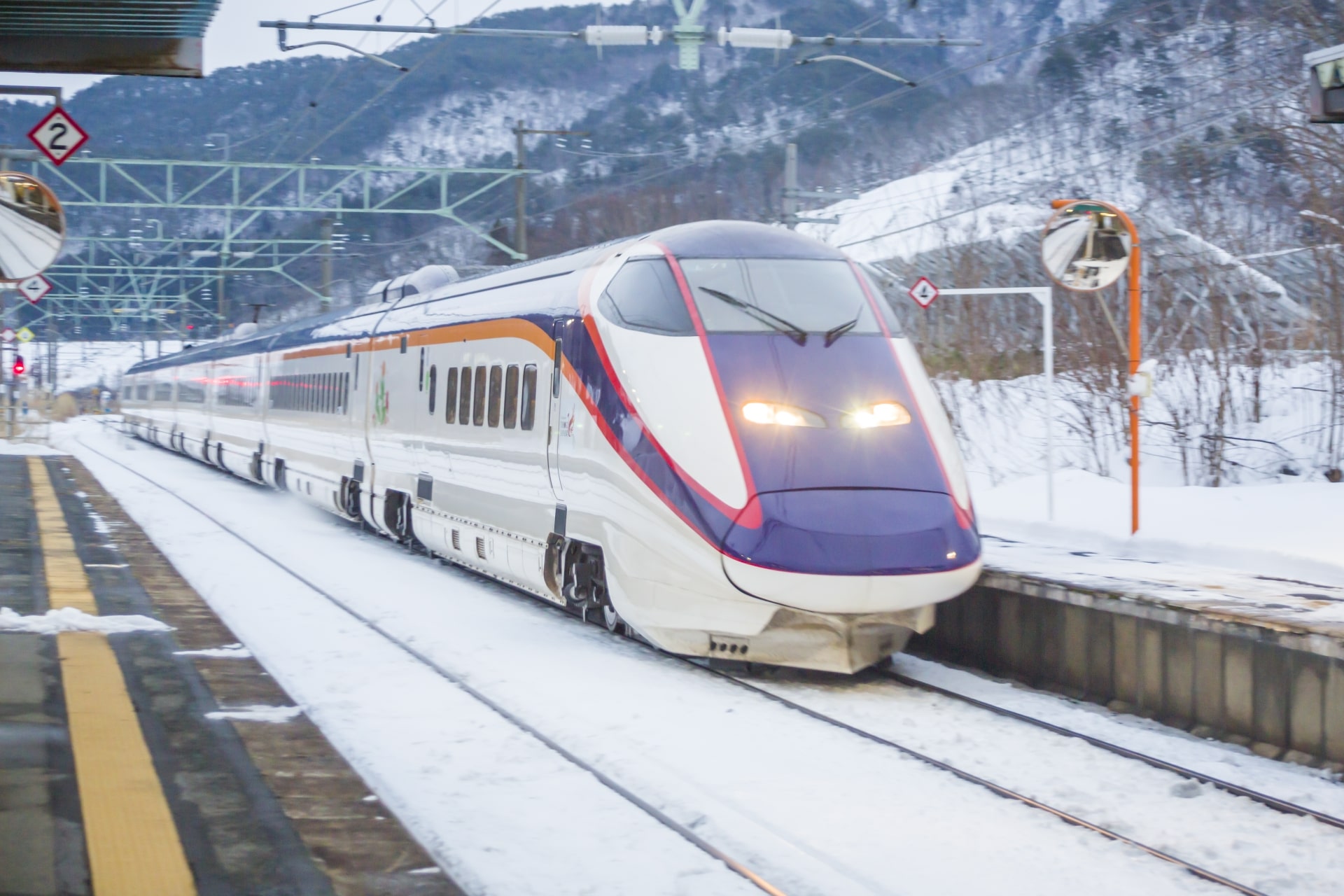
For most winter travelers, the Shinkansen provides the most comfortable, reliable, and efficient route to Zao — especially during snowfall season.
Tokyo Station → JR Yamagata Station:
- 2 hours 22 minutes (fastest service) via the Yamagata Shinkansen
- Fare: ¥11,250 one way
Yamagata Station → Zao Onsen Bus Terminal:
- Local bus: 35 minutes
- Fare: ¥1,200 one way (adult)
Total travel time: Under 4 hours door-to-door
This route is the simplest and most direct, requiring only one train ride before transferring to a single local bus.
Why the Shinkansen Is the Best Choice
While all three transportation options can reach Zao, the Shinkansen stands out during winter for several reasons:
- Outstanding weather reliability, even during heavy snowfall
- Spacious seating and easy luggage storage for ski gear
- No airport check-in delays or car rentals required
- Simple station-to-bus connections directly to Zao Onsen
- Predictable, punctual schedules ideal for short holiday travel
For overseas travelers, online booking for domestic rail can be confusing, and some Japanese payment systems restrict foreign credit cards. To simplify reservations, English-language services provide clear route selection, international card support, and guaranteed seat bookings — particularly useful during peak winter months when advance reservations are strongly recommended.
English booking support: japan-bullettrain.com
Where to Stay in Zao
Zao offers accommodation options ranging from modern ski hotels to refined traditional inns. The following properties are particularly well-suited to overseas travelers:
Takamiya Rurikura Resort (たかみや瑠璃倶楽リゾート)
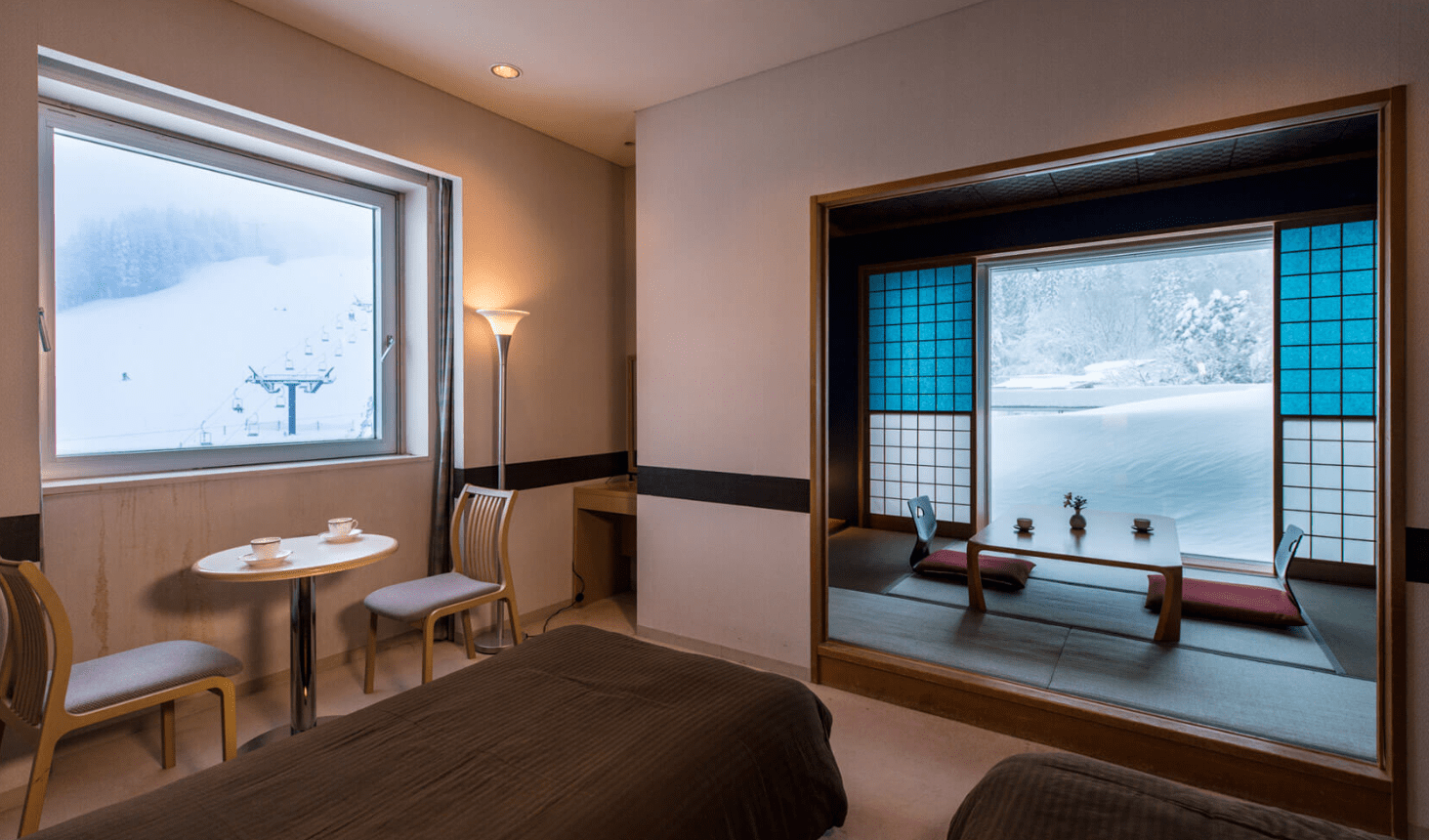
Style: Modern luxury ryokan
Price Range: ¥25,000–45,000 per person (dinner & breakfast included)
A ski-side ryokan near the ropeway, featuring 24-hour sulfur baths (pH 1.3) and complimentary onsen-hopping to sister inns. Designed by Kenzo Tange, it blends modern style with traditional hospitality. Seasonal kaiseki dinners feature Yamagata ingredients.
Best for: Couples and travelers seeking premium onsen comfort with unbeatable slope access.
 Access Access |
9 minute walk from Zao Onsen Bus Terminal (Free shuttle service available) |
|---|---|
 Address Address |
1118-7 Sandogawa, Zao Onsen, Yamagata City, Yamagata Prefecture, 990-2301 |
 Official Website Official Website |
https://www.zao-rurikura.com/ |
Wakamatsuya (和歌の宿 わかまつや)
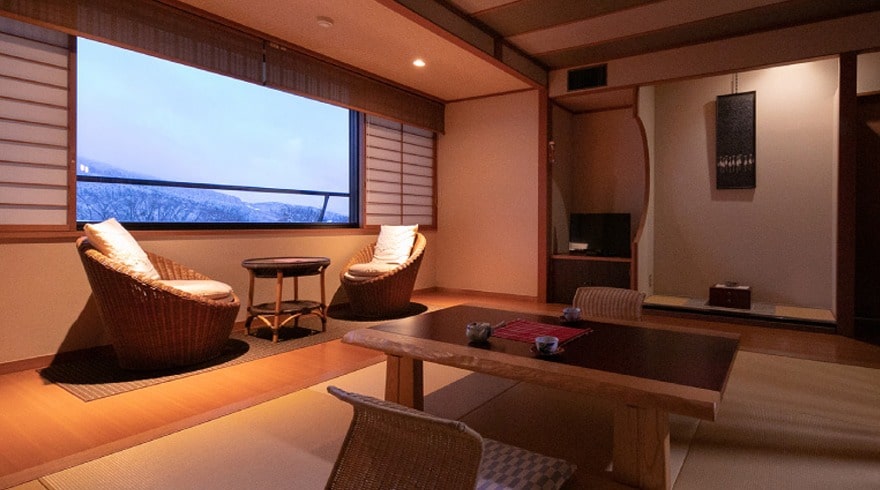
Style: Traditional Japanese ryokan
Price Range: ¥18,000–35,000 per person (including meals)
Established in 1655, this heritage inn offers private sulfur baths, including a dramatic stone open-air tub. Dining highlights include A5-grade Yamagata and Yonezawa beef paired with local sake.
Best for: Cultural immersion seekers and food-focused travelers craving classic ryokan warmth.
| Access |
3-minute walk from Zao Onsen Bus Terminal (shuttle bus available) |
|---|---|
| Address |
951-1 Zao Onsen, Yamagata City, Yamagata Prefecture, 990-2301 |
| Official Website |
https://www.wakamatuya.co.jp/ |
Le Vert Zao (ル・ベール蔵王)
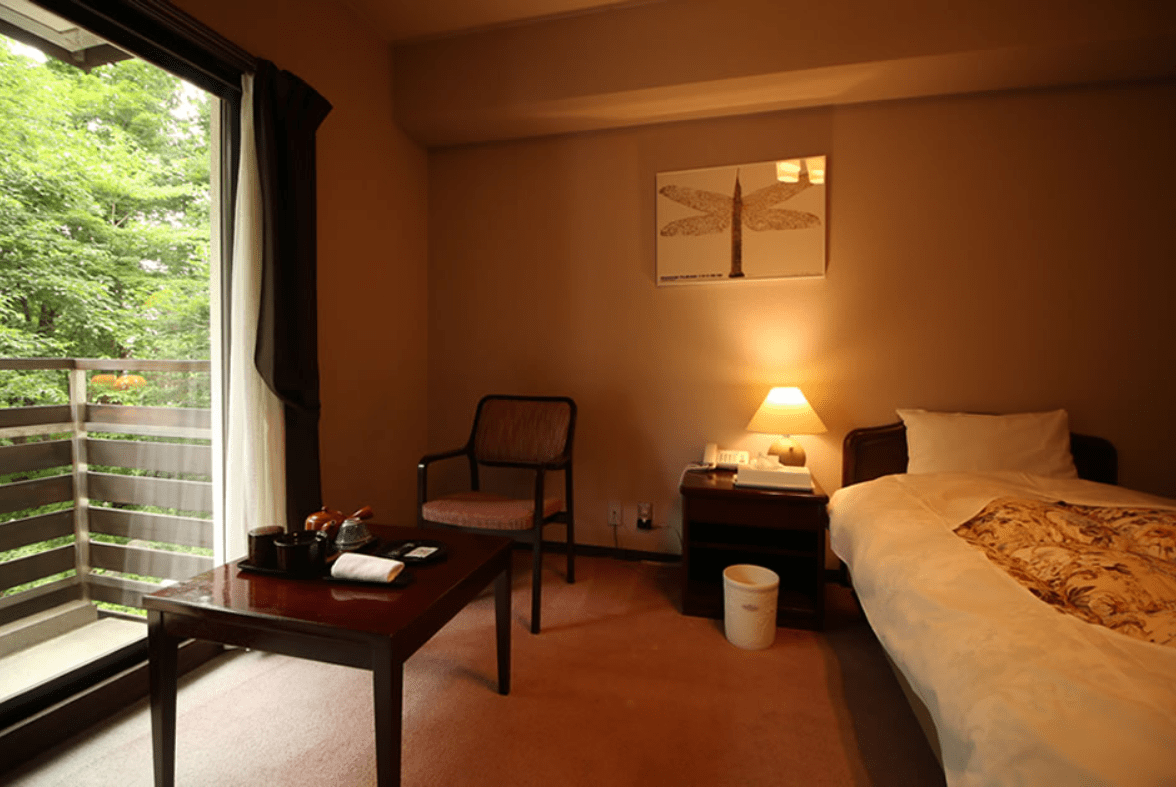
Style: Western-style ski hotel
Price Range: ¥12,000–22,000 per person
Located steps from the slopes, this ski-focused hotel offers 24-hour sulfur baths and meals featuring Yamagata beef and premium regional rice. A practical favorite for families and solo skiers.
Best for: Families, solo travelers, and ski-first guests seeking comfort and convenience.
| Access |
7 minute walk from Zao Onsen Bus Terminal (Free shuttle service available) |
|---|---|
| Address |
878-5 Zao Onsen, Yamagata City, Yamagata Prefecture 990-2301 |
| Official Website |
http://www.levert-zao.co.jp/ |
Where to Eat in Zao
After skiing, Zao’s compact dining scene delivers cozy, satisfying meals close to the slopes or onsen town — perfect for relaxing winter evenings.
Sangoro (三五郎小屋)
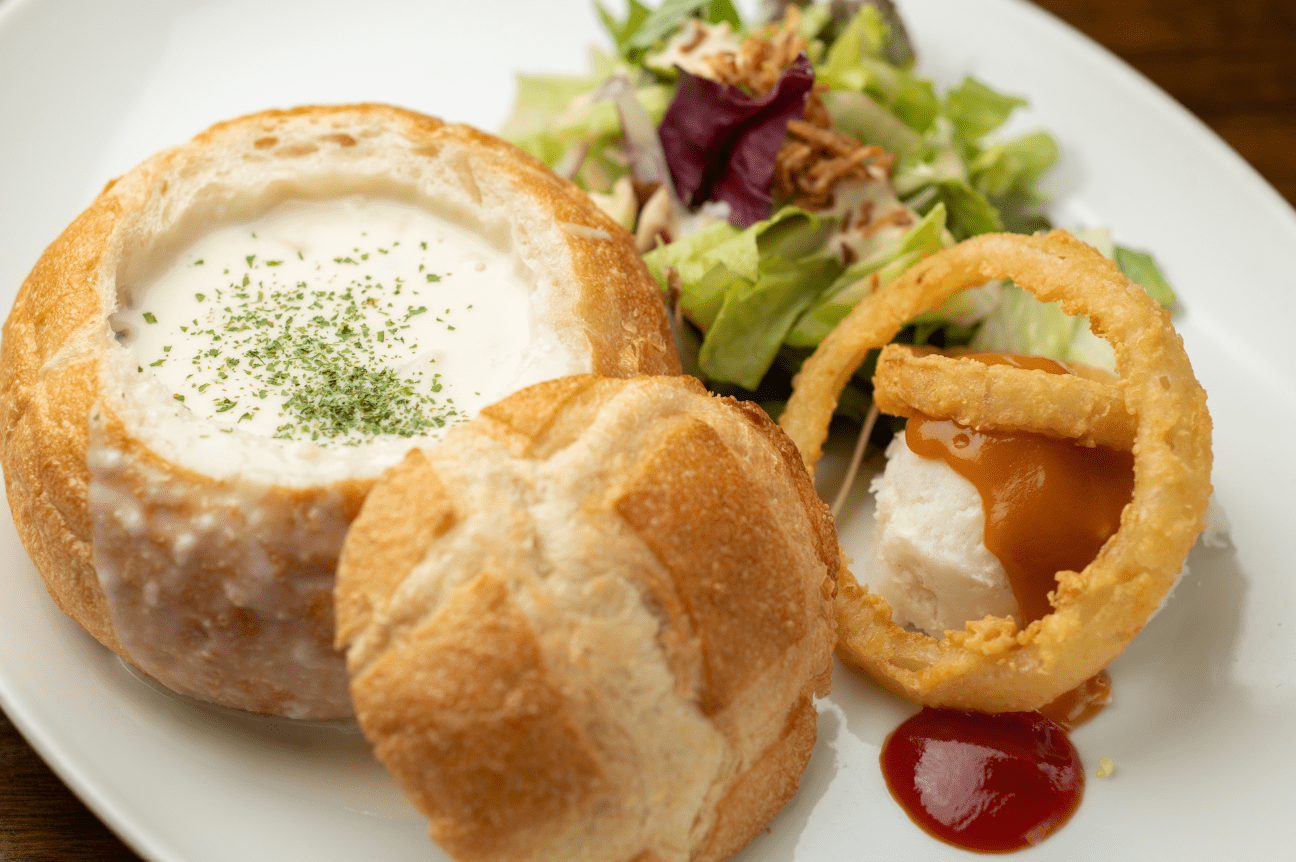
Style: Lodge-style mountain restaurant
Price Range: ¥1,500–3,000 per person
Slope-side lodge restaurant near the Chuo Ropeway, famous for its clam-chowder bread bowls and hearty comfort dishes served beside a wood stove.
Best for: Casual après-ski meals and travelers seeking hearty slope-side comfort.
| Access |
15 minute walk from Tori Kabuto Station (Zao Central RopeWay) or 10 minute walk from Chuo Kogen Station (Zao Ky Cable) |
|---|---|
| Address |
Zao Onsen Central Slope, Yamagata City, Yamagata Prefecture, 990-2301 |
 Business Hours Business Hours |
10:00-15:30 |
| Official Website |
https://sangoro.co.jp/restaurant.html |
Okumura Soba (奥村そば屋)
Style: Local noodle shop (ramen & soba)
Price Range: ¥900–1,500 per person
A beloved ramen shop known for classic chuka-soba — light broth, thin noodles, and nostalgic flavor at traveler-friendly prices.
Best for: Quick, warming comfort food between skiing and onsen visits.
| Access |
3 minute walk from Zao Onsen Bus Terminal |
|---|---|
| Address |
953 Zao Onsen, Yamagata City, Yamagata Prefecture |
| Business Hours |
11:00-15:00 |
 Closed Closed |
Thursdays |
 Payment method Payment method |
Cash only |
Yamagata Beef and Other Winter Flavors to Try in Yamagata
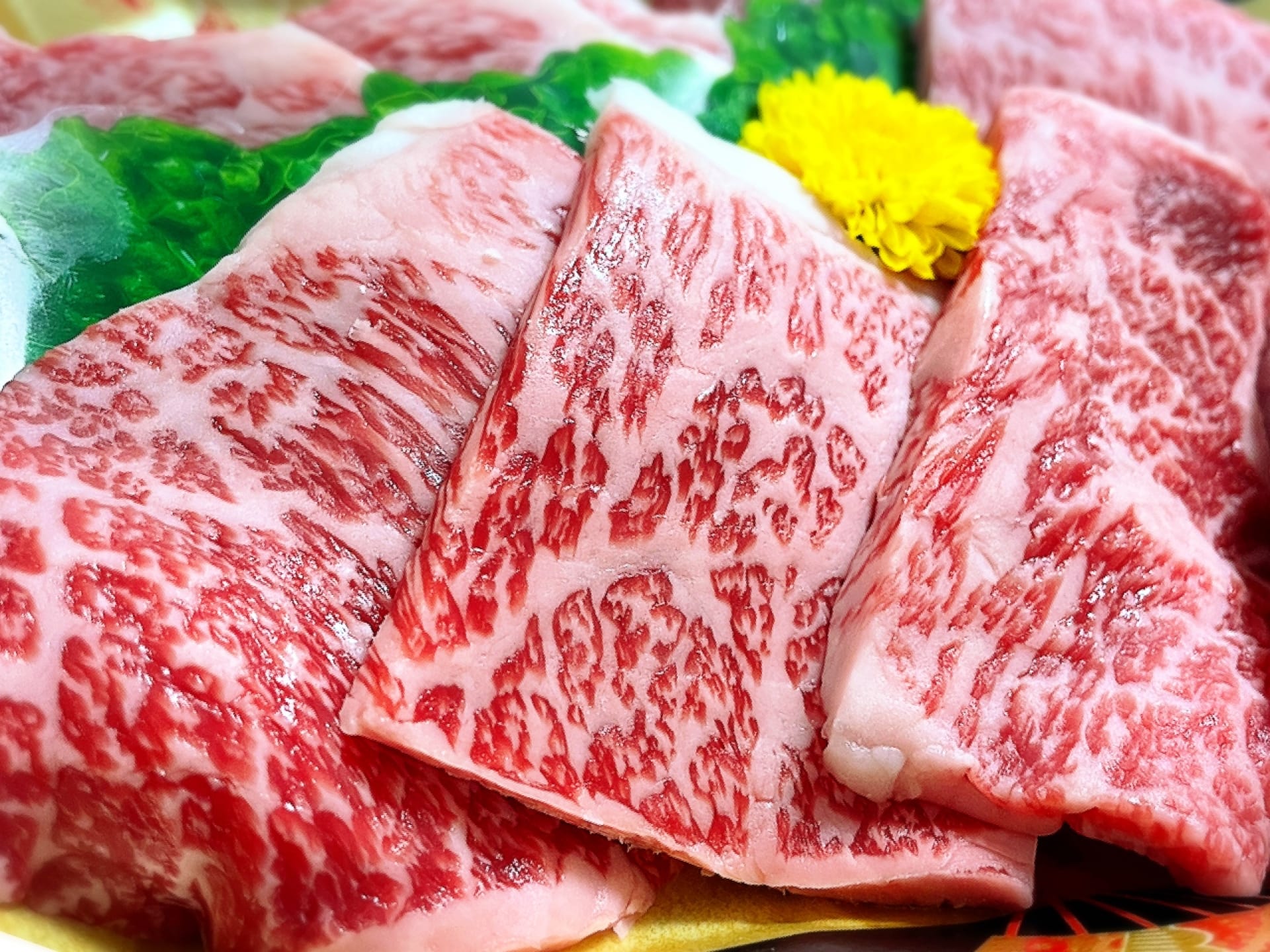
Often overshadowed by Kobe and Matsusaka, Yamagata beef can offer comparable quality — especially when properly graded — and some local teppanyaki restaurants may be more affordably priced than top Tokyo equivalents.
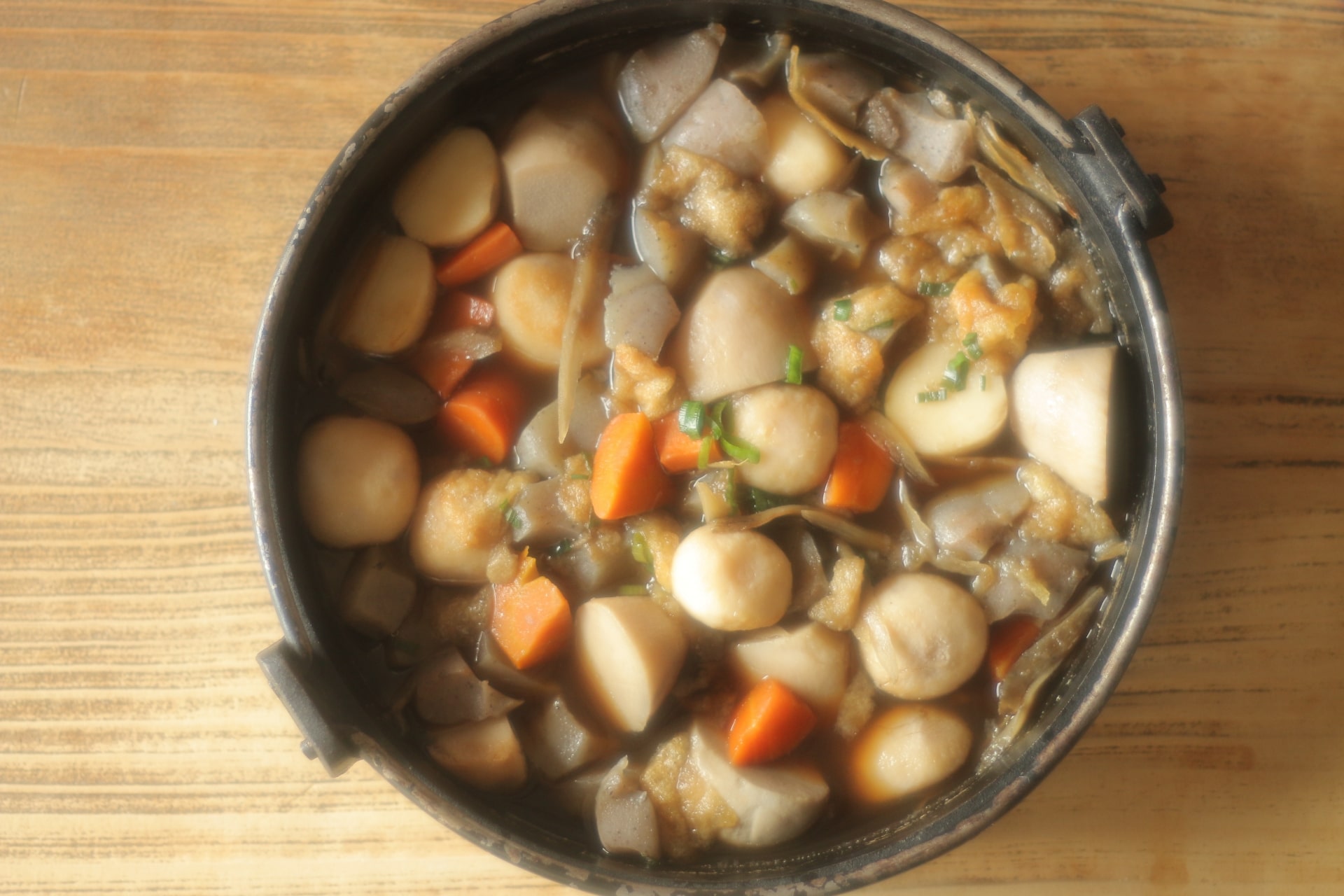
Beyond these restaurants, winter cuisine shines through imoni (taro hotpot with beef), local ramen and nabe, cherry-based sweets, and sake brewed with pristine snow-melt water — clean, crisp pairings for cold-weather dining.
Suggested 3-Day Itinerary in Zao
Day 1 — Arrival & Onsen Acclimation
08:30 – Depart Tokyo Station
Board the Yamagata Shinkansen for a relaxed, scenic ride north into the mountains (book via Japan Bullet Train).
11:00 – Arrive at JR Yamagata Station → Transfer to Zao Onsen
Catch the local bus bound for Zao Onsen Bus Terminal (approx. 35 minutes). The gradual ascent offers the first glimpse of deep snow landscapes.
12:30 – Check into your ryokan (luggage drop)
Most ryokan store luggage before check-in, allowing you to explore town immediately.
13:30 – Explore Zao Onsen Village
Stroll between souvenir shops and public baths to orient yourself before skiing begins. This light activity helps loosen up after travel and adjust to the mountain altitude.
16:00 – Early onsen soak
Soaking before dinner eases travel fatigue and prepares muscles for the next day’s skiing.
18:00 – Kaiseki dinner at your ryokan
Seasonal Yamagata cuisine paired with local sake provides both warmth and energy for an early next morning.
Day 2 — Skiing & Snow Monsters
08:30 – Ski day begins
Hit the slopes early to enjoy the best snow conditions before daytime traffic increases.
11:00 – Ropeway summit trip
Ride the Zao Ropeway to the upper mountain viewpoint to experience the Snow Monsters (juhyo) at their most dramatic under full daylight — when details are clearest for photography.
12:30 – Lunch at Sangoro (三五郎小屋)
A cozy slopeside meal beside the Zao Chuo Ropeway. Warming comfort food in a log-cabin interior is ideal for midday refueling.
13:30 – Afternoon skiing or snowshoe tour
Return to the courses or join a guided forest snowshoe walk for a slower, scenic alpine experience.
17:00 – Après-ski onsen soak
A traditional hot spring bath restores tired legs and completes the classic ski-to-onsen cycle that defines Zao.
18:30 – Night illumination tour (seasonal)
The Snow Monsters glow under artificial light, offering a surreal, almost otherworldly scene unique to Zao winters.
20:00 – Dinner in town or at your ryokan
Day 3 — Local Flavors & Departure
08:00 – Morning bath & breakfast
An early soak energizes the body before travel.
10:30 – Lunch at Okumura Sobaya
Enjoy its famous light chuka-soba ramen, beloved for decades by skiers and locals alike — an easy, warming pre-departure meal.
11:30 – Shopping stroll
Pick up Yamagata sake, cherry sweets, local jam preserves, and onsen skincare products along the compact main street.
13:00 – Bus to JR Yamagata Station
14:00 – Return to Tokyo via Shinkansen
Why Now Is the Moment to Visit Zao
Rising International Interest, Still Moderate Tourism Levels
National Geographic’s spotlight has raised awareness, yet Zao remains comfortably navigable compared to major international resorts.
Infrastructure Improvements
Ongoing investments tied to the national Snow Resort Program are upgrading multilingual services and visitor facilities — without sacrificing the town’s authentic character.
Exceptional Value
In many cases, Zao can offer more economical lift ticket and lodging options than premium resorts like Niseko — making it a value-oriented alternative for travelers.
Final Thoughts
Zao Onsen Ski Resort offers something increasingly rare in today’s ski world: a globally competitive powder destination rooted firmly in local tradition.
Watch the Snow Monsters glow at dusk, ski uncrowded forests of dry powder, and end your days submerged in mineral-rich baths just steps from the slopes. With seamless Shinkansen access from Tokyo and all the pleasures of a living hot spring town, Zao is poised to become one of Japan’s most sought-after winter escapes.
Plan carefully, reserve your train seats early — and experience one of the most extraordinary ski destinations Japan has to offer.
Ready to go?
Book your Yamagata Shinkansen tickets here
Written by
Born and raised in Costa Rica, I started living in Tokyo from college. I love traveling within Japan & around the world. Since I wasn’t born in Japan, I know the cultural impact that you can get when visiting Japan for the first time and what you might be worried about before your trip. And I’ve lived long enough to somewhat understand the nuances of the Japanese culture that make this country such an attractive place to visit. Hopefully I can provide to you both the information you’re looking for and the information you didn’t know you needed to know.
- +0 0
-
-