A Relaxing 1-Day Trip to Yugawara Onsen from Tokyo
Yugawara Onsen Itinerary from Tokyo: Hot Springs, Waterfalls and More


- +0 0
-

-


When the Tokyo heat starts to wear thin, a quick escape to an onsen town can feel like a very good idea. Just about two hours from the city by car, Yugawara Onsen is one of those places that seems designed for slowing down. Set between forested hills near the Kanagawa-Shizuoka border, it has been a hot spring retreat for centuries, yet it remains pleasantly under the radar.
Unlike some of Japan’s bigger onsen destinations, Yugawara doesn’t require a packed itinerary. The town is best enjoyed at an easy pace: wandering along the Chitose River, admiring its nostalgic streets, stopping for lunch at a local favorite, and taking in the cooling mist of Fudo Falls on a summer afternoon. Add a bowl of kakigori and a long soak in one of the town’s day-use baths, and you have all the ingredients for an ideal day trip. That is exactly how we spent the day when we decided to go for a summer drive from Tokyo.
Why Yugawara Makes the Perfect Day Trip from Tokyo
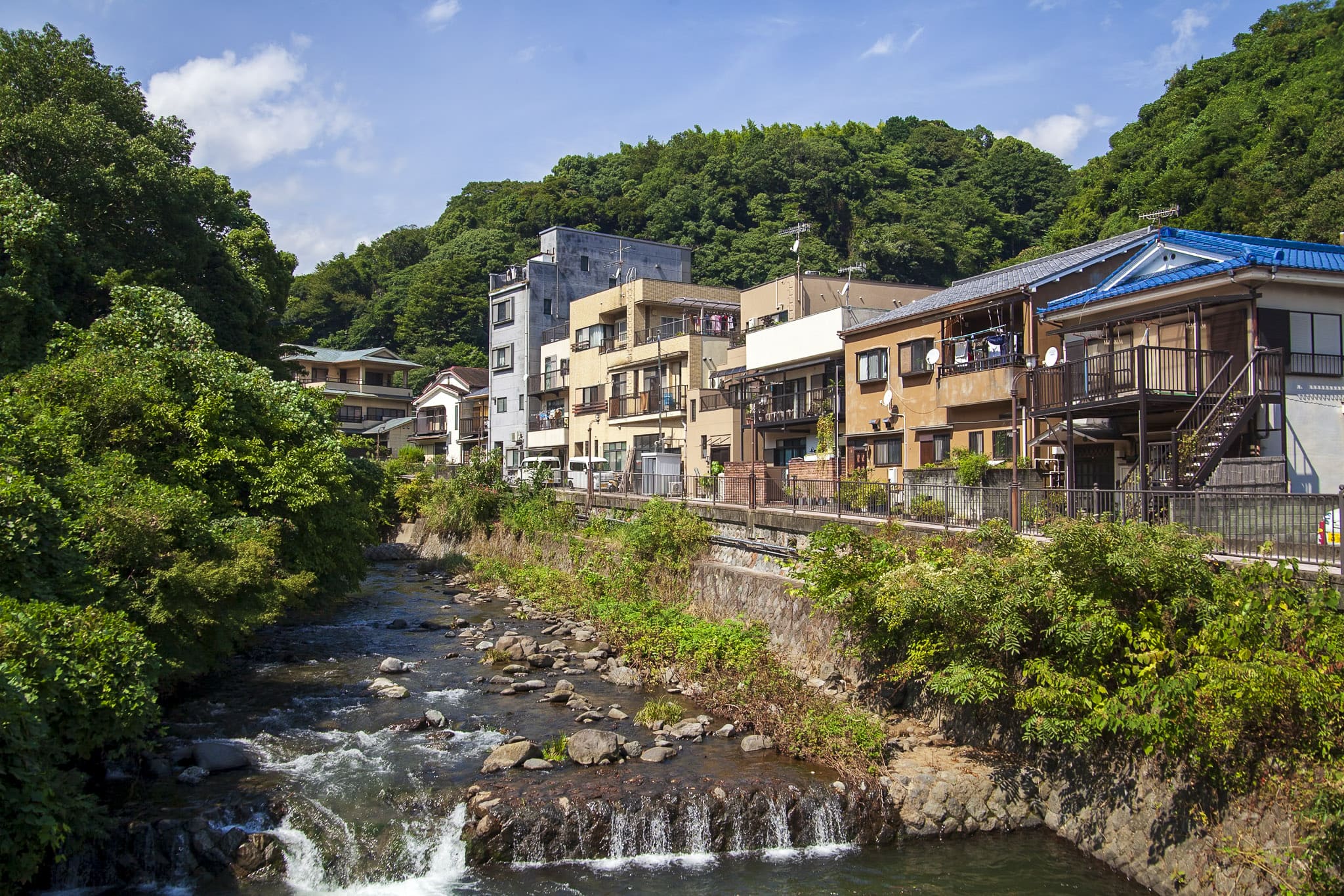
Not every onsen getaway needs a full weekend. Yugawara Onsen (湯河原温泉) is tucked into the mountains at the southwestern edge of Kanagawa Prefecture, and its convenient location allows for an easy and rewarding escape, bringing you close enough for a spontaneous day trip yet feeling pleasantly removed from Tokyo’s pace once you arrive. You see, Part of Yugawara’s appeal lies in what it is not. Unlike nearby Hakone or Atami, it has largely escaped mass tourism. There are no crowded shopping streets or queues snaking around the block. Instead, you will find a peaceful hot spring town spread along the Chitose River, where traditional ryokan, tree-lined roads, and gently rising steam create the right atmosphere that makes us instinctively slow our pace.
Surprisingly, Yugawara has been welcoming visitors for well over a millennium. For centuries, its alkaline waters, often associated with skin-softening effects, have been praised for their soothing qualities, earning the nickname Yakushi no Yu, or “healing waters.” During the Edo period, it ranked among Japan’s most highly regarded hot spring resorts, and by the Meiji era, it had become a favored retreat for writers, artists, and political figures seeking inspiration, or simply a good soak and some peace and quiet. Yugawara’s waters are known for their soft, gentle texture.
In fact, its hot springs were already celebrated in the eighth-century Manyoshu, Japan’s oldest anthology of poetry, making it one of the oldest and most historically significant onsen towns in the Kanto region. Furthermore, it is the only Kanto hot spring mentioned in that classic collection, a rather impressive literary credential for a town best known today for helping people do absolutely nothing.
How to Get to Yugawara from Tokyo by Public Transportation
I decided to visit Yugawara by car just for personal convenience, but that doesn’t mean this onsen town has no easy options to reach by train. If you would rather skip the drive, there are simple and efficient alternatives:
Direct Train from Tokyo
The most convenient option is the JR Tokaido Main Line. Direct trains from Tokyo Station to Yugawara Station take around 90 minutes, with no transfers required (around ¥1,800). Departures are frequent throughout the day, making it an excellent choice for a spontaneous getaway. And if you are starting from Shinagawa, Yokohama, or other points along the Tokaido corridor, the journey is even shorter.
Faster Route by Shinkansen
If speed is your priority, take the Tokaido Shinkansen from Tokyo to either Odawara or Atami (around ¥3,000–¥4,000 depending on route). From there, transfer to a local JR Tokaido Line train for the short ride to Yugawara Station. This option can shave some time off the journey, but it will be pricier.
From Yugawara Station to the Onsen Area
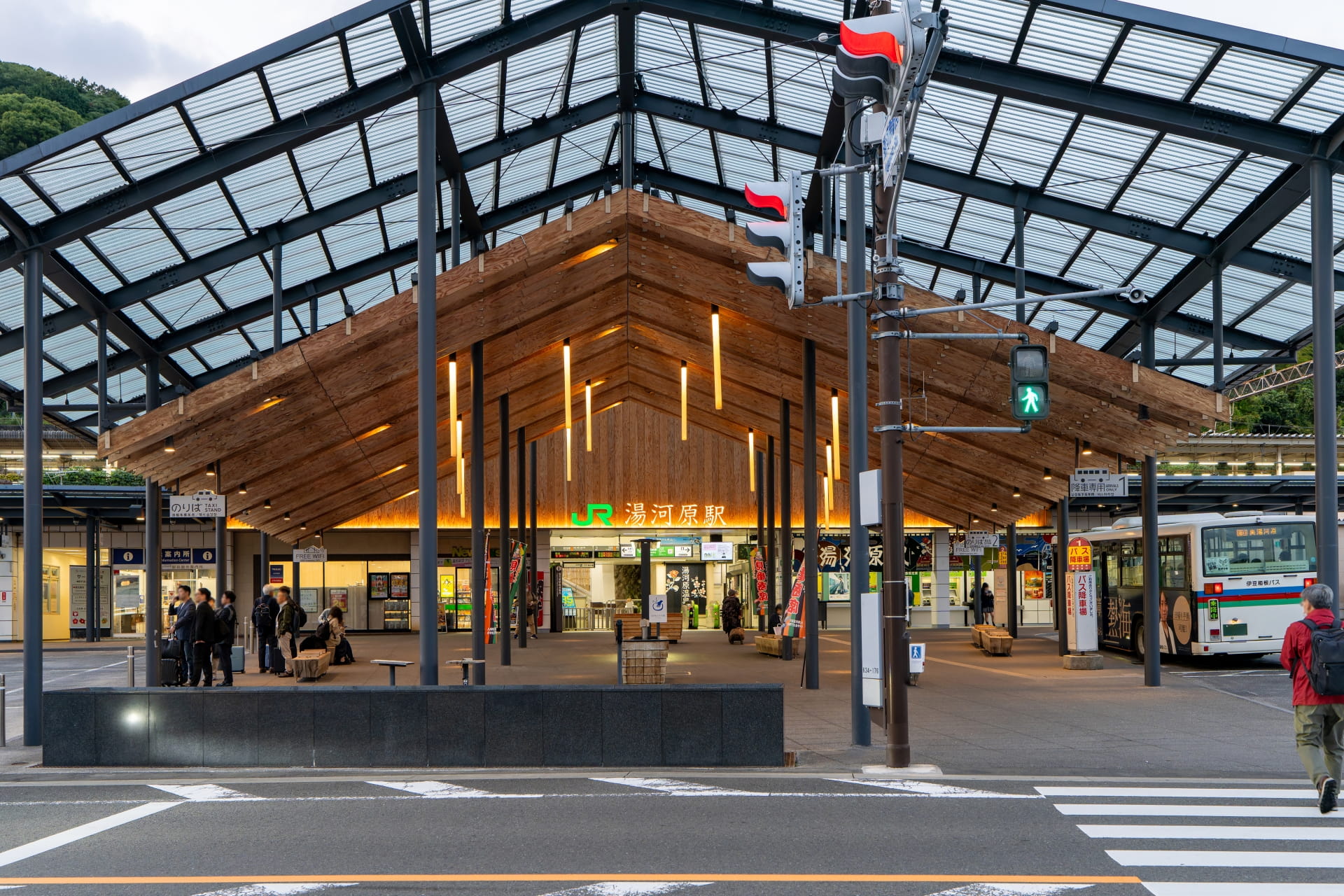
Once you arrive at Yugawara Station, the main onsen district is about 10 to 15 minutes away by bus or taxi. Hakone Tozan buses run regularly from the station to the hot spring area, including stops near Manyo Park, Kogome no Yu, and Fudo Falls.
Taxis are readily available outside the station and can be a worthwhile option if you are short on time or prefer a more direct transfer.
Arrival in Yugawara and Lunch at a Local Favorite


By the time we arrived, it was around noon. The town didn’t take long to start working its magic, inviting us to settle into its relaxed rhythm. Given the timing, the first order of business is obvious: lunch.
Our first stop was Echigoya (越後屋), a long-running local soba restaurant along one of Yugawara’s quiet streets. With its traditional exterior and unpretentious atmosphere, it was exactly the sort of place we hoped to find in a historic hot spring town: welcoming, comfortable, and entirely focused on doing one thing very well.
Yugawara is known for its excellent soba, thanks in part to the area’s abundant spring water. Good water is essential for making great noodles, and this hot spring town has long been something of a stronghold for handcrafted soba. Or so we heard.
At Echigoya, the appeal lies in that classic soba-shop simplicity. Freshly made buckwheat noodles are the star, served with a well-balanced dipping sauce that lets their flavor and texture shine. Popular choices include chilled zaru soba in warmer months, though heartier options such as duck seiro or curry soba are equally tempting. I was a little hungry as I didn’t have a chance to eat anything before leaving in the morning, so I went for the former, which was as delicious as expected.
 Access Access |
7-min bus from Yugawara Station |
|---|---|
 Business Hours Business Hours |
11 AM–2 PM |
 Closed Closed |
Wednesday |
Discovering Yugawara’s Nostalgic Onsen Streets
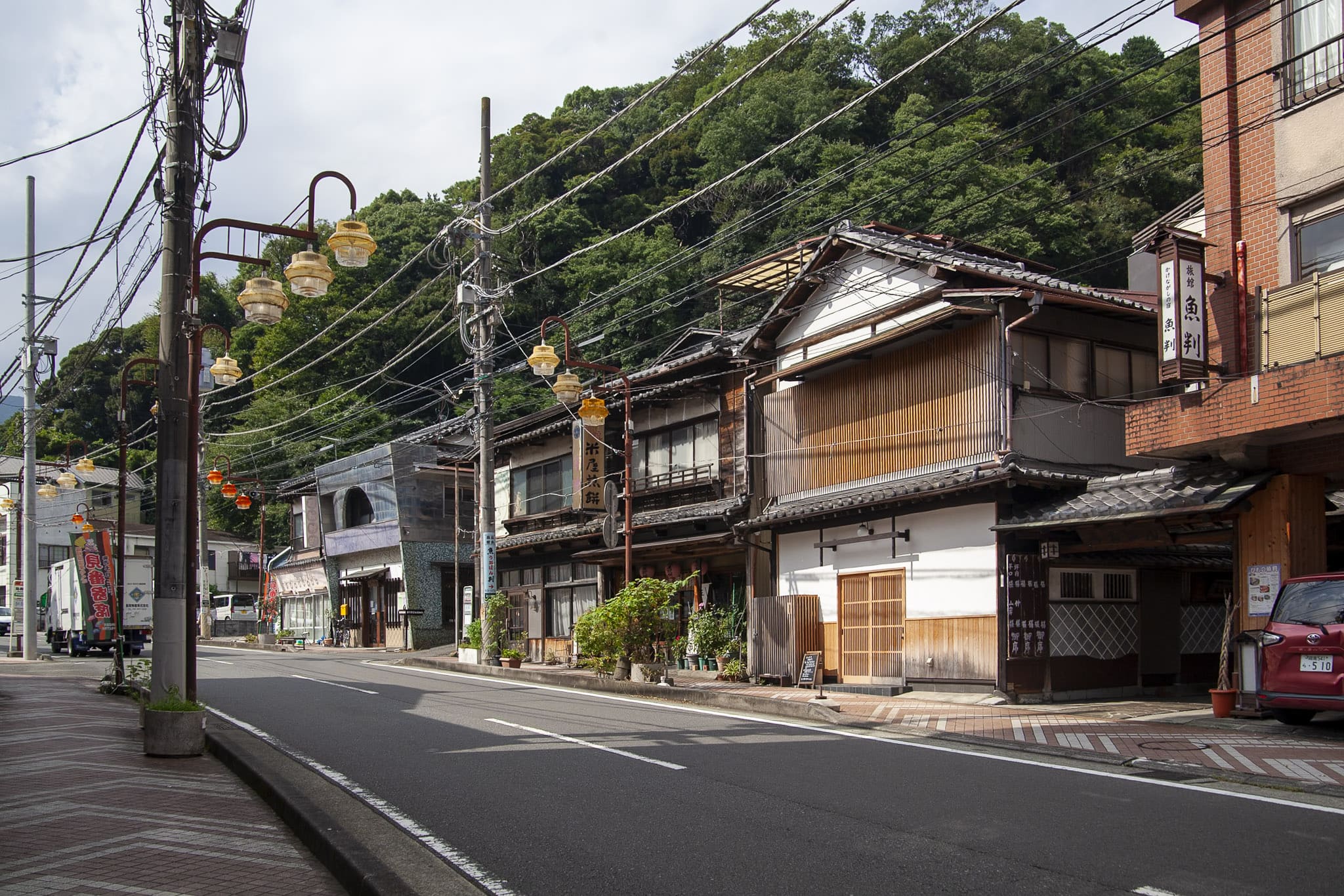
After lunch, Yugawara is best explored on foot, wandering through its quiet riverside paths, traditional ryokan, and admiring the small details. The old onsen district still retains much of its historic character, so a simple afternoon stroll can be quite enjoyable. It’s easy to see why writers such as Ryunosuke Akutagawa and Jun’ichiro Tanizaki found inspiration here.
A Riverside Walk Along the Chitose River


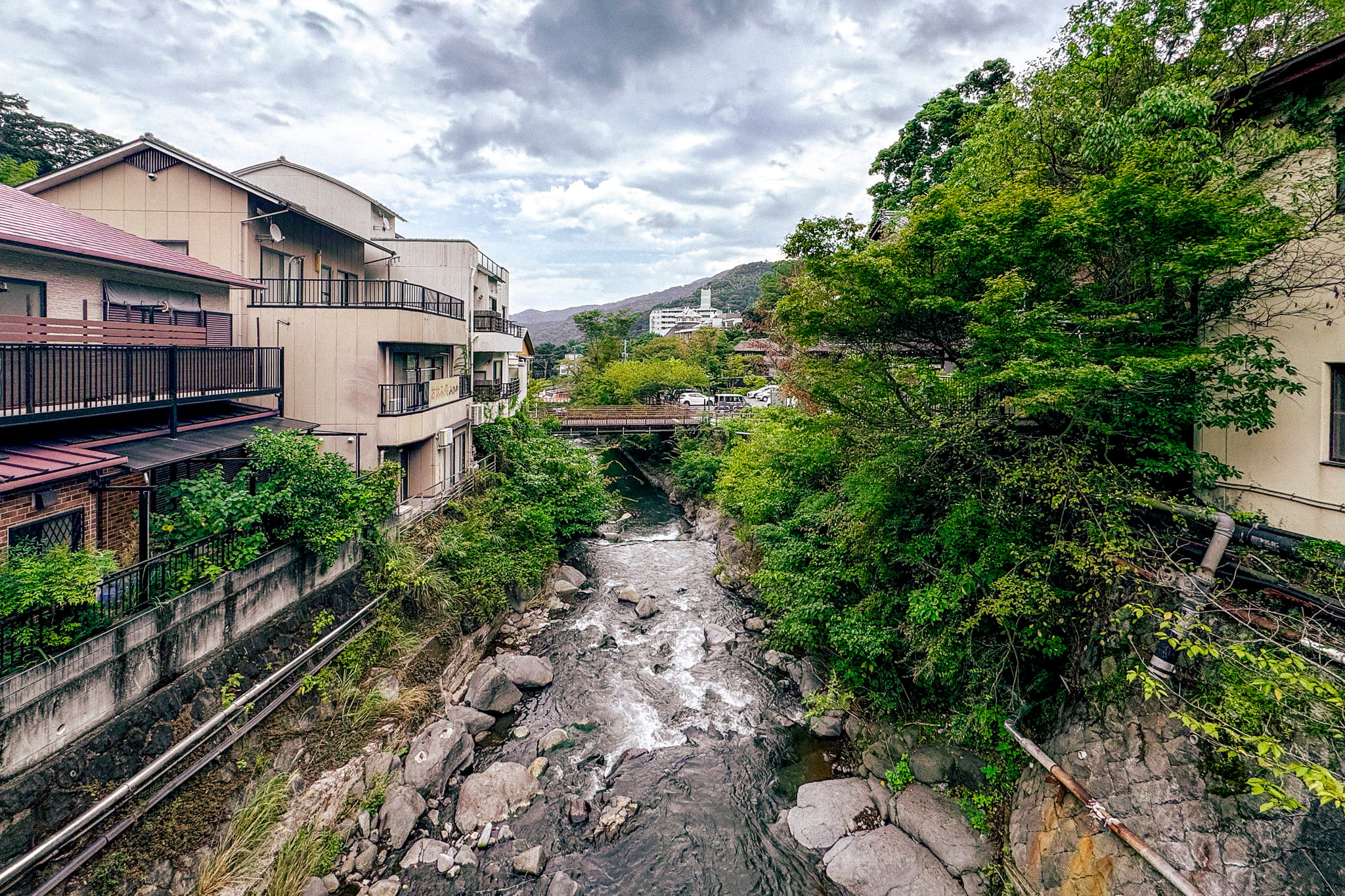
The Chitose River (千歳川) runs through the heart of Yugawara Onsen, shaping both the town’s landscape and its atmosphere. Flowing down from the Hakone mountains before reaching Sagami Bay, it also marks part of the border between Kanagawa and Shizuoka Prefectures. Along its banks, Yugawara’s hot spring district stretches for several kilometers, lined with traditional inns, stone embankments, and leafy walkways.
Walking beside the river is a small and simple pleasure. The gentle sound of flowing water followed us almost everywhere, while bridges crossing the river offered changing views of the surrounding hills, historic ryokan, and the occasional plume of steam rising from hidden hot spring pipes. I imagined how pretty it must look in spring, with all the cherry blossoms framing the riverbanks, but I was just as glad to enjoy the summer sights, when the greenery feels especially lush and cooling.
The Iconic “Ume” Streetlights of Yugawara


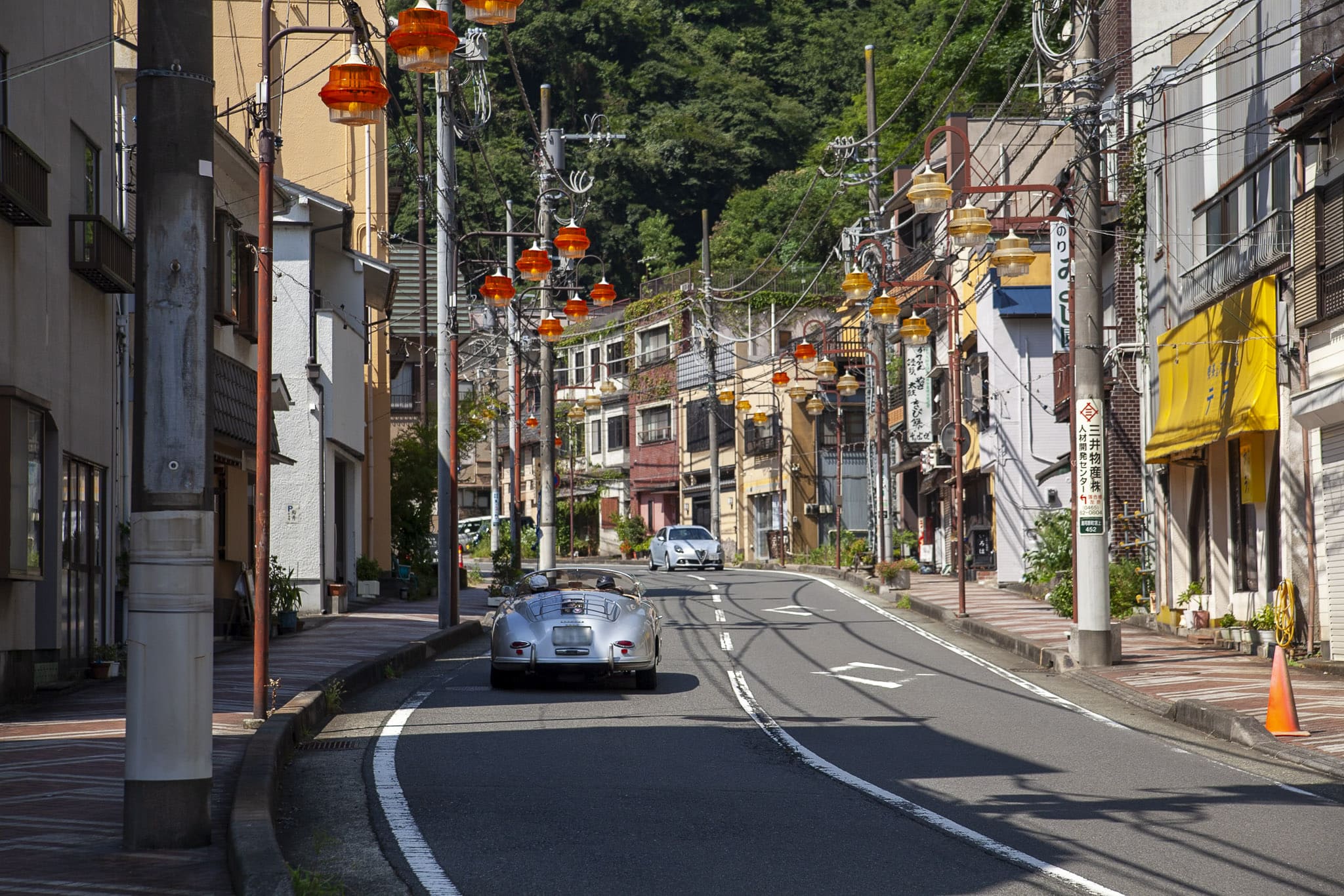
As you stroll through the onsen district, keep an eye on the streetlights. Along Kanagawa Prefectural Route 75, which winds through Yugawara’s hot spring area, you will spot a series of distinctive plum blossom-shaped lamps that have become one of the town’s most charming visual signatures. We felt instinctively drawn to these cute and whimsical lamps, and a bit of research after I got home made it clear why.
Known as the Ume Series Type 3-O, these retro streetlights were manufactured by the Japanese lighting company Sanko with a rounded, flower-inspired design and warm amber glow that is unmistakably Showa in character. They might easily be overlooked at first, but once noticed, they seem to define the entire streetscape.
The plum blossom motif is especially fitting. Yugawara is closely associated with ume, most famously through the nearby Yugawara Plum Grove at Makuyama Park (幕山公園), where thousands of plum trees bloom each winter. Incorporating this symbol into the town’s infrastructure gives the onsen district a strong sense of local identity while reinforcing its nostalgic atmosphere. We didn’t stop by Makuyama, but I strongly encourage you to do so if you have the chance.
A Short Excursion to Fudo Falls, Yugawara’s Most Famous Waterfall
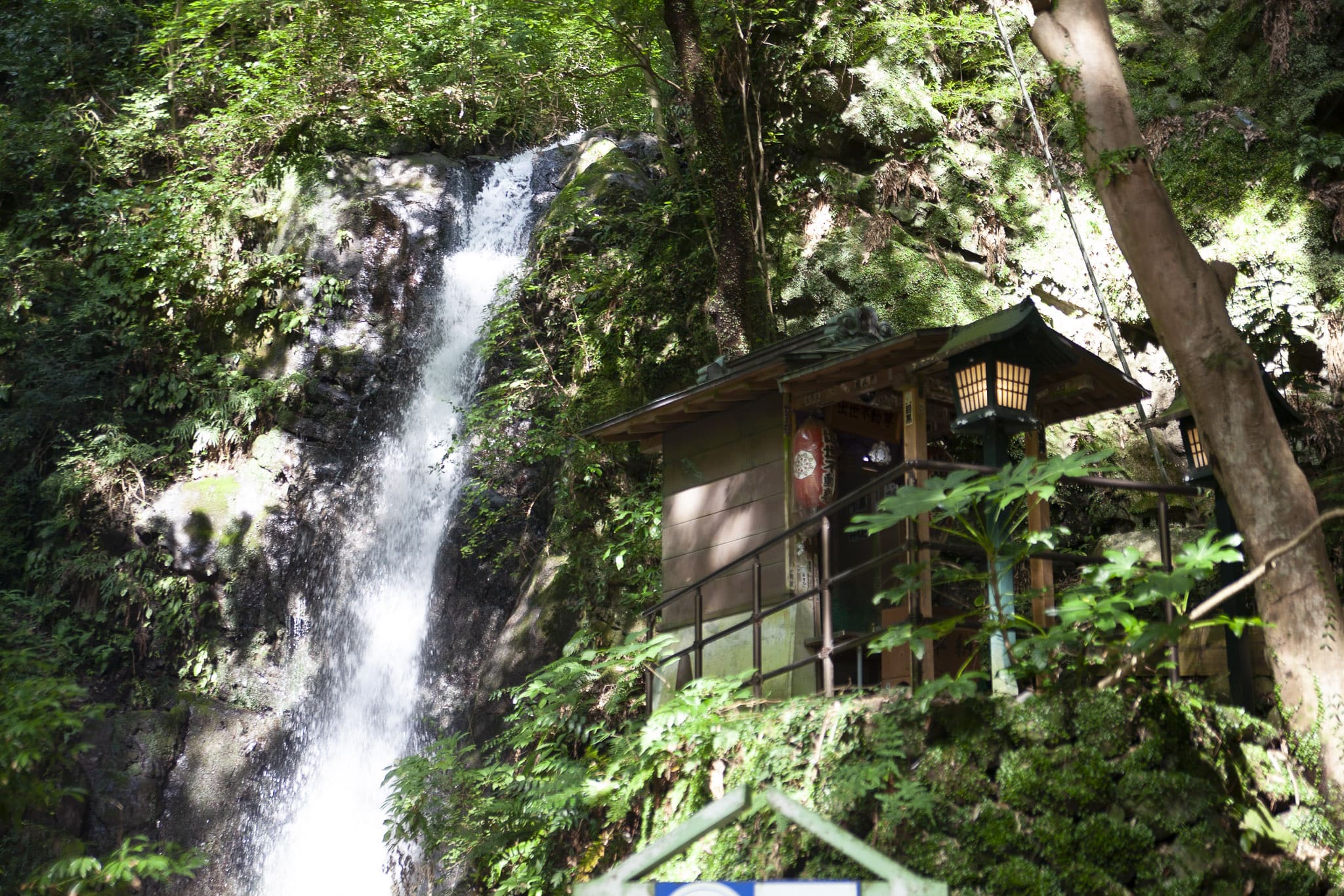
From Yugawara’s onsen district, Fudo Falls is only a short drive, or a pleasant uphill walk if you are feeling energetic, to one of the area’s most beloved natural landmarks inside a forested valley at the upper end of the hot spring town. The lush greenery in summer offers enough shade for a refreshing change of scenery, with the bonus of a small glimpse into the local spiritual traditions.
At around 15 meters high, Fudo Falls (不動滝) have long been regarded as one of Yugawara’s signature sights. Water tumbles over a moss-covered rock face into a shallow basin below, framed by dense greenery that feels especially invigorating in the warmer months. Historically, they served as a site for takigyo, the ascetic practice of meditating beneath cascading water due to their deep spiritual significance. This is not the case anymore nowadays, but on a summer afternoon, the cool mist alone is worth the trip.
A small viewing area at the base of the falls allows visitors to admire them up close. The approach is short and easy, making this an accessible stop for travelers of all ages.
| Access |
13-min bus from Yugawara Station |
|---|---|
| Business Hours |
8:30 AM–5:15 PM (weekdays), 10 AM–4 PM (weekends) |
 Official Website Official Website |
https://kanagawa-yugawara.com/fudotaki/ |
Sacred Guardians Beside the Falls


Waterfalls have traditionally been associated with purification in Japanese religious practice, particularly within Shugendo and esoteric Buddhism. In this case, Fudo Falls is dedicated to Fudo Myoo, the fierce Buddhist guardian deity revered for protection, strength, and the removal of obstacles.
Adjacent to the falls stands Migawari Fudoson (己我和利不動尊), whose name refers to the idea of taking on misfortune in place of worshippers. Visitors often stop here to pray for protection from hardship, illness, or bad luck. Nearby is Shusse Daikokuson (出世大黒尊), a deity associated with prosperity, business success, and advancement in life. Together, they make this small sacred area an important place for both spiritual reflection and everyday hopes such as health, fortune, and perhaps a little career luck.
A Summer Treat at Fudo Falls Teahouse: Kakigori with a View


Just beside the approach to the waterfall sits Fudotaki Chaya (不動滝茶屋 ), a long-running teahouse that has been welcoming visitors for decades. The teahouse has a wonderfully old-fashioned atmosphere, with simple open-air seating, a small selection of local souvenirs, and a menu built around traditional refreshments.
During summer, kakigori is an easy choice. There is something especially satisfying about enjoying a bowl of finely shaved ice after walking up through Yugawara’s warm, humid greenery. With the sound of the waterfall nearby and cool mountain air moving through the valley, you could even say this is the sort of refreshment Japan has been perfecting for generations.
Fudodaki Chaya is also known for its homemade amazake, oshiruko (sweet red bean soup), tokoroten, and miso dengaku. If you prefer something warm or a little more substantial, light noodle dishes are also available. Also, there’s a small footbath fed directly by Yugawara’s hot spring water, which you can enjoy for a small additional fee. The water here is sourced straight from the spring, then naturally cooled rather than diluted, allowing you to experience Yugawara’s mineral-rich waters in their pure form.
| Access |
13-min bus from Yugawara Station |
|---|---|
| Business Hours |
10 AM–4:30 PM |
| Official Website |
https://tabelog.com/en/kanagawa/A1410/A141002/14019513/ |
Ending the Day with a Soak at Kogome no Yu
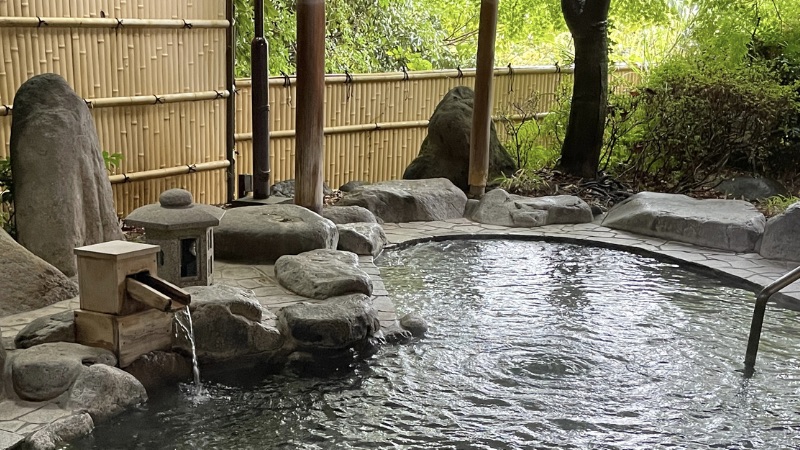
After an afternoon spent exploring Yugawara’s riverside streets and forested hills, there is only one proper way for us to end the day: with a long, restorative soak in the town’s famed hot spring waters. And for day-trippers, there is no better place than Kogome no Yu (こごめの湯).
Operated by Yugawara Town, this popular day-use onsen sits in the heart of the hot spring district, surrounded by greenery and just a short distance from Manyo Park and the upper onsen area. It is convenient, well-maintained, and designed precisely for visitors who want to enjoy Yugawara’s healing waters without an overnight stay. There is no need to book ahead; simply arrive, pay the admission fee, and enjoy.
The facility itself offers both indoor and open-air baths for men and women. The outdoor baths are especially appealing, allowing you to soak while surrounded by seasonal greenery. It is a simple pleasure, but a highly effective one. After a day of walking, few things felt so rewarding as the combination of warm mineral water, fresh mountain air, and the soft rustle of the surrounding leaves.
A Name Rooted in Yugawara’s Onsen Heritage
Kogome no Yu takes its name from one of the oldest recorded names for Yugawara Onsen. In medieval times, these springs were known as Kogome no Yu or Kogomi no Yu, a name that appears in historical records dating back centuries, such as the aforementioned Manyoshu, Japan’s oldest surviving anthology of poetry.
During the Edo period, Yugawara’s spring water was even transported to Edo for the shogunate, a remarkable journey that speaks volumes about its reputation as a place of healing, particularly for recovery from wounds, fatigue, and general weariness.
| Access |
12-min bus from Yugawara Station |
|---|---|
| Business Hours |
9 AM–9 PM |
 Price Price |
1,100 yen |
| Official Website |
http://kogomenoyu.com/hpgen/HPB/entries/9.html |
If You Have More Time: Explore Manyo Park
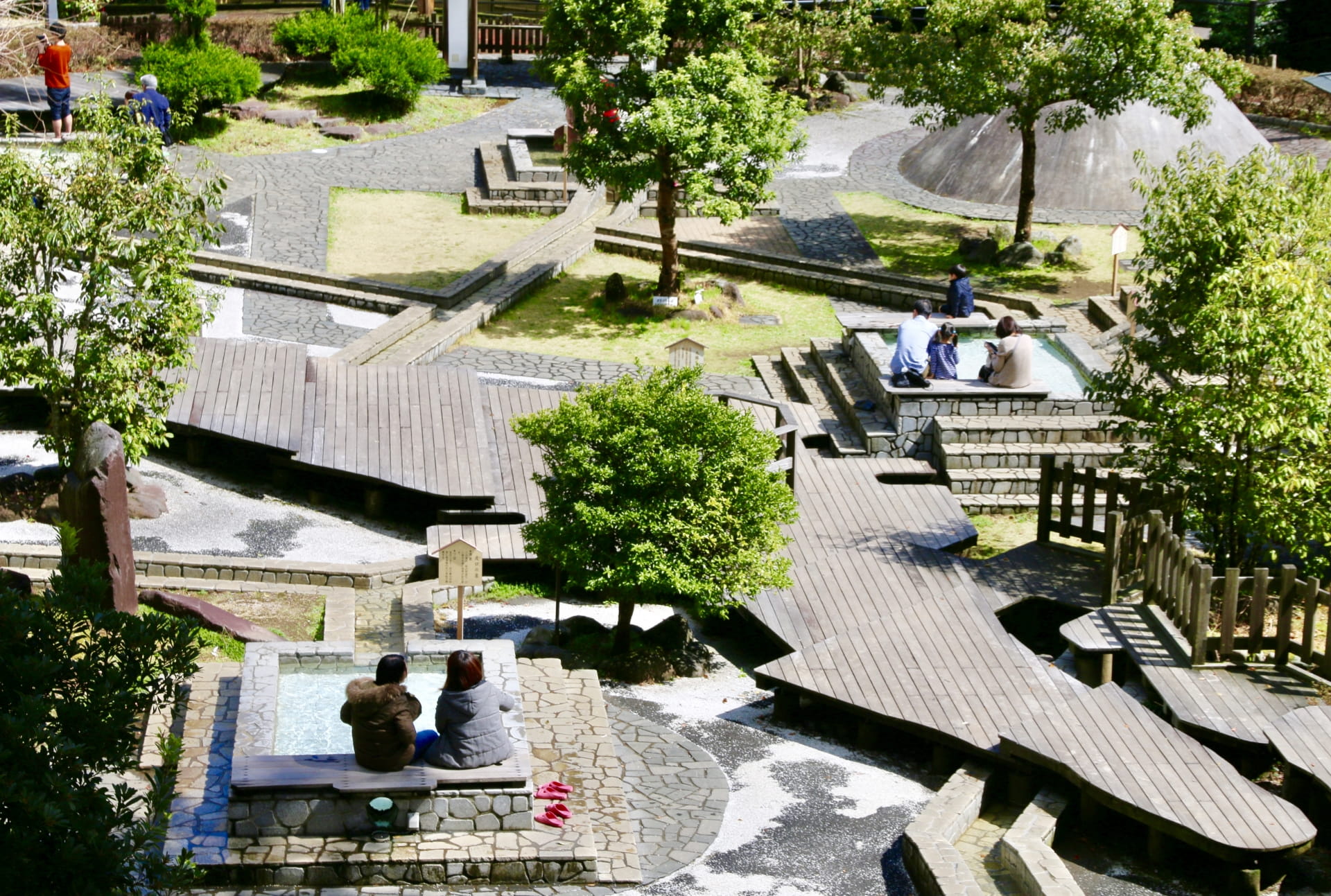
We didn’t have time to visit it but if your schedule allows for an extra stop, or better yet, if you decide to turn your day trip into a more leisurely outing, Manyo Park (万葉公園) should be a worthwhile pick. It also derives its name from the famous anthology, bringing together literature, nature, and hot spring culture in a single place across roughly 20,000 square meters. A stone monument in the park commemorates the famous poem, linking modern visitors to a literary tradition that stretches back more than 1,200 years.
The park itself was formed from two earlier green spaces, Gongenyama Park and Okura Park, and officially became Manyo Park in 1951. Today, it is recognized as one of Japan’s “100 Best Historical Parks,” a designation that reflects both its cultural significance and its role as one of Yugawara’s defining landmarks. Walking paths wind alongside a mountain stream, past waterfalls, stone bridges, and an impressive collection of plants referenced in classical Japanese poetry. The setting changes beautifully with the seasons, from fresh greenery in spring to vivid autumn foliage later in the year.
| Access |
13-min bus from Yugawara Station |
|---|---|
| Business Hours |
24h |
| Price |
Free |
| Official Website |
https://www.town.yugawara.kanagawa.jp/kankou/leisure/park.html |
Tips for Visiting Yugawara Onsen


A few practical details to ensure a smoother experience:
Getting There and Around
Yugawara is about 2 hours from central Tokyo by car, typically via the Tomei Expressway and coastal routes toward Odawara and Atami. Driving is by far the most convenient option for a day trip, especially if you plan to visit places like Fudo Falls, which are slightly removed from the main station area.
For those using public transport, JR Tokaido Line trains run directly from Tokyo to Yugawara Station in roughly 90 minutes. From there, buses and taxis connect to the onsen district, though they run less frequently than in larger destinations like Hakone.
Best Time to Visit
Yugawara is a year-round destination, but each season offers a slightly different experience.
- Late winter (February–March): Plum blossoms at nearby Makuyama Park are a major draw, with thousands of trees in bloom.
- Spring: Fresh greenery and mild temperatures make it ideal for walking along the Chitose River.
- Summer: Lush landscapes and cooler spots like Fudo Falls provide relief from the heat, especially when paired with kakigori.
- Autumn: The surrounding mountains turn vibrant shades of red and orange, particularly around Manyo Park and Okuyugawara.
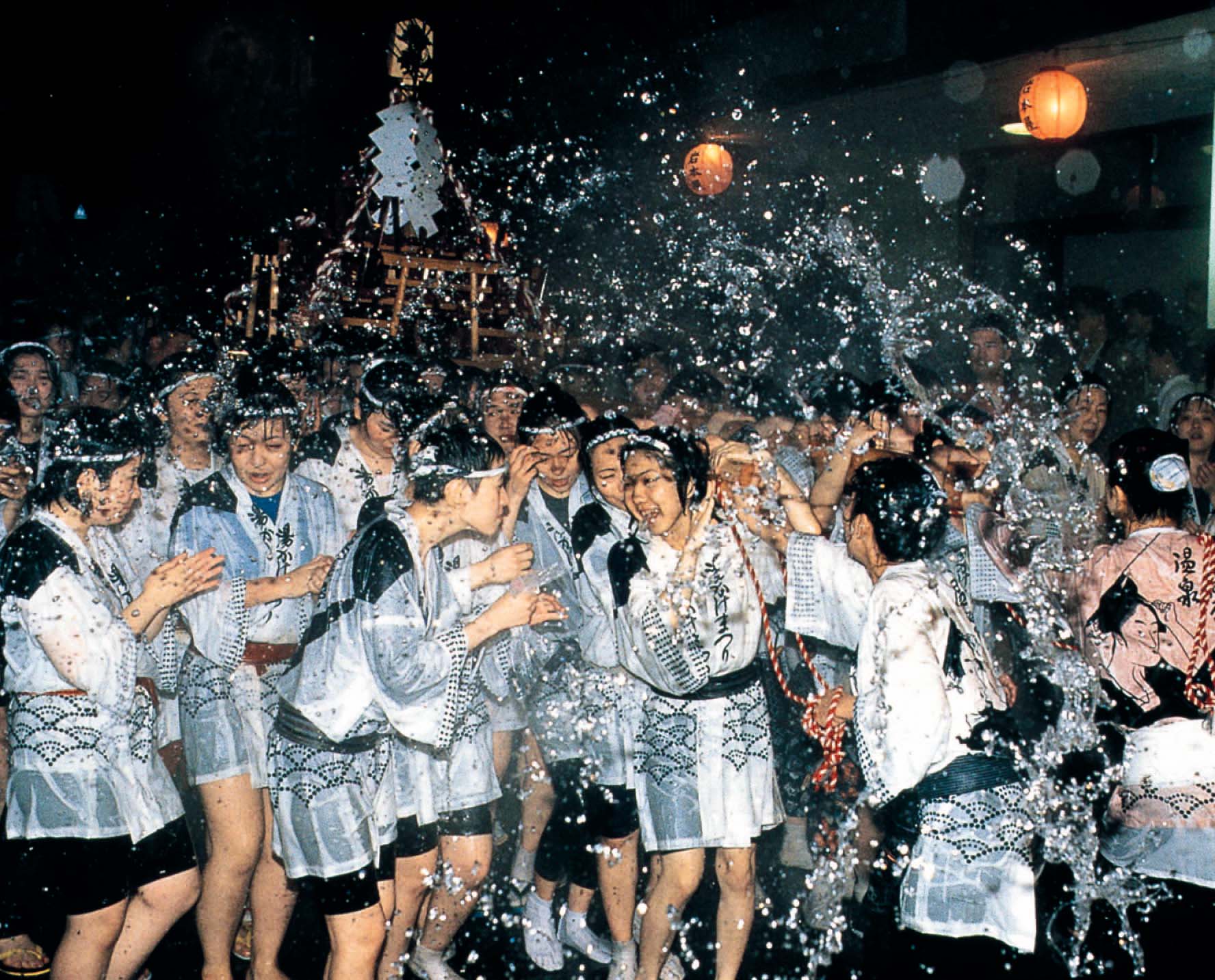
Also worth considering, a particularly unique time to visit is late May, during the annual Yukake Matsuri (湯かけまつり). Held on the fourth Saturday of May, this lively festival features a portable shrine (mikoshi) paraded through Yugawara’s onsen district while locals and visitors splash it—and each other—with hot spring water. The tradition dates back to the Edo period and is said to have originated as a way to cool down shrine bearers while symbolically sharing the town’s famous waters. Today, it remains one of Yugawara’s most distinctive events and a compelling reason to plan a visit around this time. See more info on Yugawara’s official website.
Onsen Etiquette Basics
If this is your first time visiting a Japanese hot spring, a few basic rules go a long way:
- Wash thoroughly before entering the bath.
- No swimsuits. Onsen are enjoyed nude, separated by gender.
- Keep towels out of the water.
- Tattoos may require covering, depending on the facility.
What to Bring
- A small towel (though rentals are usually available at onsen facilities)
- Comfortable walking shoes for riverside paths and light hikes
- Cash, as smaller establishments may not accept cards
- A change of clothes for after your onsen visit
Parking and Accessibility
Compared with more famous onsen towns, parking in Yugawara is relatively easy. Most major spots, including Fudo Falls and Kogome no Yu, have dedicated parking areas. Roads are generally straightforward to navigate, though some sections near the upper onsen area can be narrow.
FAQs About Yugawara Onsen
Is Yugawara worth visiting as a day trip from Tokyo?
Absolutely. Yugawara is one of the easiest onsen escapes from Tokyo, yet it feels pleasantly removed from the capital. In around two hours by car—or about 90 minutes by train—you can trade crowded streets for riverside walks, historic hot springs, and a slower pace. Unlike busier resort towns, Yugawara remains relatively low-key, which is precisely part of its appeal.
How long does it take to drive from Tokyo to Yugawara?
From central Tokyo, the drive typically takes around two hours, depending on traffic. The most common route follows the Tomei Expressway toward Odawara before continuing along local roads to Yugawara. Weekend mornings and holiday periods can add extra time, so an early start is highly recommended.
Is Yugawara Easy to Explore Without a Car?
Absolutely. If your plans focus on the central onsen district, Chitose River, Manyo Park, and nearby attractions, public transportation works perfectly well. Many of Yugawara’s highlights are clustered within the onsen area, and local buses connect the main sights with ease. A car does provide greater flexibility, especially for exploring at your own pace or venturing farther into the surrounding hills. Still, for a relaxed day trip centered on hot springs, scenic walks, and good food, the train is an excellent option.
What is Yugawara Onsen known for?
Yugawara Onsen is known for its long history as a hot spring retreat, dating back more than 1,300 years. It has been celebrated since ancient times and even appears in the Manyoshu, Japan’s oldest poetry anthology. Today, it is prized for its gentle alkaline waters, traditional ryokan, and relaxed atmosphere. The town is also famous for its literary connections, having attracted writers such as Natsume Soseki, Ryunosuke Akutagawa, and Yasunari Kawabata.
Can you visit Kogome no Yu without staying overnight?
Yes. Kogome no Yu is a public day-use hot spring facility, making it ideal for visitors who are not staying overnight. You can enjoy its indoor and outdoor baths surrounded by seasonal scenery, then head back to Tokyo the same day. It is one of the best ways to experience Yugawara’s onsen culture on a short visit.
What are the best things to do in Yugawara in one day?
A well-planned day in Yugawara can include several of the town’s highlights. Start with lunch at a local soba restaurant like Echigoya, stroll along the Chitose River, and explore the nostalgic onsen streets. Continue to Fudo Falls for a short nature excursion, stop for kakigori at Fudodaki Chaya, and finish with a restorative soak at Kogome no Yu. If time allows, Manyo Park is also worth adding to the itinerary.
When is the best time to visit Yugawara Onsen?
Yugawara is enjoyable year-round, but each season offers something different. Late winter is especially popular for plum blossoms at Makuyama Park. Spring brings fresh greenery, summer is perfect for cool escapes to Fudo Falls and seasonal treats like kakigori, while autumn colors transform the surrounding hills. Winter, meanwhile, is ideal for the classic experience of soaking in a hot spring on a crisp day.
For more onsen-related information, check these articles too!

Written by
Photographer, journalist, and avid urban cyclist, making sense of Japan since 2017. I was born in Caracas and lived for 14 years in Barcelona before moving to Tokyo. Currently working towards my goal of visiting every prefecture in Japan, I hope to share with readers the everlasting joy of discovery and the neverending urge to keep exploring.
- +0 0
-
-