Tokyo to Sendai Shinkansen: Strategic Guide for Smart Travelers
Master the Tohoku Shinkansen: train types, booking strategies, and navigating your way to the City of Trees.
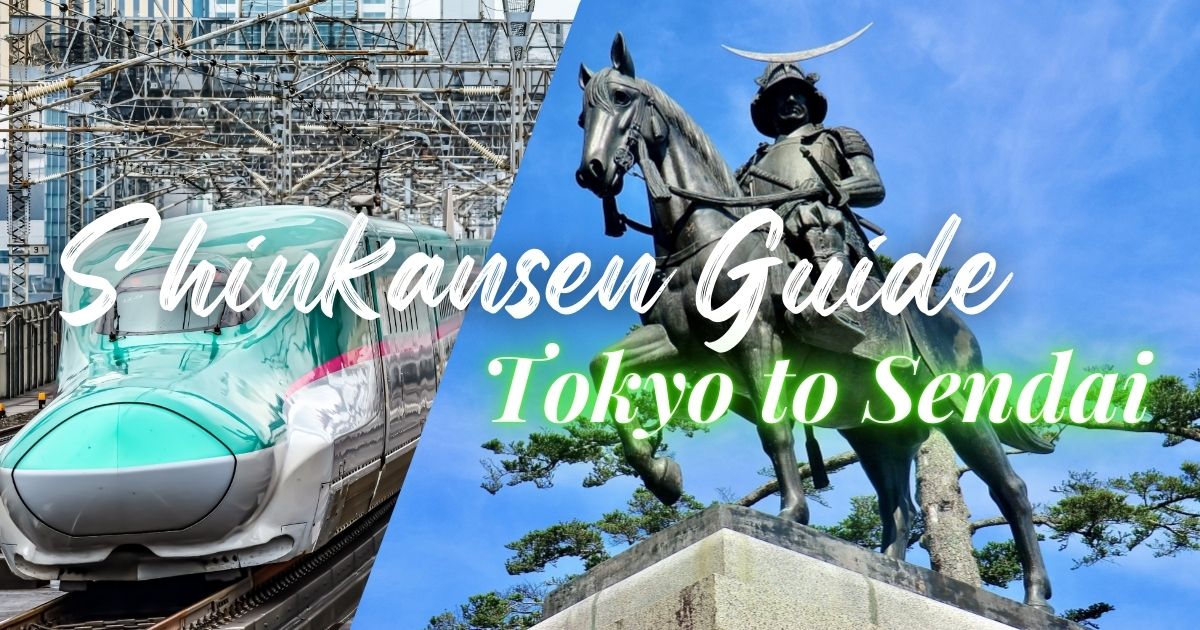

- +0 0
-

-


Traveling from Tokyo to Sendai is one of the most seamless journeys you can make in Japan. While Tokyo is the heart of the country’s modern energy, Sendai—the “City of Trees”—offers a sophisticated blend of samurai history, lush greenery, and incredible local cuisine.
The best way to make this trip is undoubtedly the Shinkansen (Bullet Train). In just about 90 minutes, you can leave the skyscrapers of Tokyo behind and arrive in the historic capital of the Tohoku region. This guide provides everything you need to know about taking the Shinkansen to Sendai, from choosing the right train to the most efficient way to book your tickets.
Key takeaways for travelers:
- Speed: The “Hayabusa” is the fastest option, reaching Sendai in roughly 1.5 hours.
- Booking: While official sites exist, using a dedicated service like Japan Bullet Train is the most stress-free way to secure seats in English.
- Station Strategy: Always use the Yaesu side of Tokyo Station for the Tohoku Shinkansen to avoid getting lost.
Tokyo to Sendai Shinkansen Quick Facts
If you are looking for a quick summary of the journey from Tokyo to Sendai, here are the essential details regarding travel time and ticket pricing.
The Hayabusa is the fastest Shinkansen option, taking approximately 90–100 minutes from Tokyo to Sendai. The Yamabiko is a slightly slower but more frequent alternative, with a travel time of around 120–150 minutes.
The standard one-way fare starts from ¥11,410, with final pricing varying depending on seat class (Ordinary, Green, or Gran Class). For speed and comfort, booking a reserved seat on the Hayabusa is recommended, especially during busy travel periods.
Tokyo to Sendai: Shinkansen Overview
| Feature | Details |
|---|---|
| Travel Time | 90–100 minutes (Hayabusa) or 120–150 minutes (Yamabiko) |
| One-way Fare | From ¥11,410 (ordinary reserved seat) |
| First Train | 06:04 (from Tokyo Station) |
| Last Train | 21:44 (from Tokyo Station) |
| Frequency | Approximately 3–4 trains per hour |
Train Types for the Shinkansen from Tokyo to Sendai
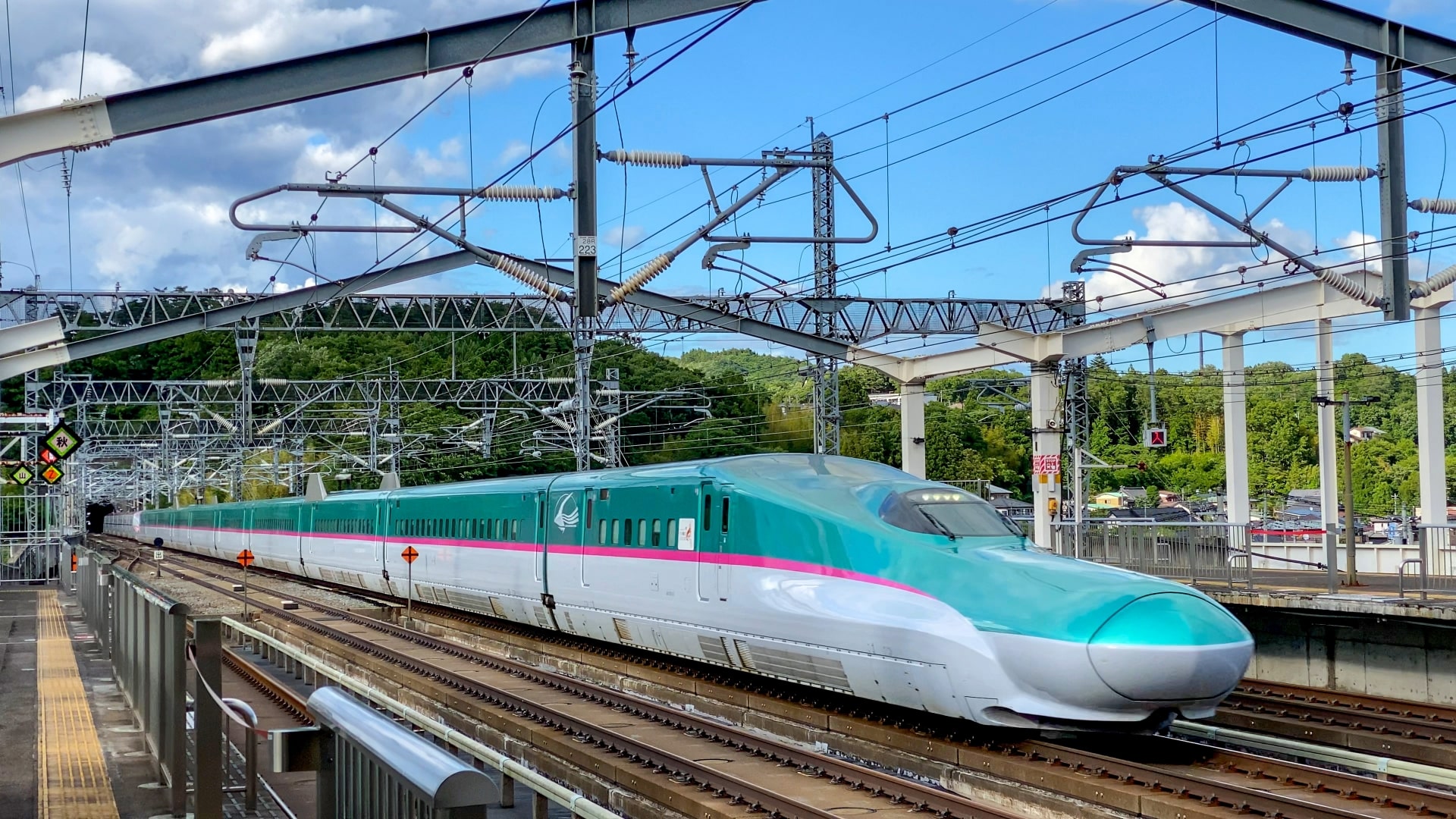
When traveling on the Tohoku Shinkansen line, you will see three different train names on the departure boards. Choosing the right one is crucial for your schedule, and there is one specific train you must be careful to avoid.
Shinkansen Train Types Comparison
| Train Name | Duration (Approx.) | Seat Types | Best For |
|---|---|---|---|
| Hayabusa | 90 – 100 minutes | Reserved seats only | Speed and efficiency |
| Yamabiko | 120 – 150 minutes | Reserved and non-reserved | Flexibility and budget-conscious travel |
| Nasuno | N/A | Reserved and non-reserved | Avoid for Sendai |
1. Hayabusa
The Hayabusa is the fastest and most popular train for those traveling from Tokyo to Sendai. It travels at a top speed of 320 km/h (199 mph), making it one of the fastest trains in the world.
- Stops: Very few (usually only Ueno and Omiya before arriving in Sendai).
- Seating: All seats are reserved. There are no non-reserved cars on the Hayabusa, so you must secure a seat assignment before you board.
2. Yamabiko
The Yamabiko is the mid-speed option. It is a great choice if the Hayabusa is fully booked or if you prefer the flexibility of a non-reserved seat.
- Stops: It stops more frequently than the Hayabusa, meaning the journey takes a bit longer.
- Seating: Offers both reserved and non-reserved cars, making it easier for last-minute travelers.
3. Important Precaution: The Nasuno
While the Nasuno appears on the same Tohoku Shinkansen departure boards at Tokyo Station, it does not go to Sendai.
The Warning: The Nasuno is a local commuter train that stops at every station and typically terminates at Nasushiobara or Koriyama. If you board a Nasuno train, you will be forced to get off before reaching your destination and wait for a different train. Always double-check the destination on the display before boarding.
4. The Future: The E10 Series
By 2030, the Shinkansen to Sendai will see the introduction of the E10 Series. This next-generation train is currently being developed based on the “ALFA-X” test platform. It is designed for even higher speeds and increased passenger comfort, featuring a sleek design inspired by Japan’s natural beauty.
While the current green E5 series (Hayabusa) is already world-class, the E10 will offer even more privacy and advanced “Train Desk” features for digital nomads.
*A Pro Tip From Your Japan Travel Expert
If you are traveling during peak hours or holidays, the Hayabusa sells out quickly. Since it has no non-reserved seating, you could find yourself stranded if you don’t book ahead. Always try to secure your Hayabusa seat at least 2–3 days in advance.
Seat Classes on the Shinkansen from Tokyo to Sendai
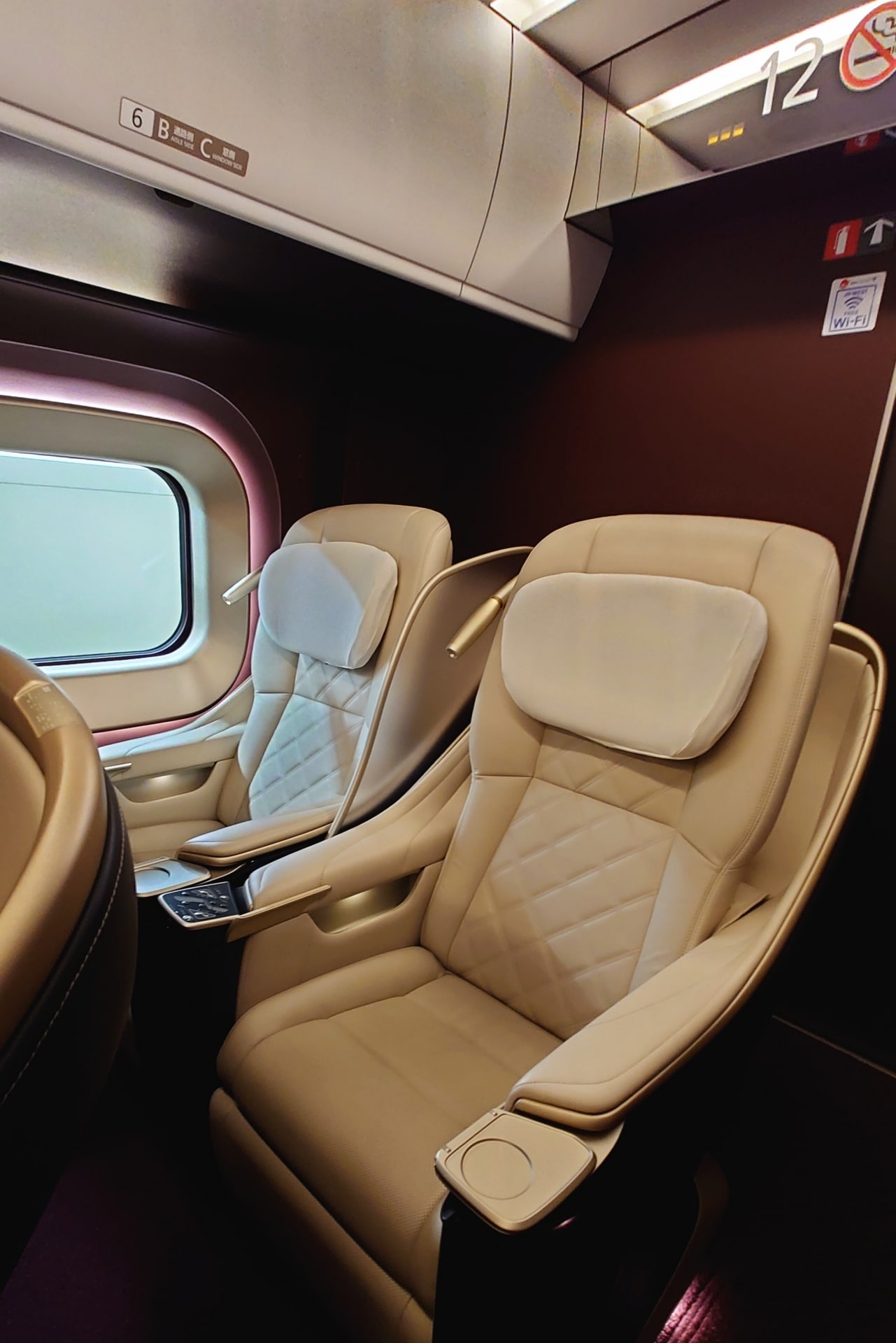
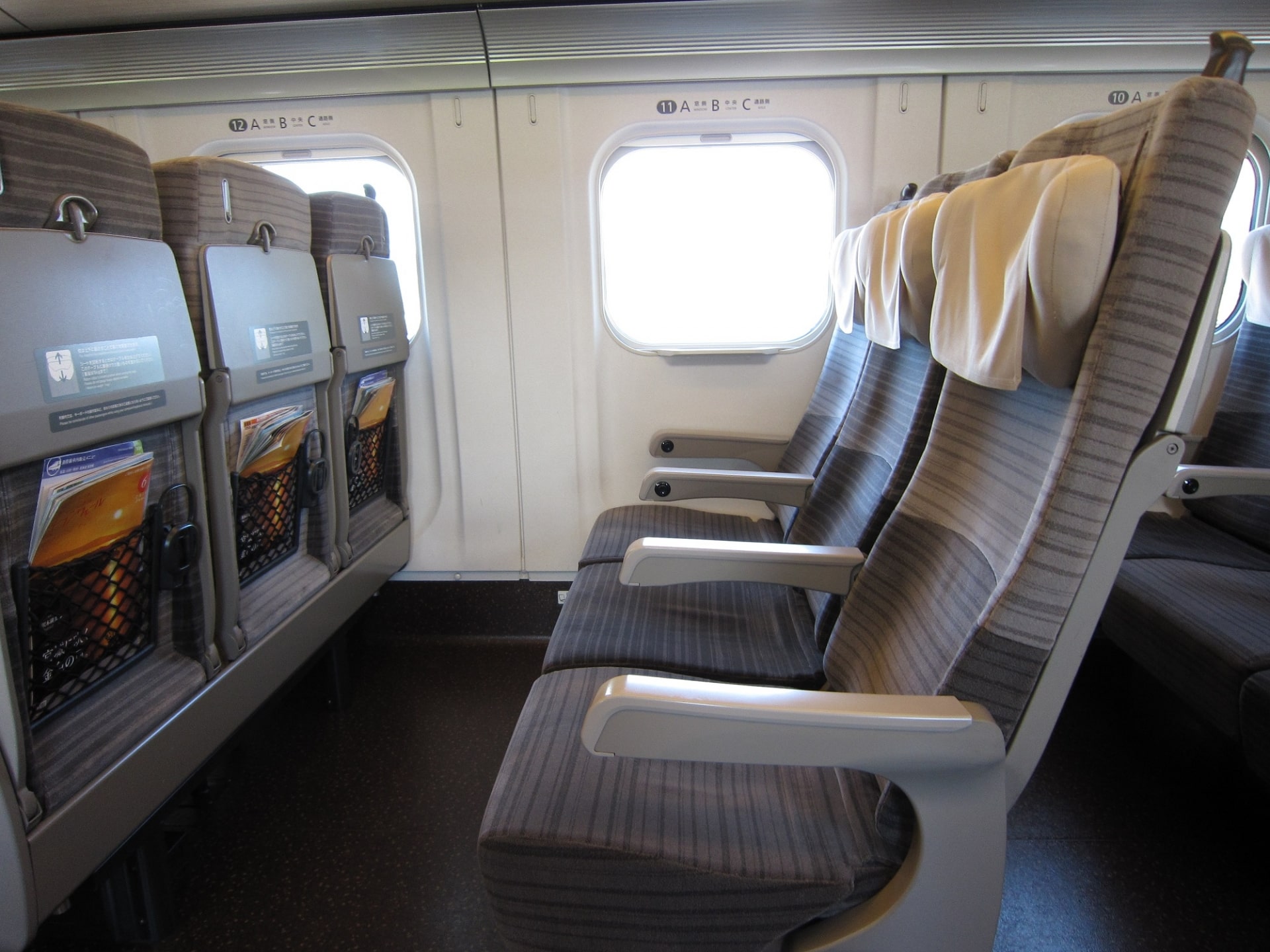
The Shinkansen offers three distinct levels of comfort. Regardless of the class, all cars are equipped with luggage racks, tray tables, and power outlets (on most modern E5/E6 models).
Ordinary Class: The standard way to travel. Seats are arranged in a 3+2 configuration. They offer more legroom than an economy-class airplane seat and are very comfortable for the 90-minute ride.
Green Class: Equivalent to “Business Class.” Seats are in a 2+2 configuration, providing more width and significantly more legroom. It is much quieter and ideal for those who want to work or relax in peace.
Gran Class: The “First Class” of the Shinkansen. Available on the Hayabusa, this cabin features only 18 luxury leather seats in a 1+2 layout. On certain Hayabusa services, it includes a dedicated cabin attendant, gourmet light meals, and complimentary alcoholic beverages.
If you want to turn your journey into a truly special experience, be sure to check out this Gran Class review article.

Comparison: Shinkansen Seat Classes
| Class | Approx. Price (One-way) | Features |
|---|---|---|
| Ordinary Class | ~¥12,000 | Standard 3+2 seating, power outlets, and more legroom than economy flights |
| Green Class | ~¥16,000 | Spacious 2+2 seating, footrests, deeper recline, and a quieter cabin atmosphere |
| Gran Class | ~¥23,000 | Luxury 1+2 leather shell seats, gourmet meals, unlimited drinks, and attendant service |
How to Buy Tickets for the Shinkansen to Sendai
Purchasing tickets for the Shinkansen to Sendai can be surprisingly complex due to the different systems involved. Here is a breakdown of your options.
1. JR East Pass (Tohoku Area)
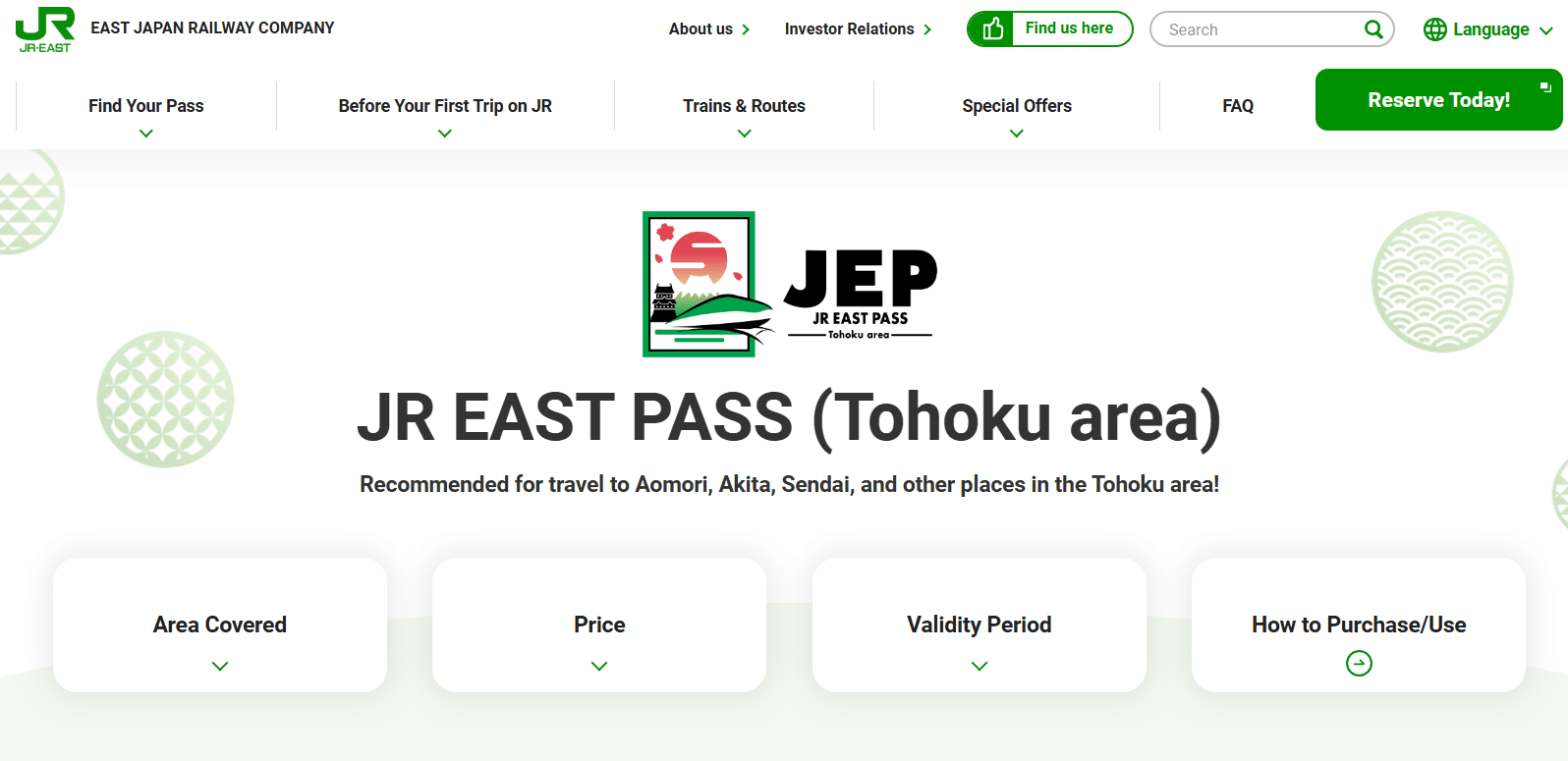
If you plan on visiting other northern cities like Aomori or Akita, this pass is an incredible value (30,000 JPY for 5 days). It is the best choice for travelers planning a multi-city tour of the Tohoku region.
However, it is only cost-effective if you are doing more than just a round trip to Sendai, and you still need to visit a machine or counter to reserve your actual seats for the Hayabusa.
2. EkiNet
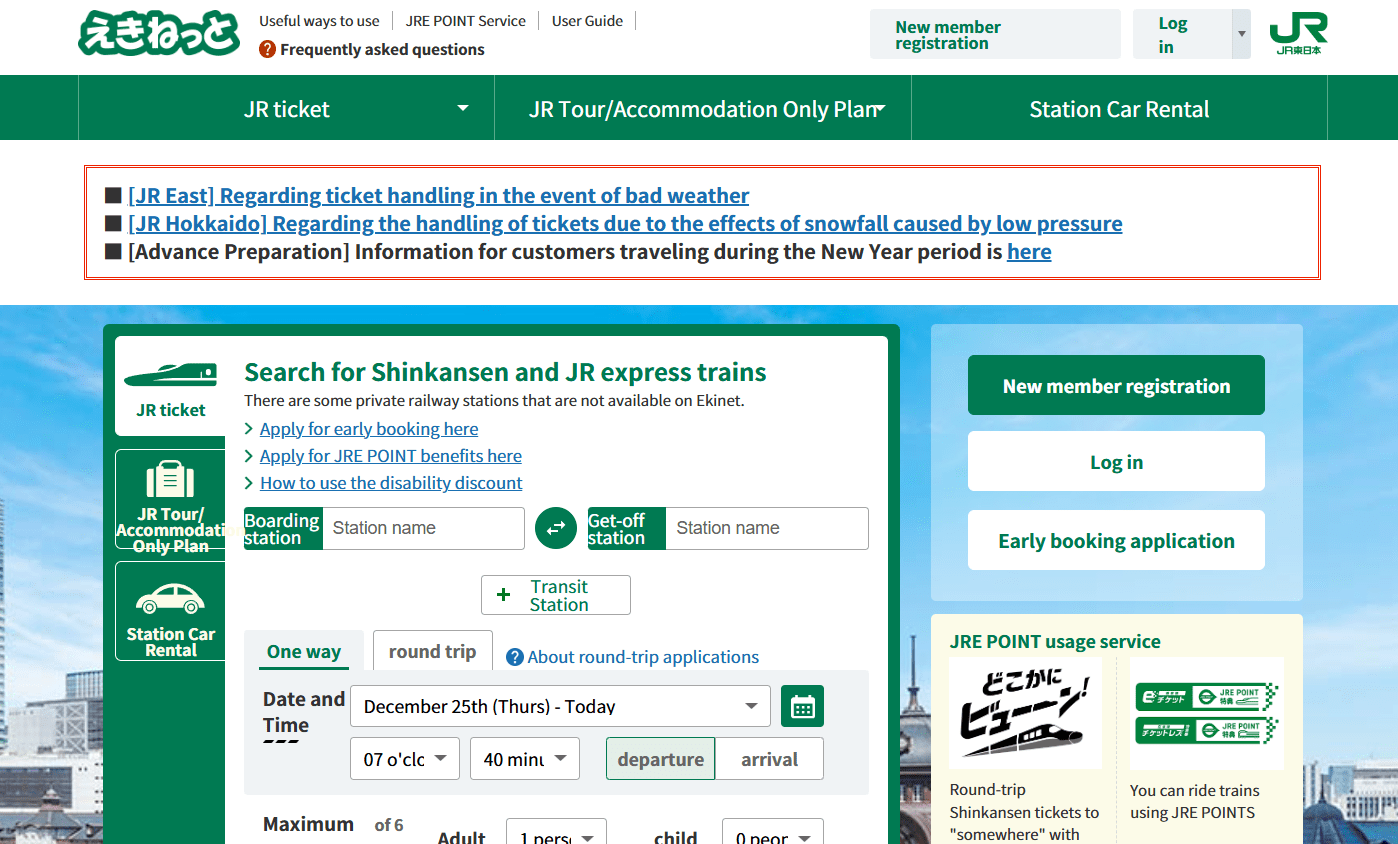
This is the official JR East booking site. While it allows for “e-tickets” linked to a Suica card, the registration process is notoriously difficult for non-residents.
The English version of the site is often less functional than the Japanese one, and linking your ticket to an IC card requires several technical steps that can be stressful to perform at the station gate.
3. Station Ticket Office (Midori-no-Madoguchi)
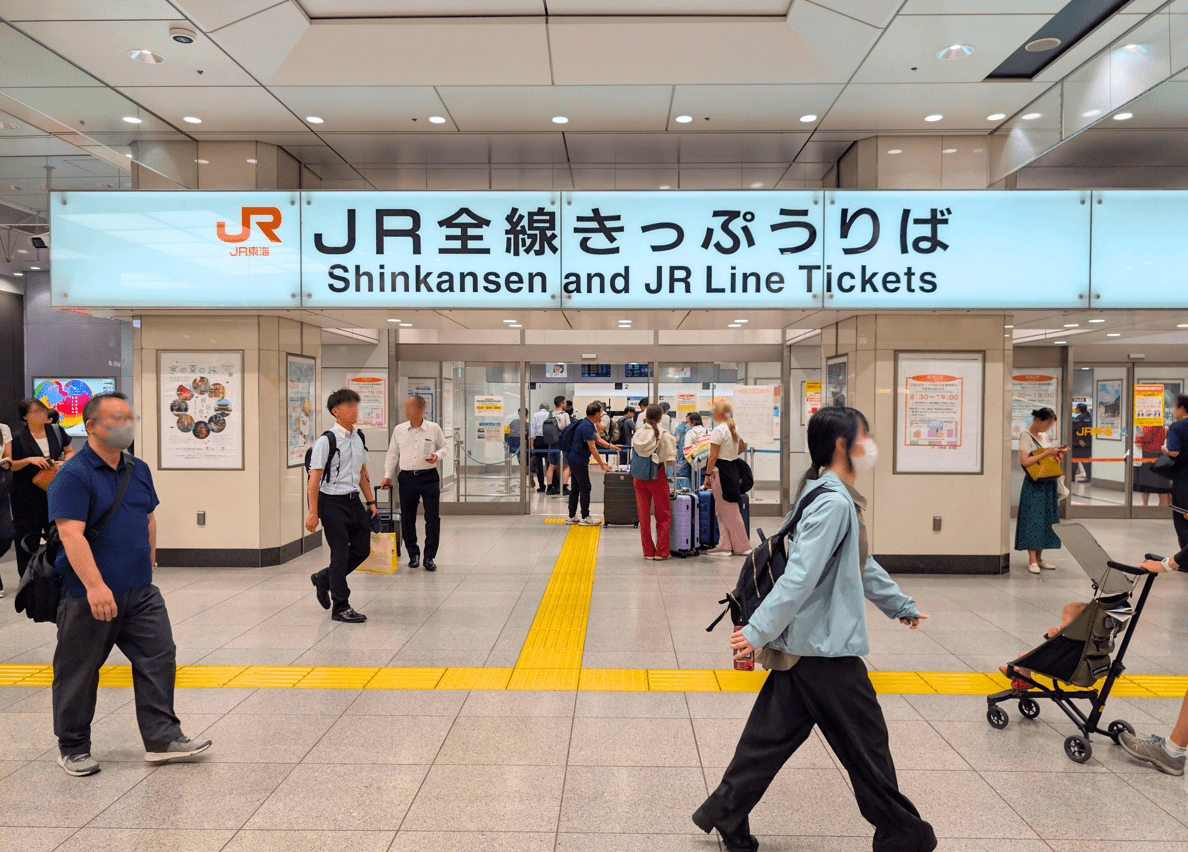
You can buy tickets in person at any major JR station. This is a reliable, traditional method if you prefer a physical ticket.
However, the “cons” are significant: queues at Tokyo Station can exceed 30 minutes during tourist season, and there is no guarantee that the staff will speak fluent English.
4. Japan Bullet Train (Recommended)
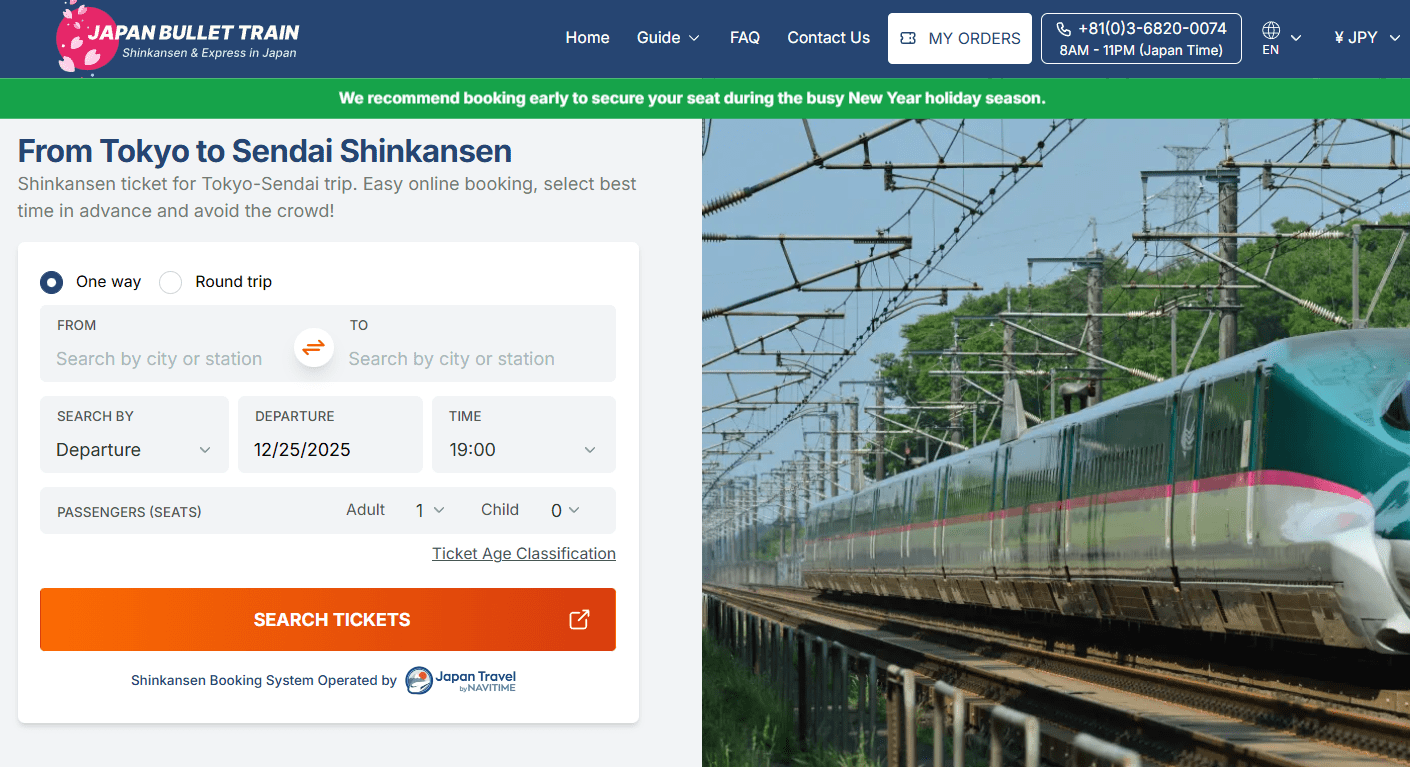
For most international travelers, we highly recommend using Japan Bullet Train. This service is designed to address the frustrations with official systems.
It provides a clean, intuitive English interface and accepts international credit cards without the common payment errors found on Japanese sites.
Most importantly, it offers dedicated customer support in English, ensuring that if your plans change or you have questions, you aren’t left navigating a Japanese-only help desk.
Comparison: Ticket Booking Options
| Method | Pros | Cons |
|---|---|---|
| JR East Pass | Great value for multiple trips | Expensive for just Sendai; requires manual seat reservations |
| EkiNet (Official) | No service fee; e-ticket option available | Complex registration, technical errors, confusing IC card linking |
| Ticket Office | No fee; physical ticket in hand | Long queues, potential language barrier, seats may sell out while waiting |
| Japan Bullet Train | Full English support, easy interface, accepts all cards, stress-free | Small service fee |
Book your Shinkansen tickets from Tokyo to Sendai here!
Navigating Tokyo Station for Your Trip to Sendai
Tokyo Station is a massive hub, and the most common mistake is going to the wrong Shinkansen gate.
The Shinkansen tracks are located on the Yaesu (East) side of the station. If you enter through the Marunouchi (West) side, you will have to walk for about 10–15 minutes through crowded underground passages.
Look for the Blue Signs:
The Tohoku Shinkansen (to Sendai) is operated by JR East, which uses Blue logos. Do not follow the Orange signs—those lead to the Tokaido Shinkansen (to Kyoto/Osaka), which is a completely different area with different gates.
*A Pro Tip From Your Japan Travel Expert
If you are short on time, enter Tokyo Station via the Yaesu North Gate. This gate is the closest to the Tohoku Shinkansen platforms and will save you from wandering the station’s massive basement.
Other Transportation Options from Tokyo to Sendai
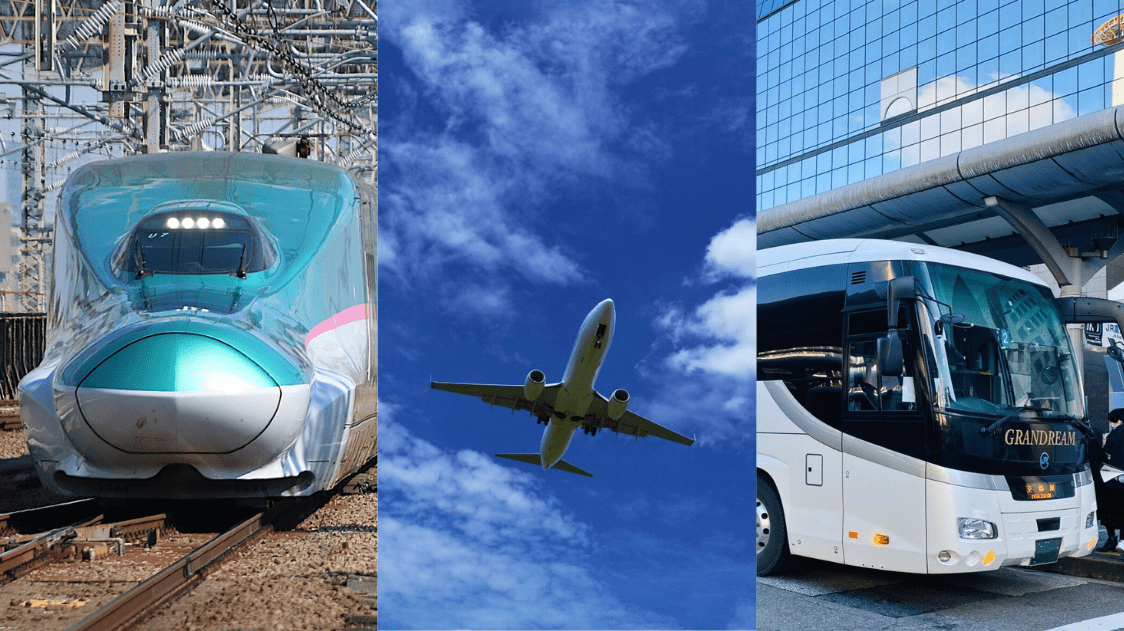
While the Shinkansen is the gold standard for this route, there are other ways to reach Sendai depending on your specific needs.
Highway Bus: This is the ideal option for travelers on a tight budget, such as students or long-term backpackers. Prices can be as low as 3,000 JPY. While the journey takes 5.5 to 6 hours, overnight buses allow you to save on a night’s accommodation, though you may arrive feeling less rested than if you took the train.
Airplane: Flying is a viable option for travelers arriving at Narita from abroad who wish to connect directly to Sendai without entering central Tokyo (Currently, there are no direct flights to Sendai Airport from Haneda Airport). However, for those already in the city, it is less convenient. Once you factor in airport transfers and check-in times, the total travel time exceeds 4 hours, making the Shinkansen much faster for city-to-city travel.
Local Trains: It is possible to take local JR lines, but it requires multiple transfers and takes about 7 hours. This is only recommended for slow-travel enthusiasts or those using the “Seishun 18” pass during specific holiday seasons.
Transport Options Comparison
| Mode of Transport | Duration | Price (Approx.) | Best For |
|---|---|---|---|
| Shinkansen | About 1.5 hours | ¥11,000 ~ | Most travelers who prioritize speed and comfort |
| Highway Bus | About 6 hours | ¥3,000 ~ | Budget-conscious travelers |
| Airplane | About 4 hours (total) | ¥10,000 ~ | Travelers with direct airport connections |
Arriving in Sendai: Top Spots and Local Flavors
Once you arrive at Sendai Station, the city is yours to explore. Here are our top recommendations for a perfect start.
3 Must-Visit Tourist Spots
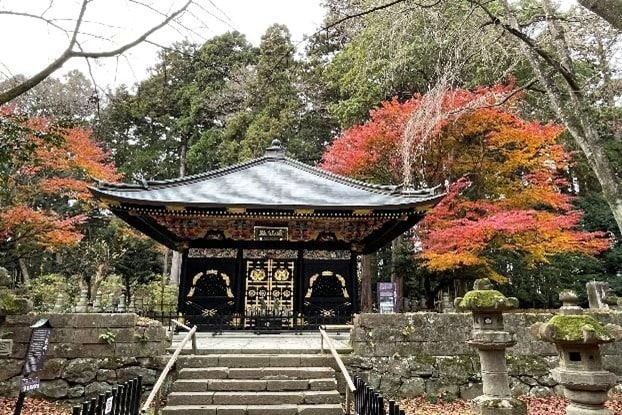
1. Zuihoden Mausoleum (瑞鳳殿): The final resting place of Date Masamune, the founder of Sendai. It features stunning, colorful woodwork and is surrounded by a peaceful forest of towering cedar trees. There is also a small museum on-site displaying artifacts found during excavations.
- Access: 15 mins from Sendai Station via the “Loople Sendai” bus.
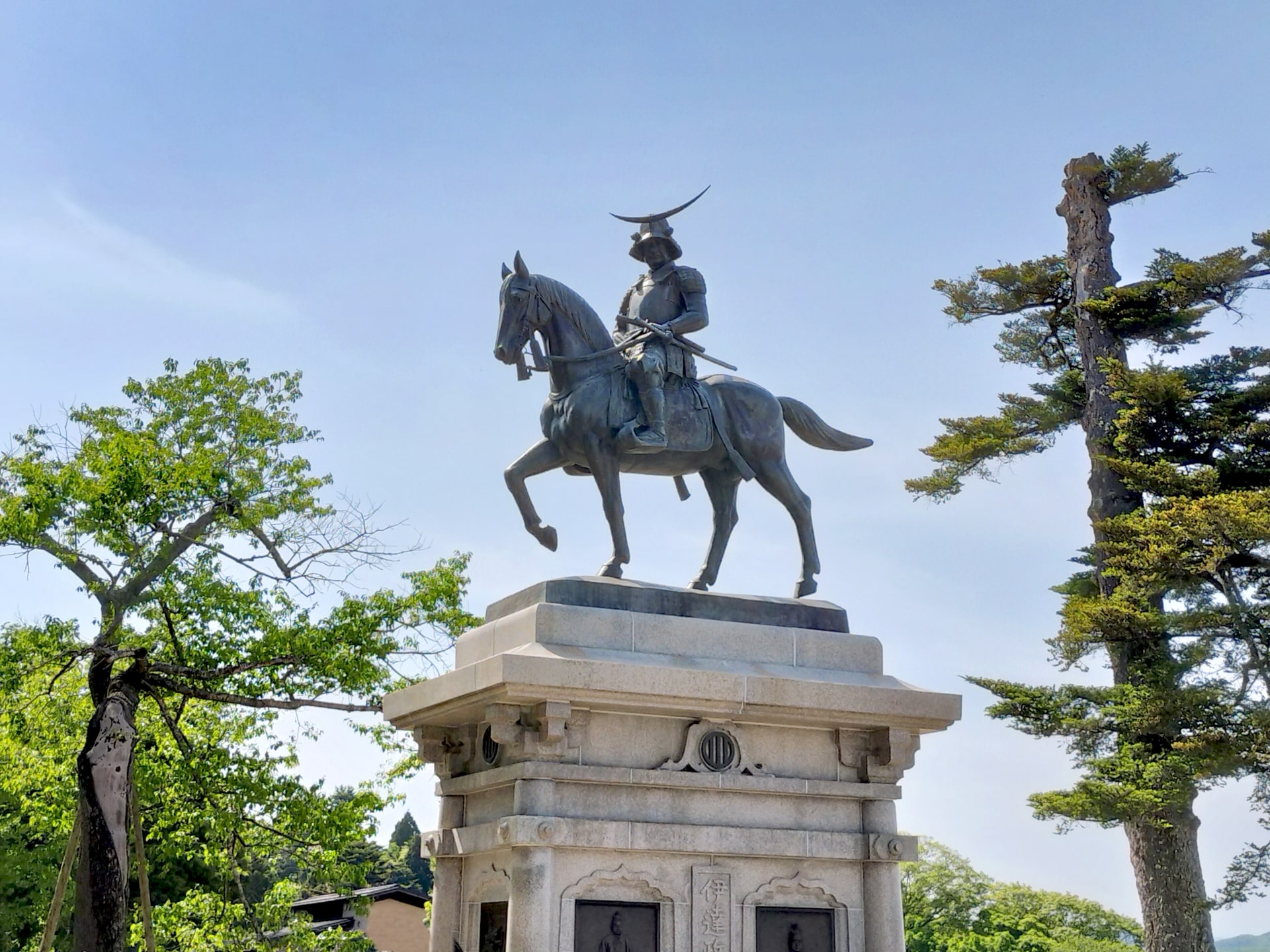
2. Sendai Castle Site (青葉城跡): While the main castle building no longer stands, the massive stone walls remain impressive. The iconic statue of Date Masamune offers the best panoramic view of the city, and you can enjoy a VR experience at the nearby museum to see how the castle once looked.
- Access: 20 mins from Sendai Station via the “Loople Sendai” bus.
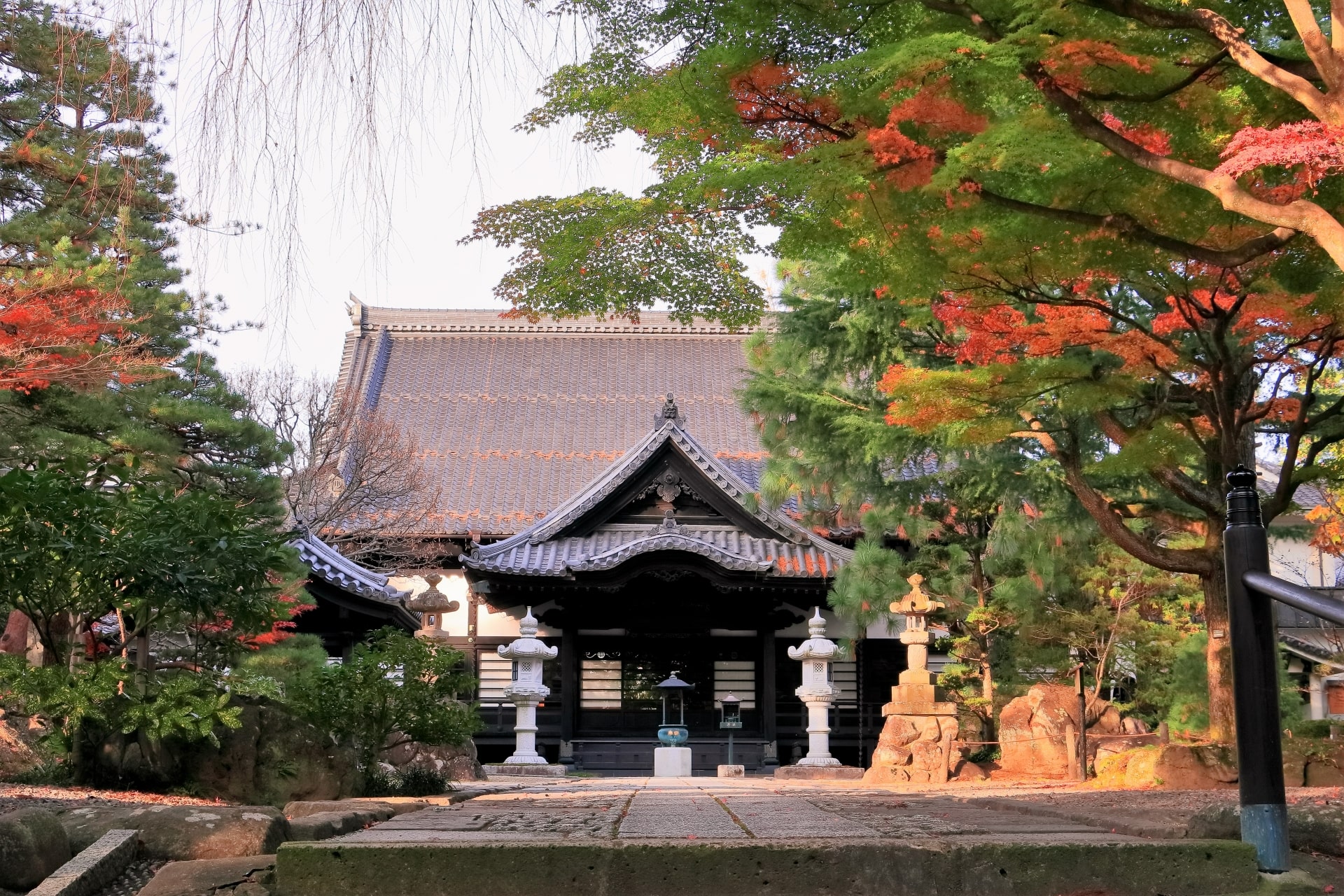
3. Rinnoji Temple (輪王寺): This temple is famous for its beautiful three-story pagoda and a meticulously maintained Japanese garden. It is a quiet sanctuary that offers a different kind of beauty in every season, especially during the autumn leaf-viewing period.
- Access: 15 mins via the JR Senzan Line to Kita-Sendai Station, then a short walk.
3 Local Foods to Try
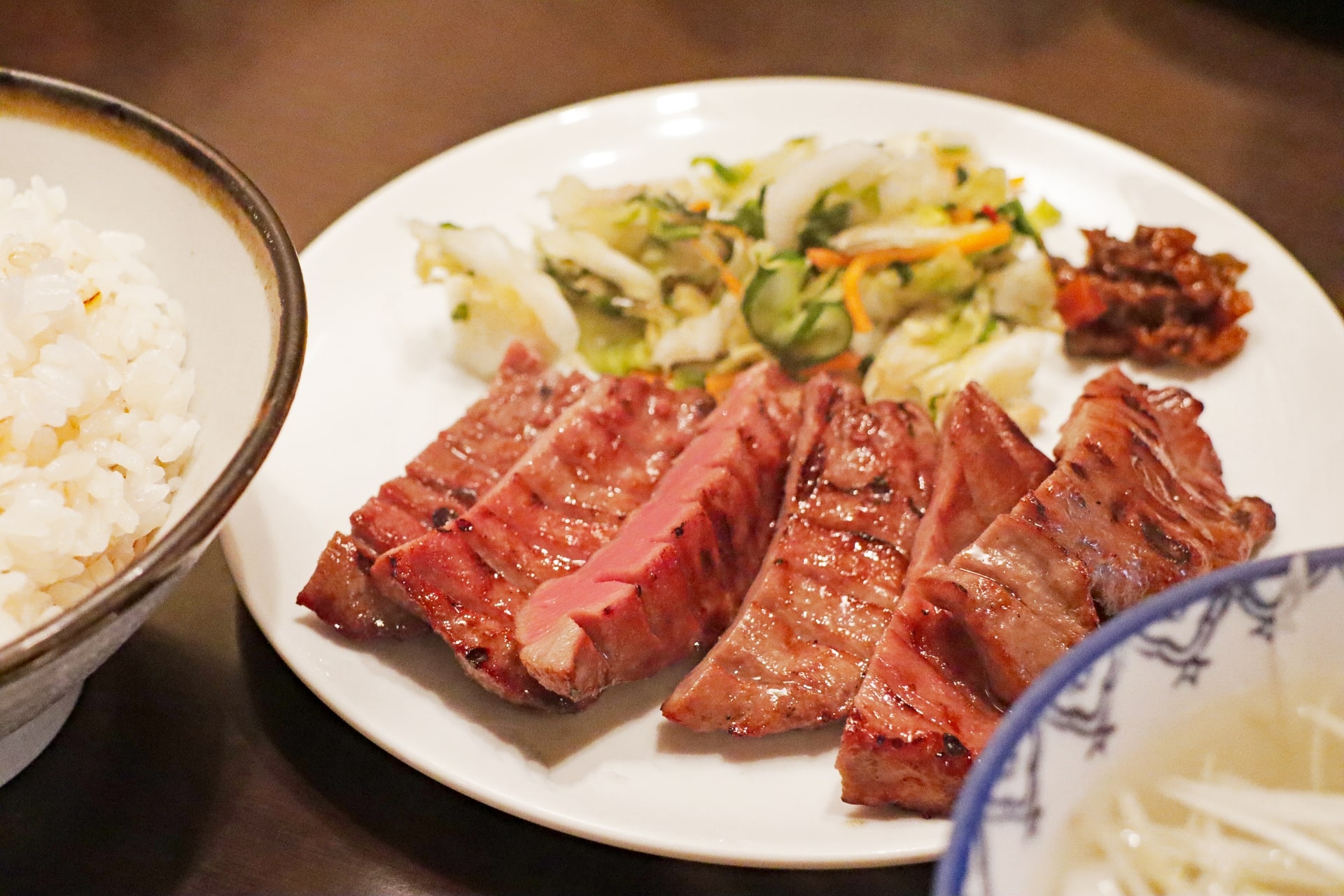
1. Gyutan (Grilled Beef Tongue): The undisputed soul food of Sendai. It is typically thick-cut, charcoal-grilled to a juicy perfection, and served as a set menu with oxtail soup, barley rice, and spicy pickles.
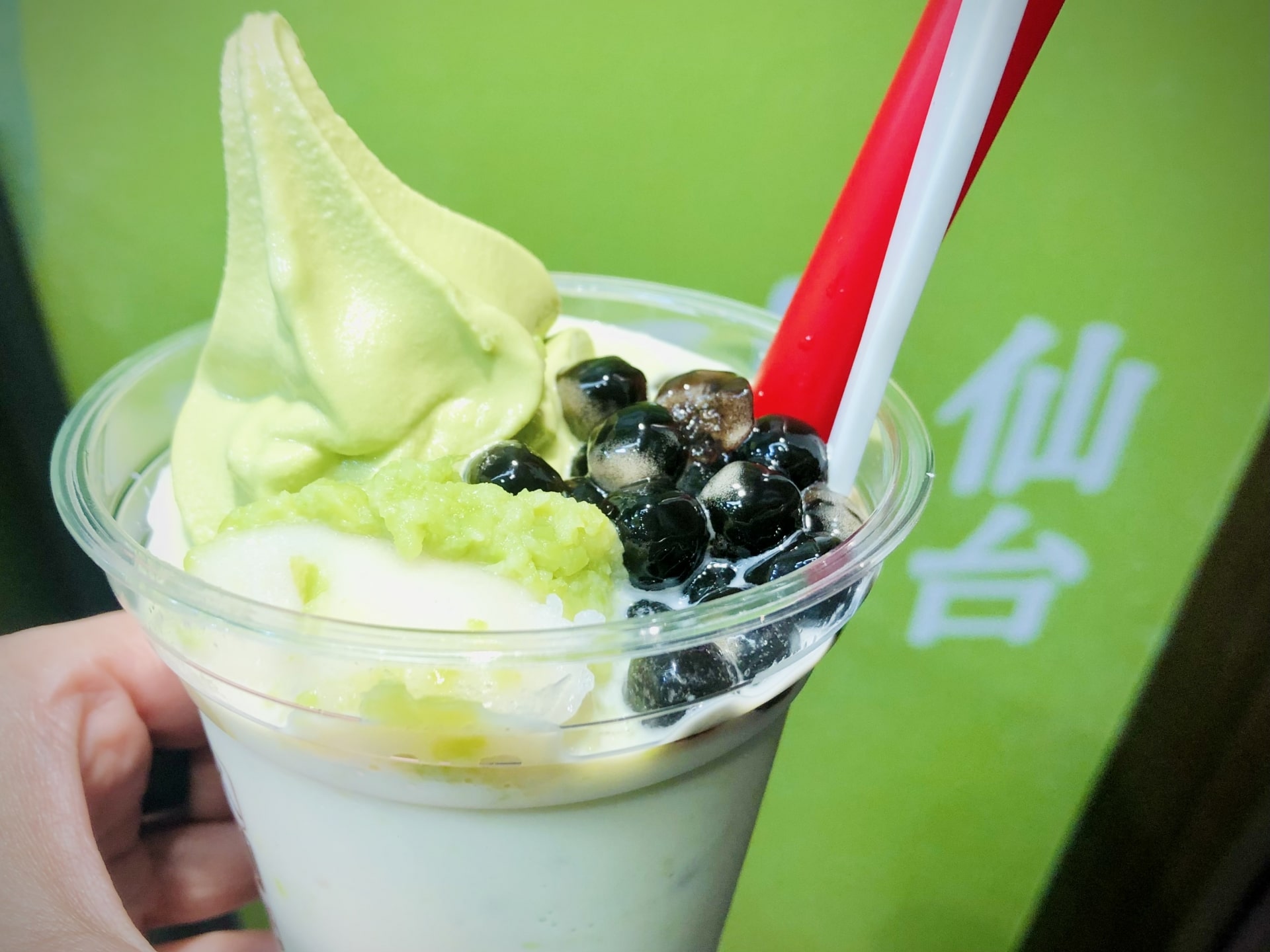
2. Zunda Shake: A vibrant green sweet treat made from sweetened, mashed edamame beans. Be sure to try a Zunda Shake at the station—it’s a refreshing and surprisingly healthy local favorite.
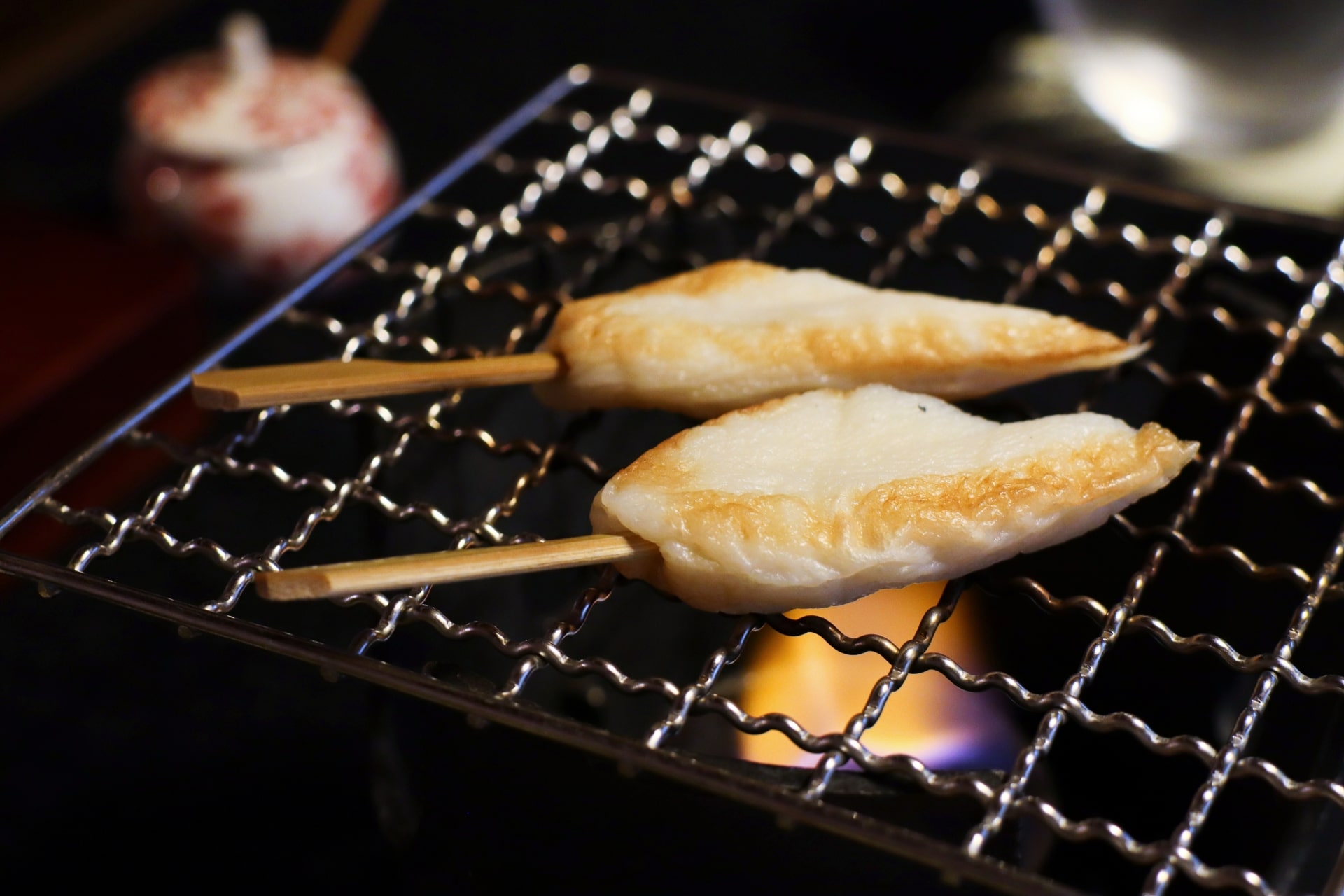
3. Sasakamaboko: These are leaf-shaped fish cakes that are grilled until golden brown. They have a savory, toasted flavor and are a popular snack to eat on the go or to buy as a high-quality gift for friends.
Tokyo to Sendai Shinkansen FAQ
Q: Can I use my Suica or PASMO card to get on the Shinkansen to Sendai?
A: Not directly by tapping at the gate. You must first purchase a “Shinkansen e-Ticket” and link it to your IC card online. For most tourists, it is much simpler to have a physical or digital ticket issued via Japan Bullet Train.
Q: Is there a luggage limit on the Tohoku Shinkansen?
A: Unlike the Tokaido Shinkansen (to Kyoto), the Tohoku line does not currently require a special reservation for oversized luggage. However, space is limited, so arriving early to secure a spot in the luggage rack is wise.
Q: Is there food on the train?
A: Most Shinkansen no longer have trolley service. We highly recommend buying an “Ekiben” (station bento box) at Tokyo Station before you board!
Conclusion
The journey from Tokyo to Sendai is a highlight of any Japan trip, offering a glimpse into the country’s incredible engineering and the natural beauty of the Tohoku region. By choosing the Hayabusa and booking your tickets in advance through a reliable service like Japan Bullet Train, you can ensure your trip is as smooth as the ride itself.
Ready to explore the North? Book your Tokyo to Sendai Shinkansen tickets here today!

(Disclaimer: Rules, prices, and schedules are subject to change. Always check the official information before you travel.)
▽Related Articles▽


Written by
Japan Bullet Train is an official JR Shinkansen ticket agent, providing reliable services to travelers visiting Japan from around the world. Our mission is to offer clear, accurate, and up-to-date transportation information so that every visitor can navigate Japan with confidence. From the latest Shinkansen schedules connecting major cities such as Tokyo, Kyoto, and Osaka, to seat class differences, route features, booking methods, luggage rules, and common traveler pitfalls, we explain everything based on real usage data and on-site experience. Leveraging our deep expertise in Japanese transportation, we share practical insights that help international travelers enjoy a smooth and stress-free journey across the country. Japan Bullet Train: https://www.japan-bullettrain.com/
- +0 0
-
-