Tokyo to Nagano Shinkansen: Best Trains, Prices and How to Book Online 2026
Kagayaki vs Hakutaka vs Asama: Trains, Fares, and Booking Tips

- +4 4
-

-


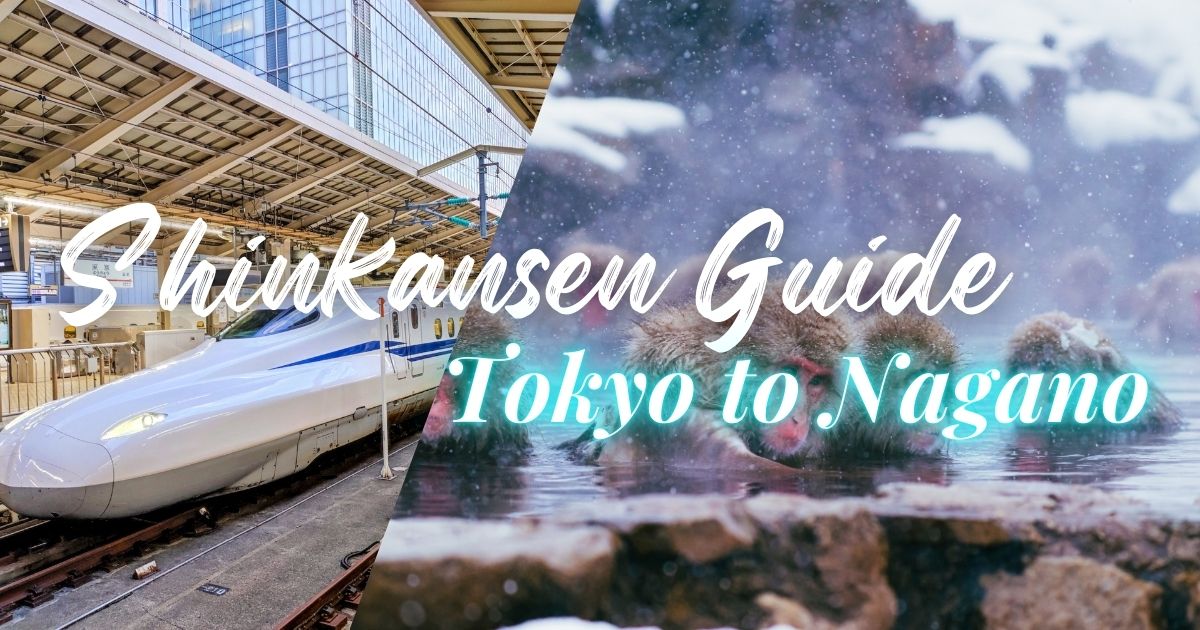
The fastest and most comfortable way to travel from Tokyo to Nagano is the Hokuriku Shinkansen “Kagayaki”. Reaching Nagano in just 80 minutes, it is the most efficient option for travelers heading to the Japanese Alps and nearby destinations.
Along this route, you will see three different train names on the departure board: “Kagayaki”, “Hakutaka”, and “Asama”. Each service differs slightly in travel time, stopping patterns, and seat availability, and ticket fares also vary depending on whether you choose reserved or non reserved seating. Understanding these differences in advance makes it much easier to select the train that best fits your schedule and travel style.
There is, however, one important rule to keep in mind. The “Kagayaki” operates with reserved seating only, meaning you cannot board the train without a seat reservation, even if you arrive at the platform on time. It is also worth noting that the “SmartEX” app, commonly used for trips to Kyoto or Osaka, does not support the Hokuriku Shinkansen and cannot be used for this route.
To keep your journey smooth and stress free, securing your tickets in advance through an official booking service is strongly recommended. This helps you avoid the language barriers and account registration requirements that are often encountered on domestic Japanese railway websites, while ensuring you can board your preferred train without last minute uncertainty.
Tokyo to Nagano by Shinkansen: What to Know First
– Best Train: The “Kagayaki” is the fastest way to travel from Tokyo to Nagano. Just keep in mind that all seats are reserved, so a seat reservation is required before boarding.
– Booking: For travelers who prefer an English interface and a straightforward booking process, using an official ticket agent such as Japan Bullet Train can make planning much easier.
– JR Pass: The Japan Rail Pass fully covers all Hokuriku Shinkansen services on this route, including the “Kagayaki”, “Hakutaka”, and “Asama”, with no additional fees.
Tokyo to Nagano Shinkansen Quick Facts
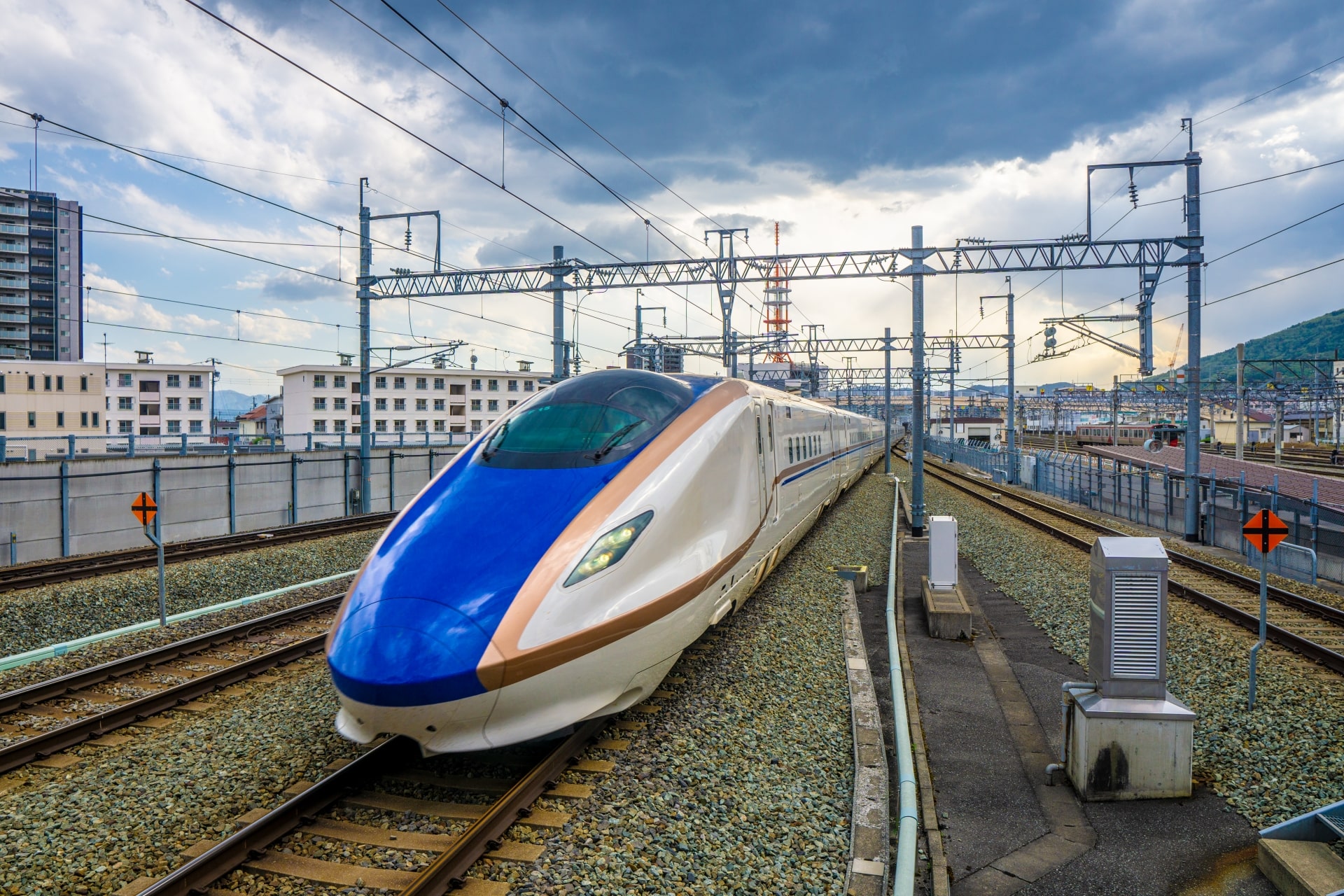
Traveling from Tokyo to Nagano is straightforward. You will take the Hokuriku Shinkansen from either Tokyo Station or Ueno Station, with a travel time of around 80 minutes. A standard one way fare is roughly 8,340 JPY, and the route is fully covered by the Japan Rail Pass.
Before getting into booking details, it helps to understand the basic structure of the journey. Unlike trips to Kyoto or Osaka, the route to Nagano is simple, as there is only one Shinkansen line to remember. This makes planning easier, even for first time visitors to Japan.
| Feature | Details |
|---|---|
| Train Line | Hokuriku Shinkansen (Look for the Blue & Copper train) |
| Travel Time | 80 min (Kagayaki) 90-100 min (Hakutaka / Asama) |
| One-Way Fare | Approx. ¥8,340 (Reserved Seat) ¥7,810 (Non-Reserved) |
| Departure Stations | Tokyo Station (Terminus) Ueno Station |
| Coverage | Fully covered by Japan Rail Pass & Hokuriku Arch Pass |
A Practical Tip from Experience:
If your hotel is in Asakusa or Ueno, board the Shinkansen at Ueno Station instead of Tokyo Station.
I actually learned this the hard way when I first stayed in Asakusa. I dragged my luggage all the way to Tokyo Station, only to realize the train stops at Ueno just 5 minutes later! Ueno Station is much smaller, less crowded, and easier to navigate than the massive maze of Tokyo Station. Based on this experience, I genuinely hope you can save yourself the extra travel time and stress!
▶︎Find the Best Shinkansen Tickets to Nagano
Which Train Should I Take? (Kagayaki vs Hakutaka vs Asama)
When traveling from Tokyo to Nagano, you will see three different Hokuriku Shinkansen services listed on the departure board: “Kagayaki (かがやき)“, “Hakutaka (はくたか)“, and “Asama (あさま)“. While they all run on the same line, each train differs in speed, stopping patterns, and seat availability, which can affect both your schedule and overall comfort.
1. The “Kagayaki” (Fastest Service)
Travel time: About 80 minutes
Major stops: Omiya, Nagano, Toyama, Kanazawa
The “Kagayaki” is the fastest Hokuriku Shinkansen service between Tokyo and Nagano, with only a few major stops. It is ideal if reaching Nagano as quickly as possible is your priority.
All seats on the “Kagayaki” are reserved. There are no non reserved cars, and boarding without a confirmed seat reservation is not allowed.
2. The “Hakutaka” (Flexible Option)
Travel time: Around 90 to 100 minutes
Stops: More frequent stops along the route
The “Hakutaka” is only slightly slower than the “Kagayaki”, with a travel time difference that is often negligible in real world itineraries. For many travelers, this makes it a very practical and realistic choice.
“Hakutaka” services offer non reserved seating, usually in Cars 1 to 4. This flexibility is especially helpful if you prefer to travel without a fixed departure time or if reserved seats on the “Kagayaki” are already full.
3. The “Asama” (Local Service)
Travel time: Typically over 100 minutes
Stops: Stops at most stations and terminates at Nagano Station
The “Asama” is around 25 minutes slower than the “Kagayaki”, as it stops at nearly every station along the route. For travelers who are not in a hurry, this difference is often minor, and choosing the “Asama” can still be a perfectly reasonable option.
While it is not the fastest service, it remains a reliable way to reach Nagano when faster trains are fully booked or when travel time is not a priority.
Prices & Seat Classes: Is the Upgrade Worth It?
A standard one way ticket from Tokyo to Nagano costs around 8,340 JPY. The Japan Rail Pass fully covers this route, including the fastest “Kagayaki”, with no additional fees.
Fares on this route are relatively simple, with the main difference being seat class. Options range from standard seating to premium upgrades such as Green Car and Gran Class.
The following breakdown of seat classes and approximate prices will help you decide whether an upgrade is worth considering for the 80 to 100 minute journey.
Seat Classes & Prices Breakdown (Tokyo to Nagano)
| Class | Price (Approx.) | Features & Comfort | Best For |
|---|---|---|---|
| Non-Reserved (Jiyu-seki) |
¥7,810 | • Standard 3×2 seating layout • First-come, first-served • Not available on Kagayaki |
• Flexible travelers • Tight budgets |
| Reserved Seat (Shitei-seki) |
¥8,340 | • Standard 3×2 seating layout • Guaranteed seat assignment • Mandatory for Kagayaki |
• Most travelers • JR Pass holders |
| Green Car (First Class) |
¥12,000 | • Spacious 2×2 layout • More legroom & footrests • Quiet atmosphere |
• Couples • Travelers with tired legs |
| Gran Class (Luxury) |
¥15,150 – ¥19,000 | • Exclusive 1×2 plush shell seats • Unlimited drinks & light meal • Personal attendant service |
• Special occasions • Luxury seekers |
Prices are approximate for a one way trip. Gran Class fares vary depending on whether full attendant service is available on the train.
Secure your Tokyo–Nagano Shinkansen seats
The Hokuriku Shinkansen between Tokyo and Nagano runs frequently, but reserved seats on the fastest trains can fill up quickly. Book in advance to lock in your preferred departure time and avoid sold-out departures.
▽If you are considering upgrading your seat, be sure to check out our Gran Class review article▽

Standard Tickets vs JR Pass vs Hokuriku Arch Pass
Standard Shinkansen Tickets:
If you are only making a one way or round trip between Tokyo and Nagano, purchasing a standard Shinkansen ticket can be the simplest option. It allows you to pay only for the journeys you actually take, without committing to a multi day pass, and is often more cost effective for short stays or focused itineraries.
Japan Rail Pass (National):
The National Japan Rail Pass fully covers the Hokuriku Shinkansen route, including the fastest “Kagayaki” service. Unlike the Tokaido Shinkansen to Kyoto, where the “Nozomi” requires an additional fee, reserved seats on the “Kagayaki” can be booked at no extra cost.
Hokuriku Arch Pass:
If your itinerary is focused on Tokyo, Nagano, Kanazawa, and Osaka, the Hokuriku Arch Pass is worth considering. This regional pass is significantly cheaper than the national JR Pass and is well suited for travel along the Hokuriku route.
How to Book Shinkansen Tickets: Secure Your Seat in Advance
Booking your ticket in advance is essential when traveling from Tokyo to Nagano. The fastest service, the “Kagayaki”, is reserved seating only, so you cannot board without a confirmed seat.
If the train is fully booked, boarding on the day is not possible. Reserving your ticket ahead of time helps you avoid delays and travel at your preferred time, while using an official booking service with English support can make the process much easier for international travelers.
1. Online Booking
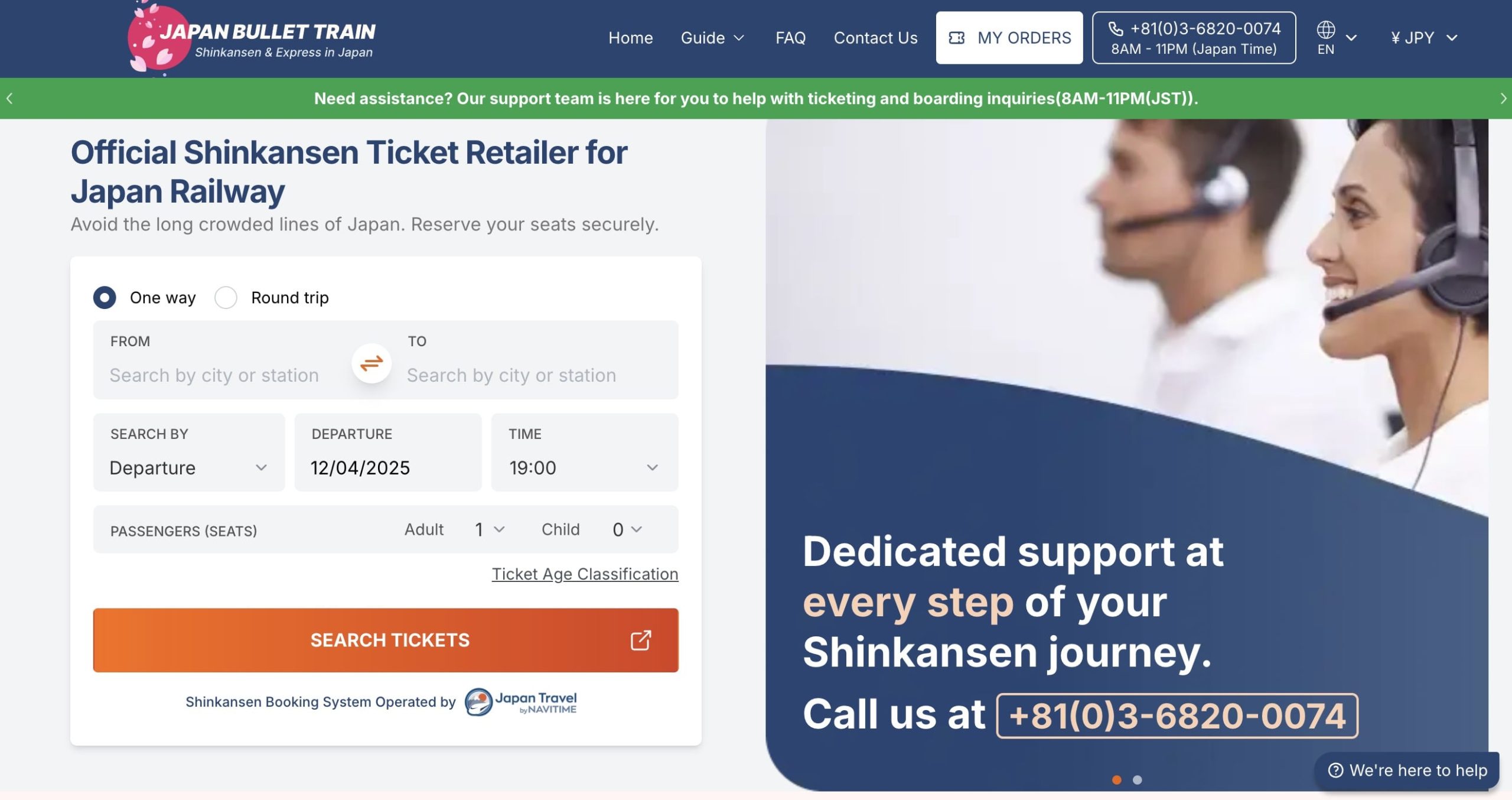
For international travelers, booking Shinkansen tickets through Japanese railway websites can be confusing. Official carrier sites often require detailed registration, provide limited English support, or reject foreign credit cards.
To make the process smoother, using an official ticket agent such as Japan Bullet Train is a practical option.
Why use it:
As an official agent of JR (Japan Railways), Japan Bullet Train provides a legitimate and secure booking service
The benefits:
The service is designed specifically for international travelers, with a clear English interface and smooth payment using major international credit cards. It also allows you to arrange your tickets weeks in advance, even before arriving in Japan, making it easier to plan your trip with confidence.
How it works:
Simply search for “Tokyo to Nagano”, select your preferred train and seat type, and complete the booking online. After your purchase, you will receive a QR code or pickup code, which can be used to collect your physical tickets at station machines.
2. Buying at the Station (Last Minute Only)
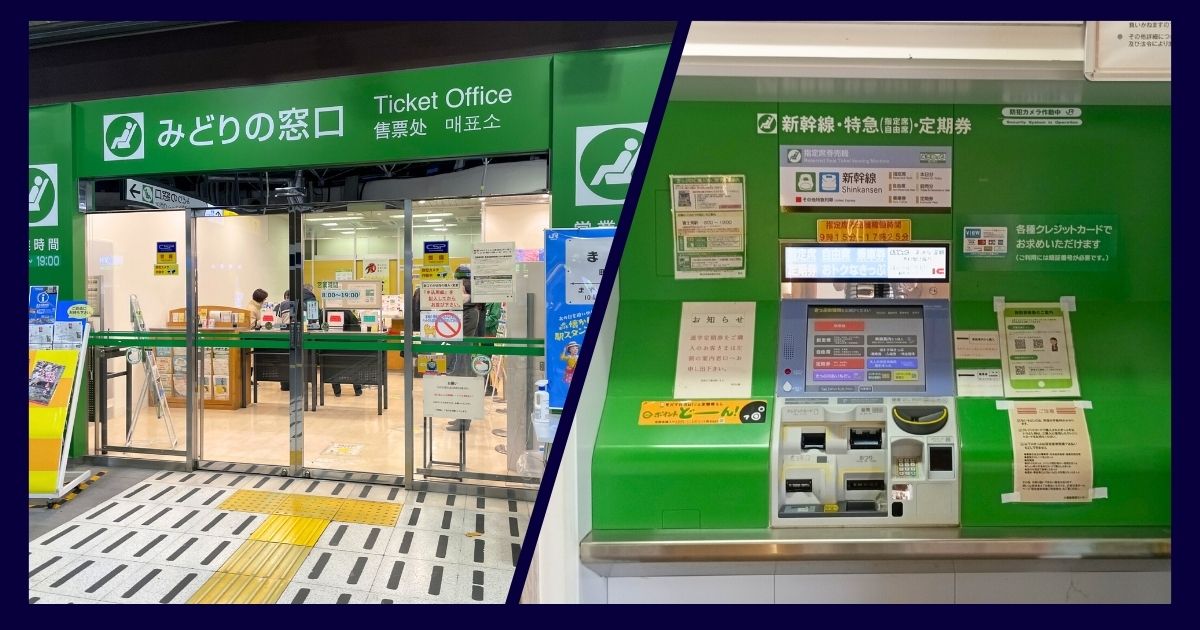
If you are traveling on the same day and have not booked in advance, it is still possible to purchase Shinkansen tickets at Tokyo Station. This option is best treated as a last resort, especially during busy travel periods.
Ticket machines:
Look for the green ticket machines with an “English” button. These machines allow you to purchase Shinkansen tickets without speaking to staff, although availability depends on how full the trains are.
Ticket counters:
You can also buy tickets at the “Midori-no-madoguchi” ticket office, where staff can assist you in person. Keep in mind that queues can be long, particularly on weekends and during peak travel seasons.
A Practical Tip from Experience:
Do not gamble with “buying it on the day” if you have a hotel or ski lesson booked in Nagano.
I actually learned this the hard way during my first ski trip. I assumed I could just buy a ticket at the station 15 minutes before departure. When I got to the counter, the next three Kagayaki trains were fully booked. I lost 2 hours of my vacation waiting in a café at Tokyo Station. Based on this experience, I genuinely hope you book online in advance so you can walk straight through the gates and start your trip stress-free!
Boarding at Tokyo Station: Tips for a Smooth Trip
Platforms 20 through 23
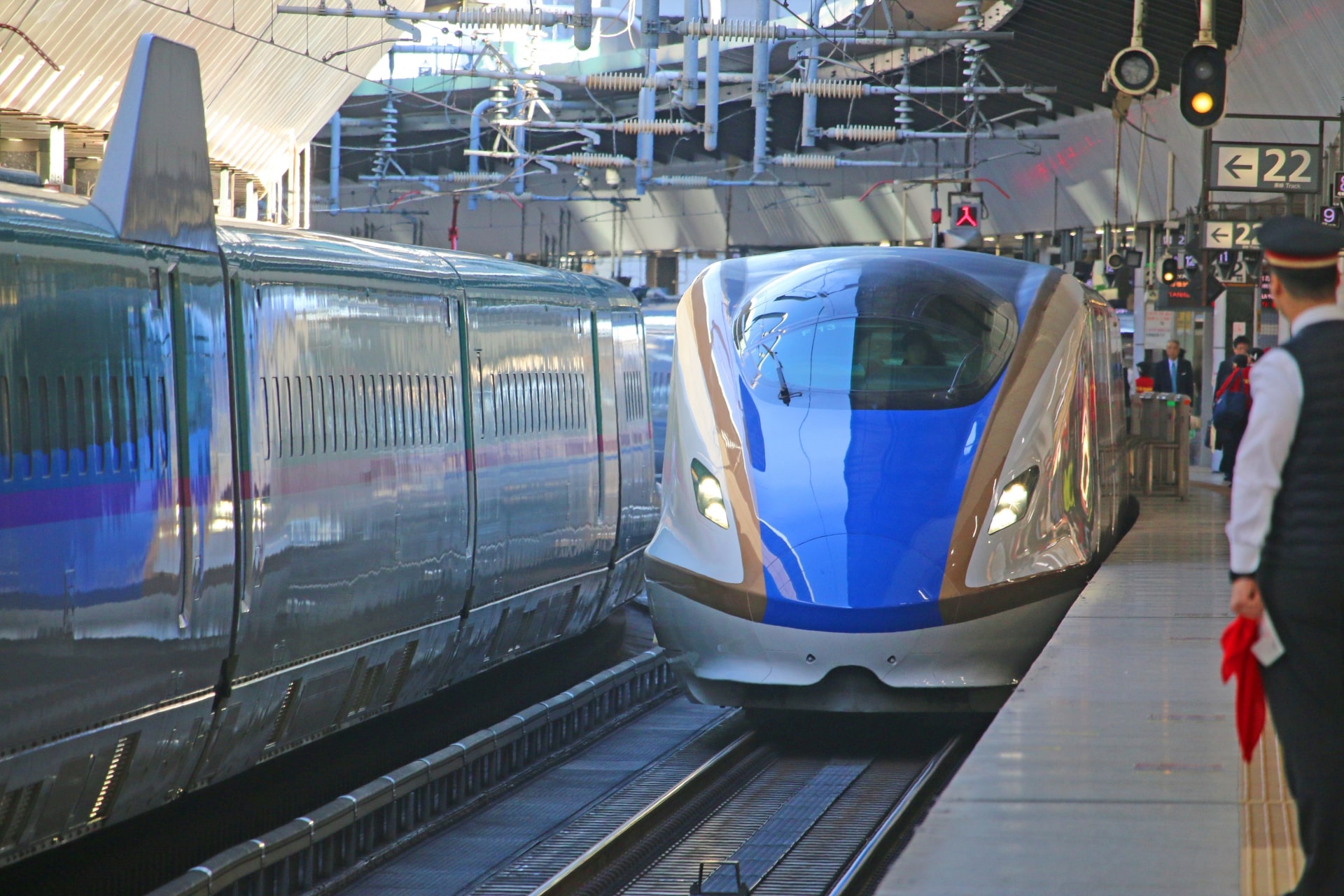
Tokyo Station is large and complex, especially if you are using it for the first time. Knowing where to go in advance can make boarding the Shinkansen much less stressful.
The Hokuriku Shinkansen usually departs from Platforms 20 to 23. Look for the green Shinkansen signs throughout the station. If you are transferring from a local JR line such as the Yamanote Line, follow the signs for the “Shinkansen North Transfer Gate”, which leads directly to the correct platforms.
The Ekiben Experience
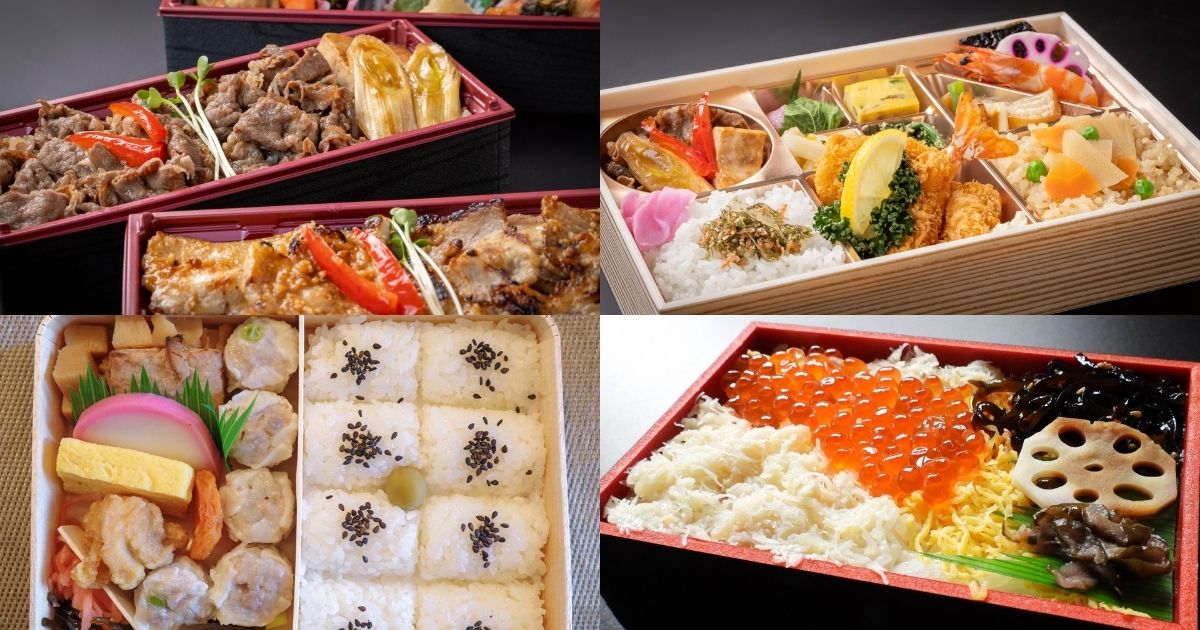
Before passing through the ticket gates, consider stopping by Ekibenya Matsuri in Tokyo Station’s main central passage. This popular shop brings together hundreds of regional bento boxes from across Japan, creating the feel of a small station bento festival in one place. The surrounding area is also filled with a wide variety of food shops, so it is easy to pick up whatever catches your eye.
Enjoying an ekiben on the Shinkansen is a long standing travel tradition in Japan, and choosing a favorite meal before departure is a simple but memorable way to begin your journey to Nagano.
Luggage Rules (Oversized)
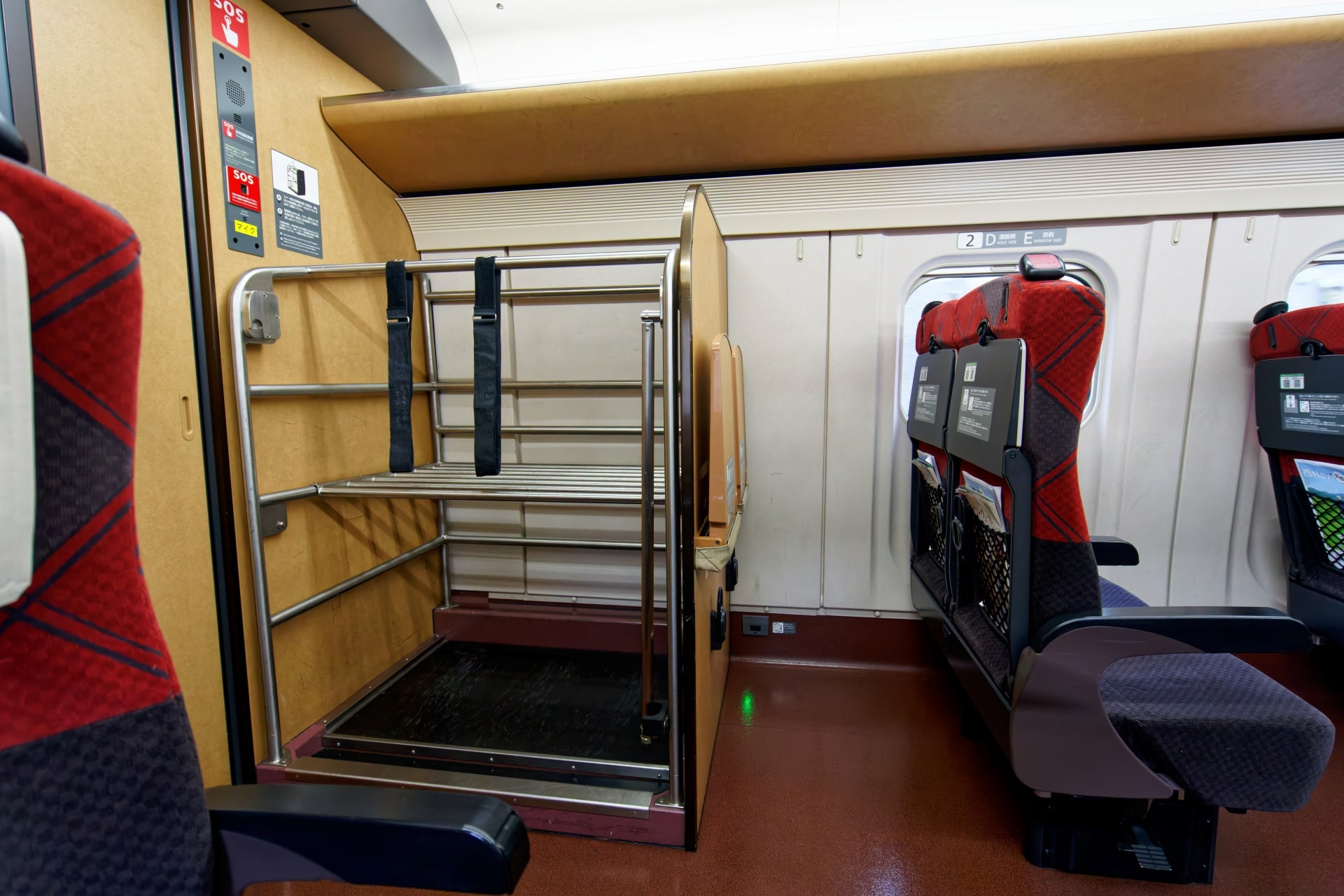
As of 2026, the strict “Oversized Baggage Reservation” rule that applies to the Kyoto route does not apply to the Tokyo to Nagano Hokuriku Shinkansen.
Standard suitcases:
Most standard sized suitcases can be placed on the overhead luggage racks above the seats.
Ski gear and large bags:
Larger items, such as ski bags, are usually stored in the space behind the last row of seats in each car. This space is available on a first come, first served basis, so boarding early is recommended if you are traveling with bulky luggage.
Alternative Options from Tokyo to Nagano: Highway Bus vs Rental Car
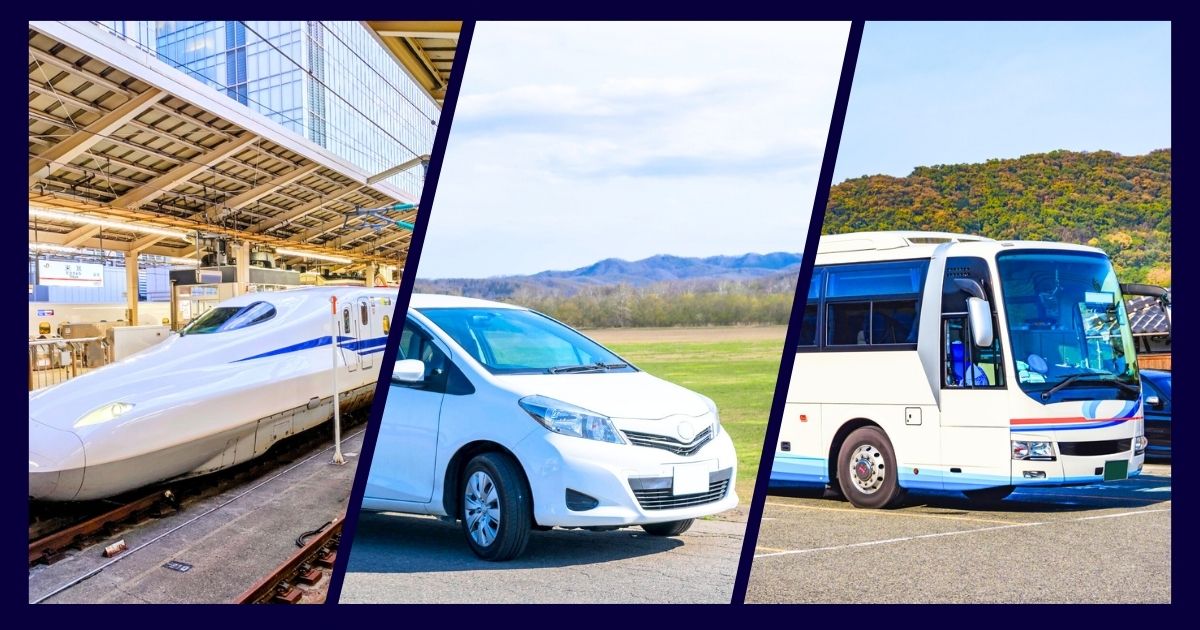
While the Shinkansen is the fastest and most comfortable way to travel from Tokyo to Nagano, it may not suit every budget or travel style. Depending on your priorities, alternatives such as highway buses or rental cars can also be considered.
Highway buses are the most affordable option, often costing around half the price of the Shinkansen, though travel time is significantly longer. Renting a car offers flexibility, especially for exploring areas along the way, but overall costs tend to be much higher due to highway tolls and one way drop off fees.
| Feature | Shinkansen (Bullet Train) | Highway Bus | Rental Car |
|---|---|---|---|
| Travel Time | 80 – 100 min | 3.5 – 4.5 hours | 3 – 4 hours |
| Cost (One-Way) | ¥7,800 – ¥8,500 (Per Person) |
¥2,500 – ¥4,800 (Per Person) |
¥15,000++ (Total for Car + Tolls) |
| Comfort & Ease | ⭐⭐⭐⭐⭐ Stress-free, legroom, no traffic. |
⭐⭐⭐ Reclining seats, but risk of traffic jams. |
⭐⭐ Private, but navigating Tokyo & snow is stressful. |
| Best For… | Speed & Comfort (Most Travelers) |
Saving Money (Backpackers & Students) |
Freedom (Explorers visiting Karuizawa en route) |
Note on Rental Cars
The estimated cost above is a general guideline. If you return a rental car in a different prefecture, such as picking it up in Tokyo and dropping it off in Nagano, an additional one way drop off fee often applies.
Winter Driving Considerations
Nagano is known for heavy snowfall, particularly from December through March. During this period, roads can become icy and difficult to navigate. Unless you are experienced with winter driving and have rented a vehicle equipped with snow tires, driving is not recommended. For most travelers, the train remains a far safer and more reliable option.
Secure your Tokyo–Nagano Shinkansen seats
The Hokuriku Shinkansen between Tokyo and Nagano runs frequently, but reserved seats on the fastest trains can fill up quickly. Book in advance to lock in your preferred departure time and avoid sold-out departures.
Things to Do in Nagano: 3 Must-Visit Spots
Nagano Station serves as the main gateway to some of the region’s most popular attractions. From here, you can visit the famous Snow Monkeys, explore the historic Zenkoji Temple, or continue on to renowned ski resorts such as Hakuba.
After arriving by Shinkansen, Nagano City offers easy access to a wide range of experiences, especially for travelers interested in nature, culture, and winter sports. The following three spots are among the most popular destinations reachable directly from the station.
1. Jigokudani Monkey Park (Snow Monkeys)
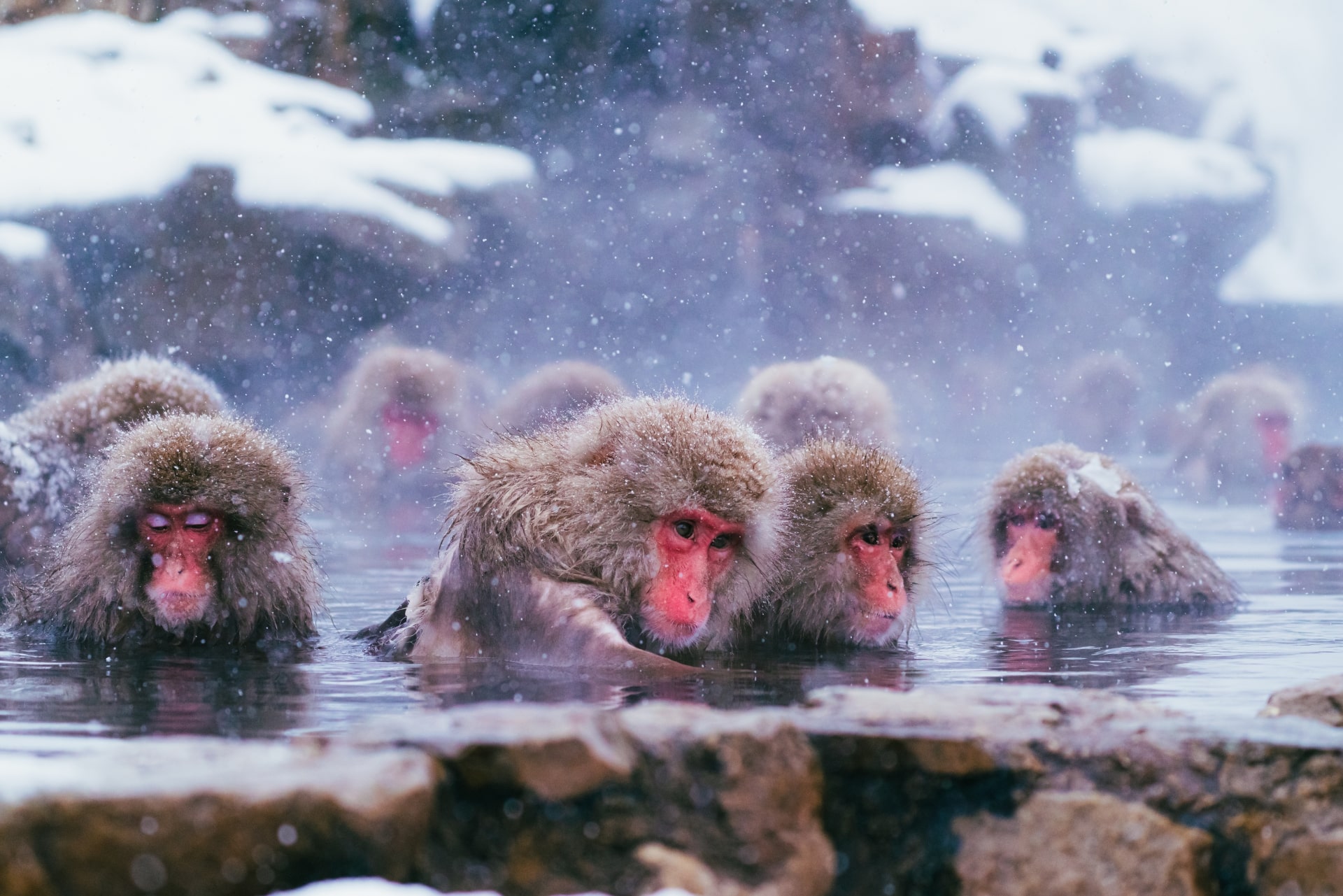
This is likely the main reason you came. Watching wild macaques bathe in natural hot springs while snow falls around them is a once-in-a-lifetime sight.
The Vibe: Unique, photogenic, and wild.
Getting There: From Nagano Station, take the Nagaden Express Bus (approx. 45 min) to the park entrance area.
Note: You must hike for about 30 minutes through a forest trail to reach the actual springs.
2. Zenkoji Temple
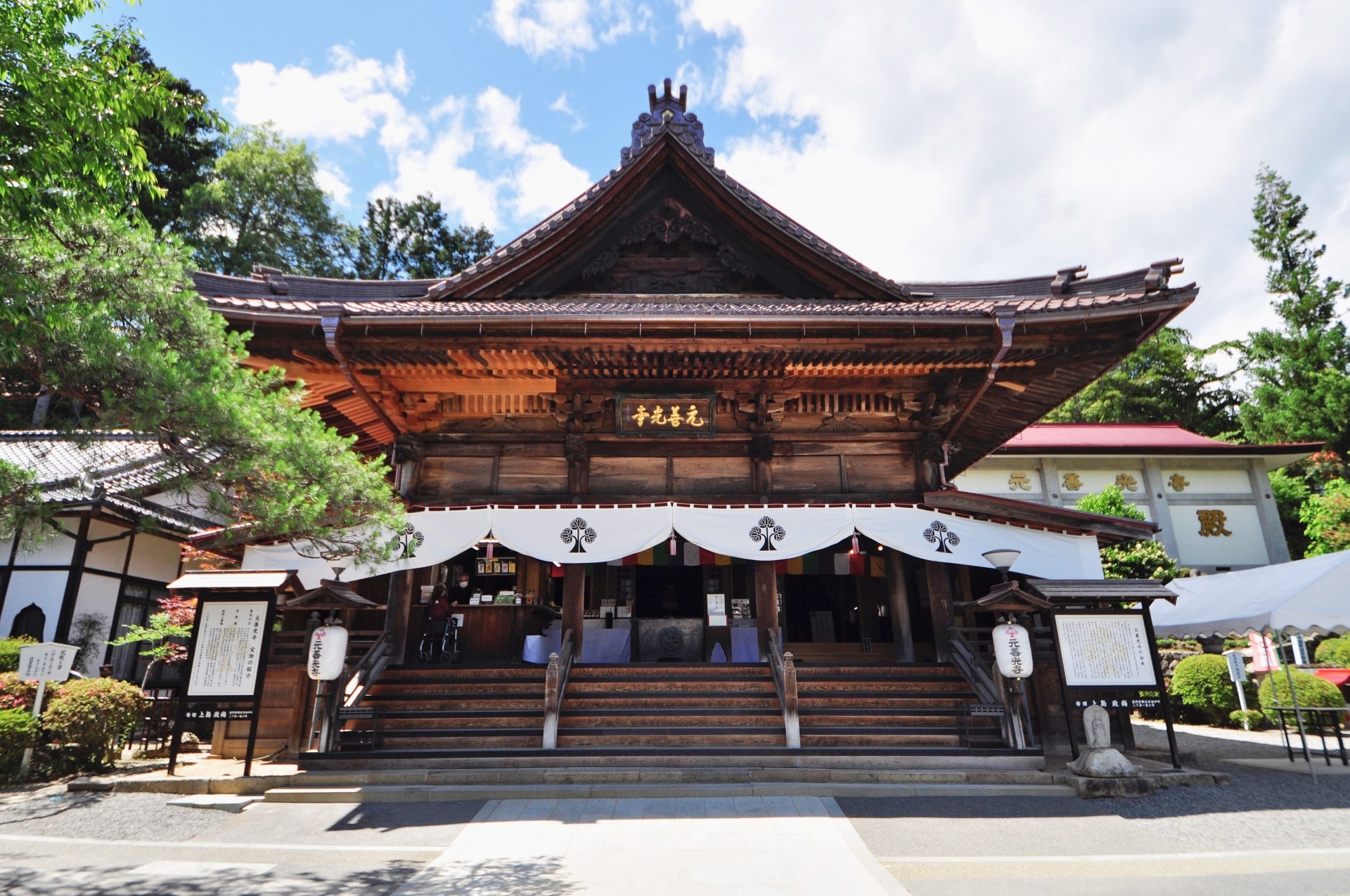
One of Japan’s most important and popular temples, housing the first Buddhist statue ever brought to Japan.
The Vibe: Historic, spiritual, and grand.
Must-Do: Try the “Okaidan Meguri” (Underground Passage). You walk through a pitch-black tunnel under the main hall to touch the “Key to Paradise.” It is a terrifying yet enlightening experience.
Getting There: A 10-minute bus ride or a 30-minute walk from Nagano Station (Zenkoji Exit).
3. Gateway to Ski Resorts (Hakuba & Shiga Kogen)
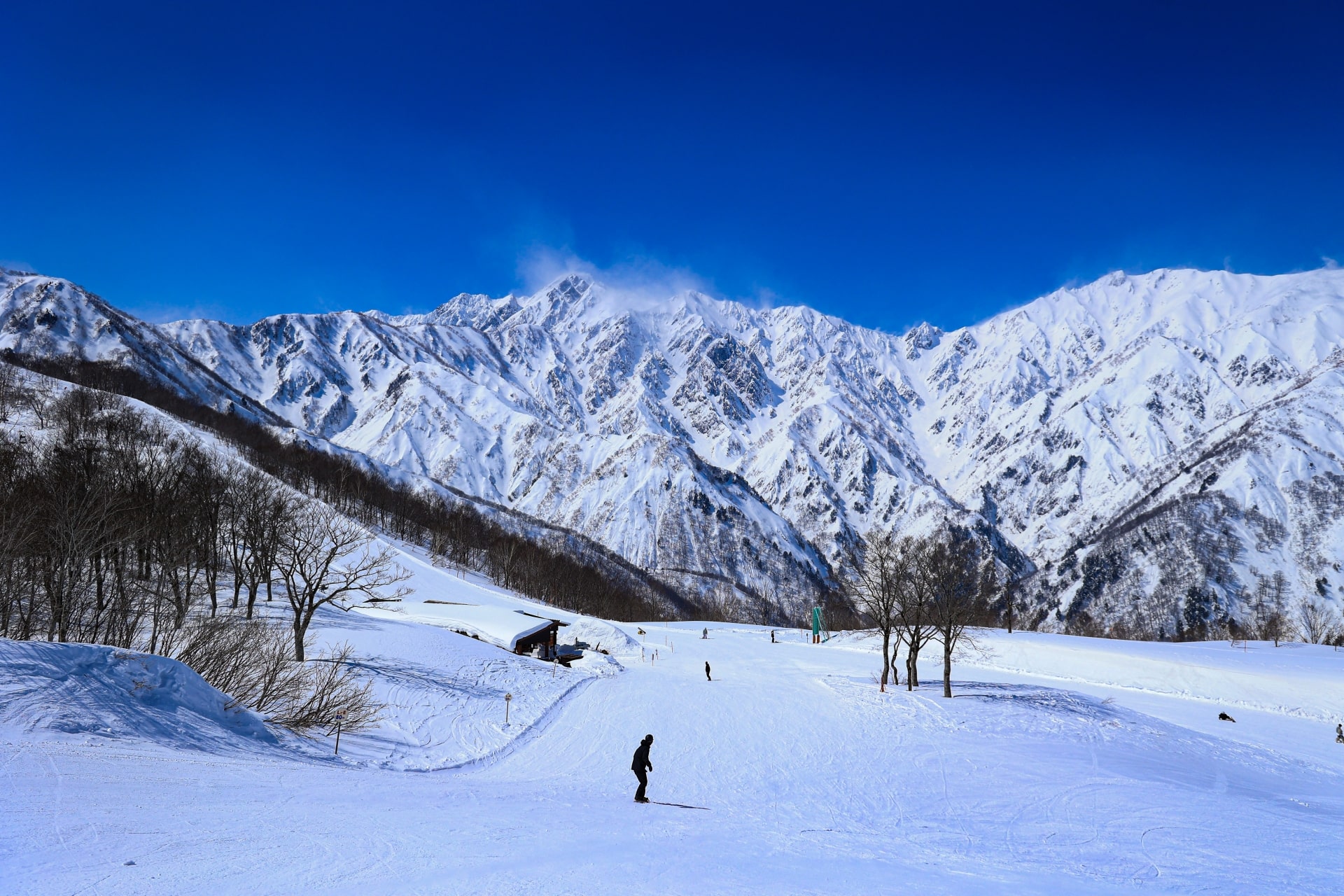
If you brought your gear, Nagano Station is the primary transfer hub for the Japan Alps.
Hakuba Valley: Famous for international vibes and epic powder. Take the “Alpico” bus from the East Exit (approx. 70 min).
Shiga Kogen: One of Japan’s largest ski areas. Take the “Nagaden” bus from the East Exit (approx. 70 min).
Traveling from Tokyo to Nagano is straightforward once you understand the train options and booking rules. Keeping a few key points in mind will help ensure a smooth journey.
The “Kagayaki” is the fastest option, but a seat reservation is always required.
Booking in advance through an official, English friendly service makes planning much easier.
For a more comfortable start to your trip, upgrading your seat or enjoying an ekiben onboard can add to the experience.
Ready to book? Check the timetables and secure your seats today to ensure a smooth start to your Nagano adventure.
Secure your Tokyo–Nagano Shinkansen seats
The Hokuriku Shinkansen between Tokyo and Nagano runs frequently, but reserved seats on the fastest trains can fill up quickly. Book in advance to lock in your preferred departure time and avoid sold-out departures.
▽Related Articles▽

Written by
Japan Bullet Train is an official JR Shinkansen ticket agent, providing reliable services to travelers visiting Japan from around the world. Our mission is to offer clear, accurate, and up-to-date transportation information so that every visitor can navigate Japan with confidence. From the latest Shinkansen schedules connecting major cities such as Tokyo, Kyoto, and Osaka, to seat class differences, route features, booking methods, luggage rules, and common traveler pitfalls, we explain everything based on real usage data and on-site experience. Leveraging our deep expertise in Japanese transportation, we share practical insights that help international travelers enjoy a smooth and stress-free journey across the country. Japan Bullet Train: https://www.japan-bullettrain.com/
- +4 4
-
-