Tokyo to Fuji Five Lakes: Best Transport Options
Best Ways to Travel from Tokyo to the Fuji Five Lakes


- +0 0
-

-


Traveling from Tokyo to the Fuji Five Lakes is like a small puzzle with several workable solutions (and some details to look out for). As the name implies, rather than a single destination, the area is a cluster of lakes spread around the northern base of Mount Fuji, each with different levels of access and transport convenience.
Kawaguchiko and Lake Yamanaka function as the main gateways, served by direct trains or highway buses from Tokyo. The remaining lakes (Sai, Shoji, and Motosu) require additional local travel, usually via Kawaguchiko. That distinction alone determines which route makes sense and which will quietly waste half your day.
The “best” transport option depends on what you value most: speed, simplicity, cost control, or flexibility once you arrive. Time of year also plays a role, as traffic, service frequency, and even visibility of Mount Fuji can shift dramatically by season.
This guide breaks down each realistic option, explains who it suits, and highlights the trade-offs, helping you choose the most convenient option.
See also: 20 Best Things to Do in Mt Fuji Area: Mt Fuji Bucket List
Overview of the Fuji Five Lakes
Access to the Fuji Five Lakes or Fuji Goko (富士五湖) varies depending on location, with Kawaguchiko or Yamanaka being well connected to Tokyo, while the remaining lakes—Saiko, Shojiko, and Motosuko—are quieter and less developed. They have no direct rail access and rely on local bus routes that originate around Kawaguchiko. However, services are infrequent, especially outside peak seasons, and planning errors can quickly turn into long waits, so careful planning is required for a smooth day trip.
Lake Kawaguchi (河口湖, Kawaguchiko)
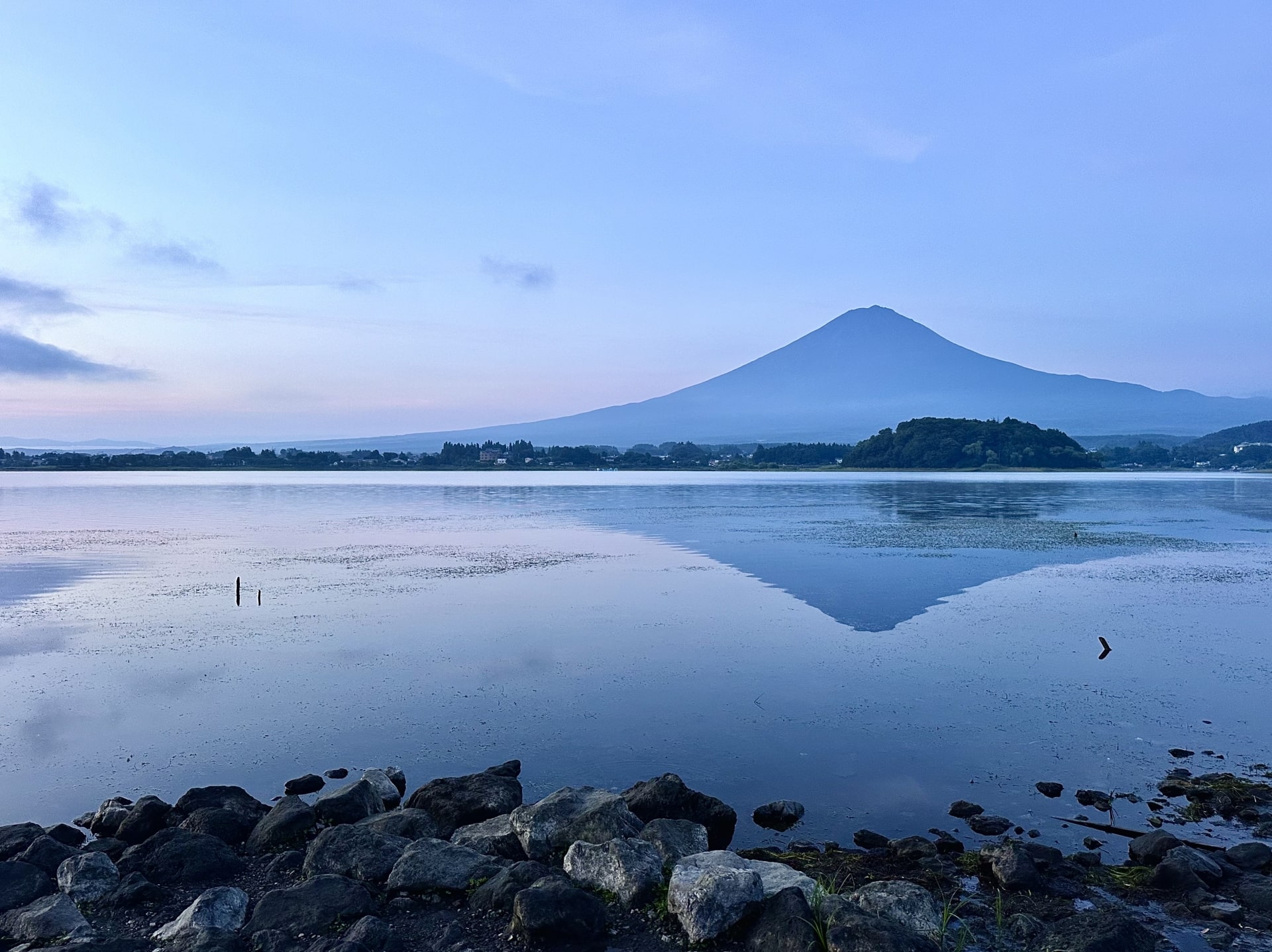
The primary hub. Kawaguchiko sits at the end of the Fujikyu Railway line and is the arrival point for most direct highway buses from Tokyo. Hotels, sightseeing buses, and onward connections are concentrated here, making it the easiest lake to reach without a car.
Lake Yamanaka (山中湖, Yamanakako)
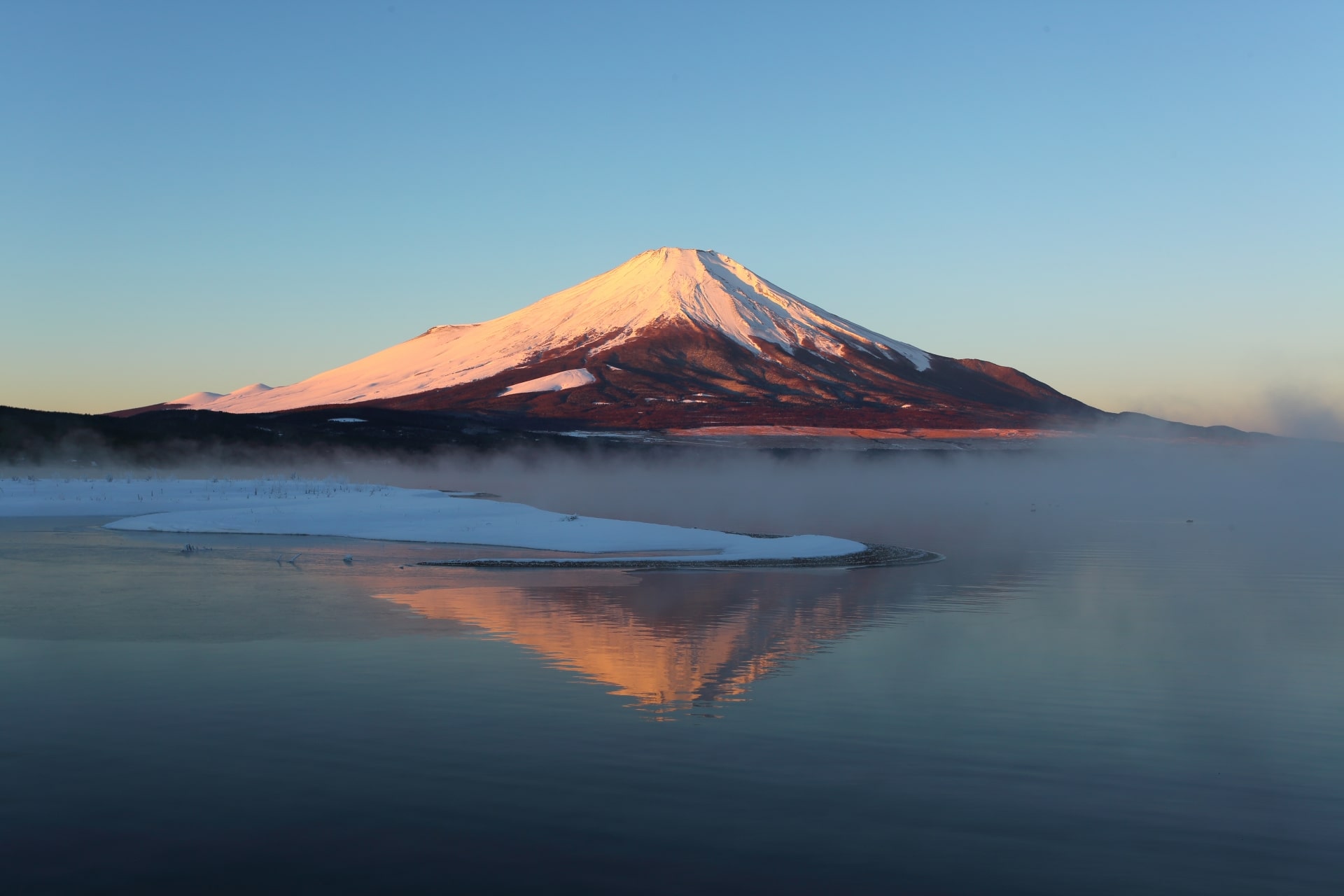
It comes second in terms of accessibility. Yamanakako lacks a train station but is well served by direct highway buses from major Tokyo terminals. For travelers focused on open views of Mount Fuji and lakeside walks rather than rail convenience, it often works better than expected.
Lake Sai (西湖, Saiko)
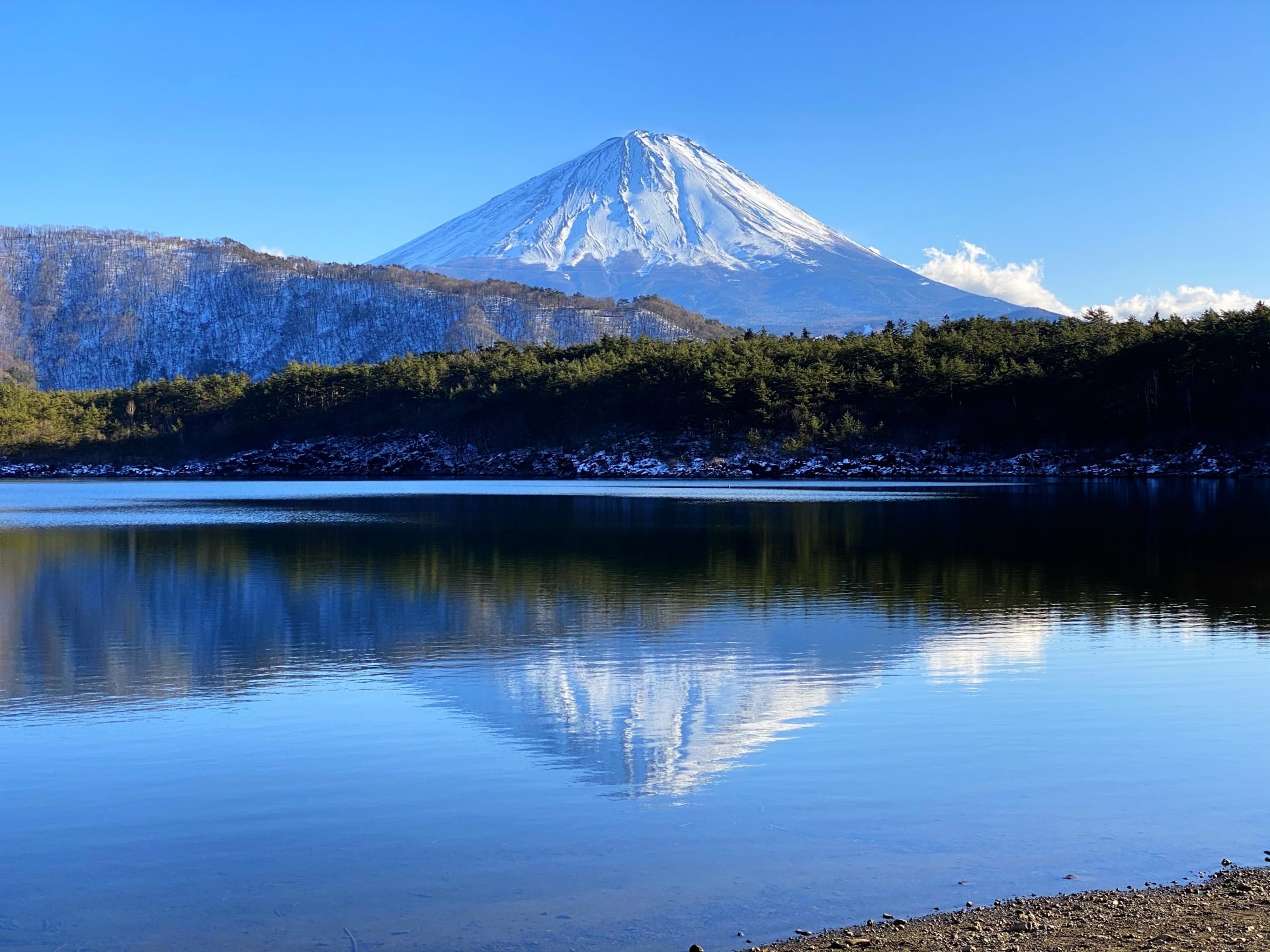
It sits just west of Kawaguchiko and marks the transition to the less developed side of the region. Saiko is reachable by local bus, but services are less frequent and mainly designed for sightseeing rather than commuting. Access is manageable, but timing matters.
Lake Shoji (精進湖, Shojiko)
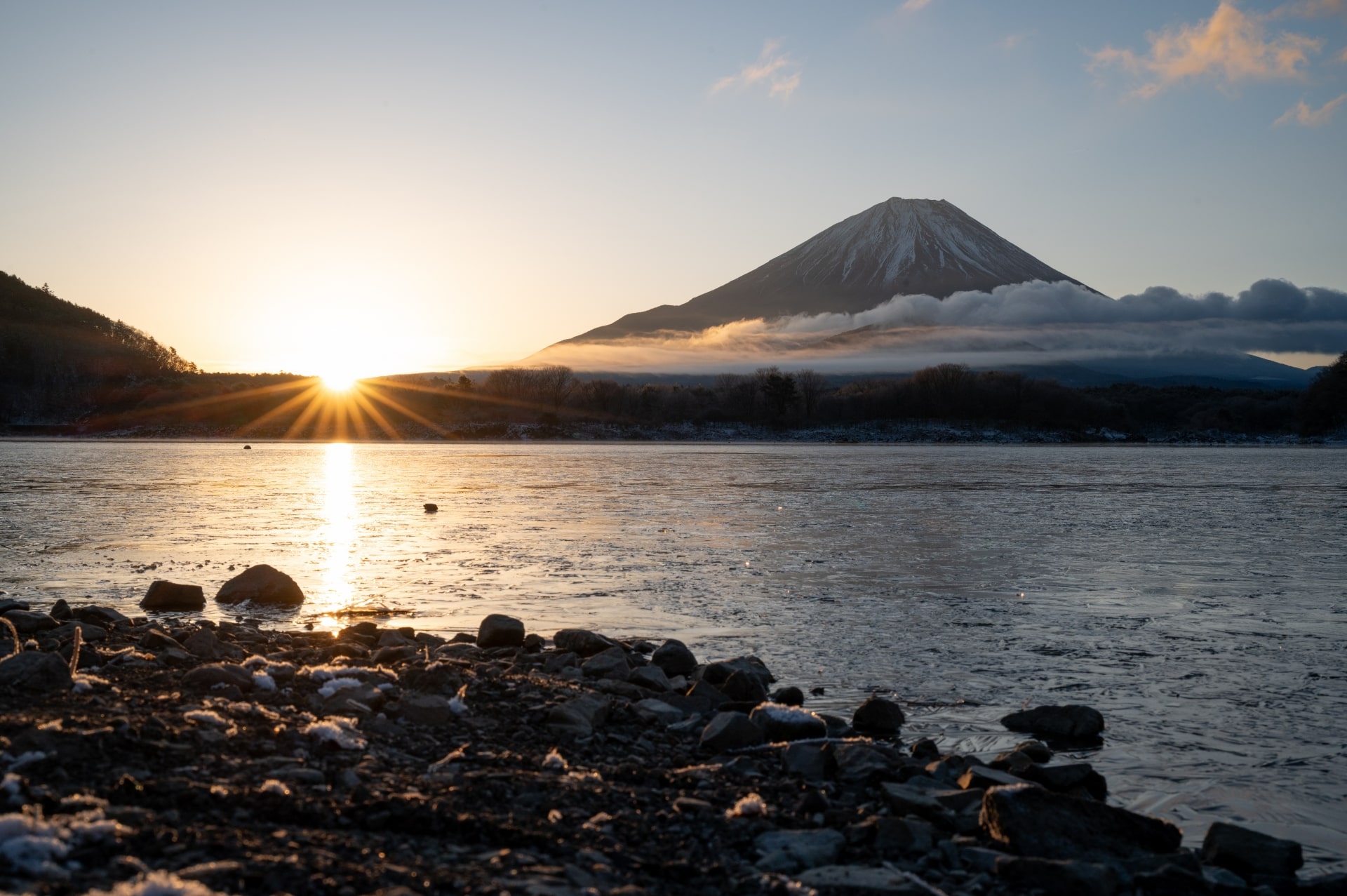
Shojiko is smaller and far quieter. Public transport reaches it via the same bus line that serves Sai, but with fewer departures. Miss a bus here, and you feel it. This lake rewards careful planning, or a car.
Lake Motosu (本栖湖, Motosuko)
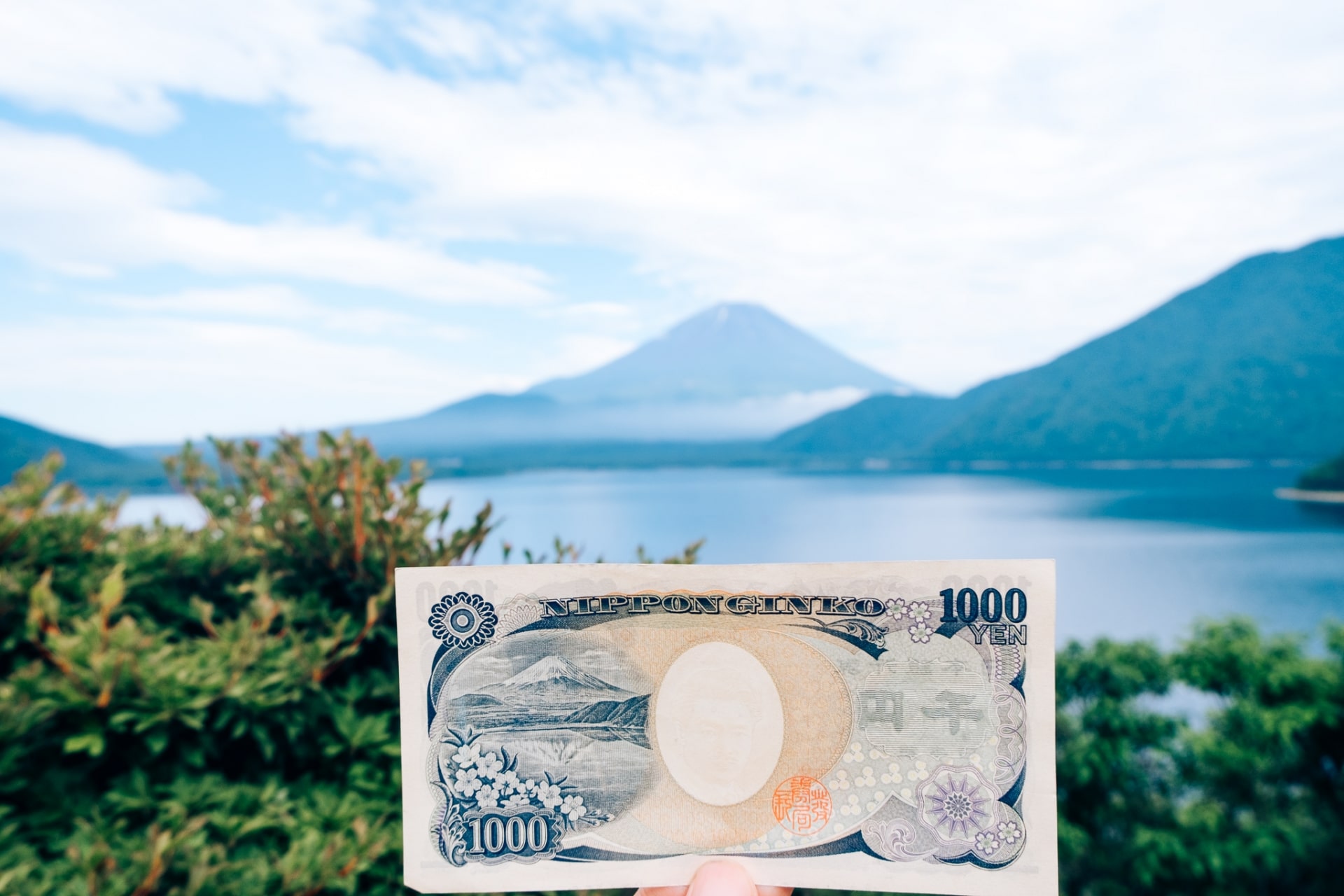
This is the most remote of the five, but oddly famous thanks to being featured on the back of the 1,000 yen note in its 2004-2024 edition. It lies furthest from the rail and bus core, with limited services and longer travel times from Kawaguchiko, so access by car is recommended.
Tokyo to Kawaguchiko: Best Transport Options
Kawaguchiko is the easiest and most popular entry point to the Fuji Five Lakes. It combines reliable transport, frequent services, and a compact arrival area that works well for short stays and first-time visitors. Three routes stand out in practice:
| Feature | 🚆 Train + Fujikyu Railway | 🚌 Direct Highway Bus | 🚄 Fuji Excursion (Direct Train) |
|---|---|---|---|
| Travel Time | ~2.5 hours (Transfer at Otsuki) |
~2 – 2.5 hours (Traffic dependent) |
~2 hours (No transfers) |
| Cost (One-Way) | ¥2,500 – ¥3,500 (Per Person) |
¥2,000 – ¥3,000 (Per Person) |
¥4,000 – ¥4,200 (Per Person, Reserved Seat) |
| Comfort & Ease | ⭐⭐⭐⭐ Reliable, but transfer required. |
⭐⭐⭐ No transfers, but traffic risk. |
⭐⭐⭐⭐⭐ Smooth, direct, and stress-free. |
| Best For… | Cost Control & Rail Lovers | Simplicity & Luggage | Speed & Comfort (First-Time Visitors) |
Local or Limited Express Train + Fujikyu Railway
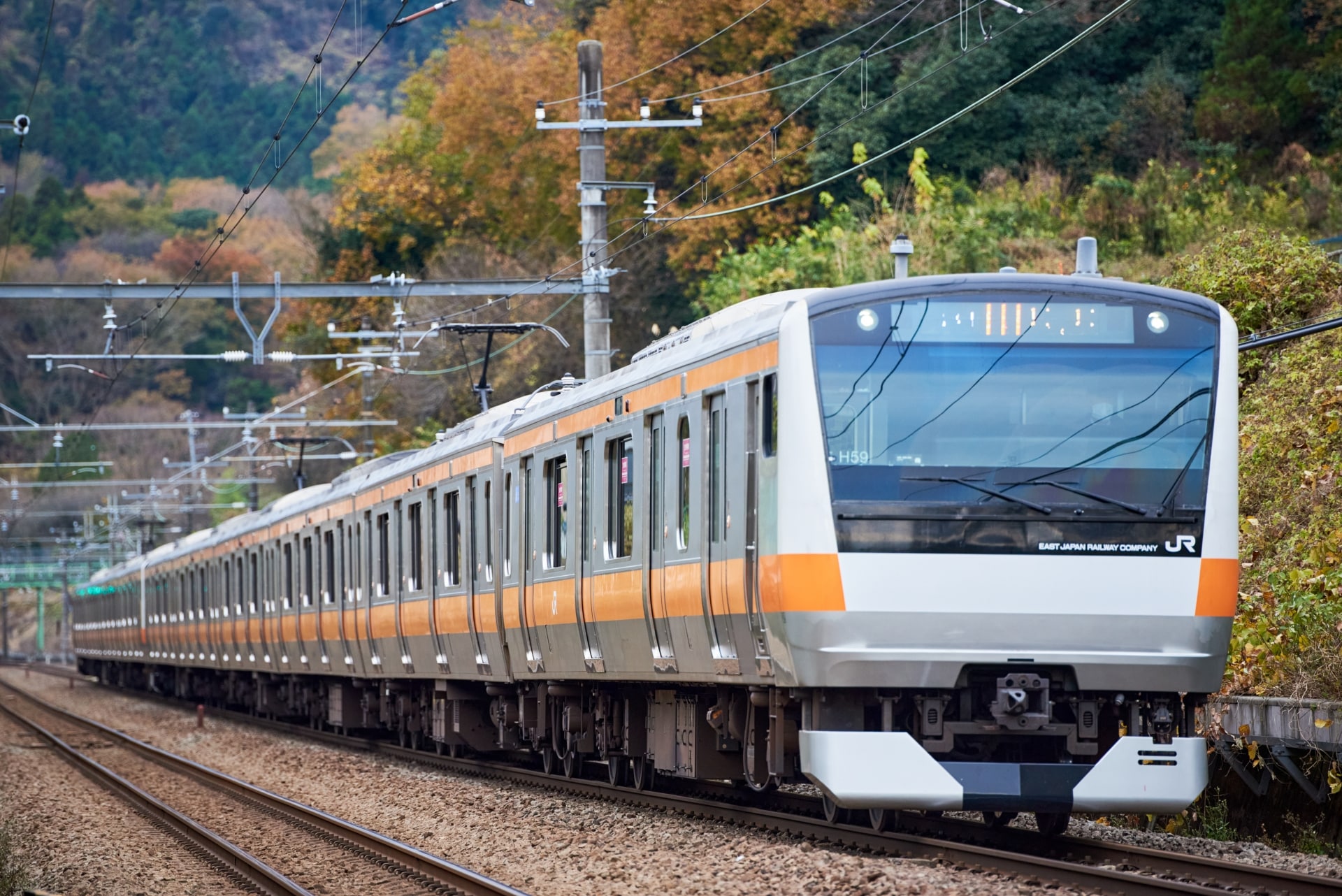
This classic rail route runs from Shinjuku to Otsuki on the JR Chuo Line, followed by the Fujikyu Railway to Kawaguchiko. Travel time averages around 2.5 hours, depending on connections and the choice between local trains or limited express trains between Shinjuku and Otsuki. Local trains are cheaper, but travel time will be longer. The cost range will typically be between ¥2,500–¥3,500 one way
The main advantage is predictability. Trains are rarely affected by road traffic, and the journey is easy to pace. The downside is the transfer at Otsuki, which can feel rushed during busy periods. Costs are moderate, and seat reservations on the limited express are recommended on weekends.
Best suited for: travelers who prefer rail travel and fixed schedules.
| Transport Type | JR Train + Fujikyu Railway |
|---|---|
| Route | Shinjuku → Otsuki (JR Chuo Line) Otsuki → Kawaguchiko (Fujikyu Railway) |
| Travel Time | Approx. 2.5 hours (varies by train type) |
| Cost (One-Way) | ¥2,500 – ¥3,500 per person |
| Key Features | ・Reliable schedule, unaffected by traffic ・Transfer at Otsuki required ・Limited express seats recommended on weekends |
Direct Highway Bus to Kawaguchiko
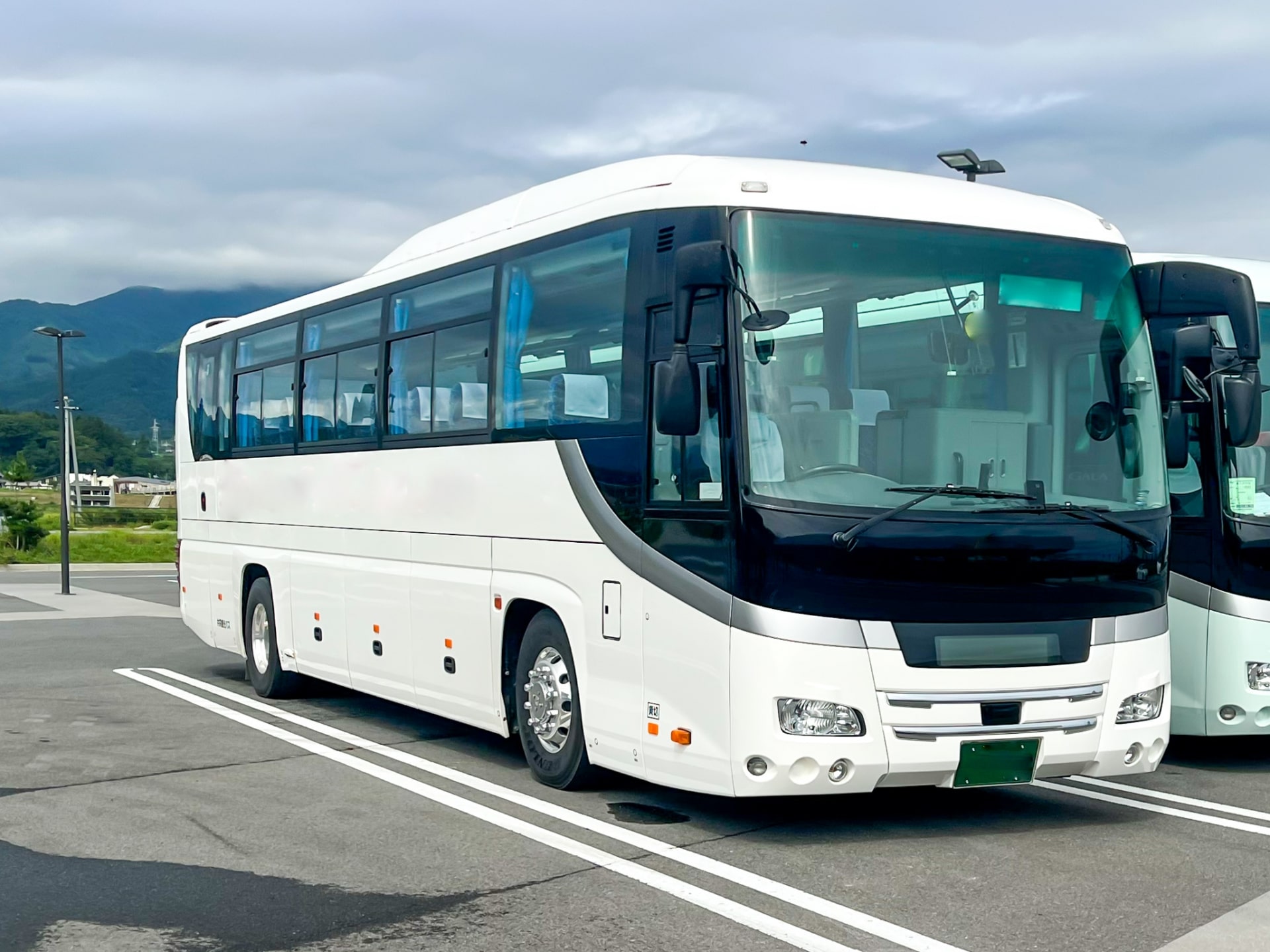
Highway buses run directly to Kawaguchiko from Shinjuku, Shibuya, Tokyo Station, and other major hubs. The trip typically takes about two hours, making it the fastest option on quiet days. The standard fare goes around ¥2,000–¥2,500 (premium seats or certain buses may be slightly more expensive)
Buses are luggage-friendly and eliminate transfers, but they depend heavily on traffic conditions. On weekends and during peak seasons, delays are common. Advance reservations are strongly advised, as popular services sell out quickly.
Best suited for: travelers prioritizing simplicity and door-to-door convenience.
From Busta Shinjuku (Shinjuku Expressway Bus Terminal)
Busta Shinjuku is the main long-distance bus hub in Tokyo and the most popular departure point for Kawaguchiko-bound services. It offers the widest choice of departure times and the best odds of finding a seat that fits your schedule. For most travelers, this is the default option.
-
Travel time: Approx. 1 hour 45 minutes to 2 hours 15 minutes in normal conditions
-
Fare (one way): Around ¥2,100–¥2,300
-
Departure frequency: Very high; usually 1–2 departures per hour during the day, more in peak seasons
-
Reservations: Strongly recommended, especially on weekends and during cherry blossom or autumn foliage seasons
-
Where to buy tickets:
-
Online via Japanese bus reservation platforms (English available on major sites)
-
Ticket counters at Busta Shinjuku
-
Some services allow same-day purchase if seats remain
-
From Tokyo Station
Tokyo Station departures are fewer but useful for travelers staying near the eastern side of the city or arriving by Shinkansen. Bear in mind that Tokyo Station buses are convenient geographically but less flexible.
-
Travel time: Approx. 2 hours 15 minutes to 2 hours 40 minutes (slightly longer on average)
-
Fare (one way): Around ¥2,100–¥2,400
-
Departure frequency: Limited; usually a handful of departures per day
-
Reservations: Required or strongly advised due to low frequency
-
Where to buy tickets:
-
Online in advance
-
Bus ticket counters around Tokyo Station (Yaesu side)
-
| Transport Type | Direct Highway Bus |
|---|---|
| Route | Shinjuku / Shibuya / Tokyo Station → Kawaguchiko |
| Travel Time | Approx. 2 – 2.5 hours (Can be longer during traffic congestion) |
| Cost (One-Way) | ¥2,000 – ¥3,000 per person |
| Key Features | ・No transfers, very easy for first-time visitors ・Luggage-friendly ・Highly affected by weekend & seasonal traffic ・Advance reservation strongly recommended |
Fuji Excursion Limited Express (Direct Train)
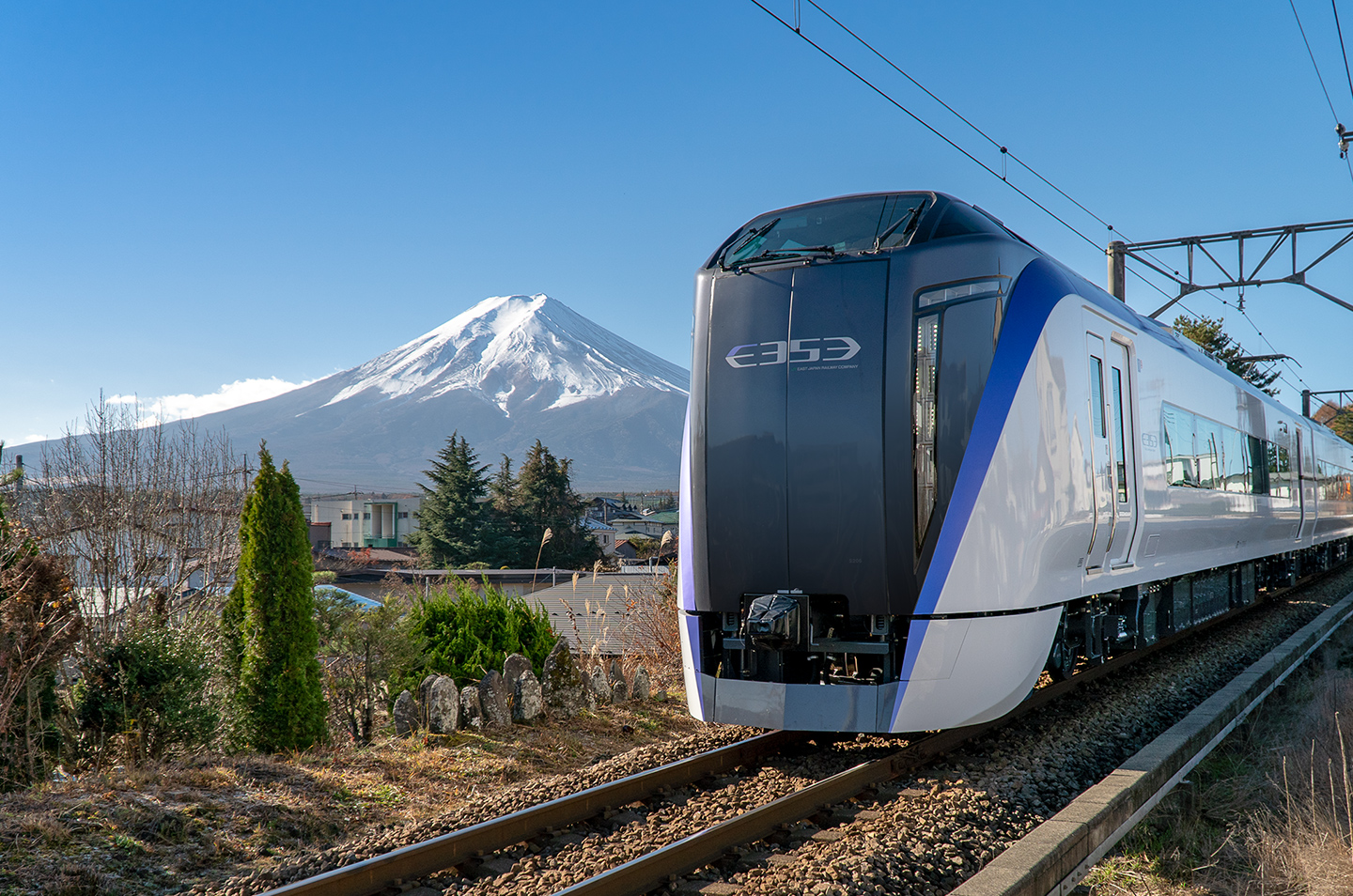
The Fuji Excursion is the only direct train from Shinjuku to Kawaguchiko, running without transfers. Travel time is roughly two hours, combining speed with comfort. The cost for a one-way trip is around ¥4,000.
Seats are reserved, luggage space is limited but manageable, and services are less frequent than local trains. During peak travel periods, tickets can sell out days in advance.
For more details, check the official website.
Best suited for: travelers who want the fastest rail option with minimal hassle.
| Transport Type | Fuji Excursion Limited Express |
|---|---|
| Route | Shinjuku → Kawaguchiko (Direct, no transfers) |
| Travel Time | Approx. 2 hours |
| Cost (One-Way) | ¥4,000 – ¥4,200 per person (Reserved seat only) |
| Key Features | ・Fastest rail option ・No transfers, very smooth experience ・Limited number of daily services ・Can sell out days in advance during peak seasons |
Tokyo to Lake Yamanaka: Best Transport Options
Lake Yamanaka is one of the easiest of the Fuji Five Lakes to reach from Tokyo—but routes vary enough that planning saves time and stress. Compared with Kawaguchiko, rail access is indirect, and most visitors rely on express buses or a train-plus-local-bus approach.
| Feature | 🚌 Highway Bus | 🚆 Train + Bus Combination |
|---|---|---|
| Travel Time | ~2.5 hours (Traffic dependent) |
~3 hours or more (Connection dependent) |
| Cost (One-Way) | ~¥2,000–¥2,600 (Per Person) |
~¥3,200–¥3,800 (Per Person) |
| Comfort & Ease | ⭐⭐⭐⭐⭐ No transfers, luggage stored underneath, reserved seating |
⭐⭐⭐ Transfer needed, tighter connections. |
| Best For… | First-time visitors, travelers with luggage | Rail-focused travelers, JR Pass users, avoiding road traffic |
Highway Bus to Lake Yamanaka
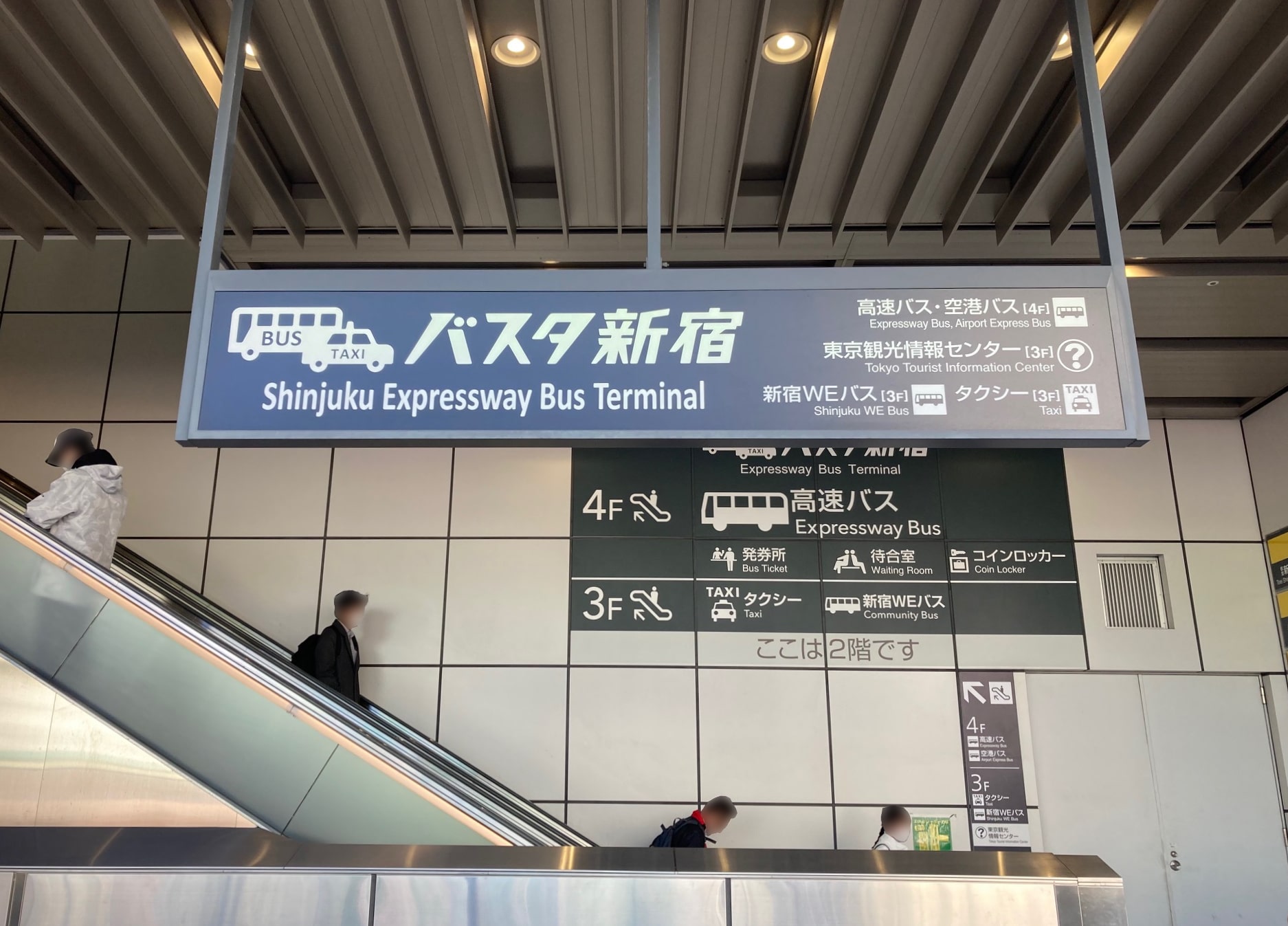
The standout option from Tokyo to Lake Yamanaka is the direct highway bus. Multiple daily departures connect Shinjuku Expressway Bus Terminal with the Yamanakako Asahigaoka Bus Stop—a central point on the lake’s southern shore. Travel time is about 2-2.5 hours, depending on traffic. The cost range is typically around ¥2,500–¥3,000 one way.
There are no transfers, buses are luggage-friendly and run frequently. However, Bus times can vary with traffic, especially on weekends and holidays.
Best suited for: most travelers, particularly those with baggage or limited time.
| Transport Type | Direct highway bus |
|---|---|
| Route | Shinjuku → Lake Yamanaka |
| Travel Time | Approx. 2 – 2.5 hours (can increase with traffic) |
| Cost (One-Way) | ¥2,500 – ¥3,000 per person |
| Key Features | • No transfers required • Reserved seating on most services • Luggage stored in underfloor compartments • Multiple daily departures • Most time-efficient option in normal traffic |
Train + Bus Combination to Lake Yamanaka
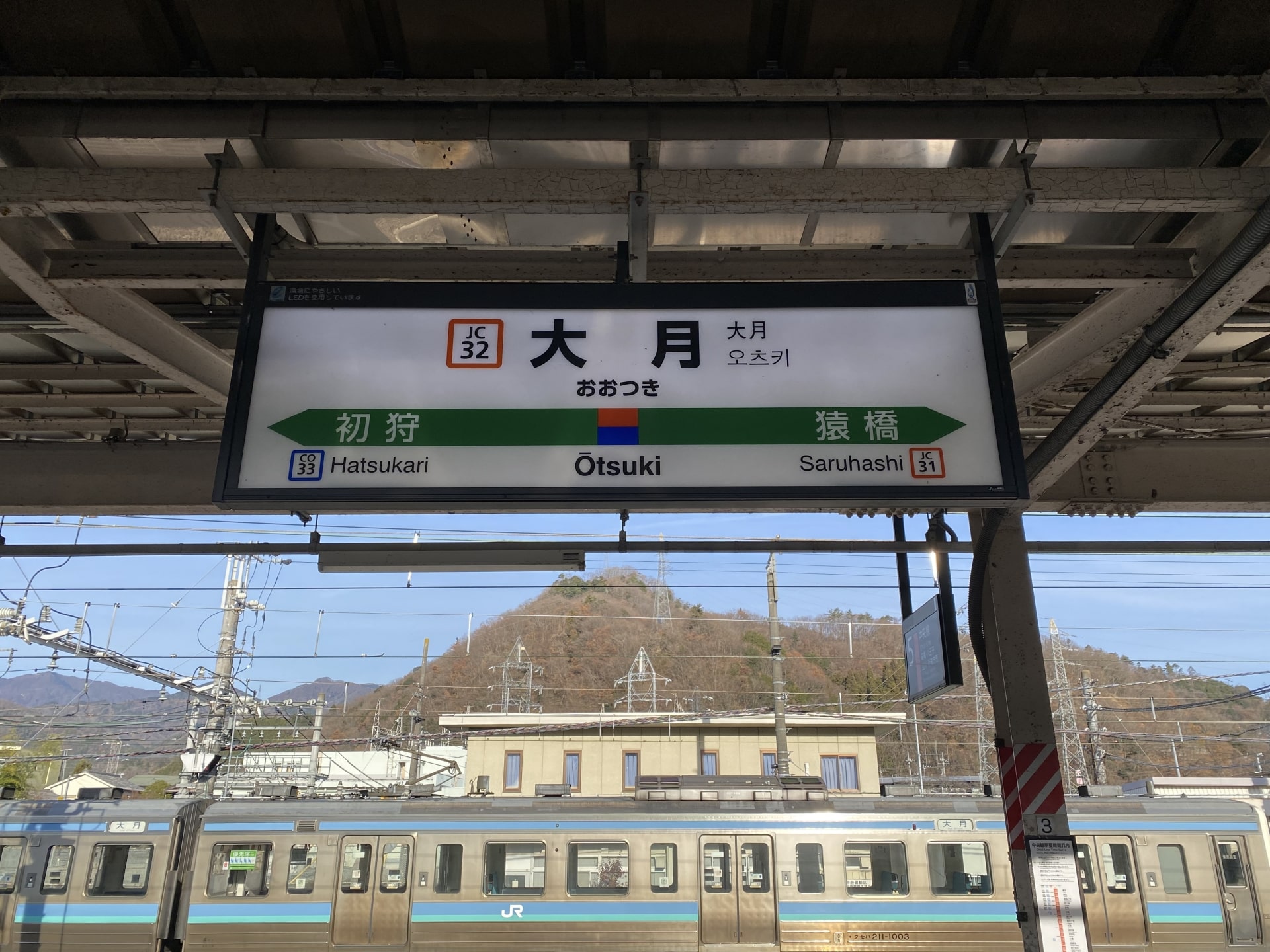
If you prefer rail travel due to any particular reason, you can combine trains with a local bus to reach the lake:
Train leg: Take the JR Chuo Line from Tokyo or Shinjuku to Otsuki, then transfer to the Fujikyu Railway to Mt. Fuji Station.
Local bus: From Fujisan Station, catch a local route bus out to Lake Yamanaka. Services run roughly every 30–60 minutes and serve stops including Asahigaoka. Total travel time may be around 3 hours or more, depending on connections. The cost is around ¥3,500 one way.
This allows for predictable schedules and scenic rail segments, but also more transfers and longer travel time than a direct bus.
Best suited for: travelers aiming to combine the journey with rail sightseeing or those maximizing pass-based fares.
| Transport Type | Train + local bus |
|---|---|
| Route | Tokyo / Shinjuku → Otsuki (JR Chuo Line) → Fujisan Station (Fujikyu Railway) → Lake Yamanaka (local bus) |
| Travel Time | Approx. 3 hours or more, depending on connections |
| Cost (One-Way) | ¥3,200 – ¥3,800 per person |
| Key Features | • Less affected by road congestion • Scenic rail segment around Mount Fuji • JR Pass usable on part of the route • Requires careful transfer timing • Local buses around the lake are less frequent |
Reaching the Other Fuji Five Lakes (Sai, Shoji, Motosu)
If your itinerary includes Lake Sai, Lake Shoji, or Lake Motosu, be ready for additional planning beyond the straightforward routes to Kawaguchiko or Yamanaka. These lakes are quieter and more spread out, with less frequent public transport and longer travel times from the main hub at Kawaguchiko.
Local Buses from Kawaguchiko Station
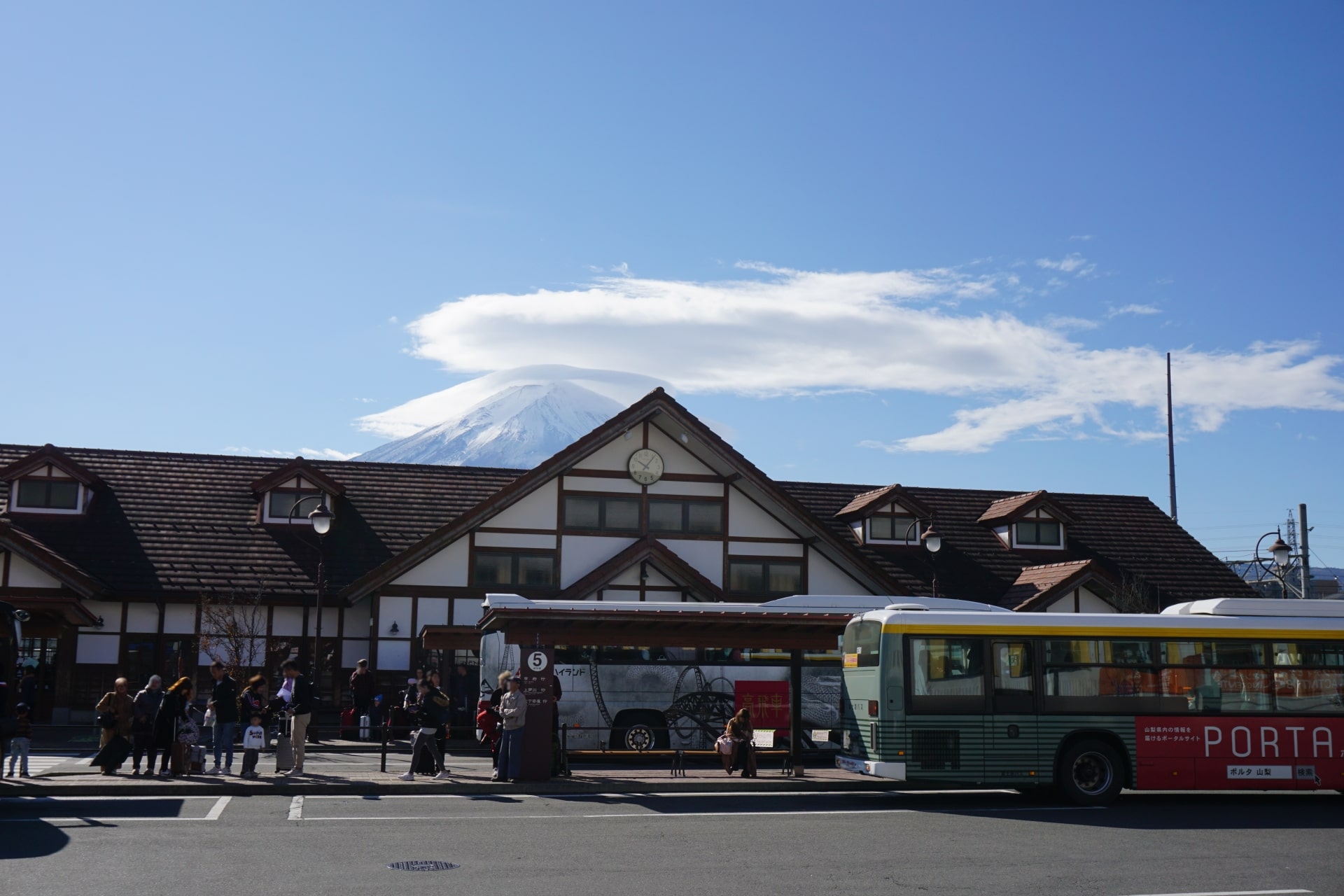
Once you arrive at Kawaguchiko Station, you can reach the more remote lakes via local Fujikyu buses. Three color-coded sightseeing lines connect Kawaguchiko to the surrounding lakes, but frequency drops significantly compared with buses around Lake Kawaguchi and Yamanaka.
- Green Line (Sai area): heads west around Lake Sai, serving stops near Lake Sai. Buses run roughly every 30 minutes.
- Blue Line (Shoji & Motosu): continues further west past Lake Saiko, then skirts Lake Shoji and terminates near Lake Motosu. Frequency is typically about once per hour on this line.
Overall travel times from Kawaguchiko Station:
- Lake Sai: ~25 minutes by bus.
- Lake Shoji: ~45–50 minutes by bus.
- Lake Motosu: ~45–50 minutes by bus.
These buses serve scenic points such as wind caves and observation areas, so they’re useful for accessing attractions along the way, too. But the key trade-off is that bus services to Shoji and Motosu are infrequent compared with routes around Kawaguchiko and Yamanaka. Expect gaps of an hour or more between departures, and check timetables carefully before you plan your day.
Because of this, onward travel often involves some walking from the stop to lakeside viewpoints or accommodation. Make sure you confirm exact stop names and walking distances ahead of time.
| Transport Type | Local sightseeing and route buses (Fujikyu Bus) |
|---|---|
| Route | Kawaguchiko Station → Lake Saiko → Lake Shojiko → Lake Motosuko (via Green Line / Blue Line) |
| Travel Time | • Lake Saiko: ~20–30 minutes (can increase with traffic) • Lake Shojiko: ~40–50 minutes (can increase with traffic) • Lake Motosuko: ~50–60 minutes (can increase with traffic) |
| Cost (One-Way) | • Saiko: ~¥300–¥500 • Shojiko: ~¥600–¥800 • Motosuko: ~¥900–¥1,000 |
| Key Features | • Only public transport access to the western lakes • Services originate at Kawaguchiko Station • Infrequent departures, especially to Shojiko and Motosuko • Timetable planning is essential • 1-day and multi-day bus passes available |
Alternatives to Public Transport
If your plan revolves around exploring remote lakes with minimal waiting and maximum flexibility, consider these possibilities:
- Rental car: Renting a car gives you full control and dramatically simplifies access to Sai, Shoji, and Motosu. Roads between the lakes are straightforward, parking is available near viewpoints, and you avoid bus schedules altogether.
- Taxi segment: For short hops where a bus doesn’t stop close enough to your final destination, a taxi from Kawaguchiko or a nearby core stop can bridge the gap—but costs add up quickly.
- Day tours from Kawaguchiko: Some small private tours or hotel-based shuttle loops include stops at one or more of the remote lakes. These are less common than standard tours and usually need to be booked in advance.
Renting a Car to Visit Fuji Five Lakes: Flexibility vs Practical Trade-offs
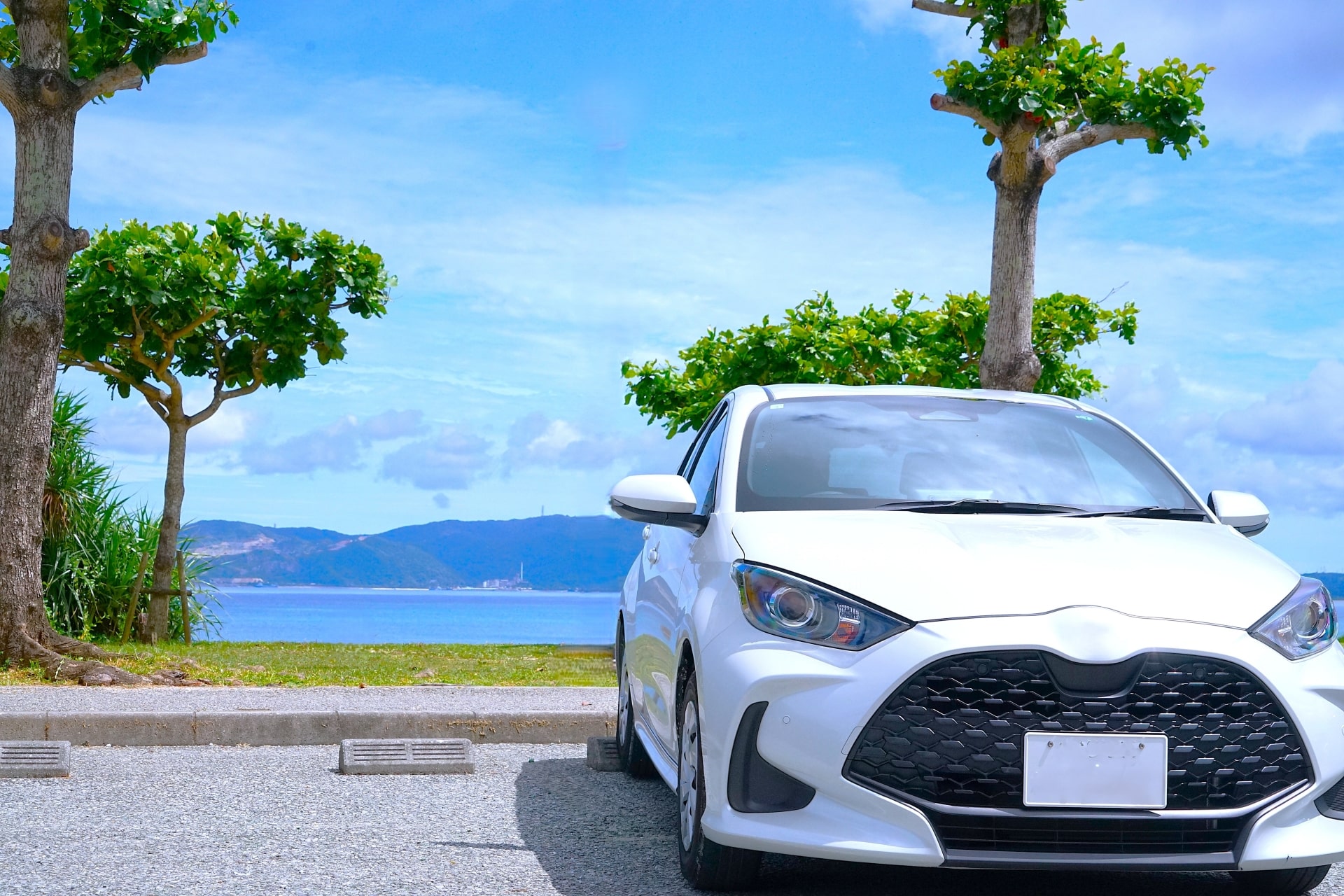
Renting a car to reach and explore the Fuji Five Lakes region changes the travel experience from “follow a timetable” to “set your own pace.” For many travelers — especially those targeting multiple lakes or scenic back-roads viewpoints — a vehicle solves the biggest transport puzzles around Sai, Shoji, and Motosu, where buses are sparse and schedules matter.
Driving Time and Basic Logistics
From central Tokyo, the drive to the Fuji Five Lakes typically takes about 1.5–2.5 hours under normal traffic, using the Chuo Expressway via Otsuki and connecting with local roads toward Kawaguchiko. Toll costs on expressways can run around ¥2,600–¥3,100 one-way, depending on your route and vehicle, and most rental cars in Japan can be equipped with an ETC card to handle tolls smoothly.
A rental gives you an edge on timing and access: early starts without worrying about the first bus, stops at lakeside vistas whenever you want, and the freedom to shape your itinerary rather than coordinate transfers.
Pros of Renting a Car
- Unmatched flexibility: With a car, you control both the schedule and route. Want to linger at a viewpoint around Lake Saiko? Detour to a trailhead near Lake Motosu? A vehicle makes these choices possible without paying for tours or waiting for buses.
- Coverage of remote lakes: Public transport to Sai, Shoji, and Motosu exists, but is infrequent and slow. Driving lets you visit all five lakes in a single day with reasonable travel times between them, something public options rarely allow.
- Convenience for gear and luggage: Cameras, picnic gear, camping equipment or even child seats are easier to handle in your own vehicle. Many lakeside areas offer free or paid parking near attractions and trailheads.
Cons of Renting a Car
- Cost adds up: Rental fees, tolls, fuel, and parking can make the total noticeably higher than public transport, especially for solo travelers. A compact rental with tolls and fuel often exceeds the combined train/bus price unless you’re splitting costs across several people.
- Traffic and navigation: Congestion on weekends and holidays is real, especially on Golden Week, Obon, and peak foliage weekends. Leaving early or picking a weekday mitigates this, but rush-hour traffic can add significant time. Navigation also depends on GPS and basic comfort with left-side driving and Japanese signage.
Note on driver requirements: You need a valid driver’s license and an International Driving Permit (IDP) accepted in Japan. Rental offices will check both at pick-up, and having paper copies ready saves time.
| Transport Type | Rental car (self-drive) |
|---|---|
| Route | Tokyo → Fuji Five Lakes via Chuo Expressway or Tomei Expressway |
| Travel Time | Approx. 2–2.5 hours in light traffic; significantly longer on weekends and holidays |
| Cost (One-Way) | • Car rental: ~¥7,000–¥12,000 • Expressway tolls: ~¥2,600–¥3,100 • Fuel: ~¥1,500–¥2,500 |
| Key Advantages | • Full access to all five lakes, including Sai, Shoji, and Motosu • No dependence on bus timetables • Easy lake-to-lake movement • Ideal for early mornings or late sunsets |
| Main Trade-offs | • Traffic congestion common on weekends • Parking fees at popular spots • Navigation and signage sometimes limited in English • Ideal for early mornings or late sunsets |
| Best For | Groups, photographers, multi-lake itineraries, travelers prioritizing flexibility |
Seasonal and Weather Considerations Around the Fuji Five Lakes Area
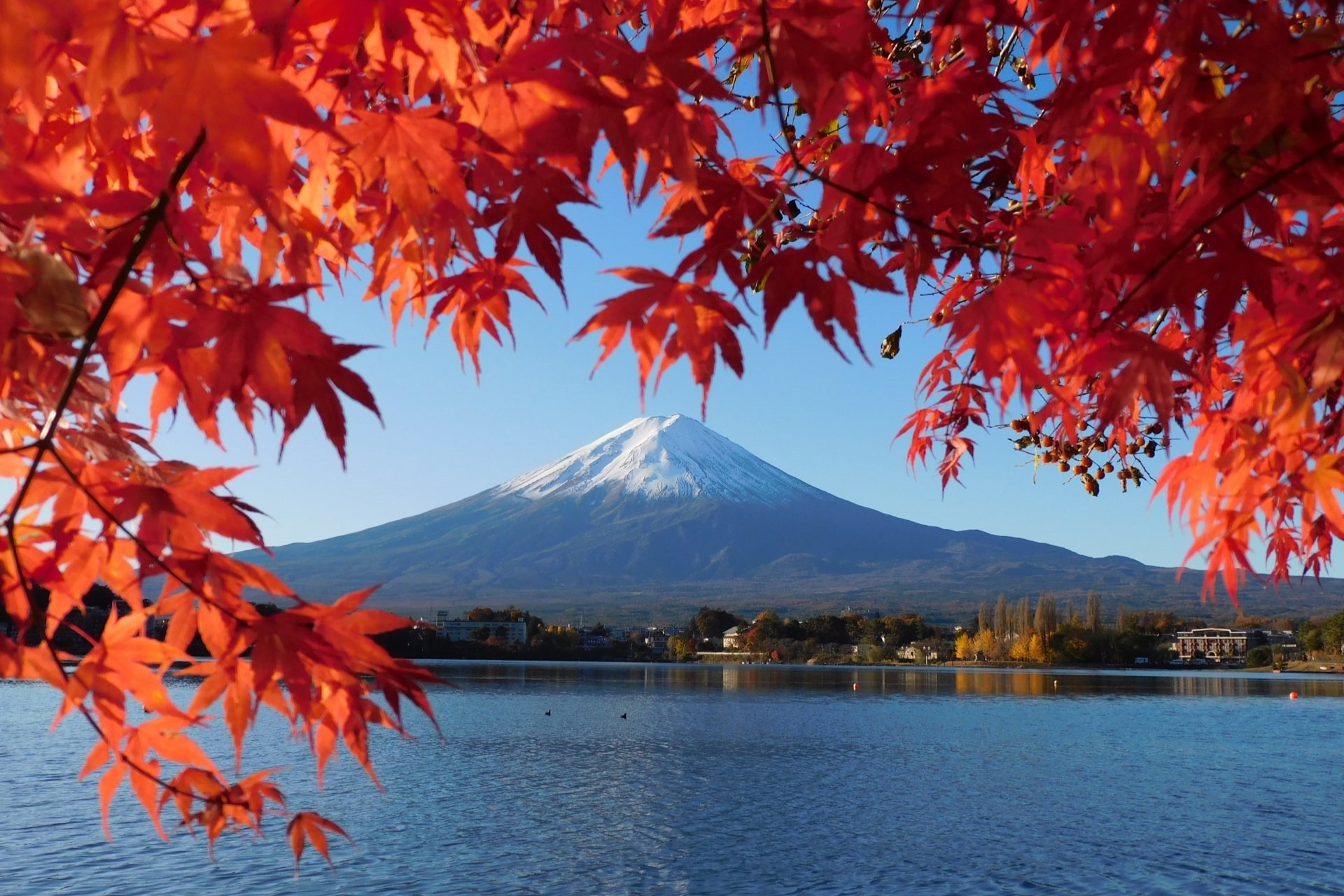
When you’re planning transport from Tokyo to the Fuji Five Lakes, timing your trip around seasonal patterns and weather has practical implications far beyond scenery alone. Travel windows affect visibility of Mount Fuji, traffic conditions, service frequency, and even comfort and packing choices.
Best Seasons for Views and Conditions
- Winter (December–February): This is the most reliable season for clear views of Mount Fuji, thanks to drier air and less haze. Sightings early in the morning are often spectacular, though it’s cold and you’ll need warm clothing.
- Spring (March–May): Cherry blossoms around the lakes and cooler but pleasant weather make this a popular choice. Sakura typically peaks around mid-April in the region.
- Autumn (October–November): Autumn foliage is stunning, and the crisp air can improve visibility of Fuji’s summit. Peak leaf colour usually appears through October and early November
- Summer (June–August): Warm temperatures and outdoor activities draw crowds, but humidity and cloud cover often hide Fuji’s peak during the middle of the day, especially in July and August.
Travel tip: If your main goal is seeing Fuji’s peak, winter mornings consistently outperform summer afternoons for clear views.
Impact on Transport Services
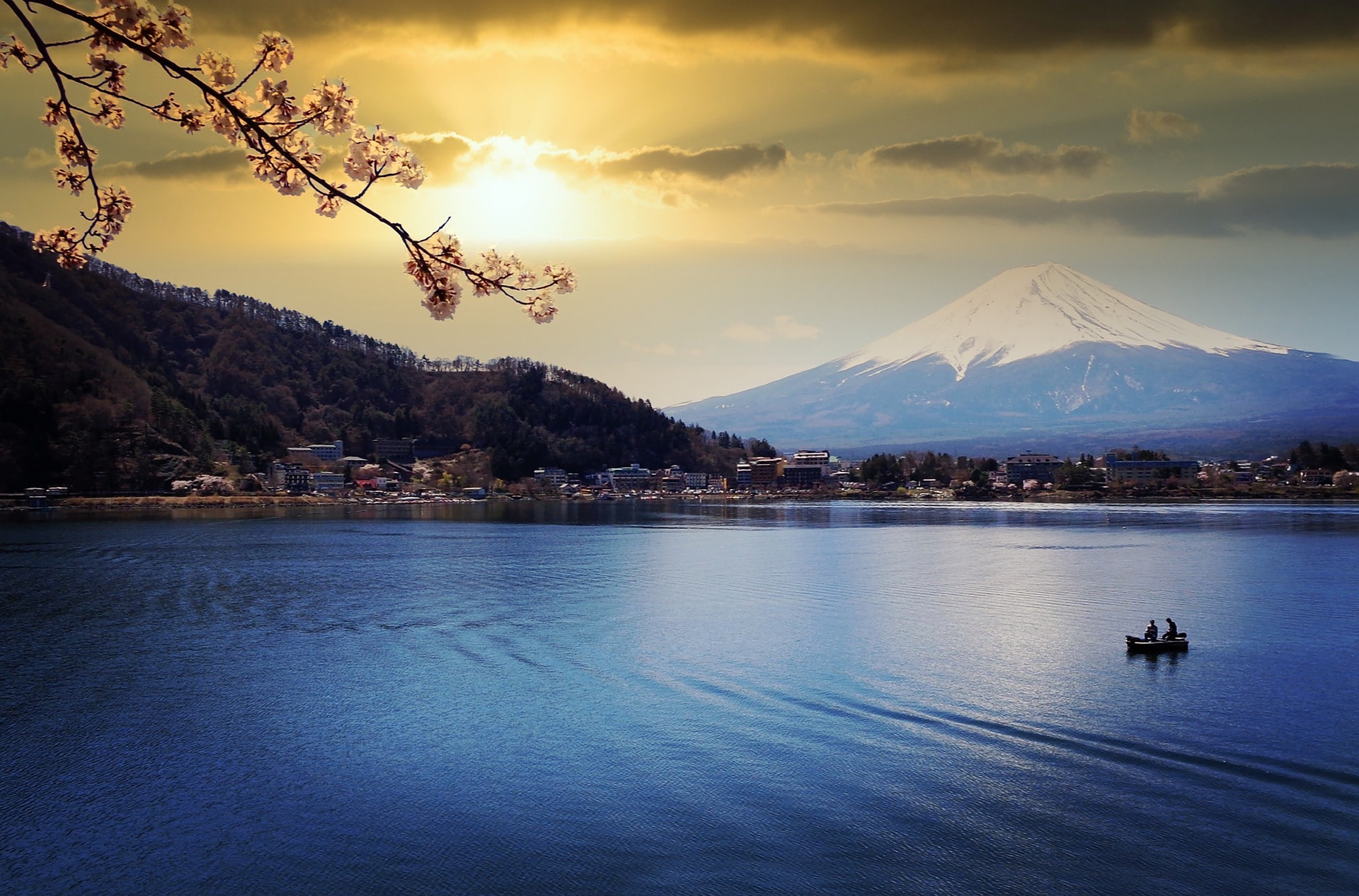
Public Transport
- Peak travel seasons—spring blossom weeks, Golden Week (late April–early May), and autumn foliage weekends—see higher demand for buses and trains. Tickets for limited-express trains and highway buses can sell out days in advance.
- Weather doesn’t typically cancel buses or trains, but road congestion during peak periods can add significant delays to highway bus travel.
Driving
- Roads to the Fuji Five Lakes region are scenic but can be heavily congested during holidays and model-season weekends. Leaving early in the morning or selecting off-peak days reduces this impact.
- Snow and ice are possible in winter around the lakes; if you’re unfamiliar with winter driving or the vehicle isn’t equipped for it, consider alternatives.
Weather and Visibility Strategy
- Morning is best: Cloud formation and haze tend to increase through the afternoon, reducing the chance of seeing the mountain. Planning your arrival or views for early hours improves your odds, regardless of season.
- Check forecasts: Weather can change quickly in mountainous regions. Local weather services and webcam feeds around the lakes are useful tools before locking in departure times and transport bookings.
Practical Travel Tips for Foreign Visitors at Fuji Five Lakes
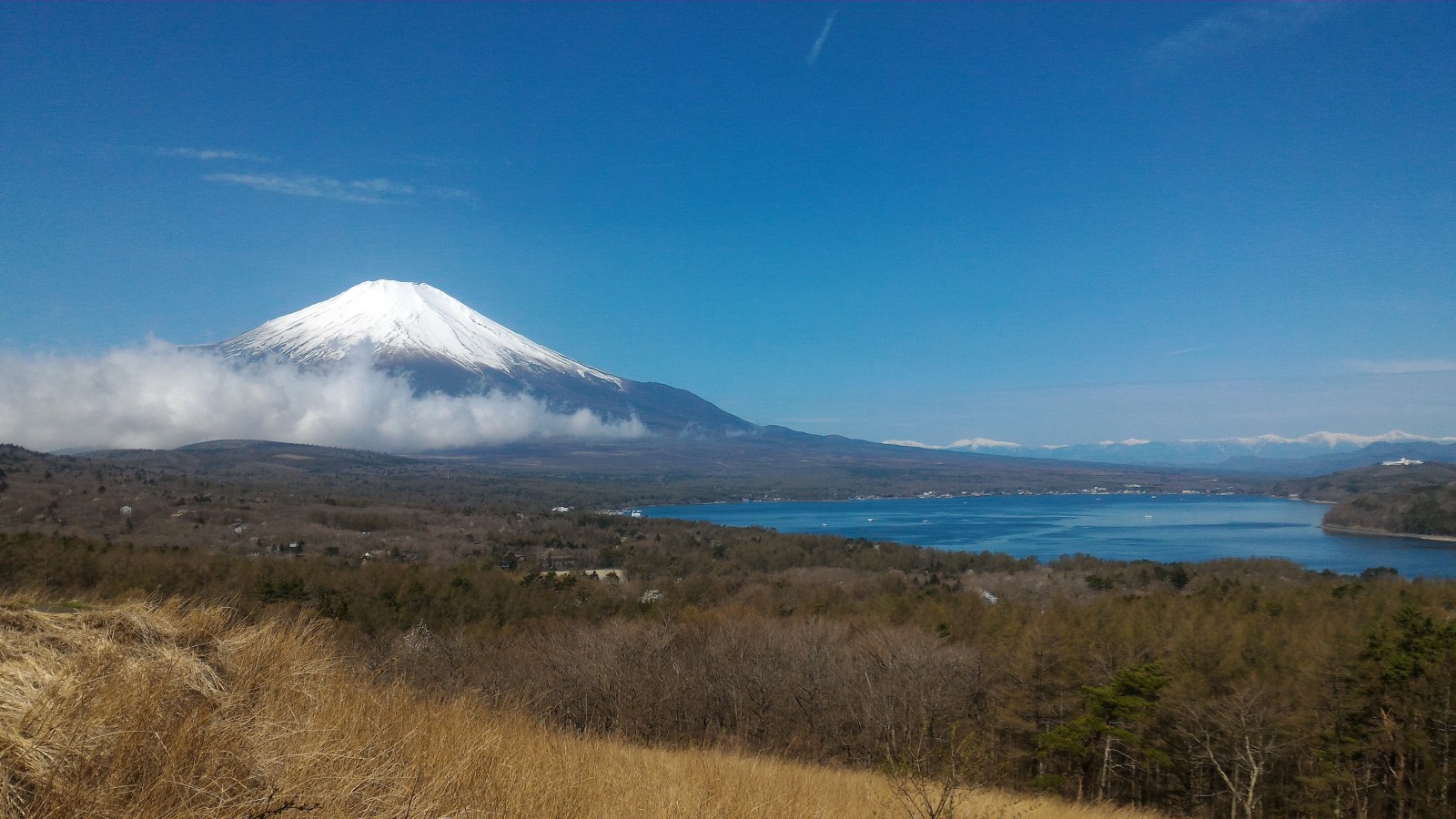
Transport to the Fuji Five Lakes is straightforward once you understand the routes, but small details can make the difference between a smooth trip and an unnecessarily stressful one. These practical points address the issues that catch many first-time visitors off guard.
- Tickets, IC cards, and reservations: IC cards such as Suica or Pasmo are widely accepted on trains and local buses, but highway buses and limited-express trains usually require separate tickets. For popular services—especially the Fuji Excursion train and direct buses to Kawaguchiko or Lake Yamanaka—advance reservations are strongly recommended during weekends and peak seasons.
- Luggage management: Trains generally handle luggage better than buses, particularly during busy travel windows. Highway buses have limited storage and can fill up quickly. If you’re carrying large suitcases, consider forwarding luggage ahead or choosing rail options with reserved seating.
- Timing your departure and return: Early morning departures from Tokyo increase your chances of clear Mount Fuji views and reduce traffic delays. On the return leg, be mindful of the last bus or train times, which arrive earlier than many travelers expect, especially from the quieter lakes.
- Local buses and stop locations: Bus stops around the lakes may be spaced far apart. Always check the exact stop name closest to your accommodation and confirm walking distances in advance. Missing a bus in the evening can mean long waits or an expensive taxi ride.
- Cash and connectivity: While most transport accepts cards, small buses and rural taxis may still require cash. Mobile reception is generally good, but downloading offline maps and timetables provides peace of mind in areas with limited signage in English.
Sample Itineraries around Fuji Five Lakes from Tokyo
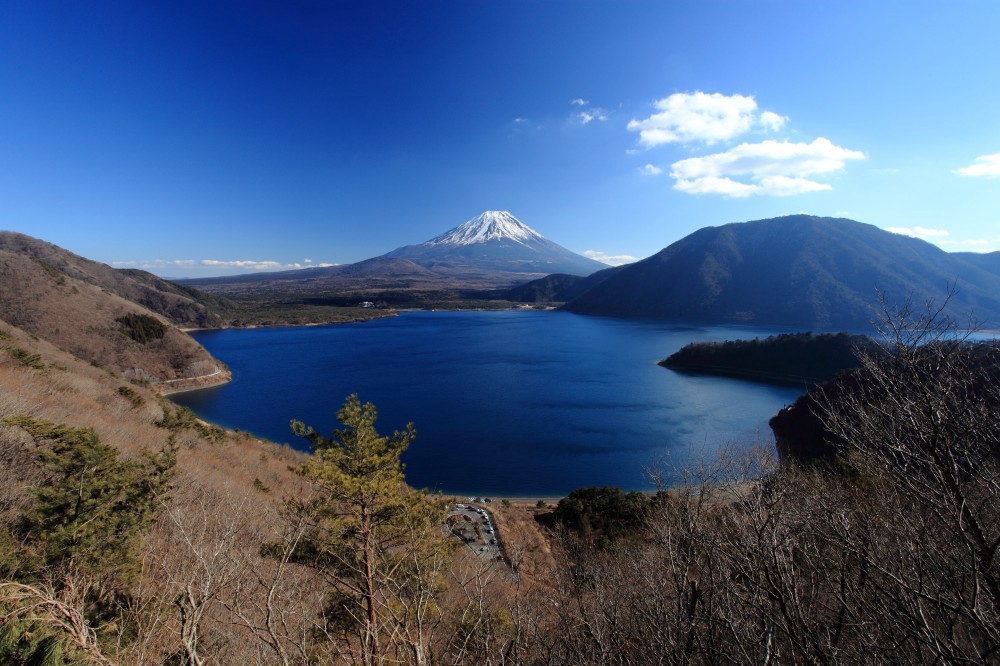
1-Day Itinerary Option 1: All Five Lakes by Car
Who this is for:
Visitors who want to actually see all five lakes in one day without turning the trip into a bus-schedule endurance test.
Transport assumption: Rental car from Tokyo or Kawaguchiko
Morning
- Early departure from Tokyo (around 6:00–6:30)
- Drive via the Chuo Expressway to the Fuji Five Lakes area
- First stop: Lake Kawaguchiko
- Short lakeside walk or Oishi Park
Late Morning
- Lake Saiko
- 10–15 minutes’ drive west
- Brief stop near the shore or Saiko Iyashi-no-Sato Nenba area
- Lake Shoji
- Continue west
- Small, quiet lake; stop at the north shore for Fuji alignment views
Lunch
- Simple lunch near Shojiko or on the way to Motosuko
- Keep it efficient; long sit-downs eat daylight
Early Afternoon
- Lake Motosu
- Furthest and most remote lake
- Stop at the lakeshore viewpoint associated with the classic Fuji image
- This is typically the visual highlight of the western lakes
Mid-Afternoon
- Drive back east toward Lake Yamanaka
- Largest lake, different atmosphere
- Short walk or coffee stop near the shore
Late Afternoon / Evening
- Optional second short stop at Kawaguchiko if visibility improves
- Return drive to Tokyo or overnight stay near the lakes
1-Day Itinerary Option 2: All Five Lakes by Public Transport
Who this is for:
Travelers without a car who still want to legitimately claim all five lakes, accepting tighter timing and limited dwell time.
Transport assumption:
Train or highway bus to Kawaguchiko + Fujikyu sightseeing buses
Morning
- Early arrival at Kawaguchiko Station (ideally before 9:00)
- Short walk along Lake Kawaguchi
Late Morning
- Board the Green Line sightseeing bus
- Lake Sai
- Brief stop near the lakeshore or Iyashi-no-Sato area
Midday
- Continue west on the Blue Line sightseeing bus
- Lake Shoji
- Very short stop; confirm return bus timing before getting off
Early Afternoon
- Stay on the same line to Lake Motosu
- Walk to the lakeshore viewpoint
- This is the furthest point; missing the return bus is not an option
Mid-Afternoon
- Return east by Blue Line bus toward Kawaguchiko
- Transfer toward Lake Yamanaka via Fujisan Station or direct local bus (depending on timetable)
Late Afternoon
- Lake Yamanaka
- Short shoreline walk near Asahigaoka or main bus stops
Evening
- Return to Kawaguchiko or directly to Tokyo by highway bus
Bottom Line: Which Option Should You Choose to Visit the Fuji Five Lakes?
After laying out the routes, the real question is not how to get to the Fuji Five Lakes, but which trade-offs you’re willing to accept. Each option solves a different problem.
If your priority is simplicity and speed, direct highway buses or the Fuji Excursion train to Kawaguchiko are the most efficient choices. They minimize transfers and reduce planning overhead, which matters on short trips or tight schedules.
If you prefer cost control and predictable timing, standard train routes via Otsuki work well, particularly outside peak seasons. They are less sensitive to traffic and easier to adjust if plans change.
If your focus is Lake Yamanaka or quieter lakes like Sai, Shoji, or Motosu, your transport choice narrows quickly. Buses from Kawaguchiko work, but only with careful timing. In these cases, renting a car offers the greatest flexibility and the least waiting around.
Private tours sit at the opposite end of the spectrum: higher cost, minimal effort. They make sense for groups, families, or travelers who value convenience over independence.
In short, there is no universal best route, only the best match for your destination, timing, and travel style. Decide those first, and the transport choice becomes obvious.
For more information about what to do around the Mt. Fuji area, check the articles below!

Written by
Photographer, journalist, and avid urban cyclist, making sense of Japan since 2017. I was born in Caracas and lived for 14 years in Barcelona before moving to Tokyo. Currently working towards my goal of visiting every prefecture in Japan, I hope to share with readers the everlasting joy of discovery and the neverending urge to keep exploring.
- +0 0
-
-