Tohoku Shinkansen: How to Travel Northern Japan by Bullet Train
A simple guide to exploring northern Japan by bullet train
- +0 0
-

-


Northern Japan feels far on a map—but aboard the Tohoku Shinkansen, it is surprisingly close.
In just a few hours, the bullet train carries travelers from Tokyo into landscapes of mountains, coastlines, historic towns, and quiet countryside.
Fast, scenic, and easy to use, the Tohoku Shinkansen is one of the most rewarding ways to explore Japan beyond the capital.
What Is the Tohoku Shinkansen?
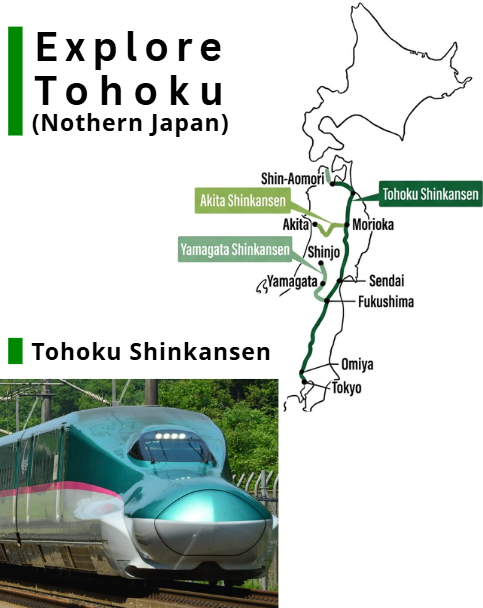
The Tohoku Shinkansen is a high-speed bullet train line running from Tokyo to Shin-Aomori in northern Honshu. It connects major cities across the Tohoku region and serves as the main rail corridor for travelers heading north.
With frequent departures, smooth rides, and English-friendly stations, the Tohoku Shinkansen is well suited for both first-time visitors and experienced travelers.
Tohoku Shinkansen Route and Major Stations
The route is simple and easy to understand, even for travelers new to Japan.
Major Stops on the Tohoku Shinkansen Route
- Tokyo
- Fukushima
- Sendai
- Morioka
- Shin-Aomori
Major Stops Near to the Tohoku Shinkansen Route
- Yamagata
- Akita
This direct northbound line allows travelers to plan flexible itineraries without complicated transfers.
Best Places to Visit Along the Tohoku Shinkansen
Fukushima and Aizu-Wakamatsu
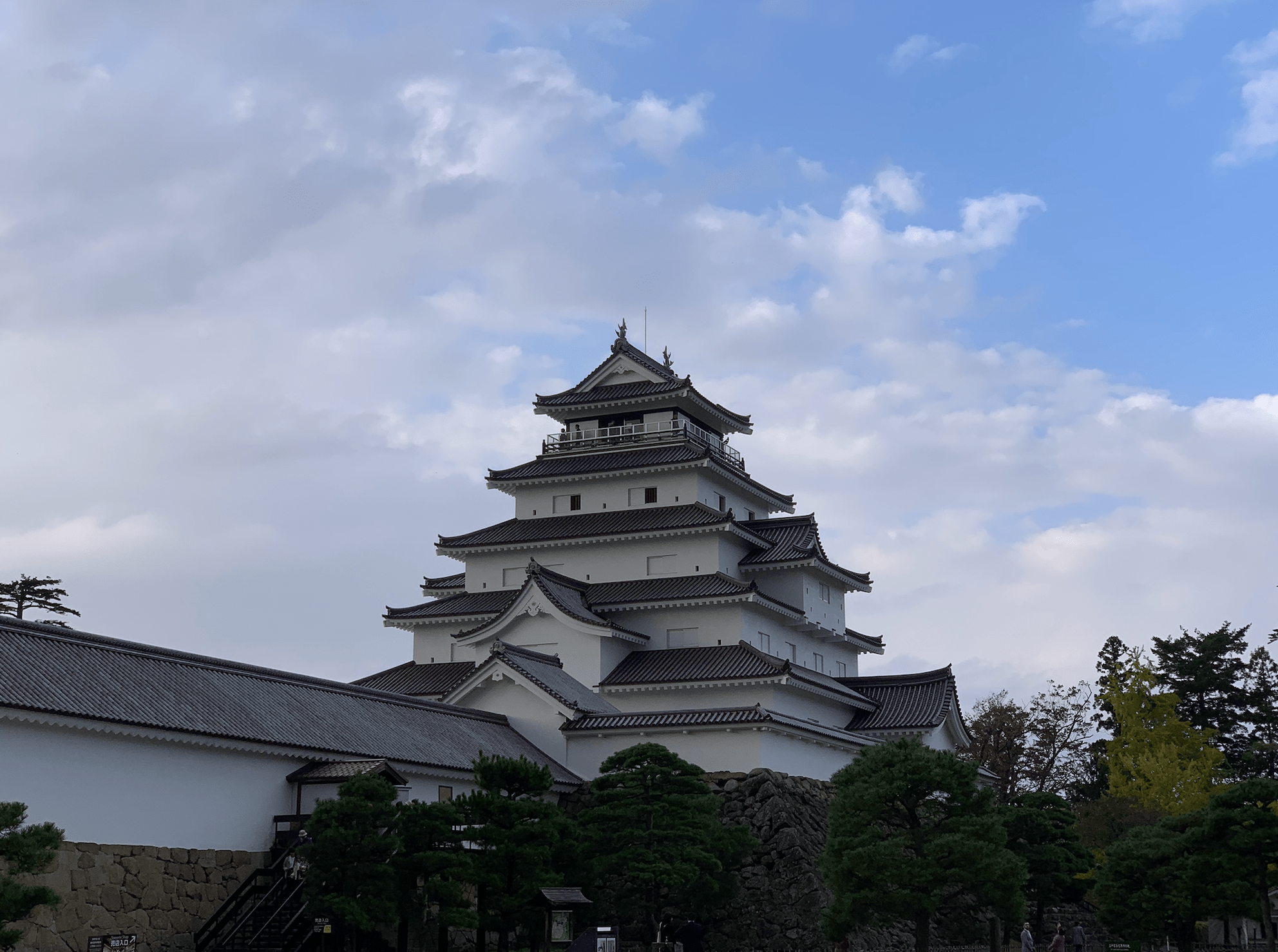
Fukushima, at the heart of Tohoku, blends beautiful nature, history, and tradition. The castle town of Aizu-Wakamatsu is its crown jewel, surrounded by mountains and renowned for its samurai heritage. A visit here offers a journey through Japan’s past, from feudal lords to samurai schools and historic streets.
Tsuruga Castle stands as the city’s most iconic landmark, famous for its garnet-colored porcelain roof tiles designed to withstand heavy snow. Rebuilt after an Edo-period earthquake, the castle preserves samurai armor and artifacts inside, offering a glimpse into feudal life. Not far away, Sazaedo Temple captivates visitors with its unique double-helix staircase, allowing one to ascend and descend without retracing steps.
Nisshinkan, the samurai school founded in 1803, reflects the region’s dedication to discipline, respect, and education, now reconstructed after its destruction in the Boshin War. Nearby, Oyakuen Garden, originally a medicinal herb garden, invites visitors to stroll among ginseng and other herbs while enjoying herbal teas in a serene teahouse. Meanwhile, Aizu Bukeyashiki, the former residence of general Saigo Tanomo, brings samurai life to life with reconstructed tea rooms, administrative quarters, and period buildings.
But it’s not all about sightseeing. Fukushima’s pure waters and fertile rice fields have long made it ideal for sake production. Tsurunoe Shuzo, founded in 1794, produces award-winning brands like Aizu Chujo and Yuri, crafted by one of Japan’s first female master brewers. On the other hand, Suehiro Sake Brewery, established in 1850, offers rich, full-flavored sake made using traditional Yamahai methods, complete with tours and tastings.

No trip to Aizu is complete without trying Wappa-meshi, a hearty dish of steamed rice served in a round wooden bowl with toppings such as salmon, vegetables, or horse meat.
If you have more than a day in Fukushima, don’t miss a visit to Ouchi-juku, a beautifully preserved Edo-period post town where traditional wooden streets and historic architecture make you feel as if you’ve stepped back in time.
How to get to Aizu-Wakamatsu from Tokyo
Shinkansen: Approximately 2.5 hours via the Tohoku Shinkansen line. At Koriyama Station, change to the Banetsusai Line to reach Aizuwakamatsu Station.
▼Book Shinkansen Tickets to Koriyama
Sendai and Matsushima Bay
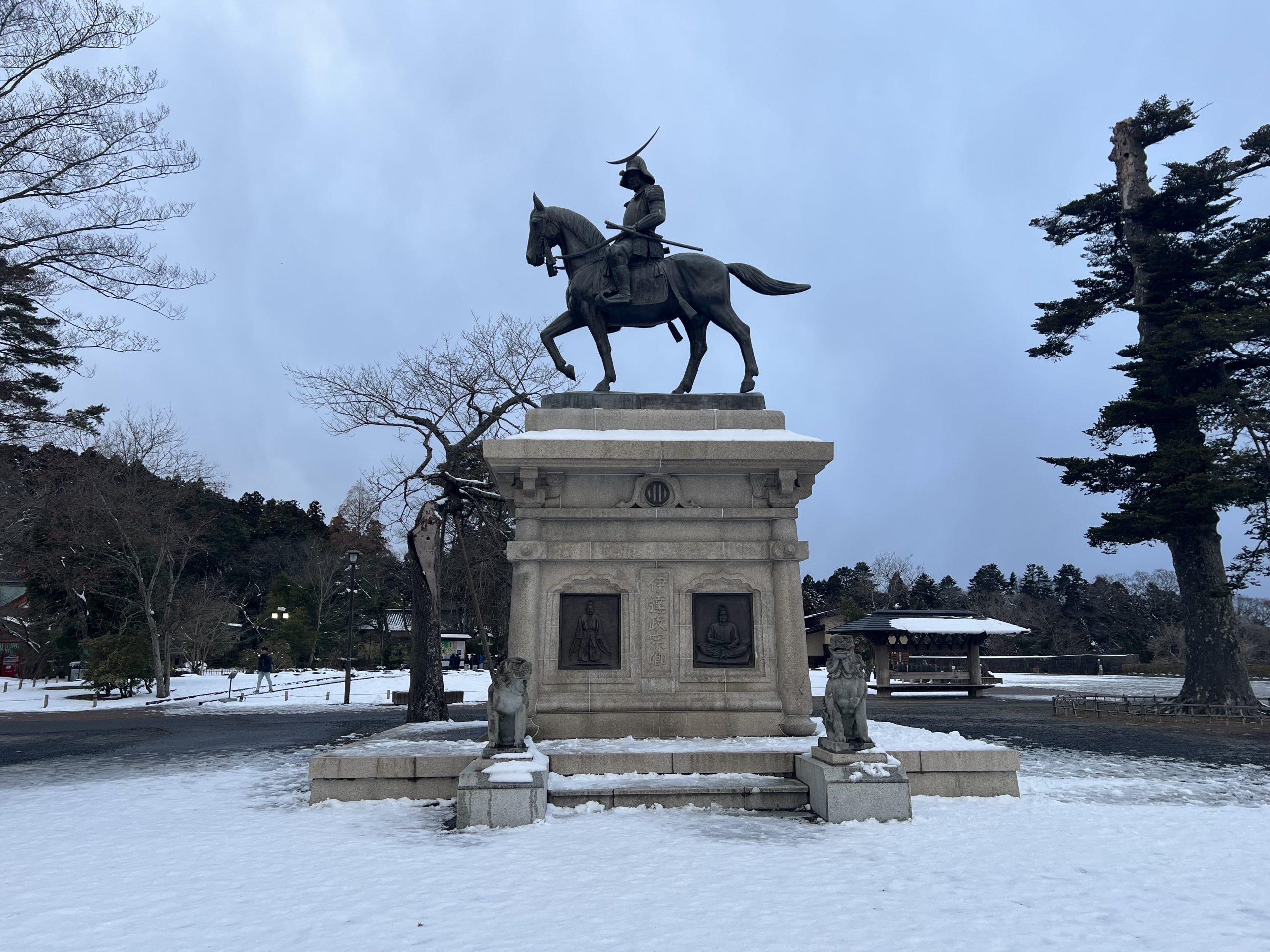
Just 90 minutes from Tokyo, Sendai is the most popular gateway to Tohoku. From here, travelers can visit Matsushima Bay, one of Japan’s most scenic coastal areas, known for its 260 pine-covered islands and calm waters.
History and culture come together here, from the ornate Zuihoden Mausoleum, resting place of the legendary Date Masamune, to Aoba Castle perched atop Mount Aoba, offering panoramic city views.
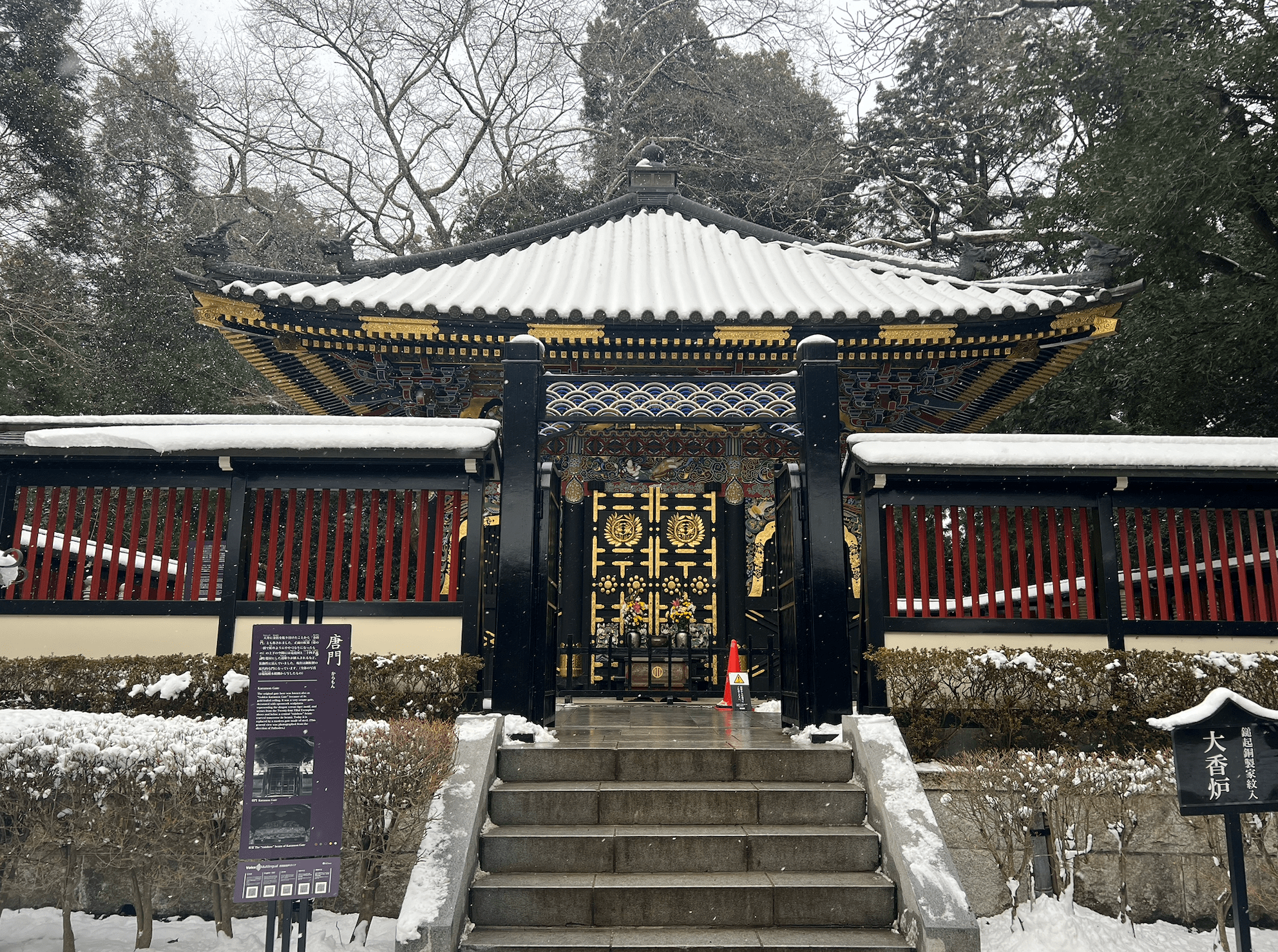
Osaki Hachiman Shrine, built in 1607, showcases the vibrant architecture of the Date period, with black lacquer, gold leaf, and vivid colors, while Rinnoji Temple provides a tranquil retreat amid serene gardens. Sendai Daikannon, a 100-meter-tall statue of the Bodhisattva Kannon, combines spiritual significance with breathtaking city views from its 12-level interior.
Food lovers will want to try Gyutan, grilled beef tongue served with barley rice and tail soup, a local specialty.
A day trip to Matsushima Bay combines natural beauty with notable landmarks such as Zuiganji, Godaido, and Entsuin, with observatories like Otakamori and Tomiyama offering spectacular views.
How to get to Sendai from Tokyo
Shinkansen: ~90–100 minutes via the Tohoku Shinkansen from Tokyo Station to Sendai Station.
▼Book Shinkansen Ticket to Sendai
Yamagata
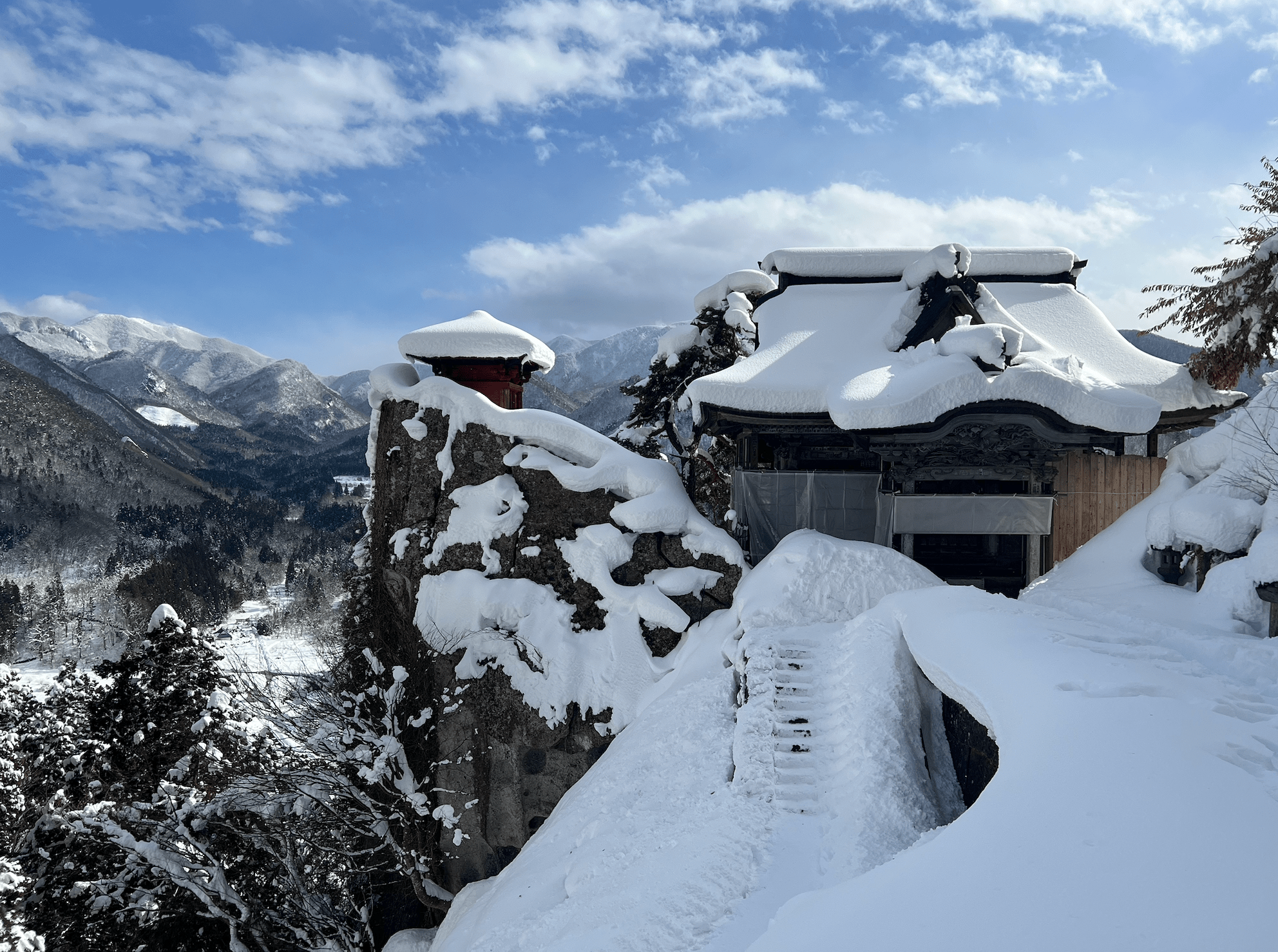
Yamagata is a scenic region in southern Tohoku, rich in history, culture, and hot springs. Among its highlights, Yamadera stands perched on a cliff, a meditative Buddhist temple founded in 860 AD. Climbing its steep stone steps rewards visitors with panoramic views and a serene spiritual experience.
Hot spring enthusiasts can visit Ginzan Onsen, a nostalgic town with Taisho- and Showa-era architecture, cobblestone streets, and mineral-rich baths. Zao Onsen, in the mountains, combines relaxing hot springs with winter sports and stunning natural scenery.

Historic sites include Kajo Park, the former grounds of Yamagata Castle, and Yamagata Folk Museum (Bunshokan), showcasing Meiji-era architecture and local history.
For a spiritual journey, Dewasanzan Shrine on Mount Haguro is accessible via a climb of 2,446 stone steps through ancient cedar forests, passing the famous five-story pagoda.
After exploring, visitors can enjoy Yonezawa beef, Yamagata’s famous wagyu brand, prized for its marbled texture, tenderness, and rich flavor, making it a must-try culinary experience when visiting the region.
How to get to Yamagata from Tokyo
Shinkansen: ~ 2 hours and 30 minutes via the Tohoku Shinkansen from Tokyo Station to Fukushima Station, then transfer to the Yamagata Shinkansen.
▼Book Shinkansen Tickets to Yamagata
Morioka and Mountain Landscapes
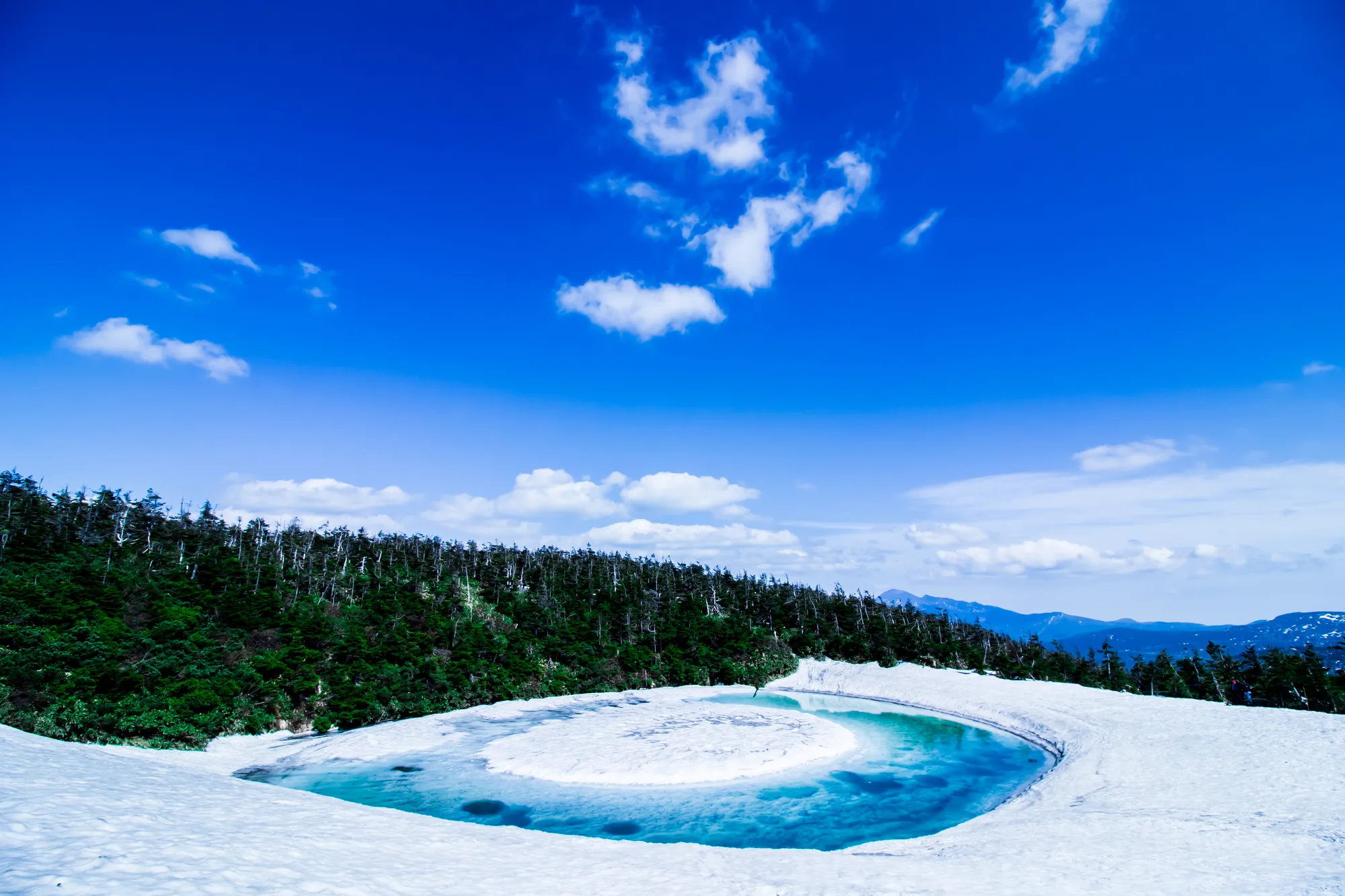
Further north, Morioka provides a quieter atmosphere surrounded by nature. The city is known for traditional food culture and easy access to wide-open landscapes such as Koiwai Farm and the Hachimantai area.
Architectural highlights include the Iwate Bank Red Brick Building, designed by the firm behind Tokyo Station, and the Morioka Castle Ruins, featuring stone walls, moats, and cherry blossoms.
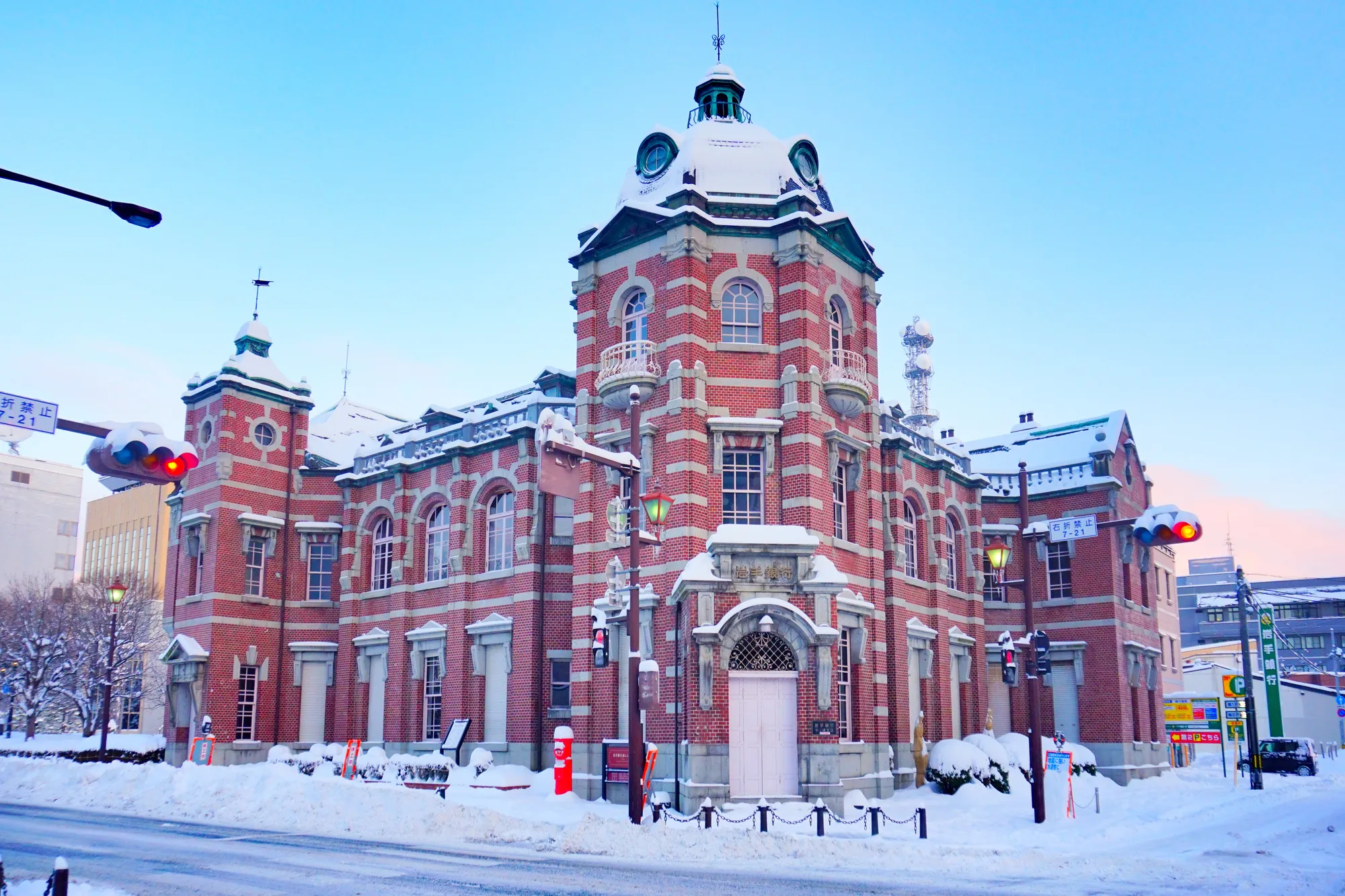
Visitors can experience Nanbu ironware first-hand in workshops, or enjoy the lively dining tradition of Wanko Soba, where small bowls of noodles keep coming until diners signal to stop.
For a taste of rural life, Koiwai Farm combines animals, horse riding, and outdoor activities, while Genbikei Gorge offers 2 km of scenic canyon views with the unique “flying dango” teahouse experience.
Jodogahama Beach boasts white pebbles and calm waters, and Ryusendo Cave impresses with over 4,000 meters of underground limestone chambers and blue lakes.
How to get to Morioka from Tokyo
Shinkansen: ~ 2 hours via the Tohoku Shinkansen from Tokyo Station.
▼Book Shinkansen Tickets to Morioka
Akita
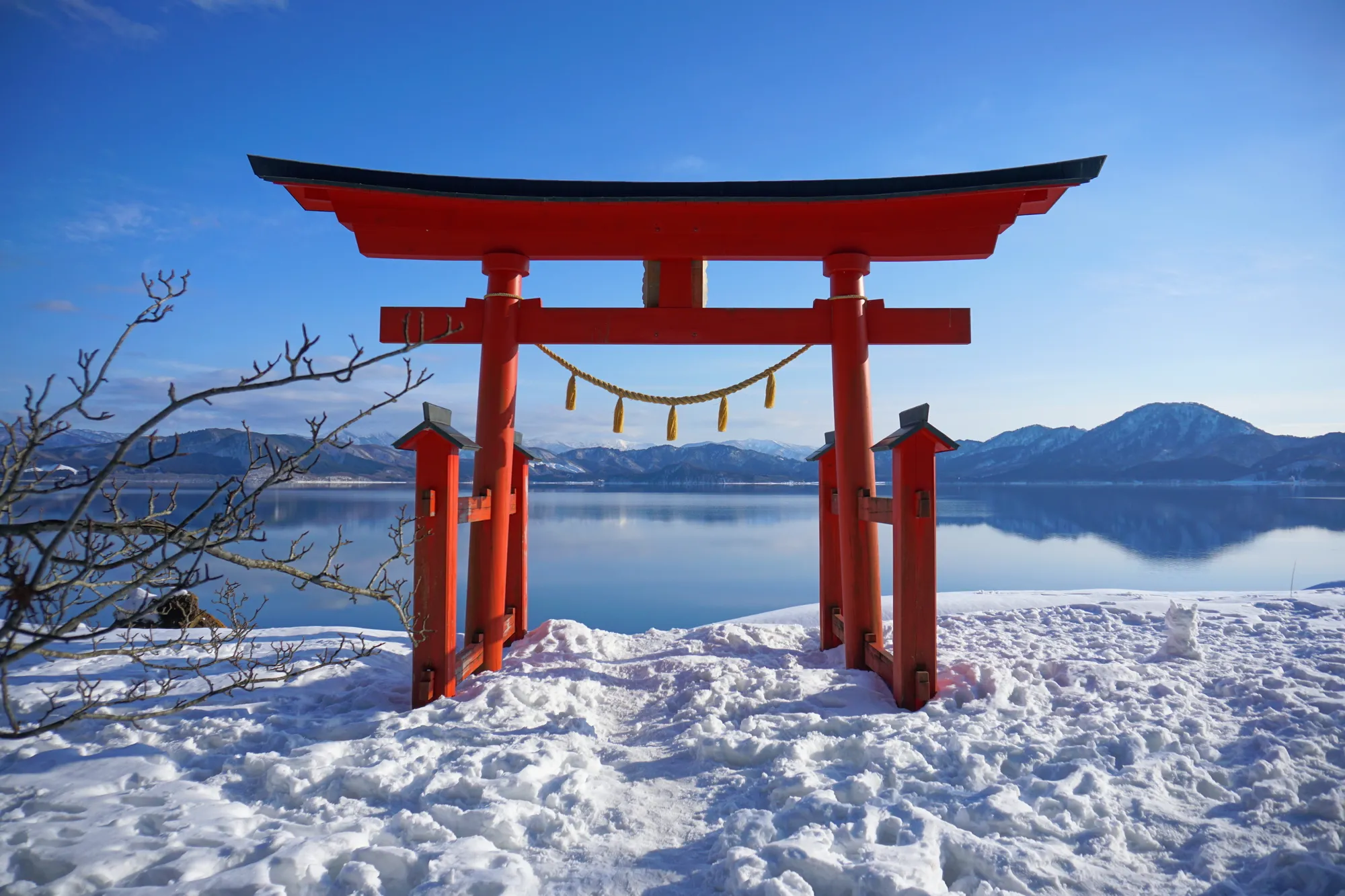
Akita is a peaceful region surrounded by mountains, forests, and lakes, perfect for nature and adventure lovers.
Dakigaeri Gorge features emerald waters, waterfalls, and forested cliffs, with wooden walkways and suspension bridges for easy hiking. Lake Tazawa, Japan’s deepest lake, offers serene walks, boating, and views of the iconic Tatsuko Statue.
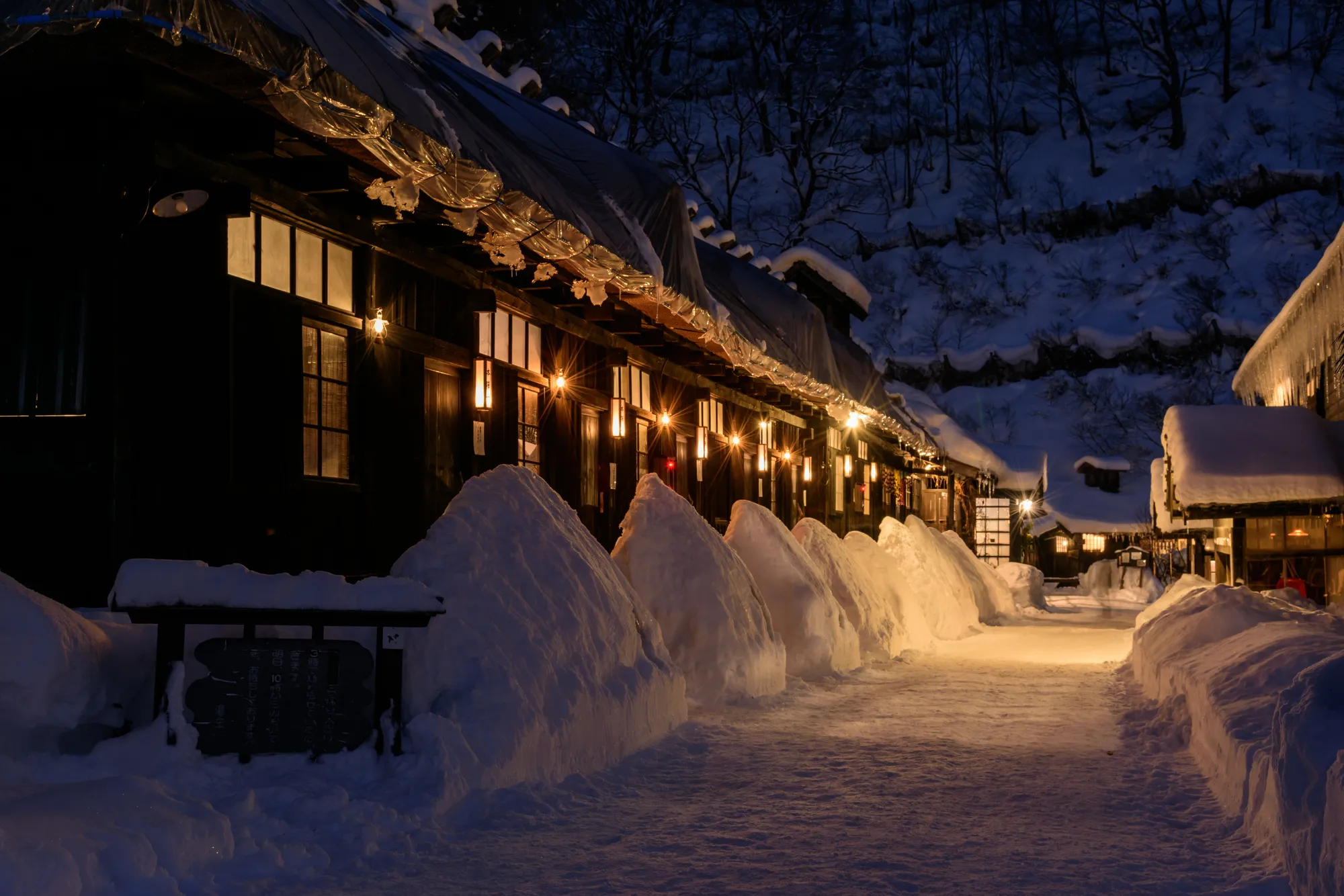
Hot spring enthusiasts can visit Nyuto Onsen, known for its rustic outdoor baths and milky mineral-rich waters, or Tamagawa Onsen, famous for its highly acidic, healing waters. History buffs will enjoy Kakunodate, a “Little Kyoto of Tohoku” with preserved samurai houses and cherry blossom-lined streets.
Food highlights include Inaniwa Udon, thin hand-stretched noodles served hot or cold with simple toppings, reflecting Akita’s refined culinary tradition.
How to get to Akita from Tokyo
Shinkansen: ~ 4 hours from Tokyo to Akita. Take the Tohoku Shinkansen northbound from Tokyo Station to Morioka Station, then transfer to the Akita Shinkansen..
▼Book Shinkansen Tickets to Akita
Aomori, Oirase Gorge, and Lake Towada
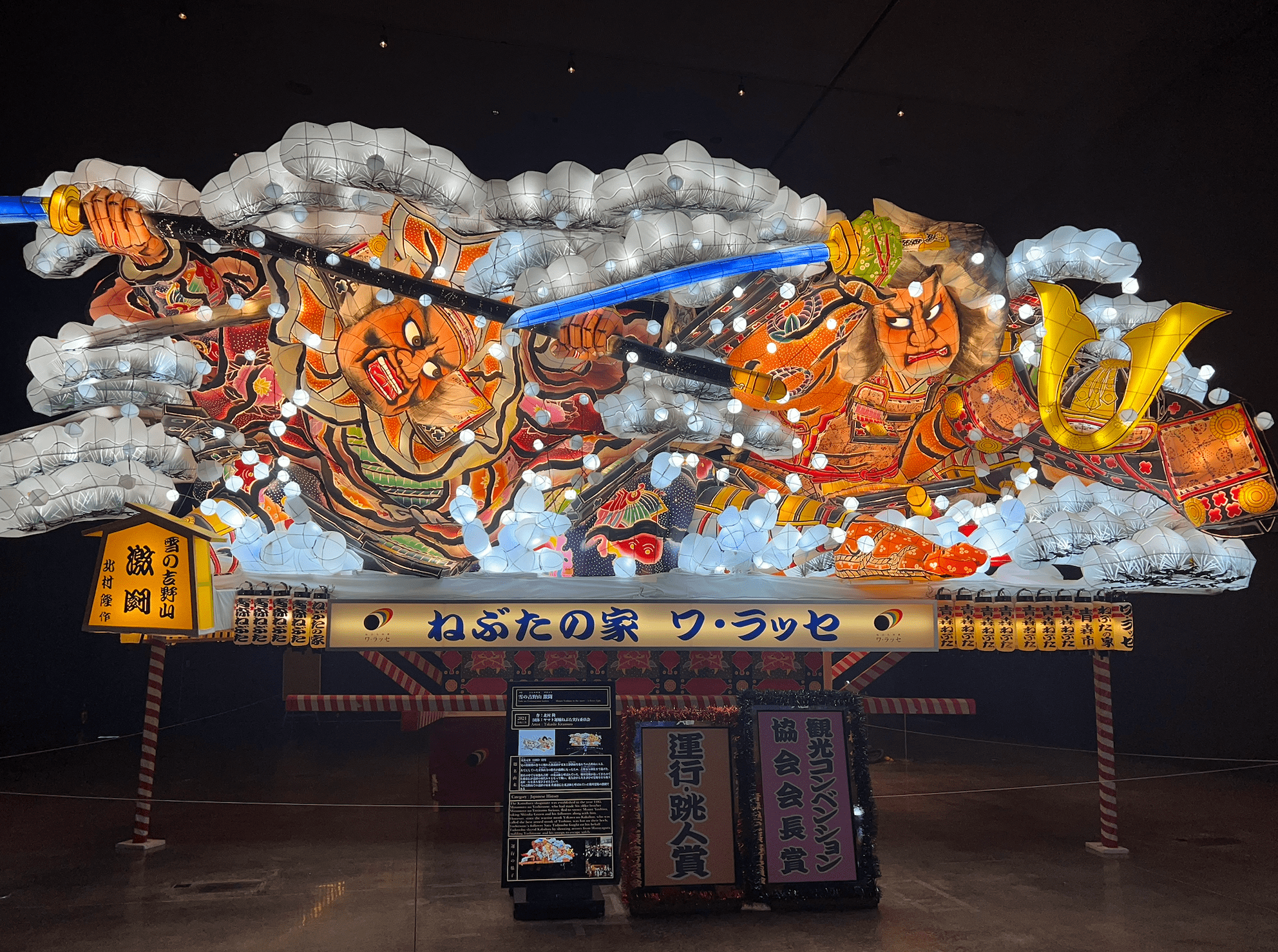
At the northern end of the line, Aomori showcases dramatic seasonal beauty. Popular destinations include Oirase Gorge, a scenic river valley, and Lake Towada, especially stunning during autumn foliage season.
The Nebuta Museum WA RASSE displays the colorful floats of the famous summer Nebuta Festival and explains its history and craftsmanship.
Oirase Stream and Lake Towada offer scenic walking trails, waterfalls, and forested landscapes, especially stunning during autumn foliage. Hirosaki Castle features samurai-era architecture, cherry blossom gardens, and seasonal festivals.
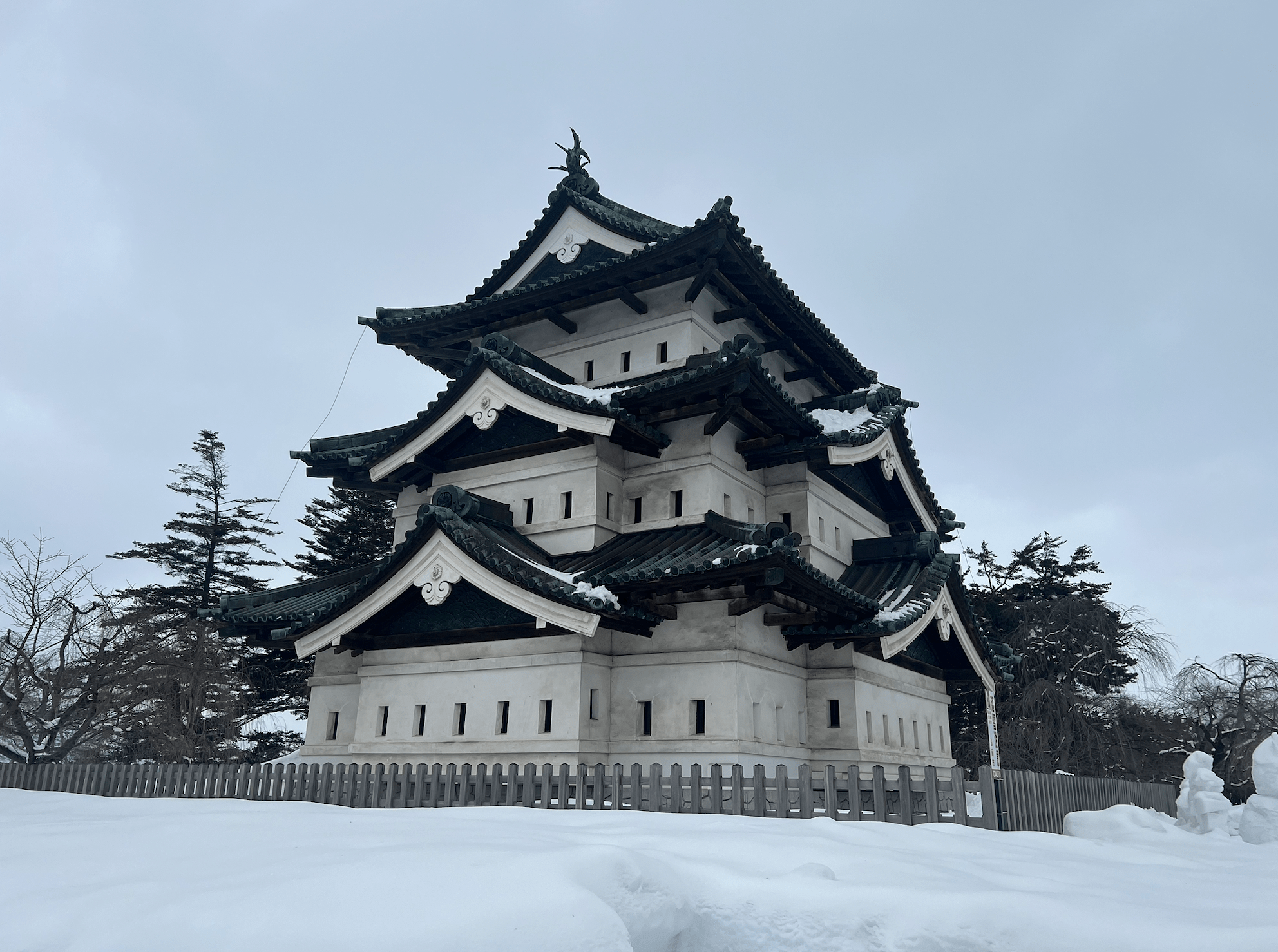
Hot springs such as Sukayu Onsen provide mineral-rich baths, while A-Factory is perfect for tasting local apples, sidra, and regional delicacies.
Aomori blends natural beauty, history, and culture, making it ideal for both outdoor adventures and immersive experiences.
How to get to Aomori from Tokyo
Shinkansen: ~ 3 hours via the Tohoku Shinkansen from Tokyo Station directly to Shin-Aomori Station, with some services operating through trains on the Akita Shinkansen.
▼Book Shinkansen Tickets to Aomori
Is the Tohoku Shinkansen Easy for First-Time Visitors?
Yes. The Tohoku Shinkansen is one of the easiest ways for first-time visitors to travel long distances in Japan.
Stations are clearly marked, announcements are multilingual, and trains are known for punctuality—even in winter. Large luggage is easy to manage, and reserved seating helps reduce stress for new travelers.
Why Traveling Tohoku by Shinkansen Is Worth It
The Tohoku Shinkansen turns long distances into comfortable journeys. Instead of spending hours driving or navigating airports, travelers can relax, enjoy the scenery, and arrive directly in the heart of northern Japan.
If you are looking to experience Japan beyond Tokyo—with ease, comfort, and unforgettable views—the Tohoku Shinkansen is an excellent choice.
How to Buy Tohoku Shinkansen Tickets
You do not need a rail pass to ride the Tohoku Shinkansen. Many travelers prefer to buy individual Shinkansen tickets online, which allows them to check routes, prices, and reserve seats in advance.
For visitors who want a simple way to prepare before arriving in Japan, it is possible to buy Shinkansen tickets online through services such as Japan-BulletTrain.com, where schedules and seat availability can be checked in English.
▼Book Shinkansen Tickets to Tohoku!
Written by
From Barcelona to Tokyo. Coffee and Adventure lover. I started to like Japan because of the anime, music and dramas, but after my first trip to the country I found what I love the most: traveling around, the culture and history. I have travelled a lot in Japan, but I still have many places to discover that I want to share with you. Let’s discover Japan together! Also, as a foreigner living in Japan for over 6 years I understand what kind of things are difficult when you move here and I want to help other people in the same situation that I have in the past.
- +0 0
-
-