Chasing the First Sunrise in Japan: A Midnight Train Ride from Tokyo to Inubosaki
Tokyo to Inubosaki Lighthouse: A New Year’s Eve Train Adventure


- +5 5
-

-


The first hours of the new year in Tokyo have their own rhythm. Midnight is an ending and also a reset button, pressed collectively and with enthusiasm: People line up at shrines clutching coins and paper fortunes, counting down to a chance at better luck, better health, and slightly better decisions. It’s a night fueled by equal parts tradition, alcohol, and optimism.
New Year rituals are comfortingly repetitive and Japan is no exception. Hatsumode crowds flow toward familiar shrines, bells ring, hands clap, prayers are made quickly and with purpose. The air feels lighter under the promise to start again. For many, that’s enough. Go home, sleep, wake up to a quiet morning.
Some of us would rather keep moving though. Chasing the first sunrise of the year is one of those quietly ambitious traditions: standing somewhere facing east, eyes on the horizon, hoping the first light arrives with a bit of extra promise attached. This time, that meant not a beach walk or an early alarm, but a refusal to go to bed at all, so instead of heading home after midnight, I headed for the train with a couple of friends, aiming for Inubosaki Lighthouse in Chiba, one of the easternmost places where the sun makes its entrance into the new year.
Midnight in Oji: A New Year Fox Parade
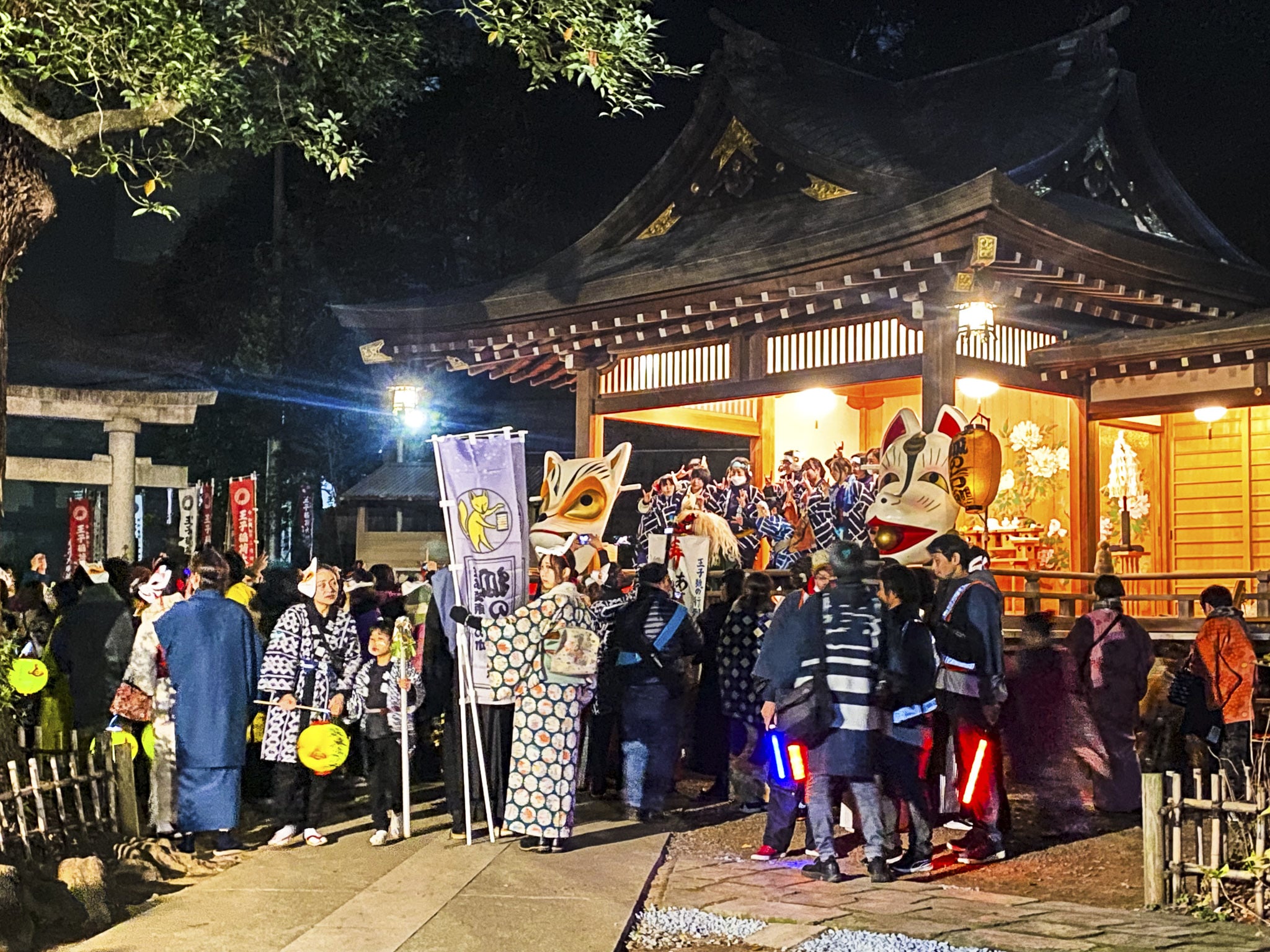
My New Year adventure started around Oji, a place that takes New Year’s Eve seriously, and one of my usual spots if I’m not spending the Christmas festivities in Spain. Local folktales signal this local neighborhood as the annual gathering spot for all the Kanto foxes on this auspicious night, and so, locals and visitors partake in the annual Oji Fox Parade or Kitsune no Gyoretsu (王子狐の行列). This is one of the very few traditional festivals that you can find in Tokyo to celebrate at midnight, turning the streets around Oji Station into a moving crowd of lanterns and fox masks headed to Oji Inari Jinja (王子稲荷神社).
Once the procession is over, ritual dances are performed at the shrine kaguraden stage to welcome the new year, and then, attention shifts naturally toward Oji Shrine for hatsumode. The shrine grounds fill quickly, the line advances in polite bursts, and the usual New Year routine kicks in: toss a coin, bow, clap, make a wish that sounds sensible in the moment. Around us, some compared paper slip fortunes, laughed a little too loudly, and checked the time with growing urgency. Some were heading home. I wasn’t.
Shortly after paying our respects, we peeled away from the shrine crowds and walked back toward the train station. The night was far from over.
If you’re interested, check out the event’s official website for details.
The Plan (and Why Timing Matters)

Watching the first sunrise of the year sounds peaceful, but the logistics are anything but. Inubosaki Lighthouse sits at the edge of the Boso Peninsula, facing the Pacific and catching the year’s first light earlier than almost anywhere else in the Kanto region. That geographical privilege comes with a catch: getting there from Tokyo in the middle of the night requires commitment and a healthy respect for train schedules.
This wasn’t a trip you could improvise after a few drinks and a shrine visit. On most nights, reaching Choshi without a car would be impossible. Local trains don’t run through the night save for New Year’s Eve, and taxis from Tokyo would qualify as a poor financial decision. The special night changes the rules slightly, thanks to a special limited express service that connects central Tokyo directly to Choshi. Miss that train, and the sunrise becomes something you scroll past later on your phone.
The route itself was simple on paper: JR local lines to Kinshicho, a reserved-seat limited express all the way to Choshi, then a short hop on the Choshi Electric Railway to Inubo Station.
Leg One: Oji to Kinshicho on JR Local Lines
New Year’s Eve is the only night in the whole year that local JR lines keep running all night long. It’s an interesting sight seeing all kinds of riders: parade-goers calling it a night, shrine visitors clutching lucky charms, and a handful of travelers carrying backpacks who clearly aren’t done yet. The trains are running normally, but the mood is anything but routine.
JR local lines at this hour feel suspended between celebration and shutdown, depending on your location. We rode from Oji to Akihabara and then to Kinshicho. Carriages were busy without being chaotic (as long as you’re not in the vicinity of Shibuya). Conversations drifted in and out; some were already asleep, some were laughing and talking loudly about the most random topics. It’s a strange night where most people riding the train are in a festive mood one way or another.
The Critical Link: JR Limited Express from Kinshicho to Choshi
This is the point where I need you to pay attention: The JR limited express from Kinshicho to Choshi is the only realistic way to reach the coast overnight at this point unless you use private transportation or opt for a bus the previous evening. It runs straight through, skips the slow crawl of local lines, and exists largely for people with the exact same idea: seeing the first sunrise without a car. It is also reservation-only. No standing tickets, no non-reserved cars, no improvising once you reach the platform.
That means getting this ticket in advance is crucial. At the time of writing, checking availability a little over two weeks ahead of New Year’s Day, seats are already disappearing fast. By late December, hoping to buy one on the day would be most likely impossible, just like it was on the day of our trip. Even the vending machines on the train platform were precincted for the night, with large signs indicating all tickets were sold out. Miss out here, and that’s it. There are no overnight local alternatives to Choshi, and no clever transfer trick that saves you.


So if you’re thinking of going to Inubosaki, I strongly advise you to act quickly and reserve your tickets online or at any of JR East ticket counters.
HOWEVER.
After the initial surprise with the locked-out vending machines, we were even more surprised to see the limited express train completely EMPTY. We nearly missed our train because we were initially confused, seeing there was nearly no one else riding, and needed to re-check several times to make sure we were not getting aboard the wrong train. In addition to us, there were probably 10-15 or so other passengers in total during the whole ride. I’m not exaggerating. My suspicion is that most people merrily buy the tickets and then fail to make it after drinking and partying too much.
That is not to say that you can afford to skip the reservation if you’re making last-minute plans, but your chances might not necessarily be zero.
For the next 1h and 30 minutes, it was a welcome chance to take a nap.
Arrival in Choshi and Ride to Inubo Station: Where Sleep Ends and Crowds Begin


By the time we arrived in Choshi, still dark and cold, the illusion of solitude had disappeared. As soon as we left behind the limited express area and changed to ride the local line, the station staff was already hard at work managing the crowds. Announcements repeat, lines form without discussion, and the collective focus shifts to one thing: squeezing ourselves onto the Choshi Electric Railway.
The Choshi Electric Railway is charming on most days. New Year’s morning is not most days. By the time the train pulls in, the platform is packed with people who all had the same idea and the same limited set of options. There are no reservations, no assigned seats, and no illusions about comfort. You get on because the doors open, and because everyone else does too.
Inside, the carriage fills instantly. This is Tokyo rush hour energy transplanted to a coastal town, minus the suits and plus a noticeable amount of celebratory alcohol. Bags are wedged wherever they fit, winter coats turn into personal heaters, and balance becomes a shared responsibility. Brace yourselves, the ride is brief despite feeling like an endless ordeal at some point.

A memorable detail was the way that, compared to normal Tokyo rush hour, where we just deal quietly with it and ignore each other, the night’s festive spirit revealed itself in the way of shared random glances with other fellow passengers and laughing at our circumstances. No one here is half asleep going to the office or going back home after a long day of work.
By the time the doors finally open, relief moves through the car in waves. People spill out onto the platform, stretching stiff limbs and laughing at how absurdly packed it was. The sea is close now, the sky is starting to hint at change, and the final challenge of the journey is finally over.
For more details, Choshi Electric Railway’s official website has details about New Year’s Day local timetable operations here.
Reaching Inubosaki Lighthouse Before Dawn
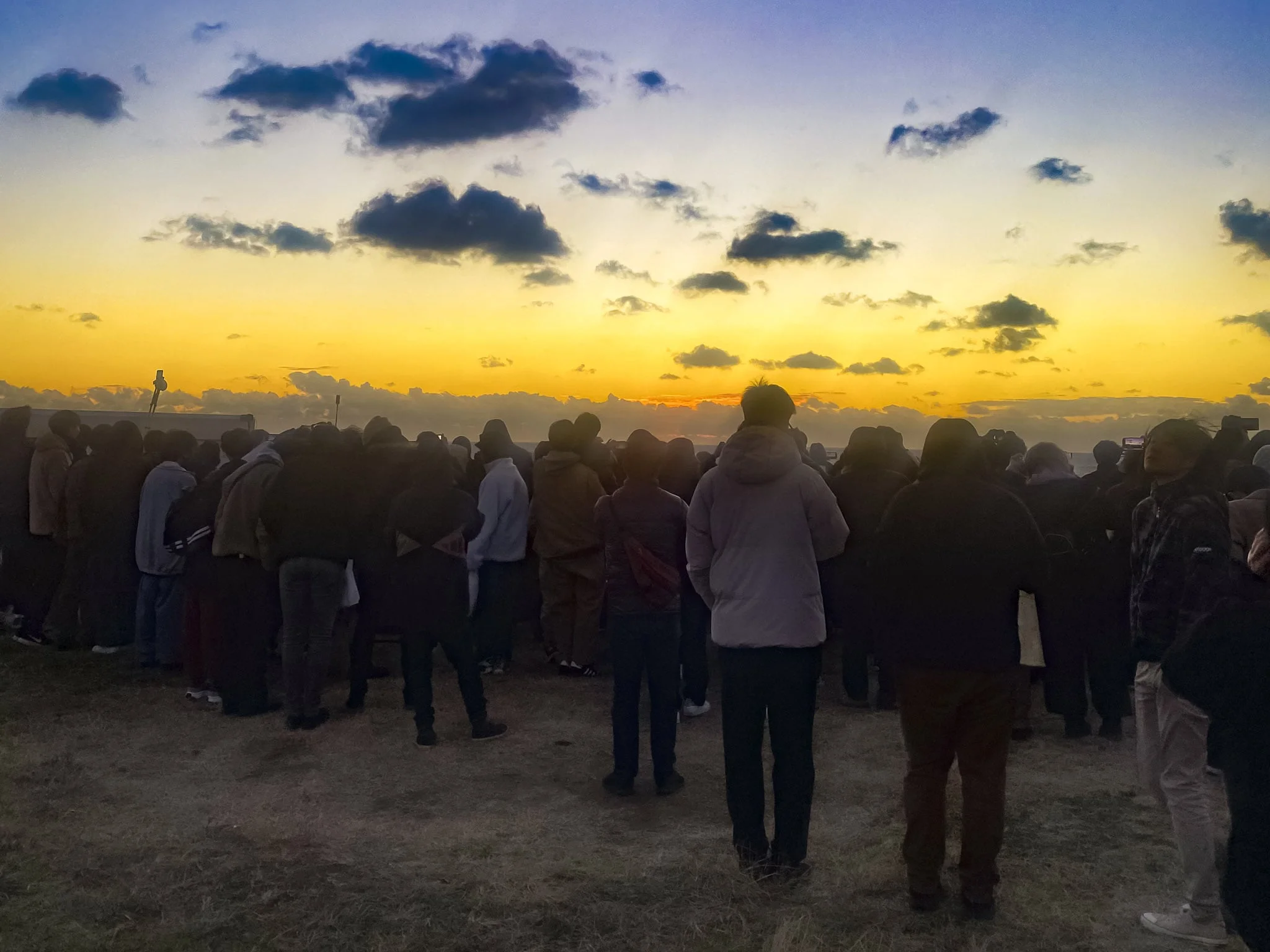
From Inubo Station, you exit the station and move with the crowd, a steady stream of people heading in the same direction, drawn by the faint sound of waves. At this hour, the town seems to exist solely for this purpose. As the lighthouse comes into view, the pace slows. People fan out toward the rocky coastline, scanning for any patch of ground with a clear view of the horizon. Prime spots disappear quickly, but perfection isn’t required. The coast is uneven, the crowds are dense, and everyone is adjusting in small increments, trying not to block anyone else’s view while still claiming a piece of the sea.
And that’s it. Not much else to do save for enduring the cold and wait for the right time.
The First Sunrise: Tired, Tipsy, and Worth It


We were a little worried as some clouds loomed in the horizon, but fortunately we were still able to enjoy a beautiful sunrise. By the time it begins to change color, everyone is operating on the same fragile combination of adrenaline and exhaustion. Phones come out. Drinks are passed around with the casual generosity that only seems acceptable at six in the morning on January 1st. The sunrise was expected at 6:45 and many start getting their phones and cameras ready for the big moment.
When the sun finally breaks the line of the sea, a brief, collective silence as people take in the view they worked all night to reach. Standing there, surrounded by strangers who all made the same questionable scheduling choices, the effort feels justified. The cold, the crowds, the packed trains all fade into background details. For a few minutes, the new year feels tangible, visible, and oddly communal. Then, almost immediately, people start checking the time again, already thinking about the journey back. The sun has done its part. The rest of the day can finally begin.
Congratulations, You Made it, Now What?
After the initial rush is over, depending on your energy levels, you may choose to scurry back home as quickly as possible, but if you happen to enjoy a sunny and crisp morning as we did, why not take a short stroll around? Allow me to suggest a few things you can do since you carried yourself all the way to Choshi:
Inubosaki Lighthouse


If you’re willing to wait until it opens at 8:30, you may as well go to the top of the lighthouse and enjoy the surrounding views.
 Access Access |
12-min walk from Inubo Station |
|---|---|
 Business Hours Business Hours |
8:30 AM–4 PM |
 Price Price |
300 yen |
 Official Website Official Website |
https://www.tokokai.org/tourlight/tourlight03/ |
Motochoshi Station


Motochoshi Station is a tiny and quaint stop on the Choshi Electric Railway line. It’s made the rounds on social media because of its small size, remote location and almost endearingly cute design, with pretty tiles and whimsical decorations.
Enpukuji Temple


Also known as Iinuma Kannon, this small but interesting temple caught our attention while exploring the area. There was a calm atmosphere, with many visitors writing their wishes on votive tablets, and leaving written prayers inside in a special area dedicated to the new year celebrations.
| Access |
5-min walk from Kan-Non Station |
|---|---|
| Business Hours |
8 AM–5 PM |
| Official Website |
http://iinumakannon.com/ |
Some Practical Takeaways
As previously mentioned, unless you have other arrangements, this plan allows for little leeway if you don’t get the Shiosai Limited Express tickets on time. Other than that, pack light, secure your belongings, and accept that personal space will return later in the day.
Also, remember to dress for the coast, not the city. Wind cuts harder than expected, and standing still near the sea magnifies the cold. Convenience stores exist, but lines can be long, so bringing a drink and a snack isn’t a bad idea.
And if you commit to the plan, godspeed. You won’t regret it.
Chasing the first sunrise at Inubosaki is the furthest thing from a smooth or elegant way to start the year. It’s long, crowded, and mildly uncomfortable, but incredibly rewarding. That’s exactly what makes it memorable. For one morning, the new year begins not at home, but on a windswept coast, surrounded by strangers who decided that staying up was part of the ritual.
Need more celebration ideas? Check the articles below:

Written by
Photographer, journalist, and avid urban cyclist, making sense of Japan since 2017. I was born in Caracas and lived for 14 years in Barcelona before moving to Tokyo. Currently working towards my goal of visiting every prefecture in Japan, I hope to share with readers the everlasting joy of discovery and the neverending urge to keep exploring.
- +5 5
-
-