Guide to Sapporo Snow Festival 2027
Sapporo Snow Festival: The Biggest Winter Festival in Japan Held at Sapporo City

- +18 43
-

-


The 77th Sapporo Snow Festival (さっぽろ雪まつり, Sapporo Yuki Matsuri) runs from Thursday 4 February to Thursday 11 February 2027 across three sites: Odori Park, Susukino and Tsudome. Entry to the main sites is free.
The festival began in 1950, when local junior high and high school students created six snow sculptures in Odori Park. Since then, it has grown into one of Japan’s most celebrated winter events, attracting more than two million visitors in a typical year.
This guide covers what each site offers, how to plan your days, what to pack, and what I learned from my own visit.
Sapporo Snow Festival 2027 at a glance (Date: 4 to 11 February 2027)
| Site | What’s there | Location and access | Notes |
|---|---|---|---|
| Odori |
Large-scale snow sculptures (five expected in 2027), smaller snow creations and various winter attractions. |
Odori Park, 1-chome to 11-chome. 2 min walk from Odori Station, about 10 min walk from Sapporo Station | Free. Sculptures lit up in the evening, usually until 22:00 |
| Susukino | Ice sculptures along the main street | Minami 4-jo to Minami 7-jo, around Susukino Station | Free. Lit up after dark |
| Tsudome | Snow slides, snow rafting and other snow play | Community Dome Tsudome, Sakae-machi 885-1, Higashi-ku. Subway to Sakaemachi Station, then a short walk or shuttle bus | Daytime only (10:00~16:00) |
Exact schedule and programme for 2027 are still to be published. Check the official Sapporo Snow Festival website before you go. Dates and site locations: Sapporo Tourist Association.
The three festival sites
Odori: the giant snow sculptures
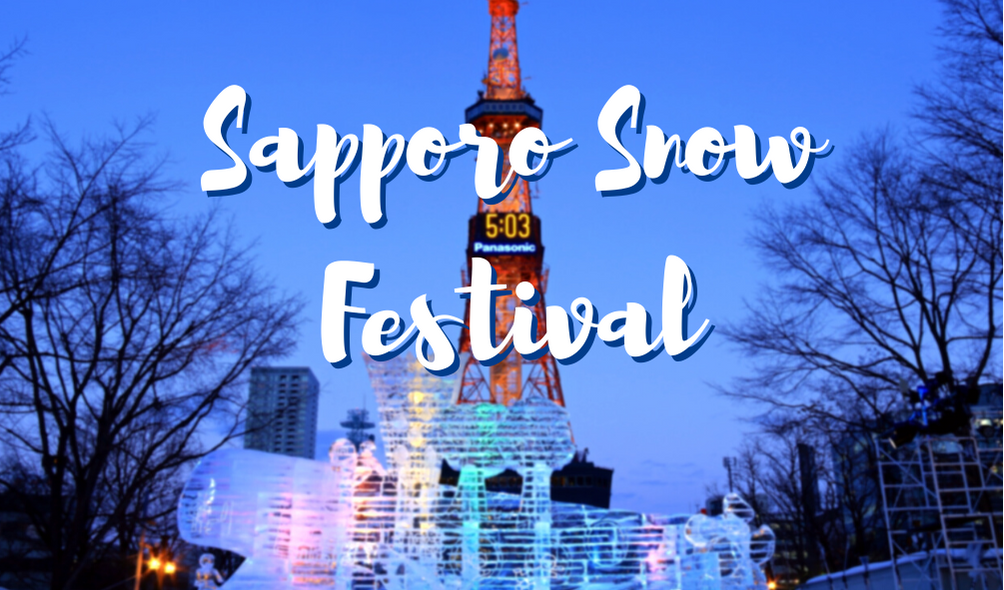
Odori is the heart of the festival and the site to prioritise if you only have one day. The sculptures line roughly 1 km of Odori Park, from the TV Tower at 1-chome west to 11-chome. The largest stand over 10 m tall and are built by teams including Japan’s Self-Defense Forces. Between them are hundreds of smaller pieces, often featuring anime and game characters, plus food stalls, stage shows and shops.
After dark, the snow sculptures are illuminated, creating a completely different atmosphere from the daytime displays. Projection-mapping shows have also been a popular feature in previous years, although details of the 2027 programme have yet to be confirmed. If possible, visit Odori Park both during the day and in the evening.
Susukino: the ice sculptures
A 10-minute walk south of Odori, Sapporo’s entertainment district hosts the ice sculptures. They are smaller than the snow works but strikingly detailed, and they glow under coloured lights at night. Some years include ice bars, so you can warm up with a drink before heading to dinner in the area.
Tsudome: snow play for families
Tsudome is an indoor-outdoor sports dome in Higashi-ku, away from the city centre. It focuses on activities rather than sculptures: snow slides, snow rafting and other attractions that kids (and plenty of adults) love. It closes earlier than the other sites, so go in the morning or early afternoon.
My experience at the festival


It was my first snow festival, and it became one of my favourite trips in Japan.
Day 1: arrival and yosakoi. My friends and I caught an early flight for the festival’s final days. Between landing, checking in and lunch, the afternoon slipped away, but we reached Odori in time for the yosakoi performances. Yosakoi is a high-energy Japanese festival dance, and student teams from local schools and universities threw themselves into it. My favourite detail: one member stands behind each team waving a huge flag, which takes serious strength to keep aloft. When the snow started falling that evening, we warmed up with bowls of Sapporo miso ramen.

Day 2: all three sites. We started early at Odori to see the sculptures without the crowds. The few giant works are spectacular, and the hundreds of smaller ones (Pokémon and Studio Ghibli characters among them) kept us stopping every few metres. The park is longer than it looks, so allow at least two hours.
Next came Susukino. The ice sculptures cover less ground, but their detail is remarkable. We then headed out to Tsudome, but arrived just as it was closing and missed the snow slides. Don’t repeat our mistake: do Tsudome first.


After dark we returned to Odori for the illuminations, which I hadn’t known about and which were the highlight of the day. We ended at an izakaya whose specialities were bear and venison, both local game dishes (we chickened out and ordered something else).

Tips for visiting
- Book your hotel now. Sapporo fills up months ahead for festival week. Reserve a cancellable room as soon as your dates are set.
- Plan two days if you can. One day covers Odori and Susukino; a second lets you add Tsudome without rushing.
- Do Tsudome in the morning. It closes earliest and is the furthest from the centre.
- See Odori at night. The illuminations and projection mapping are a different experience from the daytime walk.
- Get the view from above. The Sapporo TV Tower at the east end of Odori Park has an observation deck overlooking the whole festival.
- Dress for well below freezing. Wear thermal layers, a hat, gloves and a scarf. Hand warmers (kairo) are sold at every convenience store.
- Wear boots with grip. Pavements turn to packed snow and ice. Waterproof boots with non-slip soles matter more than anything else you pack; clip-on spikes help too.
- Use the underground walkways. Covered passages link Sapporo Station, Odori and Susukino, so you can move between sites out of the cold.
- Eat at the stalls. Look for Hokkaido specialities such as grilled scallops, corn, potato butter and hot drinks.
Add a trip to Otaru
Otaru’s Snow Light Path (小樽雪あかりの路, Otaru Yuki Akari no Michi) runs 6–13 February 2027, overlapping the Sapporo festival from 6 to 11 February. Otaru is a historic port town about 40 minutes from Sapporo by JR train.
Instead of giant sculptures, Otaru lines its canal and the old Temiya railway line with thousands of snow lanterns and candles. It is quieter and more romantic than Sapporo, and it makes an easy evening trip during festival week. See Sapporo Tourist Association for dates.
For more winter events across the region, see our guide to the best Hokkaido snow festivals.
Final thoughts
After years of travelling in Japan, few things still surprise me, but the Sapporo Snow Festival did. If you are visiting Japan in winter, make room for Hokkaido. Pair the festival with a few days in Sapporo, an evening in Otaru, or skiing at Niseko, one of Japan’s best ski areas.
Official Website: http://www.snowfes.com/english/
Winter is certainly the best time to visit Hokkaido! If you are looking for more things to do in Hokkaido area specially during Winter time, please check out these articles too!


▽ Related Articles ▽


▼ Editor’s Picks ▼


Written by
From Barcelona to Tokyo. Coffee and Adventure lover. I started to like Japan because of the anime, music and dramas, but after my first trip to the country I found what I love the most: traveling around, the culture and history. I have travelled a lot in Japan, but I still have many places to discover that I want to share with you. Let’s discover Japan together! Also, as a foreigner living in Japan for over 6 years I understand what kind of things are difficult when you move here and I want to help other people in the same situation that I have in the past.
- +18 43
-
-