Kanamara Matsuri in Kawasaki: A Complete Guide to Japan’s Most Misunderstood Festival
Kanamara Matsuri Explained: Japan’s Unique Festival Beyond the Viral Hype

- +0 0
-

-


A few meters into Kanayama Shrine, it becomes clear that the internet didn’t lie, but it didn’t tell the whole story either. Yes, there are penis-shaped candies in every imaginable color. Yes, strangers are casually wearing matching paper hats shaped to match. And yes, cameras are everywhere, documenting what might be Japan’s most famously misinterpreted festival.
But just as the scene threatens to tip into pure spectacle, the atmosphere shifts. A miko steps forward. The music slows. The crowd quiets. What began as a curiosity suddenly reveals itself as something structured, deliberate, and deeply rooted in tradition.
That tension—between humor and ritual, virality and history—is what defines the Kanamara Matsuri. And it’s exactly why reducing it to a novelty misses the point.
What Is the Kanamara Matsuri?
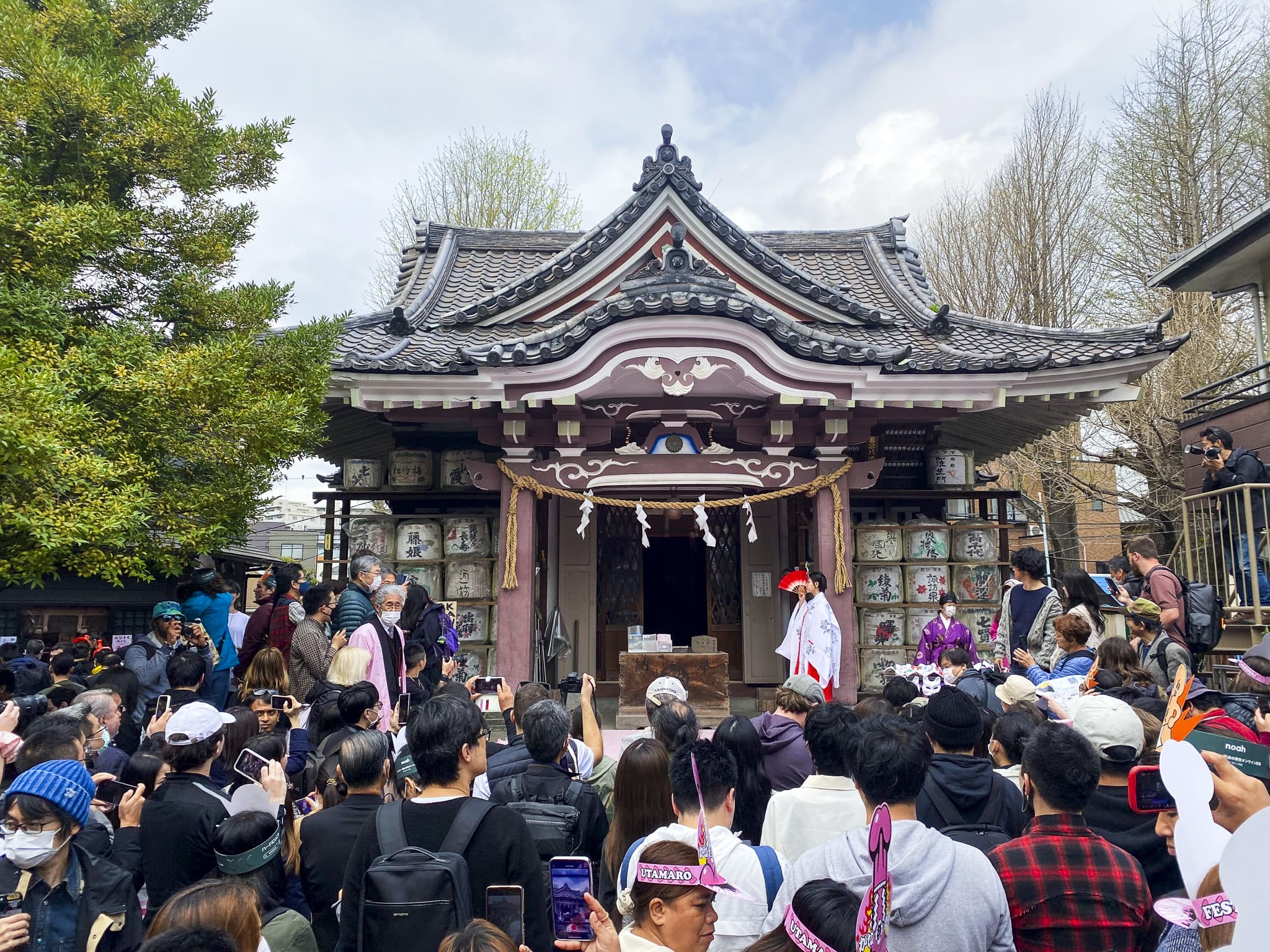
Held every spring at Kanayama Shrine (金山神社) on the first Sunday of April, the Kanamara Matsuri (かなまら祭り) is often introduced as one of Japan’s most unusual festivals. That reputation isn’t entirely undeserved, but it is incomplete.
Online, the event circulates as a collection of striking images: oversized phallic mikoshi, themed sweets, and crowds leaning into the absurdity. Those elements are real, and they are impossible to ignore once you arrive. But reducing the festival to its visual impact misses its function and context.
At its core, the Kanamara Matsuri is a Shinto festival tied to a specific place and set of beliefs. Like other shrine festivals across Japan, it revolves around ritual acts meant to invite and honor the kami, in this case those enshrined at Kanayama Shrine. The procession of mikoshi, the kagura performances, and the structured movement through the neighborhood all follow established patterns seen in matsuri nationwide.
What distinguishes this festival is the specific domain of protection it has come to represent. Historically associated with blacksmiths and later with sexual health, fertility, and safe childbirth, the symbolism reflects concerns that were both immediate and deeply personal. That association continues today, with the festival also serving as a platform for public health awareness and fundraising related to HIV/AIDS.
On the surface, it is playful and openly humorous, something even first-time visitors quickly pick up on. At the same time, it remains anchored in religious practice and community tradition, with rituals that follow a clear structure and meaning. But understanding that balance is key. The Kanamara Matsuri is a serious festival at its core, shaped by history, adapted to modern concerns, and expressed in a way that happens to be unusually direct.
The History Behind the Festival
Long before it became a global curiosity, the Kanamara Matsuri was shaped by the practical concerns of the people who lived and worked around Kawasaki. Its imagery may be striking, but its origins are grounded in industry, survival, and protection.
From Blacksmith Gods to Bodily Protection


At the center of it all is Kanayama Shrine, dedicated to the deities Kanayamahiko-no-Mikoto and Kanayamahime-no-Mikoto. These kami were traditionally worshipped by blacksmiths and metalworkers, trades that carried significant physical risk.
Kawasaki’s location along the Tokaido, the main artery connecting Edo and Kyoto during the Edo period, made it a natural hub for industry and transit. Workers came not only for employment but also for protection, praying to these deities to avoid injury. Over time, that idea of protection expanded as the dangers people faced were not limited to the forge. Concerns around fertility, childbirth, and sexual health gradually became part of the shrine’s spiritual role, linking the physical body to the same need for safeguarding.
The Legend of the Iron Phallus


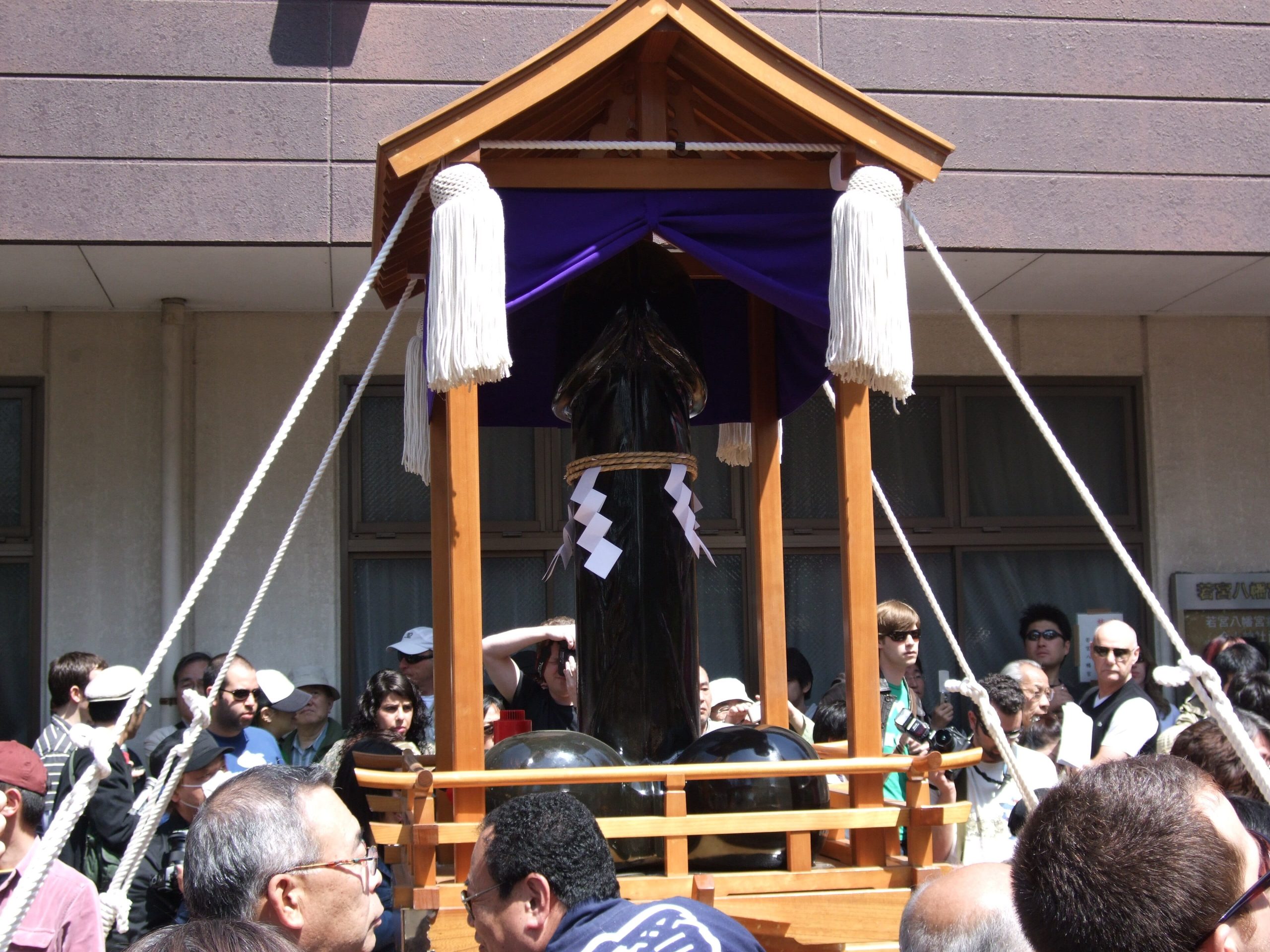
The festival’s most famous origin story is as unusual as it is revealing. According to shrine lore, a young woman was possessed by a demon that hid inside her body and bit off the genitals of her partners. Seeking help, she turned to a blacksmith, who forged an iron phallus. When the demon attempted the same attack, its teeth shattered, and it fled.
Stripped of its shock factor, the story reads as a symbolic explanation for something very real: fear of unseen harm, and the desire for protection against it. The iron object, practical, durable, and tied to local craftsmanship, became a talisman. It is this blend of folklore and function that still defines the festival’s imagery today.
Edo Period Realities: Pilgrimage and Disease
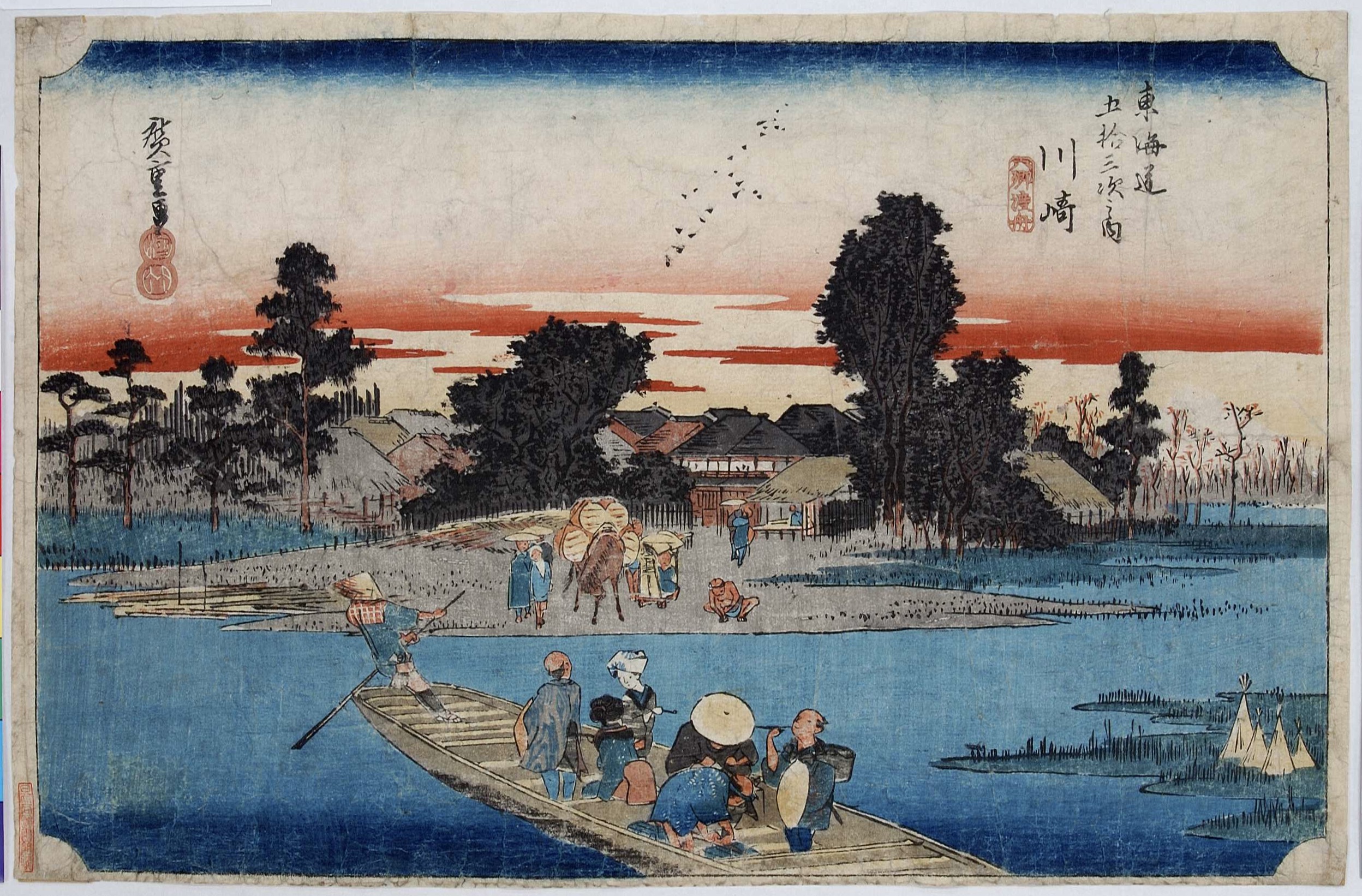
During the Edo period, Kawasaki functioned as a post station along the Tokaido. Inns, teahouses, and licensed brothels served travelers moving between Edo and Kyoto, creating an economy that depended on constant movement and close human contact.
Historical records from local sources, including shrine documents and Kawasaki city histories, indicate that sex workers regularly visited Kanayama Shrine to pray for protection from sexually transmitted infections such as syphilis. These visits were not symbolic gestures; they reflected an urgent need in a time before modern medicine.
The shrine’s role expanded accordingly. It became associated with:
- Protection from disease
- Fertility and safe childbirth
- Stable relationships and marital harmony
In this context, the phallic symbolism was direct and functional. It represented protection, health, and continuity, concerns that shaped daily life in very concrete ways.
Decline and Modern Revival
The transition into the Meiji period brought sweeping changes. Systems surrounding licensed prostitution were restructured, and many local customs tied to them faded. The prominence of Kanayama Shrine declined, and the practices that would later define the modern festival became less visible.
What exists today is not a continuous, unchanged tradition, but a revival. From the late 20th century onward, local organizers began re-establishing the festival, drawing on historical elements while adapting them to contemporary concerns.
A key shift came with the incorporation of public health messaging. As awareness of HIV/AIDS grew in the 1980s and 1990s, the festival found new relevance. Its historical association with protection against disease translated naturally into campaigns promoting safe sex and supporting research efforts.
This evolution explains why the Kanamara Matsuri feels both ancient and modern at the same time. Its imagery comes from folklore and Edo-period realities, but its current form reflects present-day priorities — community identity, inclusivity, and public awareness — anchored around Kanayama Shrine.
My Experience at Kanamara Matsuri
For all the history behind it, the reality of attending the festival is immediate and physical: crowds, color, noise, and a steady sense that this is not quite like anything else on the calendar. It’s easy to arrive with expectations shaped by viral clips. It takes about five minutes on the ground to realize the experience is far more layered.
Getting There
The festival takes place in Kawasaki, just south of Tokyo, and is straightforward to reach.
The closest access points are:
- Keikyu Kawasaki Station or JR Kawasaki Station
- Kawasaki-Daishi Station on the Keikyu Daishi Line
From there, it’s a short walk to Kanayama Shrine.
Arriving Early or Failing to Beat the Crowds


Getting to Kanayama Shrine early is almost non-negotiable. By mid-morning, access to the shrine grounds slows to a crawl, with long queues forming along the surrounding streets. I couldn’t arrive as early as I had originally planned, so it took me quite a while to enter, barely on time to see the start.
What stood out immediately was the crowd itself. This didn’t feel like a typical local matsuri. The proportion of international visitors was strikingly high, many clearly drawn by the festival’s online notoriety. The result is an unusual mix: seasoned matsuri-goers, curious first-timers, and a steady stream of cameras documenting everything.
A Festival That Doesn’t Take Itself Too Seriously


Once inside the grounds, stalls line the approach, selling penis-shaped candy in a range of colors and sizes, alongside themed souvenirs that leave little to interpretation. Soon after, you’ll be offered a themed paper hat. I’d be lying if I said it doesn’t feel a little embarrassing for the first couple of seconds, but we came to participate right? We’re supposed to join the fun after all.
It would be easy to dismiss the whole thing as a joke at this stage. The atmosphere is undeniably playful, and people lean into it. But it never tips into disorder. The layout is familiar to anyone who has attended festivals across Japan: food stalls, orderly queues, and a steady flow of foot traffic. The difference lies in how openly the theme is expressed. What might be implied elsewhere is front and center here, and that honesty is part of what makes the experience work.
The Ceremony: A Moment of Stillness
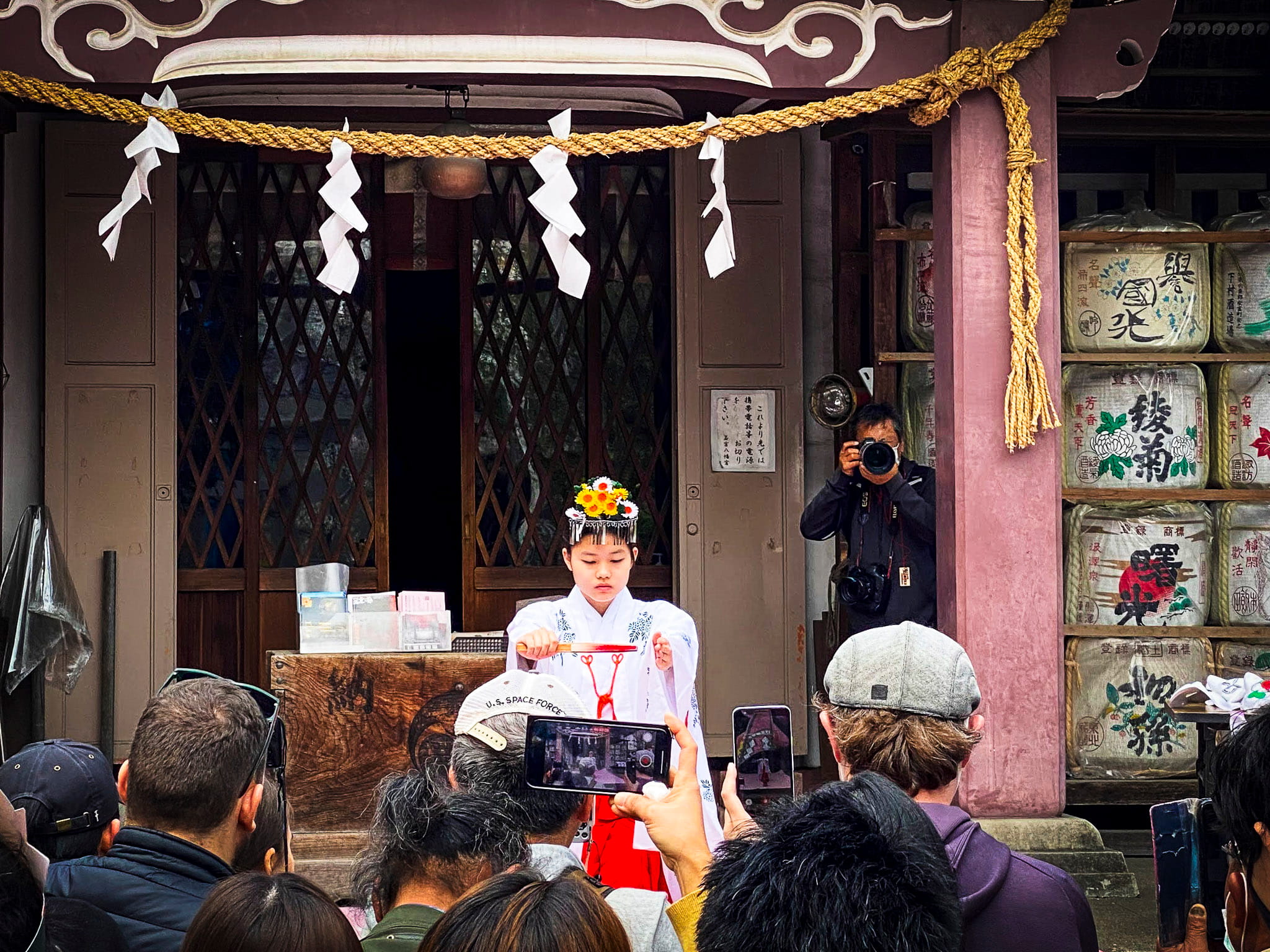
Then, without much warning, the mood changes. Before the parade begins, a miko kagura (巫女神楽) performance takes place within Kanayama Shrine. A shrine maiden, dressed in traditional white and red, performs a slow, deliberate dance accompanied by ritual music.
Kagura is not entertainment in the conventional sense. It is a Shinto ritual intended to purify the space, invite the kami, and formally mark the beginning of proceedings. The movements are precise, almost restrained, creating a sharp contrast with the noise and humor just moments before. It’s a brief interlude, but an important one that reframes everything that follows beyond a random spectacle.
The Parade: Mikoshi, Music, and Controlled Chaos
If the ceremony inside Kanayama Shrine establishes the festival’s religious footing, the parade is where everything opens up. This is the portion most people have seen online. See the map below for the route:
The Three Festival Mikoshi


At the center of the procession are the mikoshi or portable shrines, each with its own identity and history. The Kanamara Grand Mikoshi (かなまら大神輿) is the oldest and most traditional one, with a square base and a roof. The Kanamara Boat Mikoshi (かなまら舟神輿) owes its name to its boat-shaped base, and it was a donation from Hitachi Shipbuilding Co.,Ltd., honoring the blacksmithing origins of the festival.
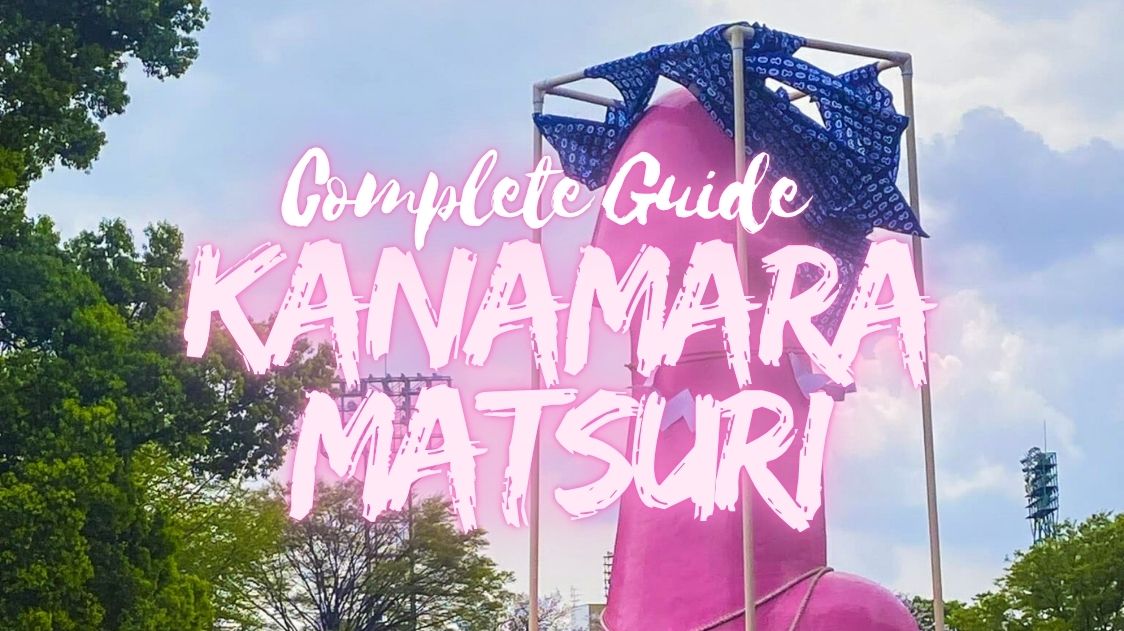
Then there is the most recognizable one: the large pink Elizabeth Mikoshi (エリザベス神輿). Introduced in the 1970s with the involvement of the cross-dressing club Elizabeth Hall (a drag establishment that operated in Asakusabashi from 1978 to 2020), it has since become the visual centerpiece of the parade. Unlike other portable shrines carried by local organizations, this one is usually carried by cross-dressing members linked to Elizabeth Hall.
Despite the differences, the different portable shrines follow the same underlying logic: they are vehicles for the kami, temporarily moving the sacred presence beyond the shrine grounds and into the surrounding community.
Route and Flow of the Parade


The procession begins at Kanayama Shrine and moves through the nearby streets in a carefully managed loop. Numerous stalls selling souvenirs and sweets are along the route, heading toward Daishi Park, where a significant portion of the activity unfolds, before eventually returning to the shrine. The pattern follows standard mikoshi practice across Japan, where the portable shrine is paraded through its parish area to symbolically extend blessings.
The parade advances in short bursts, frequently stopping to allow carriers to rest, regroup, or perform. For spectators, this stop-start rhythm works in their favor—there are plenty of opportunities to catch up, reposition, and see each mikoshi multiple times without needing to rush.
Kawasaki-Daishi Nakamise Street


A short walk from Kanayama Shrine leads to Kawasaki-Daishi Nakamise Street (川崎大師仲見世道), the approach road to the area’s main temple. Like other “Nakamise” streets across Japan, it developed as a commercial strip serving visitors heading to worship, with shops selling local specialties, sweets, and souvenirs.
During the festival, many shops adapt to the moment. Standard offerings like kuzumochi (a local specialty of Kawasaki Daishi) and traditional snacks remain available, but you’ll also find more playful, themed variations tied to the event, including all kinds of figures and amulets. It’s one of the easier places to explore at your own pace, especially compared to the dense crowds inside the shrine grounds.
Historically, this kind of street reflects the long relationship between pilgrimage and commerce in Japan, as temples and shrines draw visitors, and small businesses grow around them to support that flow.
Daishi Park: The Festival Expands


By the time the procession reaches Daishi Park (大師公園), the atmosphere loosens. The wider open space changes the dynamic: crowds spread out, movement becomes easier, and the event feels less compressed than around the shrine.
This is also where the Elizabeth Mikoshi tends to draw the most attention. Carriers lean into the performative aspect—dancing, posing, and interacting with the crowd in a way that blurs the line between religious procession and street performance.
At the same time, the broader festival continues around it. Food and trinket stalls, temporary setups, and clusters of spectators create a secondary hub that feels almost like a parallel event. According to local event guides and Kawasaki ward information, Daishi Park regularly functions as a key gathering point during the festival, hosting extended activities beyond the initial shrine grounds.
Eventually, the procession regroups and makes its way back toward Kanayama Shrine, completing the circuit. By then, the tone has shifted again—less ceremonial, more celebratory—but still anchored in the same structure that began with the morning rituals.
Beyond the Festival: Nearby Spots Worth Visiting
The Kanamara Matsuri can easily fill an entire day, but stepping just a little beyond the main route adds depth to the experience. Within walking distance, a few key locations provide contrast—quieter, more traditional, and in some cases unexpectedly refined.
Kawasaki Daishi Temple


At the end of that street stands Kawasaki Daishi (川崎大師), formally known as Heiken-ji (平間寺), one of the most important Buddhist temples in the Kanto region.
Founded in 1128, the temple is associated with the monk Sonken and the worship of Kobo Daishi (Kukai), a central figure in Japanese esoteric Buddhism. It has long been a major pilgrimage site, particularly for prayers related to protection from misfortune and disaster prevention.
The contrast with the festival is immediate. While Kanamara Matsuri leans into humor and spectacle, Kawasaki Daishi presents a more formal religious setting—large temple grounds, incense-filled courtyards, and a steady flow of worshippers engaging in traditional practices.
For visitors, this stop works as a reset. It places the festival within a broader religious landscape, showing how different expressions of belief coexist within the same neighborhood.
 Access Access |
5-min walk from Kawasaki-Daishi Station |
|---|---|
 Business Hours Business Hours |
5:30 AM–6 PM |
 Price Price |
Free |
 Official Website Official Website |
http://www.kawasakidaishi.com/ |
Shinshuen Garden in Daishi Park


Within Daishi Park, away from the main festival activity, sits Shinshuen Garden (瀋秀園), a beautiful Chinese-style garden that many visitors miss entirely. It was created in 1987 to commemorate the 5th anniversary of the sister-city relationship between Kawasaki and Shenyang in China. Designed in the style of a traditional Chinese landscape garden, it features:
- Ornamental ponds
- Stone bridges and pathways
- Pavilions with classical architectural elements
The layout emphasizes balance and controlled perspective, typical of Chinese garden design, consisting of composed scenes rather than a wide open space. Just a short walk from crowded paths and loud processions, the garden remains comparatively calm, allowing for a nice contrast.
| Access |
12-min walk from Kawasaki-Daishi Station |
|---|---|
| Business Hours |
9 AM–4 PM |
 Closed Closed |
Monday |
| Price |
Free |
| Official Website |
https://daishi-park.com/infomation/shinshuen/ |
Practical Tips for Visiting Kanamara Matsuri


A little planning goes a long way here. The festival’s growing popularity means that what looks spontaneous on video is, in reality, easier to enjoy with a clear strategy—especially if you want to balance the shrine, the parade, and the surrounding area without getting stuck in the densest crowds.
- Timing Your Visit: Arriving early is the single most important decision you’ll make. Getting to Kanayama Shrine in the morning gives you a chance to move through the grounds before access slows and queues build up. Late morning to early afternoon is peak time. This is when the parade preparations begin and the shrine area becomes congested. If you prefer a bit more space, shifting your focus to Daishi Park later in the day makes a noticeable difference. The open layout absorbs the crowd better, even when the parade arrives.
- Crowd Strategy: The area immediately around Kanayama Shrine is the tightest bottleneck. If your goal is to see everything up close, go early. If not, it’s often smarter to step away and rejoin the festival along the parade route. Following the mikoshi as they move toward Daishi Park gives you multiple chances to catch them without staying pinned in one spot. The stop-start nature of the procession works in your favor, as you can move ahead, wait, and see the same group pass again. Inside the park, positioning is much easier. You’ll have room to watch, take photos, and actually take in what’s happening without constantly adjusting your footing.
It’s easy to arrive at Kanamara Matsuri with a fixed idea of what you’re about to see. The internet has done a thorough job of flattening it into a punchline. And to be fair, the humor is real, visible, and very much part of the day.
But spending time on the ground tells a different story. A festival rooted in protection, first for metalworkers, later for matters of health and fertility, has adapted without losing its core. The result is something that feels both traditional and completely current, capable of drawing global attention while still functioning as a local religious event.
For more information about Spring festivals and activities, check these articles too!

Written by
Photographer, journalist, and avid urban cyclist, making sense of Japan since 2017. I was born in Caracas and lived for 14 years in Barcelona before moving to Tokyo. Currently working towards my goal of visiting every prefecture in Japan, I hope to share with readers the everlasting joy of discovery and the neverending urge to keep exploring.
- +0 0
-
-