Hiroshima to Kobe: 5-Day Itinerary Across Shikoku
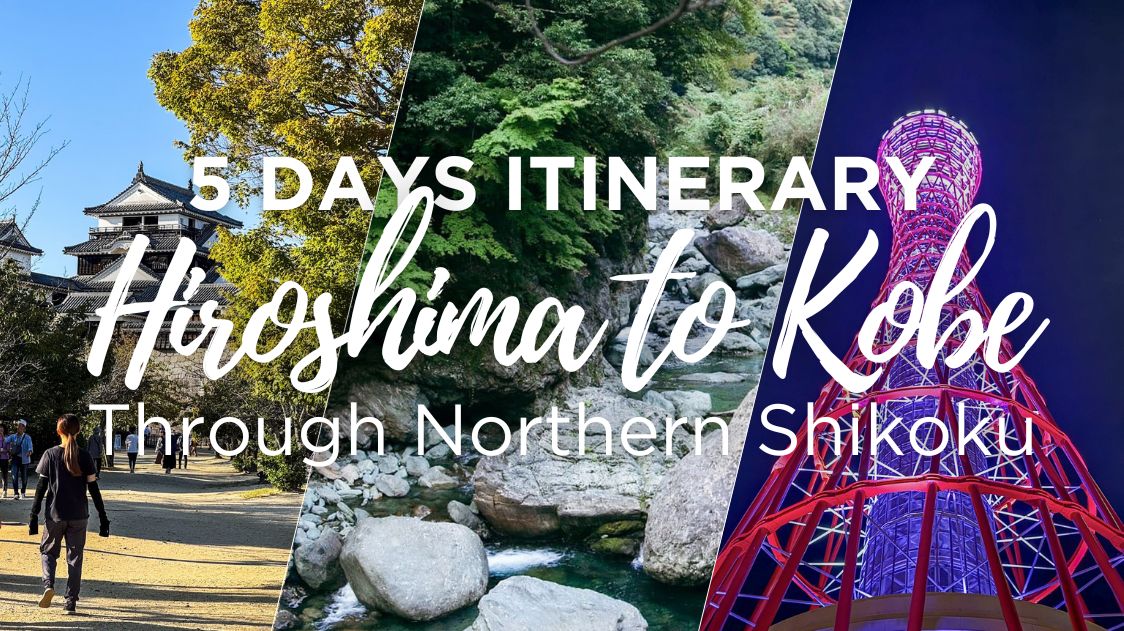
Castles, Hot Springs, Mountains, and Whirlpools on a Hiroshima–Kobe Route through Ehime and Tokushima

- +0 0
-

-


Accustomed to the famous convenience of train travel in Japan, other nice options may sometimes be overlooked. But you should know that one of the awesome things about traveling around the Setouchi or Seto Inland Sea area, is the possibility to add ferry travel to mix up routes along the way. This is why, while most travelers leave Hiroshima on a bullet train, I decided to take a fun detour filled with scenic sea views while planning Kobe as a final destination.
The crossing to Matsuyama sets the tone: slow, scenic, and slightly off the usual grid. What follows is five days of highlights that balance history, landscapes, and local culture, through Ehime and Tokushima at one of Japan’s oldest hot springs at Dogo Onsen, ropeways up to different peaks for sweeping views, and the whirlpools that inspired one of Japan’s most successful manga/anime franchises, among other things.
All in all, a compact but full-bodied trip. Some hiccups included (worry not, for I’ll let you know how to avoid them).
*Please note that this article contains affiliate links.
For traveling from Tokyo to Hiroshima and beyond, the Shinkansen is a convenient option. You can also book online. Try checking the route from Tokyo to Hiroshima now! [Ads]
Day 1: From Hiroshima to Matsuyama in Ehime by Ferry
Hiroshima–Matsuyama Ferry Guide
Departing from Hiroshima Port, the Super Jet high-speed ferry (about 1 hour and 10 minutes, 10 minutes extra when the schedule also includes a stop at Kure Port) cuts across the Seto Inland Sea with views of small islands and calm stretches of water that feel worlds away from the city.


A slower car ferry option also runs the route (about 2 hours and 40 minutes), and is worth considering if you prefer a more relaxed ride, which is what I did. Tickets can be purchased at the terminal (at least 20 minutes in advance) or booked online in advance, and departures run regularly throughout the day.


Bear in mind that if you plan to bring a vehicle aboard, it’s only allowed on the slower ferry, and there are additional fares that will vary depending on the vehicle size. It’s also highly recommended to book online in advance, just in case, as car space may be limited. See the comparison below for reference:
| Cruise Ferry Type | Duration | Fare (adult, one way) |
| Super Jet | 1h10min | ¥8,800 |
| Cruise Ferry | 2h40min | ¥5,800 |
For full details on fares and schedules, check the cruise ferry’s official website:
https://setonaikaikisen.co.jp/language/en/#section-ride
If you’re visiting Japan on a tourist visa, this ferry ride is also included in JR West’s Setouchi Area Pass! <<Book your JR Setouchi Area Pass here!>>
Arrival in Matsuyama and Visit to Matsuyama Castle in the Afternoon
On arrival at Matsuyama’s Kanko Port, it’s a straightforward bus or tram ride into the city center. The city is compact and well-connected by trams and buses. From the ferry port, we reached central Matsuyama in about 20–30 minutes.


Once in Matsuyama, we went straight for the city’s centerpiece: Matsuyama Castle (松山城). Perched on Mount Katsuyama, the fortress is one of only twelve castles in Japan that still preserve their original main keep, which is why it had been on my bucket list for quite a long time.
The climb can be part of the experience, whether you choose a 20–30 minute uphill walk or a quick ropeway/chairlift ride. We opted for the latter, as the indications for the walking path were not perfectly clear, and we didn’t want to risk wasting time.
Inside, the castle houses displays of armor, weapons, and Edo-period artifacts, while from the upper floors, you get sweeping views of Matsuyama and, on clear days, the Seto Inland Sea. Visiting in the afternoon works well, as the light begins to soften and the grounds empty out compared to the busy mornings.
Evening Relax at Dogo Onsen
After the castle, shift gears with an evening soak at Dogo Onsen Honkan (道後温泉本館), Japan’s oldest hot spring. This wooden bathhouse, which inspired cultural giants such as Natsume Soseki and Studio Ghibli, is the focal point of Dogo Onsen.


After bathing, there are other things you can do around the area, such as strolling through the adjacent shopping arcade, Dogo Haikara Shotengai (道後商店街), lined with snack shops, cafés, and boutiques selling local products. Make sure not to miss the Botchan Karakuri Clock in motion, a playful mechanical display that nods to the area’s literary heritage with an hourly performance every day between 8 AM to 10 PM (every 30 min on weekends and holidays, as well as selected special dates).


And if you’re a lover of citrus fruits like yours truly, you’re in luck! Head to Ehime no Shokutaku 1970 (愛媛の食卓1970), where you can enjoy juice taps with countless mikan varieties ranging in acidity and sweetness.
 Business Hours Business Hours |
9 AM–9 PM |
|---|---|
 Official Website Official Website |
https://w-harmony.jp/shop/ehimenosyokutaku1970/ |
For dinner, we opted for Gansui (丸水), where we enjoyed the most delicious Uwajima Taimeshi meal, a typical Ehime Prefecture sea bream dish.
| Business Hours |
11 AM–2:30 PM 5–8:30 PM |
|---|---|
 Closed Closed |
Wednesday |
| Official Website |
https://www.gansui.jp/ |
Day 2: Ehime Deep Dive with a Day Trip to Mount Ishizuchi (Overnight in Iyo-Saijo)
We left Dogo Onsen in the morning to head toward Mount Ishizuchi, the tallest peak in western Japan. The journey alone took a good chunk of time, which is why this ended up being a full-day trip.
Lunch Break at Iyo-Saijo
We made our way from Dogo Onsen Station to Iyo-Saijo Station (reachable either by train or bus, depending on your budget and schedule) in about 2 hours, and from there, another bus would take us to the Mount Ishizuchi Ropeway in about 1 hour. But the next bus wouldn’t depart from Iyo-Saijo for quite a while, so we took a look around to get something for lunch.


At the nearby Noborido Shopping Street (登道商店街) we found a delicious old-school ramen joint called Matsubaya (松葉家) that offered classic dishes such as chuuka soba, katsudon or oden. The place had a decidedly nostalgic Showa-era vibe.
| Business Hours |
11 AM–6:30 PM |
|---|---|
| Closed |
Wednesday |
For those of you who may need your fix of coffee and sweets after your meal, the lovely and stylish ODD CAFE right in front of the ramen will have you covered!
| Business Hours |
12:30–6 PM |
|---|---|
| Closed |
Wednesday |
| Official Website |
https://www.instagram.com/odd.cafe.s |
The Beauty of the Misty Woods
Riding up, the gondola carried us high into the mountains, climbing over dense forests that seemed to vanish into the clouds. Even from below it was clear that we wouldn’t enjoy sweeping panoramic views that day.
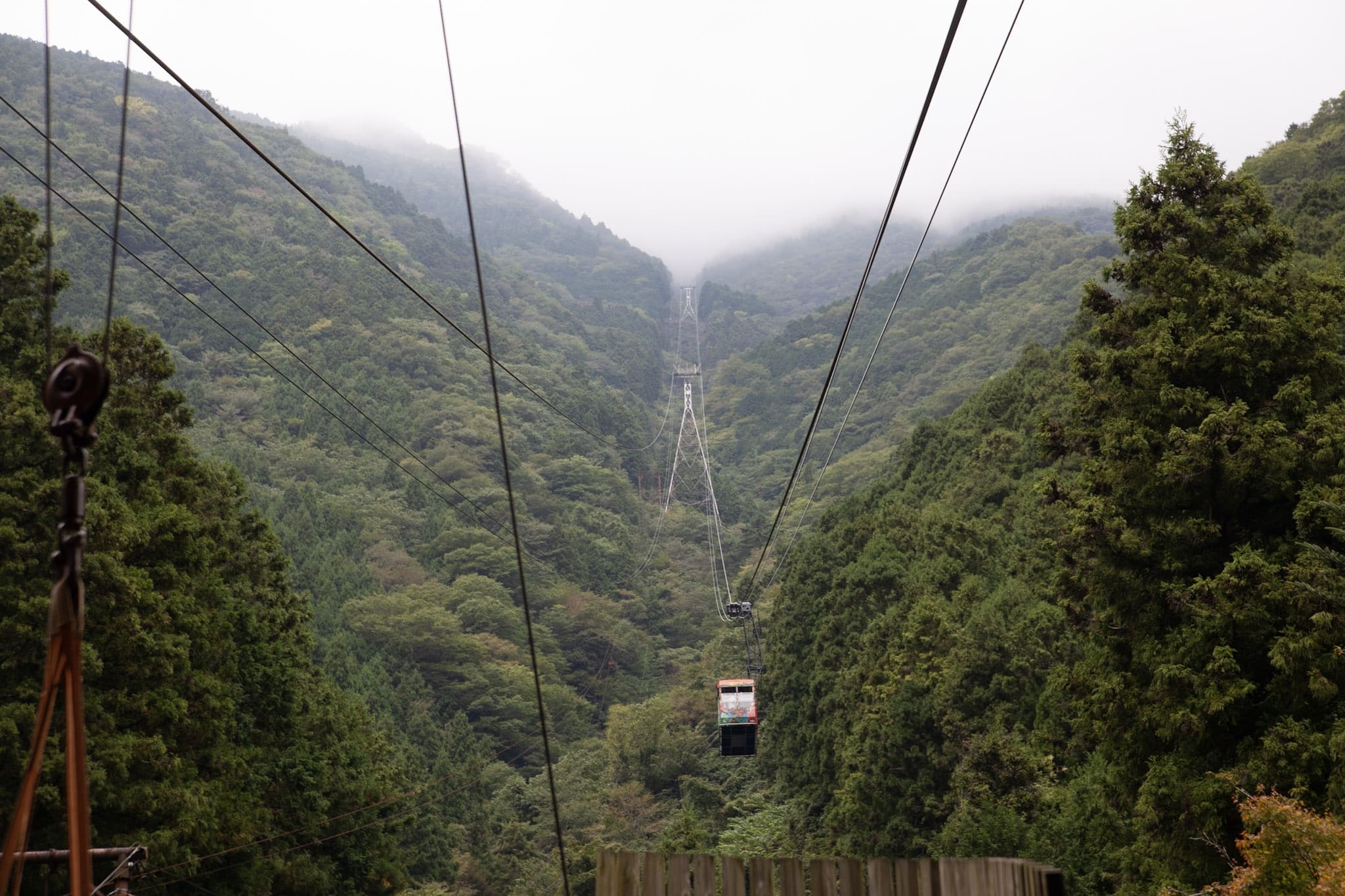
At the top station, the mountain was completely wrapped in mist, and so we embraced the beauty of the misty woods, which made the visit quite a memorable one.
The winding paths leading into the forest felt almost hidden, with occasional silhouettes of fellow visitors appearing and disappearing like ghosts, and the shape of Ishizuchi Shrine’s Torii gate emerging with haunting charm. Every step had a quiet, mysterious atmosphere, and it was easy to understand why Ishizuchi has been regarded as a sacred mountain for centuries.


We spent some time wandering around the trails near the ropeway before heading back down in the late afternoon, before daylight faded.
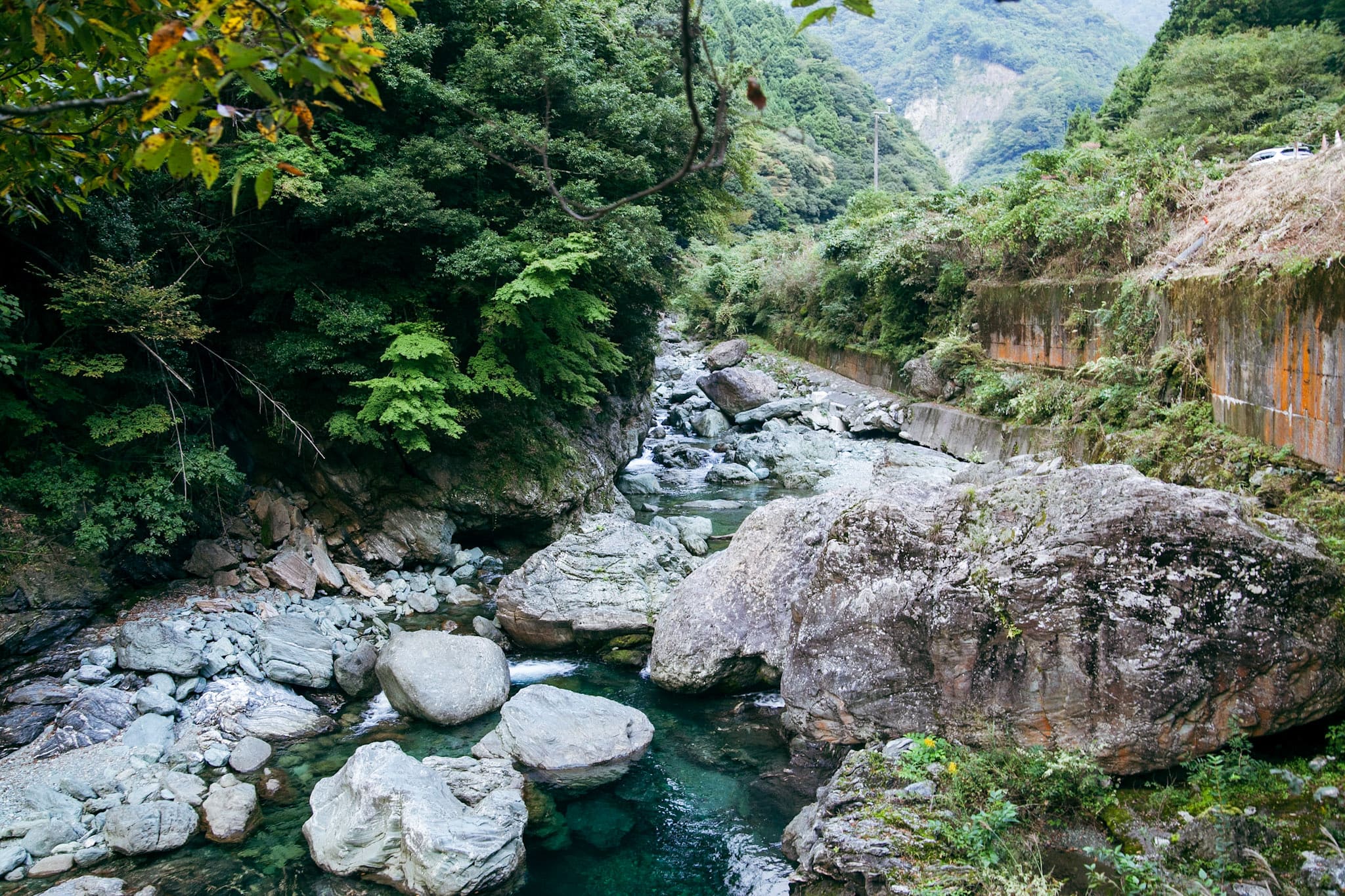
Below, a short leisurely walk around the ropeway base revealed the stunning beauty of Sanpekikyo Gorge (三碧峡) before returning to Iyo-Saijo for the night.
Day 3: Bizan Ropeway in Tokushima City
We arrived in Tokushima around lunchtime, which means we dove head straight into the first Tokushima ramen joint we found because of course we had to. Tokushima Ramen Menoh (徳島ラーメン麺王) near the station was exactly what we needed.
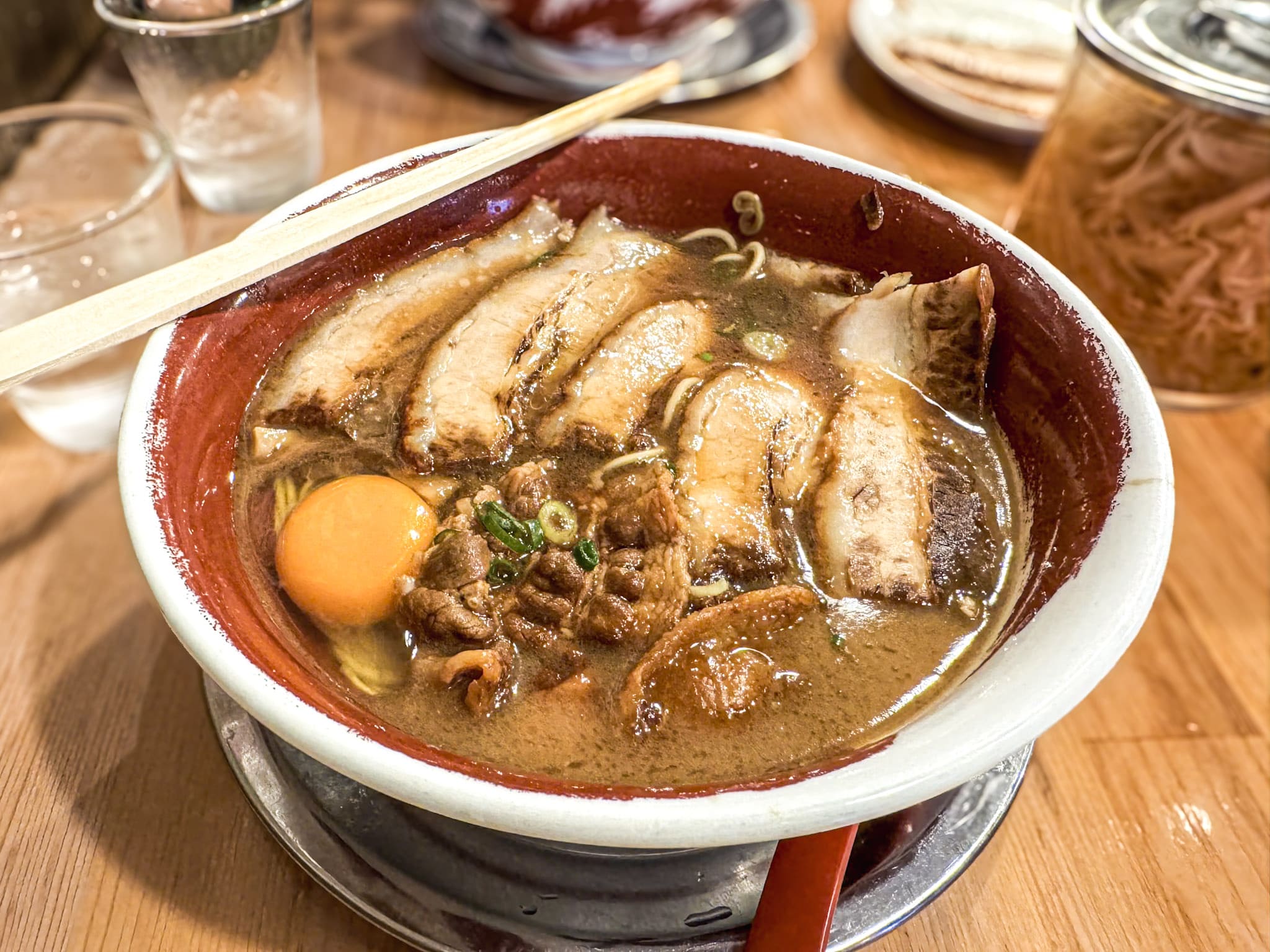
Having complied with our local gastronomy duties, we made our way to catch the Bizan Ropeway. The ropeway base is literally on the 5th floor of the Awaodori Kaikan (阿波おどり会館) building, so it’s the easiest ropeway I’ve used in a city center. The ride to the summit took only about six minutes.


The building had some cute exhibits centered around the famous local festival dance (hence the building’s name) so it’s worth it to dedicate a few minutes at least to look around before going up.
As a side note, the Awaodori Kaikan itself runs performances and has an Awa Odori Hall with scheduled shows during the day; I didn’t go for a dance performance on this trip due to schedule constraints but if you have time, I encourage you to do so.
The ropeway runs late enough in the warmer months, making it suitable to enjoy the sunset before making your way back: from April through October, it stays open until 21:00, while the winter months have shorter hours until 17:30. Note that ropeway services may be suspended anytime if weather conditions are deemed unsuitable.


From the summit at Bizan Park, I caught quick views of Tokushima spreading toward the river. There’s an observatory area at the top, with a cafe on the lower floor, in case you feel like having a coffee with a view.
A striking white stupa, or Buddhist pagoda, caught my attention while walking around the premises. On closer inspection, it turns out this is a Peace Memorial Pagoda that was built in 1958 by surviving soldiers who returned from the Burmese front during World War II, as a memorial to their fallen comrades, which is why it has such a unique style, inspired by the shape of Shwedagon Pagoda in Burma (now Myanmar).
Day 4: Tokushima Riverviews and Naruto Whirlpools
Shinmachi River Cruise
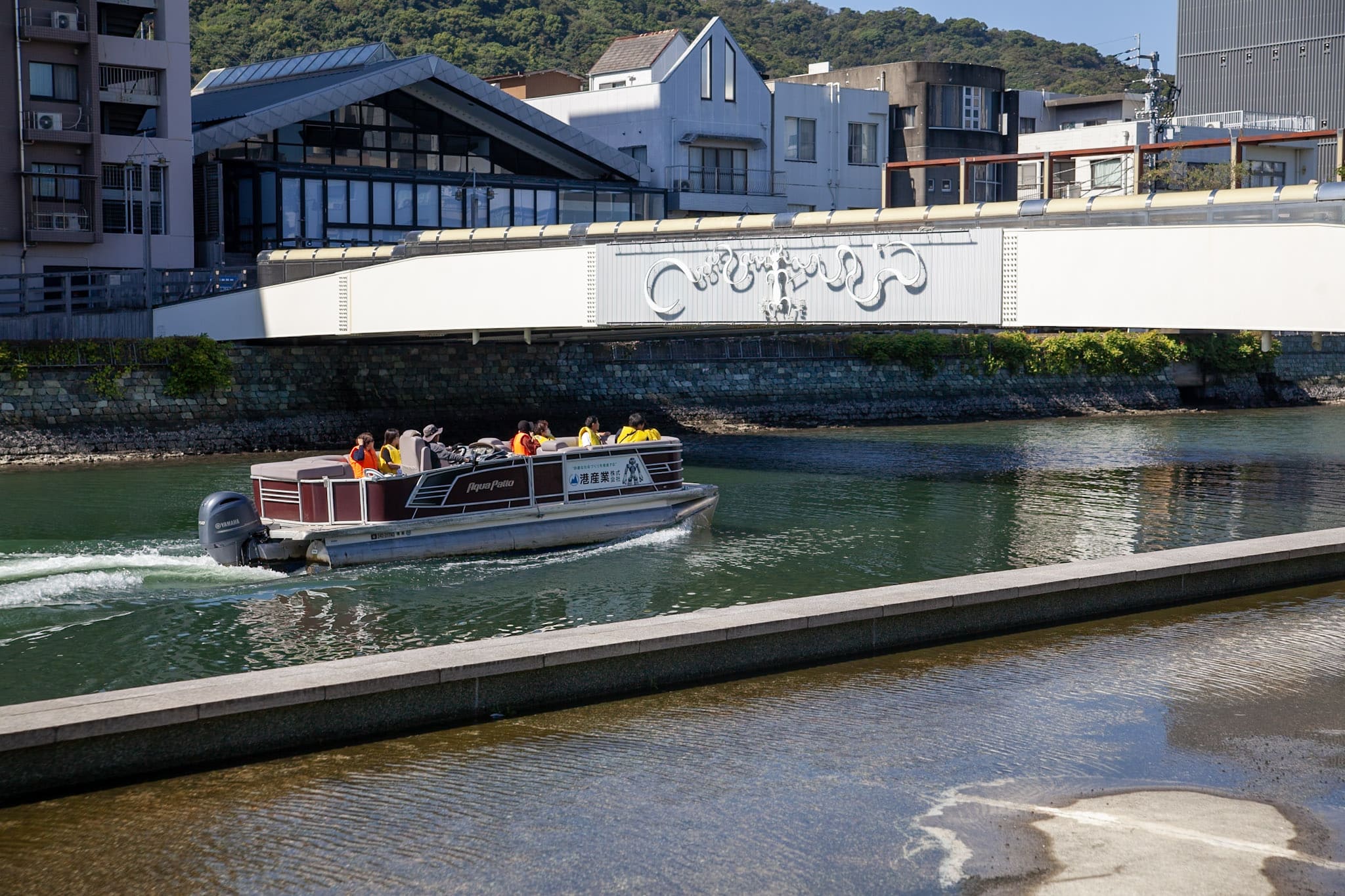
We started Day 4 with the Hyotanjima Cruise on the Shinmachi River in the morning. The short loop takes about 20–30 minutes and is a tidy way to see Tokushima from the water, good for a relaxed start to the day and a different angle on the city before the Naruto leg. Tickets are usually bought at the boarding point.
Naruto Strait
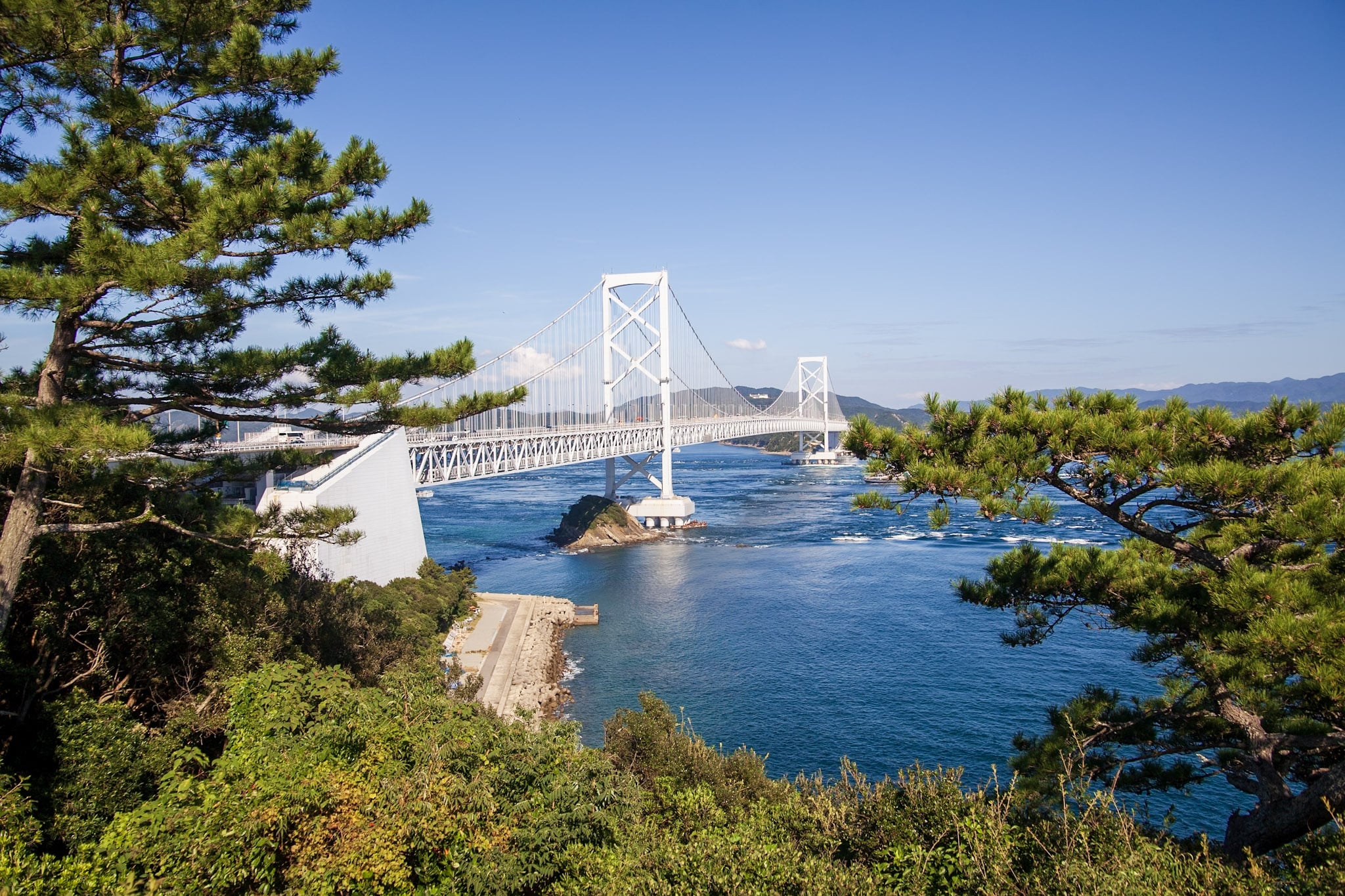
Around noon, we headed east toward the Naruto Strait, with a brief stop at Naruto Park to enjoy the panoramic views of the strait and Onaruto Bridge from the Ochaen Observation Deck, followed by the Uzunomichi Observatory right from the bridge, through the bridge’s Walkway, which runs under the roadway about 45 meters above the sea.


The walkway has viewing windows (including sections with glass floors) that let you look down at the channel; it’s a different perspective from the boat, but it’s worth doing if the tides are cooperating. The walkway’s viewing windows and the boat experience complement each other: boat for scale and motion, walkway for that vertigo-and-detail look.
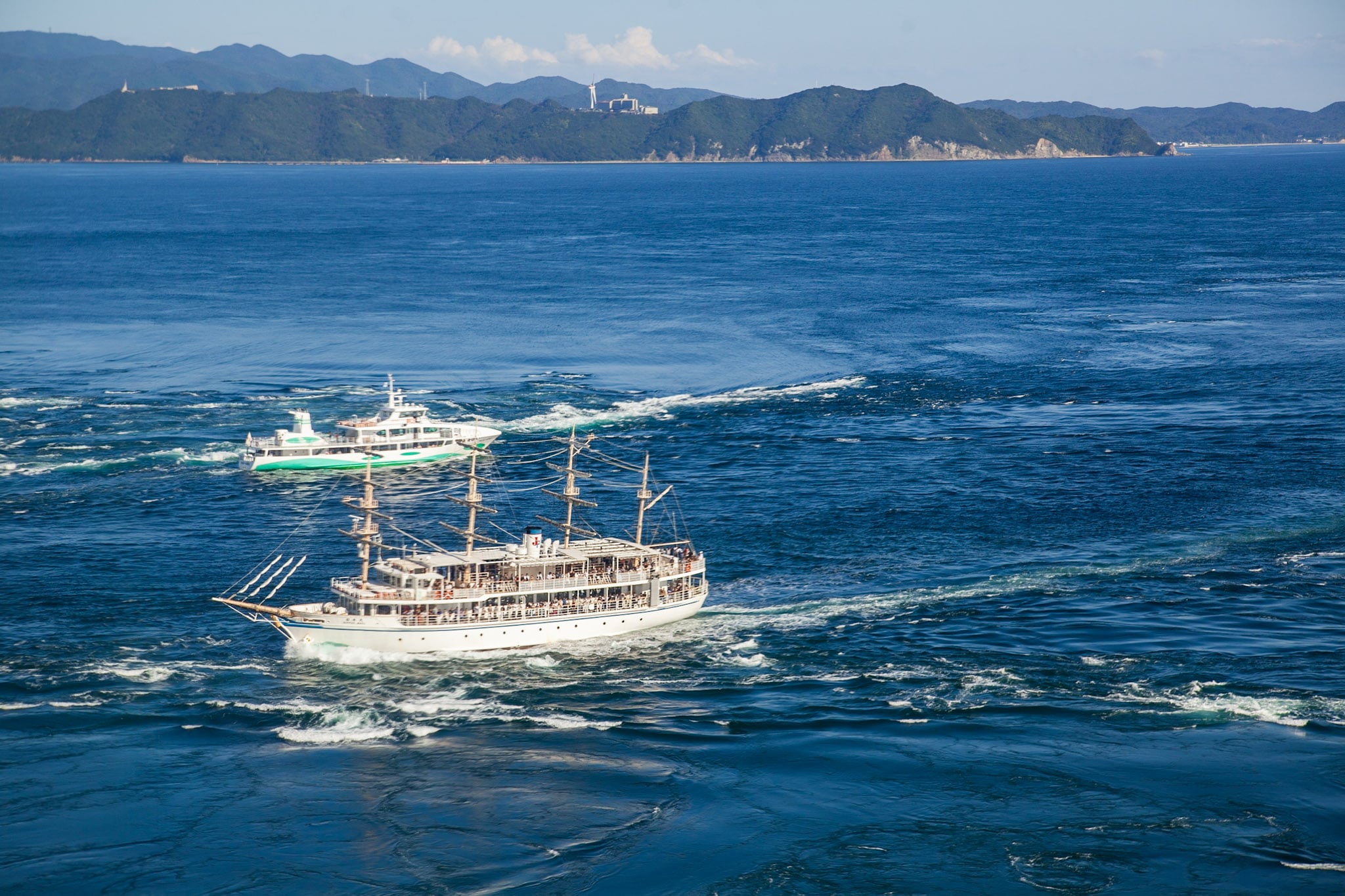
For the whirlpools, timing is everything: the whirlpools reach their peak size around high and low tides, and operators recommend aiming for roughly an hour-and-a-half window centered on those tide peaks, so it’s advisable to check the local tide tables before booking a boat, which you can check online at the two local sightseeing companies’ websites, here and here.
The Uzushio sightseeing boats run quite frequently during the day, with larger sightseeing vessels that’ll take you right over the whirlpools for roughly a 30-minute trip.
A Cautionary Tale About Bus Rides
What I thought would be a simple hop from Naruto to Kobe turned into the kind of travel story you only laugh about later. The plan looked easy enough: catch a bus straight across Awajishima and roll into Kobe in time for dinner. What I didn’t realize was that it was a national holiday right after a weekend. At the time, it did seem quite busy for a Monday, but I figured that the Naruto was a really popular attraction.
Well, Naruto was packed, and every single highway bus seat to Kobe was booked solid. Unlike city buses, standing passengers aren’t allowed on highway buses, so there was no chance of squeezing on. Believe me, I asked.
What should have been a straightforward bus ride under 2 hours became a zigzag across prefectures: a local train, a limited express, and finally a Shinkansen from Okayama to Shin-Kobe. By the time I checked into the hotel, it was past 11 p.m., and the “easy transfer” had become a cautionary tale. Moral of the story: if you’re planning to use highway buses in Japan, check the calendar and book in advance, and don’t assume a Monday is just a Monday.
Practical Tip: Highway buses in Japan are comfortable and efficient, but they’re reservation-based. During weekends and national holidays, they fill up quickly, sometimes days in advance. If you’re traveling on those dates, book your seat early or have a backup plan (such as a rail route) ready to go.
Day 5: Kobe — Chinatown, Kitano, Herb Gardens, and Night Views
After a good night’s rest following our eventful arrival in Kobe, we were ready to tackle the city’s highlights:
Morning & Lunch in Kobe Chinatown (Nankinmachi)


My final day began with a wander through Kobe’s Chinatown, Nankinmachi (南京町). The neighborhood doesn’t really wake up until mid-morning, so by the time I got there the gates were buzzing with energy. Nankinmachi is compact but lively, and the combination of lanterns, crowds, and sizzling woks made for a lively start to the day, before getting a hearty lunch.
Early Afternoon: Kitano-cho Western Neighborhood


For a post-lunch stroll we turned uphill toward Kitano-cho (北野町), Kobe’s old foreign-settler district. The streets here couldn’t feel more different from Chinatown’s busy food stalls.
Sloping lanes lead past European-style mansions built in the late nineteenth and early twentieth centuries, each with its own eccentric details, such as verandas, decorative windows, and quirky weather vanes. Some of them have been turned into cafés or small museums, but even just walking past, you get a sense of Kobe’s international past.
Late Afternoon: Nunobiki Herb Gardens & Ropeway


From Shin-Kobe Station we boarded the Kobe Nunobiki Ropeway (神戸布引ロープウェイ) for a ride up into the hills. The cable cars rise quickly, gliding past the Nunobiki Waterfall and giving sweeping views over the city and harbor. At the top, the Kobe Nunobiki Herb Gardens (神戸布引ハーブ園) spread out in a series of themed terraces, each bursting with seasonal color.


The air was filled with the fragrance of rosemary, lavender, and mint, and I stopped for tea at The Veranda at Kobe, where herb-infused sweets are served alongside panoramic views. It was an easy place to linger, watching the light shift as the afternoon drew on.
Evening: Kobe Harborland
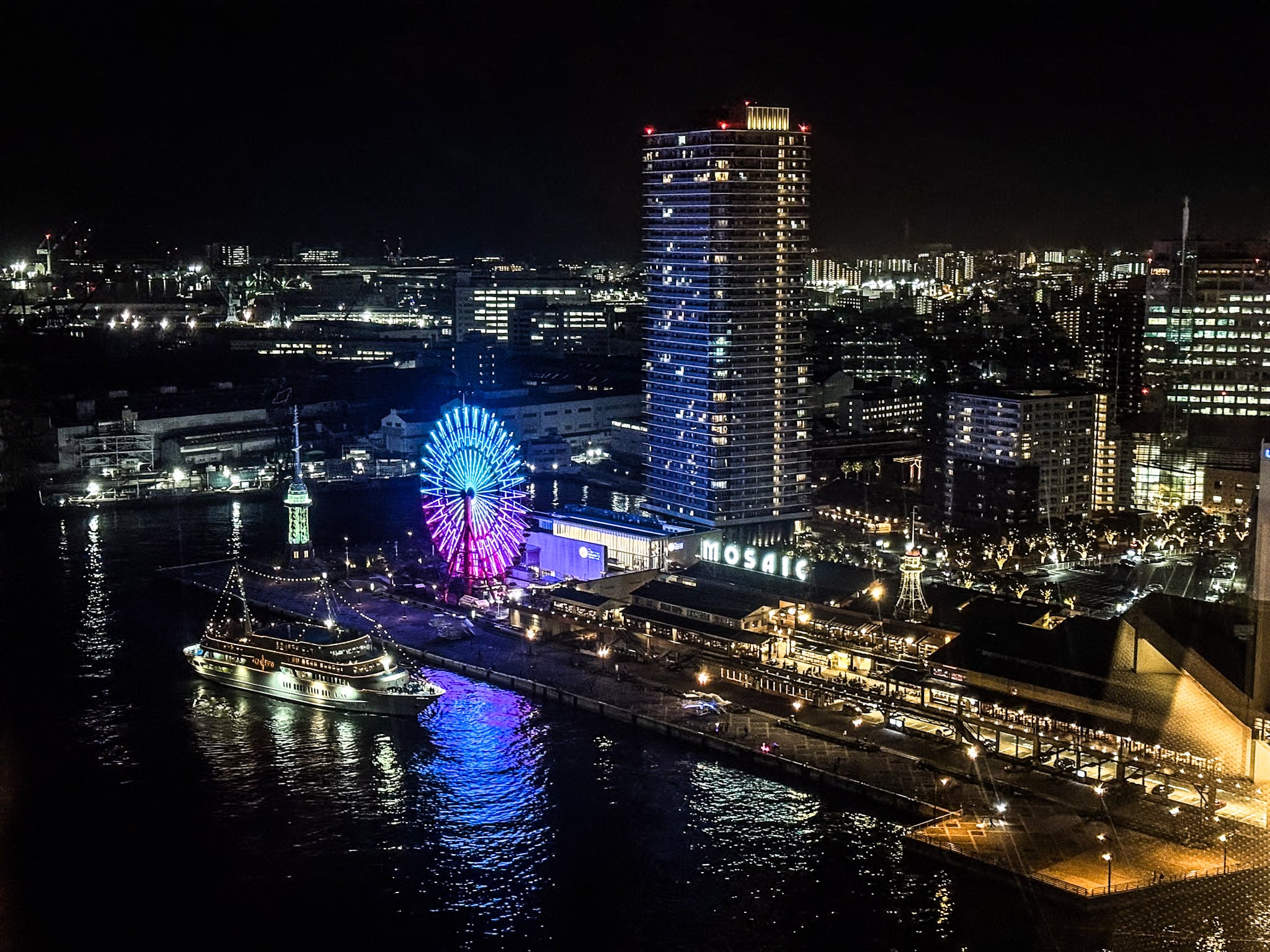
By evening, we were back down at the waterfront, ready for dinner in Kobe Harborland (神戸ハーバーランド). The area is designed for strolling, with wide promenades, a mix of restaurants, and the reflections of neon lights on the water. After eating, I made my way to Kobe Port Tower for the final stop of the trip. The tower has recently been renovated, and inside I found a rotating café and bar that slowly completes a turn every half hour.


Sitting there with a drink while the city revolved beneath me felt like a fittingly playful way to say goodbye to this journey. There are also exhibition spaces dedicated to light installations, adding a contemporary touch before heading up to the main observation floors.
From there, Kobe’s night glowing city skyline stretched out, the kind of view that makes you forget the hassle of travel and remember exactly why you came.
Four prefectures, five days, and countless train transfers later, this route from Hiroshima to Kobe stitched together ferries, castles, mountains, and whirlpools into a single trip. It was a journey of variety and rhythm, sometimes smooth, sometimes chaotic, but always rewarding!
For traveling from Tokyo to Hiroshima and beyond, the Shinkansen is a convenient option. You can also book online. Try checking the route from Tokyo to Hiroshima now! [Ads]
Don’t miss the following articles for more itinerary ideas!
Written by
Photographer, journalist, and avid urban cyclist, making sense of Japan since 2017. I was born in Caracas and lived for 14 years in Barcelona before moving to Tokyo. Currently working towards my goal of visiting every prefecture in Japan, I hope to share with readers the everlasting joy of discovery and the neverending urge to keep exploring.
- +0 0
-
-