Hidden Cherry Blossom Spots in Tokyo: Riverside Sakura Beyond Nakameguro
Tokyo Cherry Blossoms Off the Beaten Path: Local Riverside Favorites

- +0 0
-

-


Every spring, Japan turns pink on schedule. Weather forecasts lead the evening news, convenience stores, 100-yen shops, and chain coffee shops stock sakura-themed everything, and everyone opens their schedules almost in unison to find the best suitable dates for hanami with friends and/or coworkers. In Tokyo, a few recurring top spots become the target of crowds and camera lenses, with Nakameguro’s riverside cherry blossom promenade standing out as one of the most famous spots.
And yes, it’s beautiful.
But living in Tokyo changes the way you experience cherry blossom season. Shortly after moving here, it didn’t take me long to notice how the city is threaded with rivers. Some are wide and famous. Others slip quietly behind residential streets, under train tracks, past elementary schools and local bakeries. Many of them are lined with cherry trees just as impressive as the ones that dominate Instagram feeds.
When people search for hidden cherry blossom spots in Tokyo, what they usually mean is simple: where can I see sakura without being trapped in a slow-moving crowd? Where can I actually walk, pause, and look up?
This is where I come in this time. These are rivers I’ve walked along during peak bloom, on weekday mornings and late afternoons, watching petals collect in the water and neighbors stop for photos on their way home. Riverside cherry blossom spots in Tokyo that still feel like part of daily life. Top spots like Nakameguro may get the headlines, but these are the ones mostly frequented by locals.
Why Look Beyond Nakameguro?
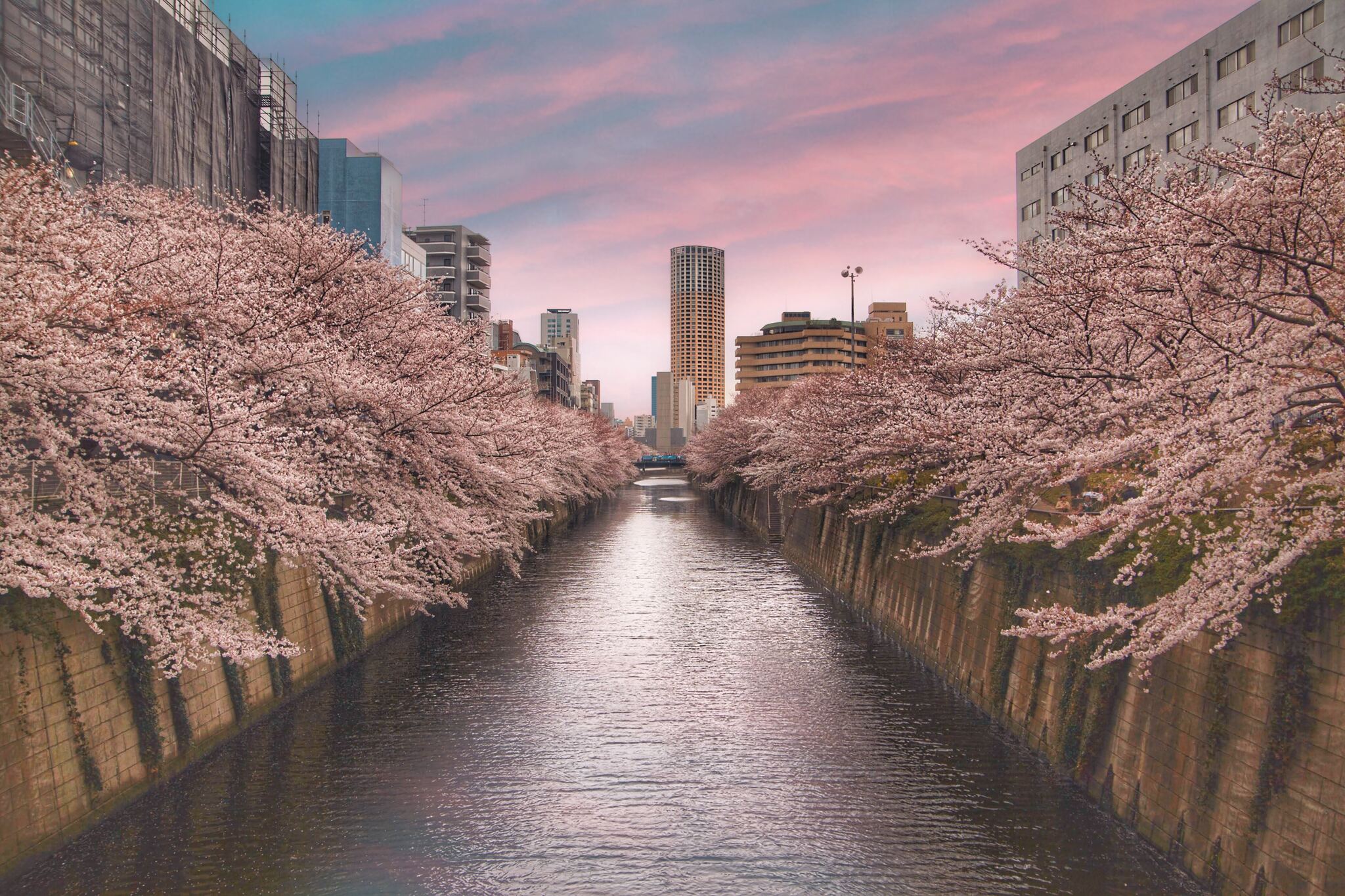
There’s a reason Nakameguro is a sure spot in every “best cherry blossoms in Tokyo” list. The stretch of the Meguro River lined with tightly packed trees creates a dramatic tunnel of pink that photographs beautifully. Add lanterns, pop-up stalls, and easy access from central Tokyo, and it becomes the default answer to where to see cherry blossoms in Tokyo.
It’s also, during peak bloom, one of the most congested places in the city.
But for those of us living here, it’s only natural to do some more digging after we have already covered the usual checklists. You want space to walk at your own pace and not to worry too much about space when it comes to actually enjoying the blossoms. You want to hear the water. You want to stop mid-bridge without someone bumping into your shoulder.
Tokyo is crisscrossed by smaller rivers and canals built for irrigation, flood control, and transport. Many of them are lined with cherry trees planted decades ago, forming continuous sakura corridors through residential neighborhoods. These areas don’t trend globally, but they deliver what some might be searching for: riverside cherry blossoms in Tokyo without the festival-level density.
Naturally, I’m not telling you to reject the famous views. Visiting them all is part of the fun for newcomers after all. My point is to convey how the city has dozens of waterways, and some of the best sakura walks happen where daily life continues as usual: commuters heading home, children riding bicycles, and petals quietly drifting downstream without an audience of thousands.
My Favorite Tokyo Riverside Sakura Spots
For tireless explorers like me, after checking out the famous spots, the next thrill lies in scouring the city for a chance to discover new places. But there’s also the comfort of tried-and-true spots. Places that I know will be there year after year for a relaxed walk on a warm spring day during sakura season.
Kanda River (Kitashinjuku Area) – Sakura Between the Skyscrapers
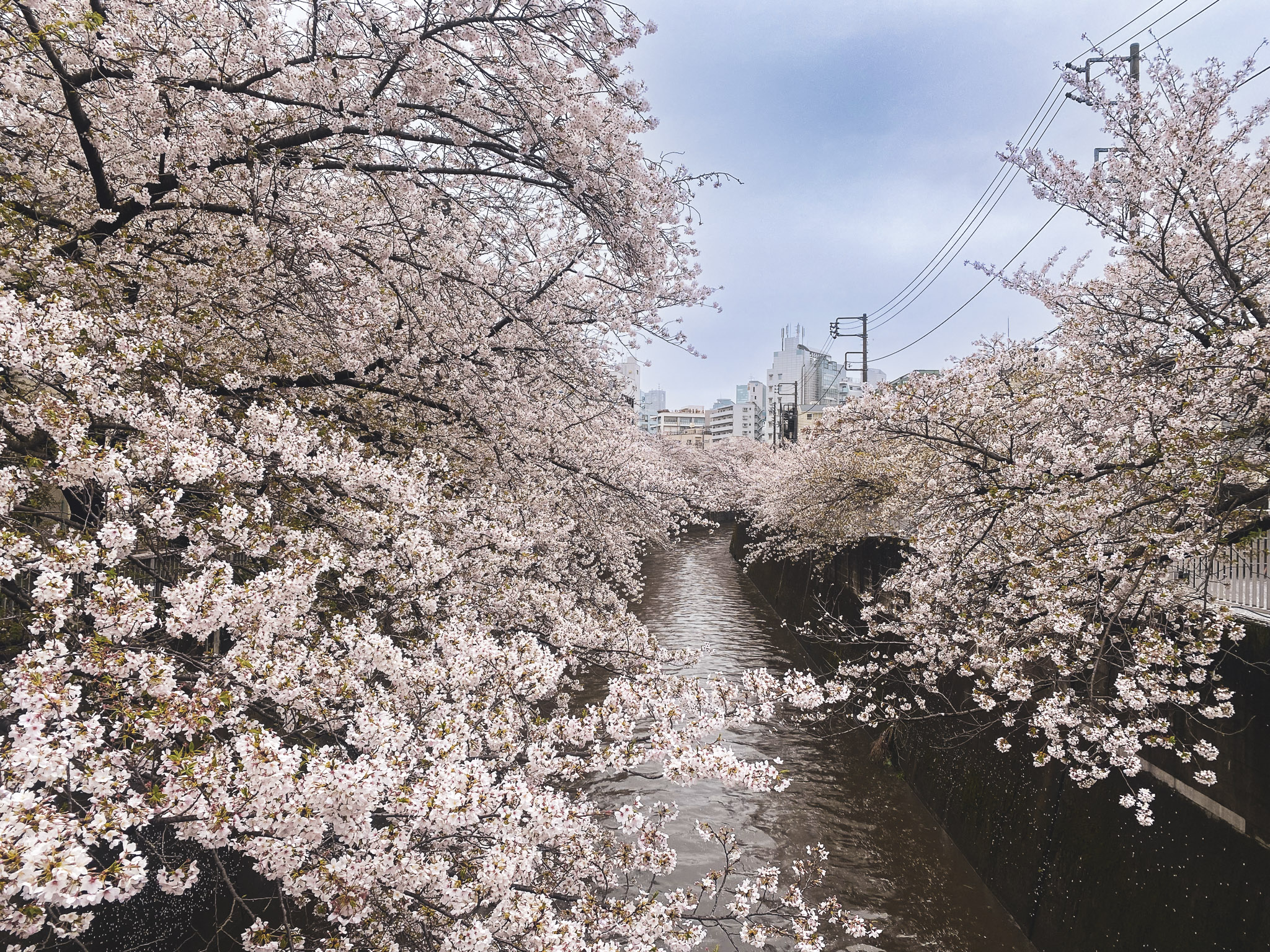
The Kanda River (神田川) runs through Tokyo like a winding spine from west to east across the metropolis. It starts at Inokashira Park, a major urban green space and early cherry blossom spot in western Tokyo, and flows all the way to where it meets the Sumida River near Ryogoku. Along its roughly 24 – 25 km course, the river crosses multiple wards and neighborhoods, offering a long ribbon of urban nature in contexts that range from leafy parks to dense office districts.
Historically, parts of the Kanda River were known by other names, including Edogawa in Edo-period maps, and its banks were once widely recognized as premier cherry blossom viewing routes at the turn of the 20th century. Over time, road and urban development changed some stretches, but the tree-lined sections remain celebrated by locals every spring.


If you’re walking this river in spring, you’ll notice how its character shifts: wider promenades near major parks, narrow walkways flanked by residential neighborhoods, and gentle arcs of sakura framing urban bridges. The segment around Kanda Josui Park (神田上水公園) in Kitashinjuku is a good example. I cherish this small local park near my neighborhood that runs along the river for about 600 m, with a dedicated promenade and cherry trees lining both banks. It’s a relaxed place where I like to stroll, sit for a moment in a bench and see the world pause for a minute, and enjoy sakura without festival crowds.


In spring, the blossoms around the river create a soft canopy over the path, and the reflections on the water give even familiar city blocks a fleeting, poetic edge. Residents walk dogs here, joggers keep pace, and regular commuters will pause by the river on their way home to enjoy the quiet amd beautiful ambiance.
The map below shows Kanda Josui Park and the section I usually like to walk, but here you can also see the total extension of the river, if you feel adventurous to cover it all.
Beyond Kitashinjuku, the sakura along the Kanda River continues for kilometers, with many more sections like near Edogawabashi or Takadanobaba that also attract local flower-viewers. Along many sections, there are also yozakura (night cherry blossom) illumination events from late March to early April, to enjoy the blossoms and their reflections on the water.
 Access Access |
5-min walk from Higashi-Nakano Station or 8-min walk from Ochiai Station |
|---|
Shakujii River (Nakaitabashi Area) – Tokyo’s Longest Sakura Corridor
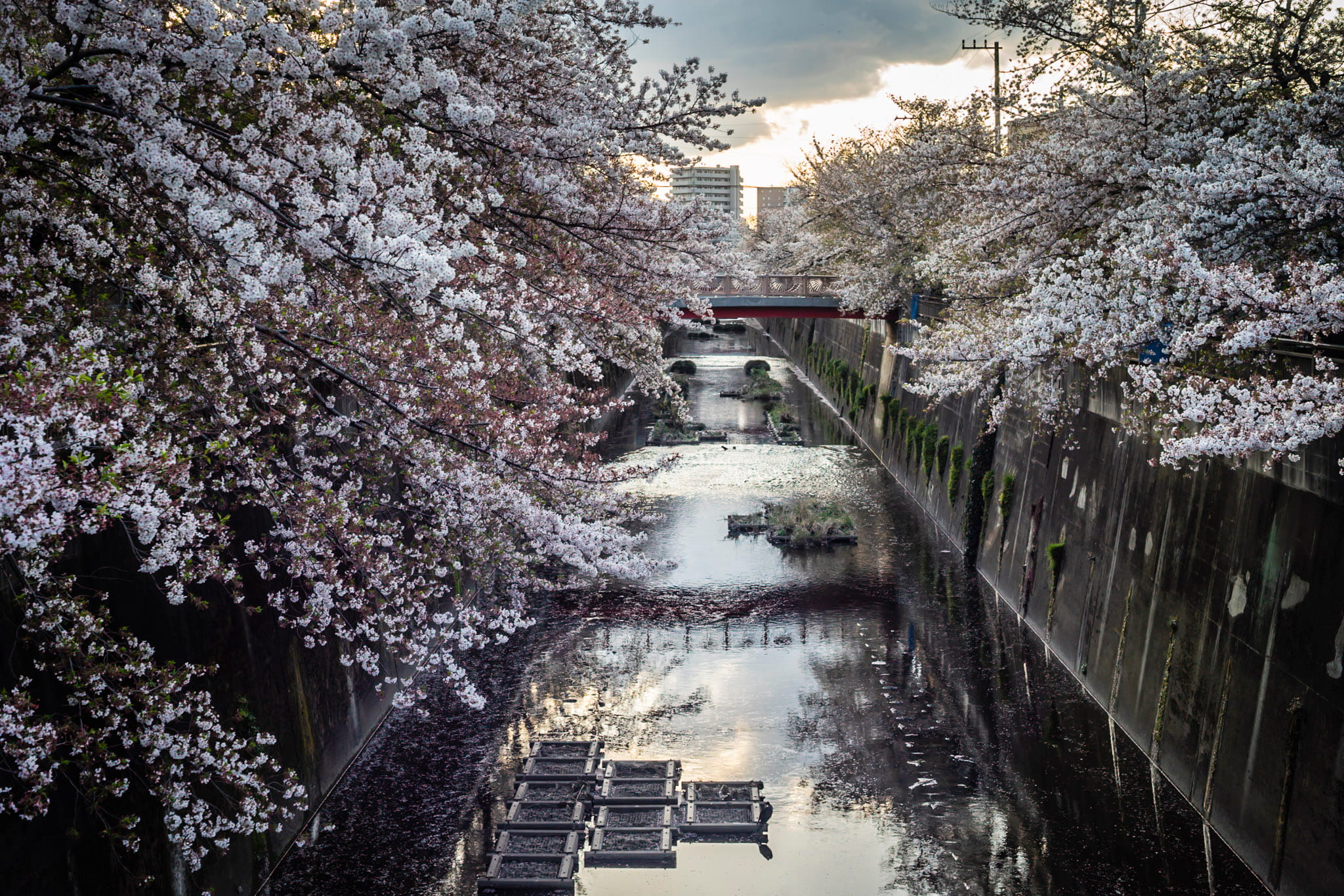
The Shakujii River (石神井川) carves a long, gentle arc through northwest Tokyo, stretching roughly 25 km from its source near Kodaira to where it meets the Sumida River in Kita Ward. It’s a tributary of the larger Arakawa system and one of the city’s under-appreciated waterways for riverside walks and neighborhood sakura.
In the Nakaitabashi area of Itabashi Ward, the Shakujii River achieves a rare balance: dense, continuous cherry tree plantings paired with a lived-in neighborhood feel that feels rooted more in daily Tokyo life than tourism. Across roughly 2 km from Nakaitabashi toward Kaga, close to 900–1,000 cherry trees bloom on both banks every spring, forming a soft tunnel of blossoms that many locals favor over more famous spots.


I used to live in the Itabashi city area a few years ago, and felt quite lucky for having such a beautiful place within close vicinity. Unsurprisingly, this stretch has been recognized as one of Itabashi Jukkei, or one of the “Ten Scenic Views of Itabashi”, largely because of its expansive sakura canopy and river promenade.
Nakaitabashi (“Nakaita” for short among residents) has a distinctly residential rhythm. Small cafés, izakayas, and family-run shops cluster around the station and the river’s edge, and during sakura season you’ll see locals taking post-work strolls or stopping for a quick coffee under cherry branches. It’s not quiet in the way a hidden forest path is — there’s ambient city life — but that’s precisely what many Tokyo residents like about it. The environment feels lived-in rather than curated.


Unlike the lantern-lined corridors at the Meguro River, seasonal activities here are more community-oriented. Each year between late March and early April, the district hosts events like river-side light-ups and local sakura markets, where the blossoms are part of small gatherings and occasional stalls. You’ll see soft pink lanterns strung over bridges and edges, giving the area a celebratory but not overwhelming feel.
Along the riverwalk itself, bridges and small crossing points create natural frames for photos. The low-profile walkways are perfect for portraits and petal-fall shots, whether you’re shooting a steady sunrise walk or twilight blossoms reflected in the water.
| Access |
5-min walk from Nakaitabashi Station or 10-min walk from Shin-Itabashi Station |
|---|
Oyoko River (Monzen-Nakacho) – Old Tokyo Atmosphere by the Water
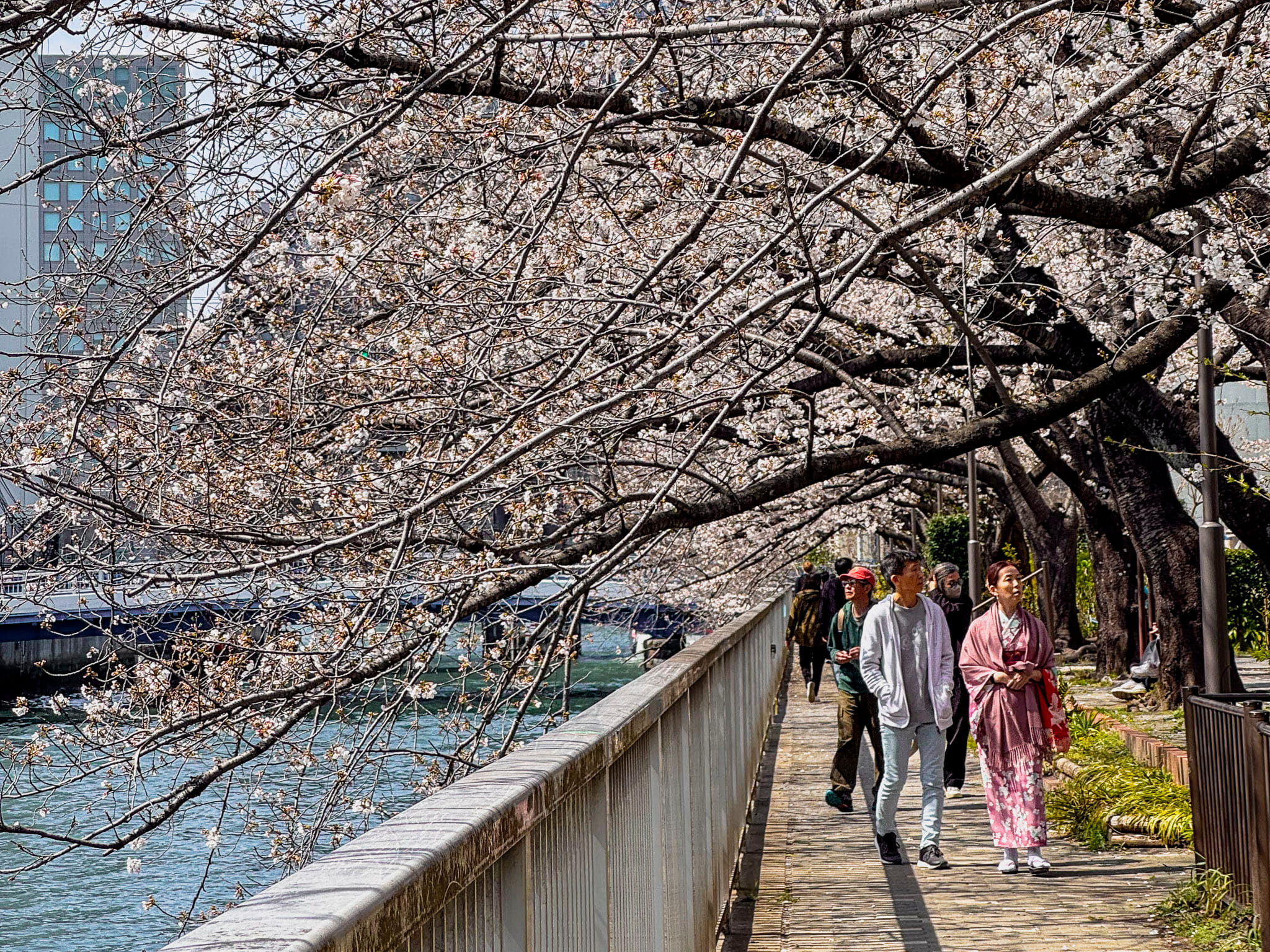
One of Tokyo’s most atmospheric riverside cherry blossom walks unfolds along the Oyoko River (大横川) near Monzen‑Nakacho (門前仲町). This canal-like waterway runs south of the station and becomes especially photogenic each spring, when roughly 1.3 km of cherry trees bloom on both banks. Locals and visitors come here not just for the blossoms but for the blend of history and quiet urban life that surrounds the walk.
Monzen-Nakacho sits in Koto, an area often described as part of shitamachi (“old downtown”) in Tokyo, a cultural zone where Edo-period roots linger in the streets and local shrines. Just a short stroll from the river are Tomioka Hachimangu, founded in 1627, and Fukagawa Fudodo, also believed to have been established in the early Edo period. Both are frequent hanami stops themselves and anchors for community life in this neighborhood.
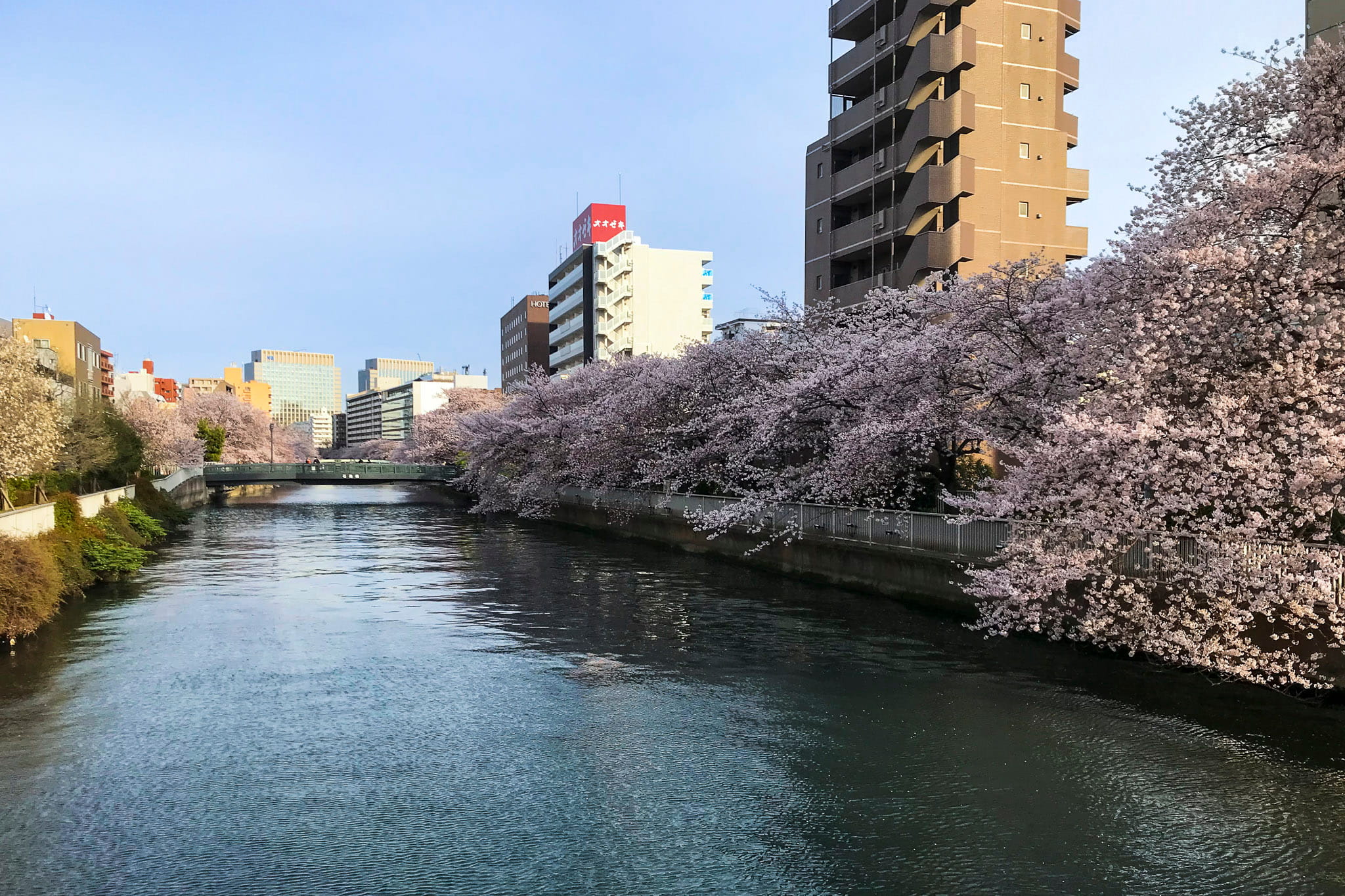
The town grew up around these spiritual hubs, and the surrounding blocks still feel lived-in: narrow lanes, standing izakayas, and shops that wouldn’t look out of place a century ago line the streets. This more grounded environment makes a sakura walk here feel like taking part in local life, with people pausing mid-walk to look at blossoms reflected on the water surface, families picnicking quietly on benches, and commuters lingering for a moment before heading home. But weekends are fairly popular, and many Tokyoites will flock here for its local charm.
The cherry trees, mainly Somei-yoshino, along Oyoko River extend from Etchujima Bridge to Totomi Bridge, and during peak bloom they form a soft canopy that leans toward the water, making for excellent reflections and subtle colors that change through the day.
Evening is a particularly rewarding time here: seasonal lighting and lanterns highlight the petals and their reflections after dusk, and the bridges over the river make natural vantage points for photos; you can frame blossoms against the water, or capture longer stretches of the walk with the city behind them.
Cherry Blossom Cruises


Viewing the blossoms from the river itself has become a local tradition, and part of the reason this is another of my most beloved spots in Spring. During the Oedo Fukagawa Sakura Festival, which typically runs from late March to early April, river cruises operate on Oyoko River, including traditional boats (wasen) and modern barges on weekends, allowing you to watch the blooms from the waterline.
In recent years, organized hanami cruises along the “sakura corridor” have been offered as part of seasonal event programming, with routes departing near Kurofune Bridge Pier and even combining a mini-trip on the Sumida River for broader views of Tokyo landmarks. These experiences range from shared group tours to small-boat excursions that operate specifically during the cherry blossom window, typically late March into early April.
| Access |
2-min walk from Monzen-nakacho Station |
|---|
Zenpukuji River (Green Space Area) – Spacious Sakura in Suginami
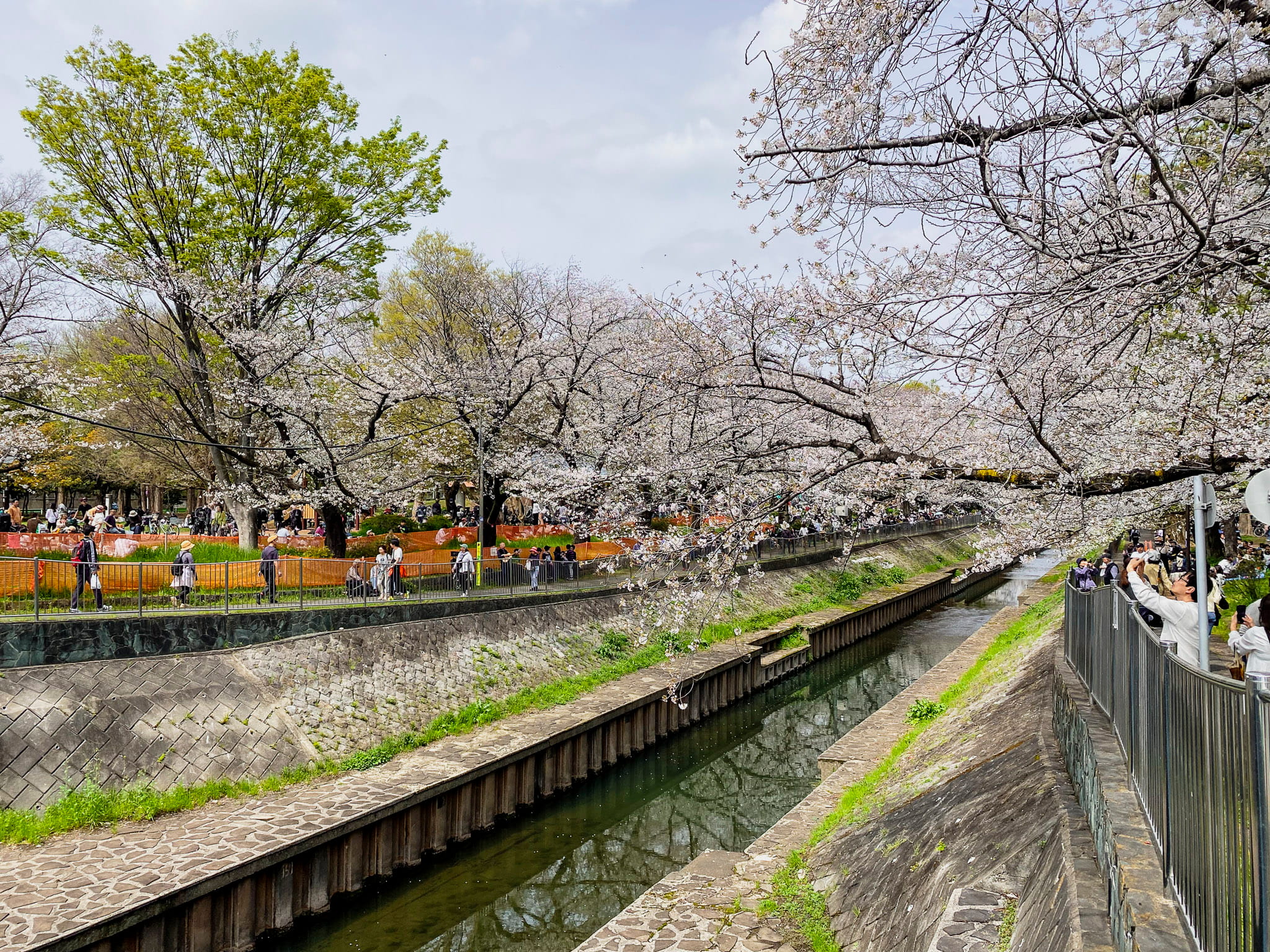
Zenpukuji River Green Space, part of the huge riverside Wadabori Park has what many hanami groups quietly covet: space. This elongated urban park spreads out along the Zenpukuji River (善福寺川) and opens onto wide lawns, athletic fields, picnic areas, and tree-lined paths that feel far roomier than Tokyo’s typical sakura corridors.
The greenbelt runs roughly from Nishitabata Bridge downstream towards Musashino Bridge, intersecting a dozen small bridges and connecting to paths that trace the Zempukuji River’s gentle curve. The expansive park includes playgrounds, barbecue areas, lawns, and a sizable pond framed by woodland. During spring, it becomes a magnet for groups and families who want to spread blankets, share a picnic, or just stretch out while blossoms float down from the trees above.


The Zempukuji River itself functions as the spine of both this park and the adjacent Green Space, a roughly 4.2 km combined corridor of green and blossoms stretching further upstream and downstream. There are about 800+ cherry trees along the riverbanks, with approximately 280 in Wadabori Park proper and around 400 in the upstream Zenpukujigawa area.
Best for Picnics and Relaxed Hanami
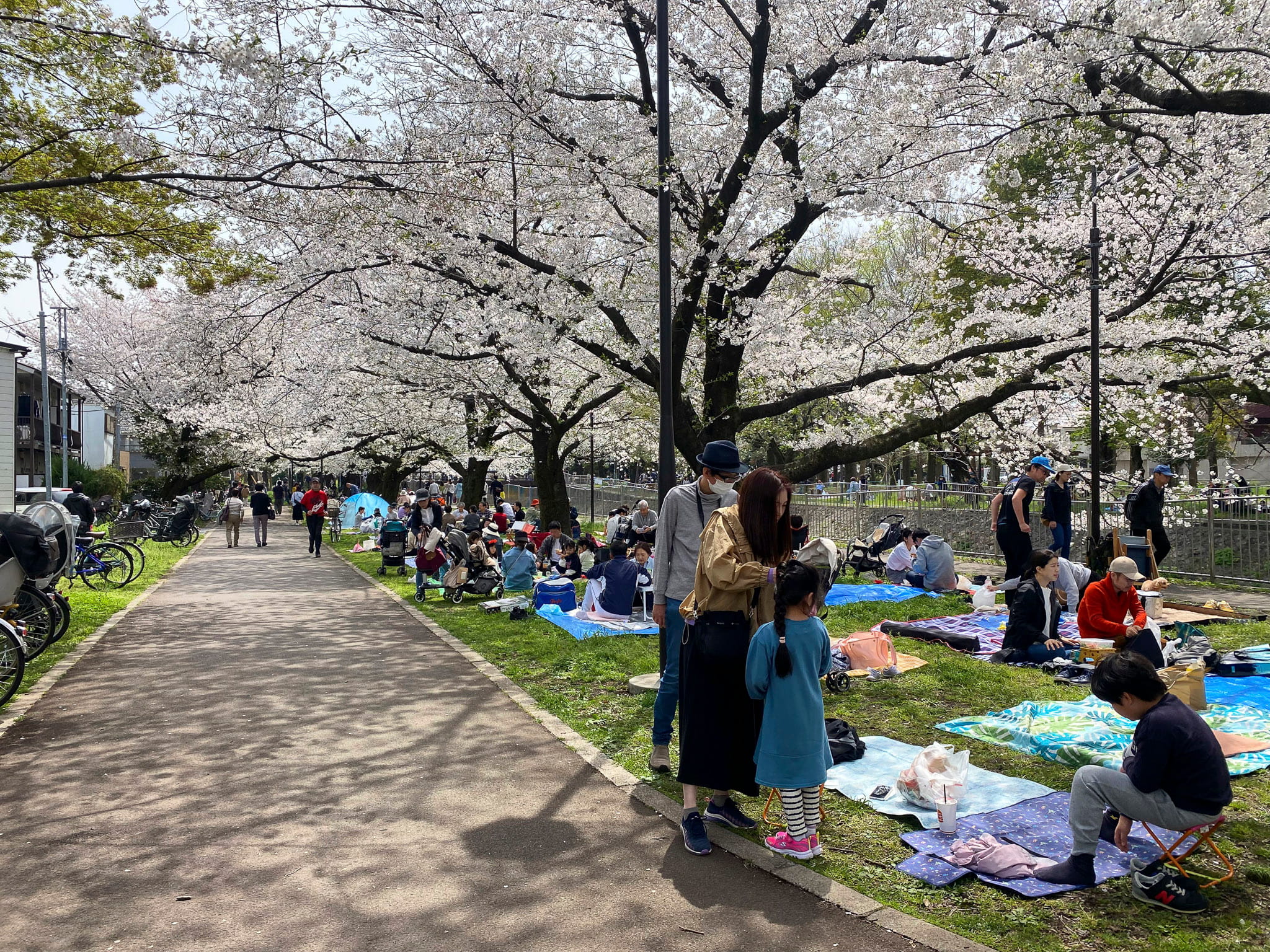
Because much of Wadabori Park’s blossoms are set back from narrow paths and into broad green space, there’s a lighter tourist presence compared with Tokyo’s headline hanami spots, which is precisely why it’s been a favored Hanami spot among my friends for the past few years. Spot-wise, it accommodates larger groups more comfortably, and it’s not so famous to risk becoming too crowded, unlike Ueno or Yoyogi, so none of us have to worry too much about rushing first hour in the morning to save a spot. Children play on playgrounds between blossoms; friends share kanpai and snacks without skirting wide paths; and birdwatchers with binoculars linger near shady corners.
This lends the park a neighborhood vibe that keeps the experience relaxed, even at peak bloom some mornings, making it a perennial favorite among local hanami groups who want gentle social energy without mass crowds.
| Access |
17-min walk from Minami-asagaya Station or 18-min walk from Hamadayama Station |
|---|
Nikaryo Irrigation Canal – A Local Riverside in Kawasaki
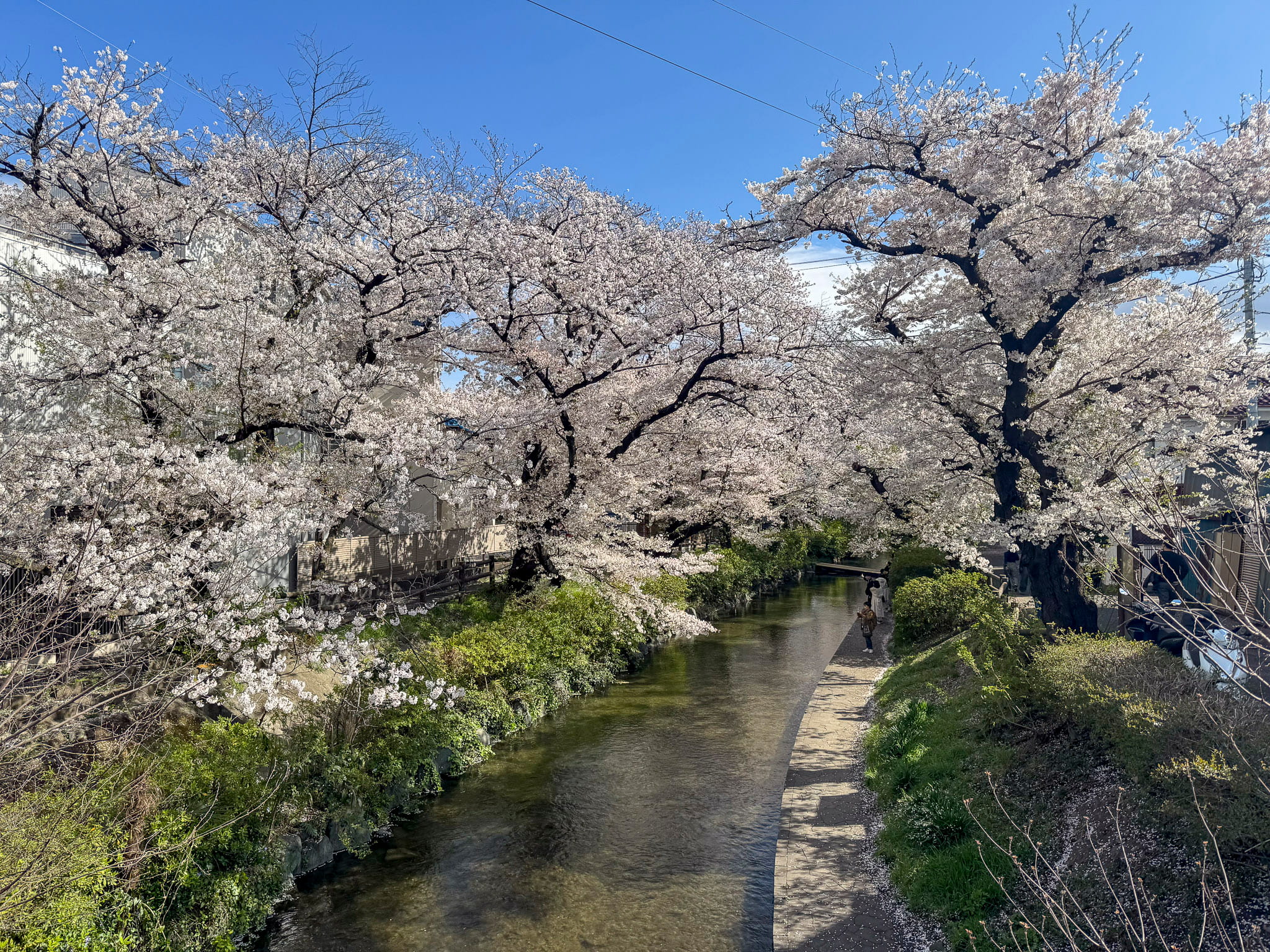
This one is a bit farther away, but just as worth it, I promise. For anyone who’s toured Tokyo’s sakura scene a few springs in a row, there’s a very satisfying contrast waiting just over the city line in Kawasaki: the Nikaryo Irrigation Canal (二ヶ領用水宿河原堰取水口). This waterway was carved in 1611 as an agricultural irrigation channel connecting to the Tama River, and even today, it threads quietly through residential streets as a tree-lined walking path rather than a festival hub.
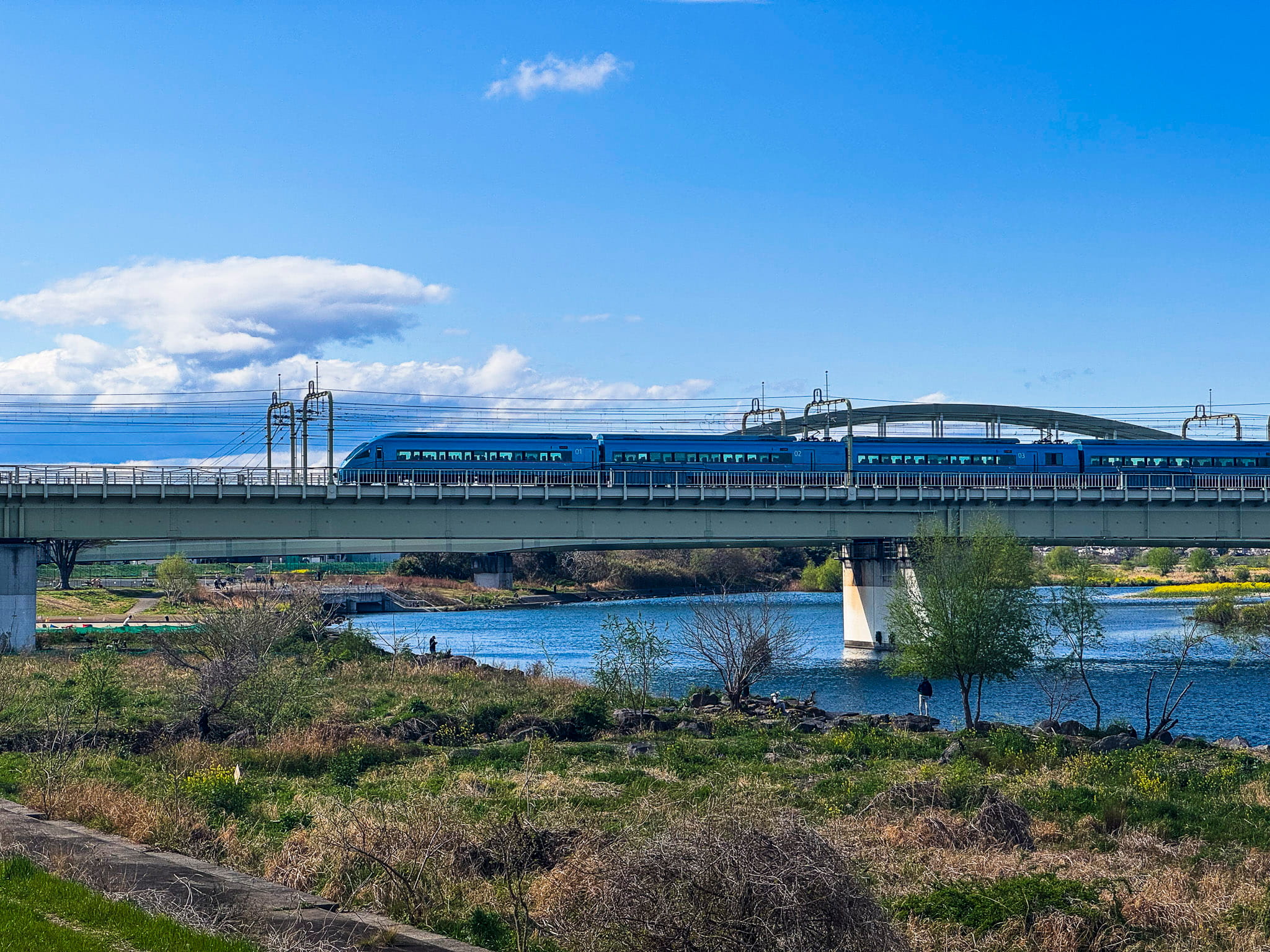
The stretch near Shukugawara Sluice is especially popular in sakura season. Local volunteers planted around 400 cherry trees (mostly Somei-yoshino) along roughly two kilometres of the canal in 1959, creating a continuous bloom corridor from late March through early April.


Its setting makes it one of the most picturesque places in the area: you’re walking alongside a narrow waterway, under occasionally low-hung train bridges, with branches dipping above your head. The scene is framed by the clatter of JR’s Nambu Line trains passing just overhead, and I’ve always found that the juxtaposition of urban rhythm and blossom calm gives the walk a memorable quality.
Most of the route is a simple pedestrian path with grassy edges or benches tucked beside the water, perfect for pausing with a drink if your group is small and respectful of space. It’s the sort of spot where you can stroll at your own pace, watch petals fall onto the surface of the canal, and then look out through a frame of blossoms at the Tama River beyond.
| Access |
10-min walk from Noborito Station |
|---|
When to Visit These Hidden Sakura Spots in Tokyo
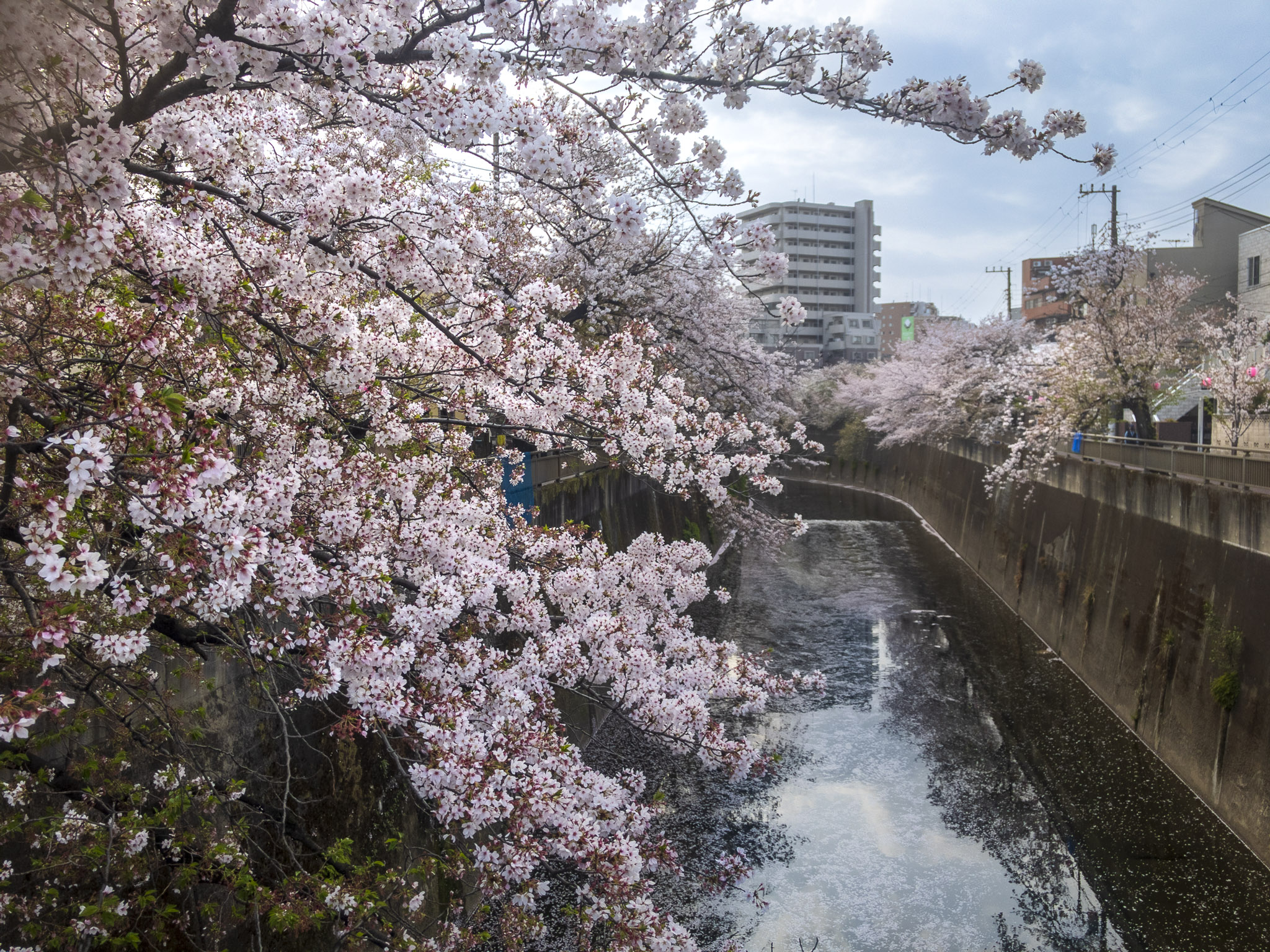
Cherry blossom season in Tokyo usually unfolds between late March and early April, though exact timing shifts each year depending on winter temperatures and early spring warmth. According to the Japan Meteorological Agency (JMA), the average flowering date (kaika) for Tokyo is around March 24, with full bloom (mankai) typically about a week later. In recent years, warmer springs have nudged peak bloom slightly earlier, sometimes into the third week of March.
Not all sakura trees bloom in perfect sync. Along rivers such as the Shakujii River, Oyoko River, and the Zempukuji River, microclimates can influence timing:
- Urban heat retention in built-up neighborhoods may accelerate blooming slightly.
- Open parkland, like around Wadabori Park, can run marginally cooler at night, occasionally delaying peak bloom by a day or two.
- Trees planted at different times or of slightly different cultivars may stagger flowering.
In practice, the full-bloom window in Tokyo tends to last about 5–7 days, depending on weather conditions.
Best Time of Day for Fewer People


Even Tokyo’s quieter sakura corridors attract visitors during peak bloom. Timing makes all the difference:
- Early morning (7:00–9:00 a.m.): Soft light, minimal crowds, calm rivers. Ideal for photography and peaceful walks.
- Weekday afternoons: Residential areas like Nakaitabashi or Suginami feel relaxed compared to weekend surges.
- Avoid weekend midday during full bloom if you want space for hanami without the scramble for picnic spots.
Riverside areas in particular thin out quickly once office workers head home, unless there’s a local festival with lantern lighting.


Sakura are famously delicate. A few key factors shape your viewing window:
- Wind: Strong gusts can trigger rapid petal fall, especially at full bloom.
- Rain: Heavy rain shortens peak viewing; light rain can create atmospheric reflections on canals.
- Temperature swings: Warm days followed by cold nights can slightly prolong blossoms; sustained warmth speeds up the cycle.
In my opinion, the most photogenic phase often arrives just after full bloom, when petals begin drifting into the water and covering the grounds like a soft pink carpet. Along narrow canals like Oyoko River, fallen petals gather at the edges, creating a pale pink ribbon along the banks.
In short, aim for flexibility. Watch the forecast, monitor bloom reports from the Japan Meteorological Agency, and plan for a weekday morning stroll if possible.
Tokyo is often framed through its skyline: steel, glass, and neon stacked toward the clouds. Yet the city is equally shaped by water, with many rivers quietly shaping daily life. During sakura season, they take center stage.
These waterways thread through residential neighborhoods, past modest parks, local shotengai, commuter bridges, and elementary schools. They are everyday corridors used by joggers, parents with strollers, or retirees on slow afternoon walks. Exploring these hidden cherry blossom spots in Tokyo means stepping beyond the headline locations. It means walking the quieter stretches where daily life happens in the city, and where the most authentic side of Tokyo can reveal its magic.
Can’t have enough of cherry blossoms do you? We got you!

Written by
Photographer, journalist, and avid urban cyclist, making sense of Japan since 2017. I was born in Caracas and lived for 14 years in Barcelona before moving to Tokyo. Currently working towards my goal of visiting every prefecture in Japan, I hope to share with readers the everlasting joy of discovery and the neverending urge to keep exploring.
- +0 0
-
-