Cape Manazuru Day Trip from Tokyo: Coastal Walks, Hidden Shrines, and Sea Views
Exploring Cape Manazuru: An Underrated Seaside Day Trip from Tokyo

- +0 0
-

-


There are plenty of easy coastal day trips from Tokyo, but most of them no longer feel particularly quiet. Places like Kamakura and Enoshima remain popular for good reason, yet finding a seaside destination that still feels locally grounded can be surprisingly difficult in the greater Tokyo area. That was precisely what led me to Cape Manazuru, a small peninsula in western Kanagawa Prefecture that rarely appears outside more niche travel discussions.
At first glance, Manazuru does not seem especially dramatic. The station is modest, the town is sleepy, and much of the coastline feels almost stubbornly undeveloped by modern Japanese tourism standards. There are no large resort complexes, no flashy waterfront attractions, and very few places trying to turn the peninsula into a polished sightseeing product. For travelers expecting a packed itinerary of famous landmarks, Manazuru may even feel uneventful. For me, that was exactly what I was looking for.
Manazuru, the Perfect Destination for a Quiet Day


I visited at the beginning of September, when summer still lingered heavily along the Sagami Bay coast. The air was humid, cicadas were still screaming from the trees, and the afternoon heat made the shaded forest roads around the peninsula feel especially welcome. After arriving at Manazuru Station, I took a local bus toward Kibune Shrine and spent the rest of the day exploring the peninsula mostly on foot, gradually making my way toward Cape Manazuru and the volcanic shoreline around the Mitsuishi Rocks.
What makes Manazuru memorable is the atmosphere created by the entire walk itself. Quiet residential streets suddenly give way to dense coastal forest, small shrines appear half-hidden beside the road, and concrete tetrapods line sections of the shore as fishing boats drift quietly offshore. Even near the cape, one of the peninsula’s main viewpoints, the infrastructure remains surprisingly restrained. Much of the landscape still feels rough around the edges, shaped more by geography and local life than by tourism development.
For photographers and travelers who enjoy slower destinations, Cape Manazuru works remarkably well as a day trip from Tokyo. The peninsula is compact enough to explore in a single day, but varied enough that the scenery changes constantly throughout the walk. Between shrines, rocky coastline, forest roads, and wide ocean views across Sagami Bay, Manazuru allows for the kind of experience that feels increasingly uncommon this close to the capital.
How to Get to Cape Manazuru from Tokyo
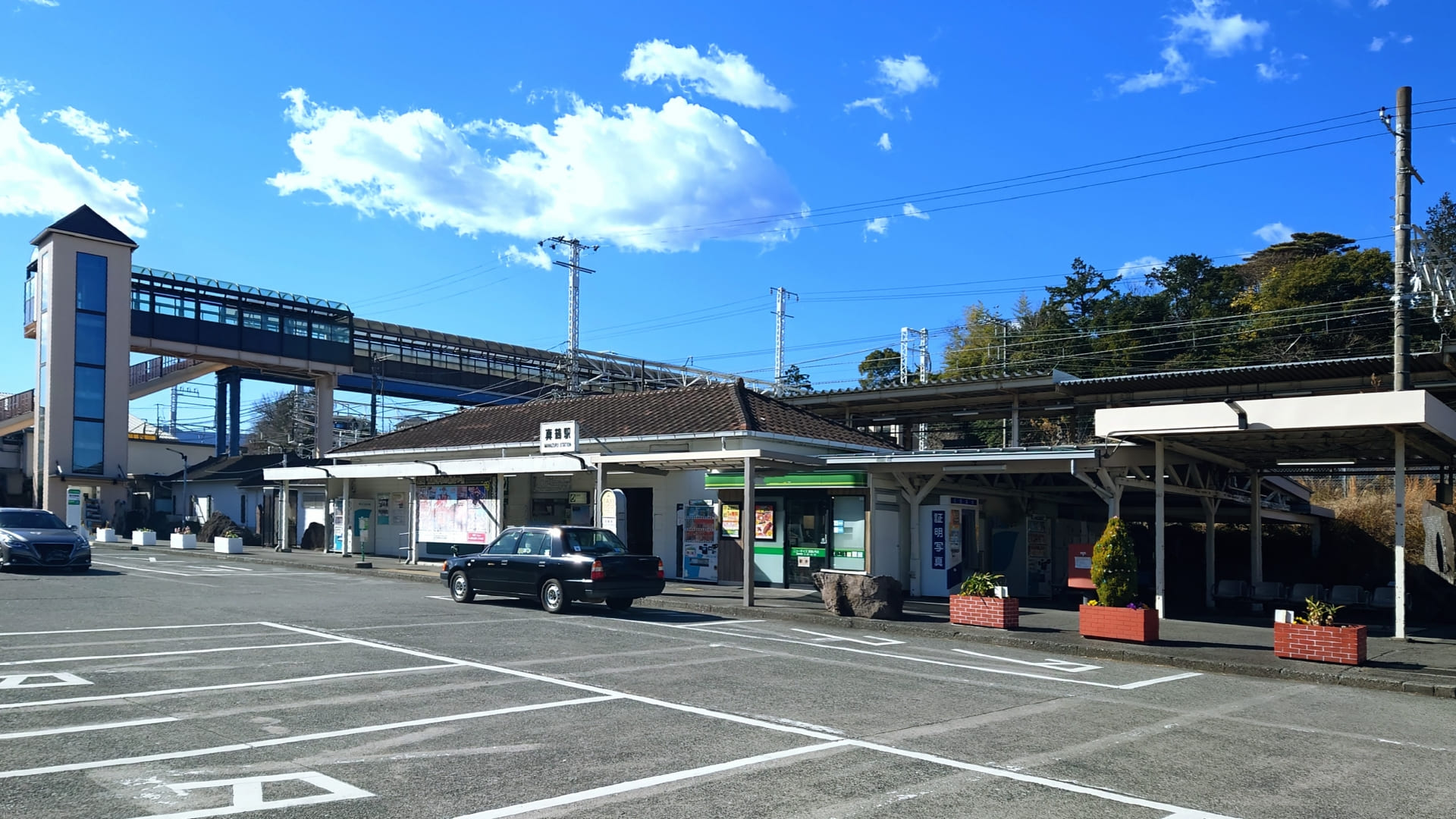
Cape Manazuru is one of the easiest coastal day trips from Tokyo by train, located in western Kanagawa Prefecture along the JR Tokaido Line.
The simplest route is taking the JR Tokaido Line from Tokyo Station, Shinagawa Station, or Ueno Station to Manazuru Station for about 1,800 yen. Depending on the train, the trip takes around 1 hour 45 minutes to 2 hours, sometimes with a transfer at Odawara.
If you want a faster option, you can also take the Tokaido Shinkansen to Odawara or Atami, for about 4,000 yen, and transfer to the local JR Tokaido Line for the short ride to Manazuru Station.
Once at the station, there are local buses connecting visitors to the different points of interest along the peninsula. However, bus services from Manazuru Station run infrequently — typically every 1–2 hours depending on the line — so it’s worth checking the schedule in advance. Depending on your schedule, you can also walk for about 1 hour if you feel like taking the slow and leisurely approach.
First Impressions of Manazuru
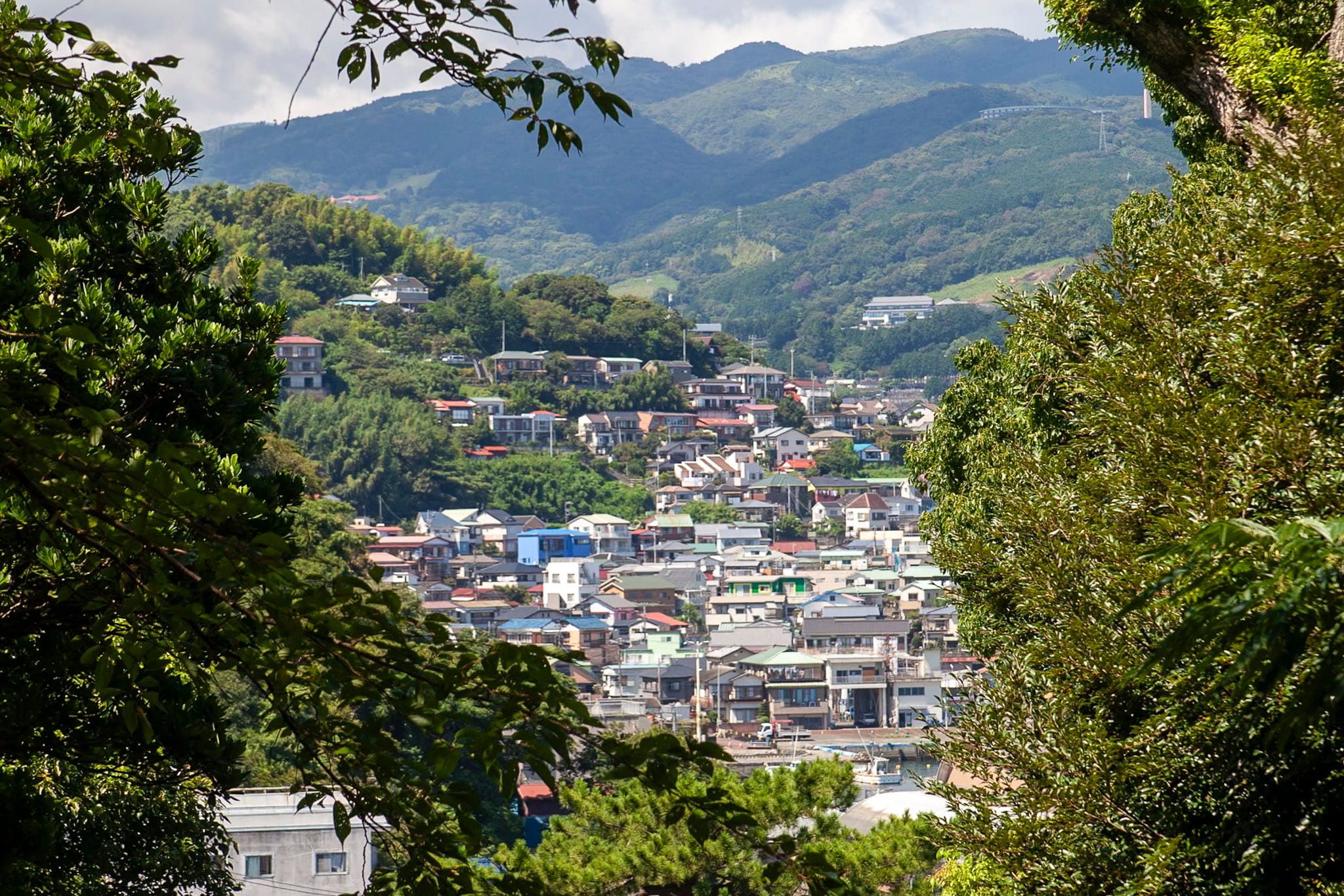
The station itself is small and functional, surrounded by steep hillside roads lined with older homes, local businesses, and dense greenery stretching toward Sagami Bay below. Instead of souvenir shops and crowds, the area felt much closer to an ordinary seaside town still centered around local life and fishing activity.
Manazuru also has a noticeably older atmosphere than nearby resort towns. Parts of the peninsula feel slightly weathered in a way that I actually appreciated, especially after visiting so many heavily commercialized coastal destinations around the Kanto region. There are very few attempts to package the town into a polished sightseeing experience. Even near the station, the scenery feels understated and local rather than curated for tourism.
Geographically, the Manazuru Peninsula is often described as resembling a crane spreading its wings into Sagami Bay, a comparison that appears frequently in local tourism materials and maps of the area. The narrow forested peninsula extends outward into the ocean, helping create the isolated feeling that defines much of the walk toward Cape Manazuru.
Starting the Walk at Kibune Shrine
Since I planned to explore the peninsula mostly on foot afterward, I decided to take a local bus from the station toward Kibune Shrine before beginning the coastal walk toward Cape Manazuru. The peninsula is hillier than it first appears on a map, and in the lingering September heat, it made sense to save some energy for the coastal walk toward Cape Manazuru afterward.
The bus ride itself already gave a good sense of the town’s atmosphere. The roads narrowed quickly, weaving past older homes, dense greenery, and glimpses of Sagami Bay between buildings, with very little commercial development once leaving the station area behind.
Manazuru-Kibune Shrine


Perched on a hillside overlooking the Port, Manazuru-Kibune Shrine (相州真鶴 貴船神社) has long served as the spiritual center of the peninsula’s fishing community. The shrine is believed to date back to 889, giving it a history of well over 1,100 years.
The approach to the shrine immediately felt quieter and more atmospheric than I expected. Stone steps climbed through thick greenery while cicadas echoed through the trees in the late summer heat. Even though the shrine is one of Manazuru’s most important landmarks, the area still felt remarkably subdued during my visit, with very few other visitors around.


Kibune Shrine is especially known for the annual Kibune Festival, held every July at Manazuru Port. The festival is considered one of Japan’s three major boat festivals and has been designated as an Important Intangible Folk Cultural Property. During the event, elaborately decorated boats carry a portable shrine across the harbor in ceremonies historically tied to prayers for maritime safety and prosperous fishing.
But even outside festival season, Manazuru still feels deeply connected to the sea, and Kibune Shrine reflects that relationship everywhere from its elevated position above the harbor to the fishing-town scenery surrounding it.
 Access Access |
10-min bus or 26-min walk from Manazuru Station |
|---|---|
 Business Hours Business Hours |
24 hours |
 Official Website Official Website |
http://kibunejinja.com/ |
Walking Along the Peninsula Coast
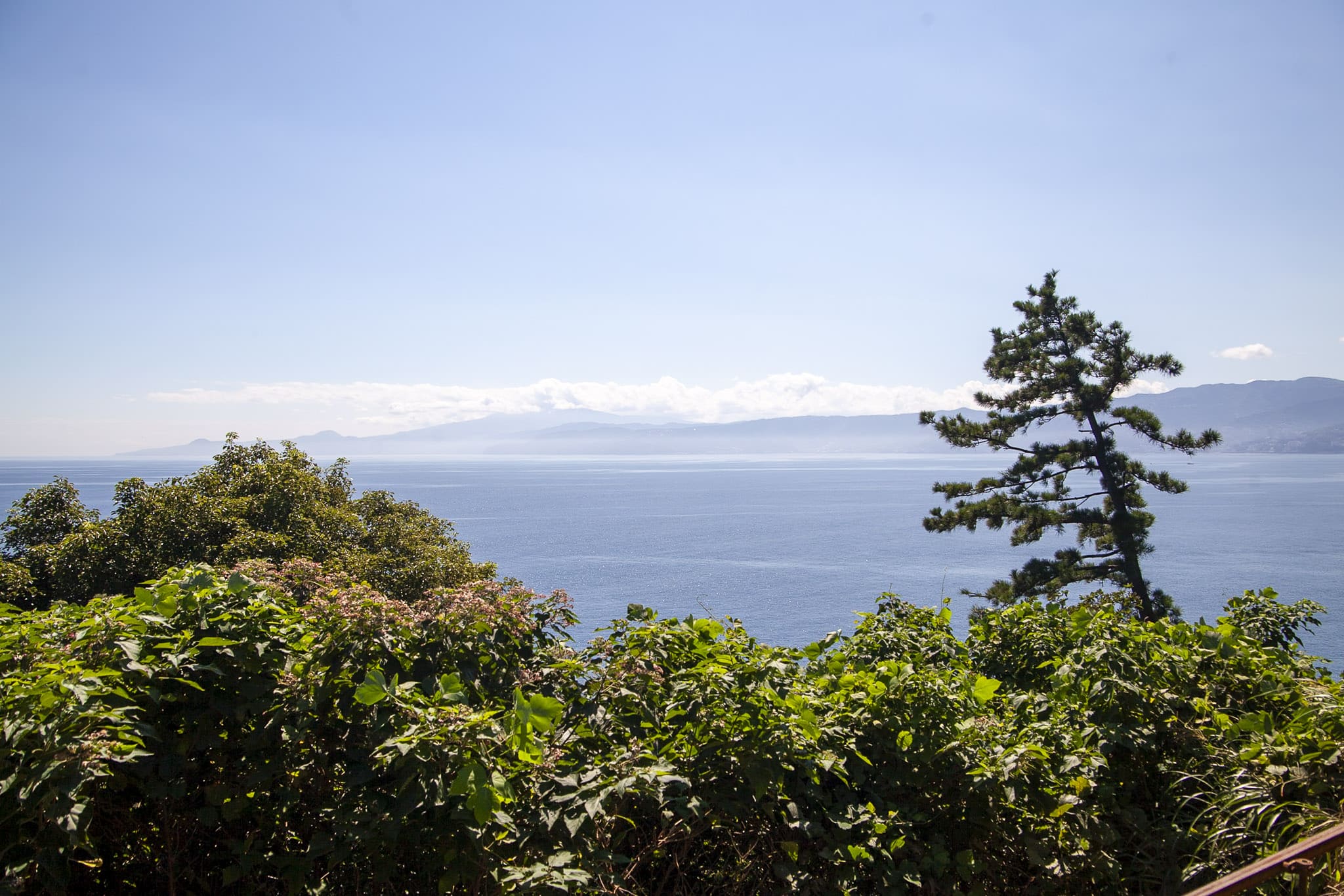
Much of the route toward Cape Manazuru follows narrow coastal roads and forested sections where the scenery constantly shifts between dense greenery and sudden open views of Sagami Bay. In some places, the only sounds were cicadas, waves hitting the rocks below, and the occasional fishing boat offshore.
The Manazuru Peninsula is also protected by a large area of native evergreen forest, sometimes referred to locally as the “Manazuru Primeval Forest.” Parts of the coastline remain heavily wooded, giving the walk a surprisingly secluded atmosphere even during warmer months.
Yamashita Beach
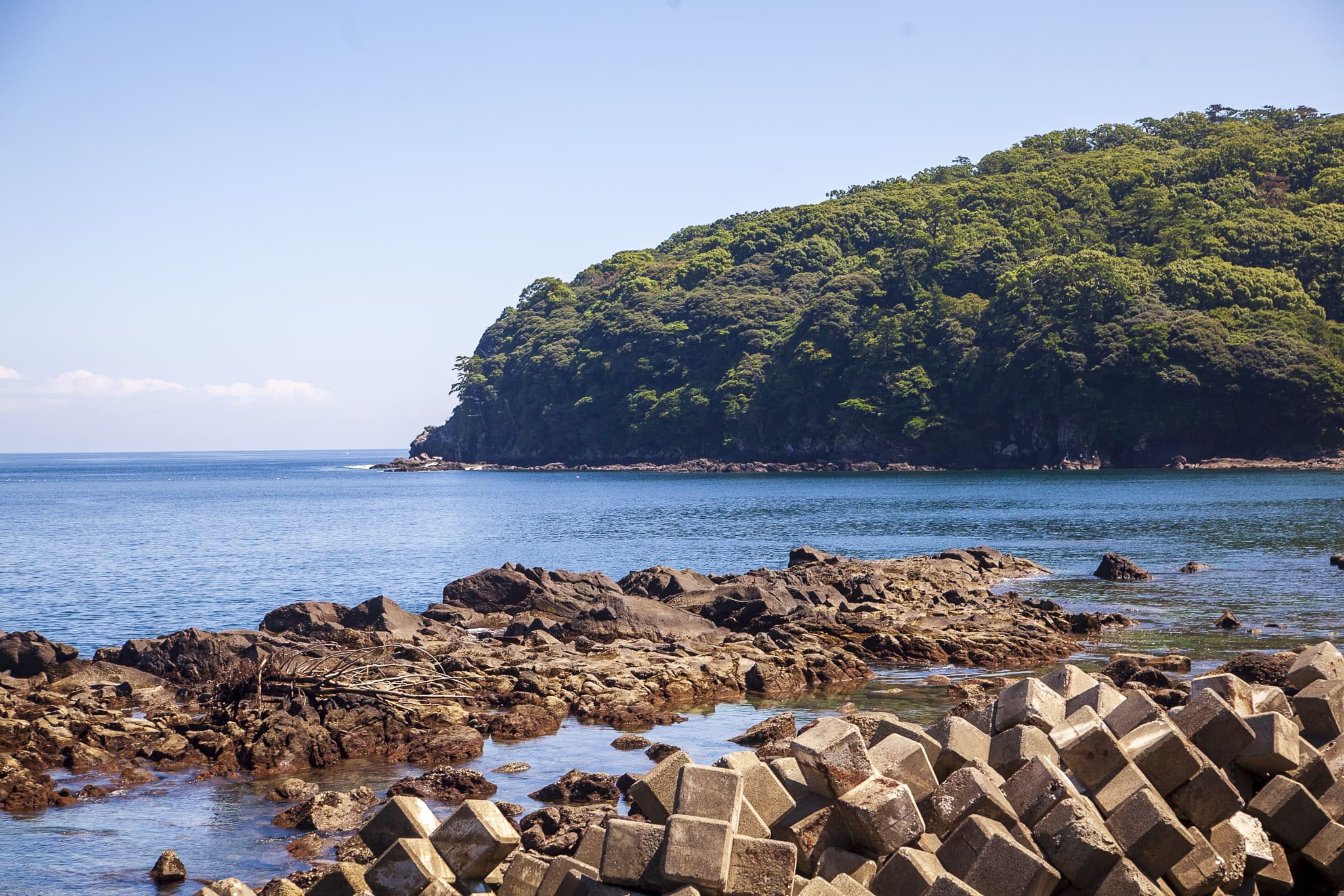
Yamashita Beach (山下浜) is probably not the kind of place most people imagine when thinking about a coastal getaway in Japan. There is no wide sandy shoreline, no resort atmosphere, and very little infrastructure beyond the road tracing the edge of the peninsula.
When I reached Yamashita Beach, what stood out most was not the beach itself, but the rows of massive concrete wave breakers scattered along the shoreline. These concrete structures, commonly known as tetrapods, are used extensively throughout Japan to weaken incoming waves, reduce coastal erosion, and protect roads and settlements from storm damage. Along Sagami Bay, strong wave activity and typhoons have historically caused significant coastal erosion, making these kinds of coastal defenses extremely common.
In many parts of Japan, tetrapods can feel visually intrusive, but around Manazuru they somehow blended into the peninsula’s rougher atmosphere. The angular concrete forms sitting against the dark volcanic shoreline gave the area an oddly photogenic quality, especially with waves crashing through the gaps between them.
See also: 7 Best Beaches in Izu Peninsula
| Access |
10-min bus or 27-min walk from Manazuru Station |
|---|
Along the Road: Yamano Shrine


One of the smallest but most memorable spots along the walk was Yamano Shrine (山の神社), a tiny local shrine sitting quietly beside the road near the entrance to the peninsula’s forested area. The surrounding vegetation was so thick that the shrine almost felt hidden despite being directly beside the road.
Historically, Yamano Shrine was associated with Manazuru’s old stone quarrying industry. Before the peninsula became known primarily as a quiet coastal destination, quarry workers reportedly worshipped here as a guardian deity connected to the mountains and local stone-cutting sites. Over time, the shrine also became associated with protection for fishermen and local maritime life.
| Access |
25-min bus from Manazuru Station |
|---|---|
| Business Hours |
24 hours |
Reaching Cape Manazuru and Mitsuishi Rocks
A Scenic Break at Manazuru Miharashidai Cafe
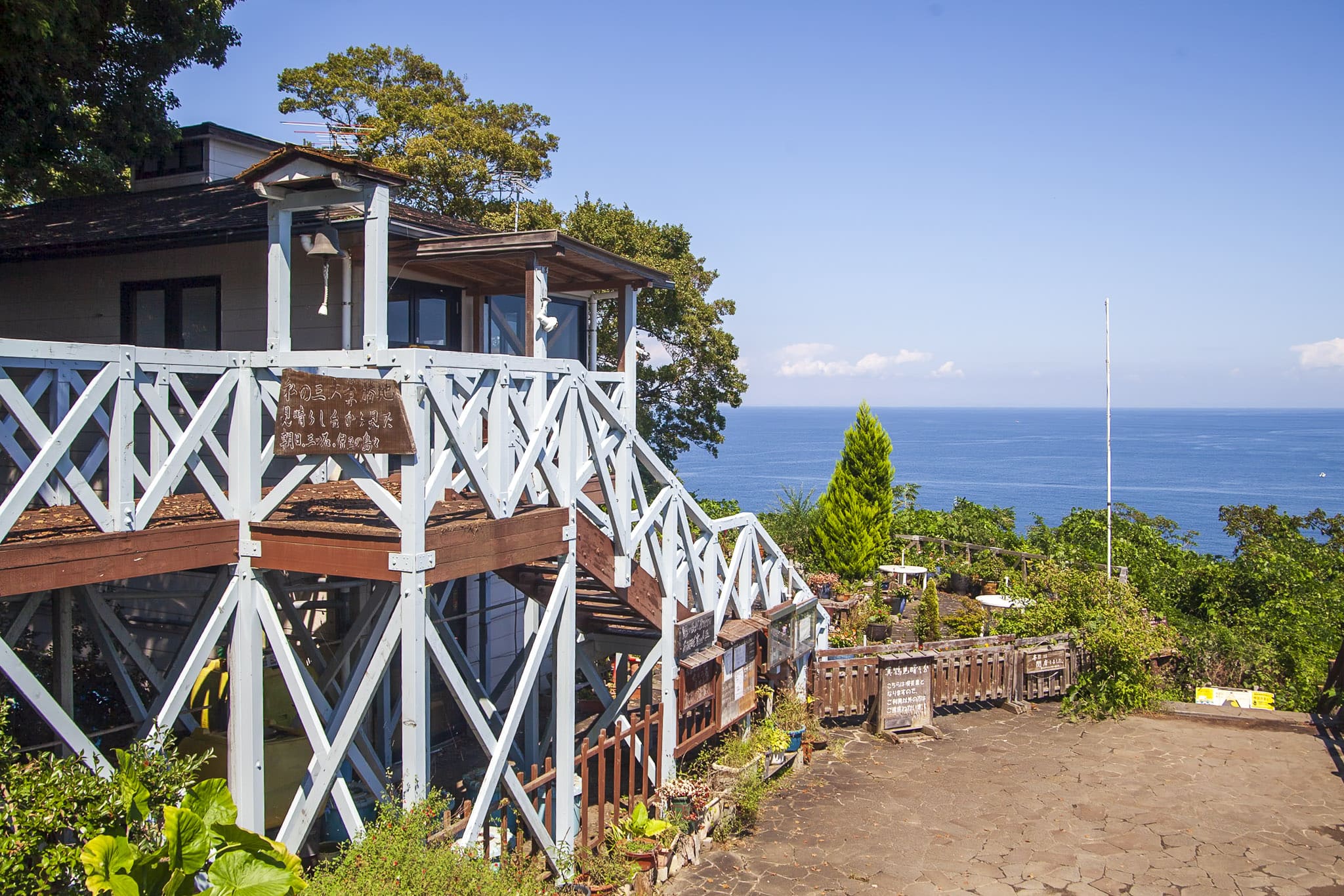
I didn’t actually stop at Manazuru Miharashidai Cafe (カフェ 真鶴見晴らし台) during my walk around the peninsula, but it was one of the few places along the route that immediately caught my attention enough to make a mental note of it for future visits.


The café sits along the road leading toward Cape Manazuru, slightly elevated above the coastline with an open terrace overlooking Sagami Bay. After spending much of the walk surrounded by dense forest roads and rocky shoreline, the outdoor seating area stood out thanks to the unobstructed ocean views and noticeably breezier atmosphere.
| Access |
37-min bus from Manazuru Station |
|---|---|
| Business Hours |
11 AM–4 PM |
| Official Website |
https://tabelog.com/en/kanagawa/A1410/A141002/14054942/ |
Cape Manazuru


The road eventually opened up near Cape Manazuru (真鶴岬), where the dense forest covering much of the peninsula suddenly gave way to wider ocean views across Sagami Bay. By that point in the early afternoon, the heat was still lingering, but the stronger sea breeze near the cape made the area feel noticeably more comfortable than the humid inland sections of the walk.
The landscape around the cape reflects the volcanic origins of the peninsula itself. The Manazuru Peninsula was formed through ancient lava flows associated with the Hakone volcanic system, leaving behind rugged dark rock formations extending into the sea. Forest and exposed volcanic shoreline exist side by side throughout the cape area, giving the scenery a rougher and less manicured appearance than many seaside destinations in the region.
Views from the coastline stretch across Sagami Bay toward the Izu Peninsula, and on particularly clear days it is even possible to see distant islands offshore. The combination of ocean, volcanic rock, and thick evergreen forest gives Cape Manazuru a distinctly different atmosphere from the more urbanized beaches and resort towns closer to Tokyo.
Mitsuishi Rocks
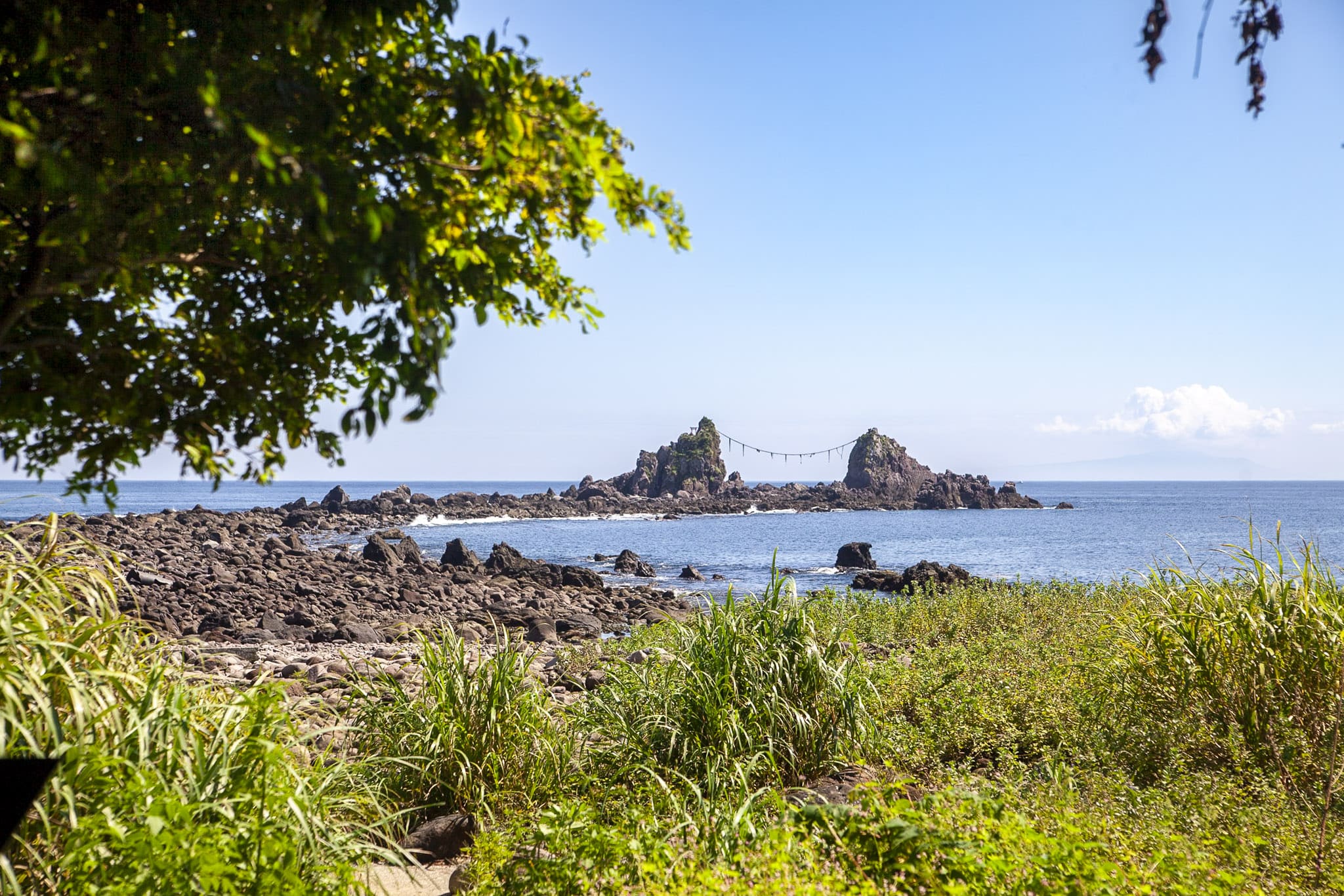
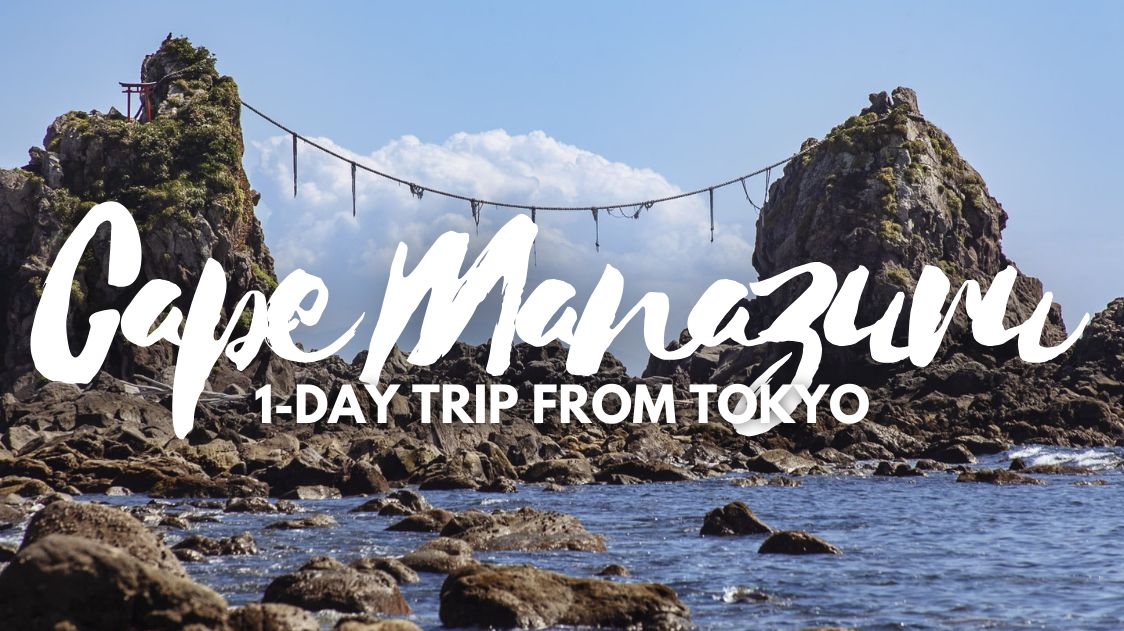
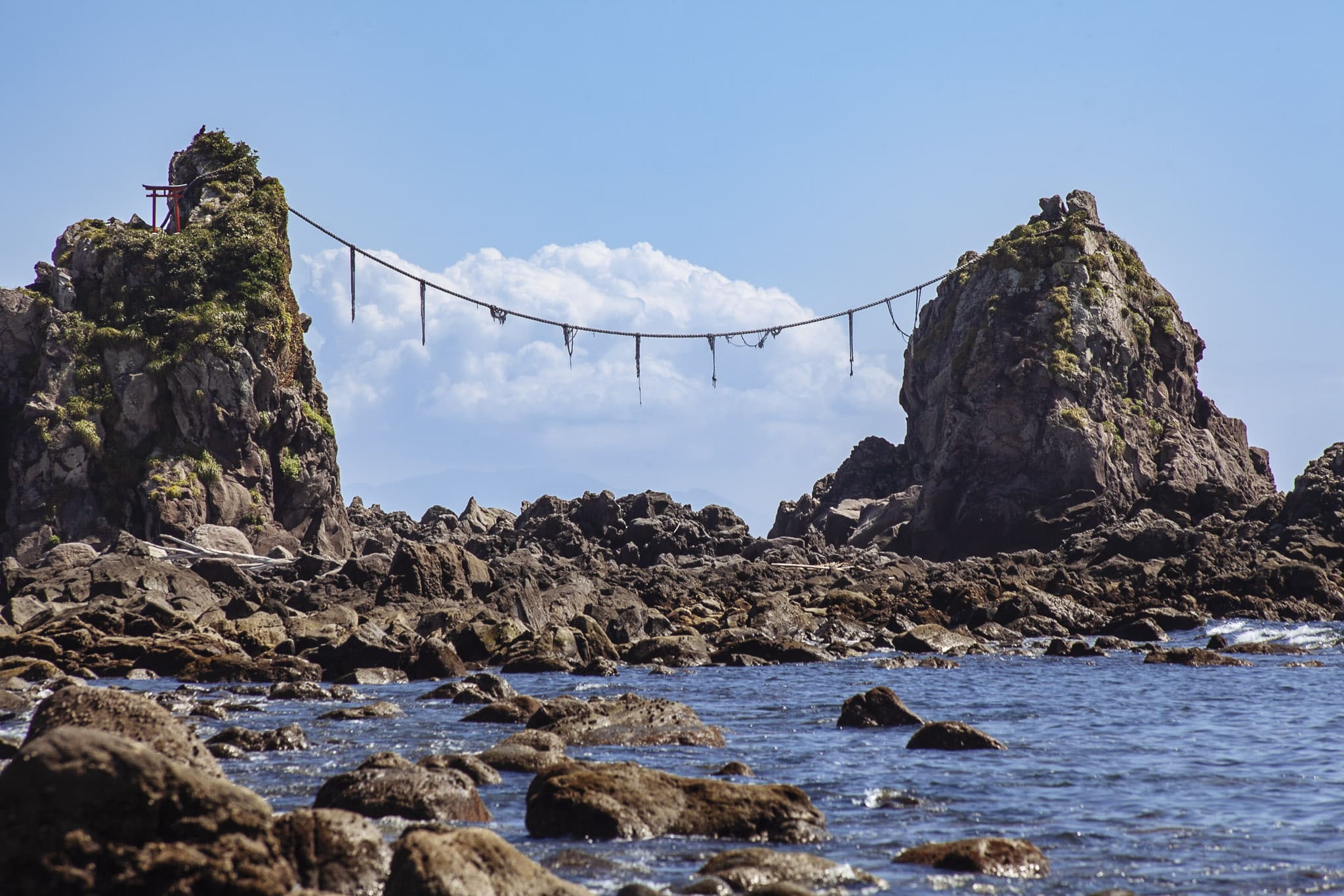
Near the edge of the cape, the coastline descends toward the Mitsuishi Rocks (三ツ石), three volcanic sea stacks rising just offshore from the peninsula. A thick shimenawa rope connects the rocks, marking them as spiritually significant within local Shinto tradition while also giving the formation its most recognizable visual feature.
The timing of my visit coincided with low tide, which made it possible to walk much farther across the rocky shoreline toward the formations themselves. Under certain tidal conditions, exposed sections of volcanic rock temporarily create a natural path extending out from the coast. The surface was uneven and slippery in places, but several visitors were carefully making their way across the rocks while exploring the tide pools left behind by the receding water.
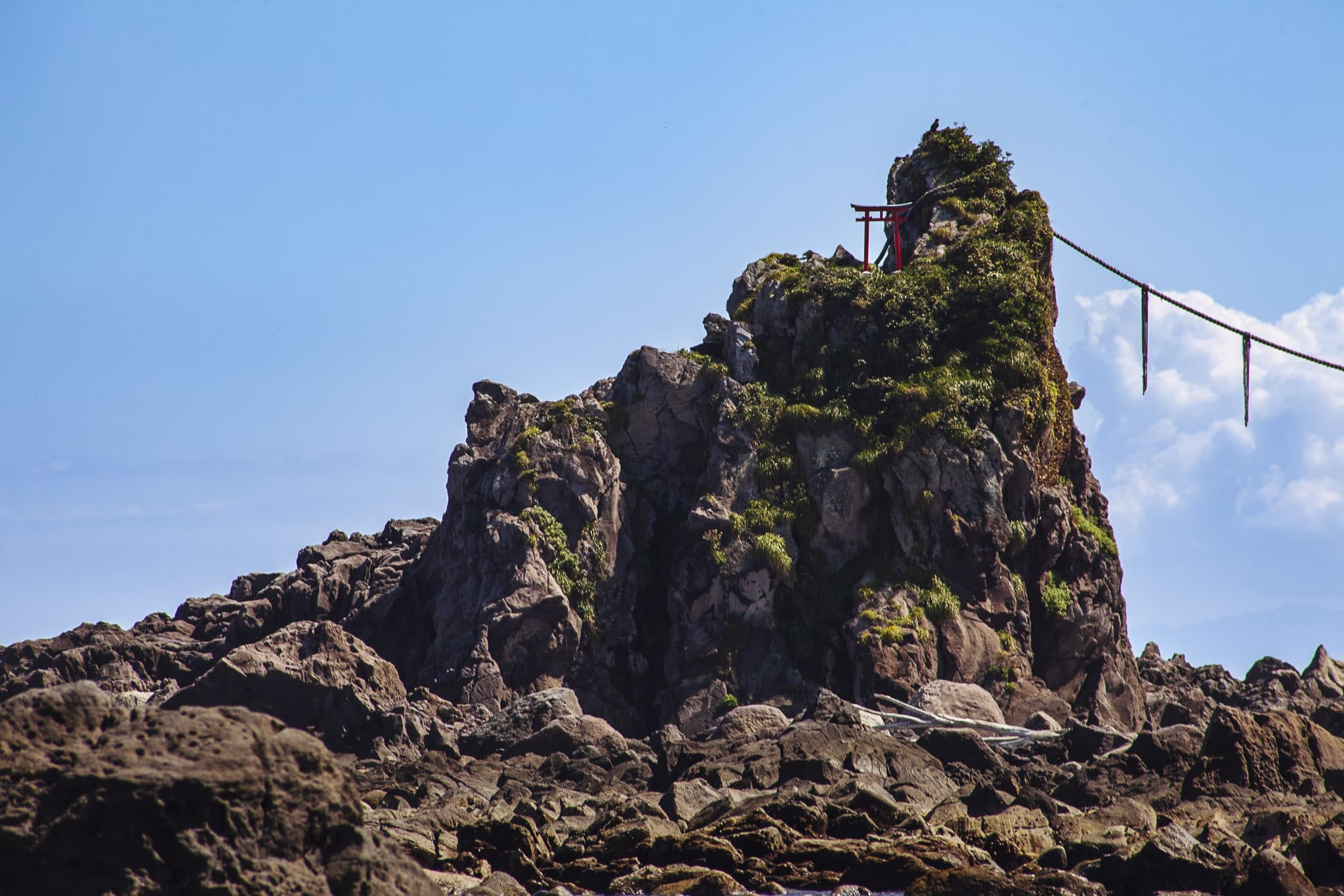
After spending much of the day walking through quiet roads and heavily forested sections of the peninsula, the scenery around Mitsuishi felt unexpectedly dramatic. Waves crashed against the darker outer rocks while calmer pools of water reflected the sky closer to shore. Crabs moved between gaps in the volcanic stone, and the sound of the ocean completely replaced the cicadas that had dominated the inland parts of the walk earlier in the day.
Despite being the peninsula’s best-known landmark, the area still retained the same understated atmosphere found throughout the rest of Manazuru. There were no large crowds gathering for photos, no dense lines of souvenir shops nearby, and very little separating visitors from the natural coastline itself. That quieter and slightly unpolished character ended up becoming one of the most memorable parts of the entire day trip.
Tips for Visiting Cape Manazuru
Best Season to Visit


Cape Manazuru can be visited year-round, but the experience changes quite a bit depending on the season. I visited in early September, when the peninsula still felt firmly locked in late summer. The humidity was high, cicadas were everywhere, and walking the exposed coastal roads during the middle of the day became noticeably tiring at times.
Autumn is likely one of the most comfortable periods for exploring the peninsula on foot, especially from October into November when temperatures become milder and visibility across Sagami Bay tends to improve. Winter also has its appeal thanks to clearer skies and quieter conditions around the coastline, particularly near Mitsuishi Rocks.
Spring brings greener forest scenery around the peninsula, while the hydrangea season in early summer adds color to some of the roadside areas and temple grounds nearby.
How Much Walking Is Involved?
Even though Manazuru works well as a relaxed day trip, the peninsula involves more walking and elevation changes than some visitors may expect. Roads around the area are frequently steep, and several sections near the coastline have uneven pavement or rocky surfaces.
Taking the local bus from Manazuru Station toward Kibune Shrine helped reduce the amount of uphill walking at the beginning of the route, which I would recommend especially during warmer months.
Comfortable walking shoes are definitely worth bringing, particularly if you plan to walk down toward Mitsuishi Rocks during low tide.
What to Bring
For most of the year, bringing water is important since shops and convenience stores become less frequent once you move farther into the peninsula.
If visiting during warmer months, I would also recommend:
- sunscreen
- a towel or handkerchief for the humidity
- comfortable shoes with good grip
- a portable fan if you are sensitive to heat
Checking tide conditions before visiting Mitsuishi Rocks can also make a big difference. During lower tides, it becomes possible to walk much closer to the formations across the exposed volcanic shoreline, while higher tides reduce accessible areas considerably.
Is Cape Manazuru Worth Visiting?
Cape Manazuru is probably not the right destination for travelers looking for a packed sightseeing itinerary, famous cultural landmarks, or lively seaside entertainment. Compared to places like Kamakura, Enoshima, or Atami, the peninsula can initially feel almost too quiet.
That quietness is precisely the reason I ended up enjoying it so much. For photographers, walkers, and travelers who enjoy exploring quieter corners outside the standard Tokyo day-trip circuit, that understated character becomes the main attraction.
Travelers searching for sandy beaches, nightlife, shopping streets, or extensive sightseeing facilities may find the peninsula too subdued. Cape Manazuru works best for people who are comfortable with slower pacing and destinations where the atmosphere matters more than checking famous landmarks off a list. For me, the peninsula felt refreshing precisely because it resisted becoming overly curated.
For more day trip ideas, check these articles too!



Written by
Photographer, journalist, and avid urban cyclist, making sense of Japan since 2017. I was born in Caracas and lived for 14 years in Barcelona before moving to Tokyo. Currently working towards my goal of visiting every prefecture in Japan, I hope to share with readers the everlasting joy of discovery and the neverending urge to keep exploring.
- +0 0
-
-