Best Things to Do in Nikko: Complete Visitor’s Guide
Nikko Travel Guide: Top Things to Do, Shrines & Nature

- +0 0
-

-


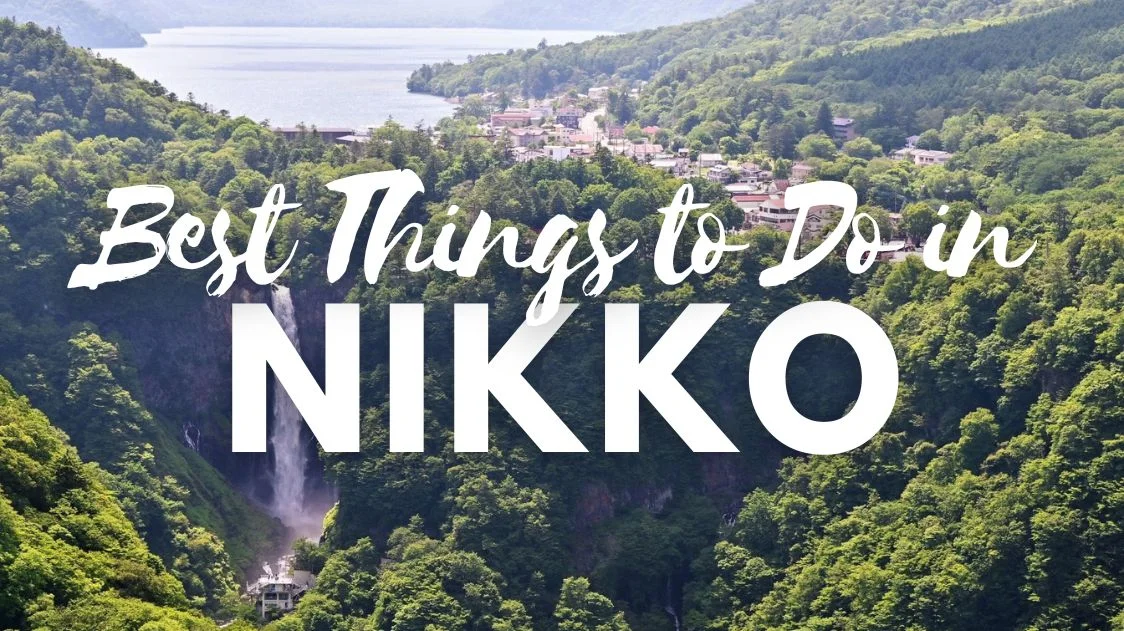
A trip to Nikko can feel oddly compressed, in the best possible way. Within a couple of hours from Tokyo, you go from urban sprawl to cedar forests, from train platforms to moss-covered stone paths leading toward some of the most elaborate UNESCO-listed religious architecture in the country. Few destinations manage that contrast without feeling disjointed. Nikko makes it look easy.
At the centre of it all is Nikko Toshogu, a shrine complex deliberately excessive in its design, built to impress rather than to blend in. Yet just beyond it, the landscape takes over with mountain roads climbing toward Lake Chuzenji, waterfalls cutting through volcanic rock, and hiking trails stretching across highland marshes in Okunikko. The contrast is the point: this is a place where cultural landmarks and natural scenery are not competing for attention; they are stacked on top of each other.
Getting to Nikko from Tokyo
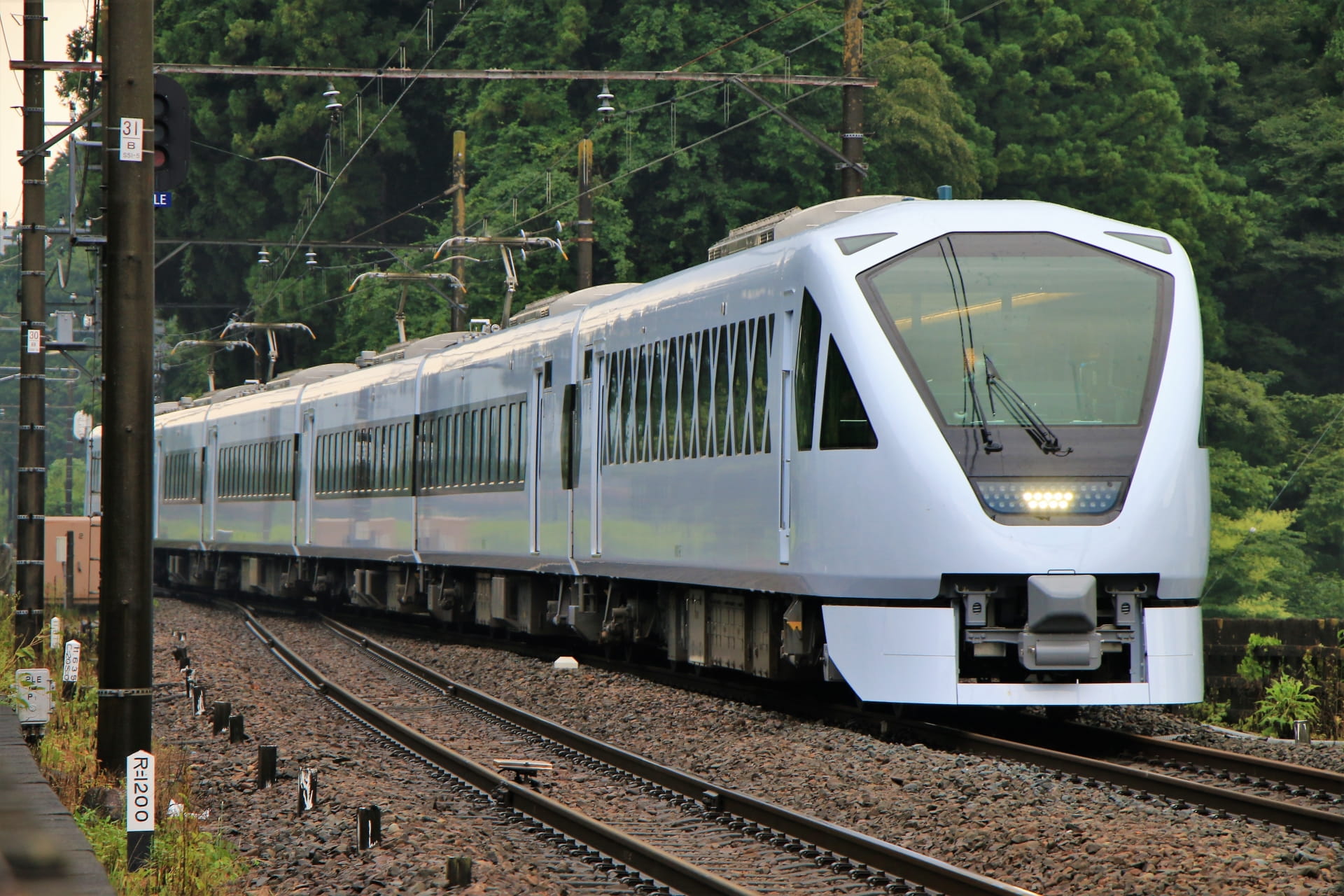
Reaching Nikko from Tokyo is simple enough, but the “best” route depends on how you balance speed, cost, and convenience. Two main railway networks serve the area, and both are worth considering before you default to whatever route your navigation app suggests.
For a full breakdown of route options and pass details, see our guide to getting to Nikko from Tokyo.
Tobu Railway (Direct and simplest)
The most convenient option for most travellers is the Tobu line from Asakusa Station. The Tobu Limited Express runs directly to Tobu-Nikko Station in about 1 hour 50 minutes, with fares starting around ¥2,800–¥3,500 depending on the train.
- Best for: Direct access with no transfers
- Departure point: Asakusa (easy if you’re staying in eastern Tokyo)
- Seat reservations: Required for limited express trains
There are also discounted passes like the Tobu Nikko Pass, which bundles round-trip transport with local bus access, useful if you plan to explore Lake Chuzenji and the Okunikko area.
JR Lines (Fastest with JR Pass)
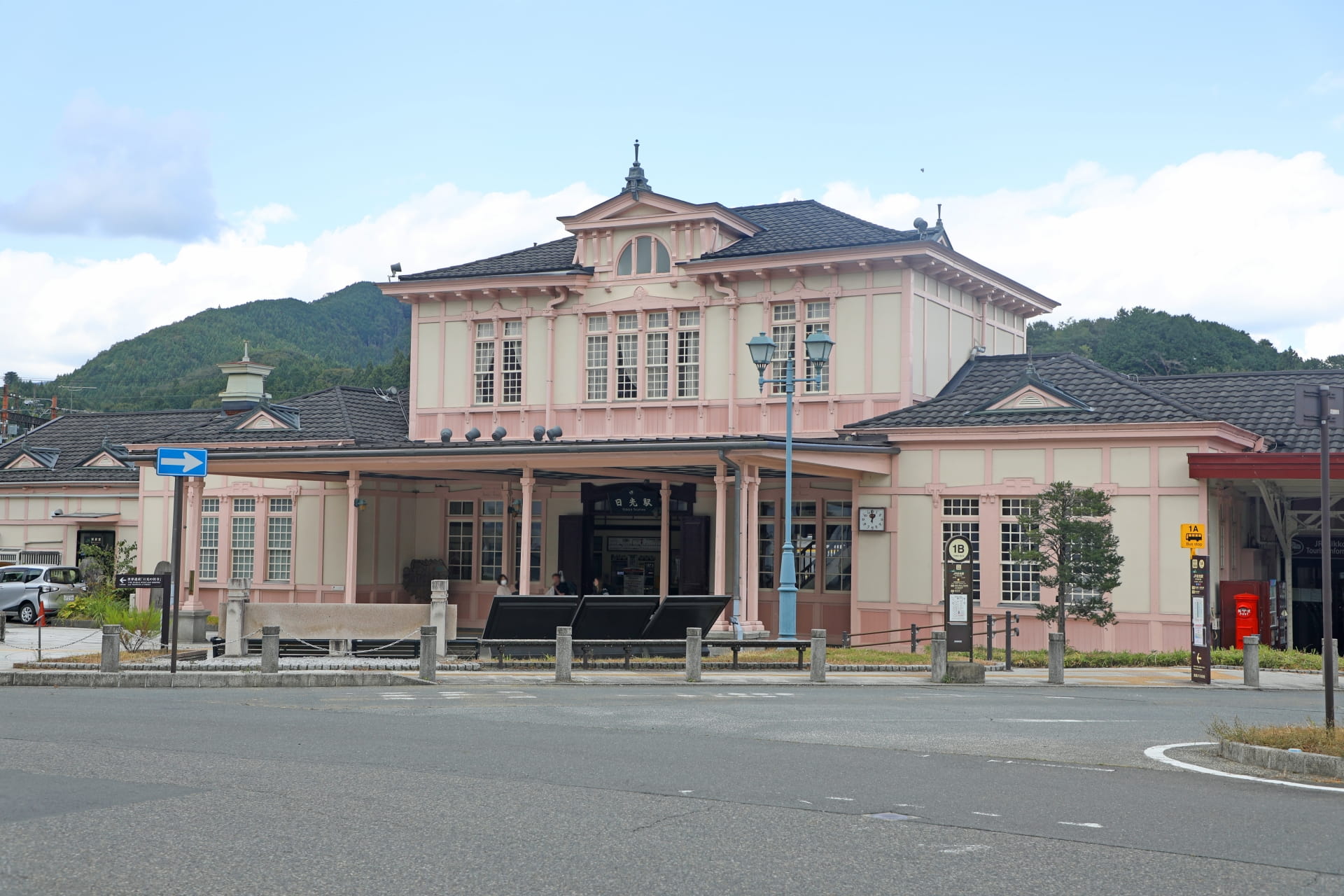
If you’re using the Japan Rail Pass, the JR route becomes the better deal. Take the Tohoku Shinkansen from Tokyo Station to Utsunomiya, then transfer to the JR Nikko Line.
- Total time: Around 1 hour 40–50 minutes
- Cost: ~¥5,500 (fully covered by JR Pass)
- Transfers: 1 (at Utsunomiya)
This route is slightly faster than Tobu, but less convenient if you’re not already near a Shinkansen station.
Getting Around Nikko
Once you arrive, transportation becomes the next bottleneck. The main shrine area is accessible on foot or via short bus rides, but reaching places like Lake Chuzenji or Kegon Falls requires using the Tobu bus network.
- World Heritage Pass: Covers the shrine and temple area
- Chuzenji/Okunikko Pass: Extends coverage to the lake, waterfalls, and hiking regions.
Buses can get crowded, especially during peak autumn foliage season. Leaving early in the morning is a must that will make a difference that can save you an hour of waiting in line.
Best Things to Do in Nikko
Most itineraries treat Nikko as a quick day trip, which is a good enough option, but it also creates a predictable pattern: crowds around the main shrines by late morning, followed by a rushed escape toward the lake. This guide is designed to avoid that. It breaks down the area into clear sections, covering the major sights as well as the ones people tend to skip, with practical details for each: how to get there, how much time to allow, and when it actually makes sense to go.
Shrine & Temple Complex
The historic core of Nikko is compact on a map, but dense in substance. This is the area designated as a UNESCO World Heritage Site, where shrines and temples are set within a forest of centuries-old cedar trees planted along pilgrimage routes. Unlike many temple districts in Japan that feel spread out or loosely connected, Nikko’s religious sites form an ensemble designed to be approached, entered, and experienced in sequence.
Most visitors follow the same general path: arrive, cross the river near Shinkyo Bridge, then gradually climb toward the main shrine precinct. The route itself is part of the experience, with stone steps, lantern-lined paths, and elevation changes that reveal the buildings in stages rather than all at once.
Timing is key here. The area becomes crowded from around 10:00 onward, especially in peak seasons. Starting early not only avoids congestion but also changes the atmosphere entirely: quieter paths, softer light through the trees, and space to actually observe the details that make these sites worth visiting.
Nikko Toshogu
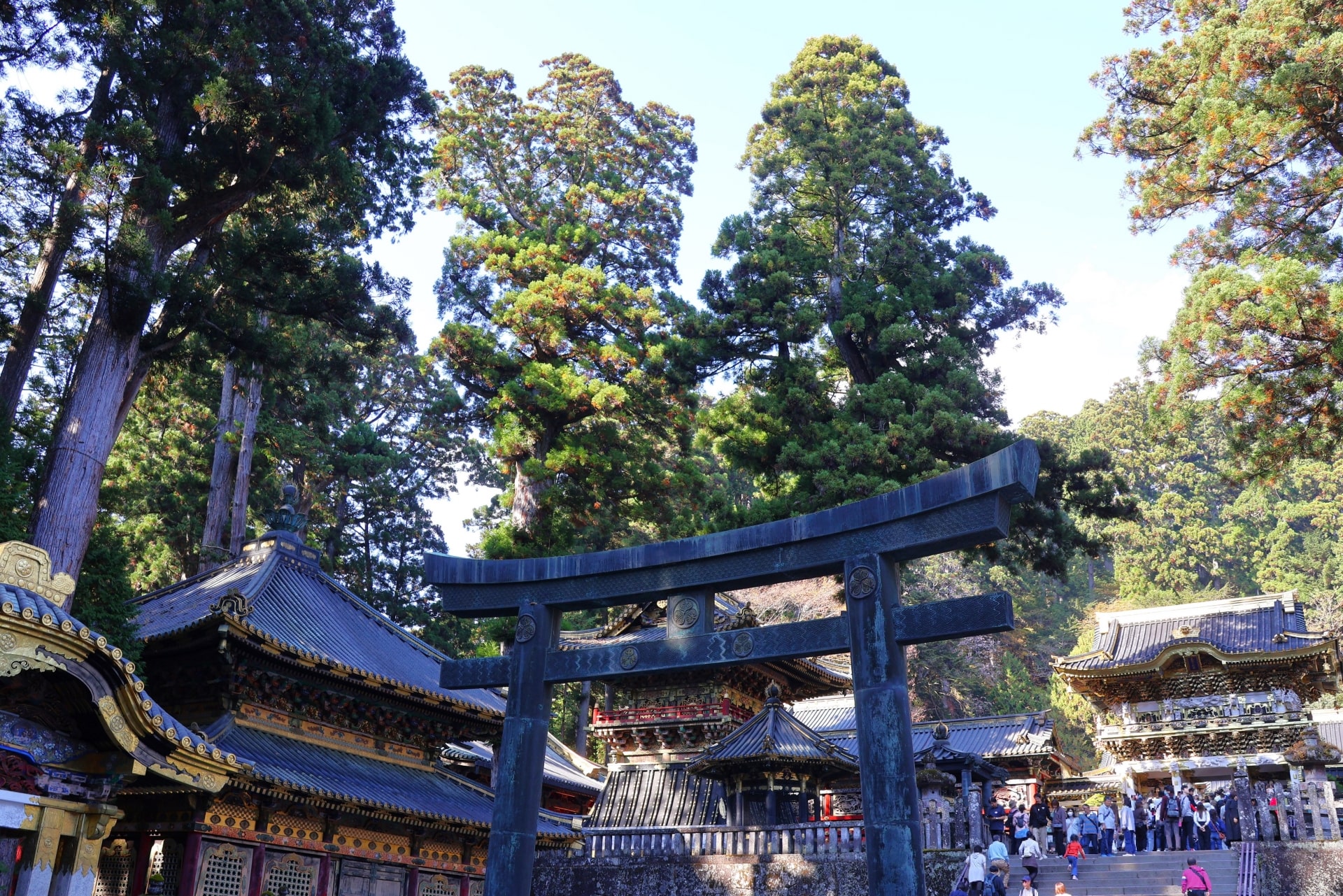
Nikko Toshogu (日光東照宮) is the reason Nikko became a major destination in the first place. Built in the 17th century as the mausoleum of Tokugawa Ieyasu, founder of the Tokugawa shogunate, the complex was designed to project power and legitimacy. That intention is still visible today in its architecture.
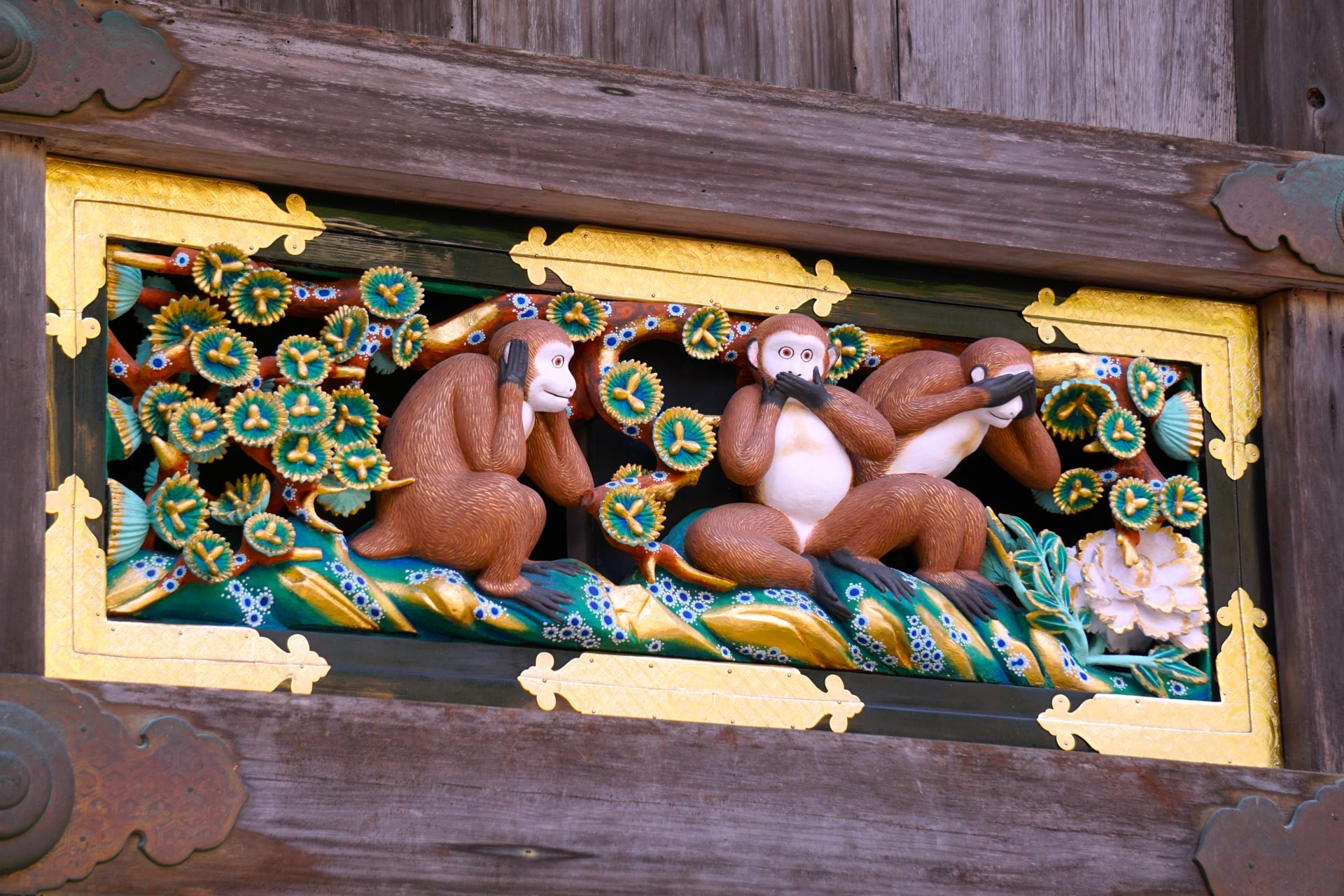
Where most Japanese shrines favour restraint, Toshogu goes in the opposite direction. Surfaces are covered in gold leaf, lacquer, and intricate wood carvings, with over 5,000 of them across the site. Famous motifs like the three wise monkeys and the sleeping cat are often treated as highlights, but they are small elements within a much larger decorative program that mixes Buddhist, Shinto, and even Chinese influences.
The layout also plays a role in how the site is experienced. You move through a series of gates and courtyards, gradually ascending toward the inner shrine area and Ieyasu’s tomb. The climb is short but intentional, reinforcing the sense of progression.
Tip: Go straight to Toshogu first thing in the morning, even before visiting Shinkyo Bridge depending on your timing, as you will probably return to the bridge anyway
See the full breakdown in our guide to Nikko Toshogu Shrine, including what to priotise inside the complex.
 Access Access |
20–30 min walk from Nikko/Tobu-Nikko Station or 10 min by bus (Shinkyo stop) |
|---|---|
 Business Hours Business Hours |
9 AM to 5 PM (April-October) / 9 AM to 4 PM (November-March) |
 Price Price |
1,600 yen (main shrine complex) |
 Official Website Official Website |
https://www.toshogu.jp/ |
Rin’noji Temple
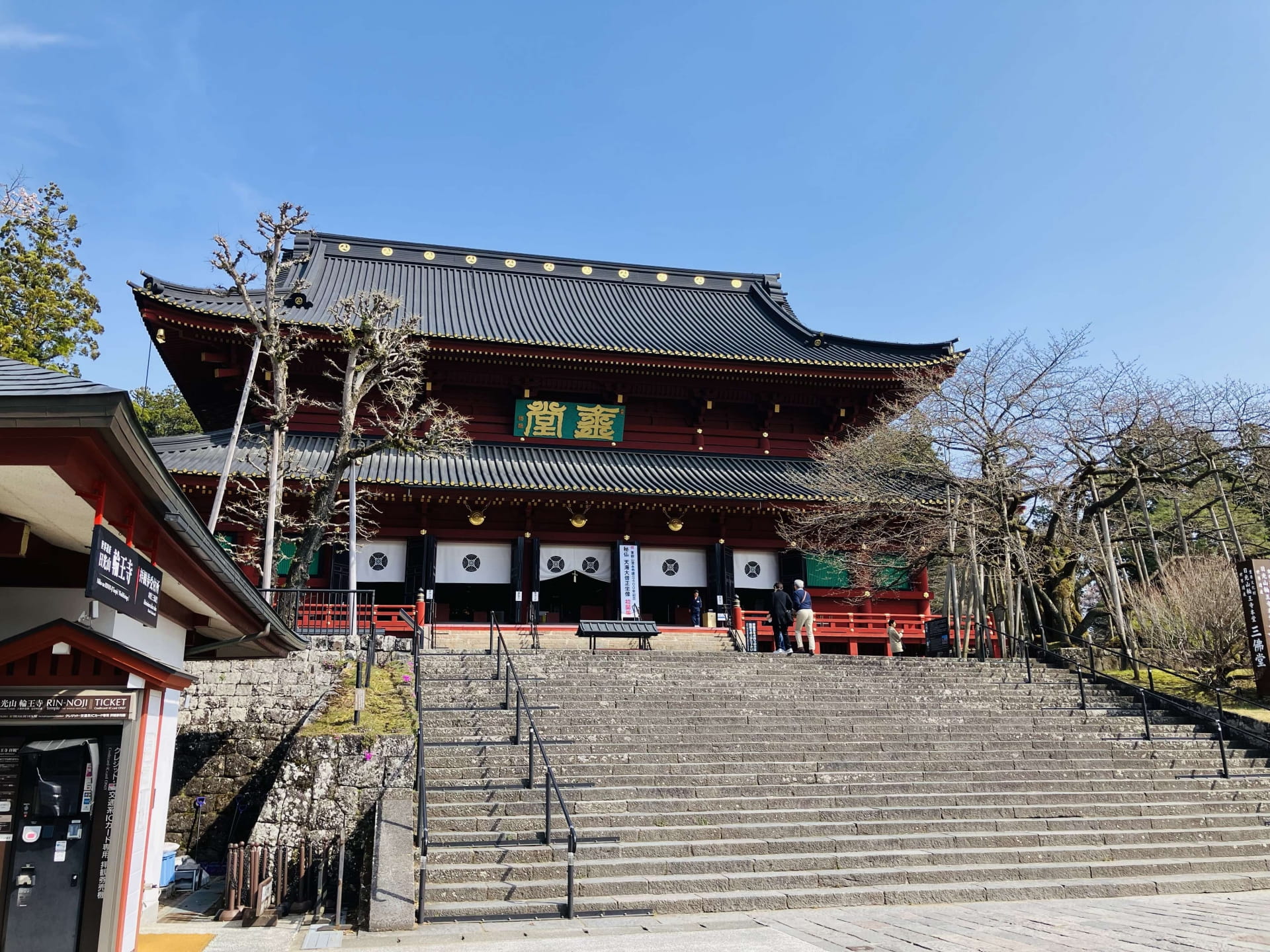
Rin’noji (輪王寺) is easy to overlook, partly because its exterior is comparatively understated. But historically, it is central to Nikko’s religious identity. Founded in the 8th century by the monk who introduced Buddhism to the area, it predates Toshogu by nearly a millennium.
The main hall (Sanbutsudo) houses three large gilded statues representing the Buddhist manifestations of Nikko’s sacred mountains. These figures—Amida, Senju-Kannon, and Bato-Kannon—are not just decorative; they reflect how the mountains themselves were worshipped as deities.
After recent restoration work, the interior is brighter and easier to appreciate than it was in the past. The space feels more contemplative than Toshogu, with fewer visual distractions and less crowd pressure.
Tip: Visit Rinno-ji immediately after Toshogu without leaving the complex. Many people skip it because it doesn’t stand out visually from the outside.
| Access |
5-min walk from Toshogu |
|---|---|
| Business Hours |
8 AM to 5 PM (April-October) / 8 AM to 4 PM (November-March) / Last entry 30 minutes before closing time. |
| Price |
400 yen (main hall) |
| Official Website |
https://www.rinnoji.or.jp/ |
Futarasan Shrine
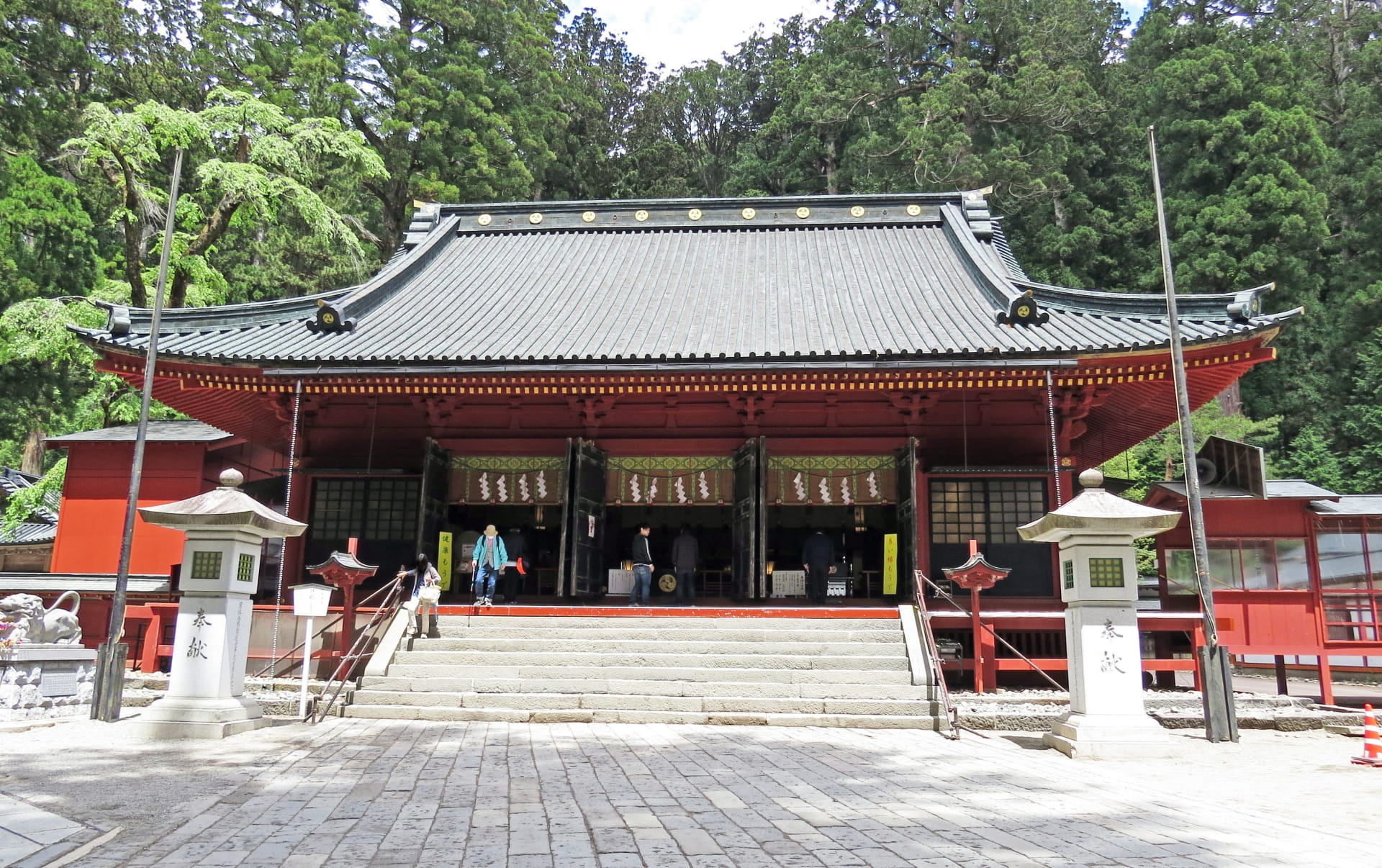
Futarasan Shrine (二荒山神社) often gets overshadowed by Toshogu, but it is arguably more important in terms of local religious tradition. Established in the 8th century, it enshrines the deities of Mount Nantai, Mount Nyoho, and Mount Taro, the three mountains that define the Nikko landscape.
Architecturally, it is simpler, but that simplicity is part of its appeal. The buildings sit within a wooded area that feels less managed and less crowded, especially compared to Toshogu’s main courtyards. There is also a small paid garden area behind the main hall that many visitors miss.
Tip: If you visit in the afternoon after lunchtime, this is often the quietest spot in the entire complex once day-trippers begin to leave.
| Access |
5-min walk from Toshogu |
|---|---|
| Business Hours |
9:30 AM–3:30 PM |
| Price |
300 yen |
| Official Website |
http://www.futarasan.jp/ |
Shinkyo Bridge
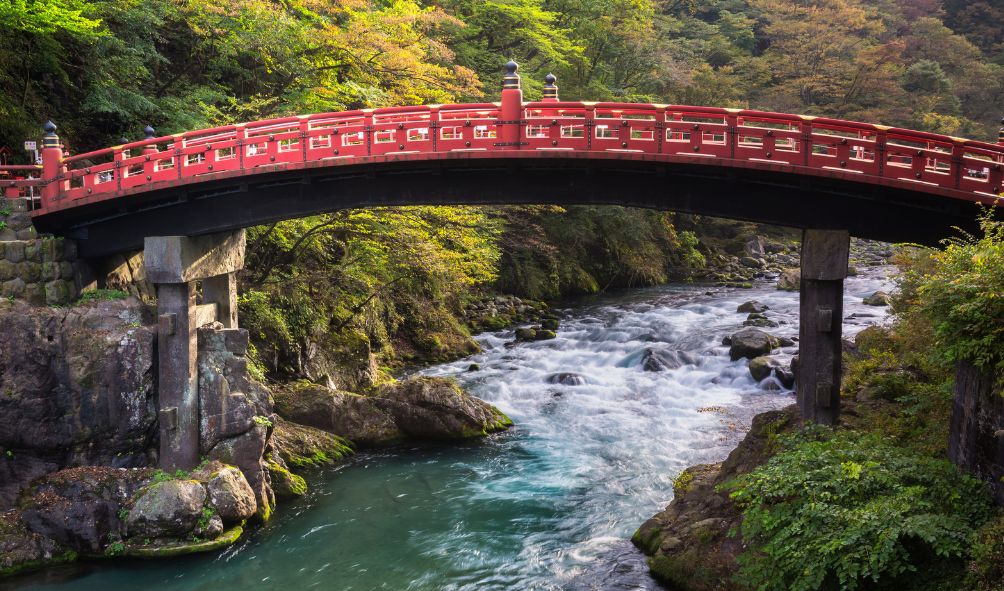
Shinkyo Bridge (神橋) sits slightly apart from the main shrine area, but it functions as a symbolic threshold. According to legend, it marks the point where a monk was guided across the river by divine forces, establishing Nikko as a sacred site.
The bridge itself is visually striking: arched, vermilion, and set against the natural backdrop of the Daiya River. While you can pay to walk across it (although the other end is closed), most visitors experience it from the road or nearby viewpoints, which offer a better angle for photography.
Tip: Visit early in the morning or after your Toshogu visit. Midday traffic makes the area crowded and less enjoyable, especially for photos.
| Access |
15–20 min walk from Tobu-Nikko Station or 5 min by bus |
|---|---|
| Business Hours |
9:30 AM–3:30 PM |
| Price |
300 yen |
| Official Website |
http://www.shinkyo.net/ |
Nature & Scenery
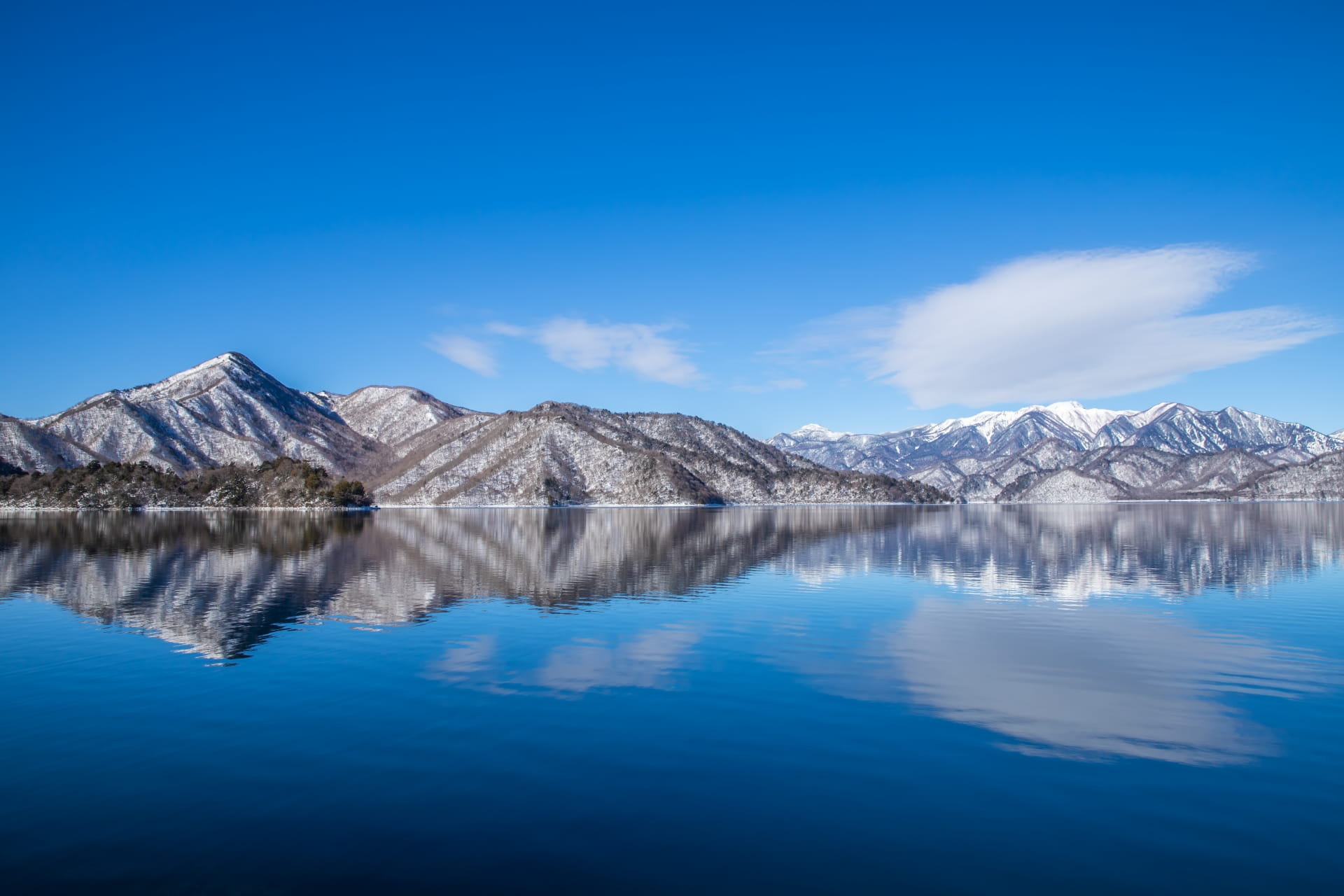
Leaving the shrine area behind, Nikko quickly changes from a historical site to a mountain landscape. This transition happens along the road into Okunikko, where elevation increases, temperatures drop slightly, and the scenery opens up into lakes, waterfalls, and highland plains.
The natural sites around Nikko are spread along a single mountain corridor rather than clustered in one walkable area. In practice, this means your day is shaped less by distance on a map and more by bus frequency, traffic conditions, and stop selection. Most of these locations are connected by the same bus route that departs from the main station area. Travel times are short in theory, but traffic, especially during the autumn foliage season, can slow things down considerably. Planning the order of visits is essential if you want to avoid spending more time on a bus than at the actual sites.
Kegon Falls and Lake Chuzenji are easy to pair since they sit within the same zone, but once you continue further to Ryuzu Falls, you’re committing to a longer loop into Okunikko. Add stops without planning, and you end up backtracking or waiting in bus lines that can stretch well beyond 30 minutes during peak seasons.
A more efficient approach is to decide in advance how far into the mountains you want to go:
- Short route: Kegon Falls + Lake Chuzenji
- Extended route: Continue to Ryuzu Falls or beyond
- Separate timing: Leave Kanmangafuchi Abyss for the end of the day since it’s closer to town
See also our dedicated guide to Nikko National Park!
Kegon Falls
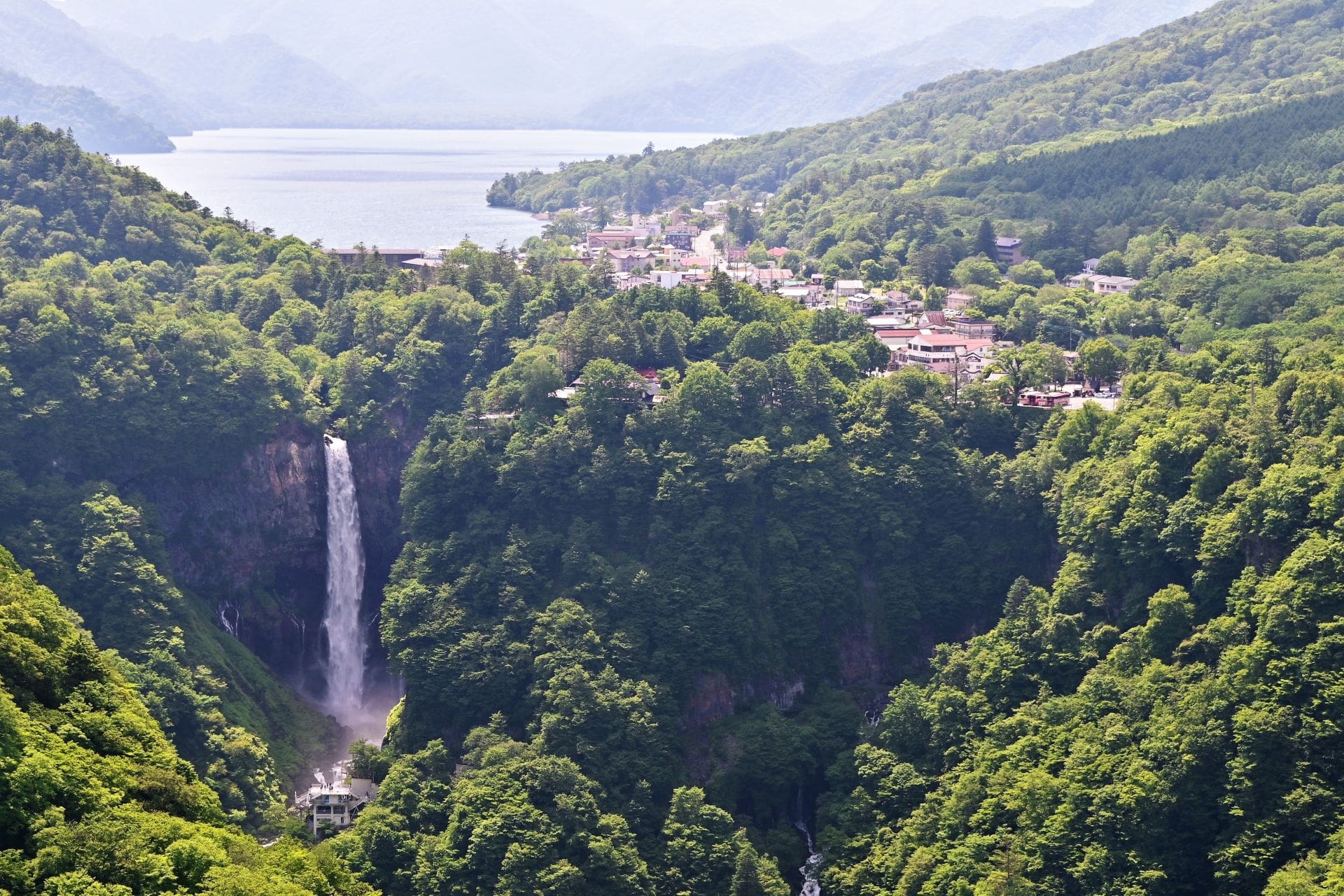
Kegon Falls (華厳滝) is often presented as Nikko’s headline natural attraction, and in practical terms, that’s accurate. The waterfall drops nearly 100 metres from Lake Chuzenji into a rocky basin below, with an observation platform positioned at the base for a direct view.
What makes Kegon Falls stand out is not just the height, but its seasonal variation. In autumn, the surrounding cliffs are covered in red and orange foliage; in winter, sections of the waterfall freeze, creating a very different visual effect. It’s one of the few places in the area that remains worth visiting year-round.
Tip: If visibility is clear, pay for the lower observation deck. The perspective from below is significantly better than the free viewpoint above.
| Access |
55-min bus from Nikko Station |
|---|---|
| Business Hours |
8 AM–5 PM (Paid observation deck) |
| Price |
600 yen (Paid observation deck, upper observation deck is free) |
| Official Website |
https://www.kegon.jp/ |
Lake Chuzenji
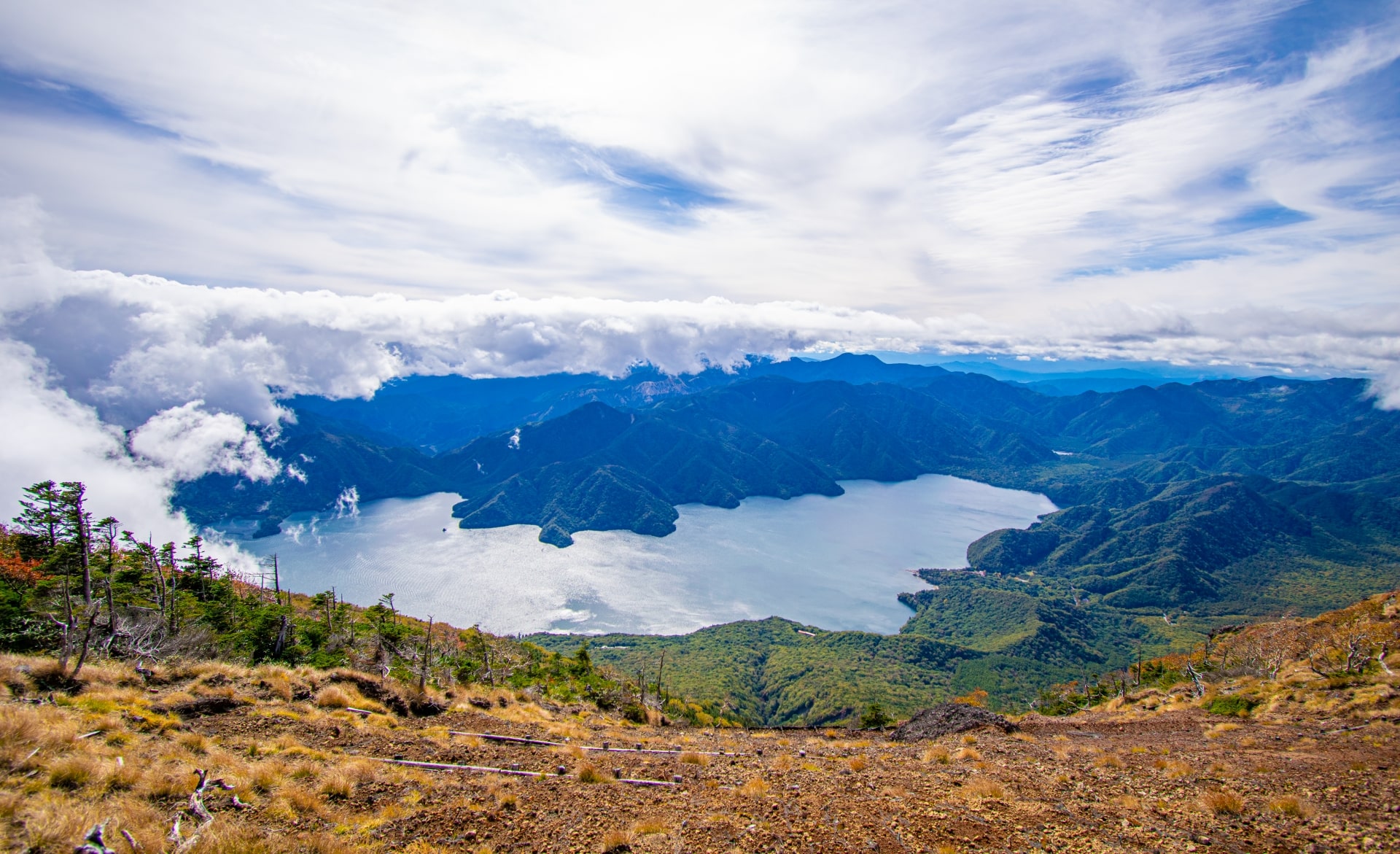
Formed by volcanic activity from Mount Nantai, Lake Chuzenji (中禅寺湖) sits at the foot of the mountain and acts as the central hub of the Okunikko area. It’s not a single “attraction” in the narrow sense, but a base from which multiple activities and viewpoints are accessible.
The lakeshore near Chuzenji Onsen has walking paths, boat cruises, and several cafés, while quieter sections can be reached by moving further along the road or renting a bicycle. The atmosphere here is noticeably different from the shrine area—more open, less structured, and generally less crowded once you move away from the main bus stops.
Tip: Don’t stop at the first viewpoint near the bus terminal. Walk 10–15 minutes along the lakeshore to find less crowded areas with better views of Mount Nantai.
| Access |
55-min bus from Nikko Station |
|---|---|
| Business Hours |
24h |
| Price |
free |
Irohazaka Slope
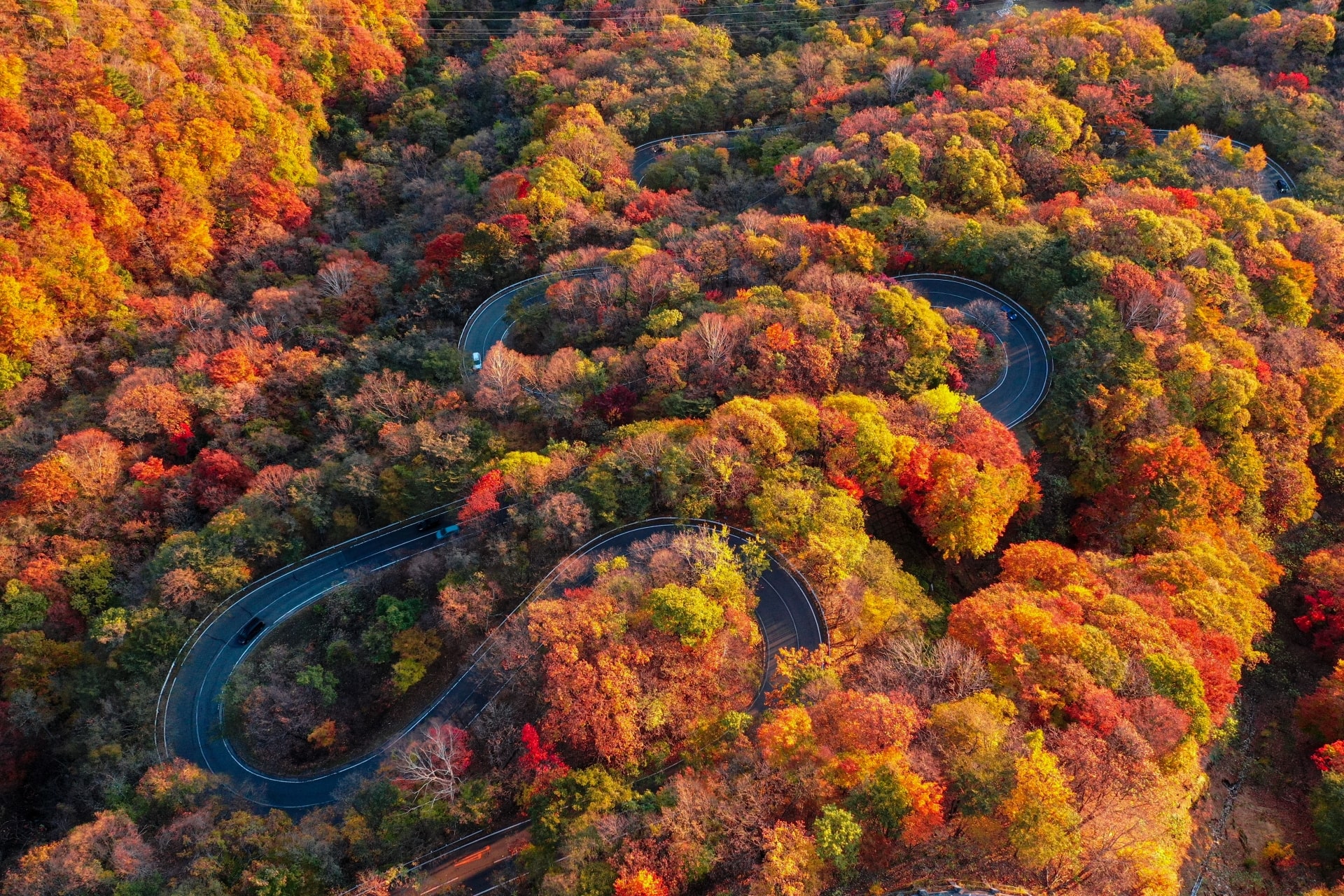
Irohazaka (いろは坂), or Iroha Slope, is less of a stop and more of an experience. This pair of winding mountain roads (one for ascending, one for descending) connects the shrine area with Okunikko, with an elevation of approximately 440 meters. Each curve is named after a character from the Japanese syllabary, giving the road its name.
In practical terms, most visitors experience Irohazaka from a bus window, but there are a few designated observation points along the way. During autumn, the entire route becomes a corridor of colour, which is why traffic congestion here can be severe.
Tip: Sit on the right-hand side of the bus when heading uphill for better views over the valley.
| Access |
Route between central Nikko and Lake Chuzenji |
|---|---|
| Official Website |
https://www.nikko-kankou.org/spot/9 |
Ryuzu Falls
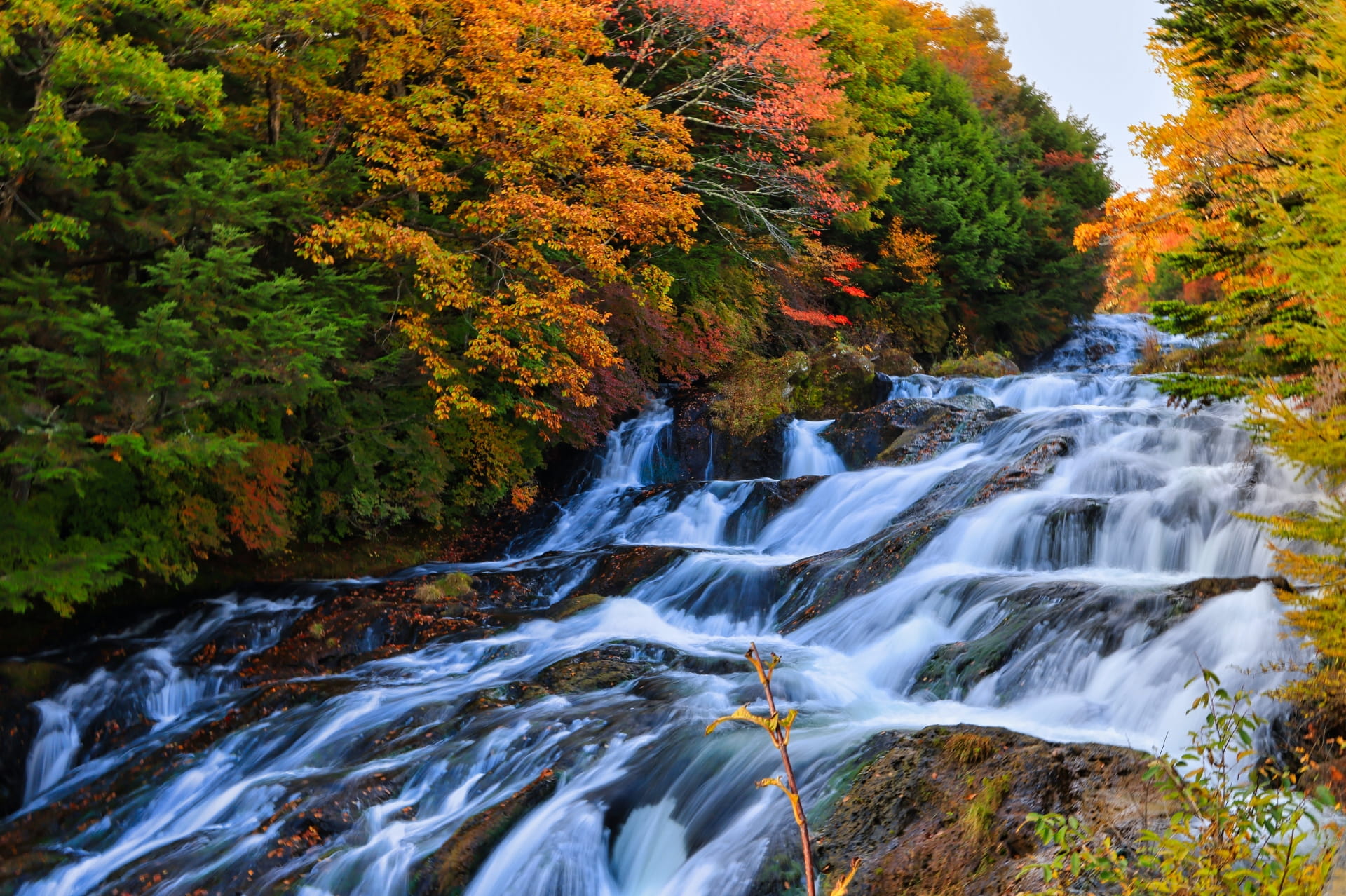
Located slightly beyond Lake Chuzenji, Ryuzu Falls (竜頭の滝) is smaller than Kegon Falls but arguably more photogenic at close range. The waterfall splits around a large rock, creating parallel streams that resemble a dragon’s head, which is the meaning of the name.
A walking path follows the flow of the water upstream, continuing beyond the main viewing platform, which leads into quieter walking paths that follow the river, allowing you to see the falls from multiple angles. This is also one of the most popular autumn foliage spots in the region, where the contrast between red leaves and white water is particularly striking.
Tip: Visit early in the morning during autumn. This is one of the first places to become crowded once buses start arriving. Also, walk 10–15 minutes past the café area. The crowds thin out quickly, and the scenery improves.
| Access |
About 1h bus from Nikko Station |
|---|---|
| Official Website |
https://www.nikko-kankou.org/spot/6 |
Kanmangafuchi Abyss


Closer to the town centre but often overlooked, Kanmangafuchi Abyss offers a completely different type of landscape. A walking trail runs alongside a lava-formed gorge, lined with a series of stone statues (Jizo) that gradually disappear into the distance.
The setting is quieter and more introspective than the main shrine area or Okunikko. It’s also one of the few places in Nikko where you can walk for an extended period without encountering large groups.
Tip: Combine this with your return from the shrine area rather than treating it as a separate trip, it’s geographically closer to town than the Okunikko sites.
| Access |
30-min bus from Tobu-Nikko Station |
|---|---|
| Official Website |
http://www.nikko-kankou.org/spot/25/ |
Beyond the Classics
Once you move past the standard circuit around Nikko, the pace changes noticeably. Fewer tour groups, longer stops between bus drops, and places that require a bit more effort to reach. These are not “hidden gems” in the overused sense, as most are well documented, but they tend to be skipped simply because they sit outside the default one-day route.
Edo Wonderland Nikko Edomura
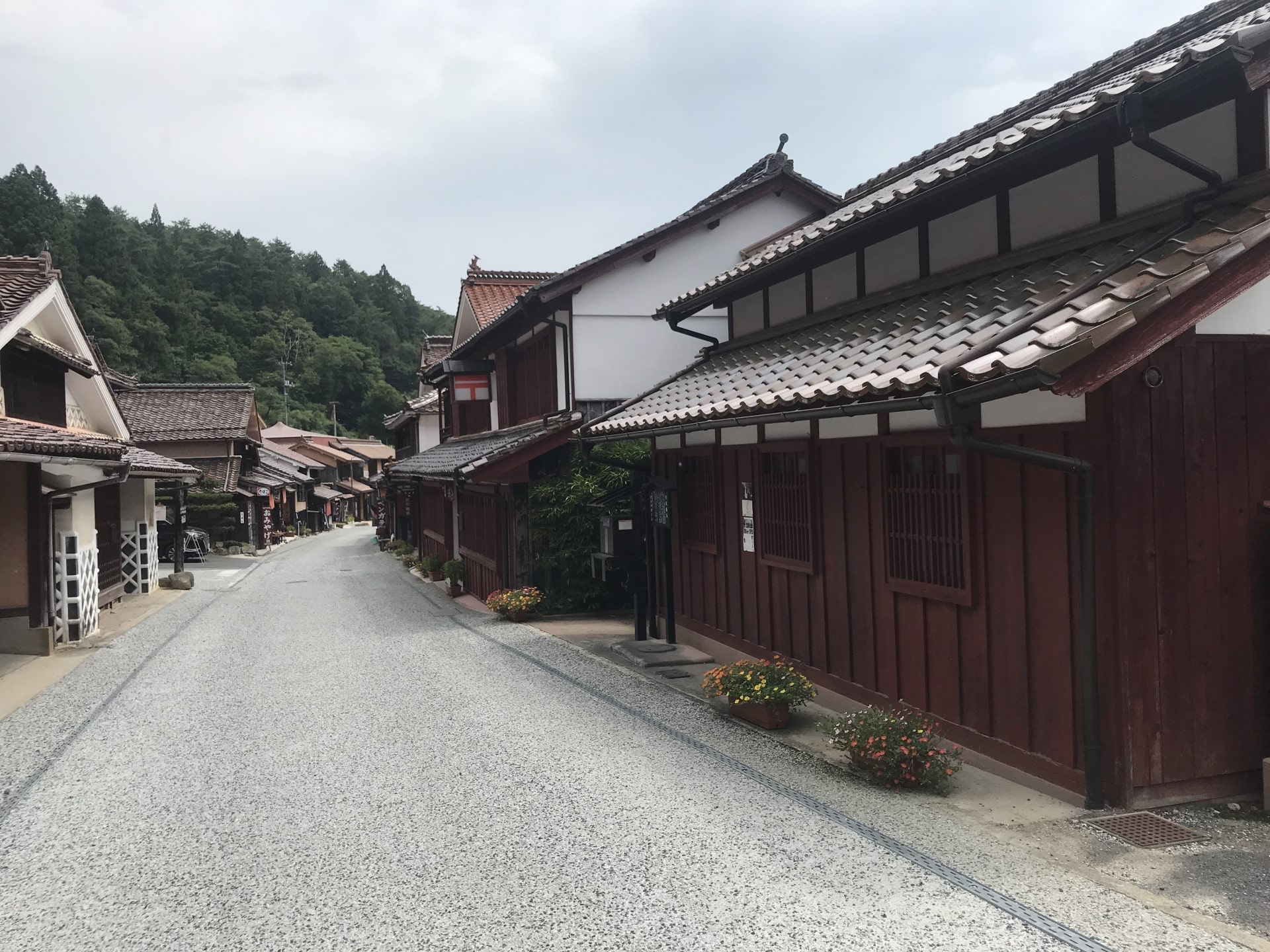
Edo Wonderland Nikko Edomura (日光江戸村) is an outlier in Nikko’s lineup. Instead of temples or waterfalls, this is a full-scale recreation of an Edo-period town, complete with costumed staff, live performances, and interactive experiences that include cosplay options for an extra fee. It’s unapologetically theatrical, but also unusually detailed with streets, buildings, and social roles that are all designed to reflect the structure of the period.
- Admission: ~¥5,800 (adult)
- Hours: Typically 9:00–17:00 (closed some Wednesdays)
- Access: ~20 min bus from Kinugawa Onsen Station
Tip: This only makes sense if you dedicate at least half a day. Trying to squeeze it into a standard Nikko day trip alongside the shrine area is unrealistic.
<<Book your Edo Wonderland tickets here!>>
| Access |
20-min bus from Kinugawa Onsen Station |
|---|---|
| Business Hours |
9 AM–5 PM (March 20th to November) 9:30 AM-4 PM (December to March 19th) - Closed most Wednesdays and during part of the winter, check the official website for details |
| Price |
5,800 yen (cosplay options for an additional fee depending on the costume) |
| Official Website |
https://edowonderland.net/ |
Kinugawa Onsen
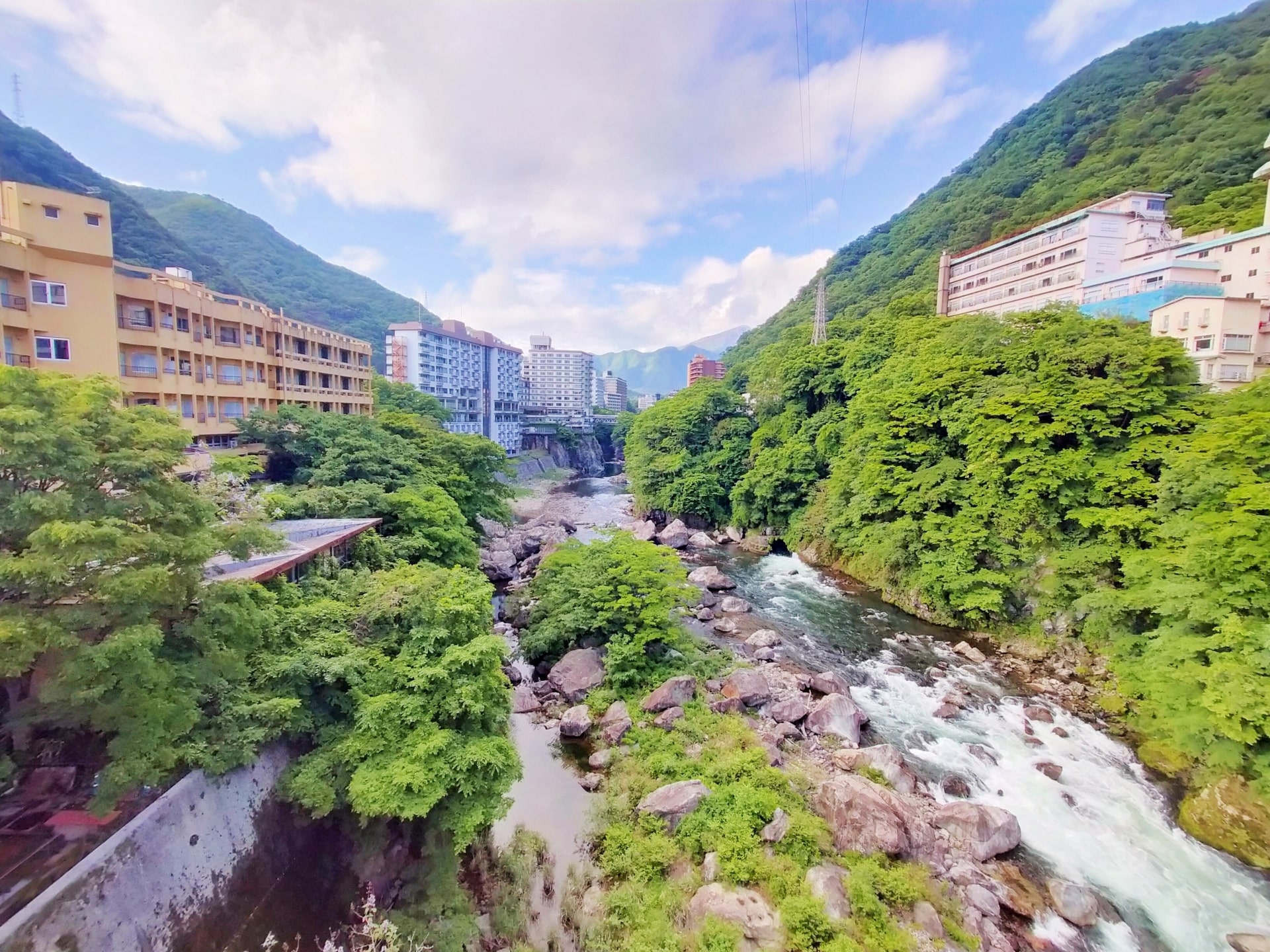
Located along the scenic Kinugawa River, Kinugawa Onsen (鬼怒川温泉) used to be one of Japan’s most famous hot spring resorts. Post-bubble times have not been too kind to this area, but with a history stretching back to the Edo period, it has long been a popular destination for relaxation and healing.
The town is dotted with traditional ryokan inns, many of which offer open-air baths with stunning views of the river. The hot spring waters here are known for their soothing properties, and it’s the perfect spot to unwind after a day of exploring Nikko’s trails.
Senjogahara Marshland (Okunikko)
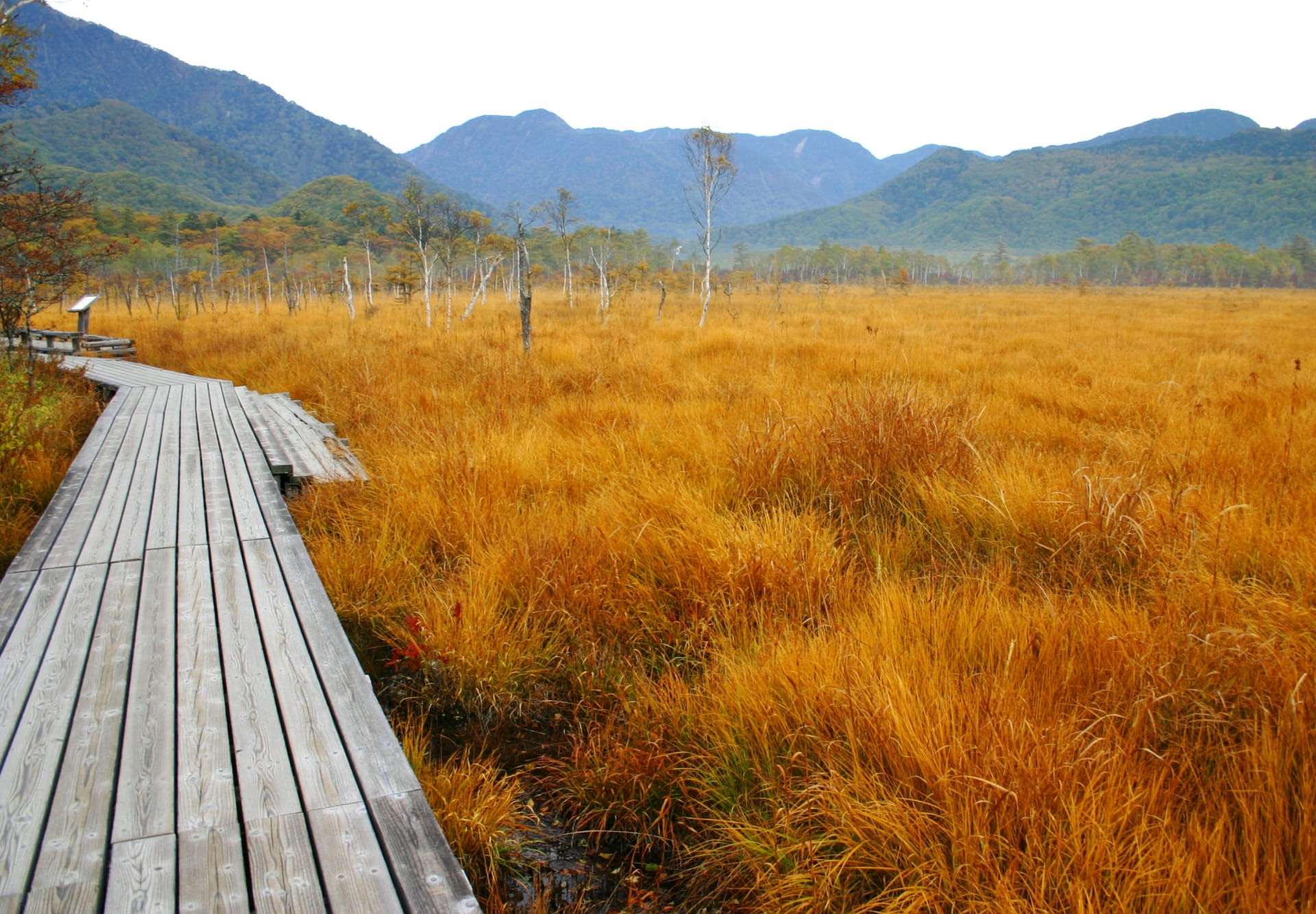
Senjogahara Marshland (戦場ヶ原) sits further into Okunikko, beyond Lake Chuzenji, and feels completely disconnected from the rest of the itinerary. The terrain opens into a wide highland marsh with wooden boardwalks cutting across grassland and wetlands, framed by surrounding mountains.
This is one of the best hiking areas in Nikko for visitors who want something accessible but still immersive. Trails are mostly flat and clearly marked, making it possible to walk for one to three hours without technical difficulty.
Tip: Weather changes quickly here due to elevation (around 1,400m). Bring a light layer even in summer.
| Access |
70–80 min bus from Nikko Station |
|---|---|
| Official Website |
http://www.nikkoyumoto-vc.com/hiking/ |
Yumoto Onsen
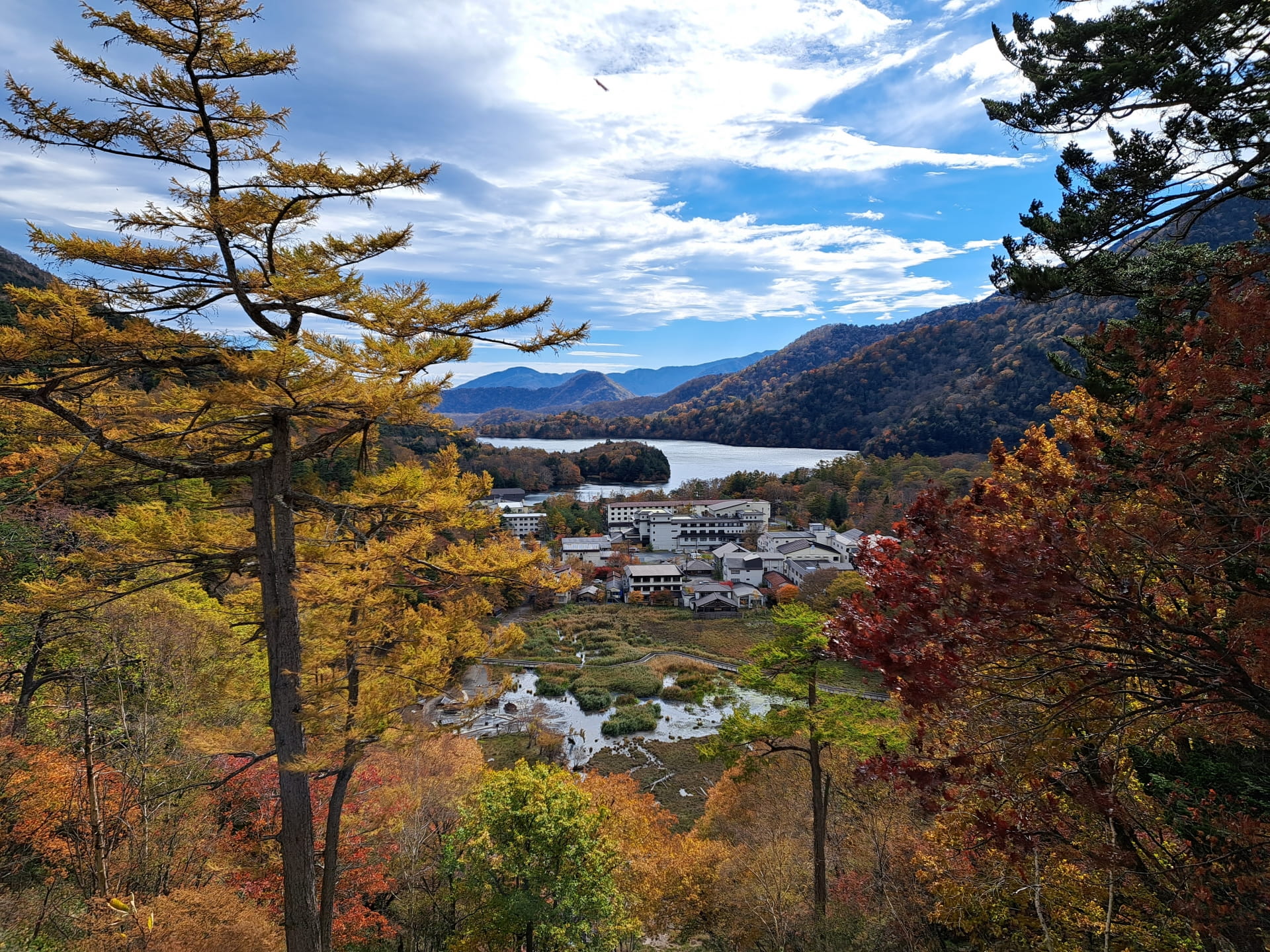
At the northern end of the Okunikko area, on the northern shores of Lake Yunoko, Yumoto Onsen (奥日光湯元温泉) is where the route effectively ends. Local lore says that the hot spring was discovered by the monk Shodo Shonin over 1,200 years ago. This small hot spring town developed around milky, sulfur-rich waters sourced from nearby Mount Shirane, and it remains one of the quieter overnight options in the region.
Unlike larger onsen towns, Yumoto is low-key, with no major shopping streets, just ryokan, a lake, and walking paths. That simplicity is part of the appeal, especially after a day spent moving between crowded sites. The area is especially popular during the winter months when the landscape is blanketed in snow, and soaking in an open-air bath becomes an even more serene experience.
Tip: If you stay overnight, early morning walks around Lake Yunoko are worth the time, as visibility is often clearer before buses arrive.
| Access |
90-min bus from Nikko Station |
|---|---|
| Price |
Day-use baths ~¥700–¥1,500 depending on facility |
| Official Website |
http://www.nikkoyumoto-vc.com/ |
Ashio Copper Mine
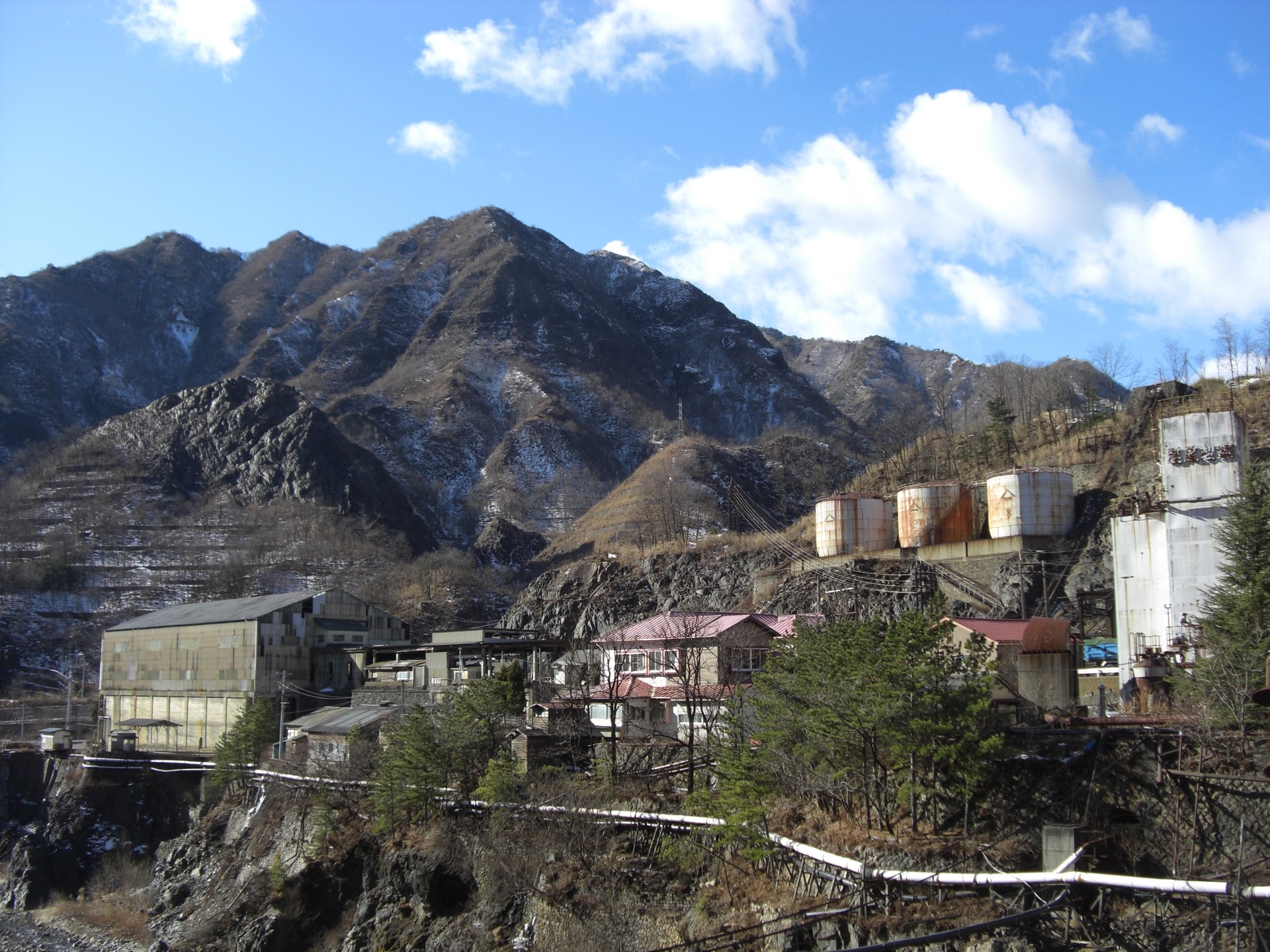
The Ashio Copper Mine (足尾銅山) is a historical site located west of Nikko. It played a significant role in Japan’s industrial revolution, operating for over 400 years. Visitors can explore the mine through a trolley tour, learning about the harsh conditions faced by workers and the environmental impact of the mining operation. The mine also features displays about the restoration efforts that have taken place since its closure in 1973.
| Access |
30-min drive from Nikko Station |
|---|---|
| Official Website |
https://www.city.nikko.lg.jp/soshiki/6/1027/4/1826.html |
When to Visit Nikko
Timing a trip to Nikko is less about picking a “good” season and more about understanding how the landscape changes across the year—and how that affects crowds, transport, and visibility. The same locations can feel completely different depending on the month, sometimes to the point where it feels like a different destination.
Autumn (October – early November): Peak season, peak pressure
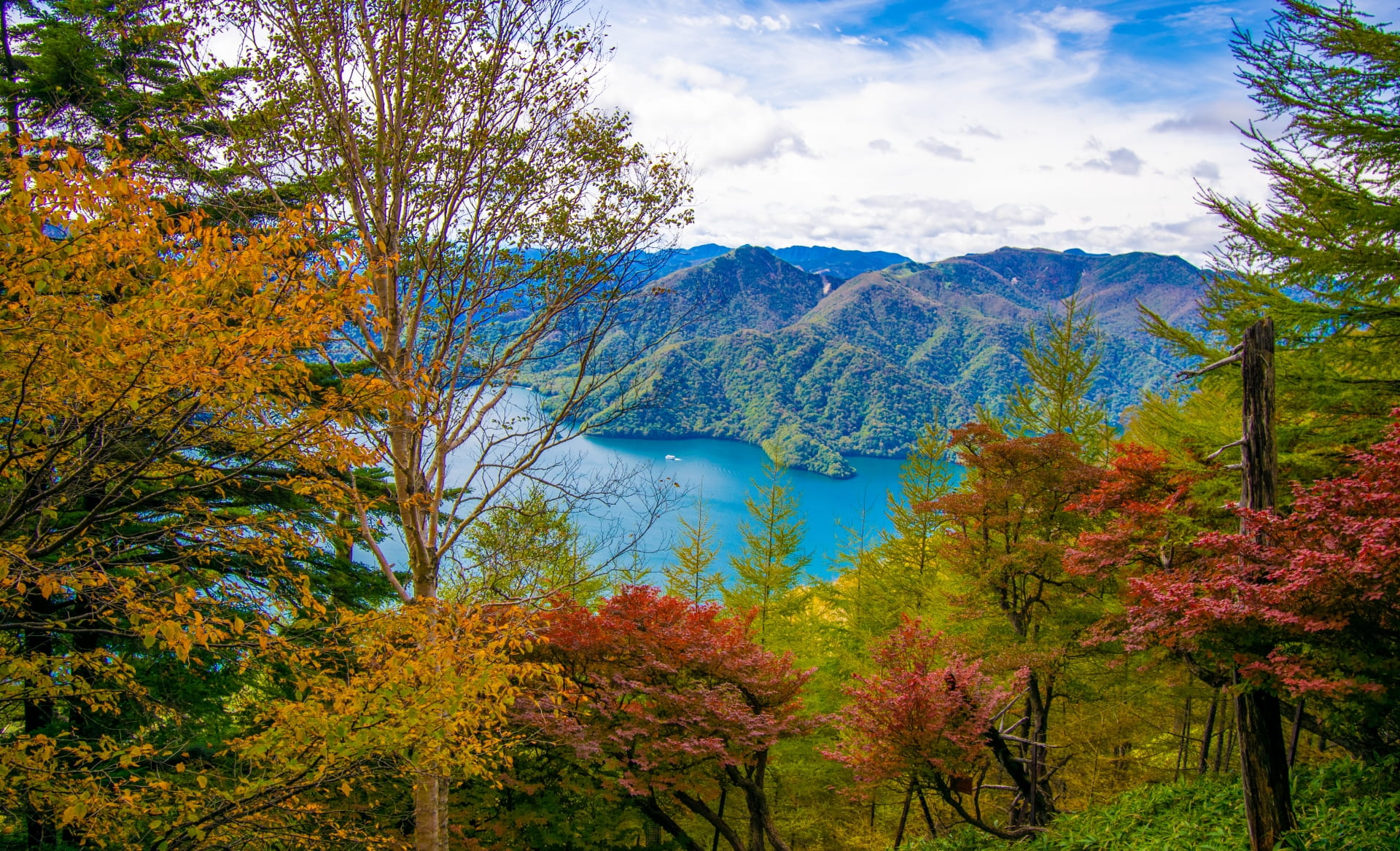
If you’ve seen photos of Nikko online, there’s a strong chance they were taken in autumn. The mountains around Lake Chuzenji and along Irohazaka Road turn red and gold, and places like Kegon Falls are framed by dense foliage.
The trade-off is predictable: this is the busiest period of the year. Traffic on the Irohazaka curves can slow to a crawl, and bus wait times increase significantly. Peak foliage typically starts in Okunikko (higher elevation) in early October and moves down toward the shrine area by late October to early November.
What to expect:
- Heavy congestion on roads and buses
- Early sell-out of accommodation
- Strong visual payoff if timed correctly
Tip: Start as early as possible and move uphill first (toward Okunikko), then work your way back down.
Spring (April – May): Later cherry blossoms, lighter crowds
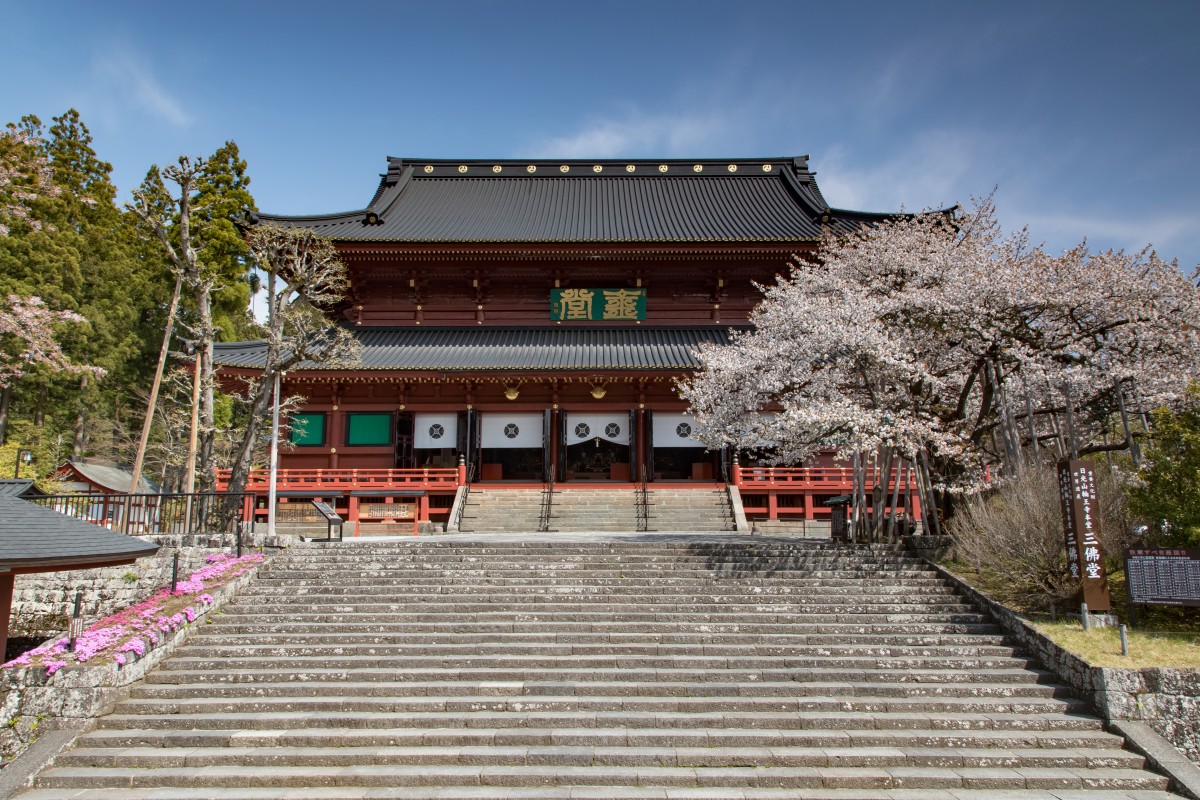
Spring arrives later in Nikko than in Tokyo due to elevation differences. Cherry blossoms usually bloom here in mid to late April, particularly around the shrine and temple complex.
The atmosphere is calmer than in autumn, and while the colours are less dramatic overall, the combination of fresh greenery and milder weather makes this one of the easiest times to explore on foot.
What to expect:
- Moderate visitor numbers
- Comfortable temperatures for walking
- Cherry blossoms around historic sites
Tip: Check bloom forecasts before planning—timing varies year to year depending on temperature fluctuations.
Summer (June – August): Green landscapes and escape from the heat
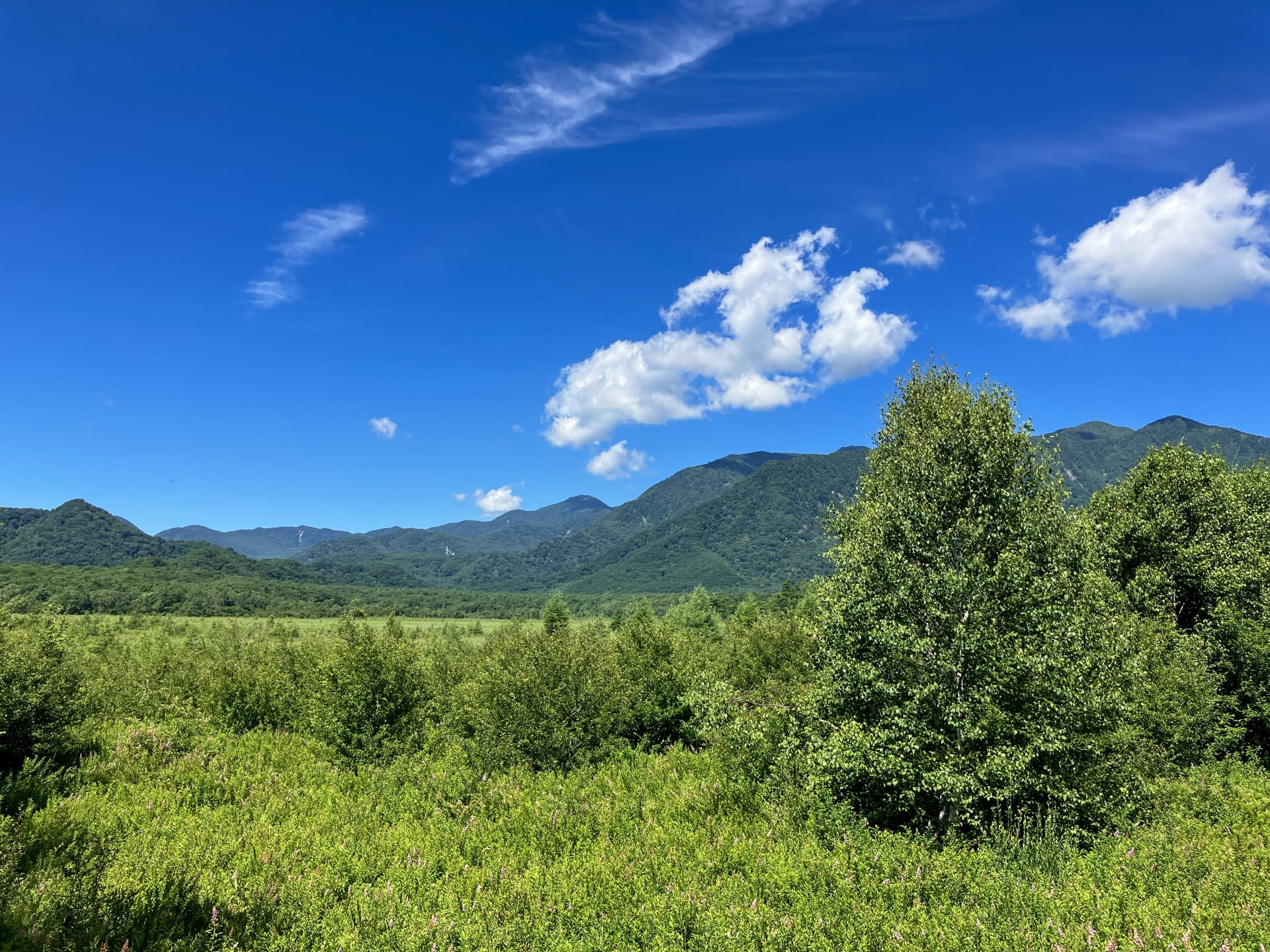
Summer in Nikko is often underestimated. While much of Japan becomes hot and humid, Okunikko, particularly areas like Senjogahara, sits at a higher elevation, allowing for a slightly cooler climate.
This is the best time for hiking and longer outdoor walks, especially in the marshlands and around the lakes. The downside is the rainy season (typically June to mid-July), which can affect visibility and trail conditions.
What to expect:
- Lush green scenery
- Fewer international tourists compared to autumn
- Occasional rain and humidity
Tip: Aim for early mornings for clearer skies—afternoon cloud cover is common in mountain areas.
Winter (December – February): Quiet, cold, and visually distinct
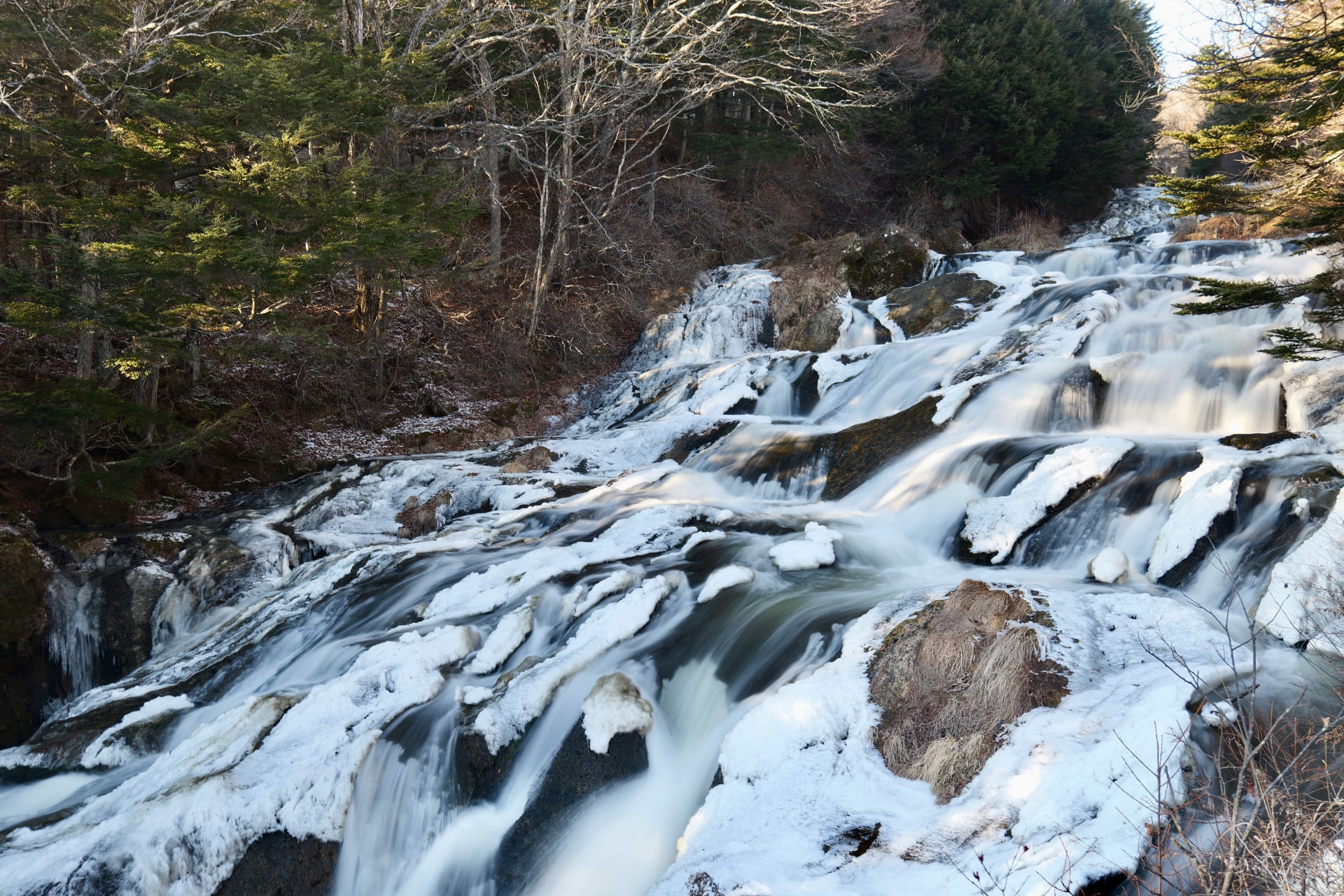
Winter strips Nikko back to its essentials. Snow covers the shrine grounds, ice forms along riverbanks, Kegon Falls and Ryuzu Falls can partially freeze, creating a very different kind of scenery.
Visitor numbers drop sharply, which makes this the least crowded time to explore the shrine complex. However, transport becomes less frequent, and some facilities in Okunikko may close or reduce hours.
What to expect:
- Minimal crowds
- Cold temperatures, often below freezing
- Limited access to some outdoor areas
Tip: Focus on the shrine and temple area unless you are prepared for winter conditions in the mountains.
So when should you go?
Each season brings a different balance between scenery and logistics. Make your pick depending on your convenience:
- Best scenery: Autumn
- Best balance: Spring
- Best for hiking: Summer
- Best for quiet visits: Winter
There isn’t a single “correct” answer, just different trade-offs. The key is to plan around what matters most to you: colour, comfort, or crowd levels.
Practical Tips for Visiting Nikko
A trip to Nikko is rarely limited by a lack of things to see. The real constraint is logistics. Distances are longer than they look, transport is centralized around a few bus lines, and crowd patterns can derail even a well-planned day. This section is where most guides fall apart—and where small decisions make a disproportionate difference.
Day trip or overnight?
Nikko is marketed heavily as a day trip from Tokyo, and technically, that’s accurate. The main shrine area around Nikko Toshogu can be covered in half a day.
But once you include natural sites like Kegon Falls or Lake Chuzenji, the pace changes. Travel time between locations starts to eat into the day, especially during peak seasons when buses are delayed.
- Day trip works if: you focus on the shrine/temple complex + 1–2 nearby spots
- Overnight is better if: you want to reach Okunikko (Ryuzu Falls, Senjogahara, Yumoto)
Reality check: Trying to combine everything into a single day usually results in spending more time waiting than visiting.
Getting around: bus vs car
Public transport in Nikko is functional but not flexible. Most visitors rely on buses departing from Tobu-Nikko or JR Nikko stations, with routes extending toward Okunikko.
- Buses to Lake Chuzenji and beyond can take 40–90 minutes one way, depending on traffic
- During autumn, delays on Irohazaka Road are common
A rental car changes the equation completely. Travel becomes faster and more predictable, especially for reaching less frequent stops like Kanmangafuchi Abyss.
- Bus: cheaper, no driving stress, but time-consuming
- Car: faster, more flexible, but requires confidence on mountain roads
Tip: If visiting during peak foliage season, a car may save hours, but expect traffic regardless.
The Nikko Pass: worth it?
For international visitors, the Nikko Pass can simplify both cost and planning. It covers round-trip travel from Asakusa via Tobu Railway and includes unlimited bus usage within designated areas.
There are two main versions:
- World Heritage Area Pass: covers the shrine area
- All Area Pass: extends to Okunikko (Lake Chuzenji, Yumoto, etc.)
When it makes sense:
- You’re using Tobu Railway
- You plan to take multiple buses in one day
When it doesn’t:
- You’re traveling entirely on a JR Pass route
- You’re renting a car
Start early, or accept the consequences
This is not optional advice dressed up as a suggestion.
The first buses toward Kegon Falls and Lake Chuzenji leave in the early morning, and they fill quickly during peak seasons. Miss that window, and you’re competing with every late-starting group tour.
- Ideal departure from Tokyo: before 7:00
- Ideal arrival in Nikko: before 9:00
Late arrivals face:
- Longer queues
- Reduced flexibility
- Higher risk of cutting stops
Prioritize, don’t stack
Nikko punishes indecision. The layout forces you to choose between depth and breadth.
A clean structure works best:
- Morning: shrine and temple complex
- Midday onward: natural sites (Lake Chuzenji area)
Trying to alternate between zones—shrines, then waterfalls, then back again—creates unnecessary transit loops.
Tip: Treat the day as a one-directional route, not a checklist.
FAQ: Visiting Nikko
This is where the practical questions tend to land—the ones that don’t fit neatly into a narrative but matter when you’re actually planning a trip to Nikko.
Is Nikko worth a day trip from Tokyo?
Yes, but with limits.
From Tokyo, Nikko is close enough to reach in under two hours, which makes it one of the most accessible escapes from the city. The concentration of UNESCO-listed sites around Nikko Toshogu means you can see something substantial even on a tight schedule.
Where it becomes less straightforward is the natural side of Nikko. Reaching places like Kegon Falls or Lake Chuzenji requires additional travel time, and that’s where a day trip starts to feel compressed.
Bottom line:
- Worth it as a day trip for the shrine area
- Better with an overnight stay if you want the full range
How many days do you need in Nikko?
One day covers the essentials. Two days make the trip feel complete.
- 1 day: Shrine and temple complex + one major natural site
- 2 days: Full loop including Okunikko (Ryuzu Falls, Senjogahara, Yumoto Onsen)
The structure of the area—historic sites clustered low, nature spread out higher—means that adding a second day removes most of the time pressure.
What is the best way to get to Nikko?
There are two main rail approaches:
- Tobu Railway from Asakusa: Direct, no transfers, typically the simplest route
- JR route via Utsunomiya: Slightly faster on paper, covered by the Japan Rail Pass
Both routes arrive within walking distance of each other (Tobu-Nikko and JR Nikko stations), so the choice is mostly about cost and convenience.
Rule of thumb:
- No JR Pass → Tobu is usually better
- JR Pass → JR route makes more sense
When is the best time to visit Nikko?
It depends on what you care about most:
- Autumn: Strongest visual impact (foliage), highest crowds
- Spring: Cherry blossoms and milder conditions
- Summer: Best for hiking in Okunikko
- Winter: Quietest, with snow-covered scenery
There isn’t a universal “best” season—each comes with trade-offs between scenery and congestion.
Can you use the JR Pass in Nikko?
Partially.
The Japan Rail Pass covers:
- The Shinkansen from Tokyo to Utsunomiya
- The JR Nikko Line to Nikko
It does not cover:
- Tobu Railway lines
- Most local buses in Nikko
This means you’ll still need to pay separately for transport within the area unless you combine it with other passes.
Is Nikko easy to navigate?
Yes, but only up to a point.
The shrine and temple area is compact and walkable. Once you head toward Lake Chuzenji and beyond, navigation depends almost entirely on bus routes.
Signage is clear, and major stops are well marked, but timing becomes important. Miss a bus, and the wait can be significant—especially outside peak hours.
Nikko’s appeal comes from contrast: dense historical sites at the base, open landscapes further uphill. That contrast only works if you give each part enough time. Rushing through both in a single pass turns the day into a sequence of bus rides with short photo stops in between, so the key lies in avoiding underestimating distances and overestimating how much fits into a day. Slowing it down—even slightly—changes the experience completely.

Written by
Photographer, journalist, and avid urban cyclist, making sense of Japan since 2017. I was born in Caracas and lived for 14 years in Barcelona before moving to Tokyo. Currently working towards my goal of visiting every prefecture in Japan, I hope to share with readers the everlasting joy of discovery and the neverending urge to keep exploring.
- +0 0
-
-