Best Cherry Blossom Spots in Tohoku: Where to See Sakura After Tokyo
Missed cherry blossom season in Tokyo? You may still have perfect timing for Tohoku.

- +0 0
-

-


Because Japan’s sakura front moves gradually north, the Tohoku region often reaches its best viewing period after Tokyo and other major cities farther south. In 2026, the latest forecast places Tokyo around late March, while much of Tohoku is expected to bloom from early April through late April, with some northern spots continuing into early May. That makes Tohoku one of the best regions to visit if you want to enjoy cherry blossoms after Tokyo’s peak.
Another reason Tohoku stands out is the variety of scenery. Instead of only big-city parks, you can enjoy sakura along rivers, in samurai districts, beside castle grounds, and against mountain backdrops. Many of the region’s best-known cherry blossom destinations are also accessible by Shinkansen from Tokyo, making them practical additions to a spring itinerary. JR East also highlights several of these destinations as signature spring journeys in Tohoku.
2026 Tohoku Sakura Timeline
Because Japan’s cherry blossom season moves gradually northward, the Tohoku region typically reaches peak bloom later than Tokyo.
While Tokyo usually sees full bloom in late March, southern parts of Tohoku such as Miyagi and Fukushima begin flowering in early April, followed by central areas like Iwate in mid-April. Northern destinations including Akita and Aomori often reach their peak from late April into early May.
The table below provides a general overview of how the sakura season progresses across Tohoku, helping travelers plan their visit depending on when they arrive in Japan.
| Period | Typical Bloom Area | Example Sakura Spots | Notes |
|---|---|---|---|
| Late March | Tokyo & southern Kanto | Ueno Park, Meguro River | Tokyo usually reaches full bloom in late March. Petals begin falling by early April. |
| Early April | Southern Tohoku (Miyagi, Fukushima) |
Shiroishi River Hitome Senbonzakura, Funaoka Castle Ruins Park, Hanamiyama Park | Best timing for travelers who arrive after Tokyo’s peak bloom. |
| Mid-April | Central Tohoku (Fukushima, Iwate) |
Miharu Takizakura, Nicchu Line Weeping Cherry Blossoms, Kitakami Tenshochi | One of the most balanced periods for sakura viewing across the region. |
| Late April | Northern Tohoku (Akita, Aomori, northern Iwate) |
Kakunodate Samurai District, Hirosaki Park, Koiwai Farm Ipponzakura | Late April offers some of the most famous sakura scenery in Tohoku. |
| Early May | Northernmost Tohoku | Hirosaki Park (late bloom varieties), Koiwai Farm | One of the last chances to enjoy cherry blossoms on mainland Japan. |
*Note: Sakura bloom timing varies each year depending on temperatures and weather conditions. Always check the latest bloom forecasts before traveling.
Book Your Shinkansen Tickets Online
Skip the long ticket counter lines at Tokyo Station by reserving your Shinkansen seats in advance. Japan Bullet Train is an online Shinkansen ticket service that allows you to book seats for routes to Tohoku before your trip.
After booking, you will receive a QR code by email. Simply scan the QR code at a designated ticket machine in the station to collect your Shinkansen tickets before boarding.
Routes such as Tokyo → Sendai, Koriyama, Fukushima, Kitakami, Morioka, Kakunodate, and Shin-Aomori can all be reserved online with multilingual support.
Best Cherry Blossom Spots in Tohoku
1. Shiroishi River Hitome Senbonzakura, Miyagi
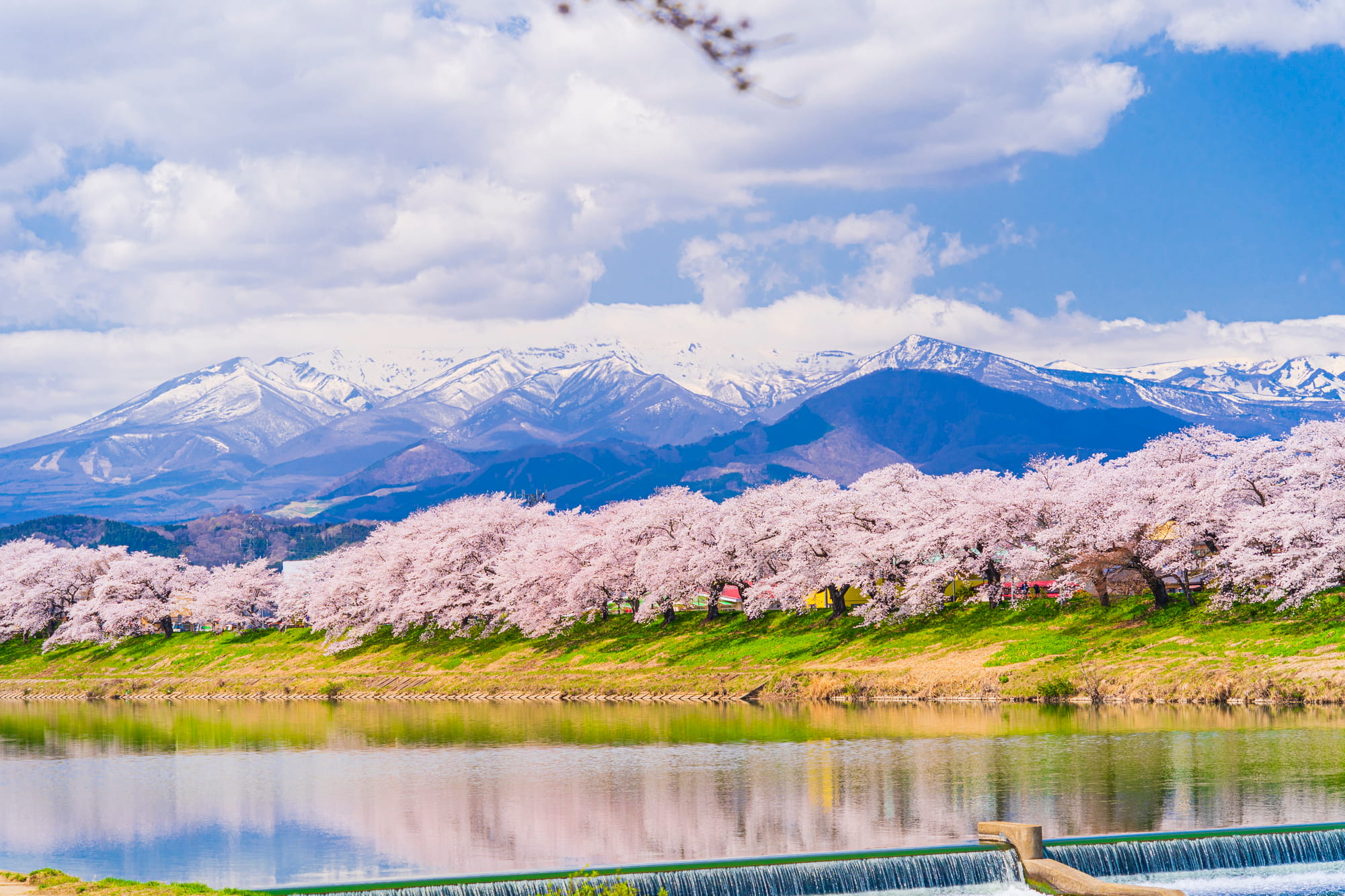
Shiroishi River Hitome Senbonzakura is one of Miyagi’s best-known cherry blossom spots. The name is often translated as “a thousand cherry trees in a single glance,” and the long riverside stretch is particularly famous for the combination of pink blossoms and the Zao mountain range in the distance. Official and regional tourism sources describe an approximately 8-kilometer stretch lined with cherry trees between the Ogawara and Funaoka area.
This is one of the best choices for travelers who want a classic hanami landscape that is easy to enjoy on foot. A stroll along the riverside is part of the appeal, and the route between Ogawara Station and Funaoka Station is especially popular.
- Best time: Early to mid-April in a typical year
- Main highlight: Long riverside rows of cherry trees with views toward the Zao mountains
- Scale: About 8 km of cherry-lined riverbank
- Admission: Free
- Access: Tokyo Station → Shiroishi-Zao Station (Tohoku Shinkansen, ~1 hr 50 min) → JR Tohoku Line to Ogawara Station (~15 min) → 3-min walk (Total: approximately 2 hours from Tokyo)
*JWM Tip: Walk the 3.5 km riverside path from Ogawara Station to Funaoka Station, then take the train one stop back. You’ll see the entire stretch without retracing your steps.
2. Funaoka Castle Ruins Park, Miyagi
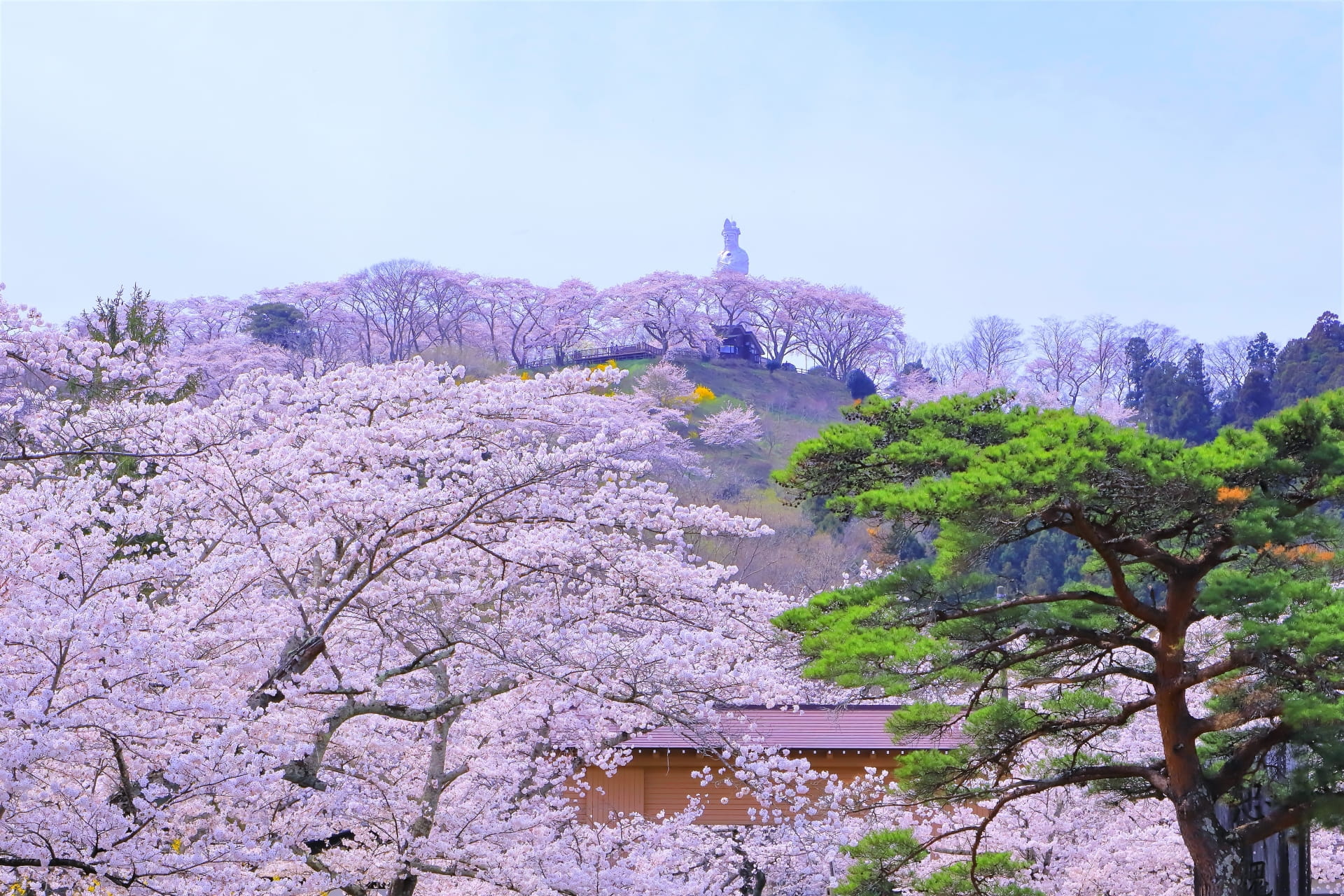
Funaoka Castle Ruins Park is often paired with the Shiroishi River blossoms, but it is also worth introducing as a destination in its own right. Located on a hill, the park offers one of the best panoramic views in the area, looking out over cherry blossoms with mountains in the background. Japan National Tourism Organization and local tourism sources describe it as a major sakura viewpoint and one of the area’s signature spring spots.
For readers planning a half-day outing, this park works especially well in combination with the riverside blossoms below. The contrast between the close-up sakura and the wider elevated view makes the experience feel more complete.
- Best time: Early to mid-April in a typical year
- Main highlight: Hilltop cherry blossom panorama with views over the surrounding area
- Trees: Around 1,300 cherry trees is commonly cited for the park area
- Admission: Free
- Access: Tokyo Station → Shiroishi-Zao Station (Tohoku Shinkansen, ~1 hr 50 min) → JR Tohoku Line to Funaoka Station (~20 min) → 15-min walk (Total: approximately 2 hours 15 minutes from Tokyo)
*JWM Tip: Combine Spots 1 and 2 into a single half-day trip. Walk the river from Ogawara to Funaoka, climb the hill, then take the train back. It’s one of the most rewarding half-day sakura experiences in all of Japan.
3. Miharu Takizakura, Fukushima
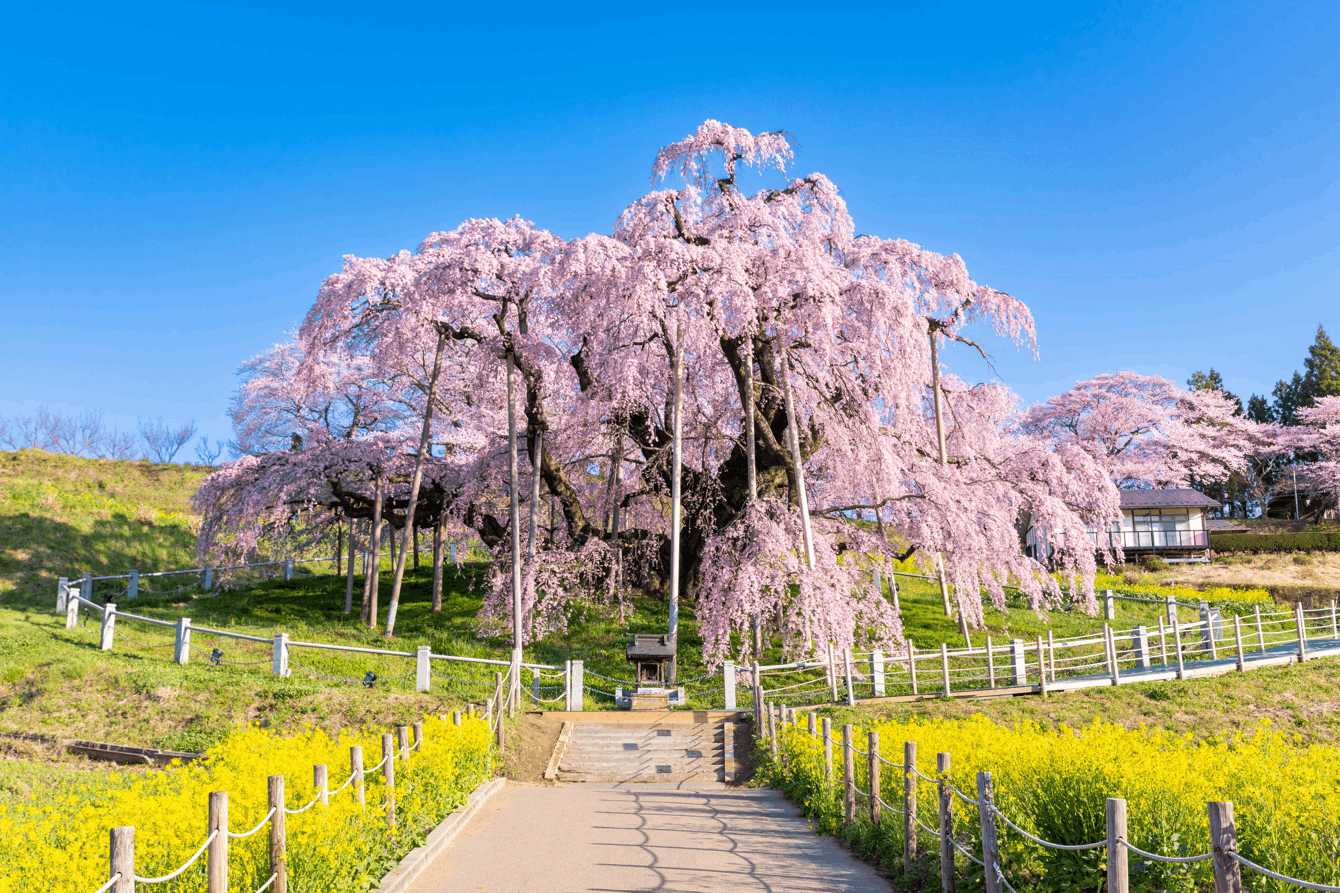
Miharu Takizakura is one of Japan’s most famous cherry trees and one of the country’s “Three Great Cherry Trees.” It is a single weeping cherry tree estimated to be over 1,000 years old, and Fukushima tourism describes it as a nationally recognized natural monument. The shape of its branches gives it the appearance of a cascading waterfall, which is where the name Takizakura comes from.
This destination is very different from a park filled with hundreds of trees. Its appeal lies in its individuality and presence. For many travelers, it is less about strolling and more about witnessing a singular natural monument with deep cultural value.
- Best time: Mid to late April
- Main highlight: A giant weeping cherry tree estimated to be over 1,000 years old
- Type: Single monumental tree rather than a large park
- Admission: Seasonal admission is charged during bloom season; check the latest official information before visiting
- Access: Tokyo Station → Koriyama Station (Tohoku Shinkansen, ~80 min) → JR Ban’etsu East Line to Miharu Station (~15 min) → temporary shuttle bus “Takizakura-go” (~20 min) → Miharu Takizakura (approximately 2 hours from Tokyo)
*Shuttle Bus Note: During the cherry blossom viewing season, a temporary shuttle bus called “Takizakura-go” (滝桜号) operates between Miharu Station and Miharu Takizakura. The operating schedule for 2026 has not yet been announced, but the service typically runs during peak bloom. As a reference, the shuttle operated from April 5 to April 13 in 2025. Visitors are advised to check the official tourism website for updated information closer to the season.
4. Hanamiyama Park, Fukushima
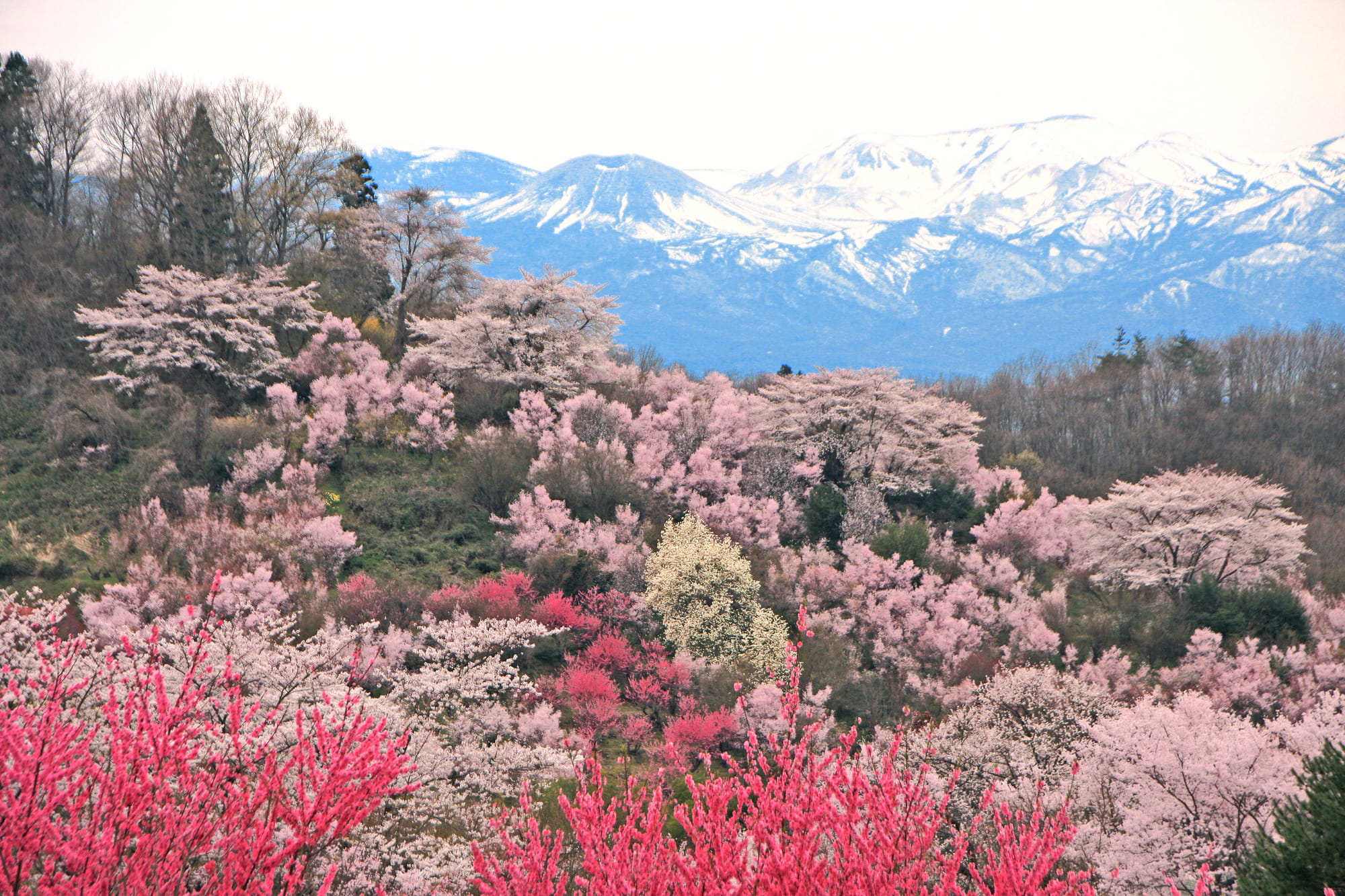
Hanamiyama Park is one of Fukushima’s most beloved spring landscapes. Rather than presenting only cherry blossoms, it offers a layered hillside of seasonal flowers and flowering trees. Official tourism sources describe it as a privately owned field of flowering and ornamental trees, with cherry blossoms, plum blossoms, magnolia, forsythia, and other flowers appearing together.
Because of this variety, Hanamiyama feels different from a typical urban sakura park. It is ideal for travelers who want a broad spring scene rather than a single-type blossom display.
- Best time: Early to mid-April
- Main highlight: Multi-layered spring flowers and blossoms across a scenic hillside
- Atmosphere: More of a walking and viewing landscape than a standard city park
- Admission: Free
- Access: Tokyo Station → Fukushima Station (Tohoku Shinkansen, ~90 min) → temporary shuttle bus “Hanamiyama-go” (~15 min) → Hanamiyama Park (Total travel time: under 2 hours from Tokyo)
*Shuttle Bus Note: A seasonal shuttle bus called “Hanamiyama-go” (花見山号) operates between Fukushima Station and Hanamiyama Park during the flower viewing season.
For 2026, the shuttle bus is scheduled to run from March 28 to April 19, operating daily from 7:00 AM to 5:00 PM.
5. Nicchu Line Weeping Cherry Blossoms, Fukushima
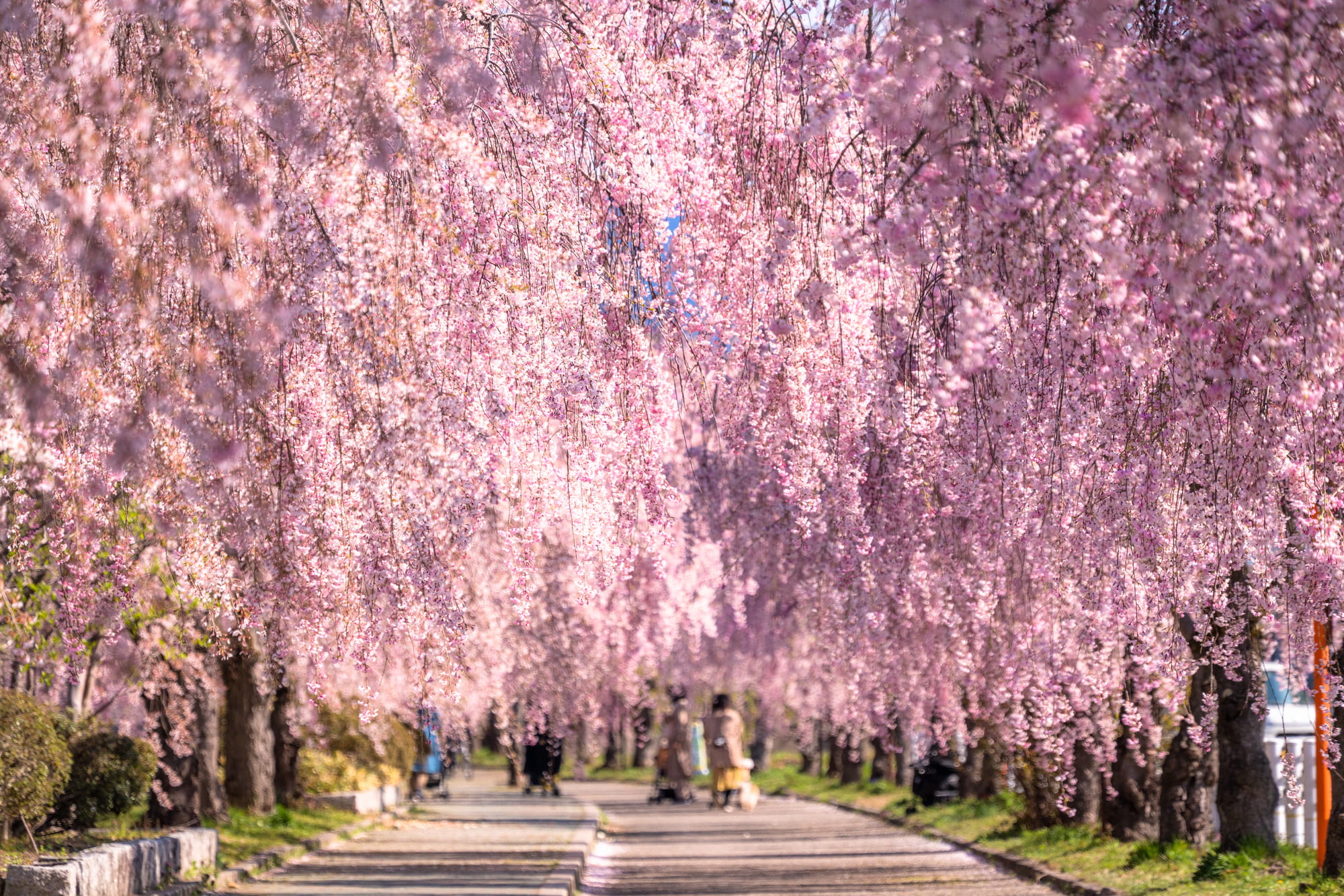
In Kitakata City, part of the former Nicchu railway line has been transformed into a promenade lined with about 1,000 weeping cherry trees over roughly 3 kilometers. Tourism sources describe it as one of Japan’s major weeping-cherry promenades, and the former railway setting gives it a nostalgic feel.
This is one of the best sakura spots in Tohoku for readers who enjoy walking. It is also easy to pair with local food culture, especially Kitakata ramen, which makes it appealing as a full-day excursion.
- Best time: Mid to late April, sometimes into late April or early May depending on the year
- Main highlight: A 3 km promenade lined with about 1,000 weeping cherry trees
- Atmosphere: Former railway route with a nostalgic local feel
- Admission: Free
- Access: Tokyo Station → Koriyama Station (Tohoku Shinkansen, ~80 min) → JR Ban’etsu West Line to Kitakata Station (~90 min) → 5-minute walk (Total: approximately 3 hours from Tokyo)
*JWM Tip: Kitakata Ramen is one of Japan’s “Top 3 Ramen” styles. Most shops open early — locals eat ramen for breakfast here. Try “Asa-ra” (morning ramen) at one of the shops near the station before your walk.
6. Kitakami Tenshochi, Iwate
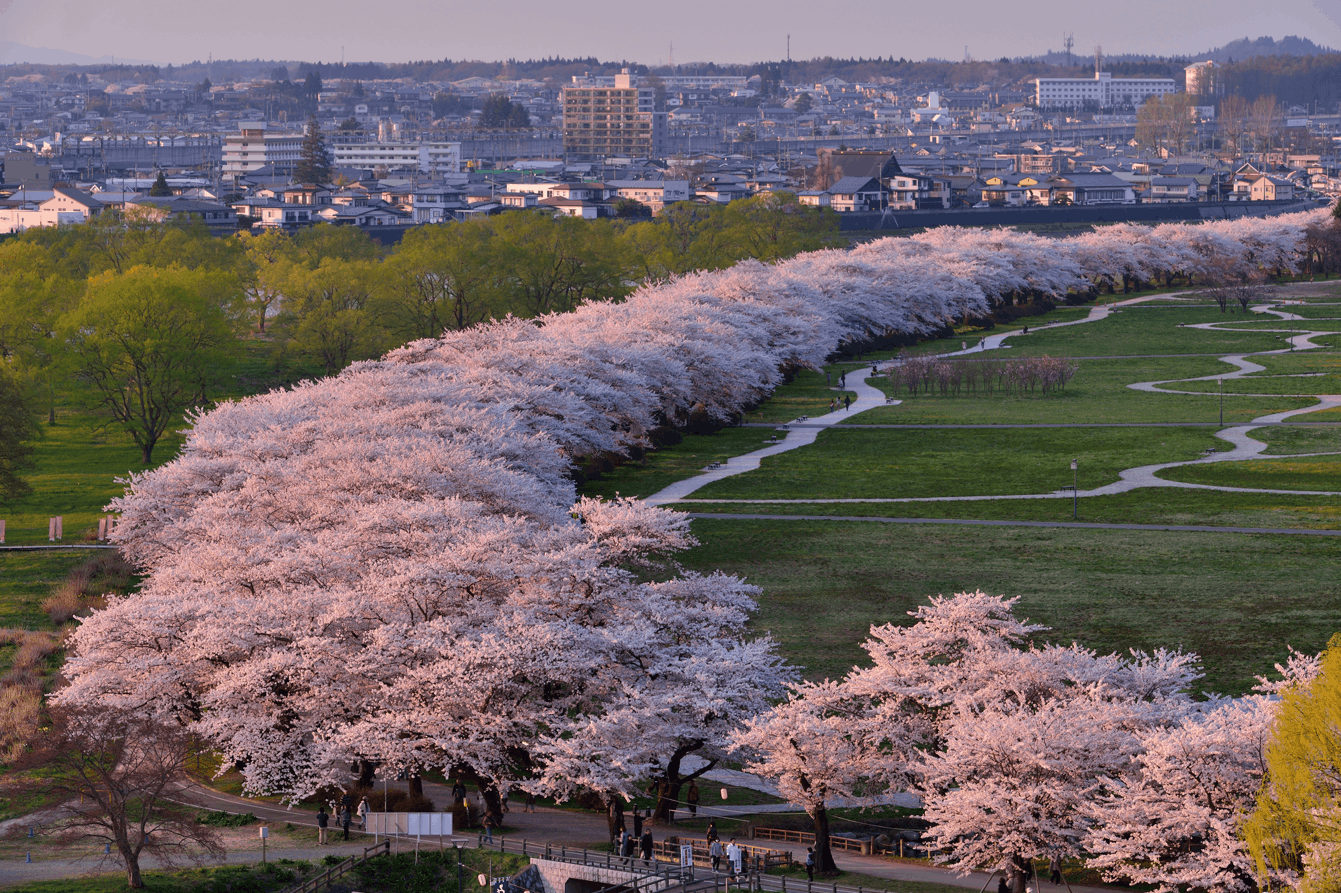
Kitakami Tenshochi is one of the most famous cherry blossom destinations in Tohoku and is often counted among the region’s top three sakura sites. Official city information describes a 2-kilometer cherry-lined path, approximately 10,000 trees, and more than 150 varieties across the wider park area. The festival period is officially presented as running from April 15 to May 5.
This is one of the strongest choices for travelers looking for scale and festival atmosphere. The combination of river scenery, large numbers of trees, and seasonal events makes it one of the most iconic spring destinations in the region.
- Best time: Mid to late April in many years
- Main highlight: 2 km cherry blossom avenue along the Kitakami River
- Scale: About 10,000 trees across 150+ varieties
- Festival: April 15 to May 5
- Access: Tokyo Station → Kitakami Station (Tohoku Shinkansen, ~2 hrs 30 min) → 20-minute walk or seasonal shuttle bus/taxi to Kitakami Tenshochi
*Shuttle Bus Note: During the Kitakami Sakura Festival, temporary shuttle buses typically operate between Kitakami Station and Kitakami Tenshochi, especially on busy weekends. The 2026 operating schedule has not yet been announced.
As a reference, in 2025 the shuttle buses operated on April 12–13 and April 19–20. Updated information is usually published in early April by the Kitakami Tourism and Convention Association.
7. Kakunodate Samurai District, Akita
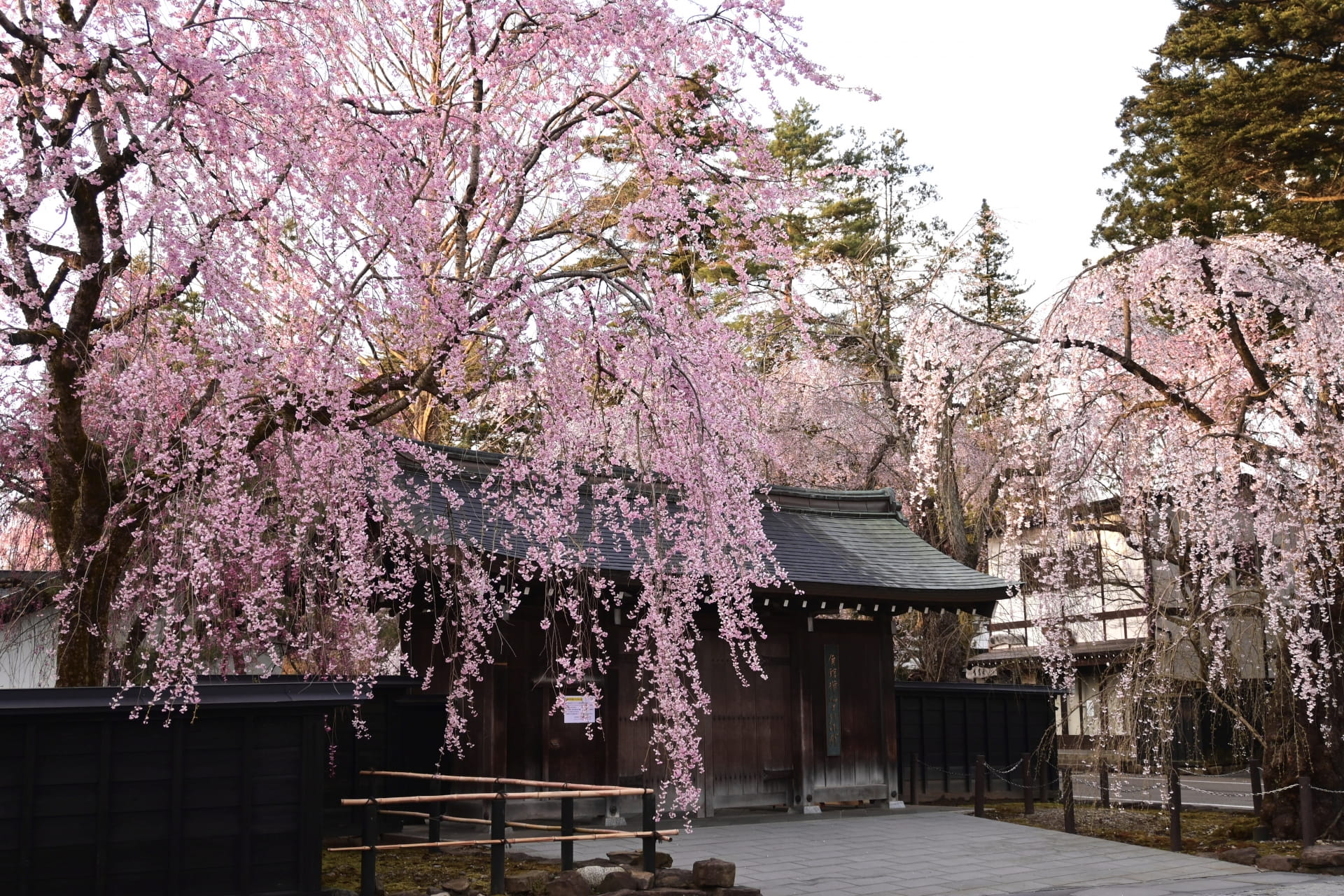
Kakunodate is one of Tohoku’s most atmospheric cherry blossom destinations. The preserved samurai district is famous for its elegant weeping cherry trees, and the nearby Hinokinai River embankment adds another major blossom scene. Official tourism sources list the Kakunodate Cherry Blossom Festival from April 15 to May 5, while also noting that details can vary depending on bloom conditions.
This is one of the best places in Tohoku to experience cherry blossoms together with traditional architecture. The visual contrast between dark samurai walls and pale pink blossoms is what makes Kakunodate especially memorable.
- Best time: Mid to late April, often continuing into early May
- Main highlight: Weeping cherry trees in the samurai district and the Hinokinai River embankment
- Atmosphere: Historic townscape and classic Japanese spring scenery
- Festival: April 15 to May 5, with details subject to bloom conditions
- Access: Tokyo Station → Kakunodate Station (Akita Shinkansen “Komachi,” ~3 hrs) → 20-min walk to Samurai District
8. Koiwai Farm’s Lone Cherry Tree, Iwate
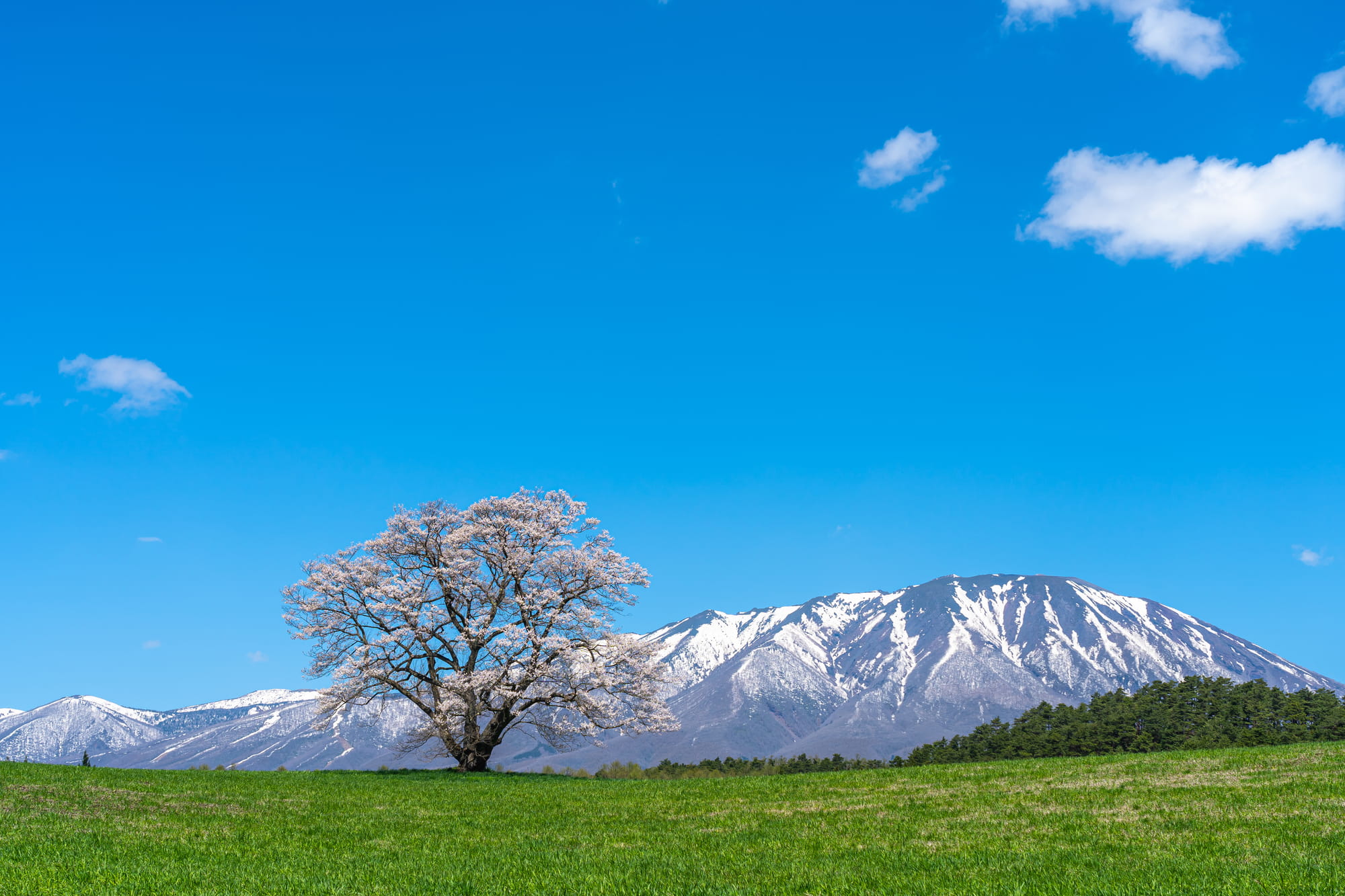
Koiwai Farm’s lone cherry tree is one of Tohoku’s most photogenic late-season sakura scenes. Official sources describe it as a solitary Edohigan cherry tree standing in open pasture, with Mt. Iwate often visible behind it. The bloom period is usually late April to early May, though weather can shift the schedule somewhat.
Unlike festival-style destinations, this spot is about simplicity and landscape. It is especially attractive for readers who want countryside scenery and photography rather than a dense urban hanami atmosphere.
- Best time: Late April to early May
- Main highlight: Solitary cherry tree with Mt. Iwate as a scenic backdrop
- Atmosphere: Quiet rural landscape, popular for photography
- Admission: Viewing is generally free; check local guidance before visiting
- Access: Tokyo Station → Morioka Station (Tohoku Shinkansen, ~2 hrs 15 min) → bus to Koiwai Farm Makibaen (~35 min) → onward travel to the lone cherry tree area
*Bus Note: Shuttle bus information for the Koiwai Farm Ipponzakura viewing season in 2026 has not yet been announced.
Normally, visitors take the Iwate Kenkotsu bus from Morioka Station bound for Koiwai Farm Makibaen, which takes about 35 minutes.
From Makibaen, visitors can reach the lone cherry tree by walking or by seasonal shuttle bus if one is operated. If special shuttle services are arranged during peak bloom, details are usually announced between late March and early April on the Koiwai Farm website or Iwate Kenkotsu transportation website.
*JWM Tip: The tree is on private farmland and viewable from the road. Early morning light is best for photography. Combine this with a visit to Koiwai Farm’s main area, which offers dairy tastings, horseback riding, and farm-fresh ice cream.
9. Hirosaki Park, Aomori
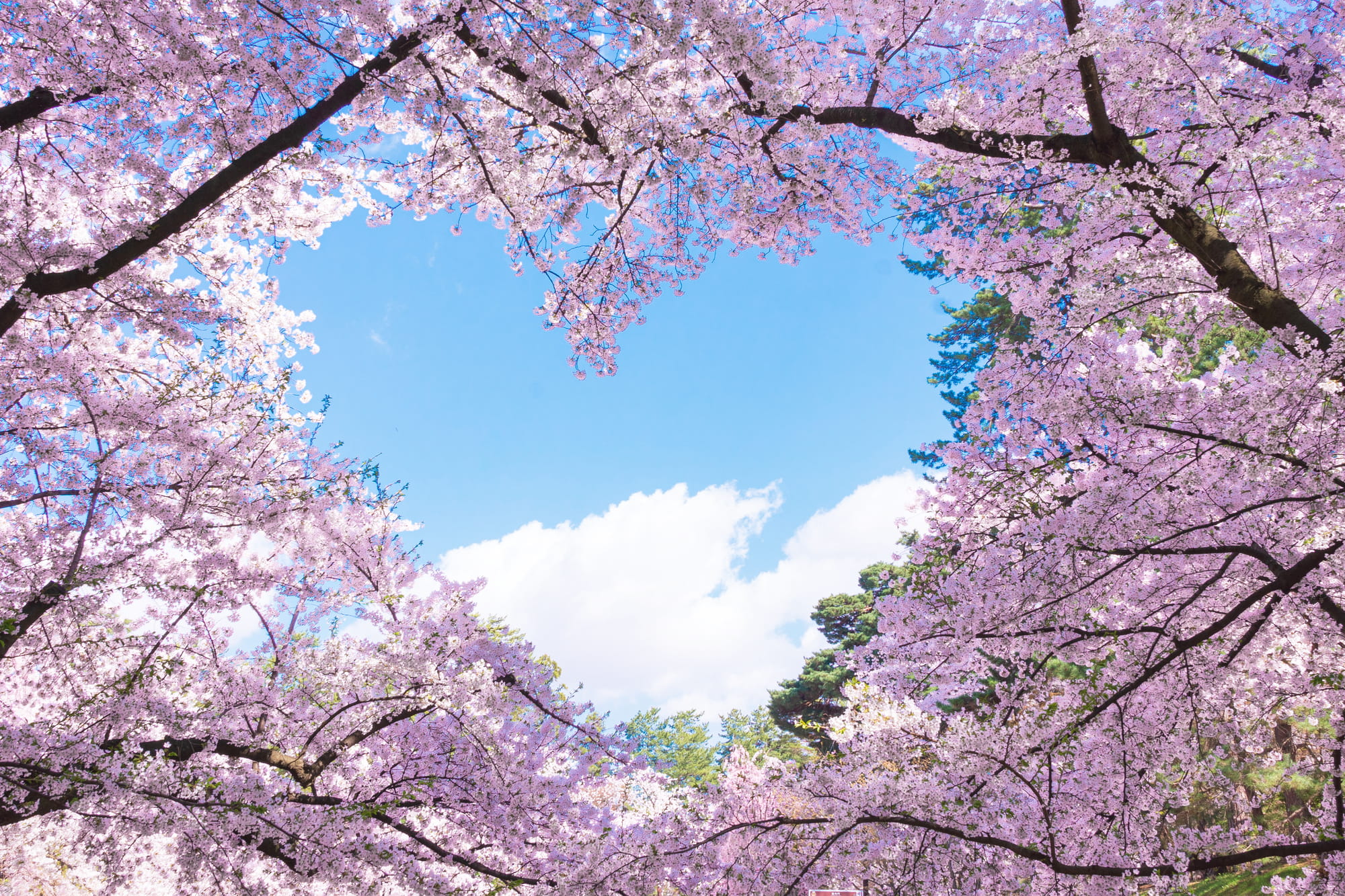
Hirosaki Park is widely regarded as one of Japan’s greatest cherry blossom destinations. Official tourism sources state that the park is home to approximately 2,600 cherry trees across 52 varieties, and it is famous for its dense blossoms, beautifully maintained grounds, and the moat scenes known as hanaikada, where fallen petals float across the water.
For travelers visiting Tohoku in late April, Hirosaki is one of the strongest choices. It is also one of the most iconic “finale” destinations of the sakura season in mainland Japan. Official information further notes that the castle keep is scheduled to be moved back to its original position beginning in July 2026, so travelers visiting in spring 2026 may want to confirm the latest visitor information in advance.
- Best time: Late April to early May in many years
- Main highlight: Cherry blossoms around castle grounds and famous moat scenes with floating petals
- Scale: About 2,600 trees across 52 varieties
- Atmosphere: One of Japan’s most celebrated large-scale sakura destinations
- Access: Tokyo Station → Shin-Aomori Station (Tohoku Shinkansen, ~3 hrs) → JR train to Hirosaki Station (~30 min) → 20-minute walk or shuttle bus to Hirosaki Park (Total travel time: approximately 3.5 hours from Tokyo)
*Shuttle Bus Note: During the Hirosaki Cherry Blossom Festival, shuttle buses usually operate between JR Hirosaki Station (Joto Exit) and the Hirosaki Park area. The buses typically run every 10–15 minutes during busy periods.
The 2026 festival is expected to take place from mid-April to early May, and shuttle buses are generally available on weekends, holidays, and peak bloom days. Final schedules, bus stops, and fares are usually announced in late March on the Hirosaki tourism website.
*2026 Special Note: Hirosaki Castle’s stone wall repair begins in July 2026, after which the castle tower interior will be closed for several years. This cherry blossom season is the last chance to see the tower and sakura together in their traditional position.
Suggested Itineraries by Shinkansen
2-Day Quick Trip (Early April)
If you only have a short time to explore Tohoku during cherry blossom season, this two-day itinerary focuses on destinations in southern Tohoku that typically bloom earlier than the rest of the region. Miyagi and Fukushima are relatively close to Tokyo by Shinkansen, making it possible to visit several major sakura spots within a weekend or quick getaway.
| Day | Route | Main Spots | Notes |
|---|---|---|---|
| Day 1 | Tokyo → Shiroishi-Zao / Sendai | – Shiroishi River Hitome Senbonzakura – Funaoka Castle Ruins Park |
Walk along the riverside sakura path and enjoy the hilltop view from Funaoka Castle Park. Stay overnight in Sendai. |
| Day 2 | Sendai → Fukushima → Tokyo | – Hanamiyama Park – Miharu Takizakura |
Visit Hanamiyama Park in the morning, then continue to Miharu Takizakura if bloom conditions allow. Return to Tokyo in the evening by Shinkansen. |
3-Day Northern Tohoku Grand Tour (Late April)
For travelers visiting Japan in the second half of April, this three-day route highlights some of the most famous cherry blossom destinations in northern Tohoku. Starting from Tokyo, the itinerary gradually moves north, allowing you to experience iconic spots such as Kitakami Tenshochi, Kakunodate’s samurai district, and Hirosaki Park.
| Day | Route | Main Spots | Notes |
|---|---|---|---|
| Day 1 | Tokyo → Kitakami → Morioka | – Kitakami Tenshochi | Walk through the famous cherry blossom avenue along the Kitakami River. Stay overnight in Morioka. |
| Day 2 | Morioka → Kakunodate | – Koiwai Farm Ipponzakura – Kakunodate Samurai District |
Visit the iconic lone cherry tree near Mt. Iwate, then explore the historic samurai district of Kakunodate. |
| Day 3 | Kakunodate → Hirosaki → Tokyo | – Hirosaki Park | Spend the day exploring one of Japan’s most famous sakura parks before returning to Tokyo. |
5-Day Full Tohoku Sakura Trip
If you want to experience a wide range of Tohoku’s cherry blossom scenery, this five-day itinerary offers a more complete journey through the region. Beginning in southern Fukushima and gradually moving north toward Aomori, it follows the natural progression of the sakura season while showcasing many of Tohoku’s most celebrated viewing spots.
| Day | Route | Main Spots | Notes |
|---|---|---|---|
| Day 1 | Tokyo → Fukushima | – Hanamiyama Park | Start the trip with a colorful hillside landscape of seasonal flowers and cherry blossoms. |
| Day 2 | Fukushima / Koriyama → Kitakata | – Miharu Takizakura – Nicchu Line Weeping Cherry Blossoms |
See the famous 1,000-year-old tree and walk the 3 km sakura-lined promenade. |
| Day 3 | Kitakata → Kitakami → Morioka | – Kitakami Tenshochi | Enjoy one of the largest cherry blossom areas in Tohoku. Stay overnight in Morioka. |
| Day 4 | Morioka → Kakunodate | – Koiwai Farm Ipponzakura – Kakunodate Samurai District |
Combine countryside scenery with historic samurai streets. |
| Day 5 | Kakunodate → Hirosaki → Tokyo | – Hirosaki Park | Finish the trip with one of Japan’s most spectacular cherry blossom destinations. |
Book your Shinkansen tickets in advance
Spring is one of the busiest travel seasons in Japan, so reserving Shinkansen tickets ahead of time can make your Tohoku sakura trip smoother and more convenient.
Frequently Asked Questions (FAQ)
Q. Can I still see cherry blossoms in Japan in mid or late April?
A. Yes. While cherry blossoms in cities like Tokyo and Kyoto usually finish blooming by early April, the Tohoku region reaches peak bloom later. Many locations in Miyagi, Fukushima, Iwate, Akita, and Aomori typically bloom from early April through late April, with some northern spots continuing into early May.
Q. How do I travel from Tokyo to Tohoku cherry blossom spots?
A. Many of Tohoku’s major cherry blossom destinations are accessible by Shinkansen (bullet train) from Tokyo. Travel times generally range from about 1.5 hours to around 3.5 hours, depending on the destination. From the main stations, some locations may require a short local train ride, bus, or taxi.
Q. What are the “Three Great Sakura Sites of Michinoku”?
A. The Michinoku Sandai Sakura Meisho refers to three of the most famous cherry blossom locations in Tohoku:
- Hirosaki Park (Aomori)
- Kakunodate Samurai District (Akita)
- Kitakami Tenshochi (Iwate)
These destinations are widely regarded as some of the best places to see cherry blossoms in northeastern Japan.
Q. When is the best time to visit Tohoku for cherry blossoms?
A. In general, early April is best for southern Tohoku, mid-April for central areas, and late April to early May for northern destinations such as Kakunodate and Hirosaki. Because bloom timing changes each year depending on weather conditions, checking updated forecasts before traveling is recommended.
Q. What should I pack for a spring trip to Tohoku?
A. Spring in Tohoku is cooler than Tokyo. Daytime temperatures are often around 10–15°C, while mornings and evenings can feel colder. Bringing a light jacket or warm layers is recommended, especially if you plan to enjoy evening cherry blossom illuminations.
Cherry blossom season in Tohoku offers a wonderful opportunity to enjoy Japan’s spring scenery after the blossoms have faded in Tokyo. From riverside sakura tunnels and historic samurai districts to scenic countryside landscapes, the region provides a wide variety of unforgettable viewing spots.
With convenient access by Shinkansen, exploring Tohoku’s cherry blossoms can be a rewarding addition to any spring itinerary in Japan.
Don’t Let Cherry Blossom Season Pass You By
Tohoku’s sakura is waiting — and it peaks exactly when Tokyo’s fades. Book your Shinkansen tickets, hop on the bullet train, and discover the cherry blossoms that most visitors to Japan never see.
Written by
Born and raised in Costa Rica, I started living in Tokyo from college. I love traveling within Japan & around the world. Since I wasn’t born in Japan, I know the cultural impact that you can get when visiting Japan for the first time and what you might be worried about before your trip. And I’ve lived long enough to somewhat understand the nuances of the Japanese culture that make this country such an attractive place to visit. Hopefully I can provide to you both the information you’re looking for and the information you didn’t know you needed to know.
- +0 0
-
-