ANA InterContinental Tokyo: Discover Authentic Kaiseki at UNKAI Restaurant
Experience authentic kaiseki in Tokyo through seasonal dishes, dashi tasting, Japanese tea pairing, and a hands-on wagashi finale

- +1 1
-

-


If you are visiting Tokyo and want to enjoy exceptional food while experiencing traditional Japanese culture at the same time, kaiseki — Japan’s traditional multi-course cuisine — should be at the top of your list.
This summer, ANA InterContinental Tokyo has launched a brand-new kaiseki experience, “Discover Washoku – An Umami Journey,” at its signature Japanese restaurant UNKAI, running from July 1 to October 31, 2026.
What makes this dinner special is that it is not just a meal: it is a guided journey into the very foundations of Japanese cuisine. In this article, we will start with the basics of kaiseki culture, then take you through the full experience — course by course — so you can see exactly what awaits you at UNKAI.
What Is Kaiseki? A Quick Introduction
Kaiseki (会席料理) is Japan’s traditional seasonal multi-course cuisine, often described as the highest form of Japanese dining. A typical kaiseki dinner unfolds in a fixed rhythm: an appetizer platter, a clear soup, sashimi, a grilled dish, a simmered dish, and finally rice — each course served individually, at its ideal moment and temperature.
The Three Pillars of Kaiseki Cuisine
Three core ideas run through every kaiseki meal. Let’s break them down and explore the essence of Japanese culinary culture.
The first is seasonality
In kaiseki, ingredients are chosen at their absolute peak, so the menu changes throughout the year. At UNKAI, the menu is refreshed every one to two months, meaning that each season brings something new to discover and gives guests another reason to look forward to their next visit.
The second is dashi
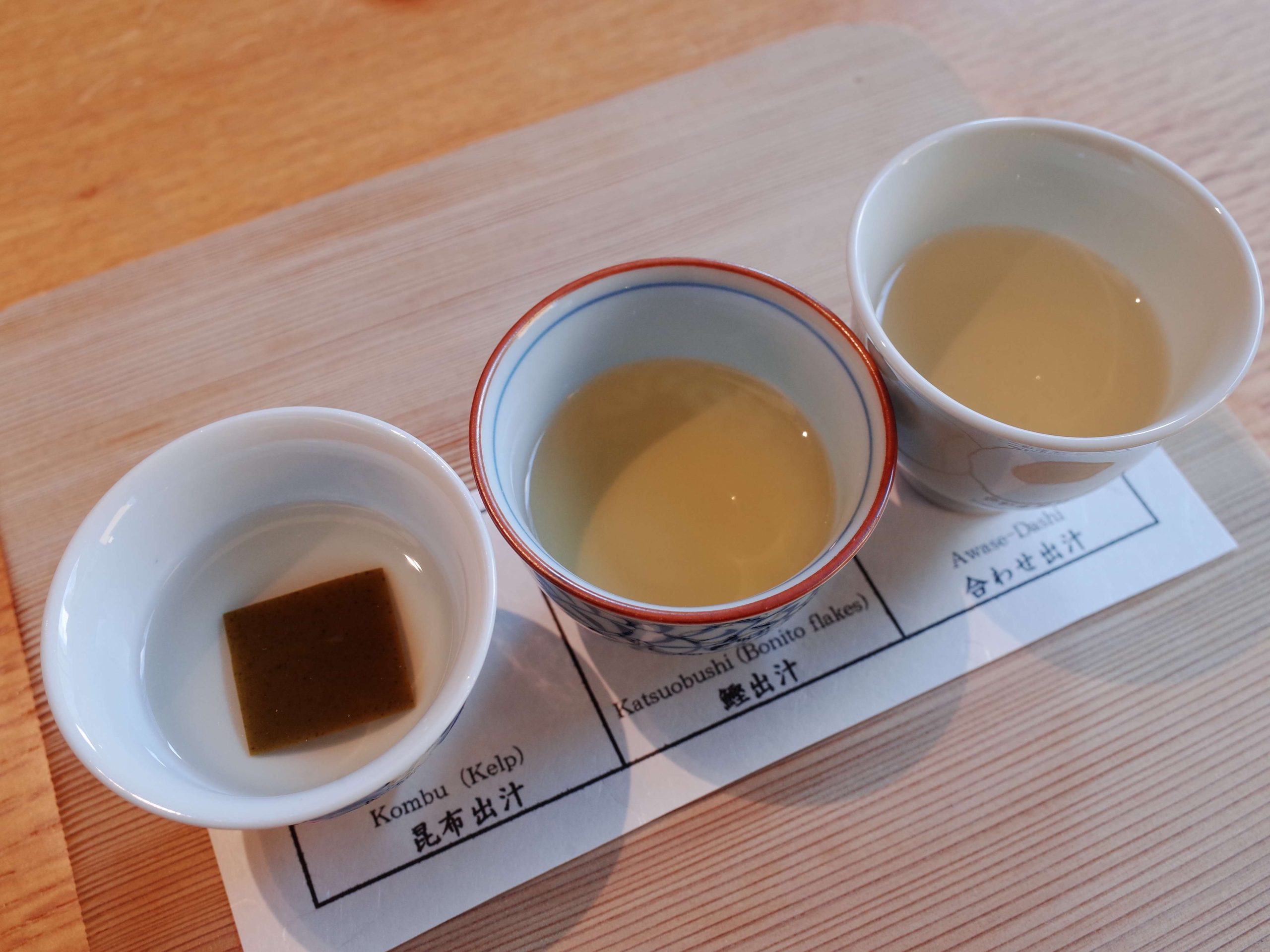
Dashi is the delicate Japanese broth drawn from kombu kelp and katsuobushi (bonito flakes). It is the source of umami — recognized as the fifth basic taste alongside sweet, salty, sour, and bitter — and it is what allows Japanese cuisine to taste deeply satisfying while remaining light, without relying on heavy fats or oils.
The third is aesthetics
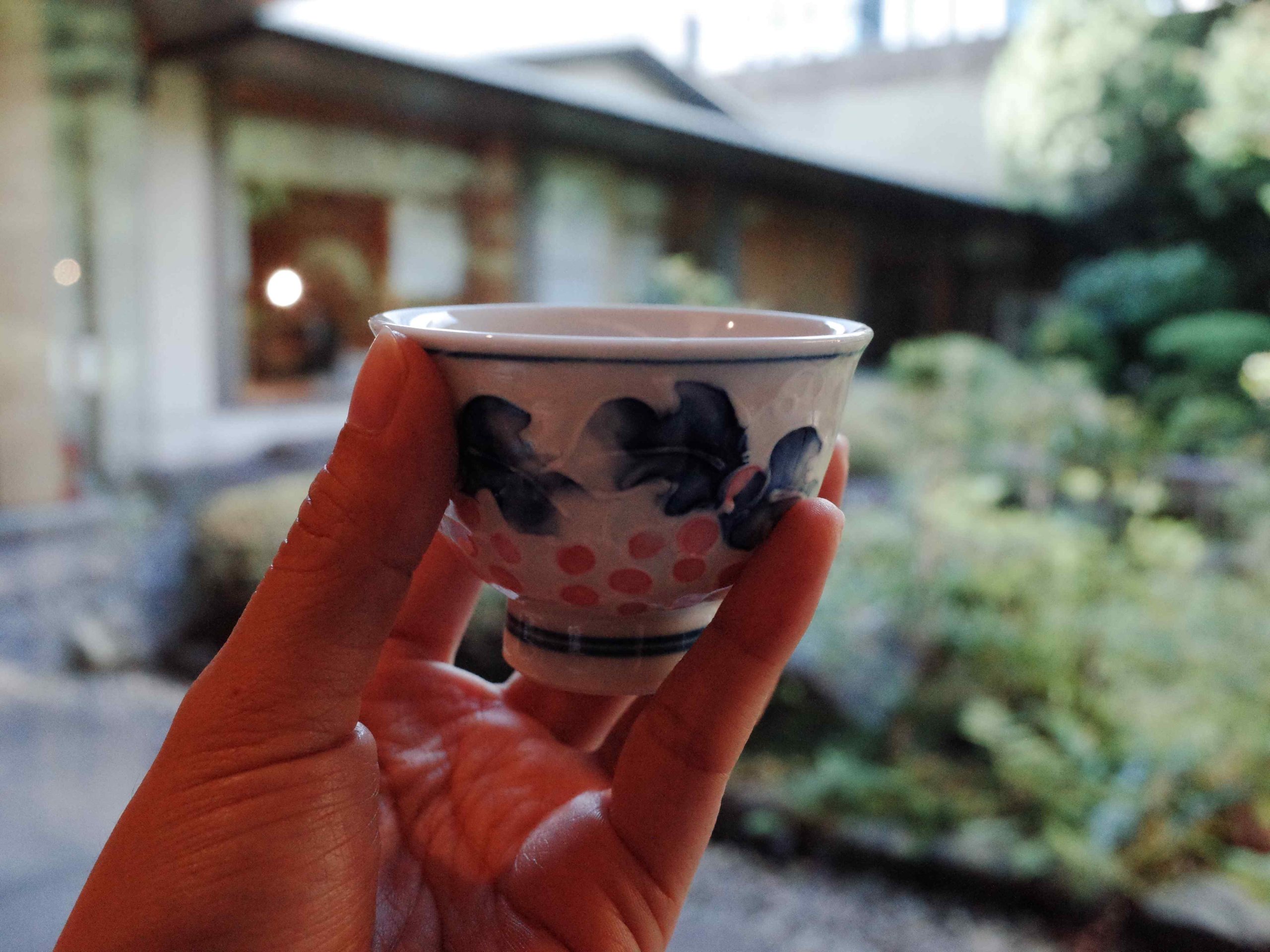
Color, plating, and carefully chosen tableware all reflect the Japanese respect for nature and the changing seasons.
If your curiosity about Japanese food culture goes beyond sushi and ramen, kaiseki is the experience that will deepen your understanding of it in every way — and UNKAI is the perfect restaurant to try it.
UNKAI: A Japanese Restaurant Overlooking a Serene Garden
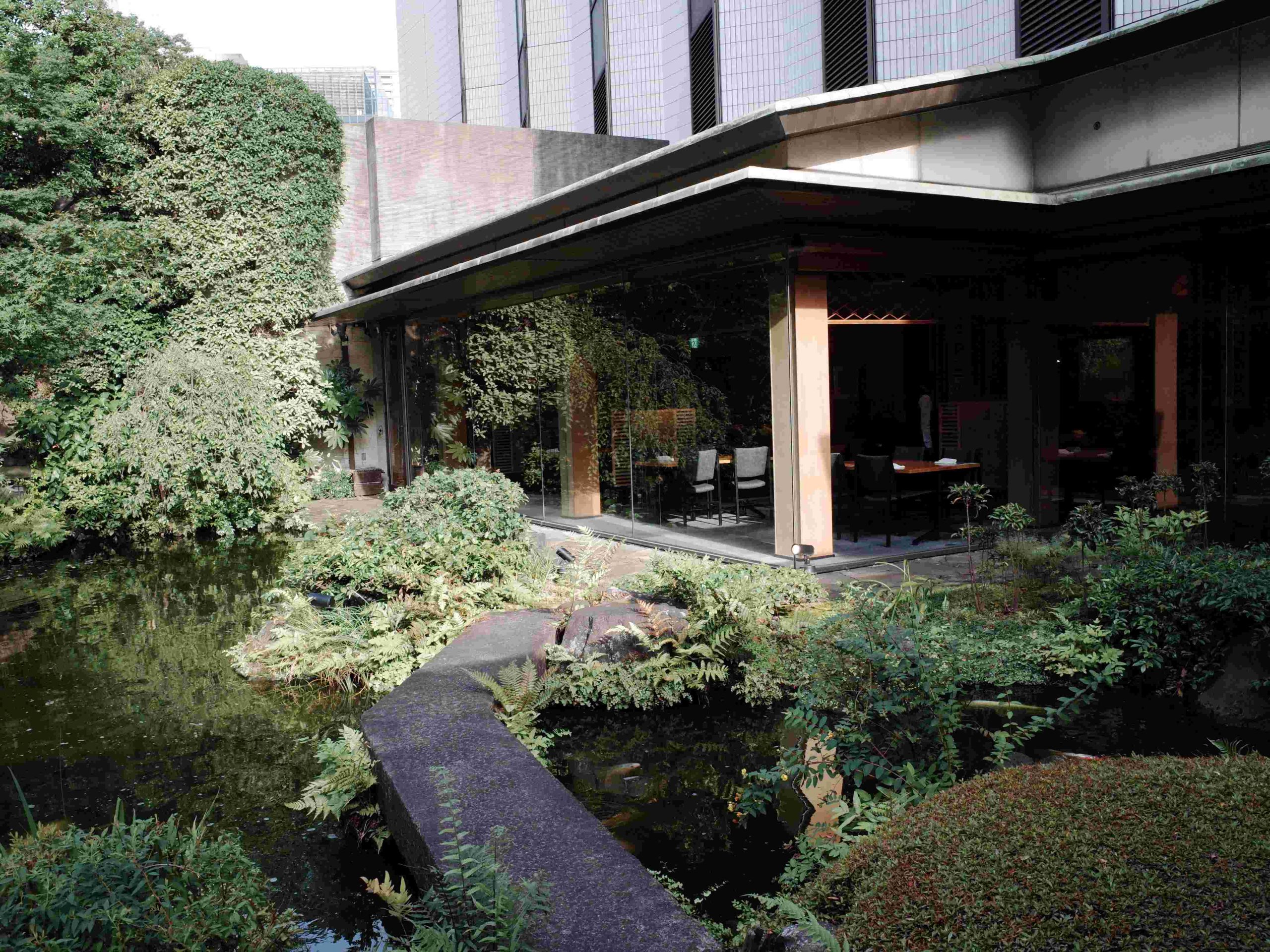
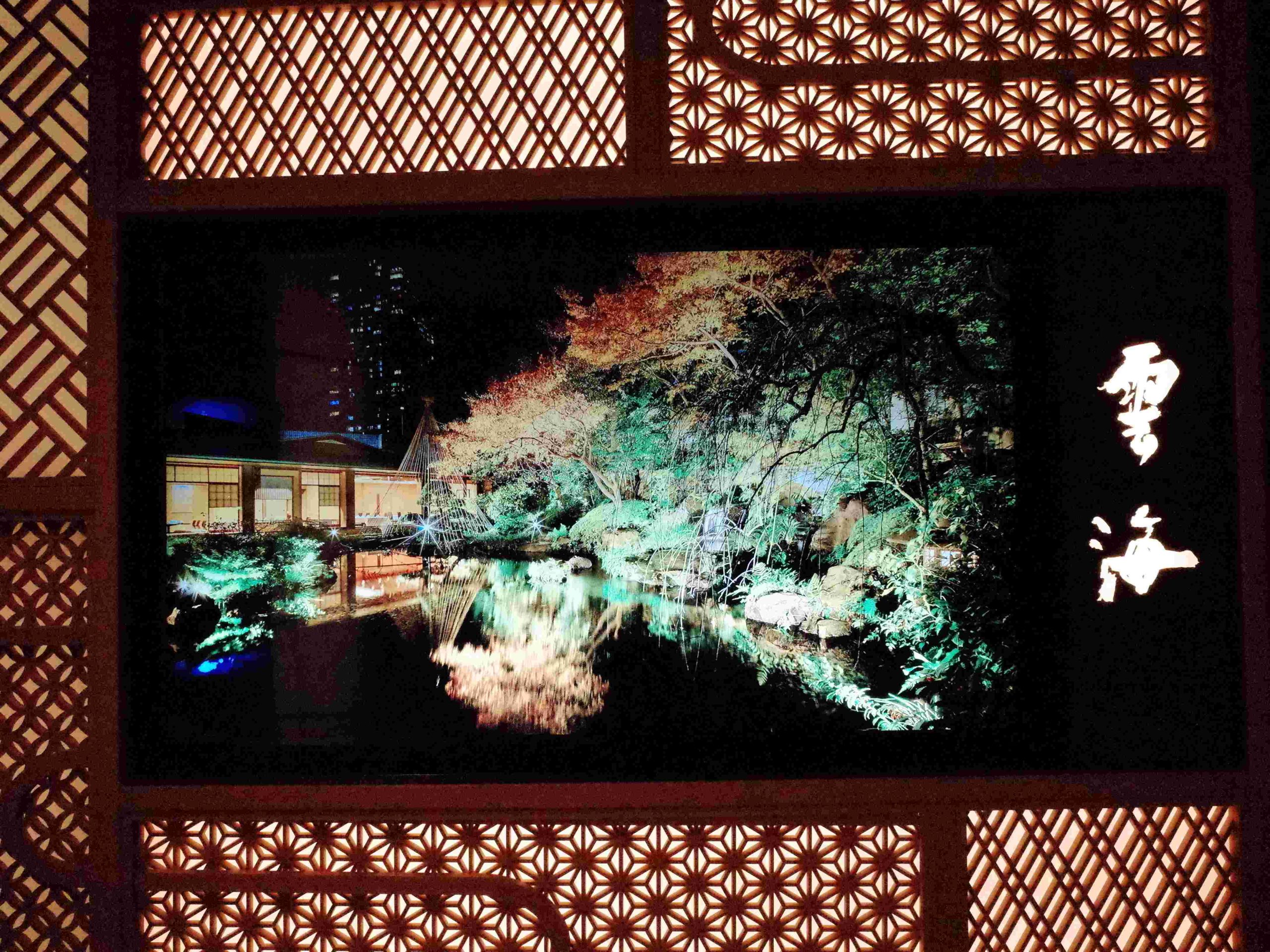
UNKAI (雲海) is one of the signature restaurants of ANA InterContinental Tokyo, and it has been introducing authentic Japanese cuisine to international travelers for nearly four decades. The restaurant overlooks a beautifully landscaped Japanese garden, with private tatami rooms also available — and you may even be welcomed by a staff member in an elegant kimono.


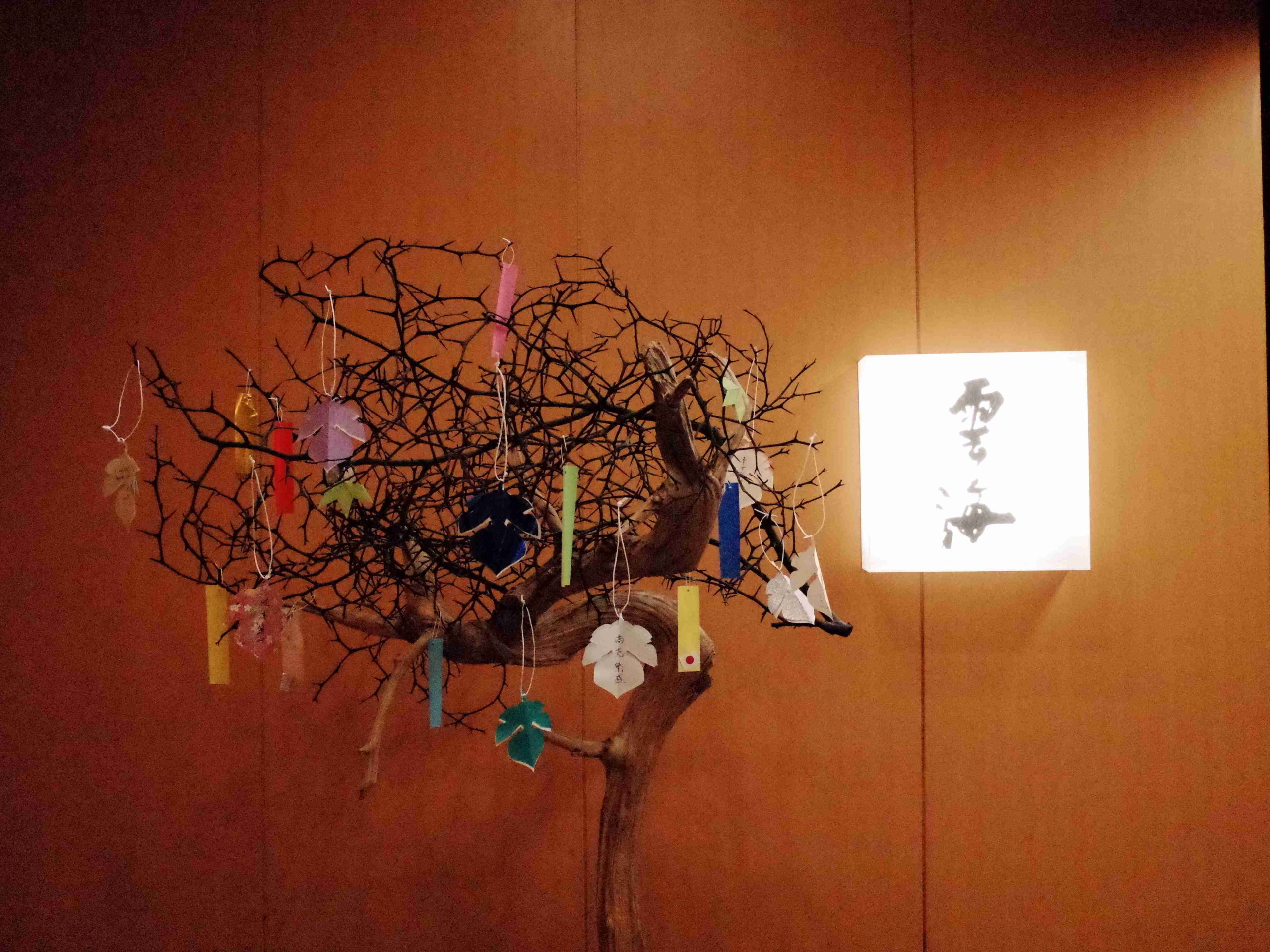
Like the menu, the restaurant’s decor changes with the seasons — right now, wind chimes and paper goldfish lanterns, both classic symbols of the Japanese summer, hang around the space, so every visit brings a fresh seasonal scene.
Now, let’s step into this authentic kaiseki journey.
Not Just Dinner: A Guided Umami Journey
What sets “Discover Washoku – An Umami Journey” apart is its interactive approach — it doesn’t just serve you kaiseki, it guides you into the heart of Japanese culinary culture. Throughout the evening, three moments stood out to us as truly special:
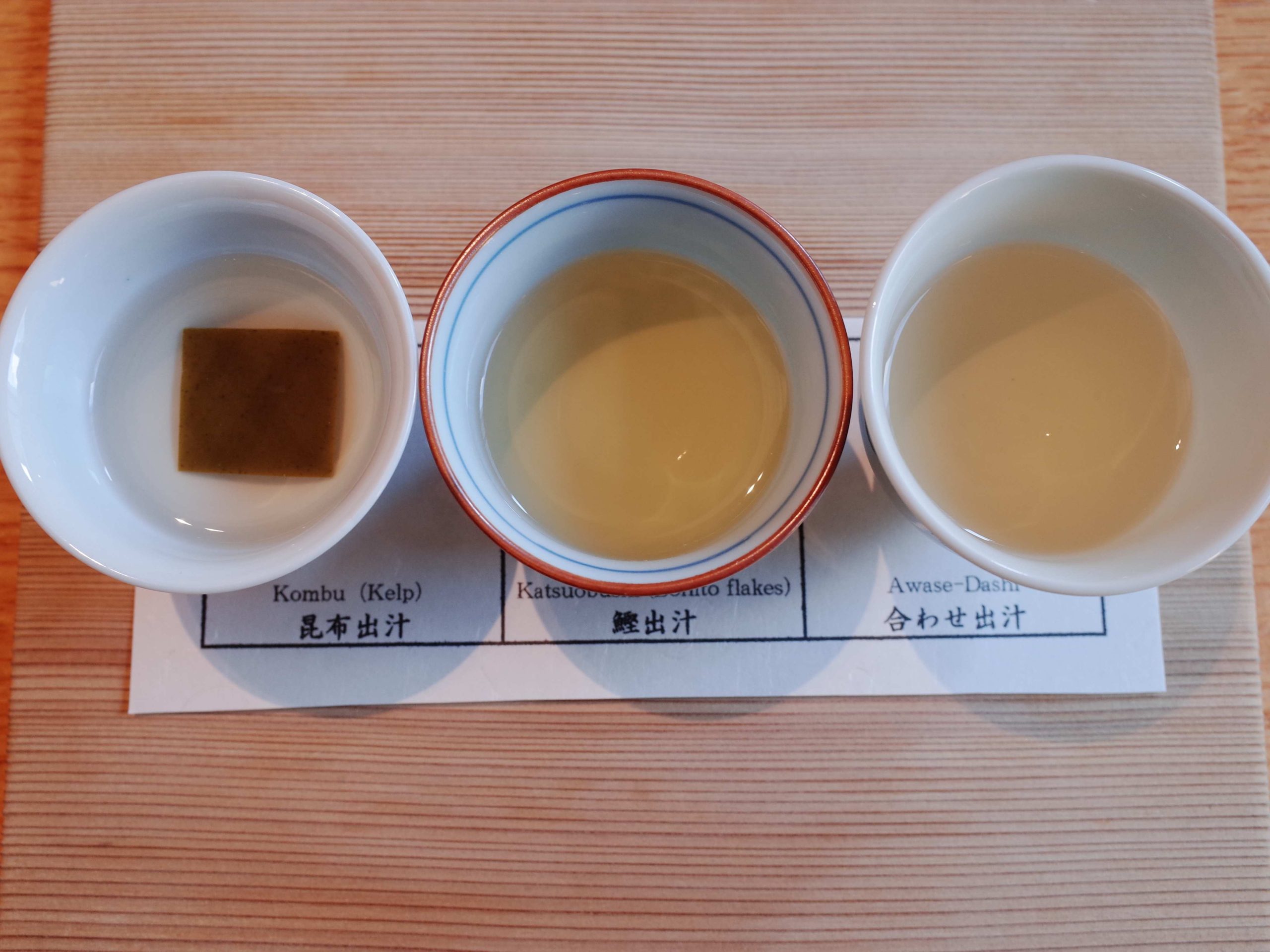
A guided dashi tasting at the start of the meal — a rare chance to train your palate before the courses begin
A curated pairing of three Japanese teas — ice-brewed sencha, roasted hojicha, and wakocha (Japanese black tea) — matched to different stages of the course


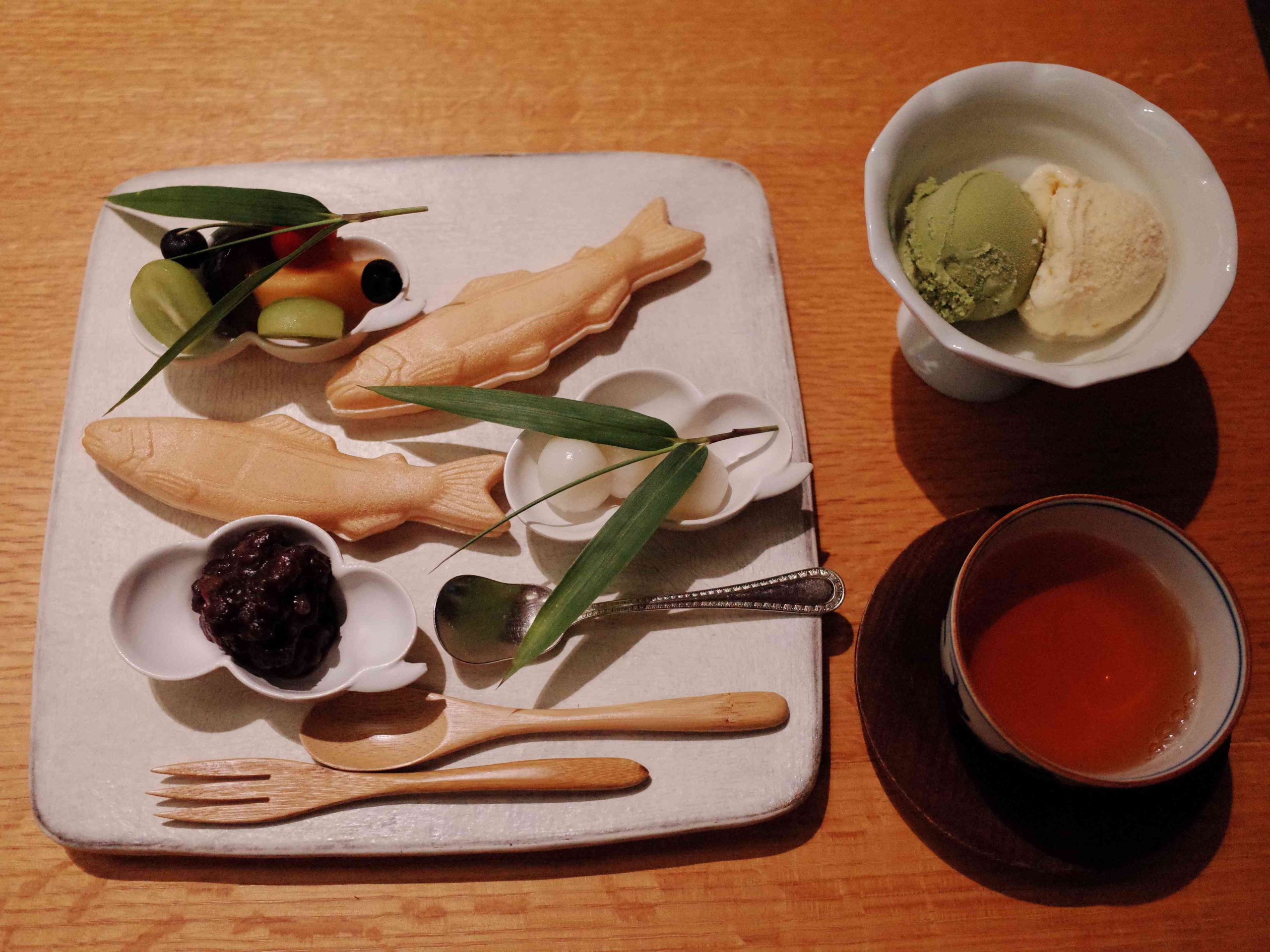
A “monaka” dessert-making experience as the finale, where you assemble your own wafer sandwich with fillings like red bean paste, mochi, and seasonal fruits
In other words, you do not just eat washoku here — you learn to understand it, one taste at a time.
The Full Kaiseki Dinner Experience: Course by Course
The seasonal kaiseki course is named “Kei” (恵), and the menu below is the summer version we tried. Dishes change with the seasons.
The Dashi Tasting: Training Your Palate
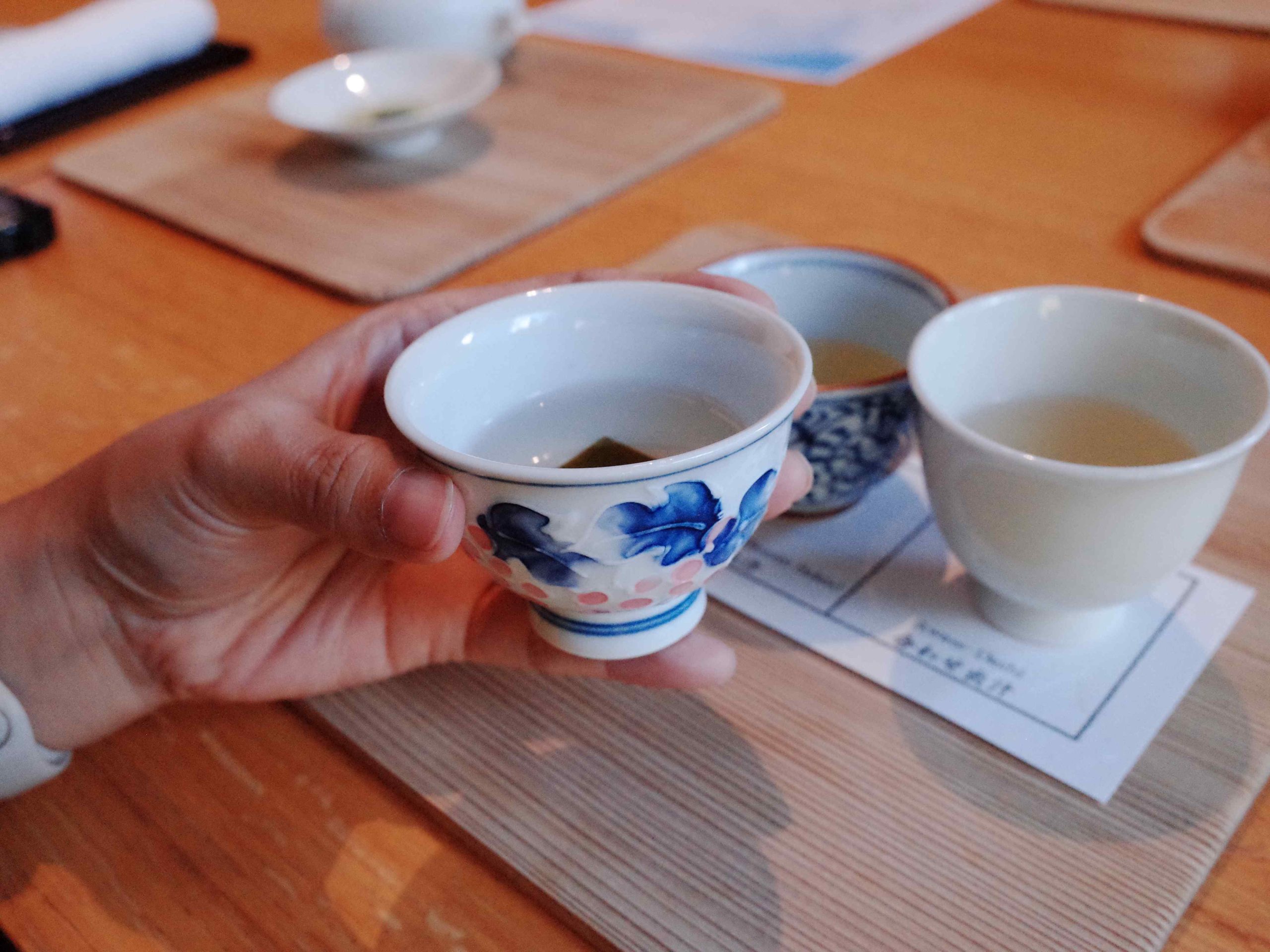
The evening begins with three small cups: kombu dashi, katsuobushi dashi, and awase dashi. Tasted side by side, the differences are surprisingly clear — the kombu broth is restrained and delicate, the katsuobushi broth carries the distinctive savoriness of the sea with a much bolder flavor, and the blend is rounder and deeper than either on its own.
This short lesson changes how you taste everything that follows.
Appetizer: A Miniature Landscape of Early Summer
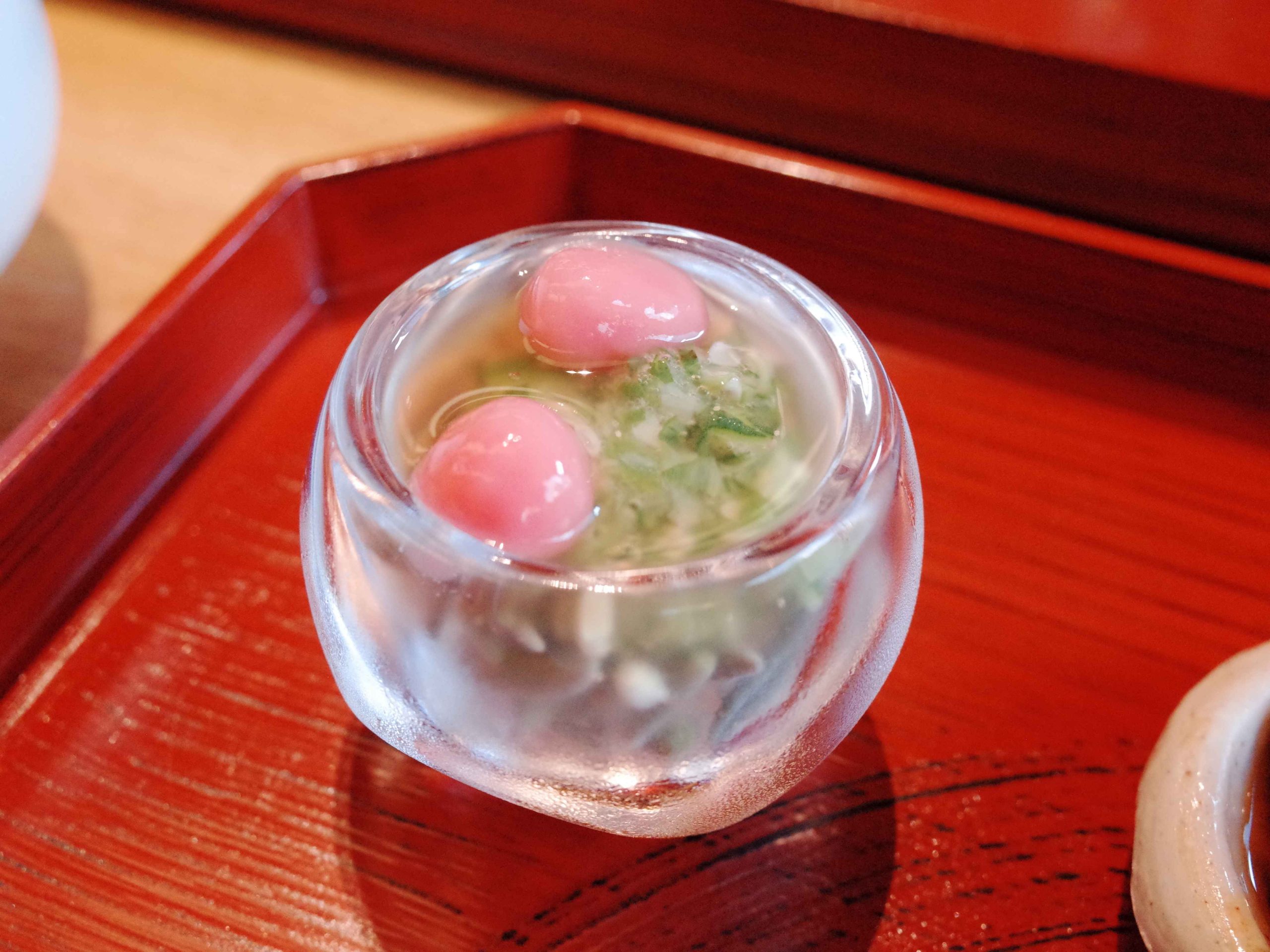
The appetizer platter is the visual highlight of the meal — nine delicate bites arranged like a miniature landscape, including pike conger (hamo) sushi, marinated ayu sweetfish, corn tofu, octopus with soybean and mustard, and watershield (junsai) with okra and a plum dumpling.
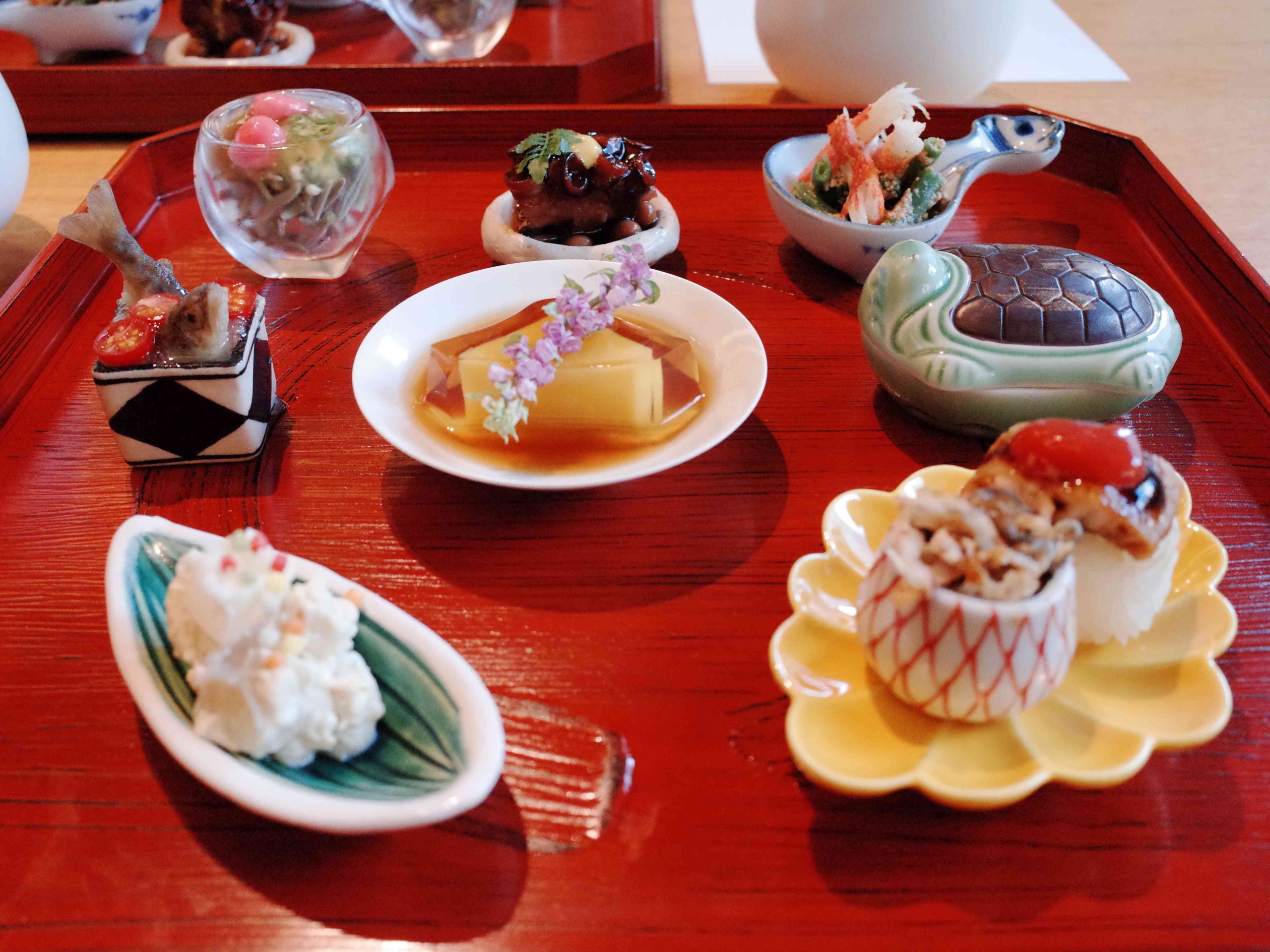
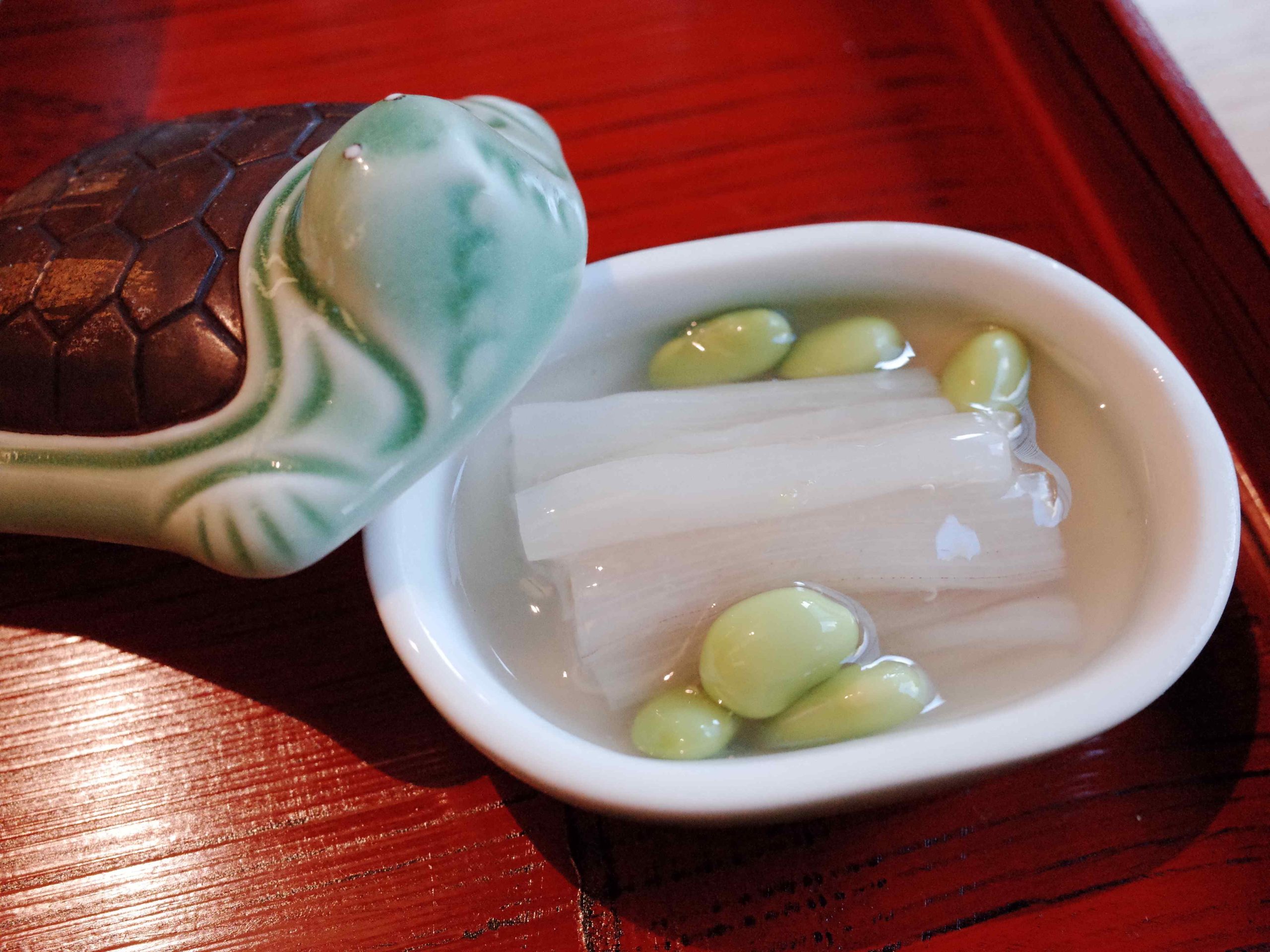
Two items deserve special attention. Junsai (watershield) is a jelly-coated water plant harvested by hand from ponds — something even many Japanese people only encounter a few times a year, and its uniquely slippery texture leaves a lasting impression.
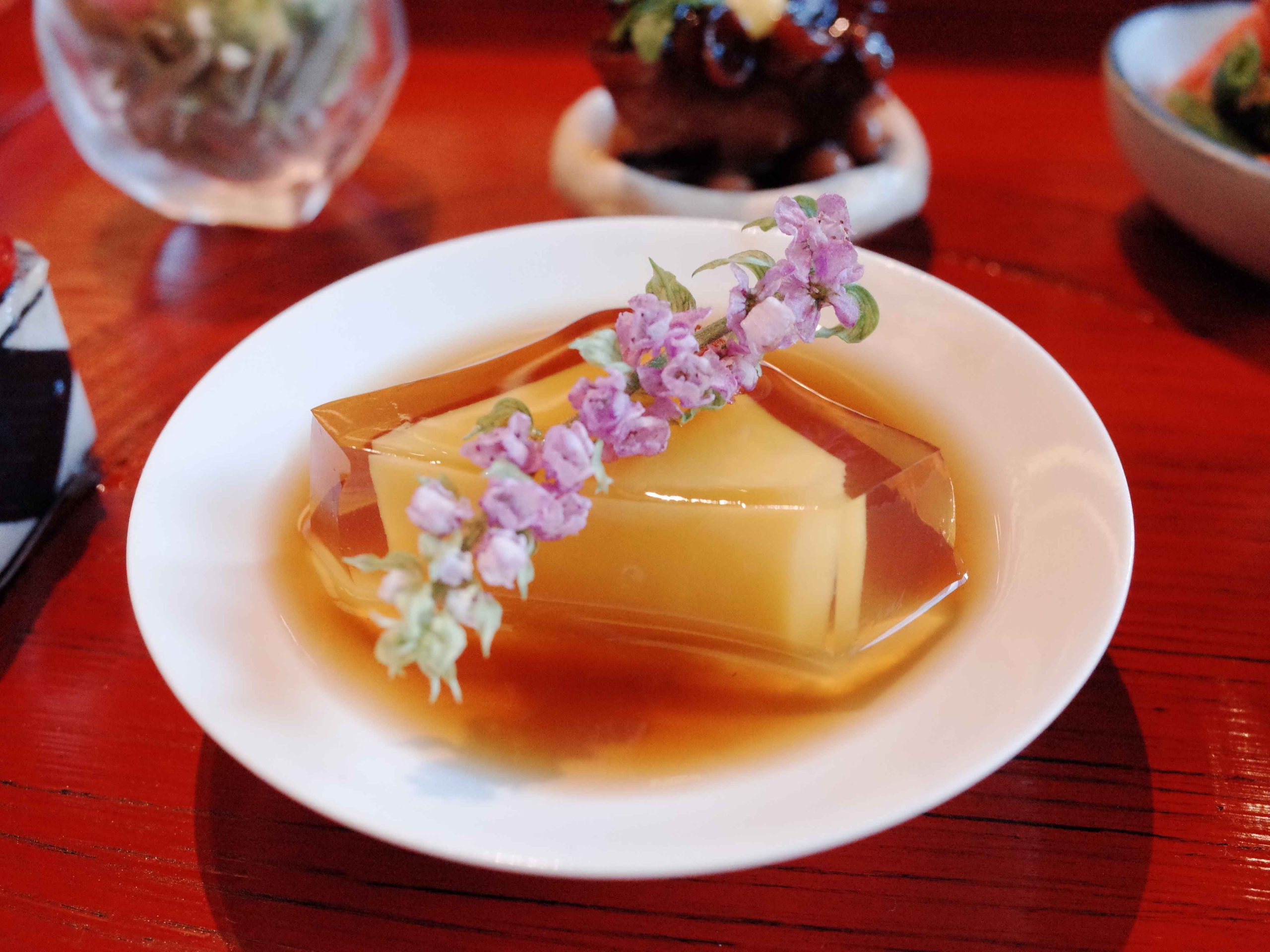
The other highlight is the corn tofu: so beautiful that you almost forget it is food, it slips smoothly across the palate with the gentle sweetness of fresh corn. Absolutely delicious.
Soup (Owan): A Burst of Yuzu Freshness
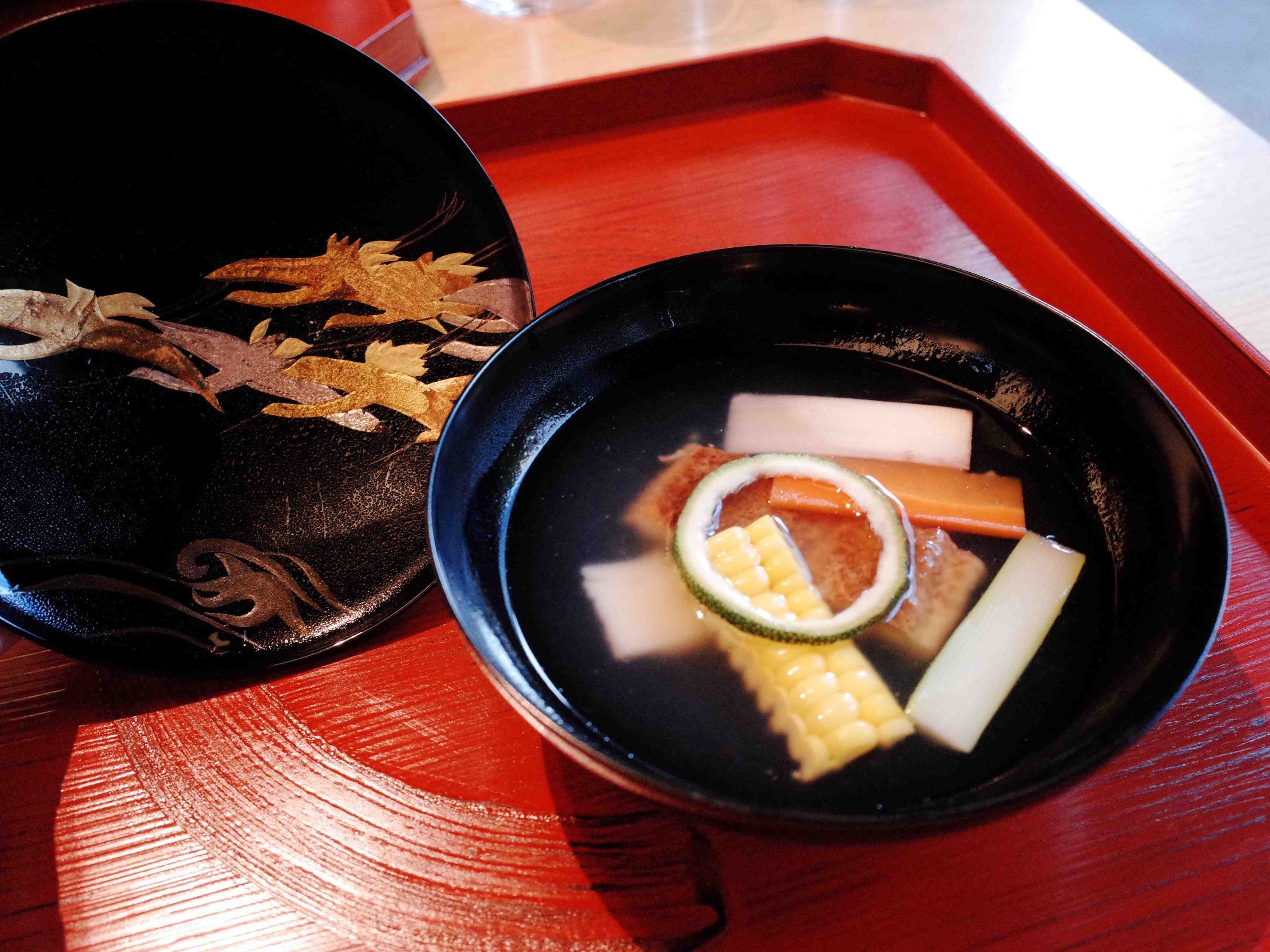
Next comes the owan, a clear soup with somen noodles, eel, udo, asparagus, and corn. The moment you lift the lid, a fresh burst of yuzu aroma rises from the bowl — instantly refreshing.
The lacquered bowl itself is a work of craftsmanship, its lid adorned with a striking gold pattern.
Sashimi: Summer Fish at Their Peak
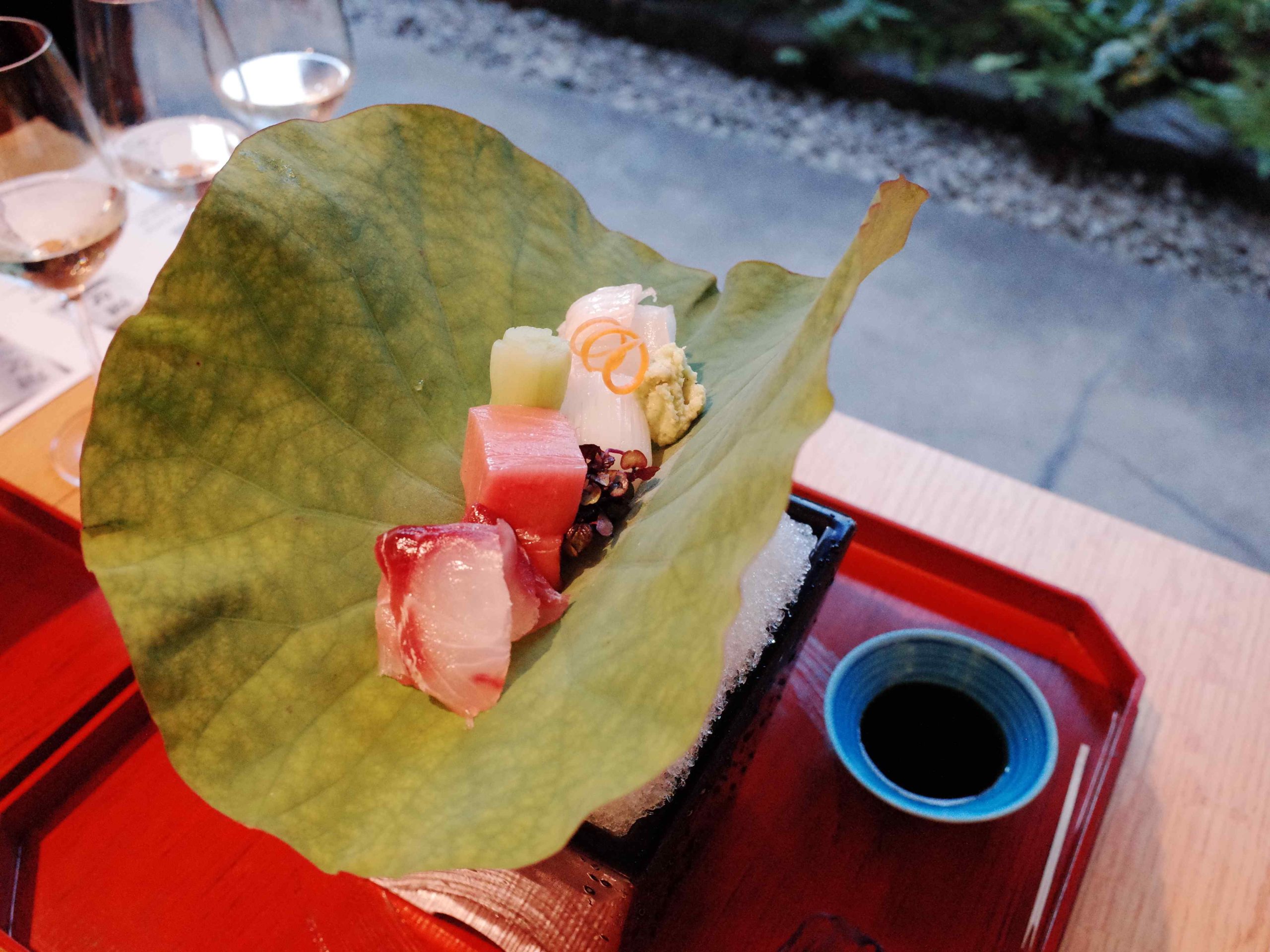
The presentation of this course is stunning: the sashimi arrives fully wrapped inside a lotus leaf, and unwrapping it yourself at the table — like opening a gift — releases a breath of summer freshness.
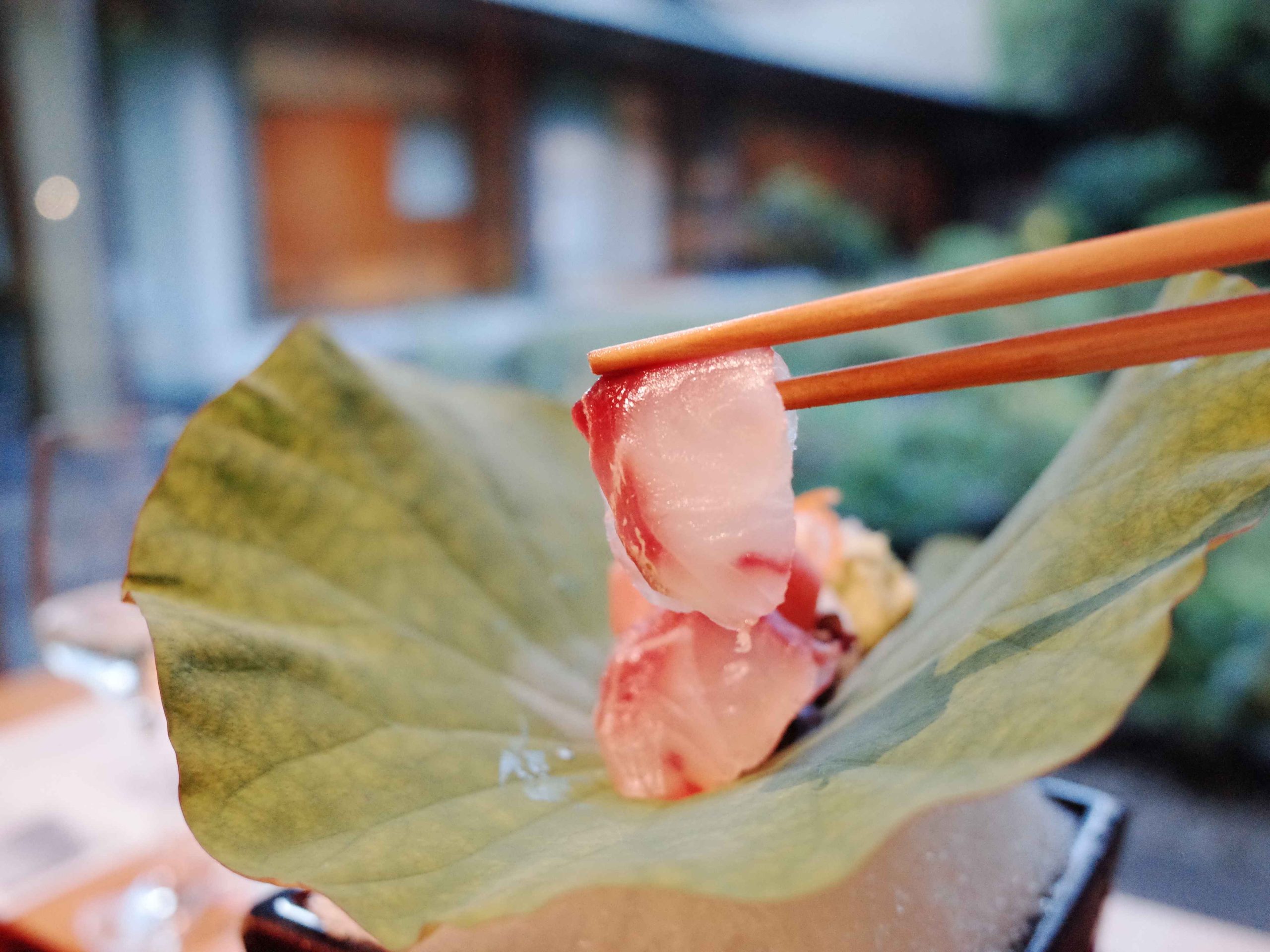
Inside lies an assortment of tuna, flounder, squid, and isaki (chicken grunt). Every piece is excellent, but the flounder steals the show — wonderfully springy in texture, with just the right amount of fat. Simply delicious.
Grilled Dish: Charcoal-Grilled Ayu, a Japanese Summer Ritual
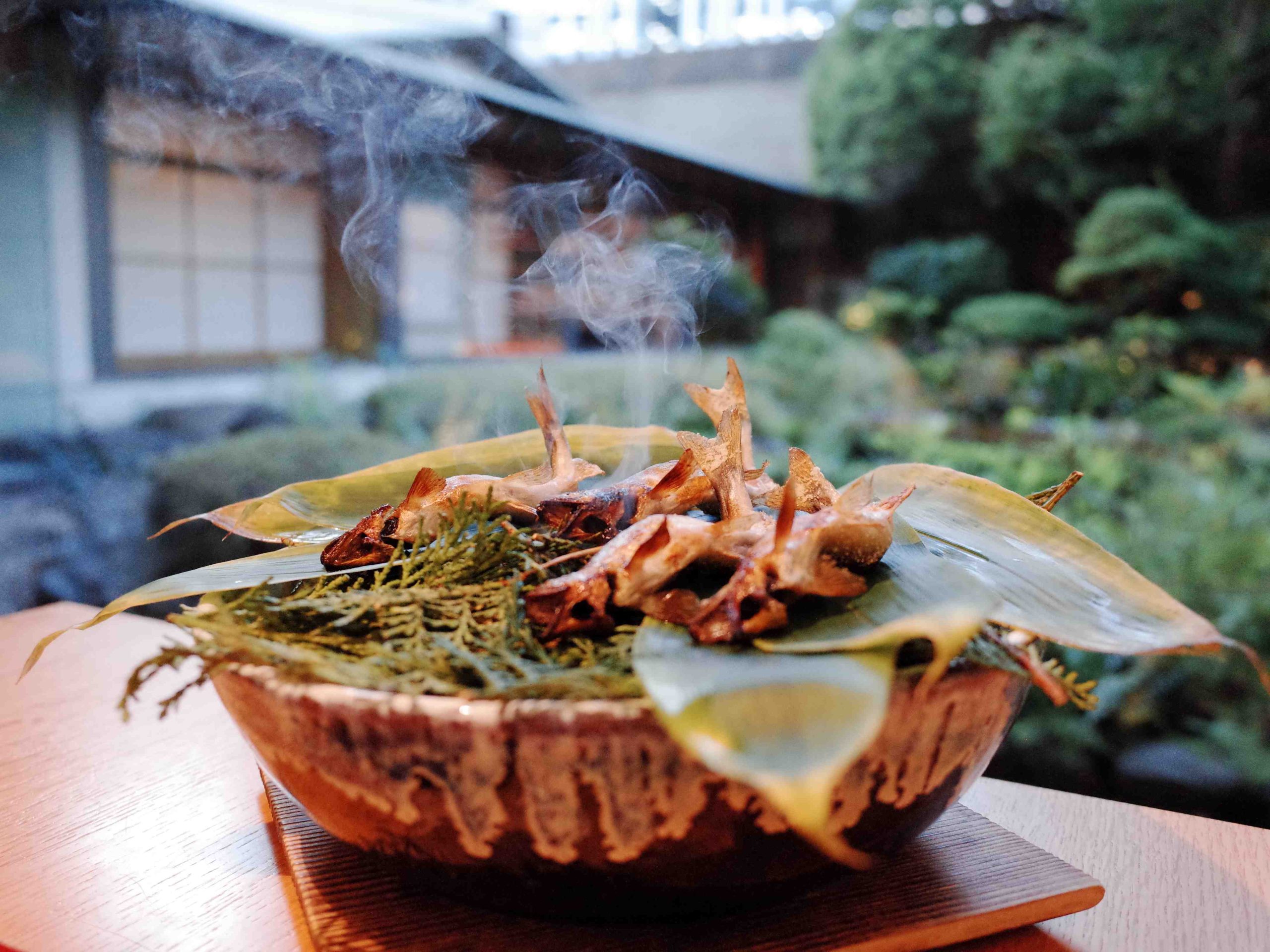
If one dish captures the Japanese summer, it is charcoal-grilled ayu (sweetfish). Grilled over charcoal in the open kitchen and brought to the table piping hot, the fish is delicately sweet on the palate — and each one comes generously filled with roe, a treat unique to this time of year.
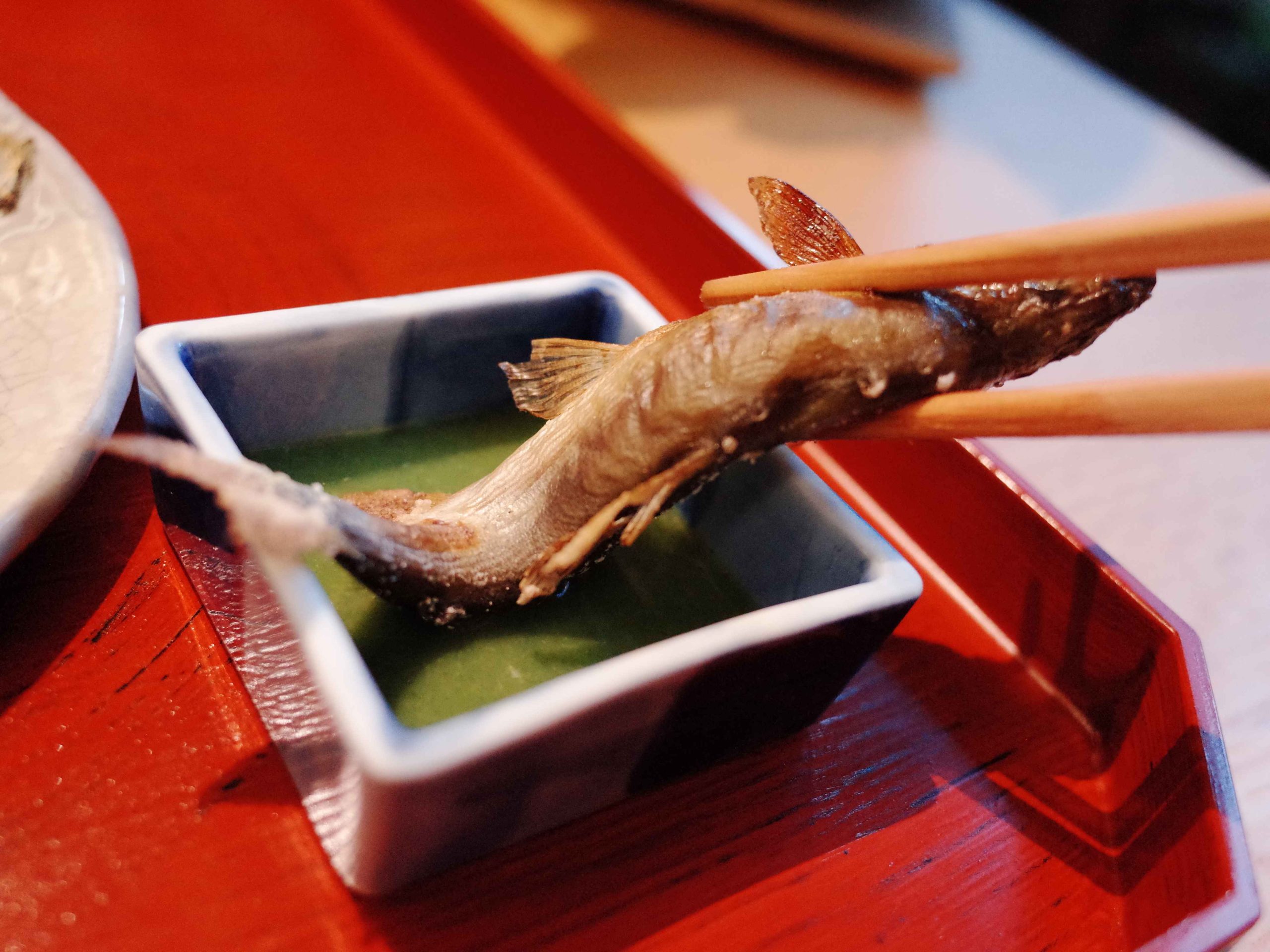
It is served with ginger, miso, and tade-zu, a vivid green vinegar sauce made from water pepper leaves that is the classic companion to ayu. Eating the whole fish, from its crispy skin to its pleasantly bitter innards, is a seasonal ritual that Japanese food lovers look forward to every year — and one taste of this summer’s ayu will tell you why.
Simmered Dish: An Unexpected Pairing of Fig and Eggplant
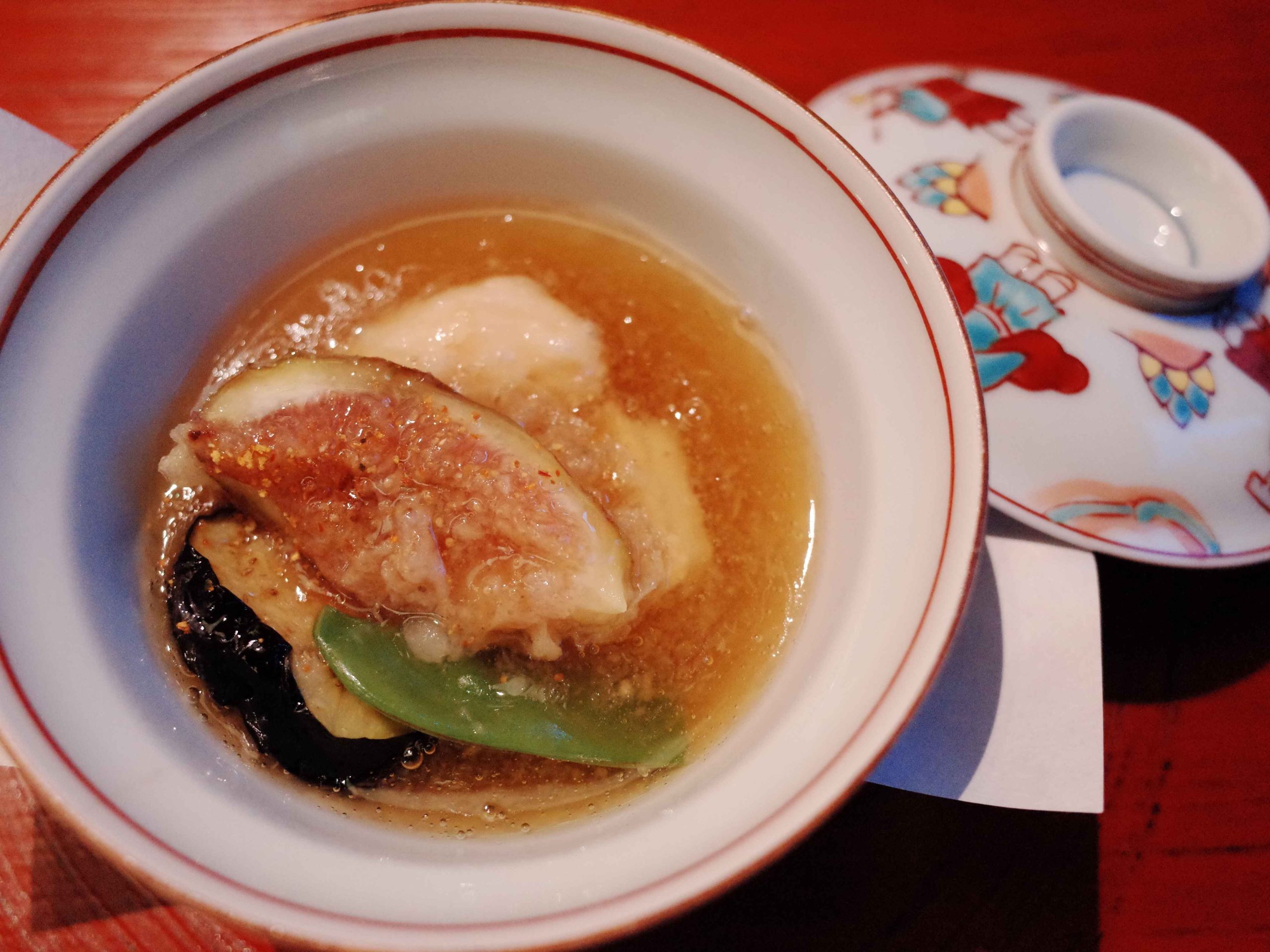
The simmered course brings prawn dumpling, tilefish, beans, and — most memorably — fig and eggplant in a grated daikon sauce. The prawn dumpling and tilefish are delicately sweet, with the tender freshness unique to this season, and go down wonderfully easily.
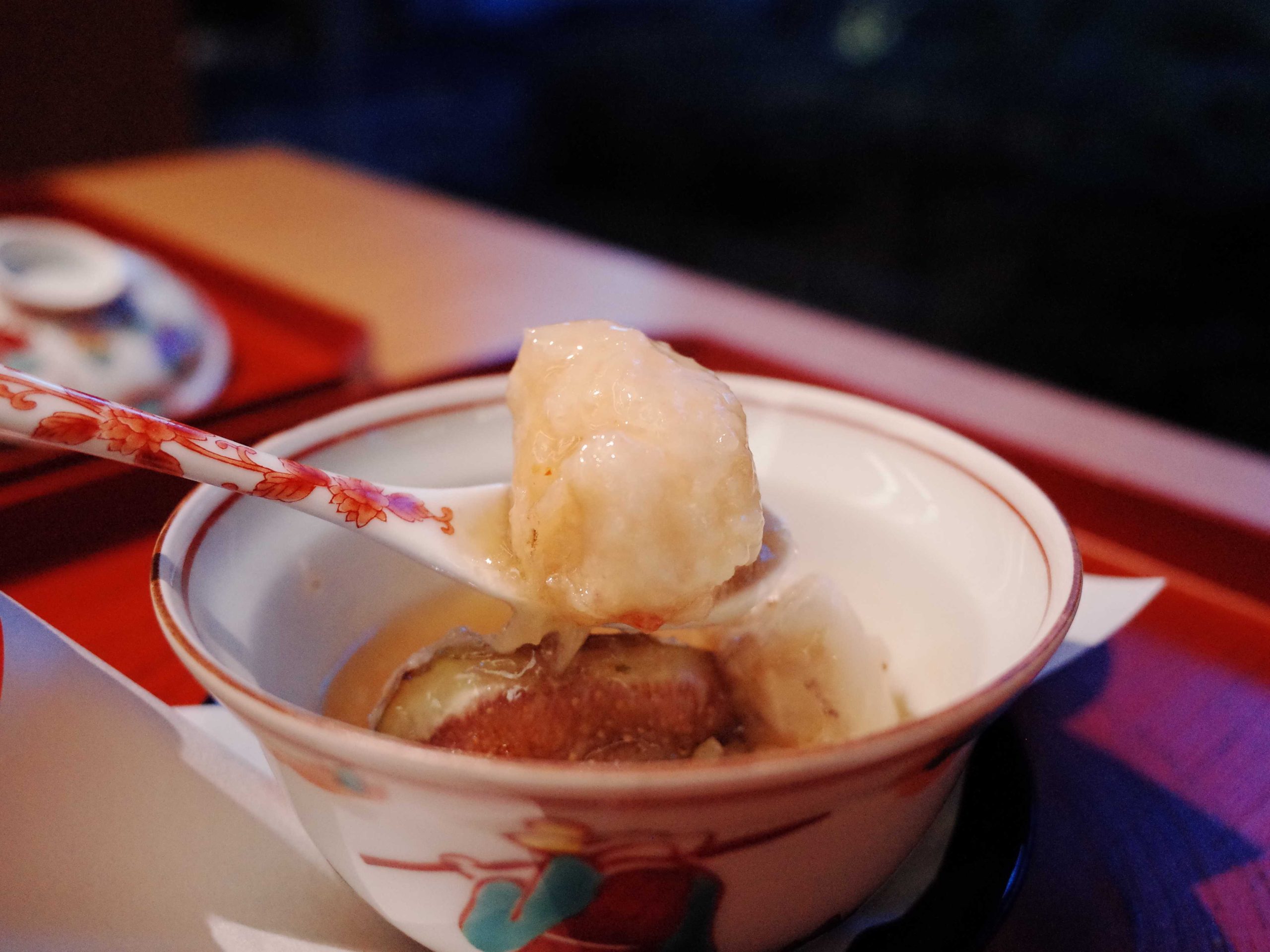
The fig is the real surprise: rarely seen in a simmered dish, its texture turns out to be remarkably close to the eggplant’s, and its gentle sweetness melts beautifully into the broth.
Rice: Namero Ochazuke, a Playful Finale to the Savory Courses
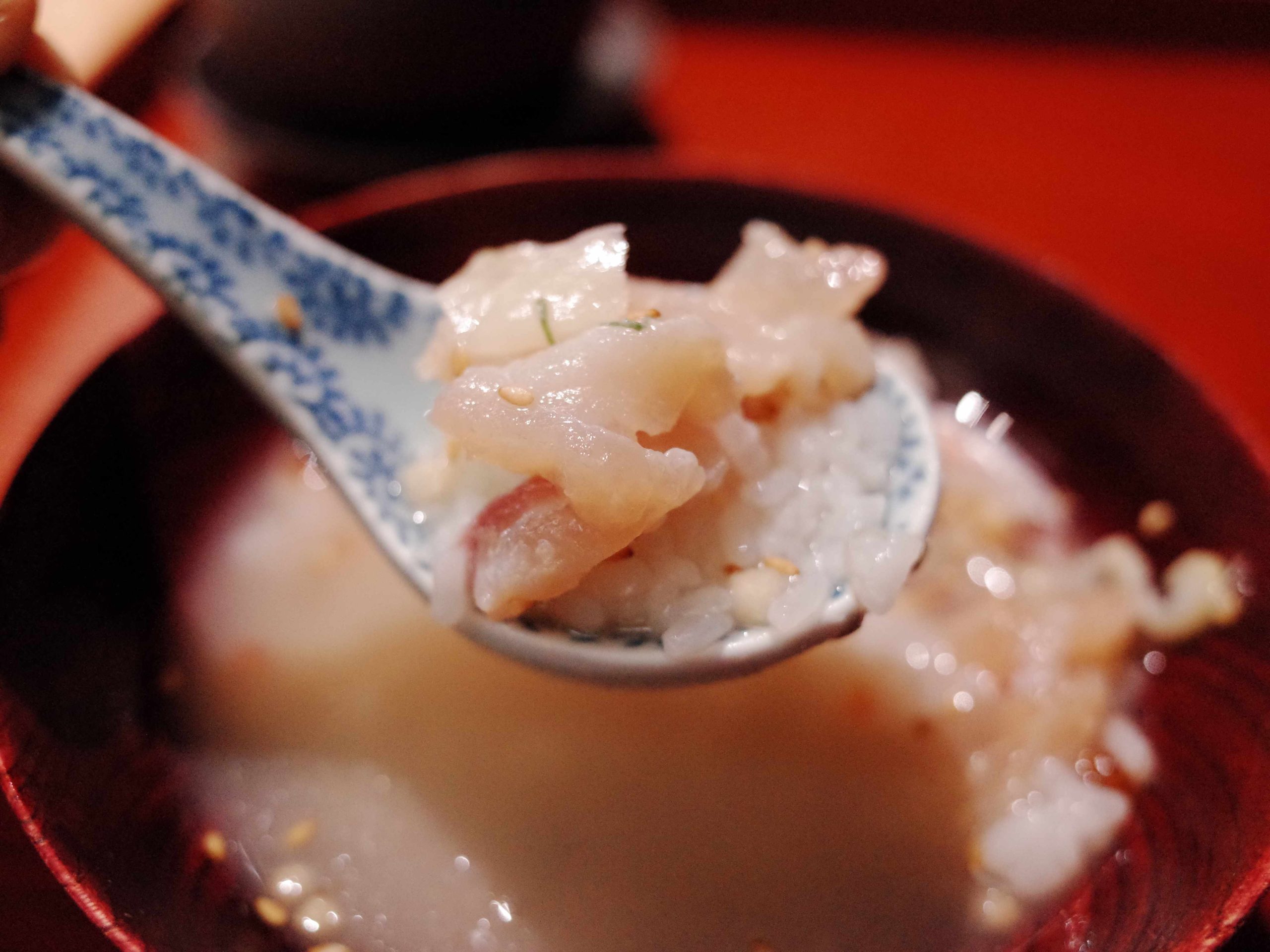
The final savory course is namero ochazuke: rice topped with a miso-seasoned seafood tartare of prawn, sea bream, horse mackerel, and salmon roe, finished at the table with a pour of tea broth. Namero is originally a fisherman’s dish from the Boso Peninsula, and turning it into ochazuke is a comforting, slightly playful way to close the meal.
The Tea Pairing: Three Teas, Three Moments
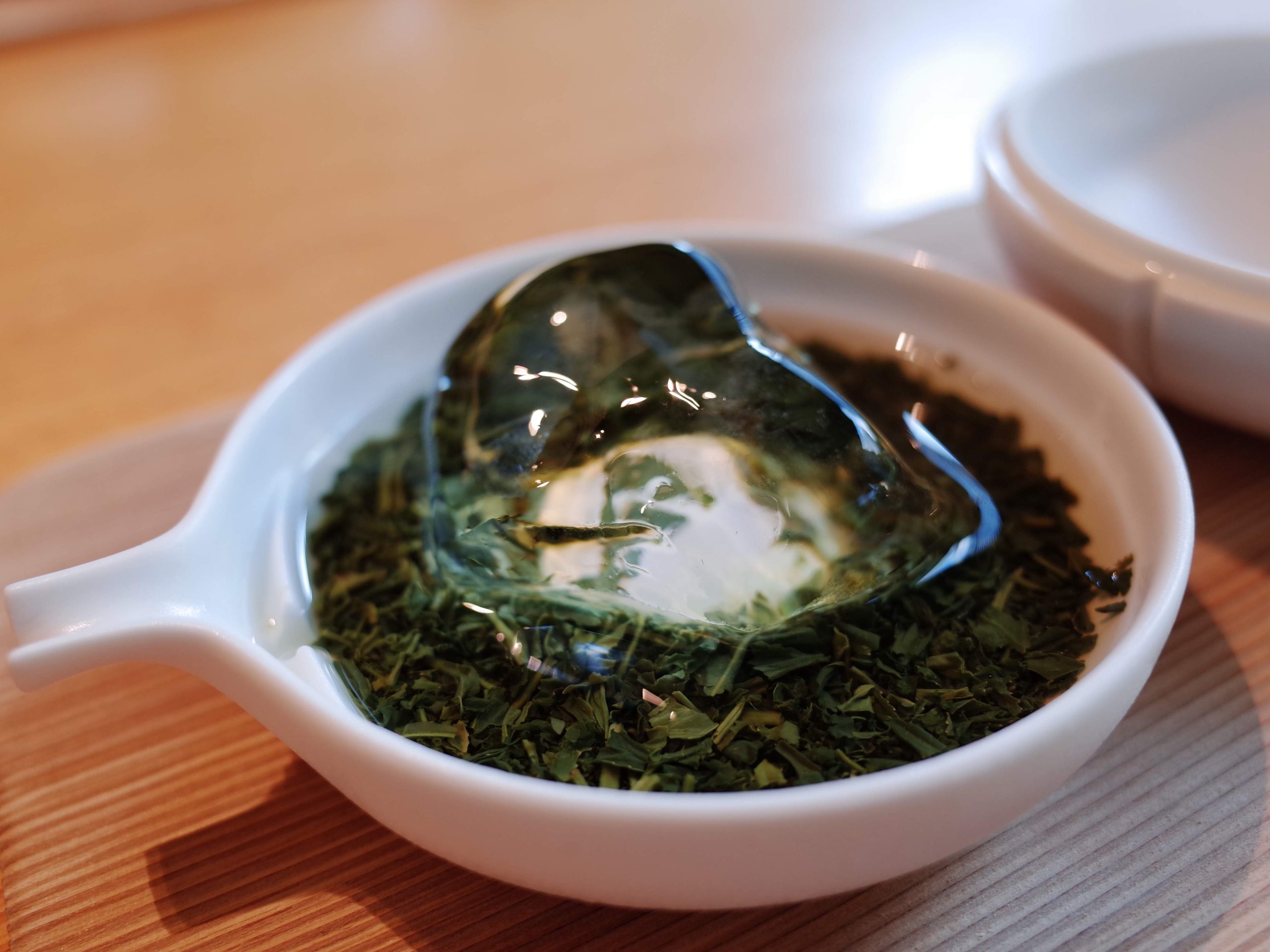
Throughout the course, the three teas take turns on the table — the ice-brewed sencha’s clean umami with the earlier courses, and the toasty hojicha and soft, elegant wakocha as the dishes grow richer.
Want More? Try the Dassai Sake Flight
One thing to note: alcoholic drinks are not included in the package — but if you are a sake lover, the “Dassai Kurabe” tasting flight is well worth adding on.
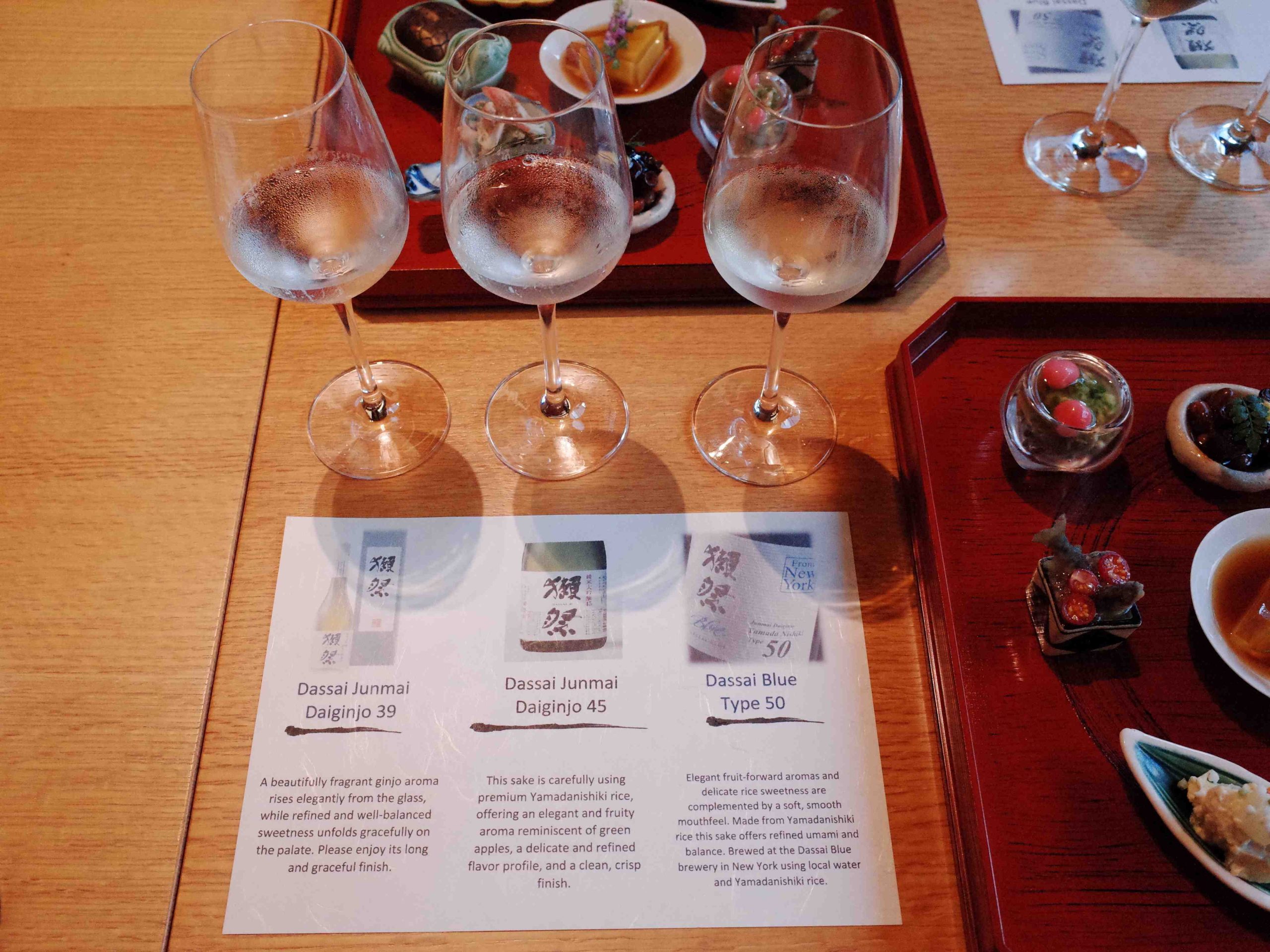
Three sakes arrive in turn: Dassai Junmai Daiginjo 39, Junmai Daiginjo 45, and Dassai Blue Type 50. The 45 stands out with a beautifully restrained crispness — classic, delicious, and our personal favorite of the three.
Dessert: Make Your Own Monaka
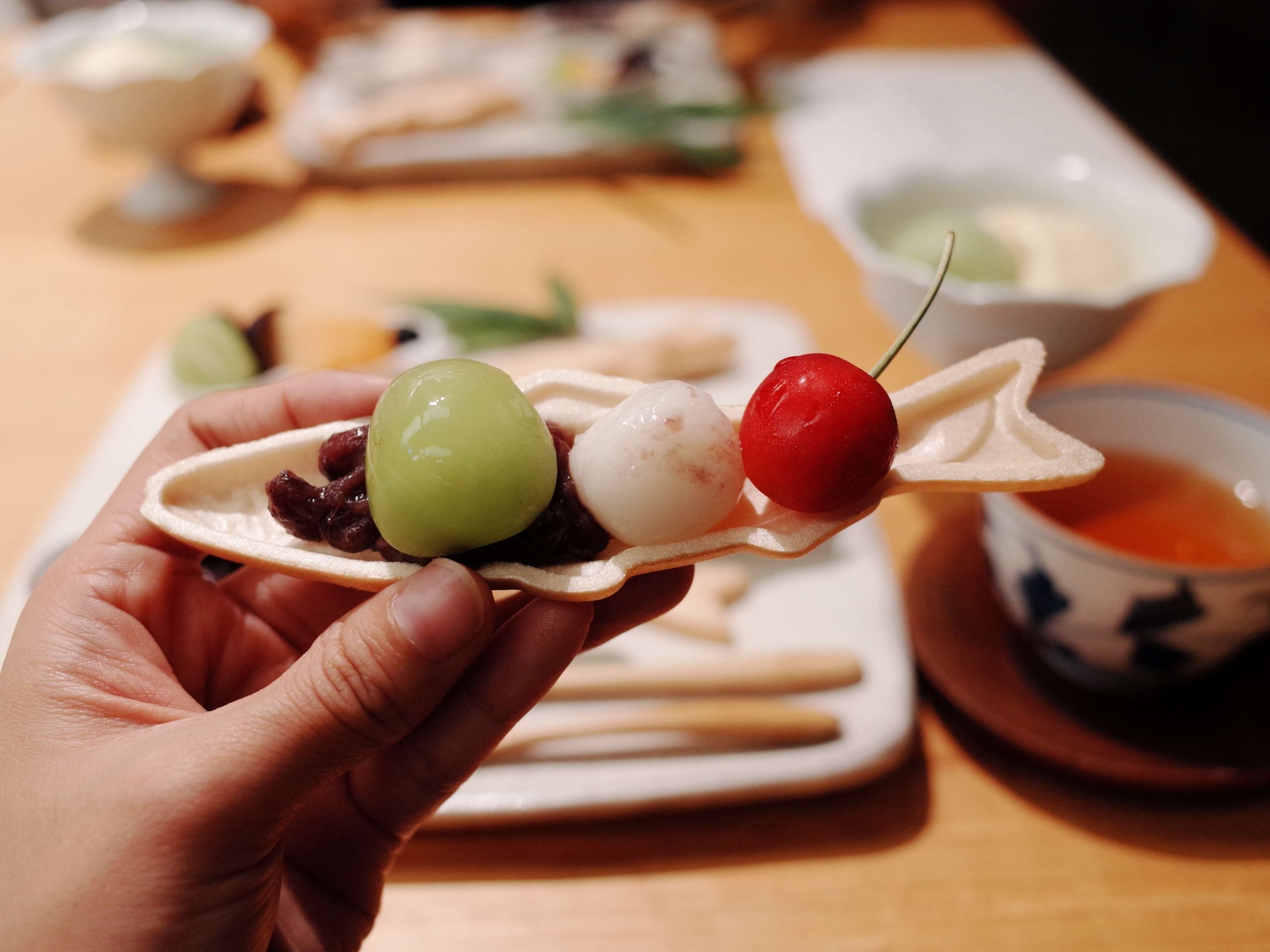
The finale is hands-on: you build your own monaka, choosing from fillings such as red bean paste, mochi, and seasonal fruits to sandwich between crisp, delicate wafers. It is a lighthearted, photogenic ending — and a small taste of Japanese wagashi culture to take home as a memory.
Event Details
| Experience | “Discover Washoku – An Umami Journey” |
| Location | UNKAI Japanese Restaurant, ANA InterContinental Tokyo |
| Period | July 1 – October 31, 2026 (Closed on Sundays and Mondays) |
| Hours | 5:00 p.m. – 7:30 p.m. (last order) |
| Price | Staying guests: JPY 22,000 per person / Non-staying guests: JPY 24,000 per person (tax and service charge included) |
| Includes | Dashi tasting, seasonal kaiseki course “Kei,” Japanese tea pairing, monaka dessert-making |
| Reservations | Official website or +81-3-3505-1111 (required at least one day in advance) |
| Note | Not suitable for vegetarian, vegan, or gluten-free diets |
Final Thoughts
Plenty of restaurants in Tokyo serve beautiful kaiseki, but very few take the time to explain it. “Discover Washoku – An Umami Journey” is perfect for anyone who wants to dive deeper into Japanese food culture. Between the garden view, the warm and attentive service, and the guided tastings, the entire experience feels memorable from start to finish. Next time you are in Tokyo, set aside an evening for UNKAI at ANA InterContinental Tokyo — you won’t regret it.
Reservations are required at least one day in advance, and the experience runs only until October 31 — so if your travel dates line up, don’t miss it.
Written by
Hi, I'm delighted to get to meet you through my sharing. I am a freelance writer who loves traveling, reading, and food. I'm also the mother of a two-year-old child. Living in Japan for eight years has been both long and short—long enough for me to know Tokyo, where I reside, like the back of my hand, and short because there are still so many aspects waiting for me to explore. Here, I will share the fantastic culture and my thoughts about this beautiful country, hoping you will fall in love with Japan just as I have.
- +1 1
-
-