Ameyoko Shopping Street: Ueno’s Bargain Market Guide
Ameyoko Shopping Guide: Best Buys, Food and Access

- +0 0
-

-


Under the Yamanote Line tracks in Ueno, Tokyo gets loud, crowded, and gloriously unpredictable. Ameyoko Shopping Street is where seafood stalls, giant snack shops, bargain fashion stores, street food counters, and an underground market packed with imported ingredients all compete for your attention. It was a place that genuinely blew me away the first time I visited over a decade ago, and even today I don’t get tired of perusing the different stalls looking for a hidden gem or just taking in the charm of its unpolished ambiance. Compared to trendy shopping districts, this still feels very much like a working market where the best finds are sometimes hiding in plain sight.
There is history behind that chaos, too: Ameyoko grew from a postwar black market and became one of Tokyo’s best-known places for bargain shopping. Today, visitors come to hunt for Japanese snacks, grab seafood or takoyaki, search for discounted sneakers, and explore all the little surprises that await in each of the small shops that populate this charming corner of Tokyo.
This guide covers what Ameyoko is known for, what to buy, the shops and food worth seeking out, how the market is laid out, and practical tips for visiting.
History of Ameyoko


Ameyoko’s rough-and-ready character has deep roots. The shopping street took shape in the chaotic years immediately after World War II, when food and everyday goods were scarce and black markets sprang up around major railway stations. The area between Ueno and Okachimachi became one of these marketplaces, with vendors selling food, clothing, imported products, and other goods under and around the railway tracks
The exact origins of the name are uncertain. The name Ameyoko is the shortened version of Ameya Yokocho, meaning roughly “candy shop alley,” referencing the large number of confectionery sellers that operated here in the postwar period. But many also link “Ame” to “America,” referring to the American goods that entered the black market, including products associated with the U.S. Occupation forces.
Over the decades, the black-market trade disappeared as Japan’s economy recovered and regulations tightened, but the market’s bargain-driven character remained. The result is today’s Ameyoko: a roughly 500-meter shopping district between Ueno and Okachimachi, now home to over 400 stores selling everything from seafood and snacks to cosmetics, clothing, sneakers, and imported foods. The goods have changed, but the area’s appetite for bargains and its busy market atmosphere have stayed remarkably consistent.
Navigating Ameya Yokocho
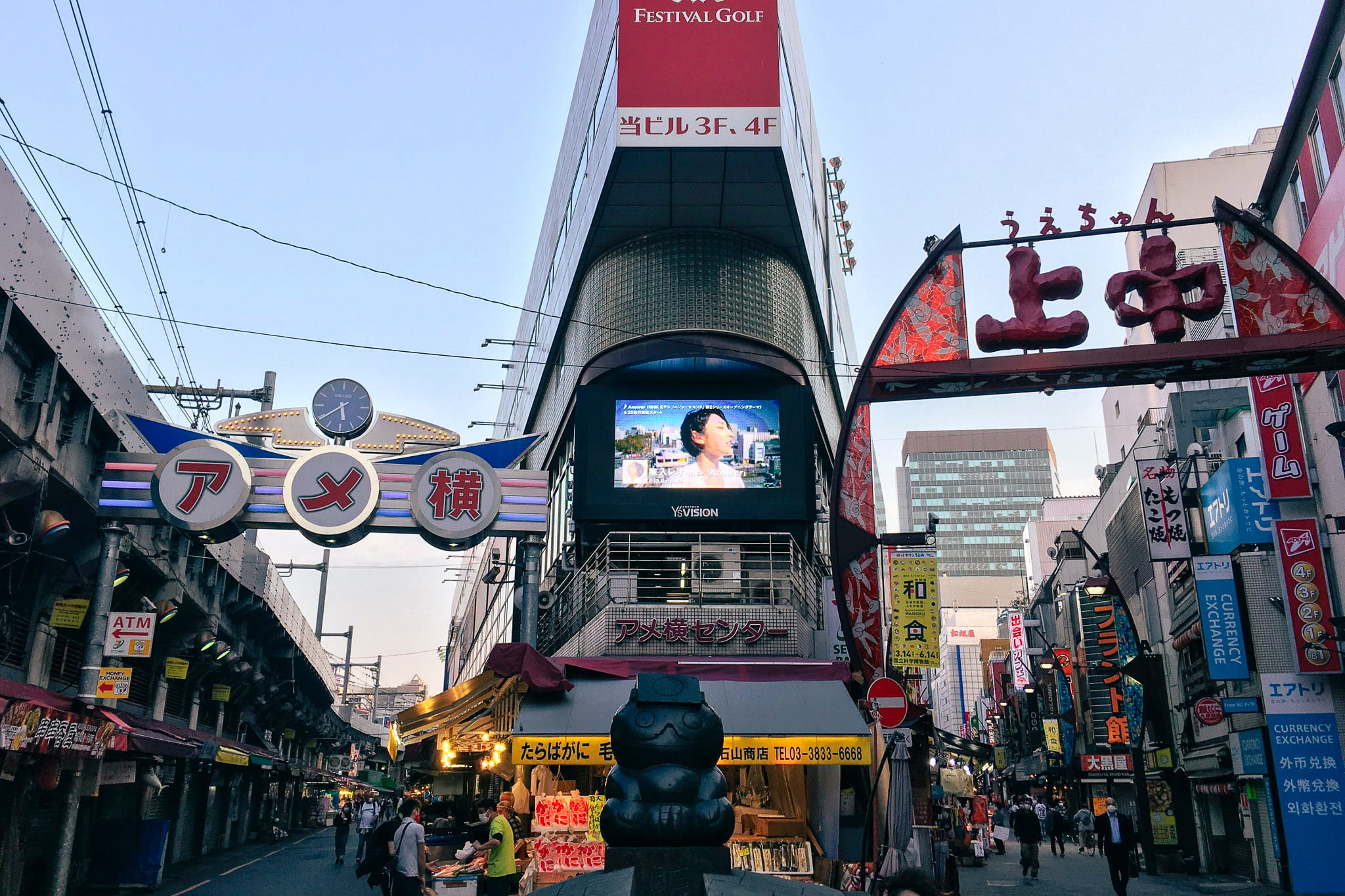
Ameyoko stretches for approximately 500 meters between JR Ueno and Okachimachi stations, with much of the shopping area running beneath or alongside the elevated railway tracks. It is easy to walk from one end to the other, but the market can feel confusing on a first visit because several connected shopping streets run through the same area.
Rather than thinking of Ameyoko as one straight street, picture it as a Y-shaped network of shopping lanes. The main routes include Ameyoko Street and Ueno Naka-dori (also known as Uechu or Uechun), which run roughly parallel through the market before separating around the central area. Small side passages connect them, so it’s worth wandering rather than sticking to a single route. The official Ameyoko map also shows several adjoining shopping-street associations within the wider market.
At the center of this maze is the Ameyoko Center Building, an easy landmark to use when orienting yourself. The building contains shops selling fashion, footwear, food, cosmetics, and other goods, but its B1F food market is the part worth seeking out, thanks to its selection of herbs and spices.
The basement has a very different character from the busy street above. Small specialist vendors sell Asian foods, spices, herbs, vegetables, halal products, and other imported ingredients. For example, Nozawaya on B1F specializes in Asian foods and spices, including ingredients from countries such as Thailand, Vietnam, India, and Indonesia.
A simple strategy: start at Ueno Station’s Shinobazu Exit, walk through the market toward Okachimachi, then dip into the connected lanes and the Center Building as you go. The official Ameyoko association confirms that the Shinobazu Exit puts you immediately by the market, while the JR Okachimachi North Exit brings you to the opposite end.
Marishiten Tokudaiji Temple: A Quiet Detour in Ameyoko
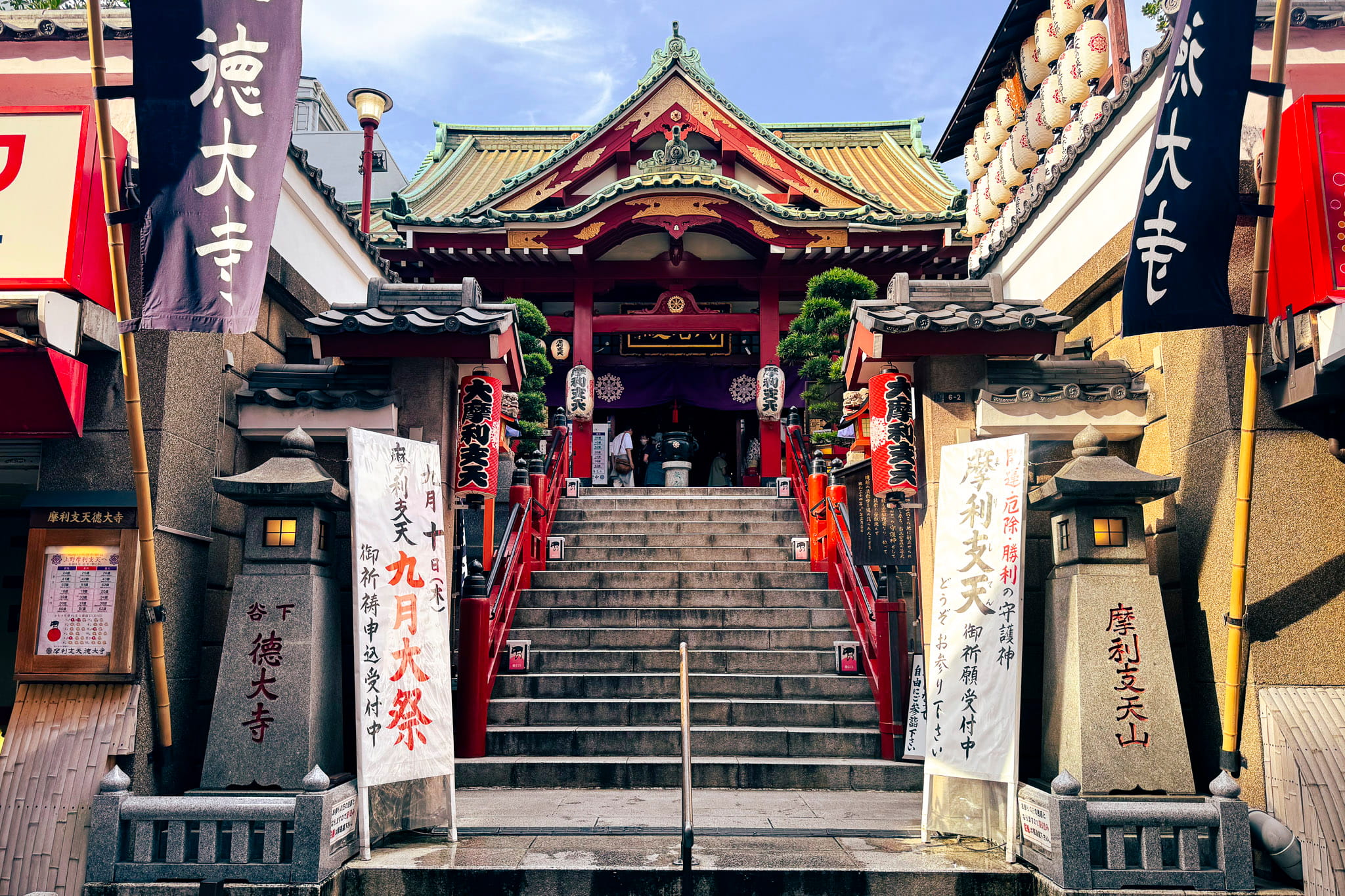
Amid the signs, bargain stalls, and crowds of Ameyoko, there is a place that is surprisingly easy to walk past. Marishiten Tokudaiji Temple (日蓮宗 妙宣山 徳大寺) sits right within the shopping district, but its entrance rises up a flight of stairs from the busy street. It is not a tiny temple, but you can easily miss the stairs if you’re focused on the shops below.
I particularly like stopping here. It gives you a completely different side of Ueno without requiring you to leave Ameyoko.
Tokudaiji was founded during the early Edo period, around 400 years ago, and is formally a Nichiren Buddhist temple. It enshrines Marishiten, a Buddhist guardian deity traditionally associated with protection, victory, and good fortune. The temple’s principal Marishiten image is said to have been carved by Prince Shōtoku and was enshrined here in 1708.
There is also a fascinating connection between the temple and the history of the surrounding neighborhood. In the Edo and Meiji periods, the temple’s regular festival days attracted stalls and markets around the area. In fact, the “day of the boar” became Tokudaiji’s special day because a boar is traditionally associated with Marishiten. Visitors who come on such a day are encouraged to make a special visit to the temple. And it just so happens that I was born in the Year of the Boar, so finding a temple in the middle of Ameyoko whose guardian deity is accompanied by boars felt like the most appropriate discovery, so it’s a place I’m quite fond of.
Look for the staircase as you walk through the market, especially near the Okachimachi side. Once upstairs, the noise of Ameyoko feels noticeably removed from the temple grounds. It is a simple detour, but one that gives the shopping district some historical depth—and it takes only a few minutes to visit.
 Access Access |
2-min walk from Okachimachi Station or Ueno-Okachimachi Station |
|---|---|
 Business Hours Business Hours |
6:30 AM–6:30 PM |
 Price Price |
Free |
 Official Website Official Website |
http://www.marishiten-tokudaiji.com/ |
What to Buy at Ameyoko
Ameyoko is a shopping street where you can arrive looking for snacks and leave with dried seafood, cosmetics, sneakers, spices, and a bag of things you never planned to buy. The official Ameyoko association lists more than 400 shops along the roughly 500-meter district, covering food, fashion, shoes, bags, cosmetics, jewelry, and other goods.
I want to encourage you to simply walk around, explore, and peruse the items that strike your fancy. But here are some recommendations to get you started:
Seafood and Dried Goods
Seafood is one of Ameyoko’s longstanding shopping categories. Walk through the market and you’ll find fresh fish, shellfish, crab, roe, dried seafood, chikuwa, nori, and other Japanese ingredients sold alongside specialist shops dealing in preserved foods and delicacies. For example, Tawara-ya has operated in Ameyoko for around 60 years and specializes in shirasu, dried seafood, kazunoko, dried fish, crab, tuna, and other ingredients.
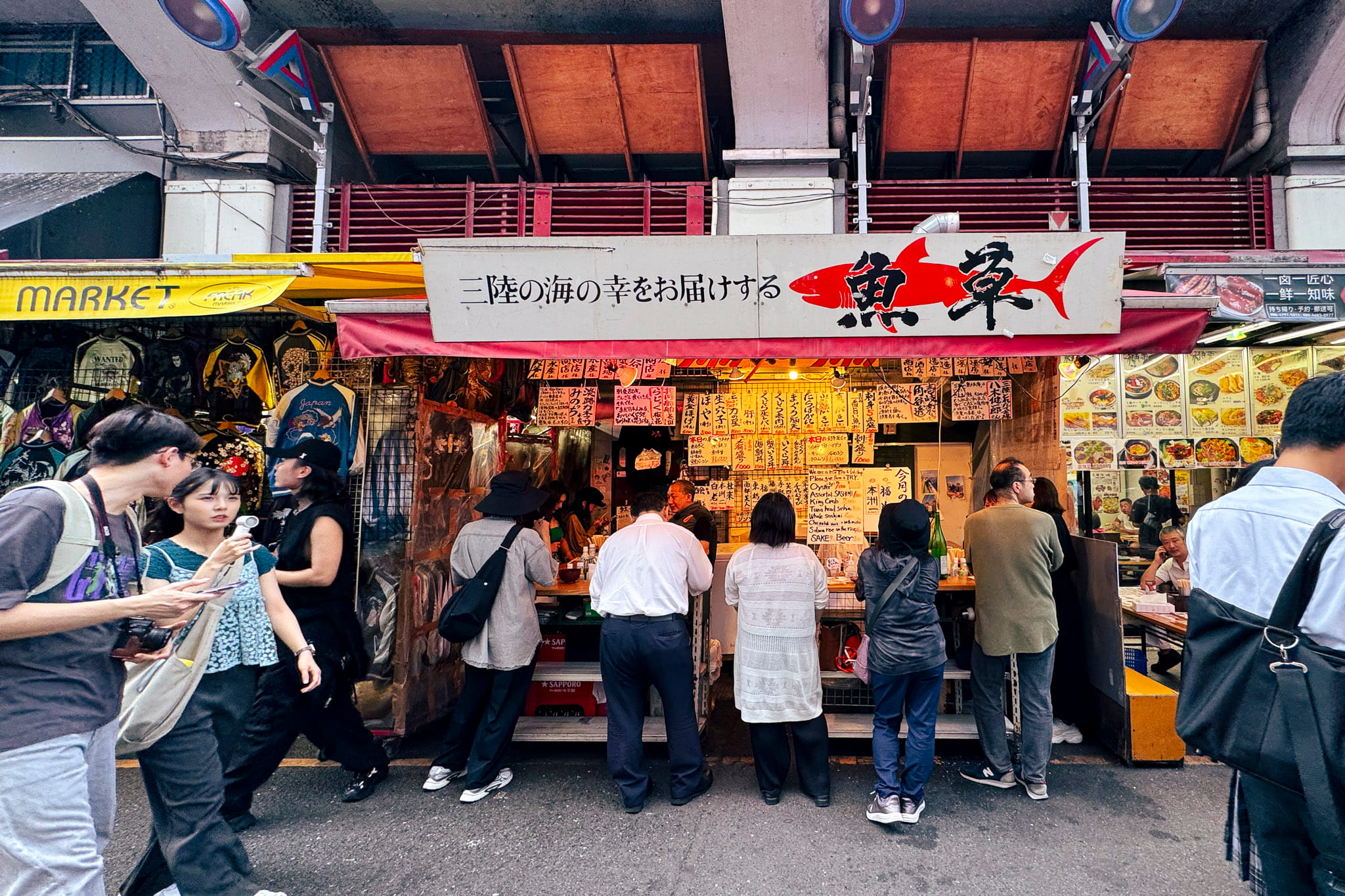
Another good choice is Uokusa, a stall functioning like a hybrid fresh fish merchant and standing bar where visitors can try raw oysters, sea urchin, or crab, paired with cheap local sake right on the sidewalk.
The market is particularly interesting around the end of the year, when seafood and traditional New Year’s ingredients become a major part of the shopping scene. Expect to see products such as crab, herring roe, salmon roe, and other foods commonly prepared for osechi and New Year’s celebrations.
Japanese Snacks and Sweets


For packaged snacks, Ameyoko has plenty of options, from everyday Japanese sweets to large bags of traditional snacks and imported products.
One of the most recognizable stops is Shimura Shoten, famous for its tatakiuri (super discount) chocolate sales, the shop’s signature attraction: more than 2,000 yen worth of chocolate and other sweets are packed into a bag and sold for 1,000 yen. It also operates as a confectionery outlet carrying both Japanese and international brands.
Niki no Kashi is another major destination for snack hunters, particularly if you’re looking for souvenirs in bulk. Its large selection makes it a useful stop for everything from classic Japanese dagashi to regional sweets and boxed snacks. And if you feel like having some fresh fruit, make sure to head to Hyakkaen, a long-standing fruit retailer since 1898 where you can get practical and refreshing fruits cut into plastic cups.
Imported Foods and Unusual Ingredients
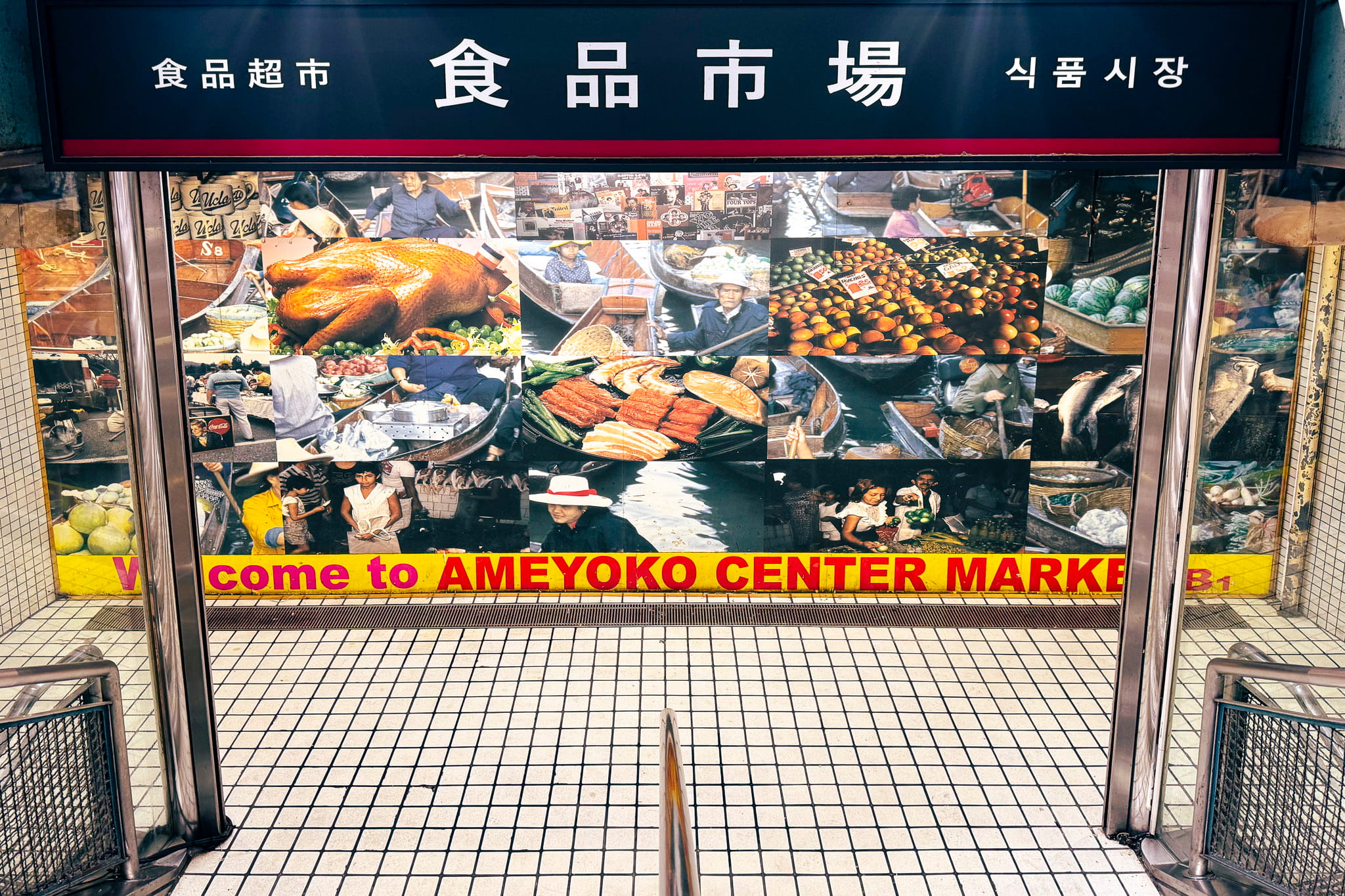
Ameyoko becomes increasingly interesting once you look beyond the obvious souvenir shops. International food stores sell spices, herbs, dried ingredients, sauces, snacks, and other products that can be difficult to find in ordinary Japanese supermarkets.
Kawachiya Foods, for example, carries products from around the world, including tea, herbs, spices, African and Italian ingredients, and imported cheeses.
For Chinese groceries, Ashu Foods specializes in Chinese food products and advertises daily bargain prices.
The B1F market inside Ameyoko Center Building takes this even further, with specialist vendors selling seafood and other ingredients that you might not expect to encounter in a shopping district aimed at tourists. One long-established fishmonger there sells everything from fresh seafood to less-common products such as live soft-shelled turtles and edible frogs. Note that this is a small market serving locals and not intended to be a tourist attraction, so photos are not allowed inside.
Cosmetics and Beauty Products
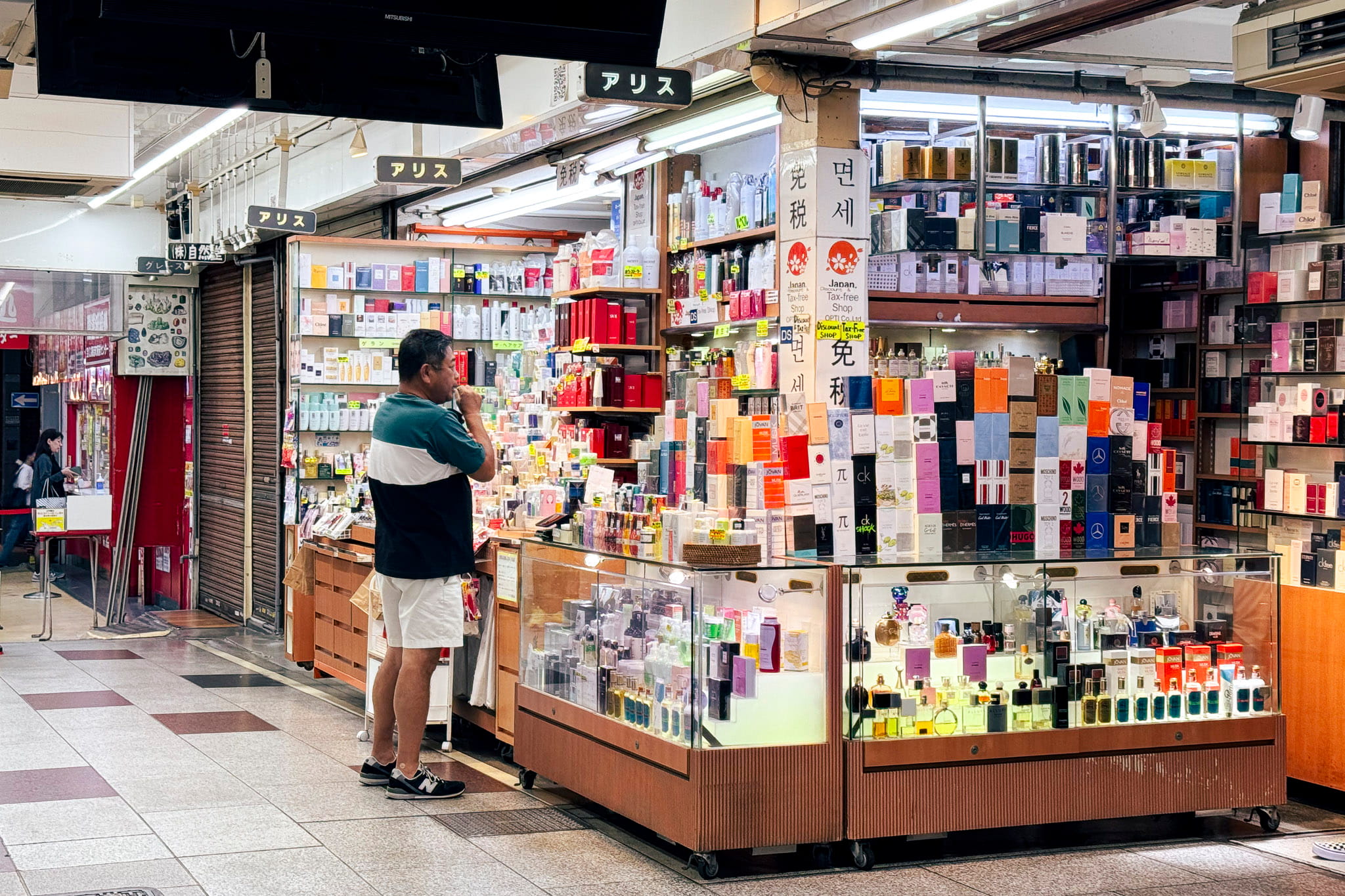
Cosmetics are another important part of Ameyoko’s bargain-shopping appeal. The official shopping directory lists numerous cosmetics and drugstores throughout the district, ranging from independent beauty shops to major drugstore chains.
For a more traditional local shopping experience, Sugata Cosmetics has operated in Ameyoko for more than 50 years and carries skincare, fragrances, makeup, and men’s products, including brands such as SK-II and Lancôme.
Prices and promotions vary from shop to shop, so this is one category where comparing a few stores can be worthwhile before buying.
Fashion, Sneakers and Vintage Goods


Ameyoko’s fashion scene is broad enough to keep traditional clothing shoppers and sneaker hunters interested. The official directory includes dedicated fashion stores, shoe shops, sports retailers, bags and accessories, watches, and discount outlets. Mita sneakers, for example, is listed among the district’s specialist footwear stores, while London Sports is known for its bargain-oriented sportswear selection.
You’ll also find military-inspired clothing, denim, leather goods, vintage-style apparel, and imported fashion. This is one of the areas where wandering pays off: shops can be packed tightly together, and the prices and inventory can vary considerably from one storefront to the next.
For visitors interested in Japanese fashion history, stores such as Nakata Shoten and Hinoya are worth researching before your visit, particularly for military-inspired pieces, Sukajan jackets, and Japanese denim.
Small Bargains and Things You Didn’t Plan to Buy


Part of Ameyoko’s appeal is that there is no single “must-buy” item. You can find dried beans and bonito flakes beside watches, bags, jewelry, belts, sporting goods, cosmetics, and imported foods. The official directory even separates the market into categories including fashion, shoes and bags, food, cosmetics, leisure, and other goods.
That’s probably the best way to approach Ameyoko: come with a few things in mind, then leave room for something unexpected. The market’s bargain-shopping culture is part of the experience, and the variety is exactly what makes a simple walk from Ueno to Okachimachi surprisingly easy to turn into a full afternoon.
Food and Street Eats at Ameyoko


Food is one of the easiest ways to enjoy Ameyoko without committing to a full meal. The market is packed with quick, inexpensive bites, from takoyaki and yakitori to seafood bowls, grilled seafood, fried snacks, and fruit served on skewers. JNTO specifically recommends looking for Ameyoko’s fruit-on-a-stick vendors, while local guides highlight the area’s mix of Japanese street food and casual international options.
For something filling, kaisendon is a popular choice: bowls of sashimi and other seafood served over rice. Takoyaki works better as a quick snack, with small portions making it easy to keep exploring afterward. Yakitori and other grilled foods are similarly convenient for grazing as you walk around the market.
One of Ameyoko’s more distinctive eating experiences is the tachinomiya, or standing bar. At places such as Uokusa, fresh oysters, scallops, crab, and other seafood can be paired with a drink at a standing counter rather than a conventional table. Nearby izakaya or restaurants provide a more relaxed option, with small dishes designed to be shared alongside beer or other drinks.
And don’t overlook dessert. Fresh or candied fruit on sticks, especially grapes, pineapple, melon, and strawberries when in season, is one of Ameyoko’s signature snacks and makes an easy break between shops. This is the one thing I almost never miss getting whenever I stop by the market.
The best approach is to graze rather than over-plan: grab a small bite, keep exploring, and stop again when something catches your eye.
Bargaining, Tax-Free Shopping and Payment
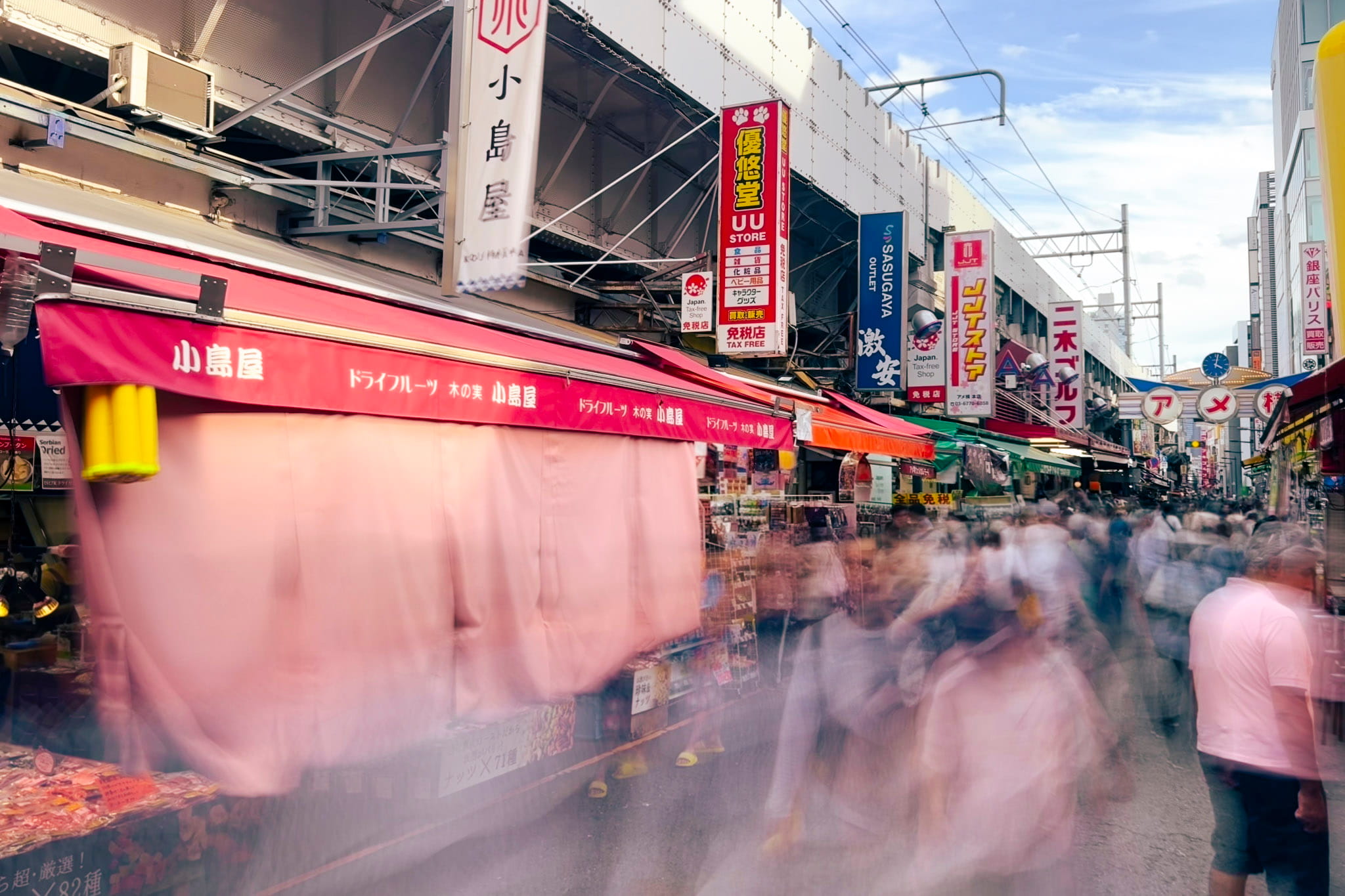
Ameyoko has a more flexible shopping style than a typical Japanese department store. Bargaining is possible at some independent shops, particularly for sporting goods and other discounted merchandise, but it is not an expectation everywhere. A polite question is fine but don’t assume every price is negotiable.
Payment methods also vary. Larger retailers and drugstores generally accept cards, but smaller food stalls and independent vendors may still prefer cash. Carrying some yen is useful, particularly when buying inexpensive snacks, street food, or goods from older market-style shops. Individual businesses publish their own accepted payment methods, so check before making a larger purchase.
Tax-free shopping is available at some Ameyoko stores, but it is not a district-wide benefit. Participating shops generally identify themselves as tax-free stores, and the conditions and minimum purchase requirements depend on the applicable rules and retailer. For example, some Ameyoko retailers explicitly advertise tax-free purchases for foreign visitors.
The simplest etiquette is to ask before negotiating, inspect goods carefully, and avoid blocking busy shop entrances while deciding what to buy. Ameyoko can get extremely crowded, so keeping transactions quick and moving aside when necessary makes the experience easier for everyone.
Opening Hours and Best Time to Visit


There is no single opening time for Ameyoko because it is a collection of independent shops and stalls rather than one enclosed market. Nearly all shops are open daily but individual businesses set their own hours. On average, shops open around 9:30–10:30 am and close around 7–8 pm, while some restaurants, drugstores, and other businesses stay open later.
For a quieter shopping experience, late morning on a weekday is a sensible choice. By afternoon, the streets become livelier, with more shoppers, food stops, and the energetic sales atmosphere that Ameyoko is known for. Weekends are generally busier, particularly around the most popular shopping and food areas.
Late December is a completely different experience. Ameyoko becomes one of Tokyo’s major destinations for year-end shopping, with crowds buying seafood, dried foods, confectionery, and ingredients for New Year’s celebrations. JNTO specifically notes that the area is especially crowded toward the end of the year and that some goods can sell out by the morning of December 31. For the classic year-end Ameyoko experience, arrive early.
For most visitors, around 10–11 am on a weekday is a good compromise: enough shops should be open, while the heaviest crowds have not yet arrived. If you are visiting specifically for the market’s loud, crowded atmosphere, go later in the day. My preferred slot is towards the evening, between 5 and 7 pm.
How to Get to Ameyoko
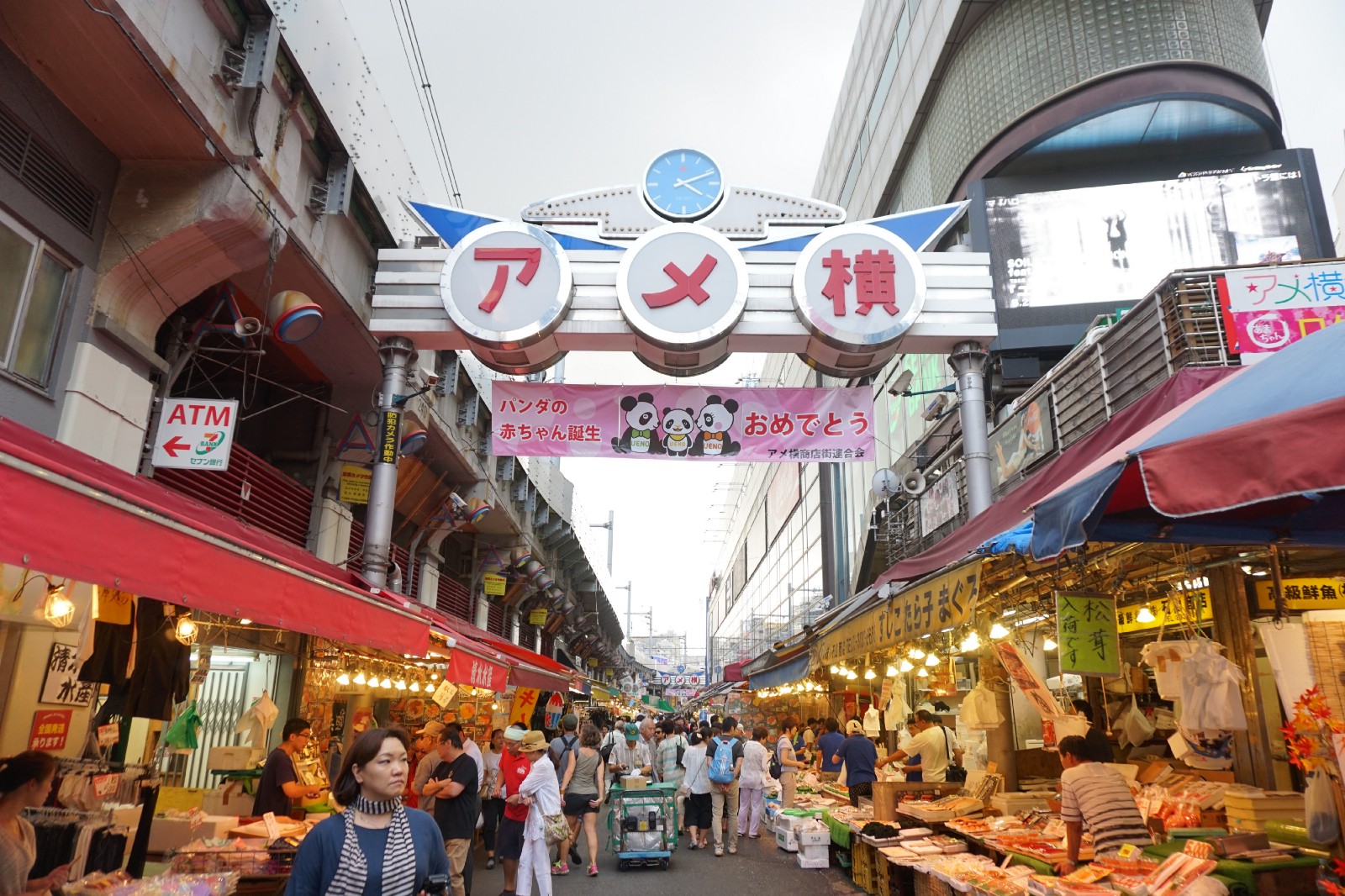
Ameyoko sits between JR Ueno Station and JR Okachimachi Station, making it easy to enter from either end. The shopping street itself stretches for roughly 500 meters, so your choice of station can also determine which part of the market you see first.
From JR Ueno Station, take the Shinobazu Exit. The entrance to Ameyoko is immediately nearby, making this the simplest option if you’re arriving from Ueno Park, Ueno Station’s JR lines, or Keisei Ueno.
You can also reach the Ueno end from the Tokyo Metro Ginza or Hibiya Line via Exit 7, which is about a two-minute walk from the market.
At the opposite end, JR Okachimachi Station’s North Exit puts you directly by Ameyoko. This is a useful starting point if you’re coming from the Okachimachi side or want to walk through the market toward Ueno.
Alternatively, Tokyo Metro Ueno-Hirokoji Station or Toei Ueno-Okachimachi Station are also located in close vicinity.
For a first visit, I’d recommend starting at Ueno and walking toward Okachimachi. It gives you the full length of the market in one direction, and you can continue naturally toward Okachimachi, Ueno Hirokoji, or the surrounding shopping streets once you’ve finished exploring Ameyoko. The official Ameyoko map shows the various shopping-street areas connecting along this stretch.
| Access |
JR Ueno Station and JR Okachimachi Station |
|---|---|
| Business Hours |
Varies by individual business |
| Official Website |
https://ameyokoinfo.com/ |
Nearby Attractions
Ameyoko is surrounded by some of Tokyo’s best-known sights, making it easy to combine shopping with temples, museums, parks, and traditional neighborhoods.
Ueno Park
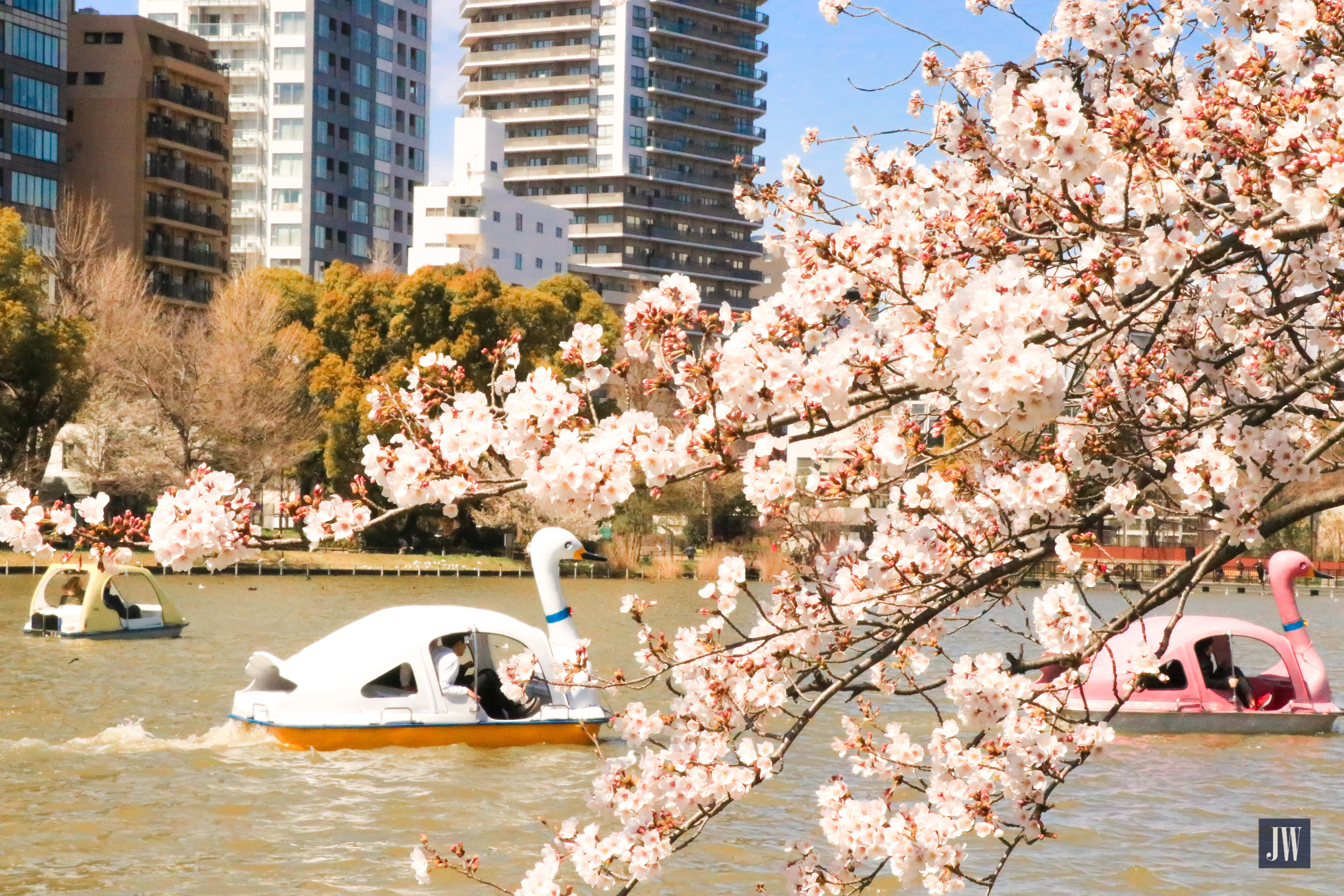
Just west of Ameyoko, Ueno Park is one of Tokyo’s major cultural areas, home to the Tokyo National Museum, National Museum of Nature and Science, Tokyo Metropolitan Art Museum, Ueno Zoo, and several historic temples and shrines. It is a good choice if you want to pair Ameyoko with museums or a few hours of sightseeing.
Ueno also has several temples and shrines tucked around the park, including Kaneiji Temple, one of the area’s historic Buddhist institutions, as well as Ueno Toshogu, dedicated to the Shogun Ieyasu Tokugawa. These quieter grounds provide a sharp contrast with the busy shopping streets around Ameyoko.
Related: 13 Best Things to Do in Ueno
Yanaka
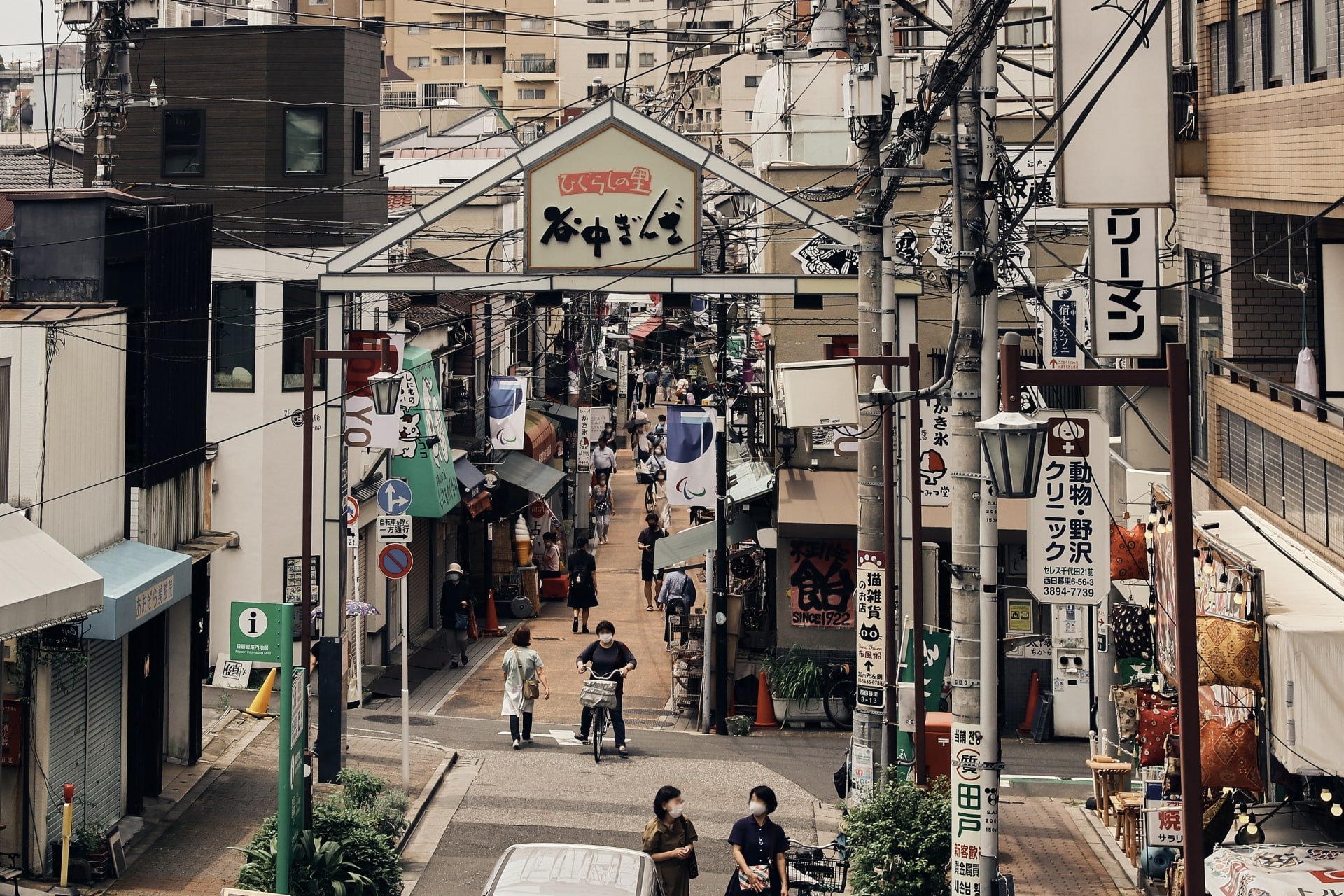
For a very different side of Tokyo, head north toward Yanaka, known for its old-fashioned residential streets, traditional temples, small shops, and Yanaka Ginza shopping street. It is a good pairing with Ameyoko for travelers interested in Tokyo’s shitamachi atmosphere.
More info: The Ultimate Guide to Yanaka Ginza: Tokyo’s Best Street Food and Retro Charm
Nezu Shrine
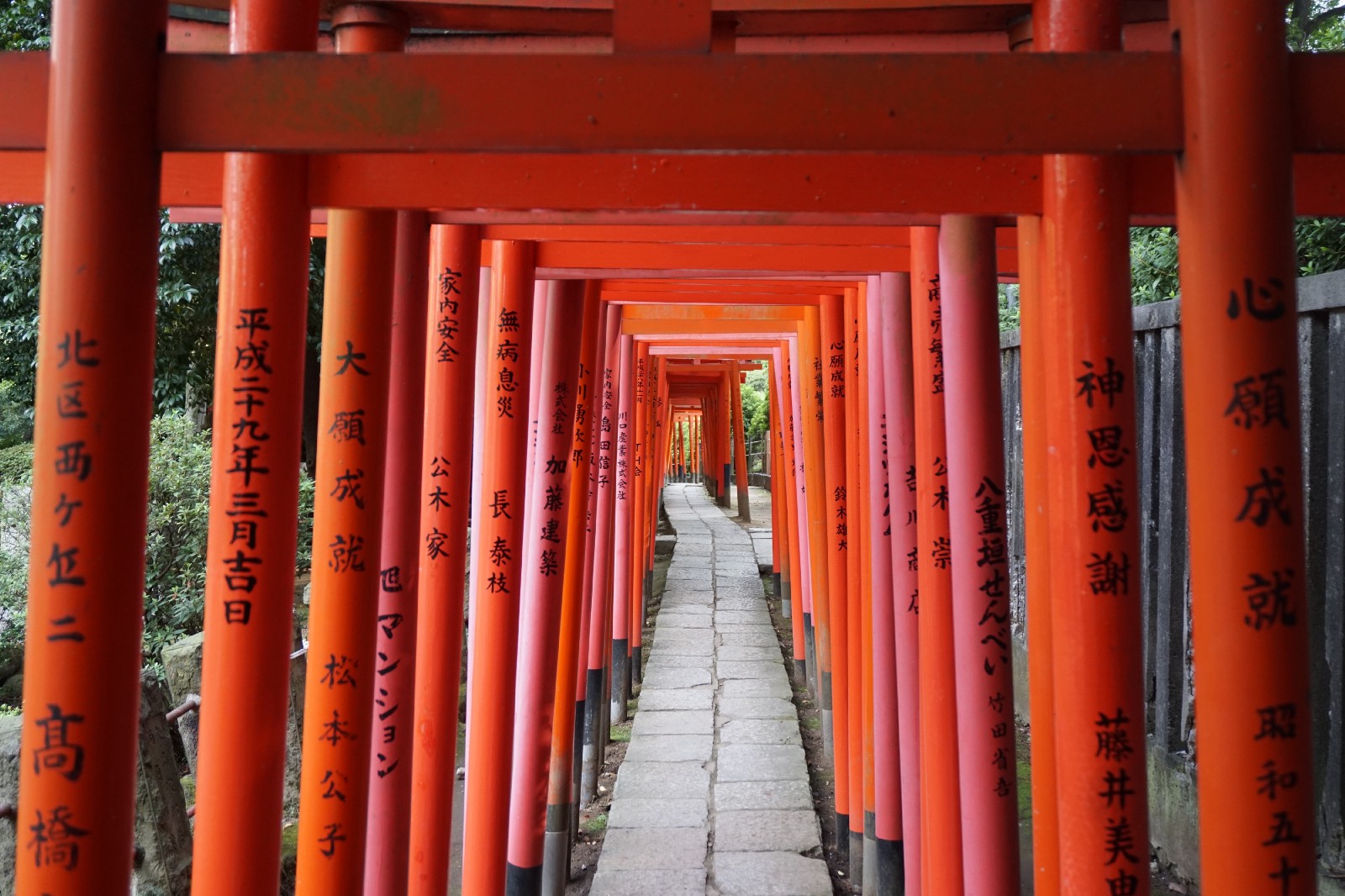
Northwest of Ueno, Nezu Shrine is one of Tokyo’s most attractive historic shrines, particularly known for its rows of red torii gates and azalea gardens in spring. It works well as a quieter alternative to the busier attractions around Ueno.
For a first visit, Ueno Park + Ameyoko is the easiest combination because of their proximity. Travelers with more time can continue toward Yanaka, Akihabara, or Asakusa to turn the visit into a full day of exploring Tokyo’s older eastern districts.
FAQs About Ameyoko
What is Ameyoko famous for?
Ameyoko is famous for its bargain shopping, fresh seafood, Japanese snacks, street food, cosmetics, fashion, and lively market atmosphere. The roughly 500-meter shopping district between Ueno and Okachimachi also has a long history dating back to Tokyo’s postwar black-market era.
What can you buy at Ameyoko?
You can find fresh and dried seafood, Japanese sweets and snacks, imported foods, cosmetics, clothing, sneakers, sporting goods, vintage-style items, and other bargain goods. The Ameyoko Center Building’s B1F is particularly interesting for imported spices, ingredients, and international foods.
What time does Ameyoko open?
There is no single opening time because Ameyoko is made up of many independent shops. Many businesses open around 10am and close around 7–8pm, although individual hours vary. Late morning is a good time to visit if you want most shops open without the heaviest crowds.
How do I get to Ameyoko?
The easiest access is from JR Ueno Station’s Shinobazu Exit or JR Okachimachi Station’s North Exit. From the Tokyo Metro Ginza or Hibiya Line at Ueno, Exit 7 is about a two-minute walk from the market. The two stations sit at opposite ends of the roughly 500-meter shopping district.
Can you bargain at Ameyoko?
Bargaining is possible at some independent shops, but it is not expected everywhere. It is more common in certain bargain-oriented stores than in supermarkets, chain stores, or restaurants. Ask politely rather than assuming a discount is available.
Is Ameyoko cash-only?
No, but cash is still useful. Many larger stores accept credit cards and other electronic payments, while smaller stalls and independent vendors may prefer cash. Carrying some yen is recommended, especially for inexpensive food and purchases from traditional market stalls.
For more area guides and nearby ideas, check these articles too!
Written by
Photographer, journalist, and avid urban cyclist, making sense of Japan since 2017. I was born in Caracas and lived for 14 years in Barcelona before moving to Tokyo. Currently working towards my goal of visiting every prefecture in Japan, I hope to share with readers the everlasting joy of discovery and the neverending urge to keep exploring.
- +0 0
-
-