Tokyo Autumn Leaves 2026: Where to Go and When
A Local's Guide to 10 Spots from Ealy November to Mid-December


- +0 0
-

-


For many international visitors, Tokyo is often seen at its most iconic during cherry blossom season, but autumn is getting more and more recognition for the way it brings a different kind of seasonal scenery to the city. From late November into early December, ginkgo trees turn brilliant shades of yellow, Japanese maples develop deep red foliage, and parks and traditional gardens take on a completely different appearance. The season also extends beyond central Tokyo, with mountain landscapes and expansive parks providing a change of scenery from the city’s busy streets.
The best time to see autumn leaves in Tokyo varies by location. Some spots reach their peak in mid-November, while others look their best several weeks later. This guide covers 10 of the best places to enjoy the season, from the famous ginkgo avenue at Meiji Jingu Gaien to the maple-covered trails of Mount Takao. For each destination, you’ll find its main foliage highlights, the best time to visit, admission information, and practical access details to help plan your trip.
See also: Japan Autumn Leaves Forecast 2026
Quick Comparison: Best Autumn Leaves Spots in Tokyo
The table below provides a quick overview of the 10 destinations, including their typical foliage periods and what makes each one worth visiting. Peak dates can shift from year to year depending on temperatures and weather, so treat these windows as general guidance rather than fixed dates.
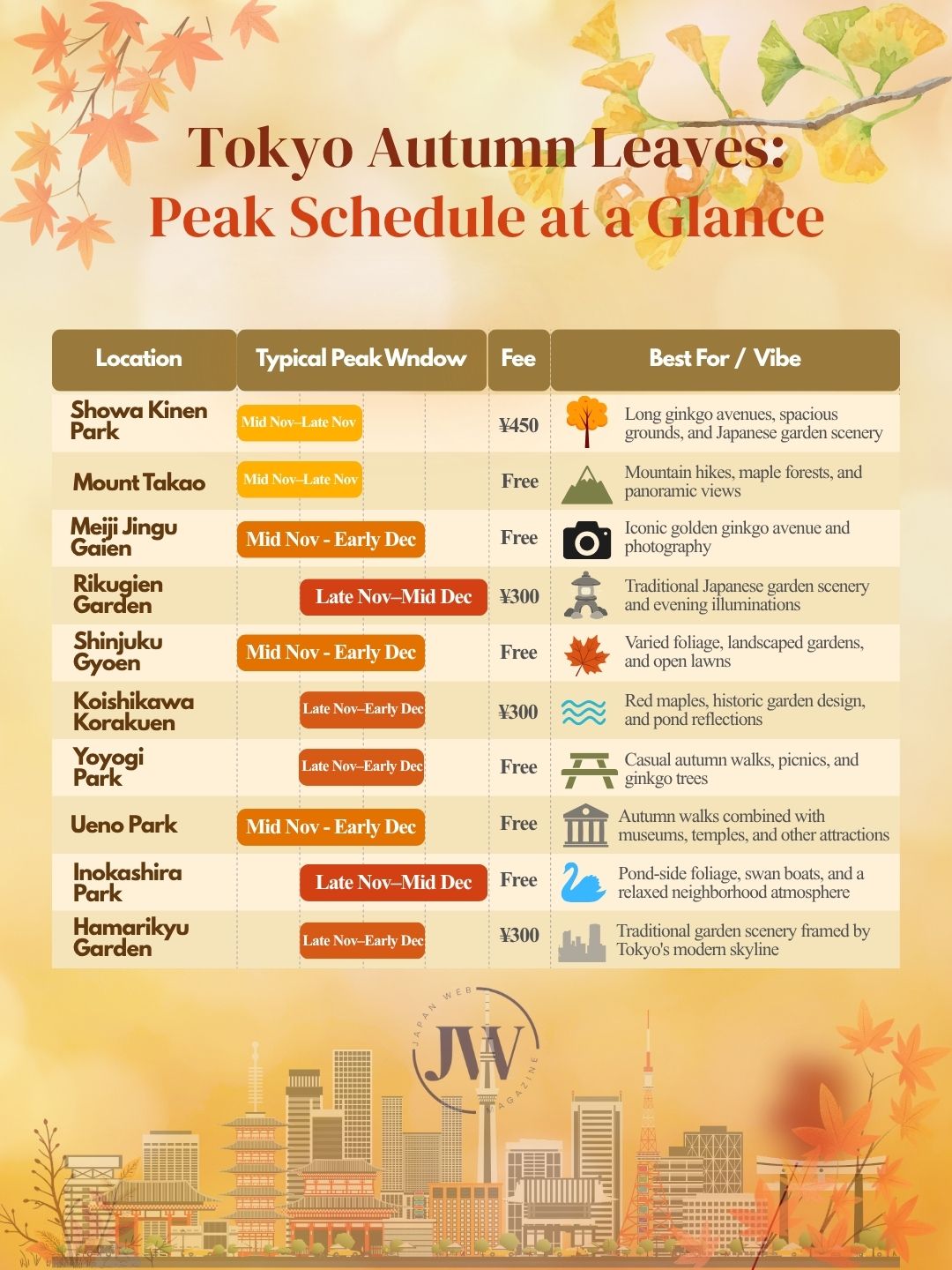
Admission prices are standard adult rates. Mount Takao’s trails are free to access, but the cable car, chairlift, and transport to the mountain cost extra. Seasonal dates are approximate and can shift with the weather.
A useful distinction when planning is that Showa Kinen Park and Mount Takao can reach their best colors earlier than many central Tokyo gardens. The official Tokyo tourism guide places the city’s main foliage season between mid-November and early December, while mountain areas such as Mount Takao can begin changing earlier. Showa Kinen Park also has an earlier ginkgo season, so it is worth considering if your visit falls in November rather than December.
Key Dates for Tokyo (2026 Forecast)
These dates are estimations based on the Japan Meteorological Corporation’s latest forecast, but bear in mind that weather conditions may vary:
- Yellow Ginkgo Leaves: Estimated to turn yellow around November 26, 2026 (close to the seasonal average of November 23).
- Red Maple (Momiji) Leaves: Estimated to turn red around November 28, 2026 (right on the seasonal average of November 28).
- Peak Viewing Window in Central Tokyo: Late November through mid-December (roughly November 25 to December 10 for parks and gardens).
1. Showa Kinen Park (Tachikawa)
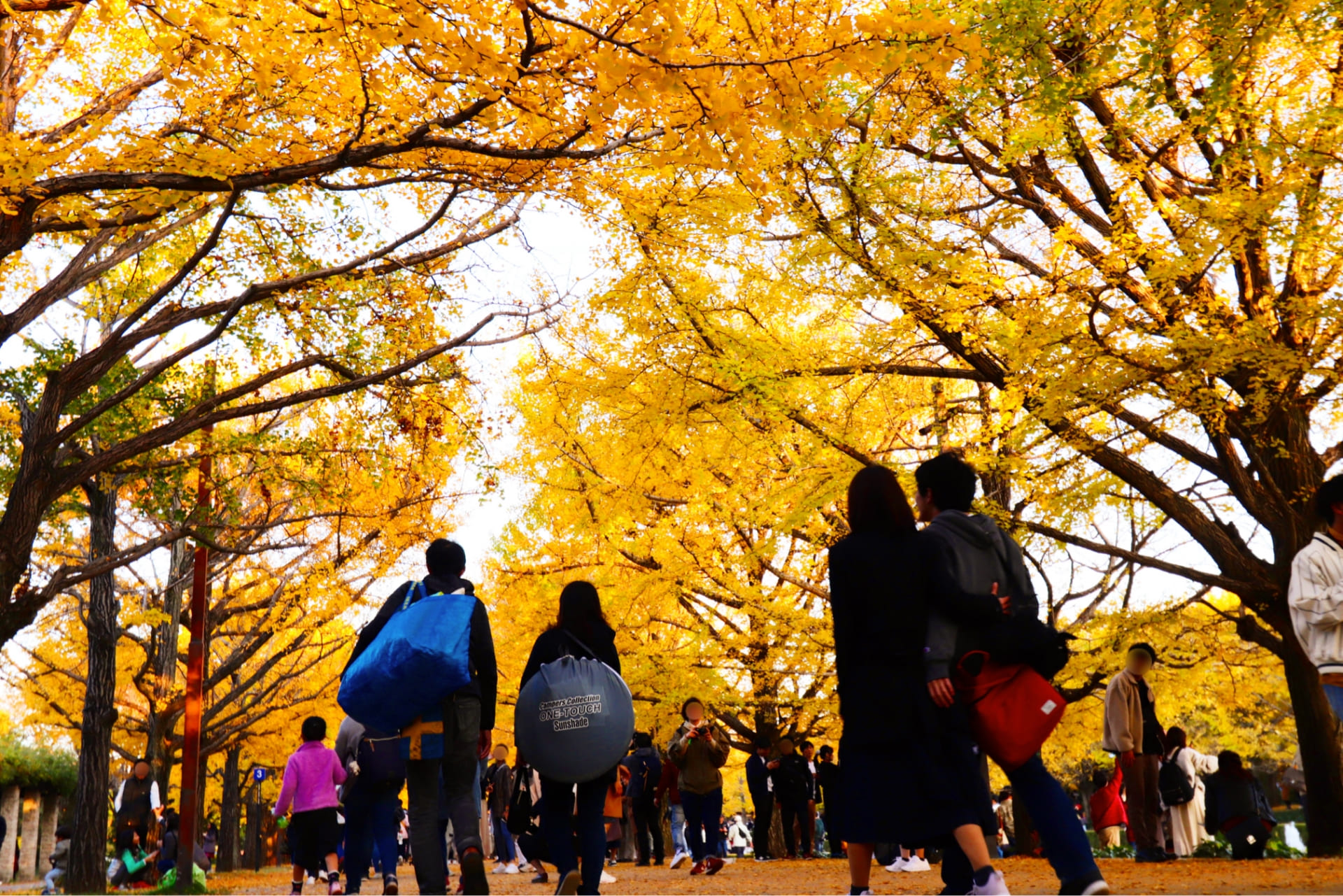
Located in Tachikawa, west of central Tokyo, Showa Kinen Park is one of the best places in the city to enjoy autumn foliage. Its most recognizable seasonal attractions are two ginkgo-lined avenues: the avenue beside the canal, stretching for approximately 200 meters, and a second ginkgo avenue near the sports area, which is even longer, extending for around 300 meters. In both cases, rows of trees form a striking golden tunnel when the leaves turn yellow.
Beyond the ginkgo trees, the park’s Japanese garden is the other great highlight during autumn. Red and orange maple leaves frame its ponds and traditional landscaping, creating a completely different atmosphere from the open avenues. With several areas to explore, the park is an excellent choice for a half-day outing.
Although Nishi-Tachikawa Station is right in front of Nishi-Tachikawa Gate, during this season I’d rather encourage you to enter through Tachikawa Gate, despite the longer walk from JR Tachikawa Station, to enjoy the canal-side ginkgo avenue right from the start. For the best experience overall, allow at least three to four hours to explore the main foliage areas at a comfortable pace.
For more details, read my complete, first-hand visitor’s guide to Showa Kinen Park during peak foliage season.
 Access |
18-min walk from Tachikawa Station or 2-min walk from Nishi-Tachikawa Station |
|---|---|
 Business Hours |
9:30 AM–4:30 PM November to February, open until 5 PM from March to October (open until 9 PM during special autumn illumination, check official website for details) |
 Price |
450 yen |
 Official Website |
https://www.showakinen-koen.jp/ |
2. Mount Takao / Takaosan (Hachioji)
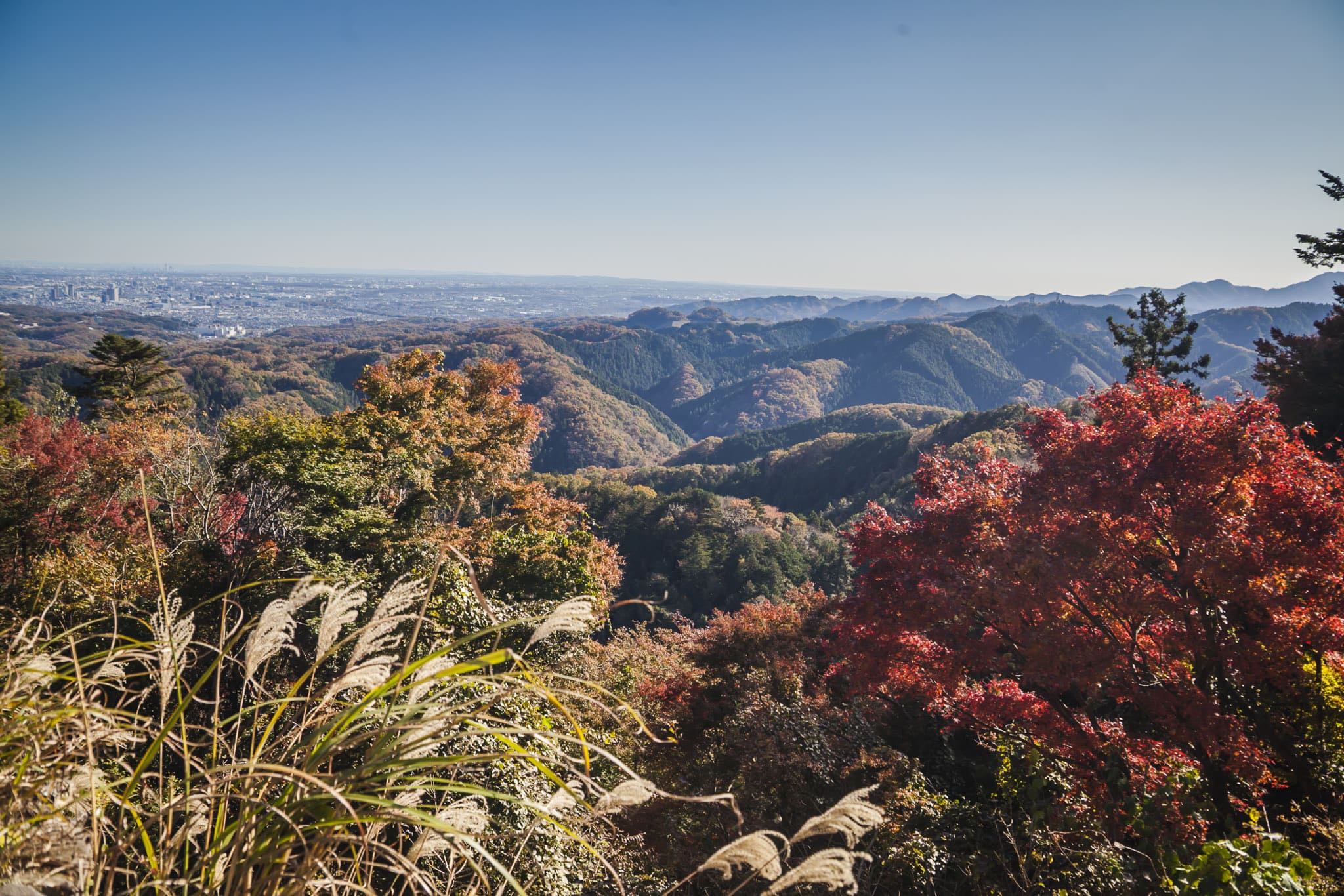
For a change of scenery from Tokyo’s landscaped parks and city gardens, head west to Mount Takao. Standing 599 meters above sea level, the mountain is a popular hiking destination with forested slopes, mountain views, and several trails leading to the summit. During autumn, its mix of deciduous trees turns shades of red, orange, and yellow, creating colorful views along the routes.
The foliage is usually at its best from mid-November to early December, although the upper slopes can change color before the lower areas. One of the easiest ways to enjoy the scenery is to take the cable car from Kiyotaki Station to Takaosan Station. The ride climbs partway up the mountain, passing through wooded slopes and offering views of the autumn colors along the way. From there, you can continue toward Yakuoin Temple and the summit on foot.
Getting there is straightforward: take the Keio Line from Shinjuku Station to Takaosanguchi Station, a journey of approximately 55 minutes. The mountain is free to access, but the cable car and chairlift require separate tickets. See our dedicated transport guide for more details.
Mount Takao becomes particularly crowded on weekends during peak foliage season, especially in the second half of November. Arrive early or plan a weekday visit to avoid the longest queues. For trail options and transport details, check out our detailed guide for autumn hiking on Mt. Takao.
| Access |
Access routes start from Takaosanguchi Station |
|---|---|
| Business Hours |
24 hours |
| Price |
Free |
| Official Website |
https://www.city.hachioji.tokyo.jp/kankobunka/001/004/p003393.html |
3. Meiji Jingu Gaien (Aoyama)
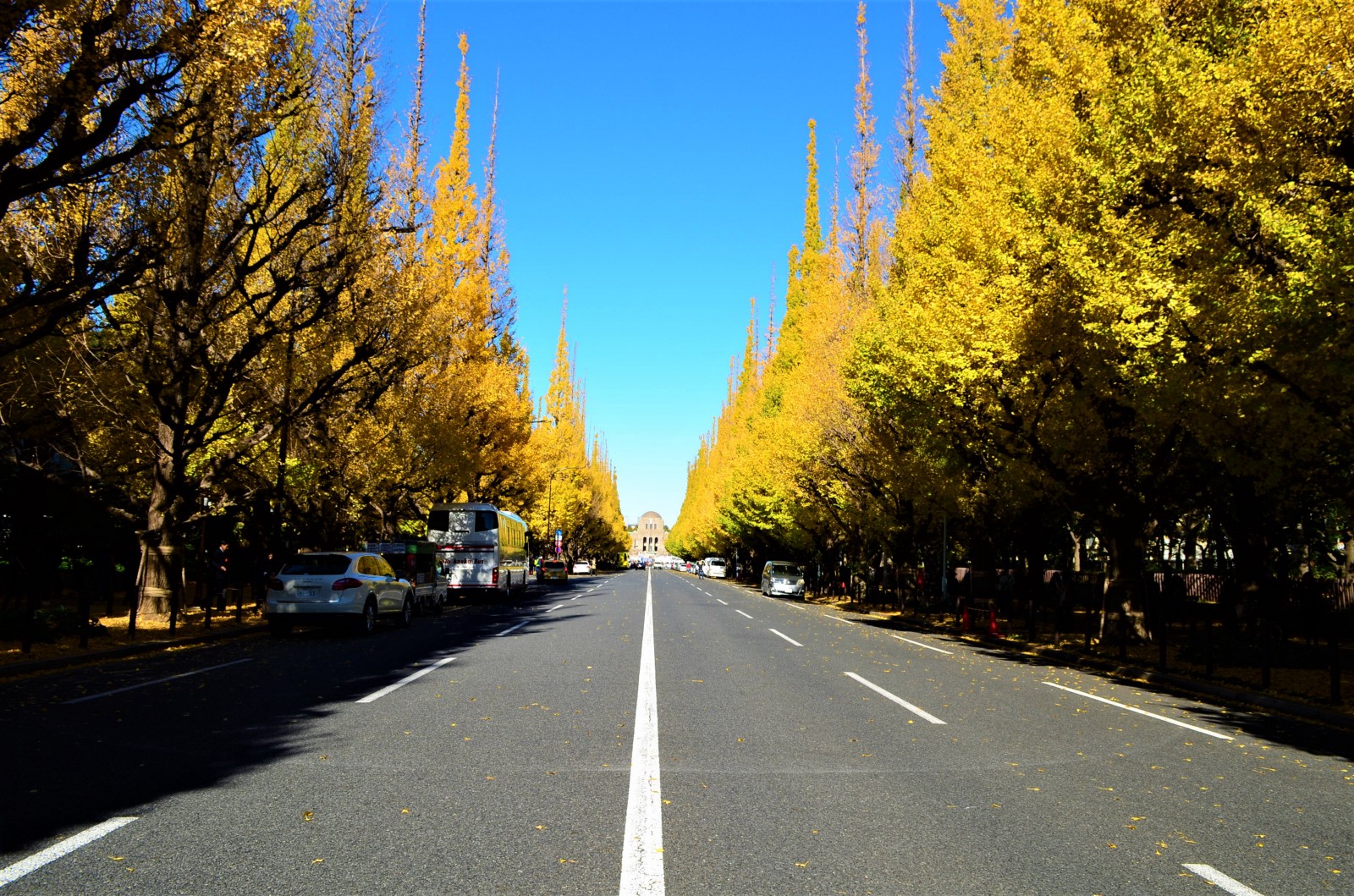
Meiji Jingu Gaien is one of Tokyo’s most recognizable autumn spots, thanks to its famous Icho Namiki (Ginkgo Avenue). The tree-lined approach stretches for approximately 300 meters, with rows of carefully pruned ginkgo trees forming a striking golden corridor. At the far end, the avenue frames the Meiji Memorial Picture Gallery, creating the distinctive view that appears in many photographs of Tokyo in autumn.
The ginkgo trees generally reach their best color from mid-November to early December, although the timing varies with the weather. The avenue is free to visit and remains accessible as a public walkway so you can enjoy the foliage without buying a ticket or planning around garden opening hours.
However, as this is one of the busiest autumn spots in Tokyo, particularly on weekends when the ginkgo leaves are at their brightest, for those who may prefer a quieter walk and better opportunities to take photographs, my advise would be to try to aim to arrive before 8:30 AM, ideally on a weekday. By late morning, the avenue can become crowded with visitors stopping for pictures.
| Access |
3-min walk from Gaienmae Station or Aoyama-Itchome Station on the southern side or 10-min walk from Shinanomachi Station on the northern side. |
|---|---|
| Business Hours |
24 hours |
| Price |
Free |
| Official Website |
http://www.meijijingugaien.jp/ |
4. Rikugien Garden (Bunkyo)

For traditional Japanese garden scenery, Rikugien Garden is one of Tokyo’s standout autumn destinations. Created in the early Edo period for feudal lord Yanagisawa Yoshiyasu, this landscaped garden features a large central pond, winding walking paths, small hills, and carefully arranged views inspired by classical Japanese poetry. In autumn, its many maple trees turn shades of red and orange, with some of the best scenery around the pond, Togetsukyo Bridge, and Tsutsuji Chaya teahouse.
The usual viewing period runs from late November to early December, making Rikugien a good choice for travelers visiting Tokyo toward the end of the season. Its traditional garden design also makes it particularly attractive for photography, with colorful foliage reflected in the water.
The garden also holds a special autumn nighttime viewing event, when the trees and garden features are illuminated. For 2026, the event is scheduled from November 25 to December 6, from 6:00 PM to 8:30 PM, with last admission at 7:30 PM. Nighttime tickets cost 1,000 yen for online purchases in advance; same-day tickets cost 1,200 yen. The garden closes temporarily at 5:00 PM before reopening for ticket holders, so check the event’s official information before visiting.
| Access |
5-min walk from Komagome Station |
|---|---|
| Business Hours |
9 AM–5 PM |
| Price |
300 yen | Night illumination event 1,000 yen in advance, 1,200 yen same day |
| Official Website |
https://www.tokyo-park.or.jp/park/rikugien/ |
5. Shinjuku Gyoen National Garden (Shinjuku)

Shinjuku Gyoen National Garden is one of the best places in central Tokyo to see several types of autumn foliage in a single visit. Its spacious grounds combine a traditional Japanese garden, a French formal garden, and an English landscape garden, each with its own seasonal scenery. As a Shinjuku resident, I find this variety particularly appealing when I want to enjoy more than one style of autumn landscape without traveling across the city.
Autumn colors generally appear from mid-November to mid-December, with different tree varieties reaching their best at different times. The Japanese garden and the area around the Lower Pond are among the best places to see red and yellow maple leaves. One of the things I love to do here is to get a nice warm drink at the Starbucks Coffee by the pond, and sit and enjoy the landscape if I’m lucky enough to find an available seat facing the garden.
Also, don’t miss the ginkgo trees in front of the greenhouse, which turn a brilliant gold. The rows of London plane trees in the Formal Garden provide another highlight, with their broad canopies gradually changing color through late autumn.
There are several cafes and small restaurants inside the garden, all of them great options to pair with your visit, so allow for at least a couple of hours to stroll calmly and enjoy all the different sights.
| Access |
Main entrance on the northwestern side: 5-min walk from Shinjuku Gyoenmae Station or Shinjuku-sanchome Station. Okito Gate on the northeastern side: 10-min walk from Yotsuya-Sanchome Station. Sendagaya Gate on the southern side: 5-min walk from Sendagaya Station. |
|---|---|
| Business Hours |
9 AM–4:30 PM |
 Closed |
Monday (except for special events or if a national holiday falls on Monday. In that case, the park will be closed on Tuesday. Check the calendar on the official website for details) |
| Price |
500 yen |
| Official Website |
https://www.env.go.jp/garden/shinjukugyoen/index.html |
6. Koishikawa Korakuen (Bunkyo)
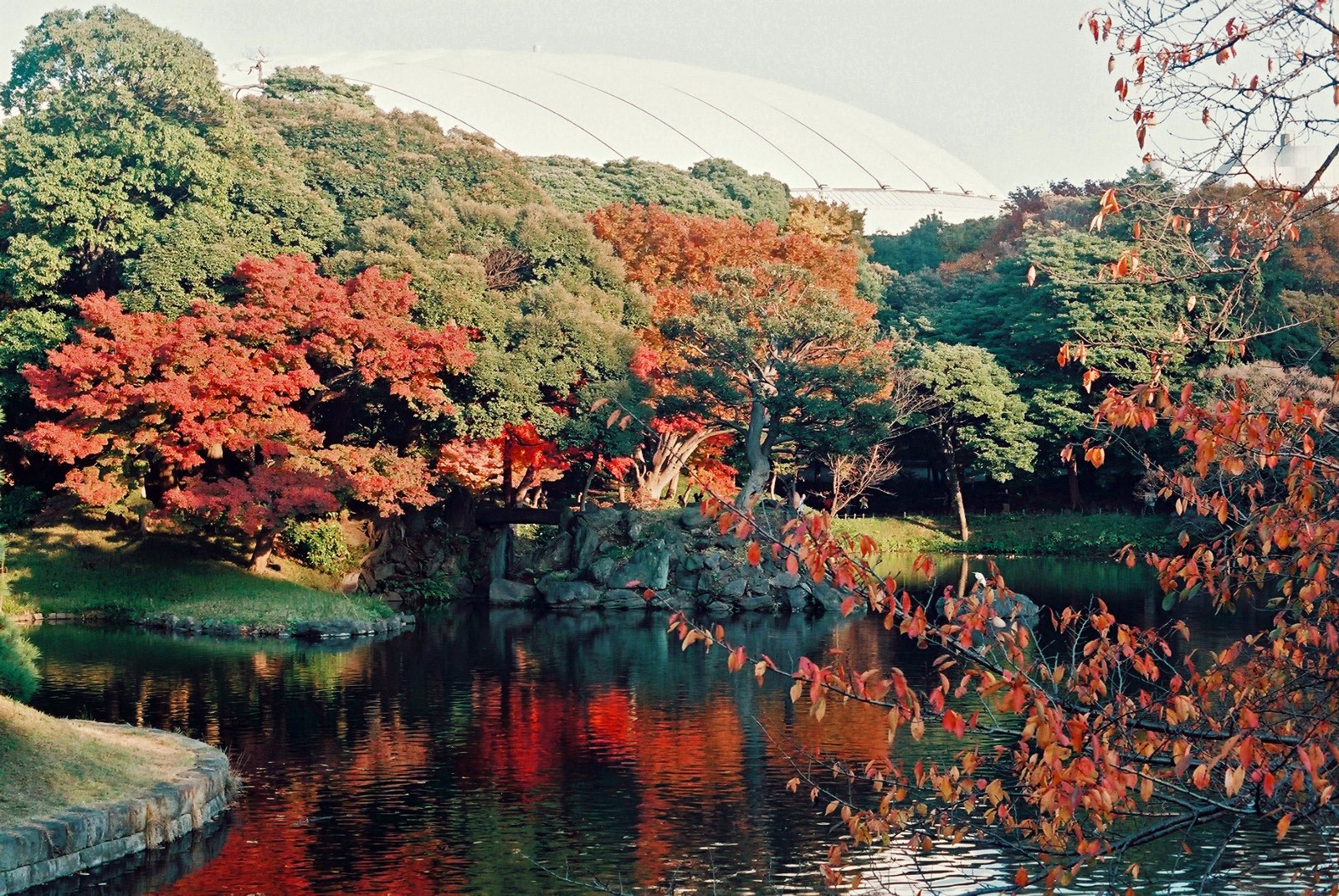
Koishikawa Korakuen is one of Tokyo’s oldest traditional gardens, dating back to 1629, and probably one of my favorite spots on this list after Showa Kinen Park. Originally created as the garden of the Mito branch of the Tokugawa family, it combines Japanese landscaping with features inspired by famous Chinese scenery. Its central pond, winding paths, miniature hills, and carefully positioned bridges create a series of different views as you walk around the grounds.
Autumn is one of the garden’s most attractive seasons, with maple trees turning shades of red and orange around the ponds and walking paths. Look out for the Full Moon Bridge, whose curved shape and reflection create a distinctive circular image in the water. Unlike some of Tokyo’s larger parks, Koishikawa Korakuen has a more contained garden layout, making it a good choice for a quieter foliage visit, although it can still get busy during peak season.
The best viewing period is generally late November to early December.
| Access |
8-min walk from Korakuen Station |
|---|---|
| Business Hours |
9 AM–5 PM (Last entry 4:30 PM) |
| Price |
300 yen |
| Official Website |
https://www.tokyo-park.or.jp/park/koishikawakorakuen/ |
7. Yoyogi Park (Harajuku)
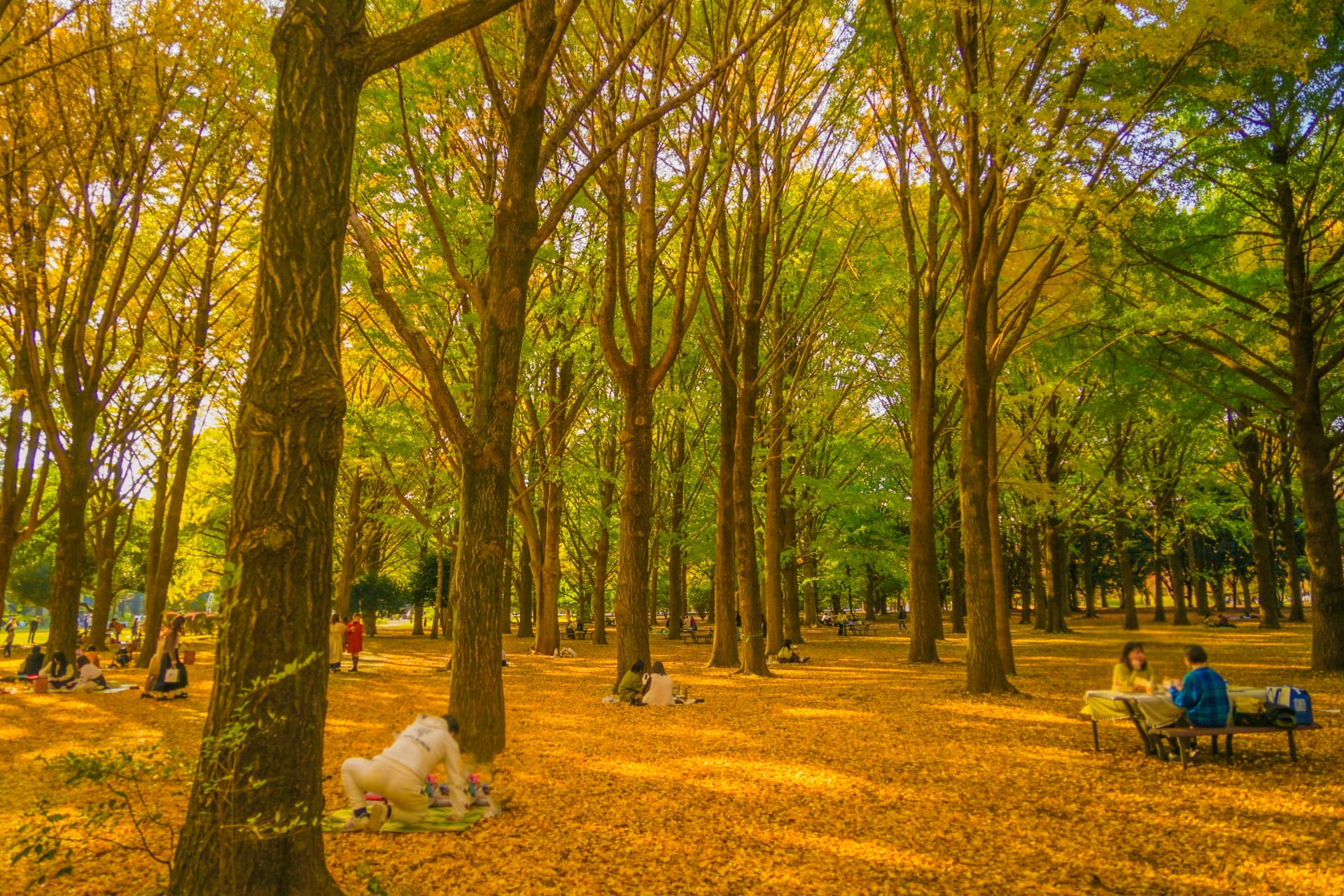
If you prefer an informal park visit over a carefully landscaped garden, Yoyogi Park is an easy addition to an autumn itinerary. Located beside Meiji Jingu Shrine and within walking distance of Harajuku, it has broad lawns, wooded areas, and open paths that make it popular for walking, cycling, and picnics. Its ginkgo trees turn golden toward the end of autumn, while other deciduous trees add seasonal color around the park.
The main foliage period is generally late November to early December. Unlike the formal ginkgo avenue at Meiji Jingu Gaien, Yoyogi Park is better suited to a relaxed stroll, with plenty of room to spread out and take a break. It also works well as part of a wider visit to the Harajuku area, particularly if you are already planning to see Meiji Jingu Shrine.
Entry is free, and the park itself is open at all times, so you can visit early or stay into the evening. However, individual facilities have their own operating hours.
| Access |
3-min walk from Harajuku Station or Yoyogi-koen Station |
|---|---|
| Business Hours |
24 hours |
| Price |
Free |
| Official Website |
https://www.tokyo-park.or.jp/park/yoyogi/ |
8. Ueno Park (Ueno)
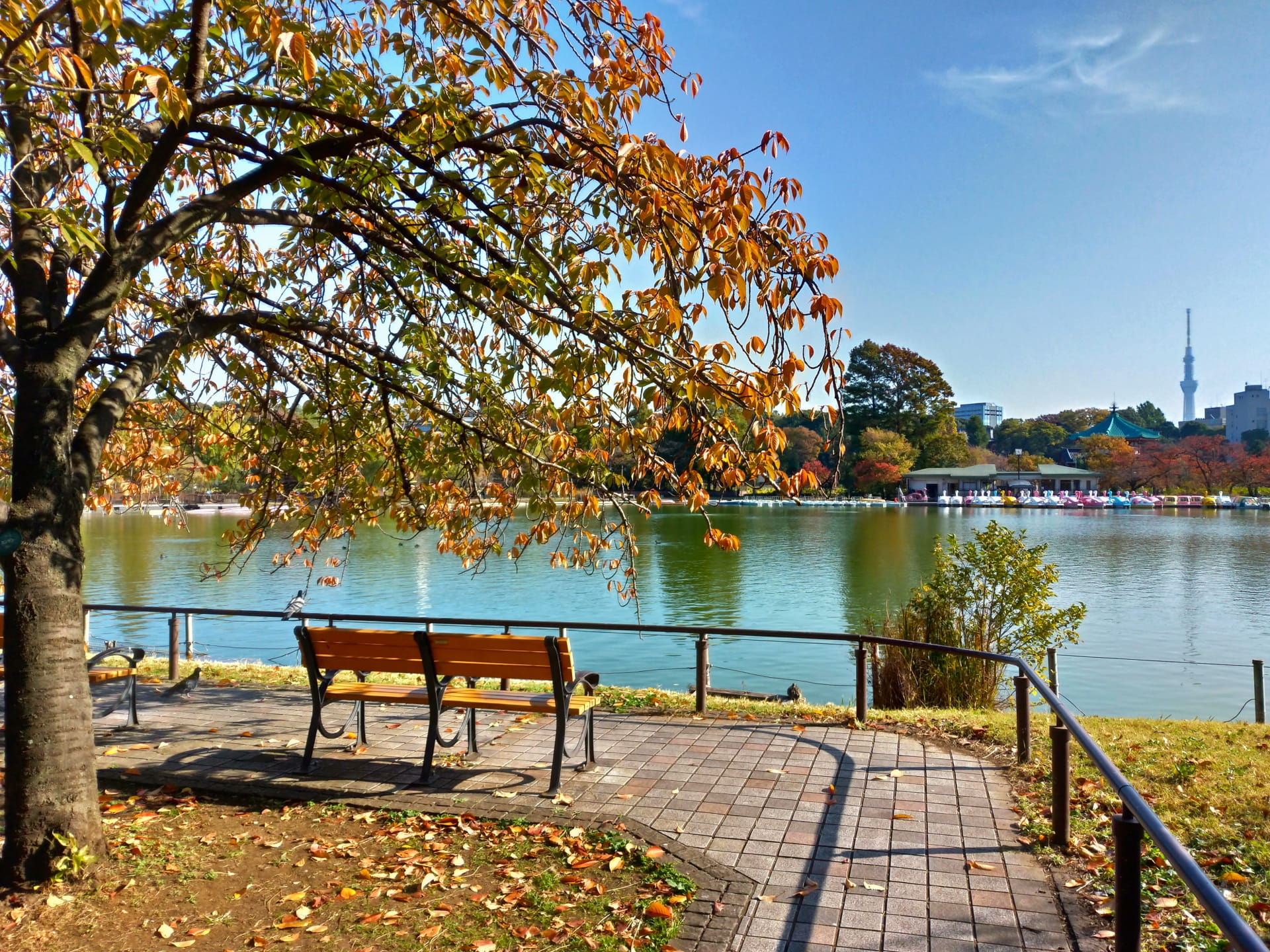
Ueno Park is best known for its cherry blossoms, but its extensive grounds also make it a worthwhile destination during autumn. The park contains thousands of trees, including ginkgo, zelkova, and maple varieties, which bring a mix of golden and red colors to its paths and green spaces. The main walking routes are particularly pleasant during the season, while the area around Shinobazu Pond provides a different setting, with water views and Bentendo Temple on its small island.
The typical foliage period is mid-November to early December, although individual trees change at different times. Ueno is also a practical choice if you want to combine an autumn walk with some sightseeing. The park is home to several major cultural attractions, including the Tokyo National Museum, and the National Museum of Nature and Science.
Ueno is a lively destination throughout the year, so expect considerable foot traffic around the main paths and popular attractions, particularly on weekends. For a more relaxed foliage walk, visit earlier in the day before combining the park with its museums or nearby Ameyoko shopping street.
| Access |
The main entrance is about 5-min walk from Ueno Station's Park Exit. Access also available from the Tokyo Metro and Keisei Ueno stations. |
|---|---|
| Business Hours |
5 AM–11 PM |
| Price |
Free |
| Official Website |
https://www.kensetsu.metro.tokyo.lg.jp/jimusho/toubuk/ueno |
9. Inokashira Park (Kichijoji)
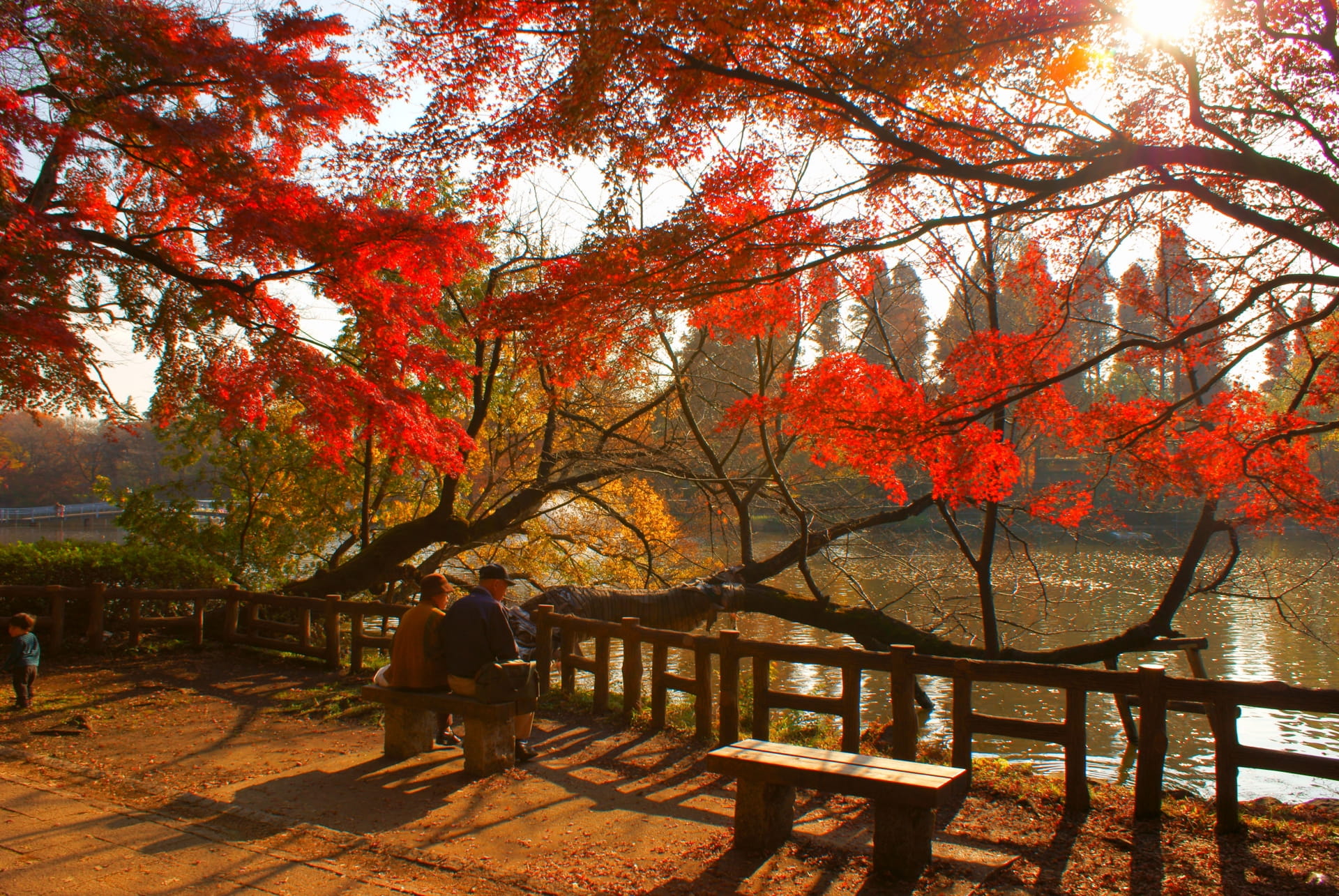
Located in western Tokyo, Inokashira Park is a popular destination for autumn walks, with colorful trees surrounding its central pond and wooded areas. The best views are around Inokashira Pond, where red and yellow foliage is reflected on the water. For a nice vantage point, cross Nanai Bridge, which spans the middle of the pond and provides an unobstructed view of the surrounding trees.


You can also rent a swan-shaped pedal boat and enjoy the autumn scenery from the water. On the western side of the park, the wooded Gotenyama area offers a different landscape, with broadleaf trees turning shades of yellow and orange. Aim for a visit from late November to mid-December as the best period for autumn colors here.
Entry to the park is free, and its grounds are open around the clock. Boat rentals operate on a seasonal schedule, however, with shorter hours in November and winter closures on some Wednesdays.
The surrounding Kichijoji neighborhood also has plenty of cafes, restaurants, and independent shops, making it easy to turn a foliage walk into a relaxed half-day outing.
| Access |
1-min walk from Inokashira-koen Station or 7-min walk from Kichijoji Station |
|---|---|
| Business Hours |
24 hours |
| Price |
Free |
| Official Website |
https://www.kensetsu.metro.tokyo.lg.jp/jimusho/seibuk/inokashira/index.html |
10. Hamarikyu Gardens (Shiodome)
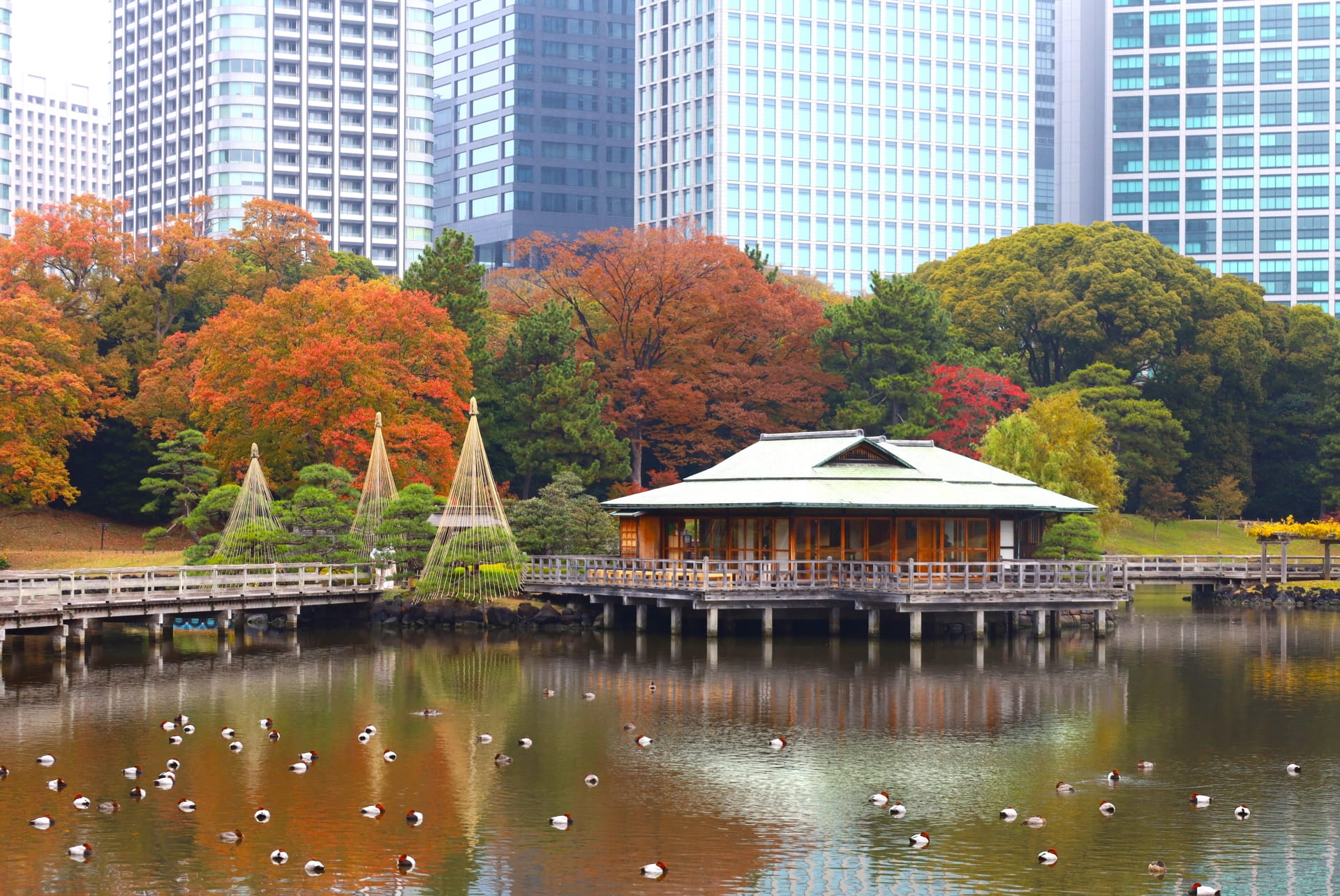
Hamarikyu Gardens provides a distinctive autumn landscape, contrasting traditional Japanese garden design with views of the modern skyscrapers of Shiodome. Once a retreat for the Tokugawa shogunate, the garden is known for its large tidal pond, historic teahouse, carefully maintained paths, and centuries-old pine trees.
Maples and other deciduous trees add seasonal color around the ponds and walking paths, while the garden’s famous 300-year-old pine provides an impressive landmark. Autumn foliage generally begins appearing in mid-November, with the best colors usually arriving from late November to early December.
For a more scenic arrival, consider taking a Tokyo Cruise water bus from Asakusa. The Sumida River route reaches Hamarikyu in approximately 35 minutes, passing beneath several bridges along the way. The Hamarikyu stop is for disembarking only, and departures are limited, so check the operator’s timetable before planning your journey. The current listed adult fare from Asakusa is 1,180 yen, with garden admission included.
| Access |
7-min walk from Shiodome Station or 9-min walk from Tsukijishijo Station. |
|---|---|
| Business Hours |
9 AM–5 PM |
| Price |
300 yen |
| Official Website |
https://www.tokyo-park.or.jp/park/hama-rikyu/ |
Tips for Timing Your Tokyo Autumn Trip
Check the Autumn Foliage Forecast
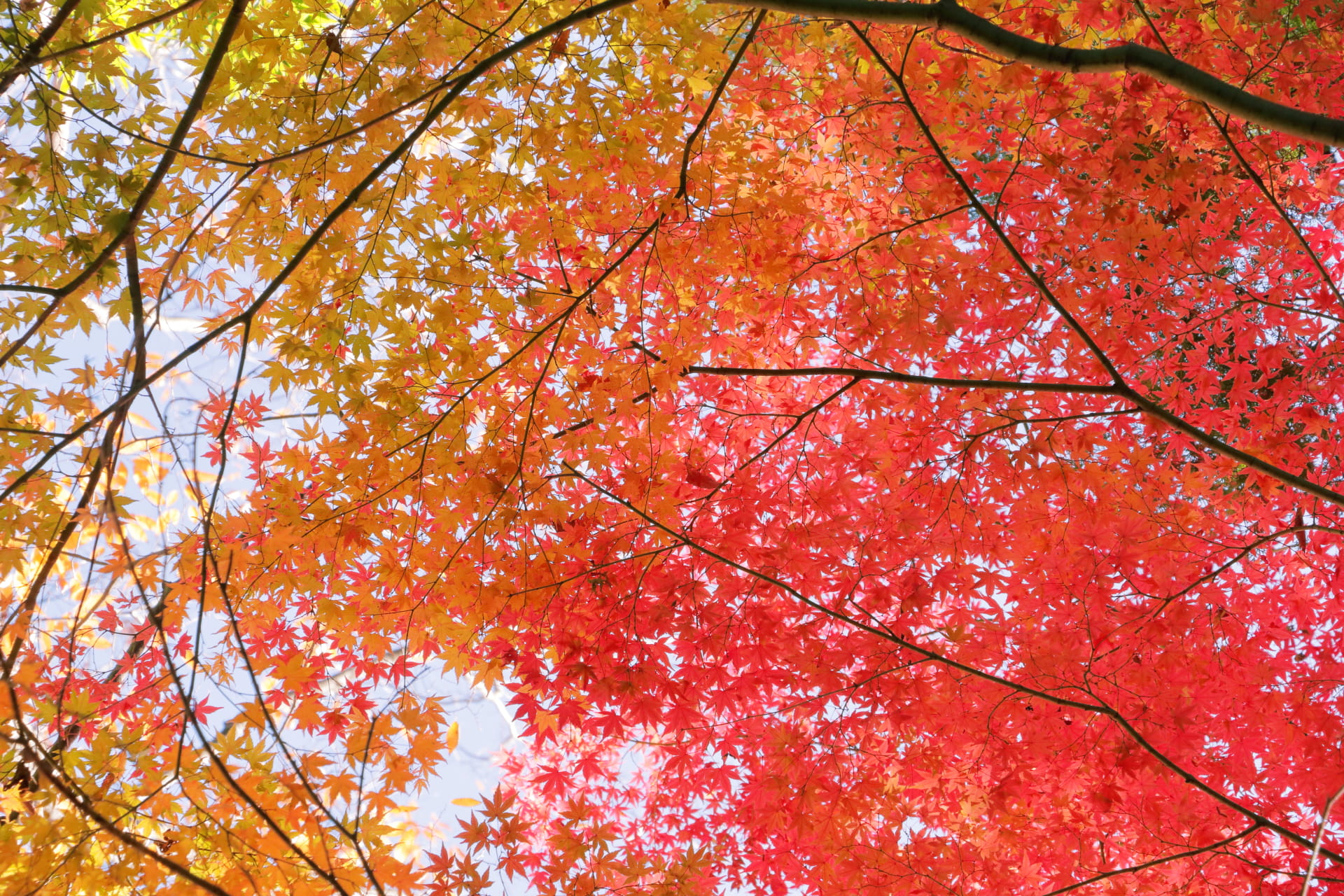
Tokyo’s autumn colors do not peak everywhere at once, so checking a foliage forecast before your visit can make a significant difference. Two useful resources are the Japan Weather Association’s updates on tenki.jp and the Japan Meteorological Corporation’s Autumn Foliage Navigator, which tracks expected viewing dates for locations across Japan. Both update their forecasts as the season approaches.
In Tokyo, the main viewing period generally runs from mid-November to early December. However, ginkgo trees often turn yellow before maple leaves reach their deepest red, and mountain areas such as Mount Takao can change earlier than parks in central Tokyo. Weather also plays a role: warmer autumn temperatures can delay the change, while cooler conditions may bring it forward.
Visit on Weekday Mornings
Popular foliage spots can become crowded, particularly on weekends during peak season. If photography is a priority, visit Meiji Jingu Gaien early in the morning, ideally before 8:30 AM, before the ginkgo avenue fills with visitors. The same strategy works well at major gardens and parks, where arriving near opening time gives you more room to enjoy the scenery.
Mount Takao deserves extra planning. Its hiking trails, cable car, and surrounding facilities attract large numbers of visitors during the late-November peak. A weekday visit and an early start can help you avoid the longest queues.
Check Seasonal Illuminations in Advance
For an evening foliage experience, Rikugien Garden is one of the main destinations to consider. Its special nighttime viewing event includes illuminated maple trees and other garden features. Dates, opening hours, and ticket arrangements change each year, so check the official event announcement before making plans. For example, the 2026 event runs from November 25 to December 6, with advance tickets priced at 1,000 yen and same-day tickets at 1,200 yen.
Nighttime events can have limited ticket availability and separate entry arrangements from regular daytime visits. Book ahead when possible, and check the final admission time so you do not arrive after the gates have closed.
Tokyo has plenty of famous autumn foliage destinations, but the busiest spots are not always the most enjoyable. If you would rather explore quieter parks, lesser-known gardens, and places away from the main tourist crowds, read our guide to the Best Underrated Tokyo Autumn Foliage Spots.
For a first visit, consider combining a few destinations in the same area rather than trying to cover all 10. Meiji Jingu Gaien, Yoyogi Park, and Shinjuku Gyoen work well together, while Rikugien and Koishikawa Korakuen can be visited on the same day. If you have more time, set aside a half-day for Showa Kinen Park or Mount Takao.
Ultimately, the best places to see autumn leaves in Tokyo depend on the scenery you enjoy and how much time you have. From golden ginkgo avenues and traditional Japanese gardens to mountain trails and waterside parks, there is no shortage of ways to enjoy the season.
Looking for more Autumn getaway ideas? We’ve got you covered!

Written by
Photographer, journalist, and avid urban cyclist, making sense of Japan since 2017. I was born in Caracas and lived for 14 years in Barcelona before moving to Tokyo. Currently working towards my goal of visiting every prefecture in Japan, I hope to share with readers the everlasting joy of discovery and the neverending urge to keep exploring.
- +0 0
-
-